
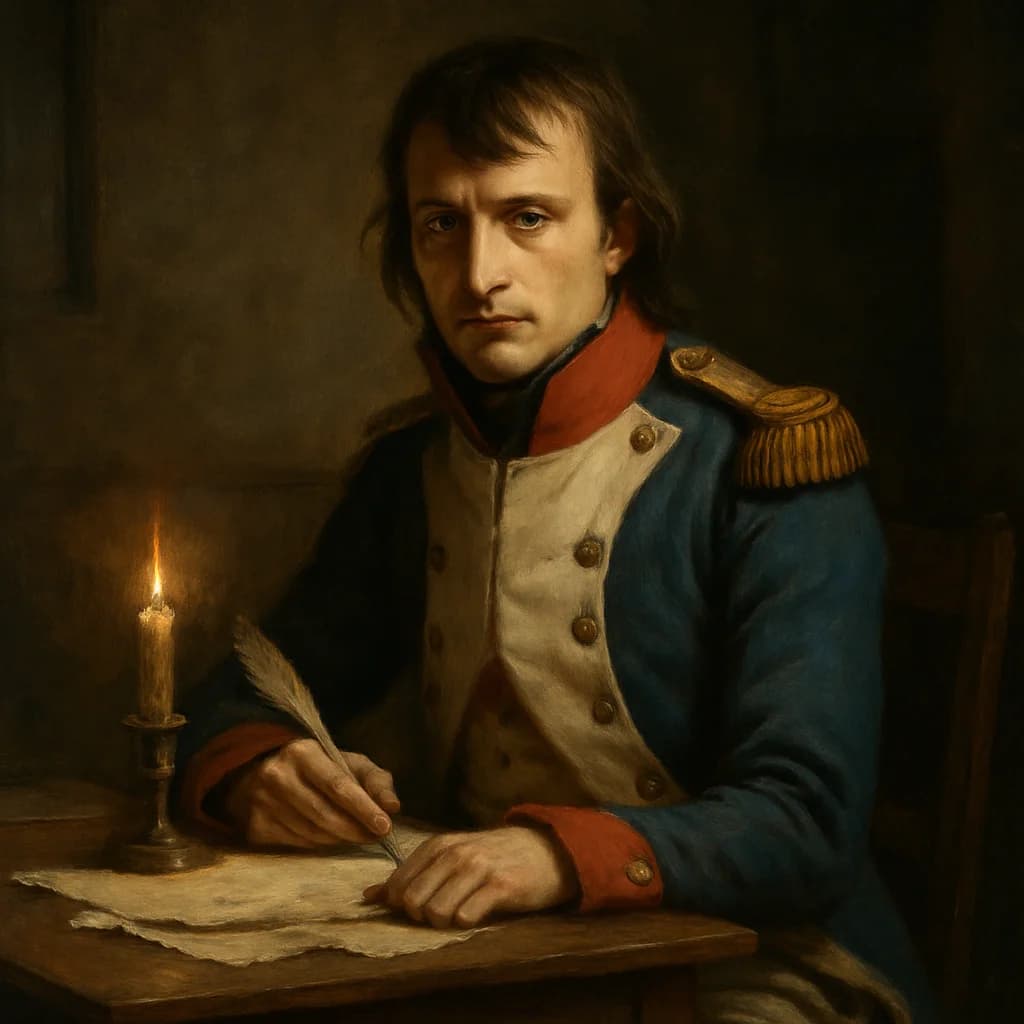
Napoleon Bonaparte
The man who conquered Europe was too anxious to sleep without a nightlight and wrote fan fiction about himself dying heroically for love.
Before Napoleon Bonaparte became the terror of European battlefields, he was a neurotic teenager scribbling terrible romance novels in his dormitory at military school. The future emperor wrote melodramatic stories where fictional versions of himself died tragically for unrequited love, usually involving noble women who looked suspiciously like his math tutor's daughter. He kept these manuscripts hidden under his mattress alongside letters to his mother begging for clean socks and pocket money.
This same man who would later stride across burning bridges at Arcole suffered from chronic insomnia, night terrors, and what his personal physician delicately termed 'nervous episodes.' Napoleon required a servant to sit outside his bedroom door with a lit candle because he couldn't bear complete darkness. He wrote obsessively: not just military dispatches, but thousands of personal letters revealing crushing self-doubt. 'I am nothing,' he confided to his brother Joseph in 1795, three years before his Egyptian triumph. 'I will be nothing. I deserve nothing.'
The emperor's morning routine was legendarily precise because chaos terrified him. Coffee at exactly 7 AM, newspapers arranged in predetermined order, the same breakfast of bread and honey for fifteen years. When this routine was disrupted (as it was during the retreat from Moscow), his famous strategic clarity evaporated. His generals noticed that Napoleon made his worst decisions when forced to improvise, when the careful scaffolding of his daily rituals collapsed.
Even his exile to Elba followed this pattern. Rather than raging against his fate, Napoleon created elaborate daily schedules for his tiny kingdom, designing uniforms for a four-man army and hosting formal dinner parties for his handful of loyal servants. The man who had redefined warfare spent his final defeat meticulously reorganizing a rock in the Mediterranean.
Napoleon wrote a romance novella called 'Clisson and Eugénie' in 1795, featuring a thinly disguised version of himself as a passionate young officer who dies gloriously in battle for love.
Why untold: Popular history focuses on Napoleon's military genius while overlooking the extensive documented evidence of his psychological fragility and emotional neediness.
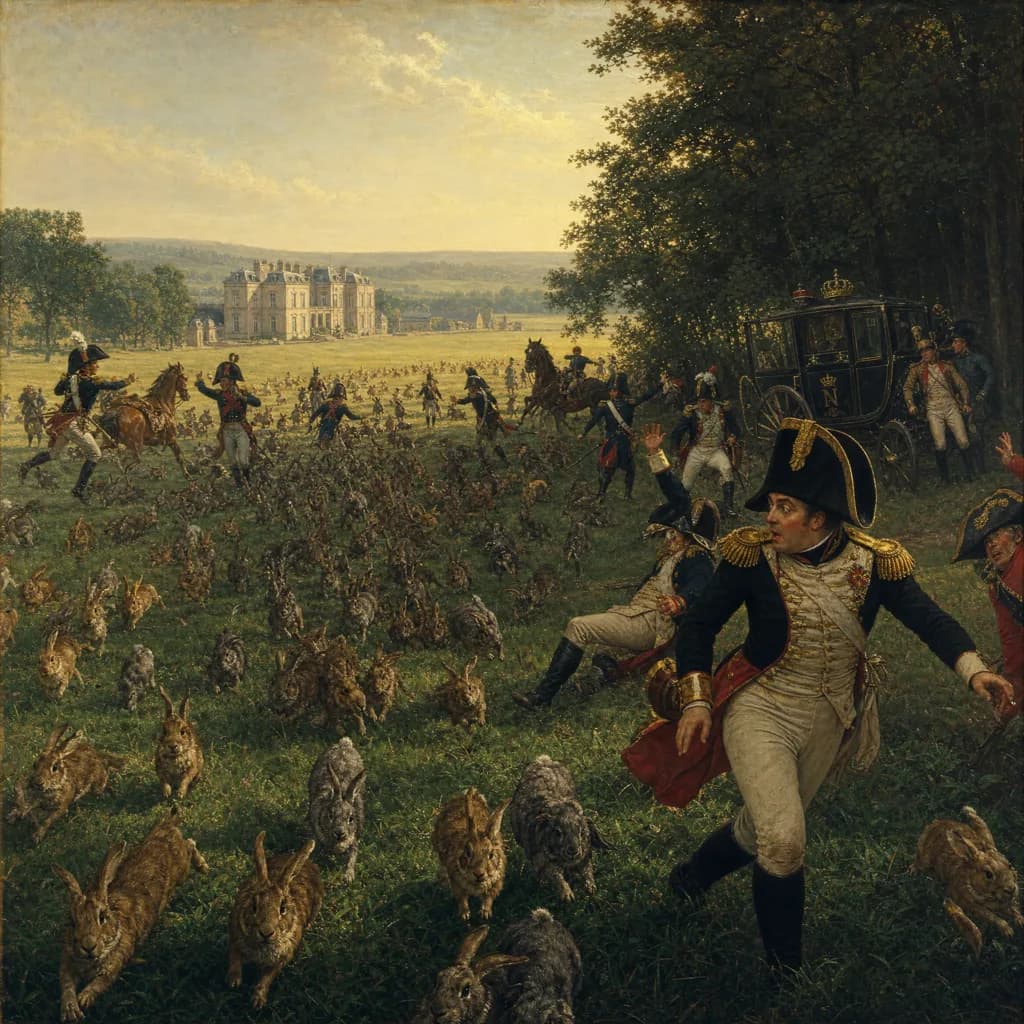
The Day Napoleon Was Attacked by 3,000 Rabbits
Napoleon had just carved up Europe with the Tsar. A week later he was retreating to his carriage under a wave of rabbits.
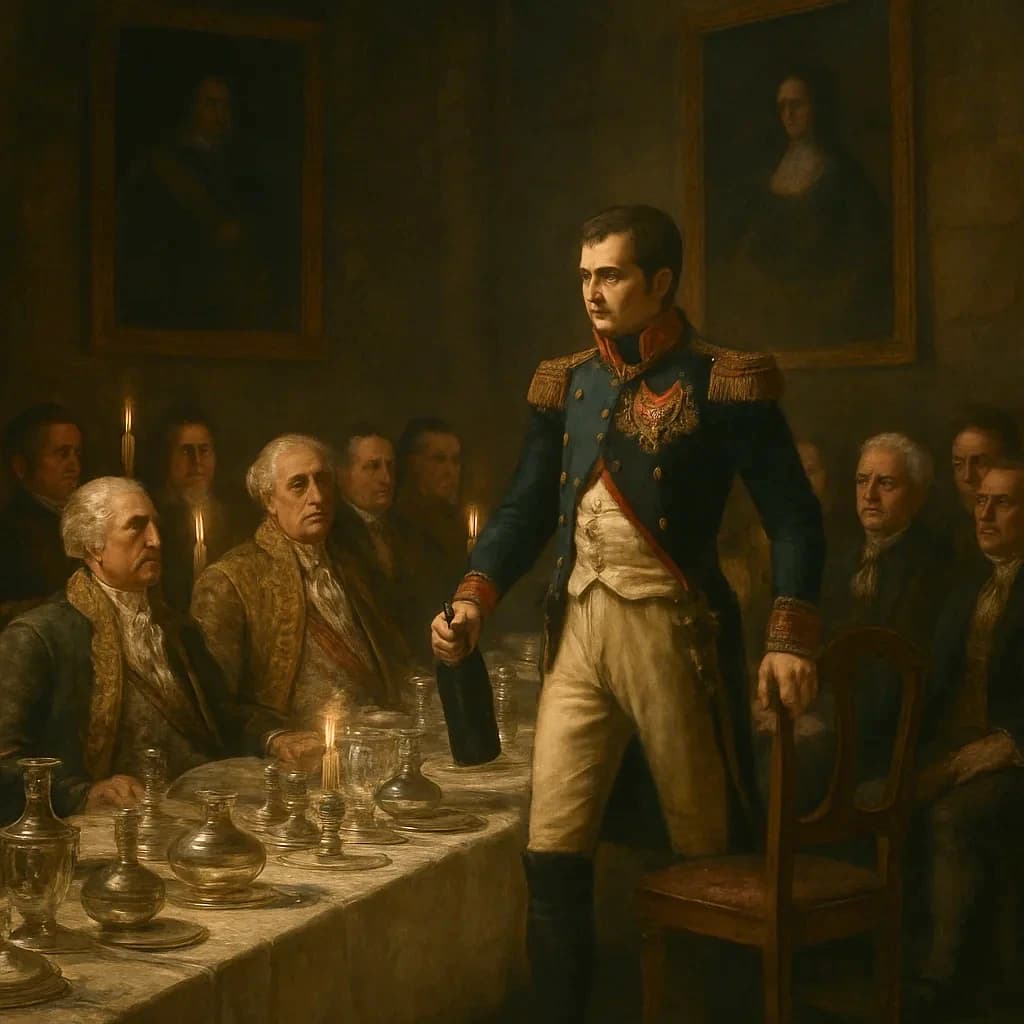
Napoleon's General Walked Out of Dinner With the Wine
A French military genius found himself court-martialed in 1793 not for losing a battle, but for refusing to serve refreshments.
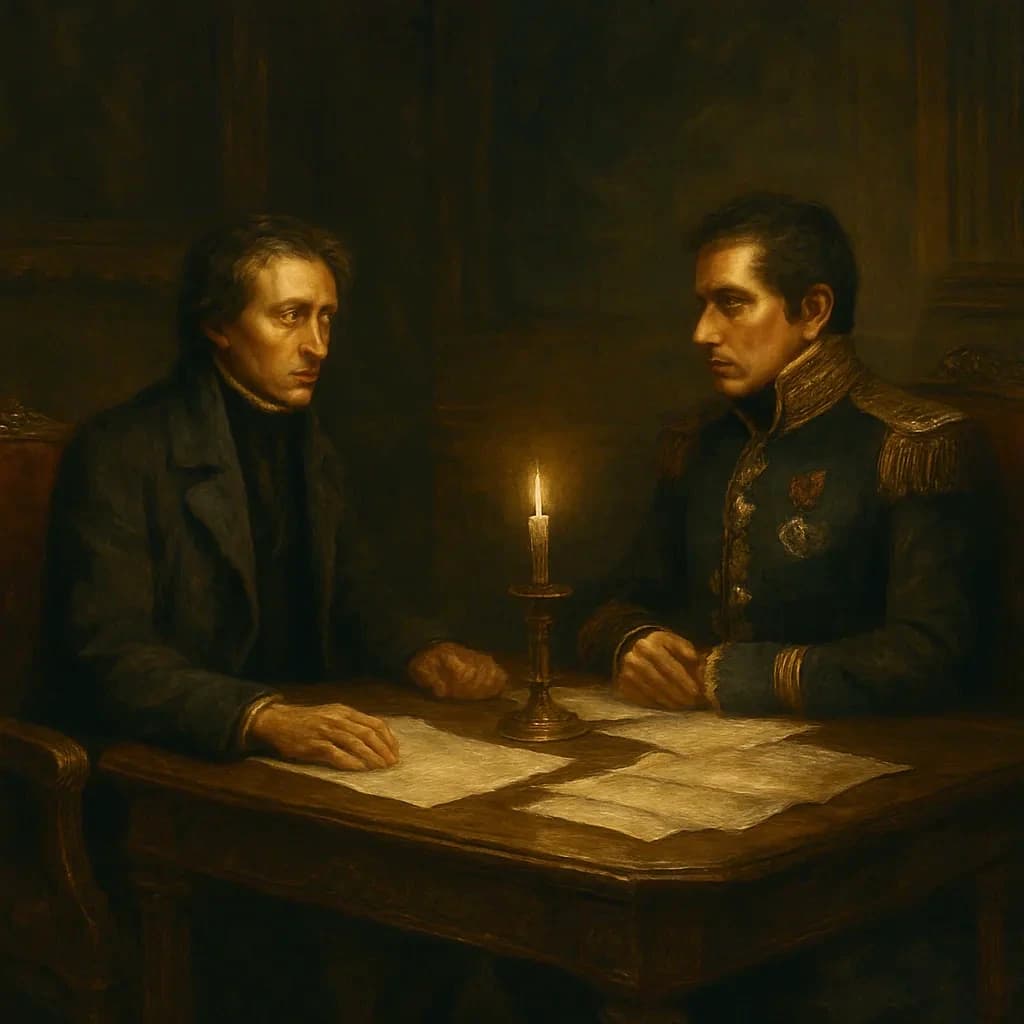
A Stammering Envoy Who Kept America Out of War
A single speech impediment may have kept the United States from launching its first European war in 1800.
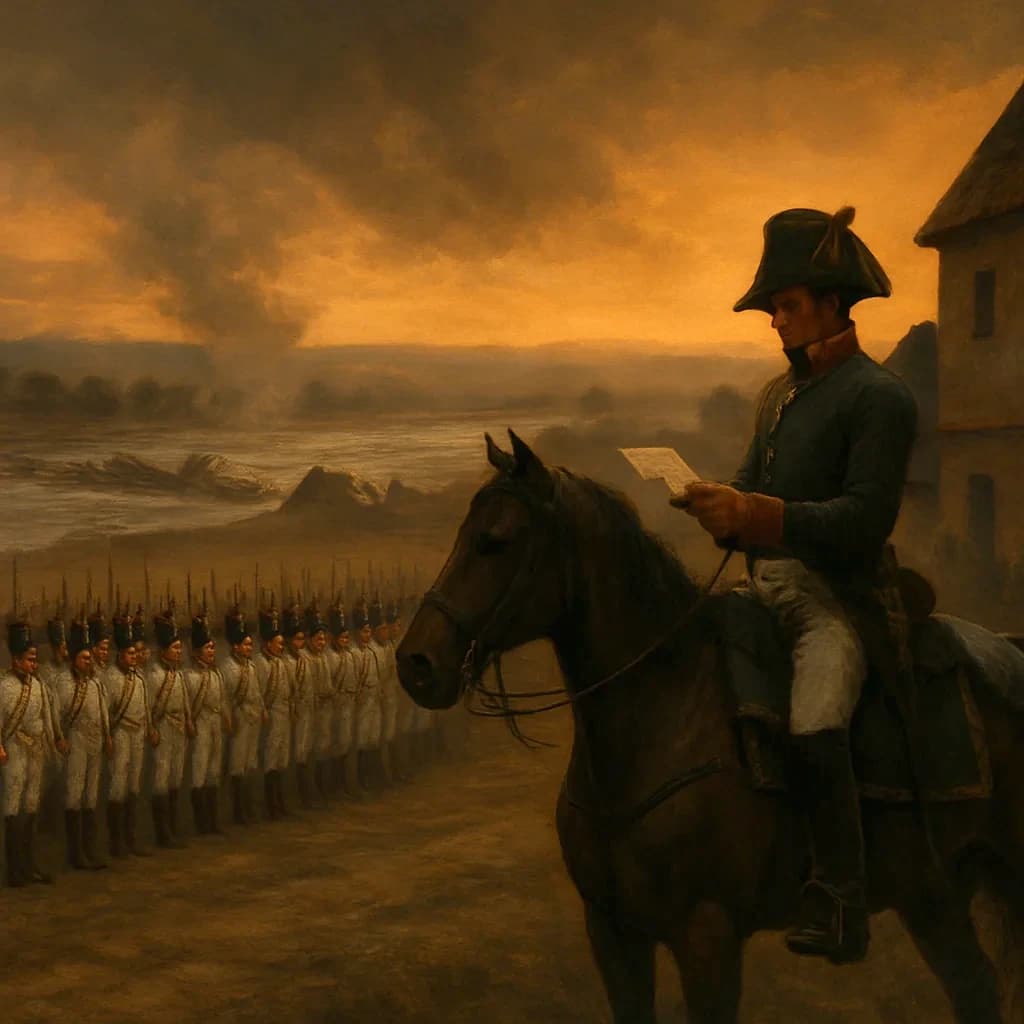
Archduke Charles Trapped Napoleon, Then Let Him Go
One Austrian general's decision to withhold a single dispatch may have cost Napoleon his greatest victory, and nobody noticed for a century.
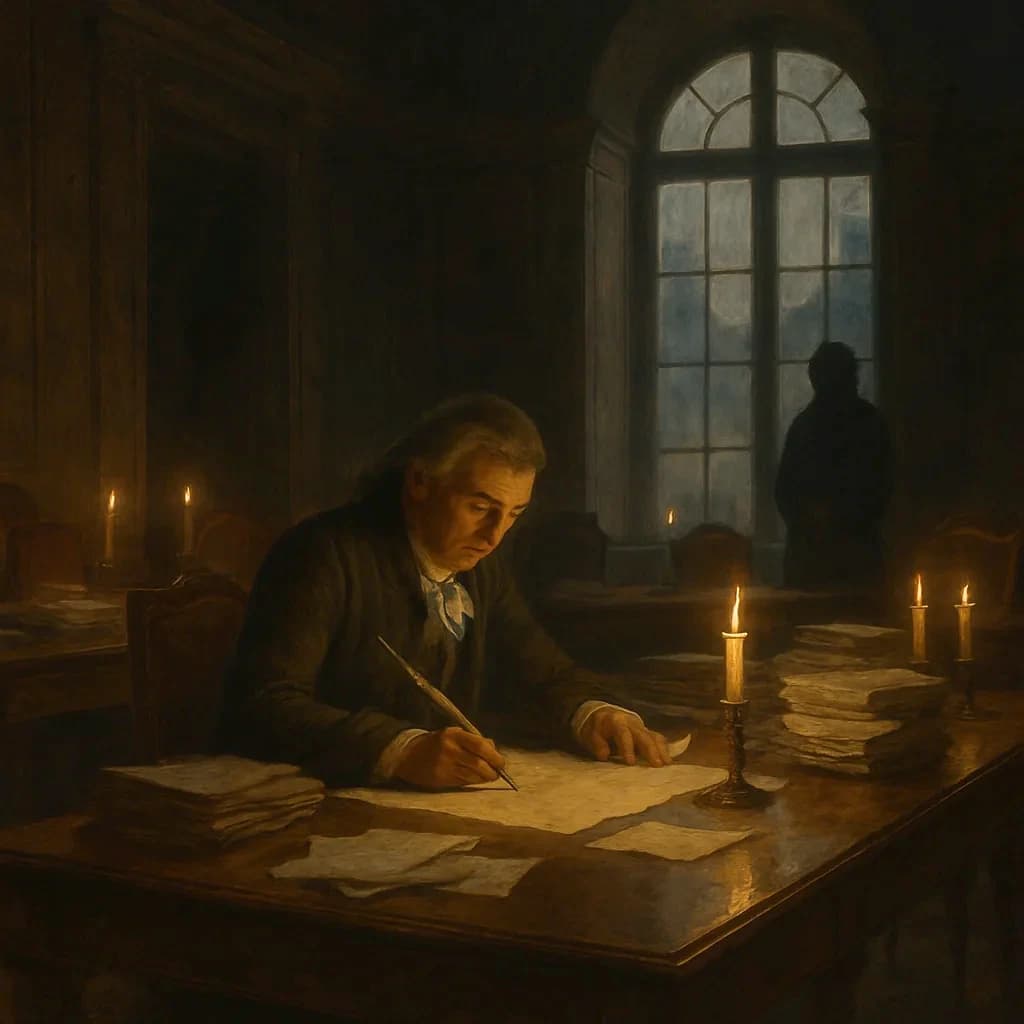
Napoleon Rewrote the Constitution Meant to Stop Him
A single clause buried in an 1799 constitutional draft handed one man absolute power over France, and the lawyer who wrote it thought he was doing something routine.
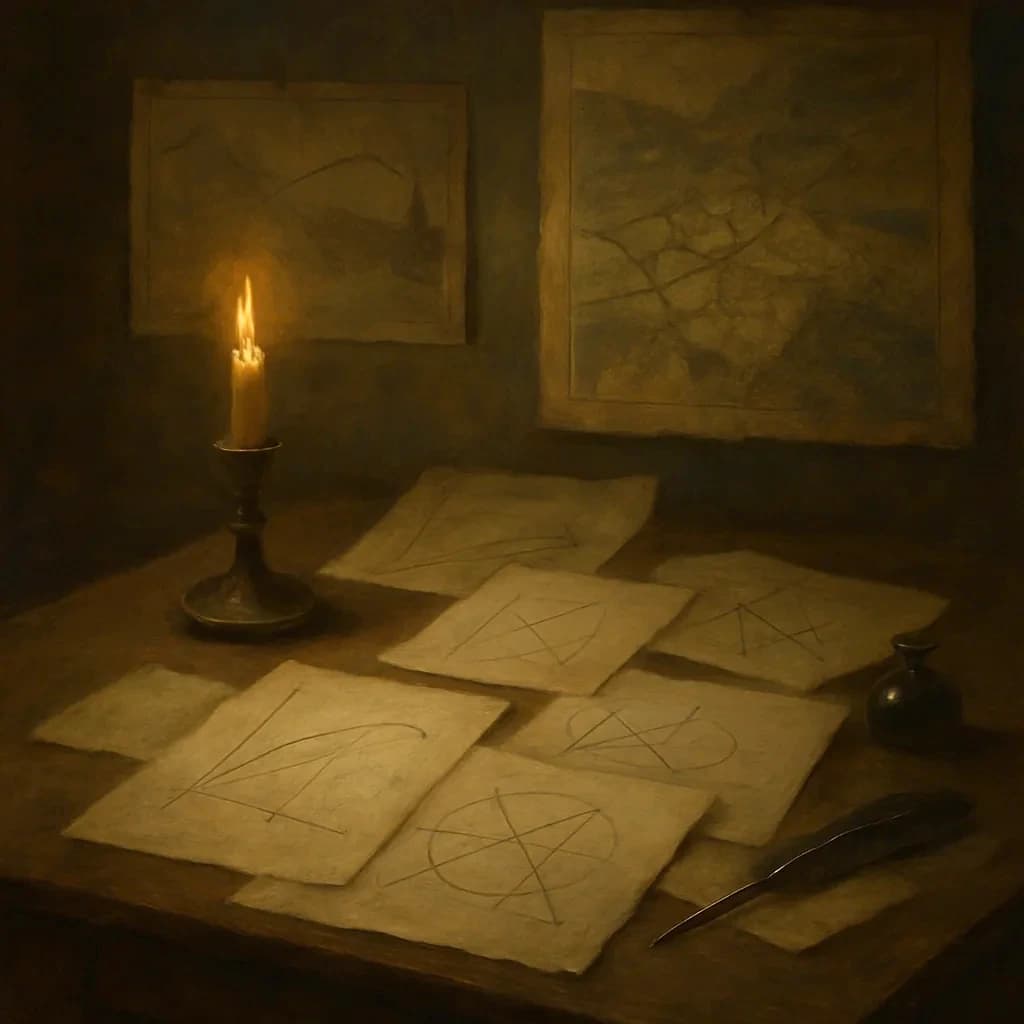
Cannonball Math Proved Napoleon Was Doomed at Waterloo
A brilliant mathematician's attempt to calculate cannon trajectories accidentally proved that Napoleon was doomed to fail at Waterloo.
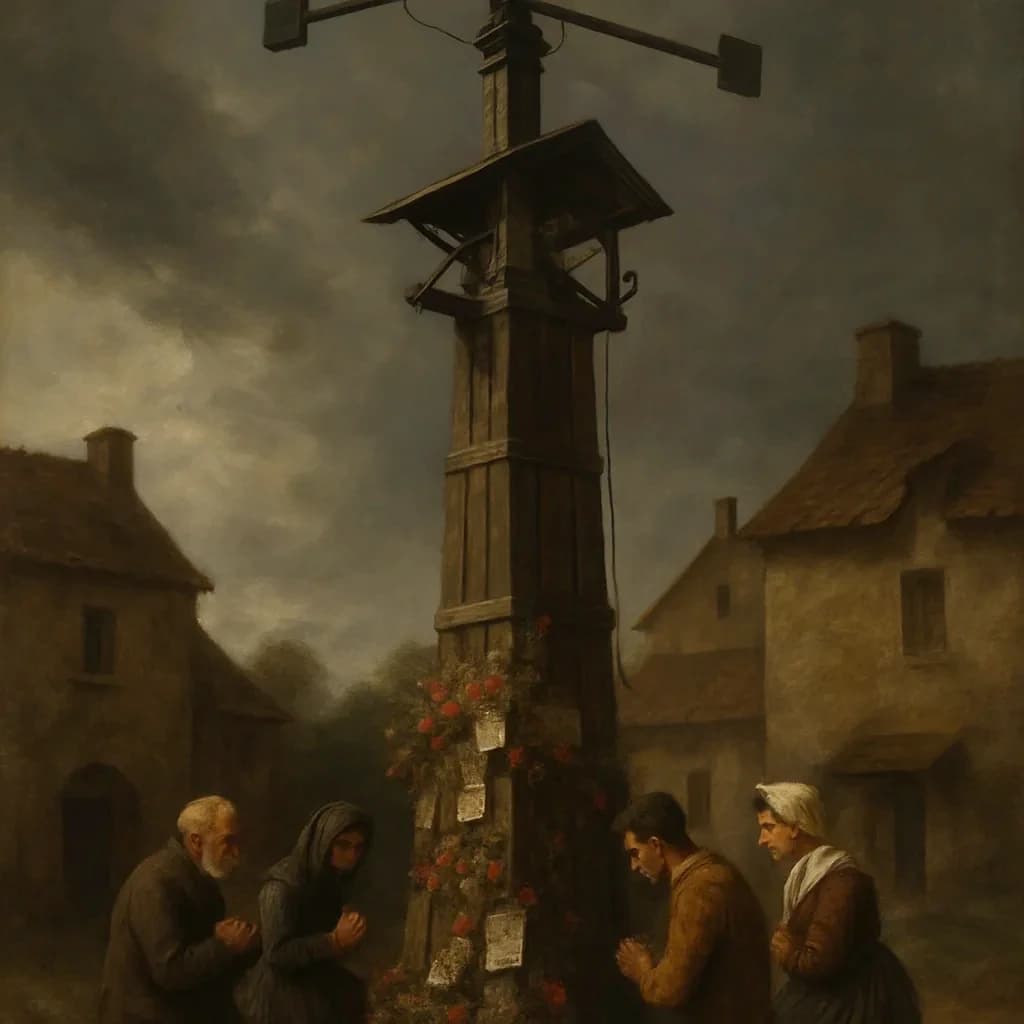
A French Village Built an Altar Around the Telegraph
Humanity's first long-distance telegraph message reached a French village in 1844, and the villagers responded by building an altar around the machine.
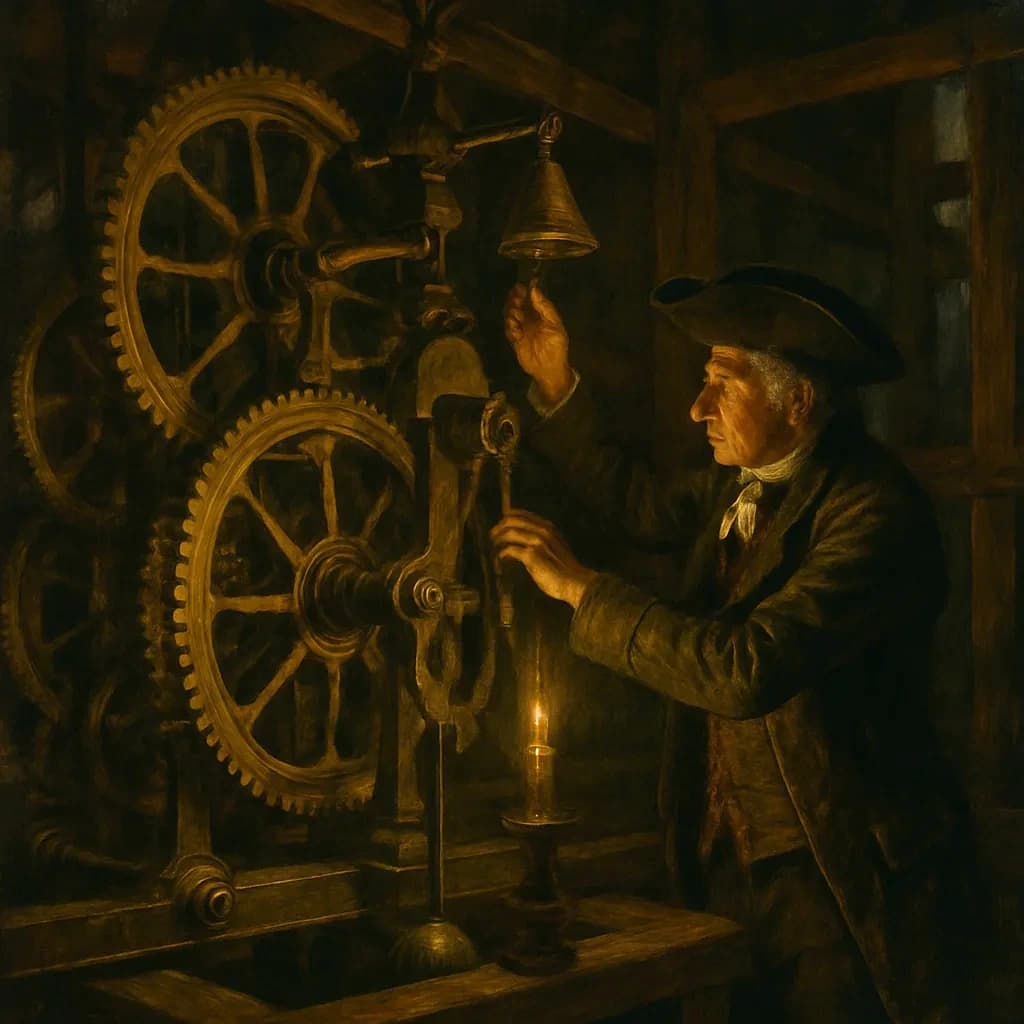
When Moscow's Clockmaker Stopped Napoleon
A Swiss clockmaker's tiny adjustment to Moscow's church bells created a cascade of confusion that may have sealed the French Emperor's fate.
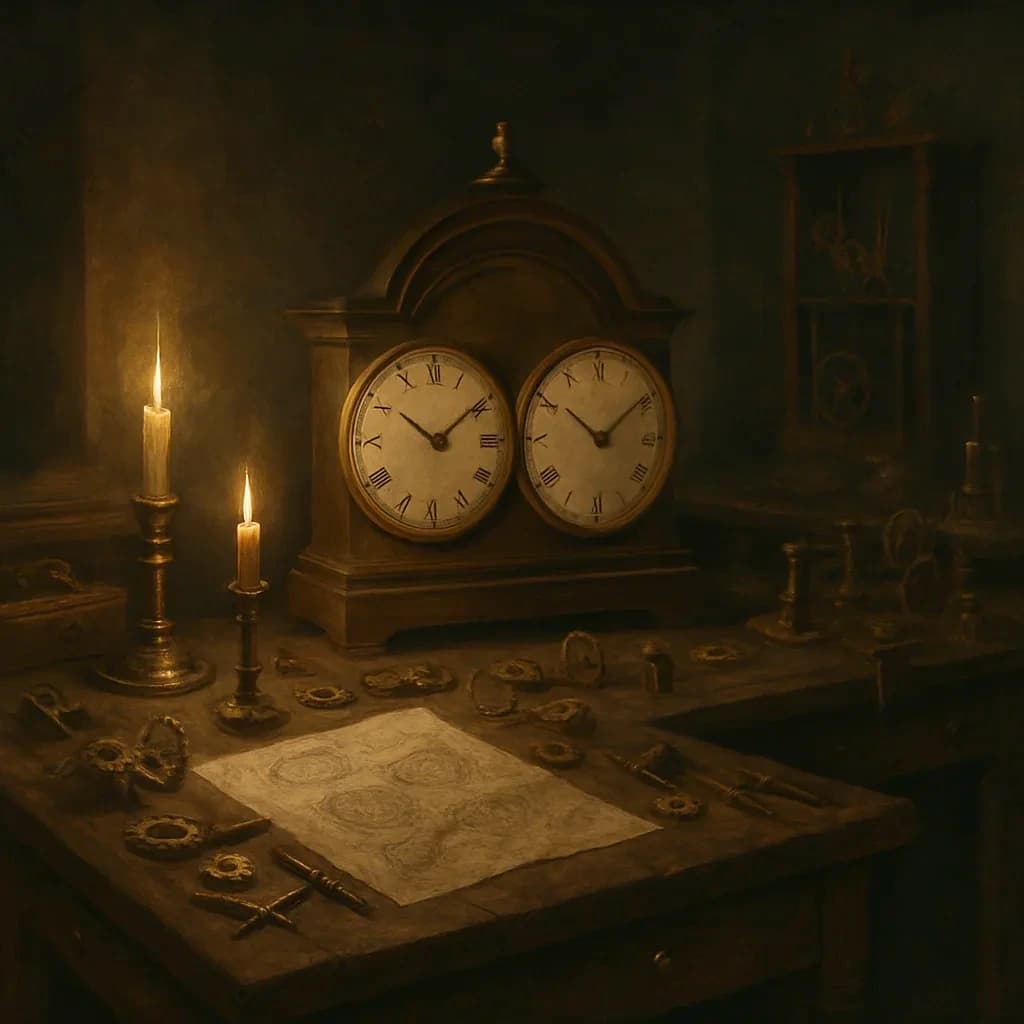
France Tried to Give the Day Ten Hours
A miscalculation in 18th-century Switzerland gave the world a timing system that was mathematically wrong, and too useful to fix.
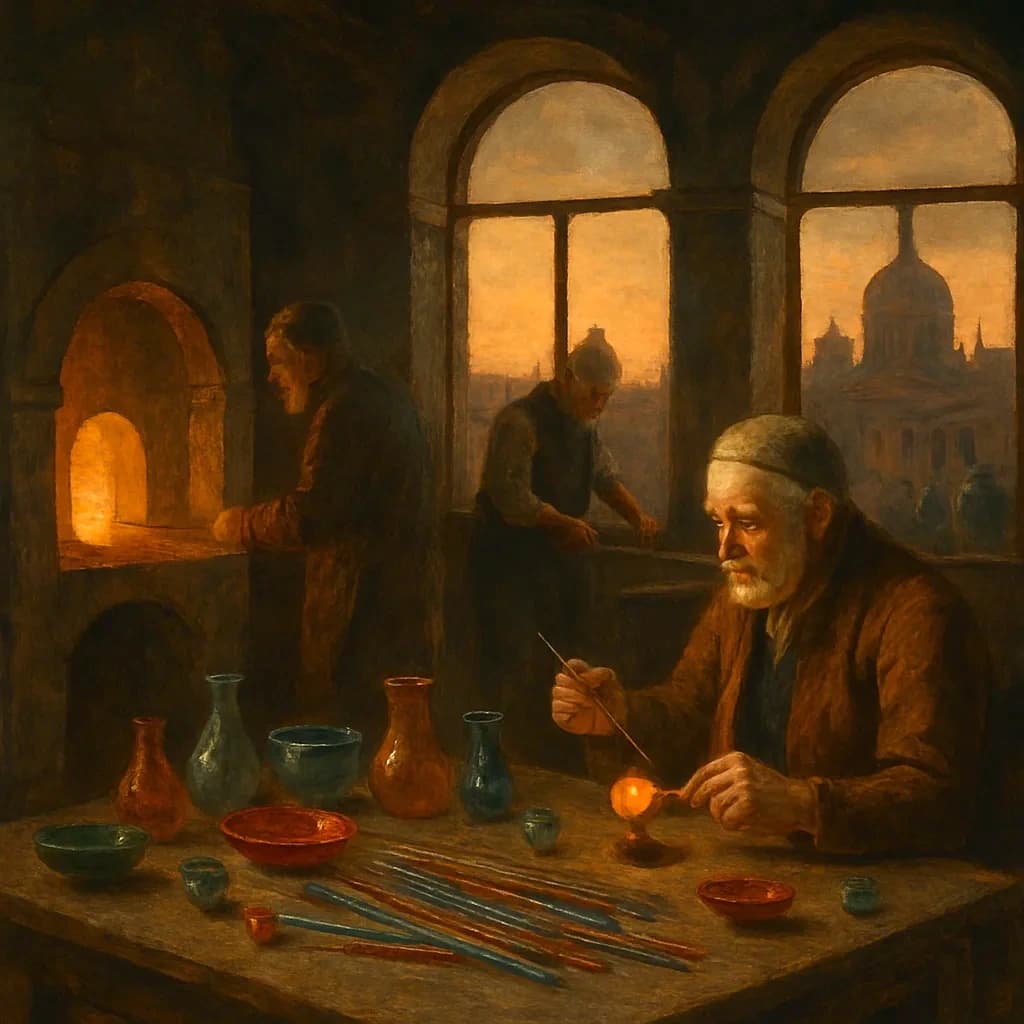
Napoleon Broke the Guild That Hid Venice's Glass Secret
Napoleon set out to shatter an empire in 1797, and without meaning to he also destroyed the secret that had made Venice wealthy for seven centuries.
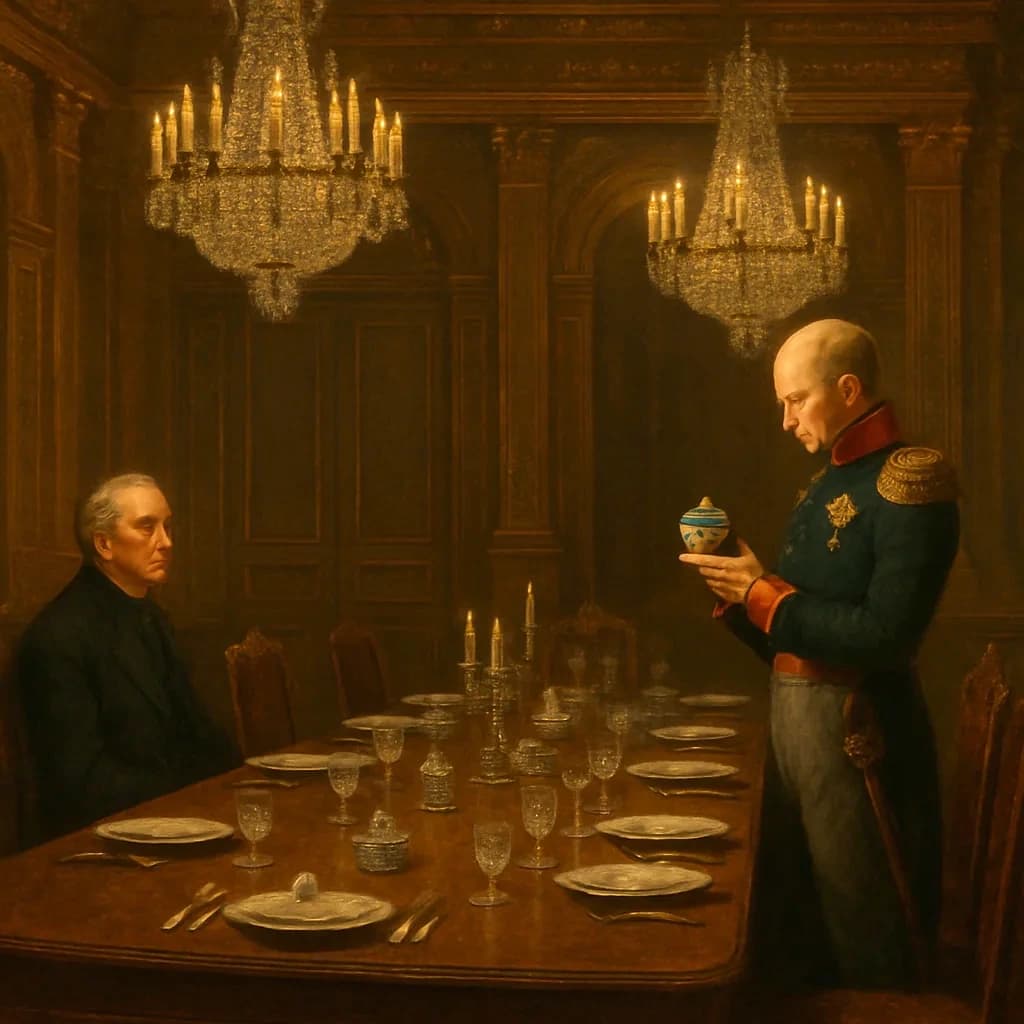
When Sweden Sold Finland for a Sugar Bowl
A single diplomatic dinner in 1809 cost Sweden its entire eastern half, and the host never even served dessert.
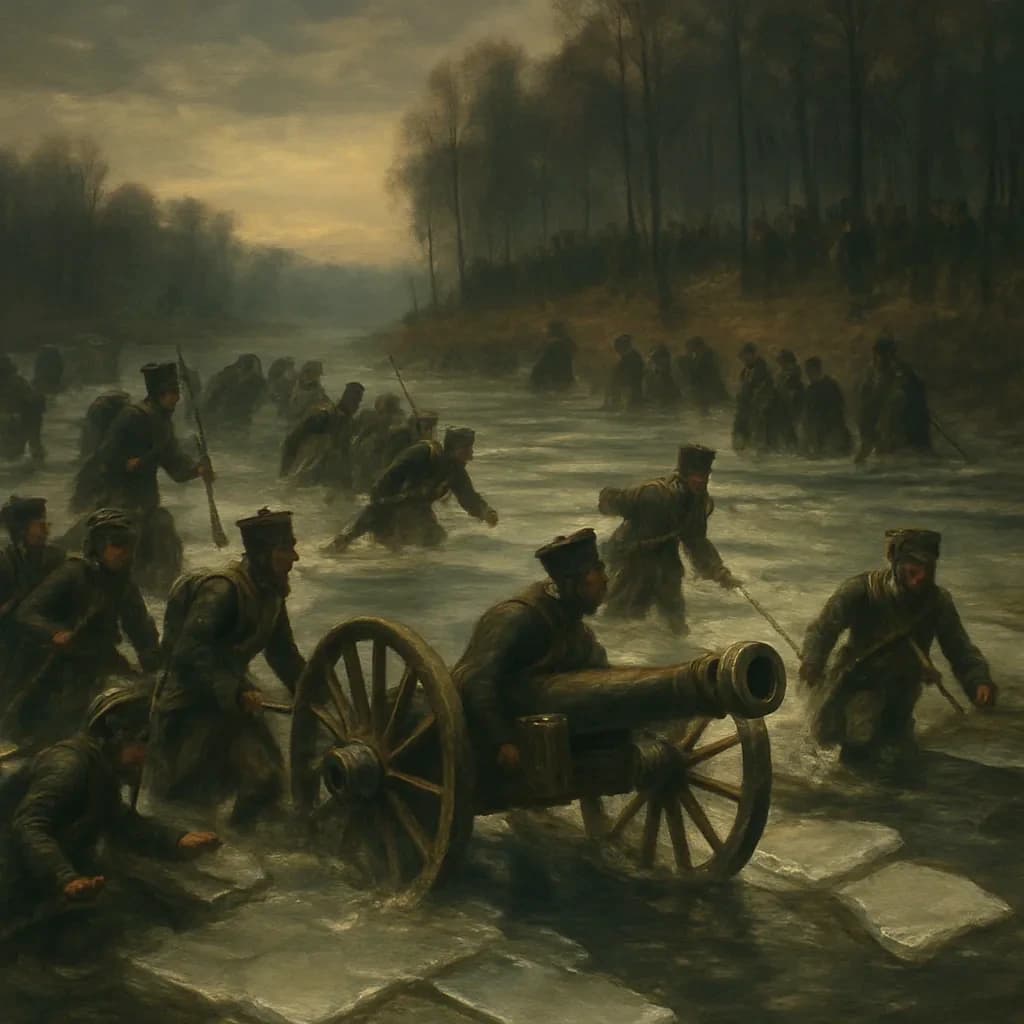
The Berezina: When Warm Weather Trapped Napoleon's Army
A single Russian general saved Moscow by understanding something Napoleon's engineers couldn't see.
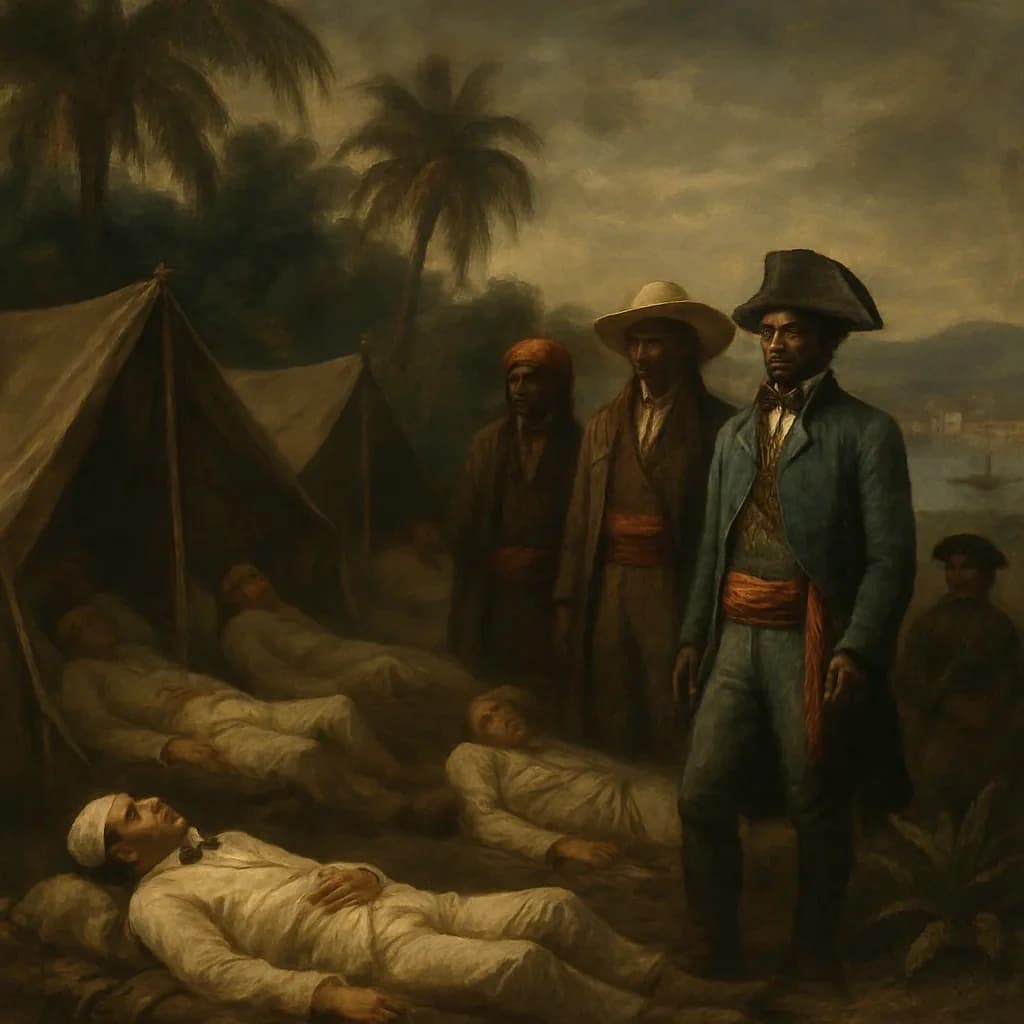
Yellow Fever Beat France's Army and Changed Three Empires
Yellow fever killed more French soldiers in Haiti than all the battles combined, and changed the course of three empires.
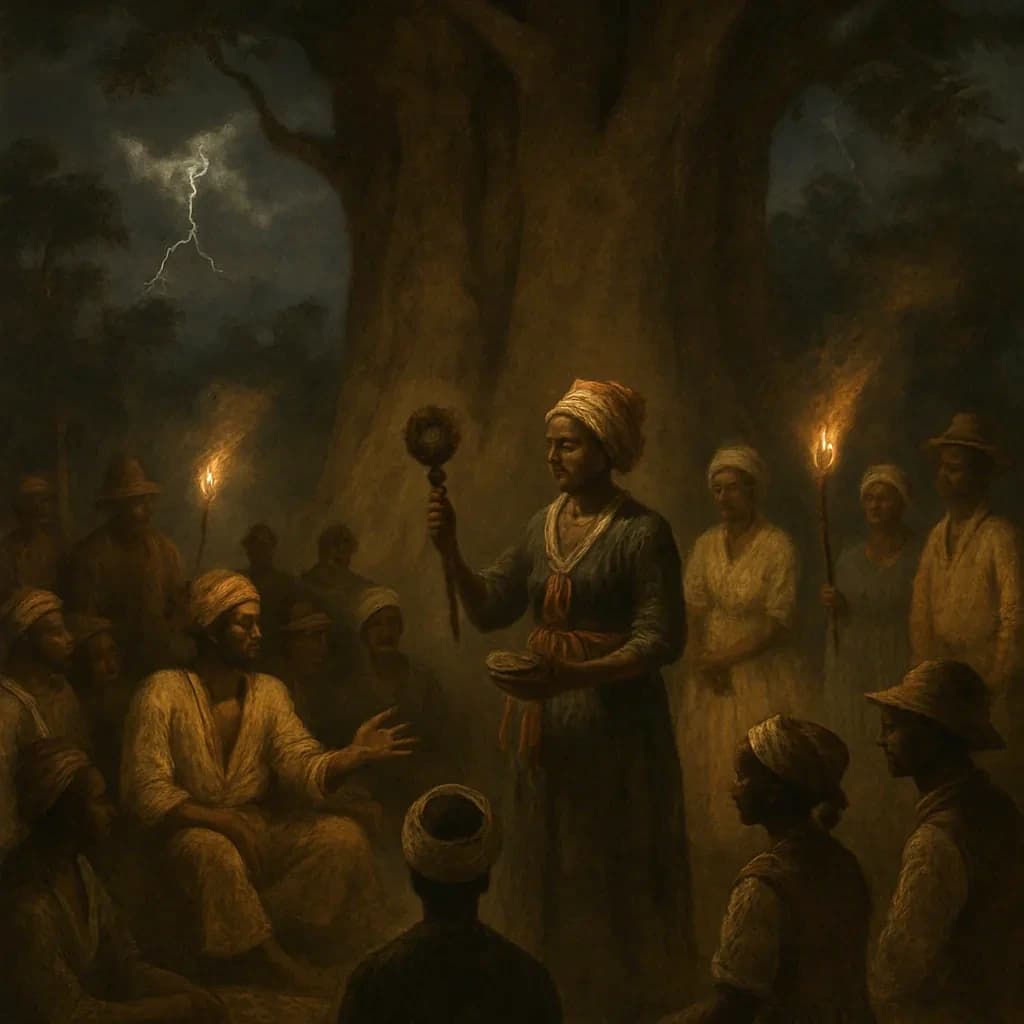
How Serving Chicken Helped Spark the Haitian Revolution
A cook decided the beef looked spoiled and served chicken instead, and that swap at a Saint-Domingue dinner party helped trigger the revolution that would terrify every slaveholding nation on earth.
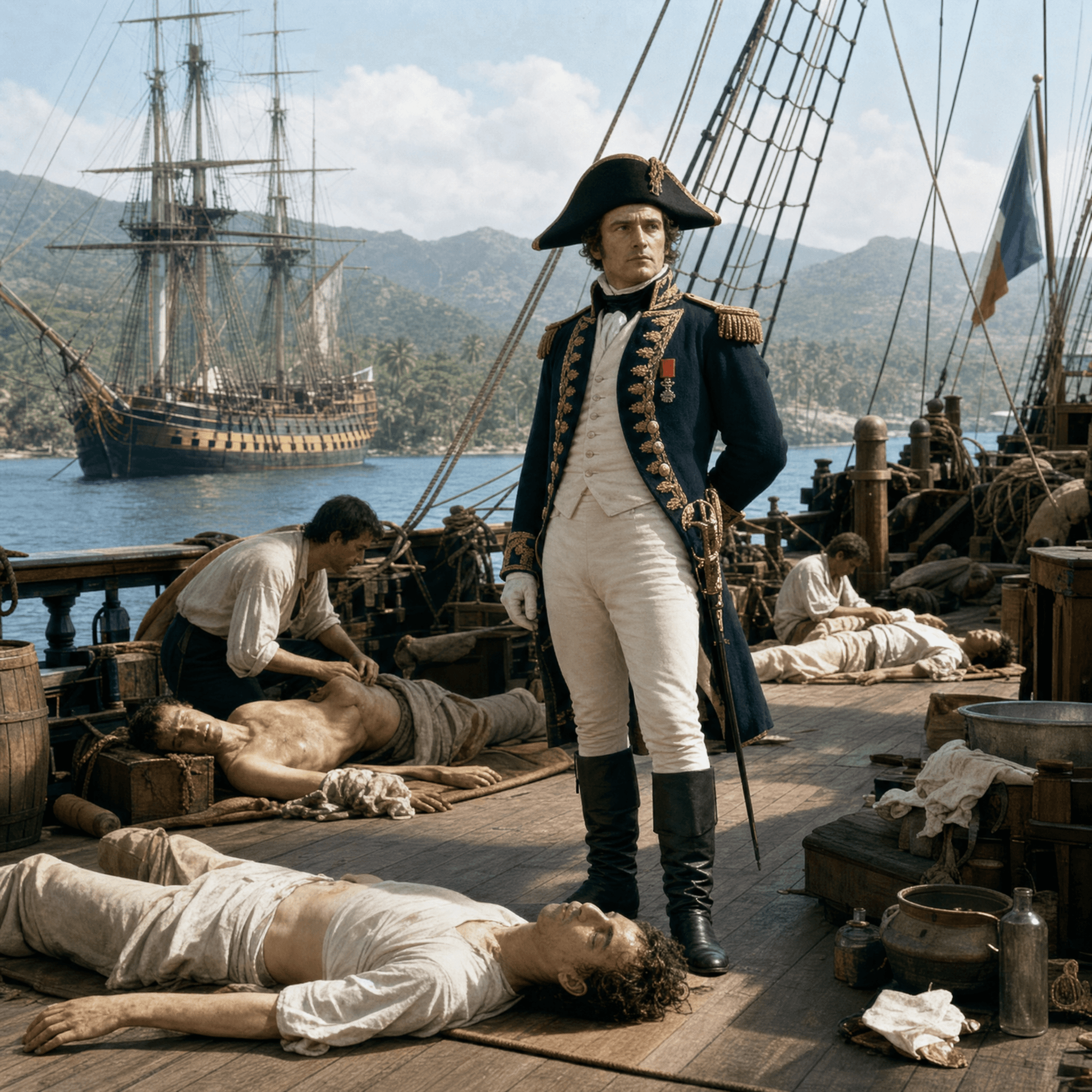
The Fever Ship That Freed Haiti
A single naval captain's decision to ignore quarantine may have saved the Haitian Revolution and terrified every slave owner in the Americas.
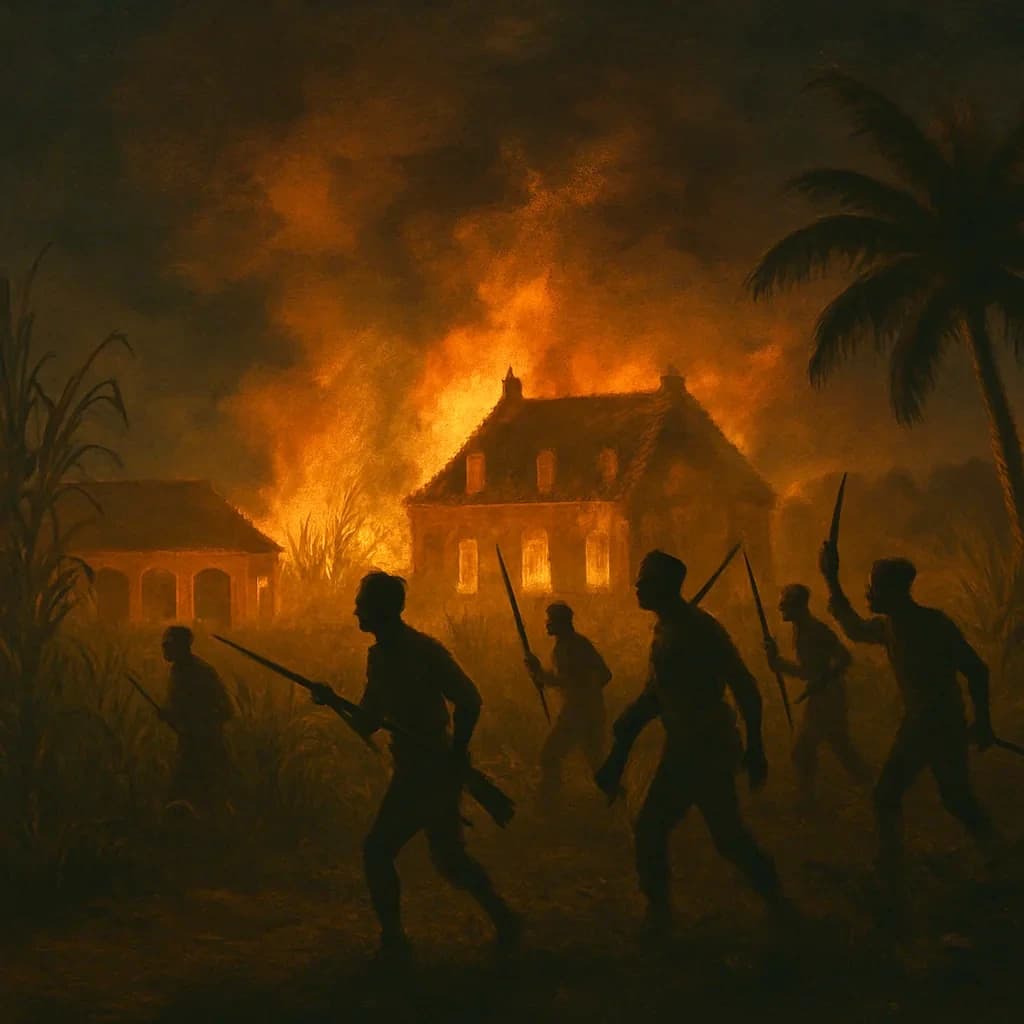
Haiti's Slaves Won a War the World Called Impossible
A slave uprising in Haiti sent shock waves through every plantation from Virginia to Brazil, and changed how the world thought about human bondage forever.
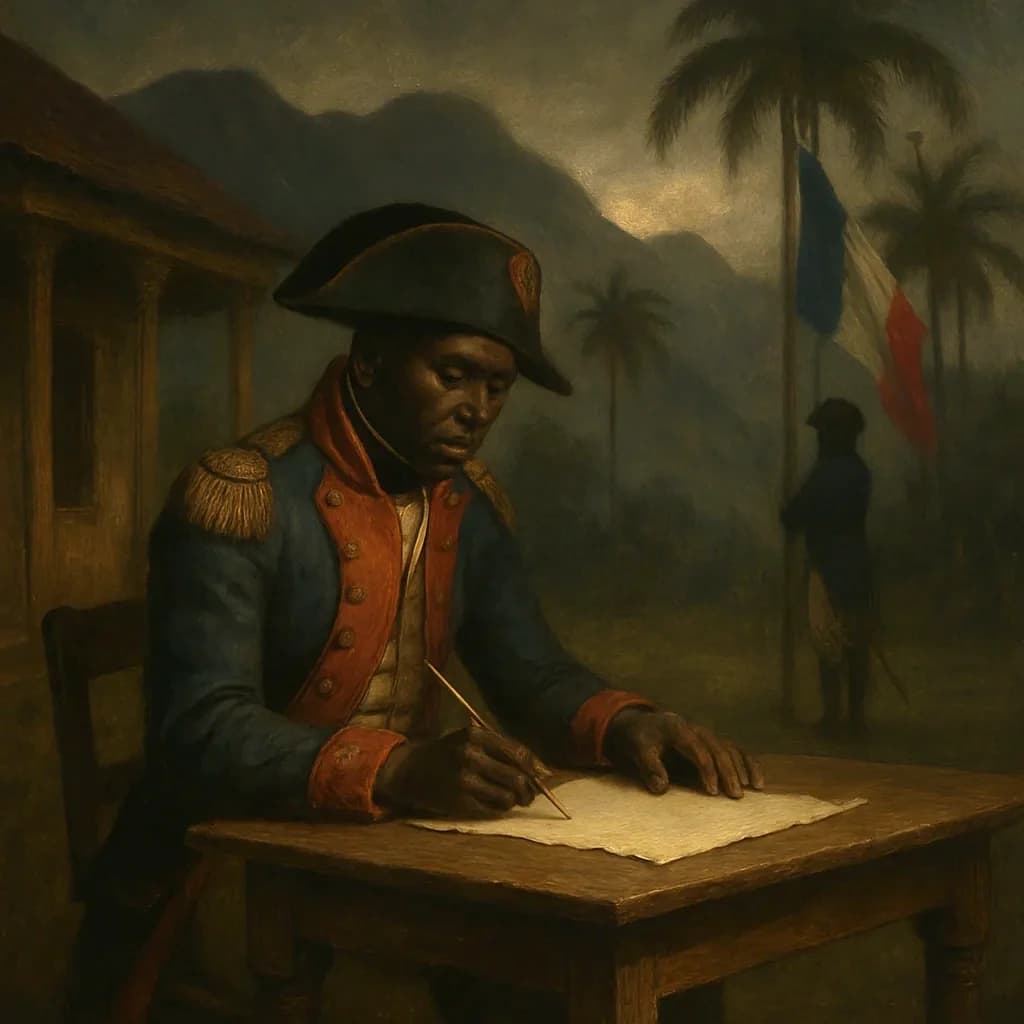
Three Days as the World's First Black Republic
A freed slave declared independence from France in 1794, founded his own republic, and held off Napoleon's army, then vanished from every history book.
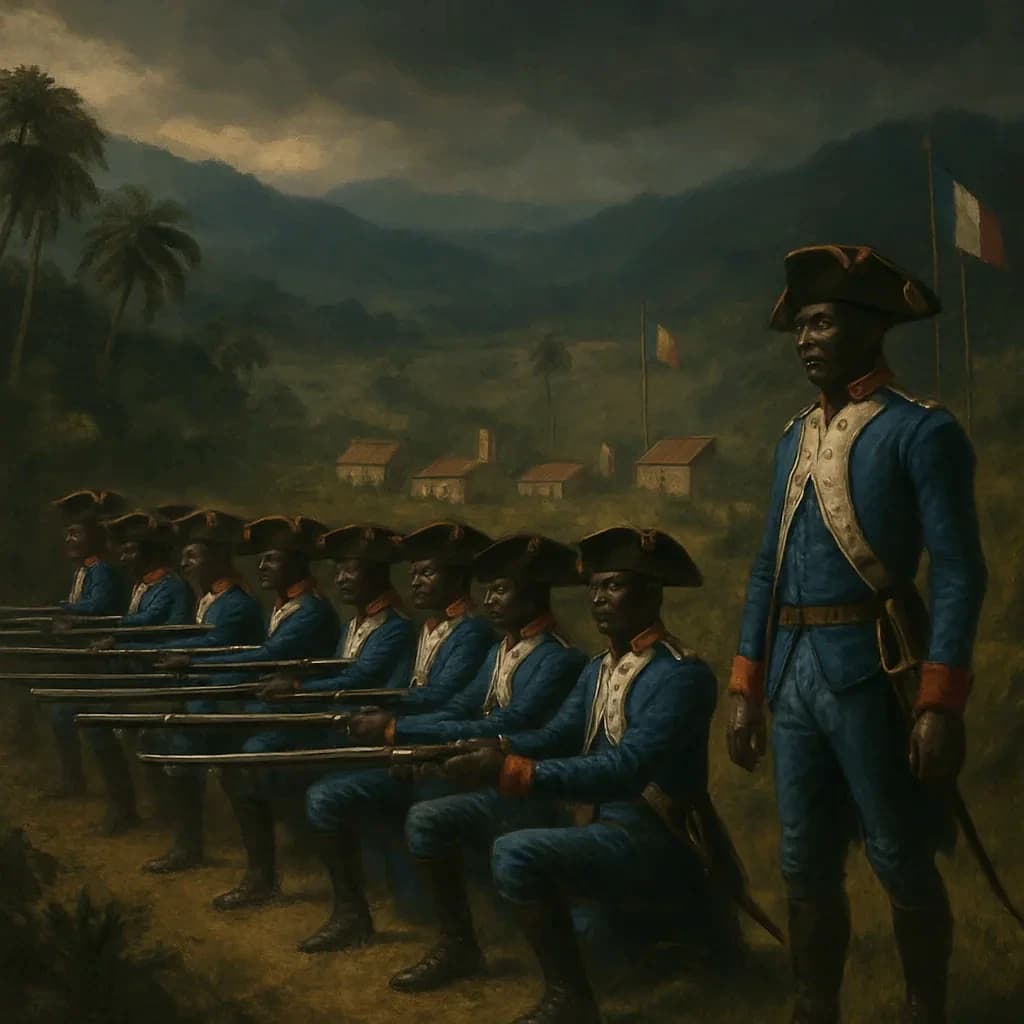
When Slaves Became Generals
A sugar colony's kitchen workers became the most feared military commanders in the Caribbean, and every plantation owner in the Americas couldn't sleep at night.
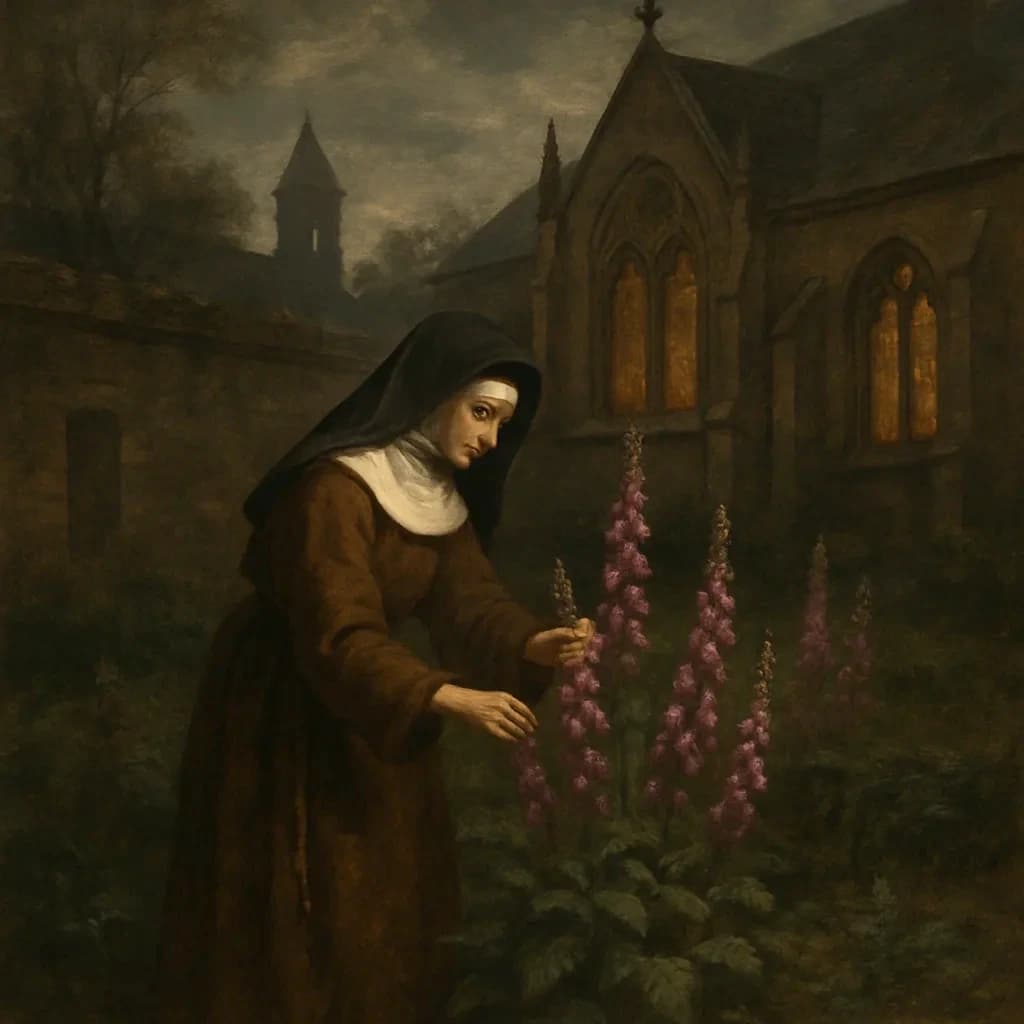
Did a Carmelite Nun Slowly Poison Napoleon?
Inside a Carmelite convent in France, the nuns quietly developed the most effective poison of the 19th century, and may have used it on the Emperor himself.
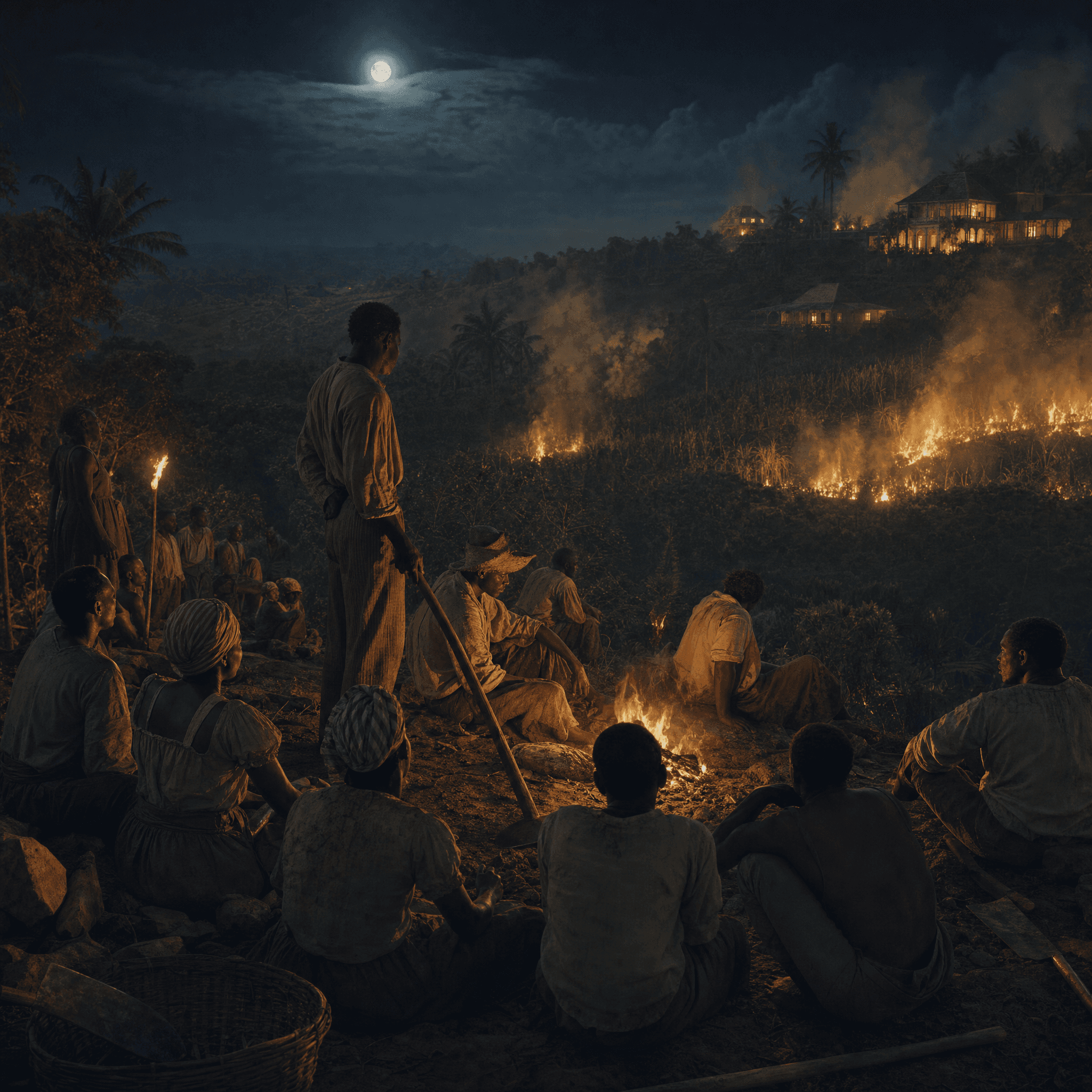
Every Slaveholder From Virginia to Brazil Was Having Nightmares
While Europe debated abolition in drawing rooms, a small Caribbean island was fighting the world's first successful slave revolution, and every slaveholder from Virginia to Brazil was having nightmares.
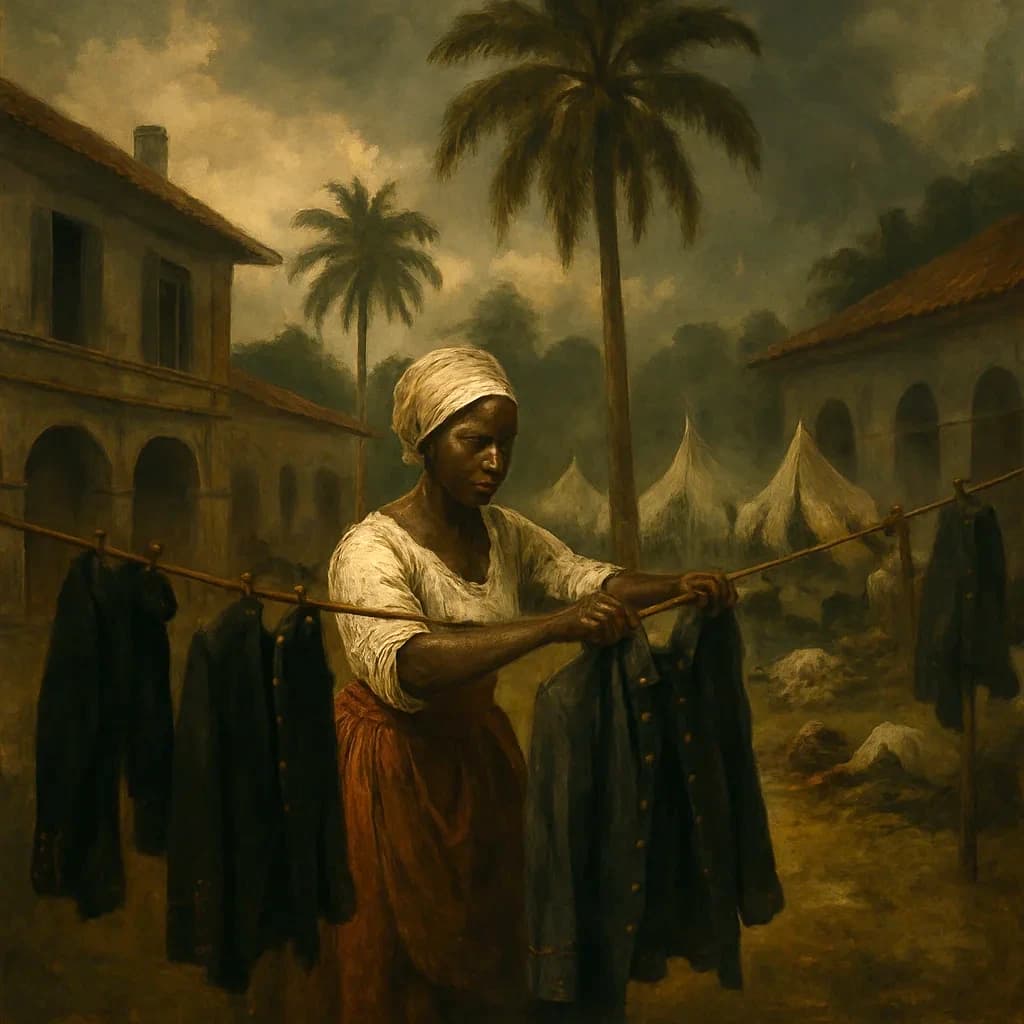
How Yellow Fever Won Haiti Its Freedom
A French laundress grabbed the wrong cloth and helped create the conditions for Haiti's independence.
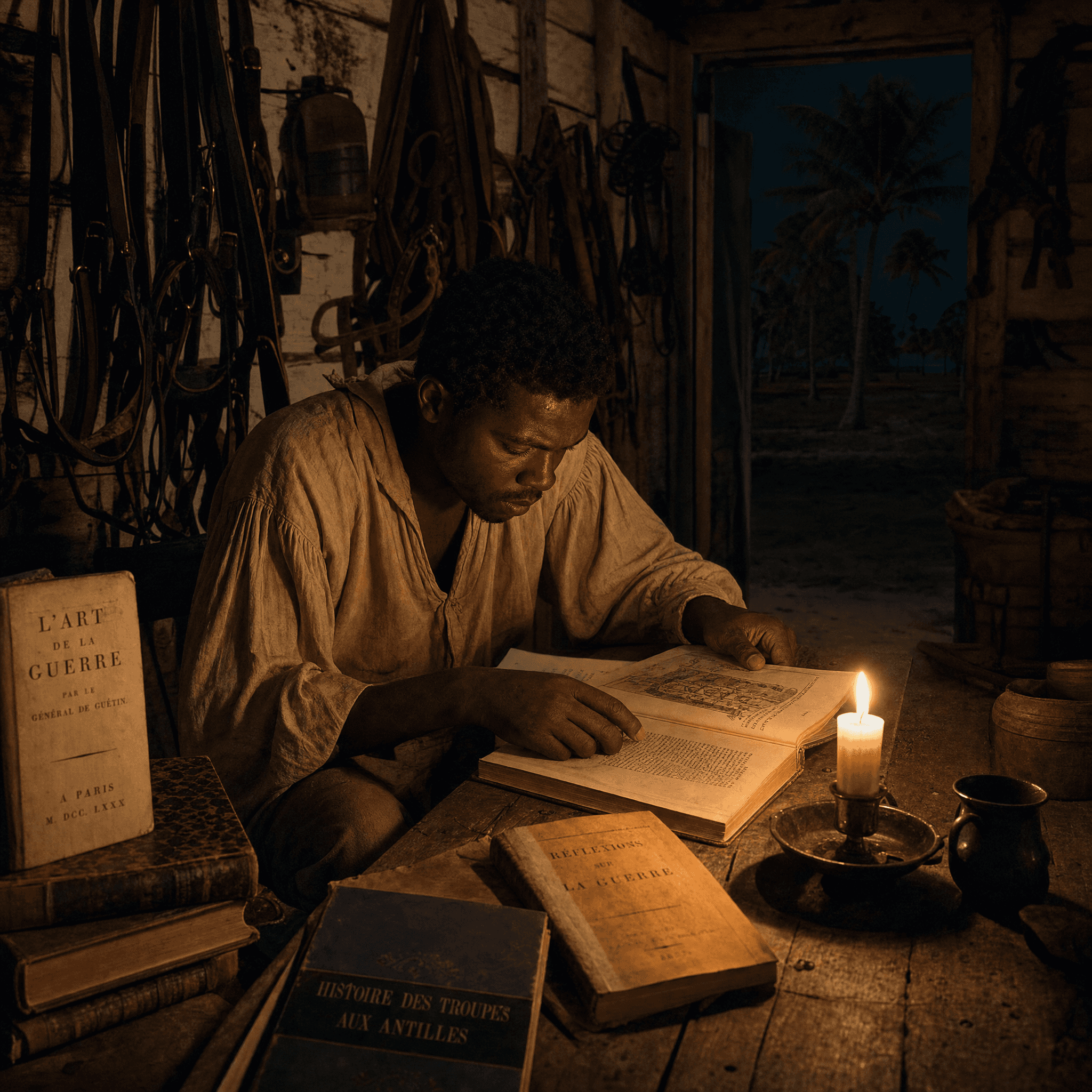
When Toussaint Learned to Read
A coachman on a sugar plantation quietly taught himself French and Latin, then proceeded to terrify every slave-owning nation on earth.
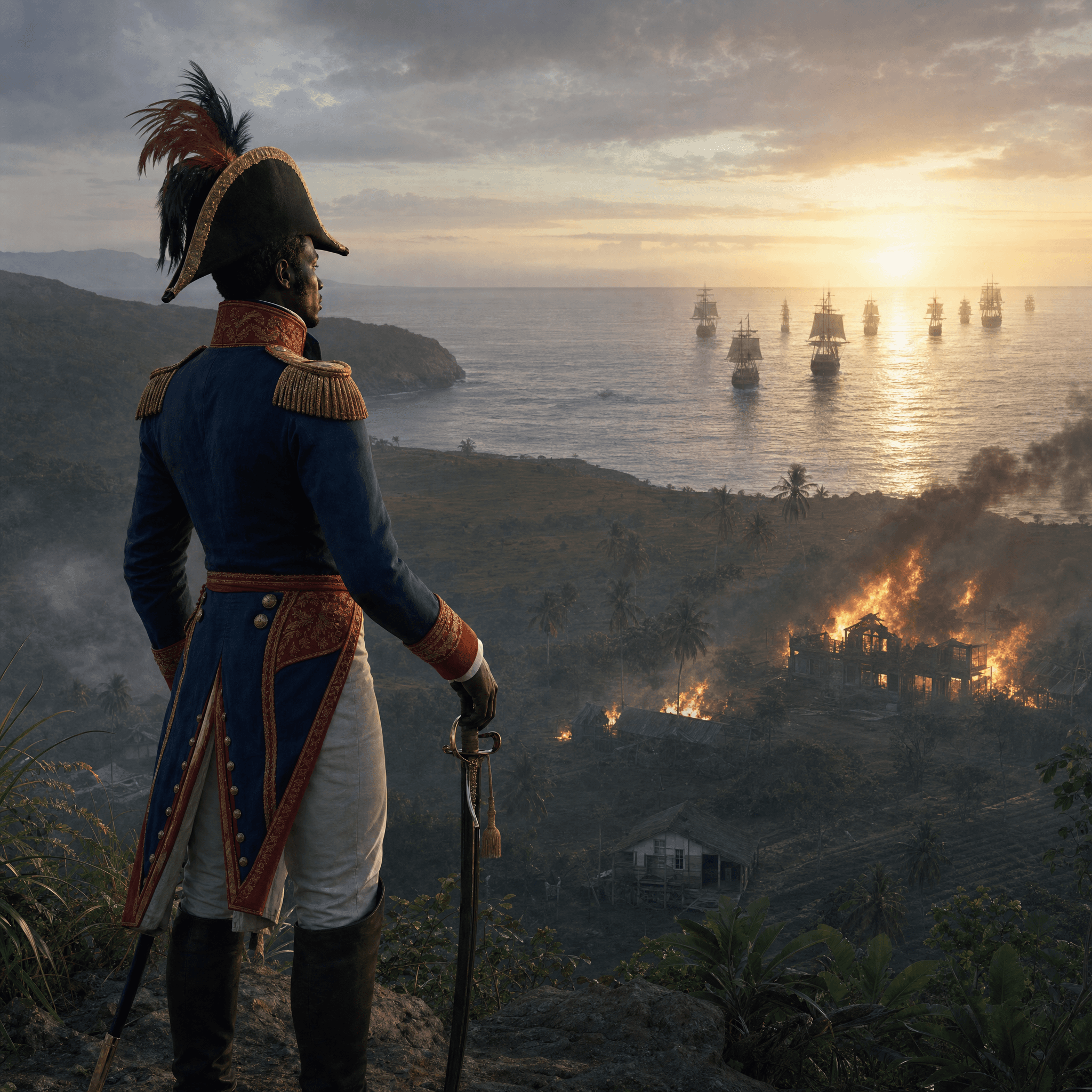
Haiti's Revolution Scared Napoleon Into Selling Louisiana
In 1804, a slave rebellion in Haiti created a nation so dangerous that Napoleon sold Louisiana to America rather than risk another revolution spreading to New Orleans.
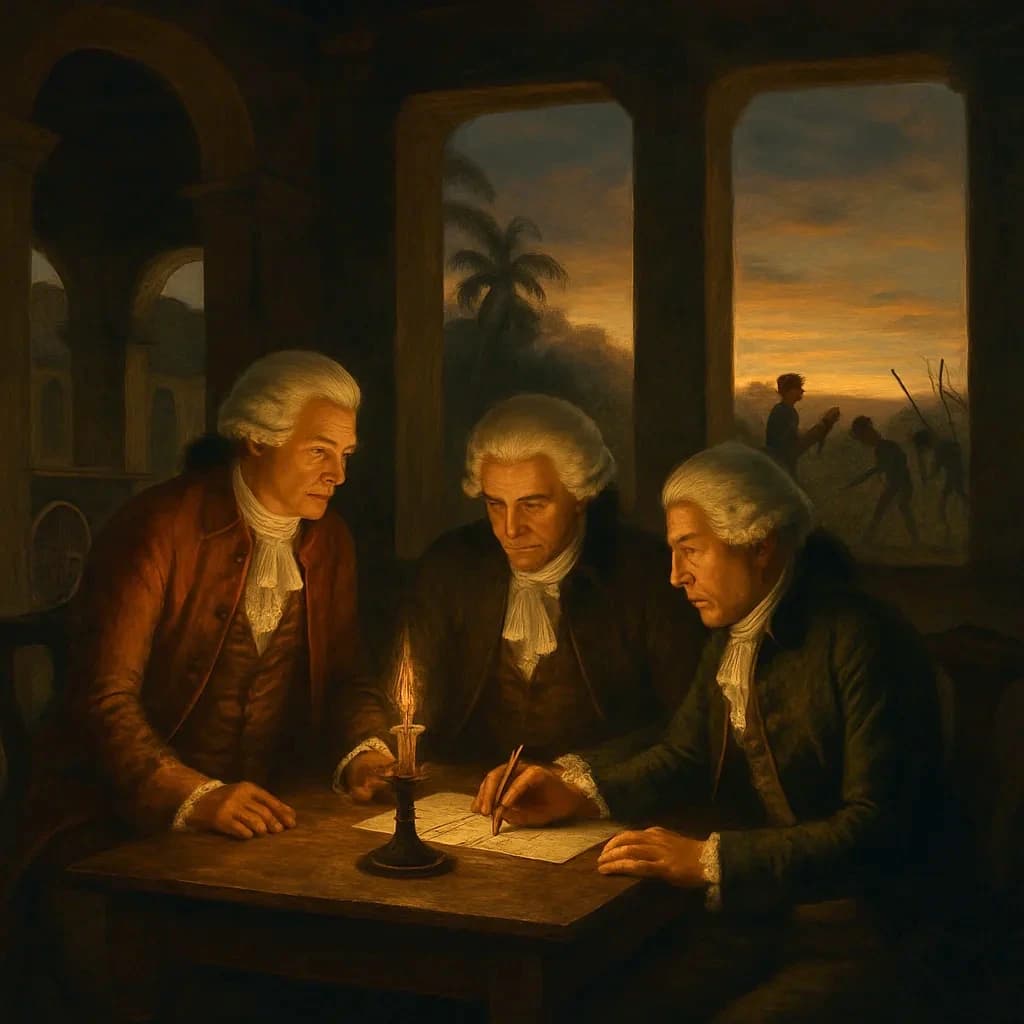
The Planters' Own Petition Sparked History's Greatest Slave Rebellion
A group of French planters wrote one letter to their king, and accidentally created the most successful slave rebellion in human history.
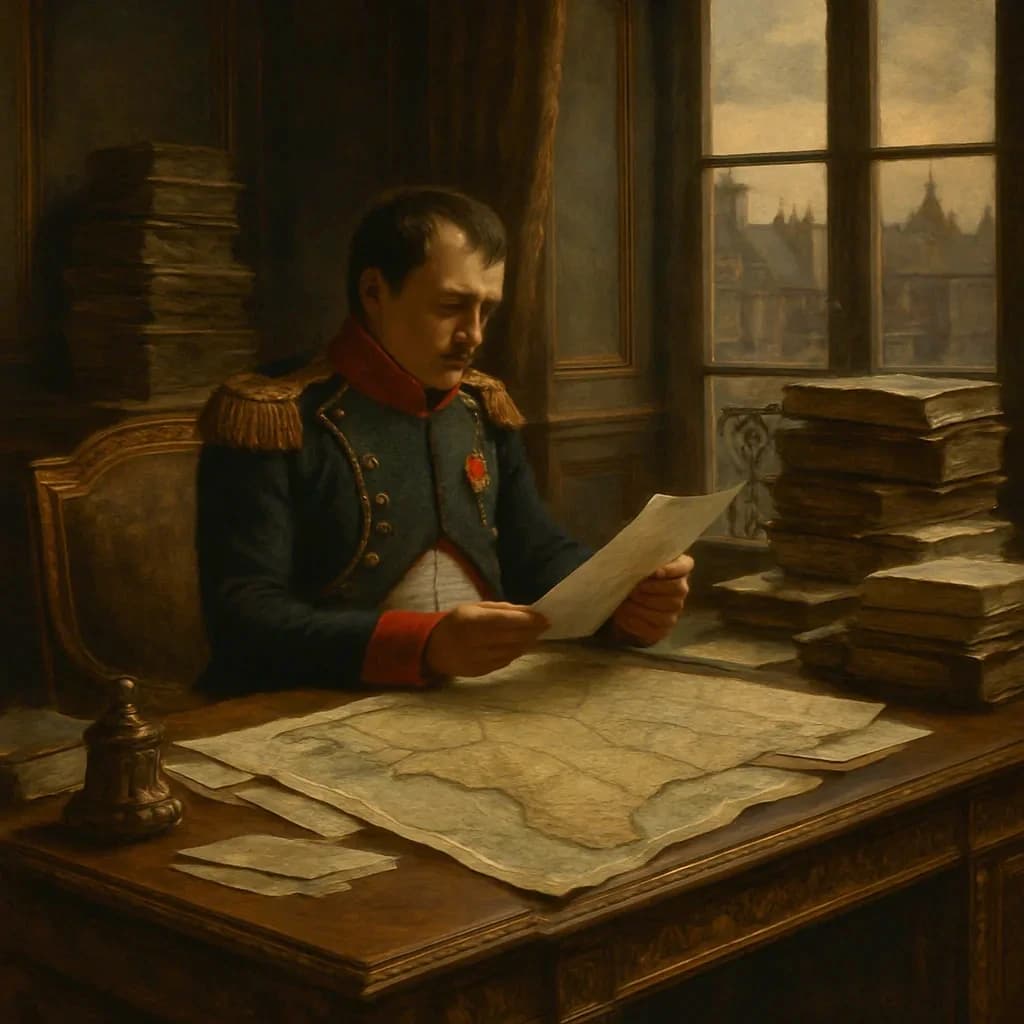
One Unpaid Tobacco Debt Cost France a Continent
A single unpaid loan to an American tobacco farmer in 1781 would eventually cost France an entire continent.
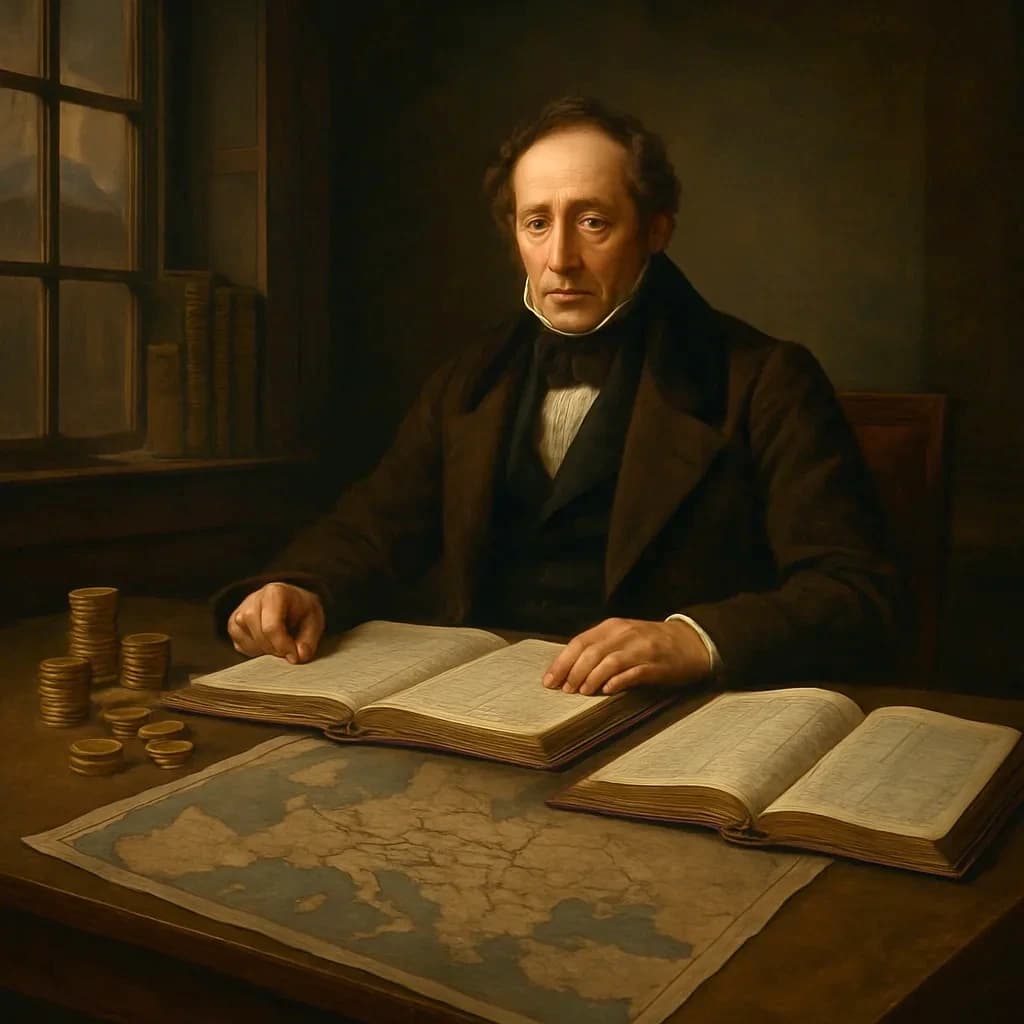
Rothschild Financed Napoleon Before Betting Against Him
Nathan Rothschild made his fortune betting against Napoleon. But first, he quietly financed him.
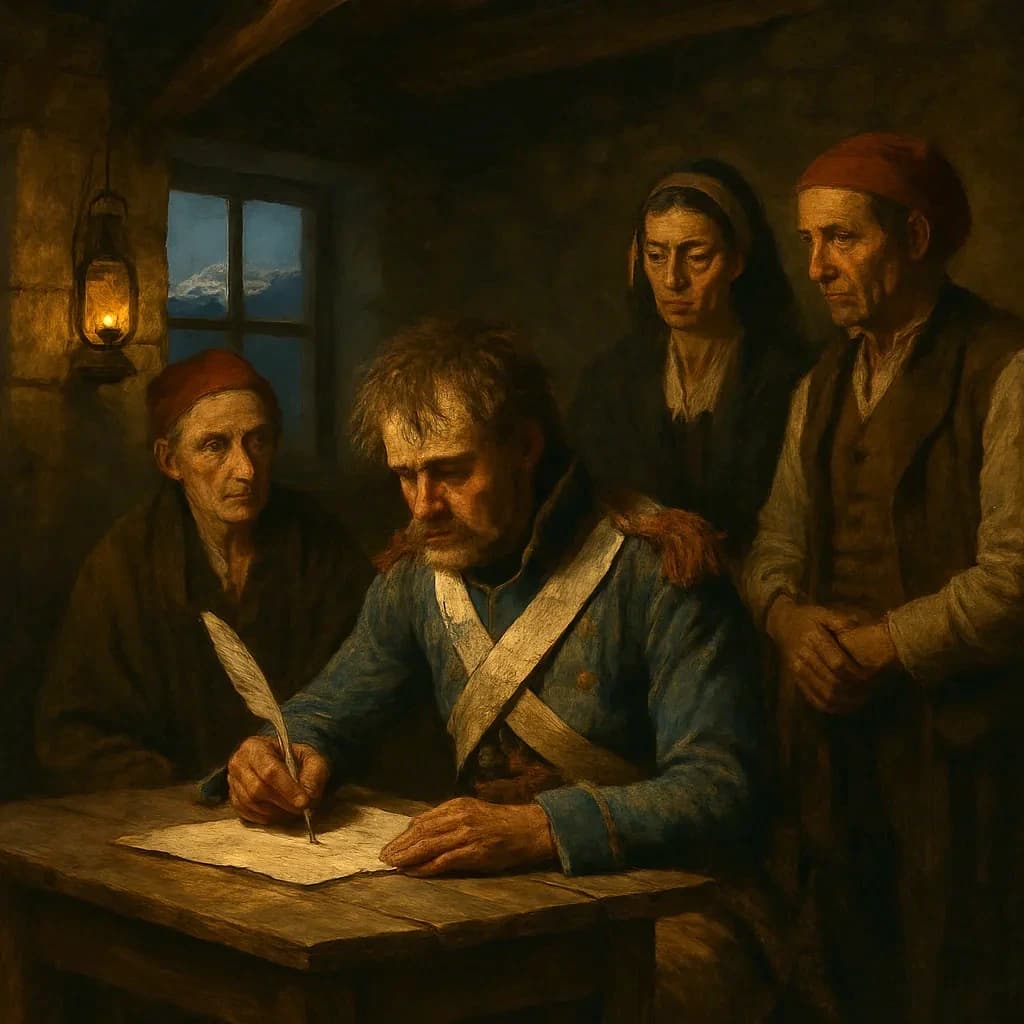
A Deserter From Napoleon's Army Accidentally Founded His Own Nation
A French soldier walked away from Napoleon's army in 1808 and accidentally founded his own nation.
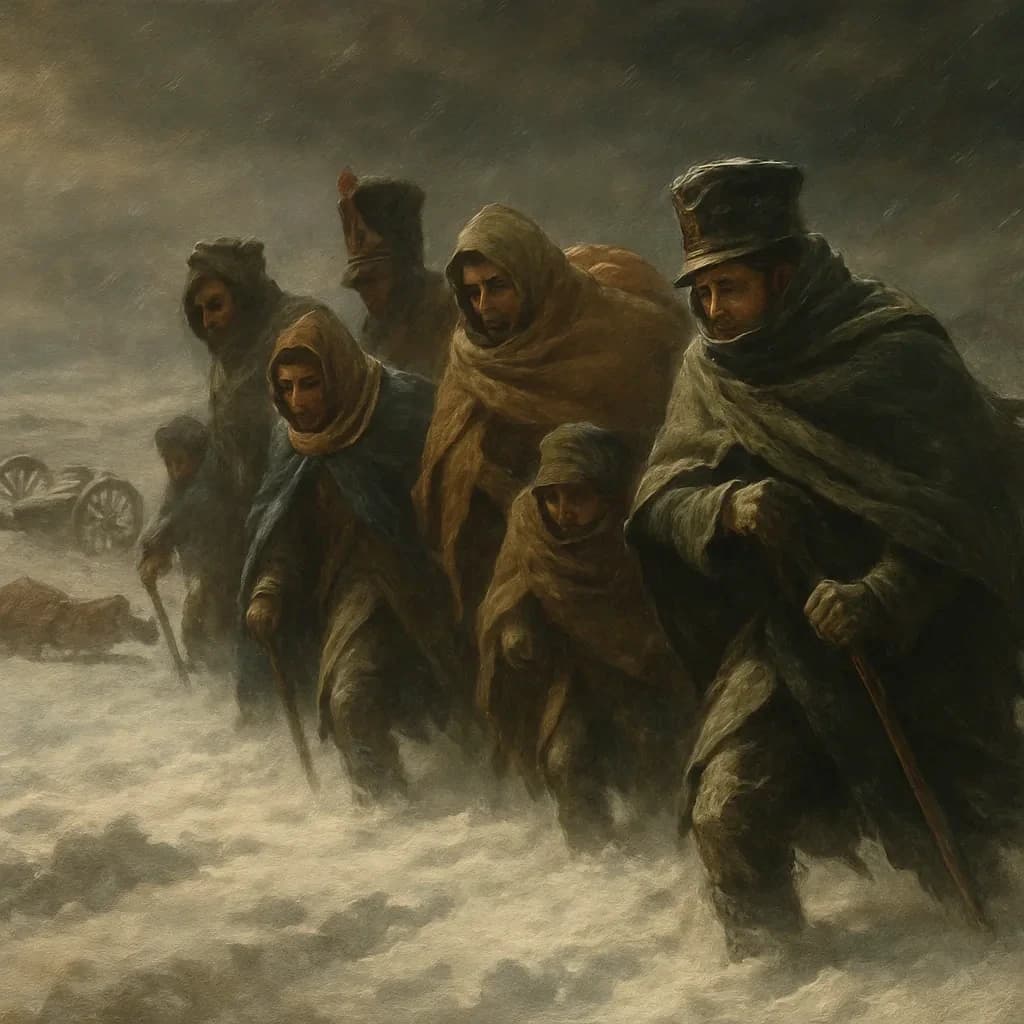
How a Mapmaker's Guess Killed a Million Men
A cartographer who had never set foot in Russia made an educated guess about its winters, and that guess became the deadliest military intelligence failure in history.
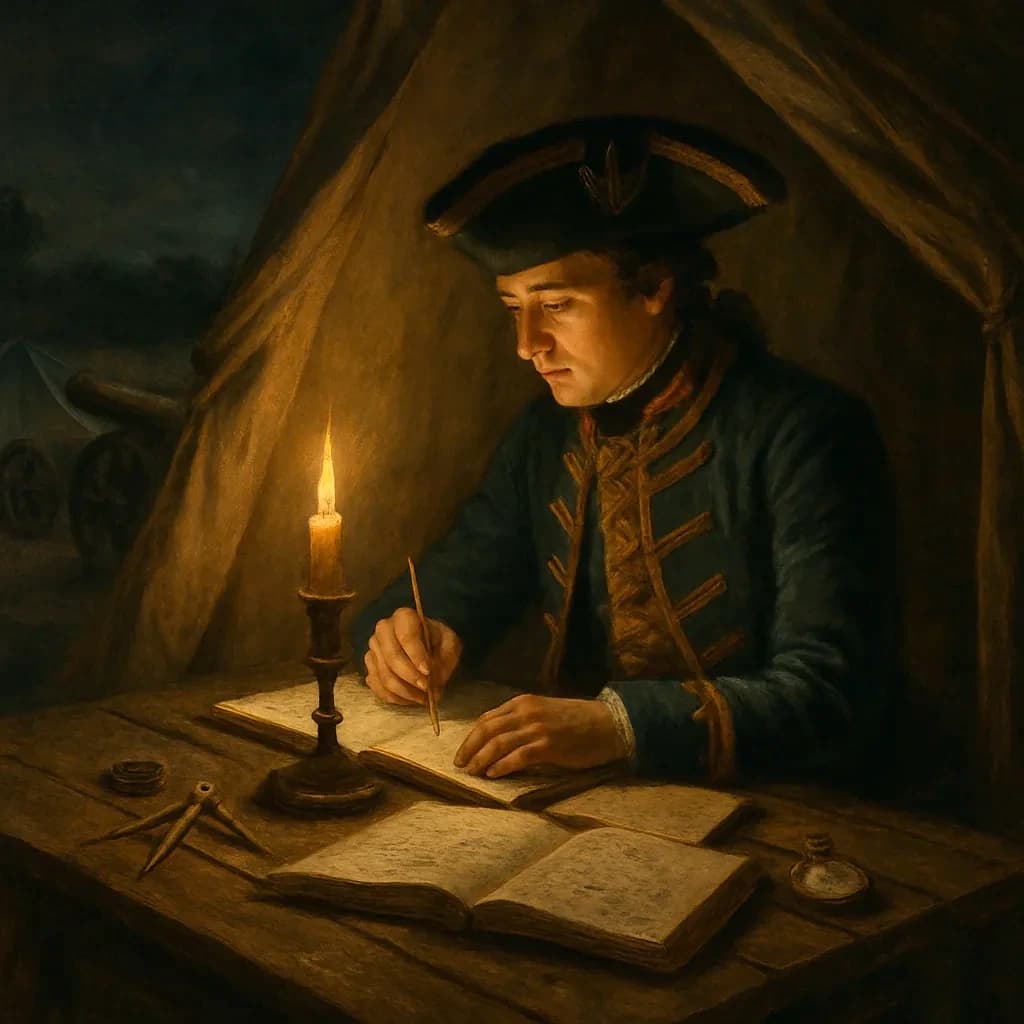
Calculating Cannonballs: The Math Behind Napoleon's Artillery
A young French officer spent his nights calculating trajectories that would revolutionize warfare, but his superiors called it witchcraft.
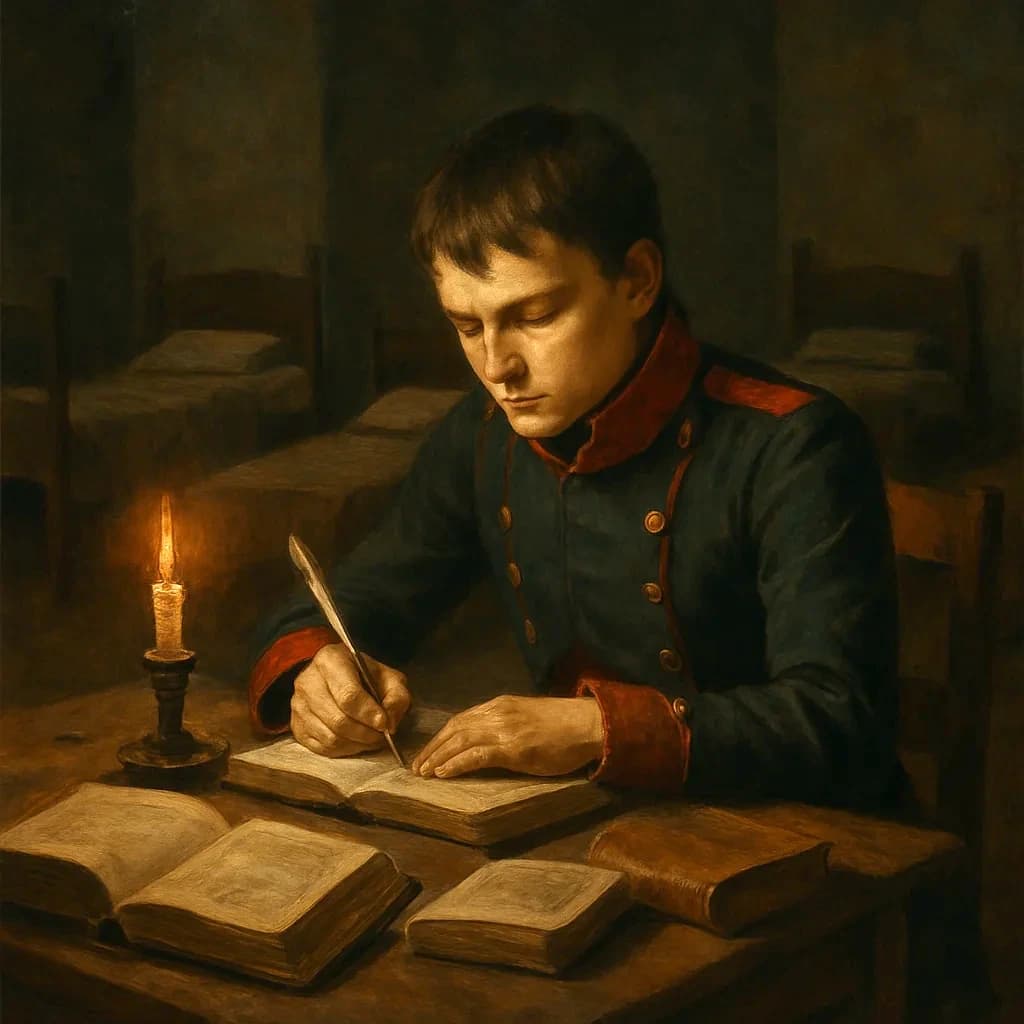
Napoleon Wrote a Bad Romance Novel First
Before conquering Europe, Napoleon Bonaparte was a lonely teenager who devoured books and wrote terrible romance novels.
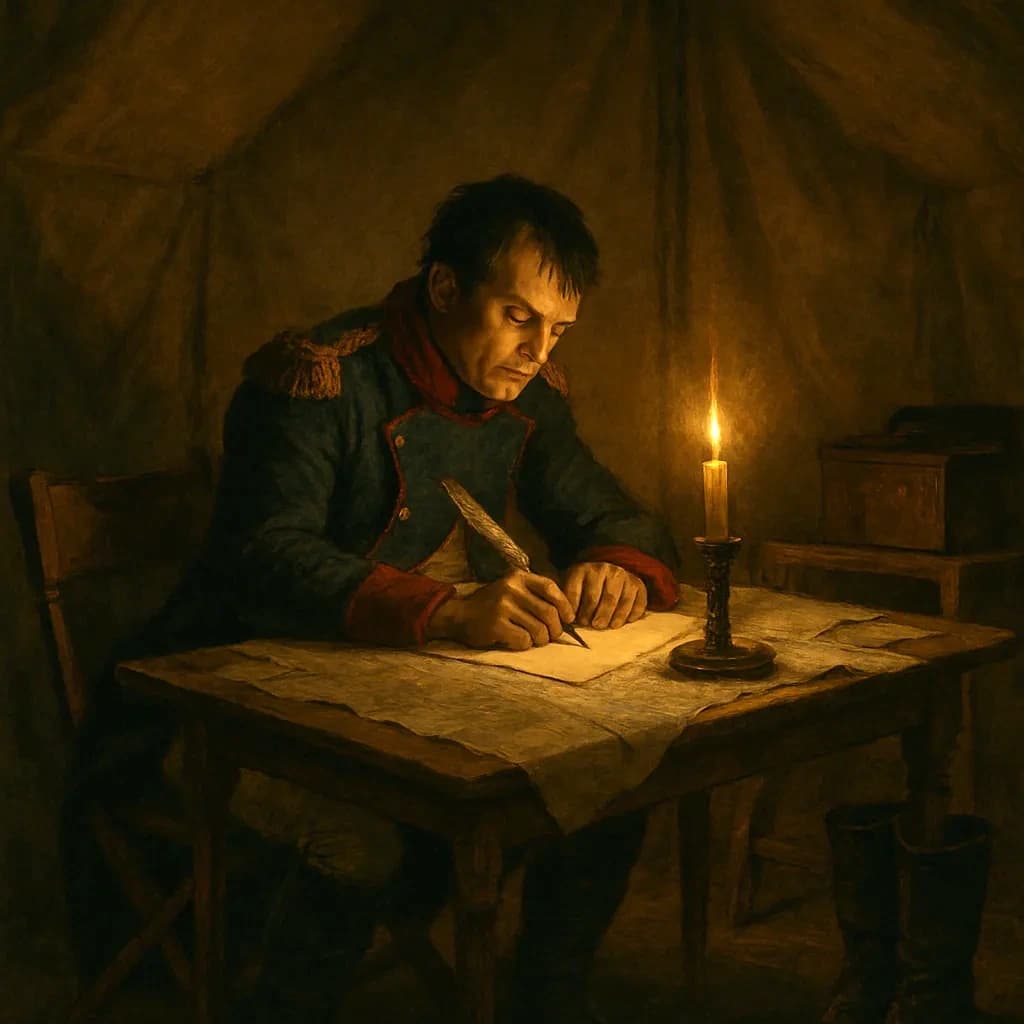
Napoleon's Love Letters Handed His Enemies Their Weapon
Napoleon's 67 passionate letters to Josephine revealed a weakness that his enemies would exploit to destroy him.
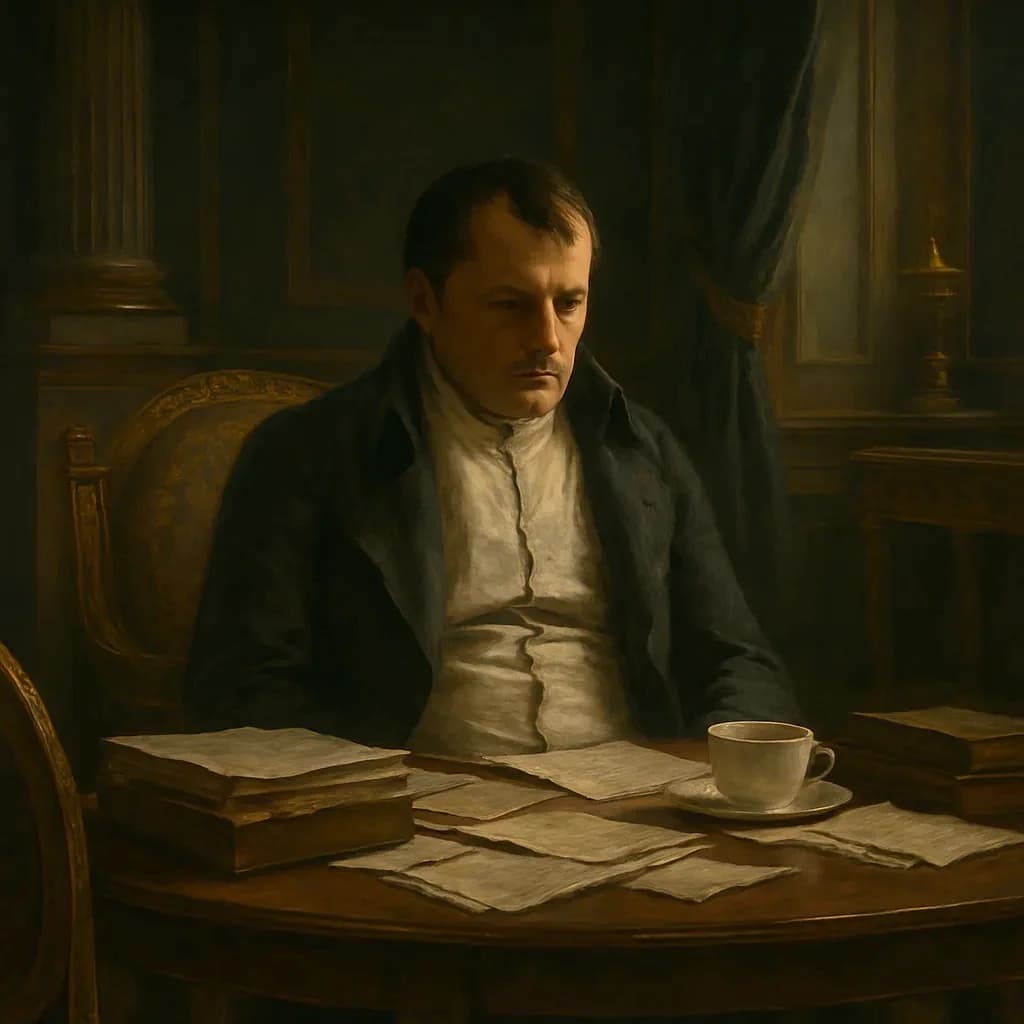
Napoleon Sold Half a Continent for Four Cents an Acre
Napoleon's most consequential decision wasn't made on a battlefield. It happened at breakfast in 1803.
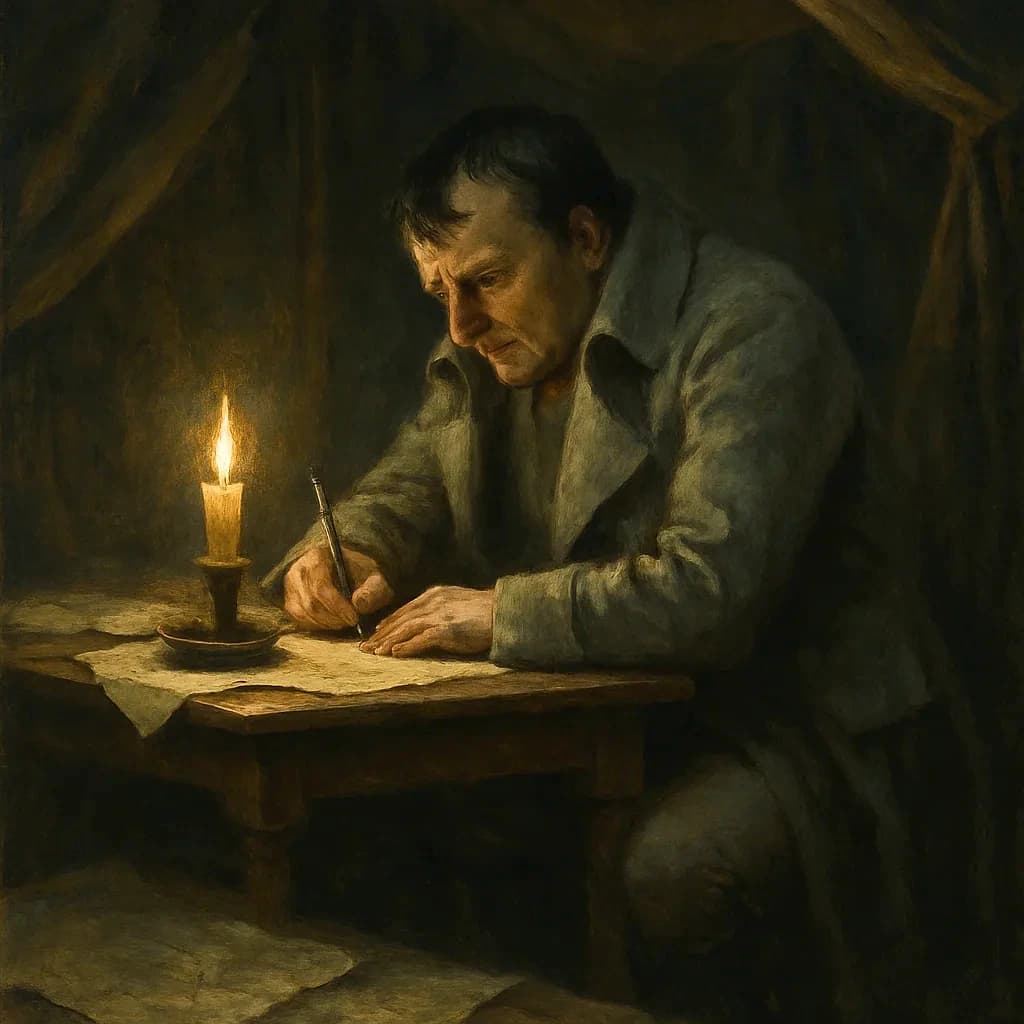
Napoleon Begged to Be Told He Wasn't a Fool
Europe's most confident emperor filled thousands of private letters with crushing self-doubt, panic, and a desperate need for approval.
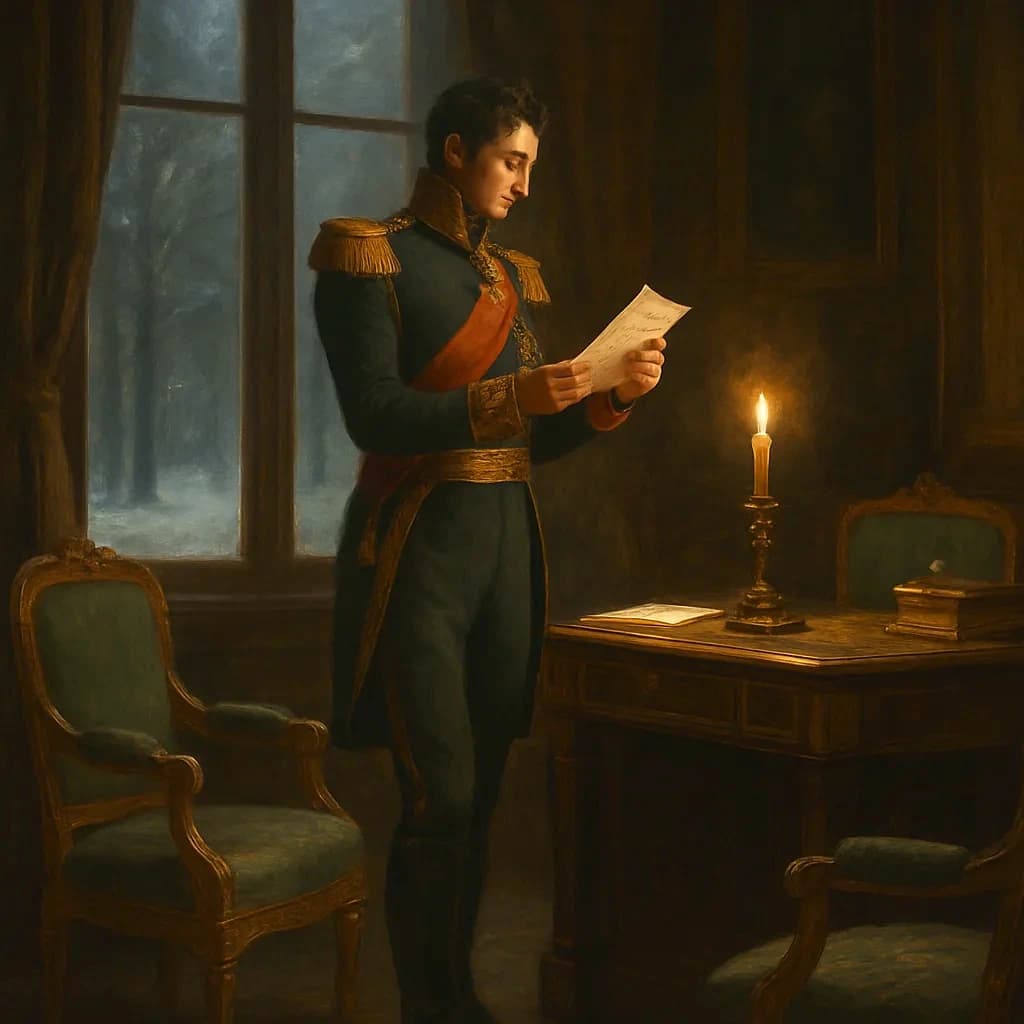
The Man Who Could Have Stopped Napoleon Chose Exile
When Napoleon escaped Elba, one man could have stopped his march to power, but chose exile over empire.
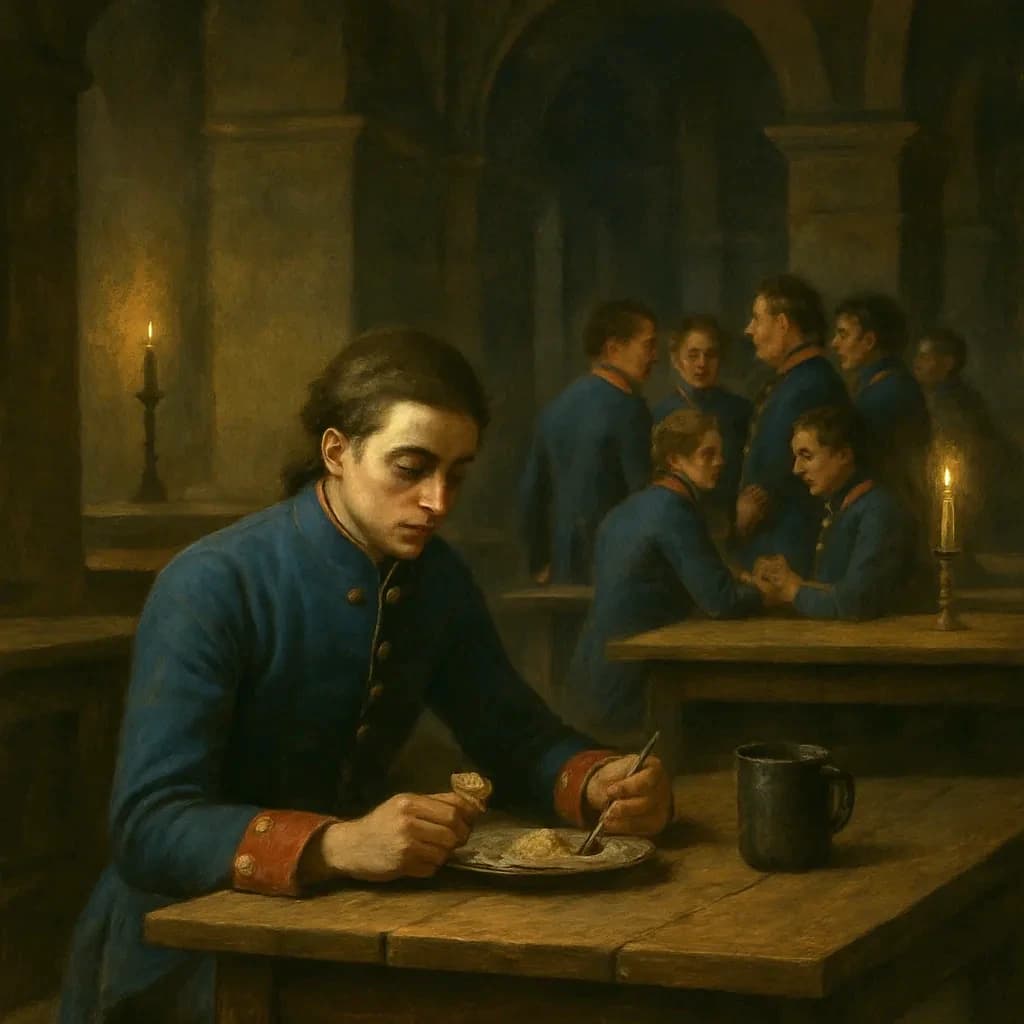
The Corsican Nobody Wanted to Crown
Before the world knew his name, Napoleon Bonaparte was considered too short, too foreign, and too ambitious by the very people who would later bow to him.
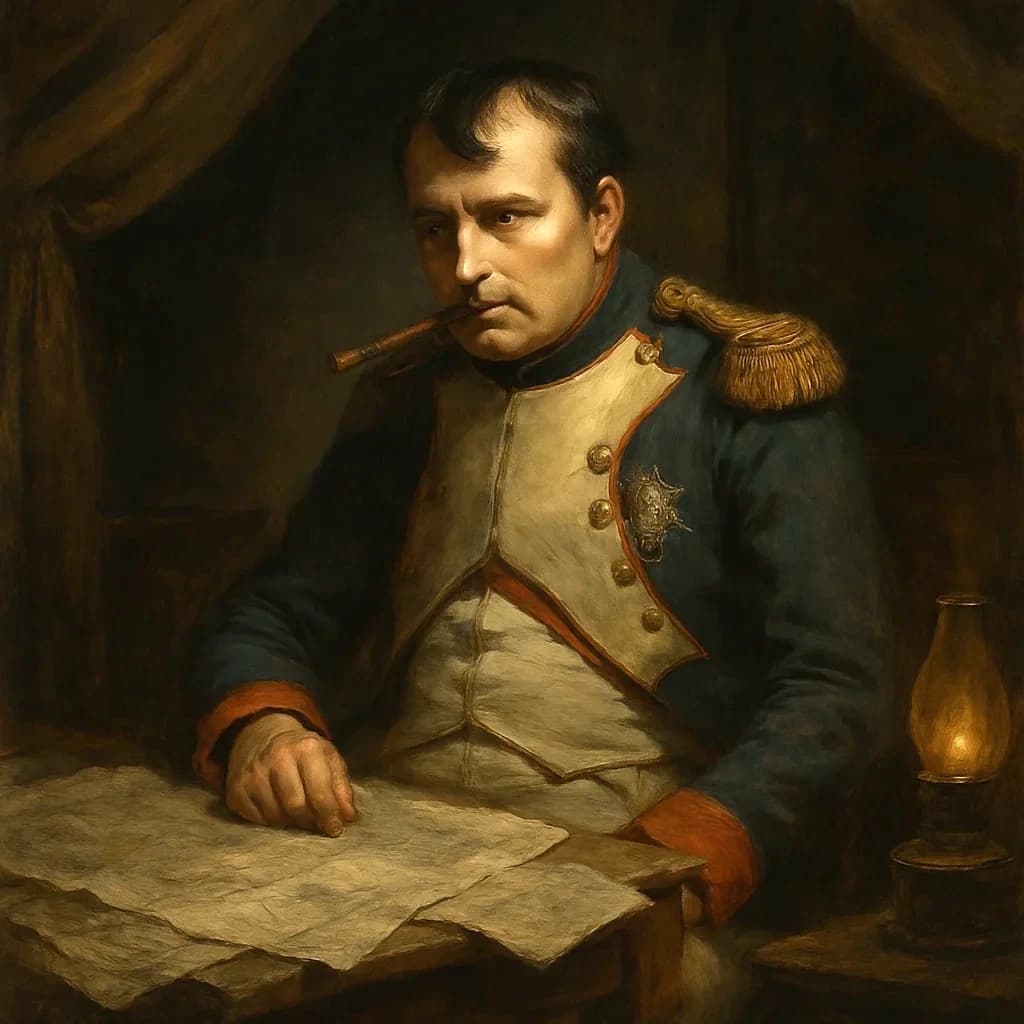
Napoleon Slowly Poisoned Himself With One Food Obsession
While Napoleon conquered Europe, he was slowly poisoning himself with a single obsession that may have cost him everything.
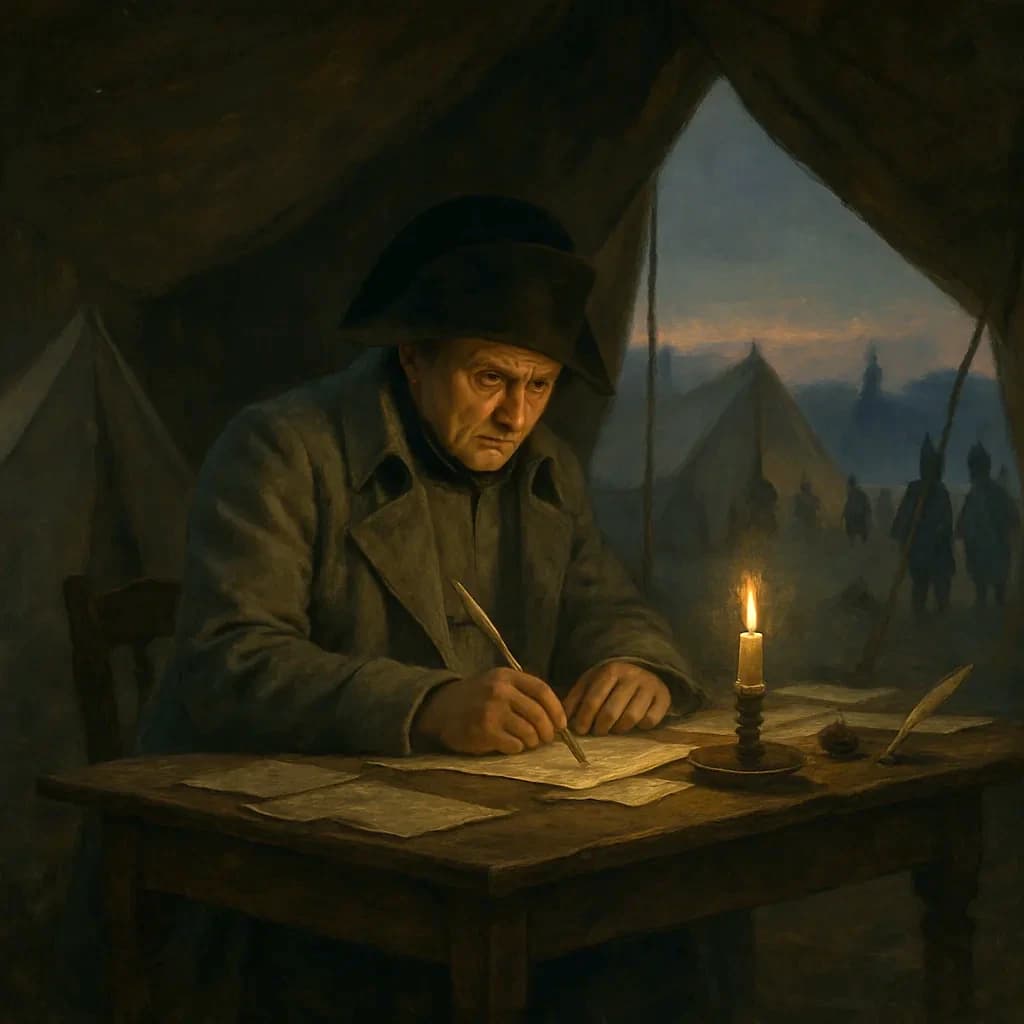
Napoleon Wrote 40,000 Letters Dripping With Self-Doubt
Napoleon Bonaparte wrote over 40,000 letters during his lifetime, many revealing a man paralyzed by romantic insecurity and crippling self-doubt.
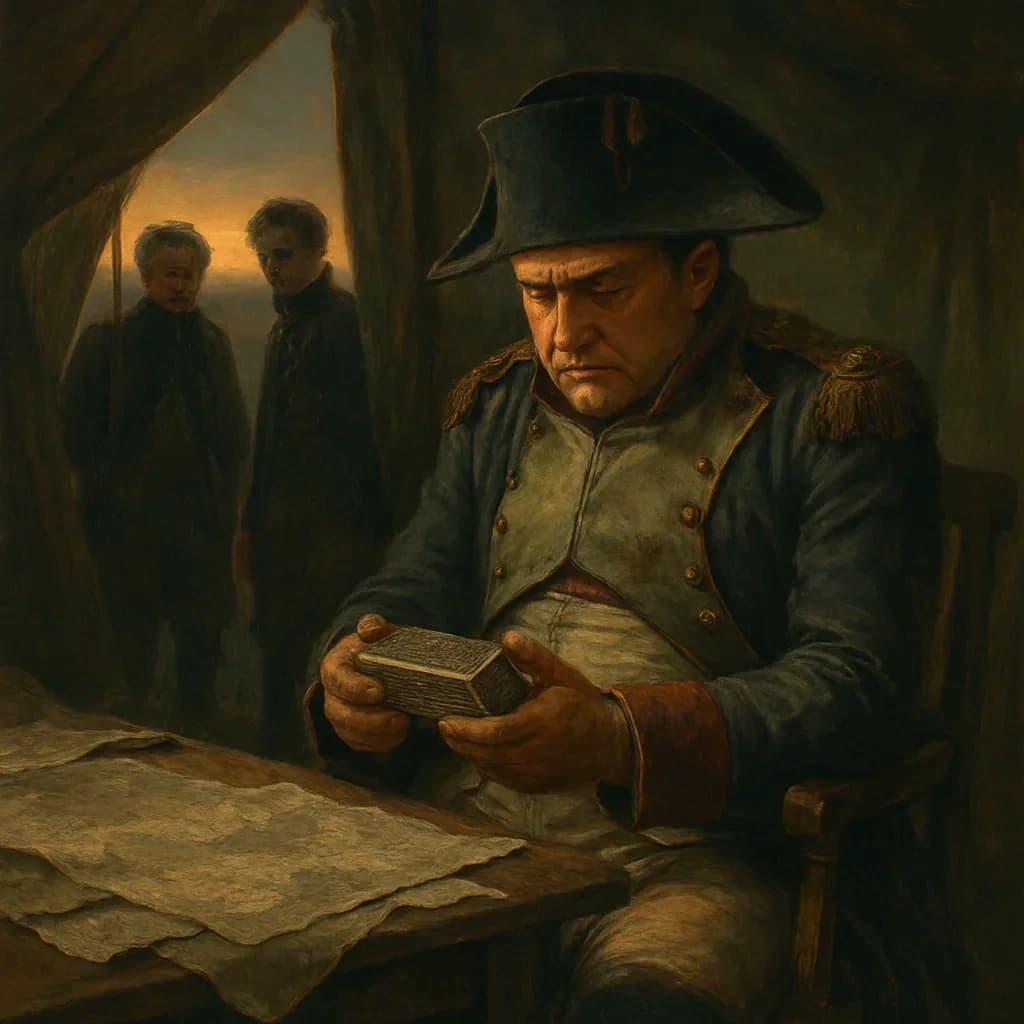
Napoleon's Chocolate Habit Nearly Cost Him His Empire
Napoleon's battlefield genius came with a secret weakness that nearly cost him his empire.
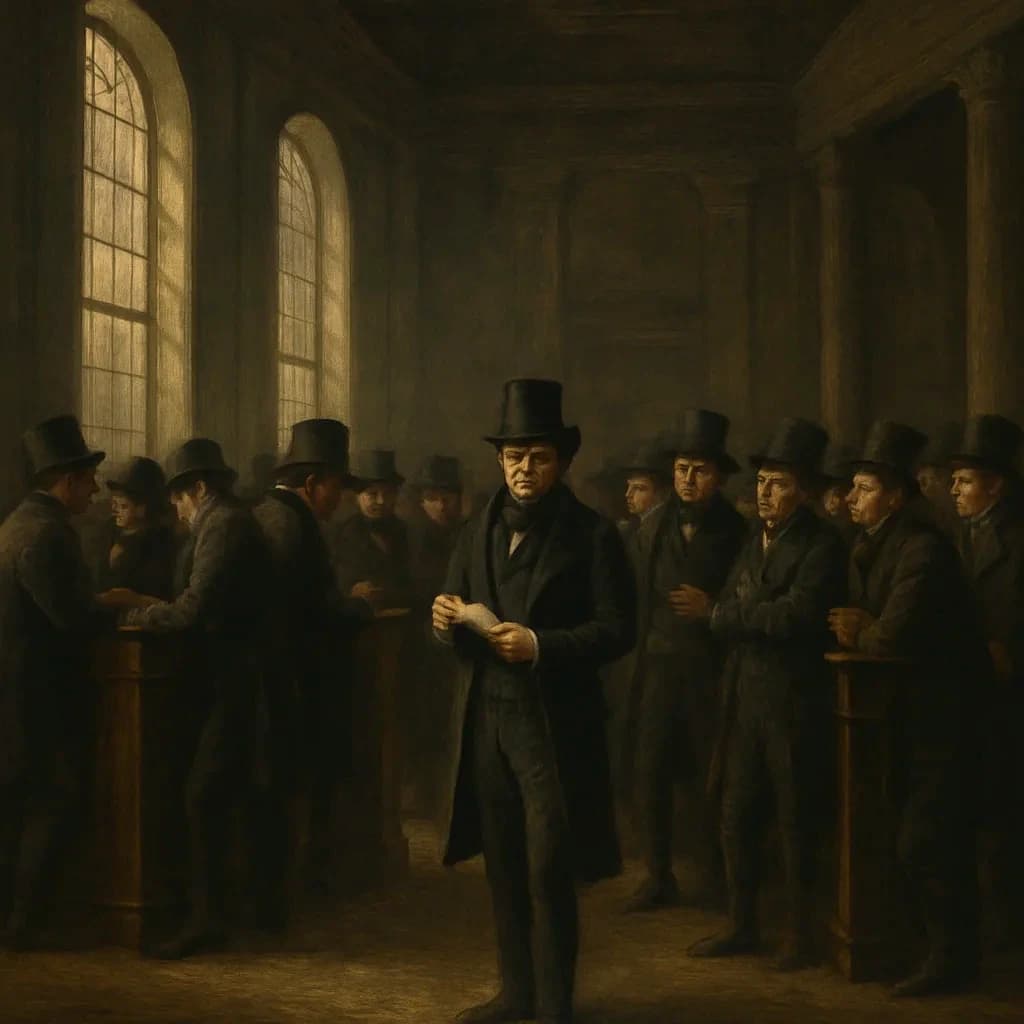
The Waterloo Bet That Built a Banking Empire
Nathan Rothschild had twenty-four hours to either make the greatest fortune in history or lose everything his family had built.
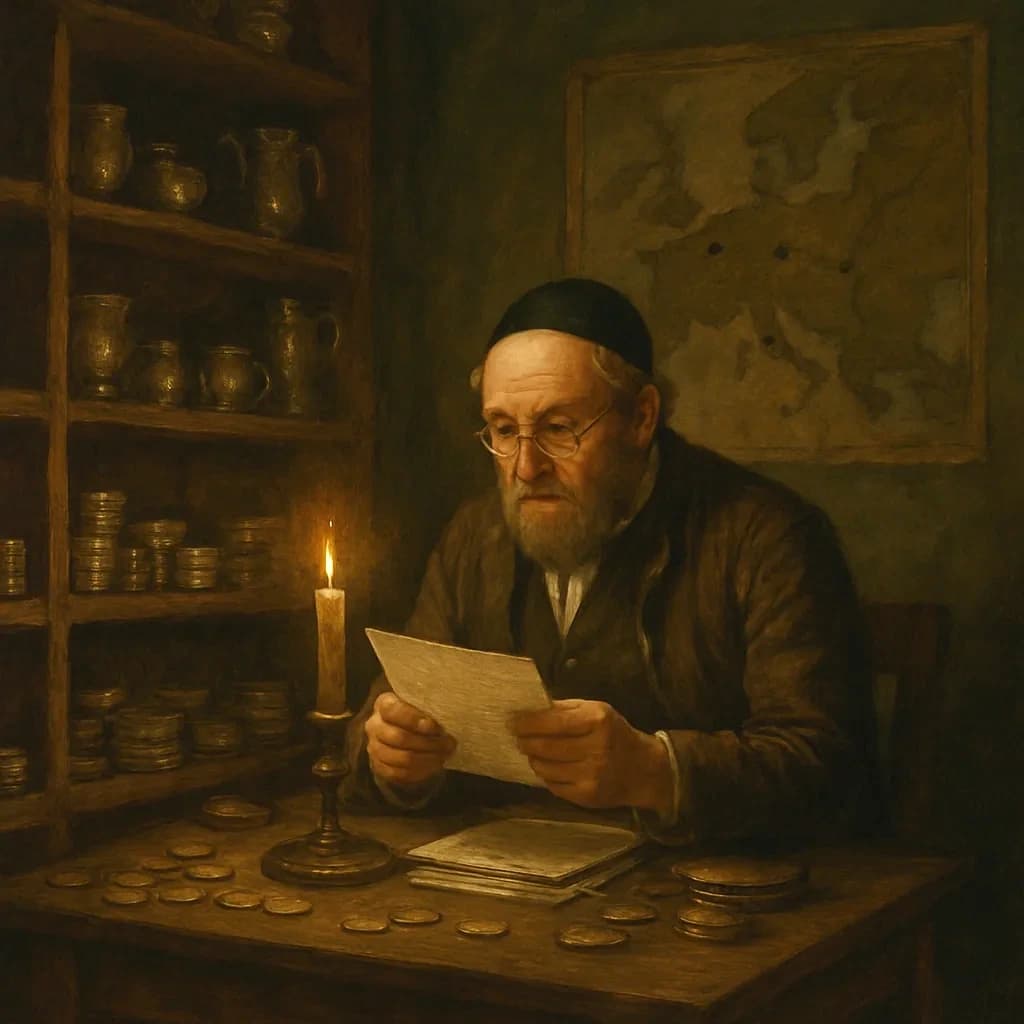
A Coin Dealer Bought Soldiers' Panic and Built a Dynasty
A Frankfurt coin dealer started buying government bonds from panicked soldiers, and accidentally built the world's most powerful financial dynasty.
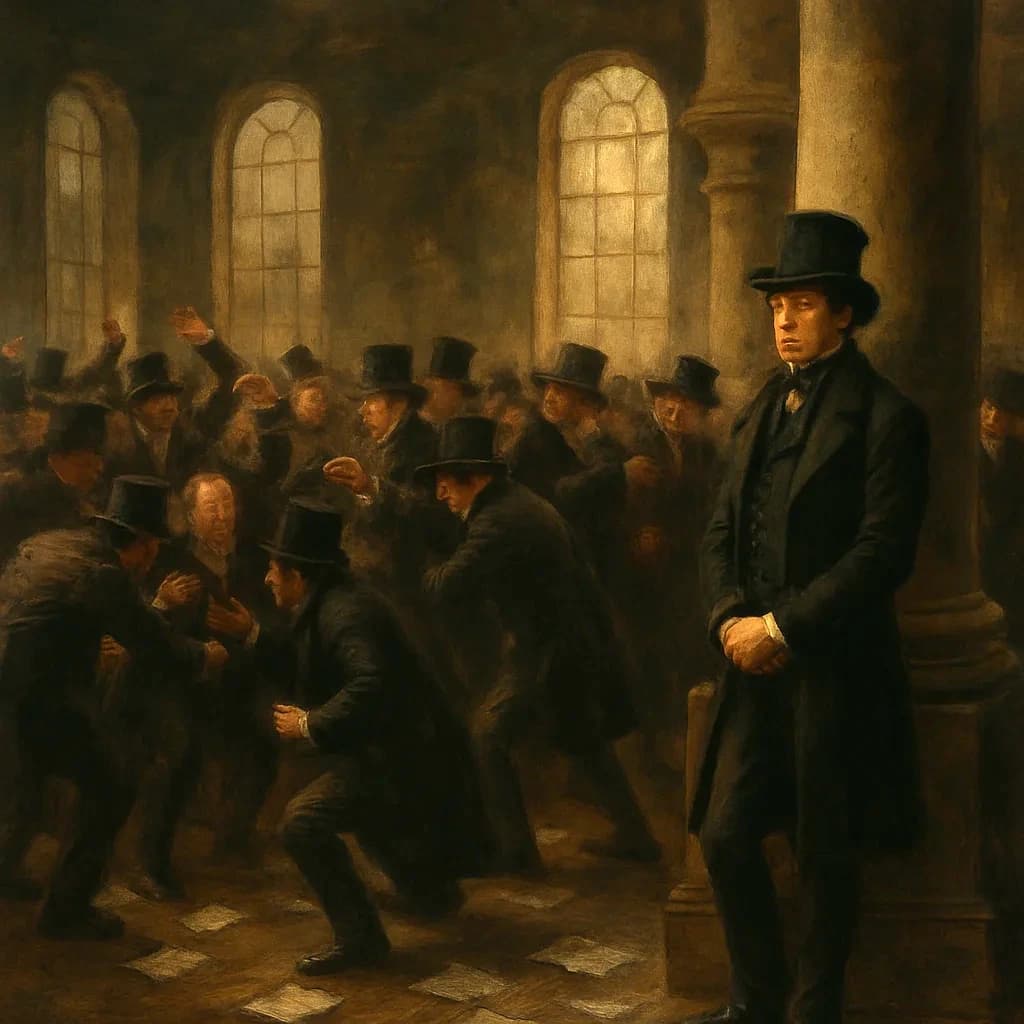
Rothschild's Famous Waterloo Bet Ran on Eighteen-Hour-Old News
Nathan Rothschild made the most famous bet in financial history with information that was eighteen hours old.
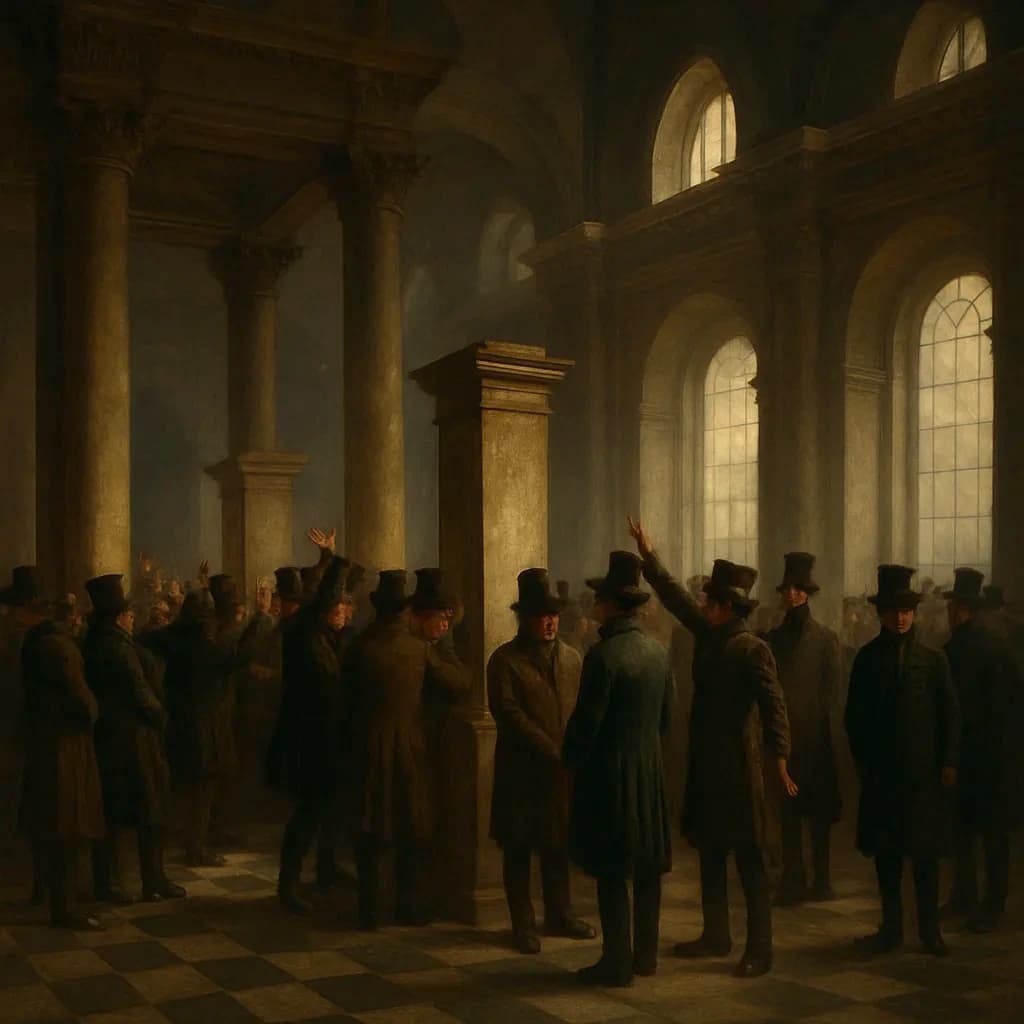
Nathan Rothschild Chose Which Waterloo Truth London Would Hear
Nathan Rothschild stood in the London Exchange with news that could make or break every fortune in the room, but first, he had to decide which version of the truth to tell.
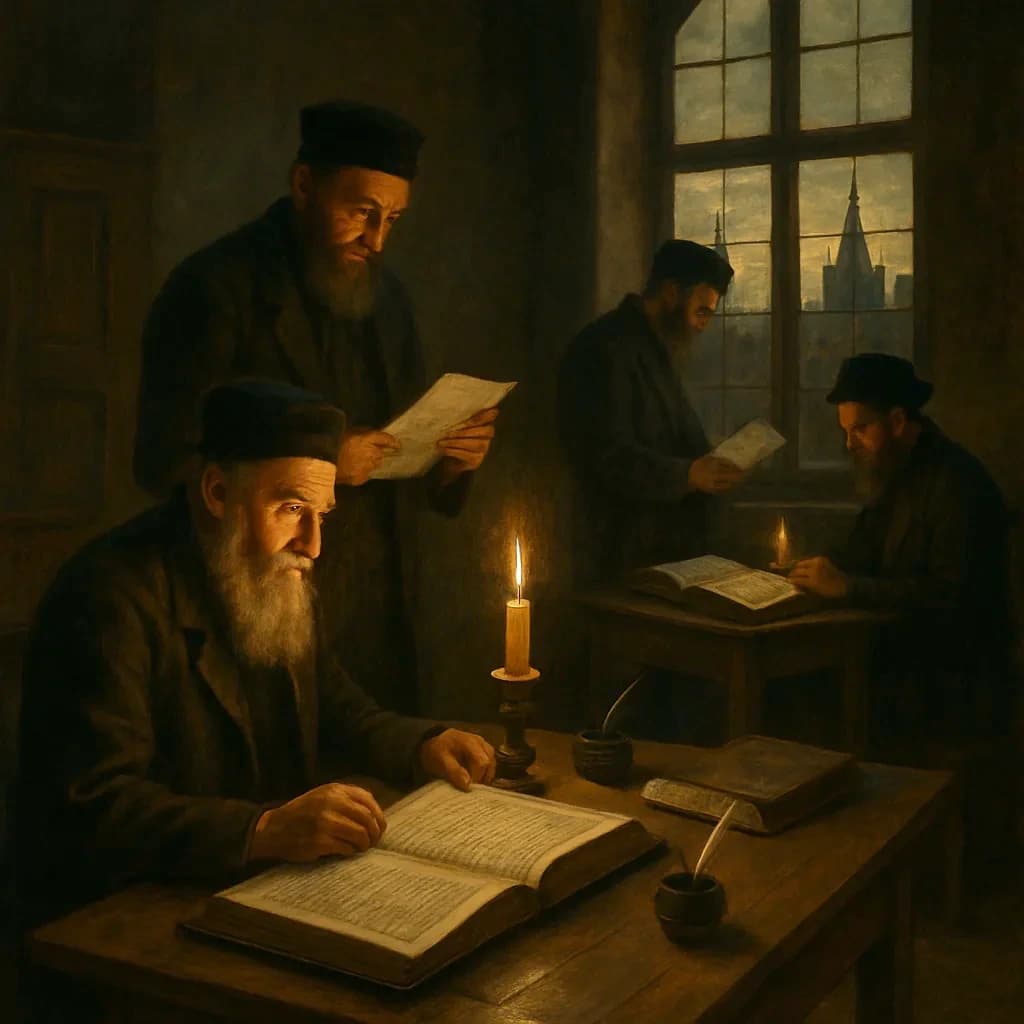
Rothschild: Lending to Both Sides of Five Wars
A quiet German accountant financed both sides of five different European conflicts before anyone noticed.
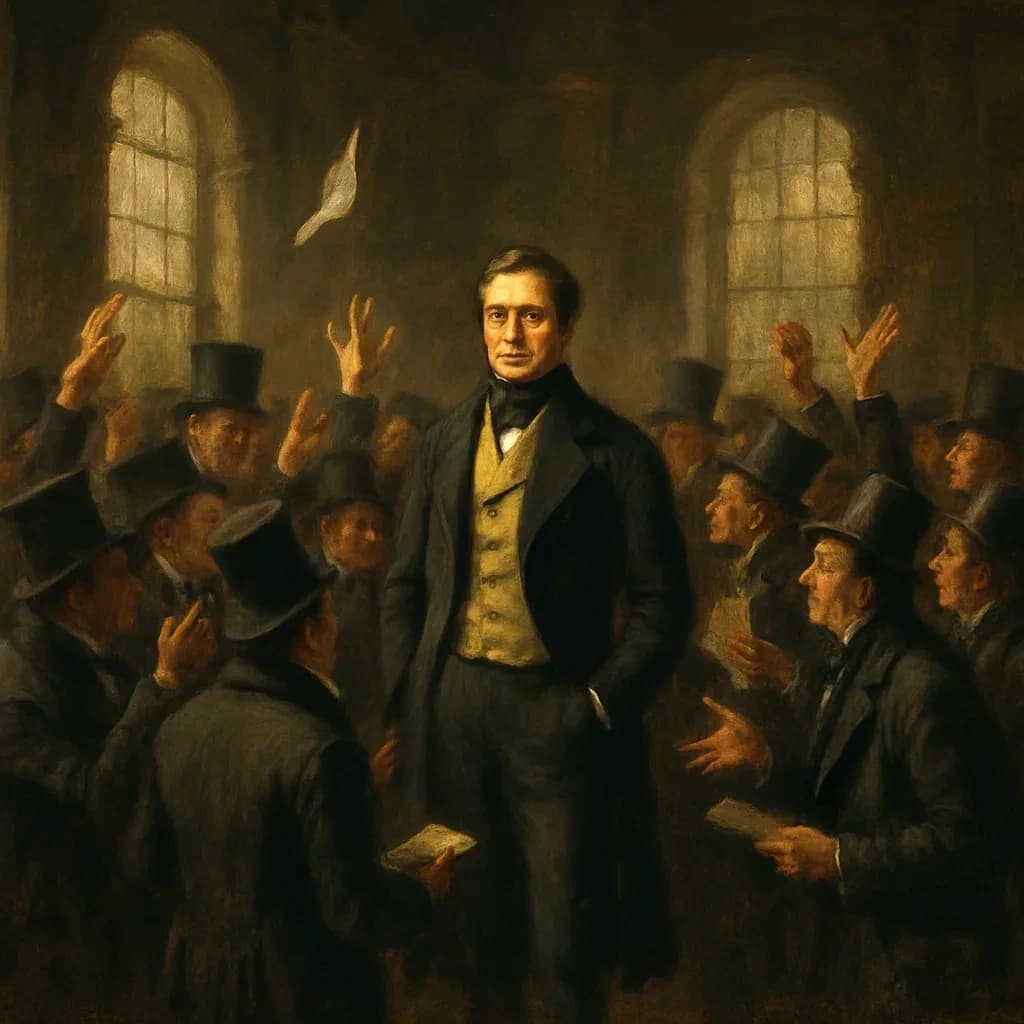
Waterloo's Biggest Winner Was a Banker in London
While Napoleon fought his final battle, a different war was being waged in London's financial district, one that would make the Rothschilds the richest family in Europe.
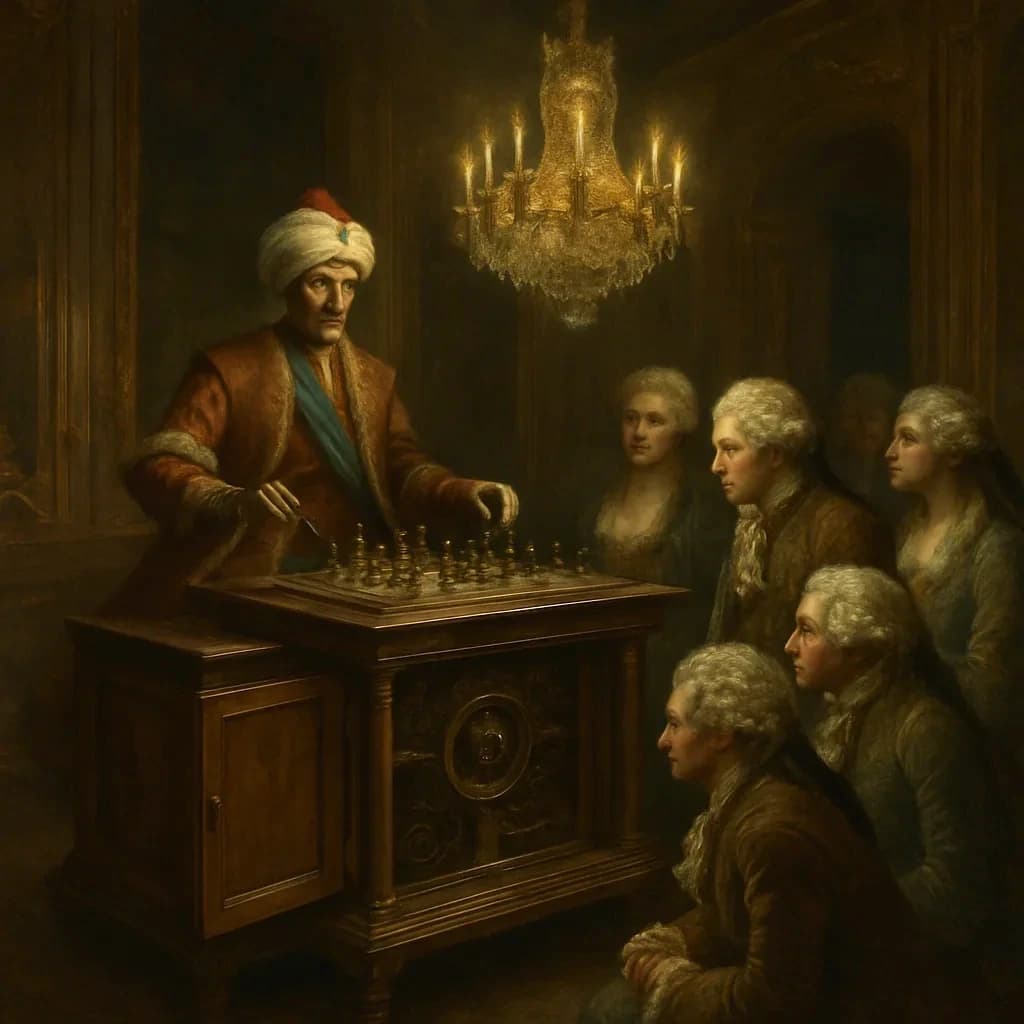
Napoleon Lost to a Chess Machine Hiding a Man
A mechanical chess-playing automaton began touring Europe's royal courts in 1770, and launched the computer age.
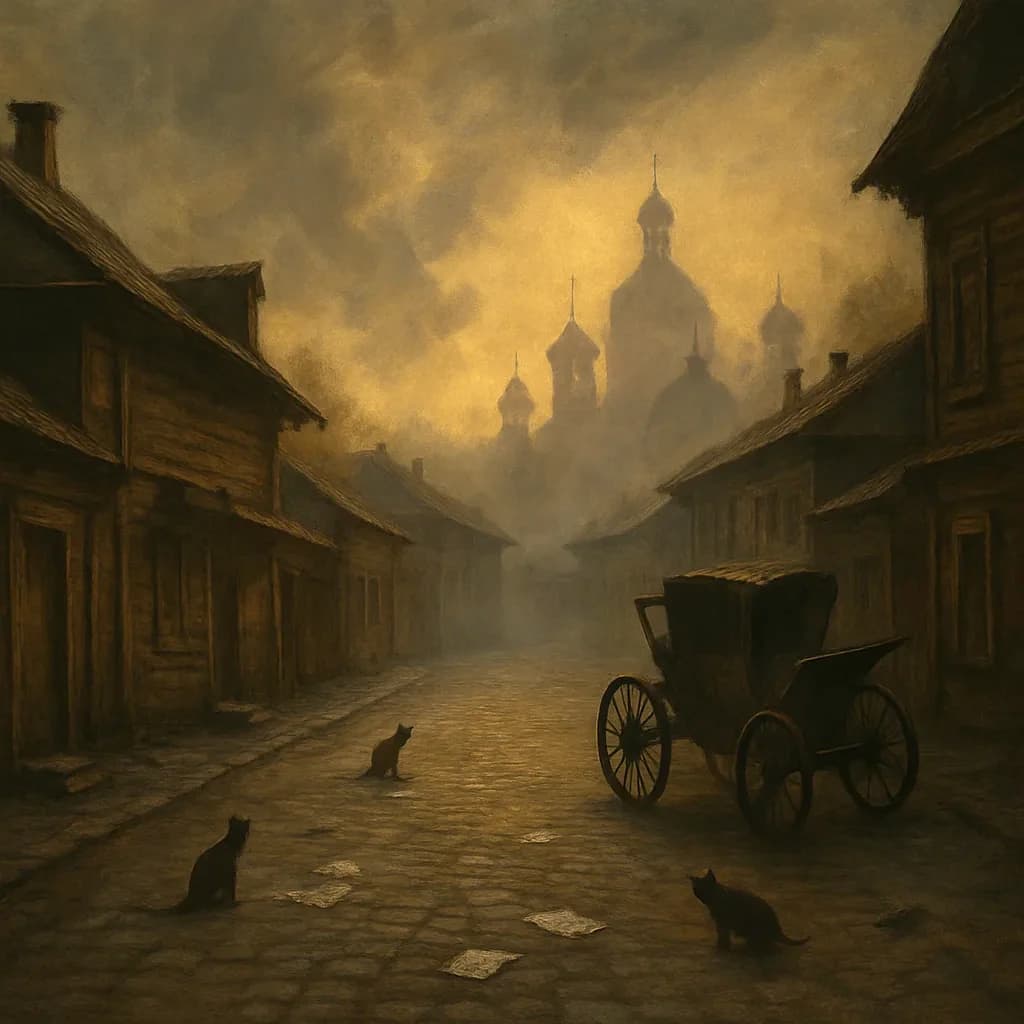
Moscow Paid Napoleon in Birchbark Rubles
When Napoleon finally entered Moscow, he found the city empty and the treasury replaced with counterfeit rubles printed on birchbark.
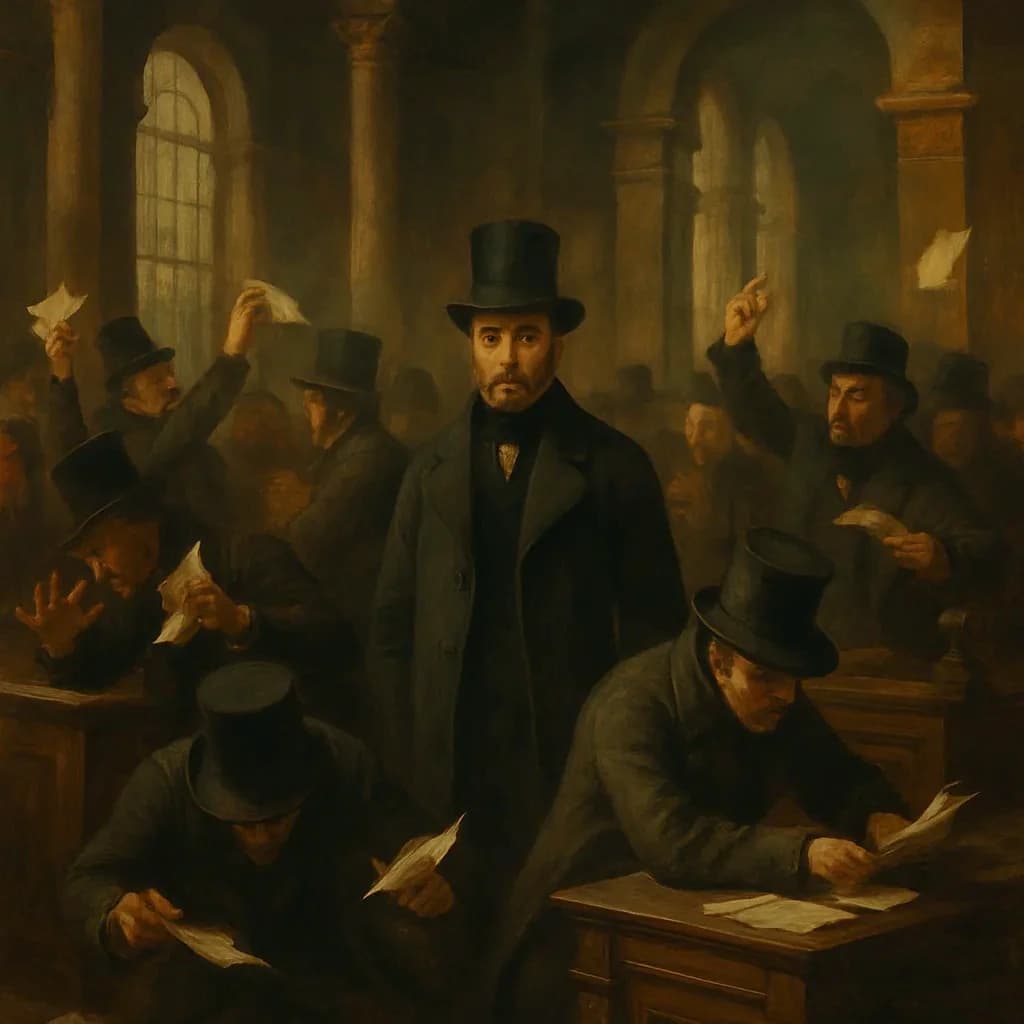
The Banker Who Owned Napoleon
One man quietly funded both sides of the Napoleonic Wars and became richer than most nations.
- Vincent Cronin, 'Napoleon Bonaparte: An Intimate Biography' (1972)
- Philip Dwyer, 'Napoleon: The Path to Power' (2007)
- Andrew Roberts, 'Napoleon: A Life' (2014)