
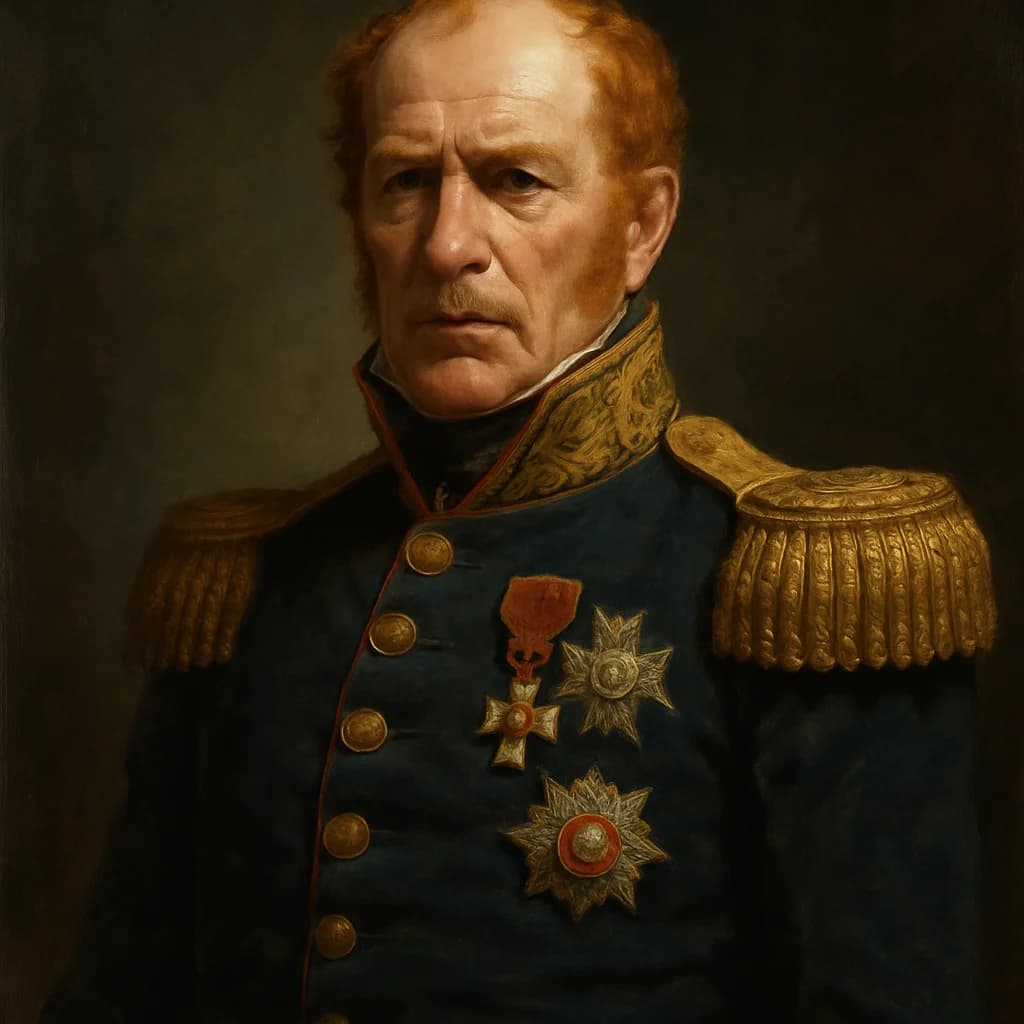
Marshal Ney
He was the bravest man Napoleon ever knew, and he survived Waterloo, which is precisely what nearly killed him.
Michel Ney was called 'the bravest of the brave' by Napoleon himself, and the phrase has followed him so completely that almost everything else about him has been swallowed whole. What gets lost is the stranger, more unsettling story: a butcher's son from Saarlouis who rose to command armies, made the catastrophic decision that broke the Grande Armée's back in Russia, and then somehow walked out of the greatest military disaster in European history alive, only to face a firing squad in a Paris garden for the crime of surviving on the wrong side.
The retreat from Moscow in 1812 is where Ney's reputation calcifies into legend, but the legend obscures the operational reality. After the French burned their own supplies at Smolensk, Ney commanded the rearguard (roughly 8,000 men), covering the retreat while temperatures dropped to -35°C and Russian forces closed from three directions. He lost nearly everyone. He crossed the frozen Dnieper River under fire, navigated forests he'd never mapped, and reached the main French column with fewer than 800 soldiers. Napoleon reportedly wept. What the legend skips: Ney's rearguard decision at Kovno days earlier, where he personally aimed and fired the last French cannon on Russian soil before retreating. One man. One cannon. A gesture so theatrical it almost obscures the strategic catastrophe he'd just survived.
Waterloo in June 1815 is where the complicated Ney becomes genuinely tragic. Commanding the left wing of Napoleon's army, he ordered the mass cavalry charges against the British squares: fifteen charges in roughly two hours, some 9,000 horses, almost no artillery support. Military historians have argued ever since whether this was reckless incompetence or the desperate logic of a man who'd already run out of better options. Ney had five horses shot from under him that day. He was photographed by history in that moment of annihilation, but he walked off the field.
The Bourbon restoration did not find this endearing. Arrested for treason in August 1815, Ney was tried by the Chamber of Peers. His defense team argued, cleverly, that as a native of Saarlouis (then under Prussian jurisdiction), he wasn't technically a French subject and couldn't be tried for French treason. The court rejected this. On December 7, 1815, in the Luxembourg Gardens, Michel Ney refused a blindfold, reportedly gave the order to fire himself, and was shot by twelve men at close range. He was 46.
A persistent legend, taken seriously enough to investigated by American historians, holds that Ney faked his execution with complicit guards and fled to South Carolina, where a schoolteacher named Peter Stuart Ney died in 1846 claiming, on his deathbed, to be the Marshal.
Why untold: Ney's story is collapsed entirely into the Napoleon narrative, leaving him as a supporting character in someone else's tragedy rather than the subject of one of the most bizarre and genuinely contested executions in post-Napoleonic Europe.
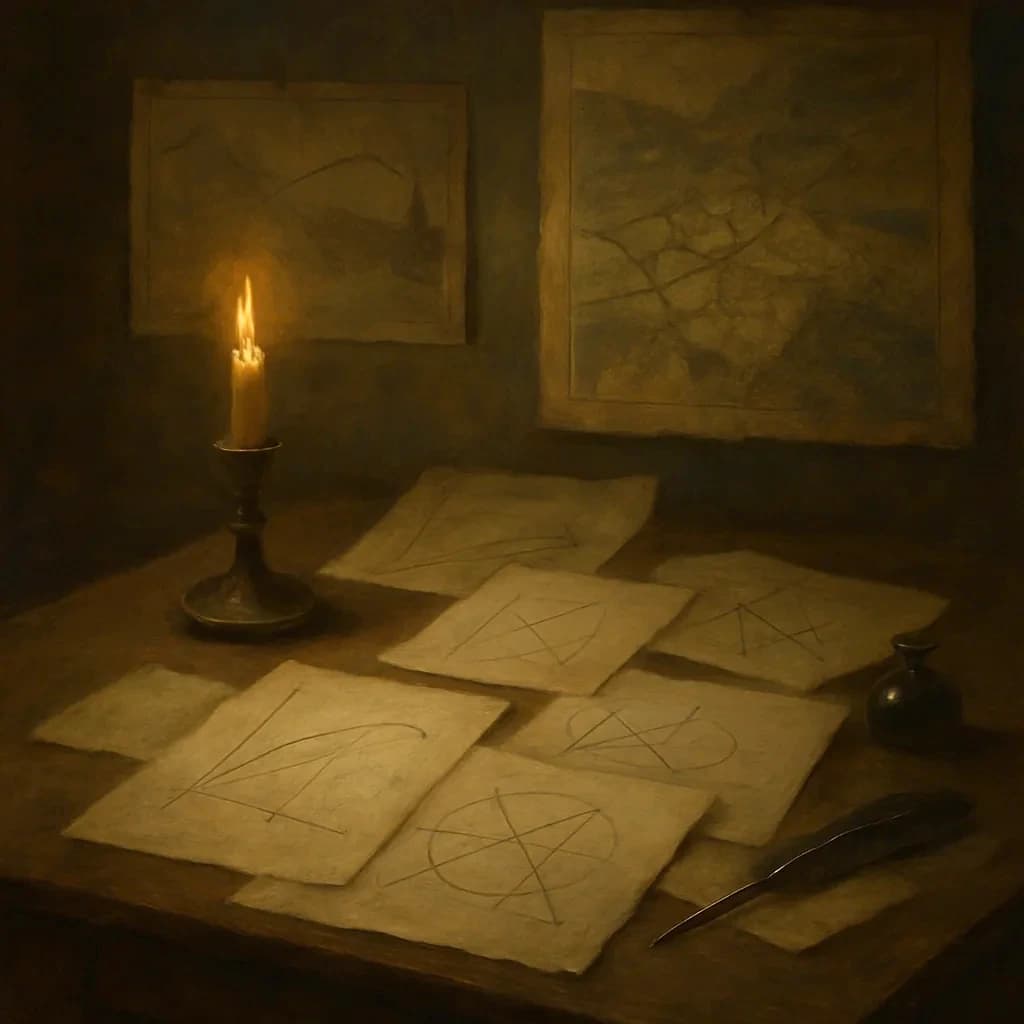
Cannonball Math Proved Napoleon Was Doomed at Waterloo
A brilliant mathematician's attempt to calculate cannon trajectories accidentally proved that Napoleon was doomed to fail at Waterloo.
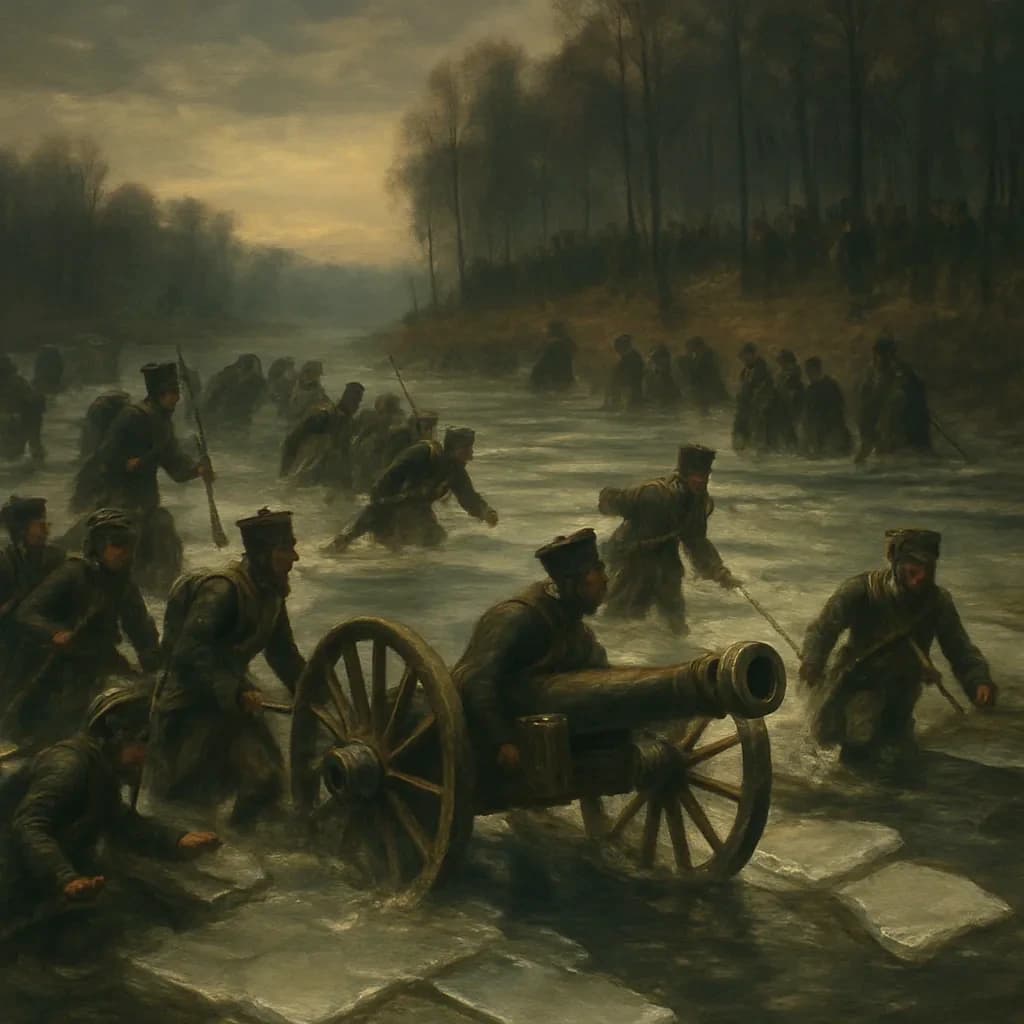
The Berezina: When Warm Weather Trapped Napoleon's Army
A single Russian general saved Moscow by understanding something Napoleon's engineers couldn't see.
- Andrew Uffindell, The Eagle's Last Triumph: Napoleon's Victory at Ligny, June 1815 (Greenhill Books, 1994)
- David Chandler, The Campaigns of Napoleon (Macmillan, 1966)
- Raymond Horricks, Marshal Ney: The Romance and the Real (Hippocrene Books, 1982)