
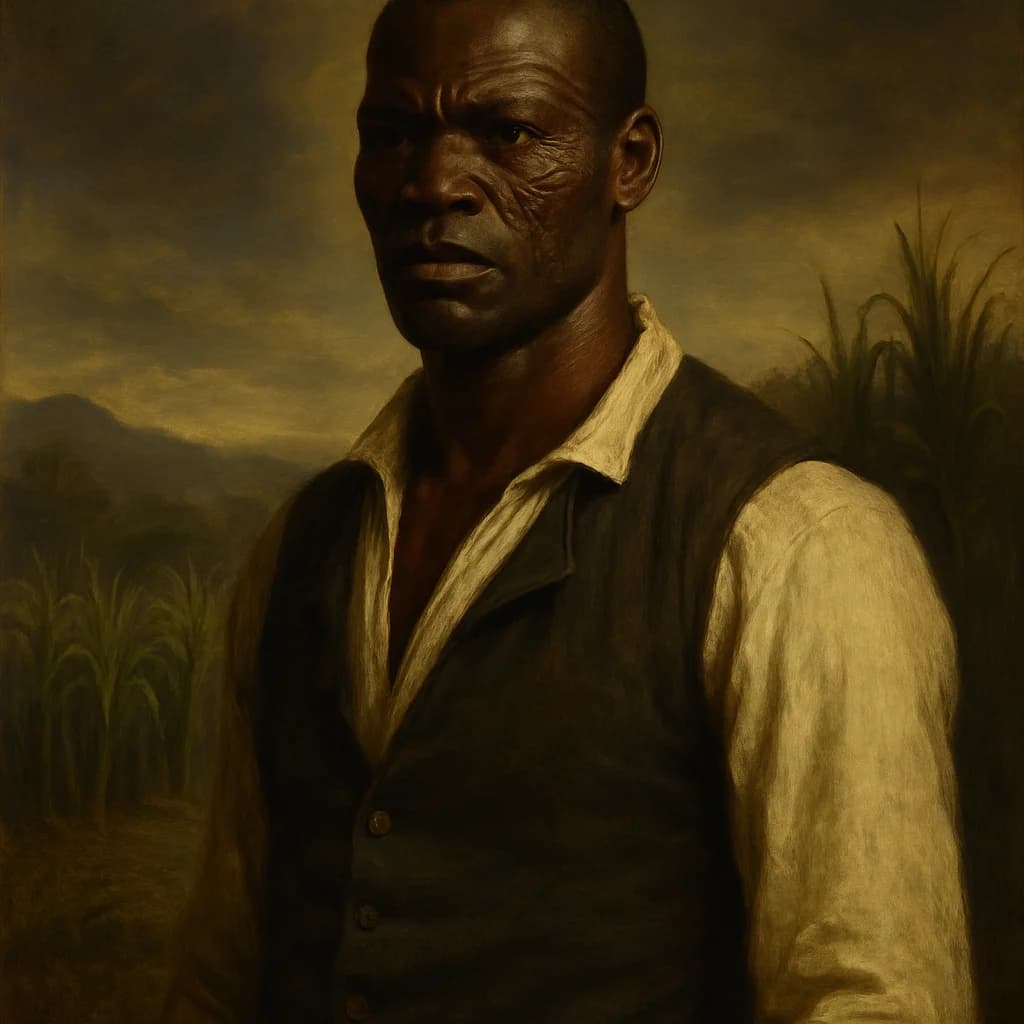
Dutty Boukman
The man who launched the only successful slave revolution in history was a vodou priest who could neither read nor write, but he understood the power of ritual better than any general understood war.
Dutty Boukman stood seven feet tall and bore ritual scars across his face that marked him as a man of two worlds. Born in Jamaica around 1767, he arrived in Saint-Domingue as property, another body to feed the sugar mills that made French planters the richest men in the Americas. But Boukman carried something the planters couldn't chain: the spiritual authority of a vodou houngan, a priest who could speak directly to the lwa, the spirits that governed life and death.
By 1791, Boukman had become a coach driver on the Lenormand plantation in Le Cap, a position that allowed him to move freely between estates. What looked like routine errands was actually intelligence gathering. He mapped the colonial military's weaknesses, counted weapons, and most crucially, built a network of conspirators across the northern plain. But Boukman understood what European military minds missed: revolution wasn't just about tactics. It was about transformation.
On the night of August 14, 1791, Boukman led a vodou ceremony at Bois Caïman that would shatter the colonial world. As lightning split the sky, he sacrificed a black pig and mixed its blood with rum, creating a communion that bound the conspirators to their cause. The ritual wasn't primitive superstition. It was psychological warfare. Boukman knew that enslaved people needed more than anger to fight impossible odds. They needed the certainty that their ancestors and the spirits themselves demanded freedom.
Six days later, the northern plain erupted in coordinated rebellion. Within weeks, a thousand plantations were ash and 100,000 enslaved people had joined the uprising. Boukman himself fell in battle two months later, but his spiritual revolution outlived him. The French mounted his severed head on a spike in Le Cap's main square, believing it would break the rebels' morale. Instead, it became a shrine. The revolution Boukman blessed in blood would burn for thirteen years, until Haiti emerged as the world's first Black republic.
Boukman's name likely derives from "Book Man," suggesting he may have been one of the few enslaved people who could read, making his use of oral tradition and ritual even more strategic.
Why untold: Colonial and later Western historians dismissed vodou ceremonies as primitive folklore rather than recognizing them as sophisticated tools of revolutionary organization.
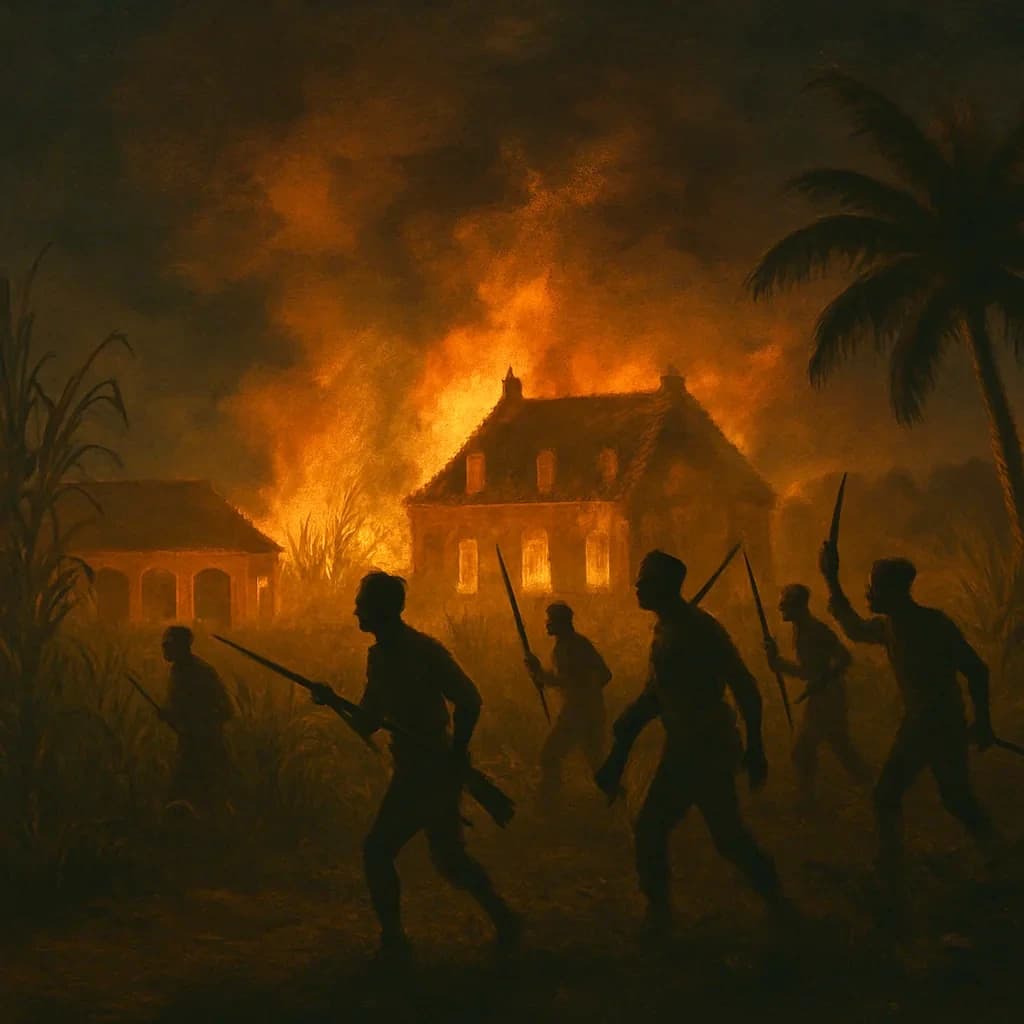
Haiti's Slaves Won a War the World Called Impossible
A slave uprising in Haiti sent shock waves through every plantation from Virginia to Brazil, and changed how the world thought about human bondage forever.
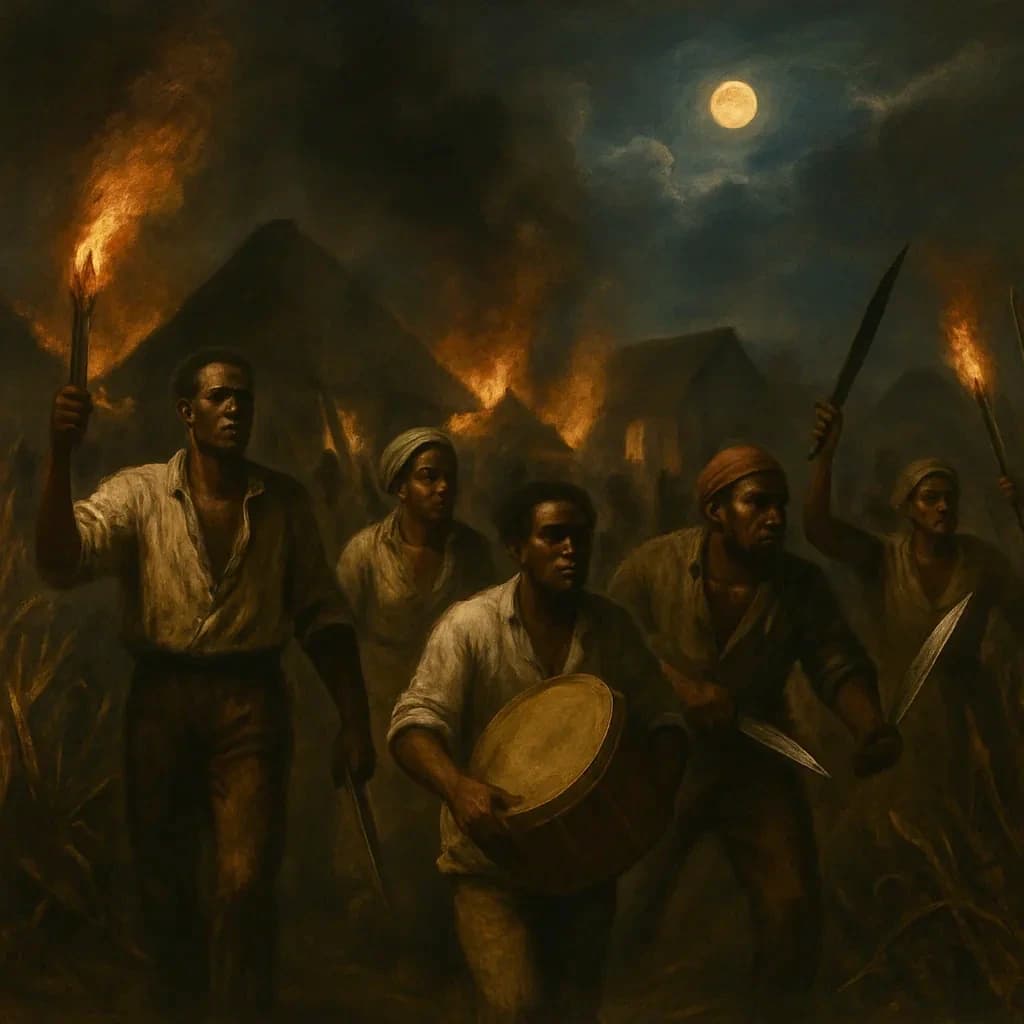
The Midnight Haircut That Freed an Empire
A slave's razor and thirty seconds of courage ended three centuries of colonial rule in Haiti, and sent shockwaves through every plantation from Virginia to Brazil.
- Dubois, Laurent. Avengers of the New World: The Story of the Haitian Revolution. Harvard University Press, 2004.
- James, C.L.R. The Black Jacobins: Toussaint L'Ouverture and the San Domingo Revolution. Vintage Books, 1989.
- Geggus, David Patrick. Haitian Revolutionary Studies. Indiana University Press, 2002.