
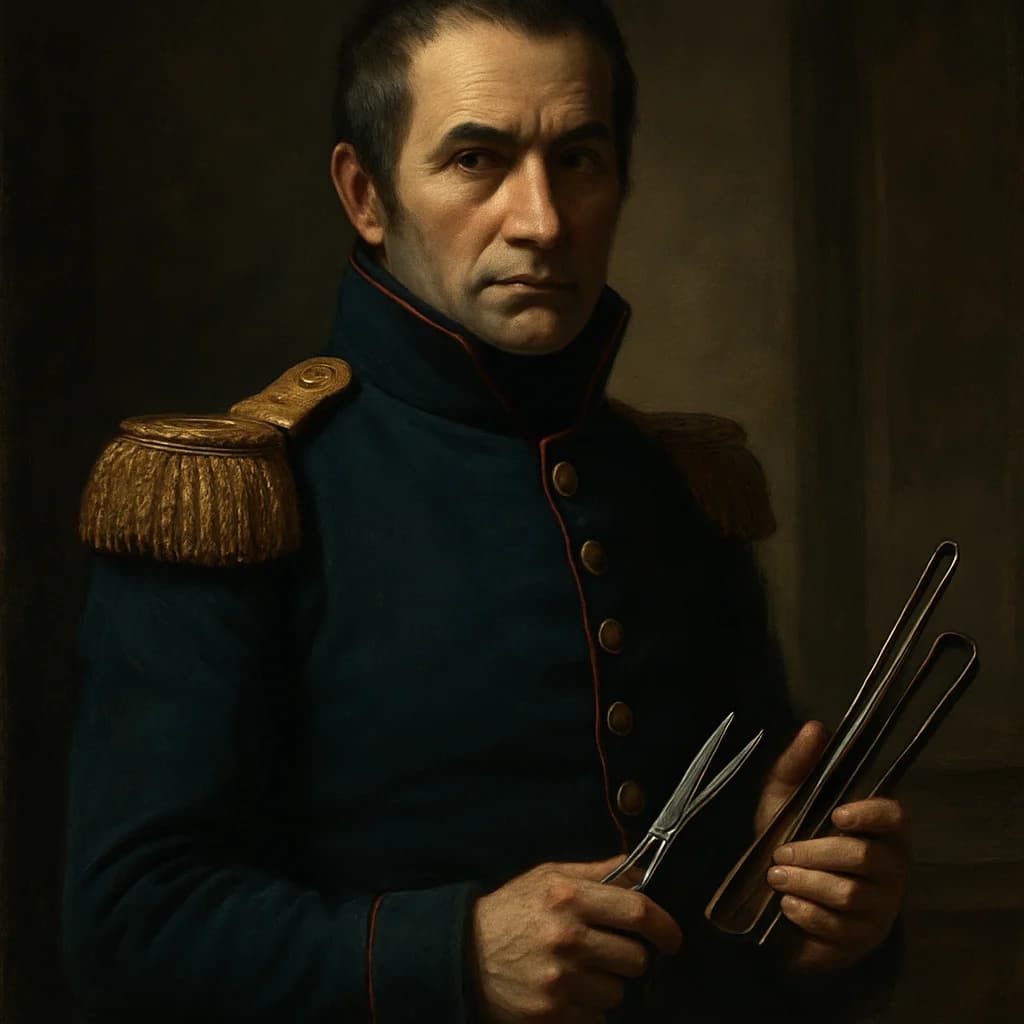
Dominique Jean Larrey
Napoleon wept at his funeral, the only man he ever said he loved.
Dominique Jean Larrey was not the most famous man on any battlefield he walked. That was by design. While generals accumulated glory and emperors accumulated territory, Larrey accumulated something stranger: a systematic method for keeping men alive long enough to regret surviving. Born in 1766 in the village of Baudéan in the French Pyrenees, he was orphaned young and sent to live with a surgeon uncle in Toulouse. He never really left the operating table after that.
What Larrey invented (and it was an invention, the kind that gets quietly absorbed into standard practice until no one can imagine things being any other way) was the flying ambulance. The *ambulance volante*. Before Larrey, wounded soldiers on Napoleonic battlefields lay where they fell until the fighting stopped, sometimes for 24 to 36 hours, bleeding into the mud while surgeons waited at the rear. Larrey, watching the carnage at the 1792 Rhine campaign, decided this was not medicine. It was housekeeping. He designed light, sprung carriages specifically built to extract the wounded during combat, staffed by trained crews who moved under fire. The concept was so radical that other armies dismissed it as reckless. Then they started copying it.
His surgical speed was legendary and slightly terrifying. He could amputate a leg at the thigh in under two minutes. At the Battle of Borodino in 1812, he performed approximately 200 amputations in a single day. His survival rates (tracked obsessively, published meticulously) were grotesquely better than anyone else's. He attributed this to speed, cleanliness, and the conviction that a wound treated immediately was a different wound than one treated later. He was right, and it took another century for medicine to fully agree with him.
At Waterloo in 1815, after the French collapse, Wellington ordered his own troops not to fire on Larrey (recognizing him by his uniform) and had him safely escorted away from the field. This was a remarkable gesture between enemies. What is less remembered is that Larrey had been captured, nearly executed as a spy, and only saved when a Prussian surgeon in the firing squad recognized him from his published anatomical work and physically intervened. The man was saved by a footnote. That he lived another 27 years, trained hundreds of surgeons, and published four volumes of surgical memoirs feels almost improbable given how many times the century tried to kill him.
Larrey was among the first surgeons to document and advocate for the triage system (prioritizing treatment by severity of injury rather than rank), meaning he would operate on an enemy private before a French general if the private's wound was more critical.
Why untold: Larrey's legacy was systematically absorbed into military and civilian medicine without attribution, his innovations becoming infrastructure rather than biography, the fate of people who solve problems so completely that the problem seems never to have existed.
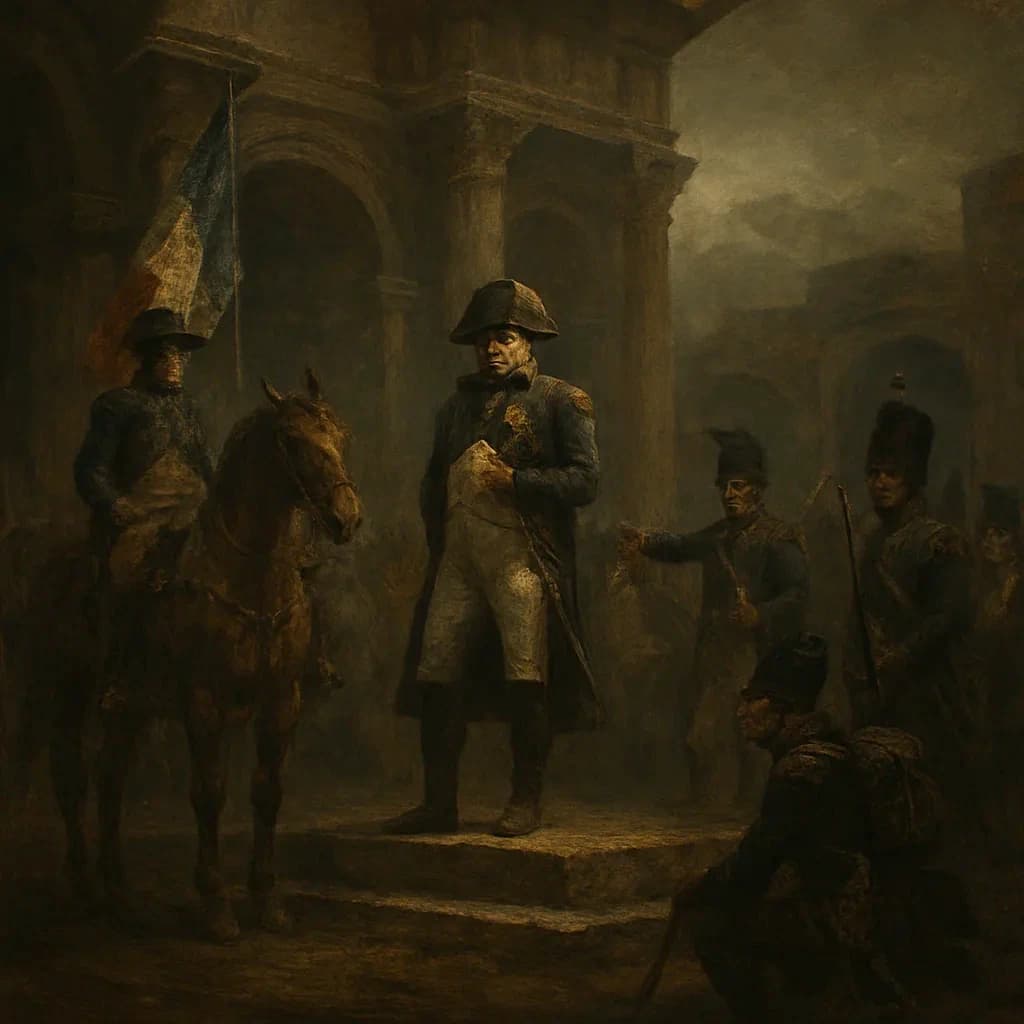
The Waterloo Surgeon Who Healed by Doing It Wrong
He performed one of history's most famous operations in reverse, taking out what should have stayed in, leaving in what should have come out.

Did a Carmelite Nun Slowly Poison Napoleon?
Inside a Carmelite convent in France, the nuns quietly developed the most effective poison of the 19th century, and may have used it on the Emperor himself.
- R. Richardson, 'Larrey: Surgeon to Napoleon's Imperial Guard' (1974), John Murray
- D.J. Larrey, 'Mémoires de chirurgie militaire et campagnes' (1812-1817), 4 vols.
- Michael Howard, 'Wellington's Doctors: The British Army Medical Services in the Napoleonic Wars' (2002), Spellmount