
Early Modern: the history they never taught you.
Forgotten true stories from the Renaissance through the Enlightenment: the printers, spies, sailors, and courtiers who moved history while the famous names took the credit. Every story below is independently and lists its published sources.
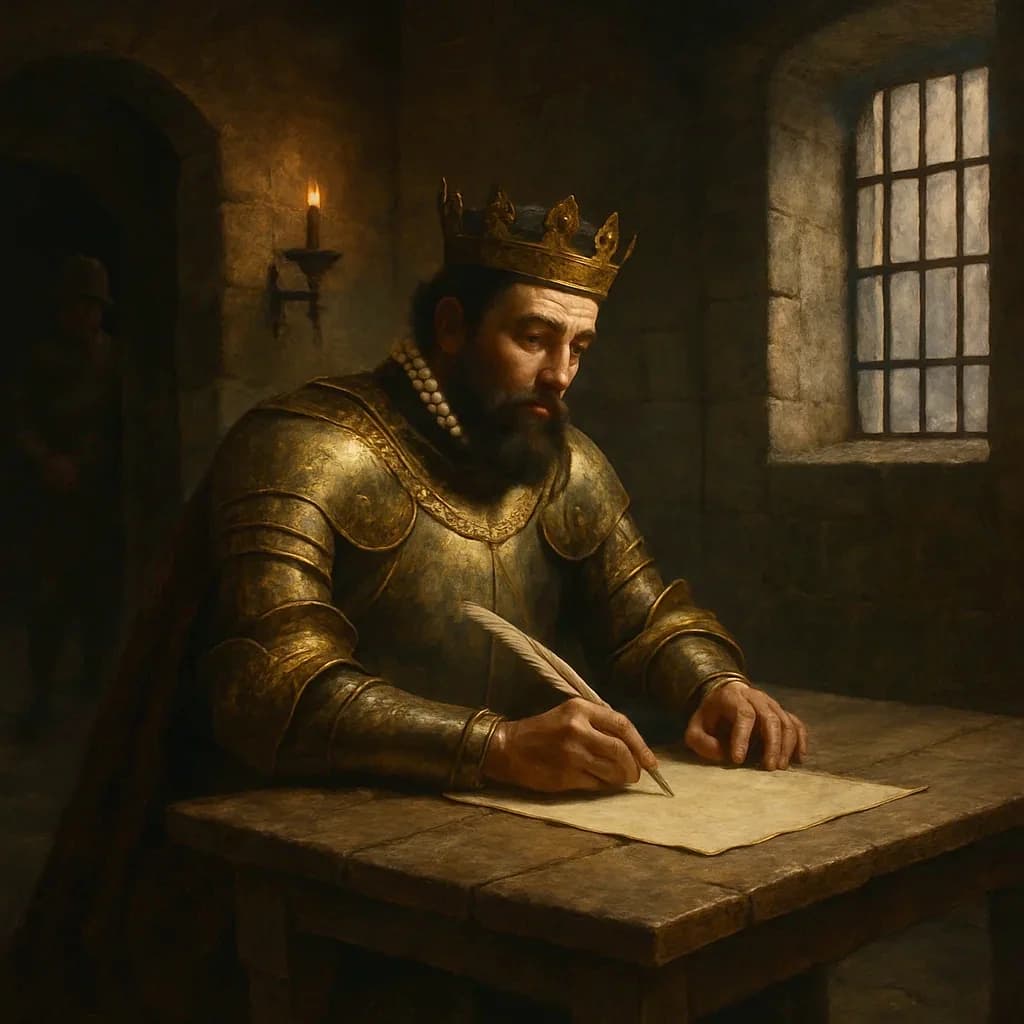
A Captured King's Letter That Redefined Surrender
A French king sat in a Spanish dungeon in 1525 and wrote a single sentence to his mother that quietly rewrote the rules of warfare forever.
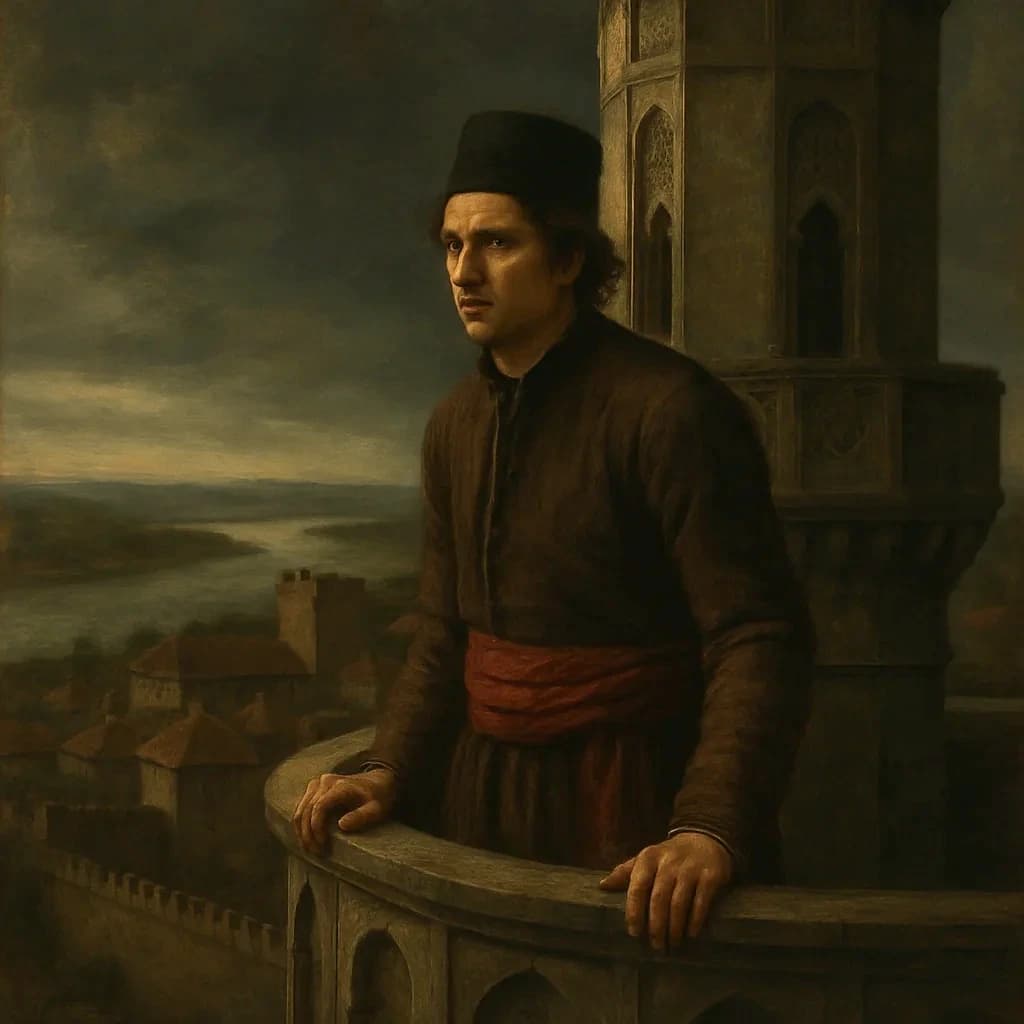
A Seminary Student Climbed a Minaret and Started a War
A single shout from a Belgrade minaret in 1683 lit a chain reaction that would redraw the map of Eastern Europe, and the man behind it was a teenage seminary student who had never fought a battle.
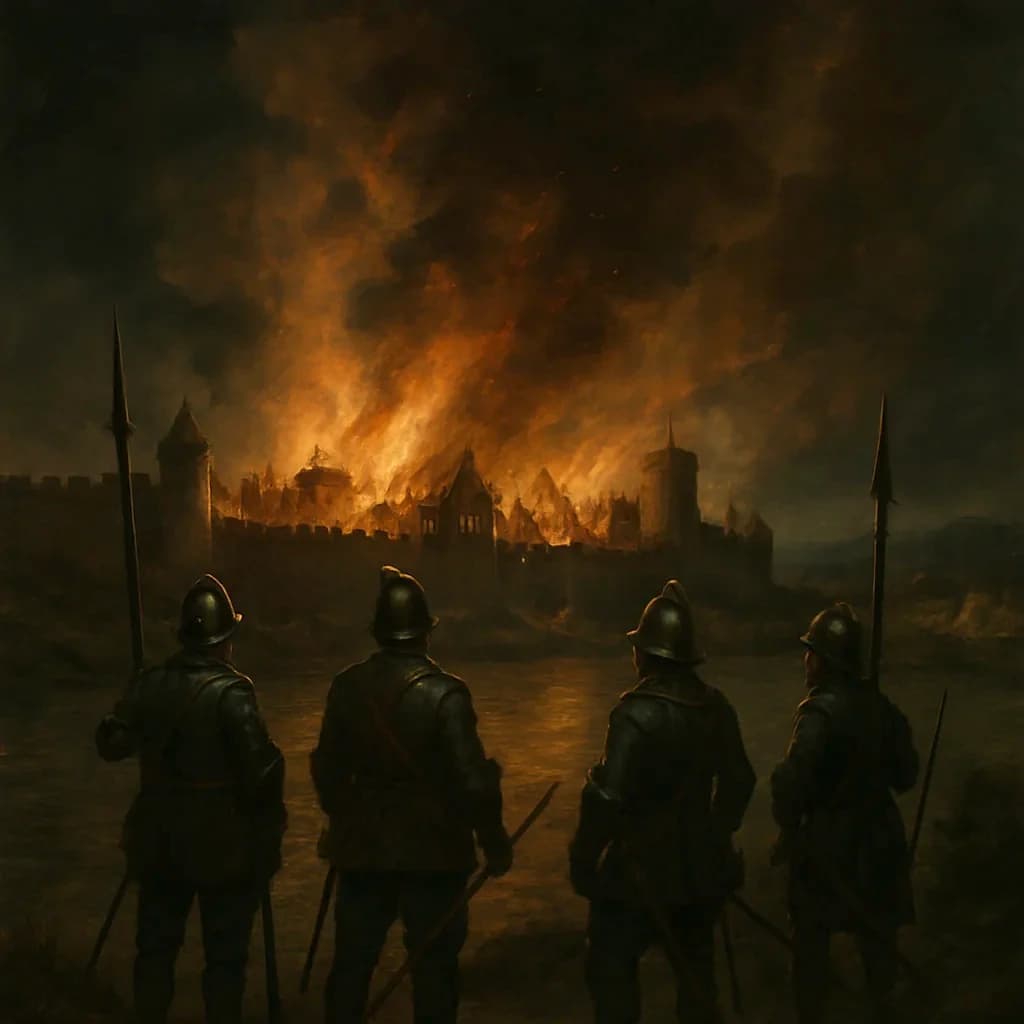
The City That Burned While Help Waited Twenty Miles Away
A Swedish army crossed a frozen river in 1631 and destroyed a city of 25,000 people, and nobody stopped them because the Protestant commander forgot to tell his ally to move.
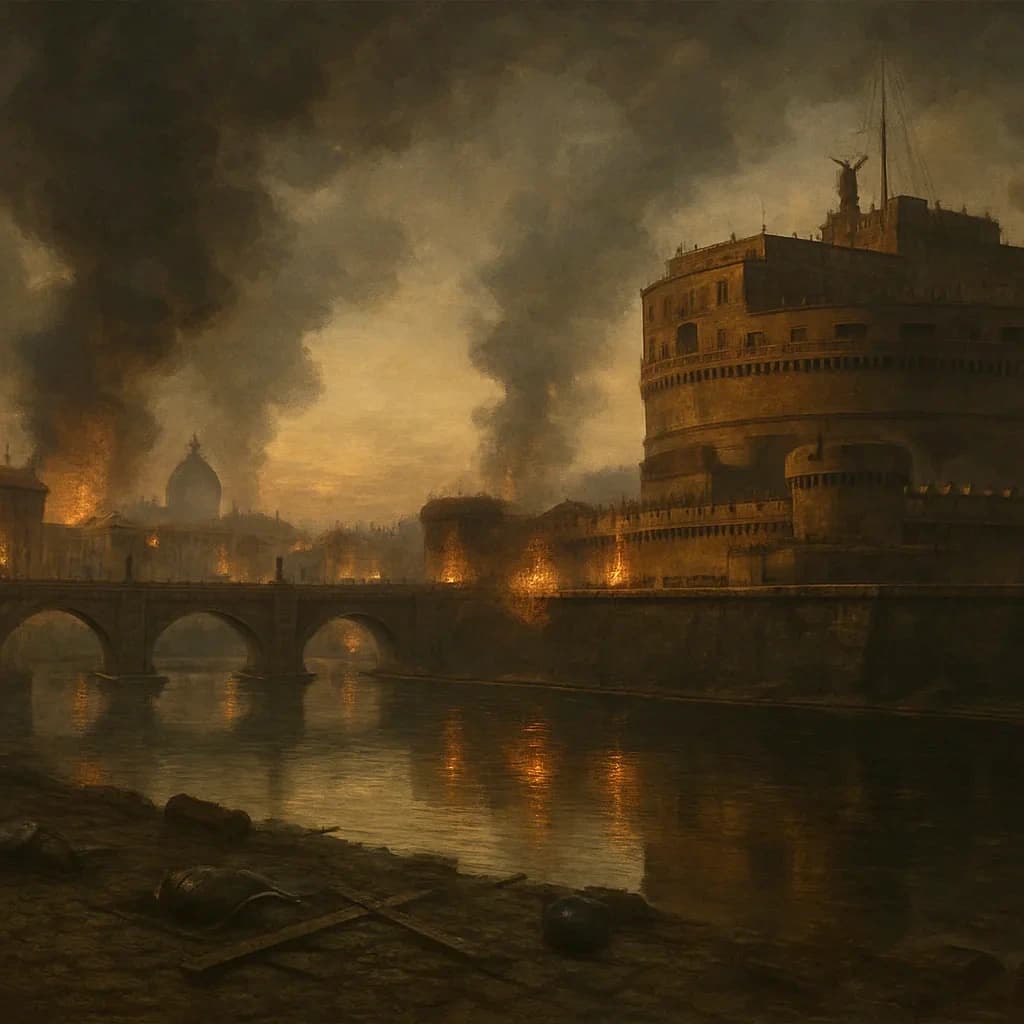
Charles V Skipped Payroll. Rome Paid Instead.
The Pope was hiding in a castle in 1527 while his own city burned below him, and the army doing the burning hadn't been paid in months.
Cervantes Climbed Out of the Sickbed to Fight at Lepanto
By 1571 the Ottoman fleet was so overwhelming that the West had essentially given up, until a one-eyed Spanish veteran decided to ignore his orders.
One Forgotten Manuscript Exposed the Church's Thousand-Year Lie
A single humanist scholar found a forgotten Roman manuscript in a German monastery, and accidentally handed the Renaissance its manifesto for why the Church had been lying for a thousand years.
Naming America: The Map Made in a Landlocked City
A Flemish artist who never left Europe may have done more to shape the Americas than any conquistador.
Four Days on a Sickbed, and the Fate of the Reconquista
A medieval queen refused to die on schedule, and in doing so, accidentally united two of history's most powerful crowns.
Three Days in a Padded Room, and the Fate of the Ottoman Empire
The most powerful man in the Ottoman Empire spent his last years locked in a gilded cage. And the empire's fate was decided by whoever held the key.
How One Woman Stopped Japan's Samurai Suicides
A dying shogun's last whispered order would have forced hundreds of loyal samurai to disembowel themselves, until one woman spent three days quietly talking the new ruler out of it.
He Told the Soldiers His Library Was a Latrine
When the Moroccan army sacked Timbuktu in 1591, one scholar hid his library in a ditch and told the soldiers it was a latrine.
How a Gift of Sheep Broke Spain's Monopoly
Smuggled out of Spain under pain of death, a single flock of merino sheep quietly shifted the balance of European power over the following century.
The Man Who Could Have Saved Giordano Bruno Stayed Silent
A broke and desperate Giordano Bruno burned at the stake in 1600, and the man who might have saved him chose, at the last moment, to stay silent.
A Sultan's Treasury Rewrote Medieval Global Trade
Historians ignored an Ottoman sultan's private treasury for centuries, and when they finally looked, it rewrote what we know about medieval global trade.
How a Drunk Captain Charmed the Mughal Court
He had no authority, no gifts worth mentioning, and a letter that embarrassed everyone, yet this minor English merchant walked away from the Mughal court with a trade deal that changed the course of empire.
A Turkish Pirate Mapped a Coast Europe Was Hiding
A Turkish admiral sat down with an ancient map, a handful of captured Portuguese sailors, and a question about a continent nobody in Constantinople had ever seen.
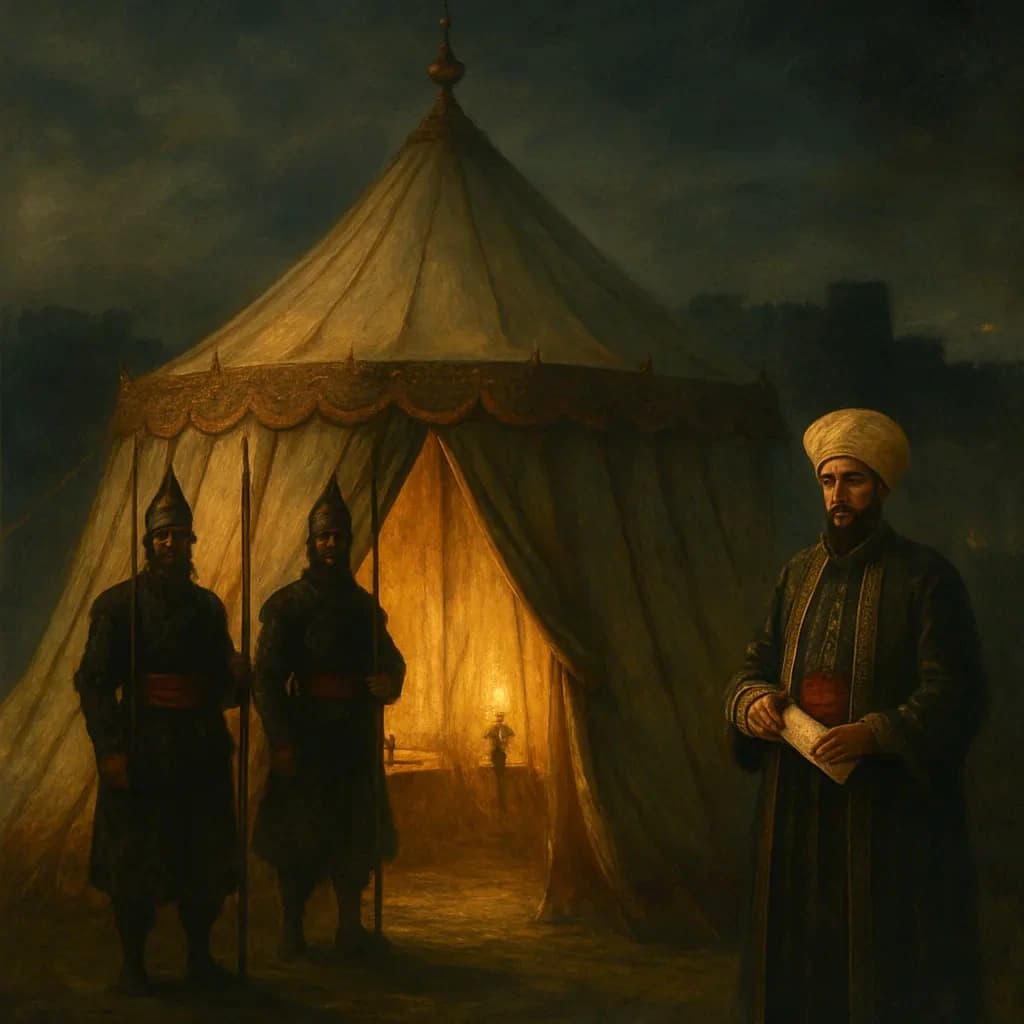
A Thirteen-Year-Old Girl Resolved the Ottomans' Greatest Military Crisis
The Ottoman Empire's greatest military crisis was resolved not by a general, but by a thirteen-year-old girl who understood protocol better than anyone in the palace.
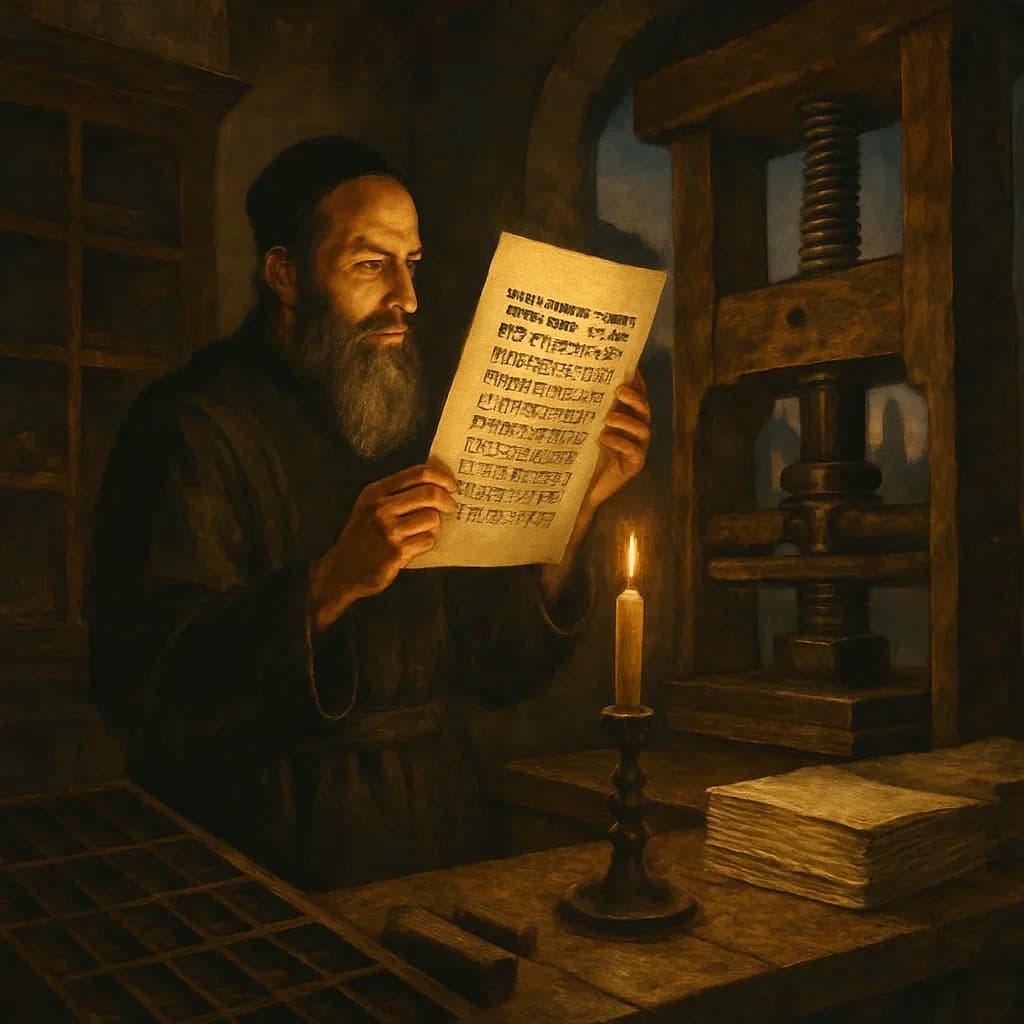
Three Nights in a Florentine Garden, and the Birth of the Printing Press in Hebrew
A dying Italian merchant hid a secret that would outlast his dynasty, his city, and his language.
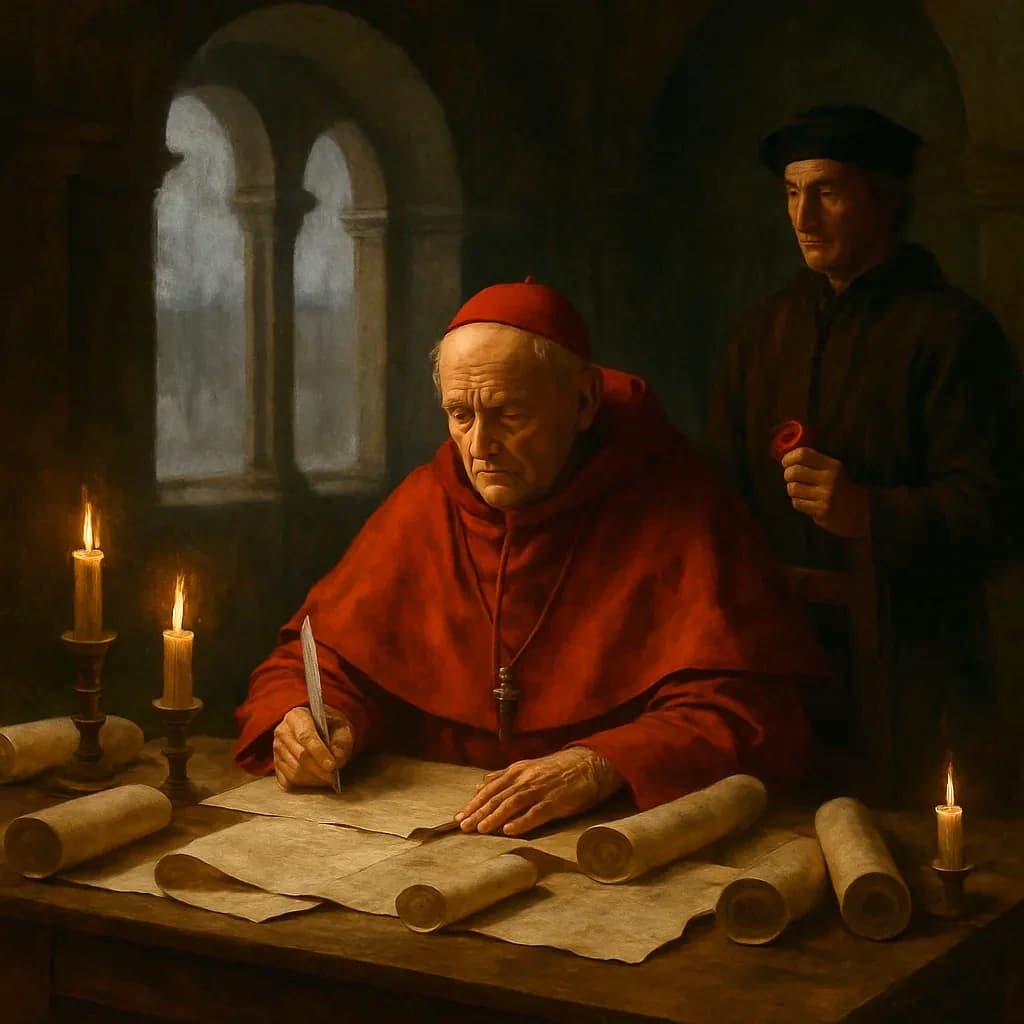
The Dead King Who Kept Signing Orders
A single forged royal signature in 1519 redirected the course of the entire Spanish Empire, and the man who wrote it was already dead.
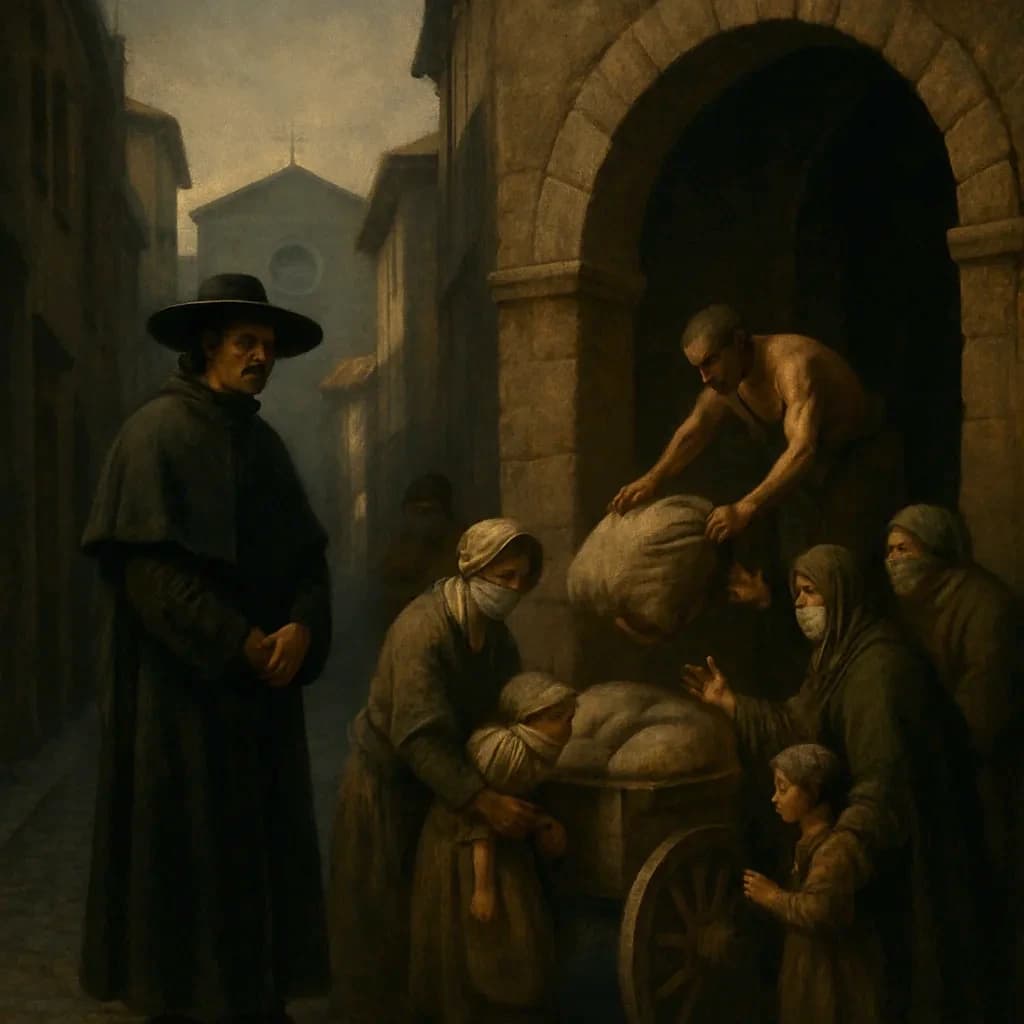
Florence Beat the Plague by Changing What People Ate
A Florentine doctor convinced the entire city to change how it ate in 1630, and without meaning to, may have ended one of Europe's last great plague outbreaks.
Three Days in a Cretan Doorway, and the Spy Who Kept Two Empires Talking
For thirty years, a single Venetian merchant living in Constantinople was the only reason Venice and the Ottomans didn't go to war, and nobody in either capital knew his name.
The Queen Locked in a Tower for 46 Years
When her husband died, Juana of Castile refused to let them bury him, and for nearly fifty years, she kept his corpse close.
He Fought Wars to Buy Books
Federico da Montefeltro was the most celebrated soldier in Renaissance Italy. Then he became something stranger.
How a Palace Gardener Fed 20,000 Istanbulites a Week
Grand Viziers did not listen to gardeners, until one did, and the decision quietly fed thousands of Istanbul's poor.
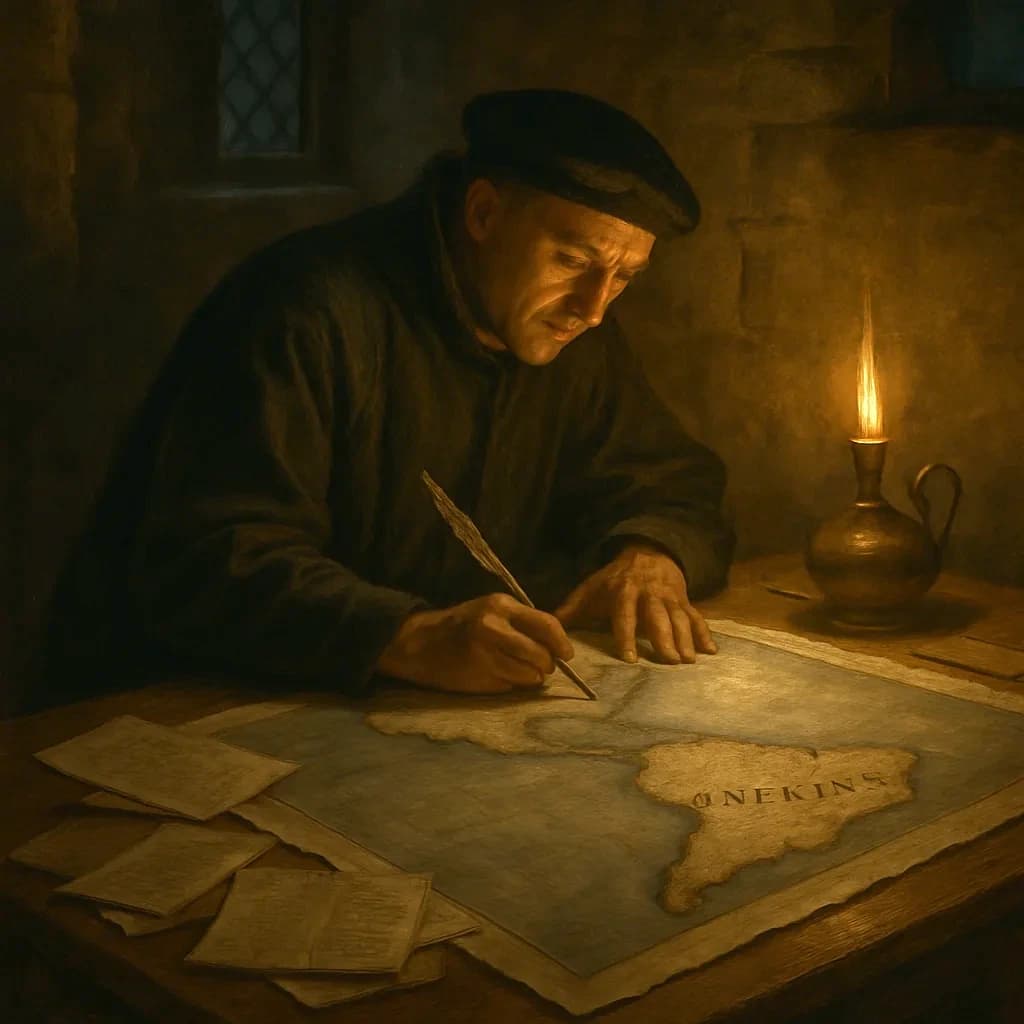
The Mapmaker Who Tried to Un-Name America
A German mapmaker in a small Alsatian town gave the New World its name, and spent the rest of his life trying to take it back.
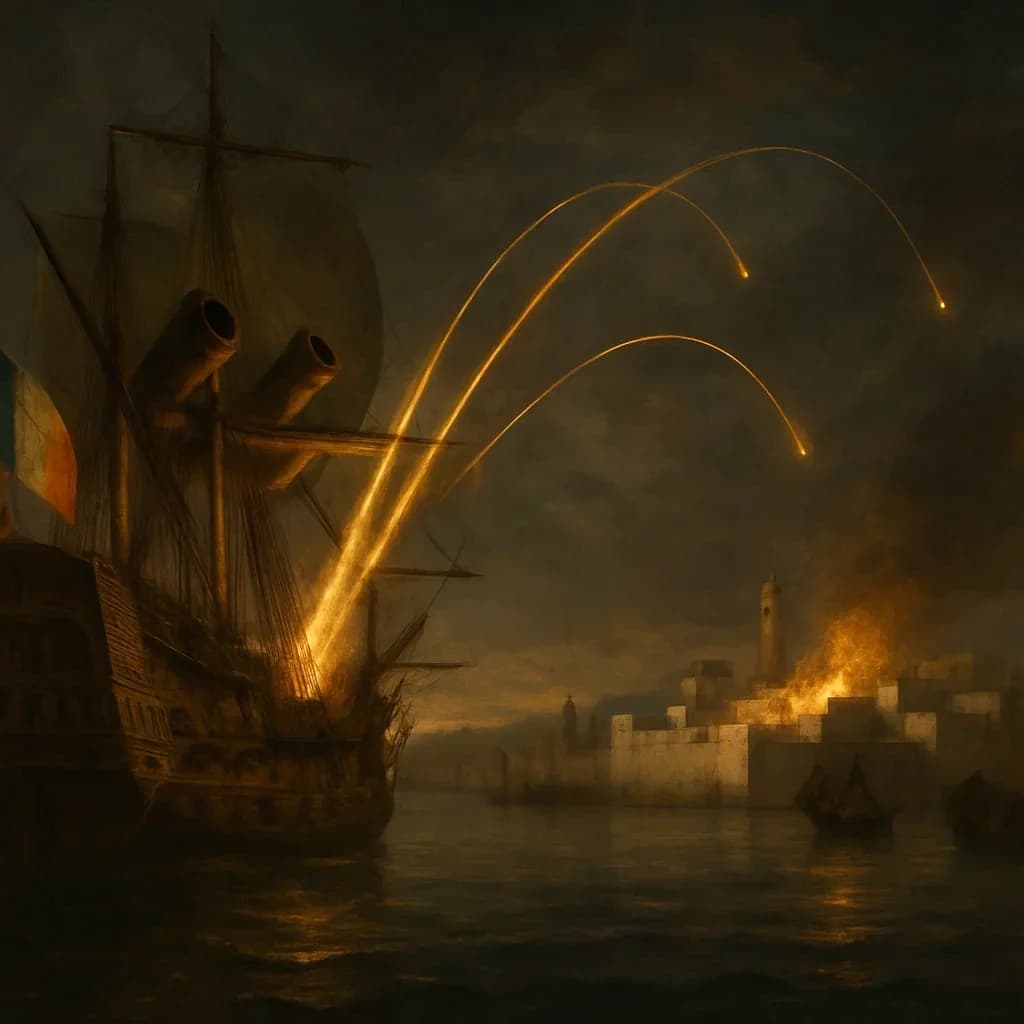
The Translator's Dangerous Pause in Algiers, 1683
An Ottoman admiral arrived in Algiers to punish a city. The French interpreter chose the wrong moment to go silent, and accidentally started the longest unfinished bombardment in Mediterranean history.
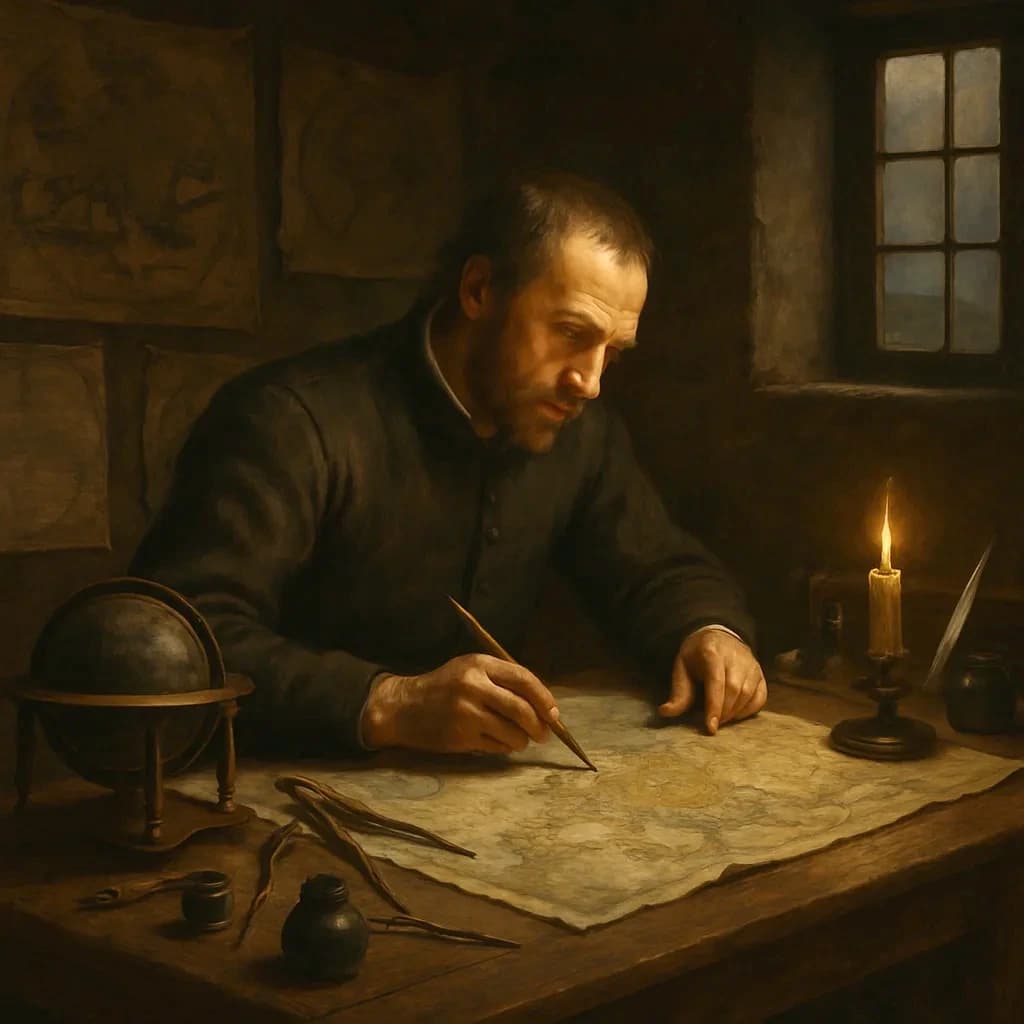
A Mapmaker's Secret Affair Redrew Europe's Map of Itself
A Flemish mapmaker's love affair with a woman he could never publicly acknowledge produced a document that quietly reshaped how Europe understood its own continent.
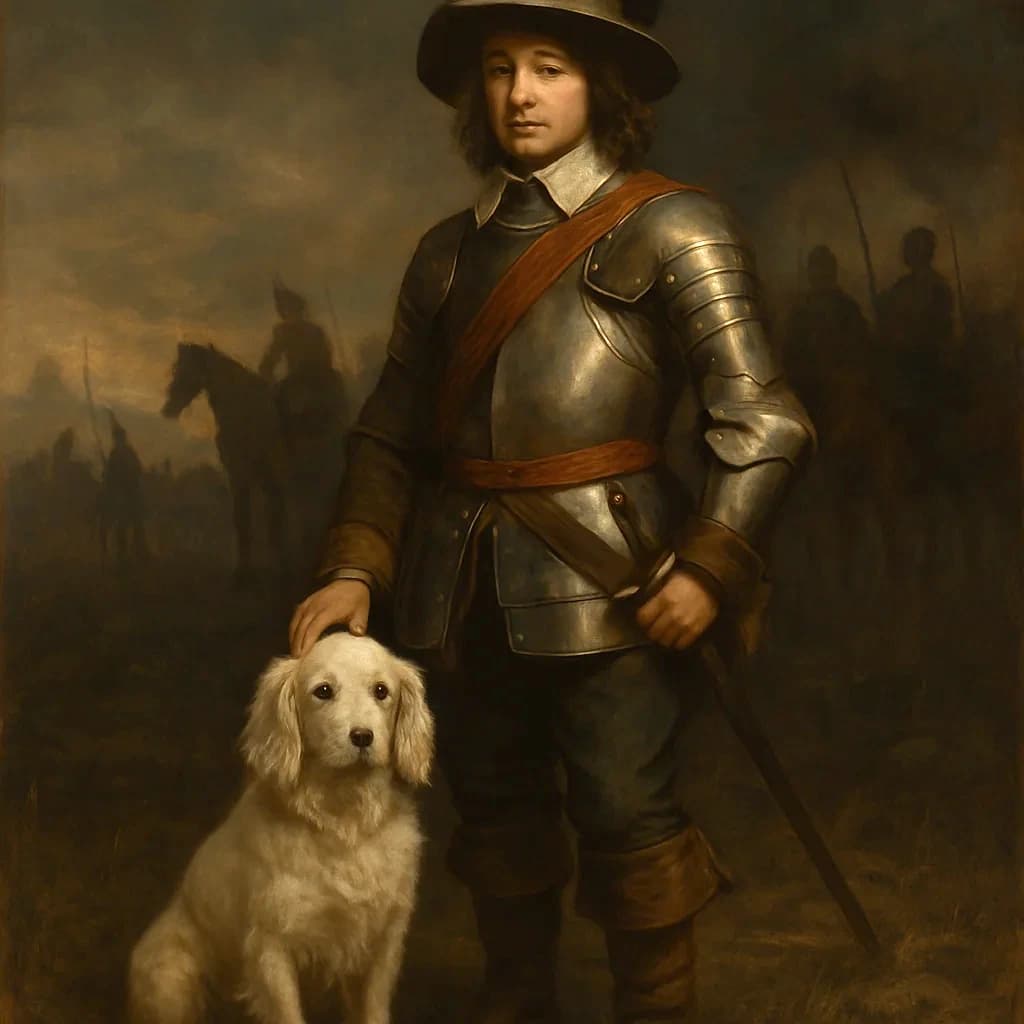
The Spaniel Both Armies Believed Was a Demon
A spaniel named Boy was the most feared weapon in the English Civil War.
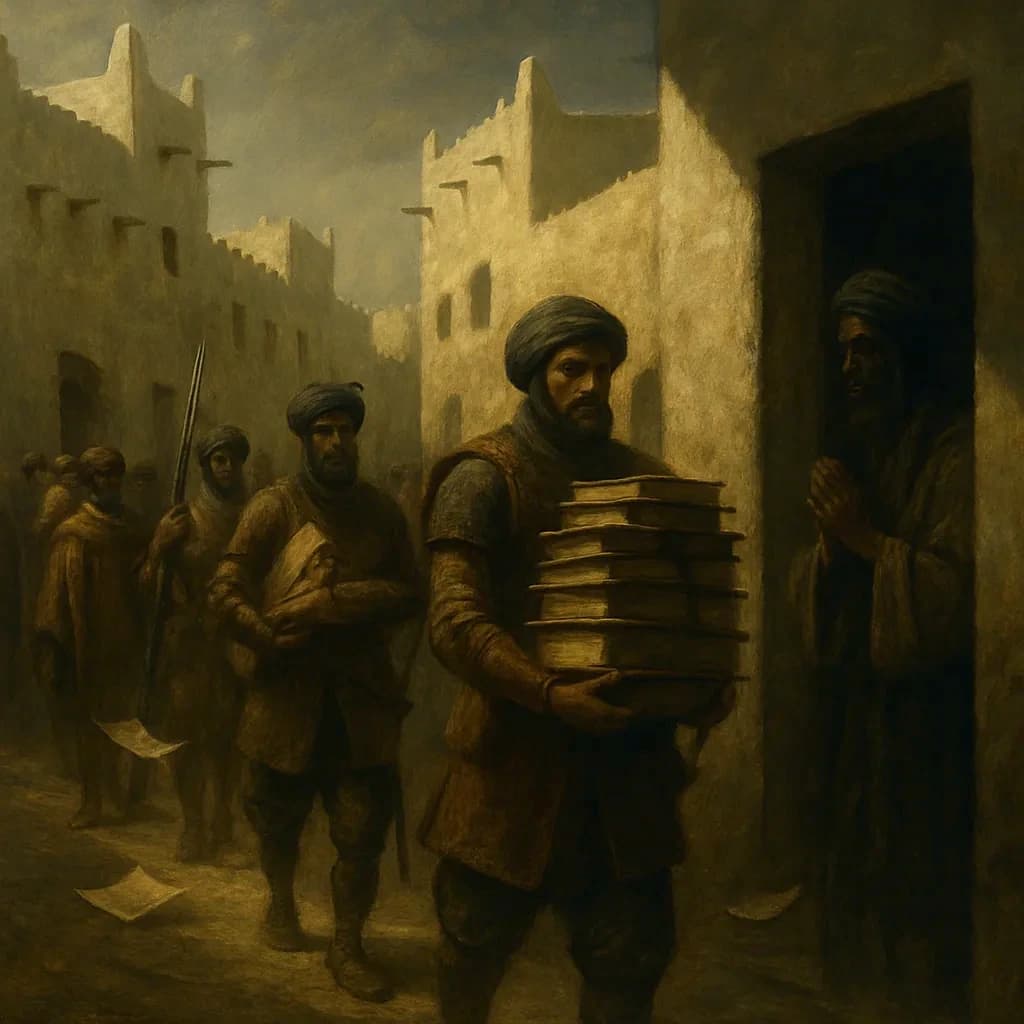
When an Unpaid Army Looted Timbuktu's Libraries
A bankrupt Moroccan sultan couldn't pay his army, so he let them loot a library instead, and erased six centuries of African scholarship in an afternoon.
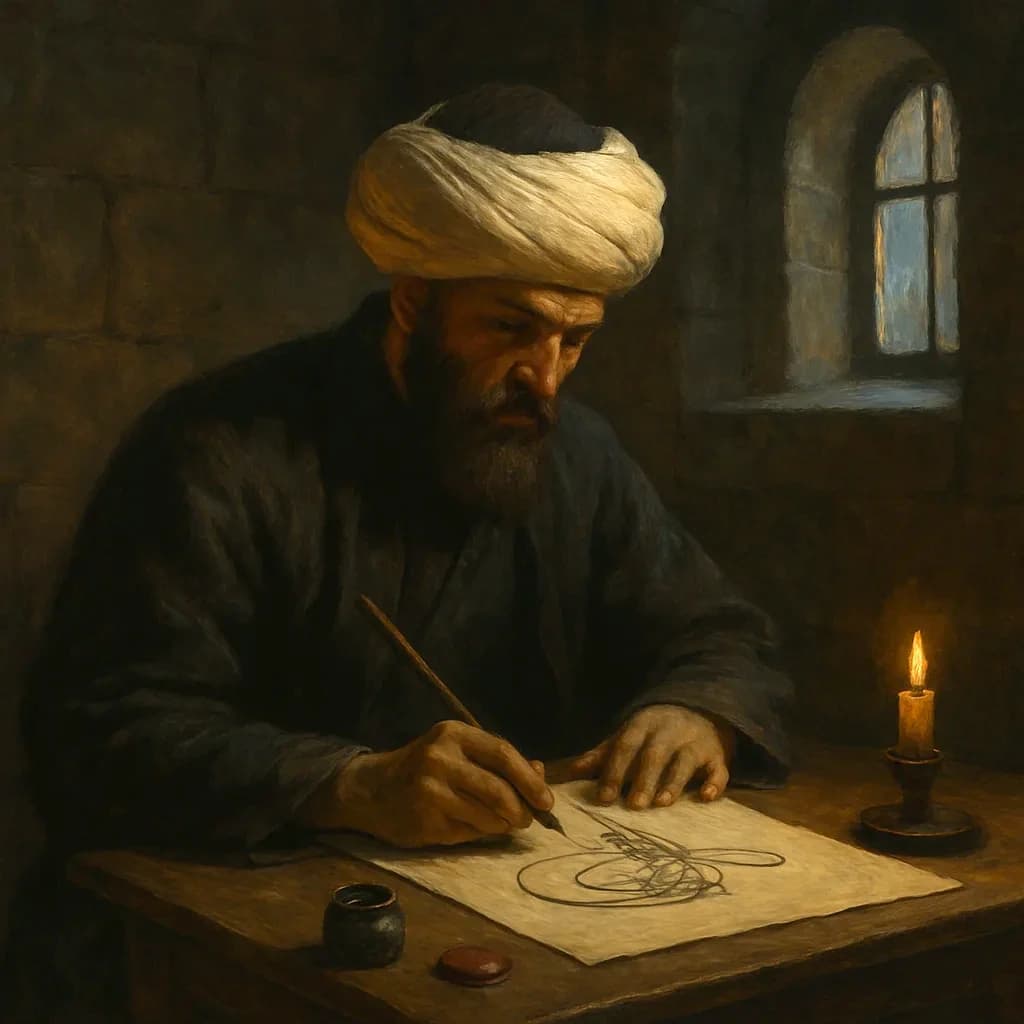
He Forged the Sultan's Seal to Rule Three Provinces
A single forged document turned a modest Ottoman provincial into the most powerful non-royal in the empire, and nearly destroyed it from within.
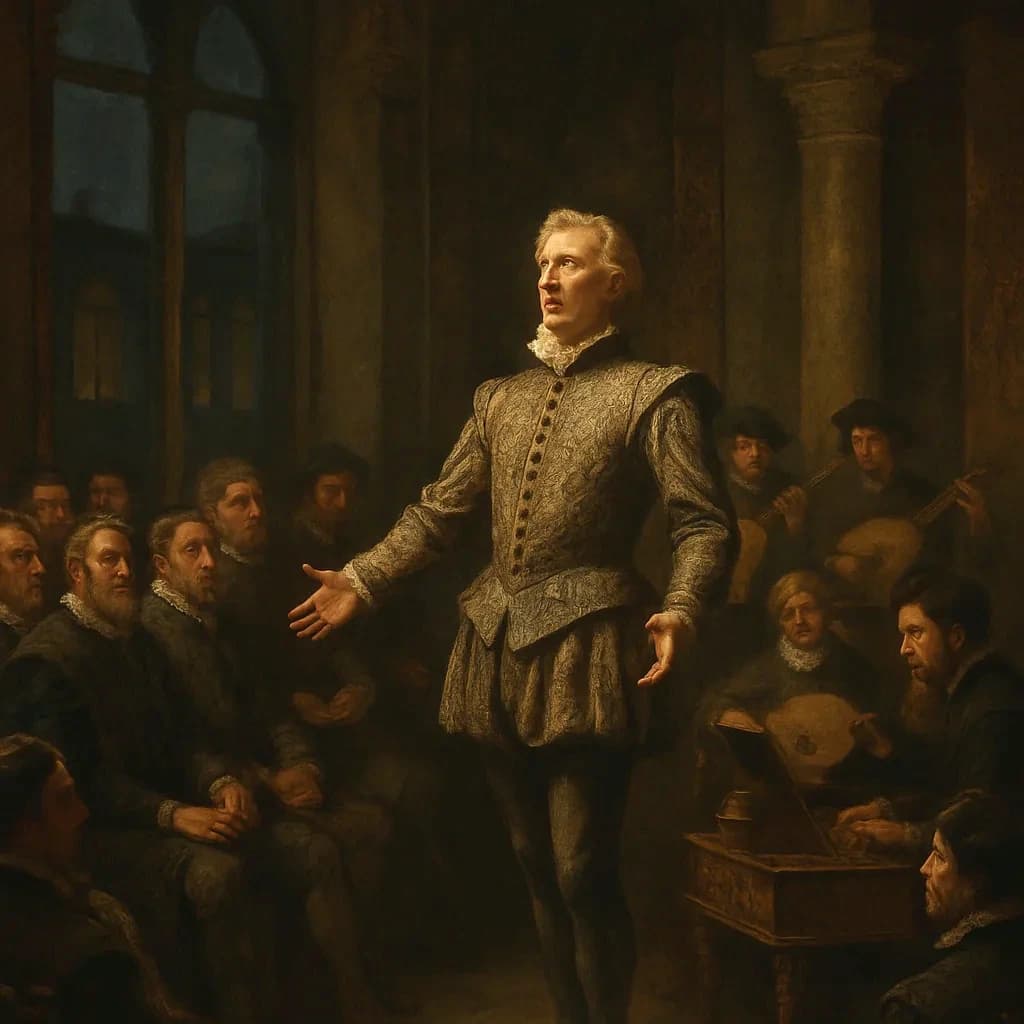
They Tried to Revive Greek Music and Invented Opera Instead
A group of intellectuals met to complain that music had gotten too complicated, and ended up inventing an entire art form.
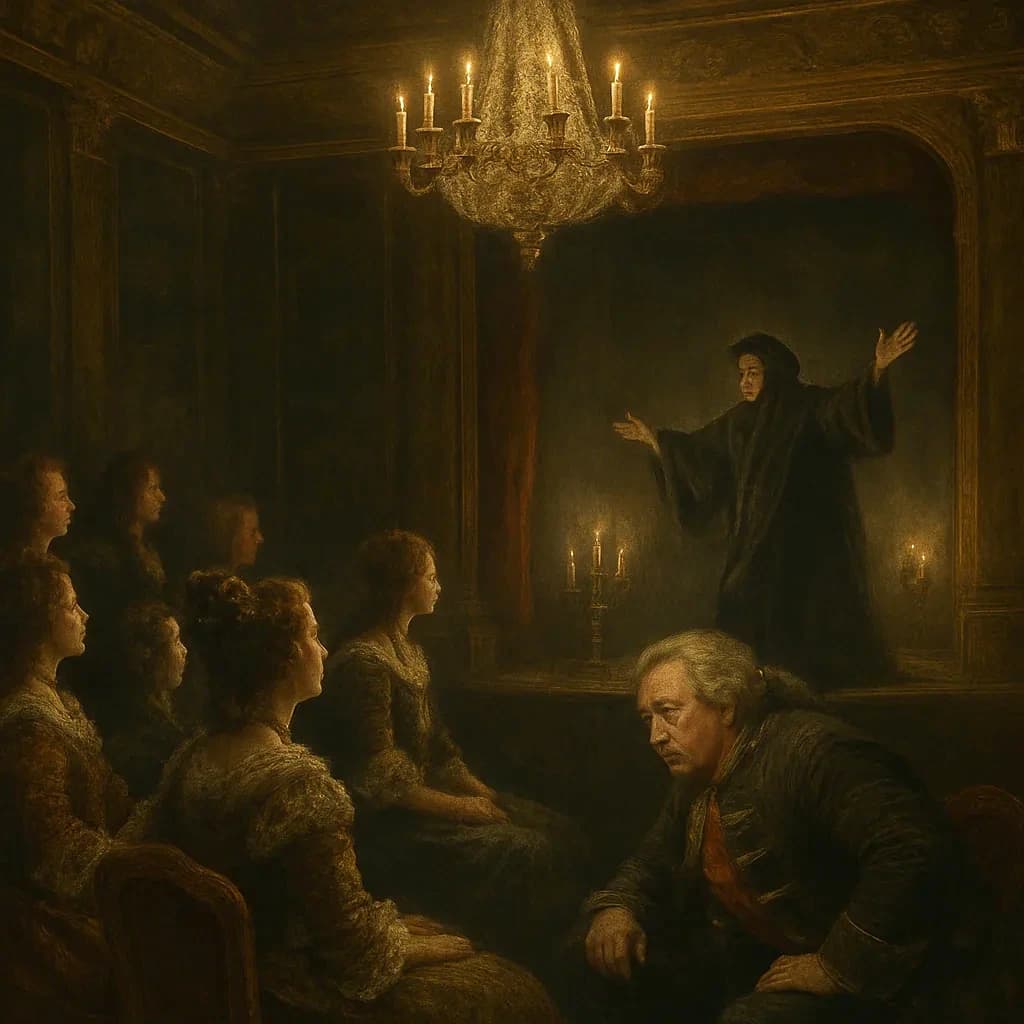
How a Stammering Prince Shielded Molière
Louis II of Bourbon spent decades unable to finish a sentence, then built the most influential dramatic tradition in European history.
The Architect Who Built His Own Tomb
Sinan designed over three hundred buildings across the Ottoman Empire, and spent his last decades quietly preparing the one nobody would remember.
She Armed Cartagena While the Governor Filed Paperwork
A Spanish noblewoman in her sixties personally financed and equipped a fleet to defend a city the crown had already written off.
Two Cartographers Dueled Over Spain's Route to the New World
A single duel between two cartographers in Renaissance Italy decided which ocean would carry Spain's ships to the New World.
Unpaid by an Emperor, They Built Europe's Mail
A bankrupt German merchant, a missing letter, and the most powerful private communication network in history: all built to serve one family.
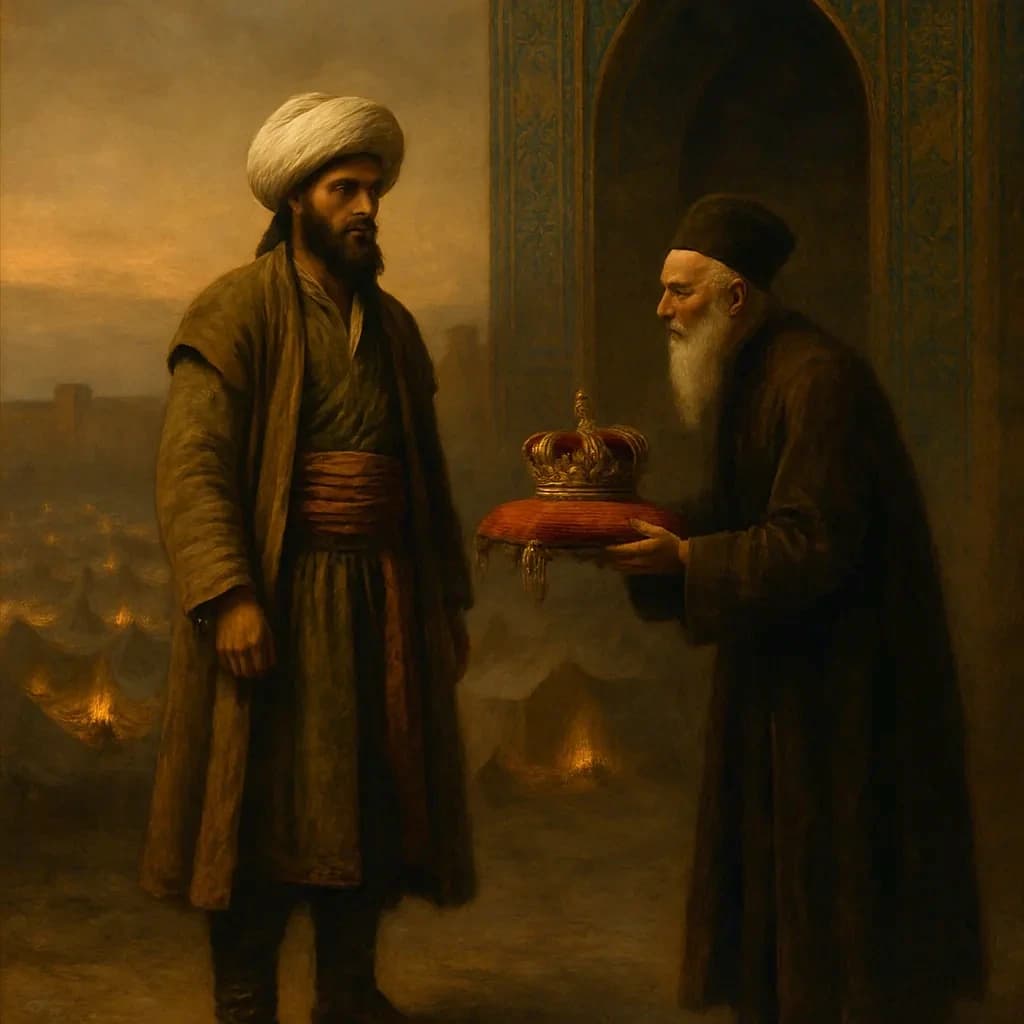
A Penniless Teenage Chieftain Brought Down the Persian Empire
A teenage Afghan chieftain with no army and no money brought down the Persian Empire in eight months, and history barely remembers his name.
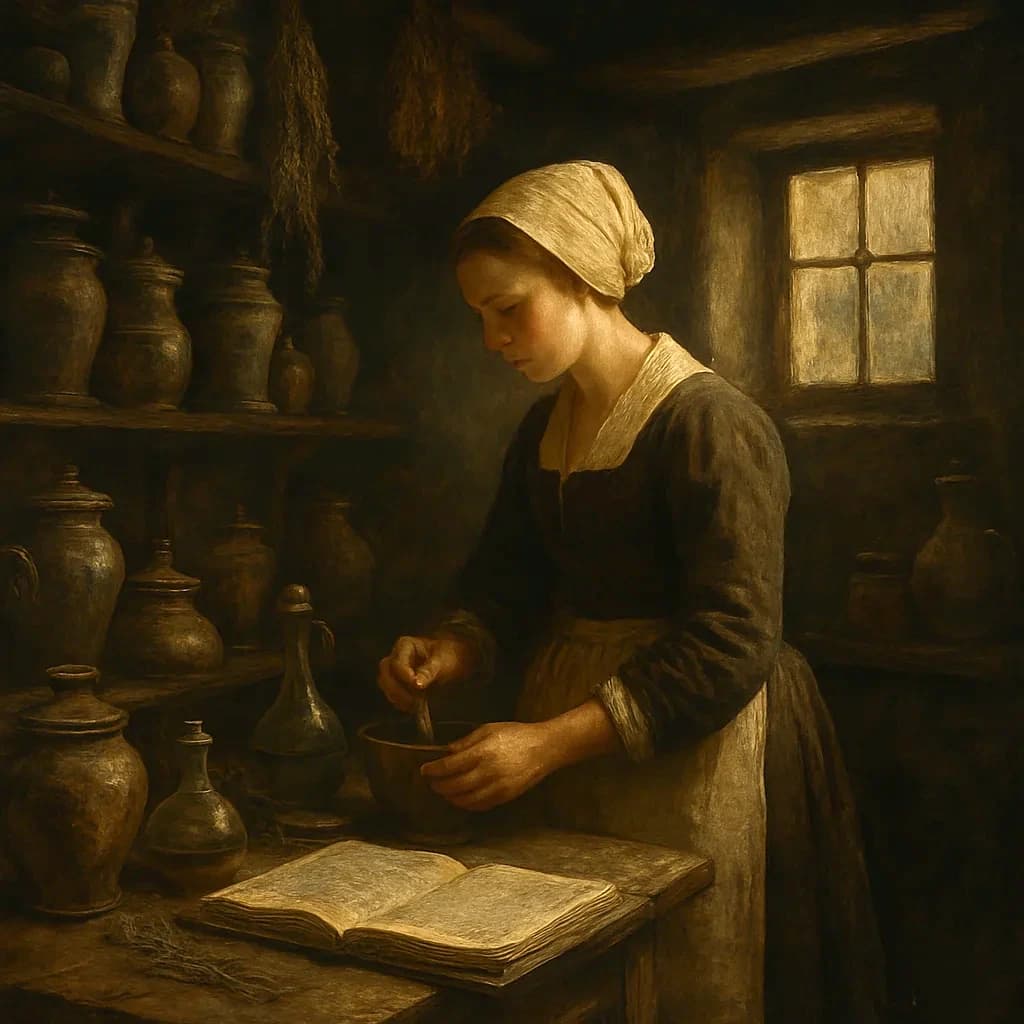
She Sold Cures and Poisons in Renaissance Italy
She mixed arsenic for a living, then became the most celebrated healer in Renaissance Italy.
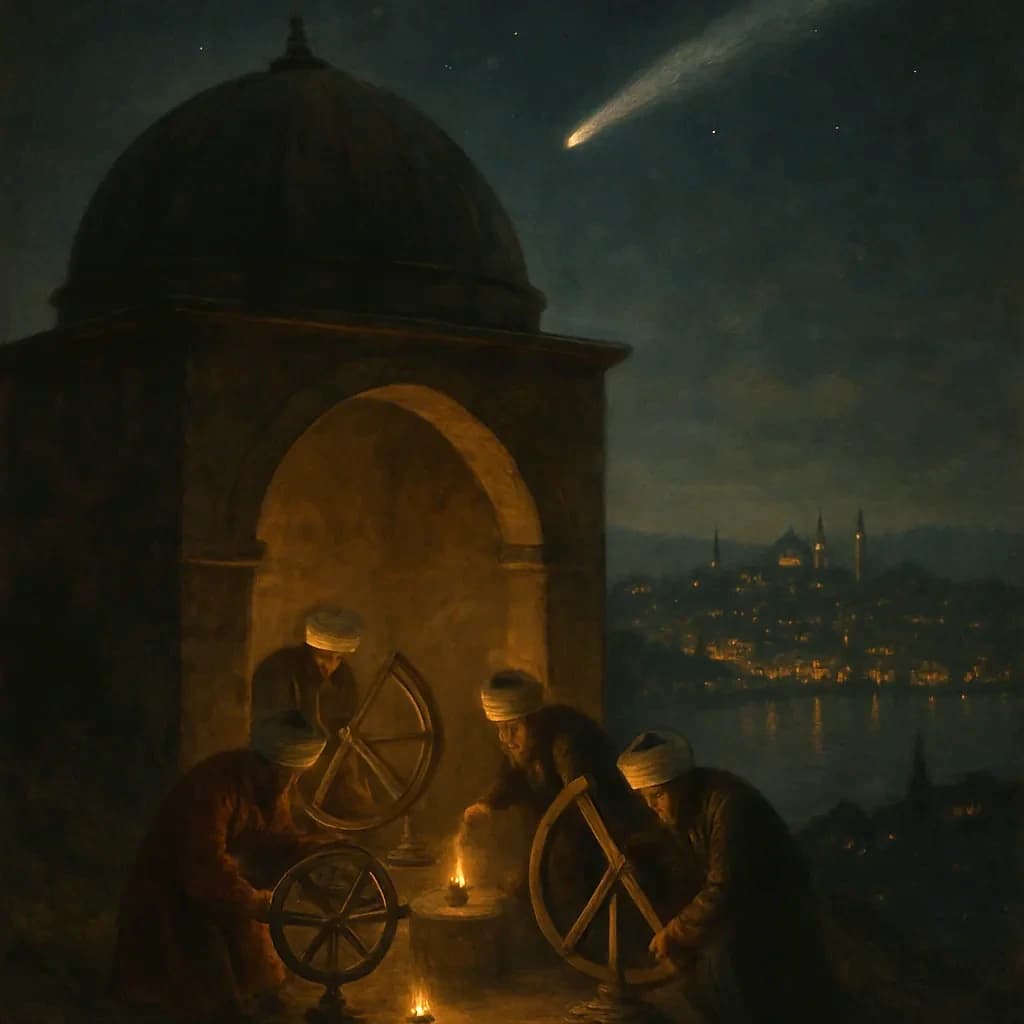
Why a Sultan Demolished His Own Observatory
A teenage Ottoman astronomer was given an observatory, a royal budget, and a direct line to the Sultan, and promptly predicted something that ended his career, his observatory, and nearly his life.
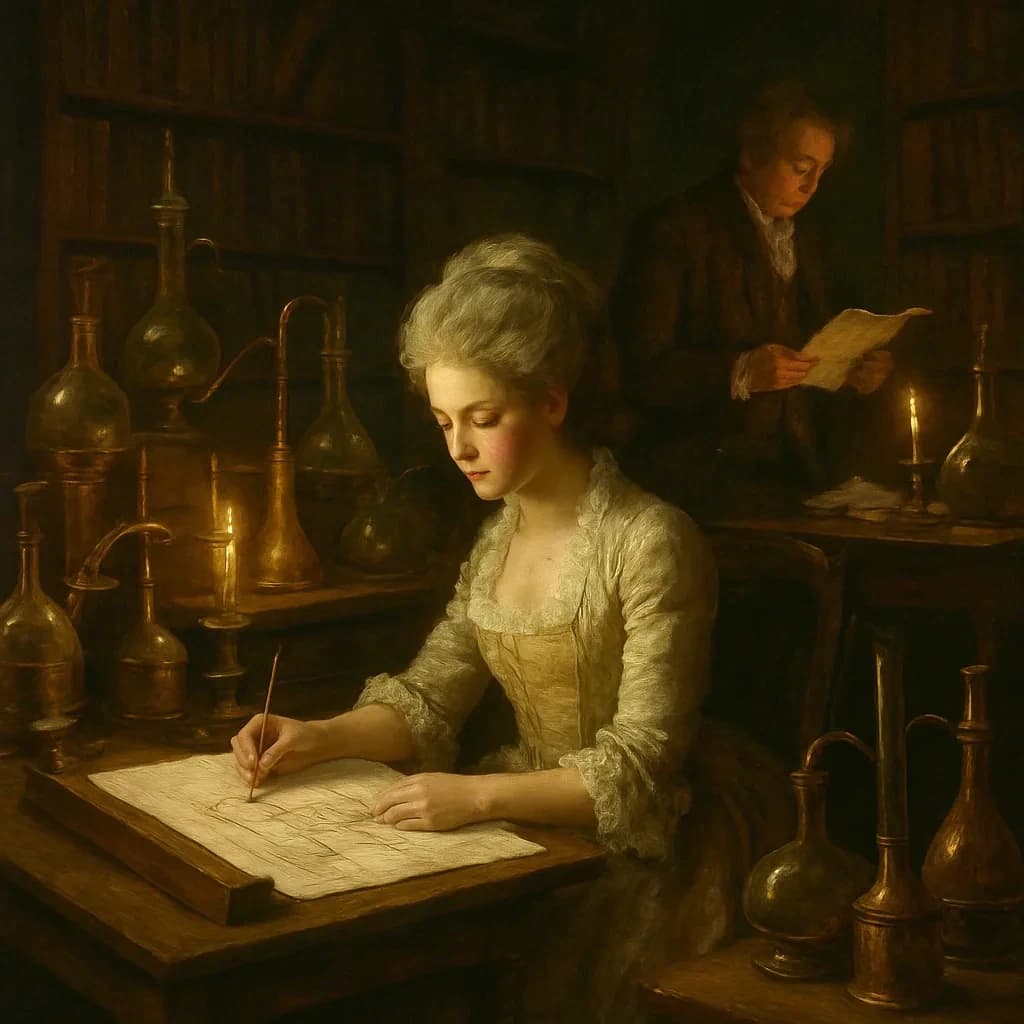
A French Laundress Became Europe's Most Important Chemist
In 1782, a French laundress named Marie-Anne Pierrette Paulze became the most important chemist in Europe, and nobody was allowed to say so.
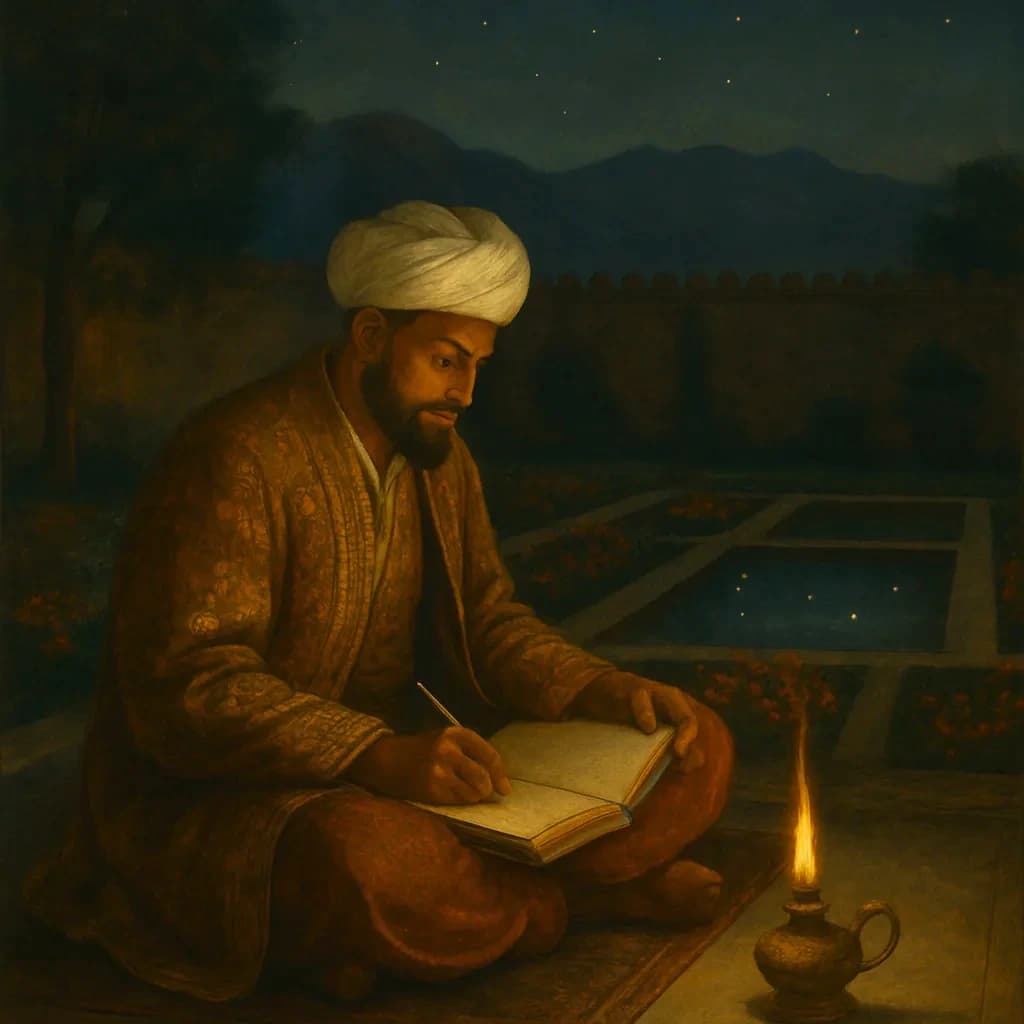
The Conqueror Who Wrote About Mangoes
A Central Asian conqueror sat down one evening and wrote poetry, and what he kept writing over the next twenty years preserved a whole civilization.
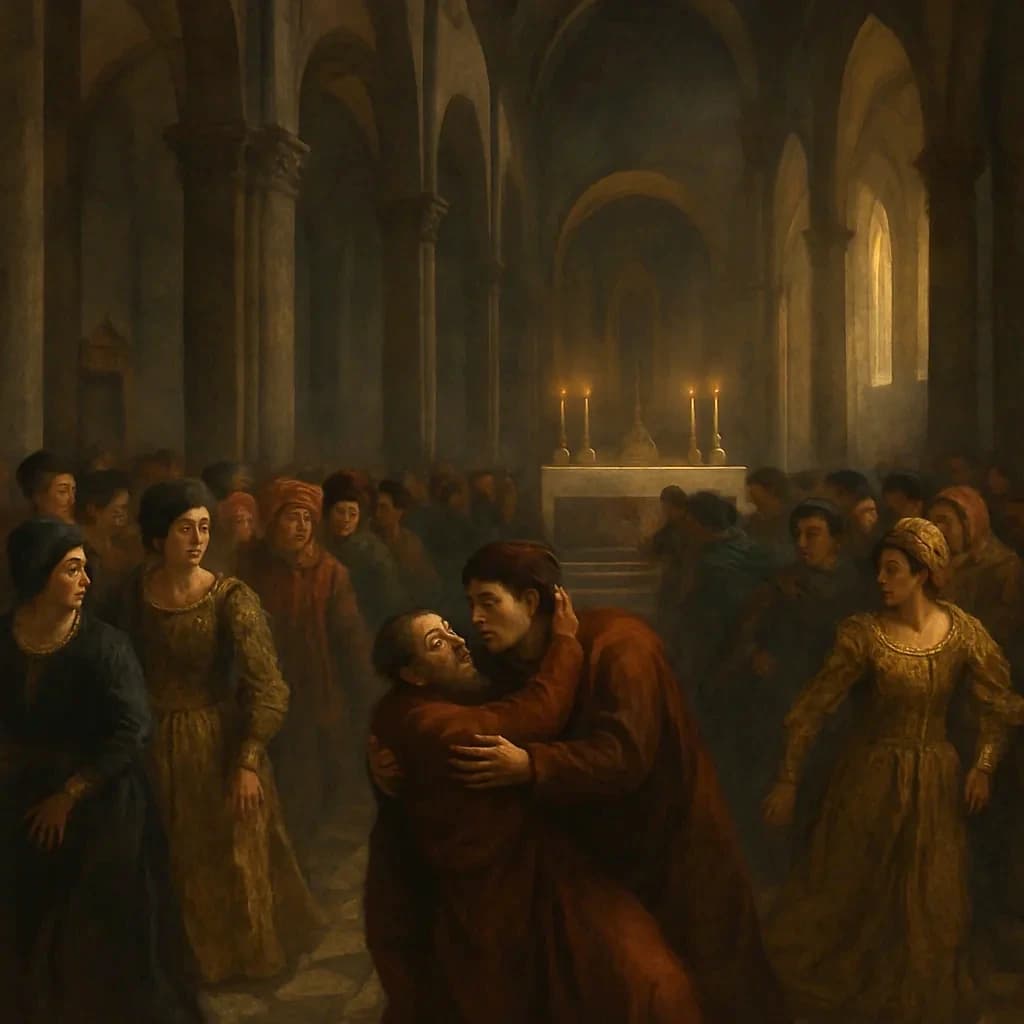
Murder at Easter Mass: The Plot to Erase the Medici
A botched assassination inside a Florence cathedral in 1478 nearly triggered a war that would have erased the Renaissance, and it was stopped not by armies, but by a fifteen-year-old boy and a rope.
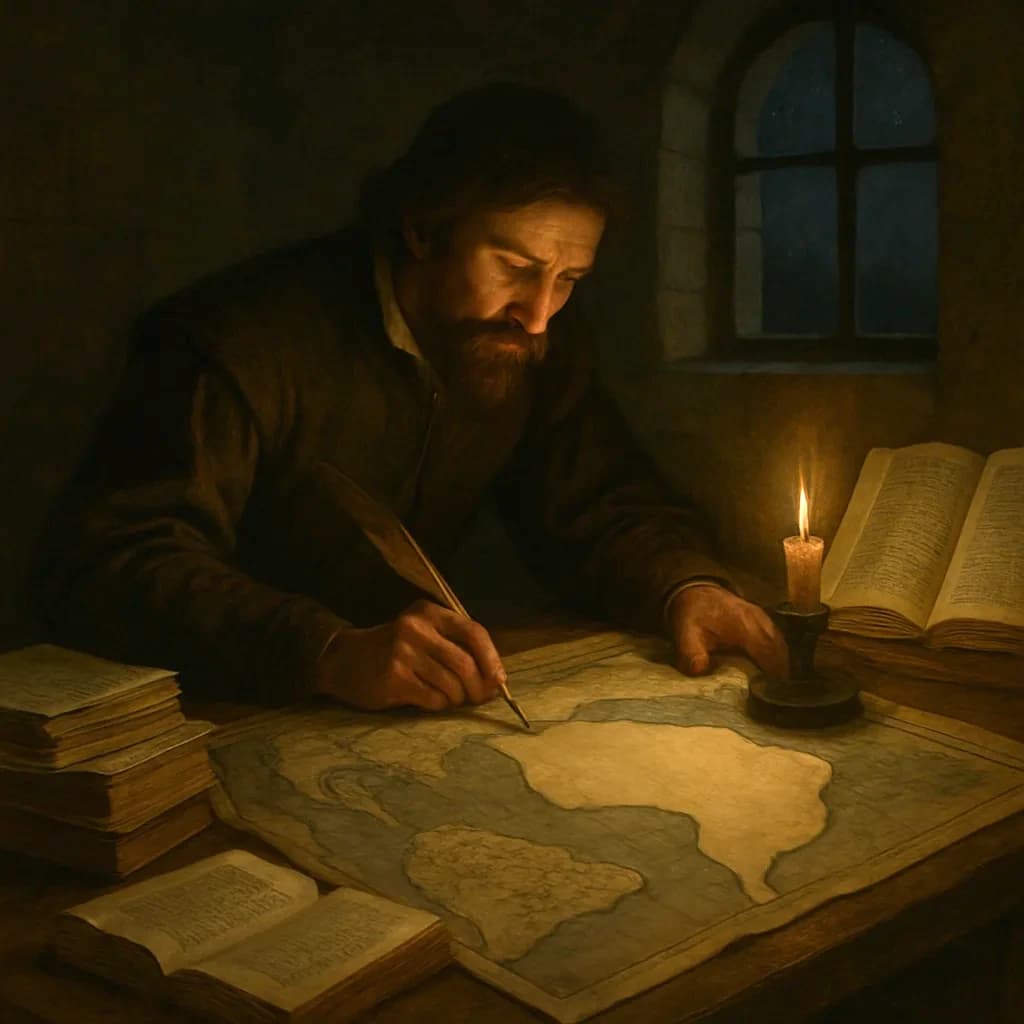
Three Days in a Florentine Bedroom, and the Lie That Named a Continent
A dying woman's deathbed confession in Florence may have been the real reason America got its name, and it had nothing to do with Amerigo Vespucci's voyages.
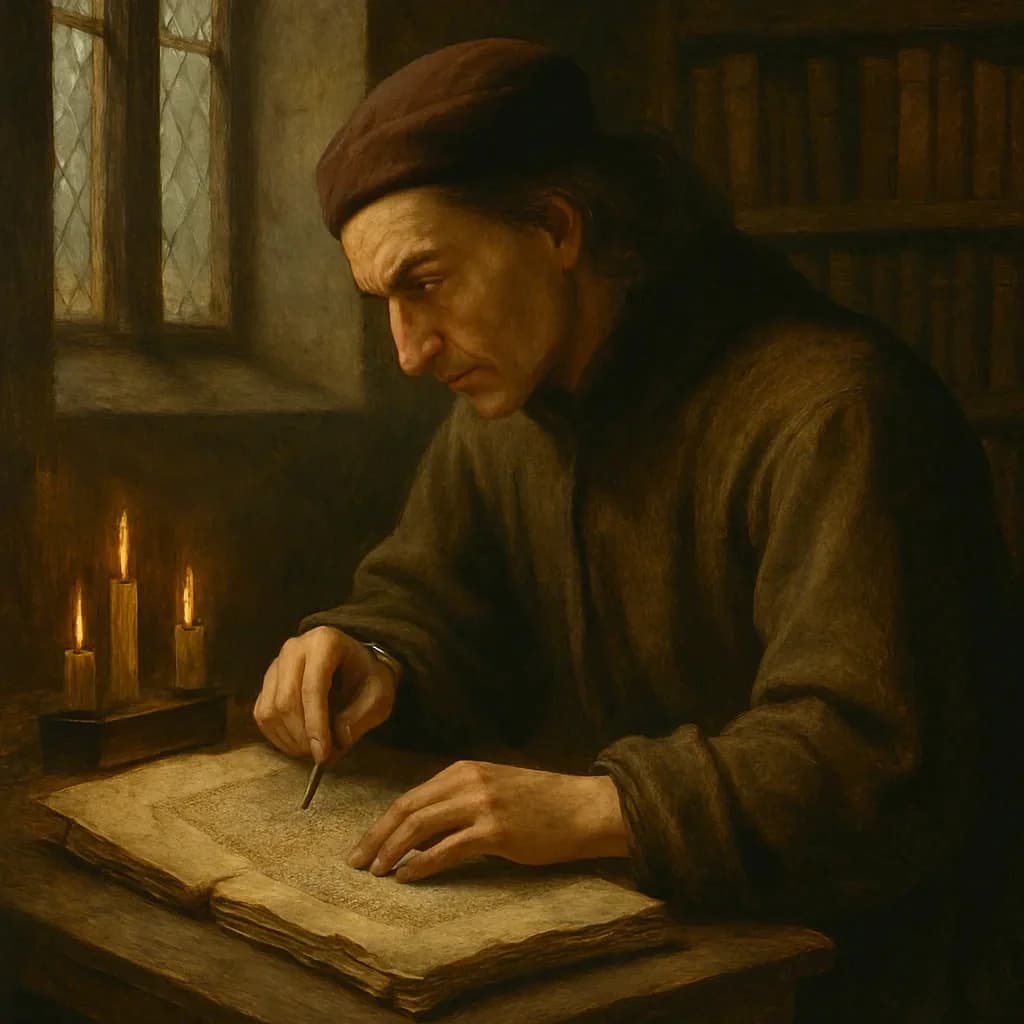
Cicero's Lost Republic: Found Beneath a Book of Psalms
A single manuscript, copied by a single monk, preserved the political theory that would inspire every modern democracy, and its survival was almost entirely accidental.
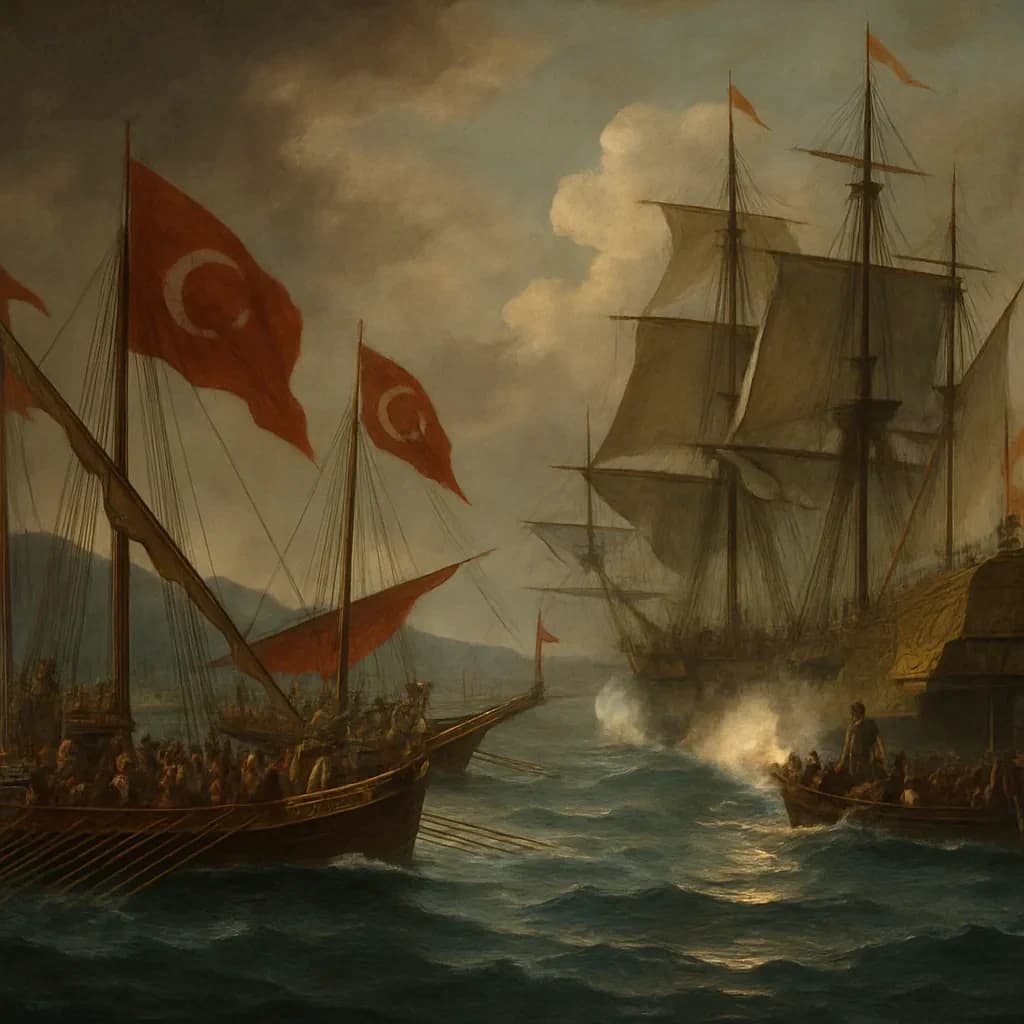
Europe's Combined Fleet Lost Because One Admiral Wouldn't Wait
In 1538, the entire naval power of Europe gathered to crush the Ottoman fleet, and lost because one admiral refused to wait.
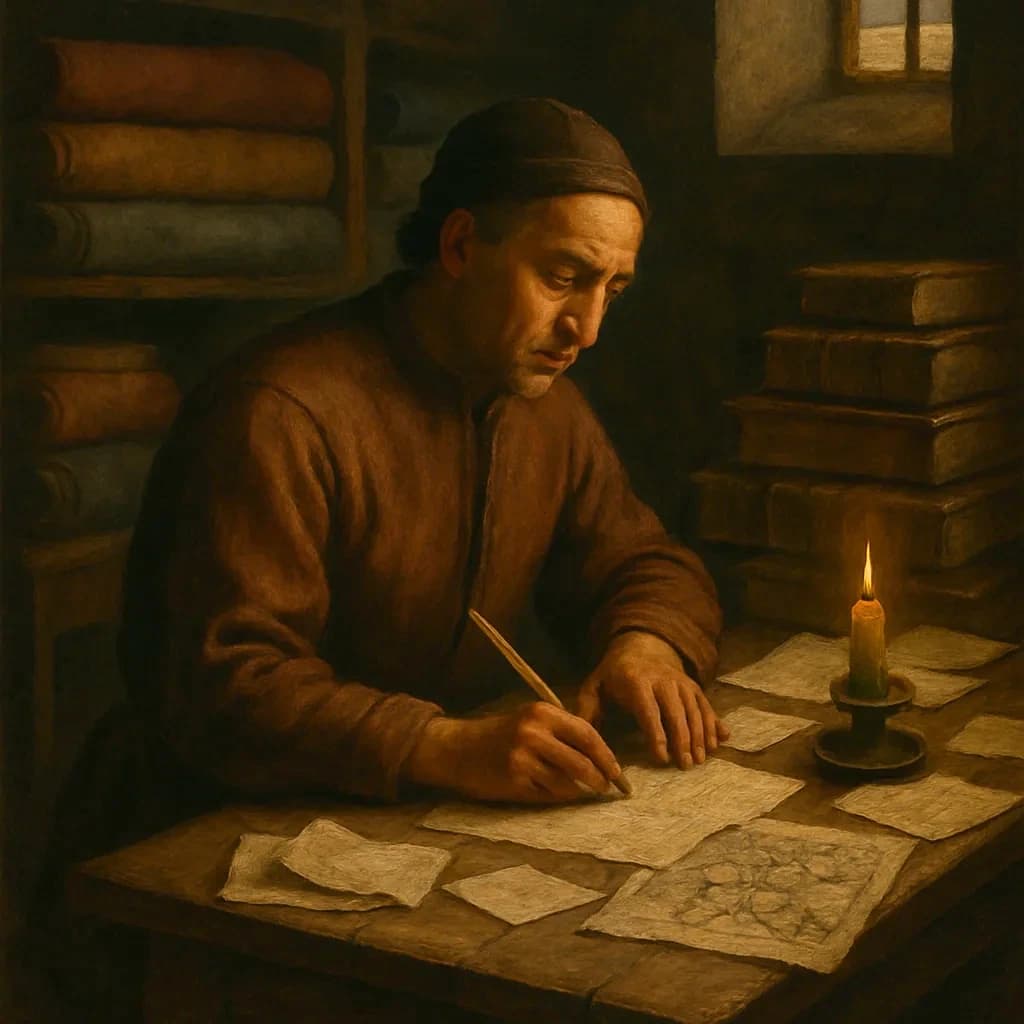
A Cloth Trader Who Never Left Home Redrew the World
A Florentine cloth trader who never left home redrew the known world, and killed the career of every professional cartographer who came after him.
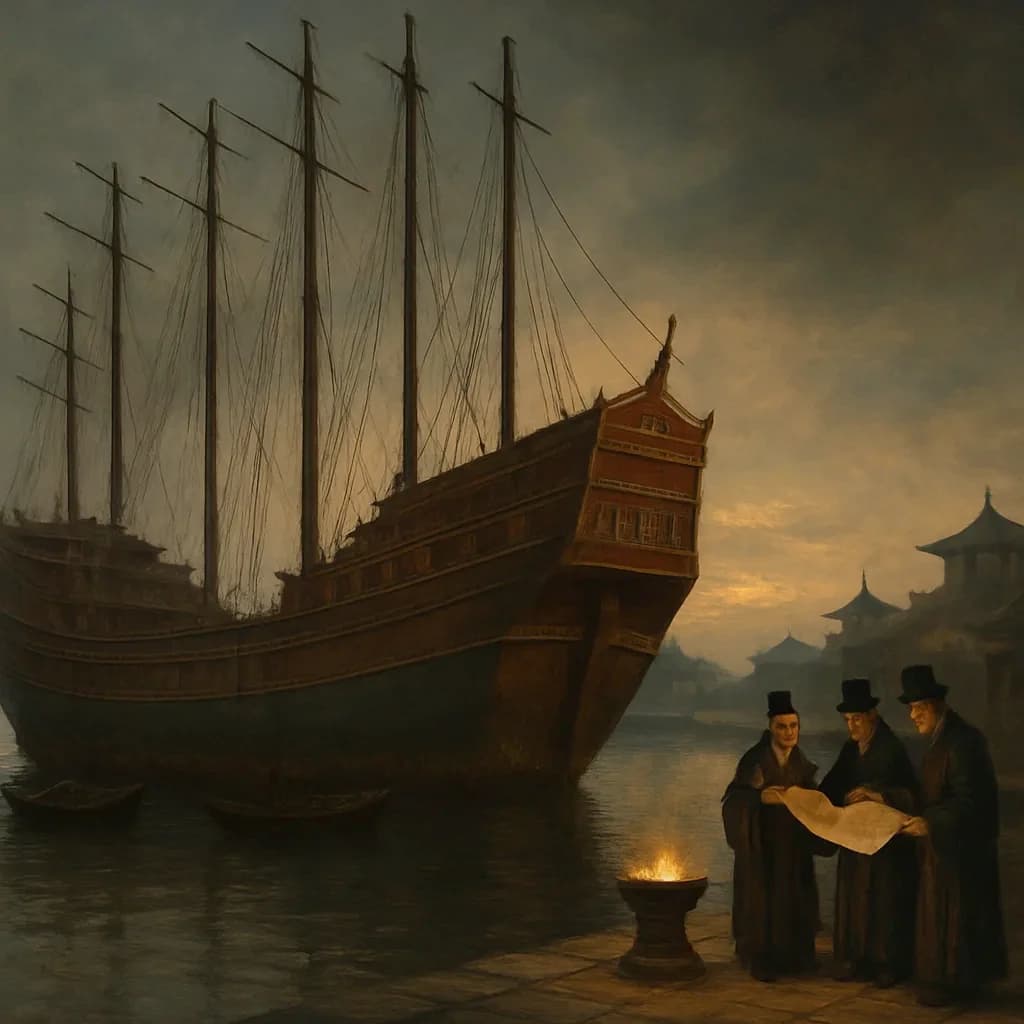
China Burned the Maps to Its Greatest Fleet
A dying emperor's last breath ended the greatest maritime program in human history in 1424, before most of the world even knew it existed.
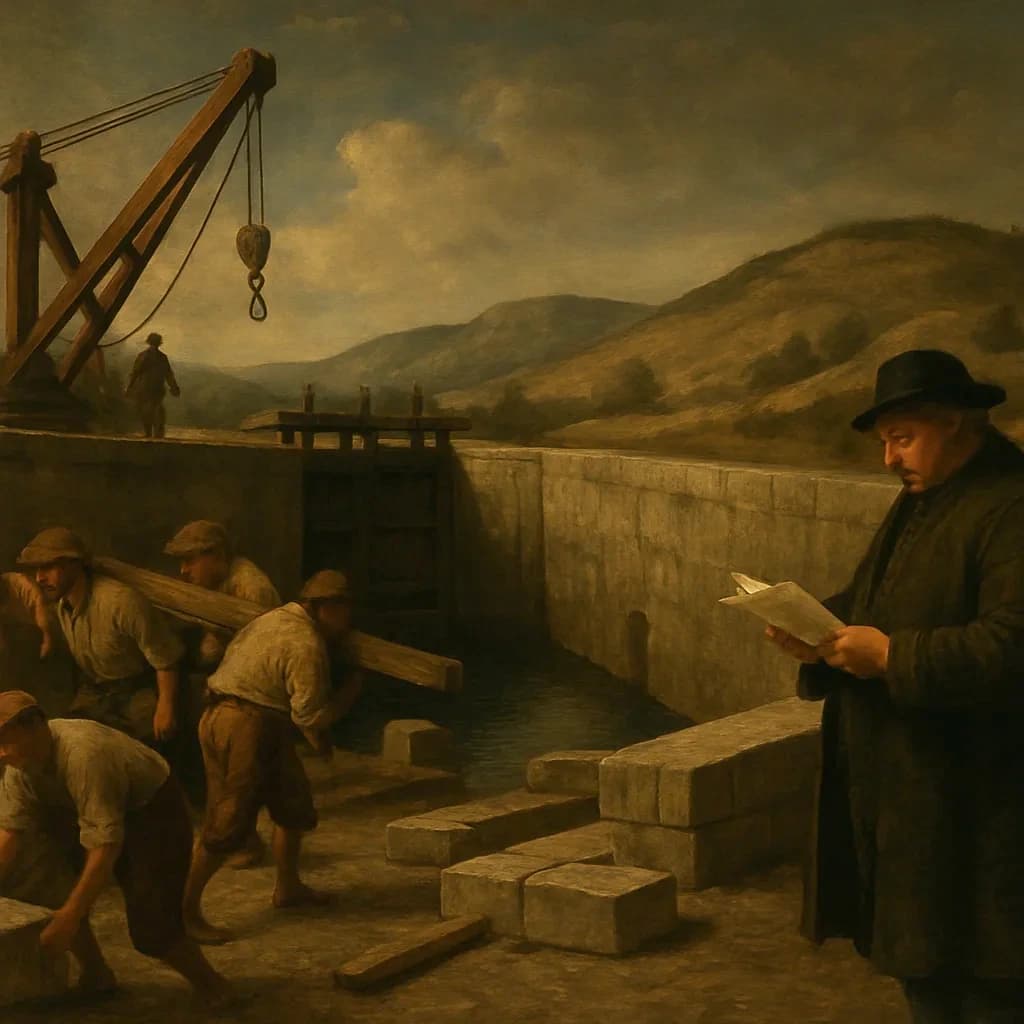
He Mortgaged Everything to Link France's Two Seas
A tax collector with no engineering training solved an impossible water problem in 1666, and, in doing so, accidentally invented the concept of the professional bureaucrat.
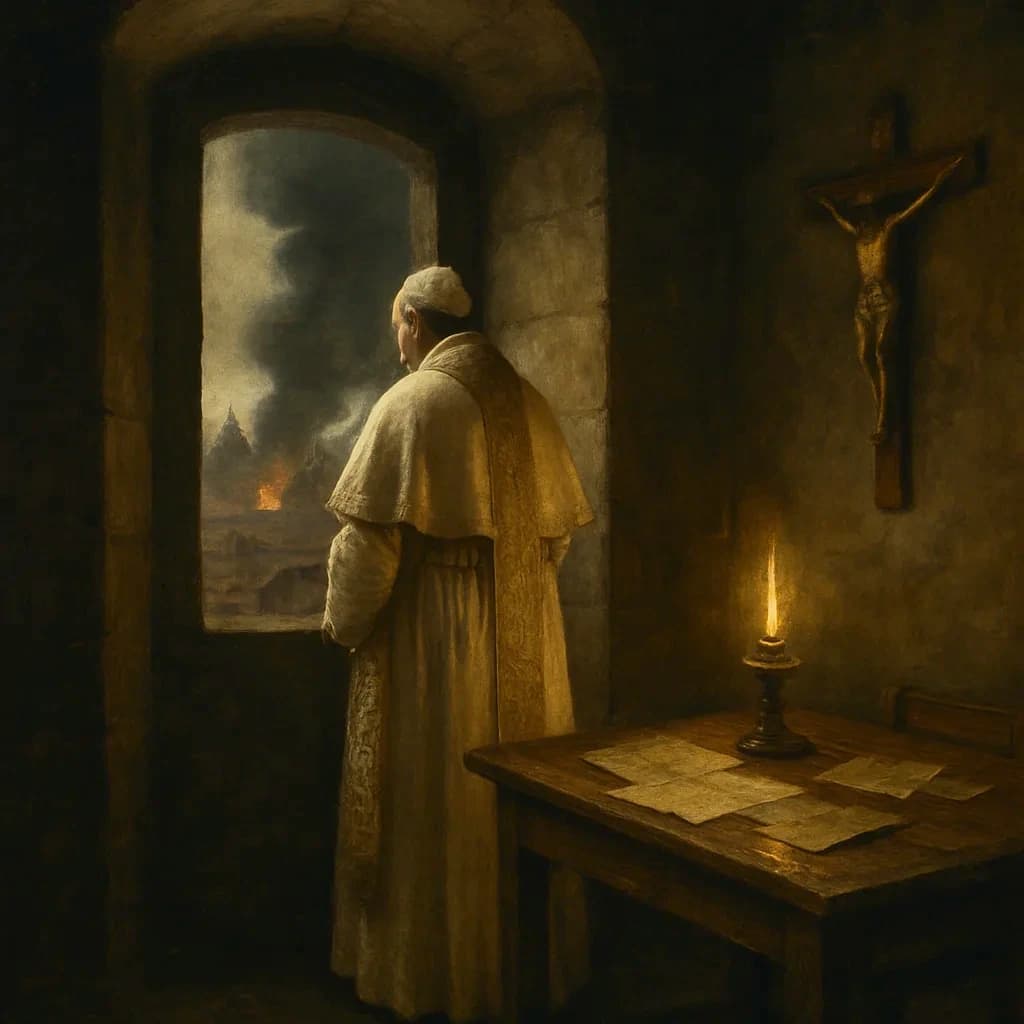
Hungry Soldiers Sacked Rome and Kept Ireland Catholic
A Swiss mercenary rebellion in 1527 ended up preserving the Catholic faith in Ireland for five centuries.
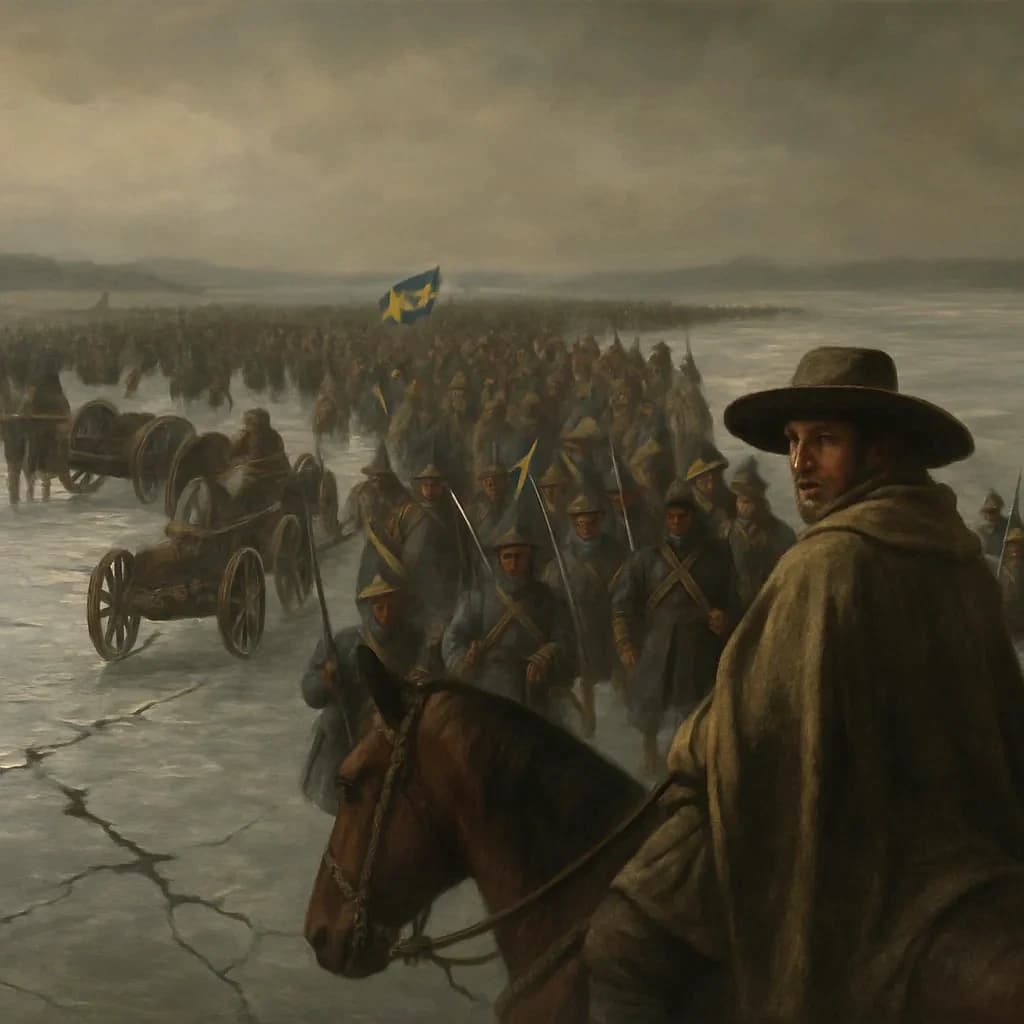
A Swedish King Crossed the Ice and Invented National Debt
A Swedish king crossed the ice with an army to end a war, and instead accidentally invented the modern concept of national debt.
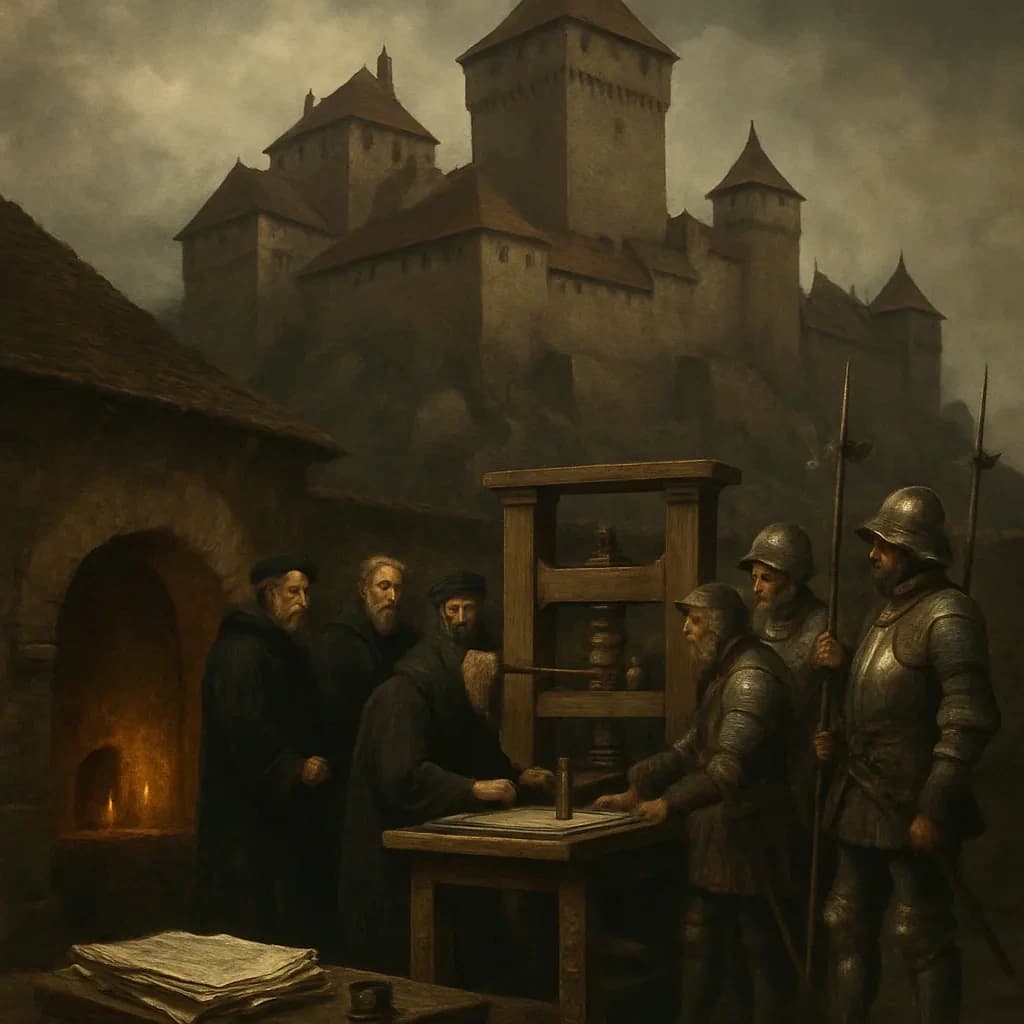
A Bankrupt Knight Offered Luther a Castle
Broke and out of work, a minor German knight made a desperate gamble that handed Martin Luther the one thing the Pope couldn't take away.
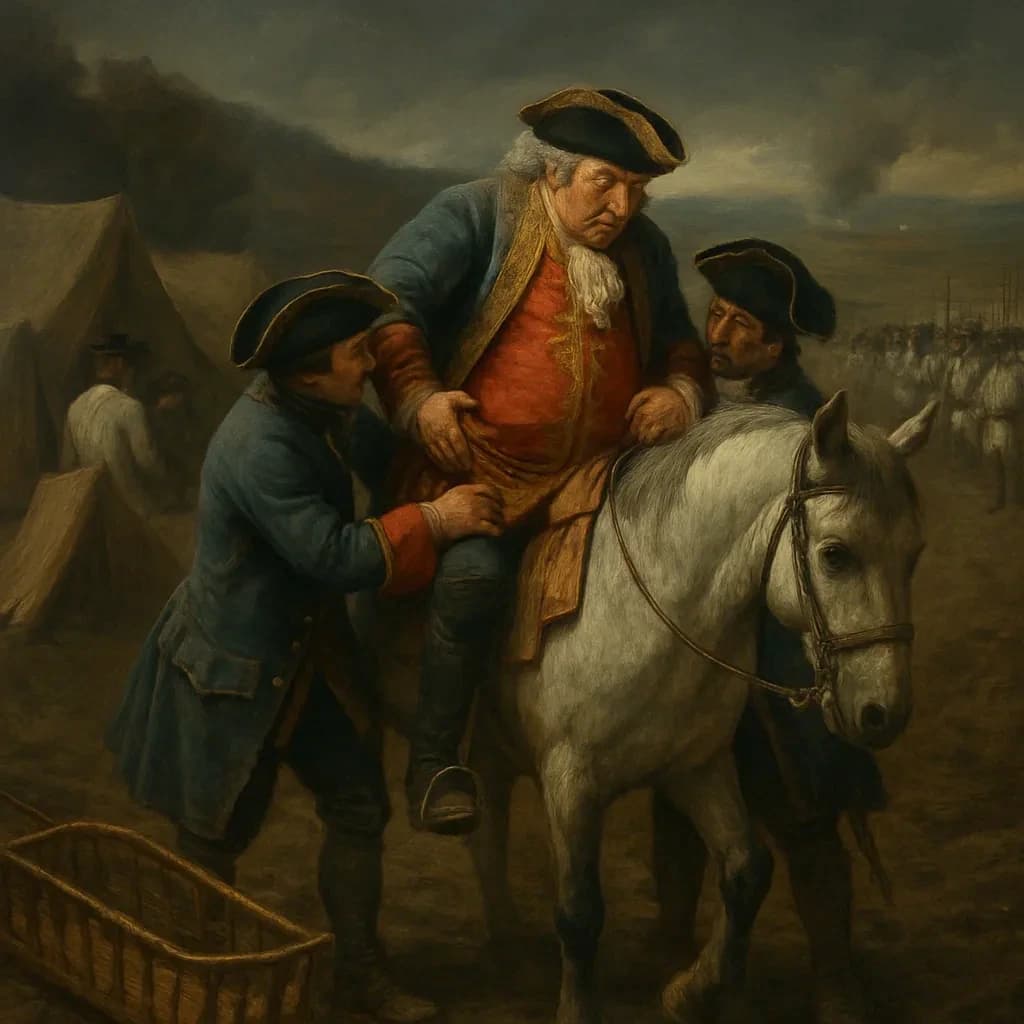
He Commanded 50,000 Men From a Stretcher
He had lost three fingers by the time the battle started, and hadn't slept in two days. He won anyway.
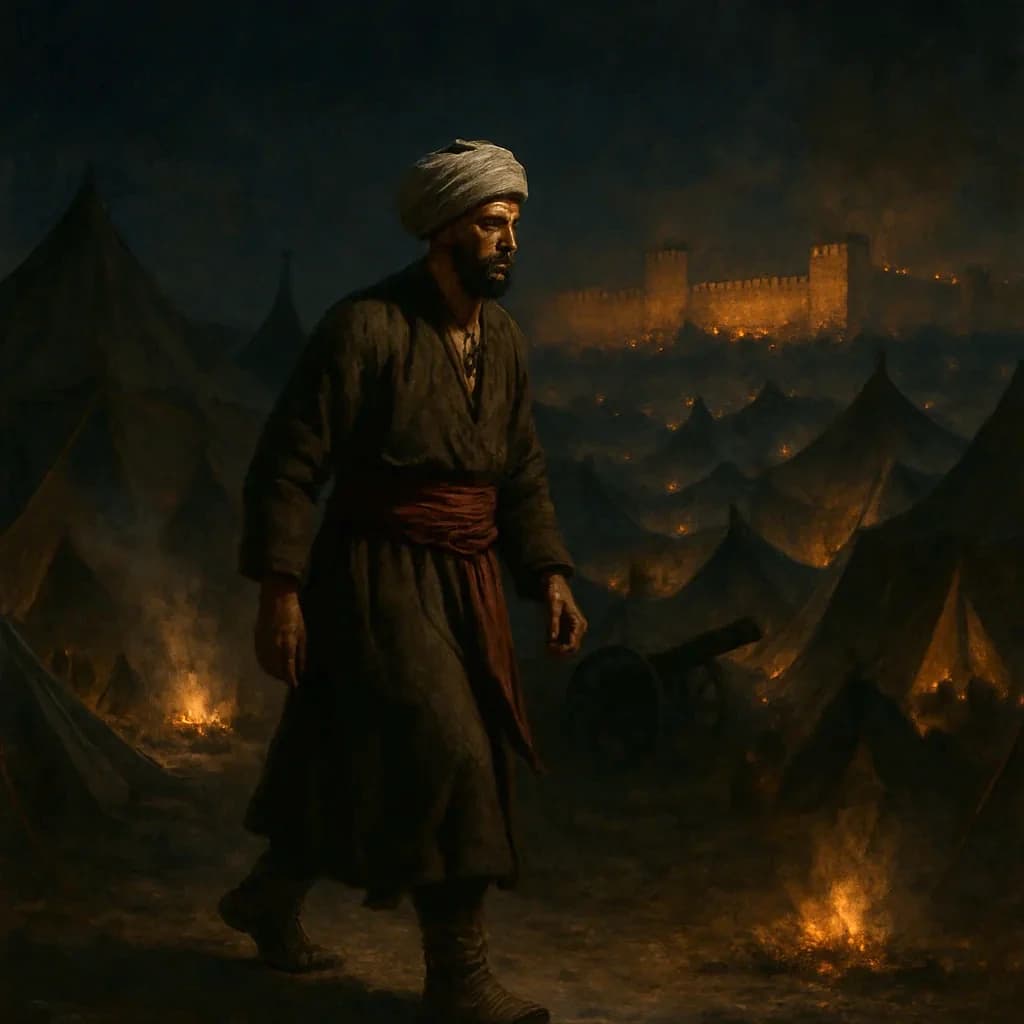
How a Disguised Spy Saved Vienna in 1683
A single Ottoman courier made a wrong turn in 1683, and the fate of Christian Europe shifted not on a battlefield but in a basement.
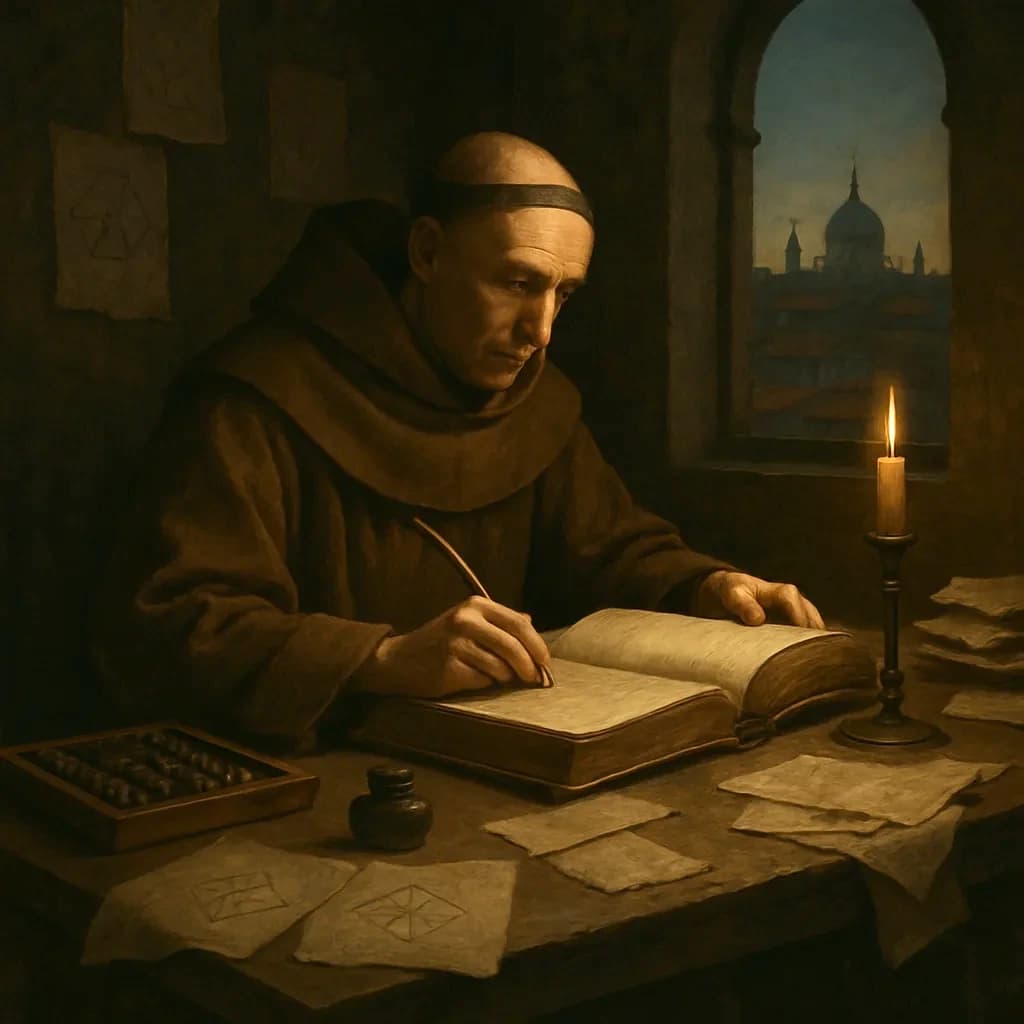
How a Venetian Friar Printed the Rules of Modern Accounting
A Franciscan friar published a math textbook in Venice, and buried inside it was the financial language every corporation on earth still speaks today.
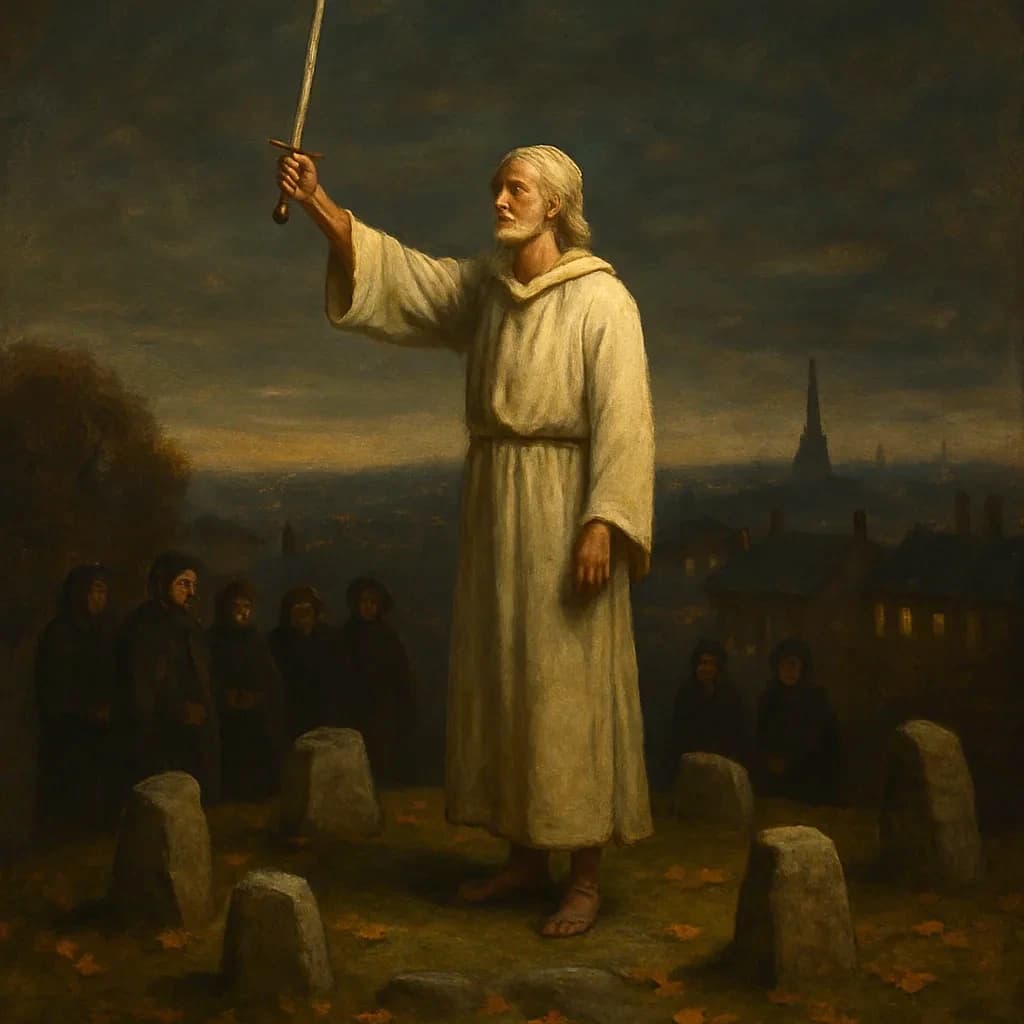
He Invented Wales's Ancient Druid Tradition
A Welsh scholar found a poem so beautiful it rewrote his nation's entire ancient history. Except, in 1778, he'd written it himself last Tuesday.
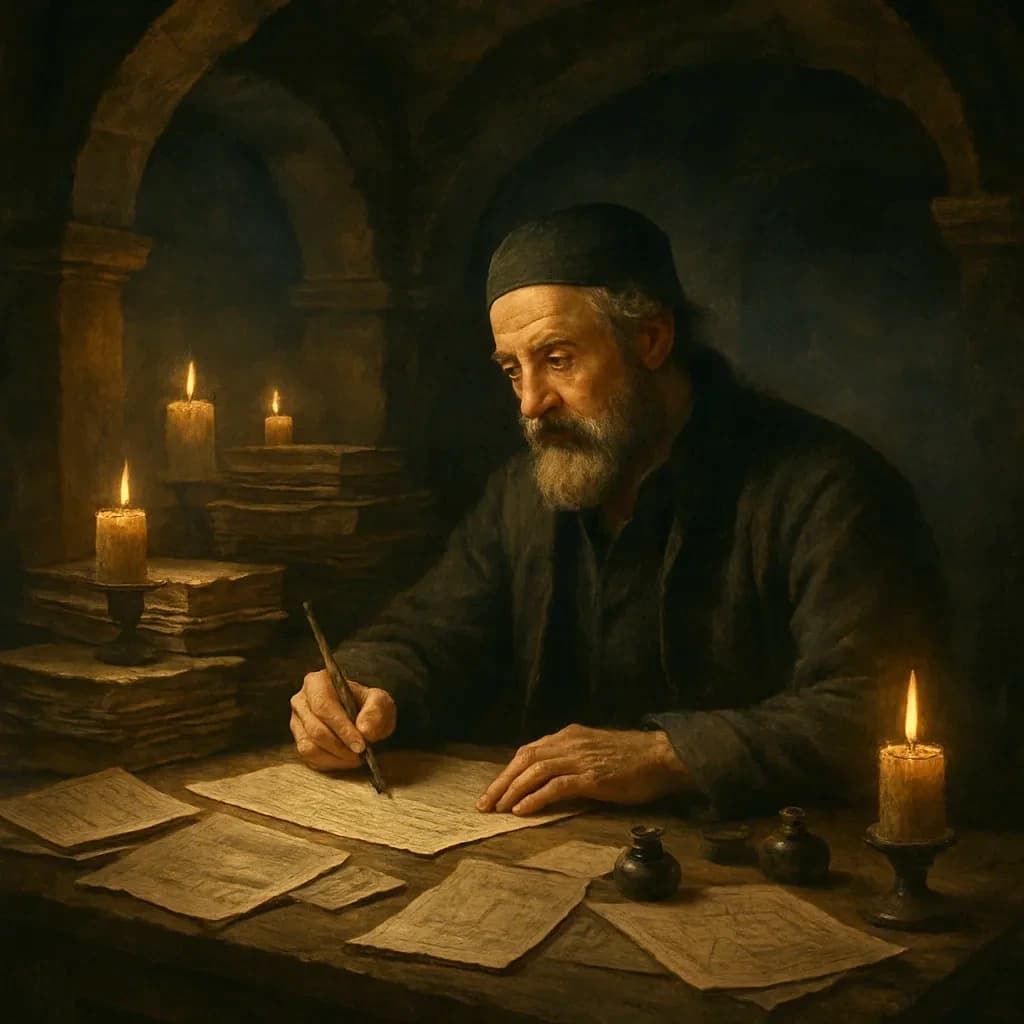
An Ottoman Official Accidentally Preserved the Music That Shaped Jazz
A minor Ottoman official in 1669 accidentally preserved the only surviving fragment of ancient Greek music theory, and it ended up shaping jazz.
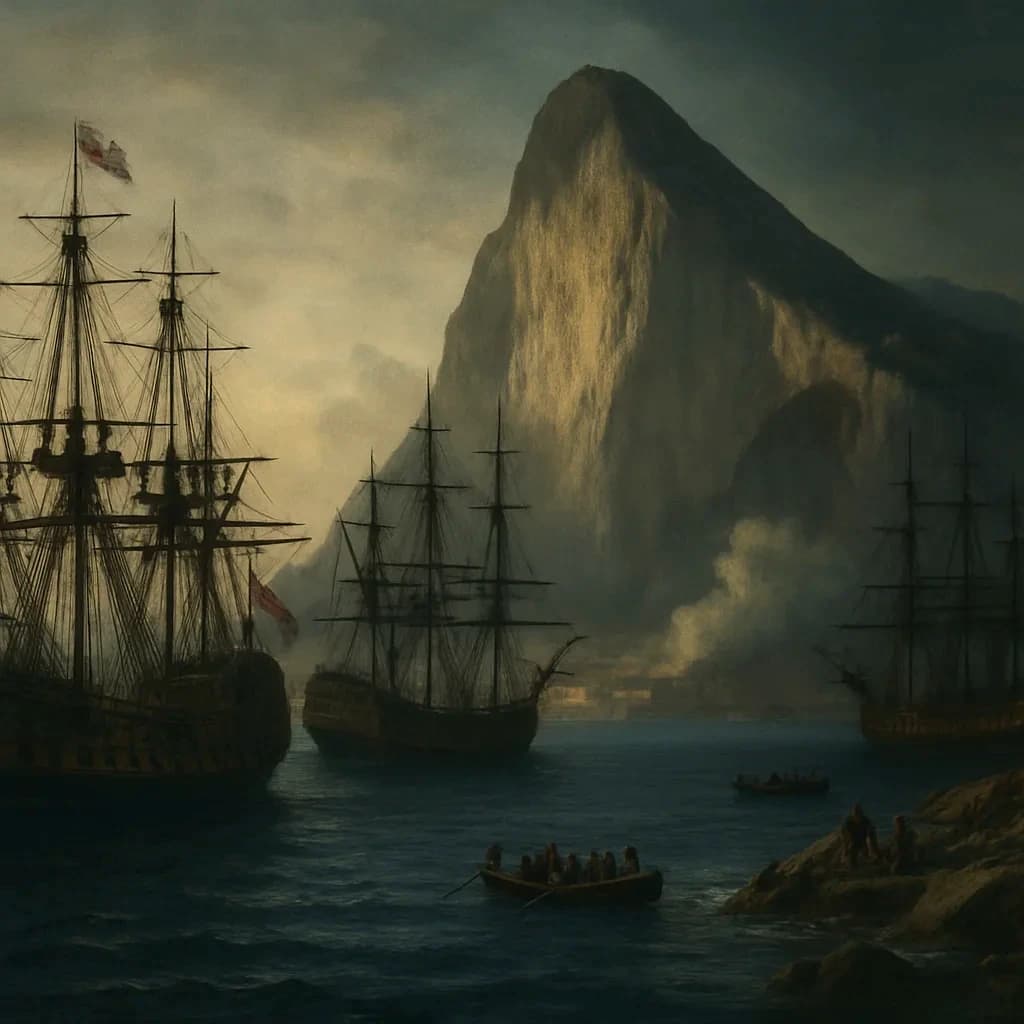
Gibraltar: The Consolation Prize Britain Never Gave Back
A Royal Navy sailor's petty act of spite in a Devon port decided which power would control the western Mediterranean for the next three centuries.
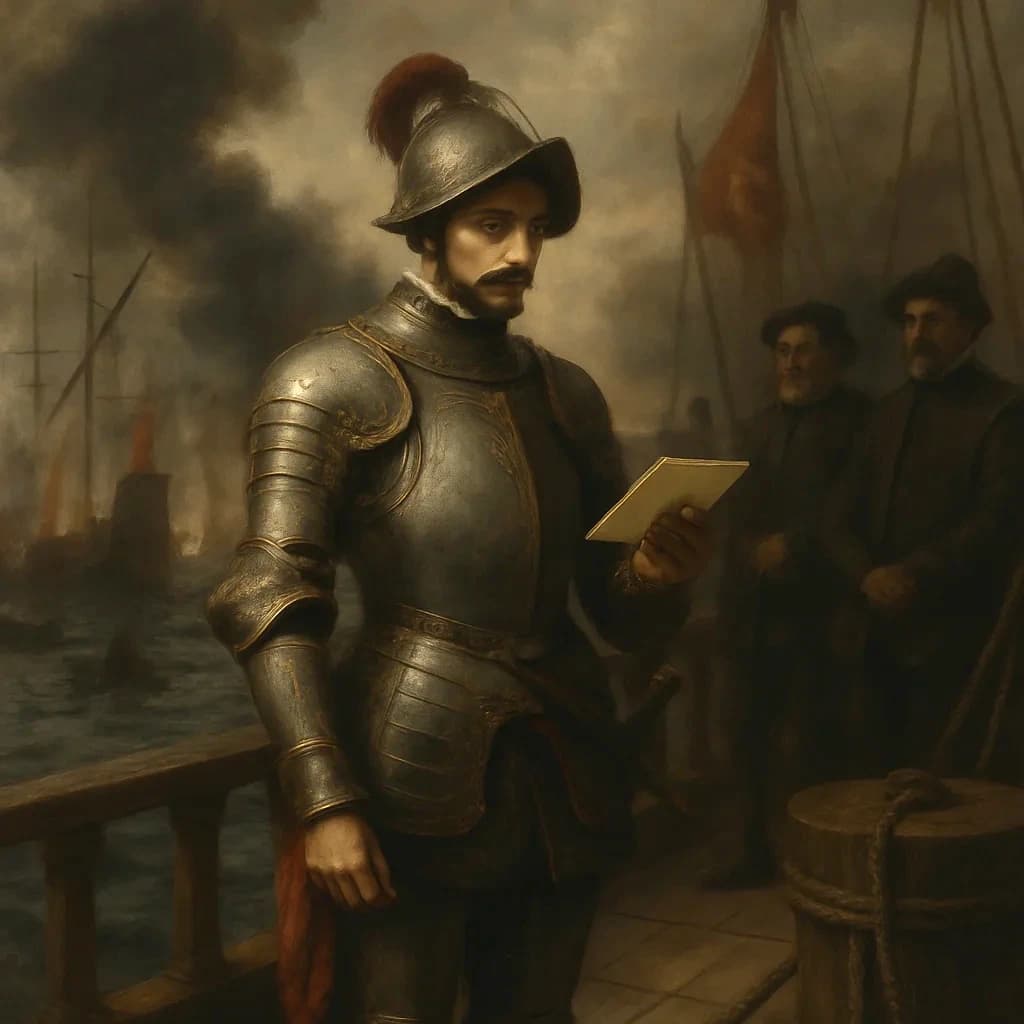
A Debt Repaid in Severed Ears
When Spain's most celebrated admiral won his greatest victory, the king gave him a title. The admiral asked for something stranger.
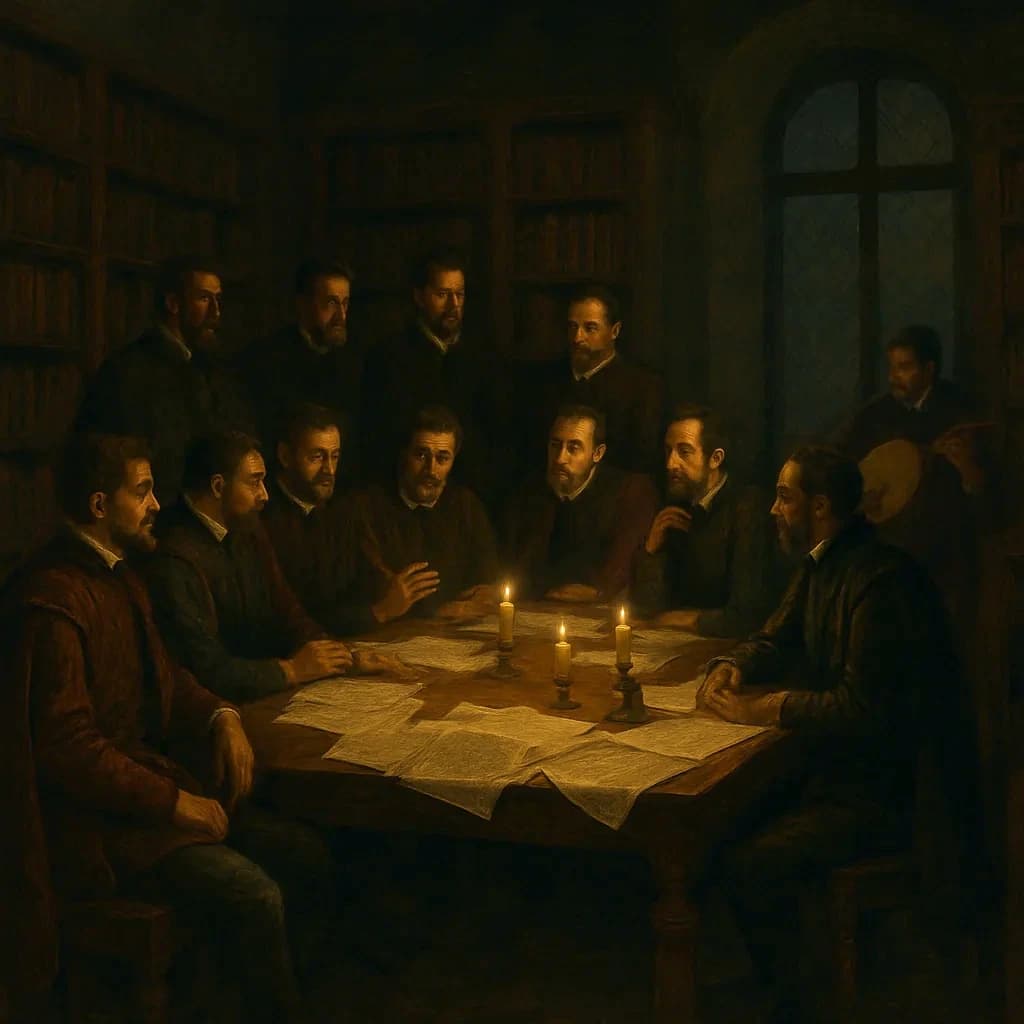
Chasing Lost Greek Music, They Invented Opera Instead
A group of Florentine noblemen trying to recreate ancient Greek theatre invented one of the most powerful art forms in human history, and they had no idea what they'd done.
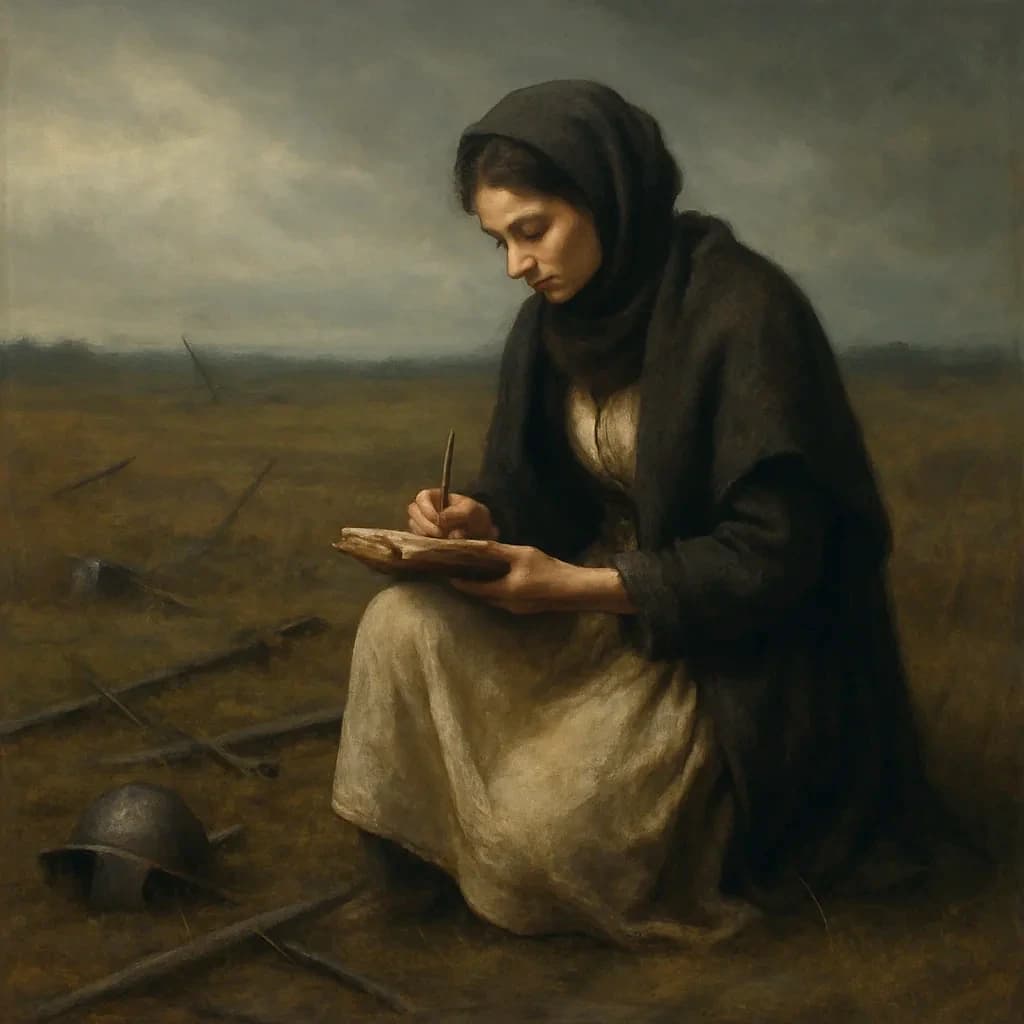
She Cataloged Mohács's Dead and Got Erased
A Hungarian needlewoman spent years cataloguing Ottoman battlefield corpses and became the first person in history to conduct a systematic military mortality study. Then her conclusions got her quietly erased.
One Letter Helped Unleash the Sack of Rome
A single letter from a semi-literate Swiss mercenary toppled one of the most powerful men in Renaissance Europe, and nobody remembers his name.
The Banker Who Bought an Emperor His Crown
A single unpaid debt to a German cloth merchant, settled in 1520, decided who would rule Europe for the next two centuries.
The Reformation Nearly Died Because One Man Got Sick
The Protestant Reformation nearly ended not with fire, not with armies, but because its most important defender got sick at exactly the wrong moment.
He Brought Plato Back to Europe After a Thousand Years
A single meeting between a disgraced Byzantine scholar and a Florentine banker in 1438 didn't just save Greek philosophy. It laid the intellectual architecture of the Renaissance.
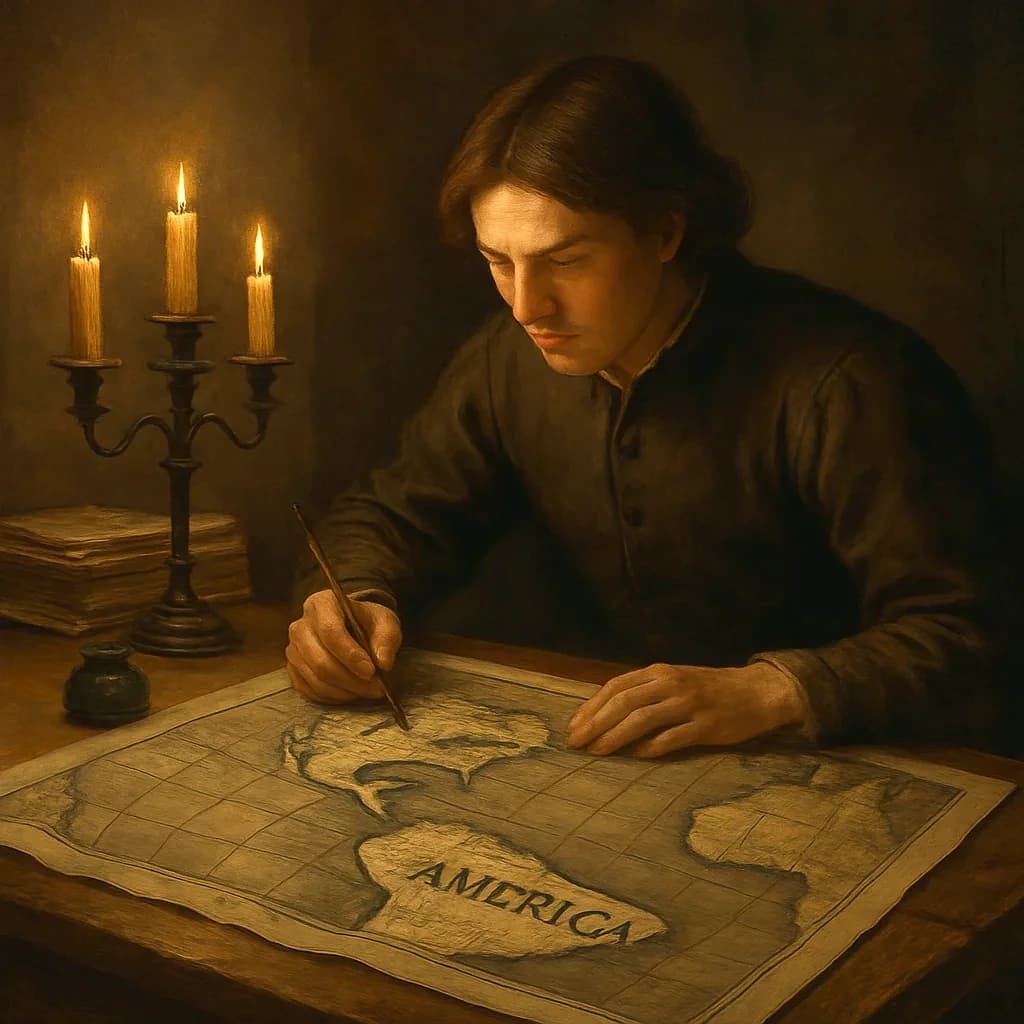
A Jailed Merchant's Letter Accidentally Named the Americas
A jailed Florentine merchant wrote a letter from his cell that accidentally gave the Americas their name. And he had nothing to do with discovering them.
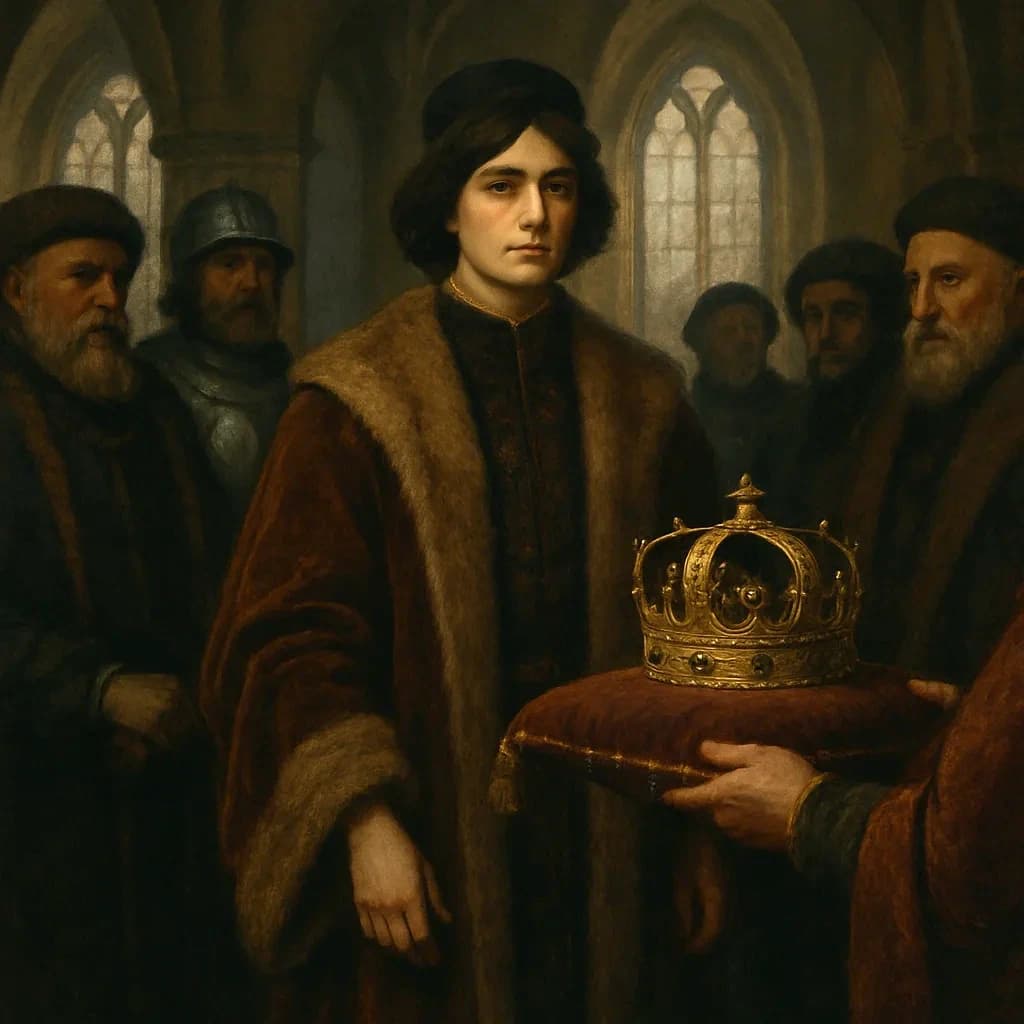
His Father's Killers Pulled Him From Prison and Crowned Him
A teenage boy was pulled from a prison cell, handed a crown, and told to rule one of Europe's most powerful kingdoms, by the men who had just killed his father.
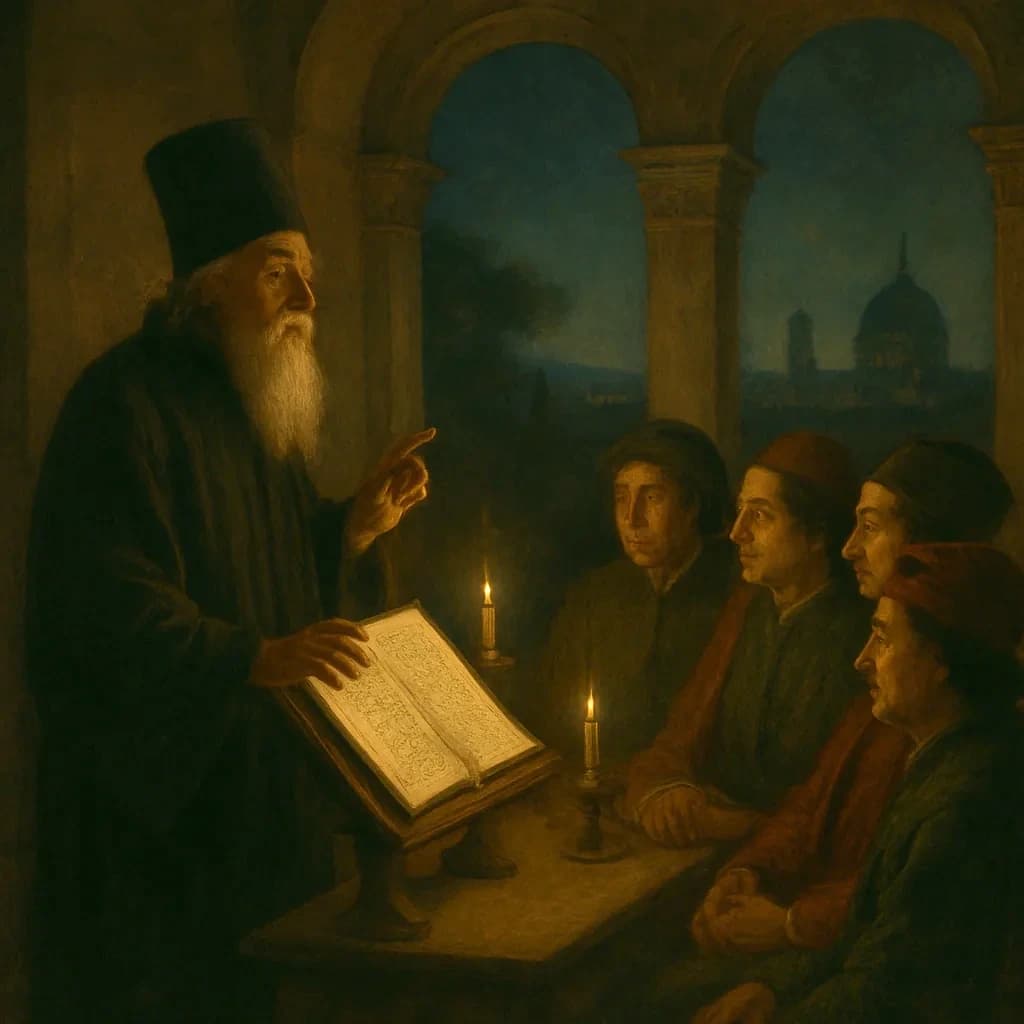
How a Byzantine Monk Gave Florence Plato Again
A Byzantine monk carried the entire intellectual inheritance of the ancient world out of a collapsing empire, and nobody noticed because he looked like a gardener.
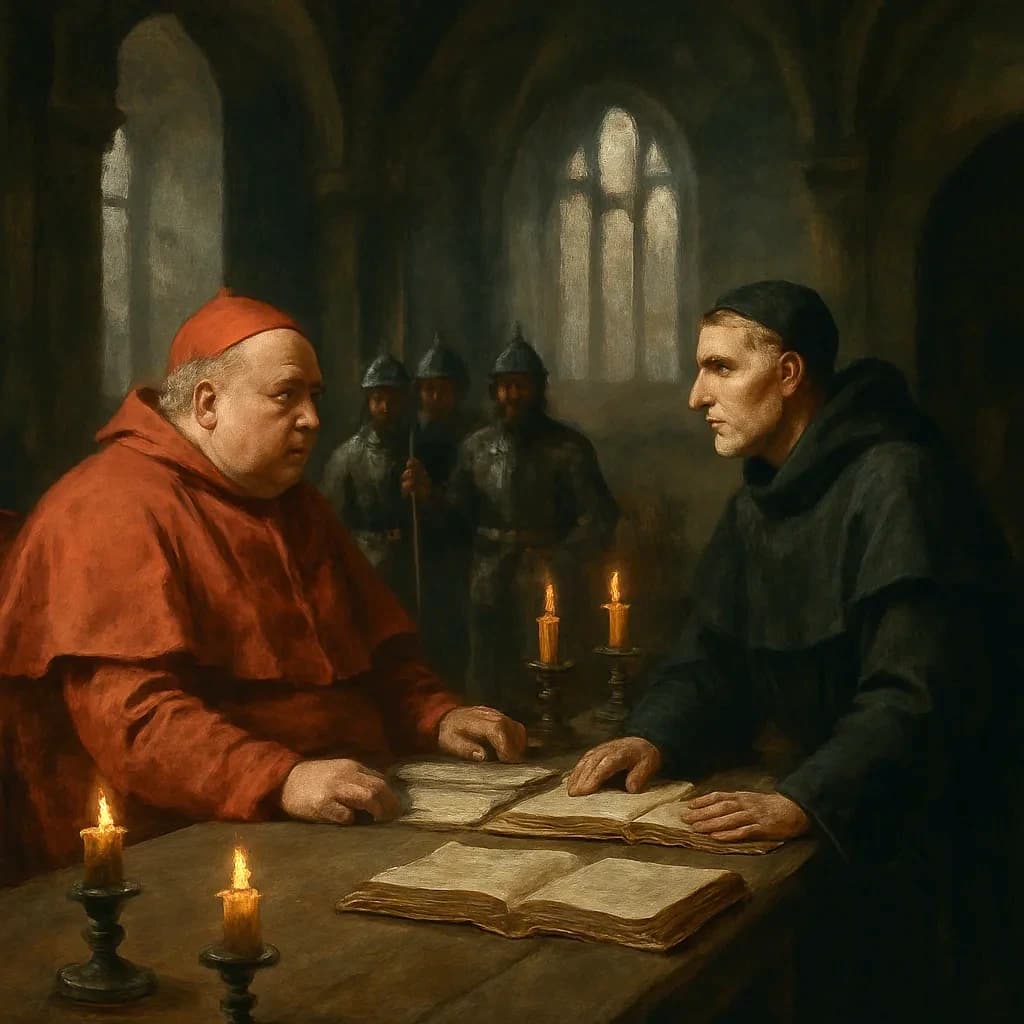
A Cattle Raid Bought Luther the Time to Survive
Martin Luther's revolution almost ended in a courtroom before it began, stopped not by theology, but by a border war over stolen livestock.
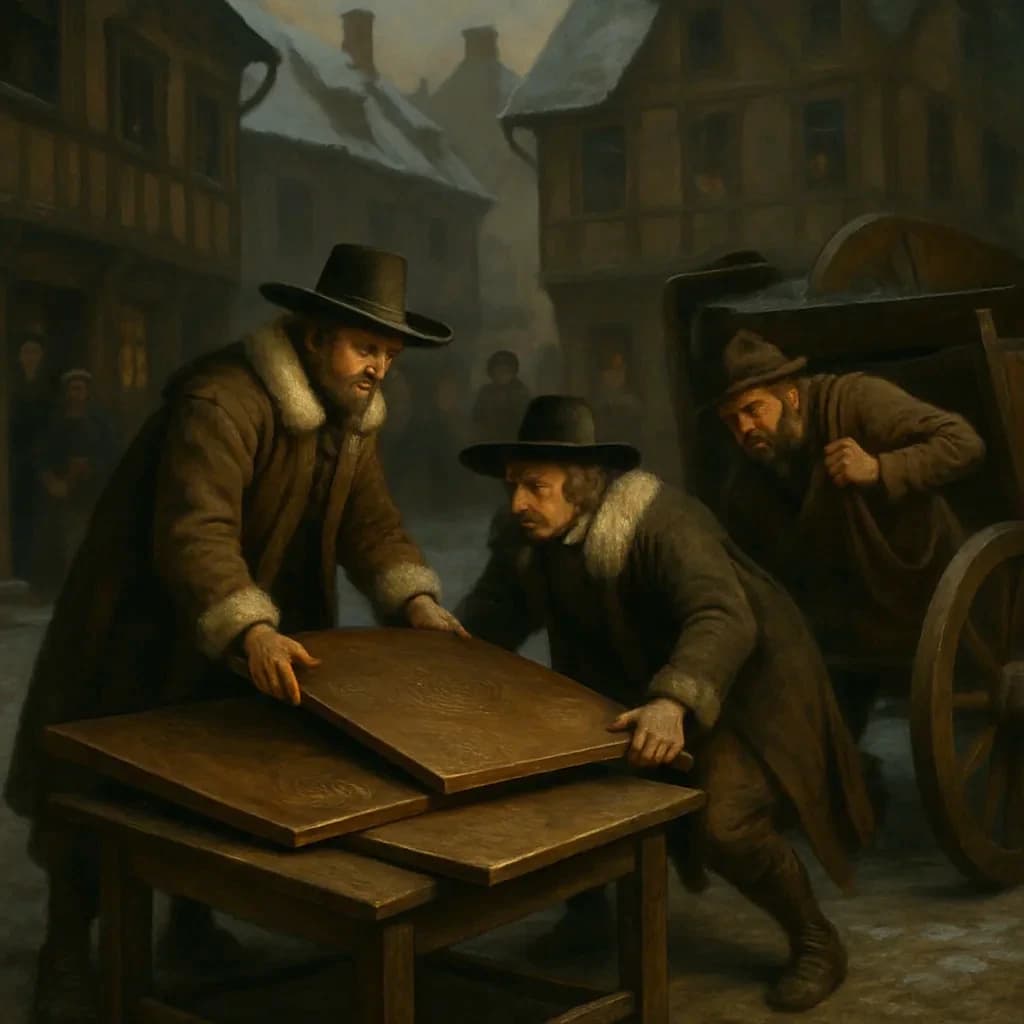
Sweden's 20-Kilogram Coins and the First Banknote
A single month's wages in 1660 Sweden weighed so much that collecting your pay meant bringing a wheelbarrow.
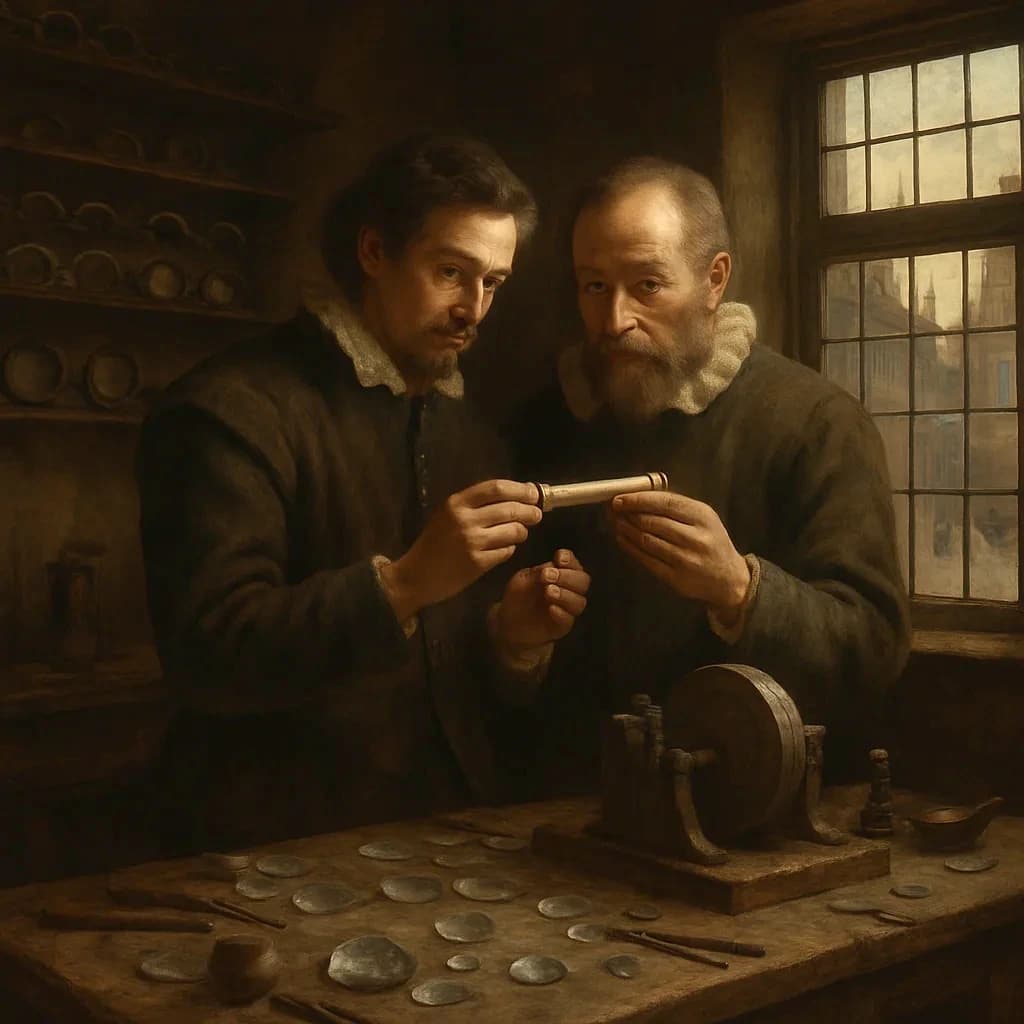
Too Late: The Telescope Nobody Could Patent
A Dutch spectacle-maker's apprentice wandered into a library in 1609 and, without meaning to, handed Europe the next century of war.
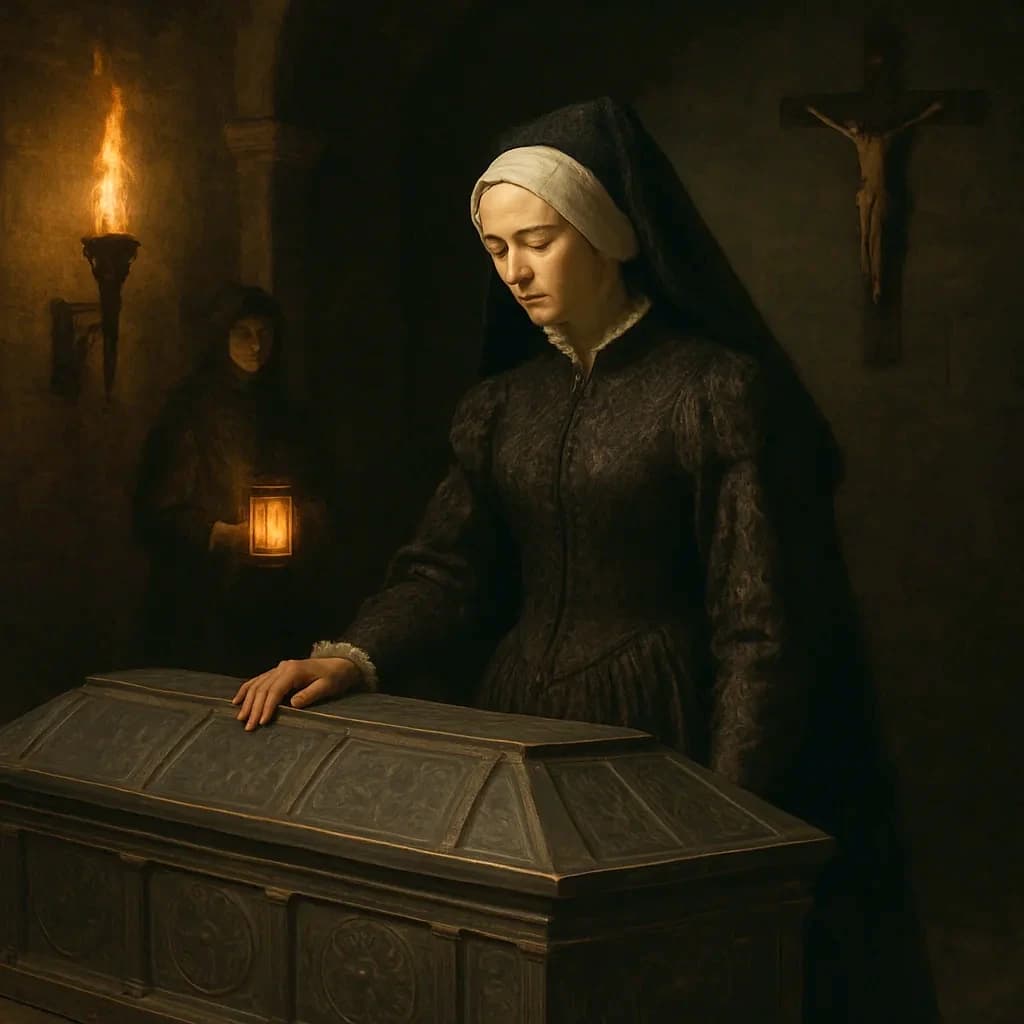
They Called Her Mad to Steal Her Throne
For eleven years, an empress ruled one of history's most powerful empires while her husband sat in a box.
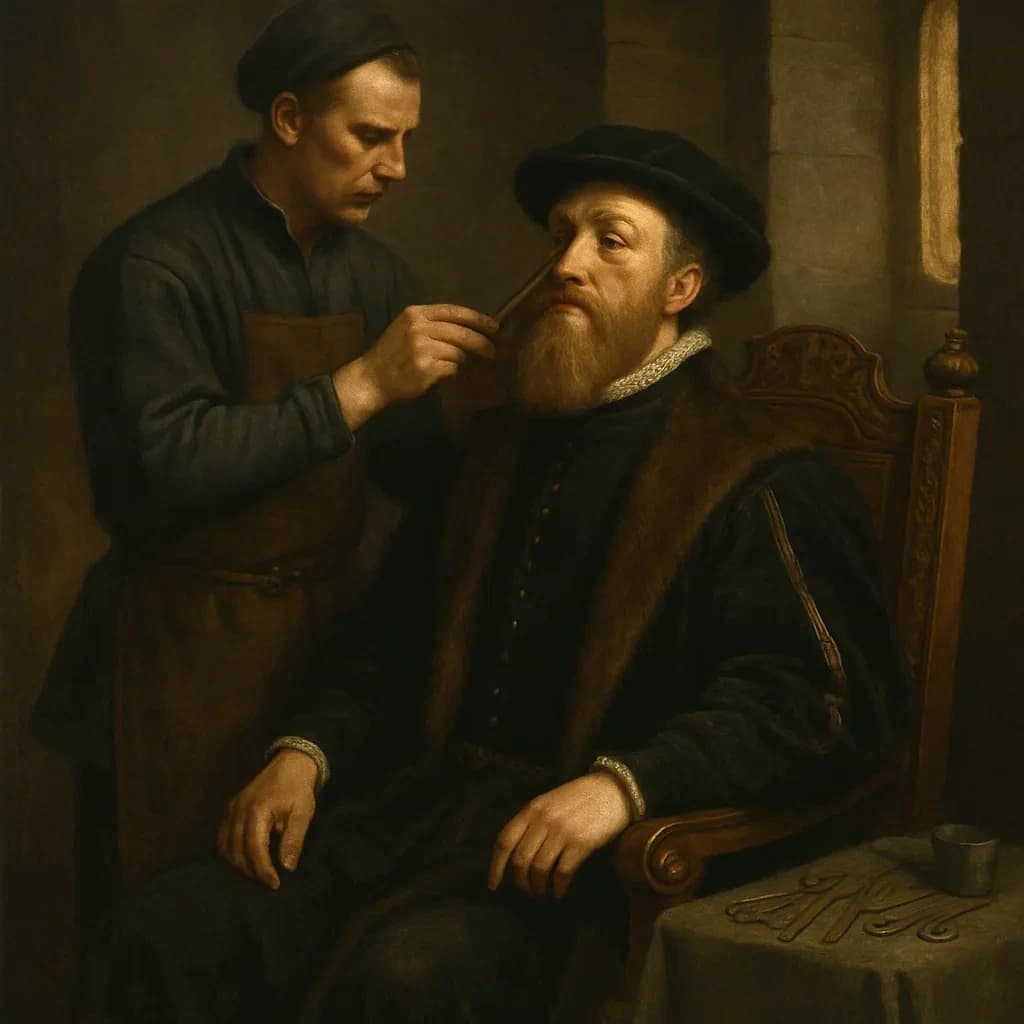
A Barber Heard Six Emperors' Secrets and Said Nothing
For sixty years, one German barber knew the secrets of every Habsburg emperor, and somehow never lost his head.
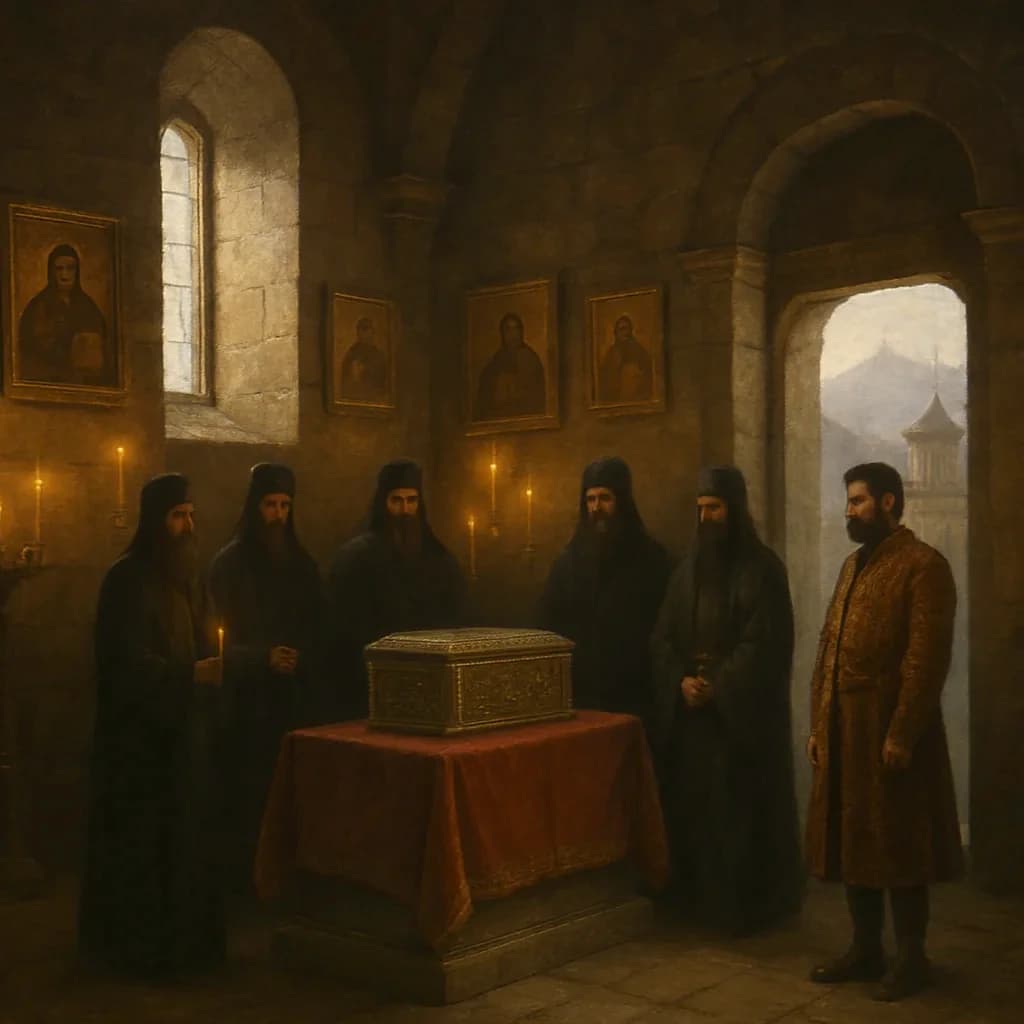
Persia Used a Dead Queen's Corpse to Start a War
A Georgian queen died in captivity in Moscow, and the Persians used her corpse to start a war.
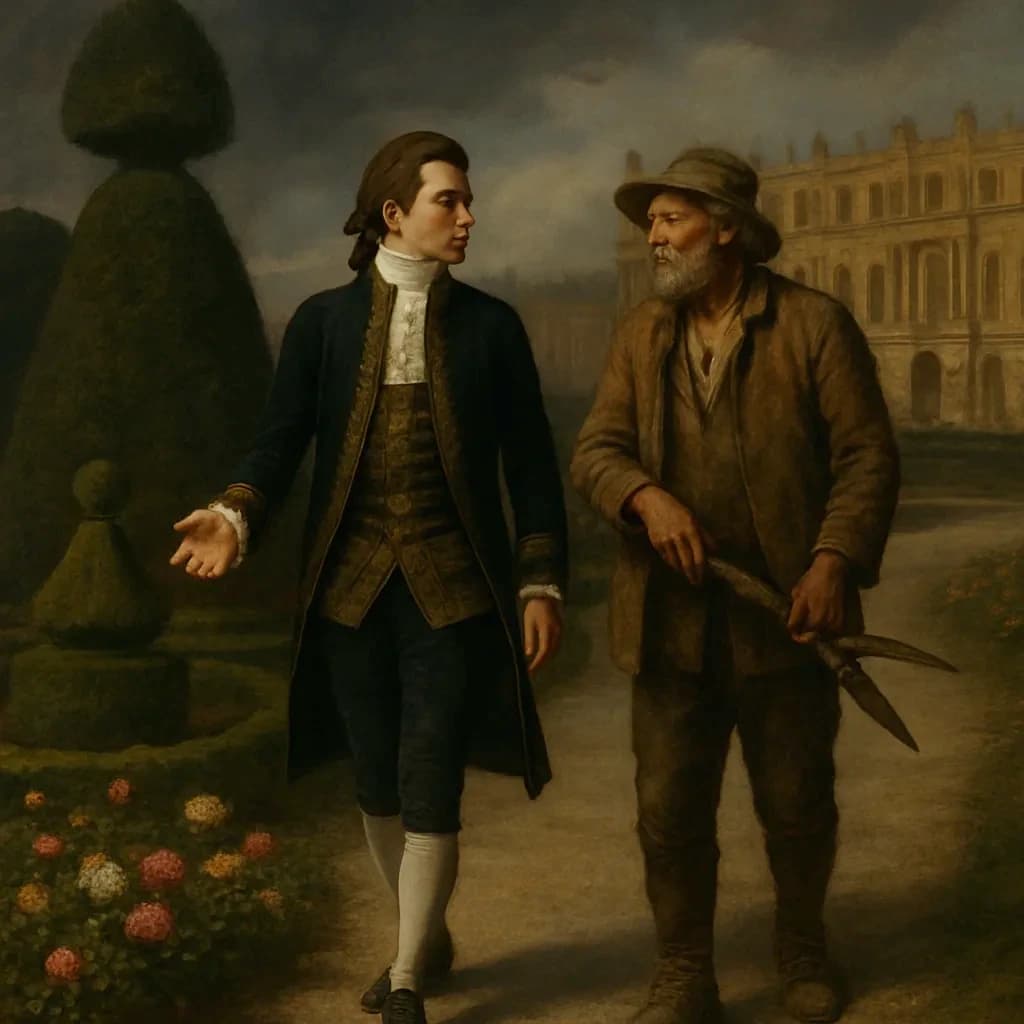
A Versailles Gardener Talked the King Into Inoculation
A man who tended roses decided the fate of a continent in 1774, and nobody thought to write down his name.
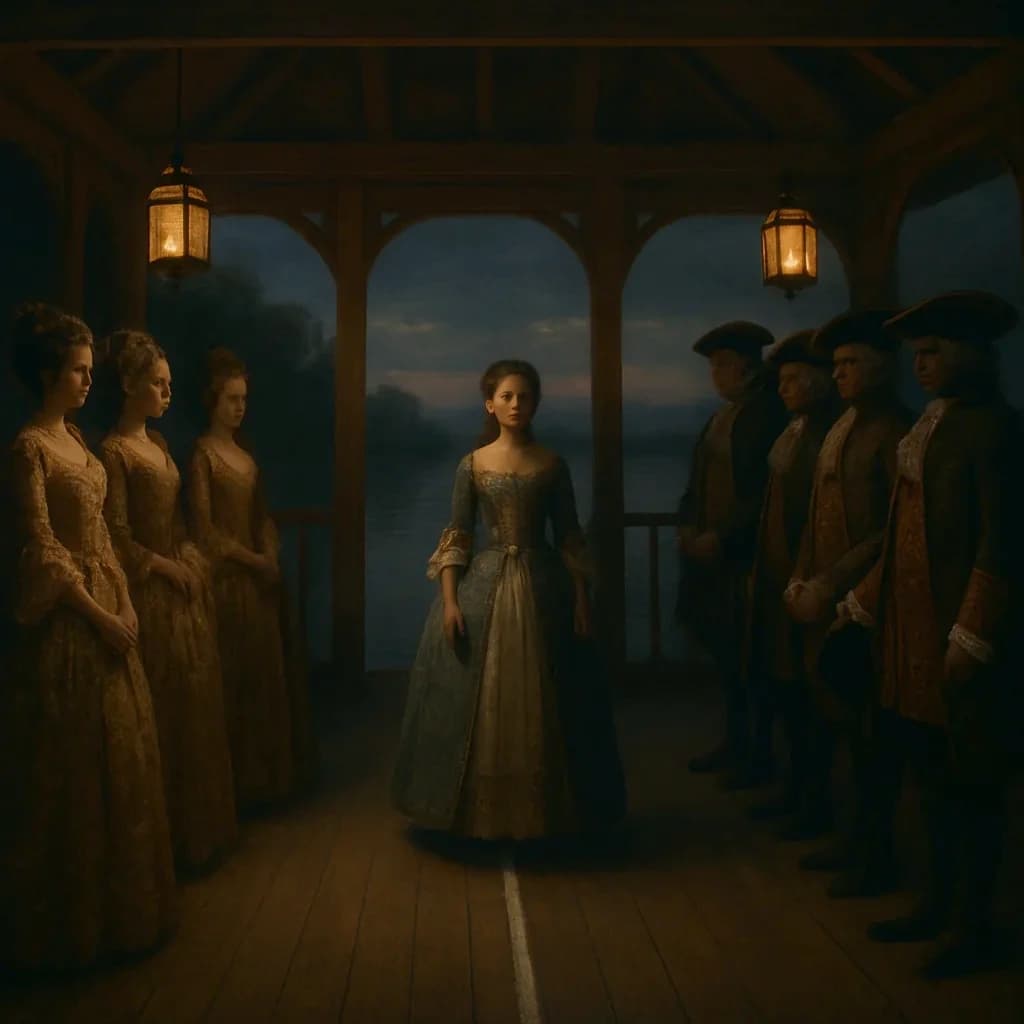
A Naked Border Crossing for a Future Queen
A fourteen-year-old crossed the French border in a ceremonial procession that took five hours, and the elaborate ritual she performed that day became the blueprint for every royal marriage in Europe for two centuries.
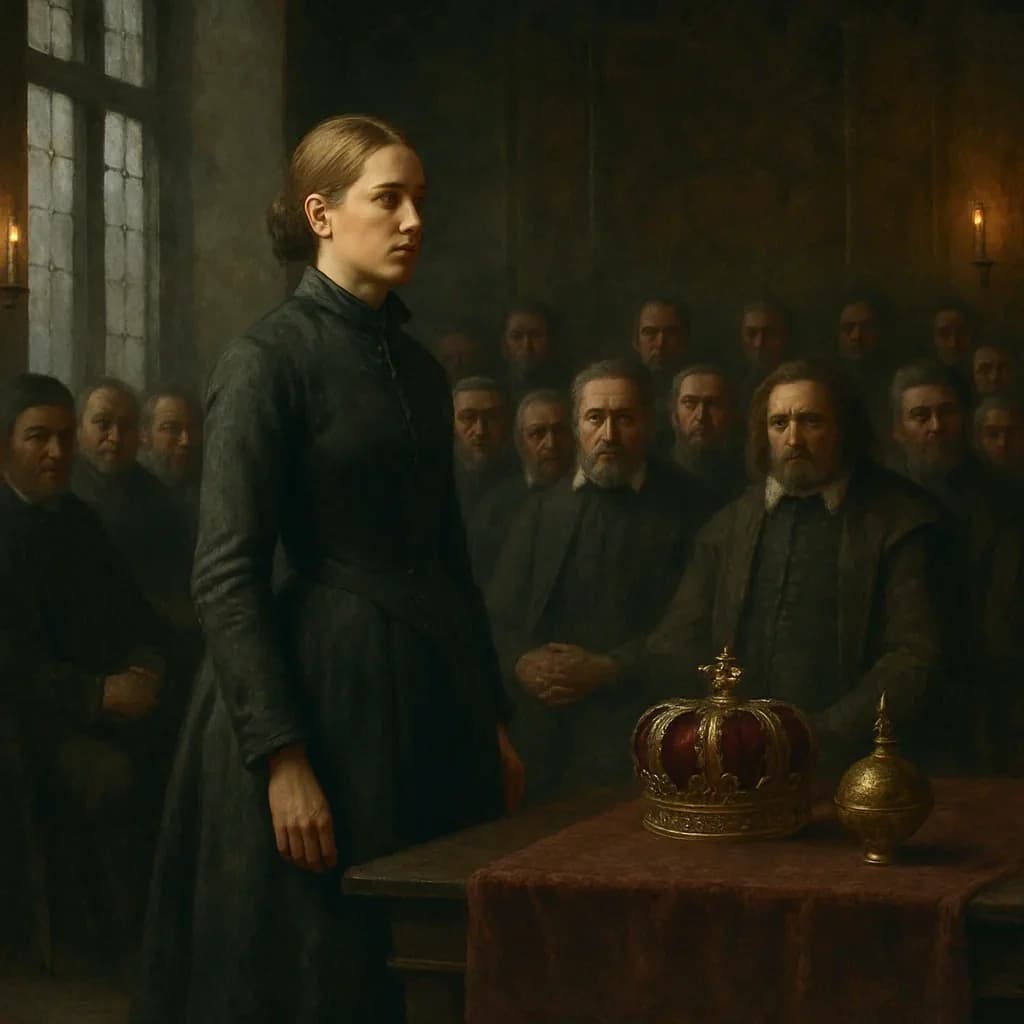
Sweden's Queen Quit Her Throne for Rome
A queen renounced the most powerful throne in northern Europe, converted to Catholicism in secret, and moved to Rome, and the papacy wasn't even sure it wanted her.
Why the First Atlas Listed 87 Rival Mapmakers
A Flemish mapmaker spent forty years trying to publish a book nobody wanted, and ended up building the foundation of modern geography.
A Mild Vatican Librarian Spent Decades Defaming Europe's Greatest Scholars
A mild-mannered Vatican librarian spent decades secretly defaming the most powerful scholars in Europe, and almost nobody noticed until it was too late.
A Barber's Secret Ledger Unraveled a Spanish Revolt
A barber in eighteenth-century Seville kept a secret ledger, and by the time anyone found it, three governments had fallen.
The Banker Who Bought a Holy Roman Emperor
The most powerful office in Christendom was auctioned off like a used horse, and the man who won it did so entirely with borrowed money.
Two Words Nobody Defined Broke North America Apart
A single treaty clause written in haste in 1713 rewrote the map of North America, and nobody who signed it understood what they had given away.
Why the Ottomans Banned Printing for 234 Years
The Gutenberg press transformed Europe, but it was banned in the Ottoman Empire for over two centuries, and the reason why says everything about who really controlled knowledge.
A Friar Who Played Chess With Leonardo Invented Modern Bookkeeping
The most powerful financial tool in human history wasn't invented by a banker. It was invented by a friar who spent his evenings playing chess with Leonardo da Vinci.
He Fought the Black Death with Ledgers and Quarantine Ships
While doctors fled and kings locked their gates, one Ottoman finance minister fought the Black Death with ledgers, quarantine ships, and a fury that saved Istanbul, and nobody remembers his name.
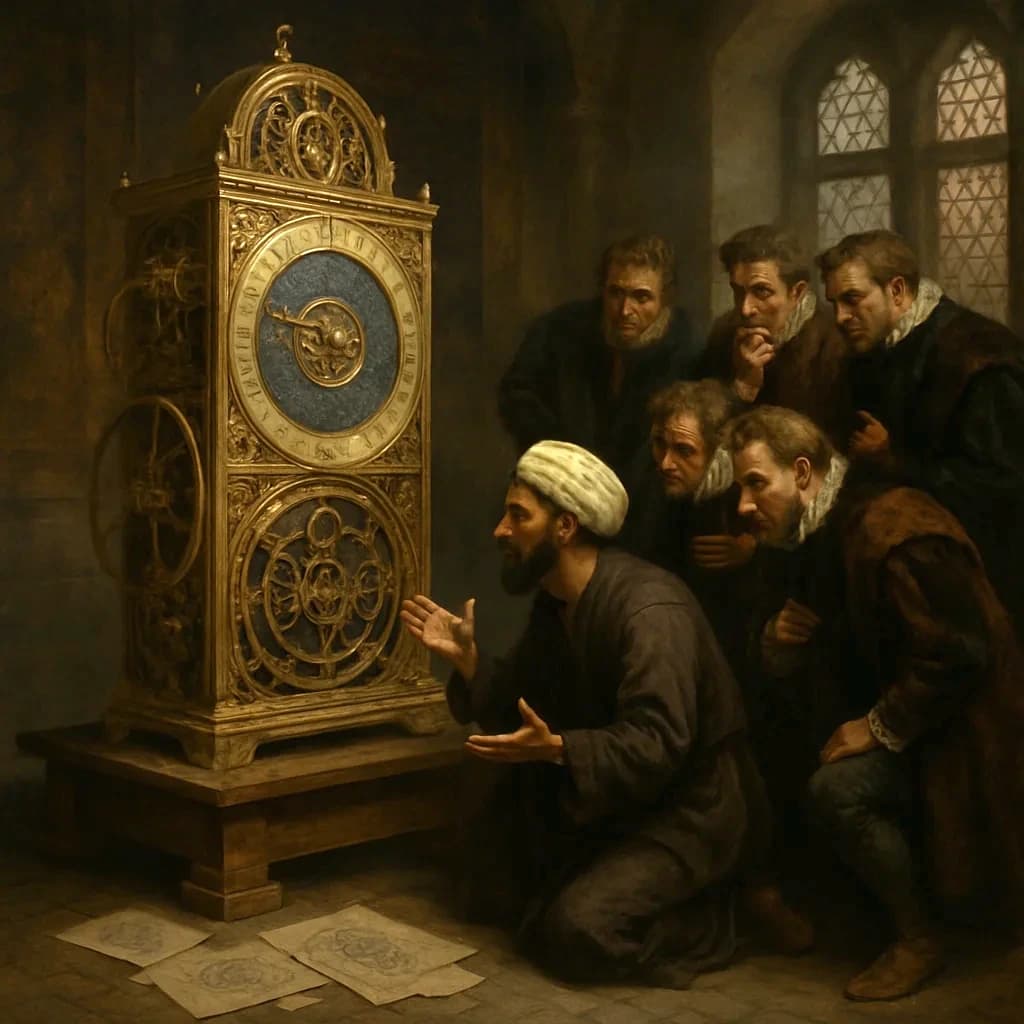
A Sultan's Gift Nearly Started a War Because Nobody Could Move It
An Ottoman sultan's gift to a Holy Roman Emperor nearly sparked a war, not because of politics, but because nobody had planned how to move it.
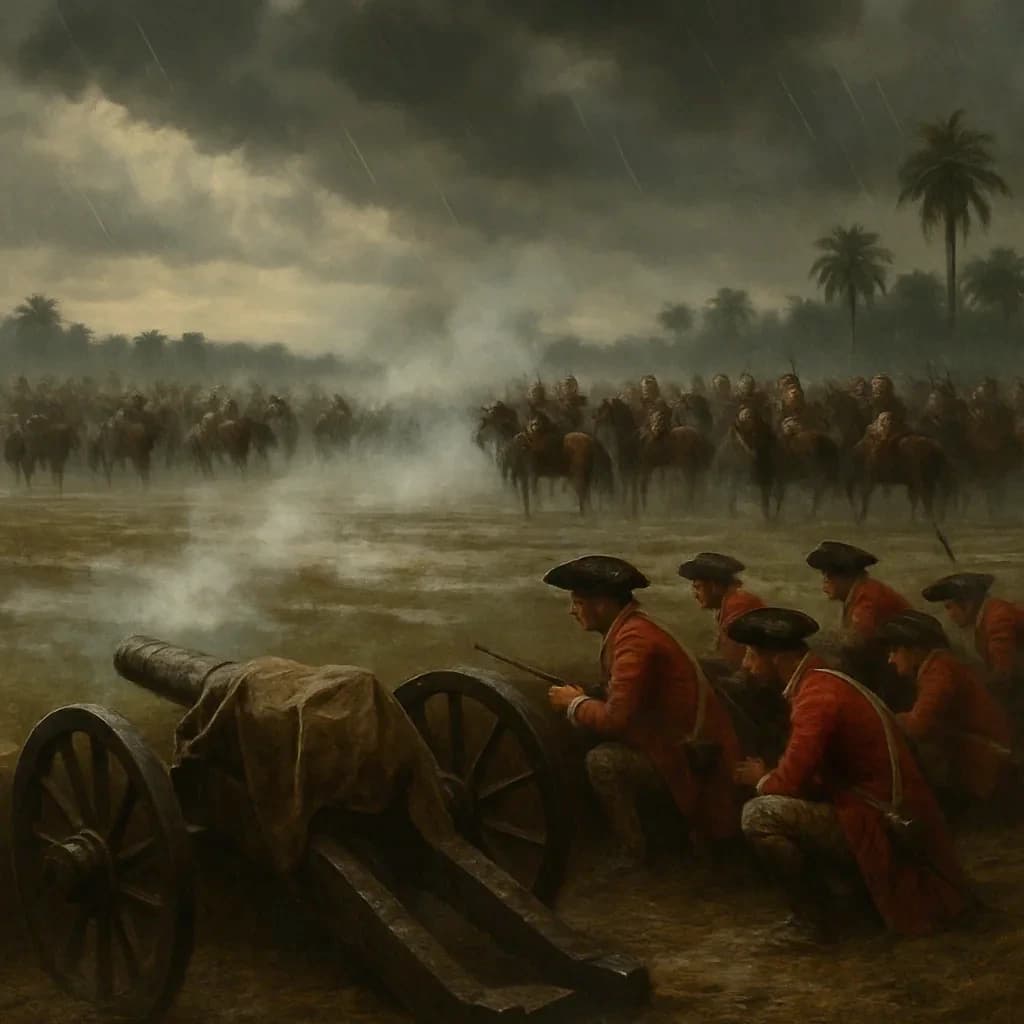
One Monsoon Ambush Handed India to a Trading Company
A single monsoon ambush didn't just kill a man. It ended two centuries of Mughal dominance and handed India to a trading company.
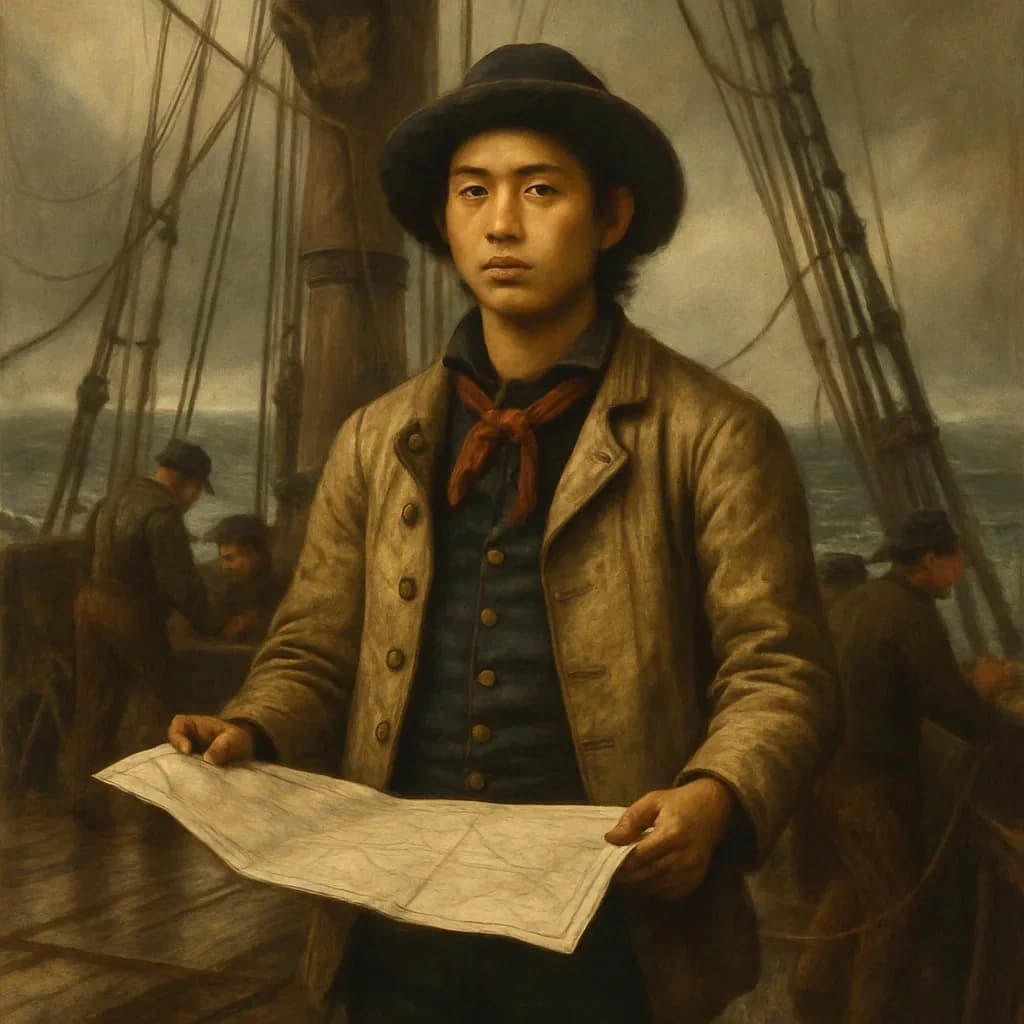
Shipwrecked Fisherman, Then Japan's Window to America
A shipwrecked fisherman from Cape Cod spent a decade inside a closed empire, and came back knowing things no Western government could buy.
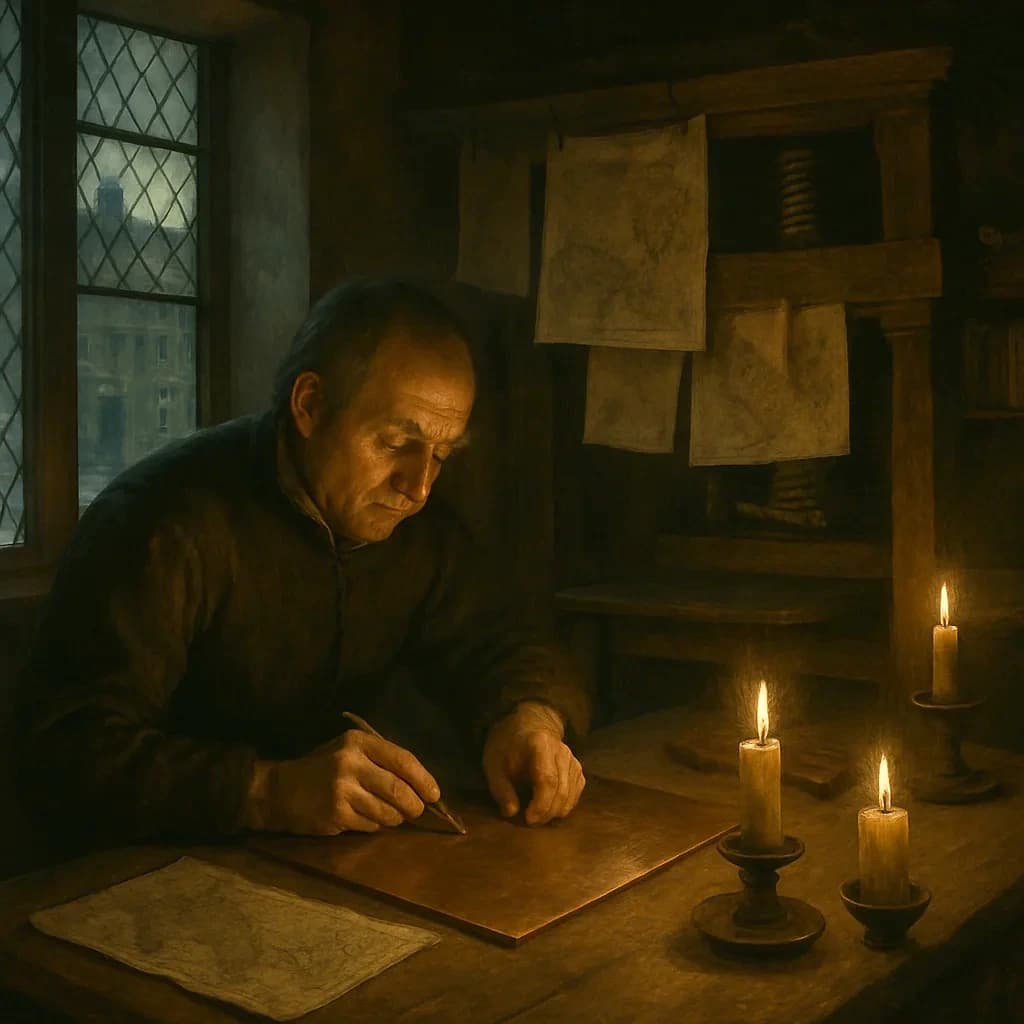
How a Diplomat's Secret Notes Mapped the Ottoman Empire
The man who drew the most accurate map of the Ottoman Empire had never been allowed to see most of it.
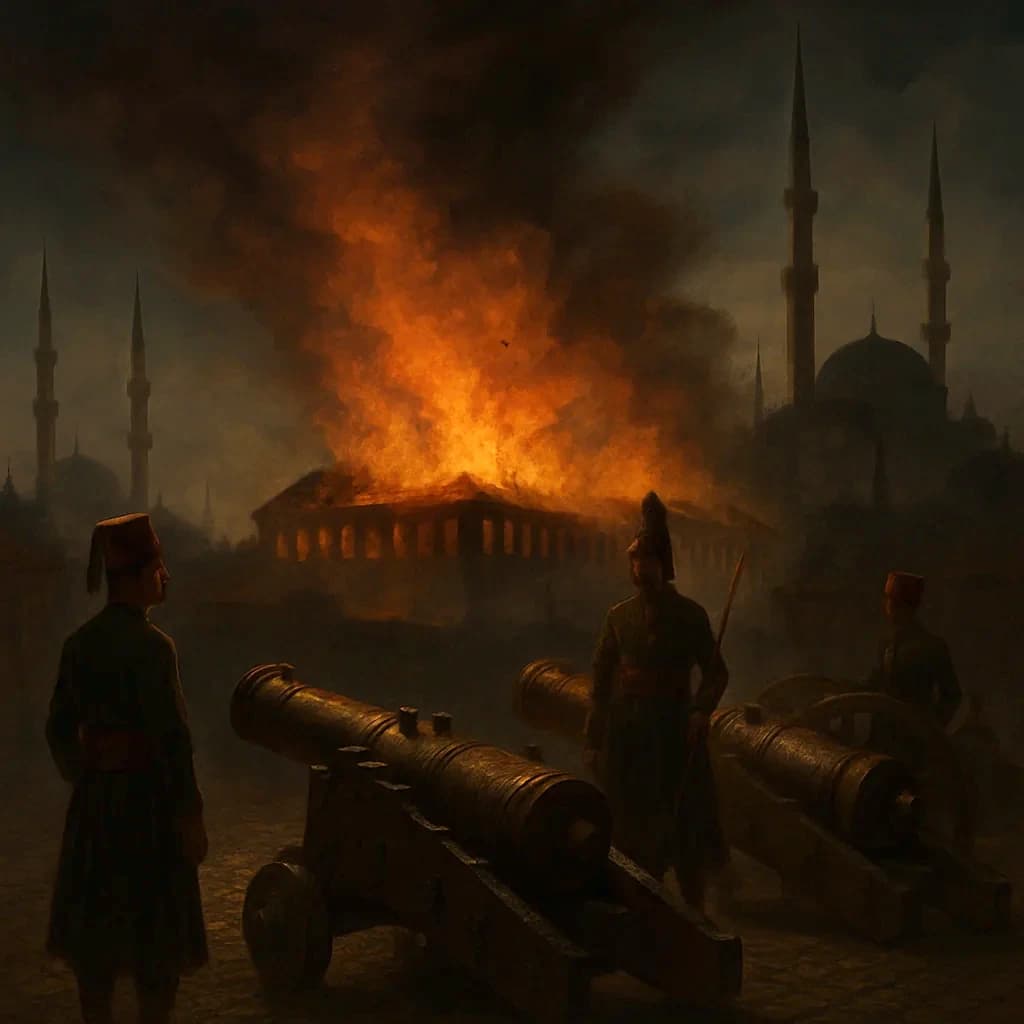
Four Words That Broke the Ottoman Janissaries
A single offhand insult (spoken not by an enemy, but by a sultan trying to modernize) ignited the most dangerous mutiny in Ottoman history.
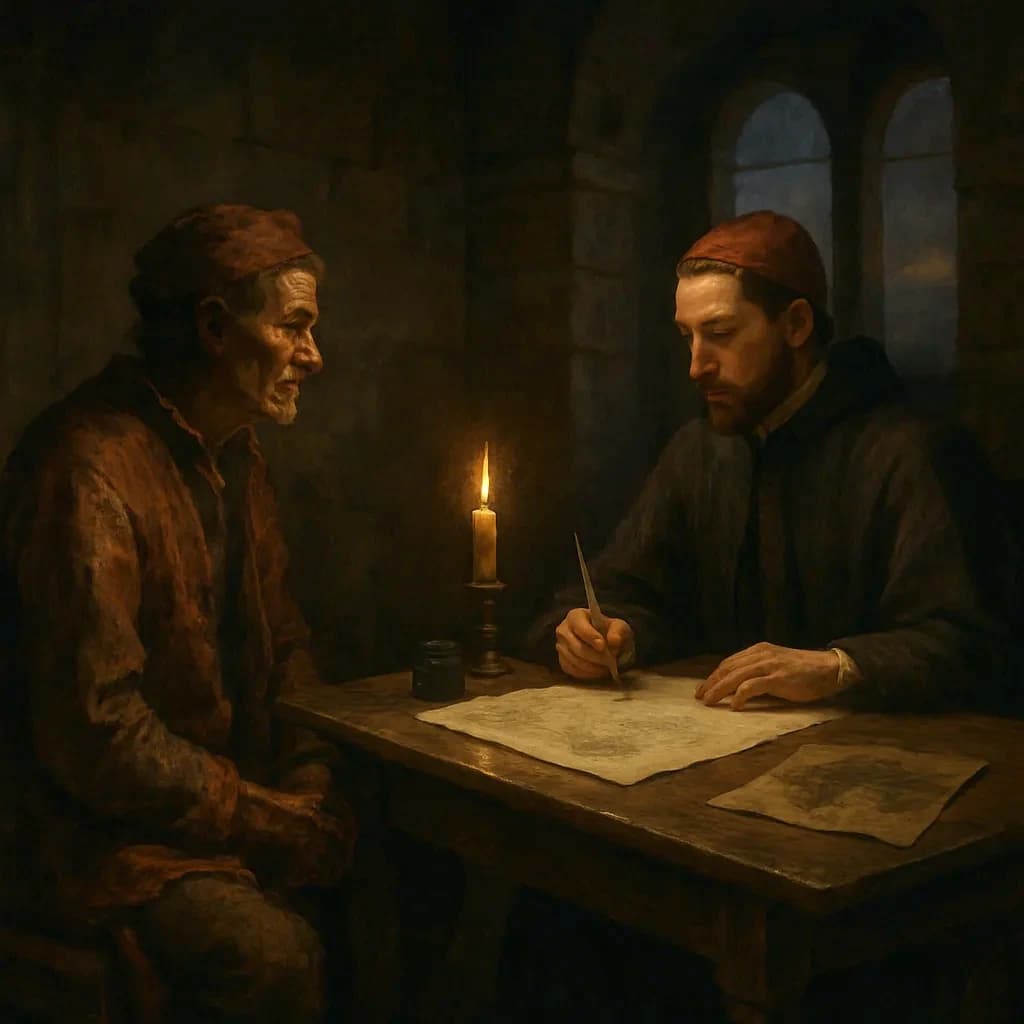
Penance for the Pope: A Bankrupt Merchant's Map of Asia
Fleeing his creditors, a bankrupt Florentine merchant handed the Western world its first accurate picture of the Indian Ocean, and nobody noticed for two hundred years.
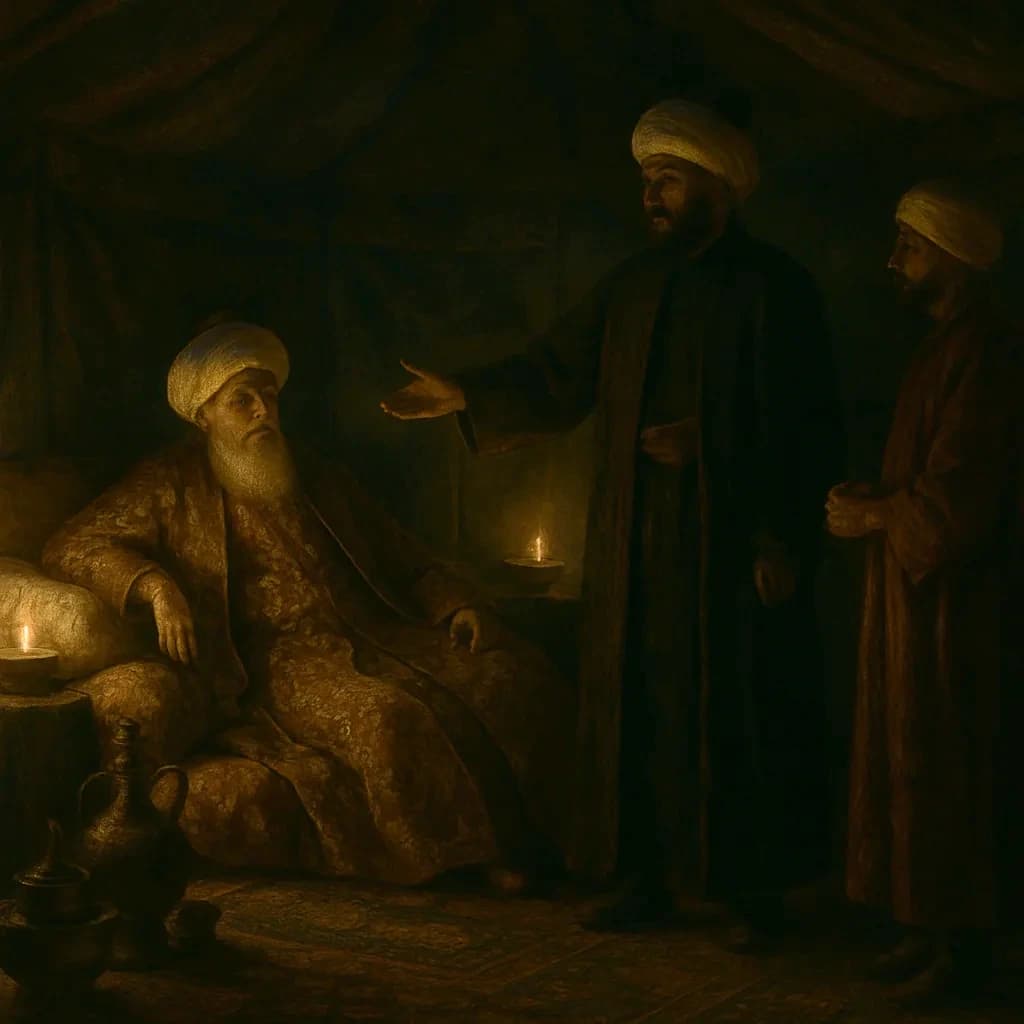
Suleiman Died Mid-Siege, and the Army Never Knew for Days
A dying grand vizier held the keys to the most powerful empire in the world, and refused to give them up for seventy-two hours.
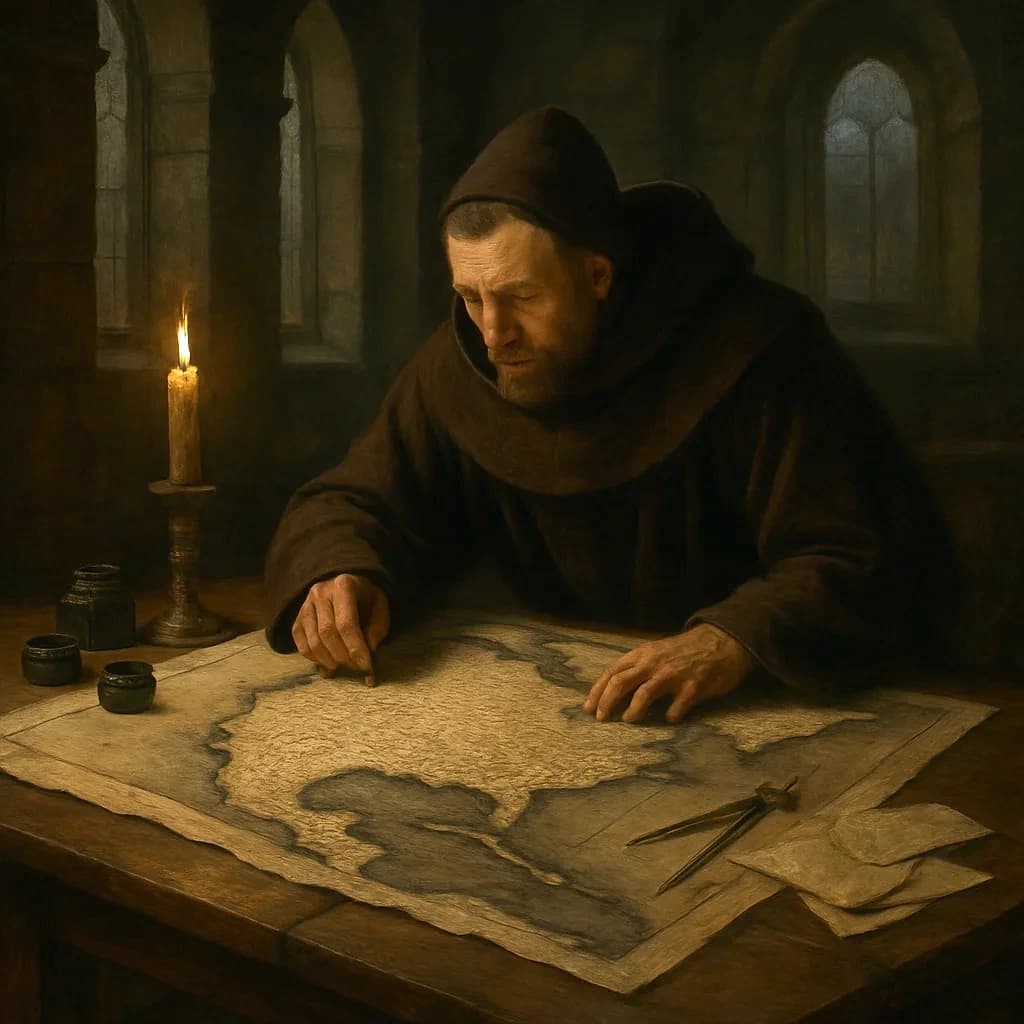
How America Got the Wrong Man's Name
A German mapmaker christened the New World in 1507 after the wrong man, and the one who deserved the credit spent his final years watching someone else's name get written into history.
The Taj Mahal's Severed-Hands Legend Was Invented by Its Builders
The architect who designed the Taj Mahal may have had his hands amputated afterward, except that story was probably invented by the very empire that built it.
The Village That Locked Itself In to Die
A flea-infested bundle of cloth reached one English village in 1665, and the choice its people made next still fills epidemiology textbooks, though it cost them nearly everything.
A Delirious Clerk's Scribble Handed Suleiman His Greatest Legal Weapon
A minor Ottoman official, delirious with fever, scribbled something that accidentally handed Suleiman the Magnificent his greatest legal weapon.
One Official's Protest Made China Scrap the World's Greatest Navy
A single court official's written protest caused China to abandon the greatest naval power the world had ever seen, and he died in prison before he could know he'd won.
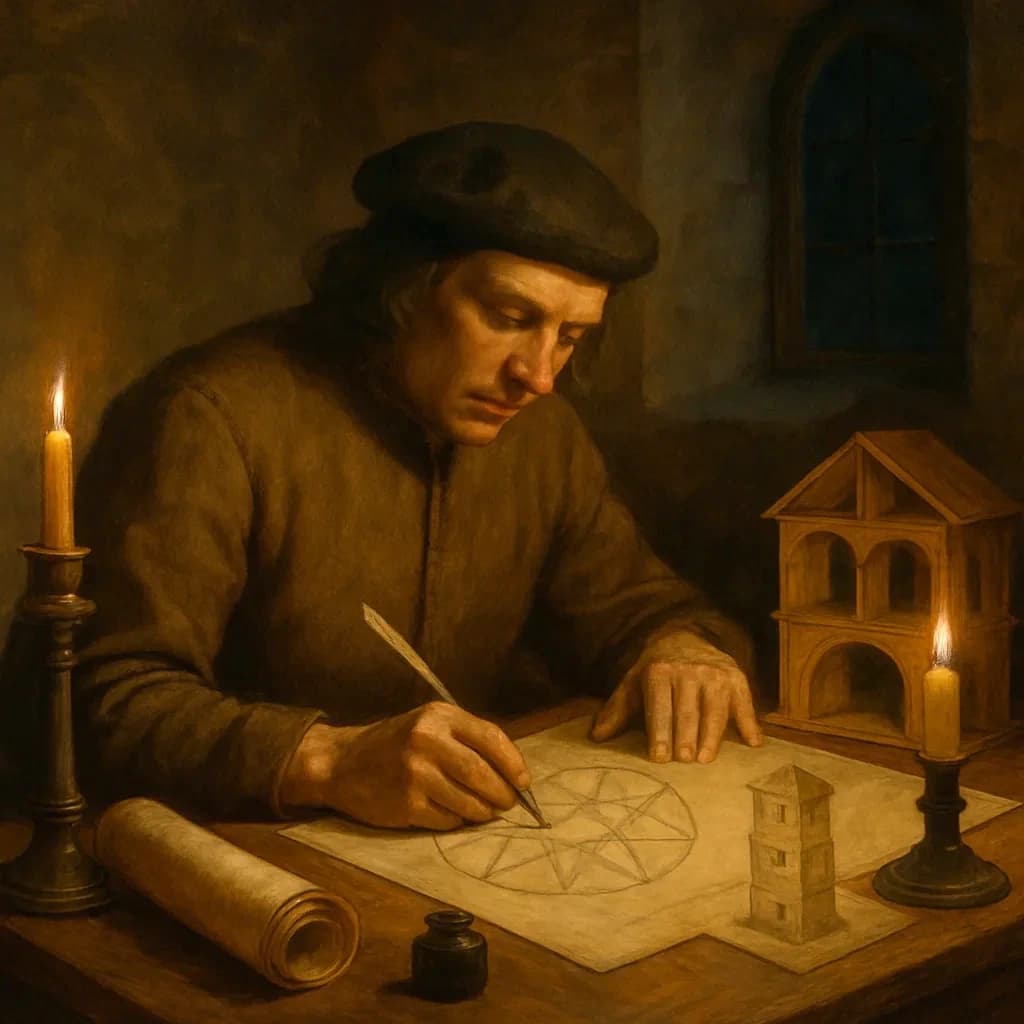
He Designed the Perfect Prison, Then Was Locked in One
Antonio di Pietro Averlino designed the most advanced prison in Renaissance Italy, then ended up locked inside it.
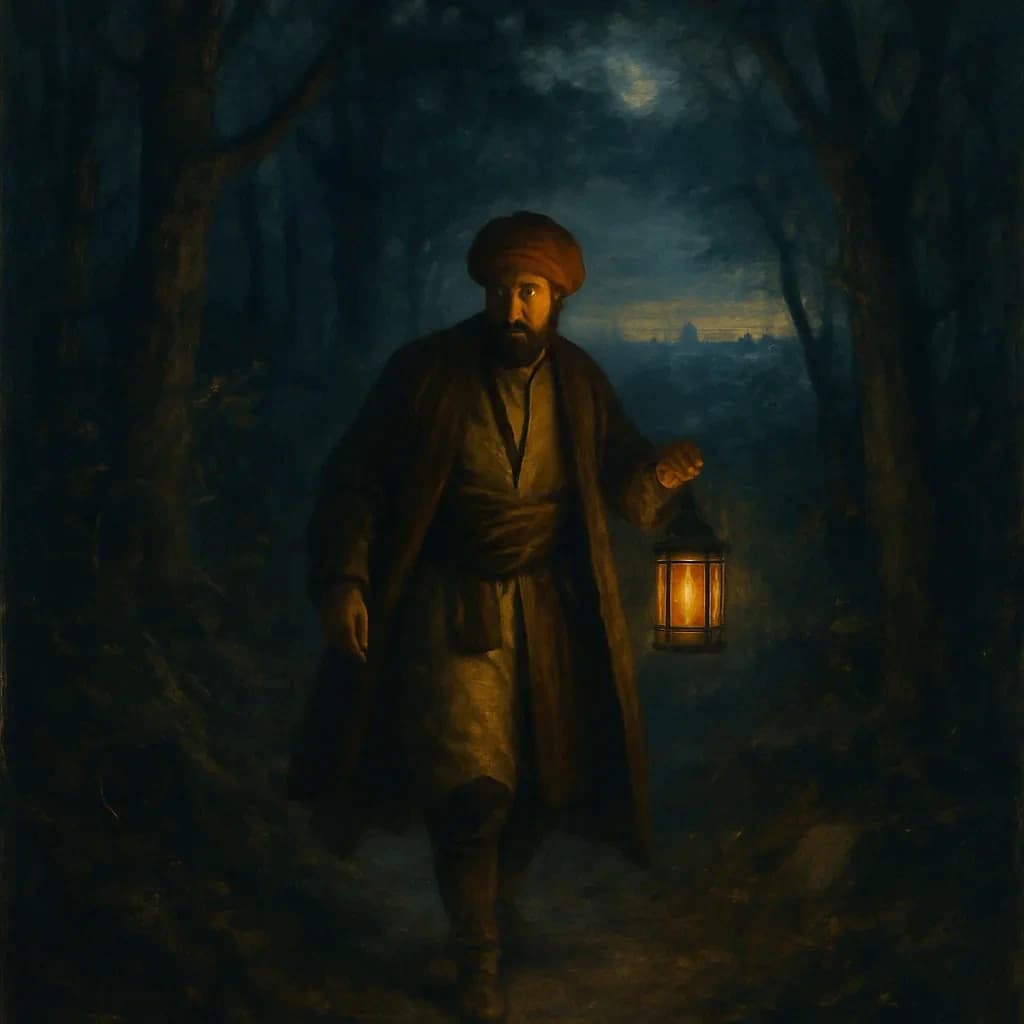
Goat Tracks Saved Vienna in 1683
The Ottoman siege of Vienna failed not because of Christian armies, but because of one man who knew the forest better than any general.
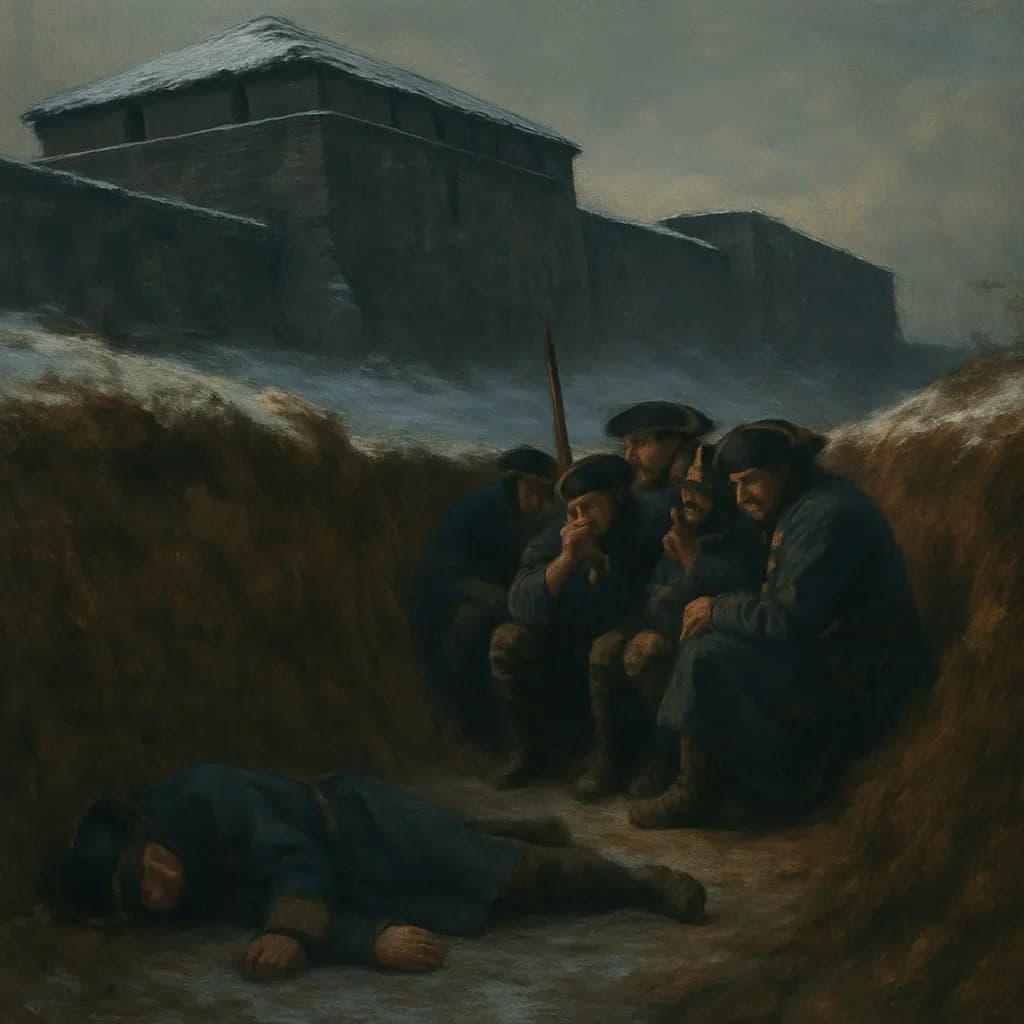
Charles XII Fell at Dusk, and Sweden Quit Its Empire
Sweden's warrior king was shot through the head during a siege in 1718, and within a decade, the most militarized nation in Europe had dismantled itself from the inside out.
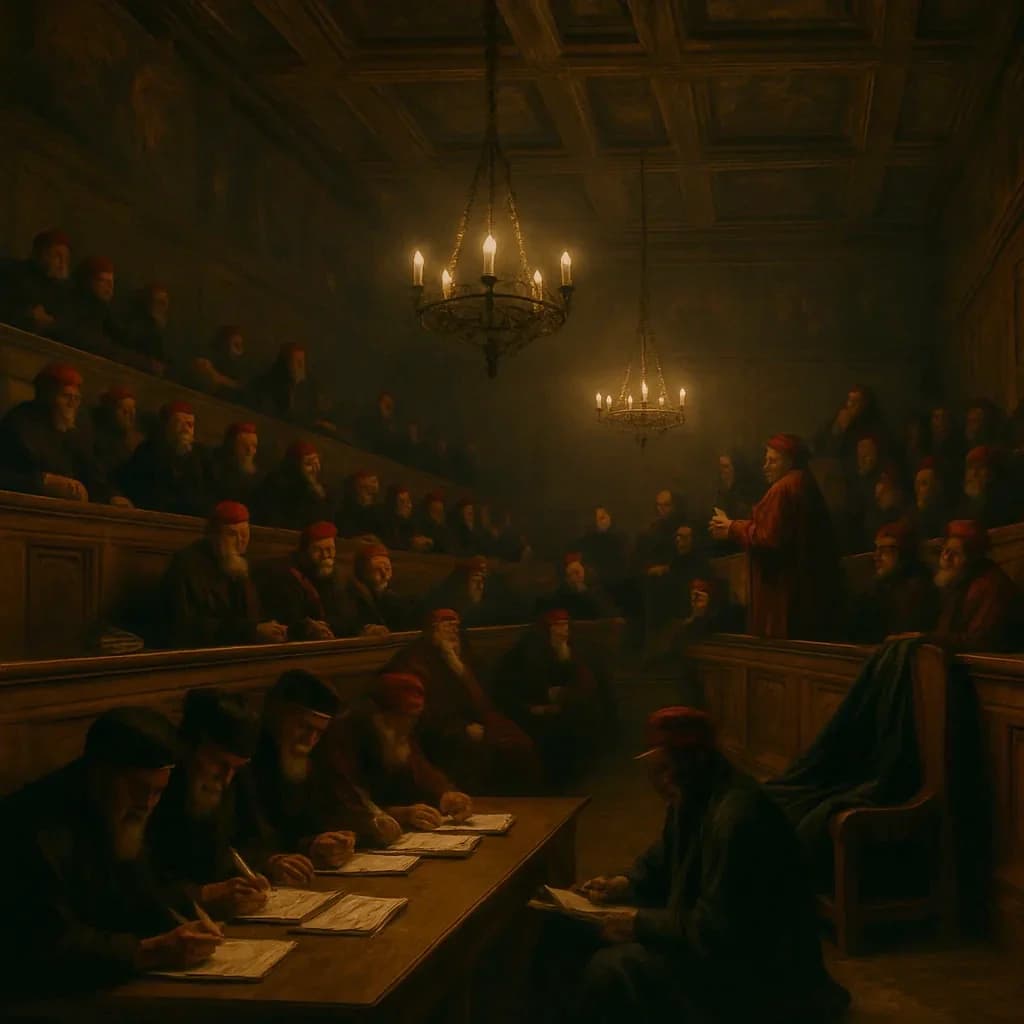
A Dead Senator Kept Voting in Venice for Eleven Years
For decades, a dead man cast binding votes in one of Europe's most powerful governments, and nobody stopped it because stopping it would have cost someone a fortune.
Akbar Sent a Poet to End a Rebellion
The Mughal Empire's greatest crisis was resolved not by a general, but by a Sufi mystic reciting verse to a furious emperor.
He Freed Four Hundred Hostages by Going Fishing
Florence's entire city council sat as prisoners in 1432. And the man who freed them did it by going fishing.
The Weaver Who Planned to Burn Erfurt for God
A German peasant named Hans Römer declared himself a prophet in 1534, wrote a letter to every prince in the Holy Roman Empire, and nearly destroyed the city of Erfurt with a stockpile of homemade gunpowder, all because Martin Luther disappointed him.
Filarete Built Milan's Prison and Ended Up Inside It
Antonio di Pietro Averlino designed the most celebrated prison in Renaissance Italy, then ended up inside it.
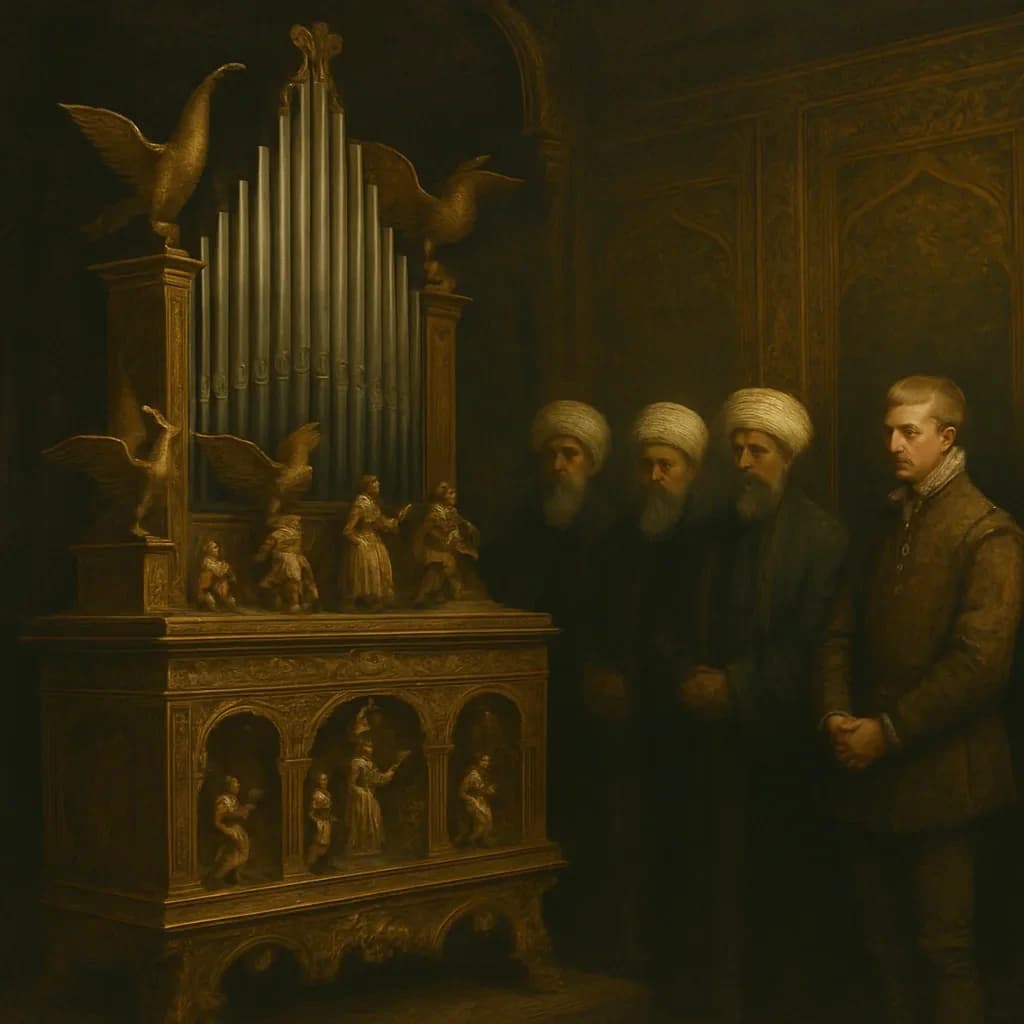
England's Self-Playing Organ and the Sultan It Had to Impress
An Ottoman sultan received the most sophisticated mechanical device in the world as a diplomatic gift, and his reaction nearly started a war.
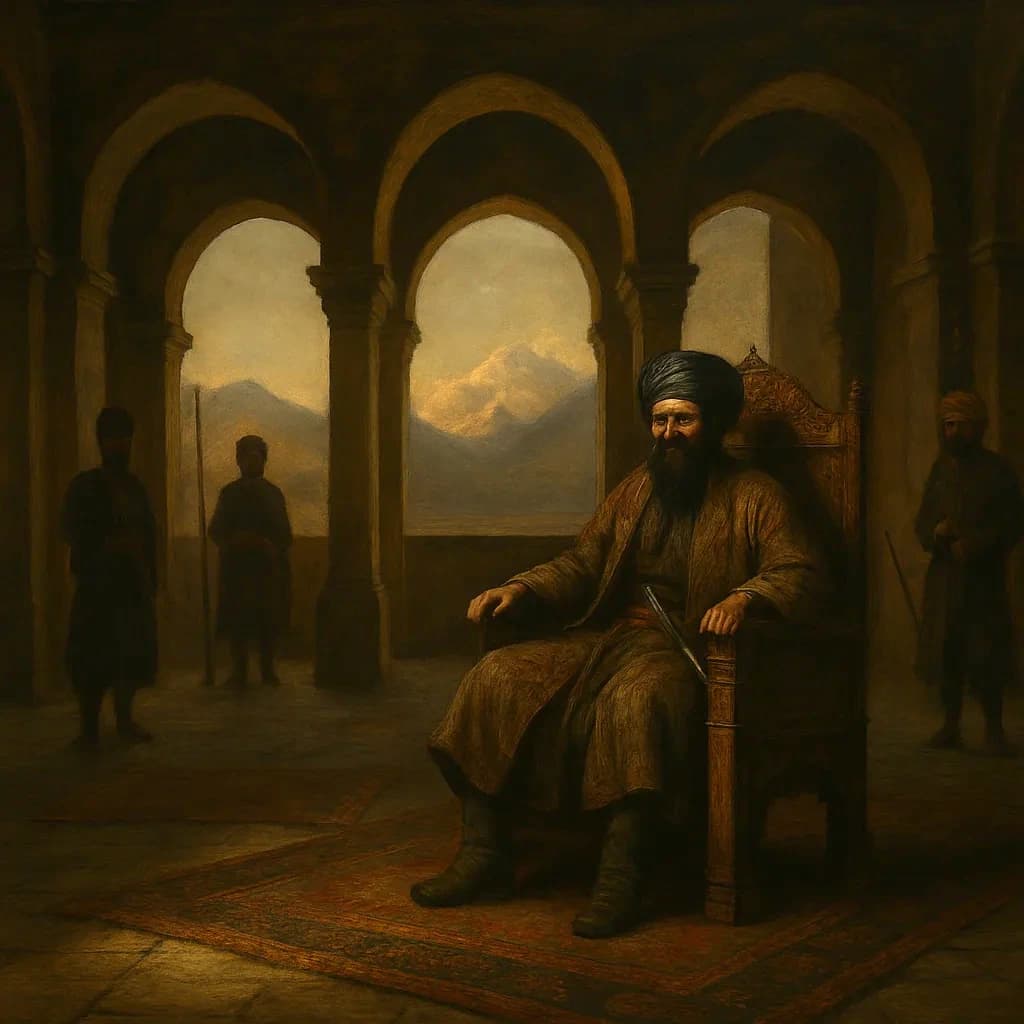
He Walked Into Kabul and Took Its Throne
A man with no army, no title, and no plan walked into a city that had just lost its king, and sat down on the throne.
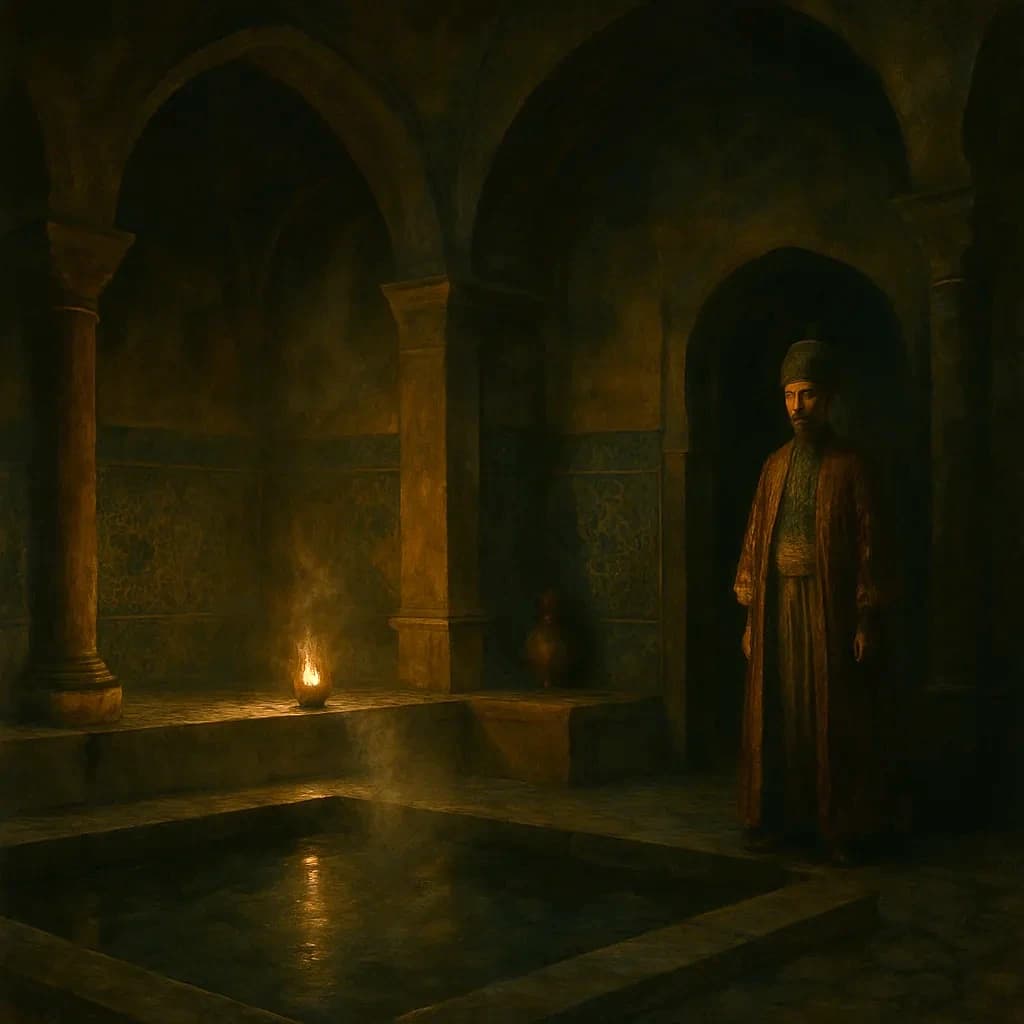
The Ottoman Empire Nearly Collapsed Because a Prince Couldn't Swim
The most powerful empire in the world nearly collapsed because a prince forgot how to swim.
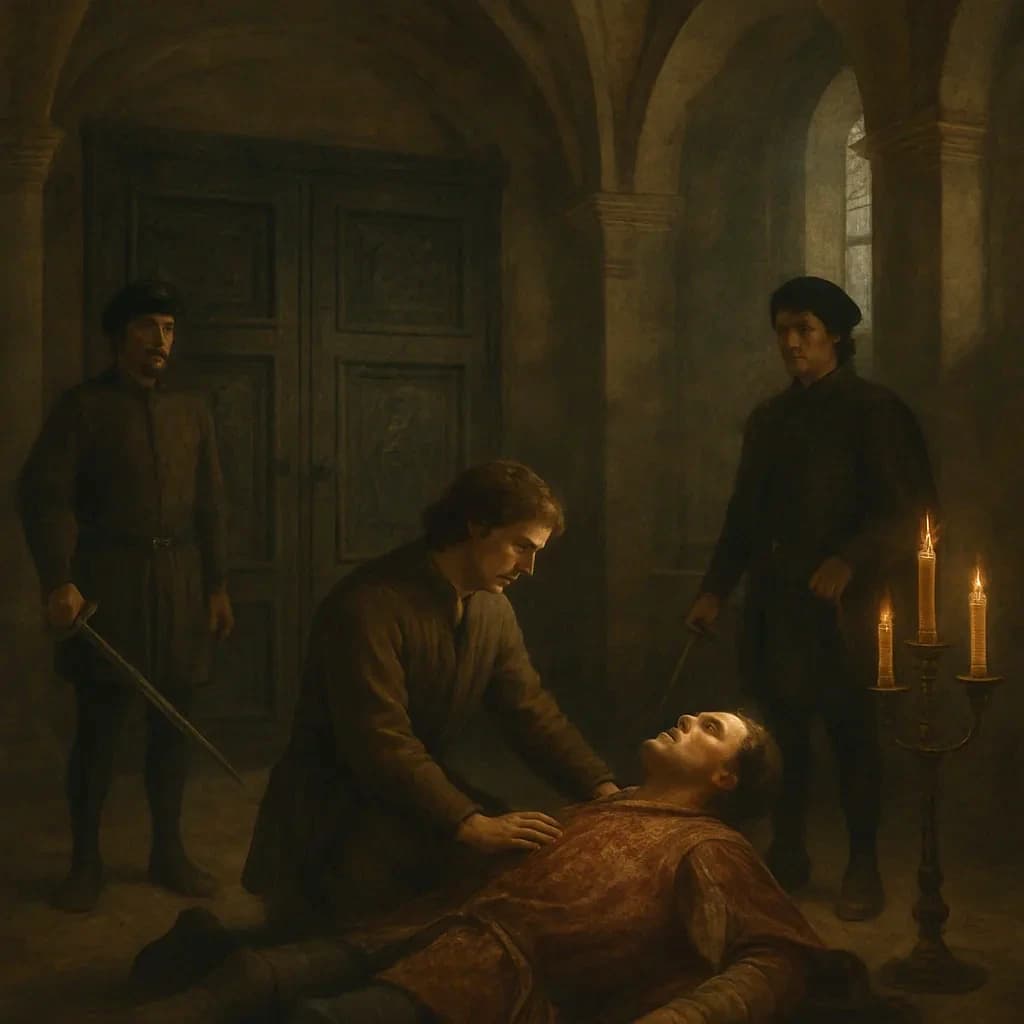
The Teenager Who Saved Lorenzo de' Medici
The Medici survived the Pazzi Conspiracy not because of guards or walls, but because of a single teenager who had no reason to help them.
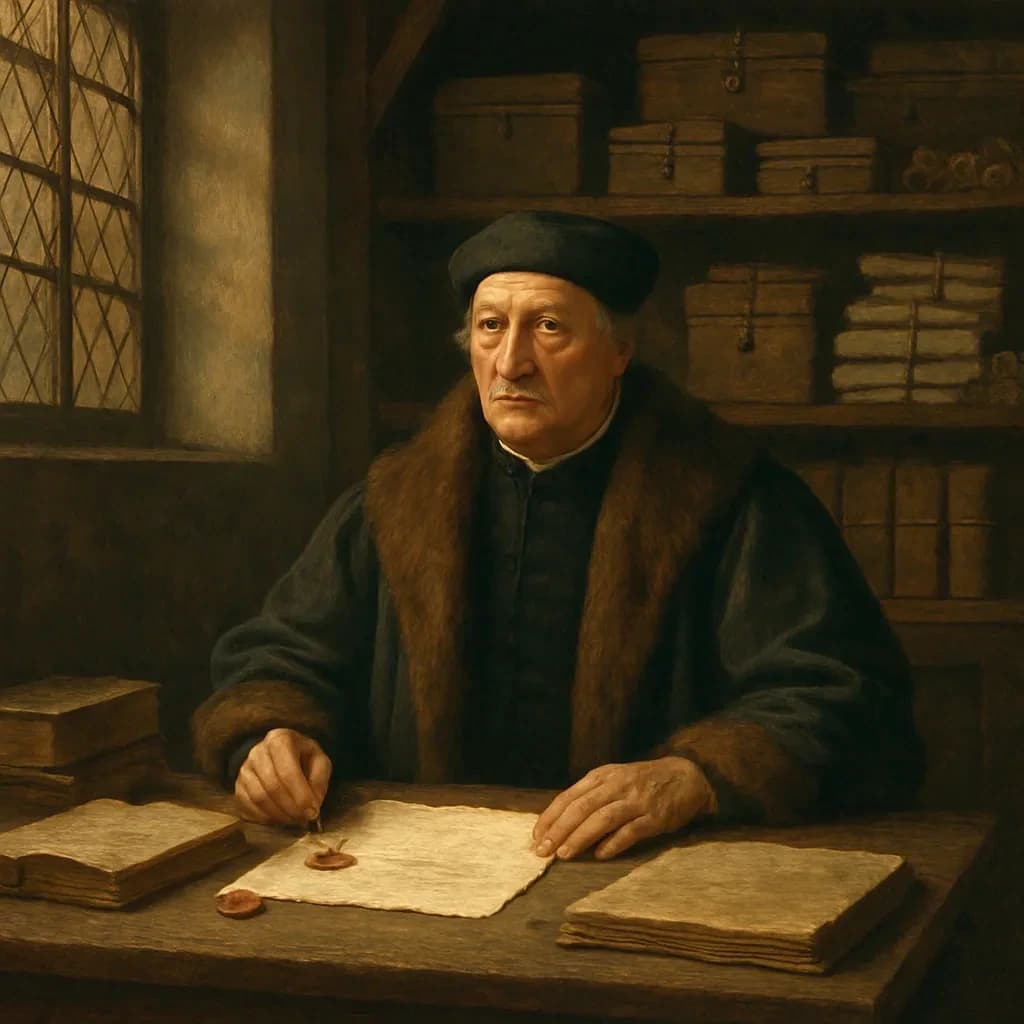
A German Banker Single-Handedly Bought the Holy Roman Empire
In 1519, a German banker single-handedly bought the Holy Roman Empire, and made sure everyone knew it.
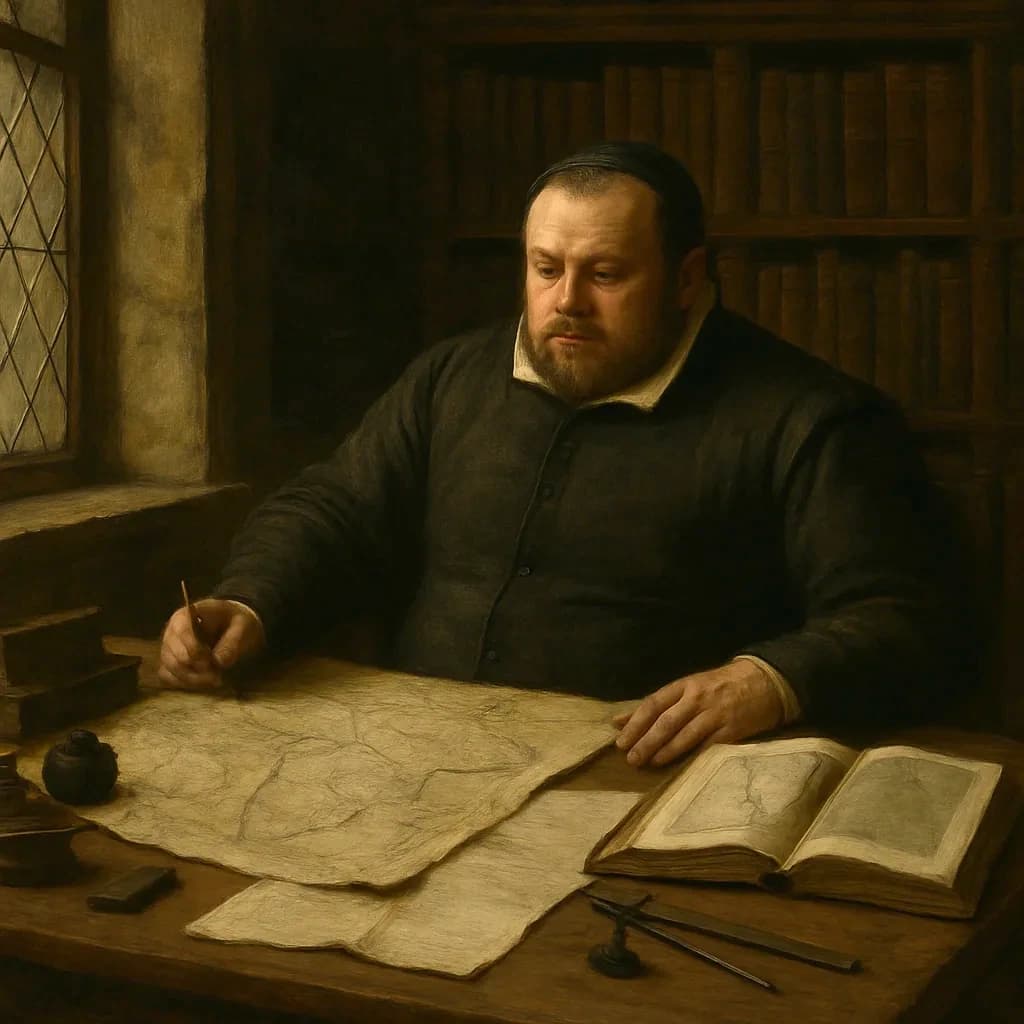
The Map That Misplaced Africa by 400 Miles
A Flemish merchant glanced at a letter he'd almost thrown away, and the shape he drew from it defined Africa for the next three centuries.
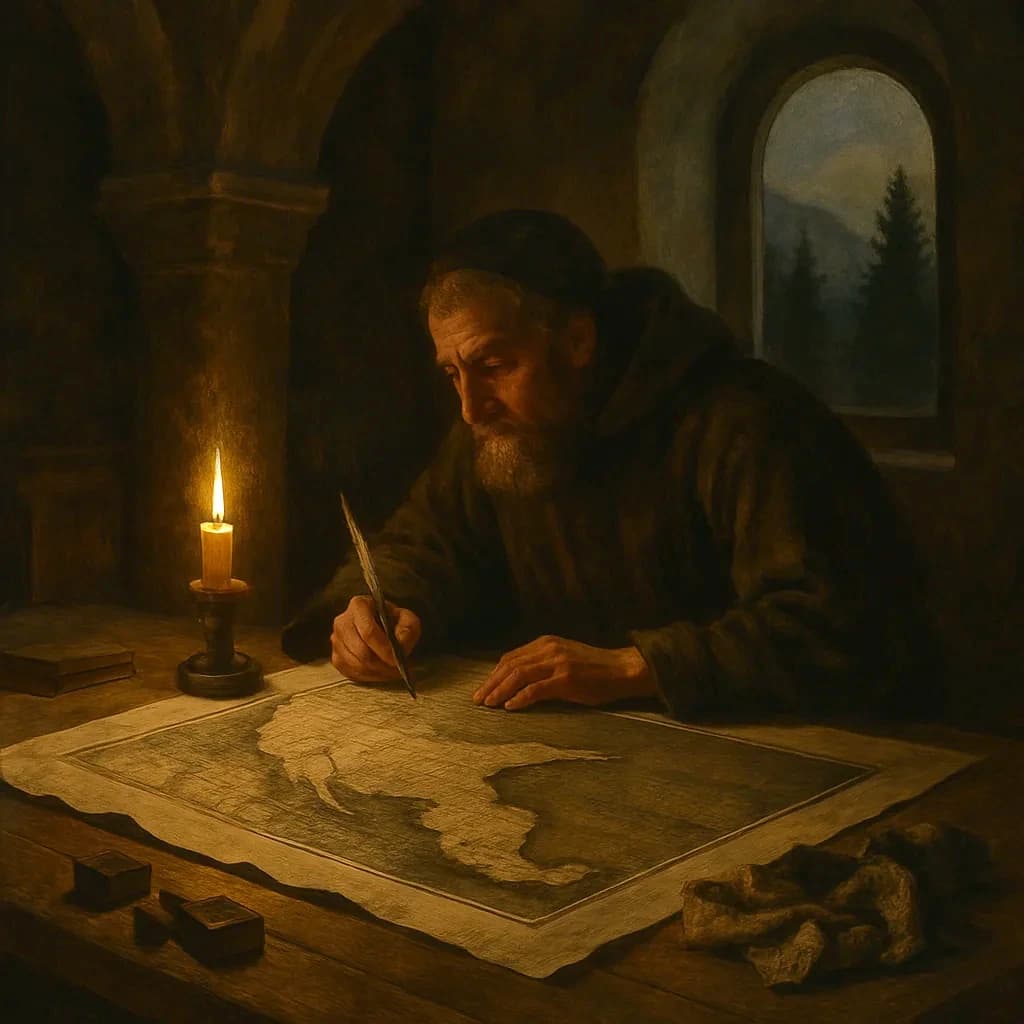
The Mapmaker Who Named America, Then Erased It
The man who named America never crossed the Atlantic. He just happened to own the right printing press at the right moment.
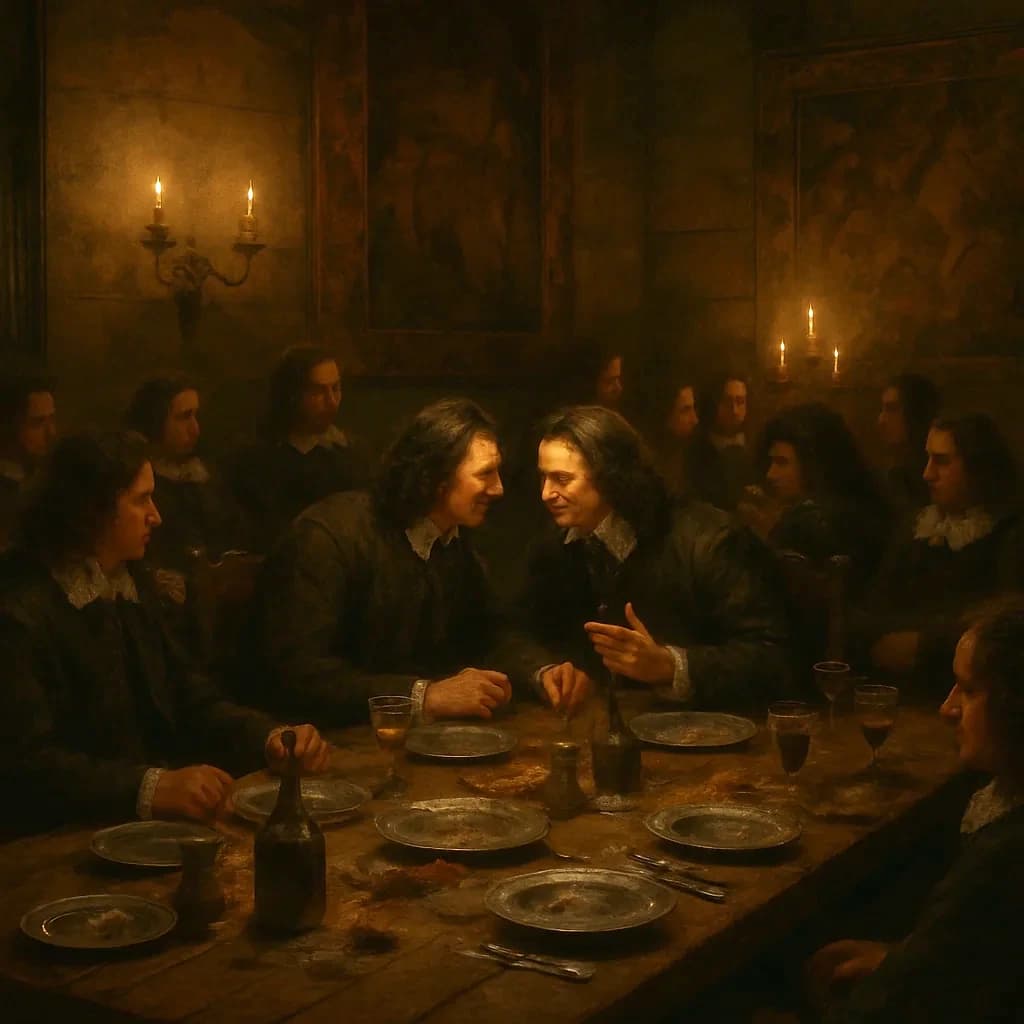
How a Seven-Hour Dinner Stopped a War Over Sausages
A fistfight over a sausage nearly plunged all of Europe into war in 1675, and the man who prevented it was a French diplomat who happened to be hungry.
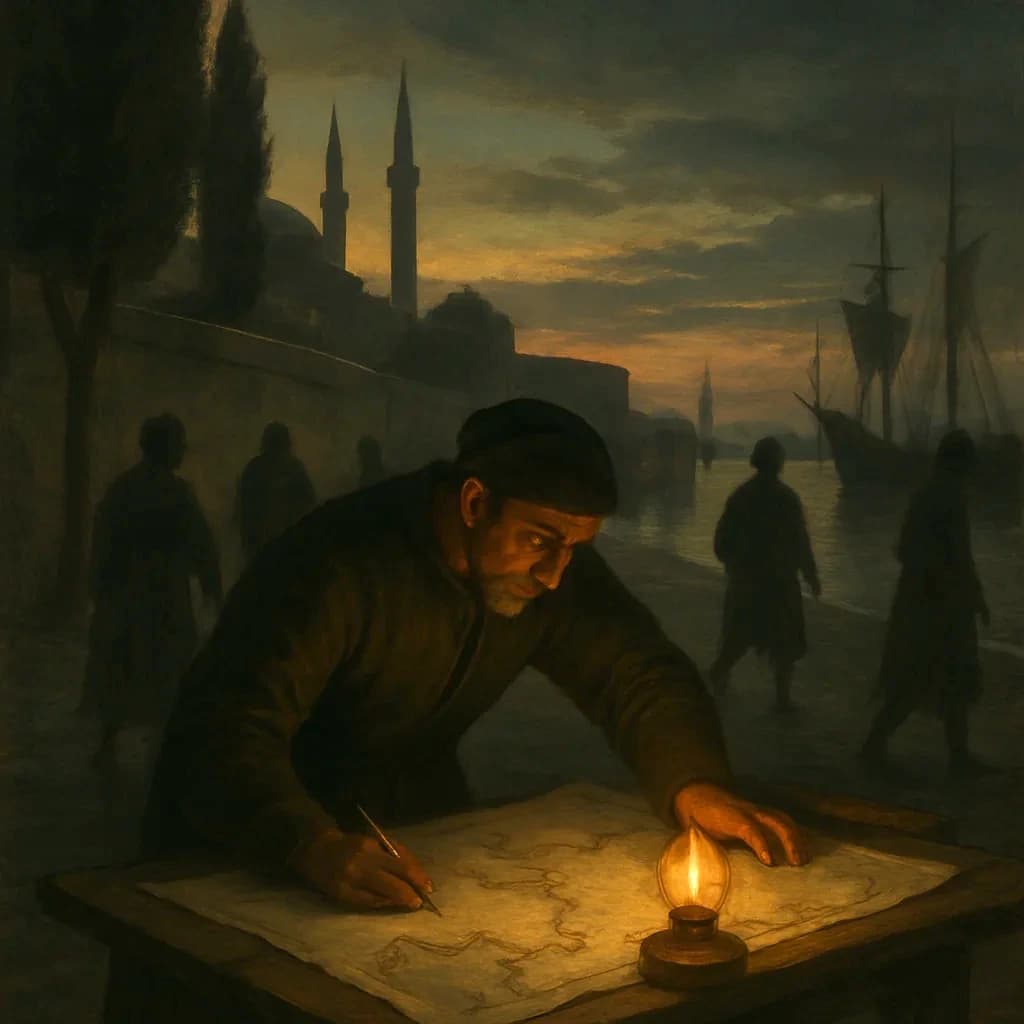
The Cartographer's Treason Was Actually a Love Letter
A Welsh spy mapped the entire Ottoman coastline for the enemy, then gave the map to both sides.
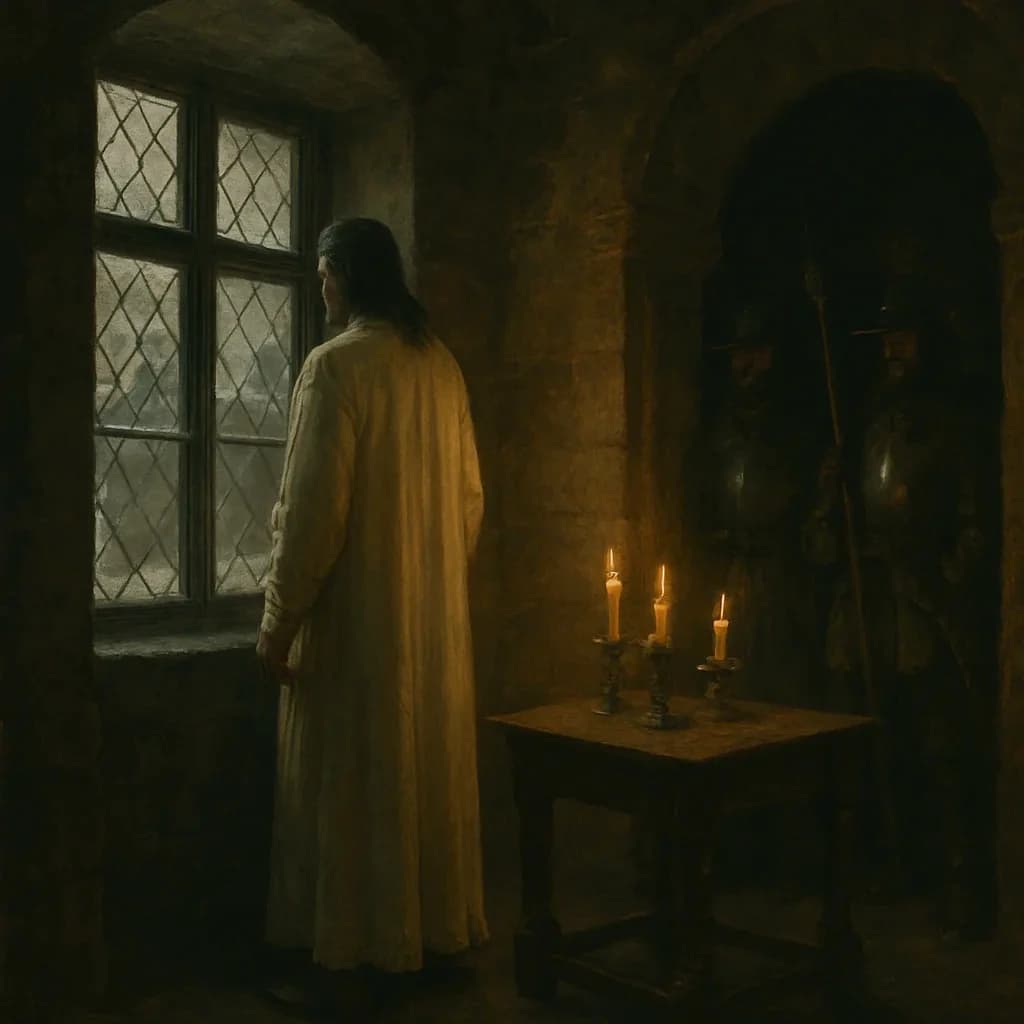
The General His Own Emperor Had Killed
Wallenstein commanded the largest private army in European history, and a single astrologer's chart decided whether he lived or died.
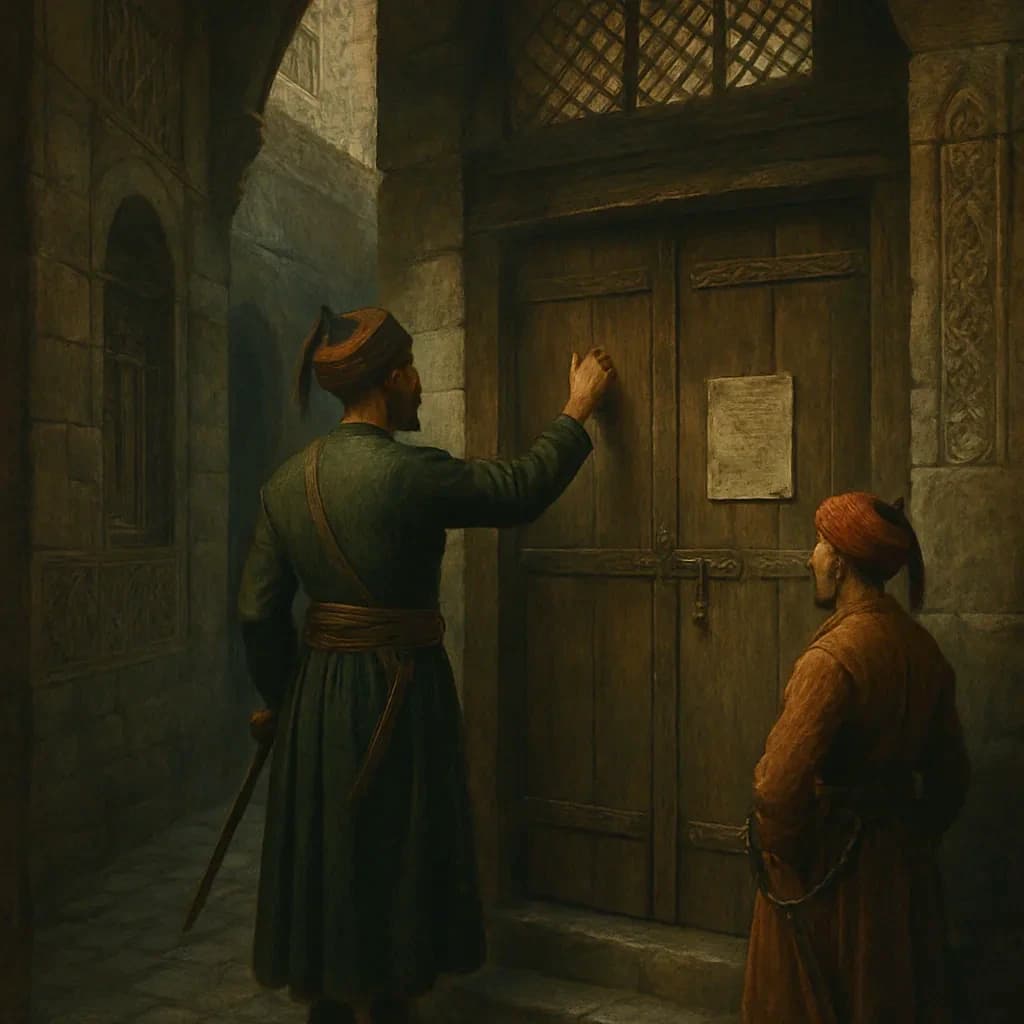
Cairo's Barbers Took the Sultan to Court
One Ottoman barber's guild dispute in 1600s Cairo triggered a constitutional crisis that no sultan had faced in two centuries.
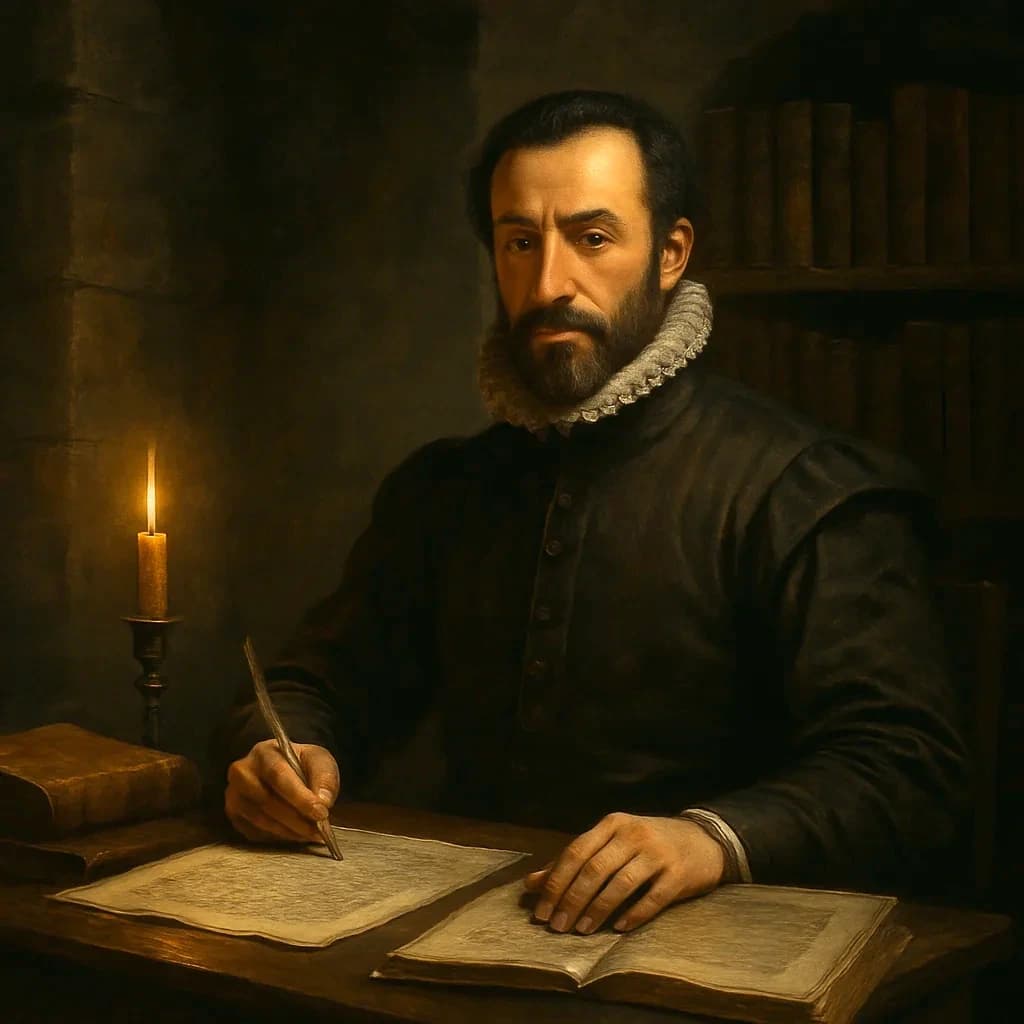
Why Portugal's Elite Stopped Writing in Portuguese
A king signed a single document in 1536, and within a decade an entire language had nearly vanished from public life, replaced by the tongue of a country that hadn't conquered anyone.
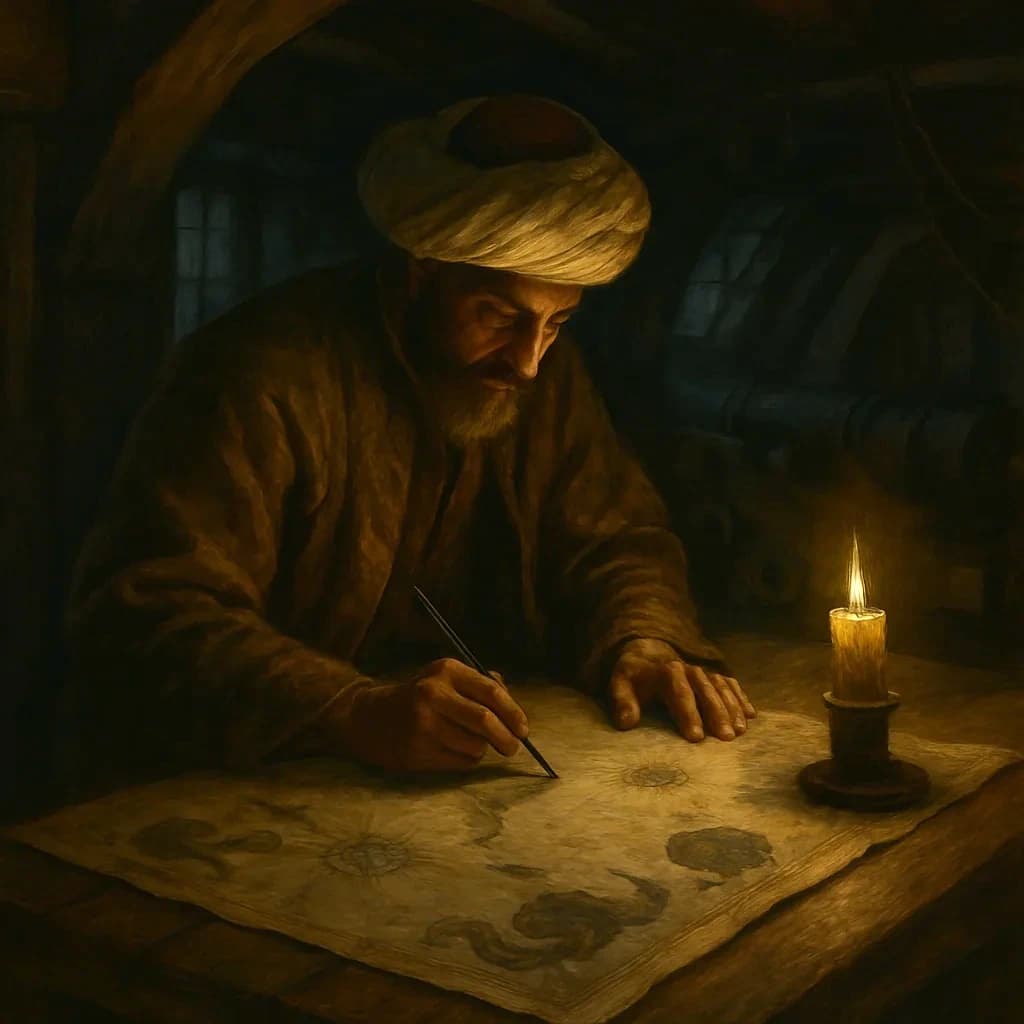
The 1513 Ottoman Map That Shows Antarctica
An Ottoman admiral unrolled a map in 1513 that showed Antarctica, three centuries before anyone claimed to have discovered it.
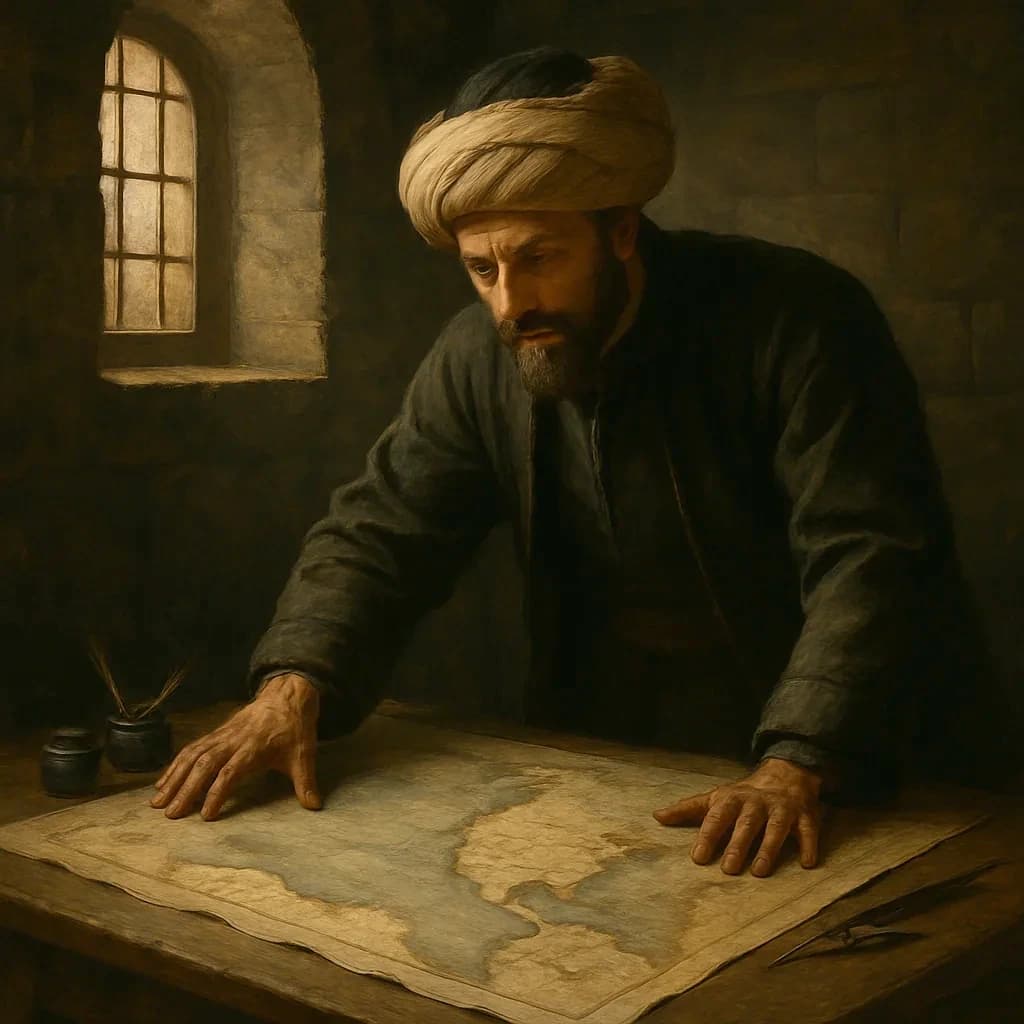
The Pirate Who Drew Antarctica in 1513
A Turkish admiral produced a map in 1513 so accurate it shouldn't have existed, and nobody believed it for four centuries.
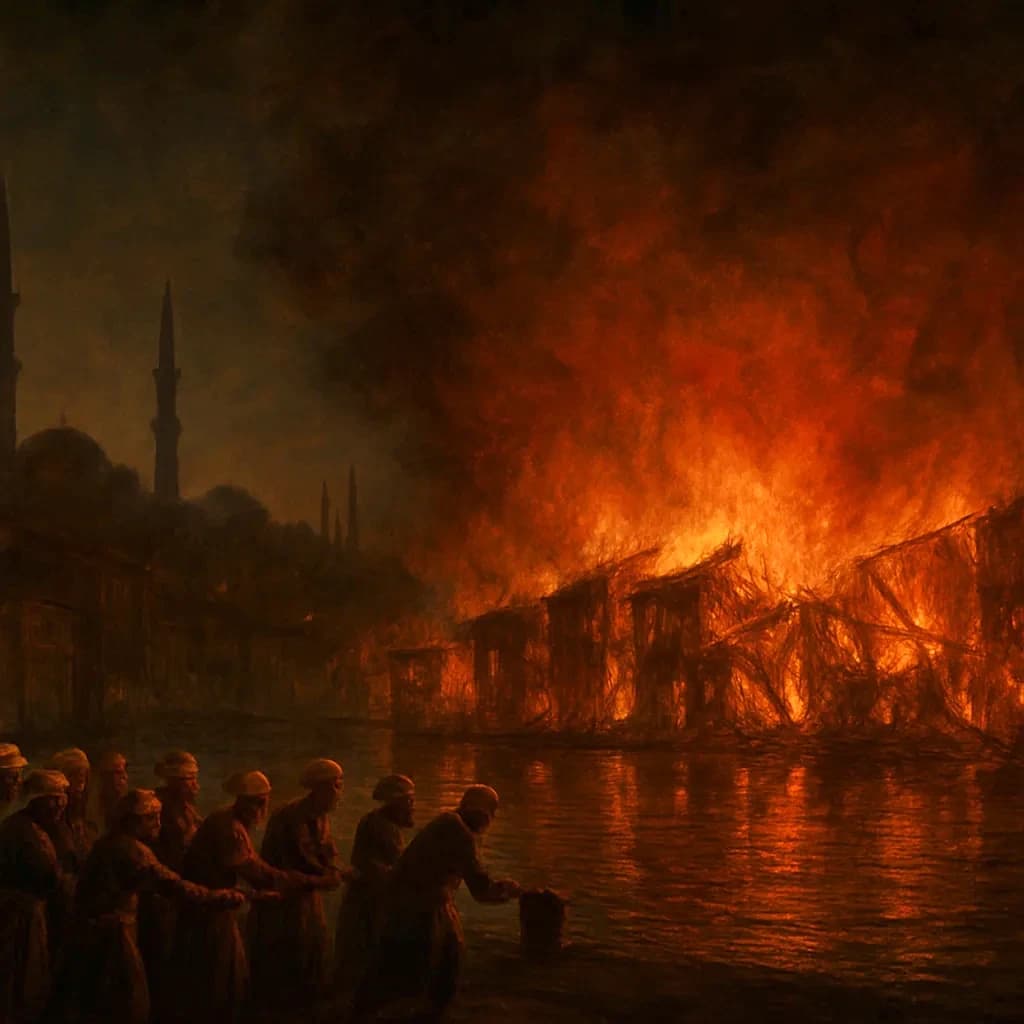
A Grain Survey Set Constantinople on Fire
An Ottoman accountant's routine survey of grain stocks triggered one of the worst urban disasters of the 17th century, and nobody wrote it down the way it actually happened.
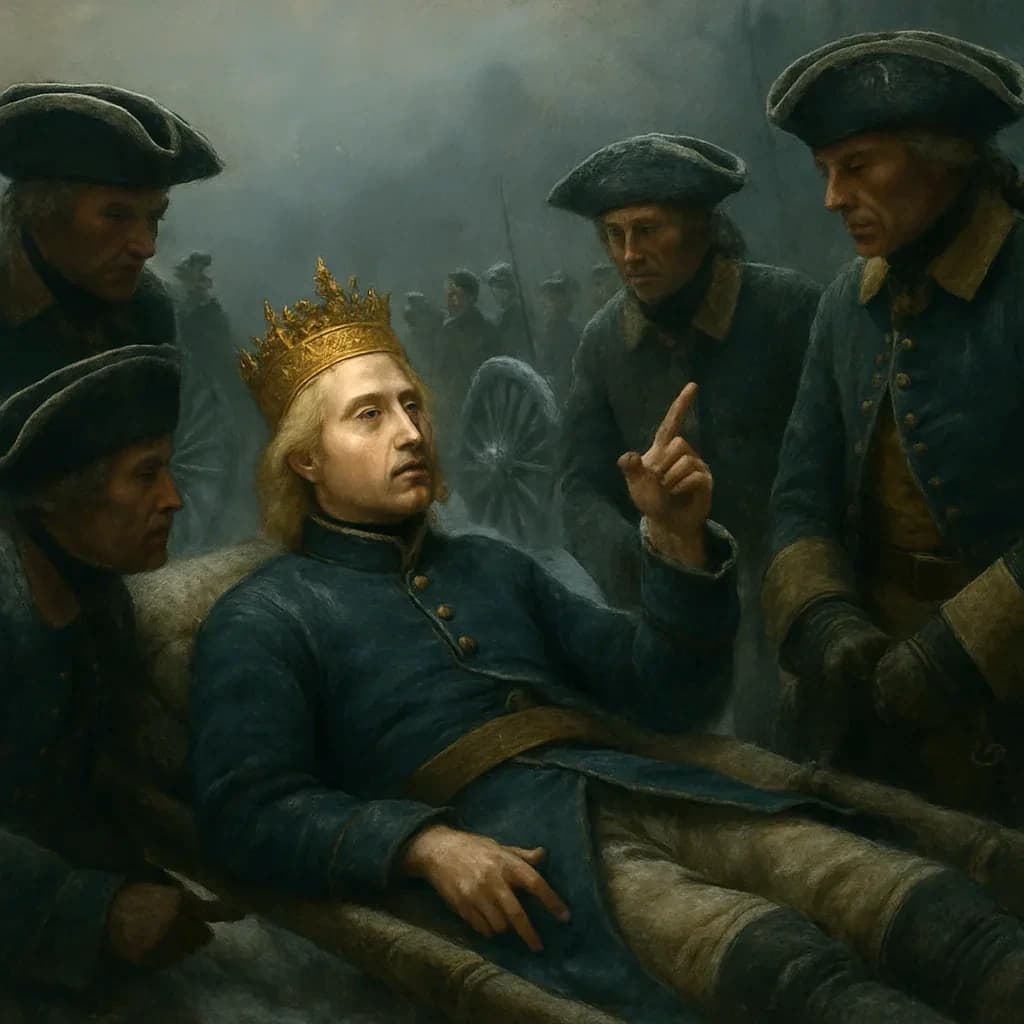
Charles XII Charged Into a Blizzard at Narva
At nineteen, with eight thousand men facing forty thousand, a Swedish king ordered the attack his generals called suicide, and it nearly won him Russia.
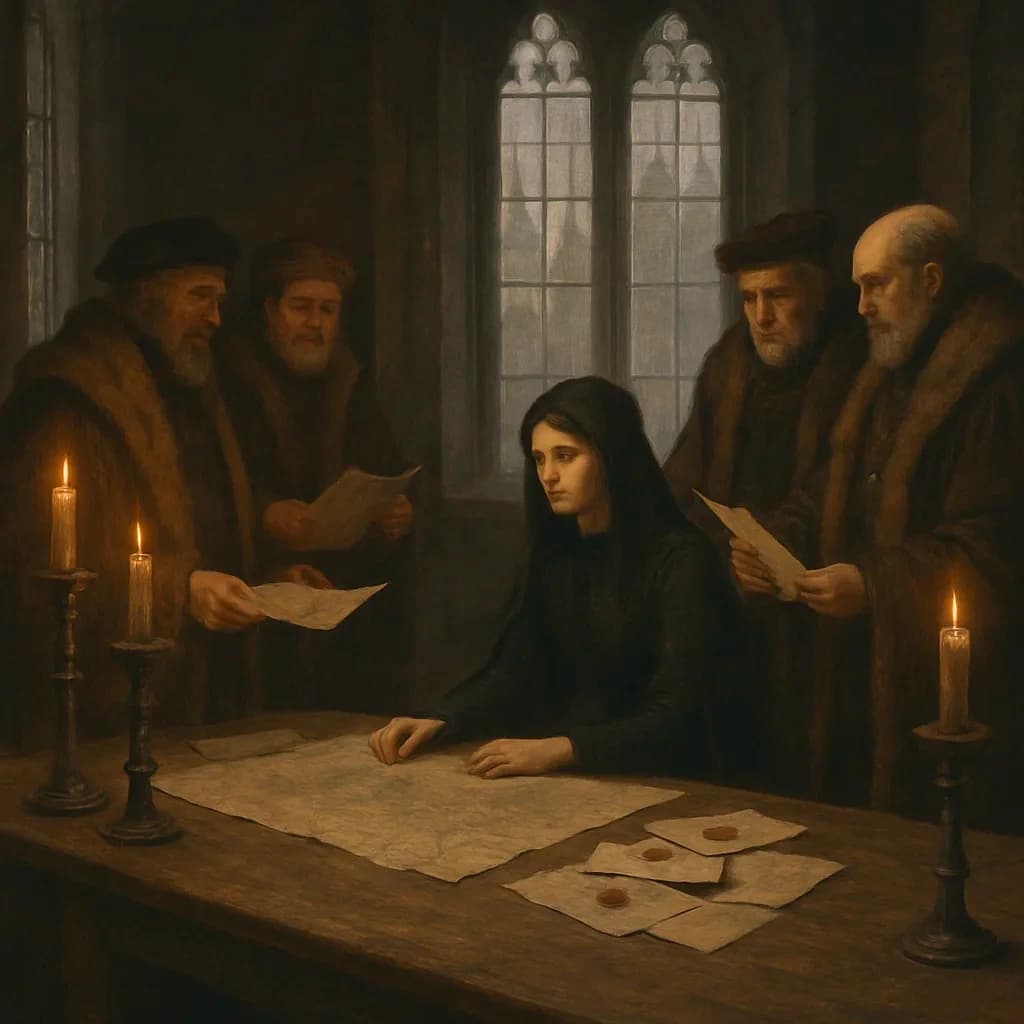
One Battle Left Europe's Richest Duchy to a 19-Year-Old
A single battle in 1477 orphaned the richest duchy in Europe. And the man who swooped in to claim the prize wasn't even supposed to be there.
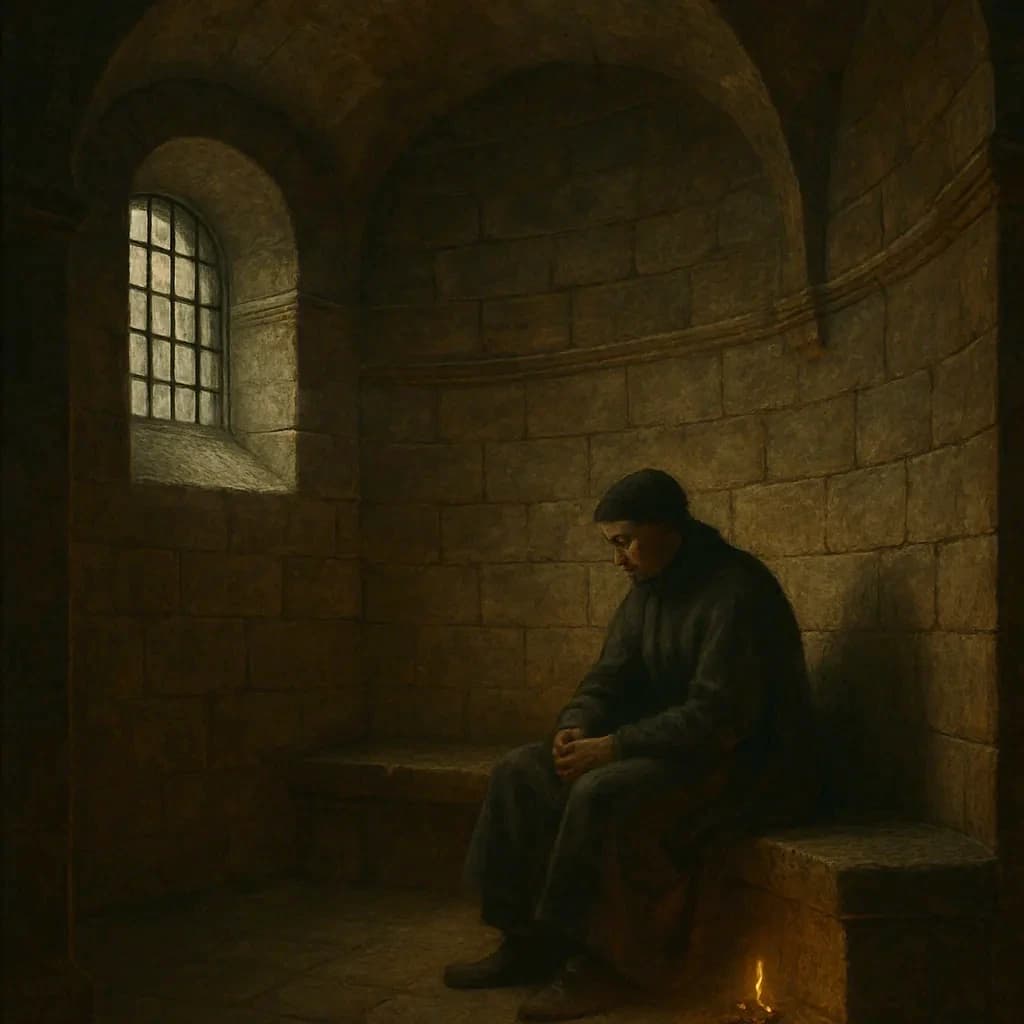
The Architect Who Built His Own Prison
The man who designed the most feared dungeon in Renaissance Italy ended up as its first notable prisoner.
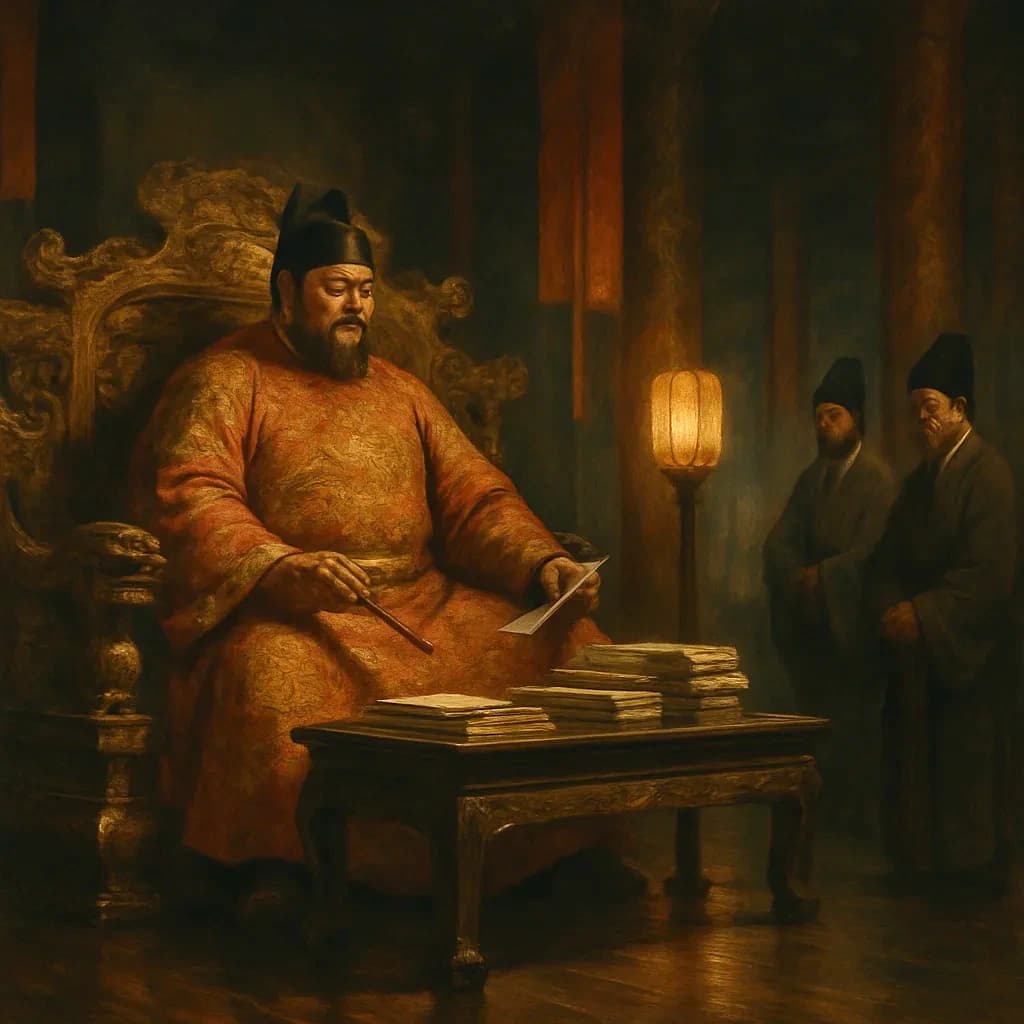
An Illiterate Emperor Built the World's Largest Bureaucracy
The first emperor of Ming China couldn't read. He built the largest bureaucracy in the world anyway, and nearly destroyed it trying to hide that fact.
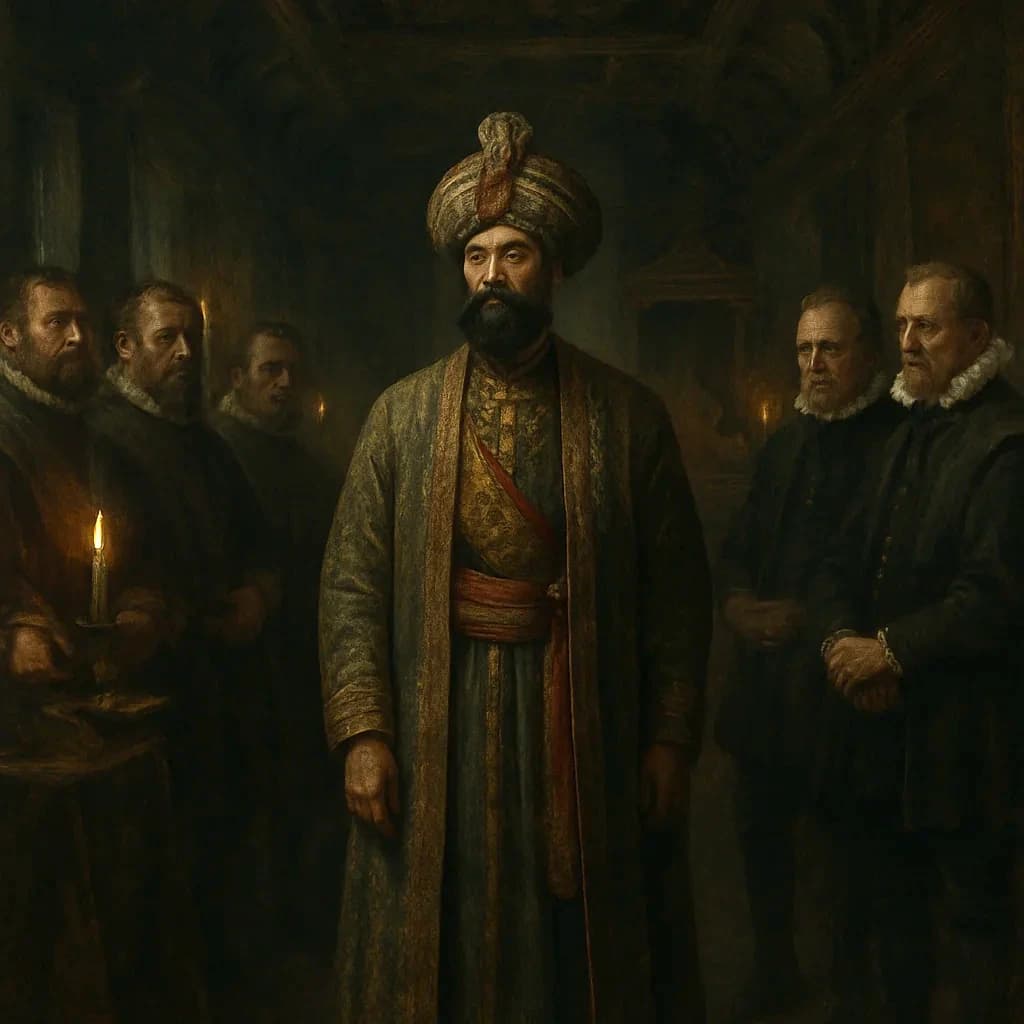
The Persian Envoy Who Refused to Bow
A single refused gesture (one Persian envoy declining to bow before Rudolf II in 1601) reshaped the balance of power between two empires.
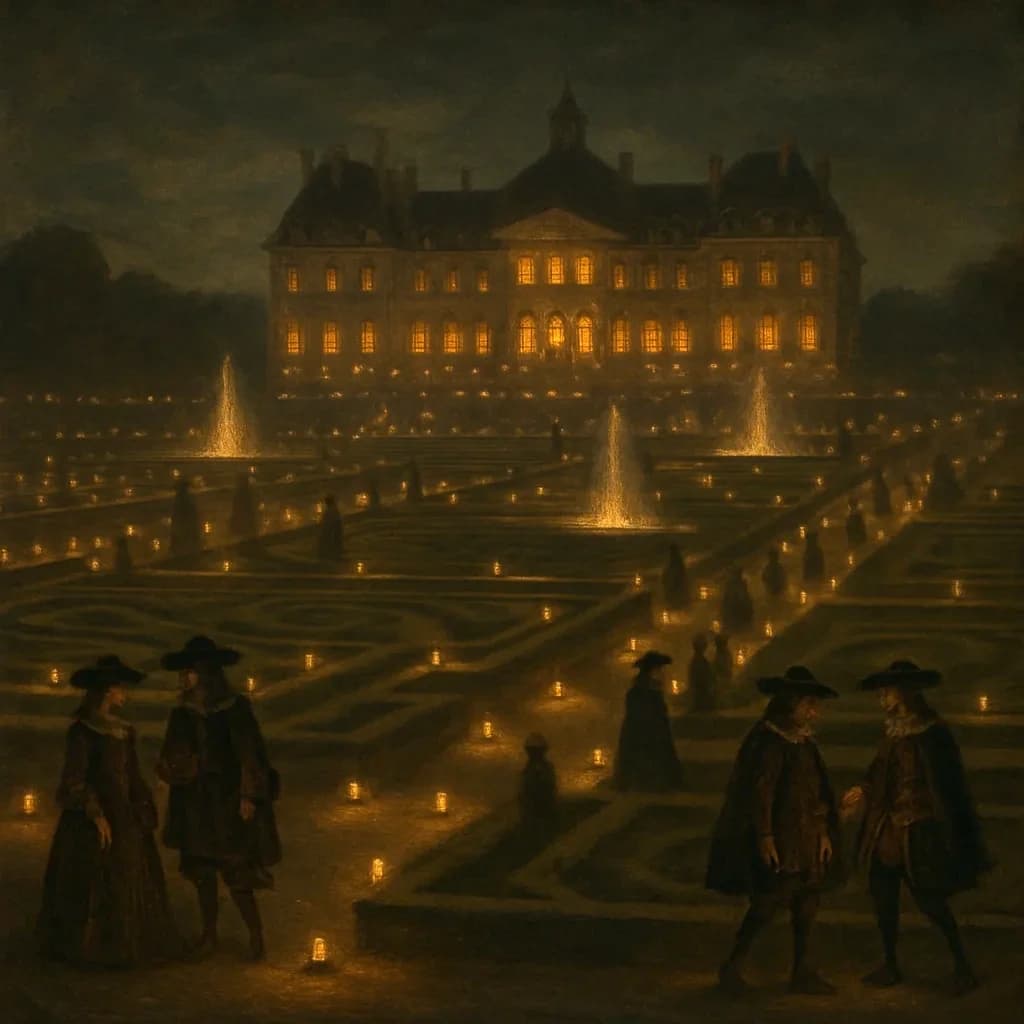
Versailles Was Built as Revenge for One Party
A finance minister threw the most extravagant party in French history, and it cost him everything.
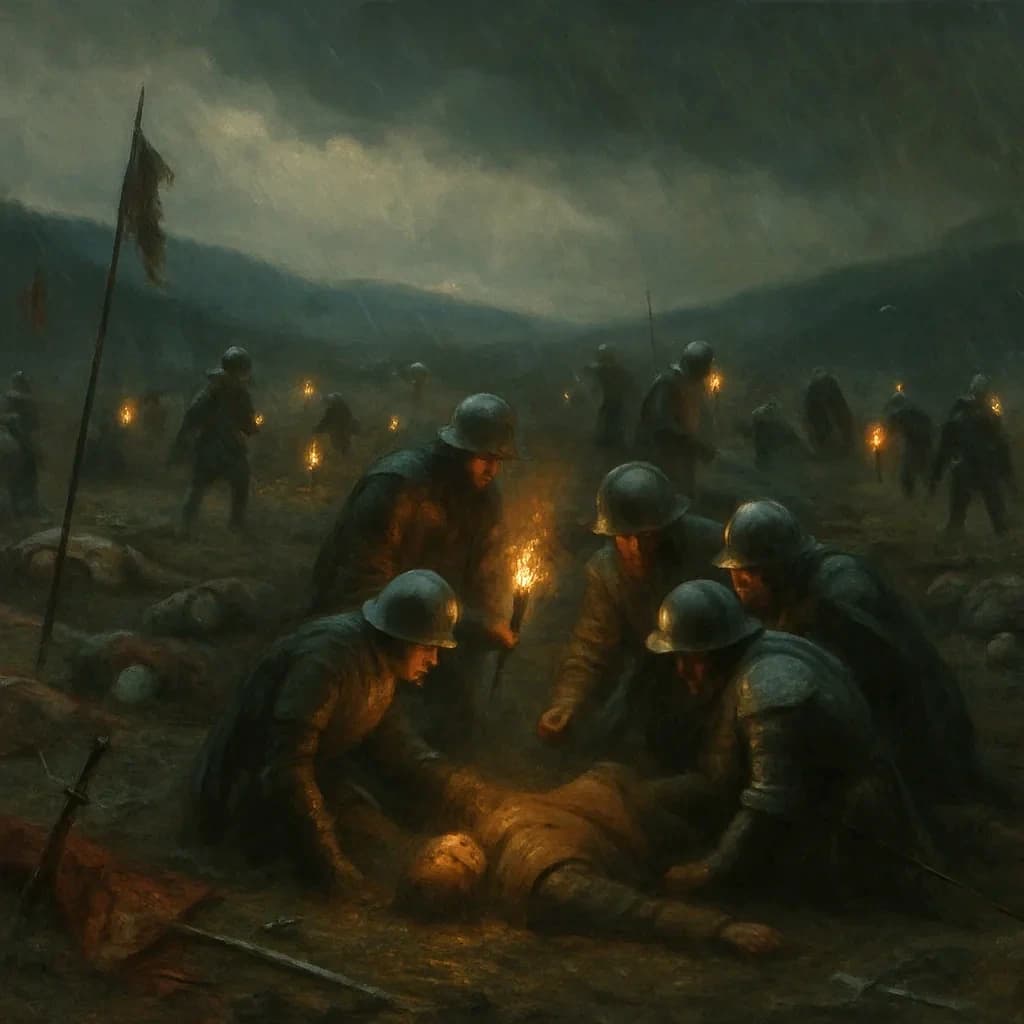
They Lost the King of Scotland's Body
Scotland lost its king at Flodden, but the English couldn't find the body, so they sent home whatever looked convincing.
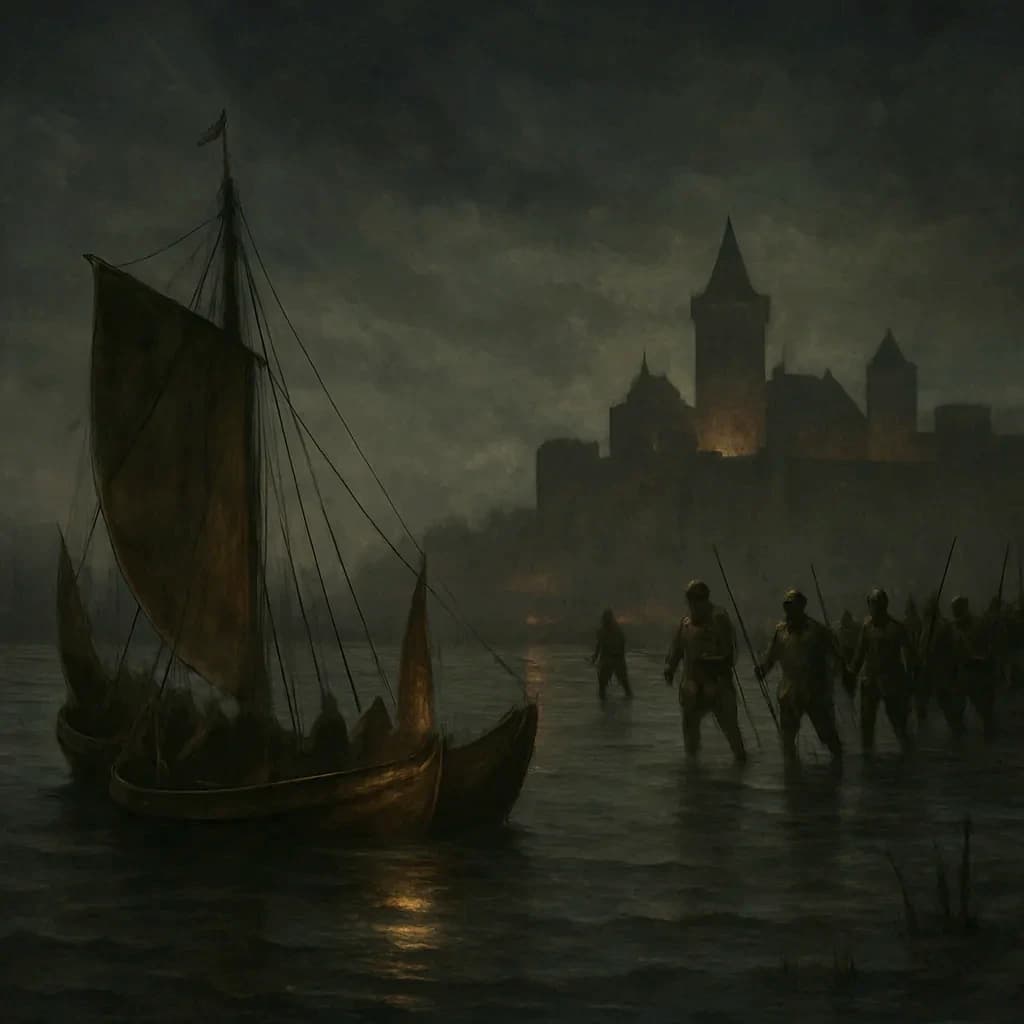
The Night the Dutch Bought Time with Tulip Bulbs
In 1574, a besieged Dutch city held out against the Spanish Empire for months, and the weapon that finally broke the siege wasn't a cannon. It was a flower.
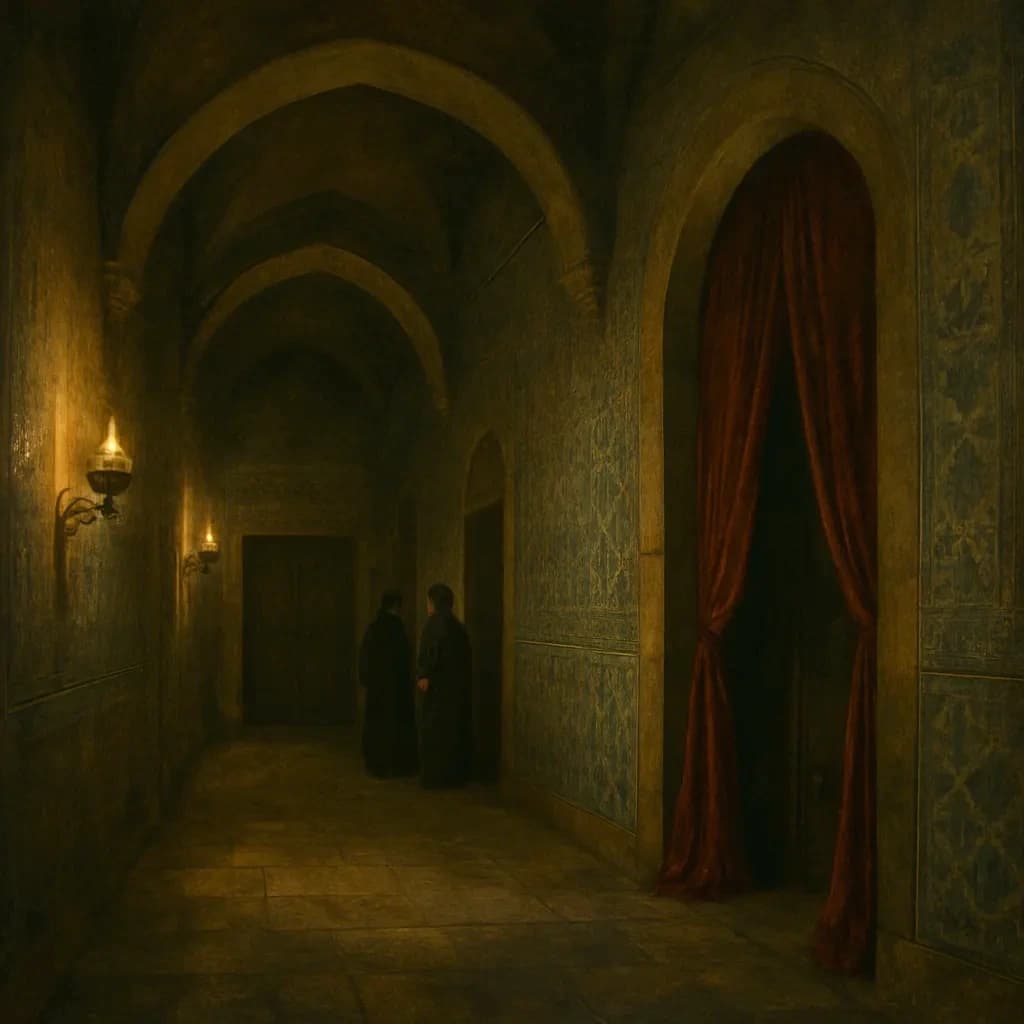
Suleiman Had His Closest Friend Strangled at Dinner
An Ottoman grand vizier was strangled on a Tuesday morning because he'd been too honest in a letter, and his death changed the course of an entire century.
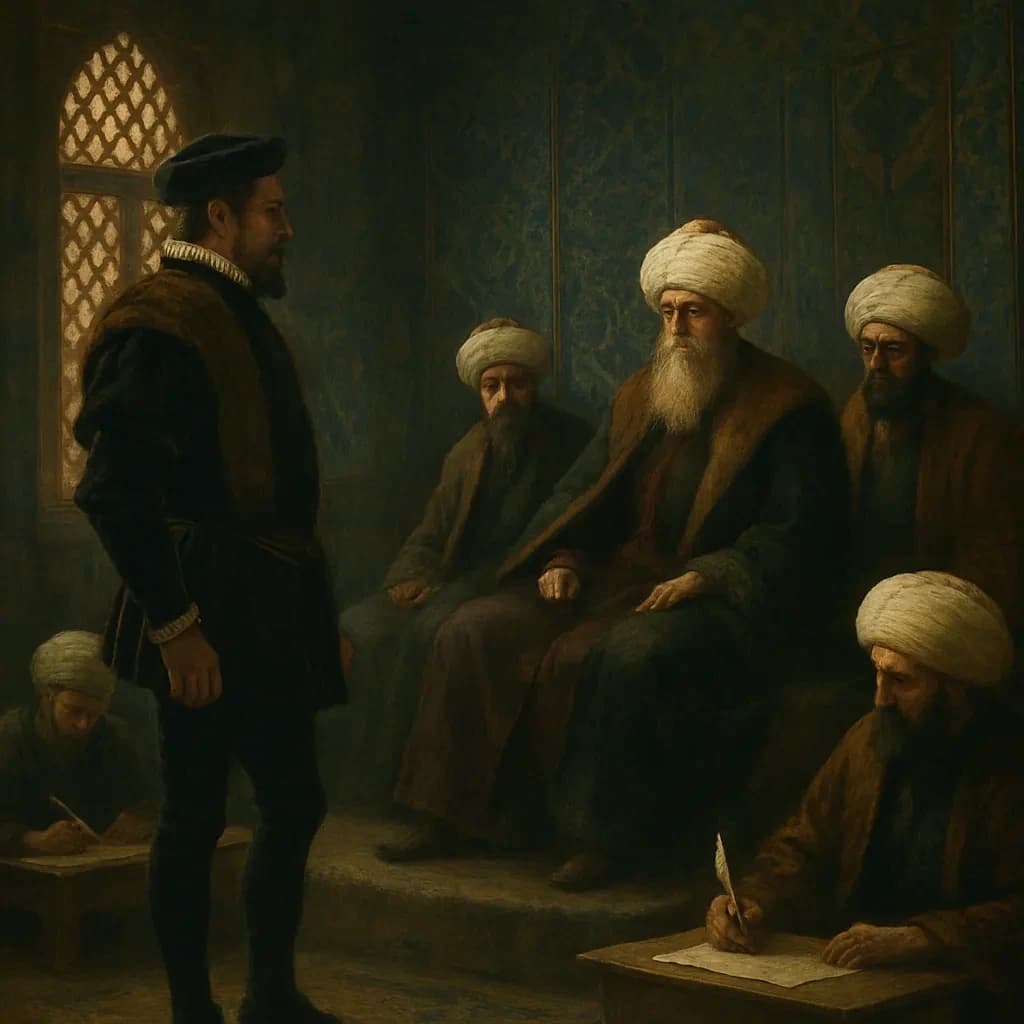
A Beard Nearly Wrecked Europe's Most Scandalous Alliance
A Turkish diplomatic ritual collided with one Frenchman's facial hair in 1533, and the most important alliance in European history almost died in a waiting room.
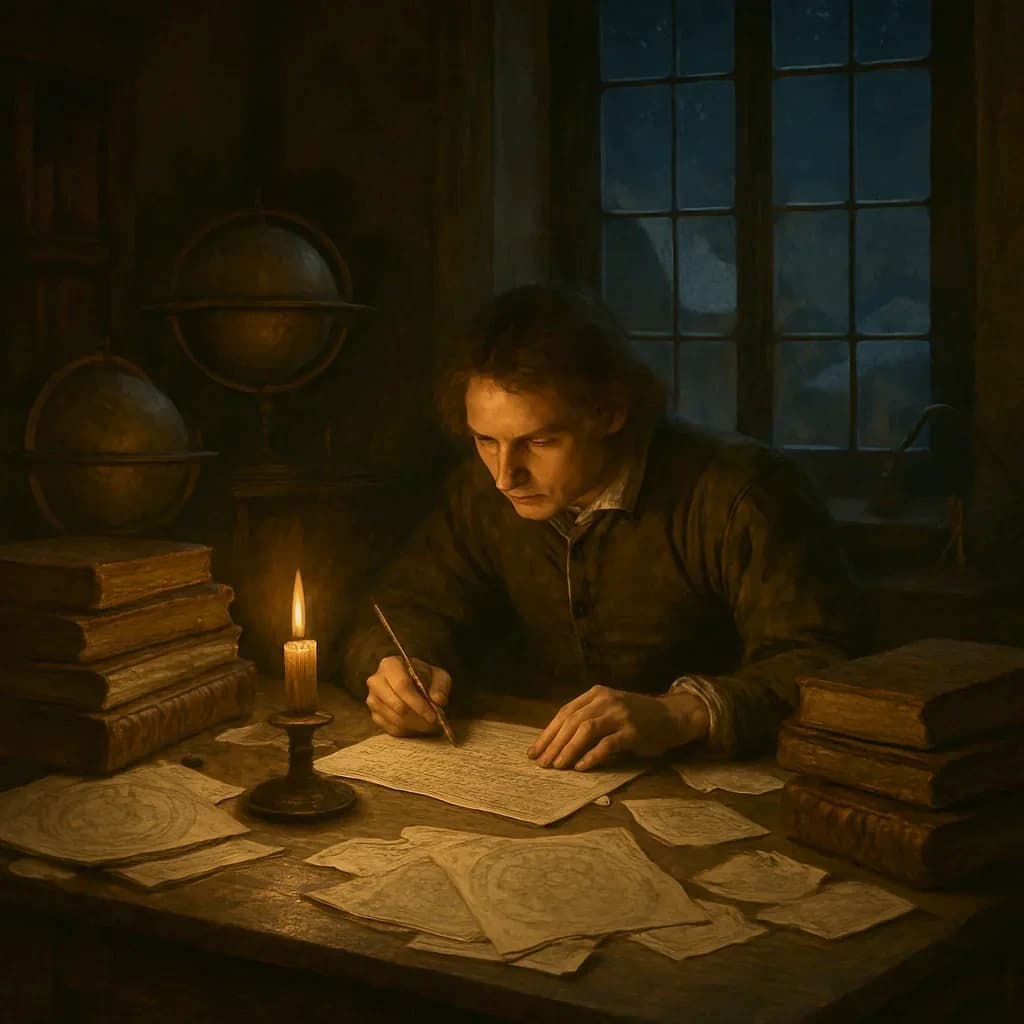
Kepler Needed a Dead Man's Numbers
A Danish astronomer's widow held the only complete copy of data that would prove the Earth moved around the Sun, and she refused to hand it over.
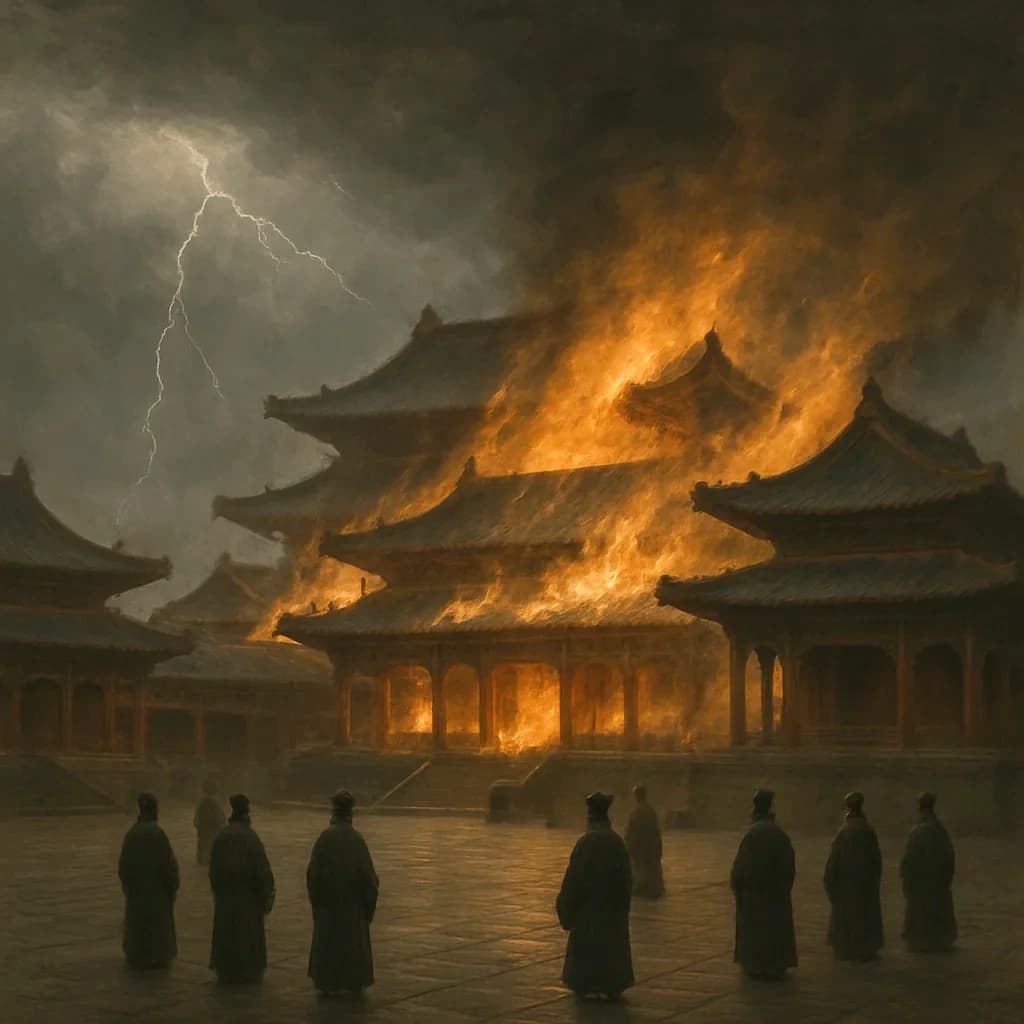
One Palace Fire Ended China's Age of Exploration
A single fire destroyed the largest wooden palace ever built, and the decision about whether to rebuild it quietly ended China's age of exploration.
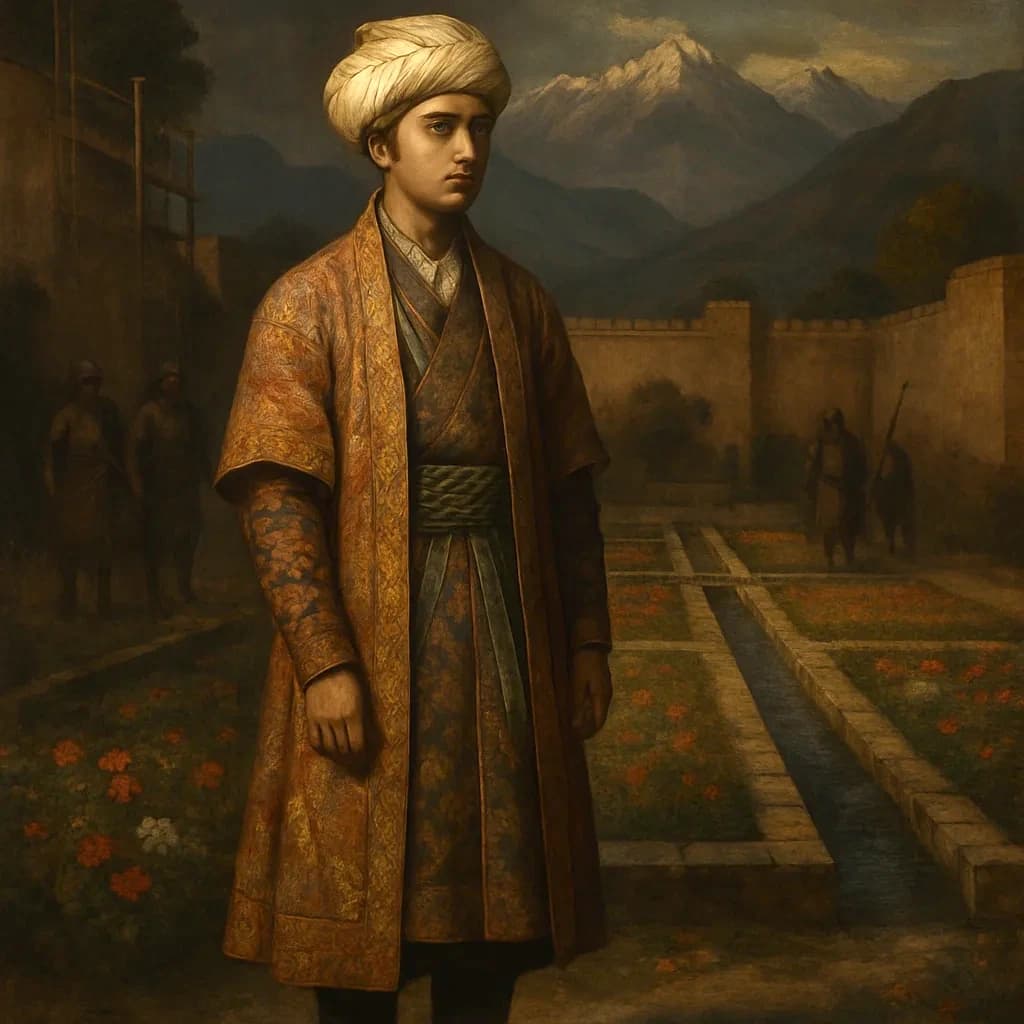
Twenty Years of Losing, Then India
A teenage prince lost everything in a single afternoon, and spent the next two decades turning that loss into the most unlikely empire in history.
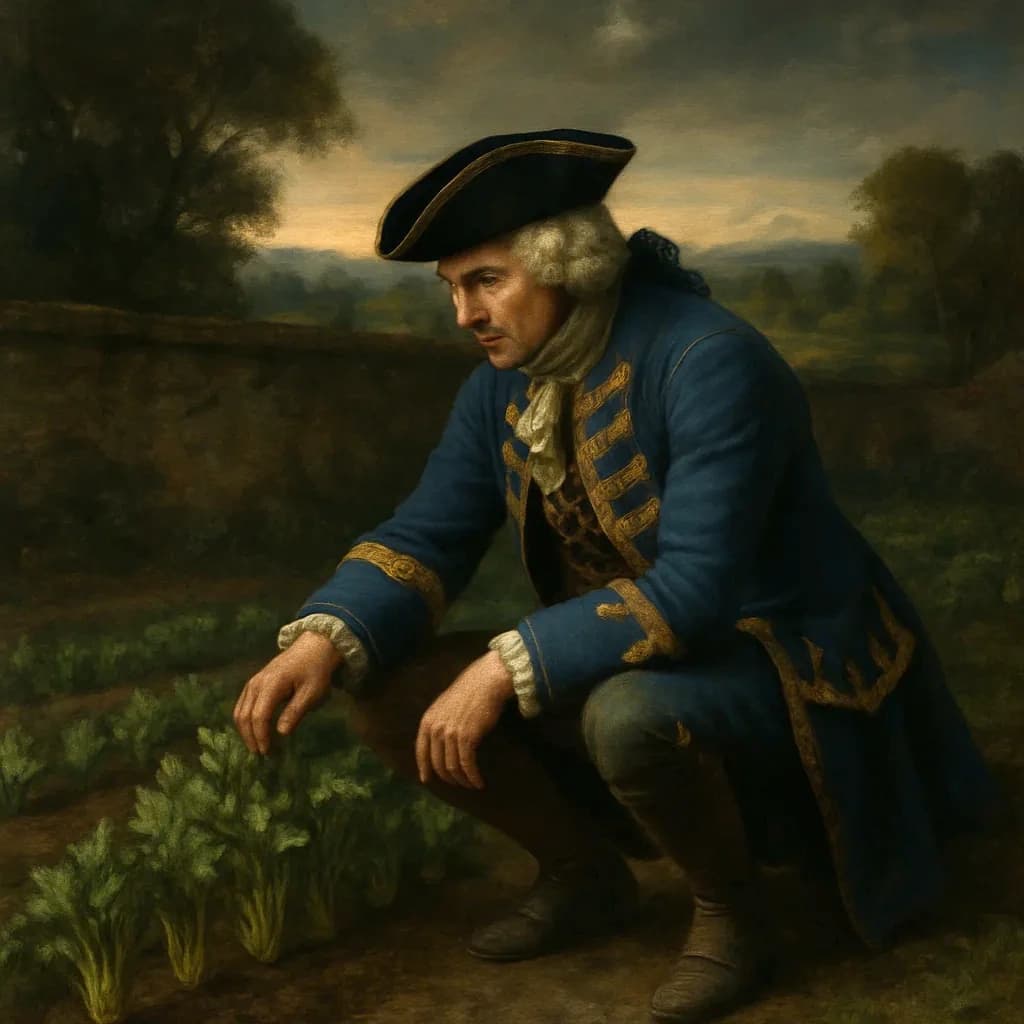
Defeated at Blenheim, He Taught England to Grow Celery
A Bavarian general surrendered to an English officer neither man could understand in 1704, and the paperwork they signed by candlelight reshaped the map of Europe.
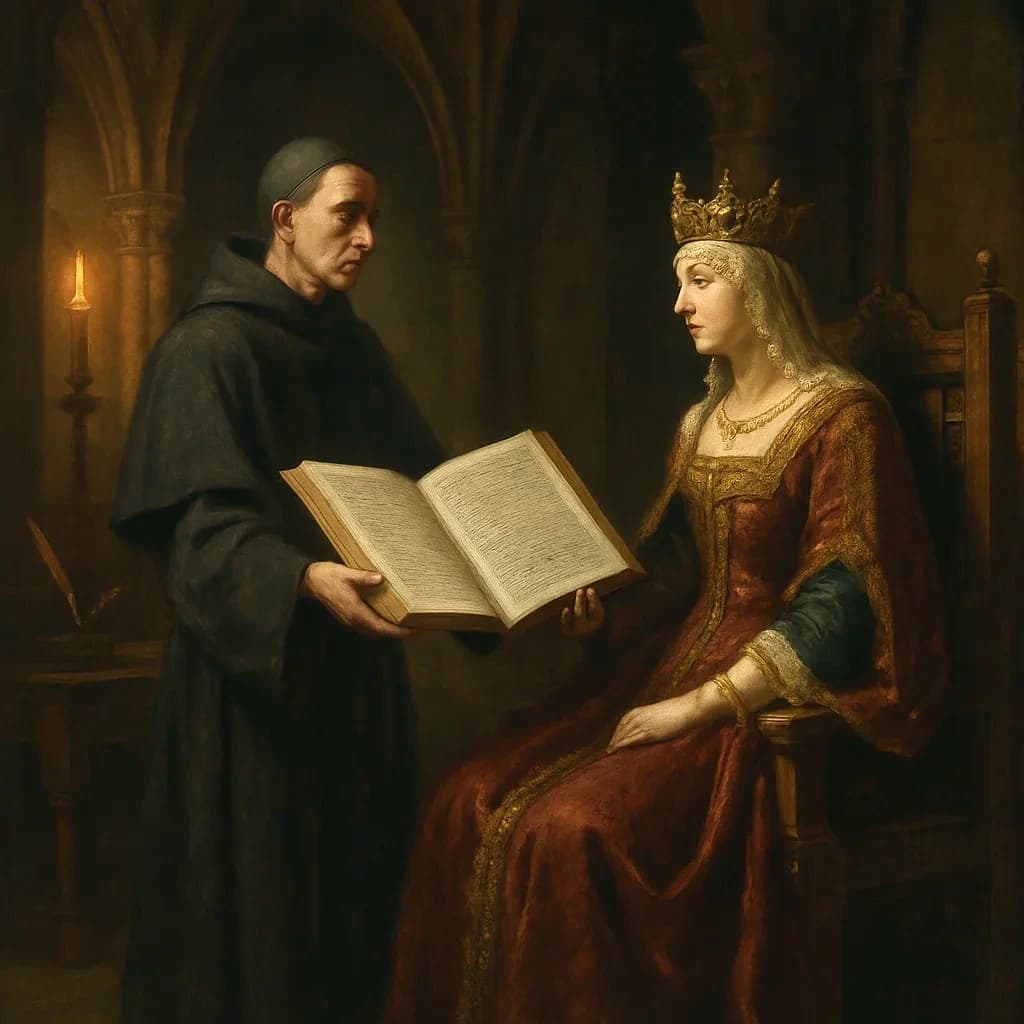
The Queen's Perfect Weapon of Conquest Was a Grammar Book
The same year Columbus sailed, a scholar completed a grammar book, and a queen told him it would be the perfect weapon for conquering peoples who didn't yet exist.
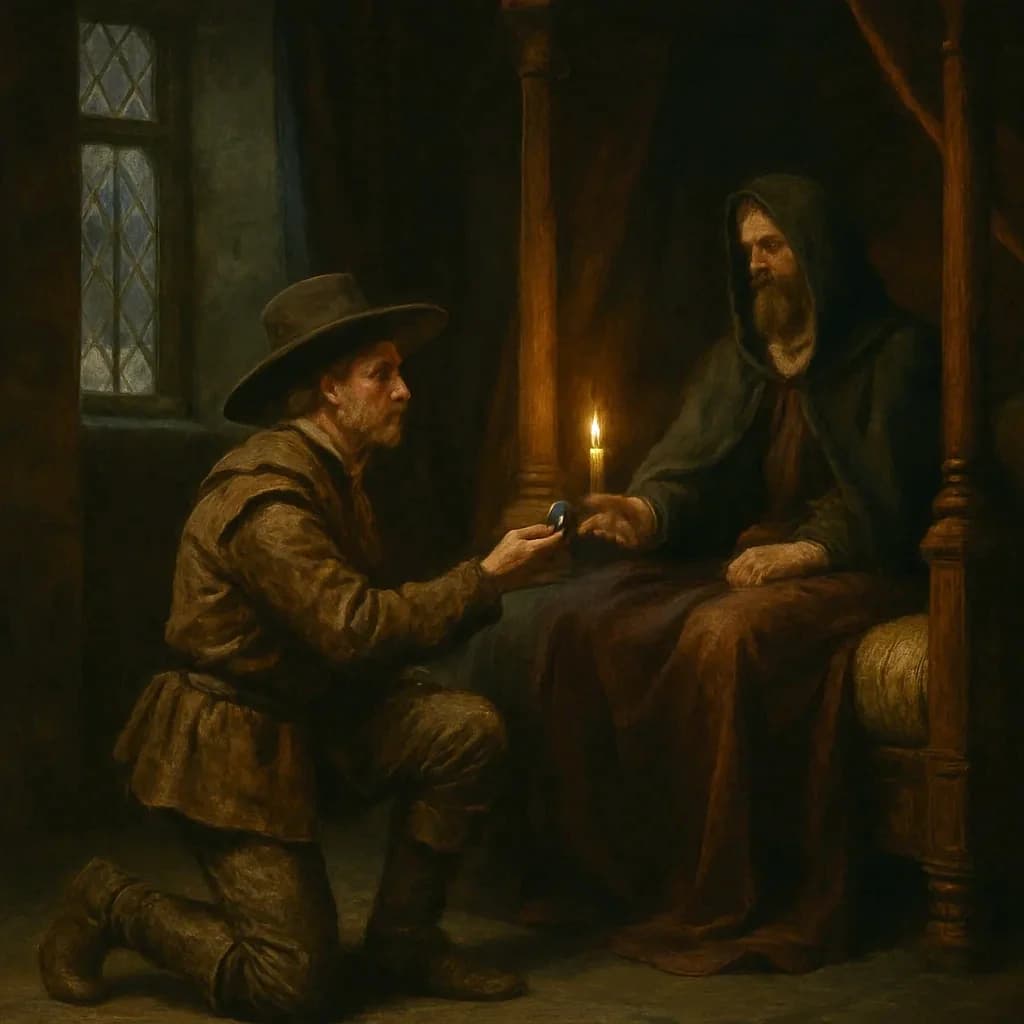
A 400-Mile Ride to Crown a King
One horseman rode 400 miles in 60 hours in 1603 to tell a Scottish king he'd inherited the most powerful throne in Europe, and nearly didn't make it.
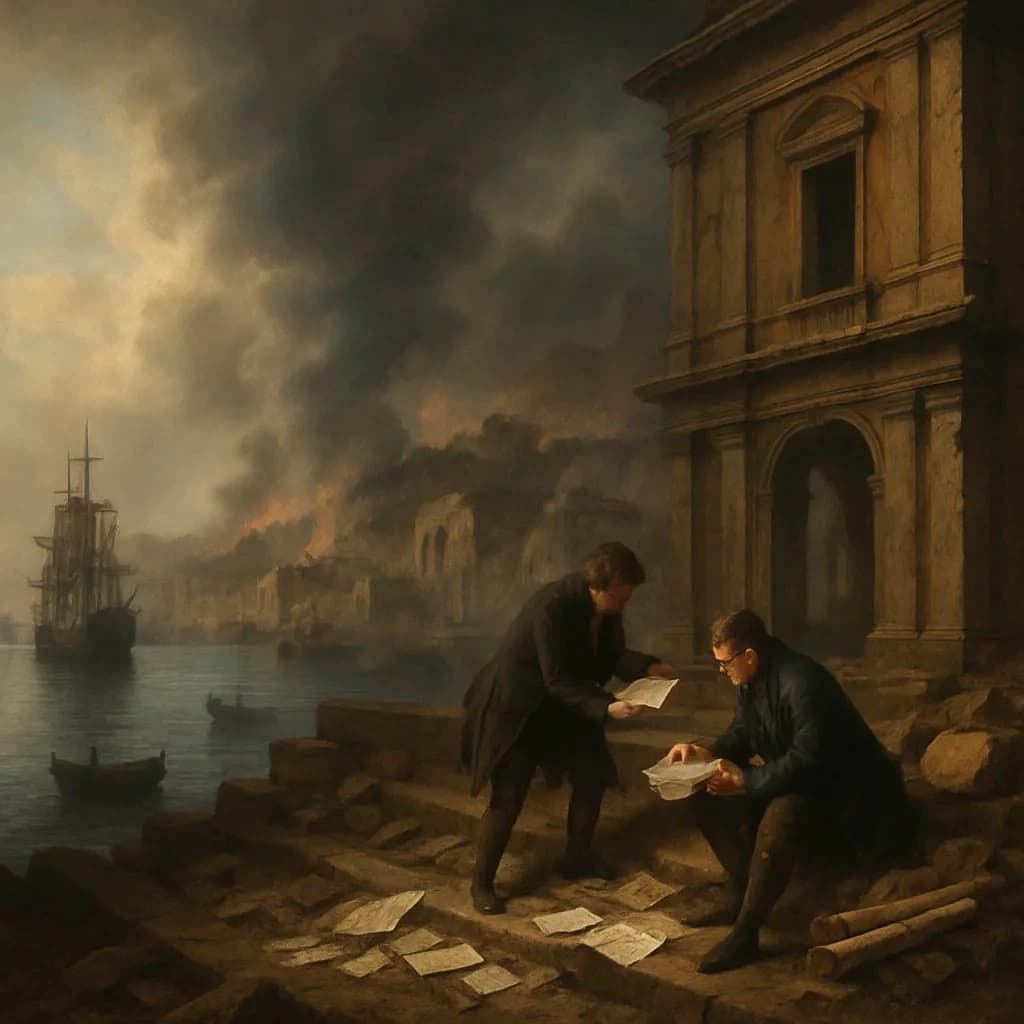
The Maps Survived the Earthquake. Then Portugal Destroyed Them
When the earthquake hit, Portugal's greatest map archive survived, then its own government destroyed it.
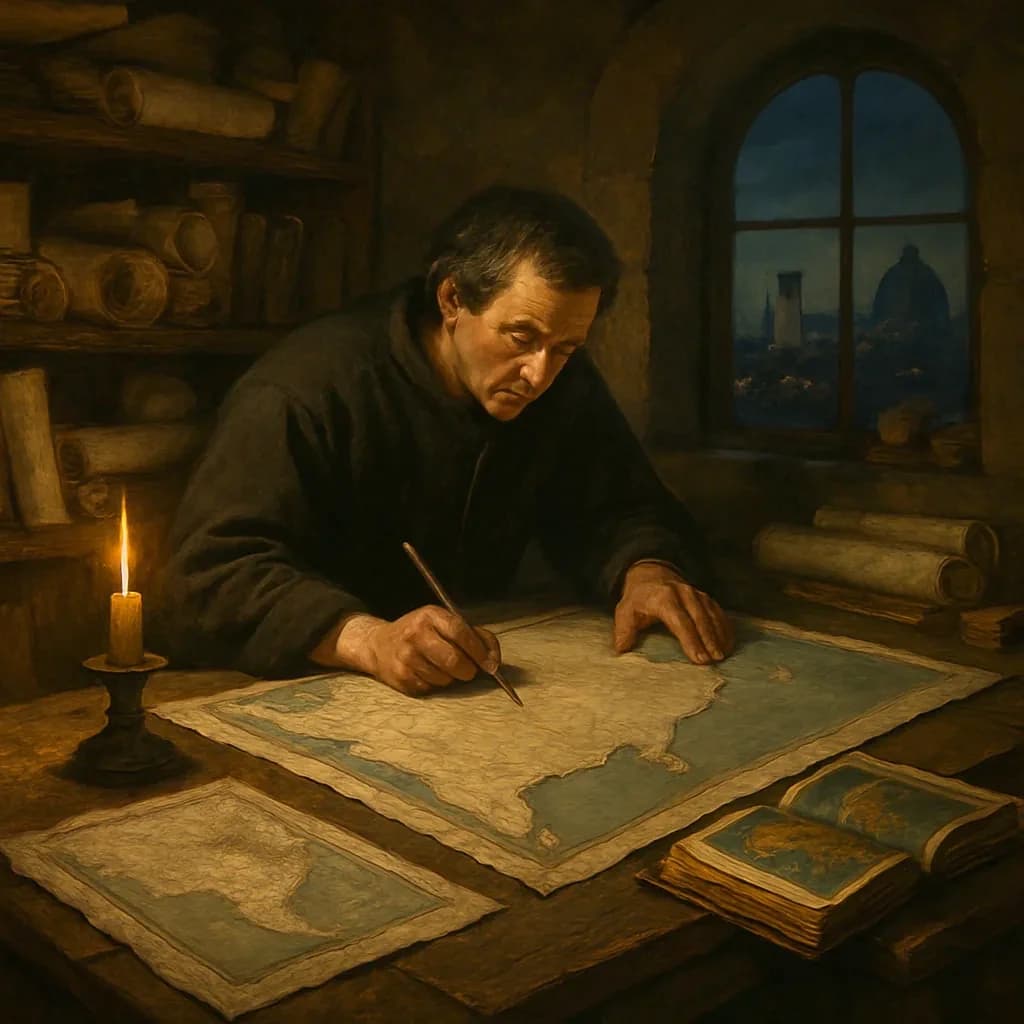
His Map Helped Send Columbus the Wrong Way
A scholar in Rome spent forty years correcting a geography textbook that had already conquered the world.
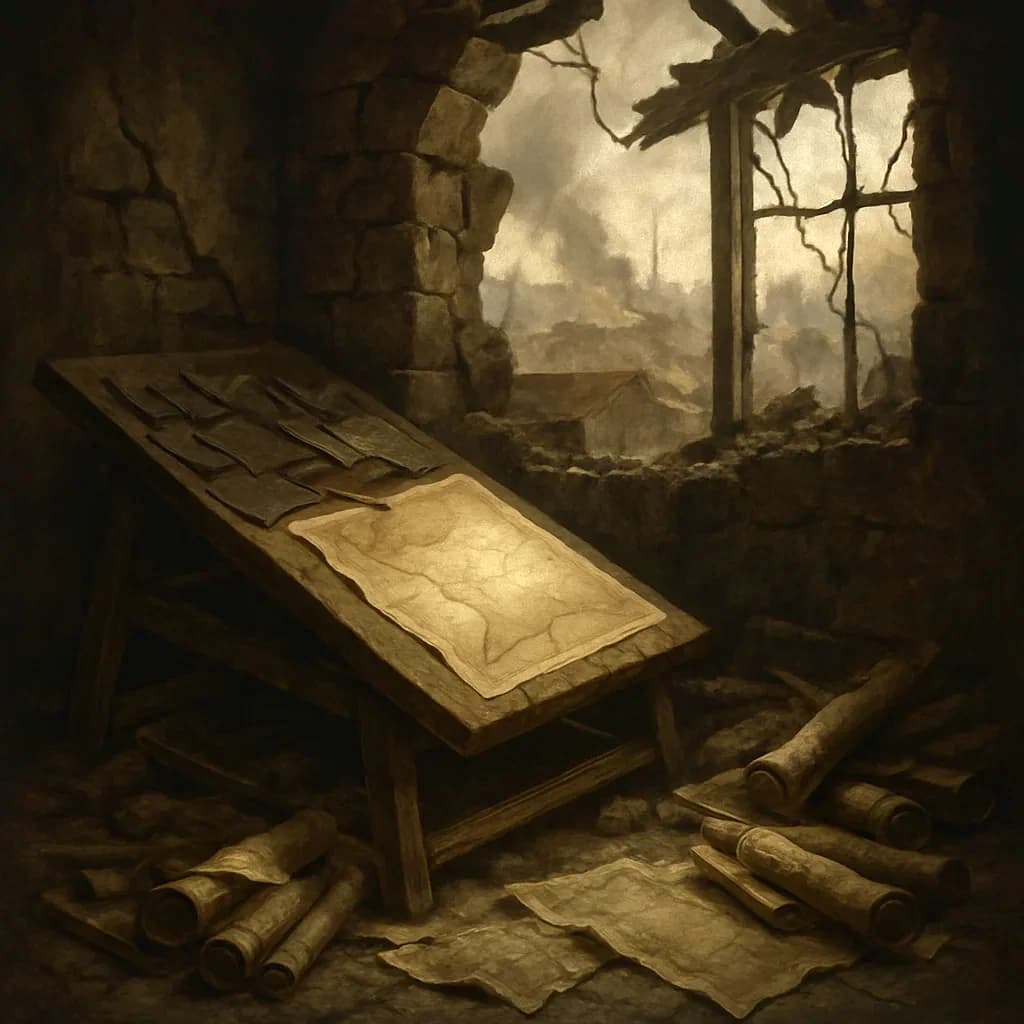
His Map of Portugal Was Accurate for Nine Hours
The earthquake that destroyed Lisbon also destroyed a man's life work, but one royal geographer lost something stranger than maps.
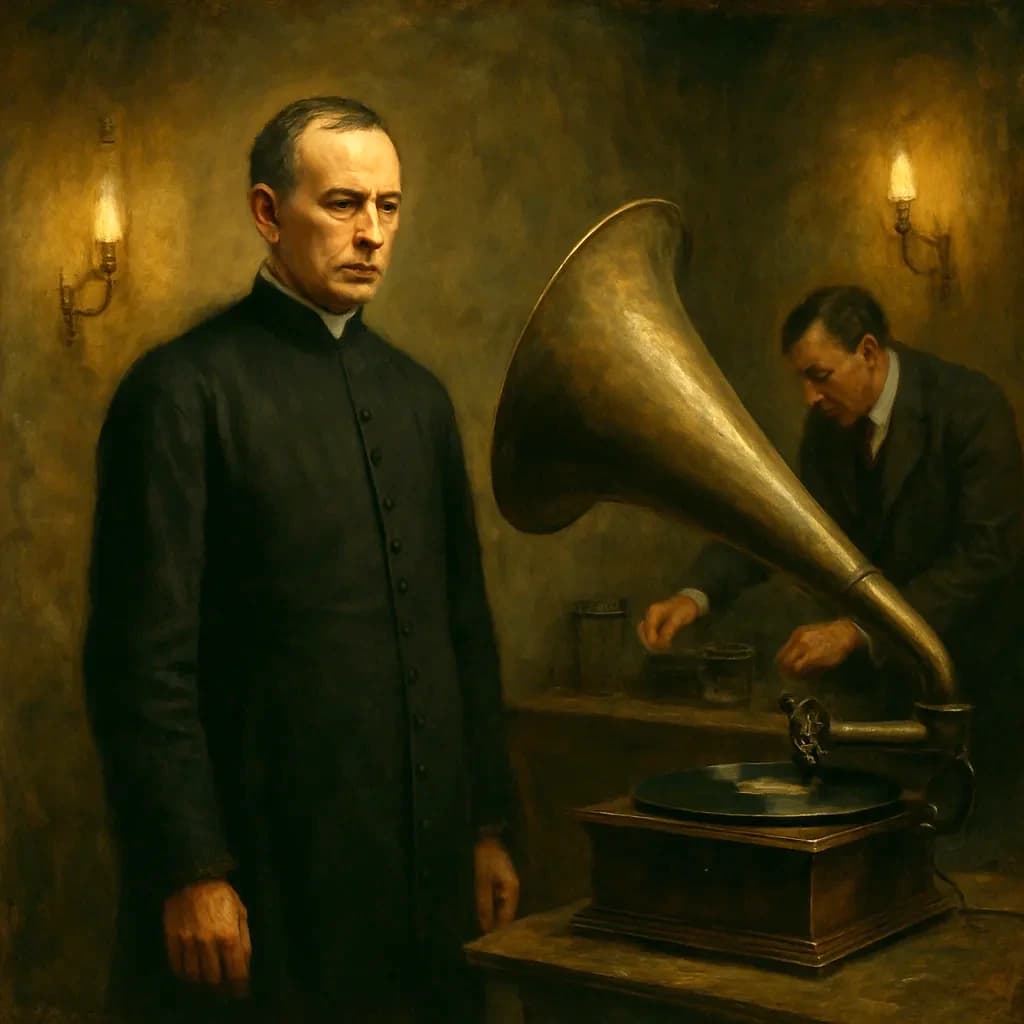
The Last Castrato Ever Recorded
For two centuries, the most celebrated voices in Europe belonged to boys who had been surgically altered, and when the practice was finally banned, one man was left holding the last note.
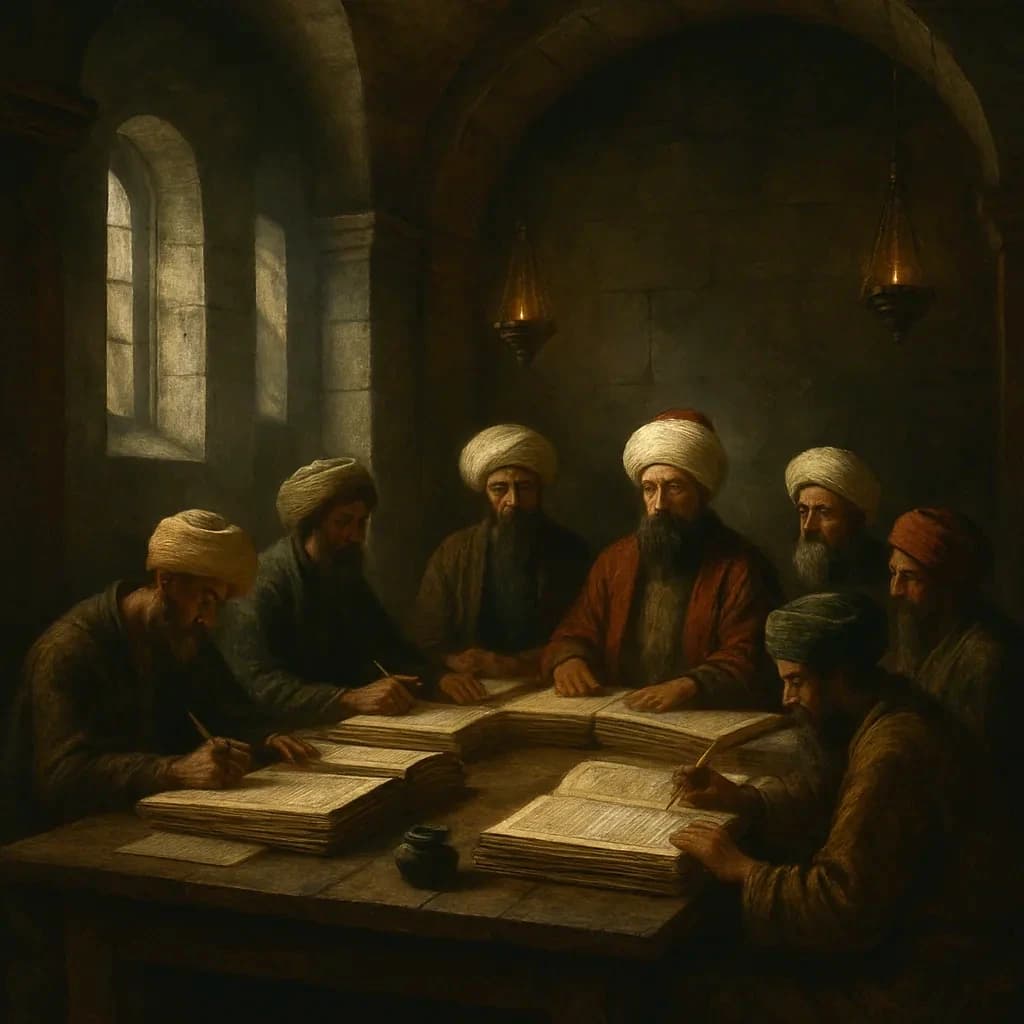
The Ledgers Selim's Scribes Couldn't Read
A single accounting dispute between a sultan and his treasurer in 1517 preserved the financial records of an entire civilization.
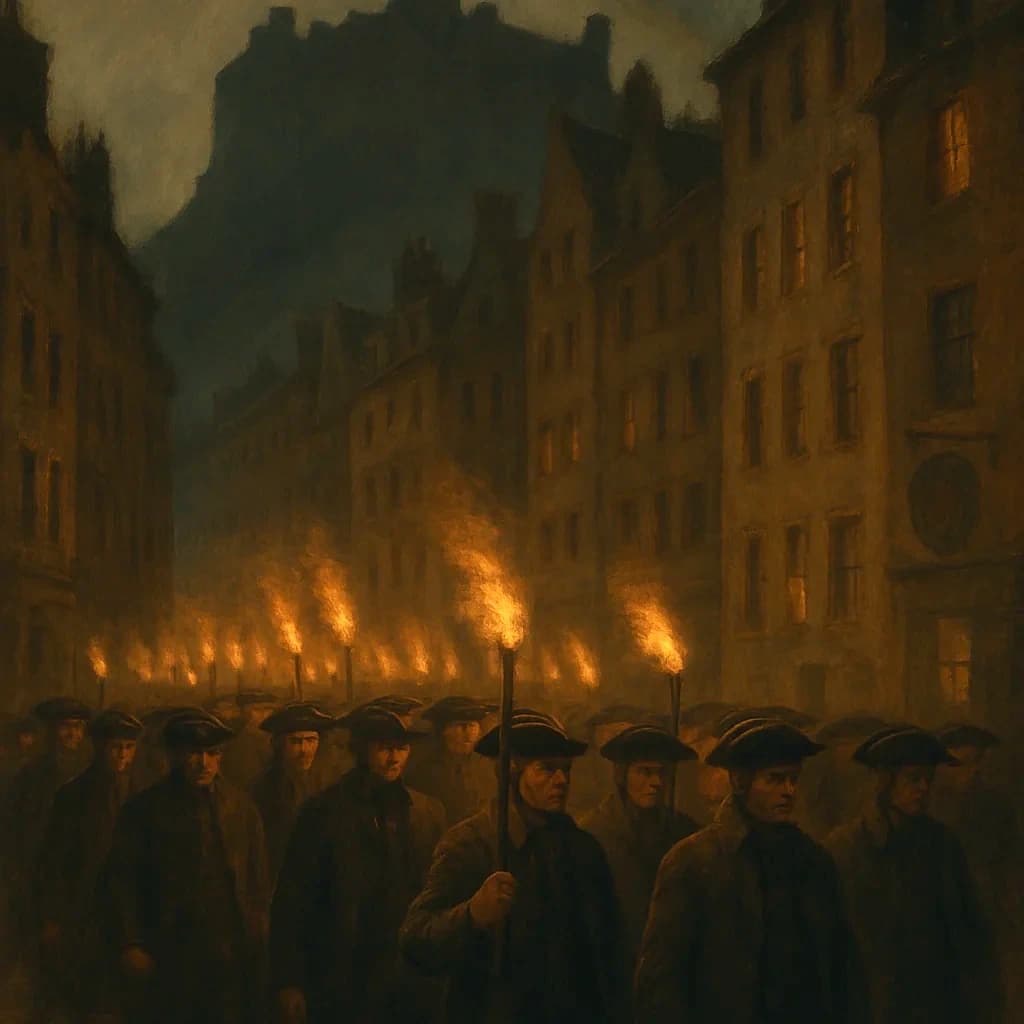
An Edinburgh Mob Hanged a Captain and Defied Parliament
An Edinburgh mob hanged a city guard captain from a dyer's pole in 1736, and somehow forced the British Parliament to back down.
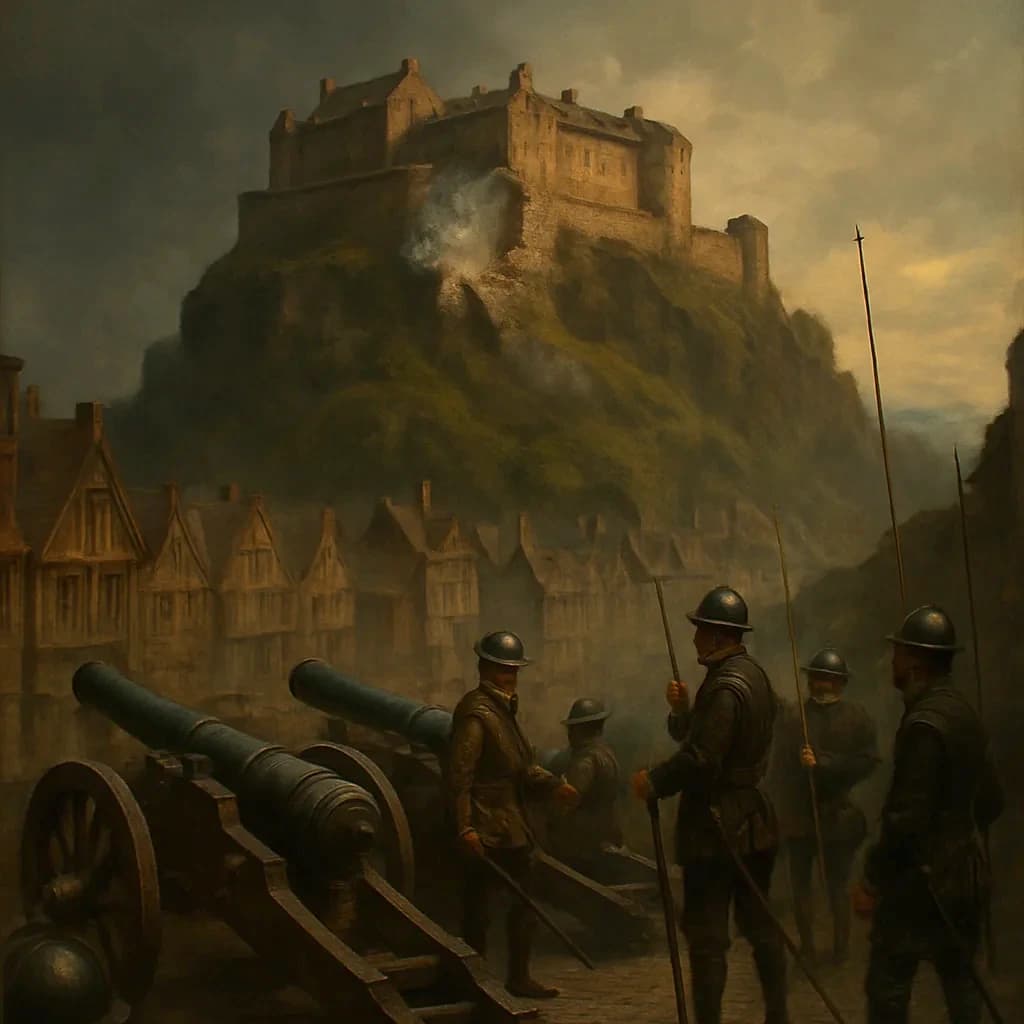
He Leaked Edinburgh Castle's Secrets from His Sickbed
Edinburgh Castle fell in 1573 not to cannon or siege ladder, but to a single man who had been feeding its secrets to the enemy for months.
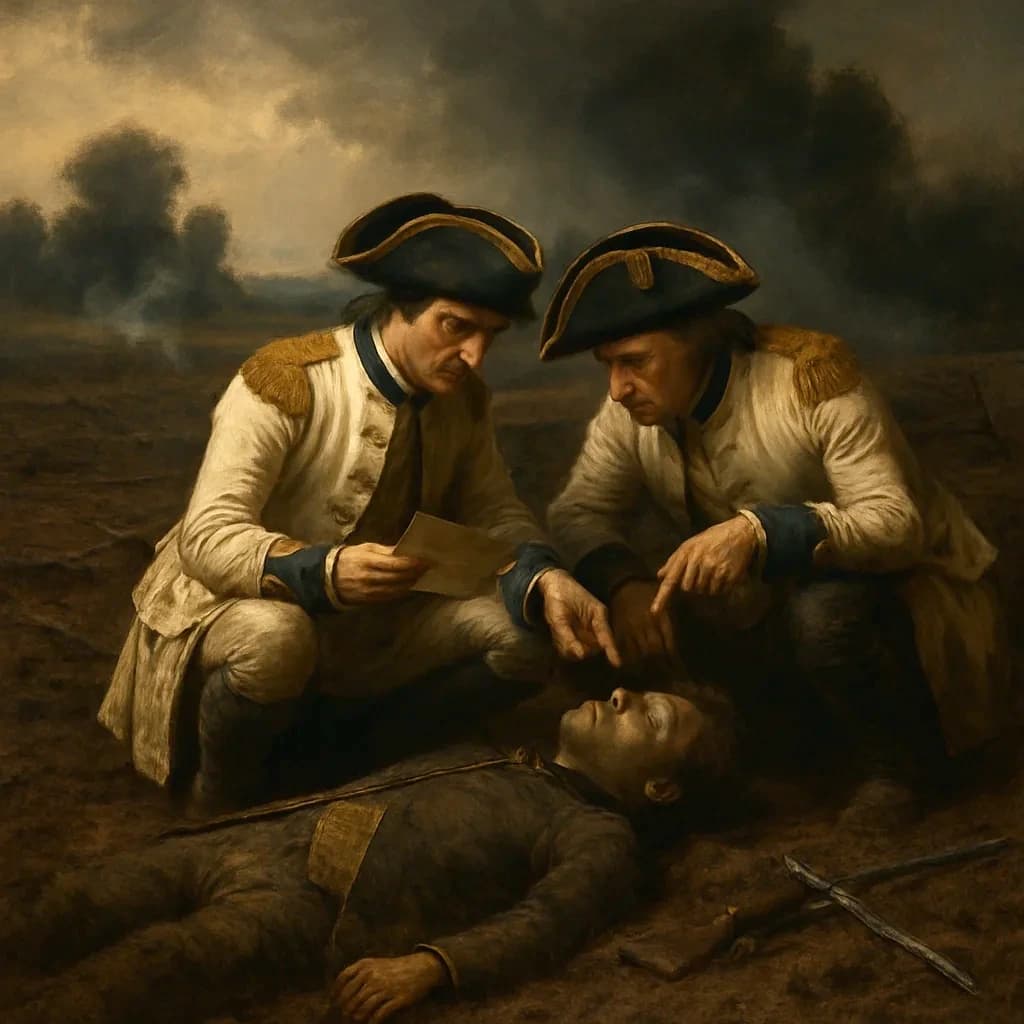
The Wrong Body and the Lost Peace Deal
A misidentified body on an 18th-century battlefield redirected the entire course of European succession, and nobody noticed for forty years.
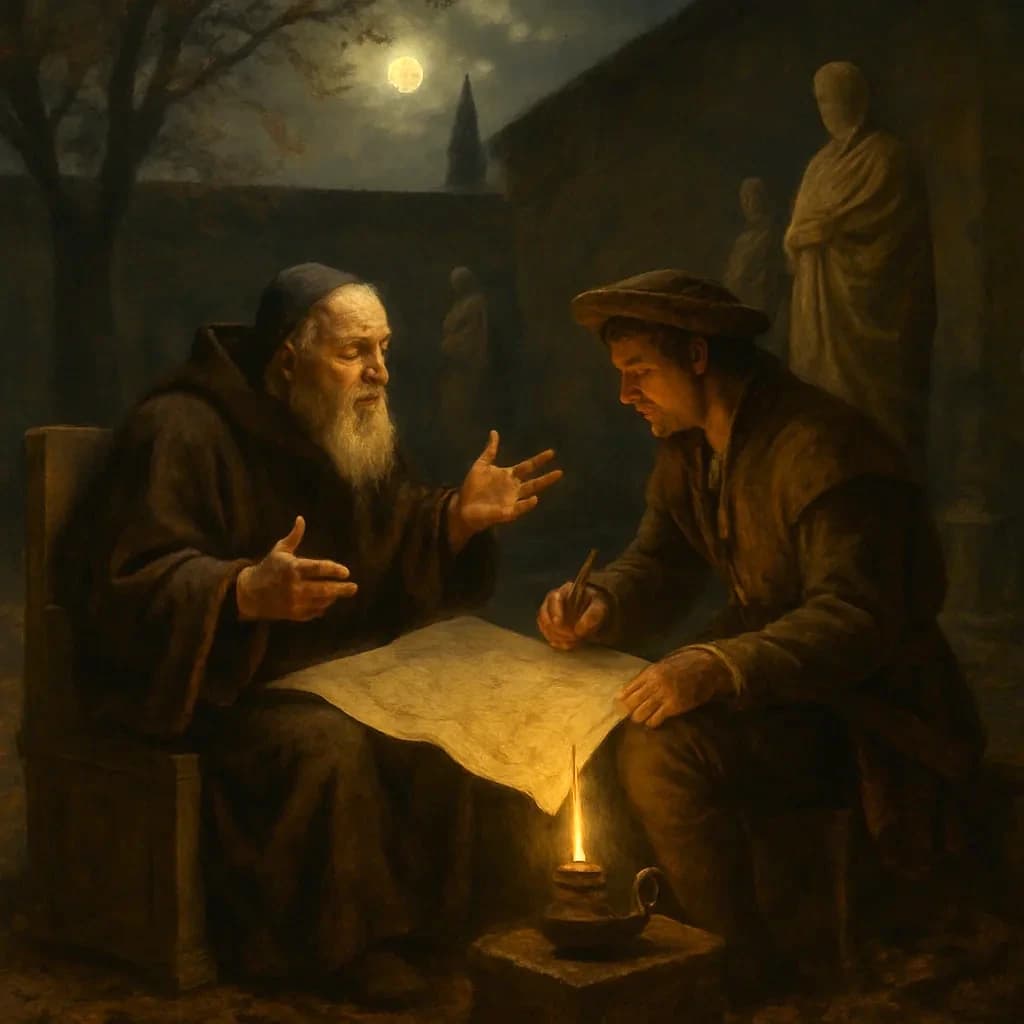
A Dying Scholar Handed Portugal the Route to India
A single dinner conversation in 1494, between a dying scholar and a Portuguese spy, quietly redirected European exploration for the next century.
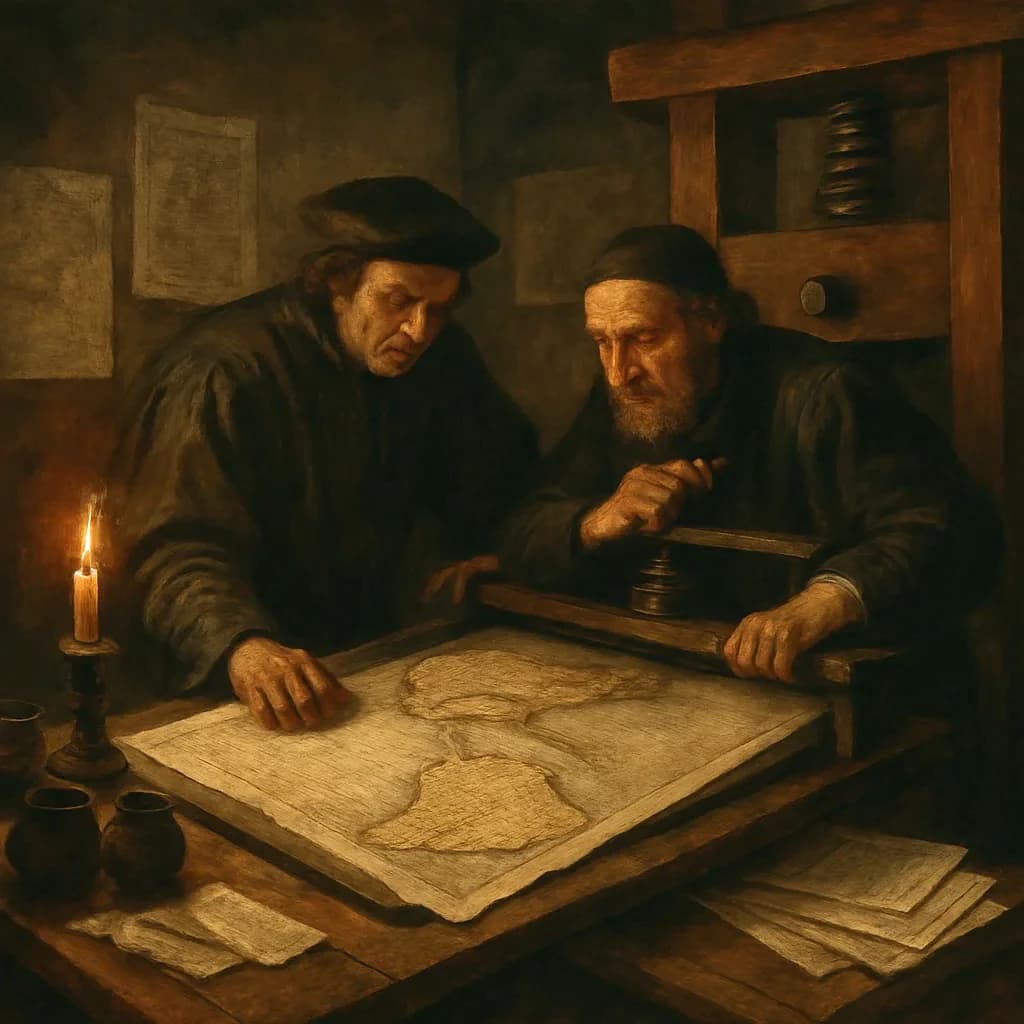
A 1507 Map of a Coast No One Had Sailed
A German mapmaker drew the coast of South America in 1507 with startling accuracy, decades before anyone had sailed it.
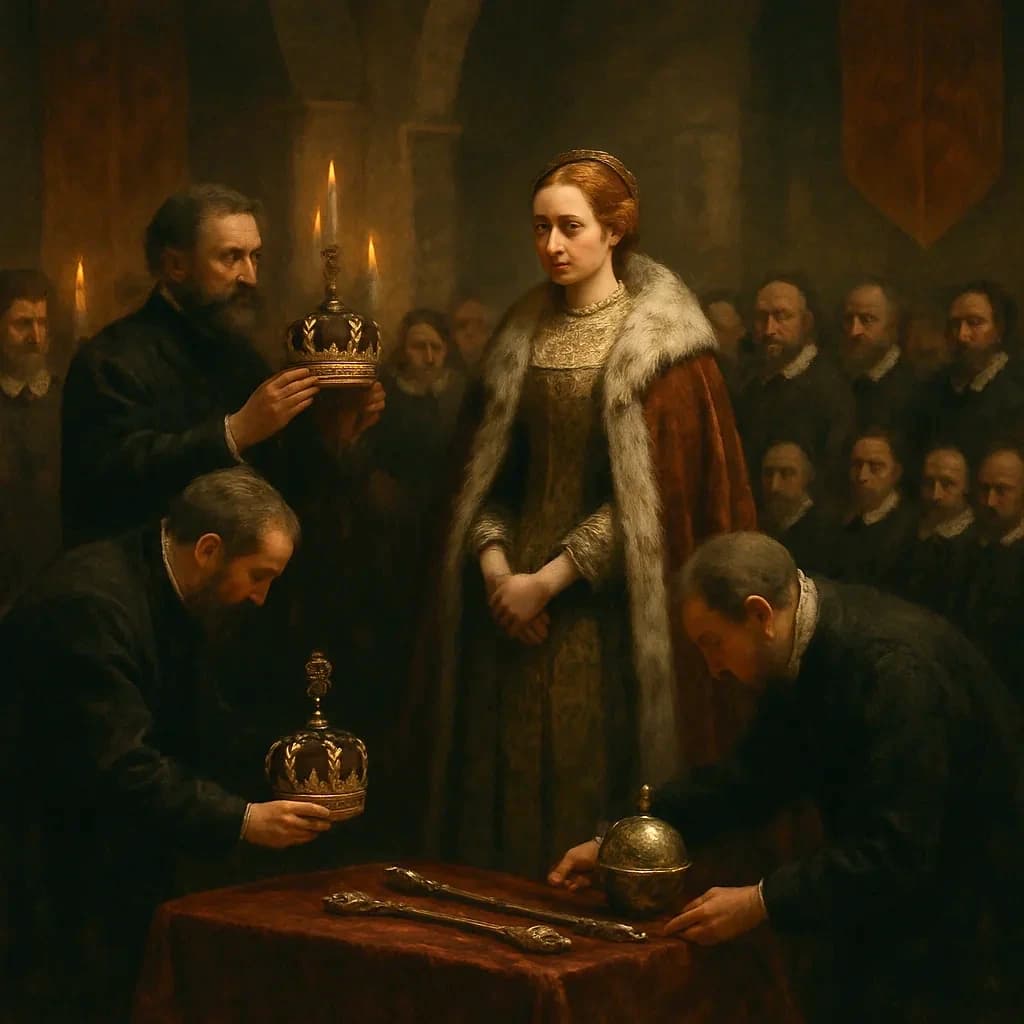
The Queen Who Traded Sweden's Throne for Rome
A queen renounced the most powerful throne in northern Europe, converted to Catholicism in secret, and then asked the Pope for a pension.
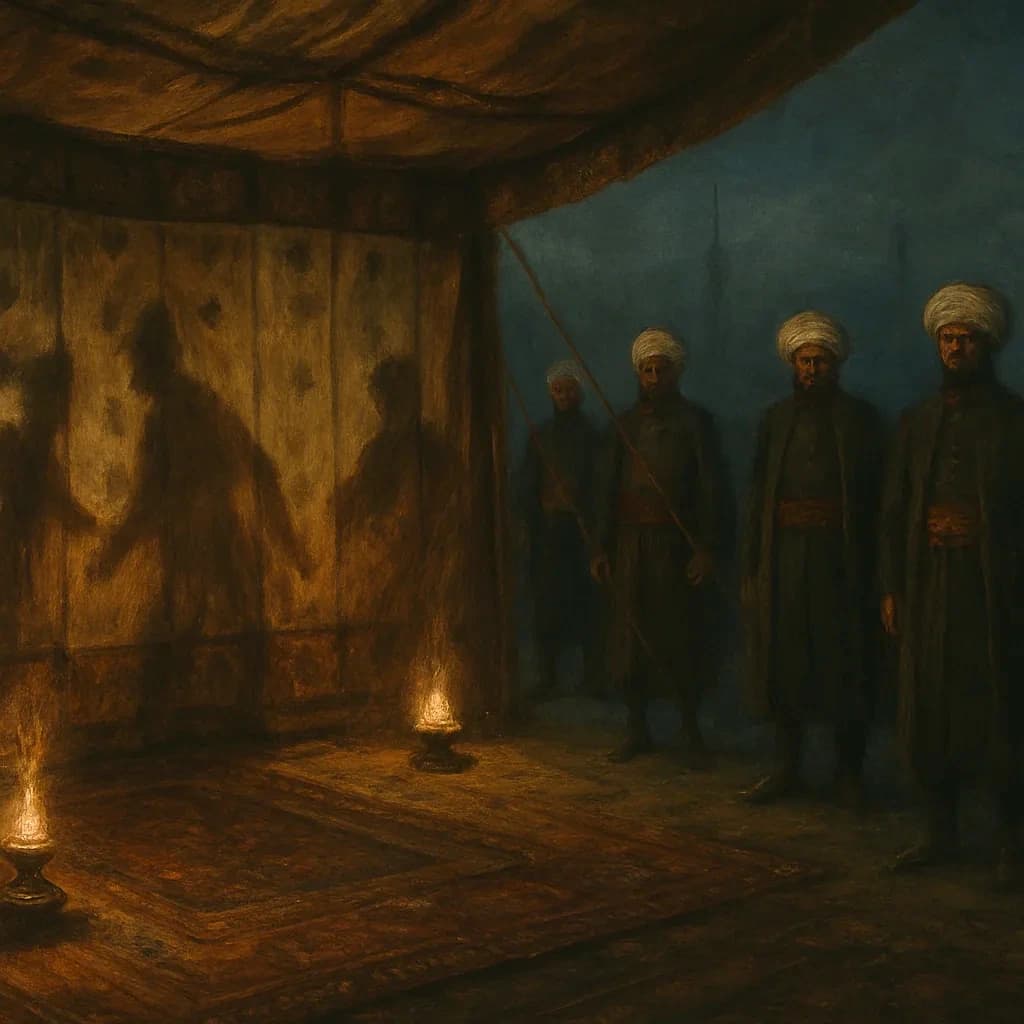
Three Days in a Sickroom, and the Fate of the Ottoman Succession
The most powerful empire on earth once hung on whether a sick man's doctor told the truth.
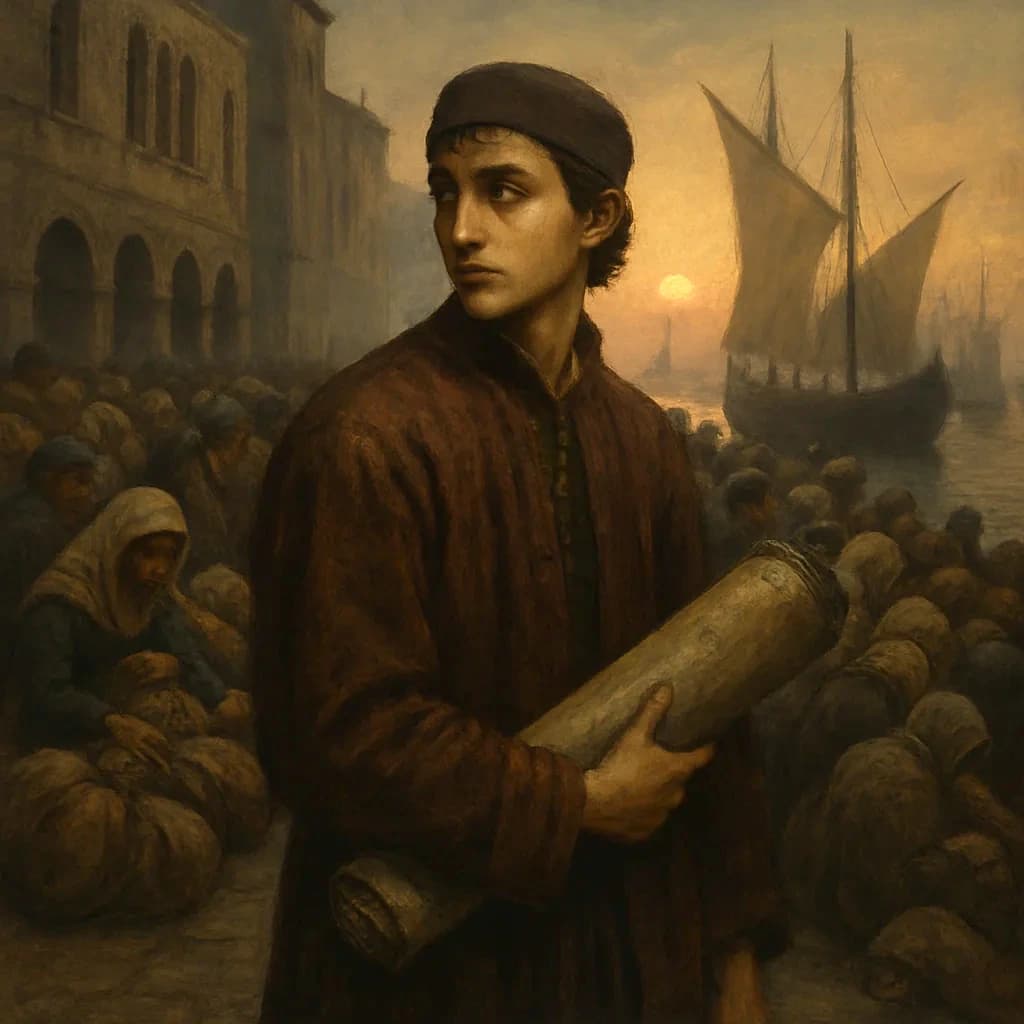
He Fled Constantinople Carrying Drawings, Not Gold
One young Greek artist fled Constantinople as it fell in 1453, carrying something more dangerous than gold.
Clarkson Counted Dead Sailors to End the Slave Trade
A British abolitionist couldn't get Parliament to listen, so he started counting bodies.
How a Spaniel Helped James II Flee England
A single dog (and the man who owned it) may have decided in 1688 whether England would remain a Catholic monarchy forever.
One Letter to the Wrong Tsar
A Swedish king sent a diplomatic letter to Russia, and accidentally provoked a war by addressing it incorrectly.
How a Lisbon Earthquake Erased England's Trade Deal
A young Portuguese mapmaker's entire professional archive vanished in eighteen minutes in 1755, and the disaster that destroyed it freed an entire empire.
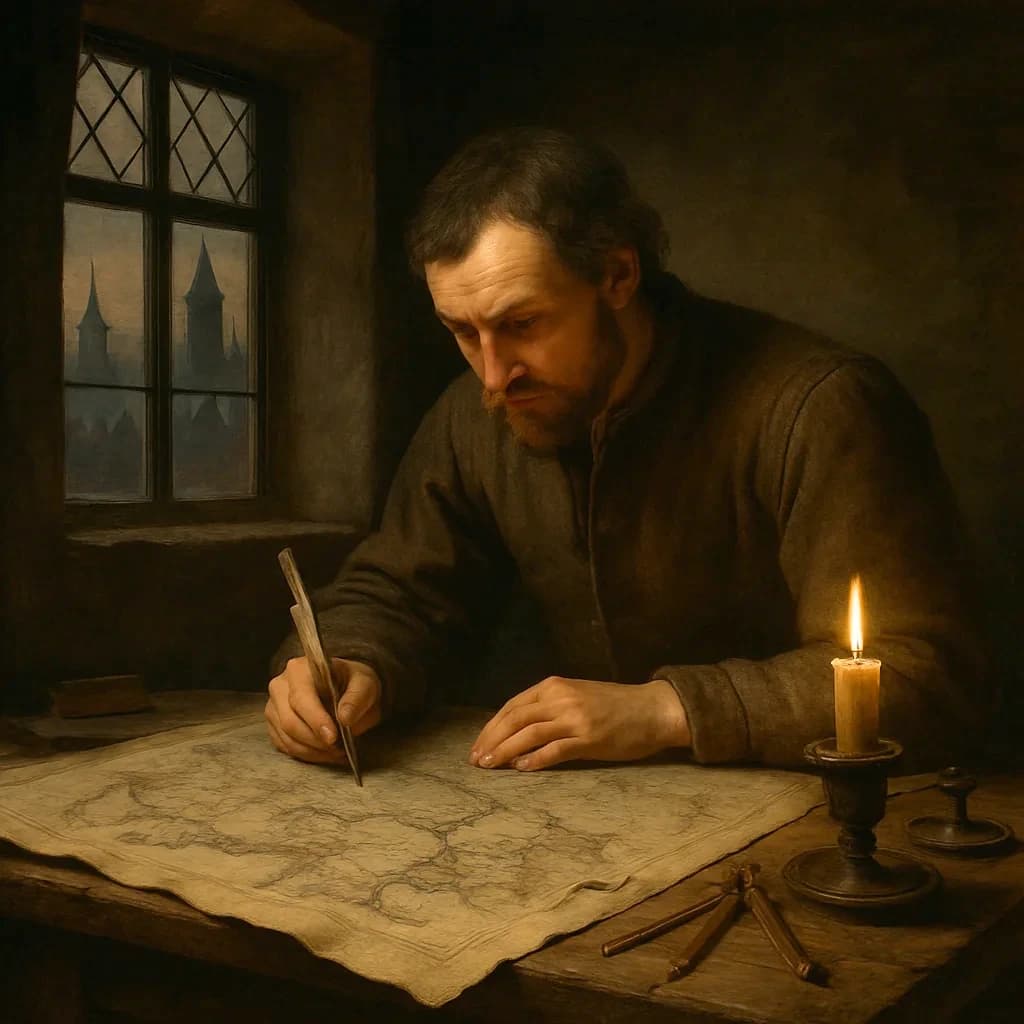
The Cartographer Who Drew His Own Execution
Heinrich Zell made one of the most detailed maps of the Holy Roman Empire ever produced, and it killed him.
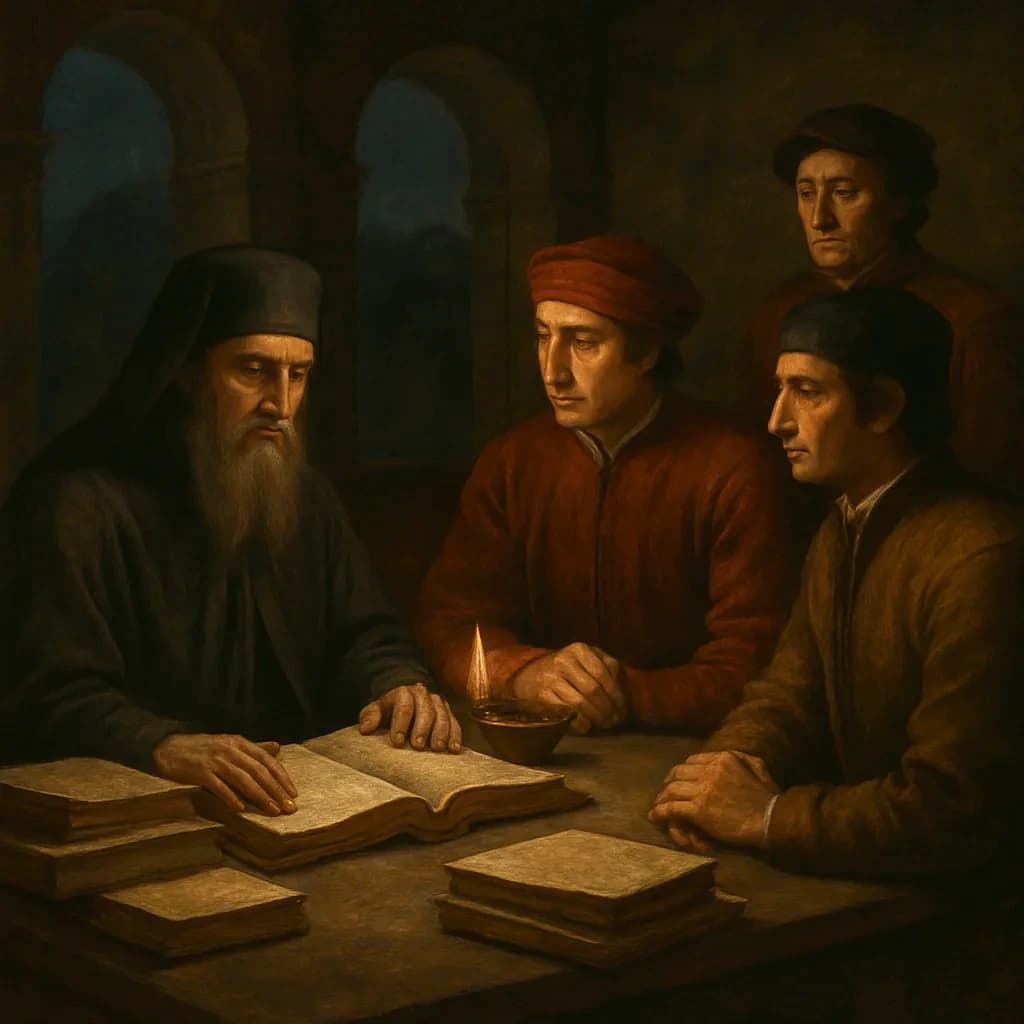
Greece Didn't Perish: It Moved to Florence
A Greek scholar reached Florence carrying no gold and no weapons, only what was packed inside his own head.
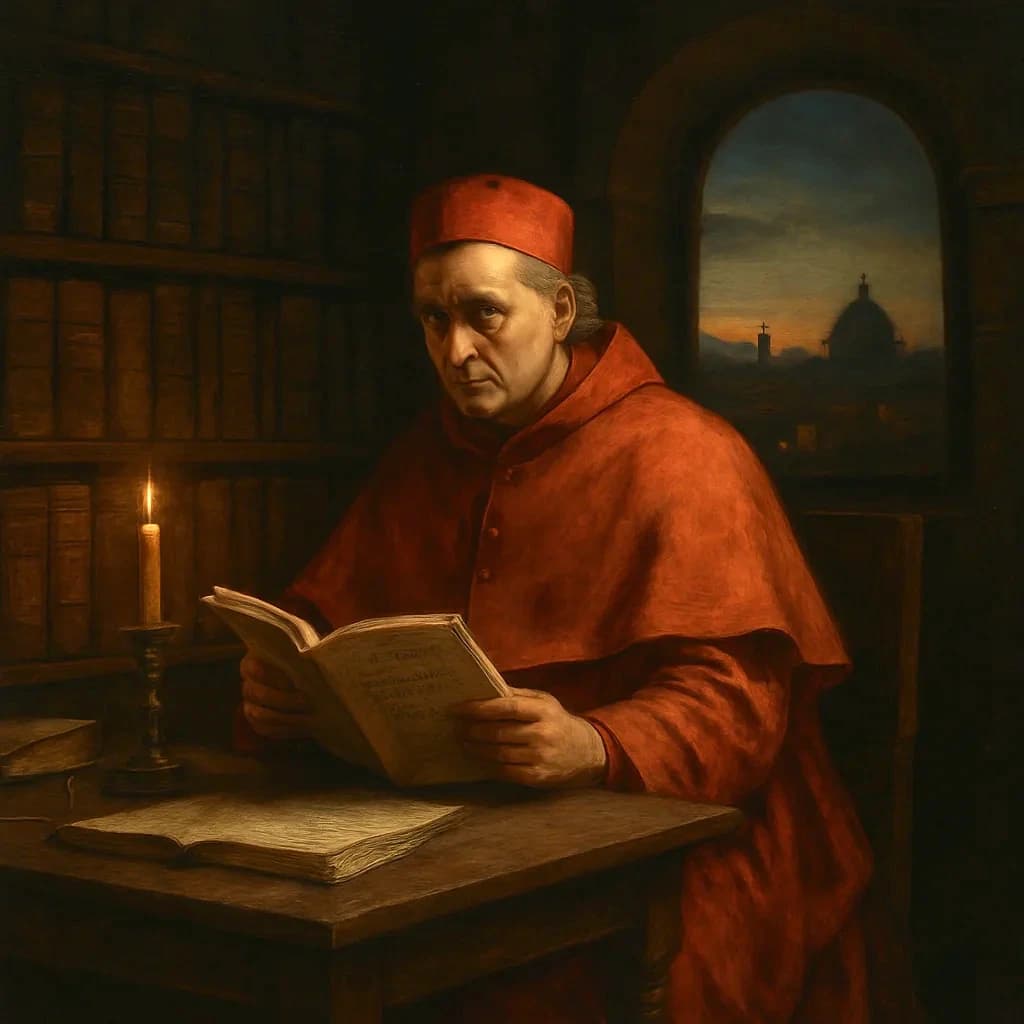
Bessarion's 482 Books That Built the Renaissance
A Turkish sultan captured the most important library in the Western world, and a Greek cardinal spent the rest of his life buying it back, one manuscript at a time.
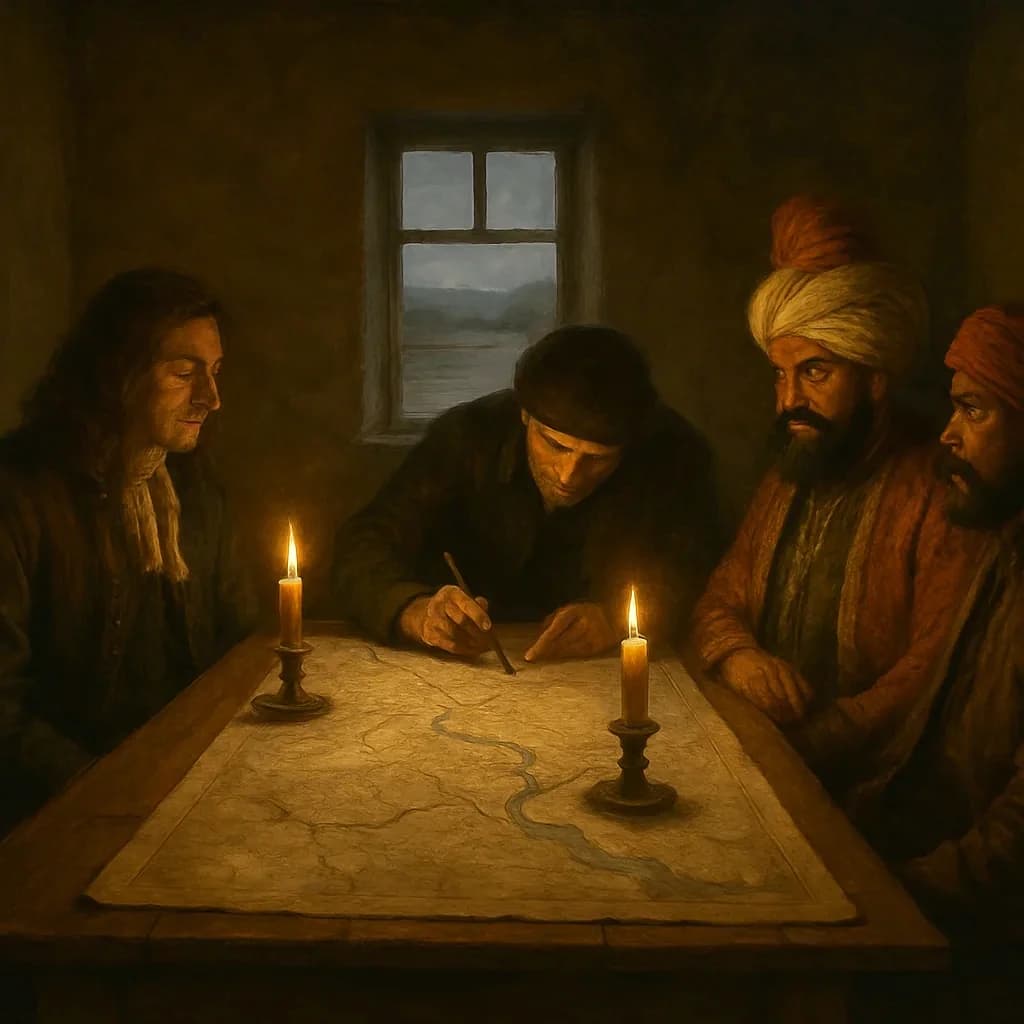
A Mapmaker's One-Degree Mistake Split a Border
One slip of arithmetic in a Viennese office in 1699 drew a border that started a war, one that's still technically unresolved.
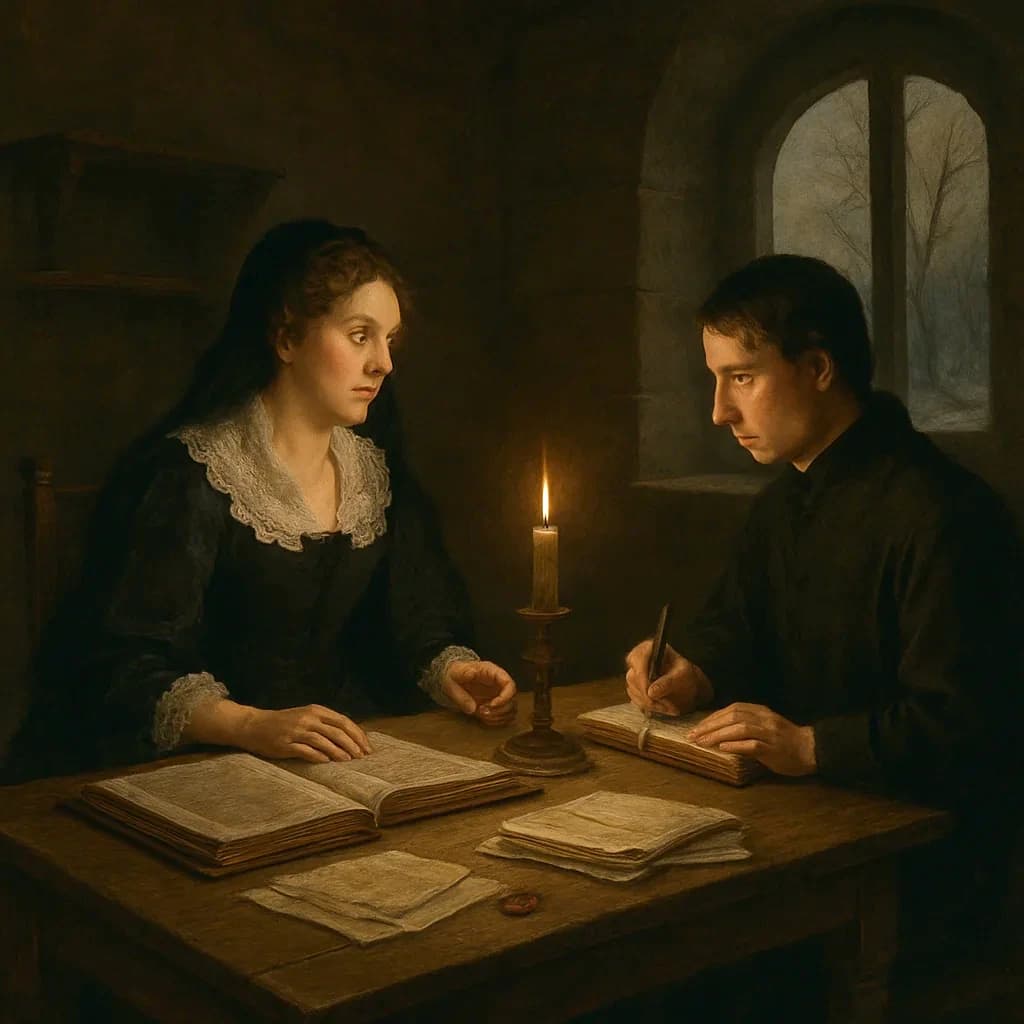
She Funded the First Plan to Ban War
Bankrupt and grieving in 1693, a queen funded the first modern proposal to ban warfare between nations, and nearly pulled it off.
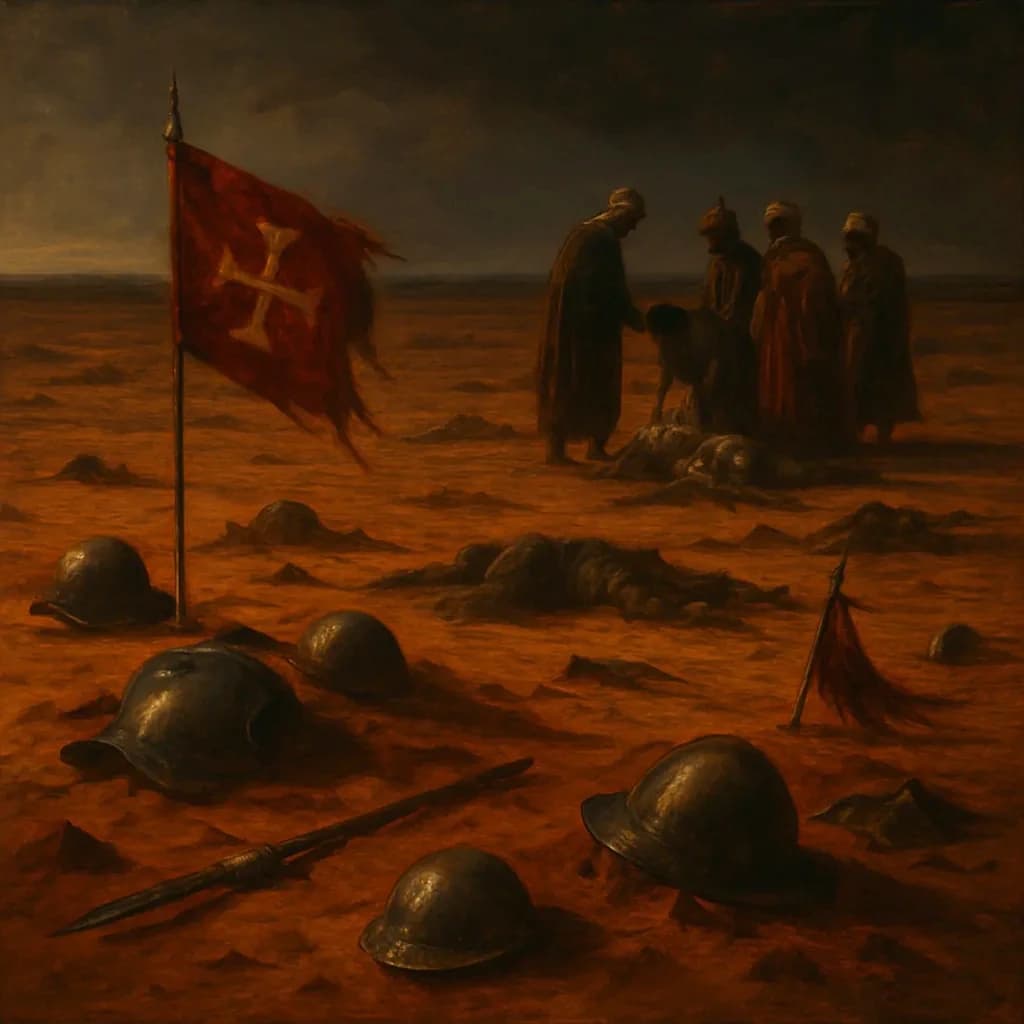
Portugal's King Vanished, and Four Men Claimed to Be Him
A Portuguese king rode into Africa in 1578 with sixty thousand soldiers and came back as nobody, and what happened to his body afterward is stranger than the battle itself.
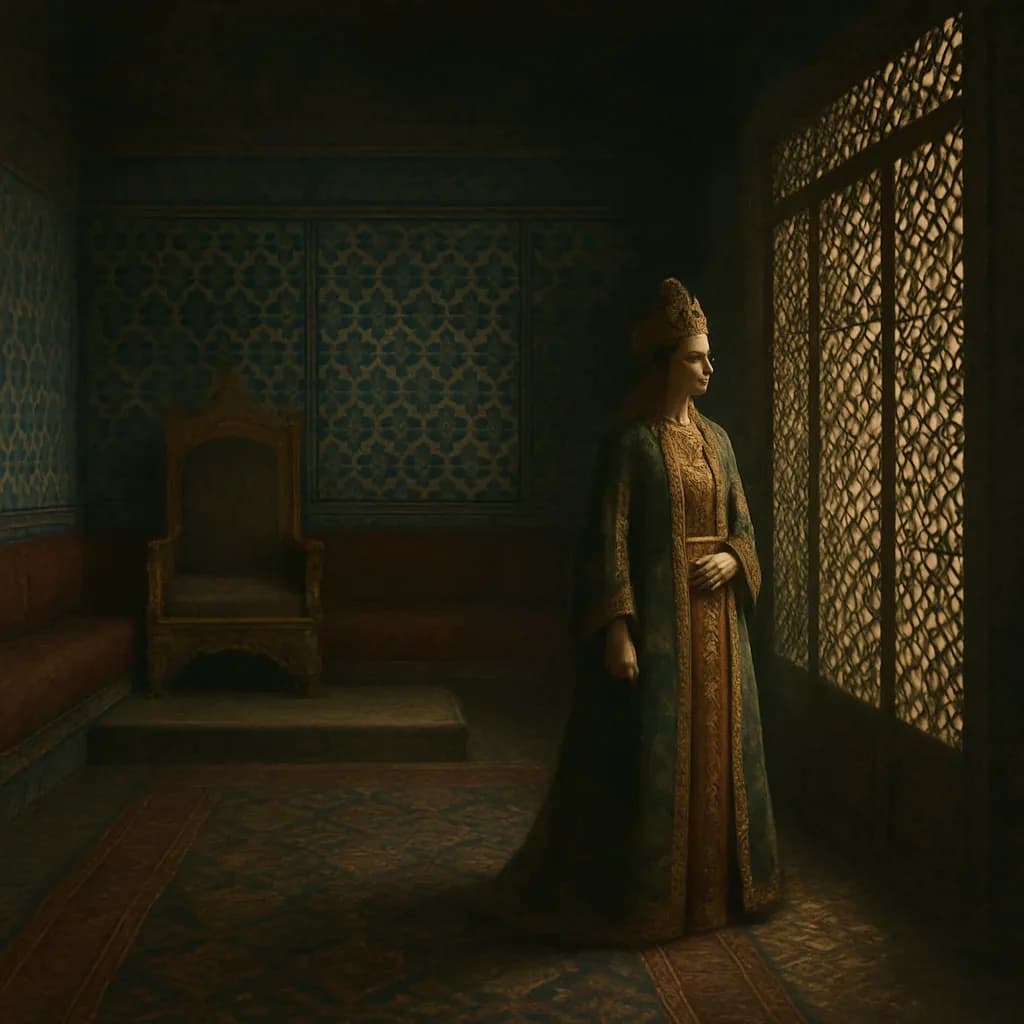
Suleiman's Mother Ran the Empire From Behind a Curtain
A Greek girl who grew up in the Ottoman palace went on to reshape the empire's relationship with Europe, and nobody wrote her name down correctly for four hundred years.
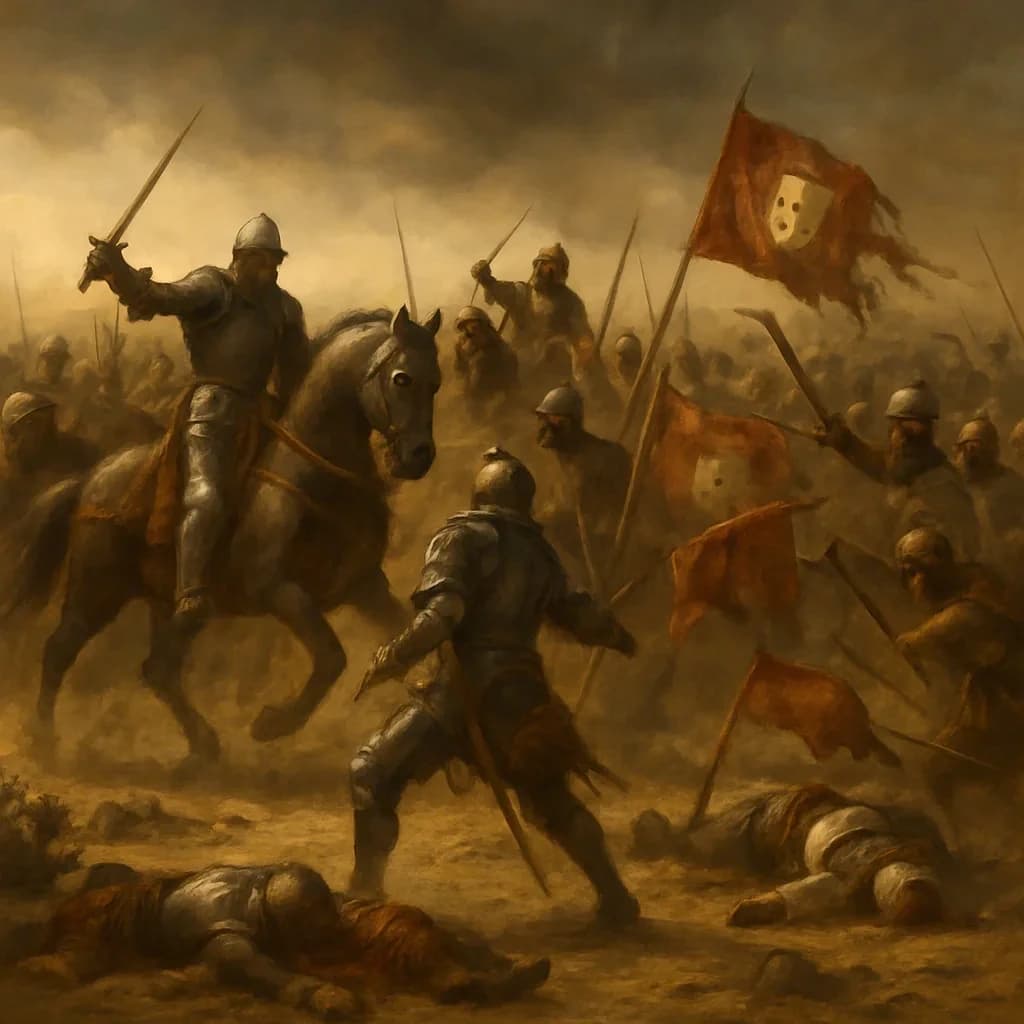
Portugal's King Lost His Whole Empire in Two Hours
A twenty-four-year-old king rode out on a crusade nobody wanted, against an enemy nobody could beat, and managed to lose an entire country in an afternoon.
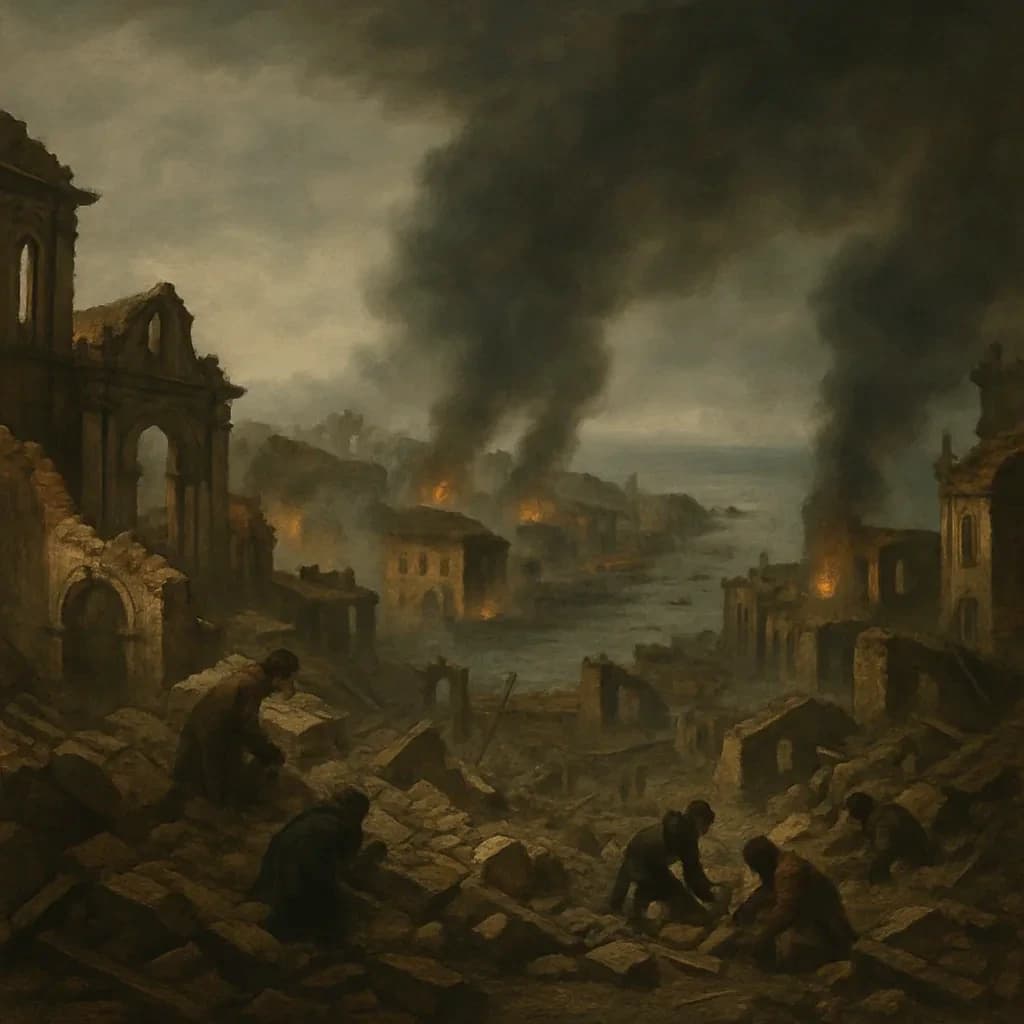
Pombal Burned the Papers That Proved Portugal's Empire
The 1755 earthquake gave Portugal a chance to destroy the one document that could have proven it owned half the world, and it took that chance on purpose.
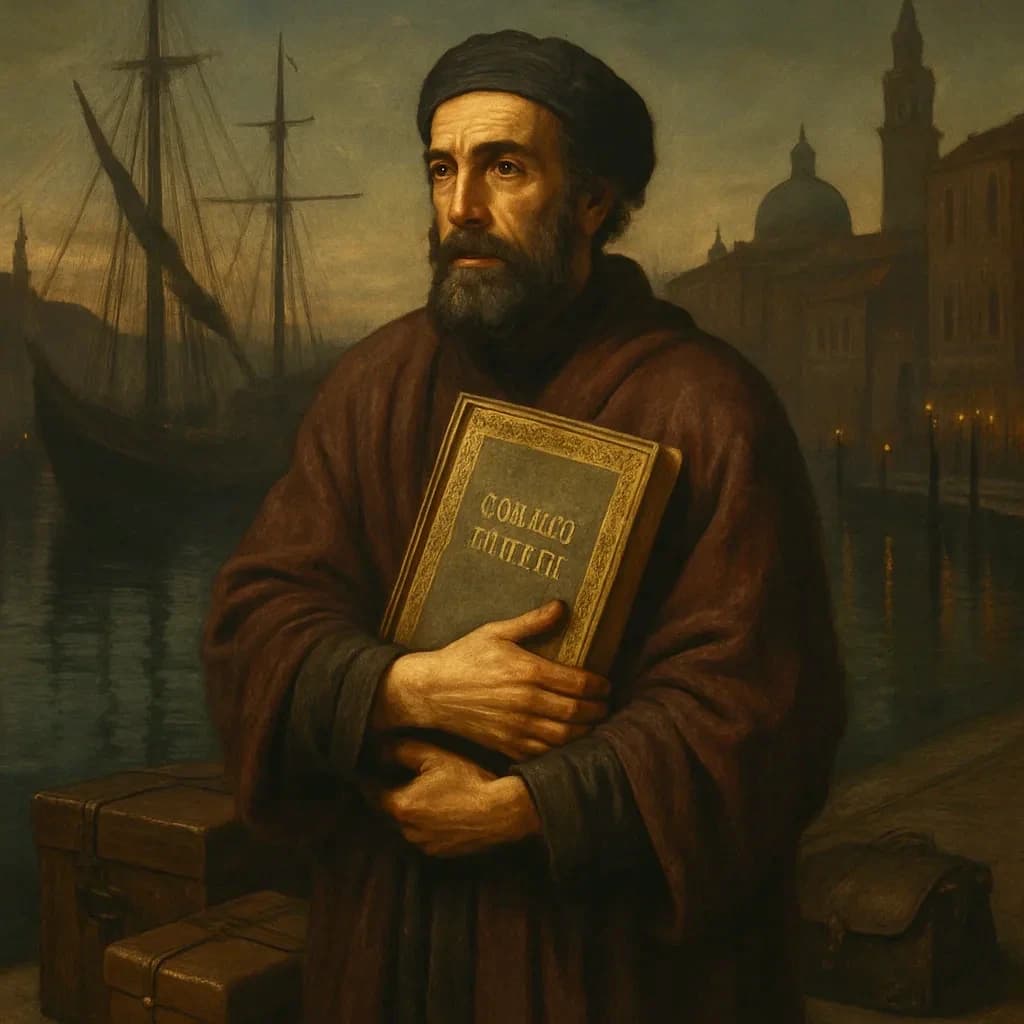
The Manuscripts Byzantine Refugees Smuggled Out of Constantinople
As Constantinople fell in 1453, a Byzantine scholar carried something out of the dying city that would quietly reshape Western civilization: not gold, not relics, but a stack of ancient Greek manuscripts nobody in Europe knew existed.
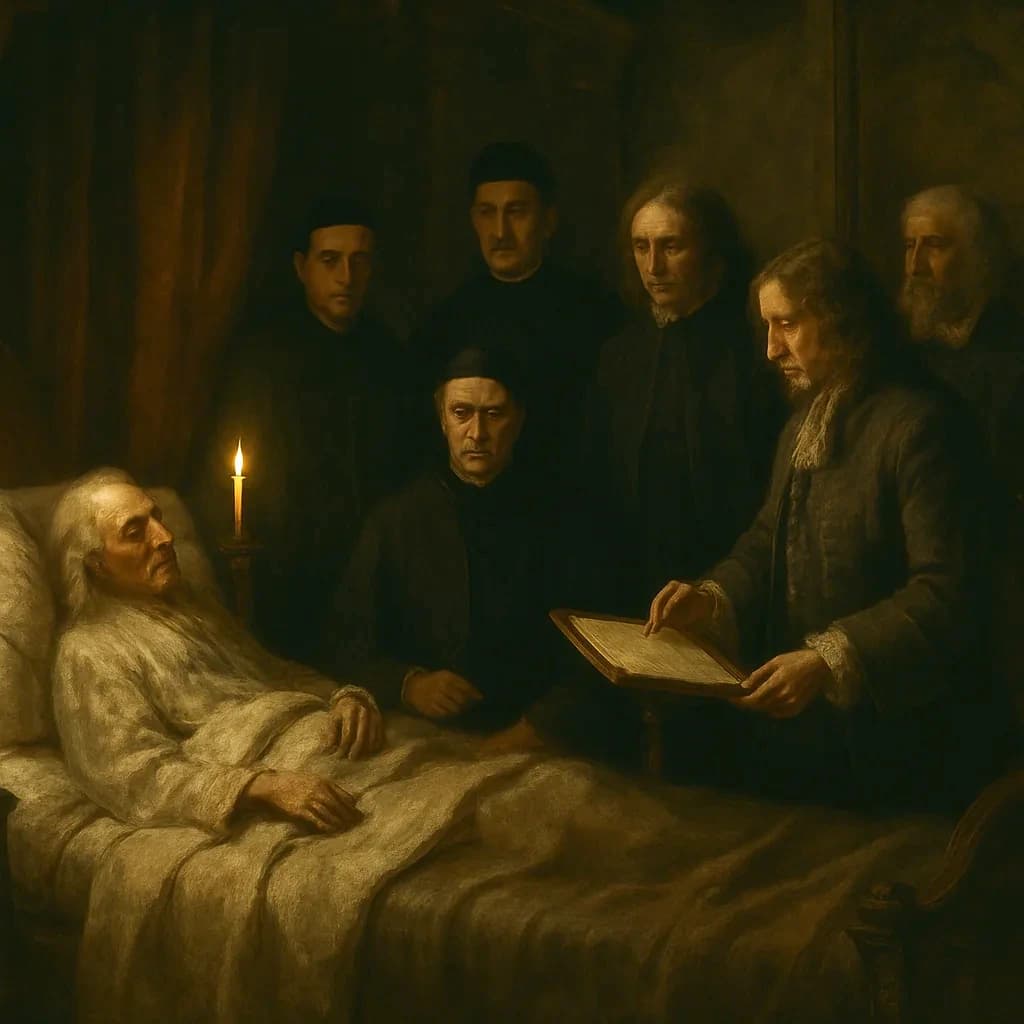
A Dying King's Bedside Chat Reshuffled Every Throne in Europe
A dying king's bedside conversation in 1700 reshuffled every throne in Europe, and nobody planned any of it.
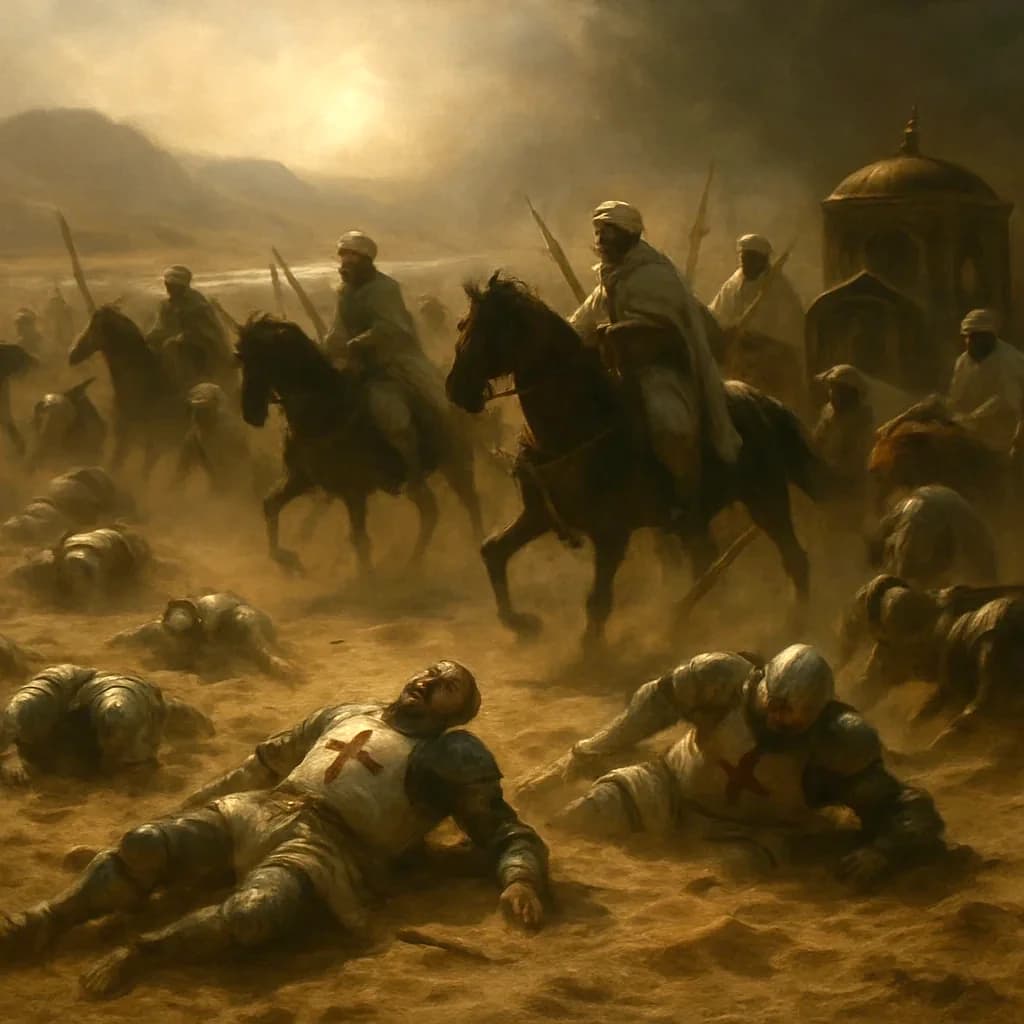
Three Kings Dead in an Afternoon: Portugal's Lost Empire
A young king rode into the Sahara with thirty thousand men and a translator who couldn't stop him, and only the translator came back.
Three Days in a Florentine Dungeon, and the Birth of International Law
A 16th-century jurist locked in a Medici prison sketched out the rules that still govern modern warfare, and nobody remembered his name for four hundred years.
Sent to Threaten a Warlord, He Mapped Central Asia
A raiding party sent to terrorize a remote Siberian valley came home with the most accurate survey of Central Asia that Europe had ever seen.
Her Treasurer Kept Writing Letters After She Died
A forged letter from a dead empress nearly bankrupted the Ottoman Empire in 1799, and the man who wrote it was her own court treasurer.
He Saved Greek Mathematics by Hiding It Under His Bed
In 1572, a mild-mannered French scholar single-handedly preserved the entire corpus of ancient Greek mathematics, by hiding it under his bed while soldiers murdered his colleagues in the street.
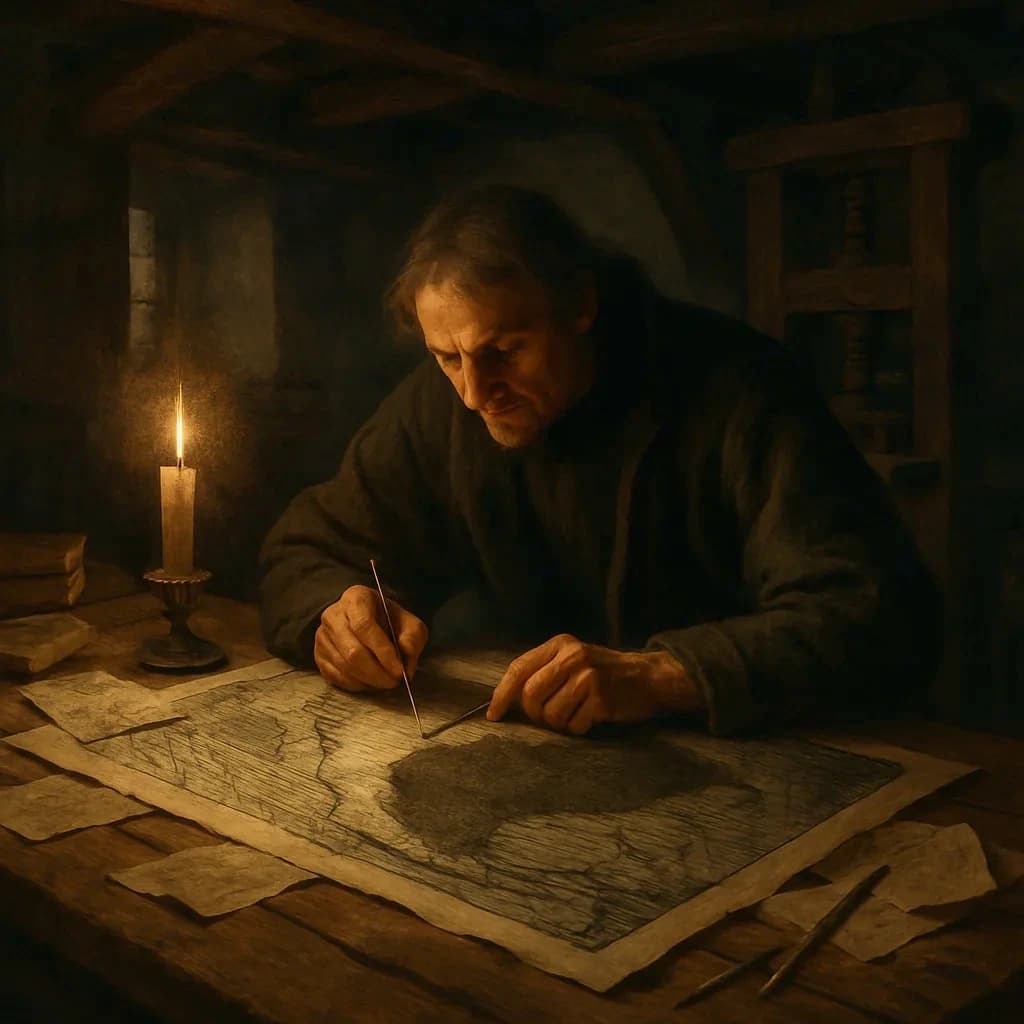
Four Days in a Florentine Jail, and the Map That Named the World
A minor Florentine clerk spent four days in prison for debt, and used the time to write a letter that gave America its name.
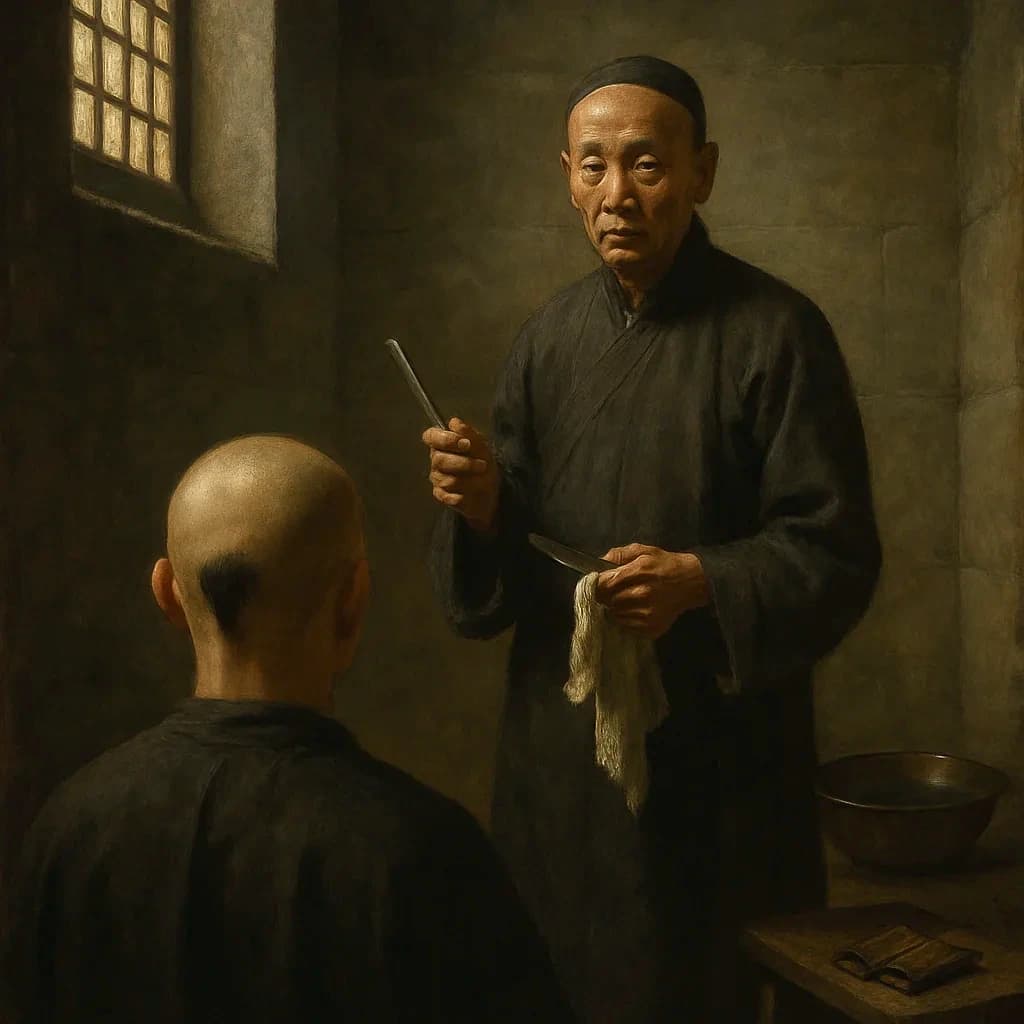
He Shaved China's Emperors and Told No One
For sixty years, a single man shaved the heads of Chinese emperors, and every time a dynasty fell, he was the only one who knew where the bodies were buried.
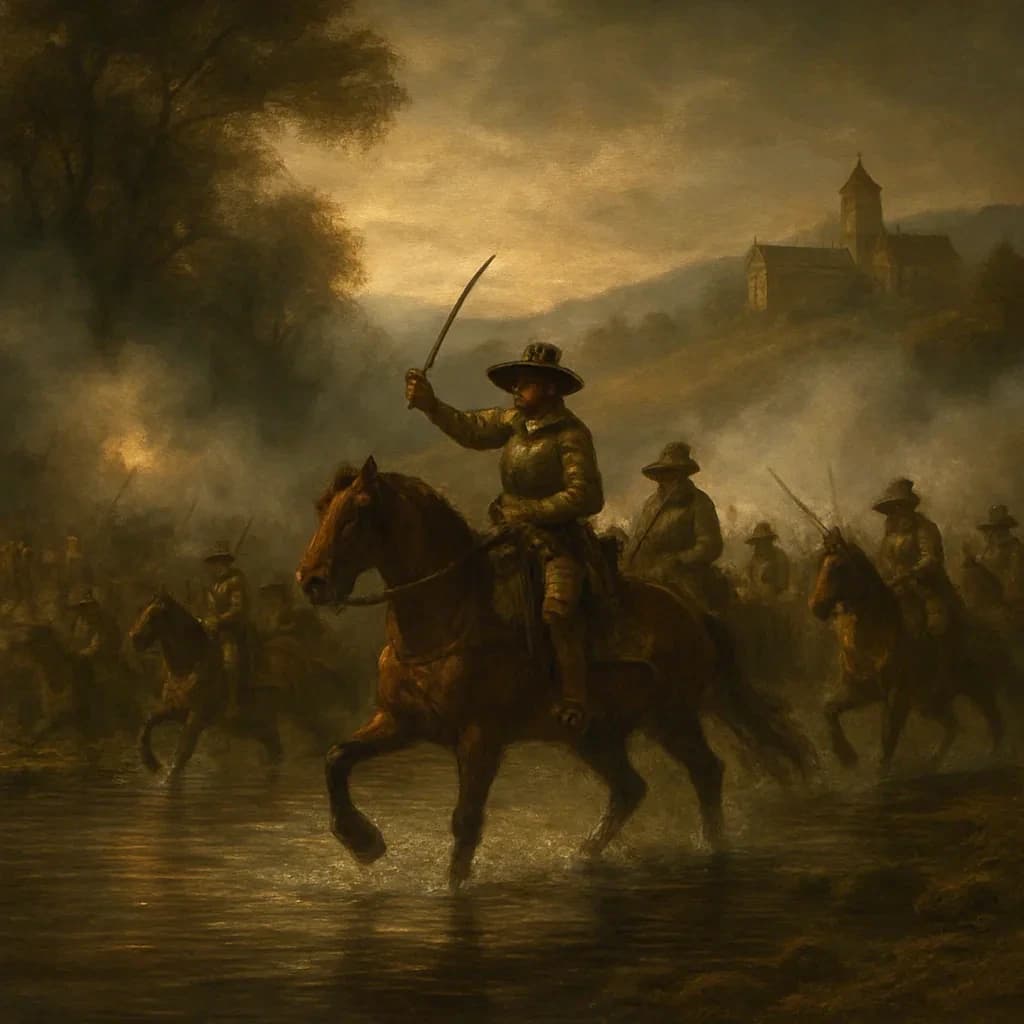
He Won the Battle, the Treaty Erased It
He commanded armies, survived battles that killed everyone around him, and spent his evenings composing music that courts across Europe begged to hear, and history filed him under 'footnote'.
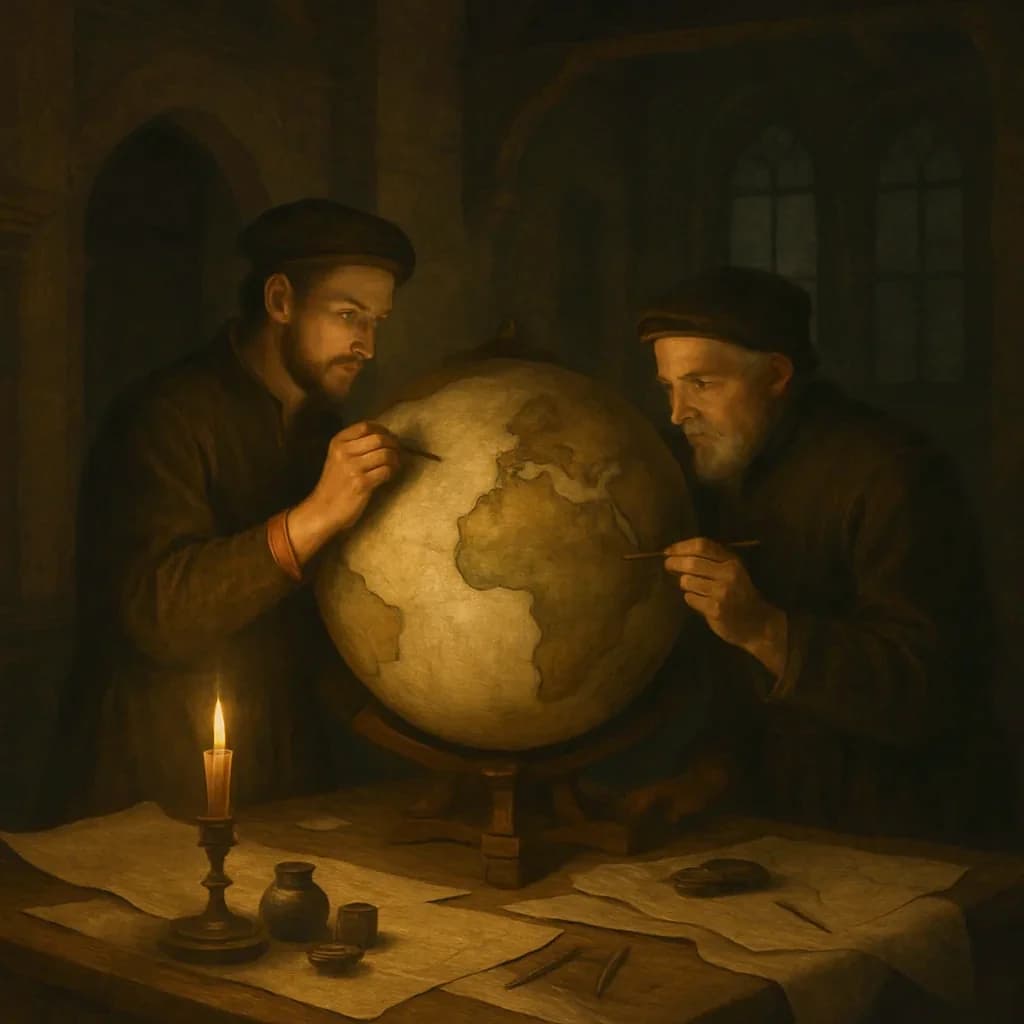
The Oldest Globe on Earth Is Missing Two Continents
Martin Behaim painted every coast he knew onto a clay sphere, and where the Americas should sit, he left nothing but open water.
Secret Clauses: How Scotland Nearly Became French
Mary of Guise buried hidden clauses in a marriage treaty to protect her daughter, and helped hand Scotland's crown to England.
Doctors Treated Syphilis With Mercury for Four Centuries
For four centuries, European doctors treated syphilis with mercury, and killed nearly as many patients as the disease did.
Lisbon Rebuilt the City but Never the Records
An earthquake destroyed Portugal's capital in six minutes, and the more interesting disaster took another century.
How a Sleeping Officer Saved Spain at Cartagena
A British naval assault that should have been crushed by a vastly superior Spanish force in 1741 was saved not by tactics or heroism, but by one man's inability to stay awake at a crucial moment.
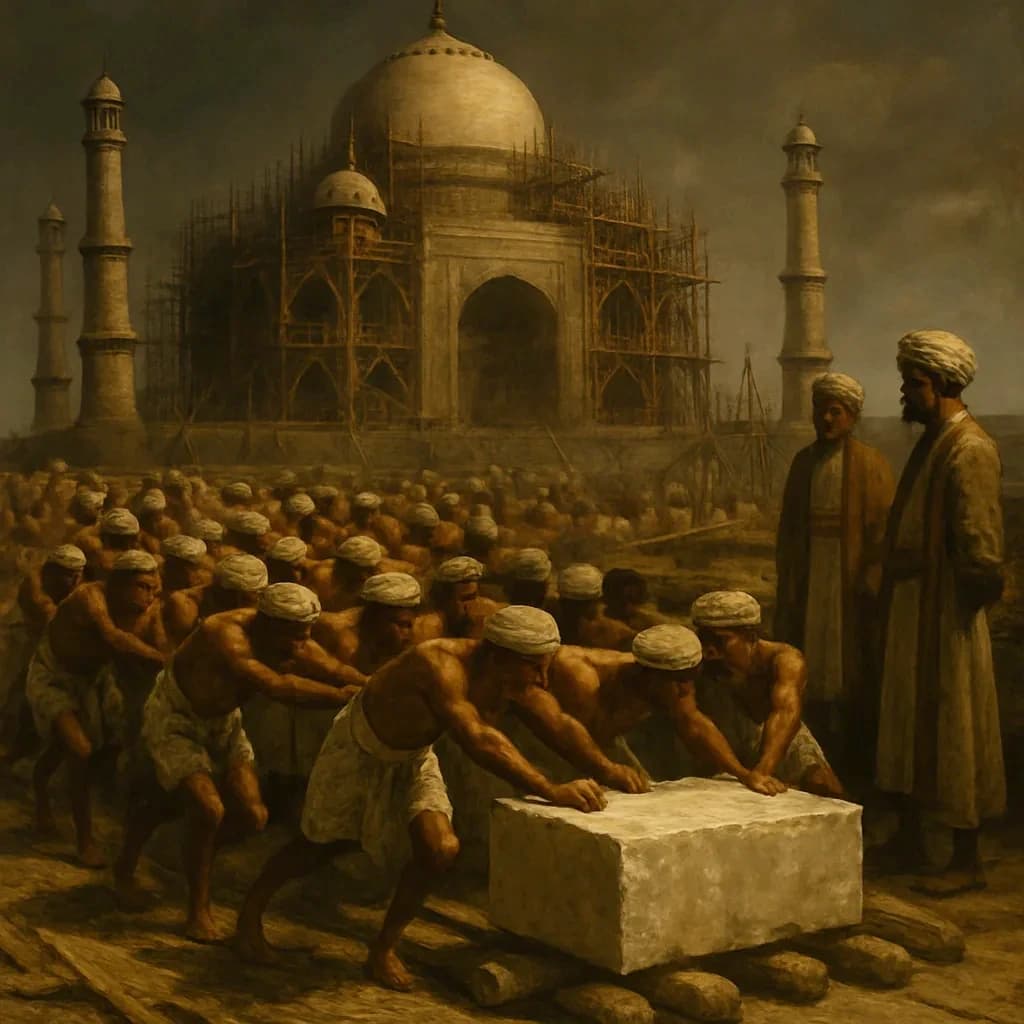
Taj Mahal: The Forced Labor Behind the Love Story
Shah Jahan's most famous monument wasn't built by love alone. It was financed by a system of forced labor so brutal that the workers who built it were forbidden from ever working for anyone else again.
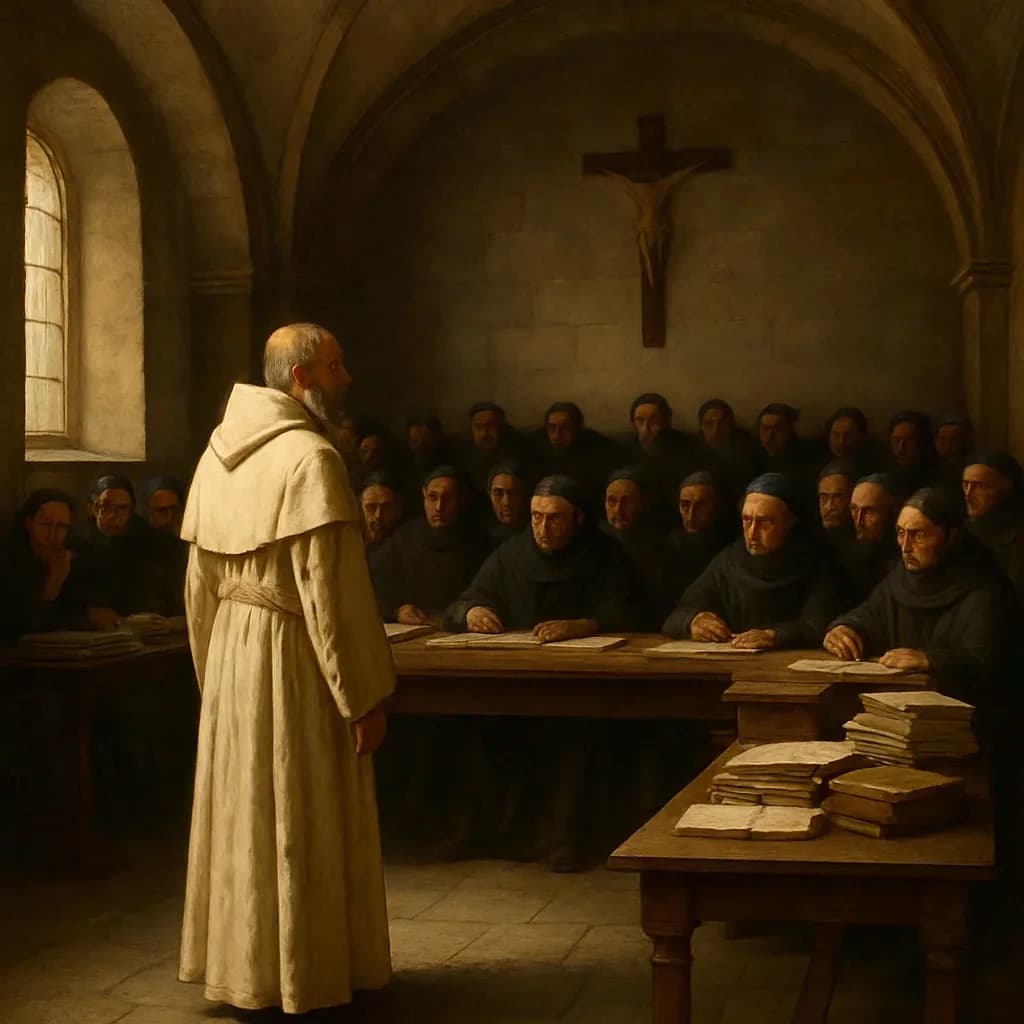
Two Men Debated Whether a Race Could Be Enslaved
Two men stood up in front of the most powerful empire on earth and argued about whether an entire race of people could be enslaved, and one of them almost won.
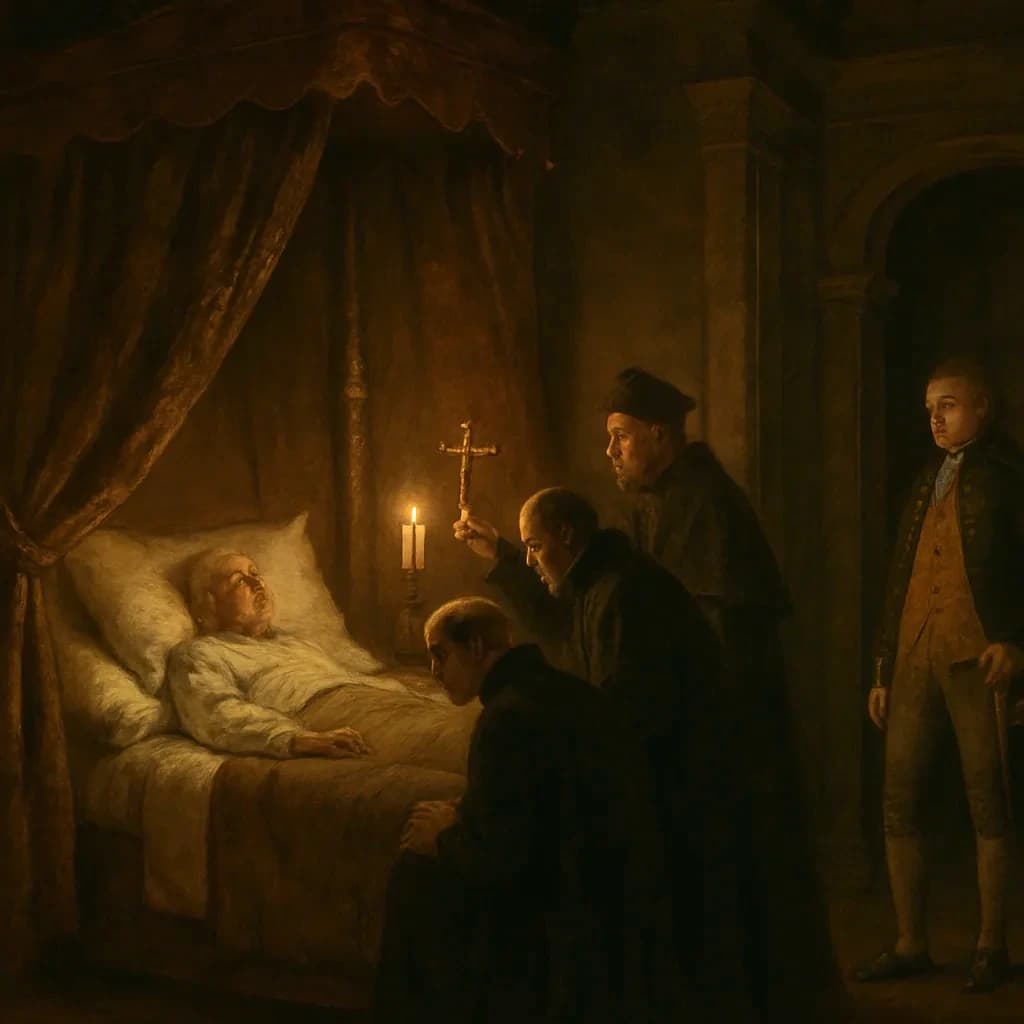
An Empire Nearly Fell Because the King Couldn't Breathe
The most powerful empire in the Western Hemisphere nearly collapsed because a king couldn't breathe through his nose.
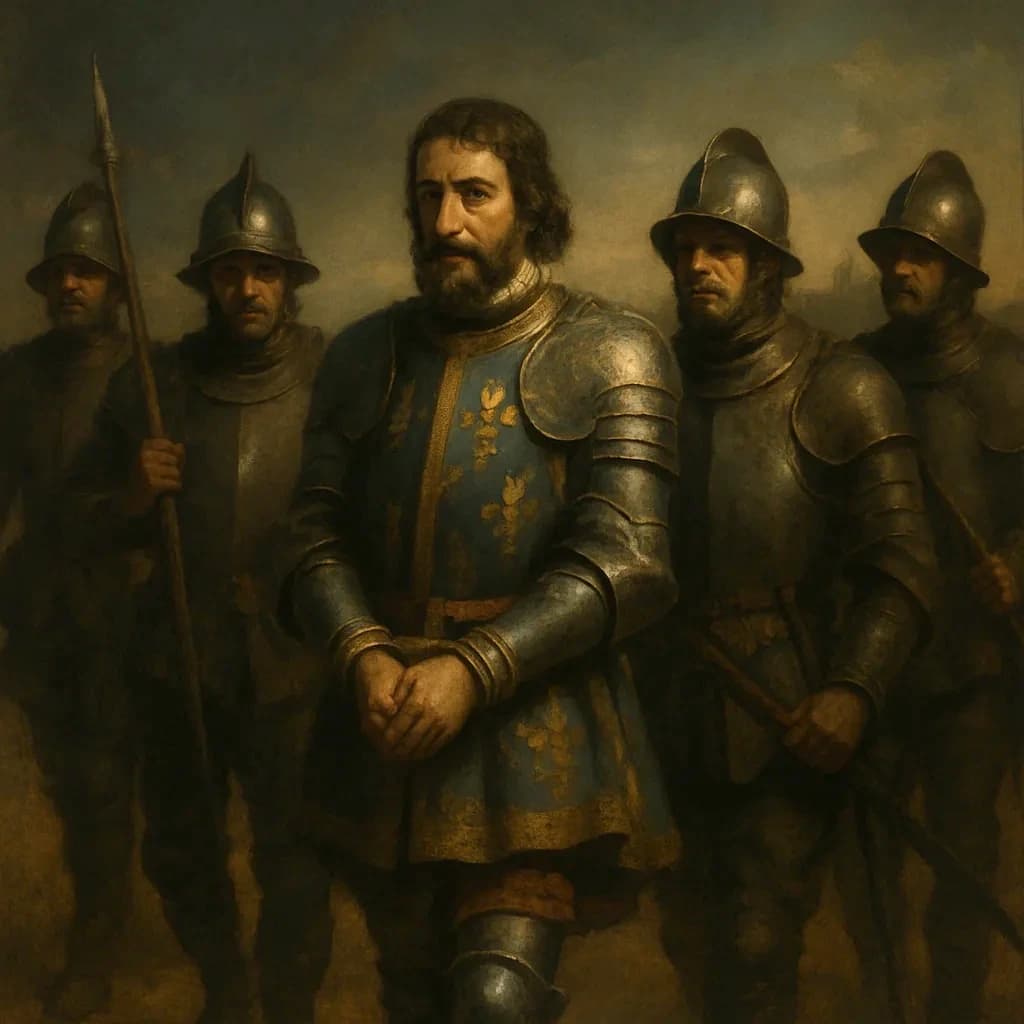
A French King's Ransom Saved Martin Luther
A French king spent four years as a prisoner in Madrid, and the ransom deal he signed to escape gave Martin Luther's movement the money it needed to survive.
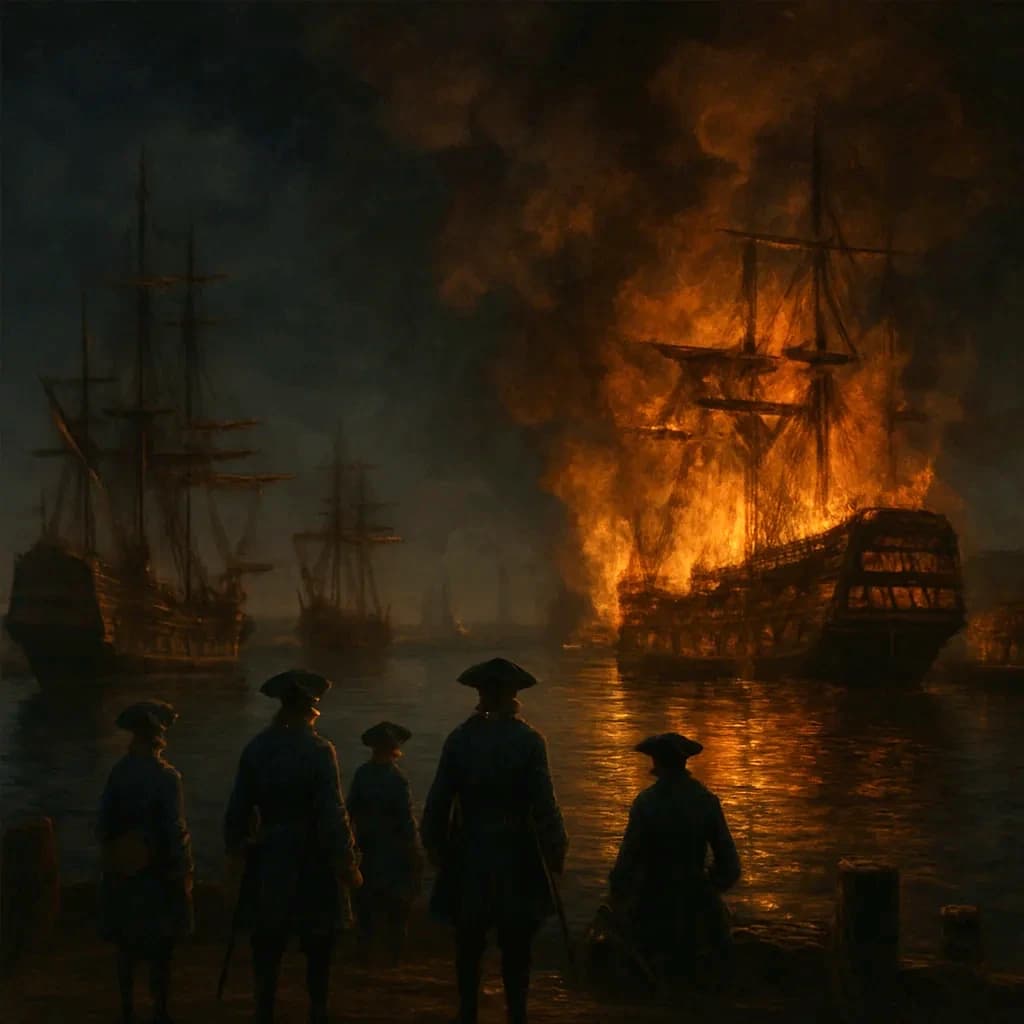
Sweden Burned Its Own Navy Rather Than Lose It
From a Danish prison cell in 1715, Sweden's last admiral gave one final order (burn the navy rather than let it fall into enemy hands) and in doing so sealed the end of an empire that had dominated northern Europe for a century.
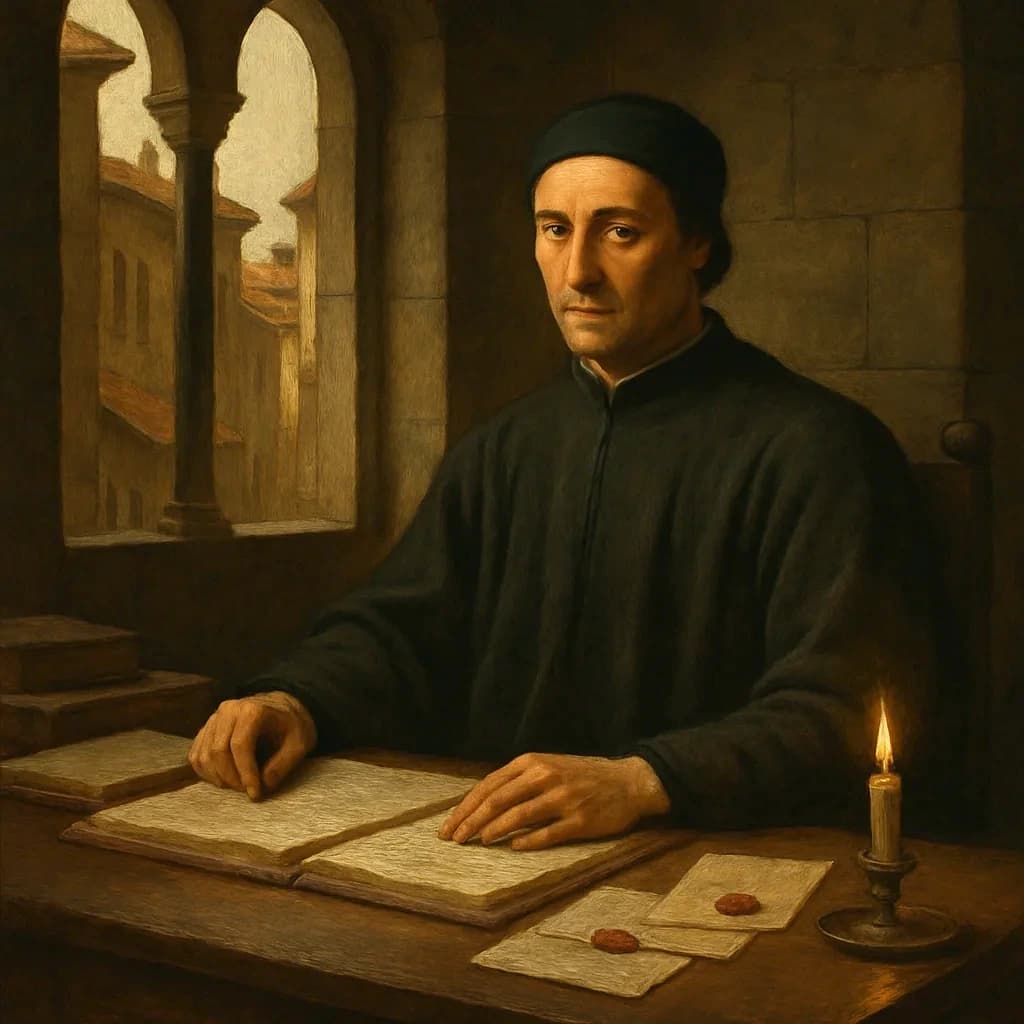
Cosimo de' Medici Paid His Way Out of Execution
The richest man in Europe was hiding from a death sentence in a pile of straw, and he had a plan.
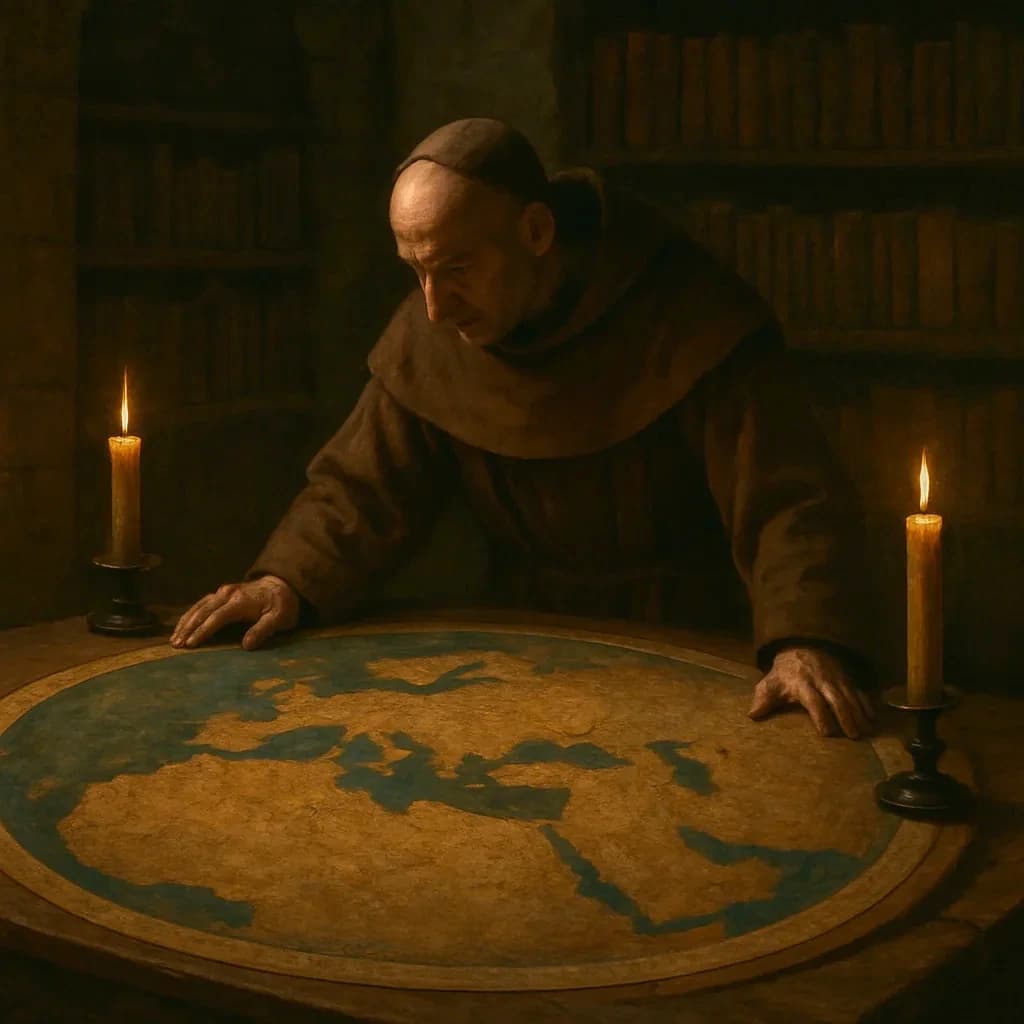
The Monk Who Mapped a Route Before Anyone Sailed It
A Venetian monk completed the most detailed map of the known world in 1459, and his patron immediately tried to suppress it.
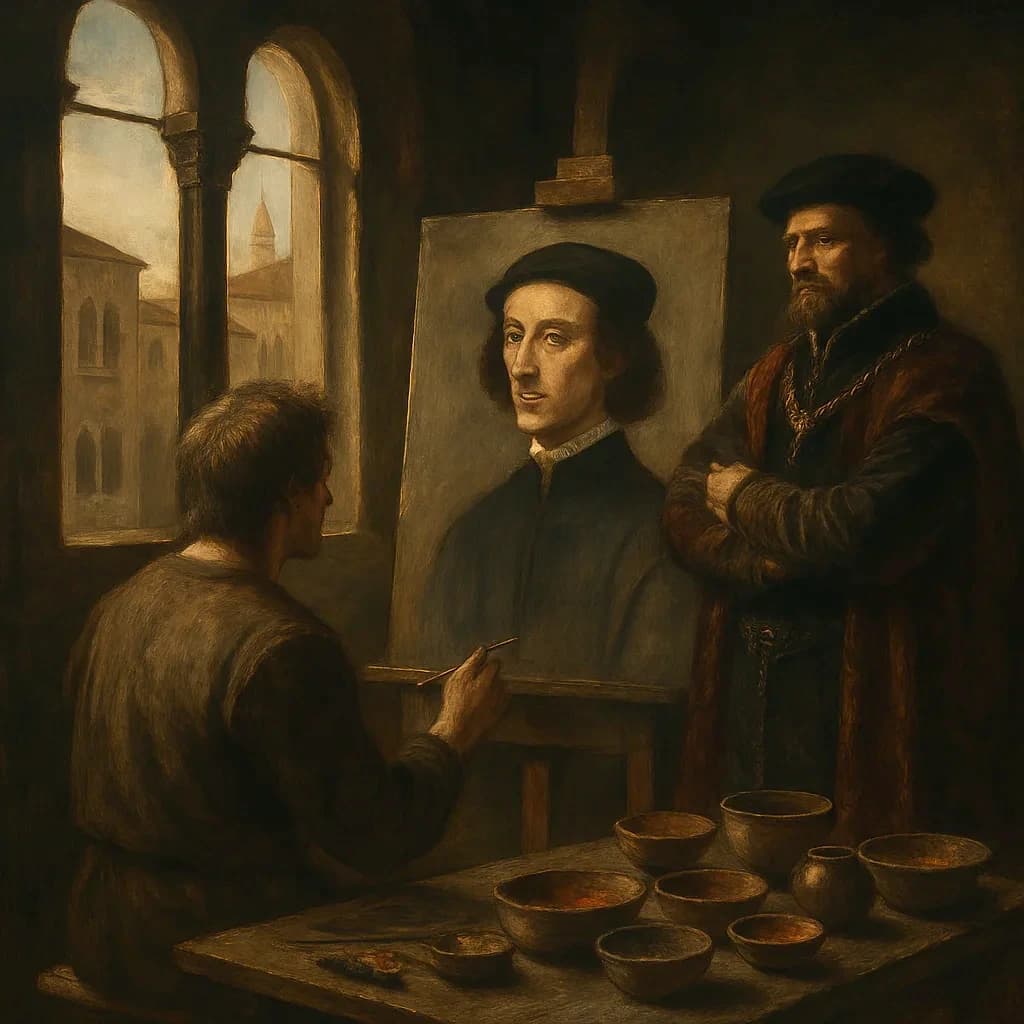
How a Painting Helped Spain Win Half the World
A minor artistic dispute between a German merchant and a Venetian painter accidentally set off the chain of events that handed Spain control of half the known world.
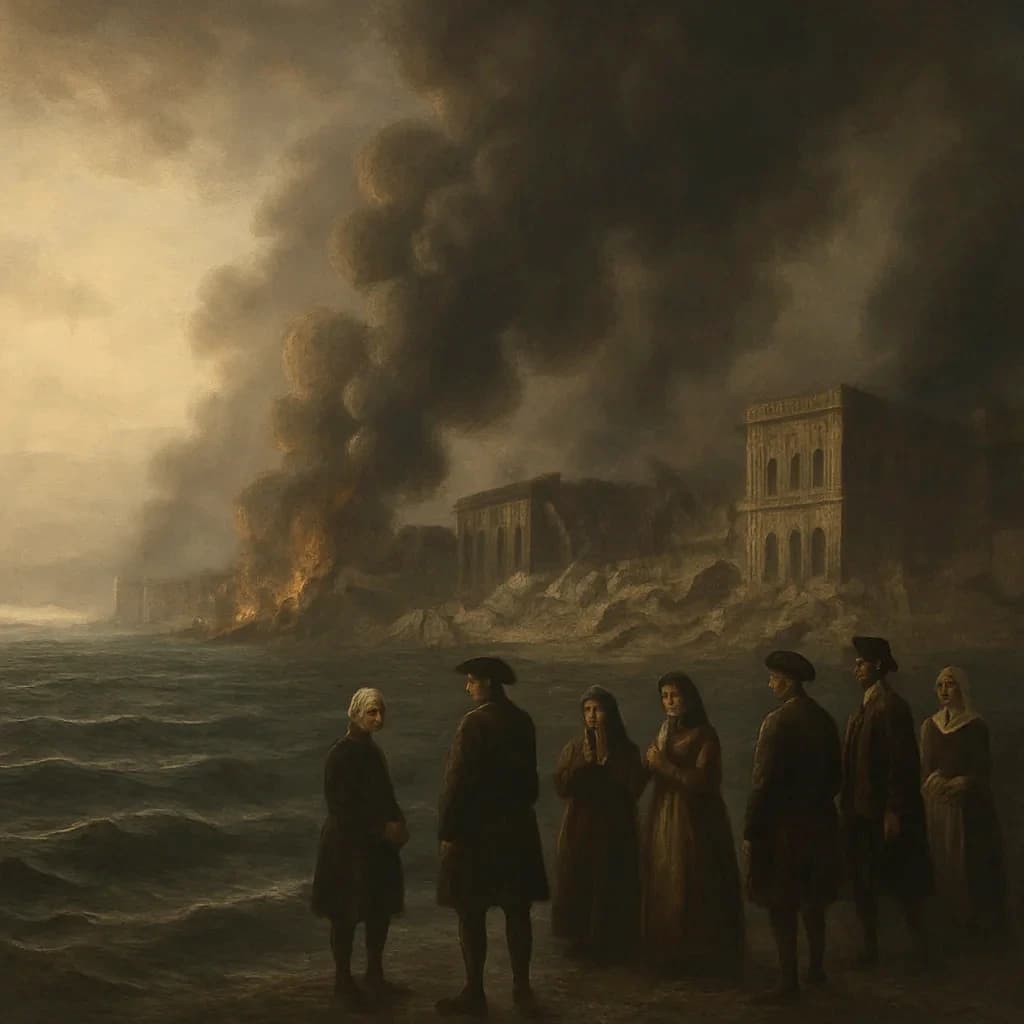
Eleven Minutes Erased Portugal's Maritime Archive
The earthquake that destroyed Lisbon in eleven minutes also buried the most complete archive of Portugal's overseas empire (charts, logs, and treaties from two centuries of exploration), and almost nobody mentions that part.
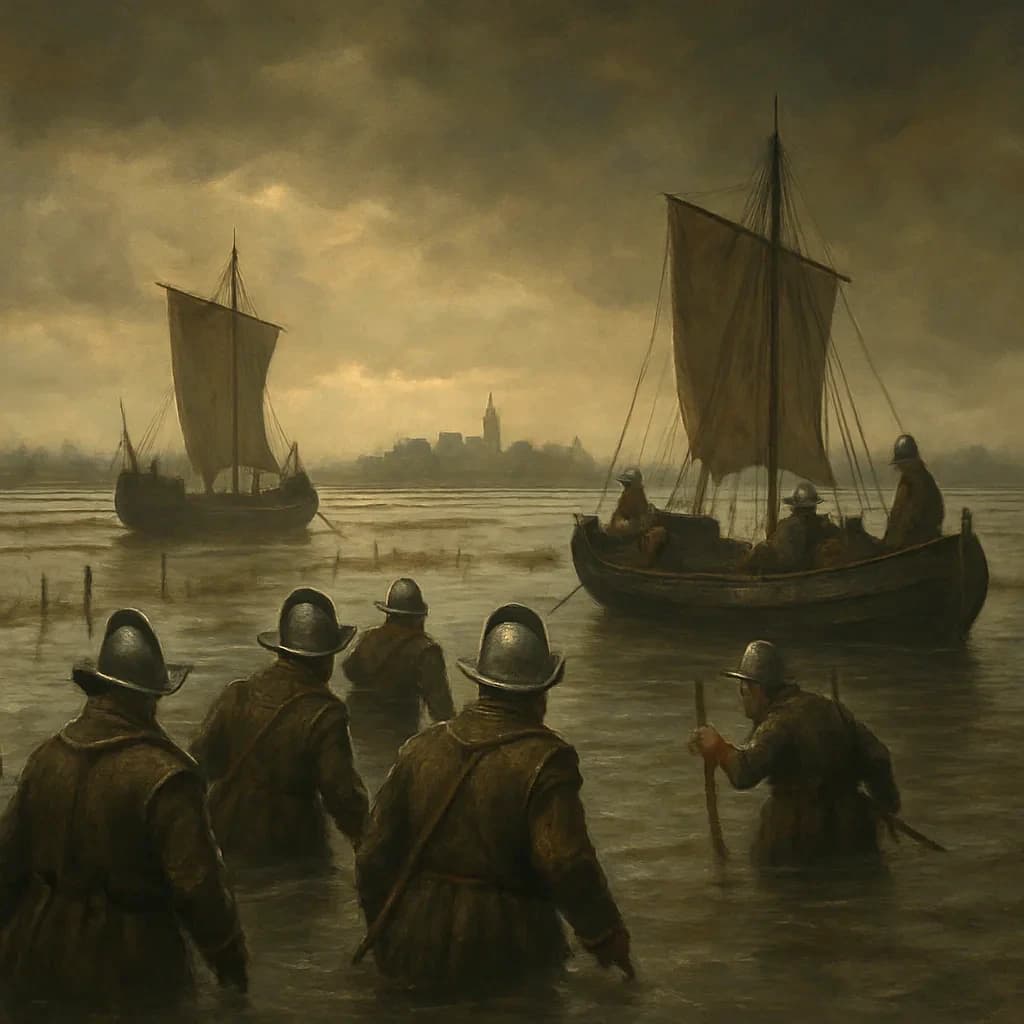
To Save Leiden, They Flooded Their Own Farms
A Spanish army spent 1574 starving a Dutch city into surrender, except the city refused to surrender, and a miller's son figured out how to drown an empire.
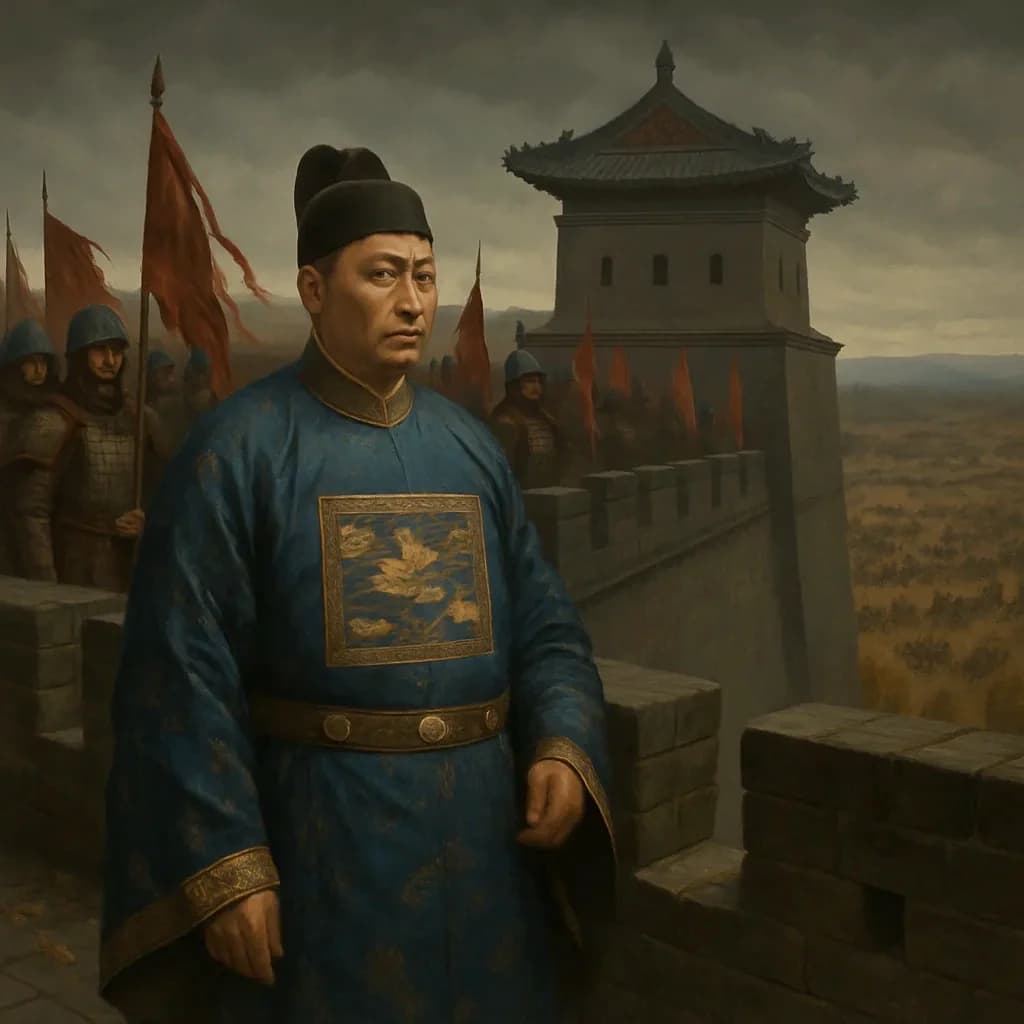
To Save the Ming, He Wrote Off the Emperor
No army, no title, no plan, yet a seamstress's son walked into the most fortified city in Asia and walked back out with the emperor.
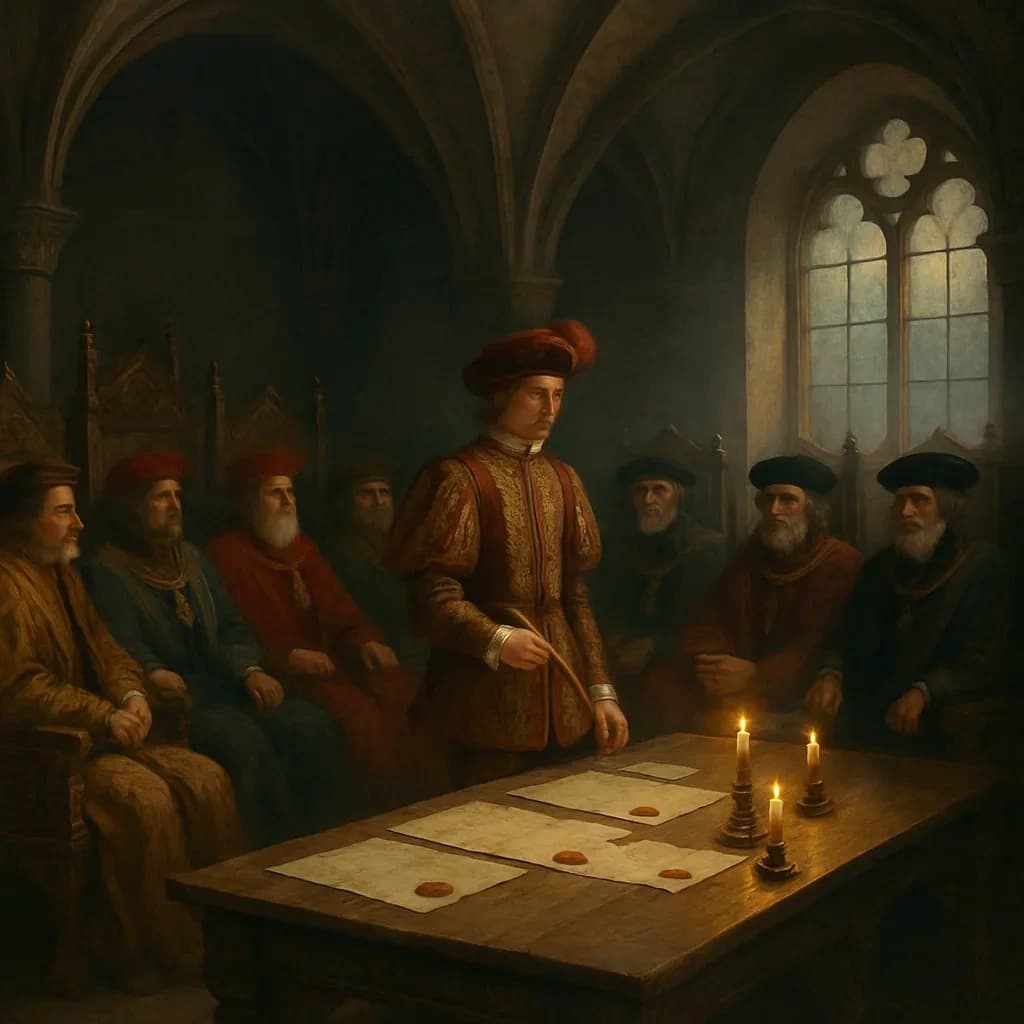
A Paperwork Problem Ignored for 200 Years Nearly Barred an Emperor
The Holy Roman Empire held its most consequential election in a generation in 1519, and the man who won it nearly wasn't allowed to rule because of a paperwork problem ignored for two hundred years.
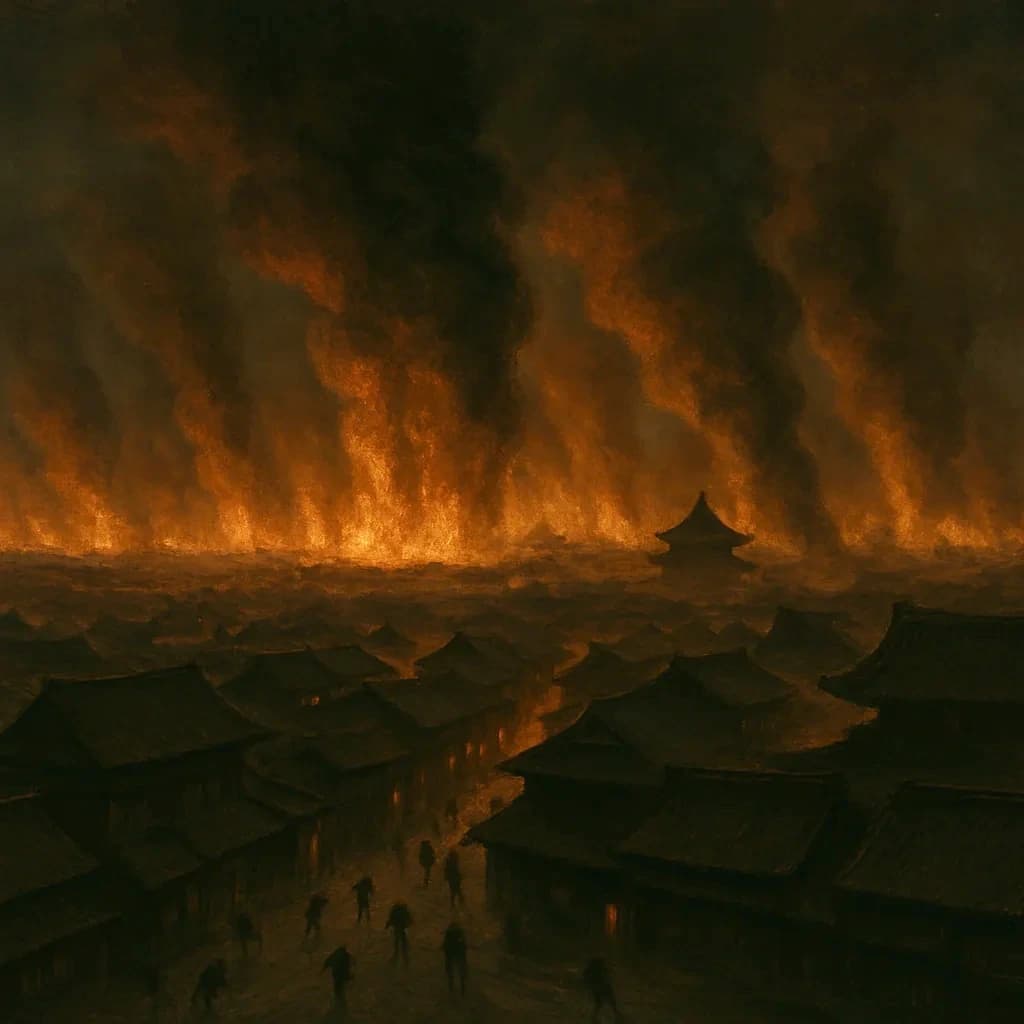
A Haunted Kimono Took the Blame for Burning Edo
A city of a million people burned to the ground, and the official explanation blamed a haunted kimono.
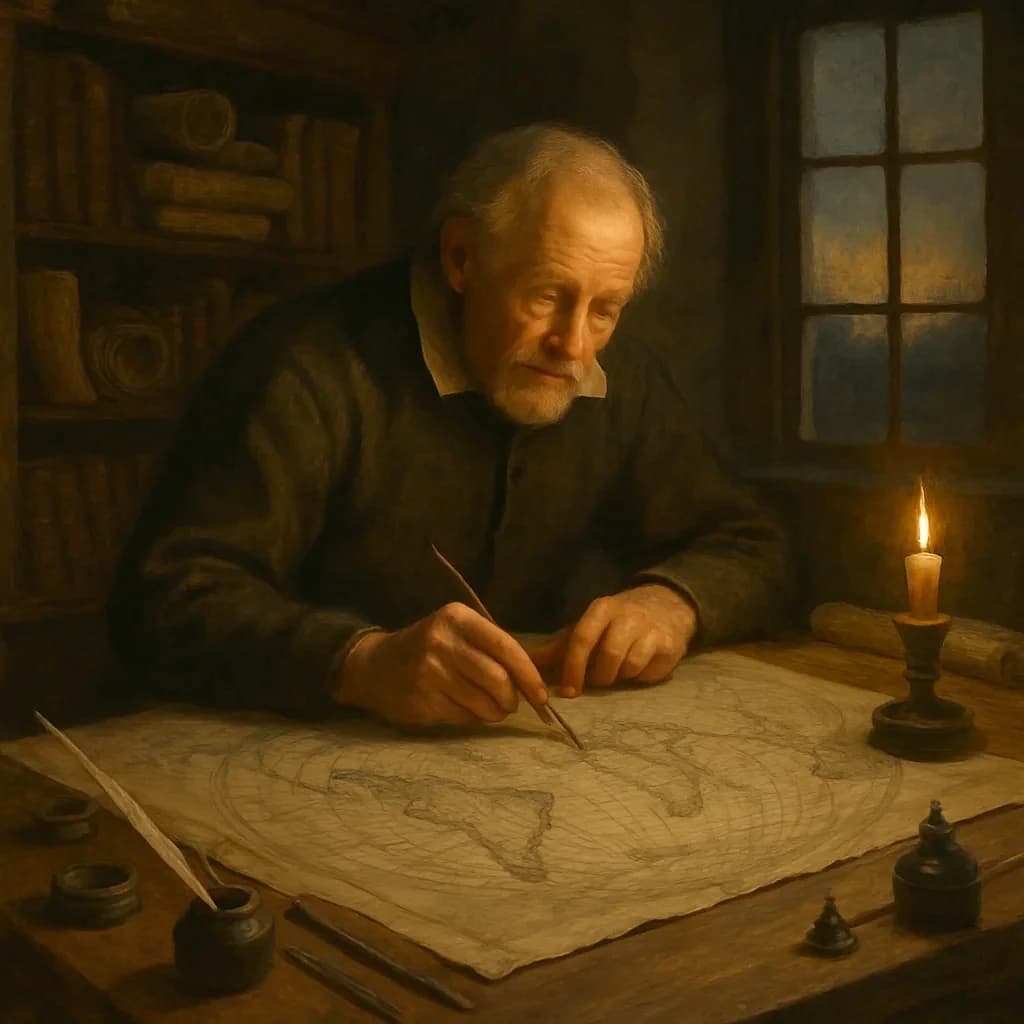
Mercator's Map Made Europe Look Bigger Than Africa
Gerardus Mercator's most famous map wasn't just a navigational tool. It was a political act that quietly rewrote who owned the world.
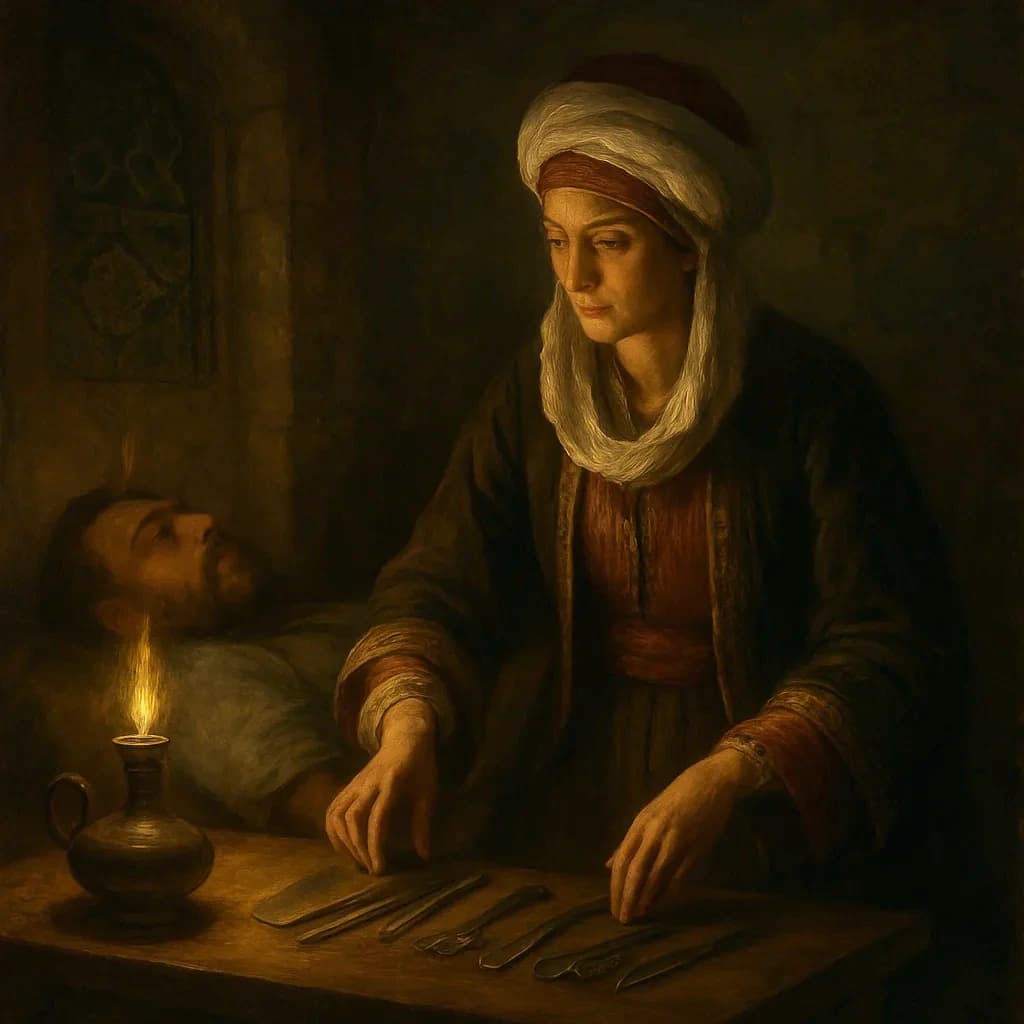
The Illiterate Woman Who Outperformed Europe's Surgeons
She was the most skilled surgeon in the Ottoman Empire, and in 17th century Egypt she saved thousands of lives without ever opening a book.
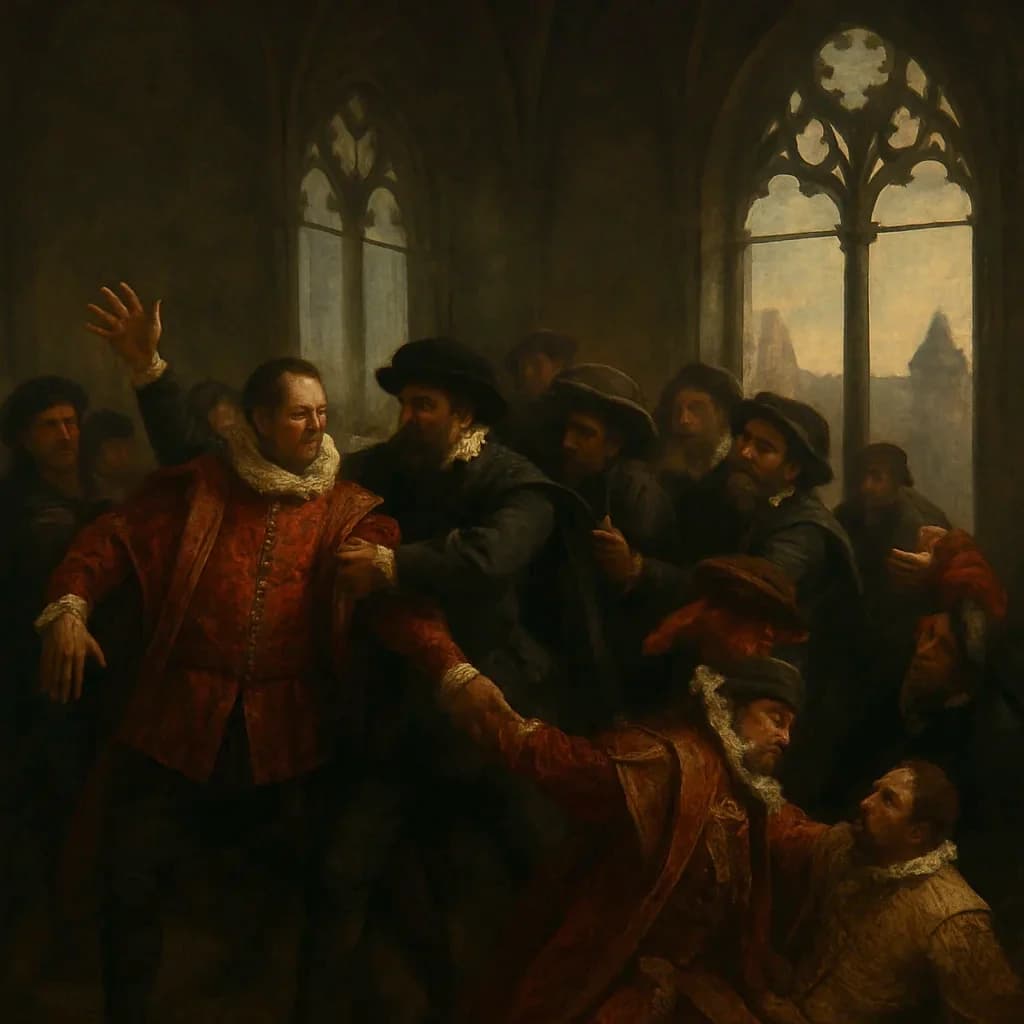
The Prague Defenestration That Sparked a 30-Year War
Two Catholic officials and their secretary were hurled from a castle window by Protestant nobles in 1618, launching a war that killed a third of Europe.
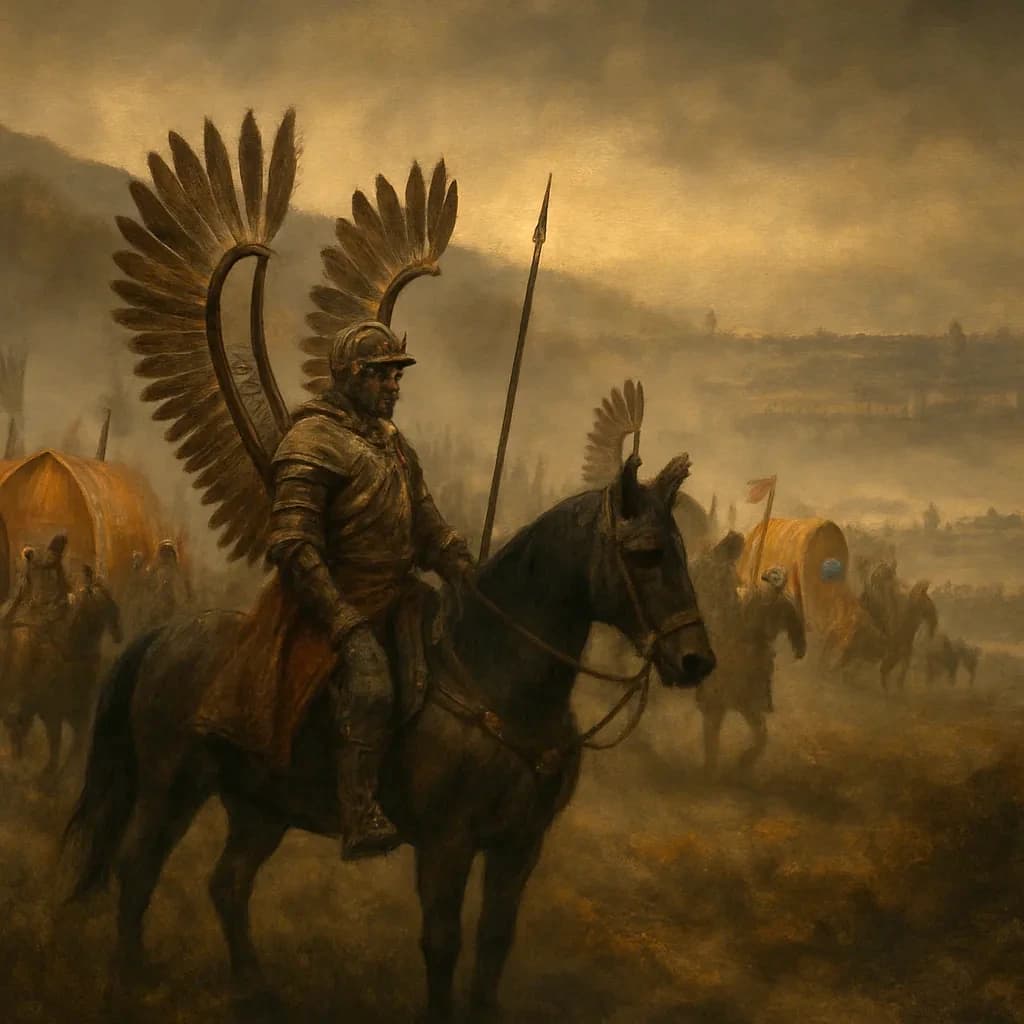
Half the Cavalry That Saved Vienna Was Fake
The Polish general who saved Vienna from Ottoman conquest had one problem: half his legendary cavalry existed only on paper.
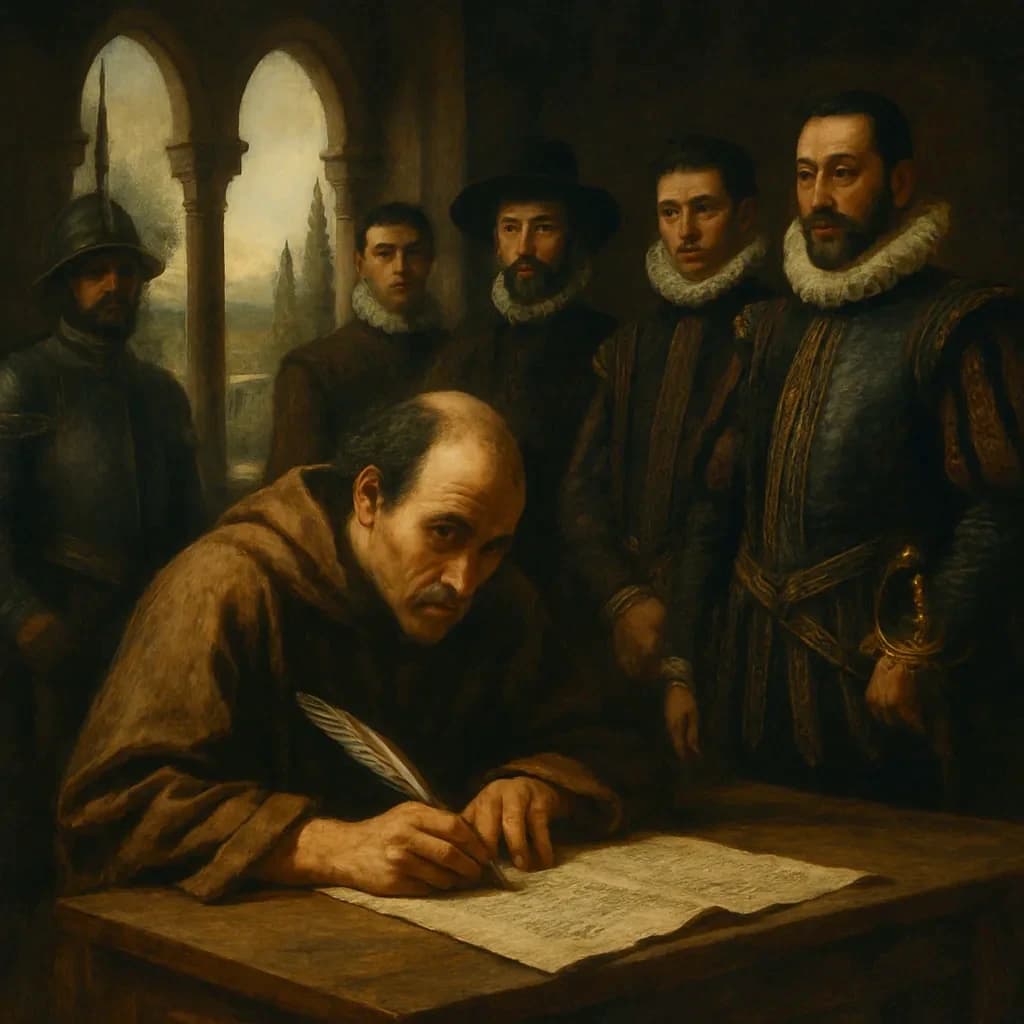
Spain Mistook Horse Blankets for a Declaration of War
A royal stable groom's translation mistake in 1598 nearly triggered a war between Spain and the Ottoman Empire.
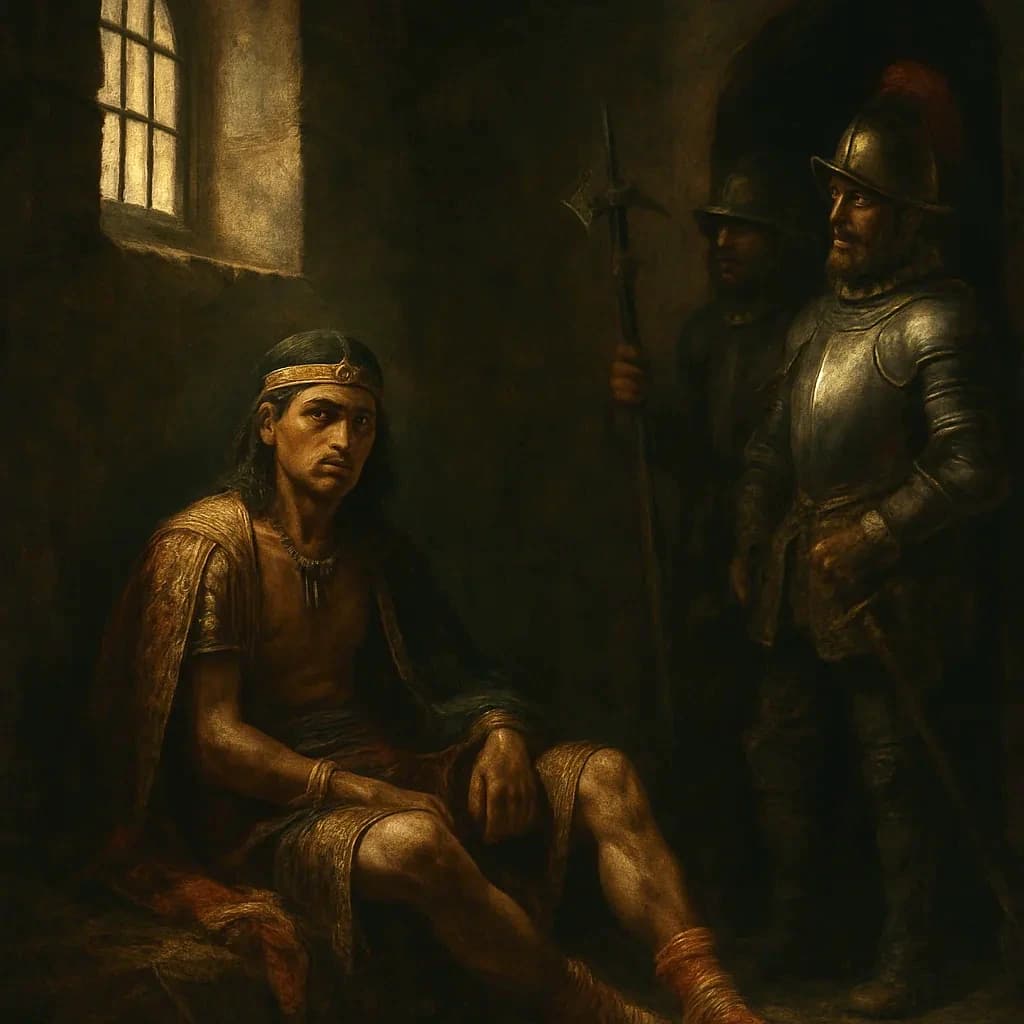
The Last Aztec Emperor's Silence Outlived His Empire
The last Aztec Emperor sat in a Spanish prison cell in 1522 and made a decision that would echo across five centuries.
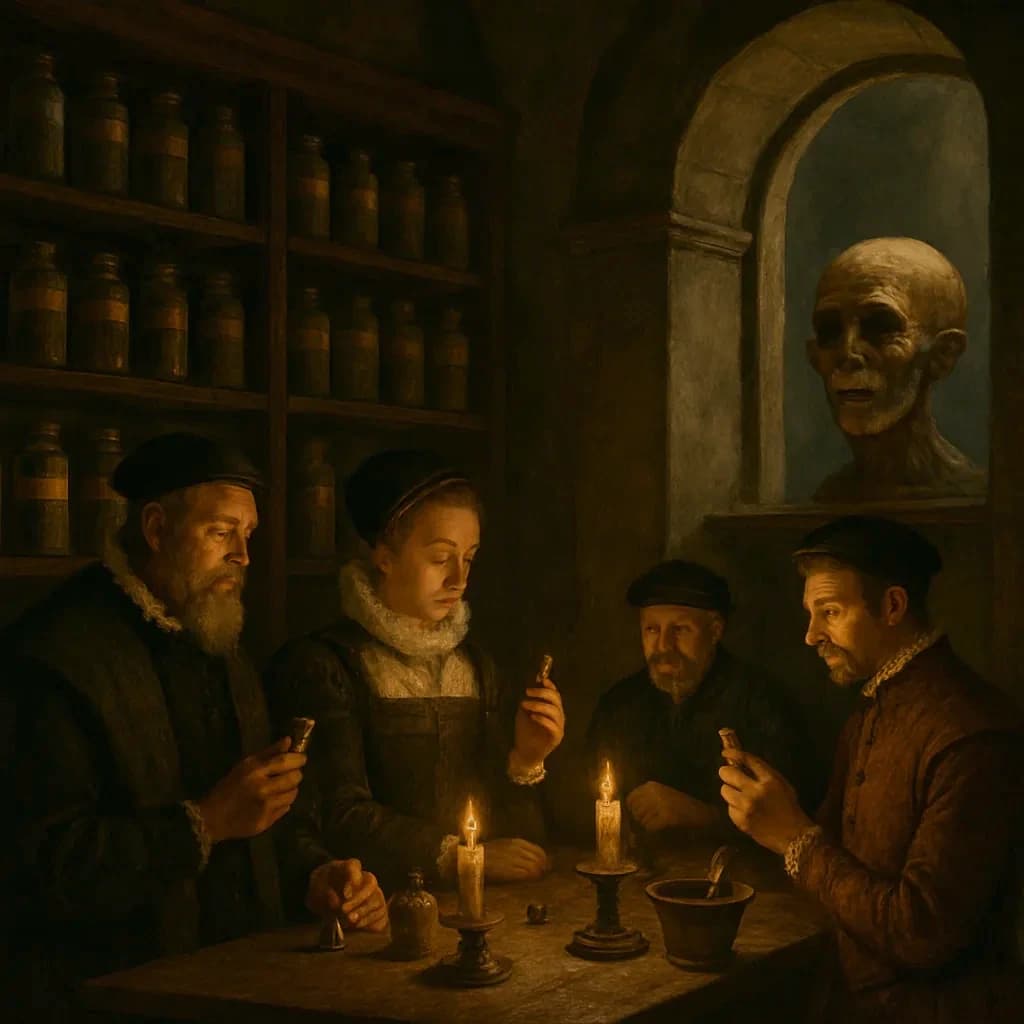
Powdered Mummy: Europe's Most Expensive Cure
For centuries, European apothecaries sold ground-up human remains as the most expensive cure in their shops.
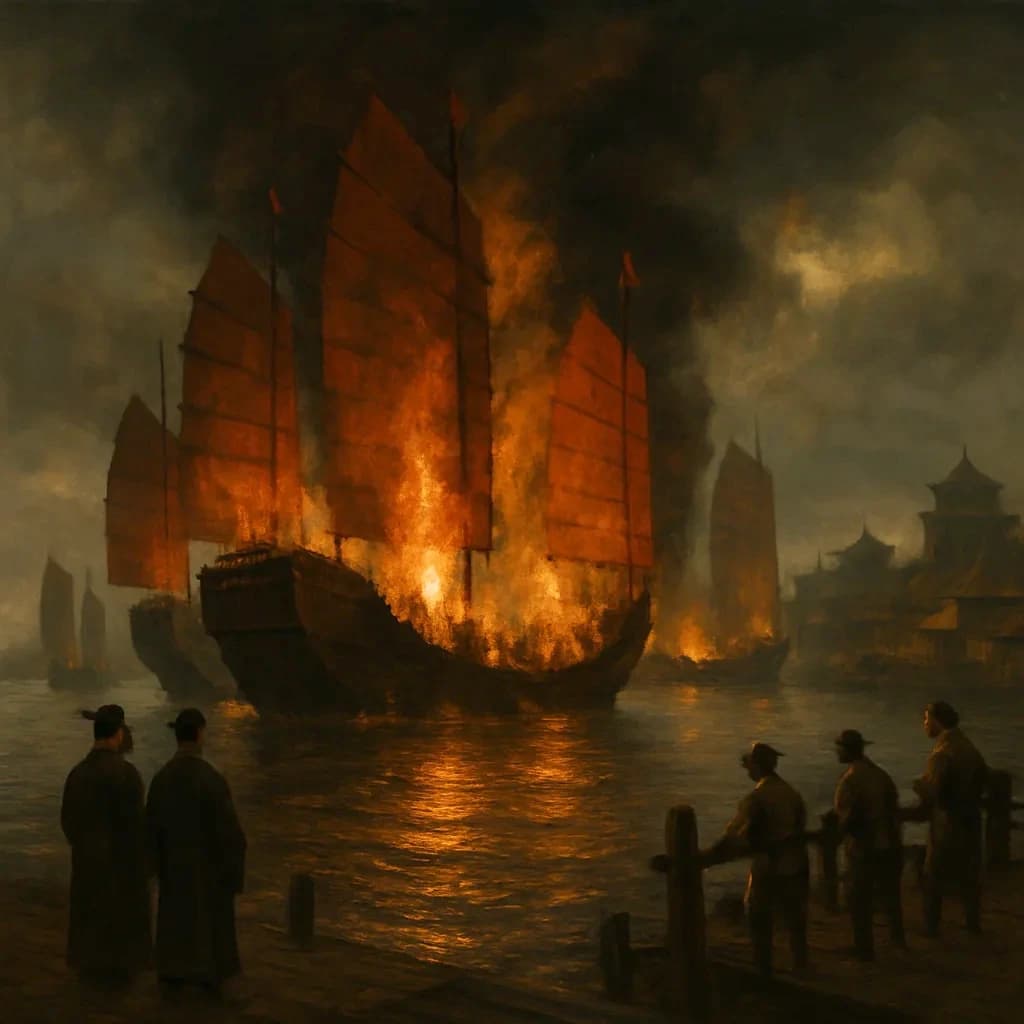
When China's Admiral Burned the World's Greatest Fleet
In 1433, the largest naval force in human history sailed home to China and was ordered to burn itself.
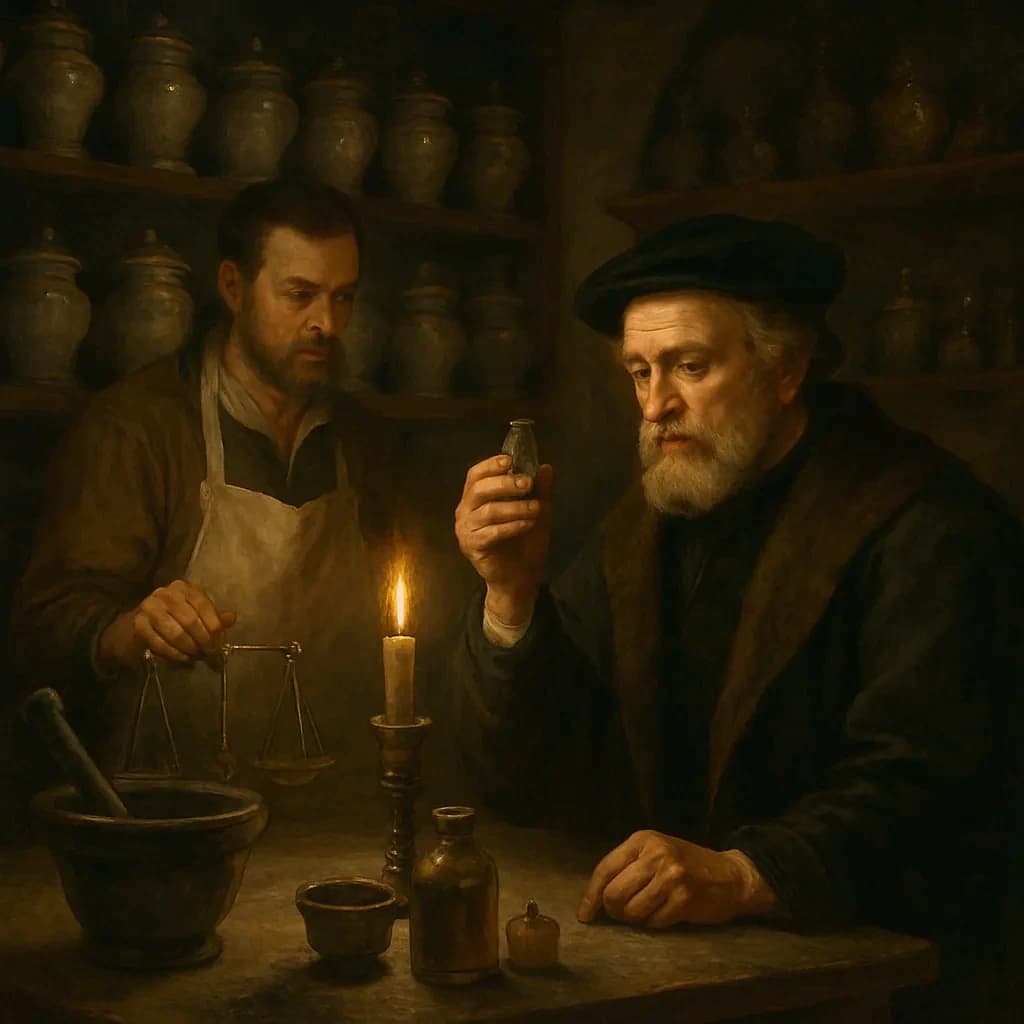
When Doctors Prescribed Mummy Powder
For three centuries, Europe's finest physicians crushed ancient Egyptian corpses into medicine, and charged a fortune for it.
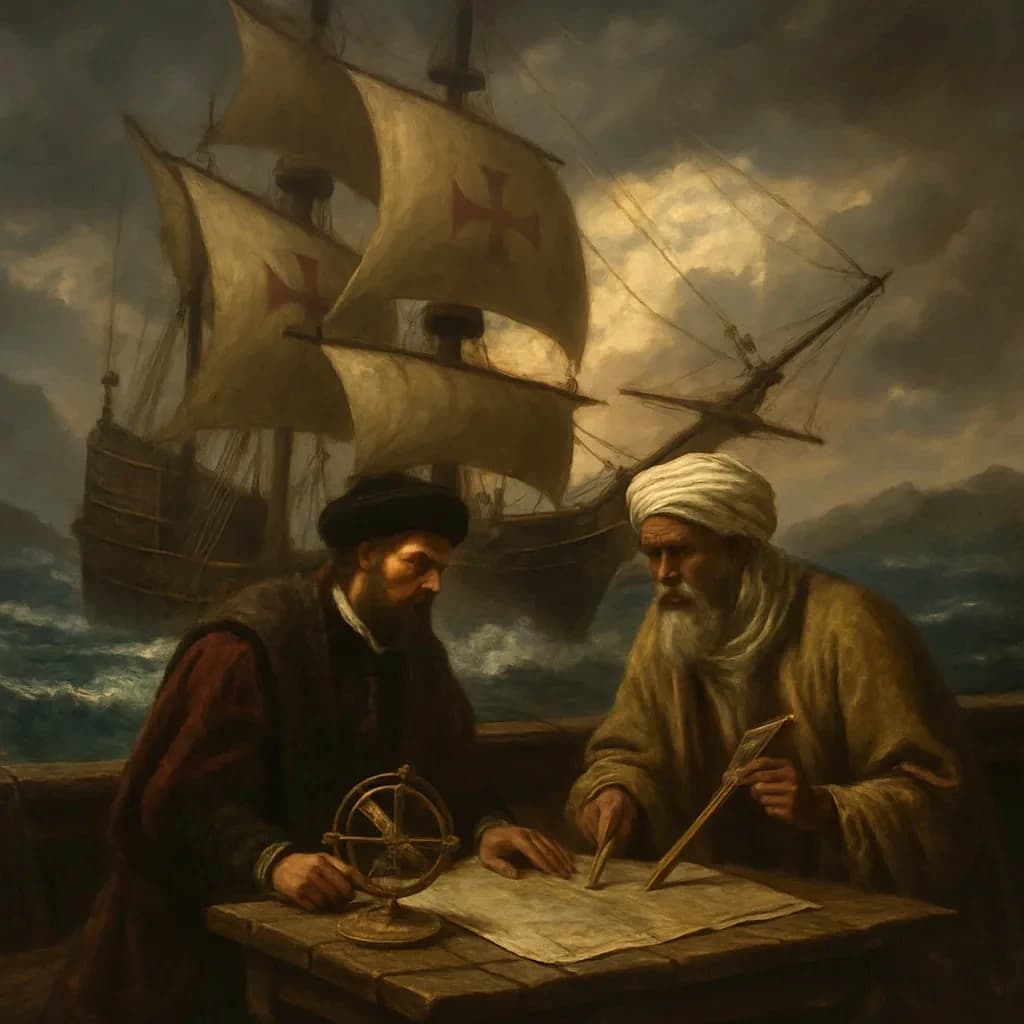
The Navigator the Vatican Erased
When Europe's most brilliant navigator lost his instruments in a storm, he discovered something that would change how Christianity understood the world.
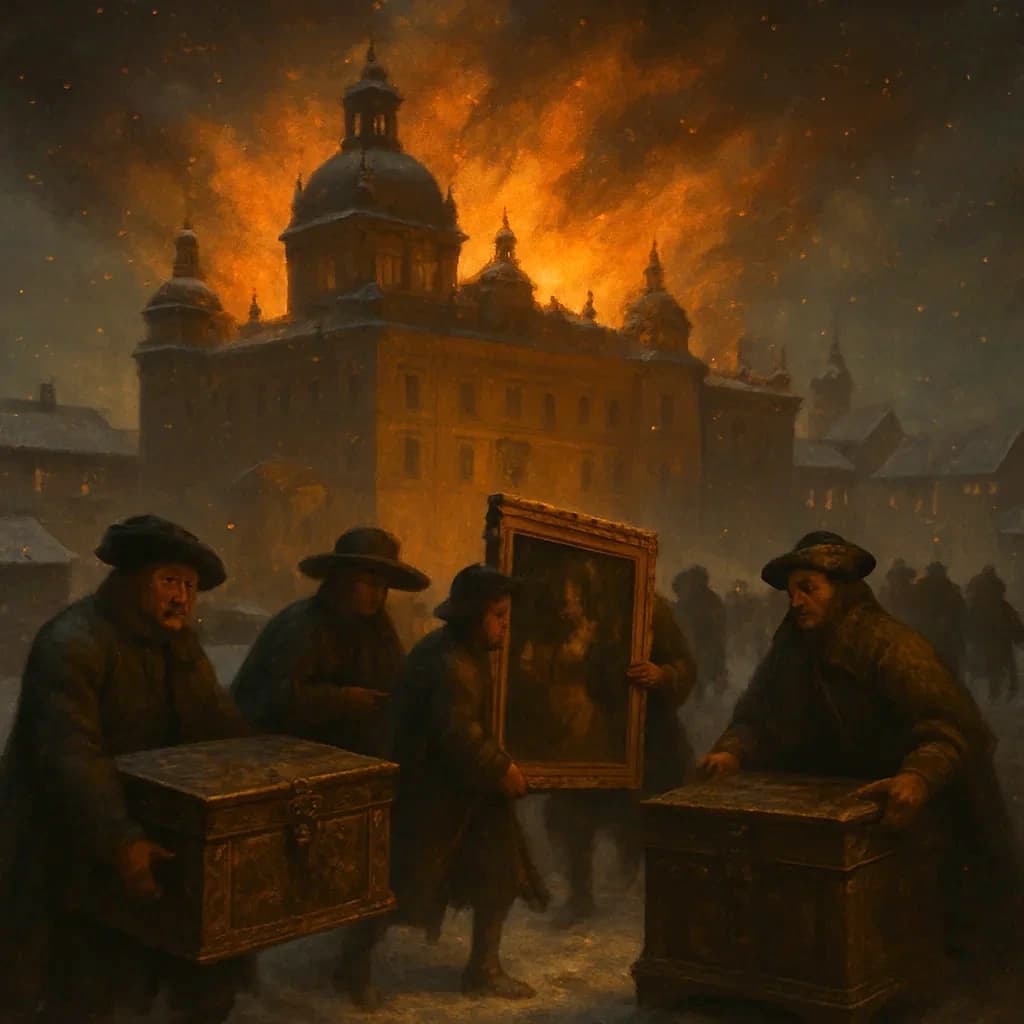
A Palace Fire Erased Europe's First Constitution
A century-old document disappeared into the flames one December night in 1697, taking with it the only written limits on royal power in Europe.
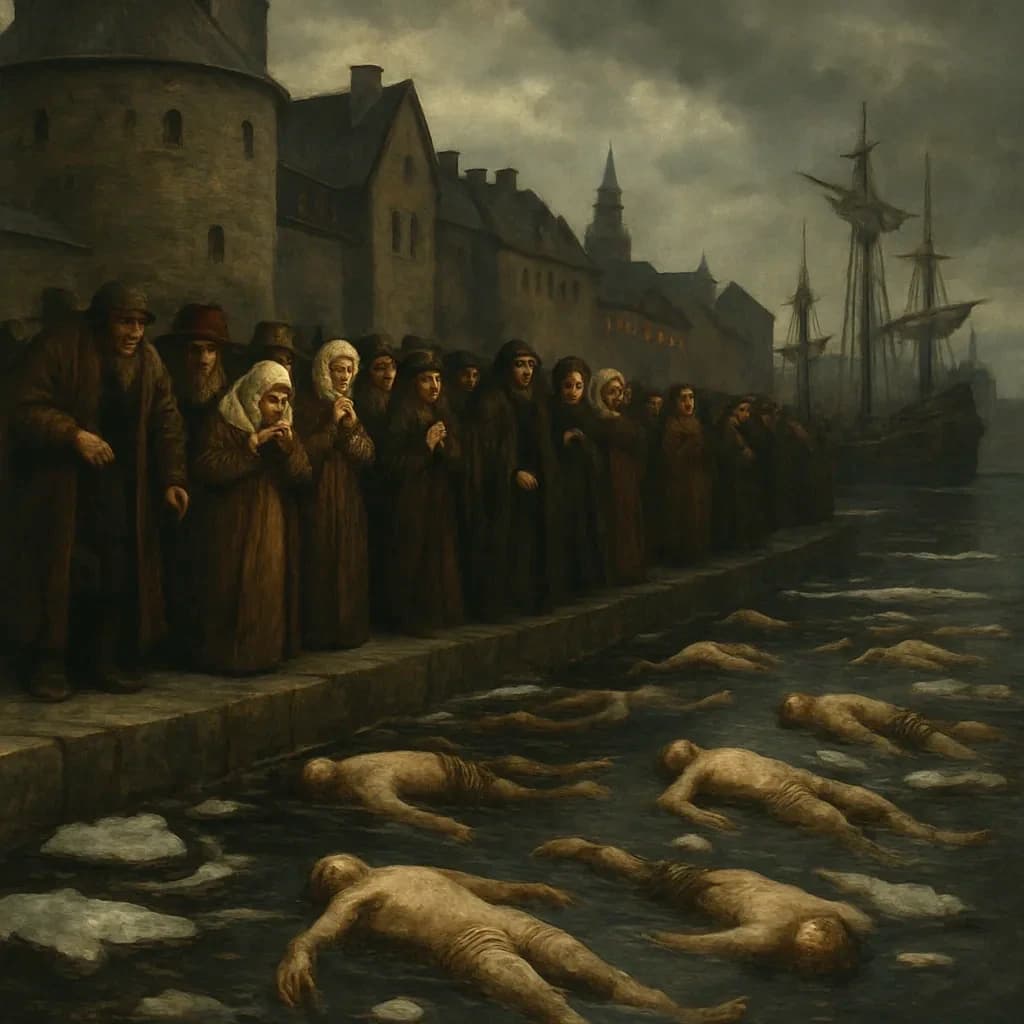
Stockholm's Dead Refused to Sink
The bodies from a 1520 Swedish massacre wouldn't stay underwater, and their floating rebellion changed Scandinavia forever.
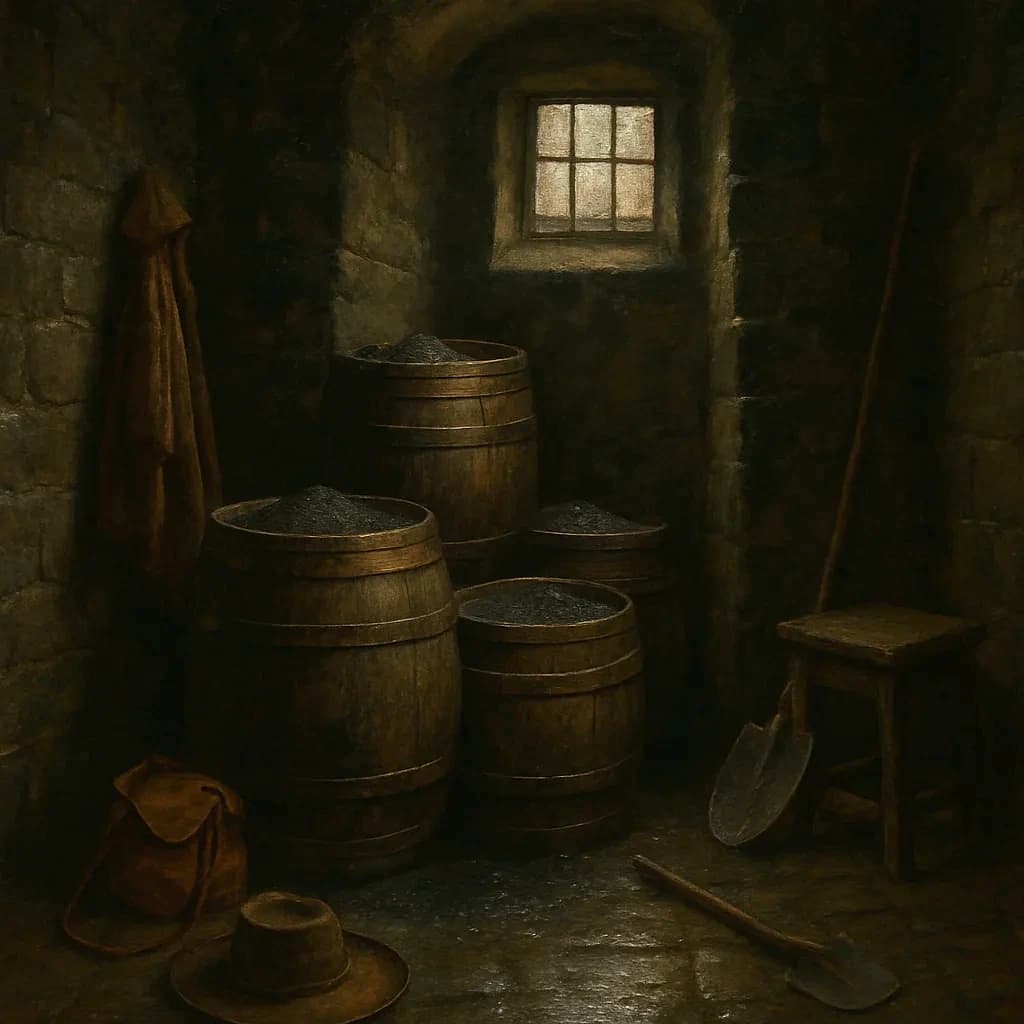
When Gunpowder Refused to Ignite
A damp morning in 1605 changed the course of English history, not because of what exploded, but because of what didn't.
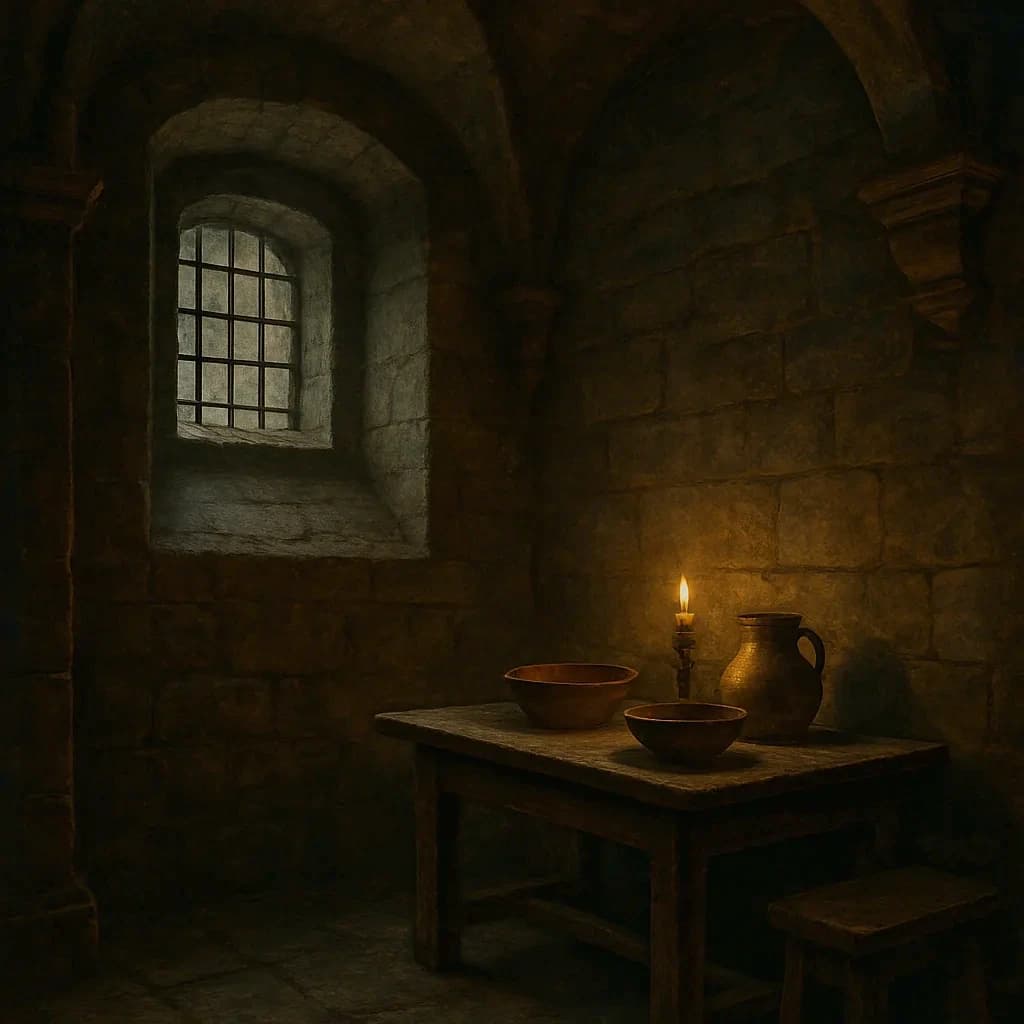
She Died 93 Days Before a Trial Could Clear Her
Locked away for allegedly murdering 650 young women, a Transylvanian princess spent four years in solitary confinement before a single trial witness changed everything.
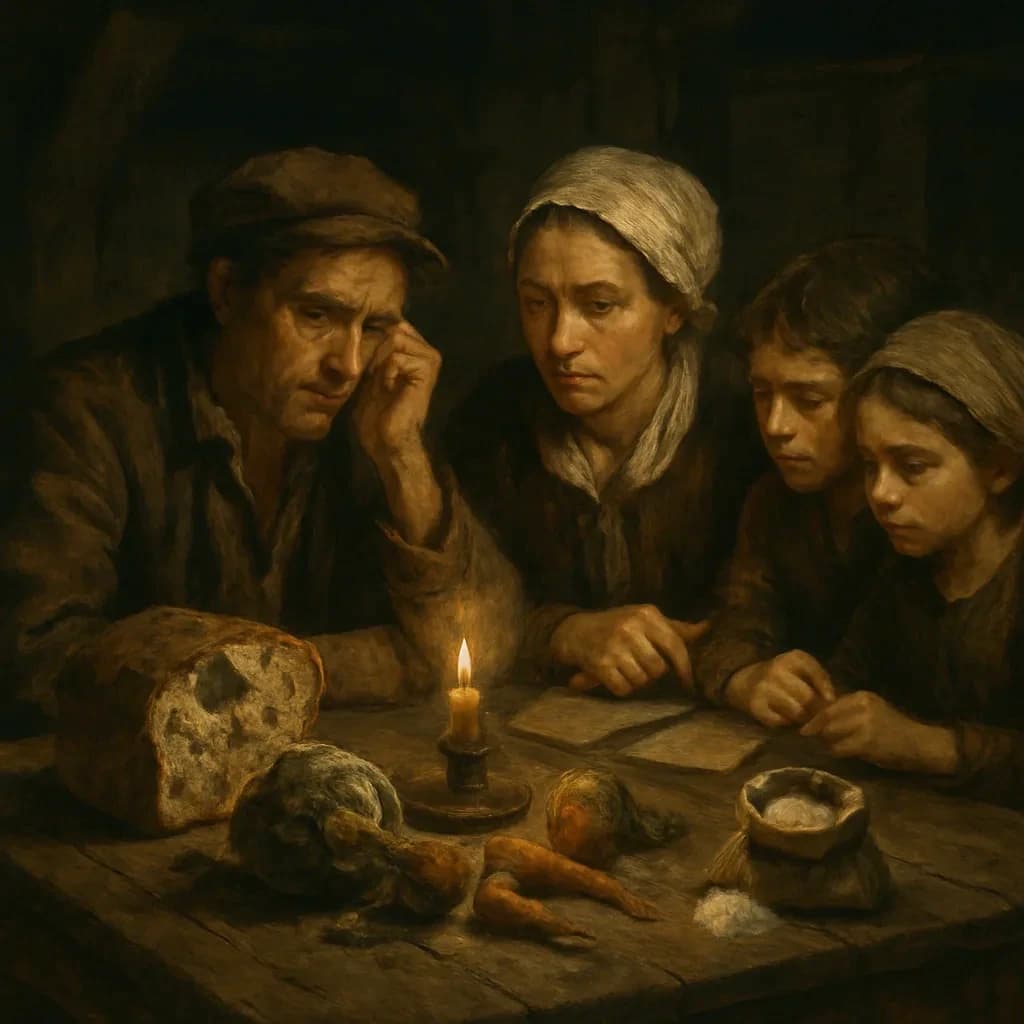
How France Taxed Salt Into a Revolution
A single tax on salt helped fund the monarchy for centuries, until peasants couldn't afford to preserve their food and revolution became inevitable.
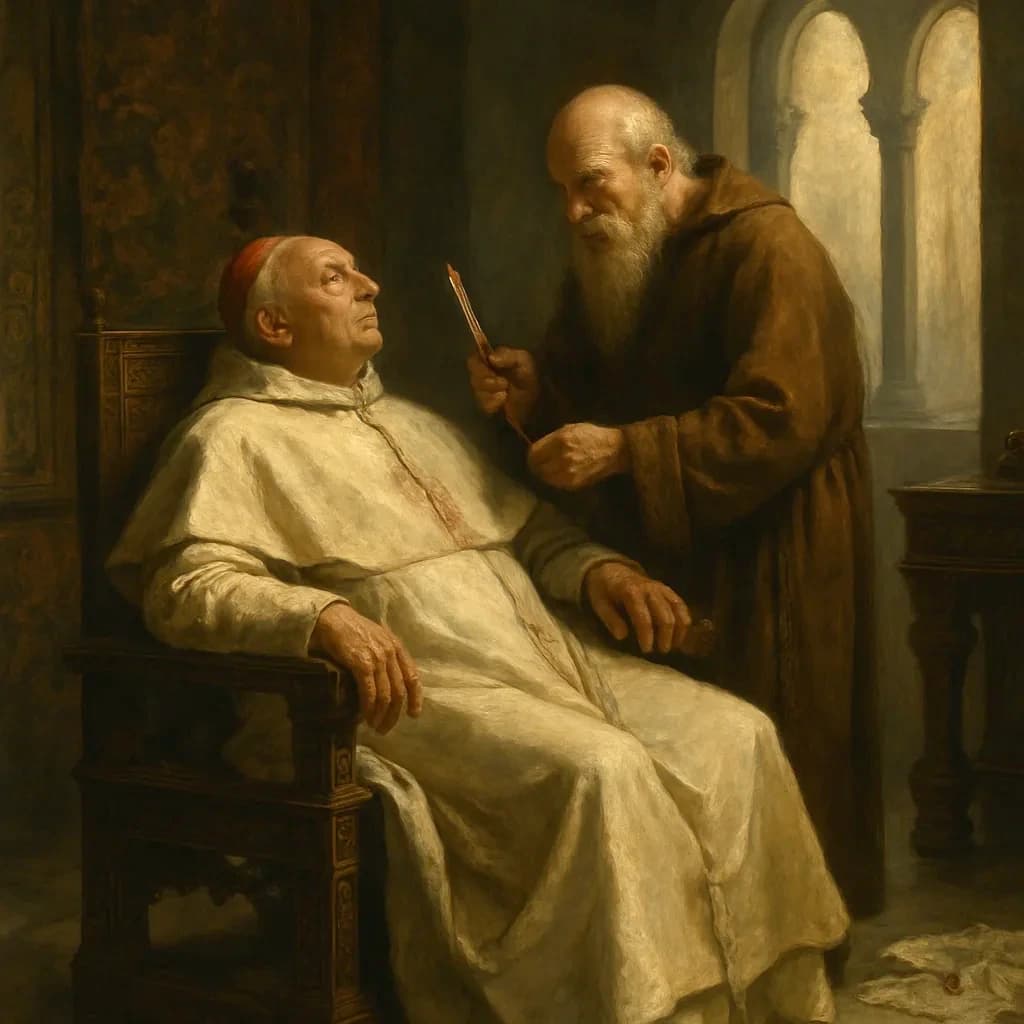
When God's Barber Shaved the Wrong Man
A papal barber's trembling hand in 1503 accidentally created one of history's most dangerous popes.
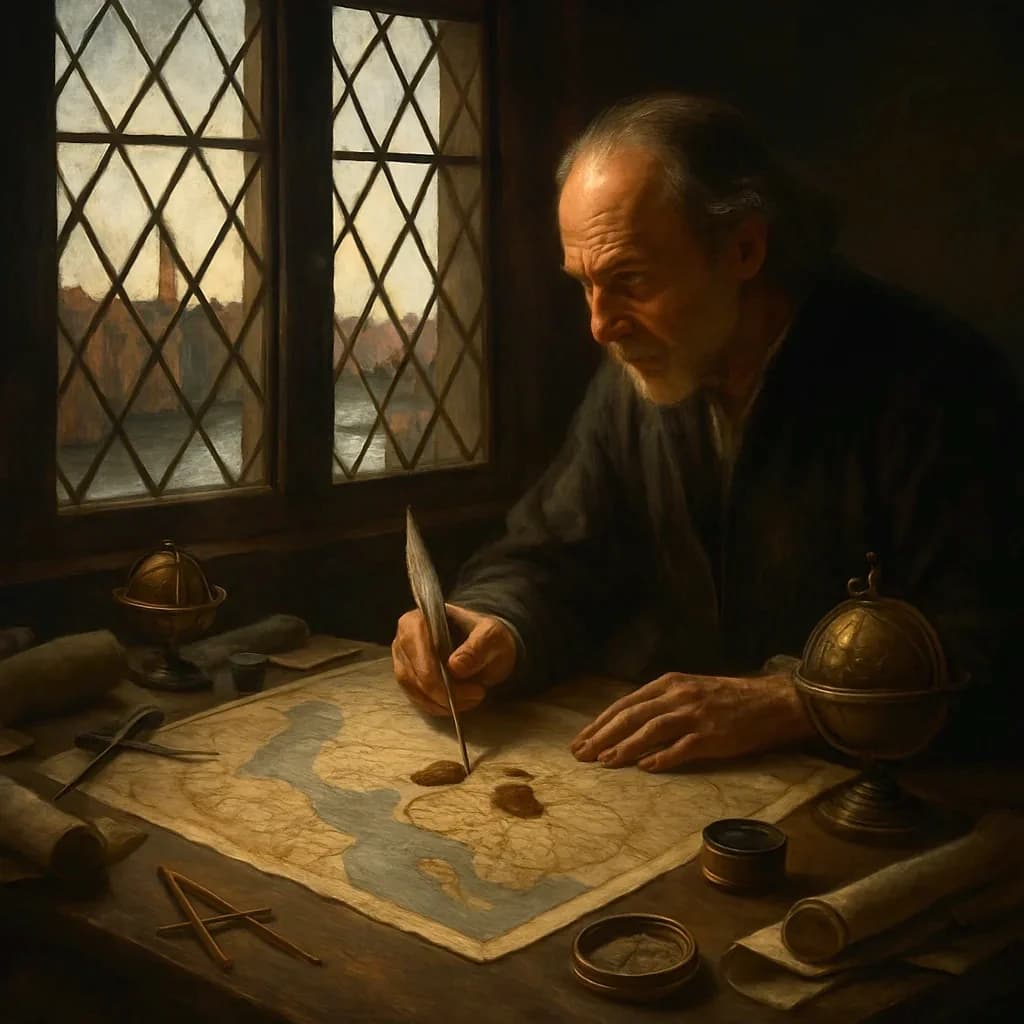
A Spilled Cup of Coffee Won the Battle of Lepanto
A cartographer's clumsy morning in 1571 triggered a war that toppled three European dynasties and redrew the Mediterranean forever.
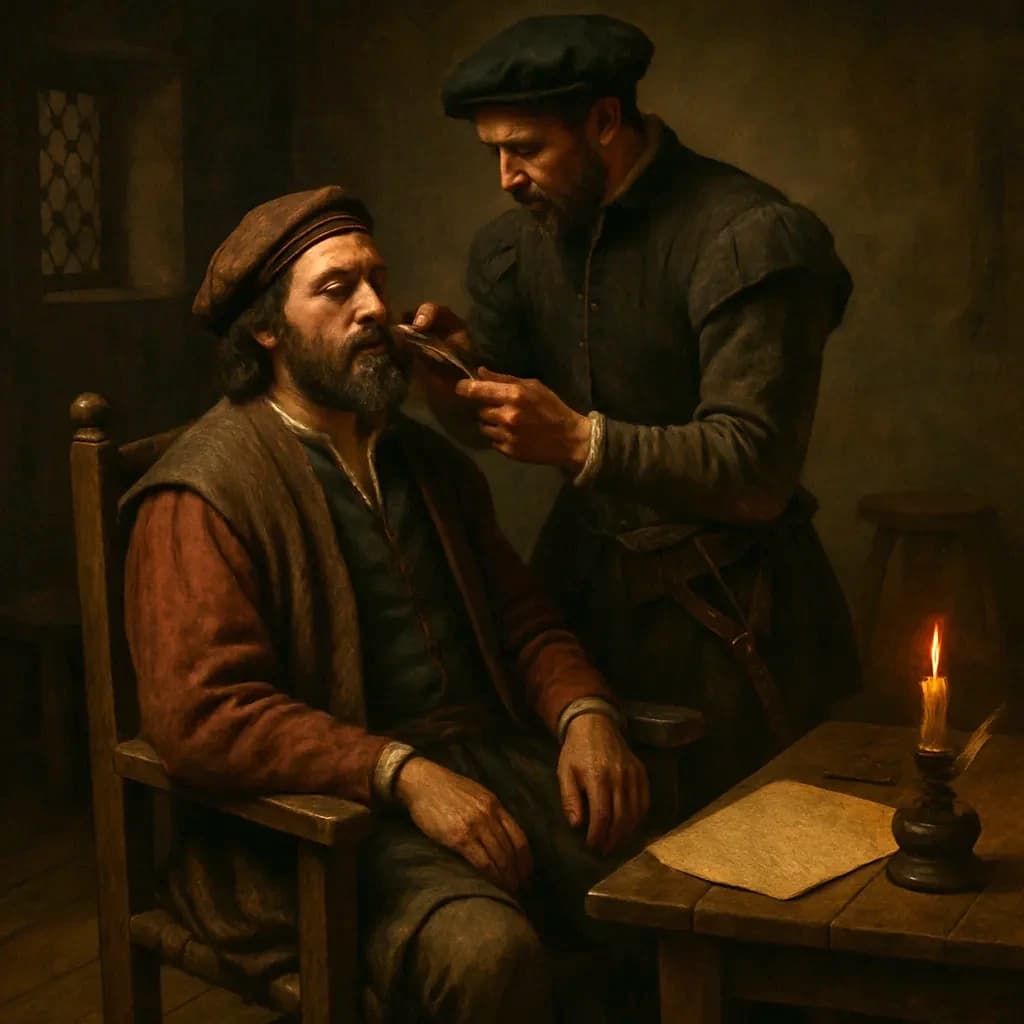
How an Unpaid Haircut Named America
A single unpaid haircut in Seville determined which European power would dominate the Americas for three centuries.
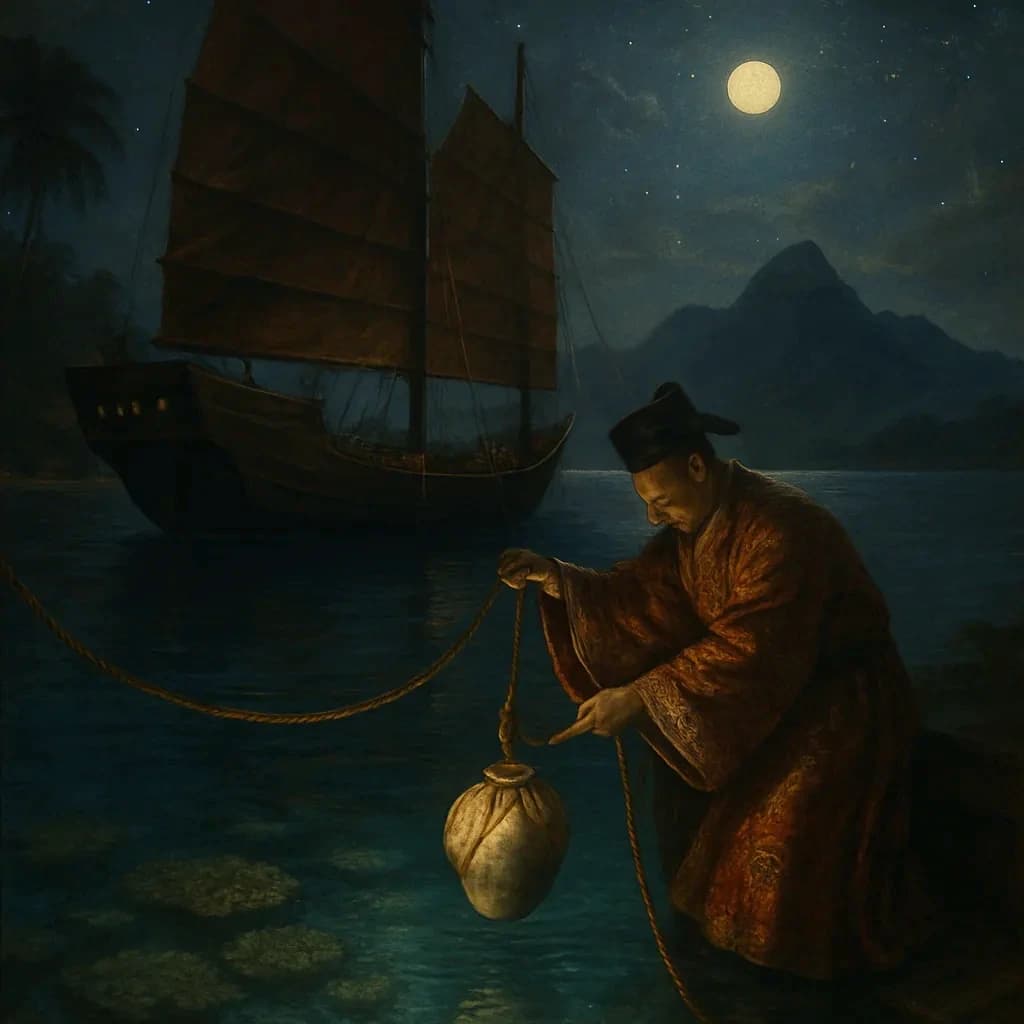
A Ming Admiral's Final Voyage Carried China's Last Secret
A Ming Dynasty admiral's final voyage carried something more valuable than treasure: the last secret of Chinese power.
What Gutenberg Couldn't Print
The first printed book in Europe wasn't the Bible. It was something far more dangerous that vanished within months of its creation.
A Professor's Secret Midnight Lessons Shaped Europe for Three Centuries
A Spanish professor's secret midnight lessons would determine how Europe understood human nature for the next three centuries.
He Cured Syphilis With a Slow Poison
A Swiss physician's late-night fumble with mercury and antimony produced the first effective treatment for syphilis, and sparked a medical revolution that killed as many patients as it saved.
Satan's Drink: One Papal Sip That Saved Coffee
Venetian merchants spent 1615 smuggling a drink the Pope had branded Satan's beverage, until a single papal sip changed the fate of two continents.
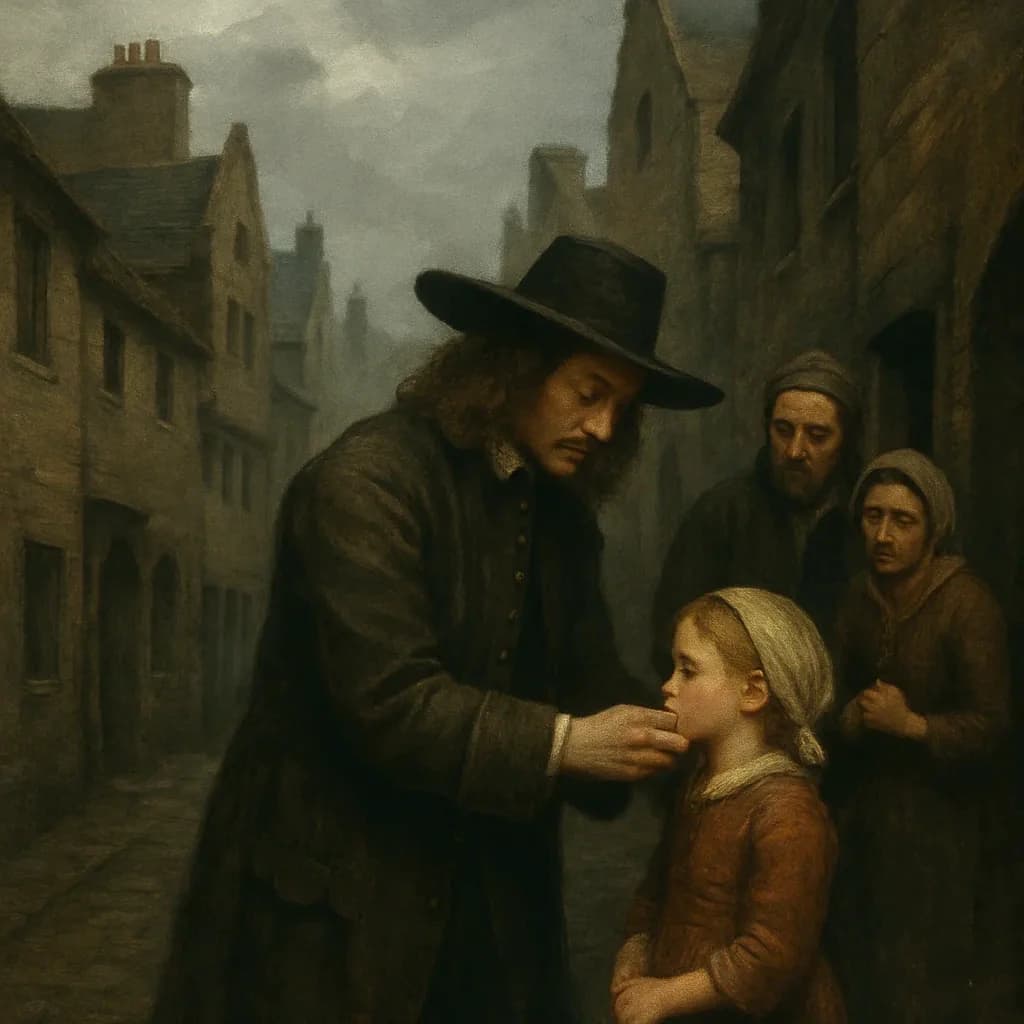
The Edinburgh Doctor Who Watched Through a Slot
Something began happening to the children of Edinburgh in 1692 that physicians couldn't explain, and wouldn't stop talking about.
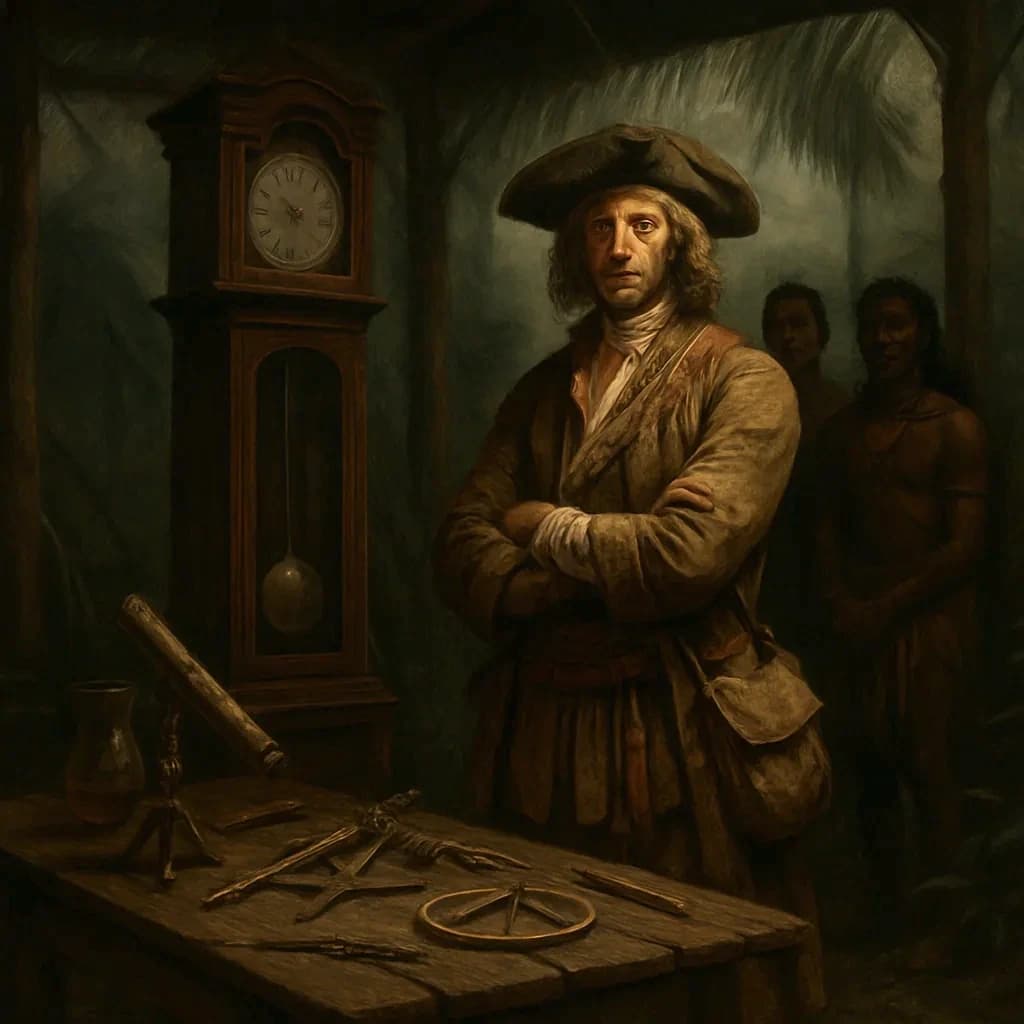
A Slow Clock Proved Earth Bulges at the Equator
A French priest with a telescope proved in 1669 that the Earth was egg-shaped, and nearly got himself excommunicated for it.
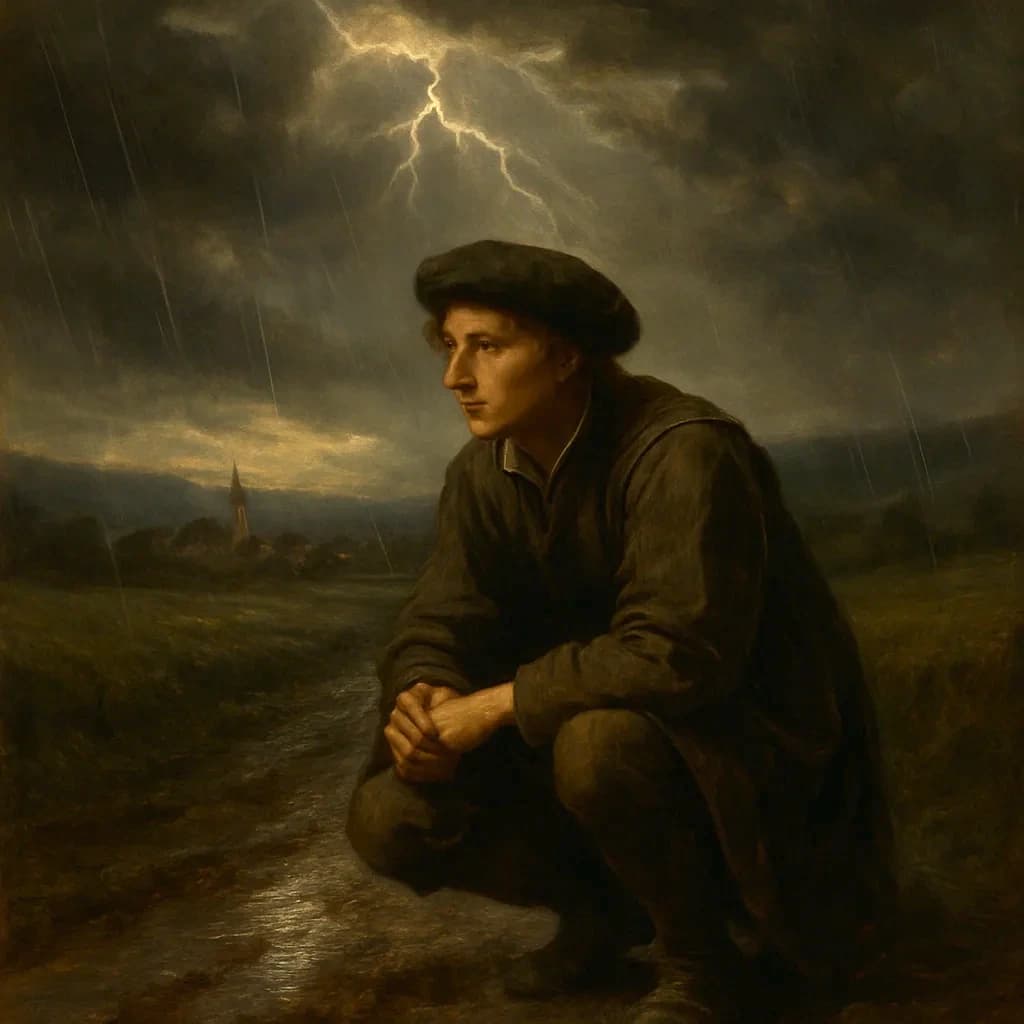
The Lightning Bolt That Made Martin Luther a Monk
A single lightning bolt struck a young law student on a road near Erfurt in 1505, and set the Protestant Reformation in motion.
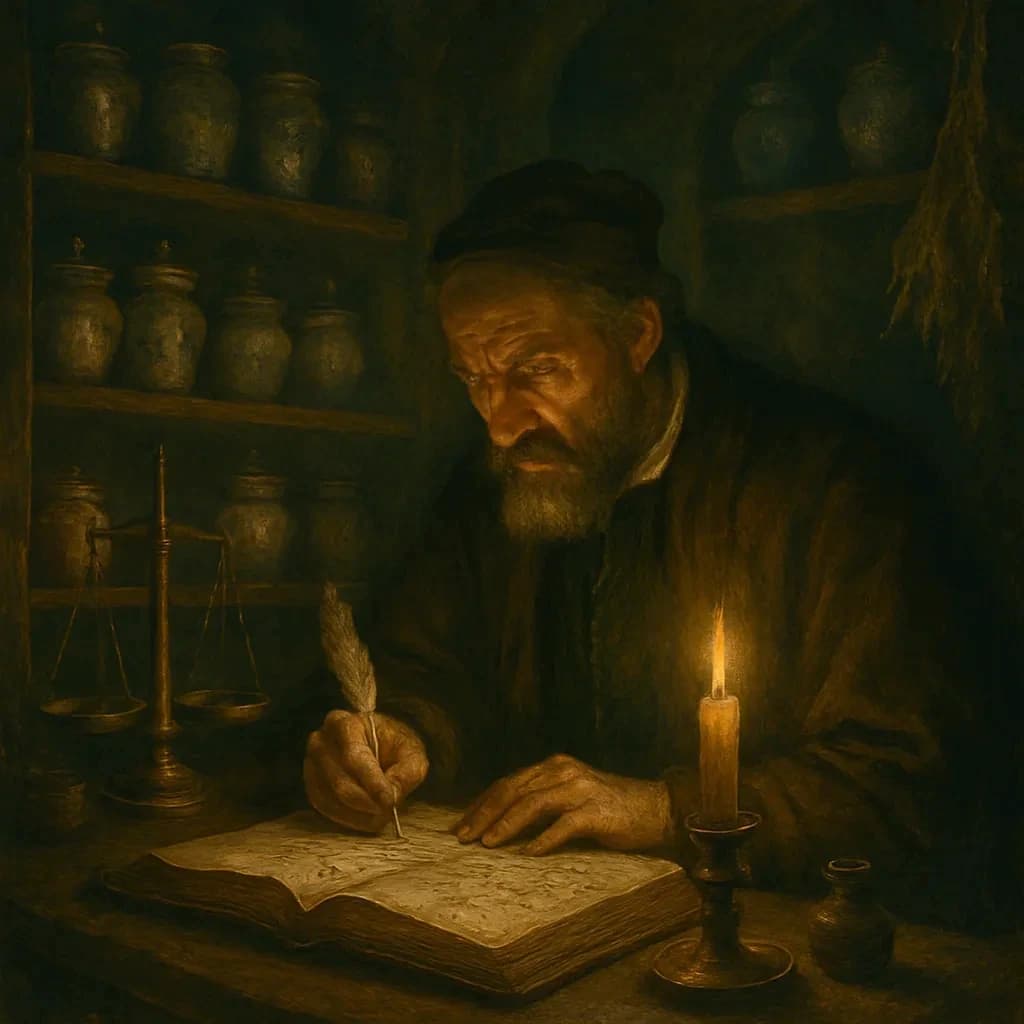
His Fever Cure Worked. The Recipe Died in Code.
A Venetian pharmacist built Europe's most effective medicine in 1668, then wrote the formula in a code that died with him.
The Scribe Who Counted Every Grain of Rice in China
In 1393, a government clerk named Liu Zhongfu attempted something no one had ever tried: counting everything in the Chinese Empire, down to the last grain of rice.
The Easter Calendar Math That Guided the Enola Gay
While astronomers gathered to calculate the exact date of Easter, one young mathematician quietly solved a problem that would doom millions, and nobody noticed for four centuries.
The Wedding Dress That Built the Dutch Empire
A grieving widow's hasty marriage contract accidentally gave the Netherlands control of the global spice trade for three centuries.
A Letter Meant for One Fugger Reached the Wrong One
A single handwritten letter, delivered to the wrong person at the wrong time, kept the Protestant Reformation from being strangled in its cradle.
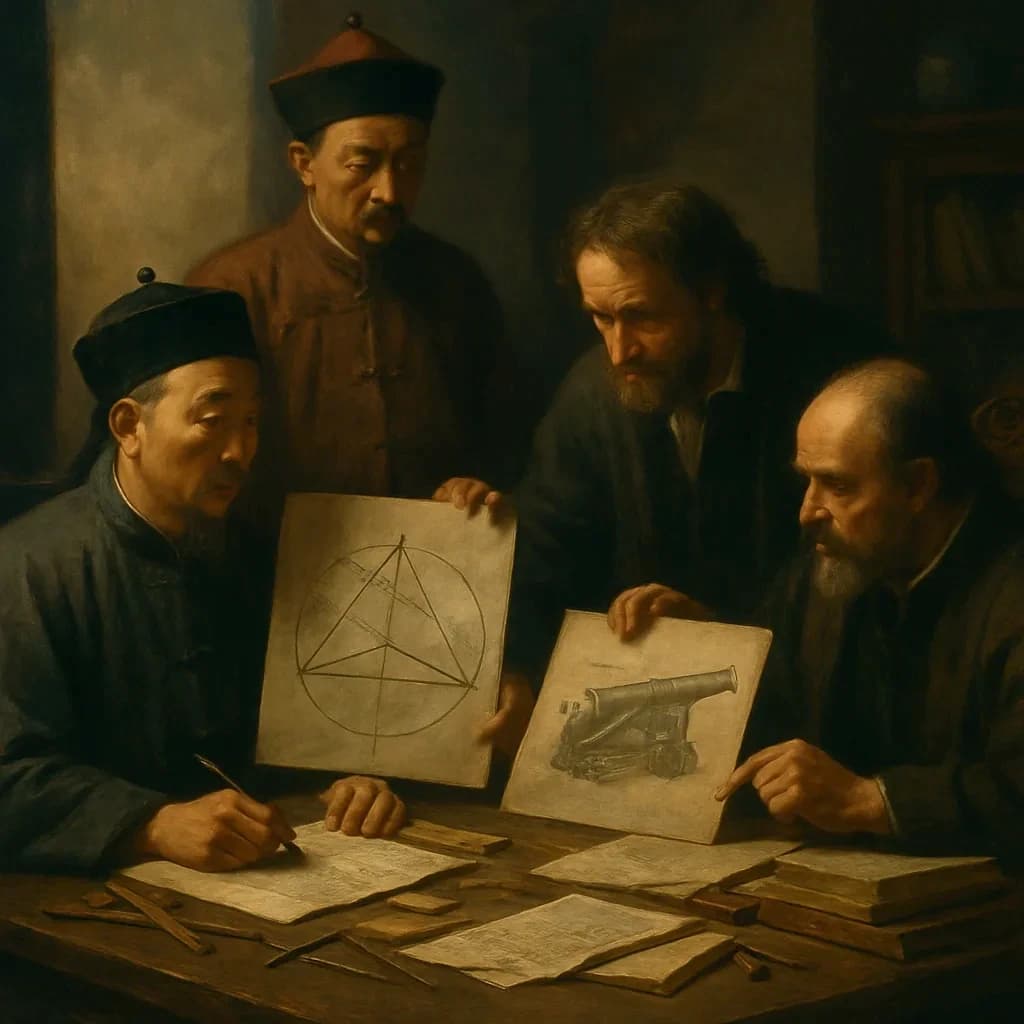
Euclid for God, Cannons for China
A Jesuit missionary set out to prove God through mathematics and handed China the weapons to destroy European empires.
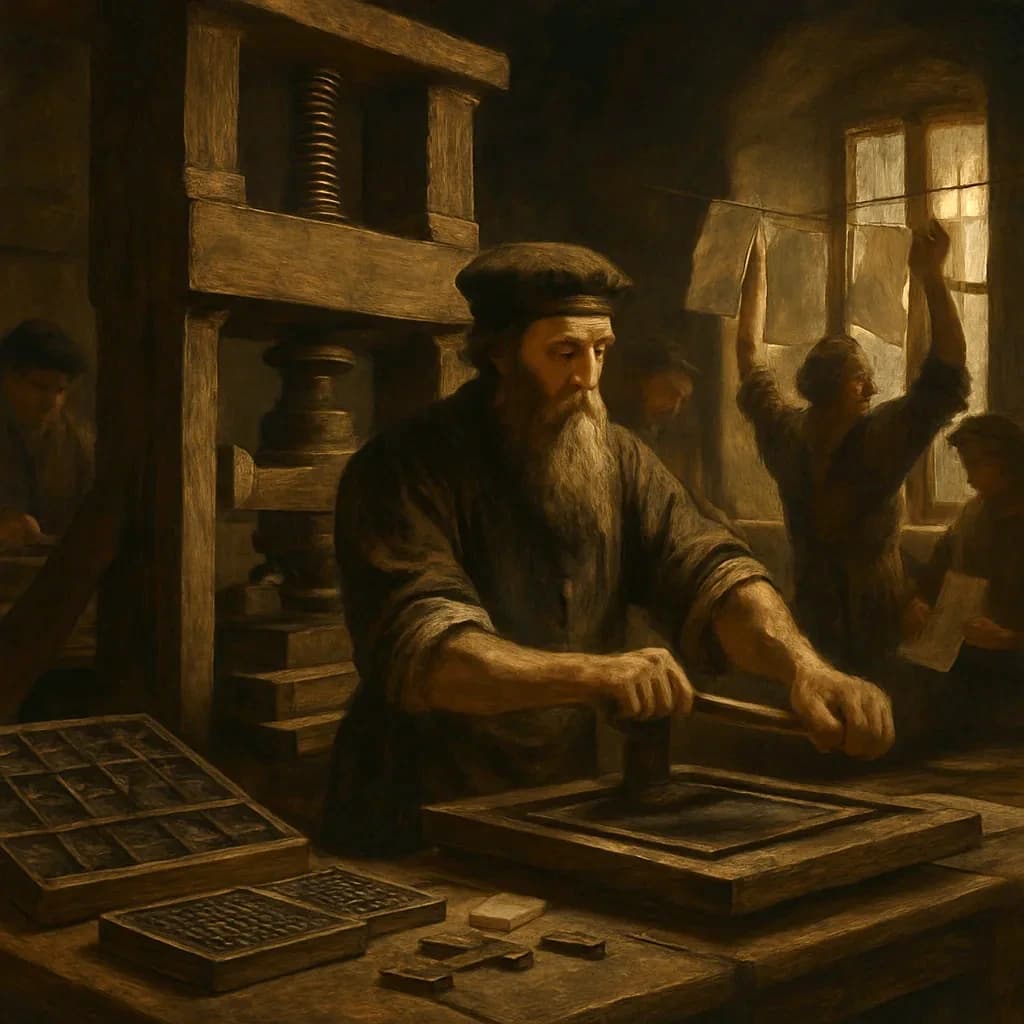
How Gutenberg's Bible Sparked Europe's Religious Wars
A bankrupt goldsmith's revolutionary machine produced its first book in 1455, and helped trigger Europe's bloodiest religious wars.
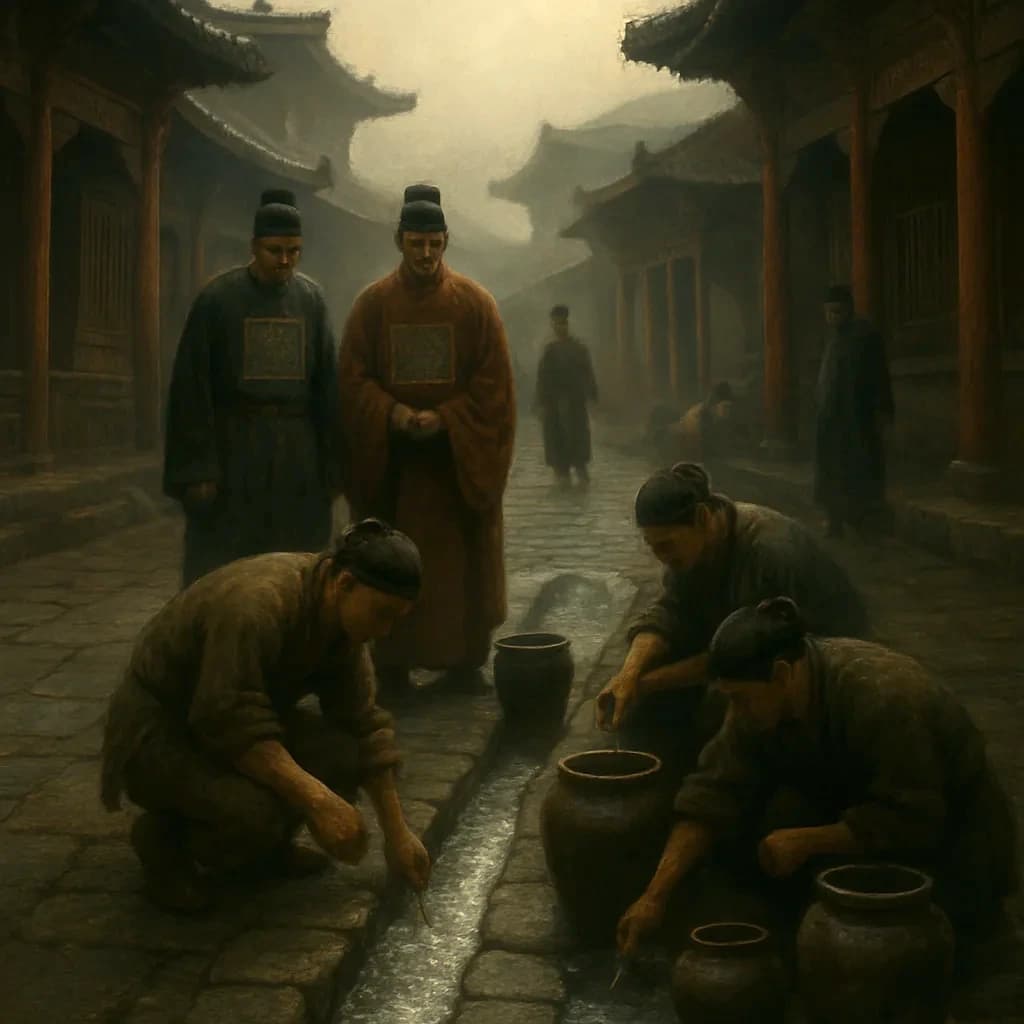
Beijing's Sewers Were Quietly Dissolving the Empire's Silver
A city's ancient drainage system became the stage for the world's first monetary crisis, and nobody realized it for three centuries.
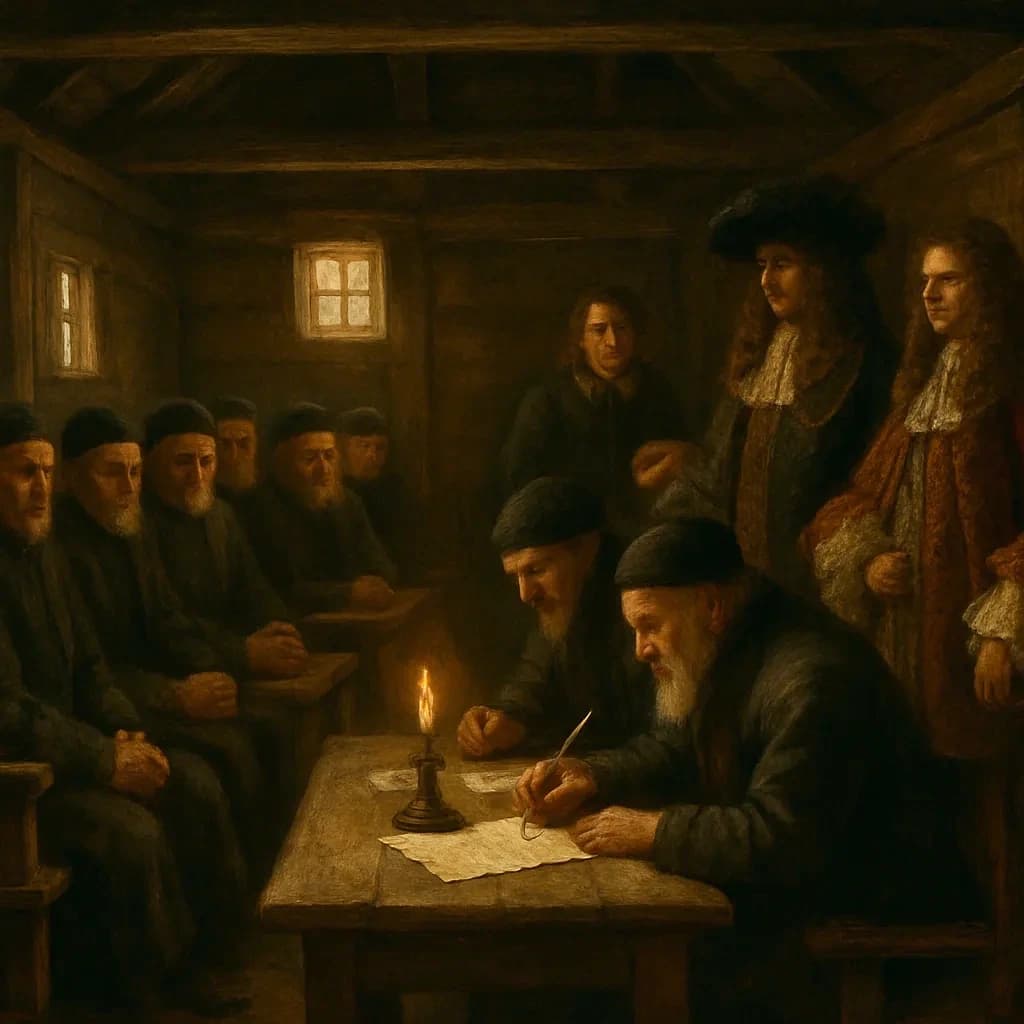
Iceland Dissolved Its Parliament to Survive on Cod
A desperate island nation traded its independence for cod quotas in 1662, creating Europe's most reluctant empire.
How One Barber Forced a King to Pay
A Paris barber's refusal to cut hair during wartime gave rise to the modern concept of worker's rights.
A Butter Obsession Cornered the World's Yellow Dye for Four Centuries
A Dutch businessman's obsession with perfect butter created an empire that would control the world's yellow dye for four centuries.
A Translator's Slip Made Venice a Chinese Province
A 15th-century diplomatic blunder nearly made Marco Polo's hometown part of the Ming Empire.
London's Wives Declared War on Coffee Houses
Thousands of London women signed a 1674 petition declaring that coffee houses turned husbands into eunuchs who preferred idle conversation to marital duties.
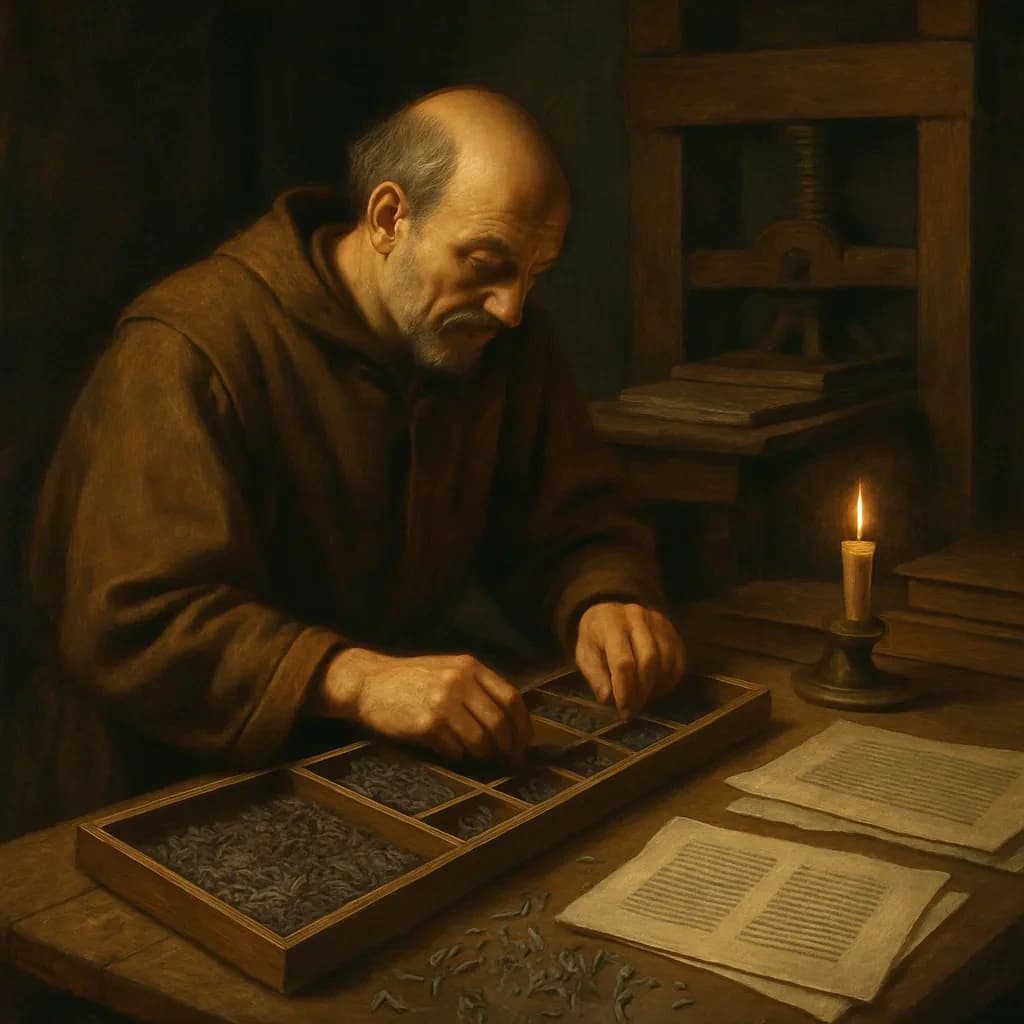
Italics: Born from a Printer's Need to Save Paper
A printer's apprentice made one small change to a manuscript in 1501, and ended up shaping the modern world.
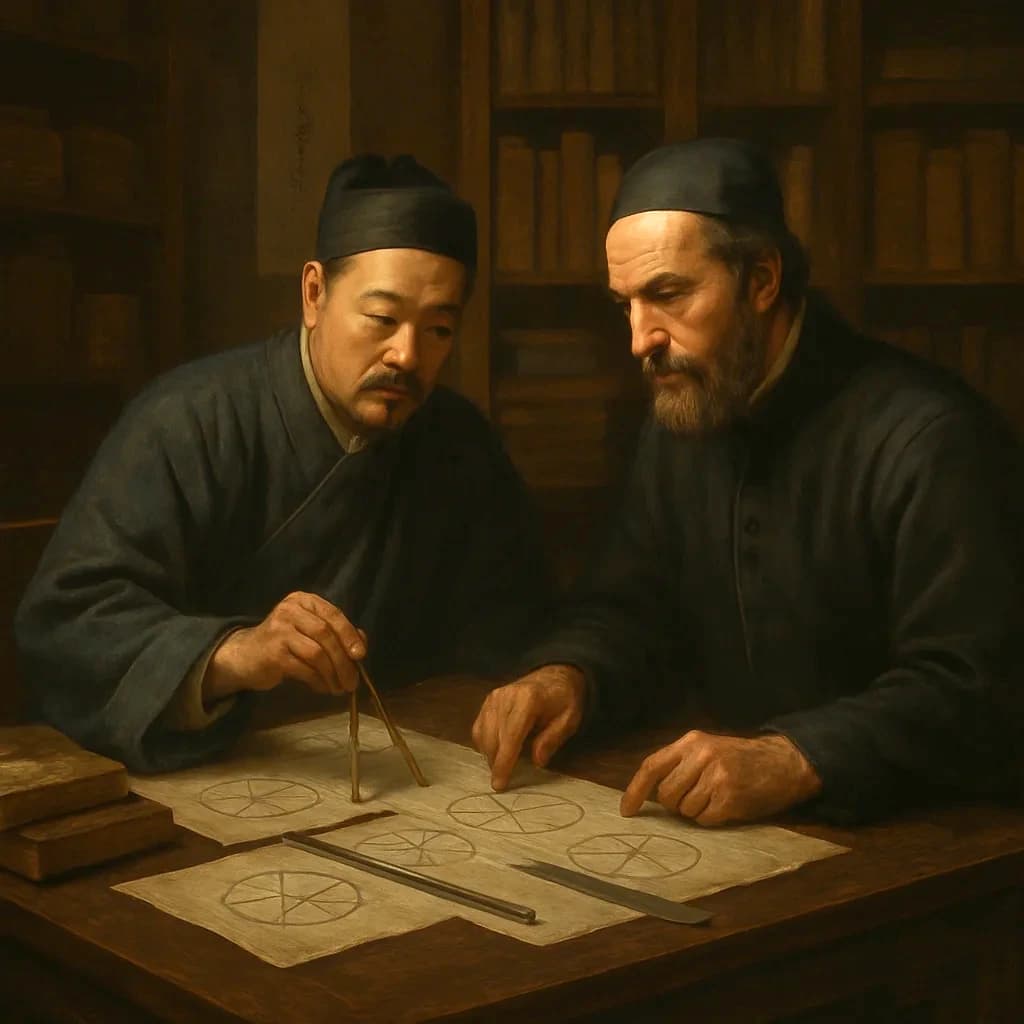
Euclid in Beijing: The Geometry an Emperor Banned
A Jesuit priest carried Europe's most dangerous book 6,000 miles to Beijing, not knowing it would reshape how an empire saw itself.
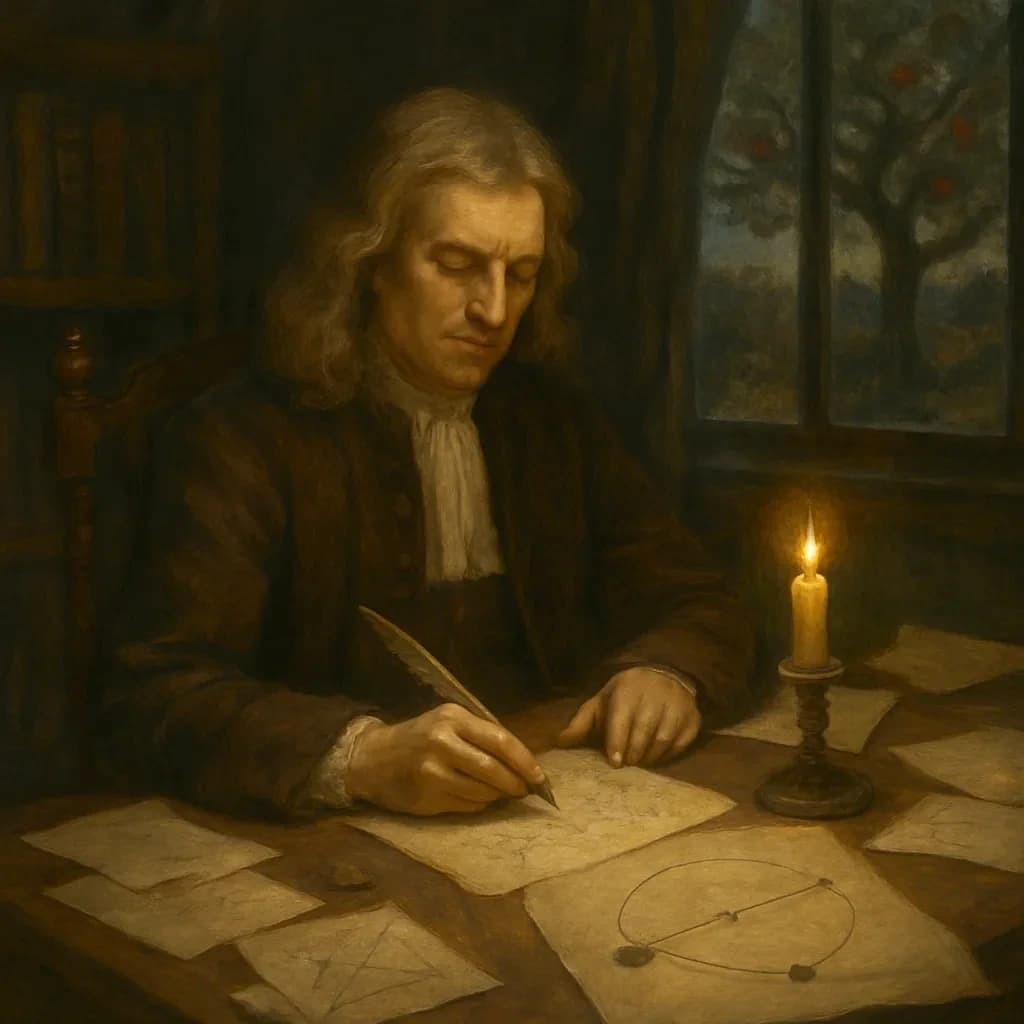
When Gravity Defeated Napoleon
A single scientific discovery in a Cambridge garden changed the trajectory of European warfare forever.
One Bookkeeper's Rumors Erased Half of England's Wealth
A London wine merchant's creative bookkeeping triggered England's most catastrophic financial bubble.
France Faked a Poisoner's Execution to Keep Her Chemistry
A convicted murderer drew a comfortable government salary for thirty years, because her poisons had solved France's biggest problem.
A Monk's Three-Day Mistake Nearly Wrecked the Calendar
One miscounted figure in 1584 nearly derailed the Gregorian calendar reform, and would have left the Christian world permanently out of sync with the seasons.
A French Cook's Sugar Mix-Up Became Europe's Deadliest Poison
A kitchen assistant's slip in 1675 would eventually kill more people than the Black Death.
The Midwife Who Saved Both Mother and Child
A German midwife in 1610 performed Europe's first recorded cesarean section where both mother and baby survived, then vanished from history.
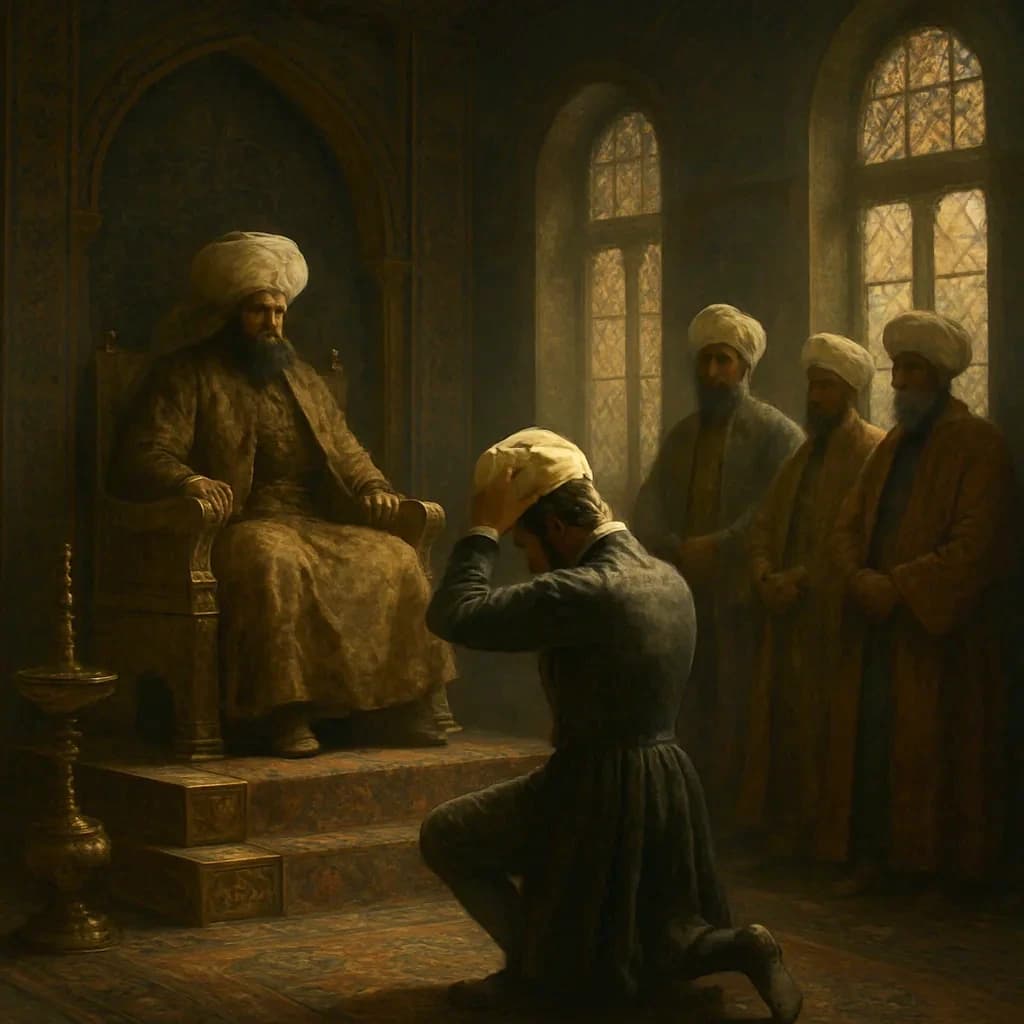
The Messiah Won Over the Sultan, Then Converted to Islam
A Jewish false messiah convinced the Ottoman Sultan to make him king of a new Jewish state, until he converted to Islam at the last moment.
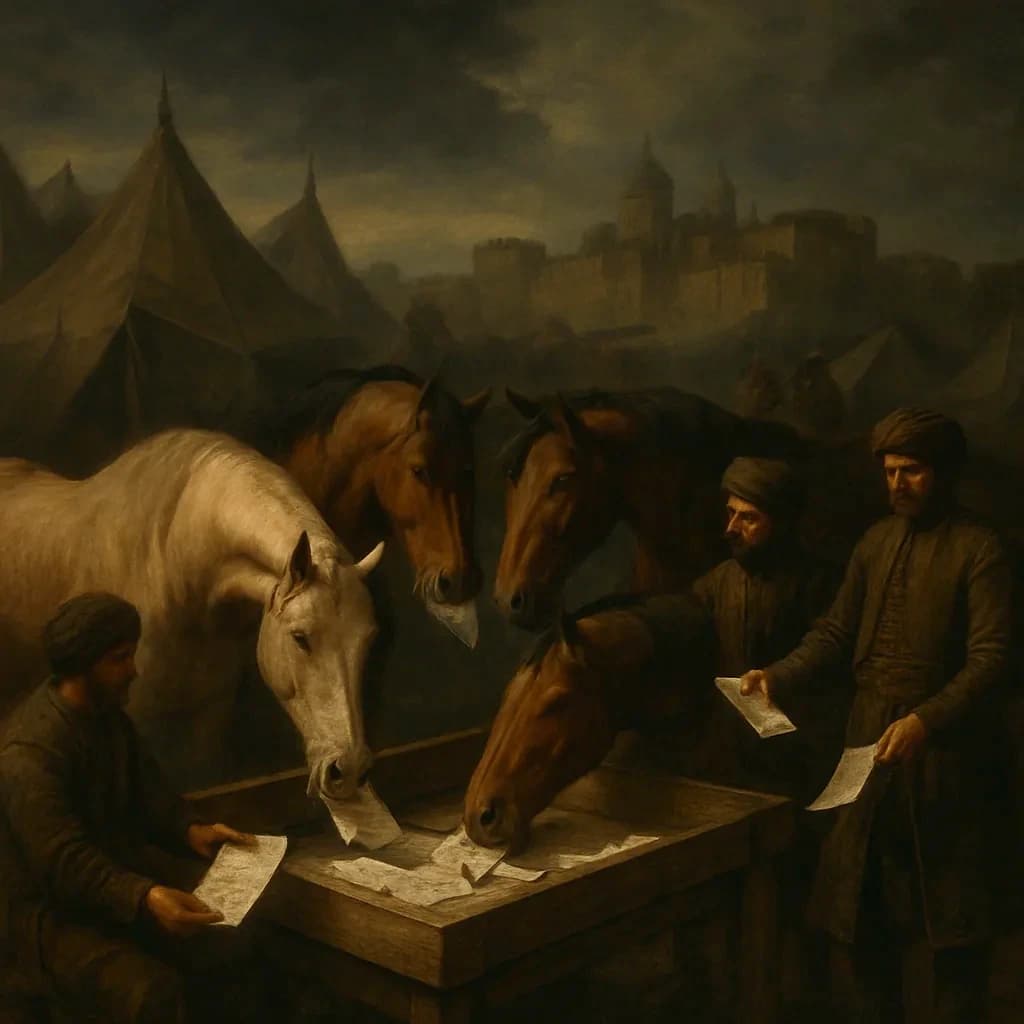
Vienna's War Horses That Could Read Enemy Mail
The Ottoman siege of Vienna in 1683 produced history's most unlikely literacy campaign, and it wasn't for humans.
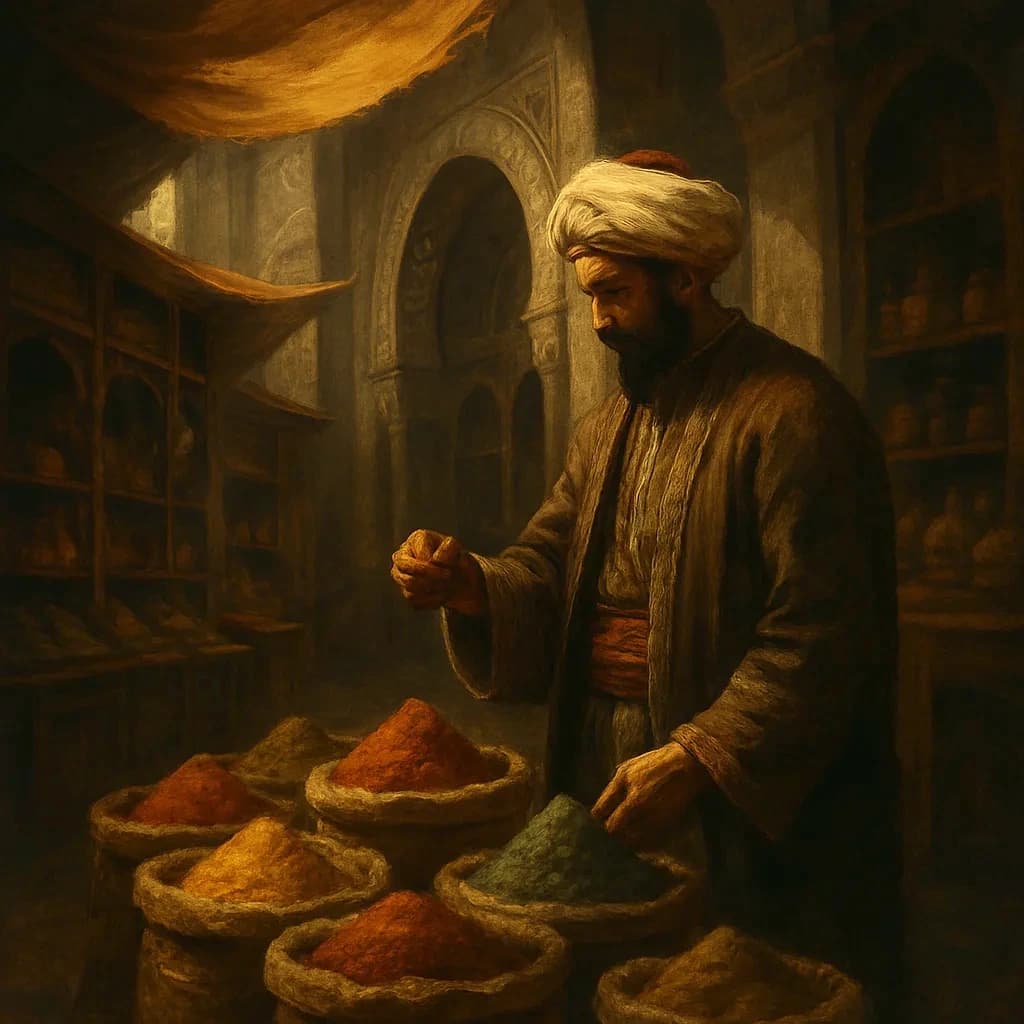
The Unpaid Pepper Bill That Broke Venice
A merchant's unpaid invoice in 16th-century Cairo triggered a chain of events that would reshape the Ottoman Empire's relationship with Europe forever.
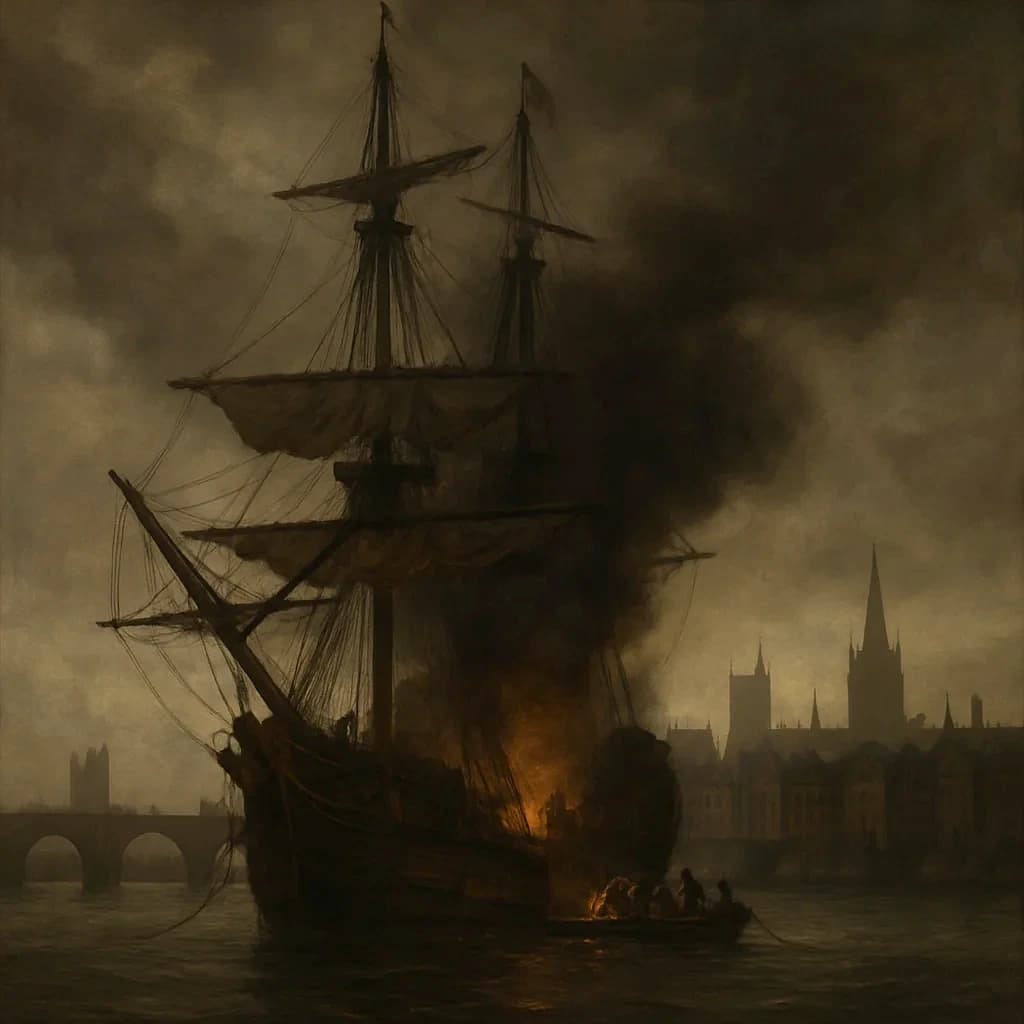
London's Great Plague Arrived on a Spice Ship
A merchant vessel left Marseille in 1665 carrying the most dangerous cargo in Europe, and arrived in London's port with nothing aboard but rats.
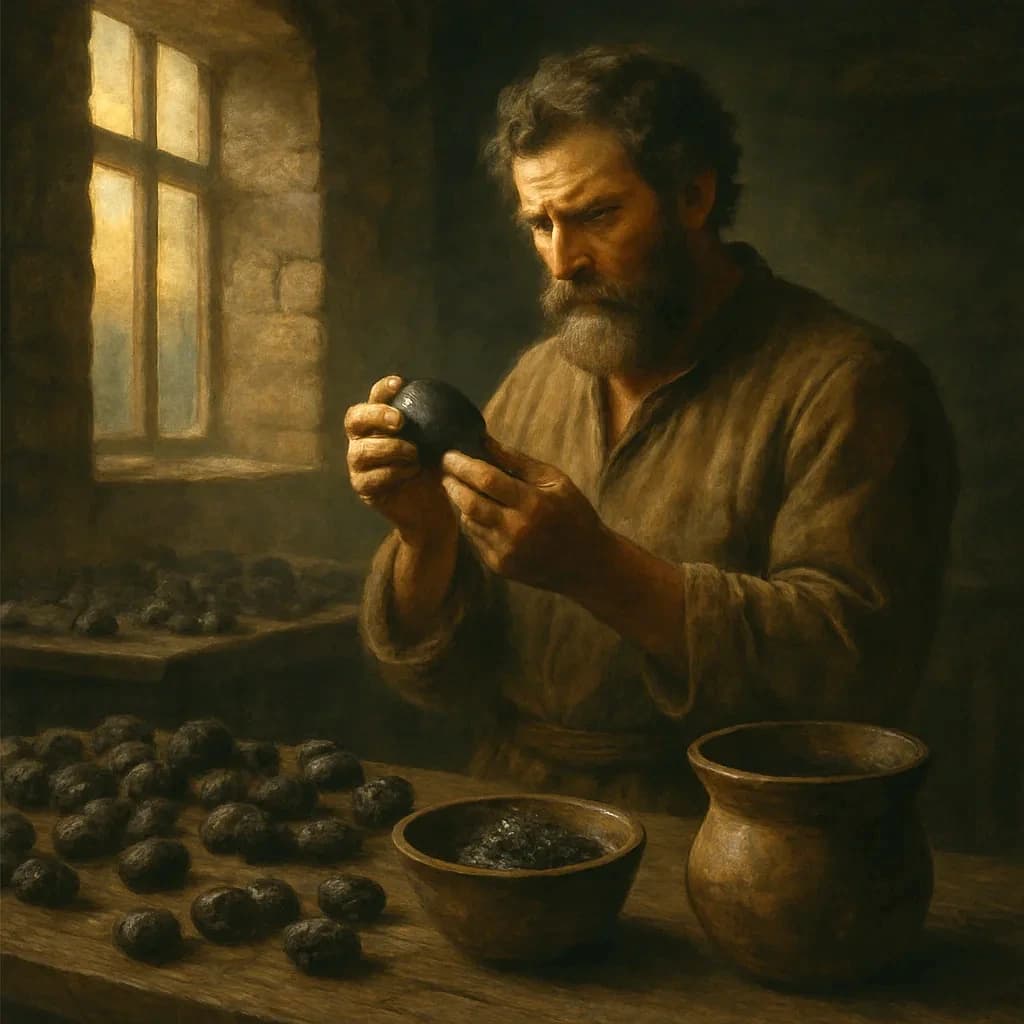
The Silkworm Farmer Who Forged Unbreakable Steel
A struggling silkworm farmer in 16th-century Italy stumbled onto the recipe for the world's strongest steel.
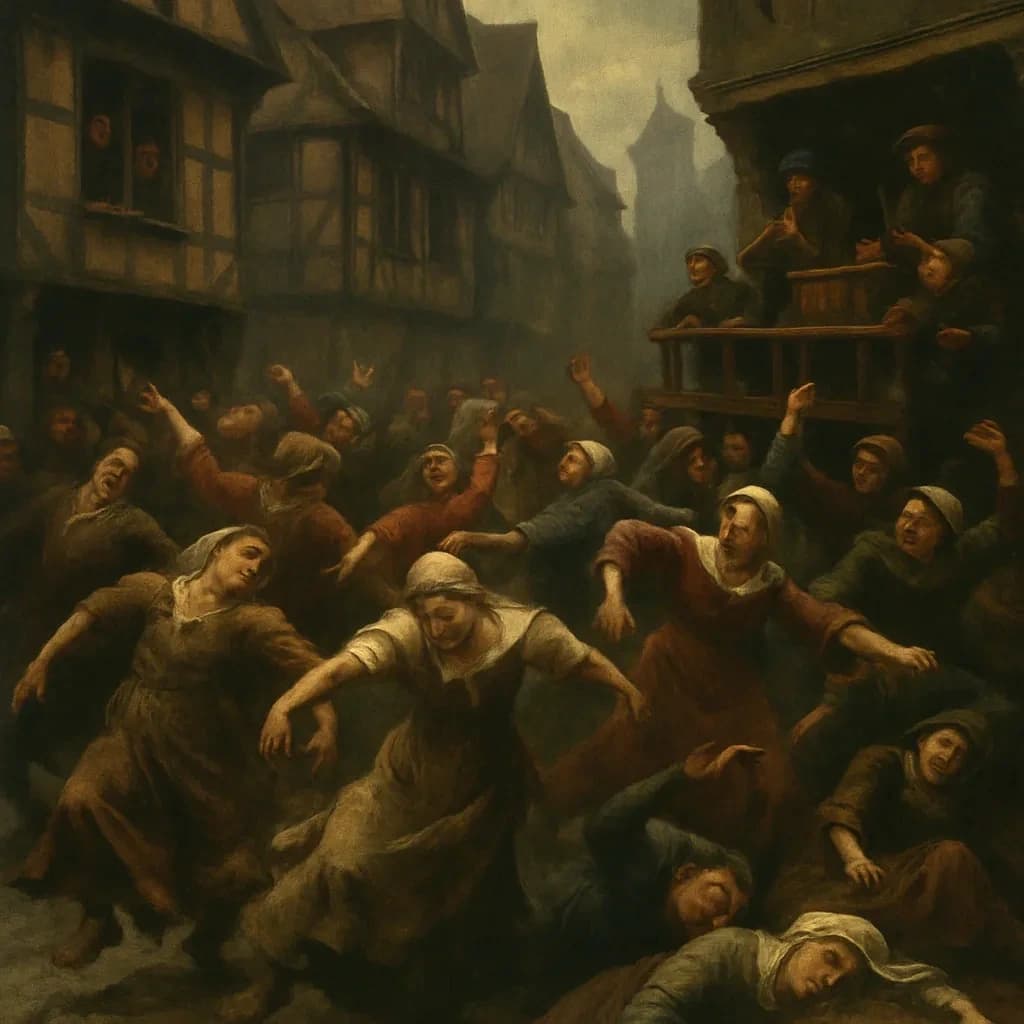
The Dancing Plague: When Strasbourg Couldn't Stop
The most dangerous epidemic in European history wasn't plague or pox in 1518. It was an unstoppable urge to dance.
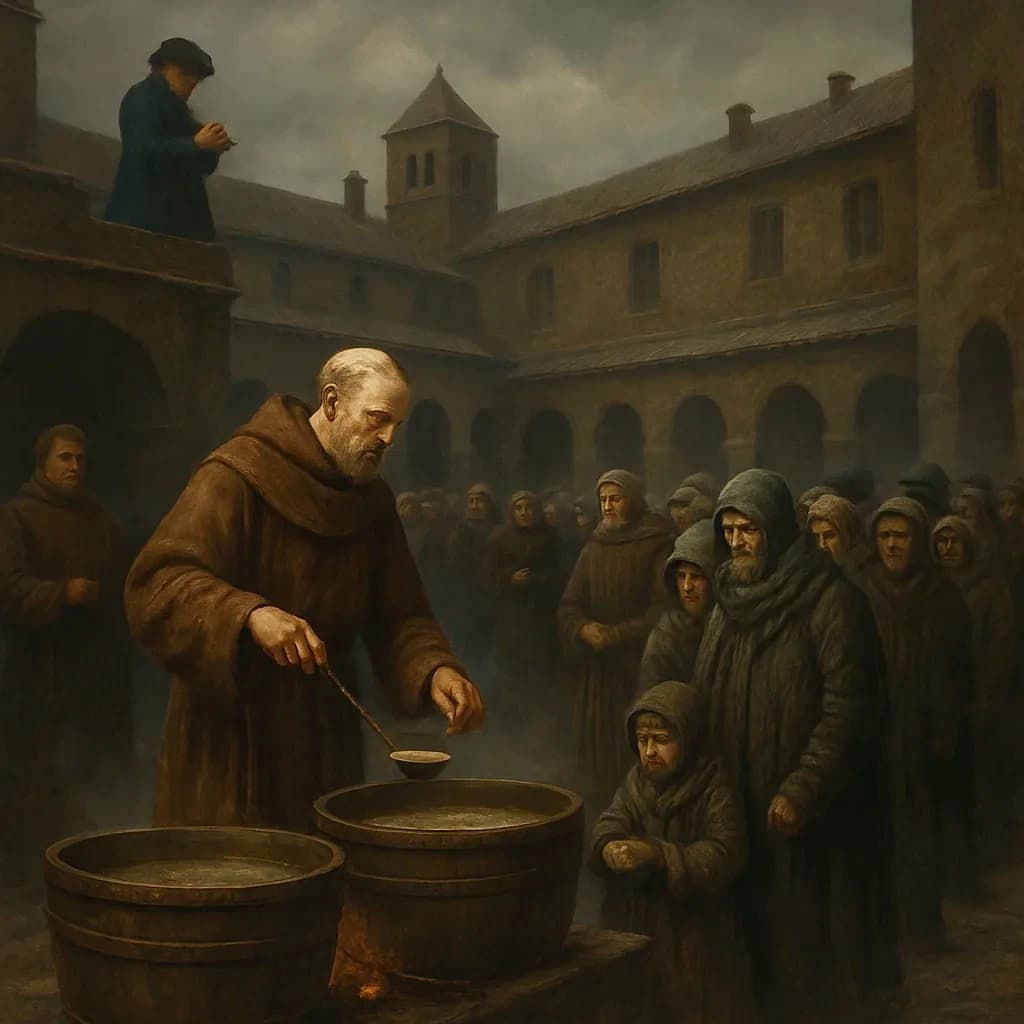
Five Loaves, Ten Thousand Guns
A French priest's charitable food distribution accidentally created one of history's most efficient killing machines.
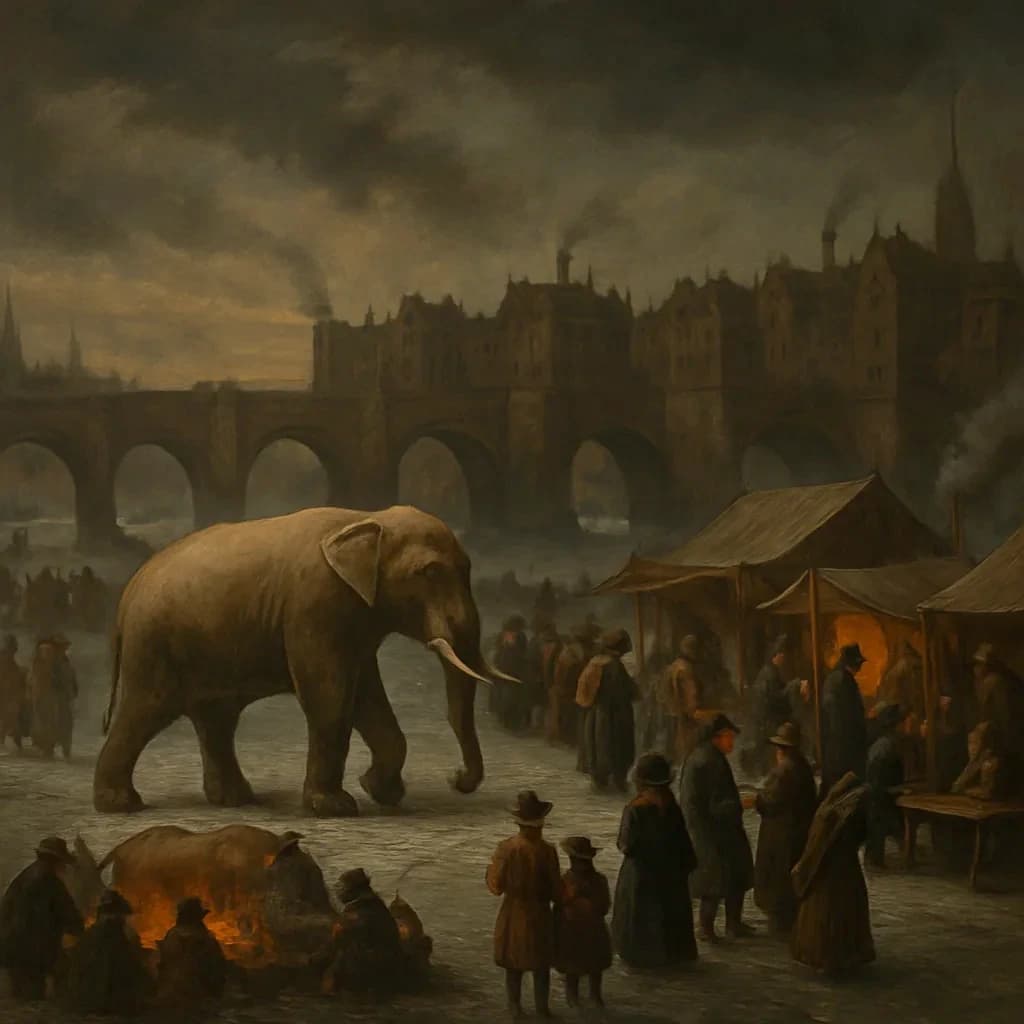
Frost Fairs: When London Partied on the Frozen Thames
For two centuries, London's river became a highway of ice thick enough to hold entire festivals, until the city thawed its own winter wonderland forever, with no idea it had done so.
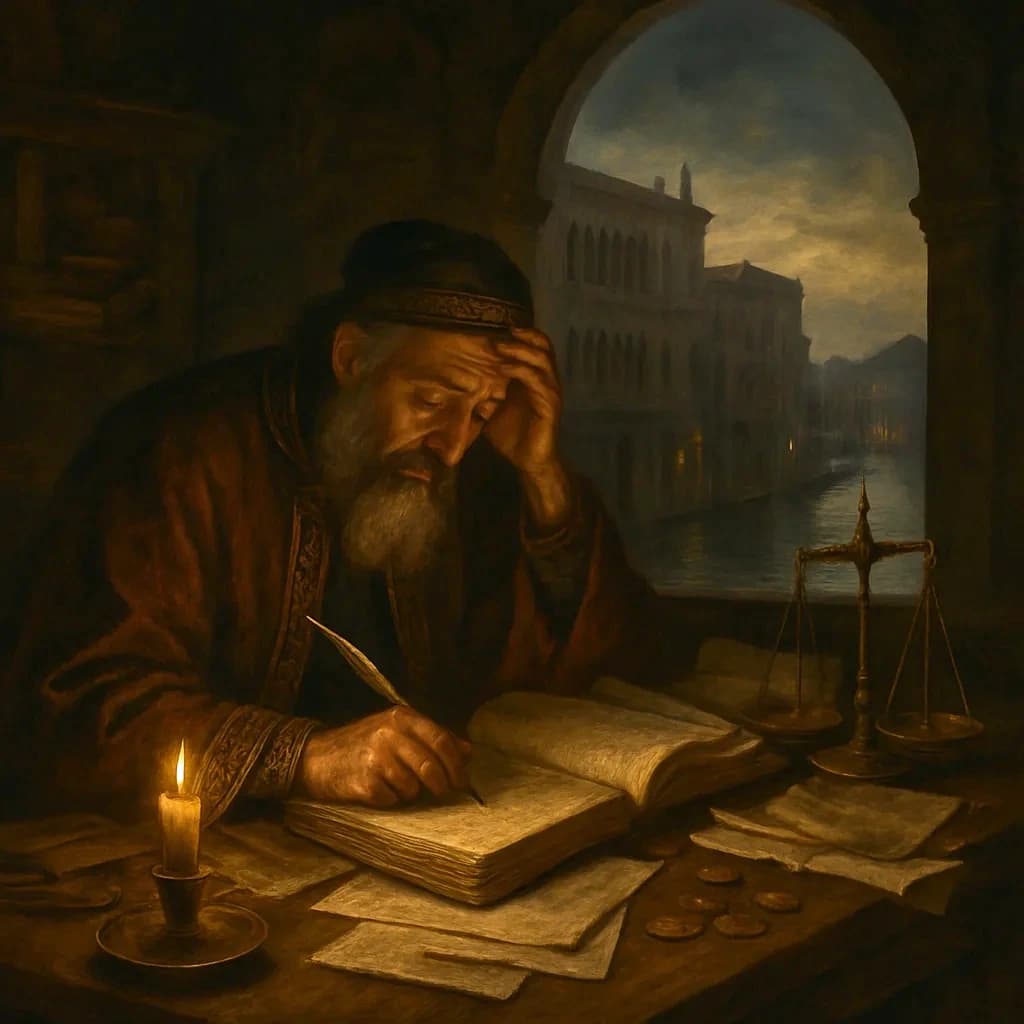
How a Bookkeeping Slip Helped Lose Constantinople
A Venetian merchant's miscalculation in his ledger book accidentally triggered the collapse of the Byzantine Empire.
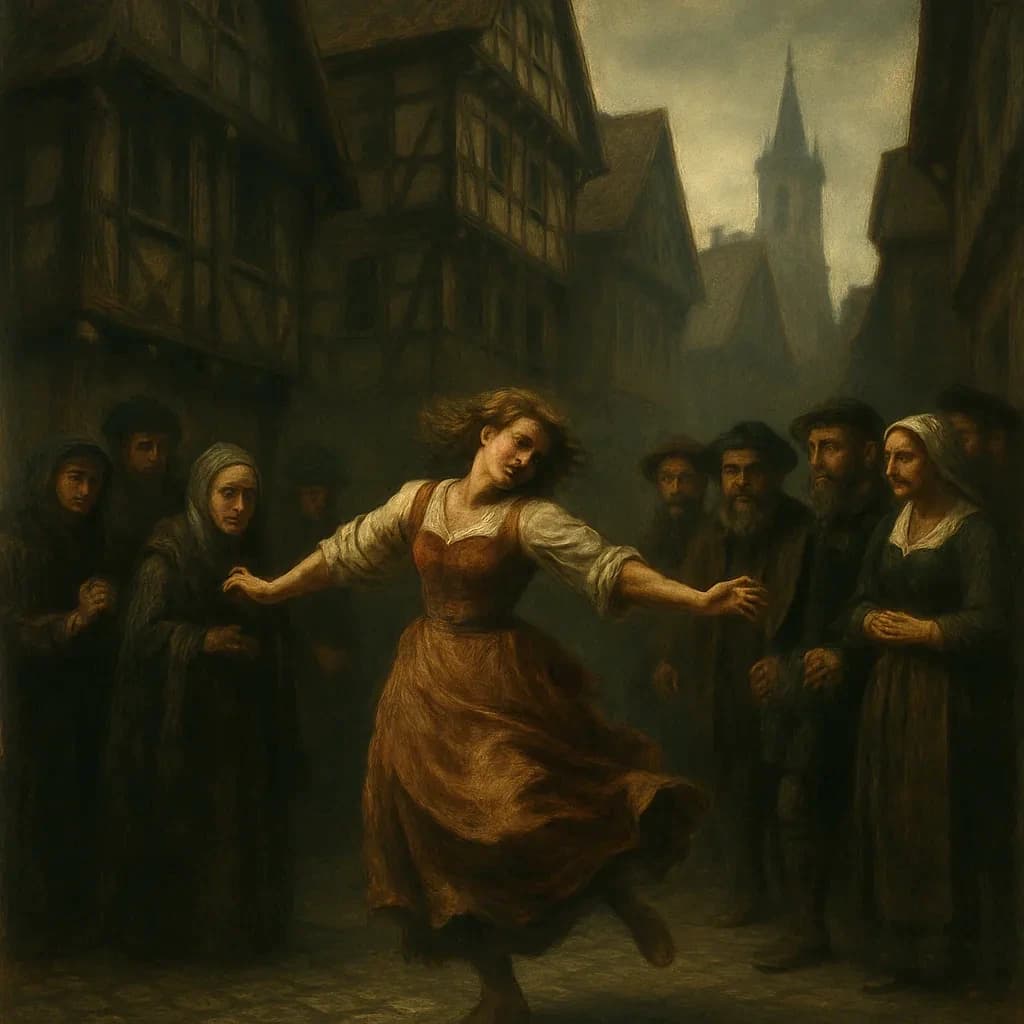
When 400 People Danced Themselves to Death
A baker's wife in Strasbourg started dancing in the street one summer day in 1518 and couldn't stop. Within days, hundreds joined her in history's deadliest dance party.
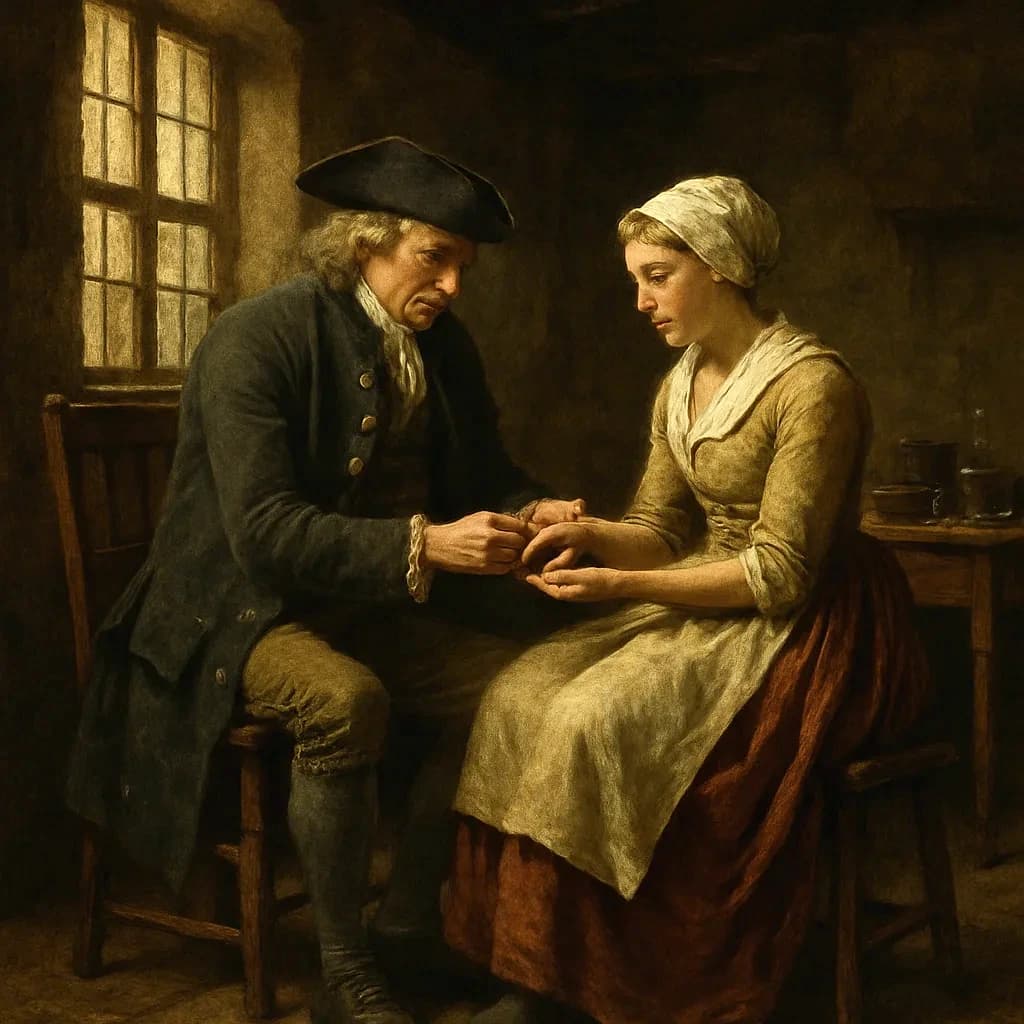
Jenner's Vaccine: How Curing Smallpox Made Wars Deadlier
A country doctor in 1796 discovered the one thing that terrified both sides of every war.
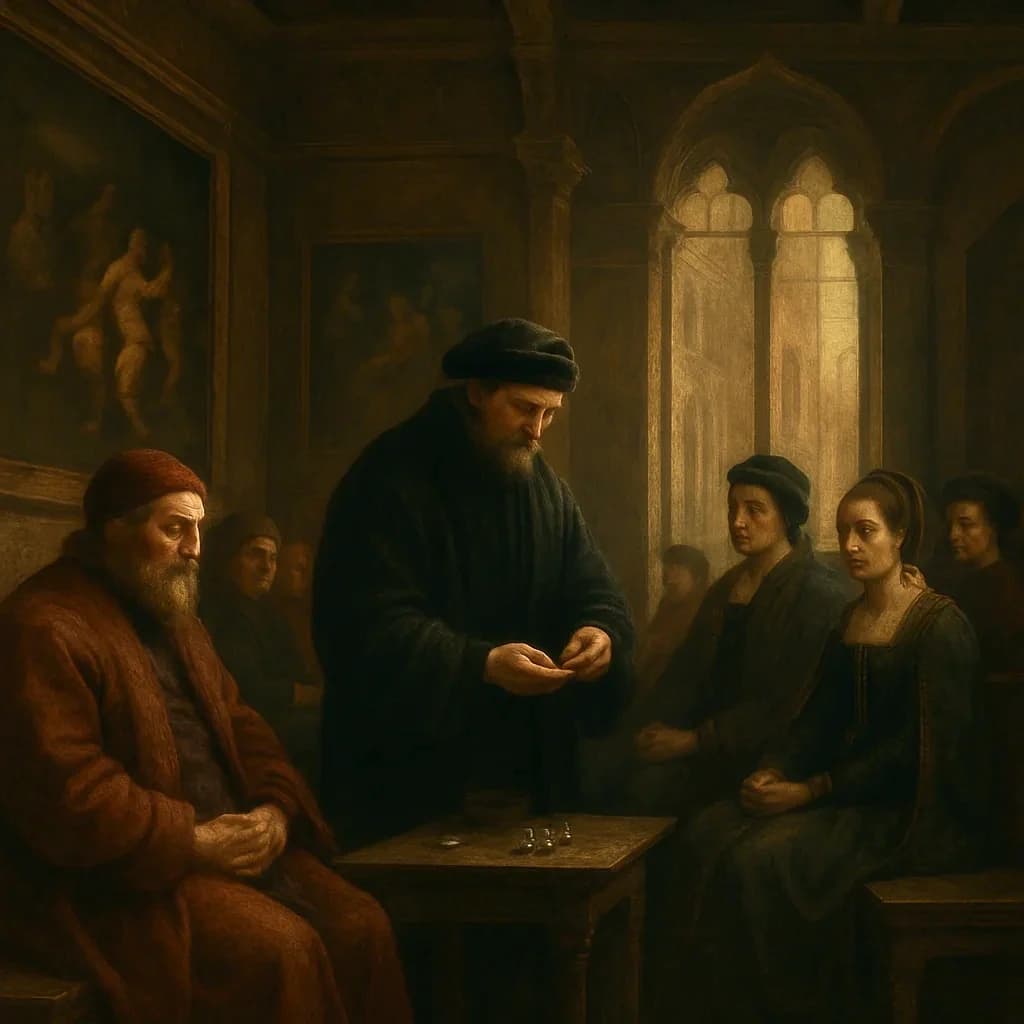
Mercury: The Syphilis Cure That Poisoned the Renaissance
A Venetian doctor's brilliant cure for syphilis became Europe's deadliest addiction.
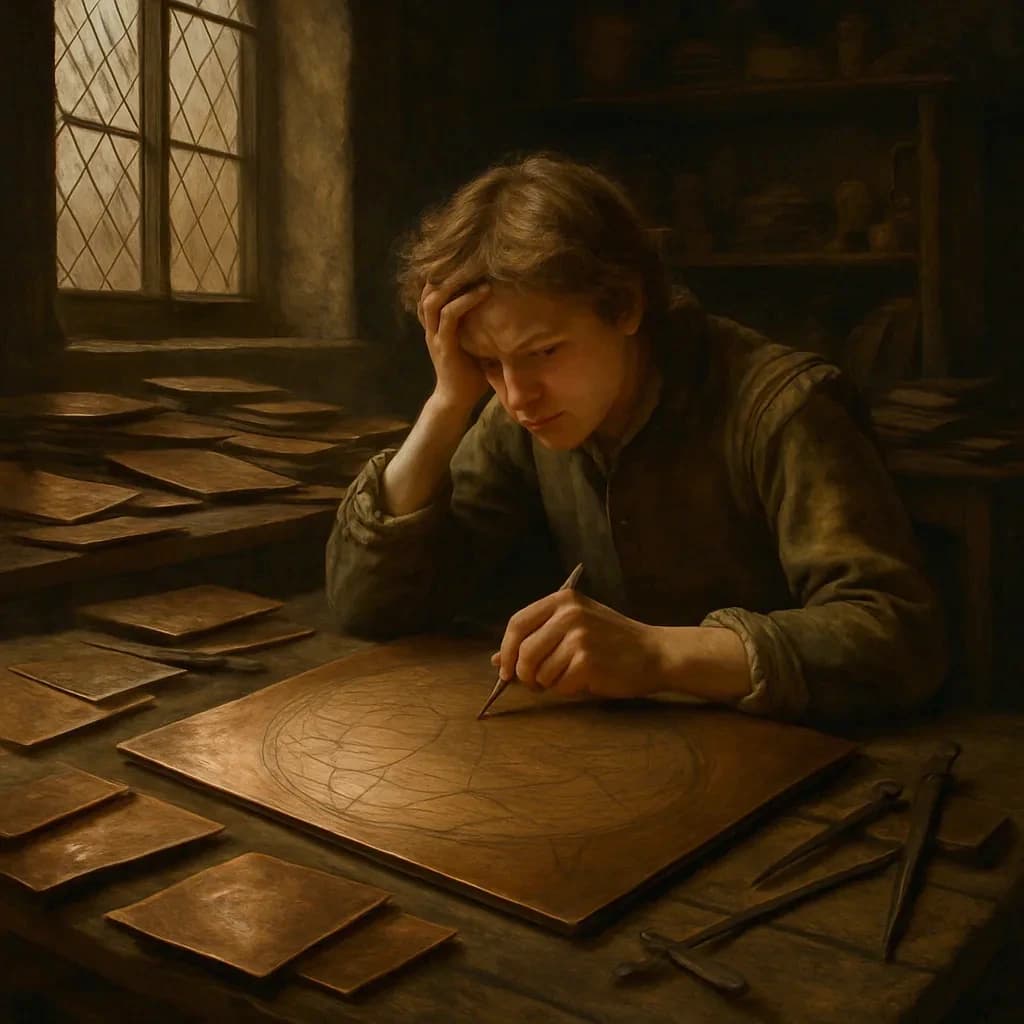
He Couldn't Copy His Father's Map Correctly
A young Dutch apprentice made so many mistakes on a 1569 world map that he created the most accurate navigation tool in history.
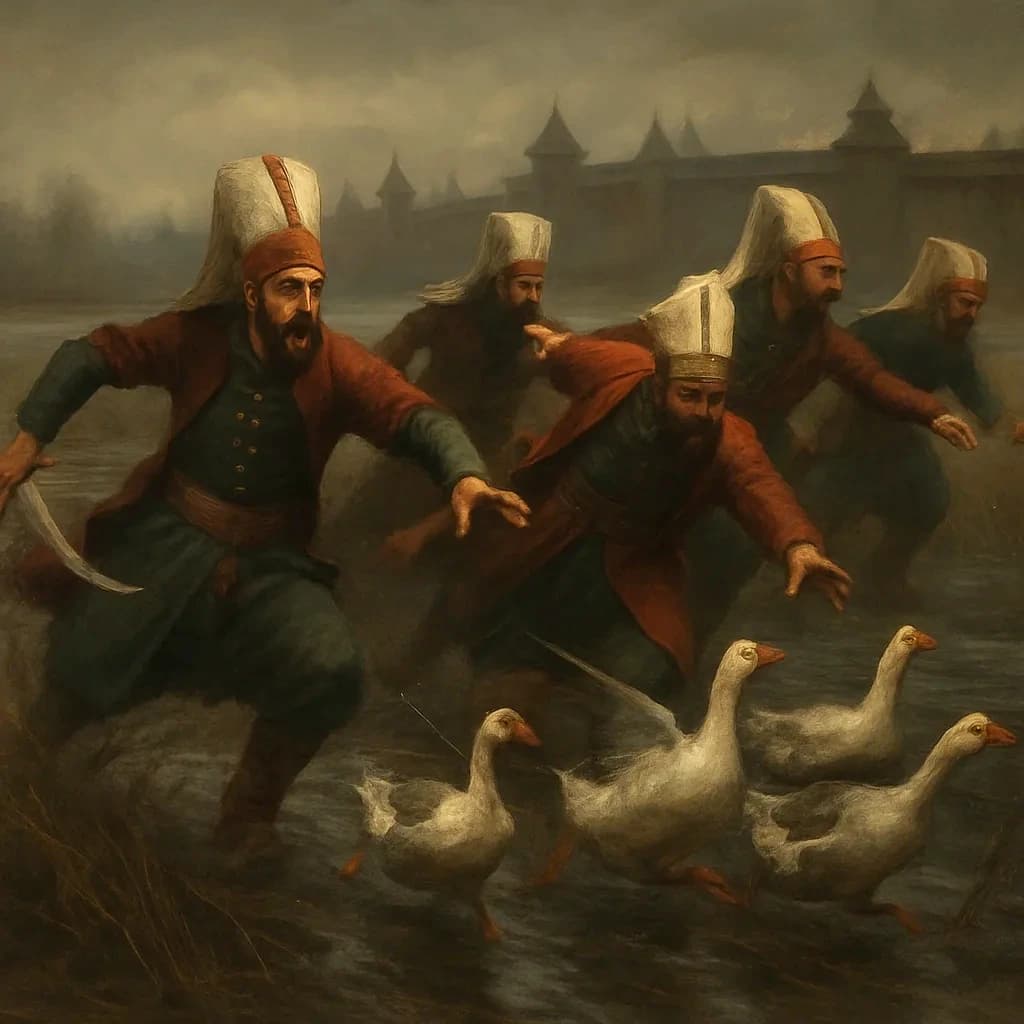
How a Goose Hunt Wrecked an Ottoman Army
Moscow's gates were in reach in 1571 when the Ottoman army's most elite troops stopped to hunt a single bird.
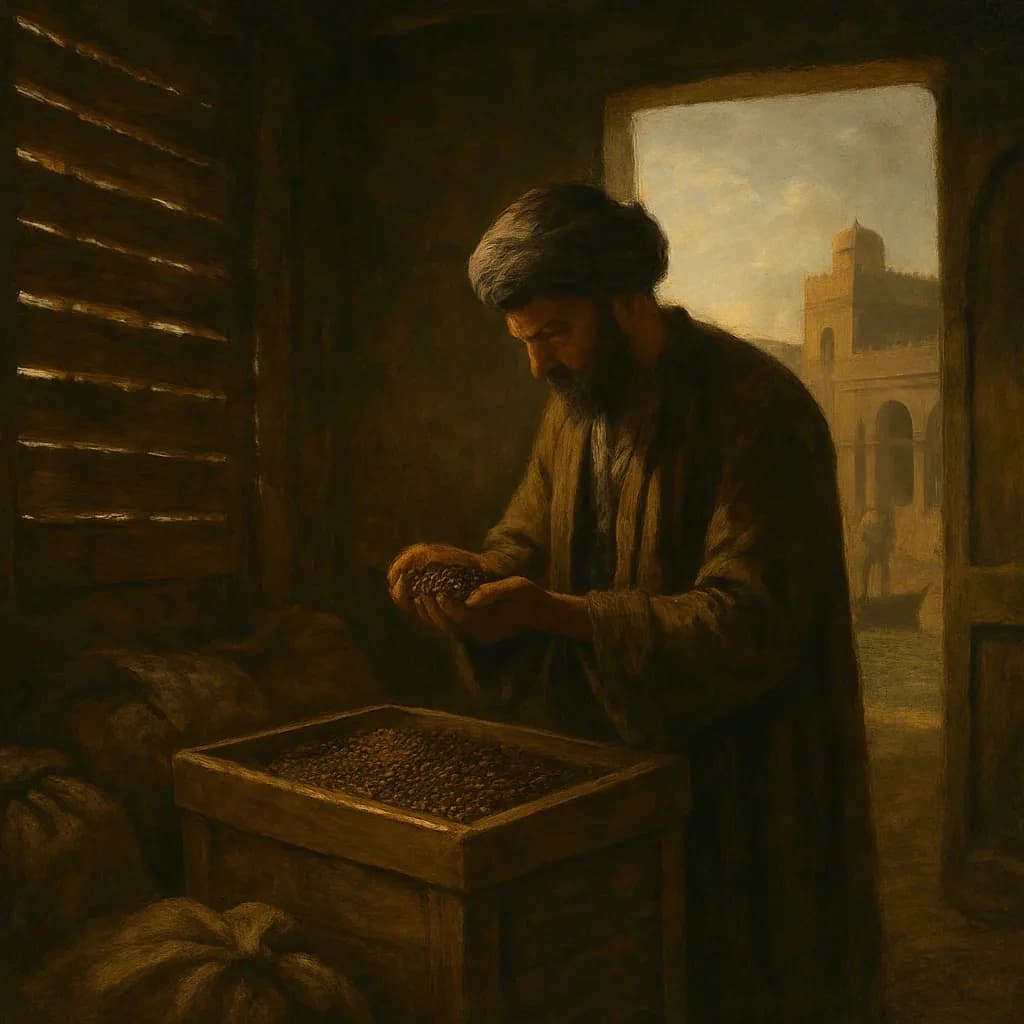
Seven Coffee Beans Smuggled in a Pilgrim's Robe
A single stolen bean changed three continents, but the man who took it died knowing he'd doomed his homeland's greatest treasure.
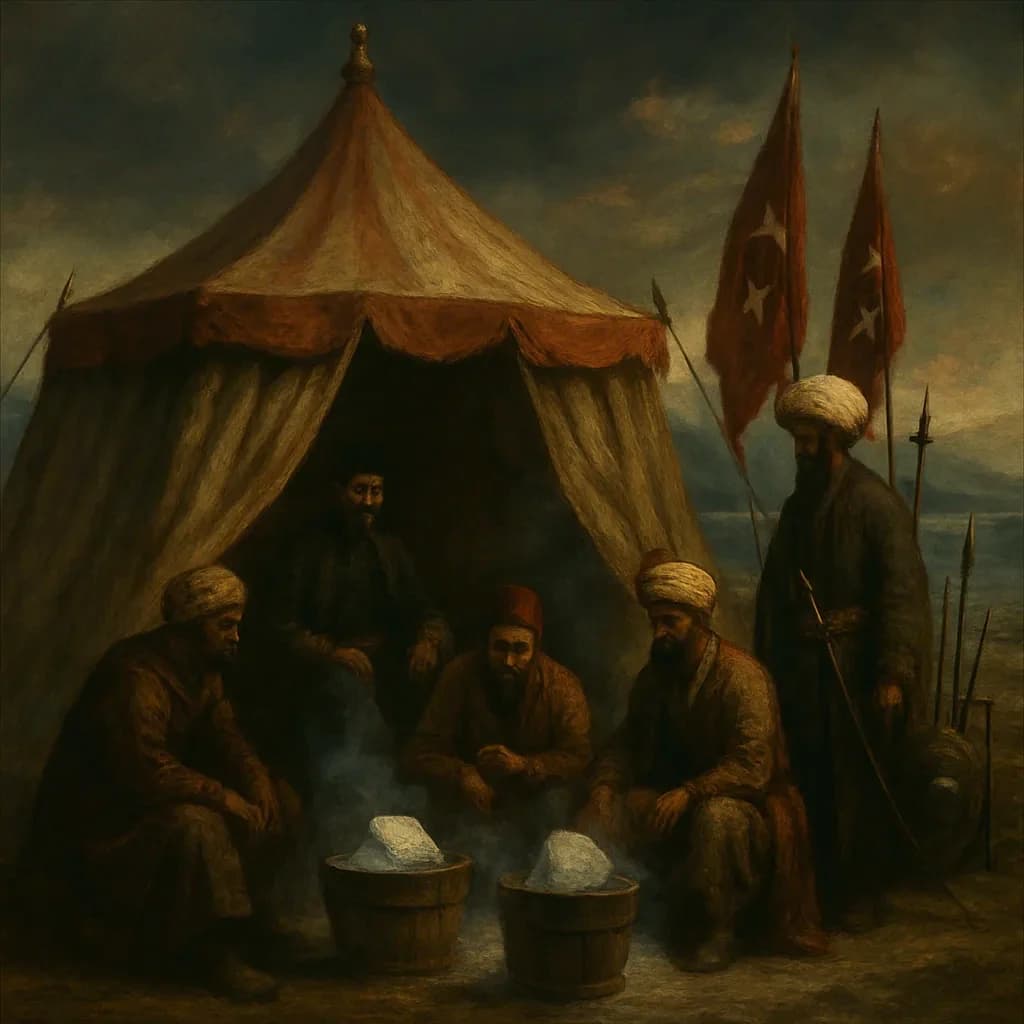
Ice for an Empire: The Merchant Who Bankrupted a Vizier
A Venetian ice merchant sailed into the siege of Candia in 1669 with a cargo hold of frozen Alpine blocks, and may have stalled the Ottoman Empire's advance into Europe for a generation.
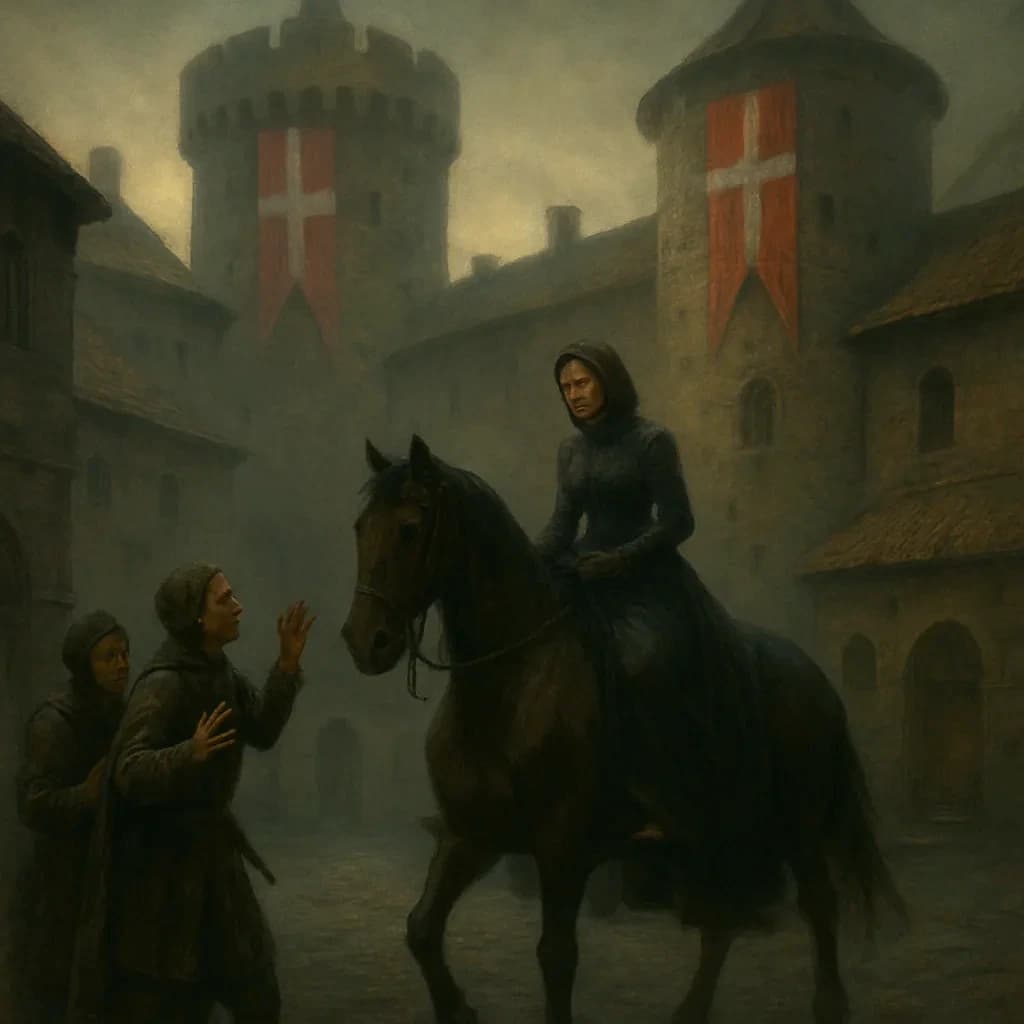
She Rode to Tell Sweden the King Had Lied
A Danish king promised reconciliation in 1520 and delivered mass murder instead, but one woman's midnight ride changed how Europe thought about promises.
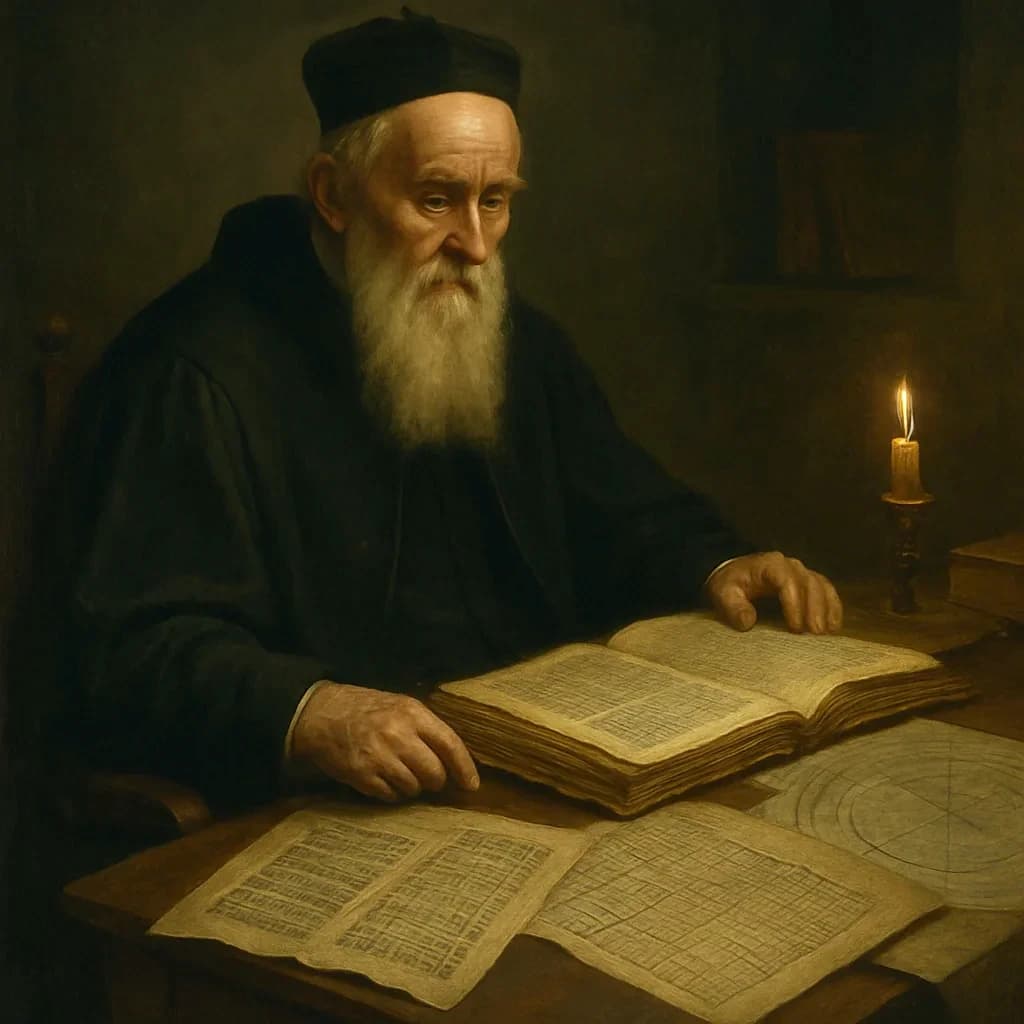
He Proved the Universe Older Than the Bible, and Regretted It
The astronomer who proved the universe was older than the Bible said it was, and lived to regret it.
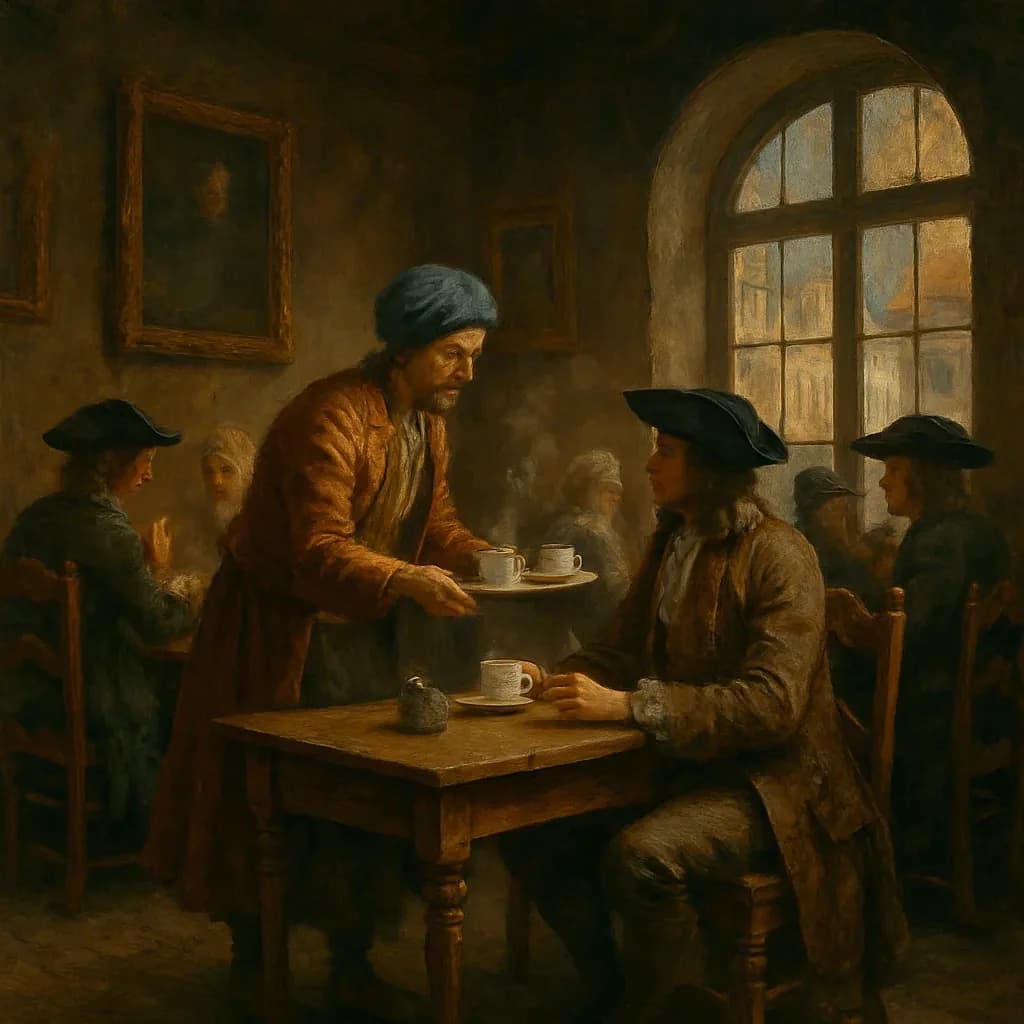
When Vienna's Coffee Houses Saved Christianity
A Polish spy's breakfast choice at the Gates of Vienna changed the course of European civilization forever.
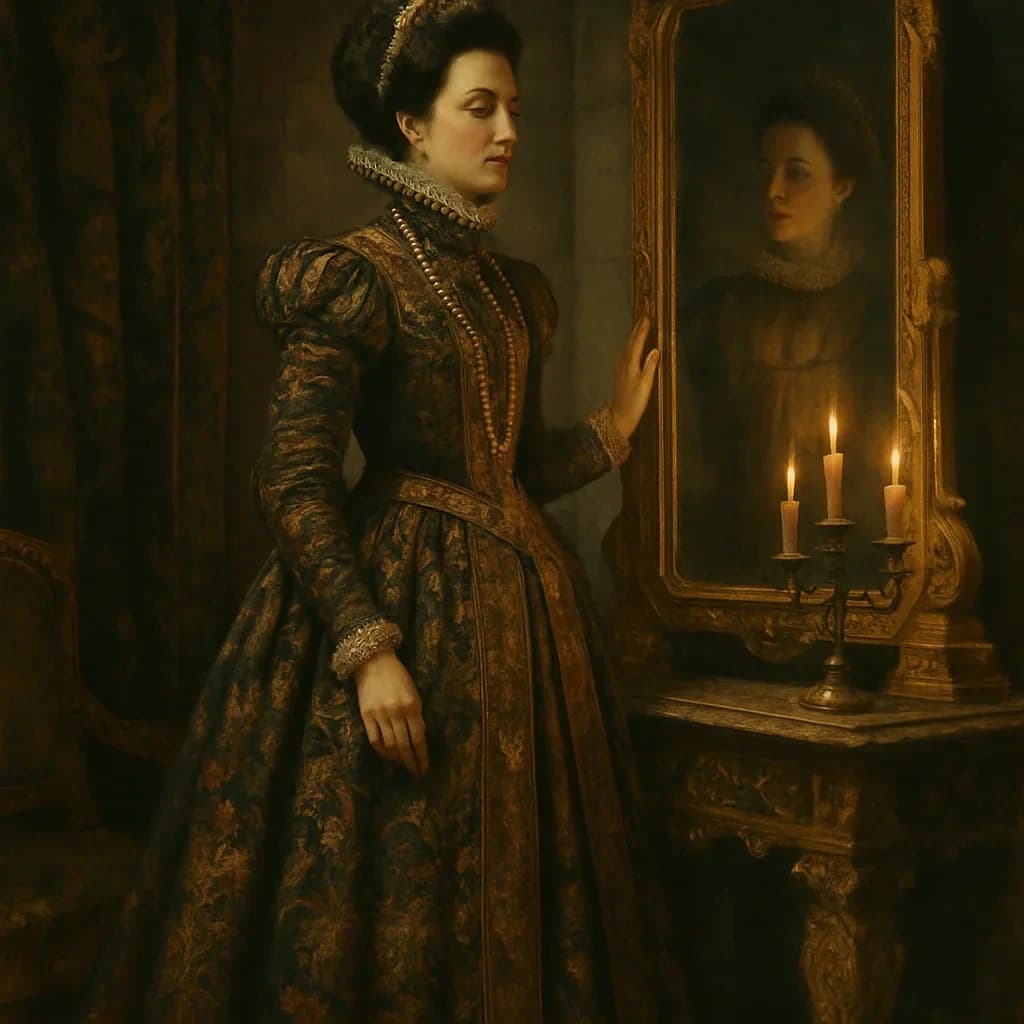
The Countess Who Bathed in Blood for Eternal Youth
A Transylvanian countess believed eternal youth required a very specific ingredient, and a very specific source.
When Prague Forgot Its Name Was Paris
A mapmaker's drunken mistake in 1572 accidentally created the modern Czech Republic, and nobody noticed for three hundred years.
Copernicus Waited Until His Deathbed to Publish
For twenty-six years, a Lutheran pastor in 16th-century Prussia made astronomical observations so precise they would revolutionize how humans understand the universe.
The Notaries Who Locked Out an Emperor's Heir
For three days in 1547, the Holy Roman Empire's most powerful throne sat vacant because no one could figure out who owned it.
He Sailed for Spices and Found Australia
A Dutch sea captain bound for the spice islands in 1628 made a navigation error that would establish one of history's most lucrative trading empires.
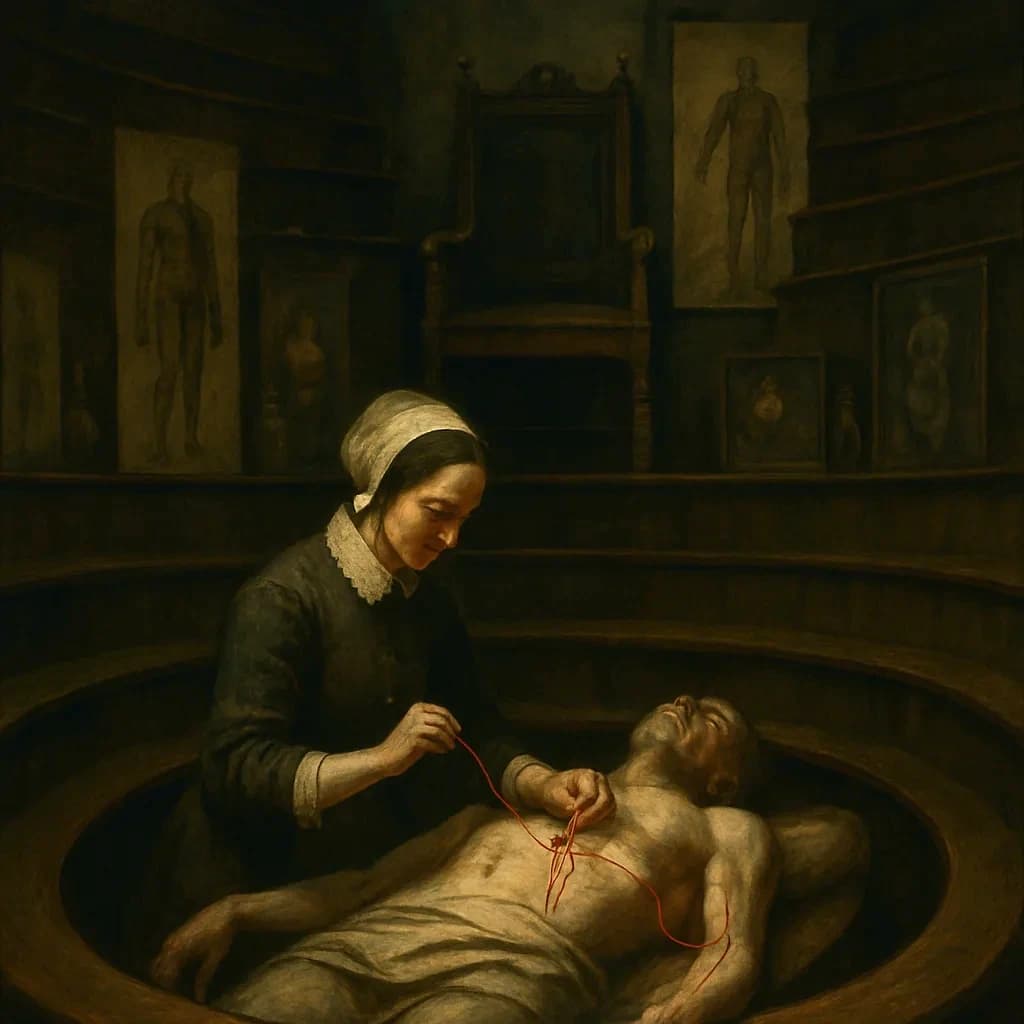
The Surgeon Who Never Existed
For nearly four centuries, medical students across Europe learned their anatomy from a fictional character whose 'discoveries' were actually stolen from a woman.
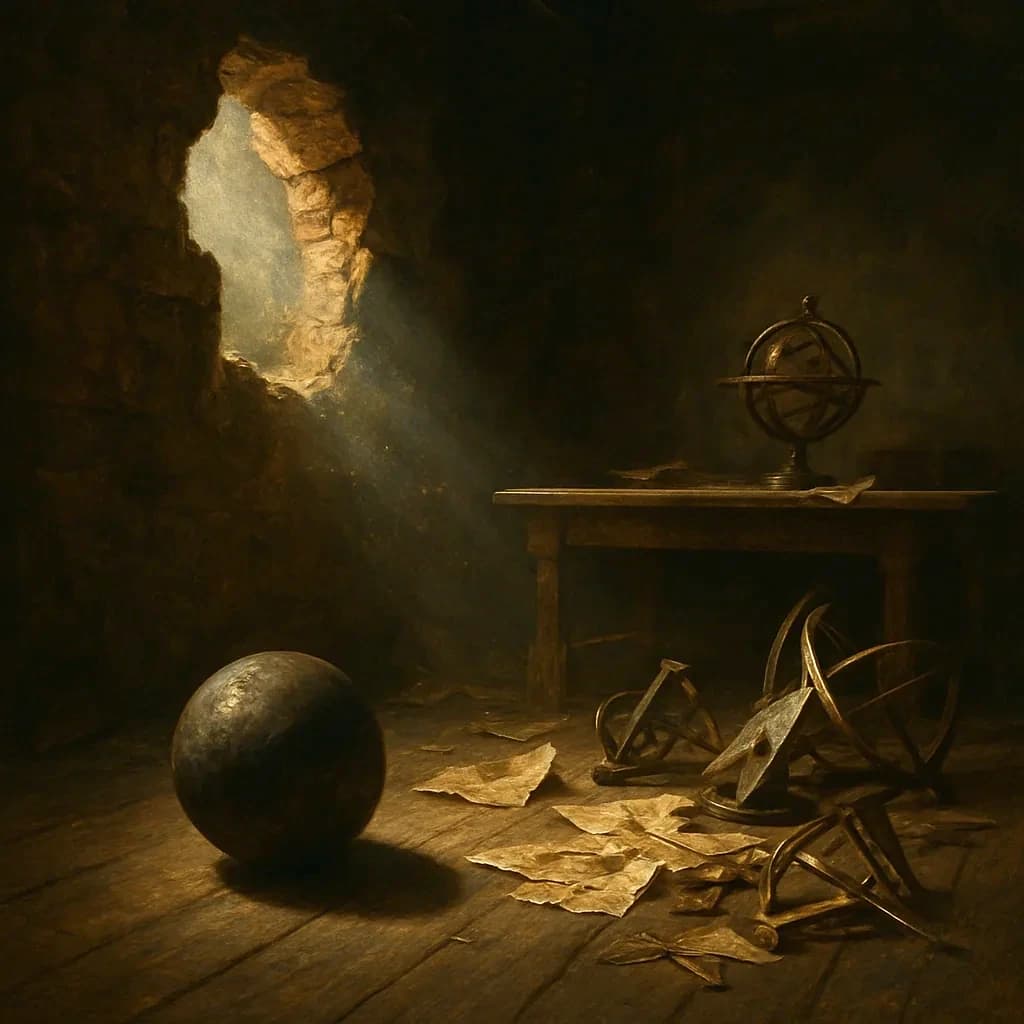
Galileo Hid Heresy Inside Europe's Cannon Tables
A cannonball crashed through Galileo's workshop in 1633, and the blast only made him more dangerous to the Church.
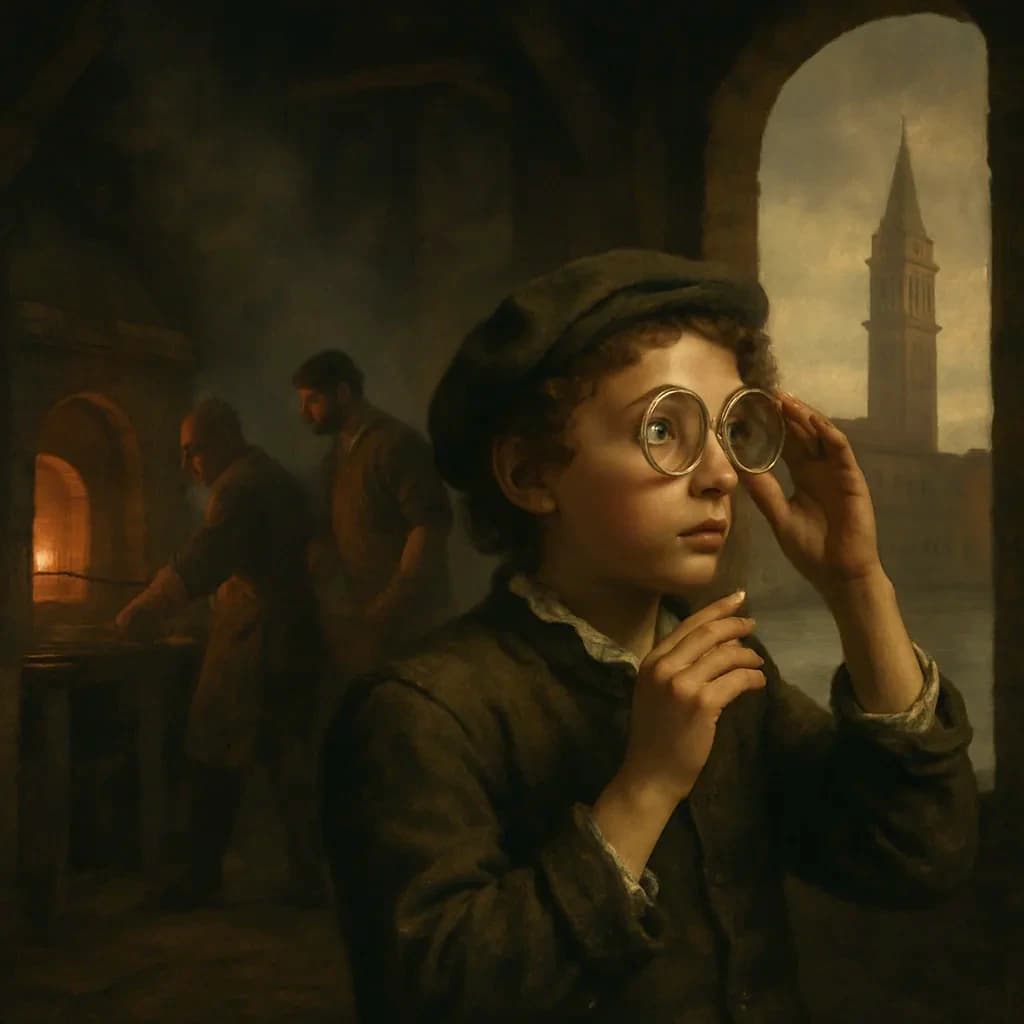
An Apprentice's Lens Knocked Earth From the Center of the Universe
A Venetian glassmaker's apprentice stumbled upon a lens that would eventually move the Earth from the center of the universe.
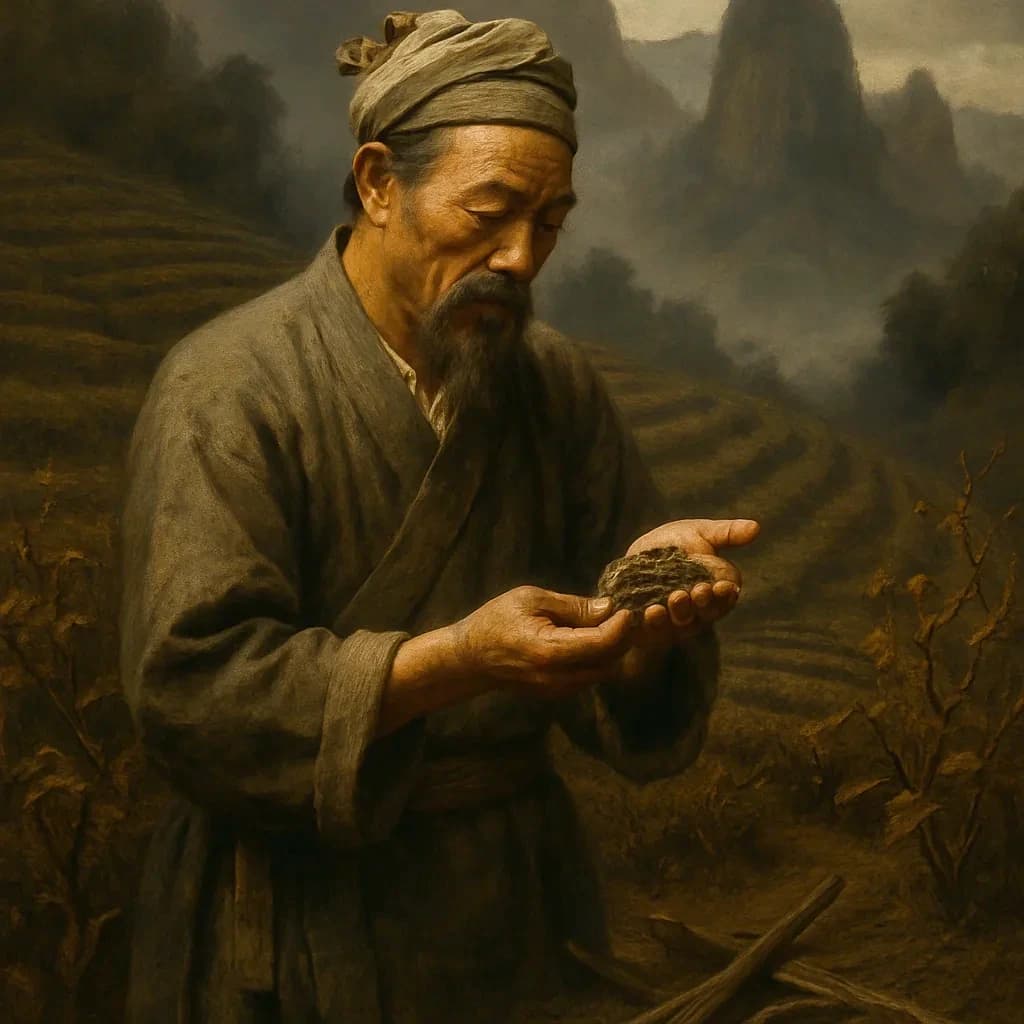
The Ruined Harvest That Built Tea Empires
A Chinese tea master's desperate experiment to save his harvest accidentally created the most profitable drink in human history.
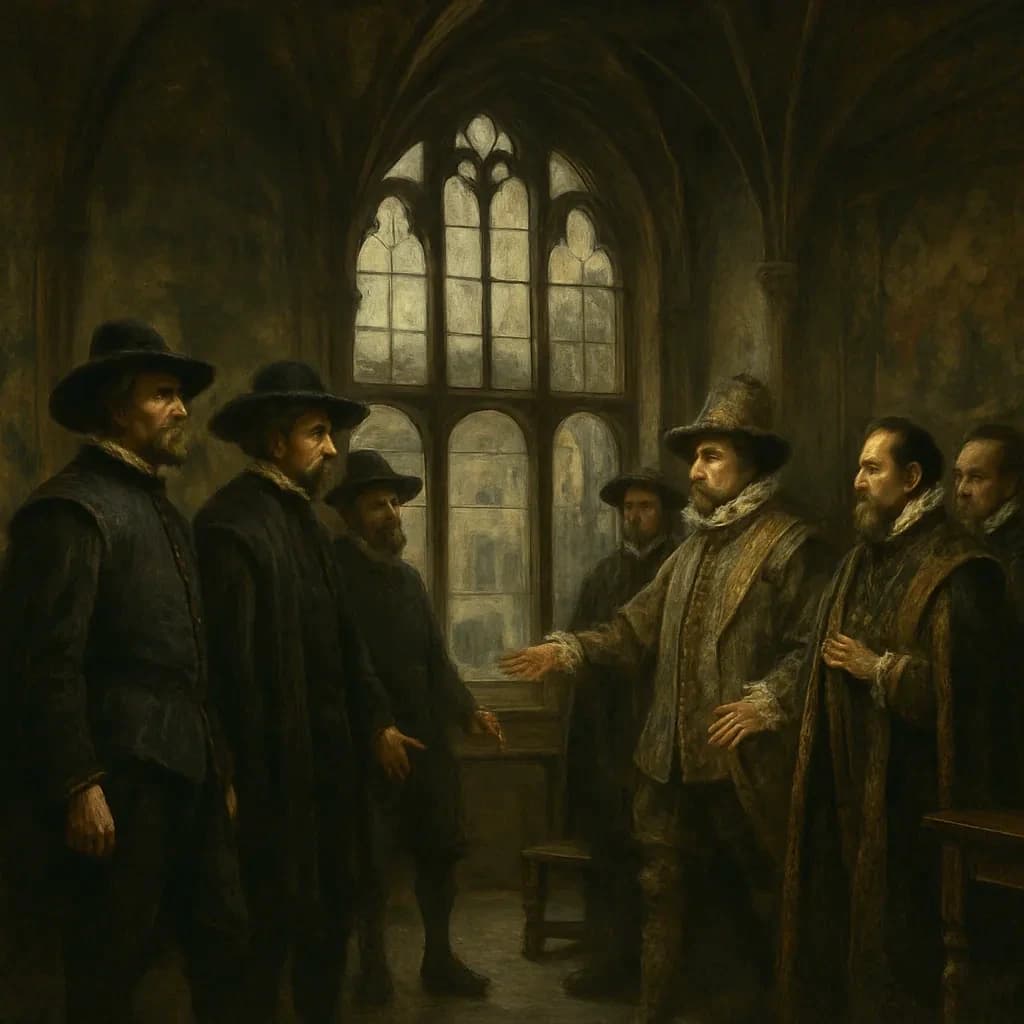
Prague, 1618: A Wrong Window Launched the Thirty Years' War
Three Protestant nobles planned to throw two Catholic officials from Prague Castle's window in 1618, but they chose the wrong room, the wrong window, and lit the fuse on the Thirty Years' War.
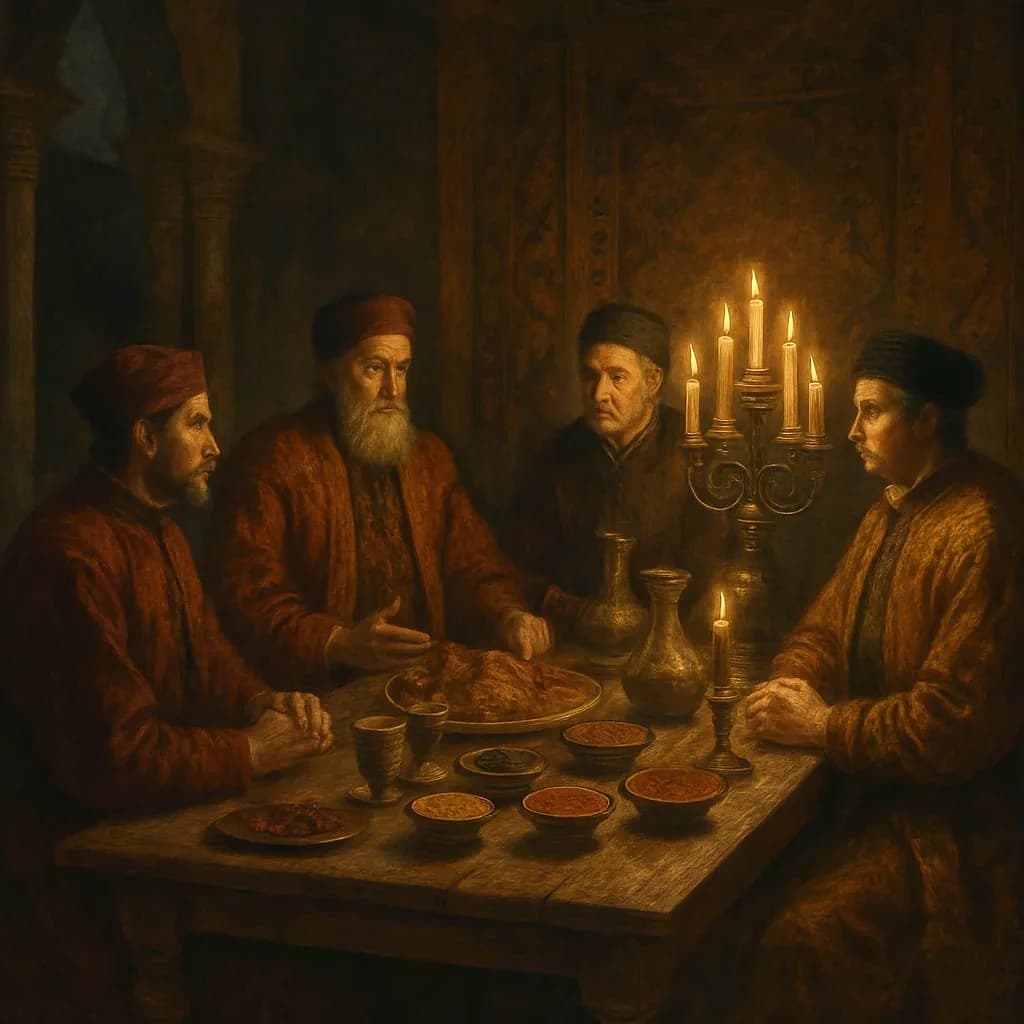
A Venetian Merchant's Spice Blend Remade the World
A Venetian merchant's dinner-party trick with eastern spices created the economic force that would reshape global trade forever.
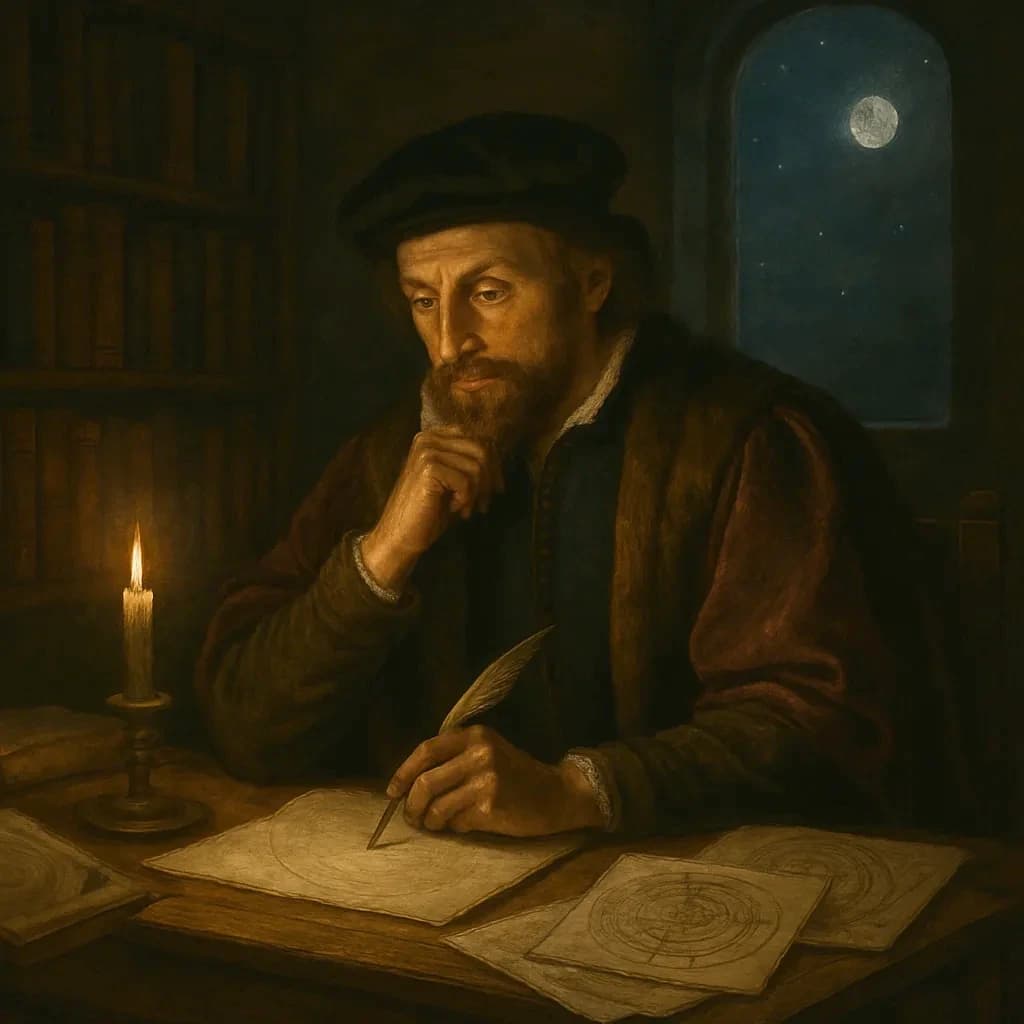
Smuggling Heresy: The Secret Preface Inside Copernicus's Book
A Dutch scholar's hesitation over mailing a manuscript in 1543 nearly kept one of history's most dangerous ideas from reaching print.
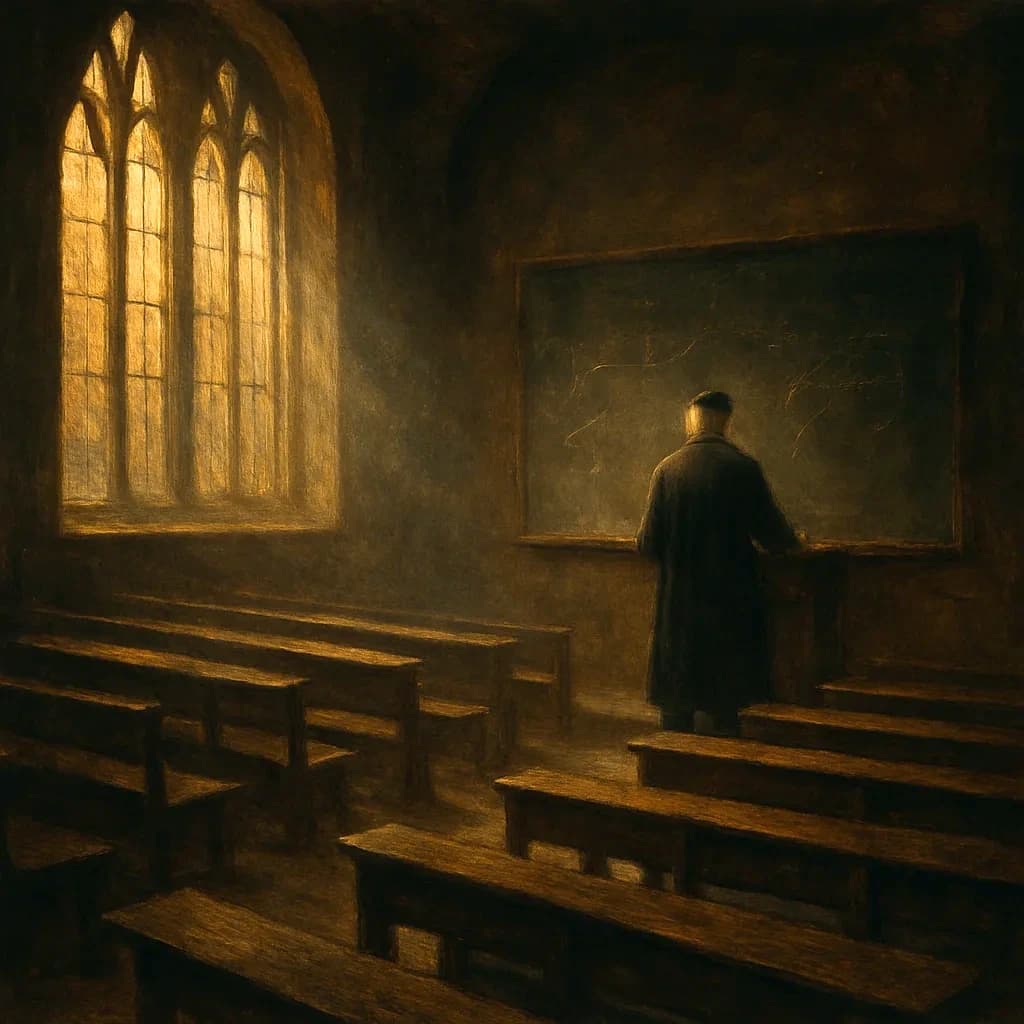
Calculus Was Born in an Empty Cambridge Lecture Hall
A young mathematics professor lecturing to absolutely no students in 1687 was actually delivering some of the most revolutionary ideas in human history.
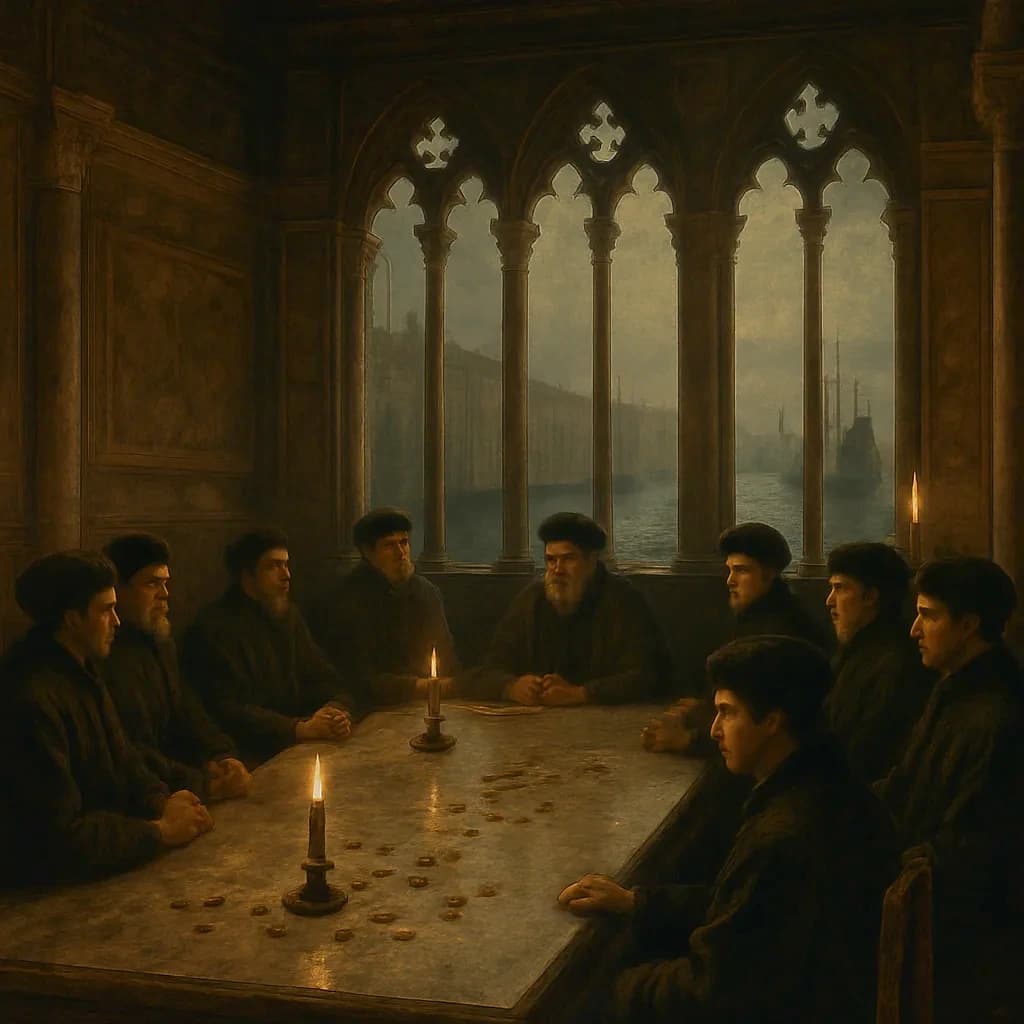
Forty-Three Beans Chose the Holy Roman Emperor
A Venetian merchant's son counted dried beans to choose the most powerful man in Europe.
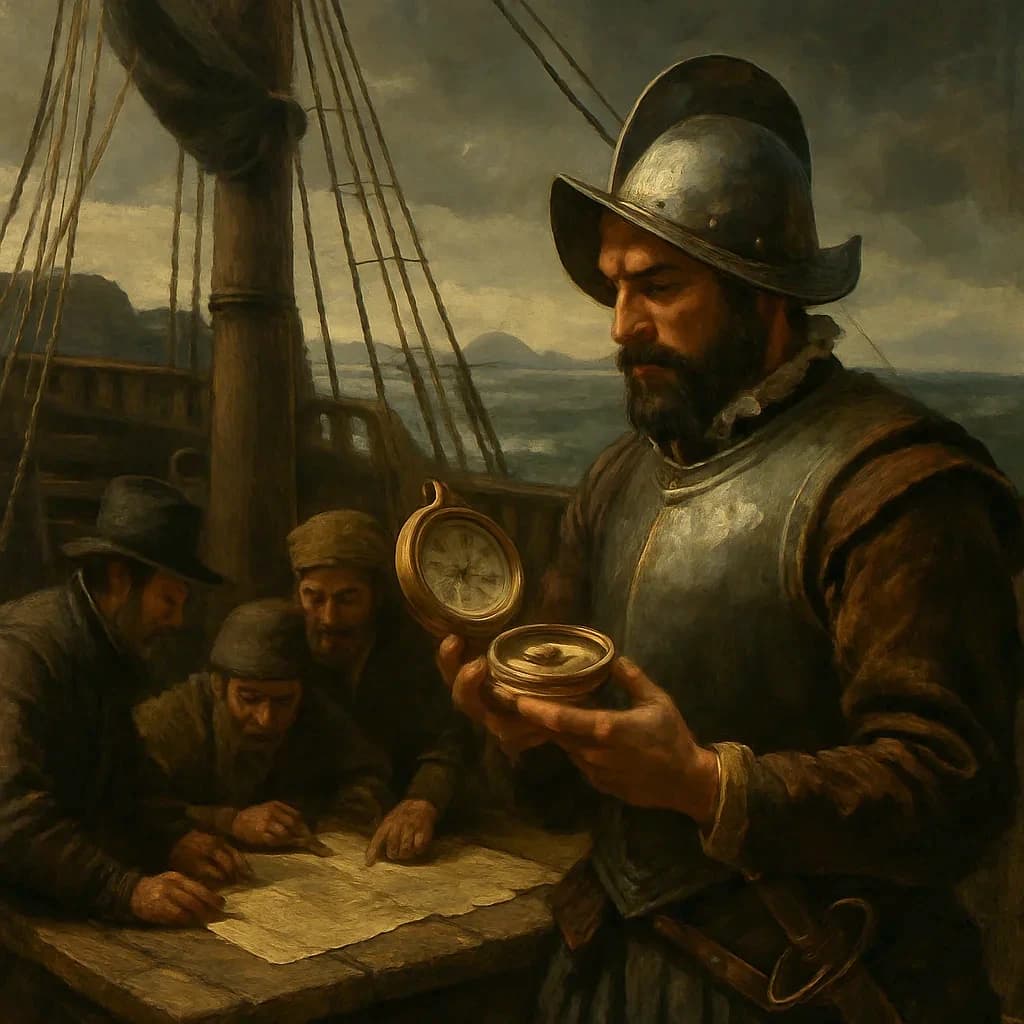
How a Faulty Seville Compass Doomed the Aztecs
A single broken magnetic compass in 1519 steered Spanish explorers away from their intended destination, straight into the heart of the Aztec Empire.
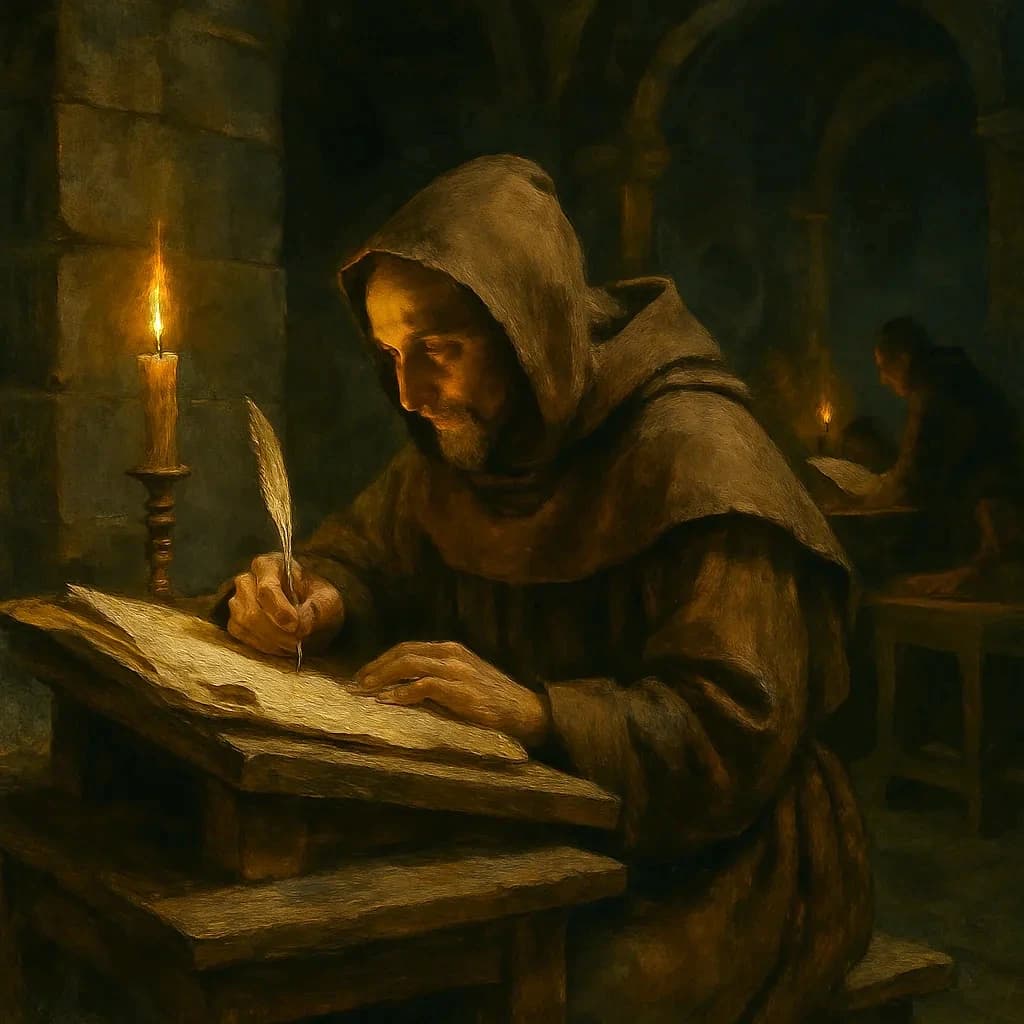
One Misplaced Period Rerouted the Spice Trade
A scribe's tiny mark changed the direction of world history more than any battle ever fought.
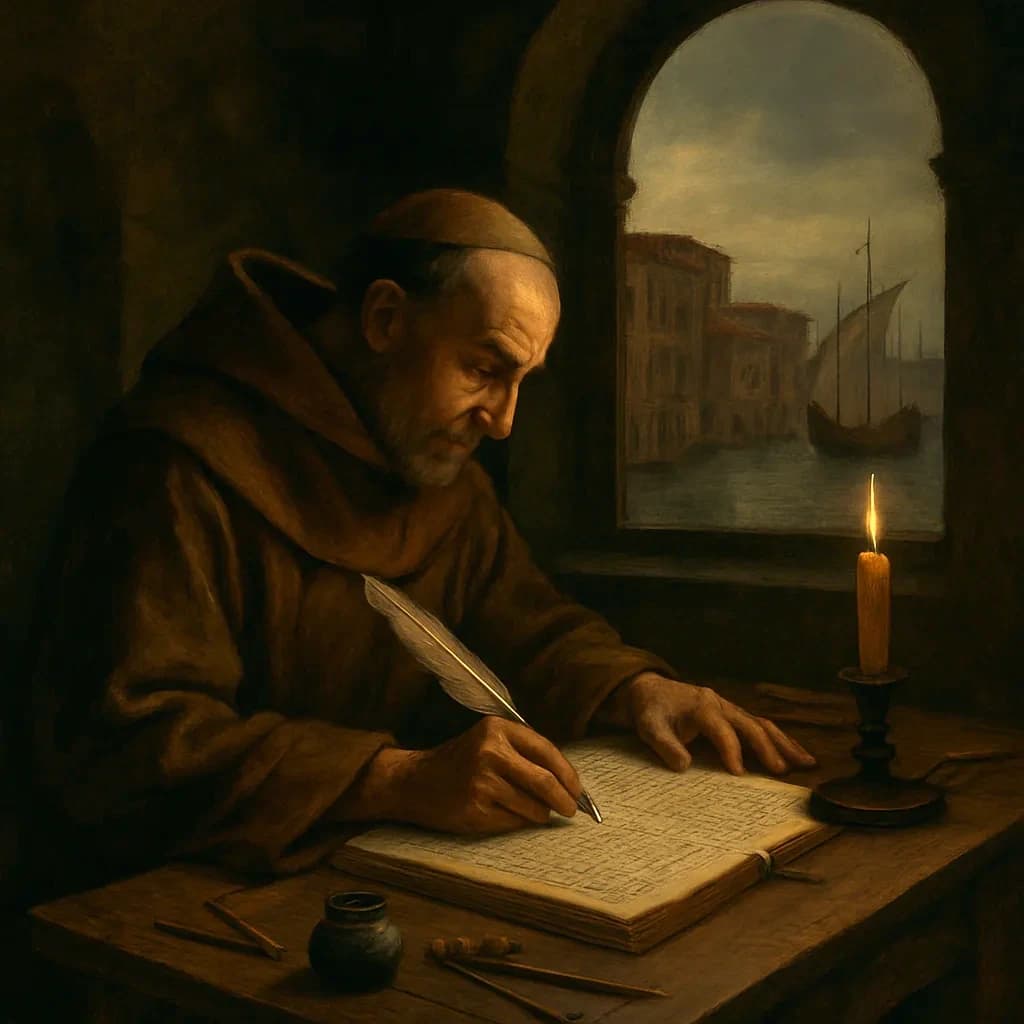
One Decimal Point That Bankrupted Venice
A single misplaced decimal in a Venetian ledger book created the modern financial system, and destroyed an empire in the process.
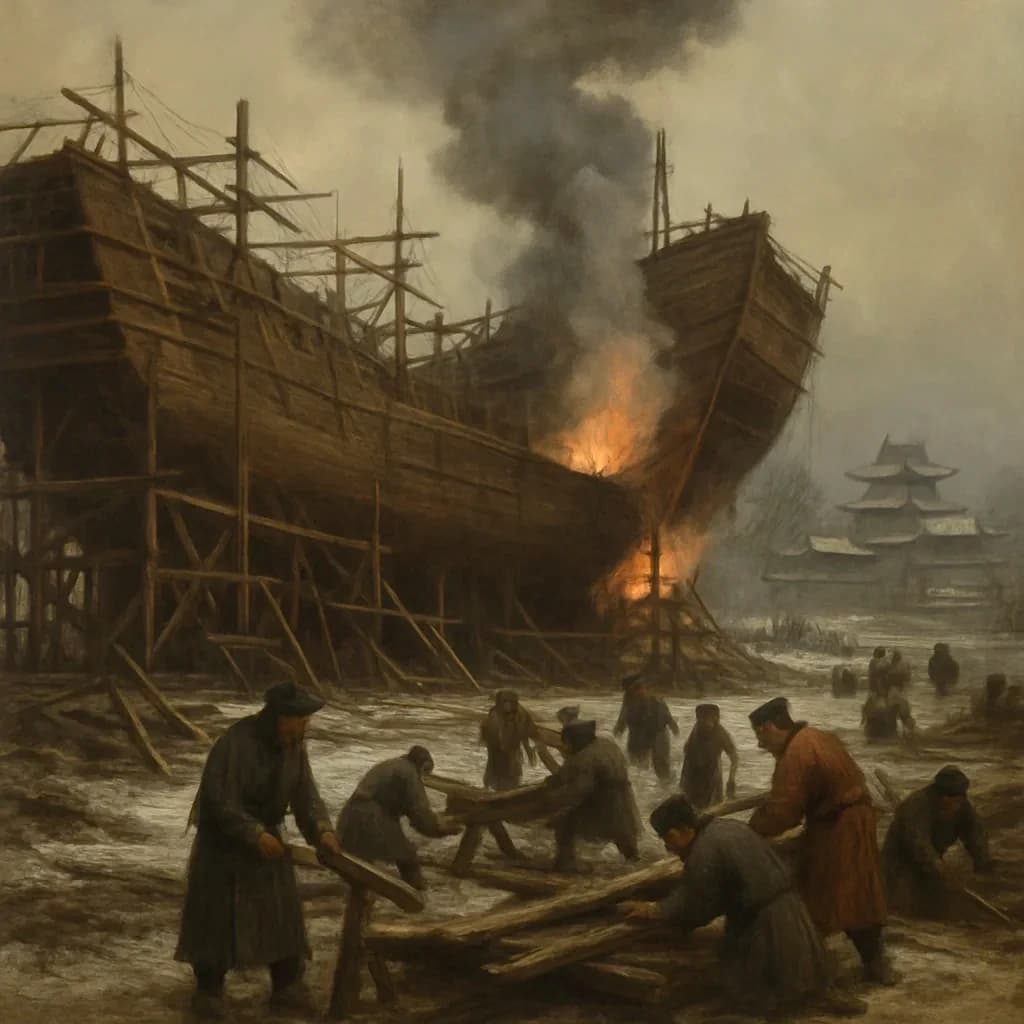
China Built the World's Greatest Fleet, Then Burned It
For twelve years, 30,000 Chinese workers built the largest fleet in human history, then burned every ship before they touched water.
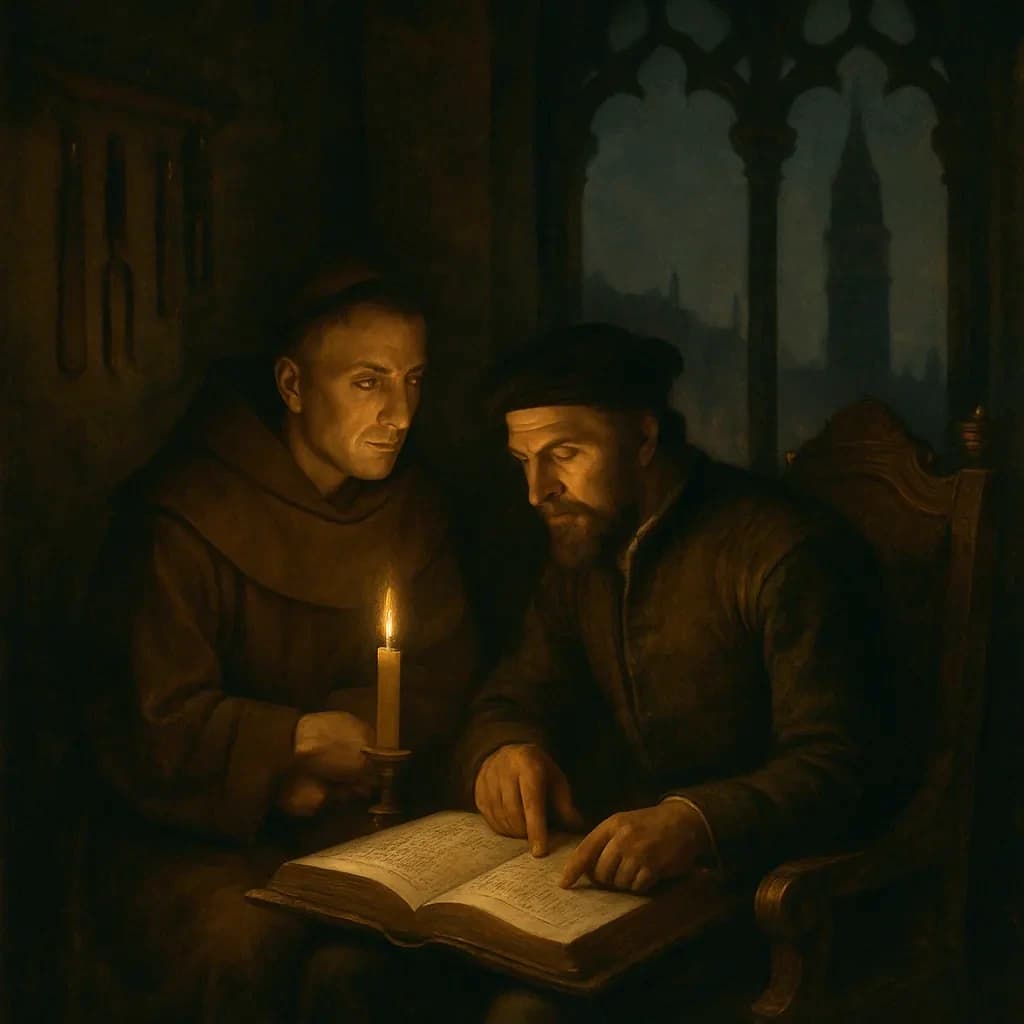
Double-Entry Bookkeeping Was Born in a Barbershop
A Venetian barber doing his midnight calculations in 1450 would reshape how Europe counted money forever.
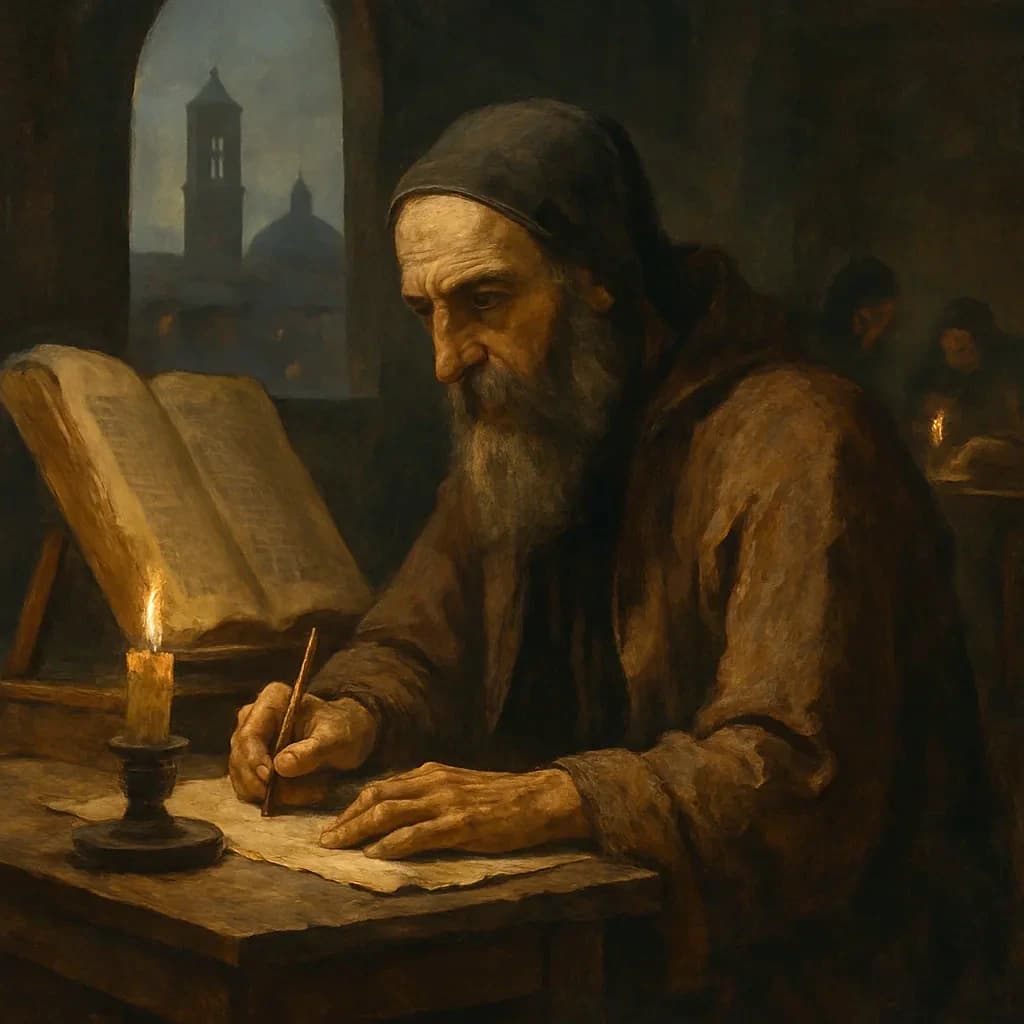
A Dying Scholar's Greek Bible Helped Break Rome
A dying Byzantine scholar smuggled one last book to the West in 1453, and helped trigger the Protestant Reformation.
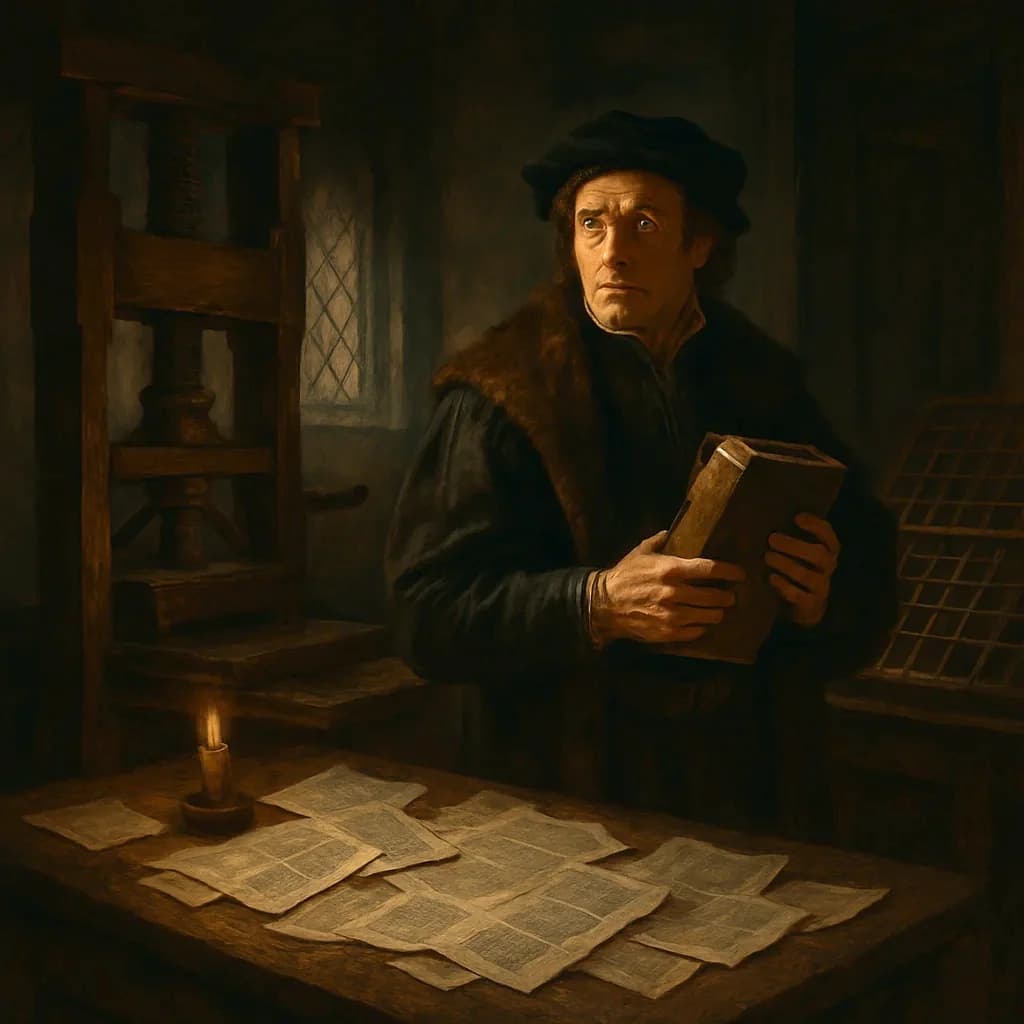
England's First Legal Bible, Quietly Erased
The first English Bible printed in England carried a fake author's name, a dead man's banned translation, and a license that doomed it almost the moment it appeared in 1536.
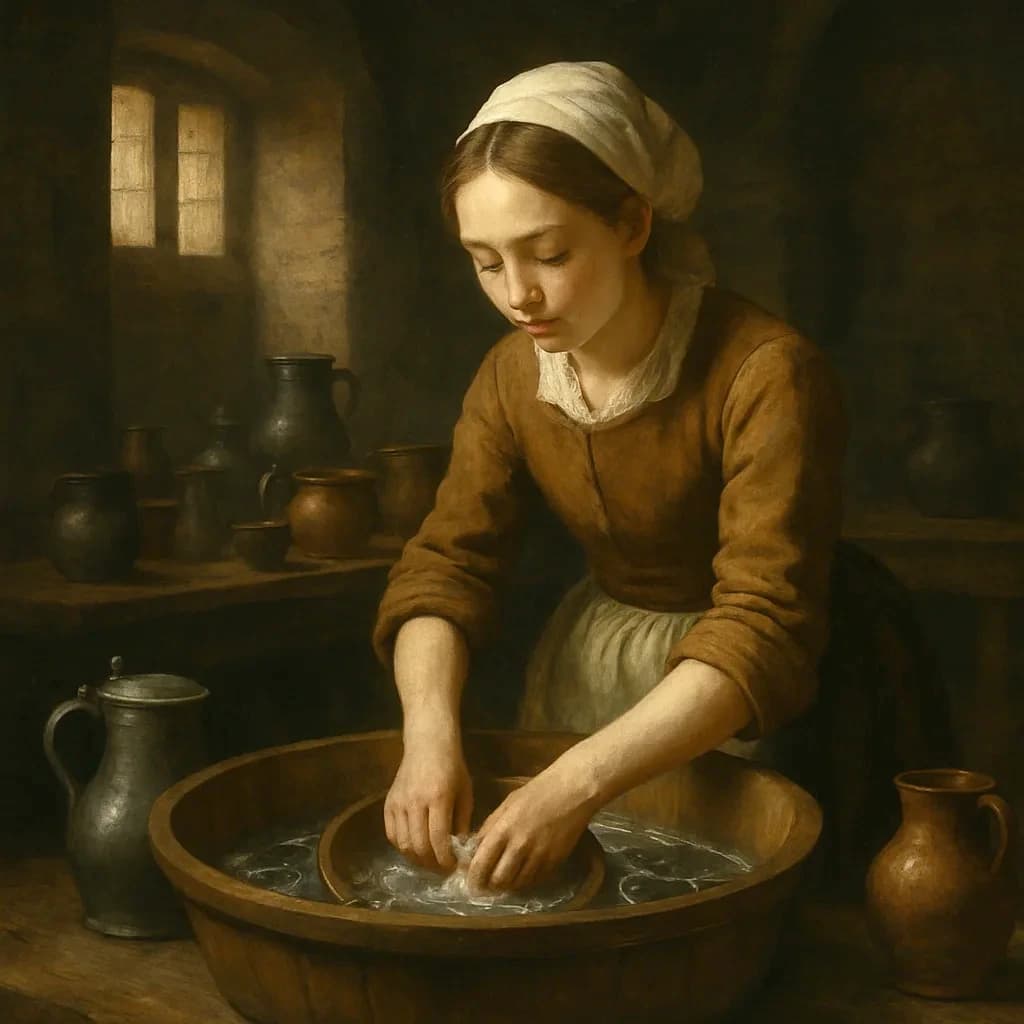
The Dishwater That Solved the Planets' Mystery
A servant girl washing dishes in Prague solved a puzzle in 1619 that had stumped Europe's greatest minds for two centuries.
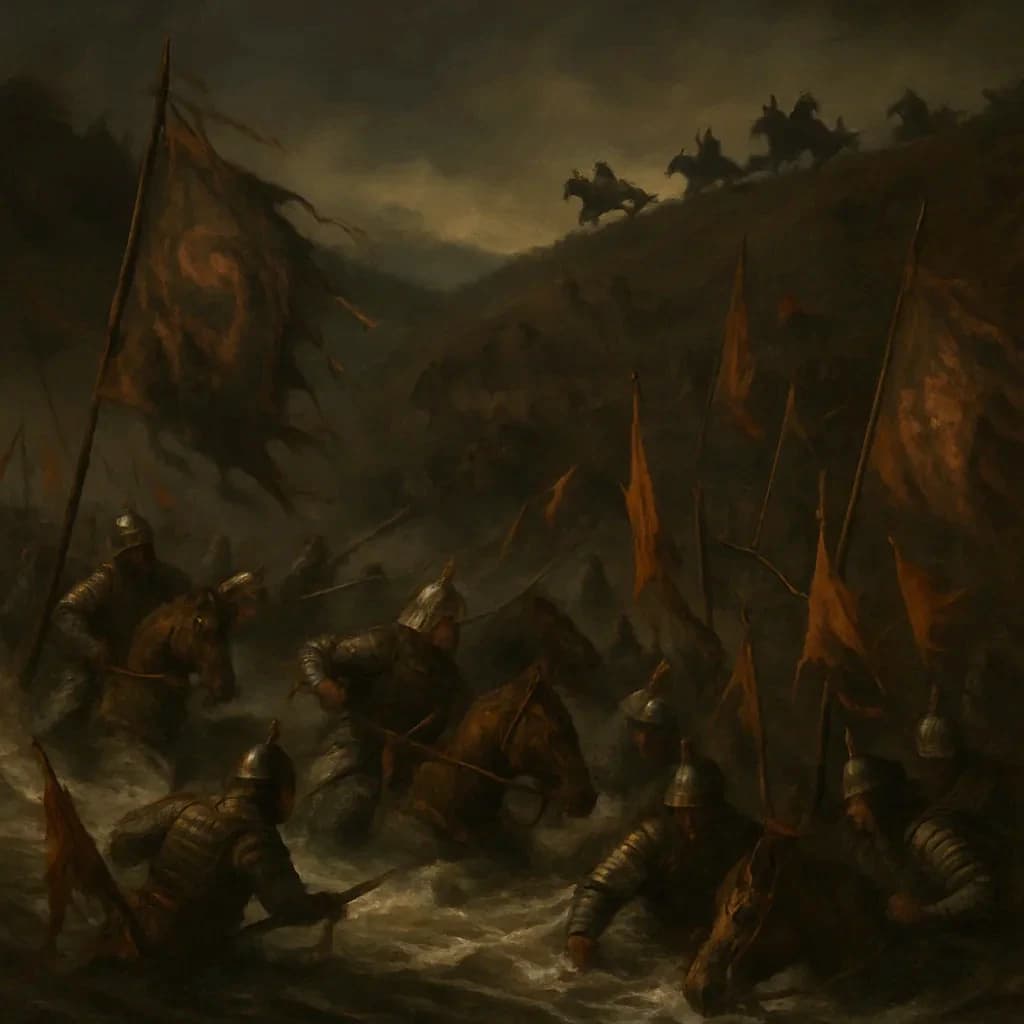
When the Emperor's Horses Learned to Swim
The most powerful ruler in China lost half his empire because he trusted his cavalry to cross a river they'd never seen before.
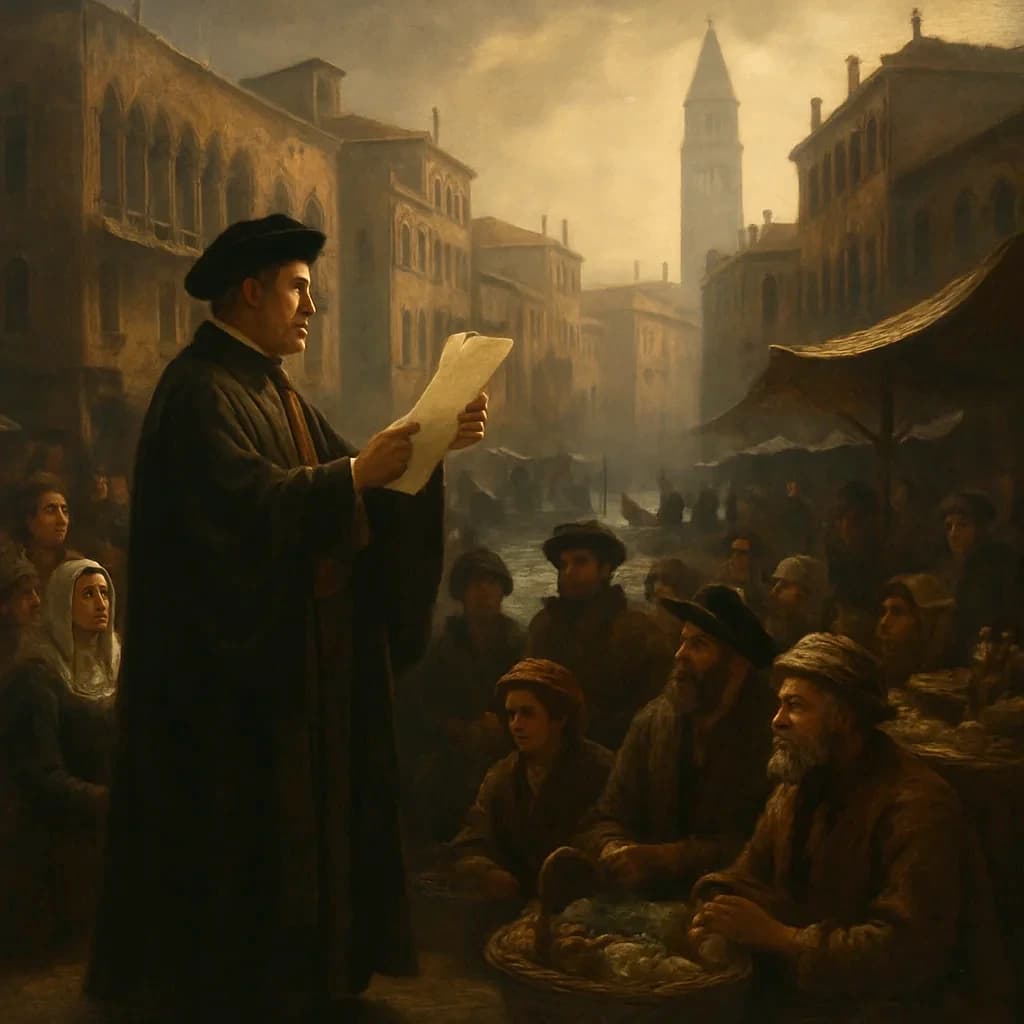
Venice Built the First Newspaper, Then Killed It
The world's first regularly published news sheet appeared in Renaissance Venice in 1566, ran for exactly thirty-seven days, and was then suppressed by the very government that created it.
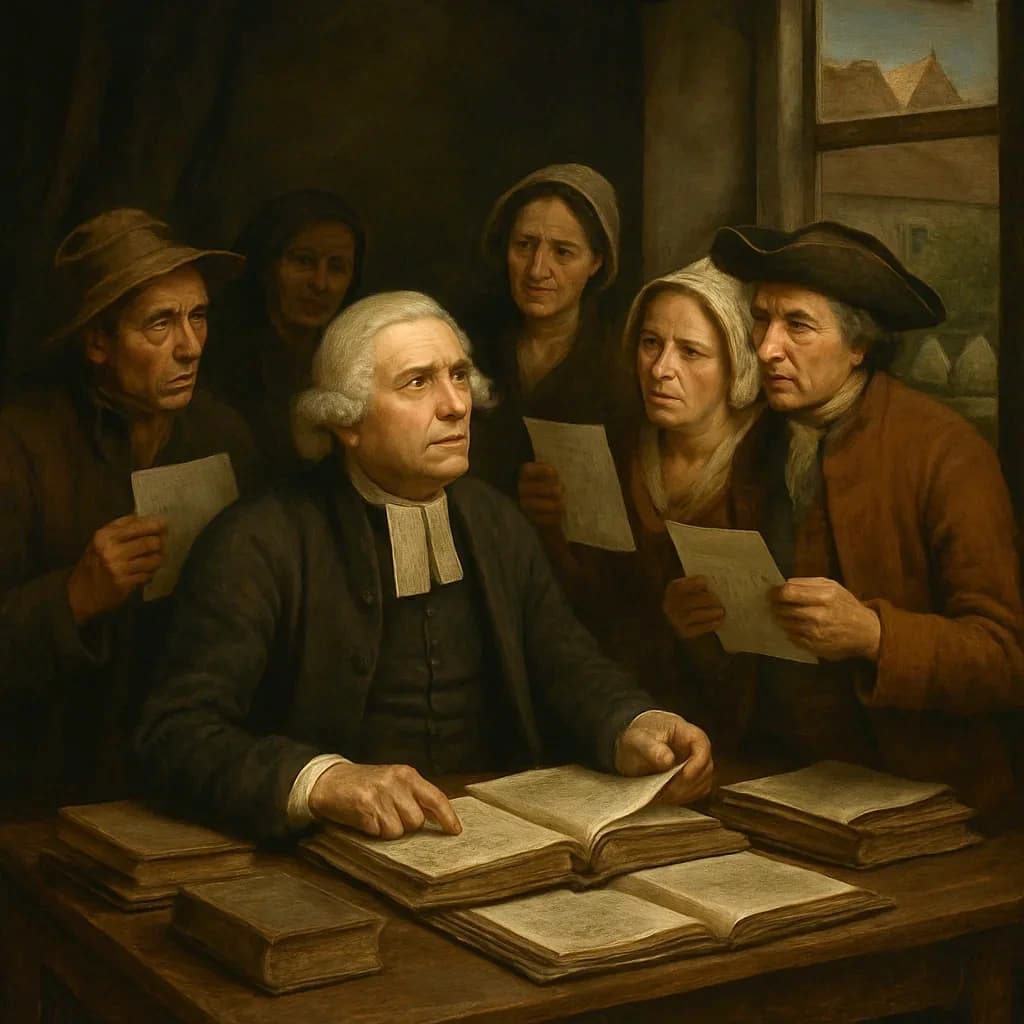
Give Us Back Our Eleven Days!
An English beekeeper miscounted his hives in 1752, and stumbled into the modern calendar system that still governs our lives.
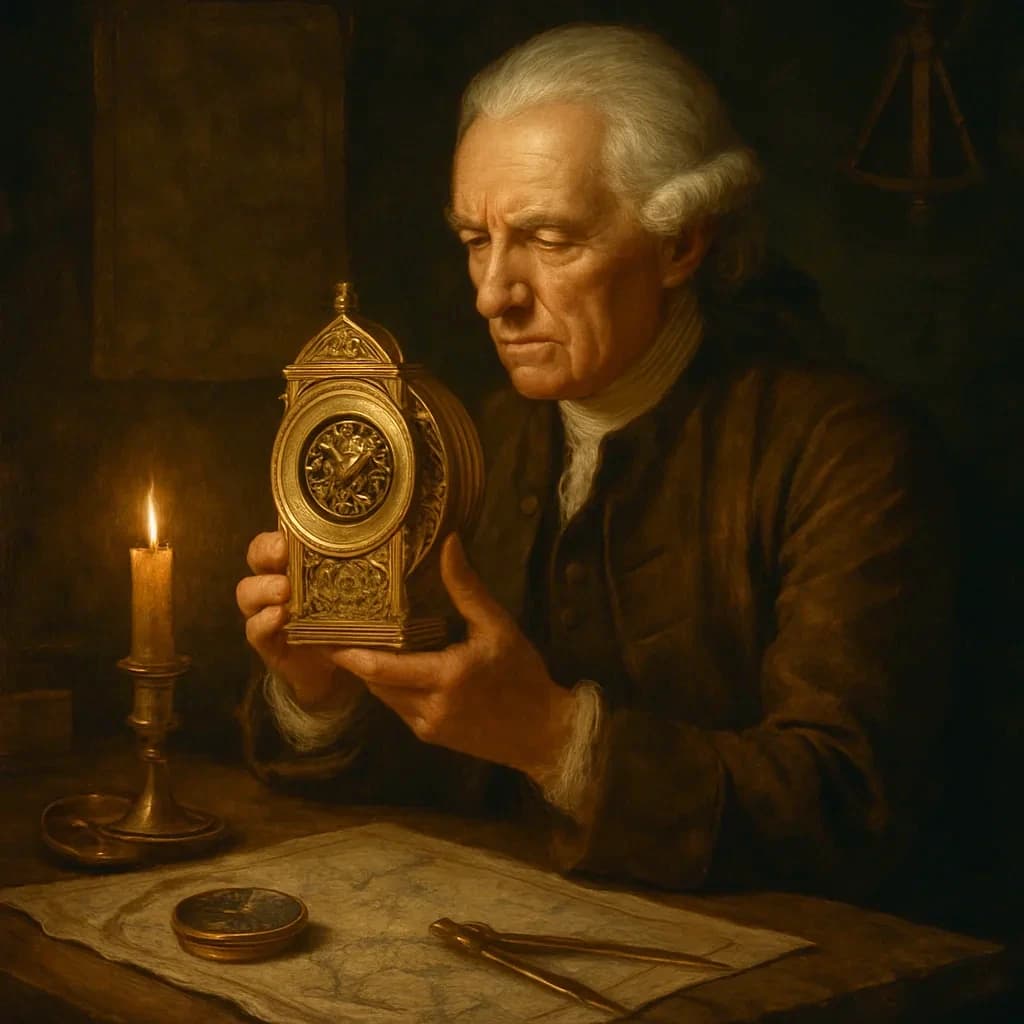
Forty Years for a Clock the Navy Ignored
John Harrison spent forty years building clocks that could save lives at sea, then watched the Royal Navy almost ignore his invention while sailors died for want of knowing where they were.
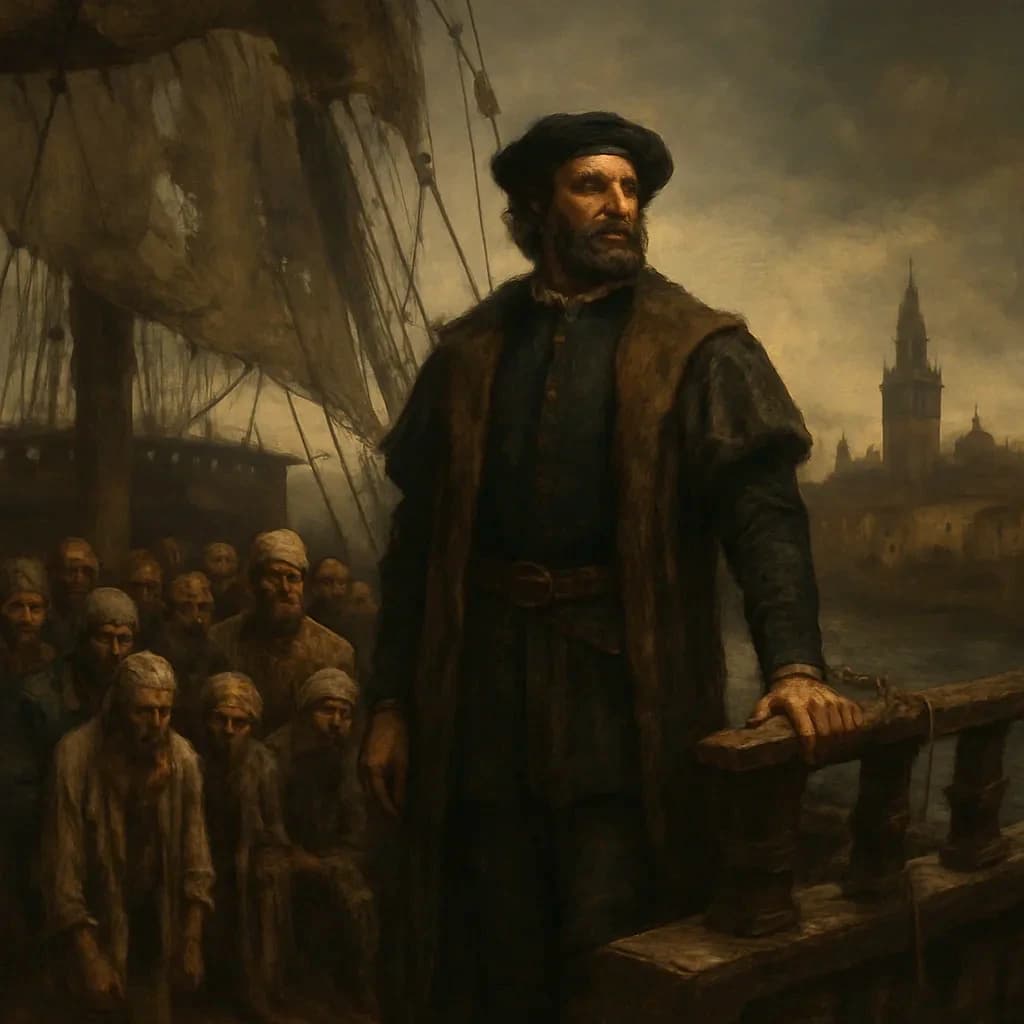
When Magellan's Cook Conquered the World
A ship's cook with no nautical training became the first person to circumnavigate the globe.
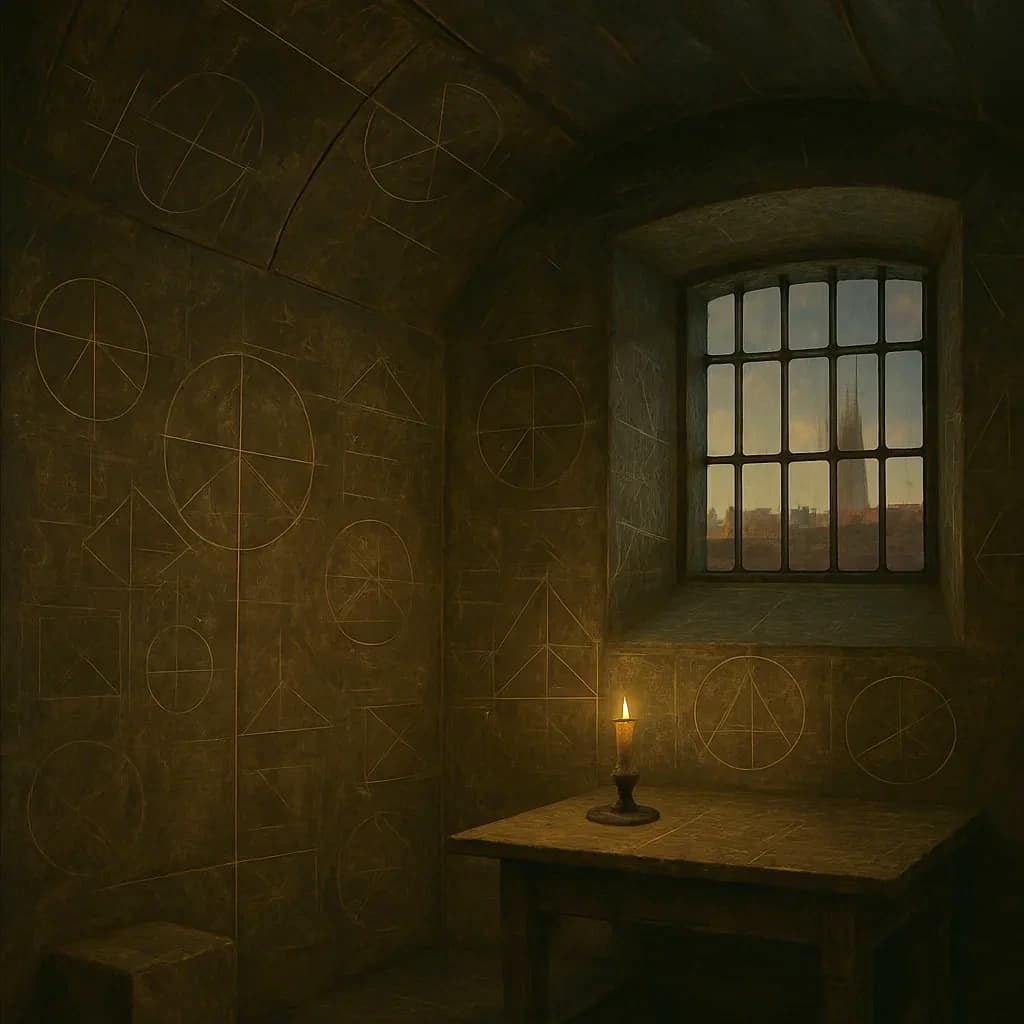
A Prince Invented Economics in a Venetian Prison
Locked in solitary confinement for seventeen years, a Habsburg prince filled the walls with math problems and laid the foundation of modern economics.
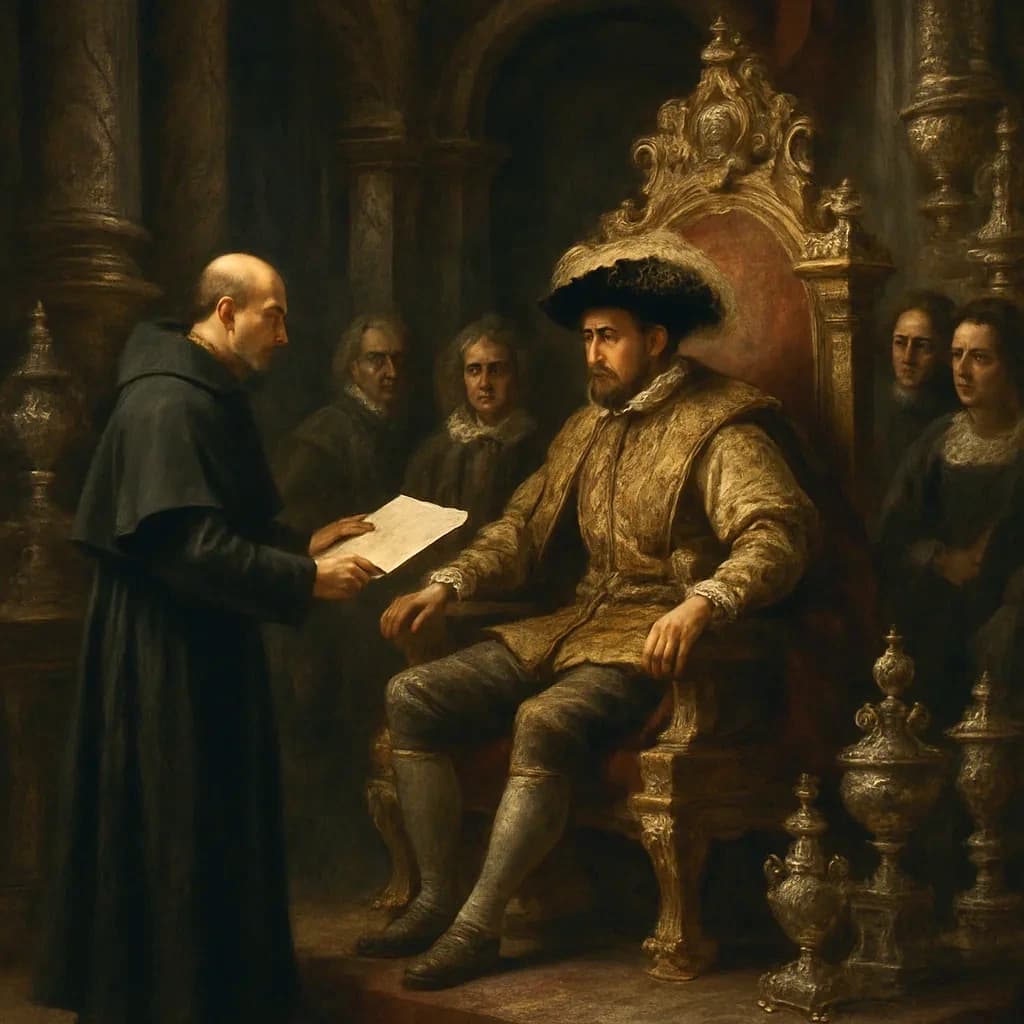
Buried in Silver, Spain Still Went Bankrupt
Spain's treasury had run dry, so the crown turned to a man who had only ever seen money as mathematics.
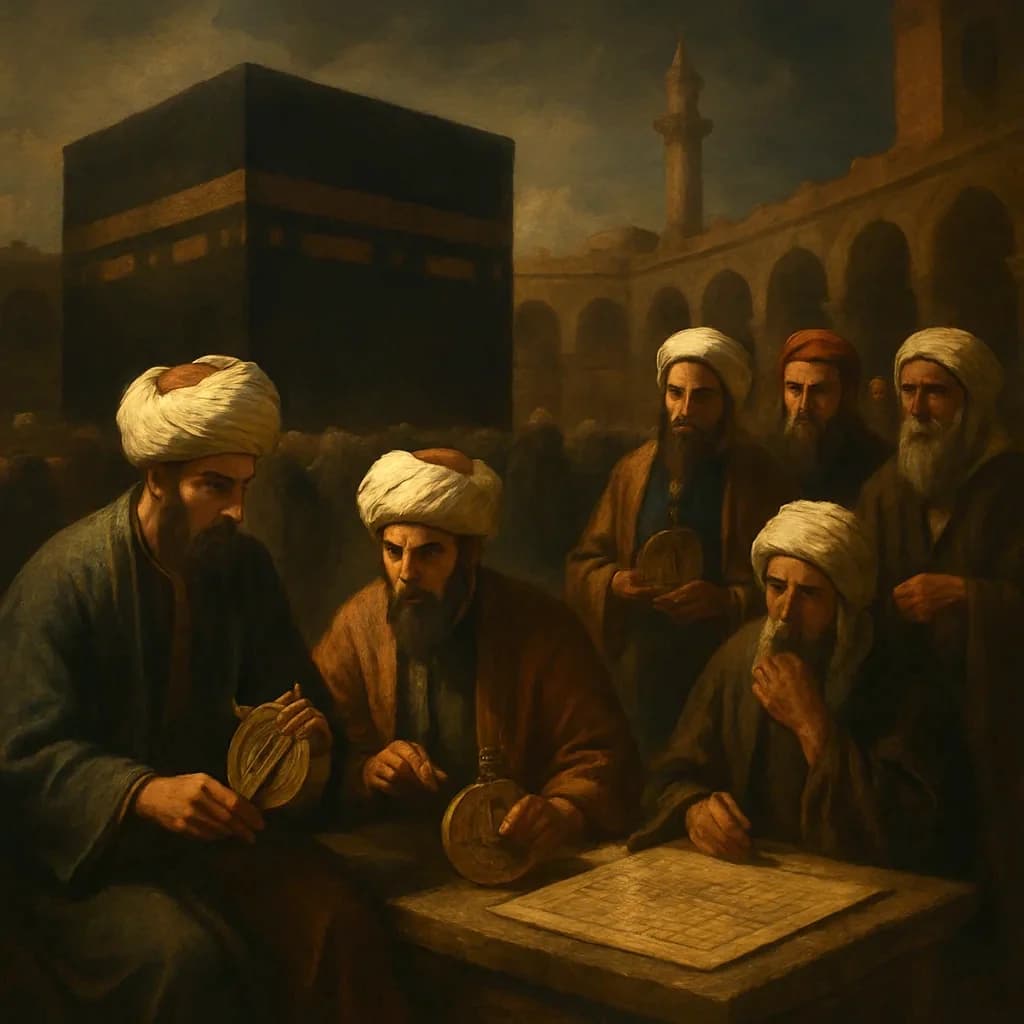
Conquering Mecca Broke Islam's Daily Prayers
When the Ottoman Empire seized the Islamic world's holiest city in 1517, it took control of Islam's most sacred ritual, and broke it.
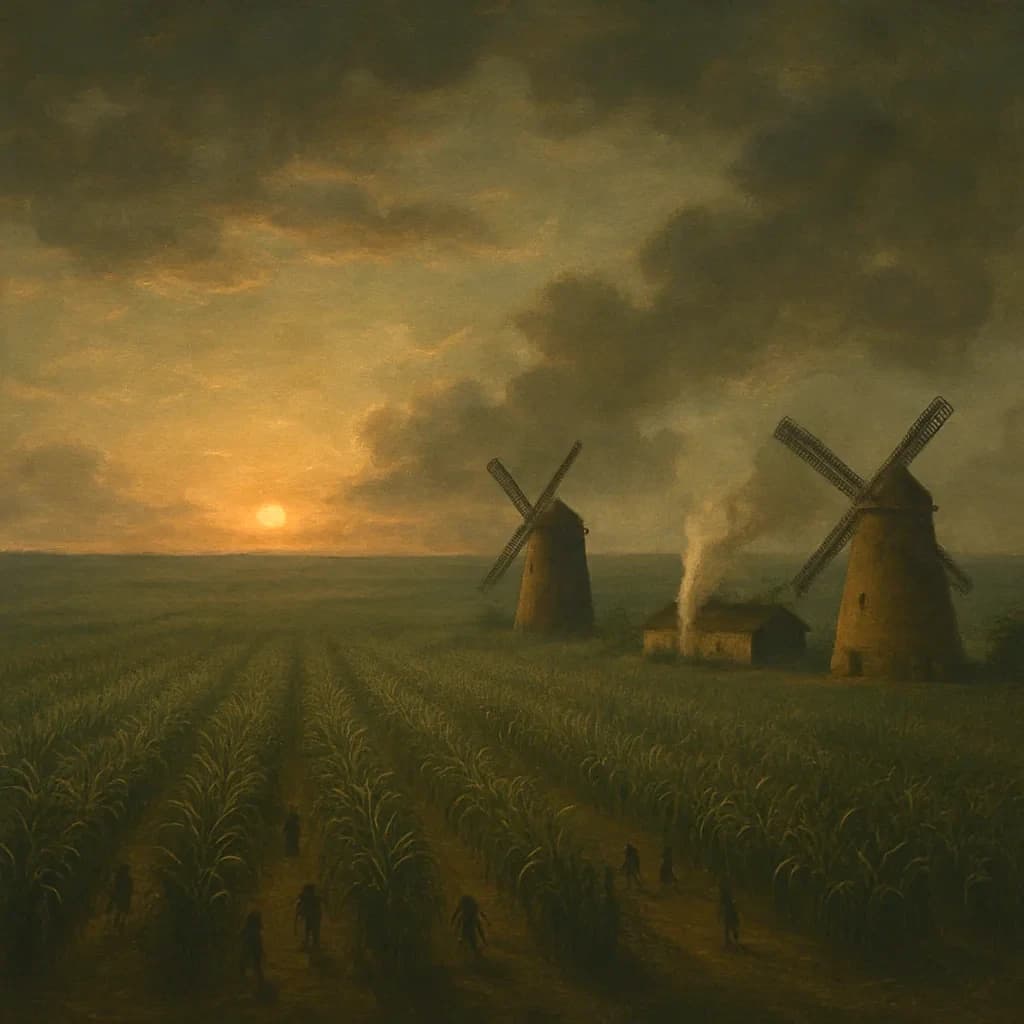
When Sugar Killed More Than Gunpowder
A handful of Caribbean islands produced more wealth than all the gold of the Americas, and consumed more human lives than any war in history.
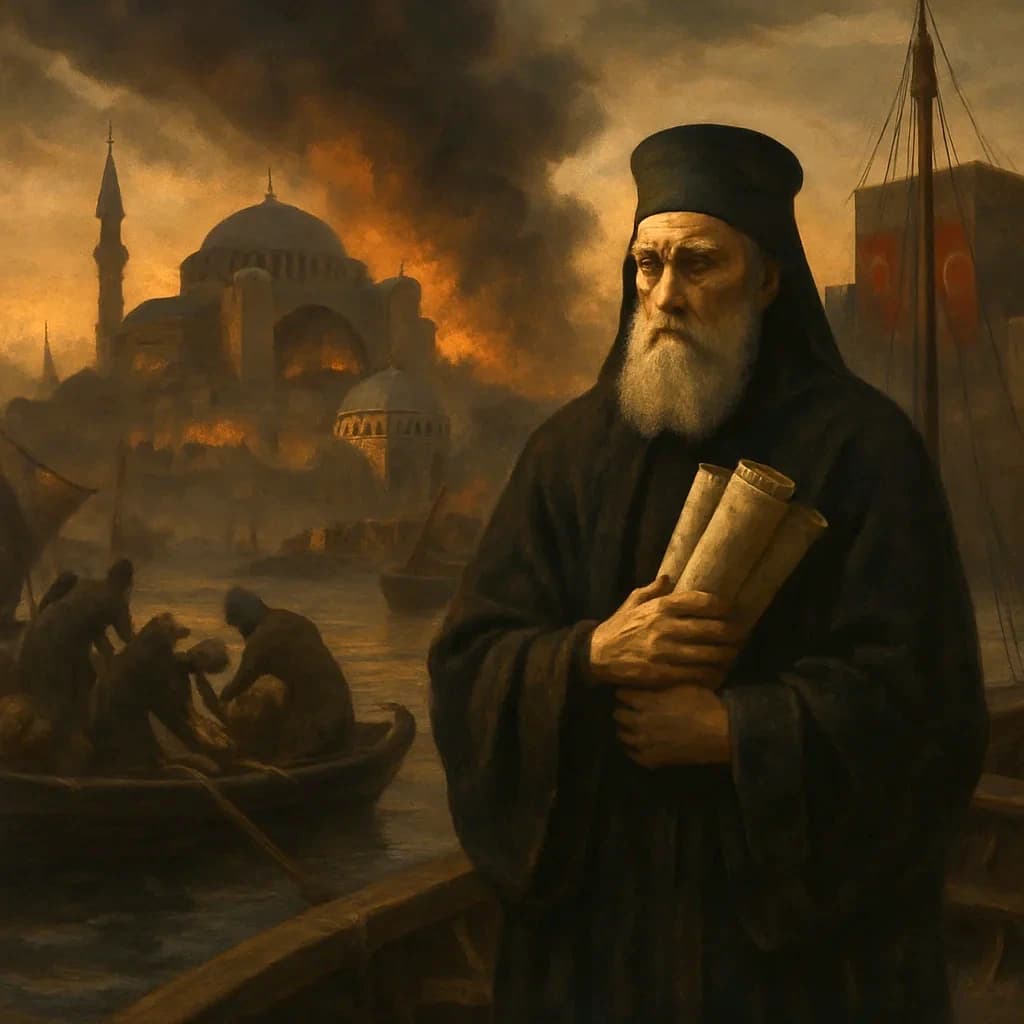
One Cardinal Chose Which Ancient Books Would Survive
A single scholar faced a decision in 1453 that would determine whether the Renaissance happened, or died stillborn in the ashes of Constantinople.
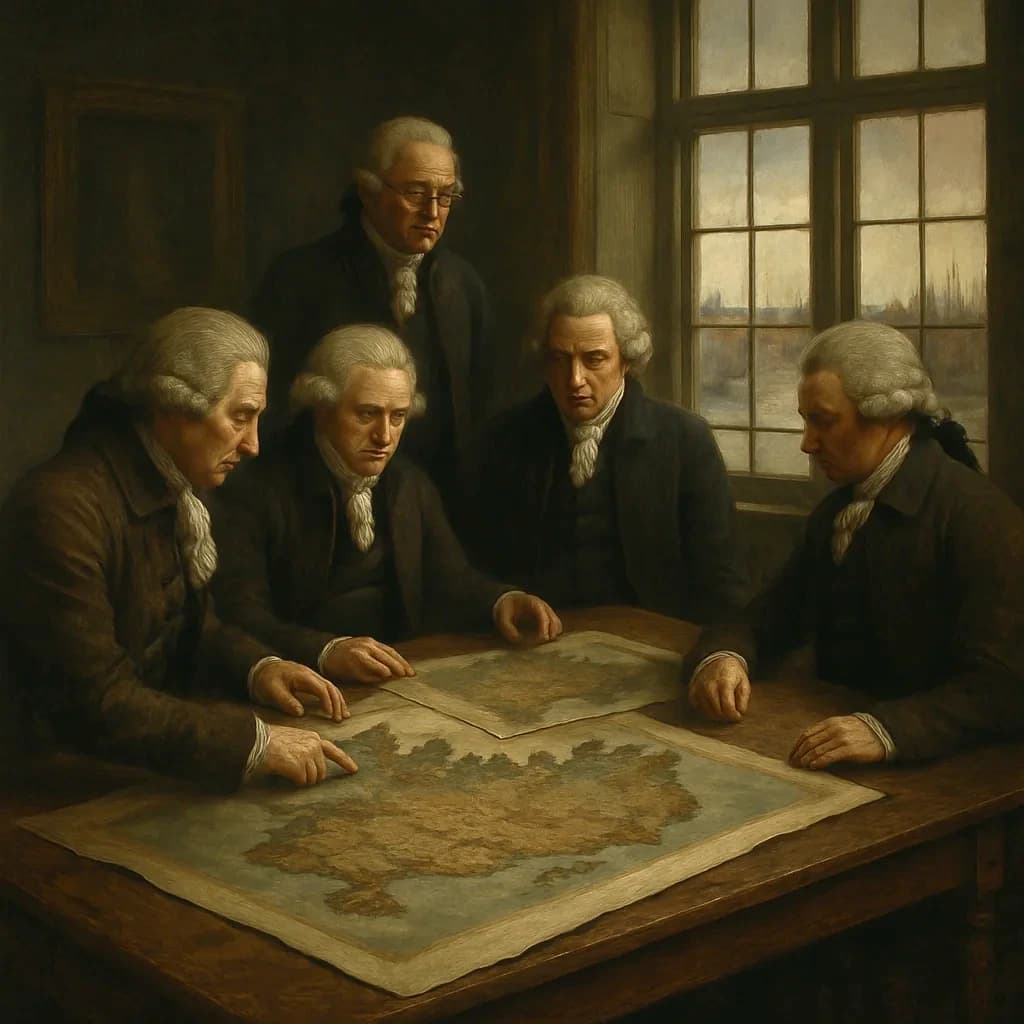
When Iceland Disappeared from Its Own Parliament
For thirteen months, Iceland's most powerful parliament in history met without a single Icelander in the room.
When Moscow's Prince Married London's Enemy
A Russian prince's desperate marriage alliance accidentally created Britain's greatest maritime rival.
When Venice Hired Death and Got Beauty Instead
A Venetian senator commissioned a painter to create the most terrifying image of death ever made, but the artist had other plans.
A Dying Merchant's Confession Lisbon Refused to Believe
A dying merchant in Lisbon whispered coordinates to his confessor in 1520 that would have changed the course of history, if anyone had believed him.
When Portugal Almost Discovered Australia First
A Portuguese navigator reached the Australian coast in 1521, and then kept sailing, leaving no flag, no colony, no claim.
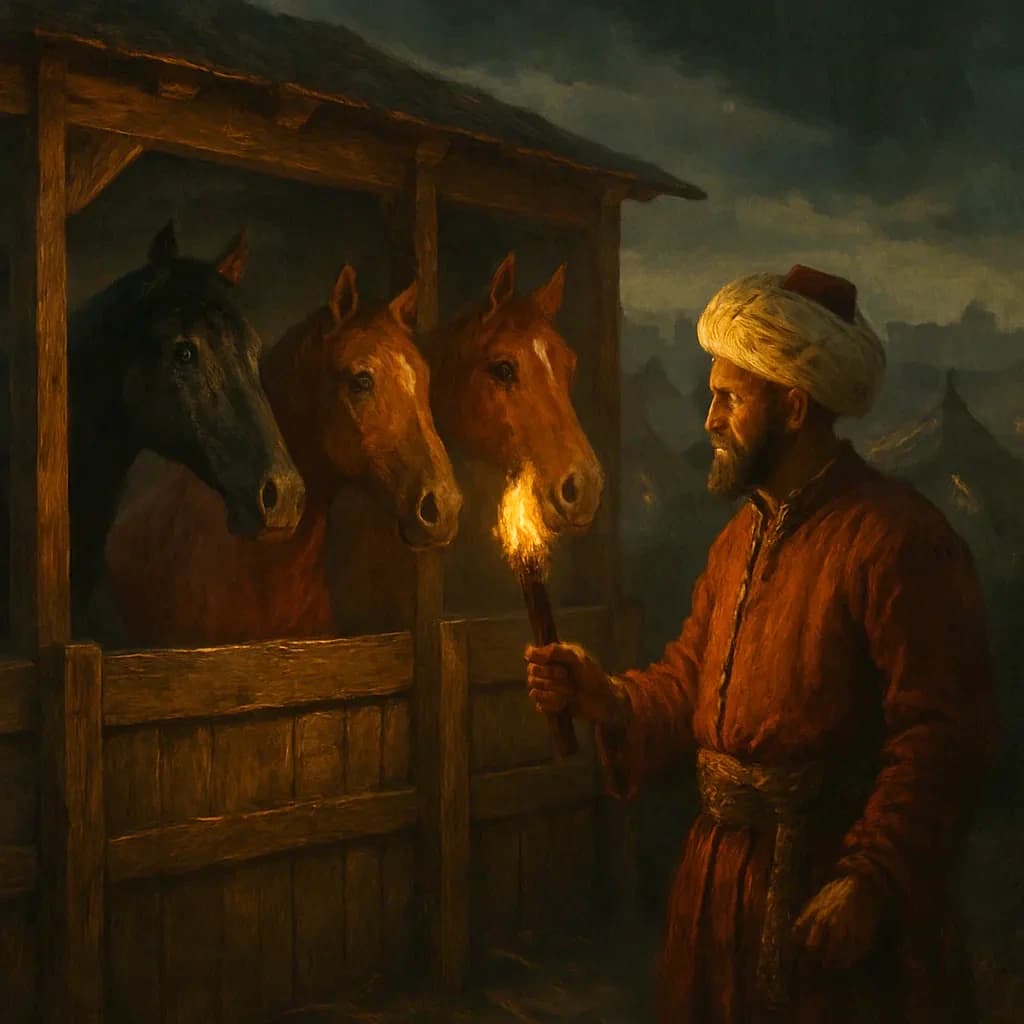
One Horse Decided Whether Vienna Would Fall
A stable master's choice of which horses to saddle in 1529 redrew the map of Europe forever.
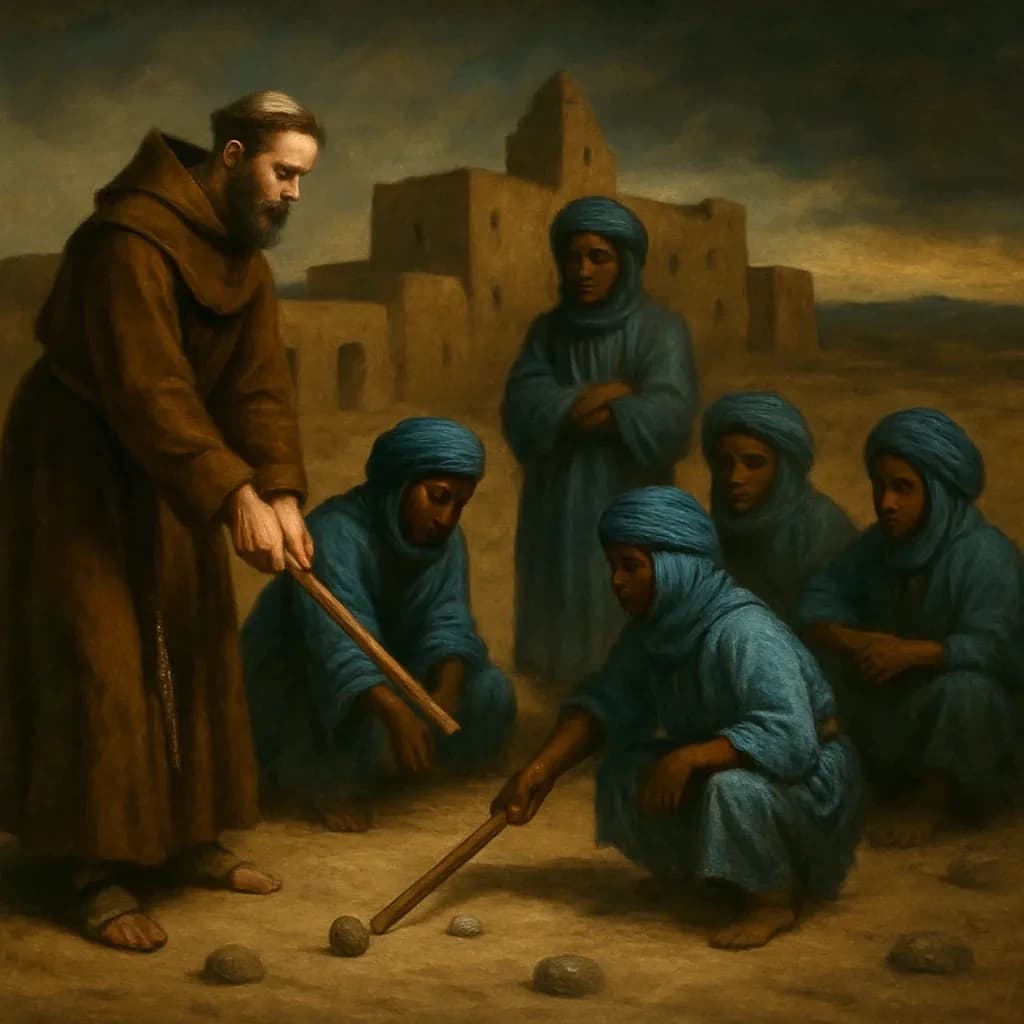
The Sahara Origins of America's Pastime
A French missionary in the Sahara taught Tuareg children a stick-and-ball game in 1640, and it would cross three continents to somehow become America's pastime.
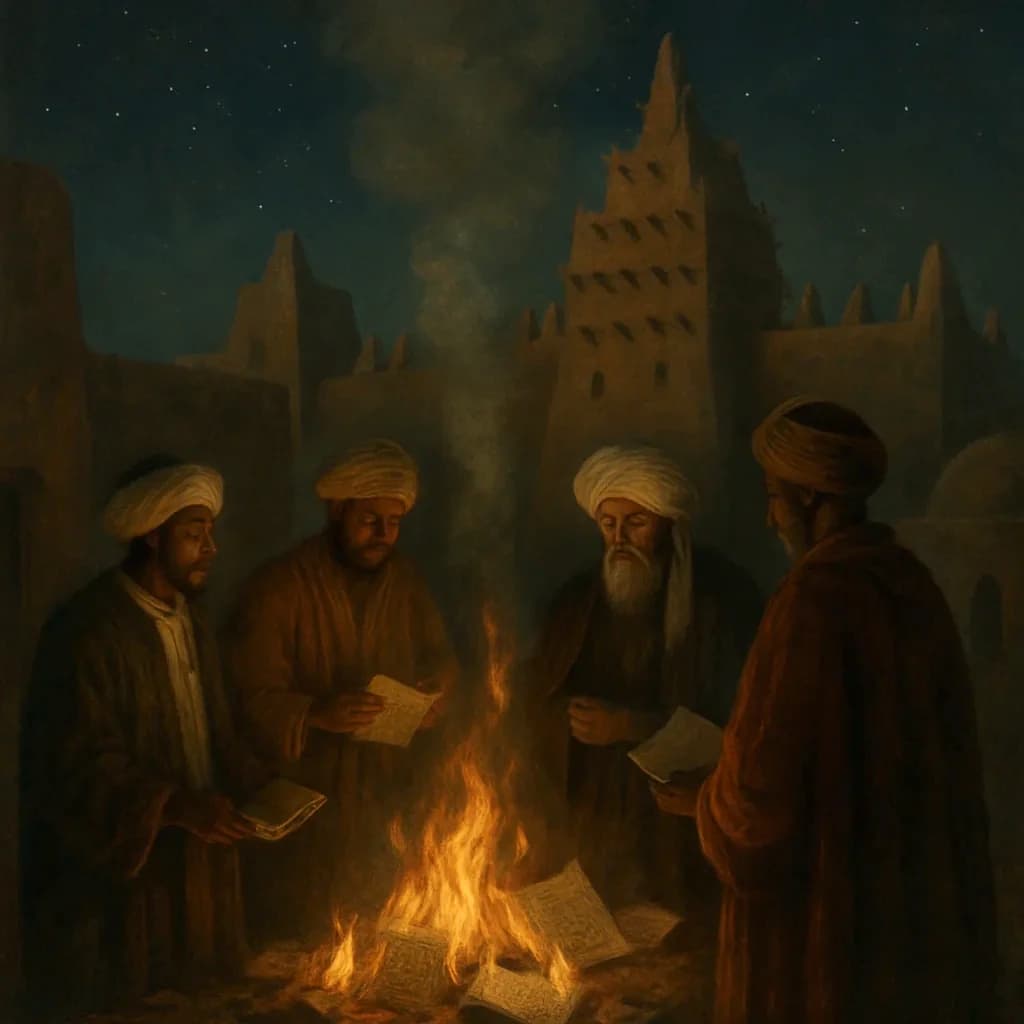
Timbuktu Burned Its Own Libraries at Midnight
The Moroccan army that conquered Timbuktu in 1591 came for gold, but the city's scholars were already feeding something far more valuable to the flames.
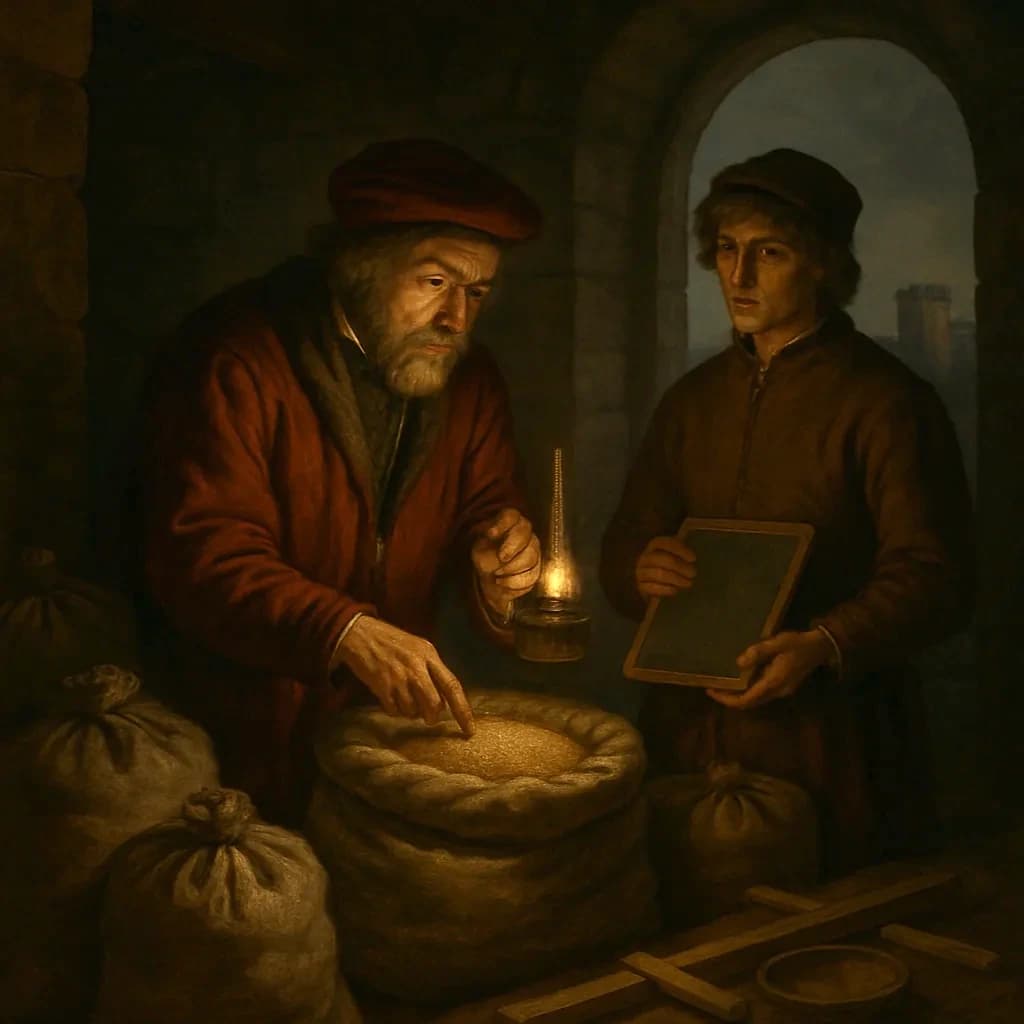
A Counting Error That Doomed Famagusta
A single miscalculation in a Venetian ledger book triggered the bloodiest siege of the Renaissance.
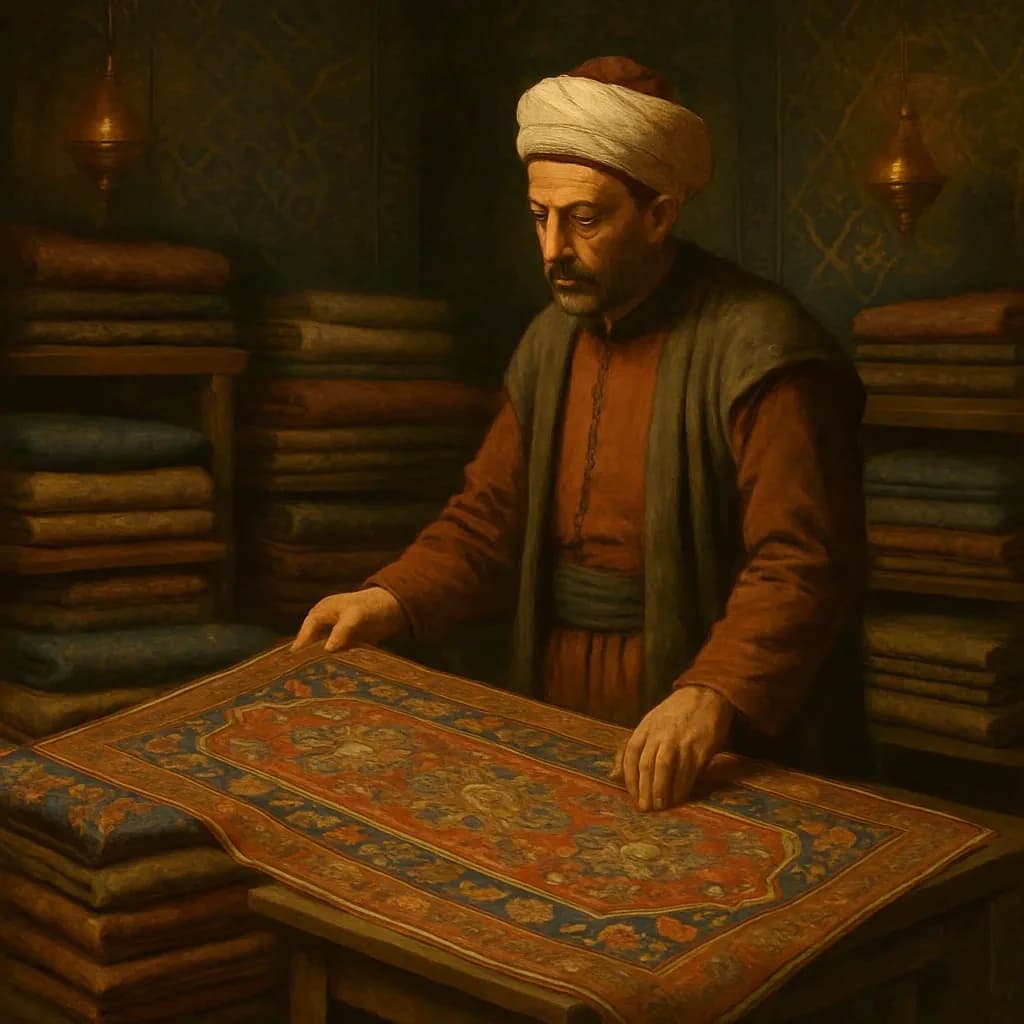
When the Sultan's Carpet Collector Conquered Half the World
A minor court official's obsession with rugs accidentally built the Ottoman Empire's most profitable trade network.
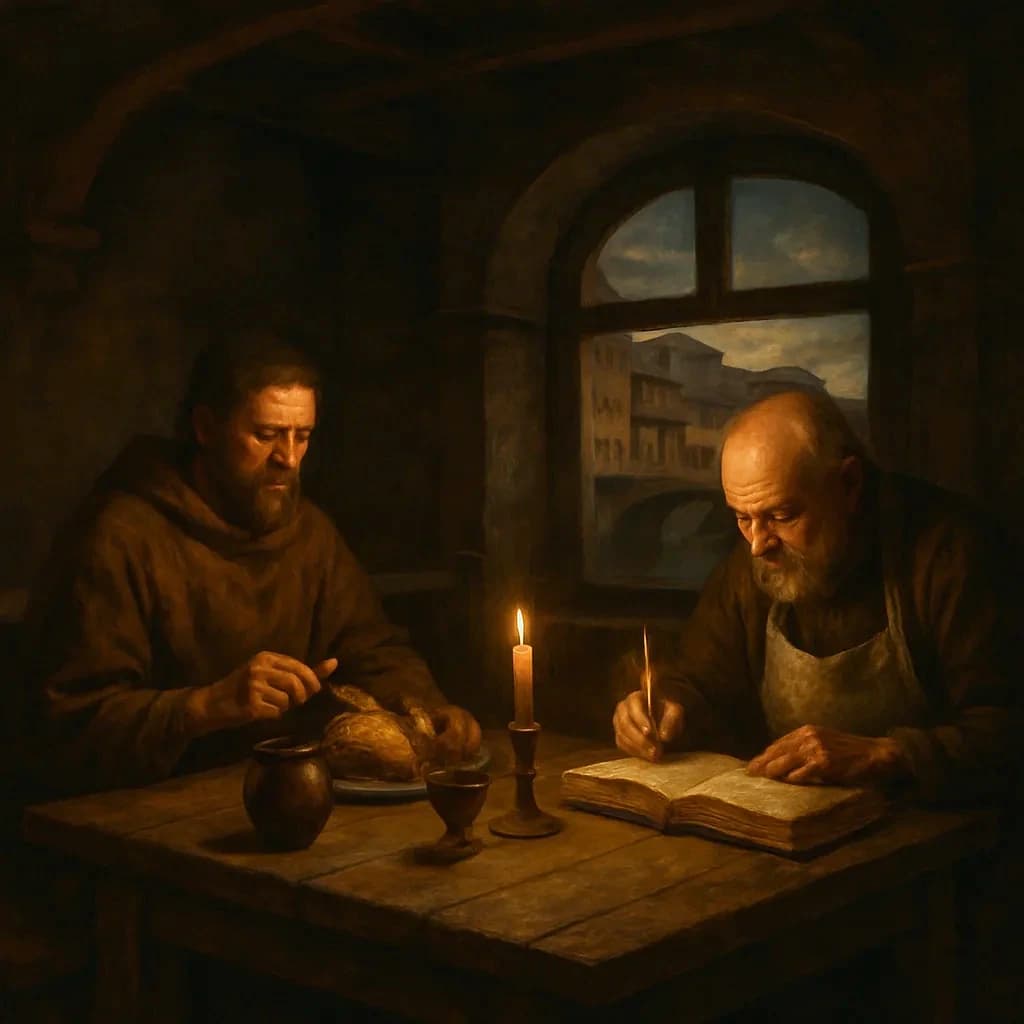
Four Florins of Wine That Bankrupted Florence's Banks
A Florentine merchant's unpaid restaurant bill became the most expensive meal in European history.
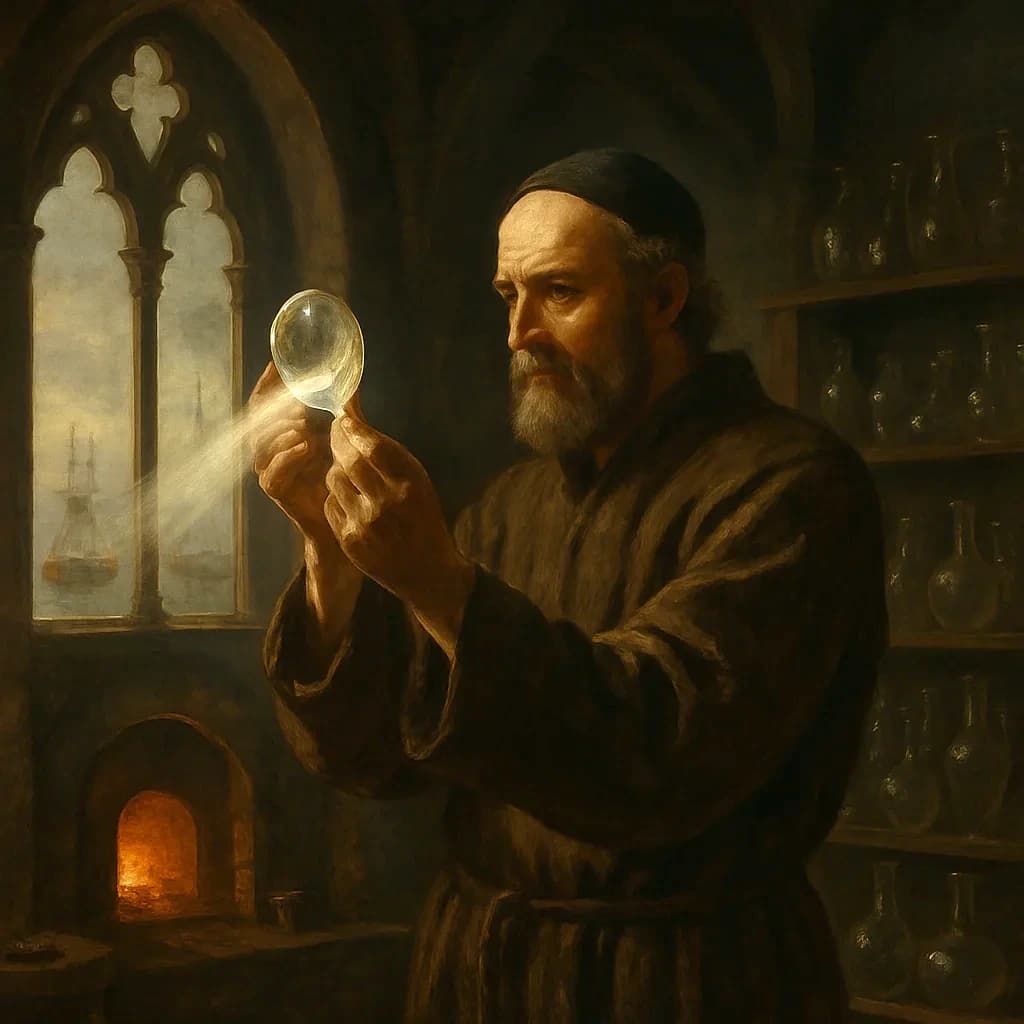
When Glass Became a Weapon of War
A single technological breakthrough in 13th-century Venice gave birth to both Renaissance art and medieval chemical warfare.
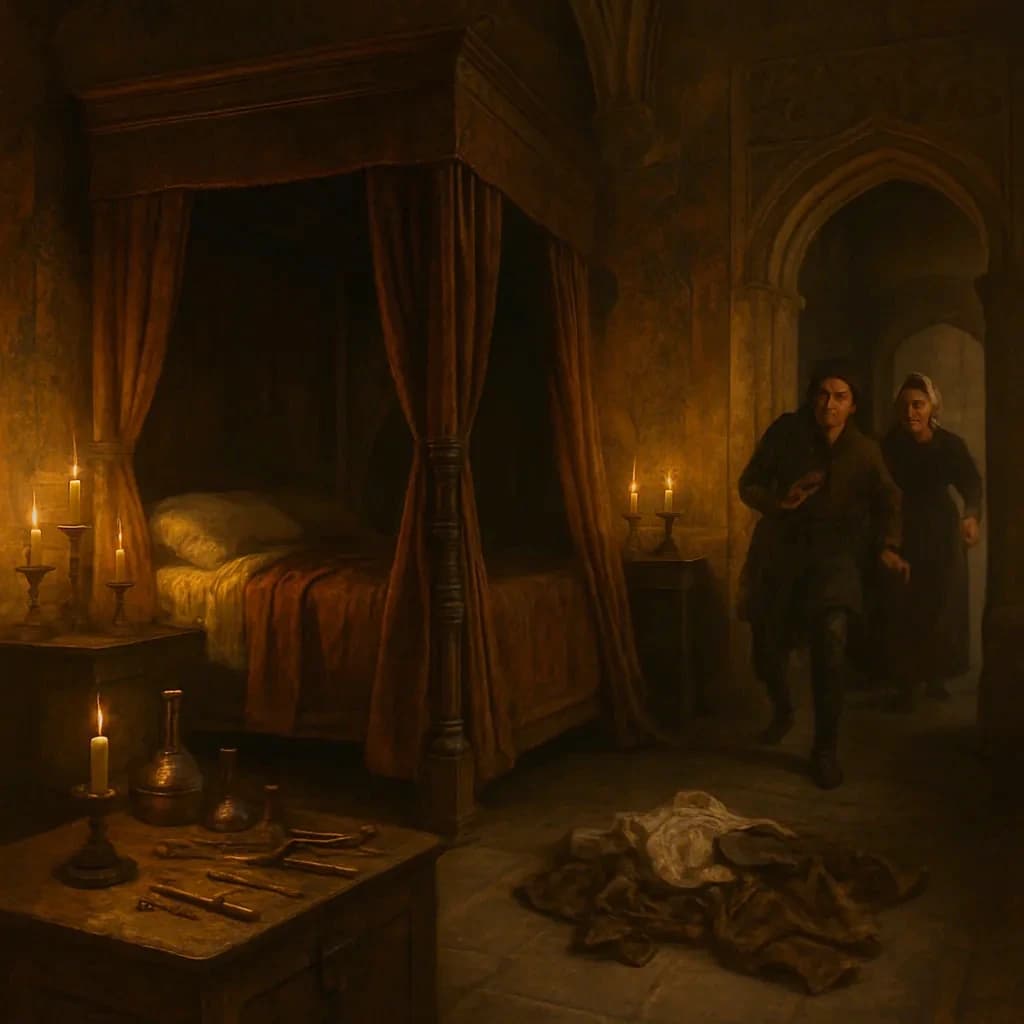
A Wedding Night That Cost Burgundy Its Future
A wedding night in 1477 went so catastrophically wrong that it changed the balance of power in Europe forever.
Galen's Greek Original: The Book That Made Medicine Worse
A Greek scholar fled the fall of Constantinople in 1453 carrying the most important book in Europe, and nobody could read what it actually said.
A Dead Spanish King Kept Making Decisions for Two Centuries
A dead Spanish king kept making new political decisions for nearly two centuries after his burial.
The Masseuse Who Chose Not to Kill a Sultan
The longest-reigning Sultan in Ottoman history almost died naked and defenseless, saved only by his masseuse's quick thinking.
A Midnight Wind Wrecked the Spanish Armada
A storm that lasted twelve hours in 1588 decided whether England would speak Spanish or English.
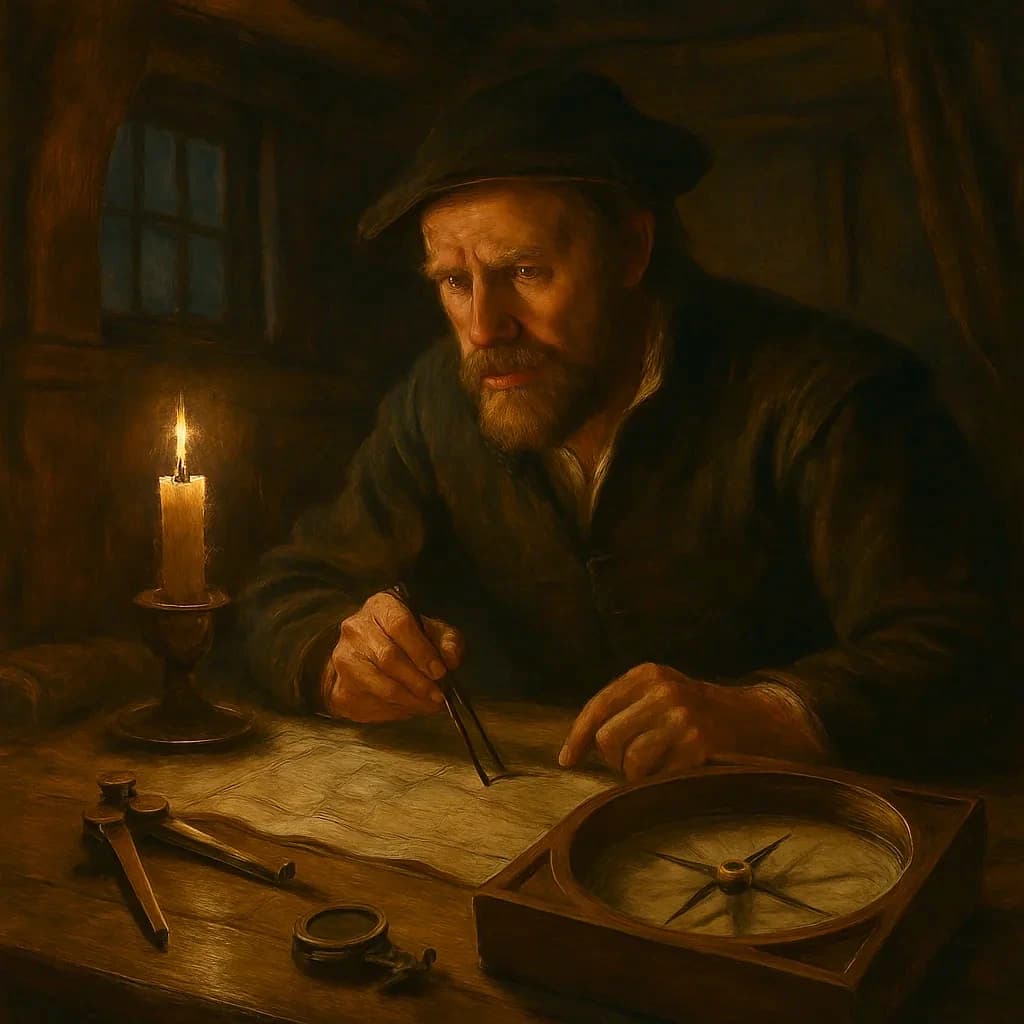
His Broken Compass Proved Earth Is a Magnet
A Dutch sailor's broken navigation instrument revealed in 1609 that the Earth itself was magnetic, and that mapmakers had been getting north wrong for centuries.
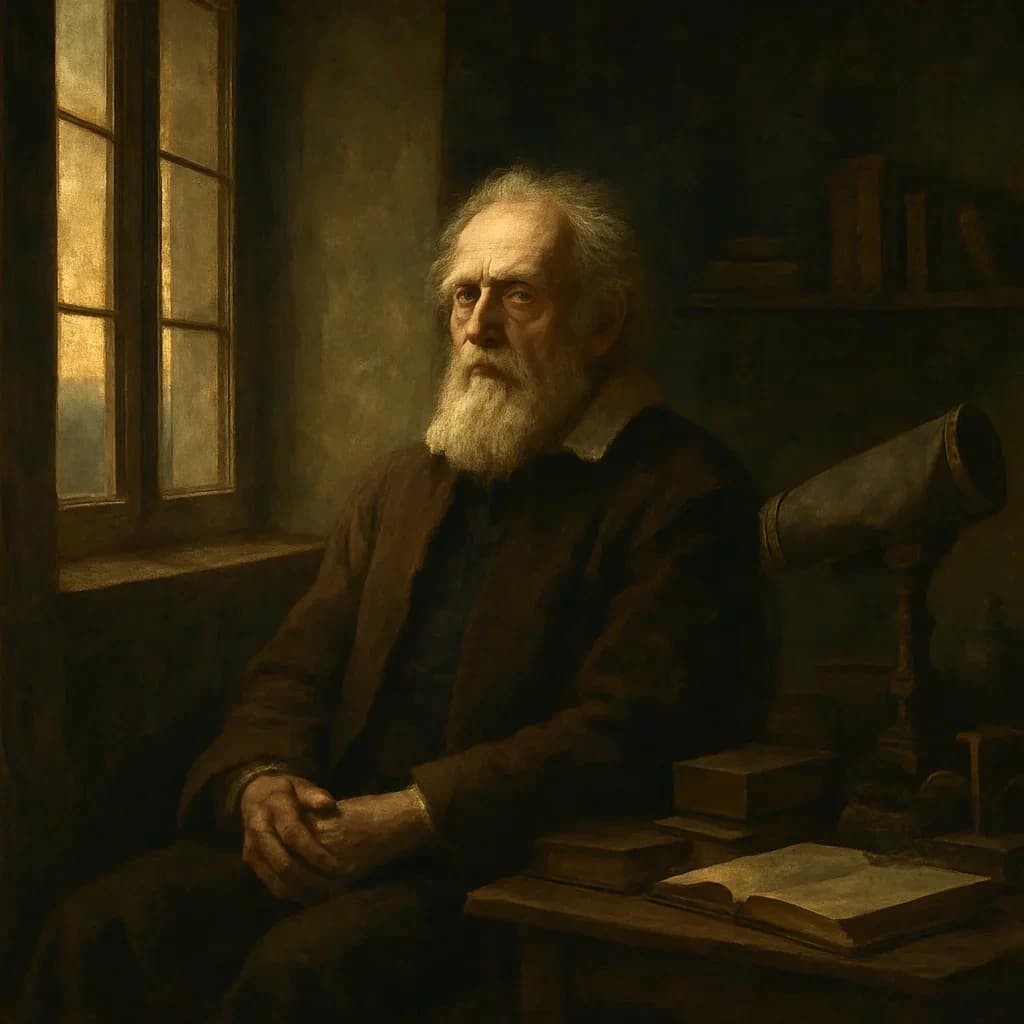
Galileo Went Blind Fearing His Telescope Had Damned Him
The father of modern science spent his final years terrified that his own telescope would damn him to hell.
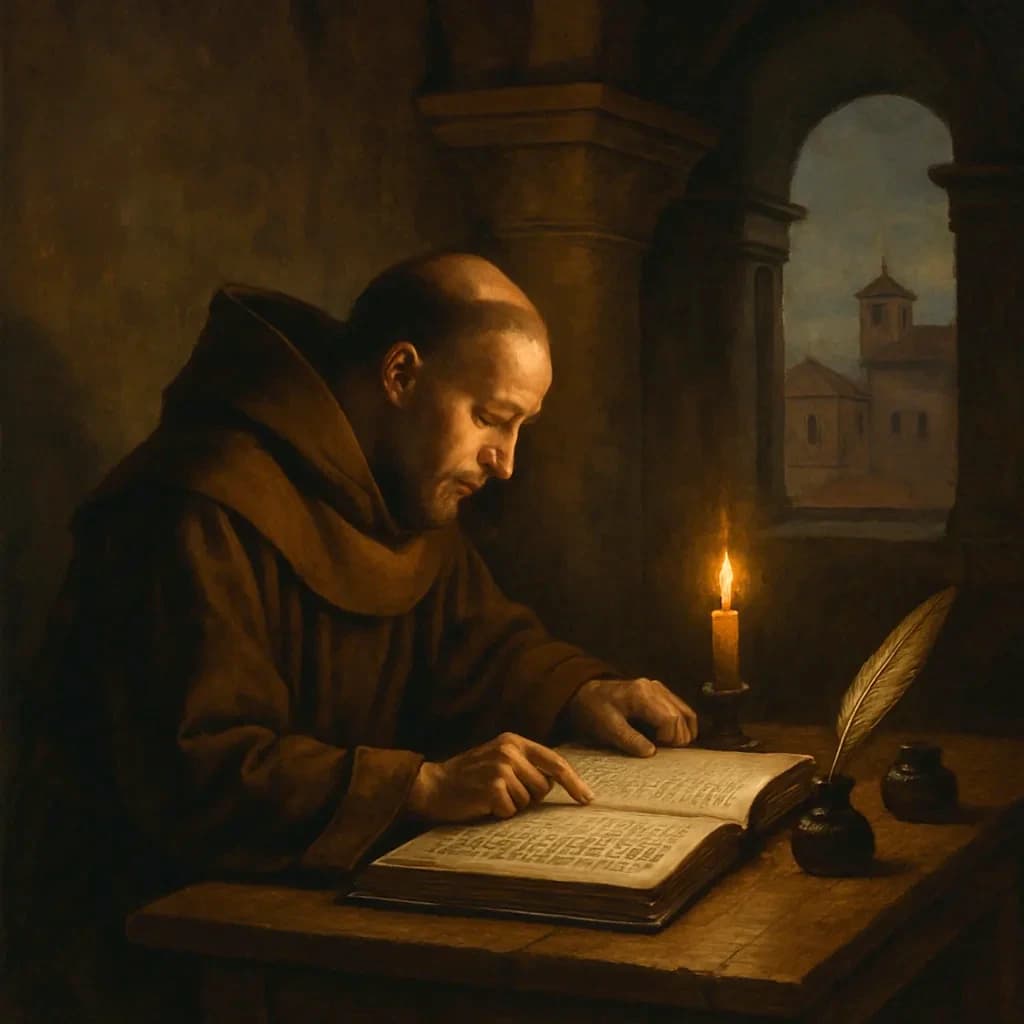
Twenty-Seven Pages That Invented Capitalism
A Venetian spice trader's secret bookkeeping method ended up giving birth to capitalism itself.
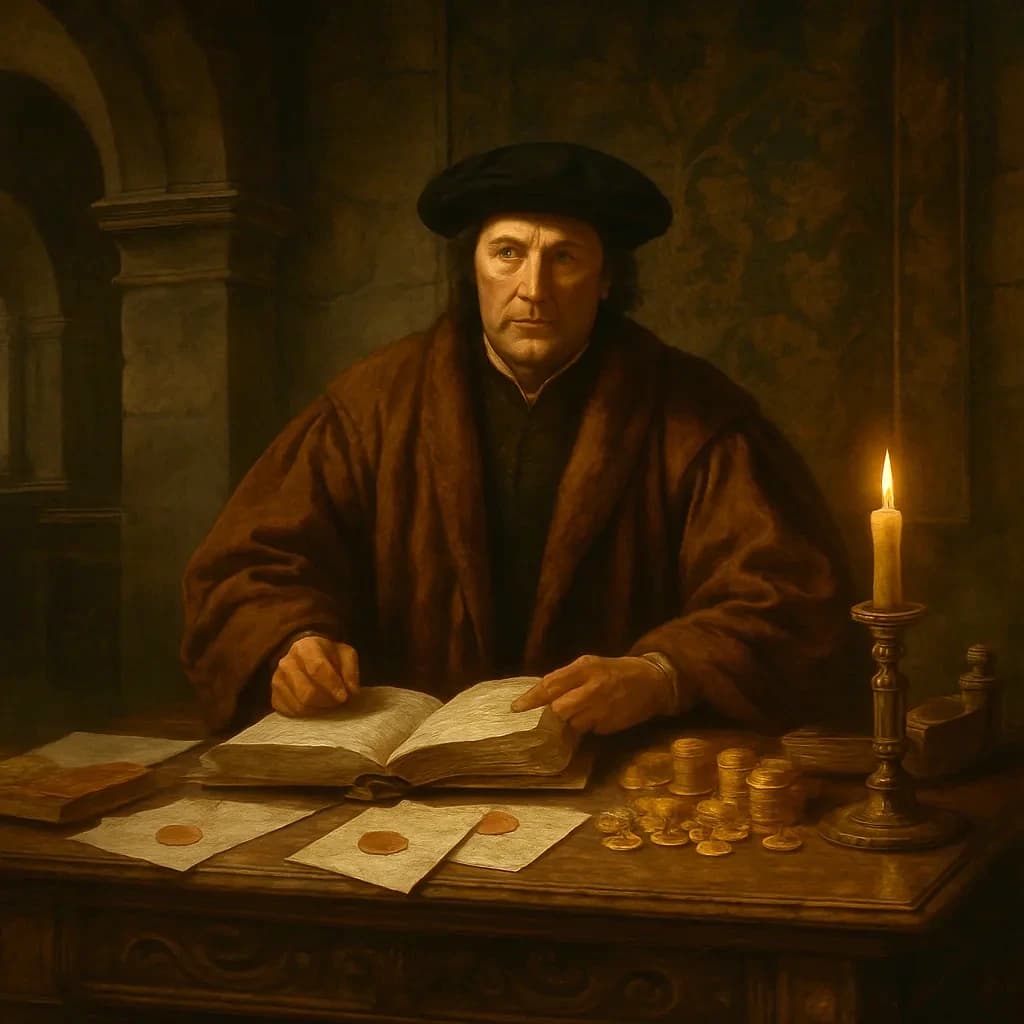
The Banker Who Bought an Emperor's Crown
While kings begged for loans, one man in Augsburg casually bought and sold the fate of entire empires.
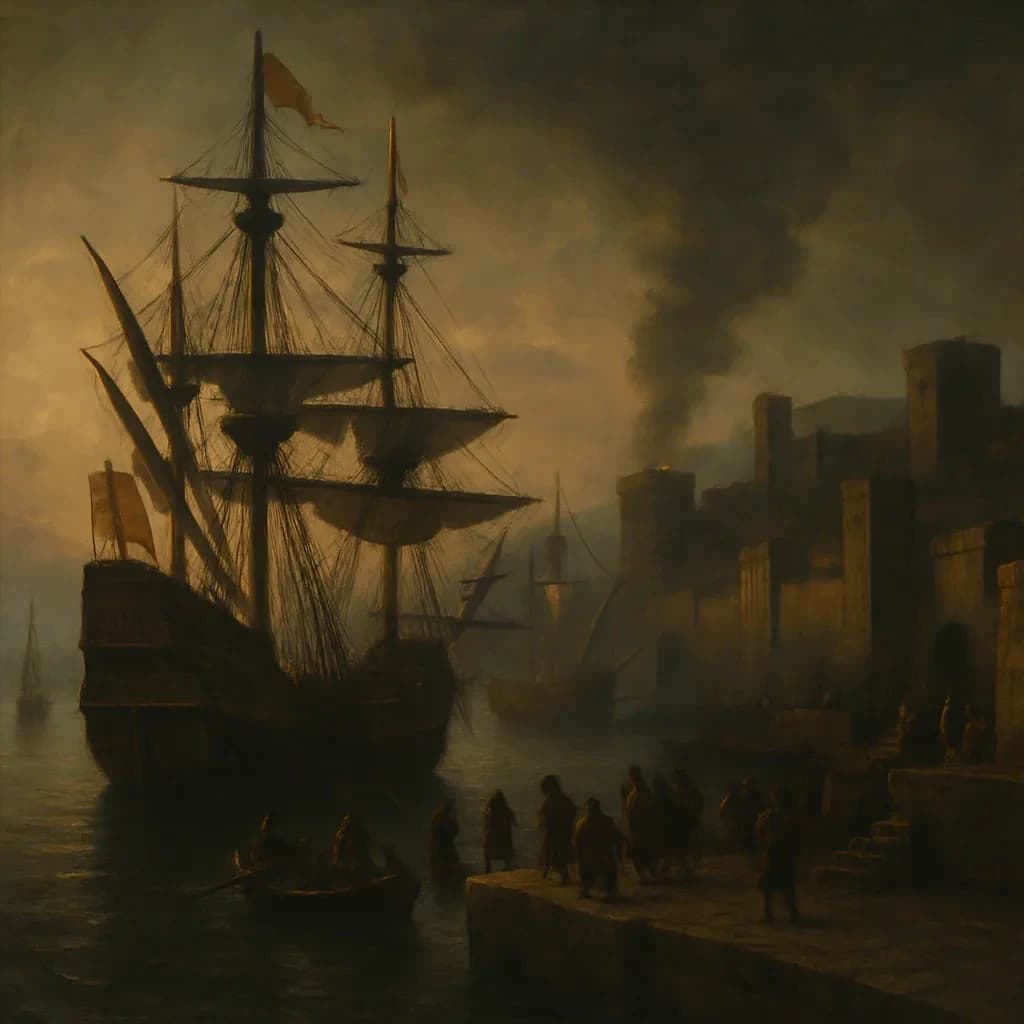
Lost on the Way to Sicily, They Conquered Naples
A Spanish fleet anchored in the wrong port and won Italy for three centuries.
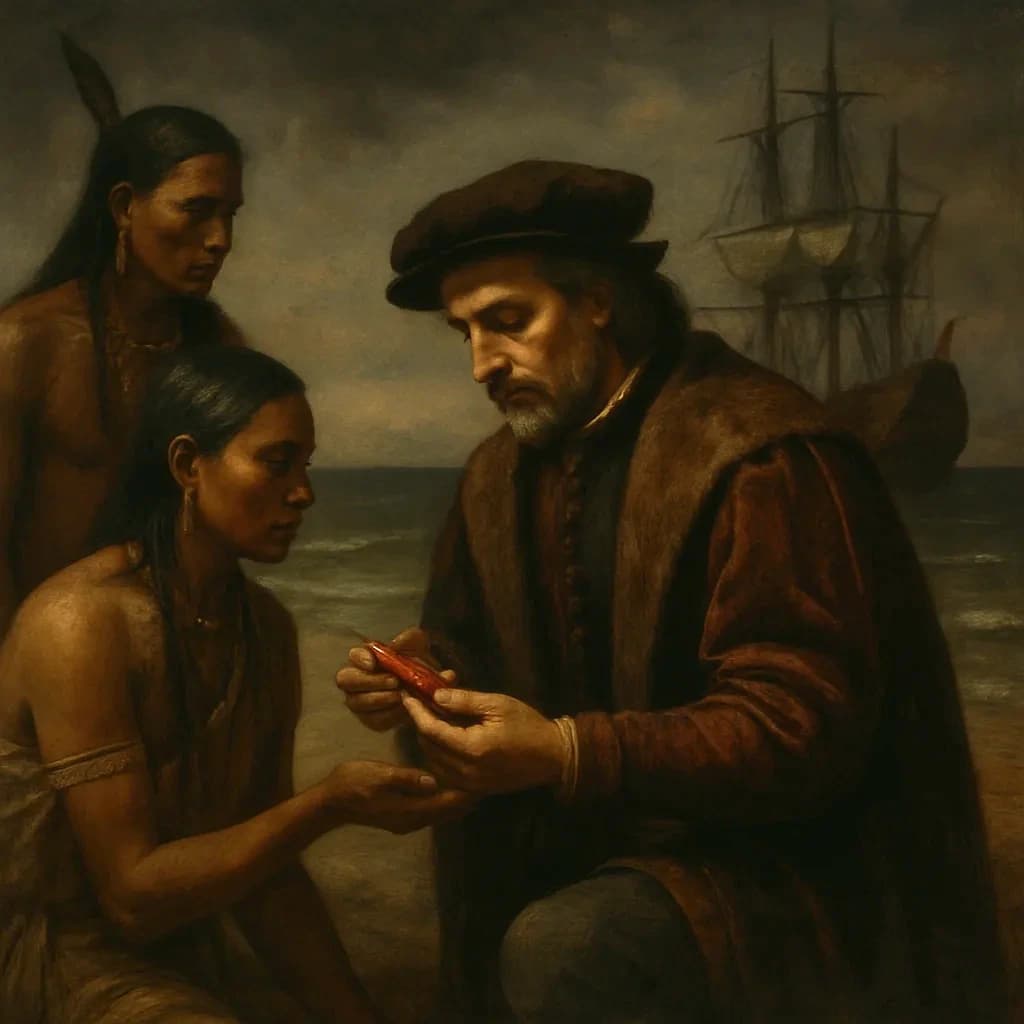
A Bowl of Soup and the Invention of America
A homesick Italian navigator's culinary mistake led to the most profitable geographical blunder in history.
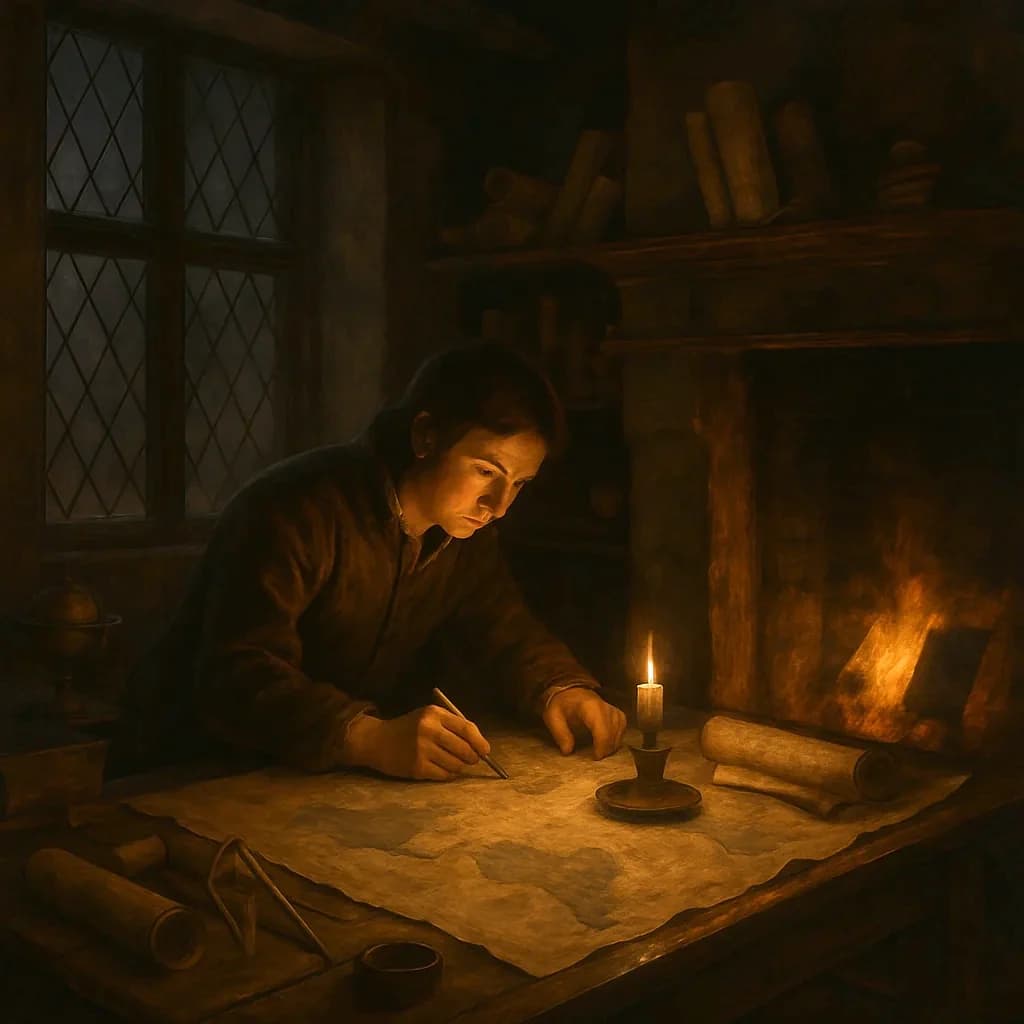
He Halved the Pacific to Save His Marriage
A teenage apprentice in Nuremberg made a decision in 1519 that would hide the true size of the Pacific Ocean from European navigators for over two centuries.
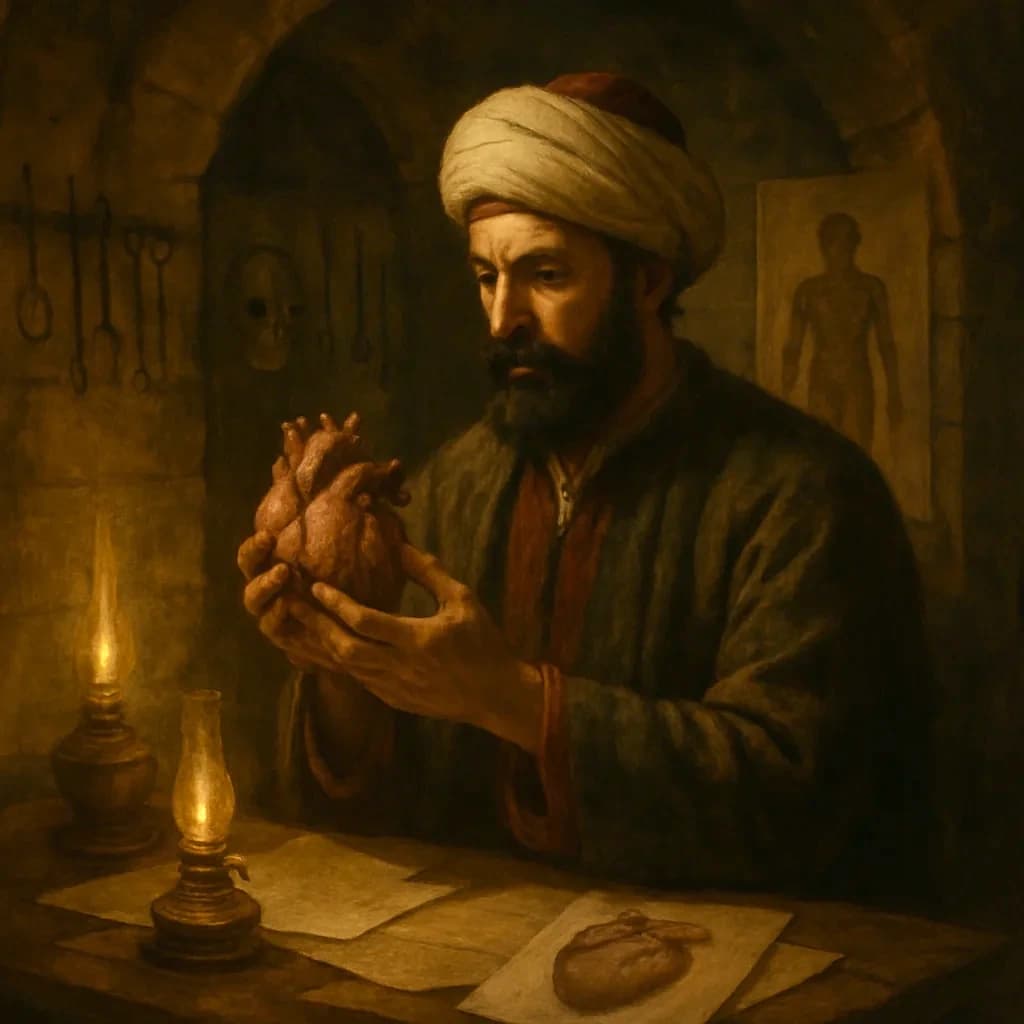
The Ottoman Empire's Greatest Physician Died Hiding a Heresy
When the Ottoman Empire's most famous physician died in 1506, his autopsy revealed something that would have gotten him executed as a heretic.
The 335-Year War That Killed No One
A bankruptcy declaration in Madrid set off a war that lasted 335 years and technically never ended.
Three Degrees: How a Map Error Cost Portugal Its Crown
A single miscalculation on a medieval map transformed Portugal from Europe's maritime powerhouse into Spain's dependent province.
Genoa's Bankers Quietly Owned the New World
A bank clerk's routine ledger review revealed that someone had quietly stolen half the known world.
One Dinner That Handed Bengal to London
A single merchant's meal in Calcutta changed the ownership of an entire subcontinent.
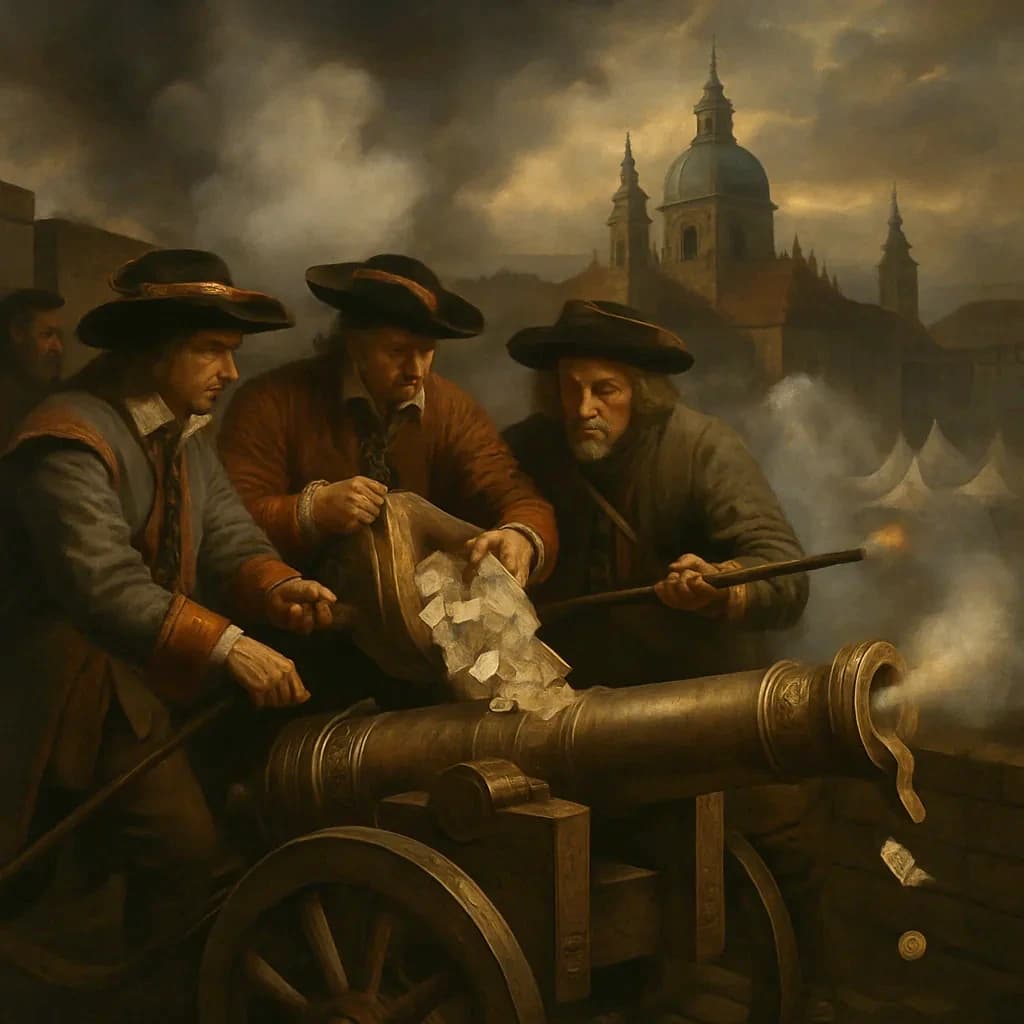
Vienna Stuffed Its Cannons With Imperial Money
By 1683 the Ottoman siege had pushed Vienna's defenders so close to breaking that they began ramming their own currency into their cannons as wadding.
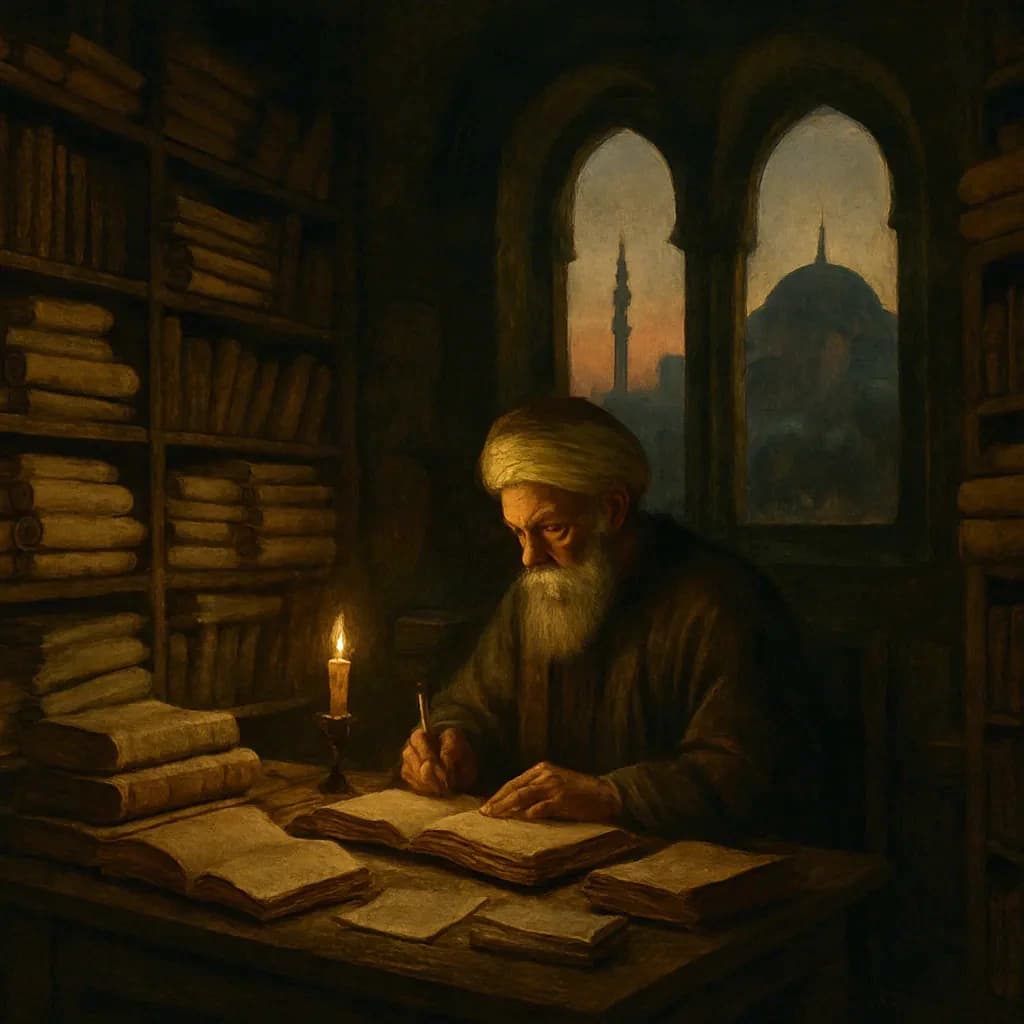
He Saved the Books Everyone Else Was Burning
While Europe fought the Renaissance wars of religion, one man in Constantinople was quietly preserving the lost knowledge of thirty civilizations.
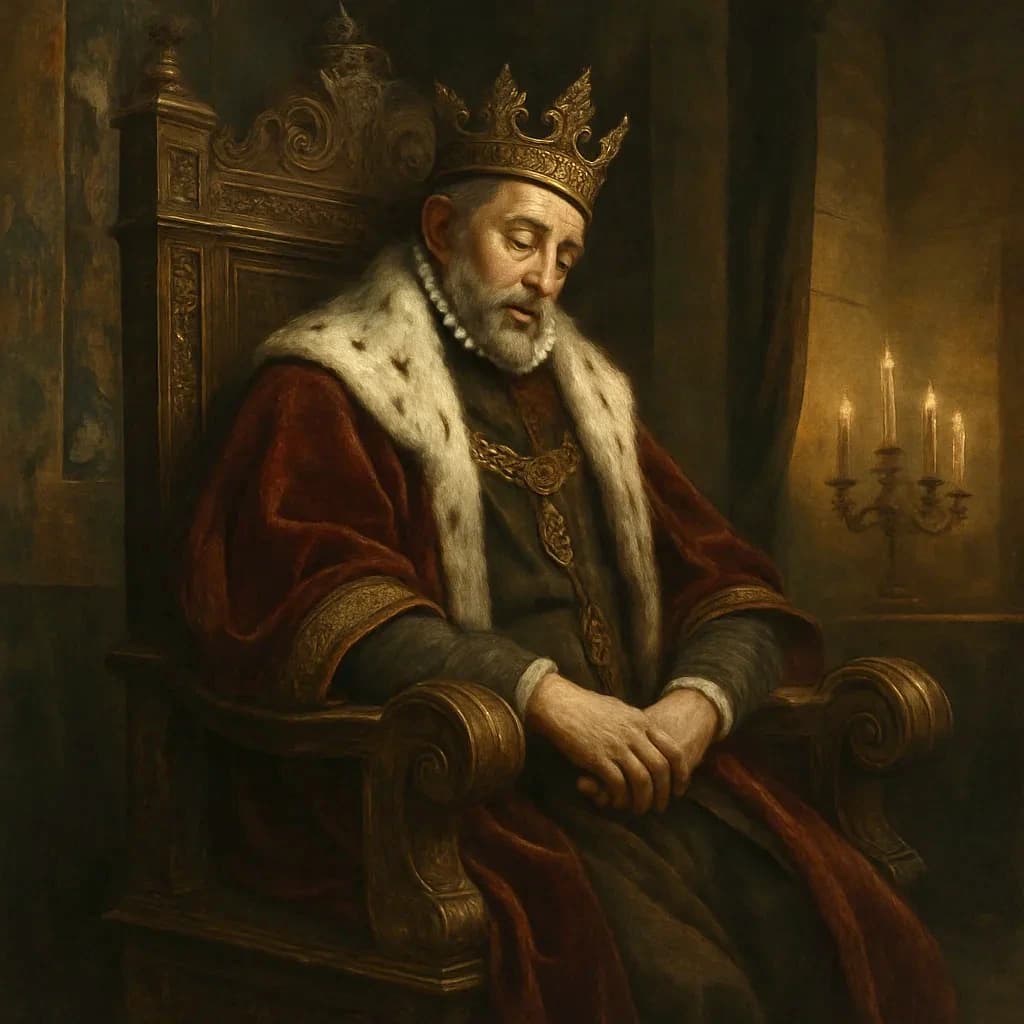
When Kings Went to Sleep Standing Up
For nearly a century, European monarchs believed their royal blood would turn to poison if they ever lay down while sleeping.
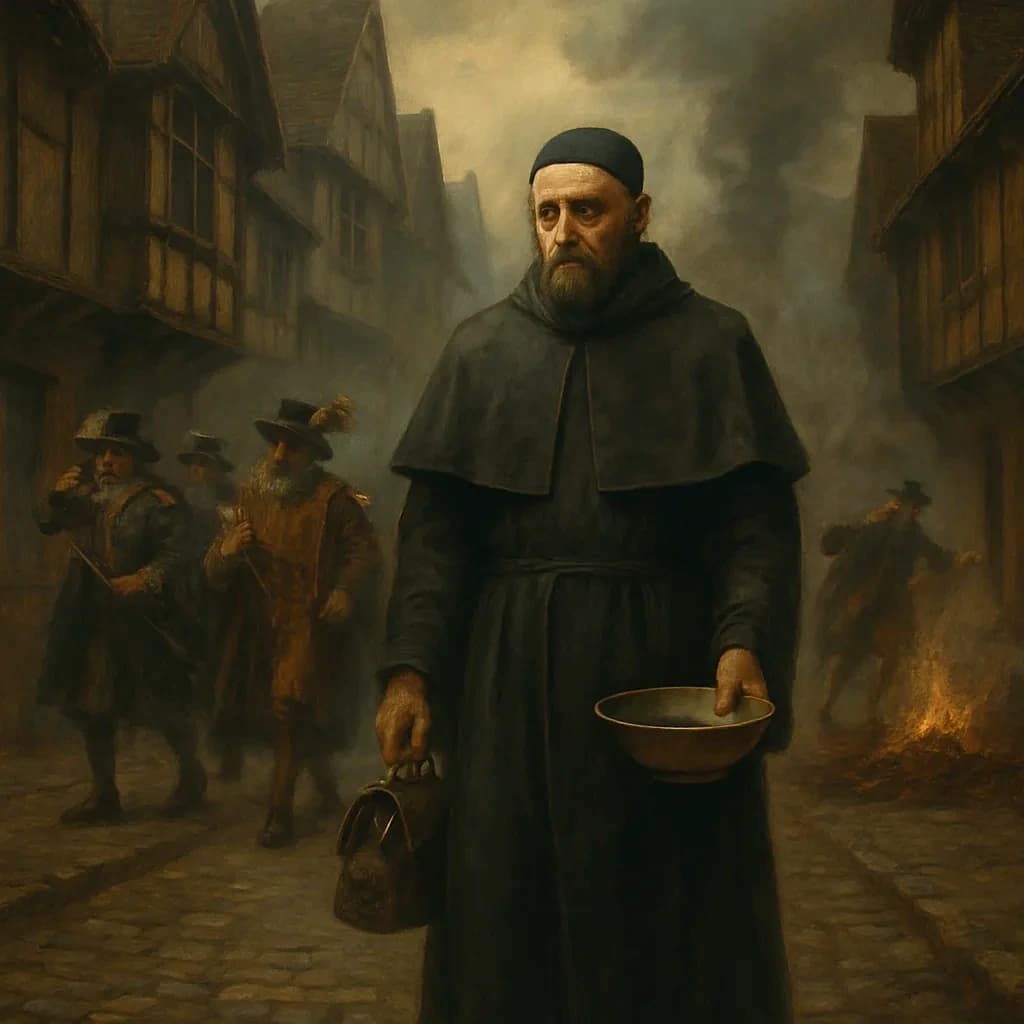
He Carried an Empty Bag and Saved London
A Venetian doctor stepped onto a London dock carrying nothing but an empty leather bag, and saved more lives than any physician in the city.
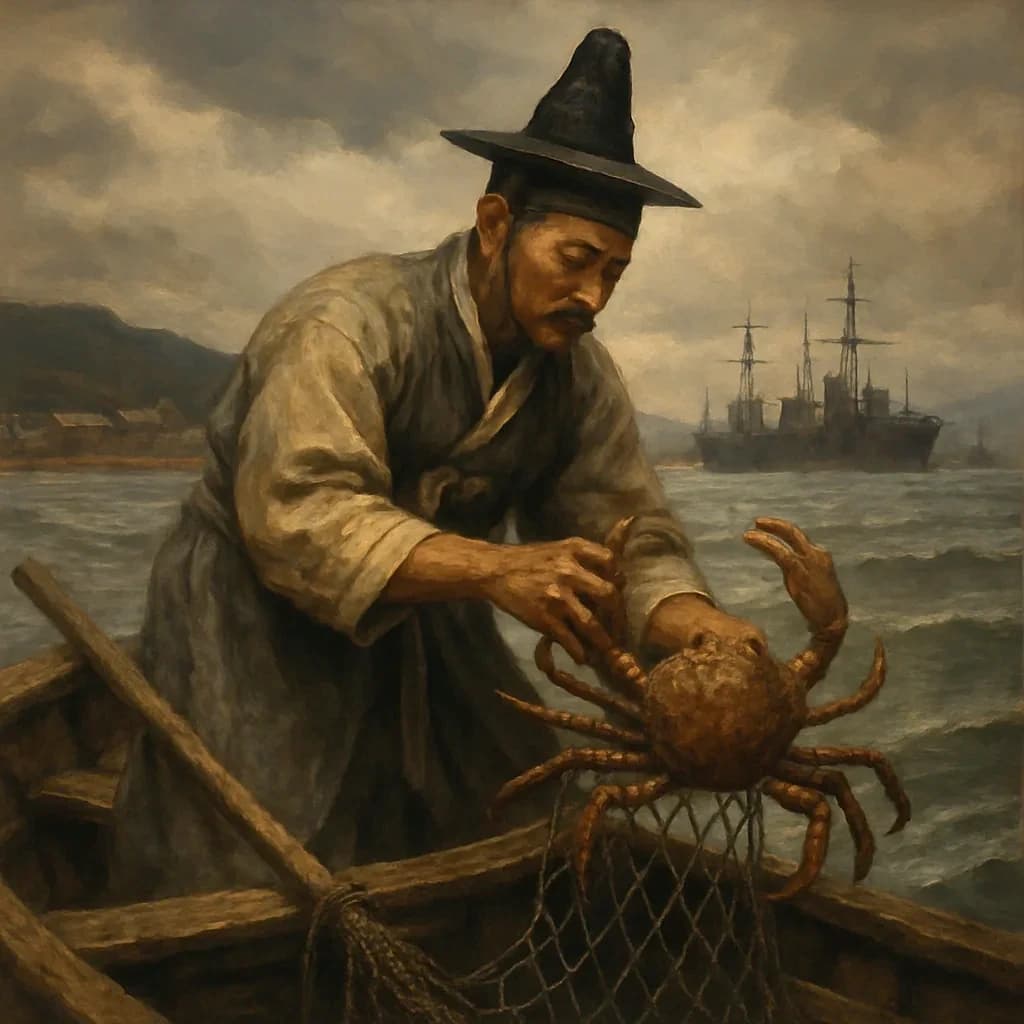
One Diseased Crab and the Fall of the Ming
A single crab pot hauled from the Yellow Sea in 1598 held something that would topple the Ming Empire within fifty years.
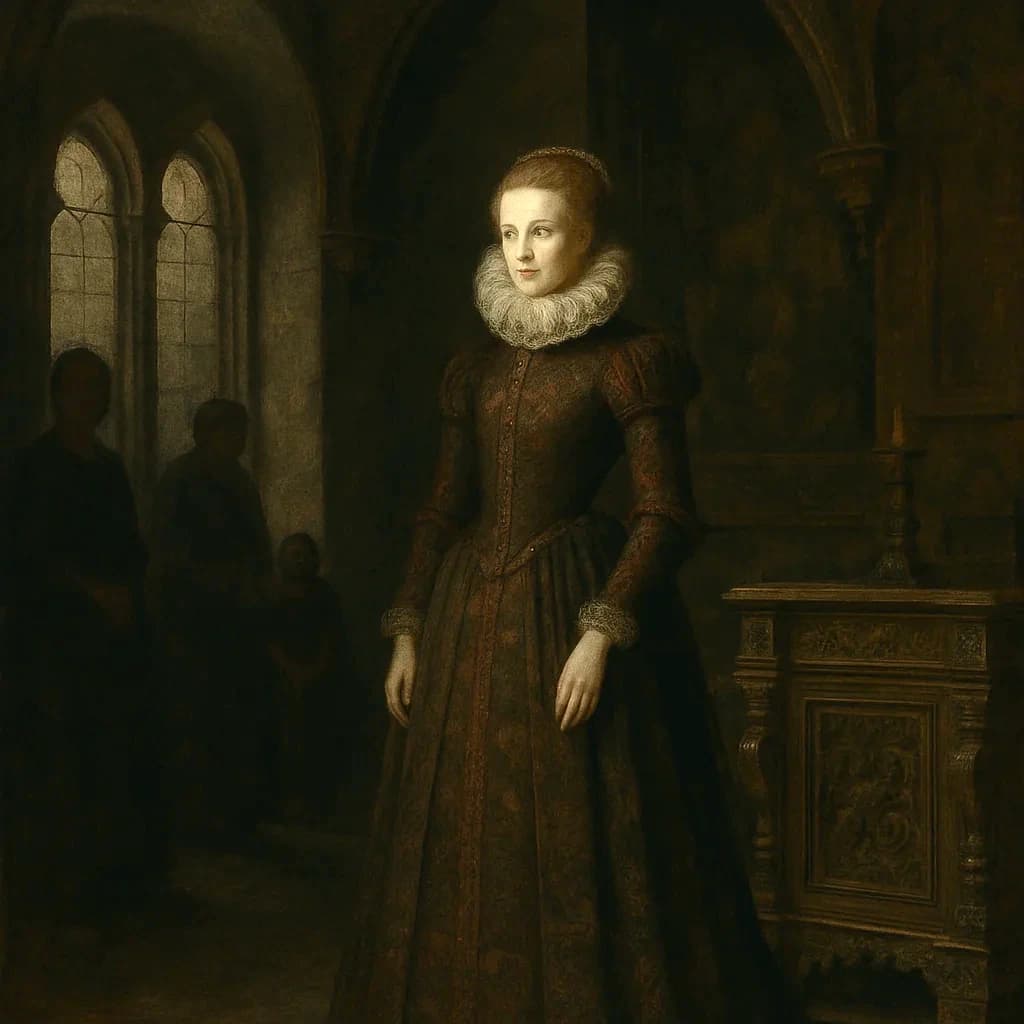
Elizabeth Báthory: Walled Up Alive in Her Own Castle
Her servants' screams carried further than her husband's war cries. In 16th century Hungary, Elizabeth Báthory built an empire of terror that outlasted his legacy.
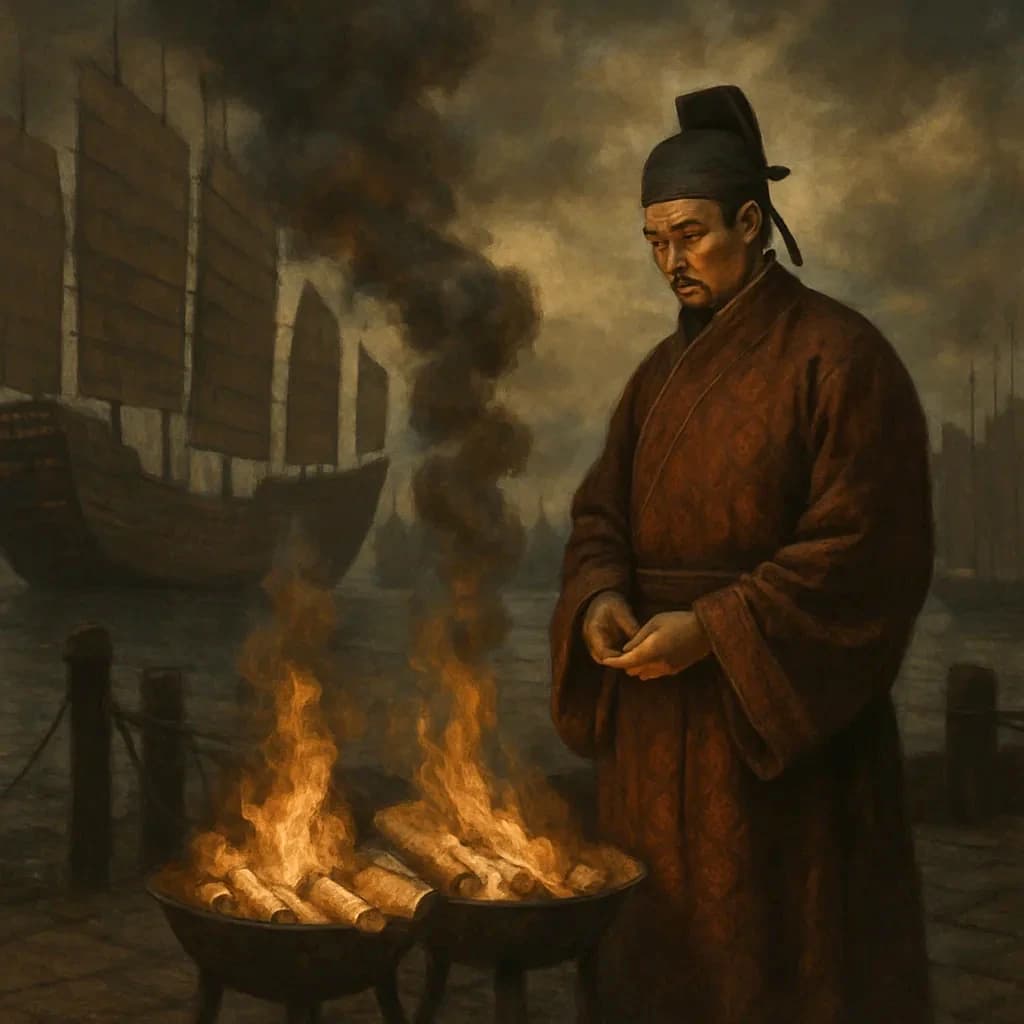
China Recalled the World's Greatest Navy and Burned Its Maps
The most powerful navy in history received orders in 1433 to sail home and destroy every record of where it had been.
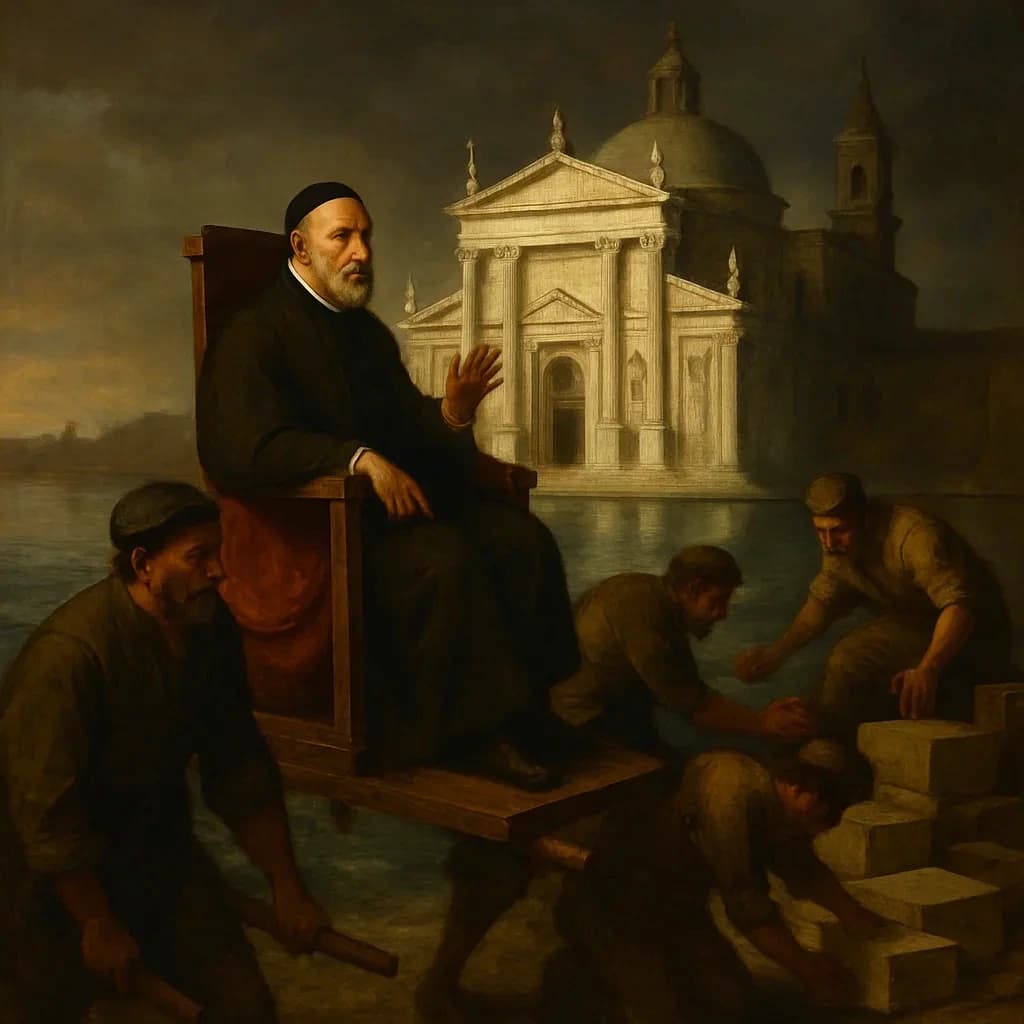
Venice's Plague Church Was Built by a Dying Man
A plague outbreak in 1576 led Venice to build one of the most beautiful churches in the world, yet the architect died before seeing his masterpiece completed.
He Promised to Make a River Flow Uphill
A Dutch engineer convinced the Spanish Empire to fund the impossible in 1580: making water flow backwards across an entire country.
Insomnia Built Europe's First Botanical Garden
A Venetian spice merchant's sleepless nights led to the creation of Europe's first public botanical garden, and changed medicine forever.
Pope Gregory Deleted Ten Days From the Calendar
Time itself ceased to exist across most of Europe for exactly 13 minutes on October 4, 1582.
How a Severed Head Broke the Borgia Empire
A bandit's macabre trophy became the secret weapon that unified Renaissance Italy under papal rule.
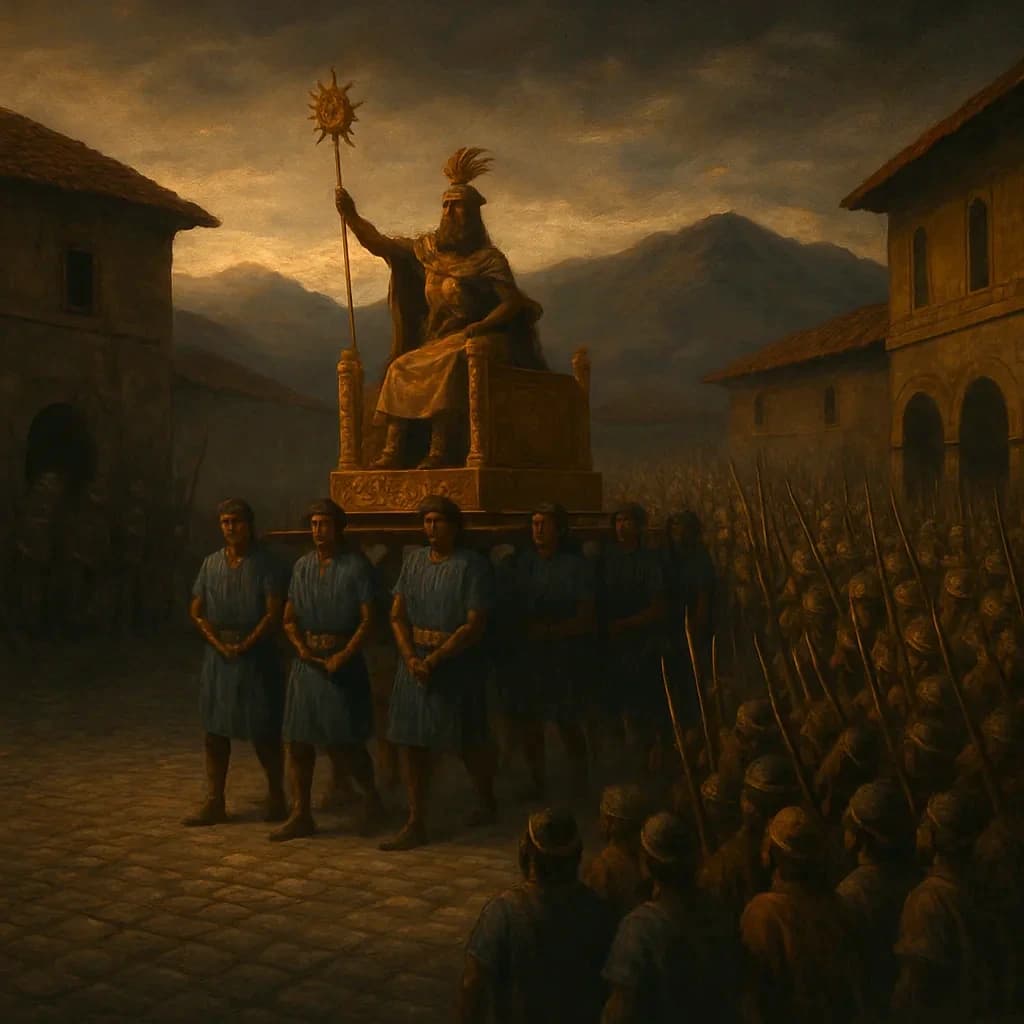
Fewer Than 200 Men Captured the Inca Emperor
Atahualpa thought he was going to a diplomatic feast. The Spanish had very different plans for the meal.
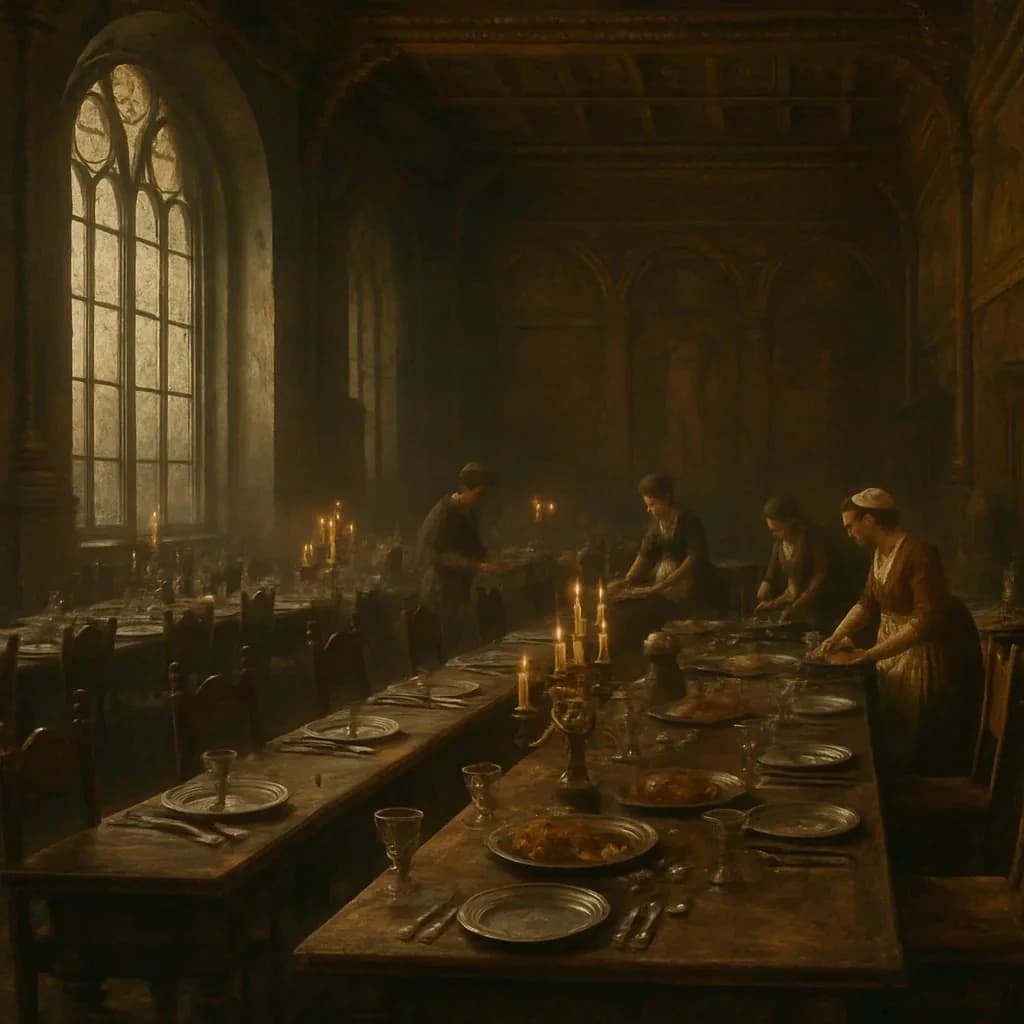
How a Royal Wedding Masked 23,000 Murders
A banquet hall full of plates sat empty in 1572 while an empire fell.
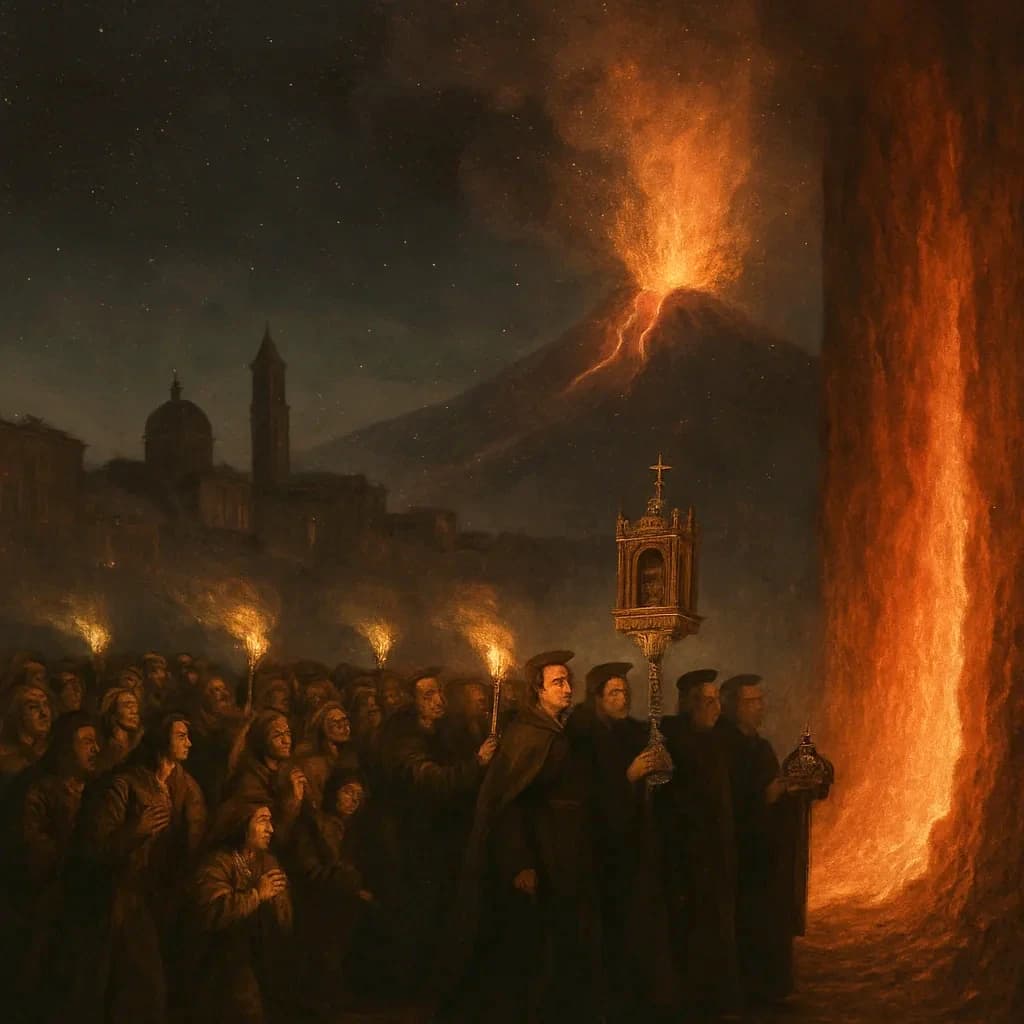
A Monk Bargained His Life Against Vesuvius
Mount Vesuvius erupted in 1631, and one Neapolitan monk made a bet that would either save the city or doom his soul forever.
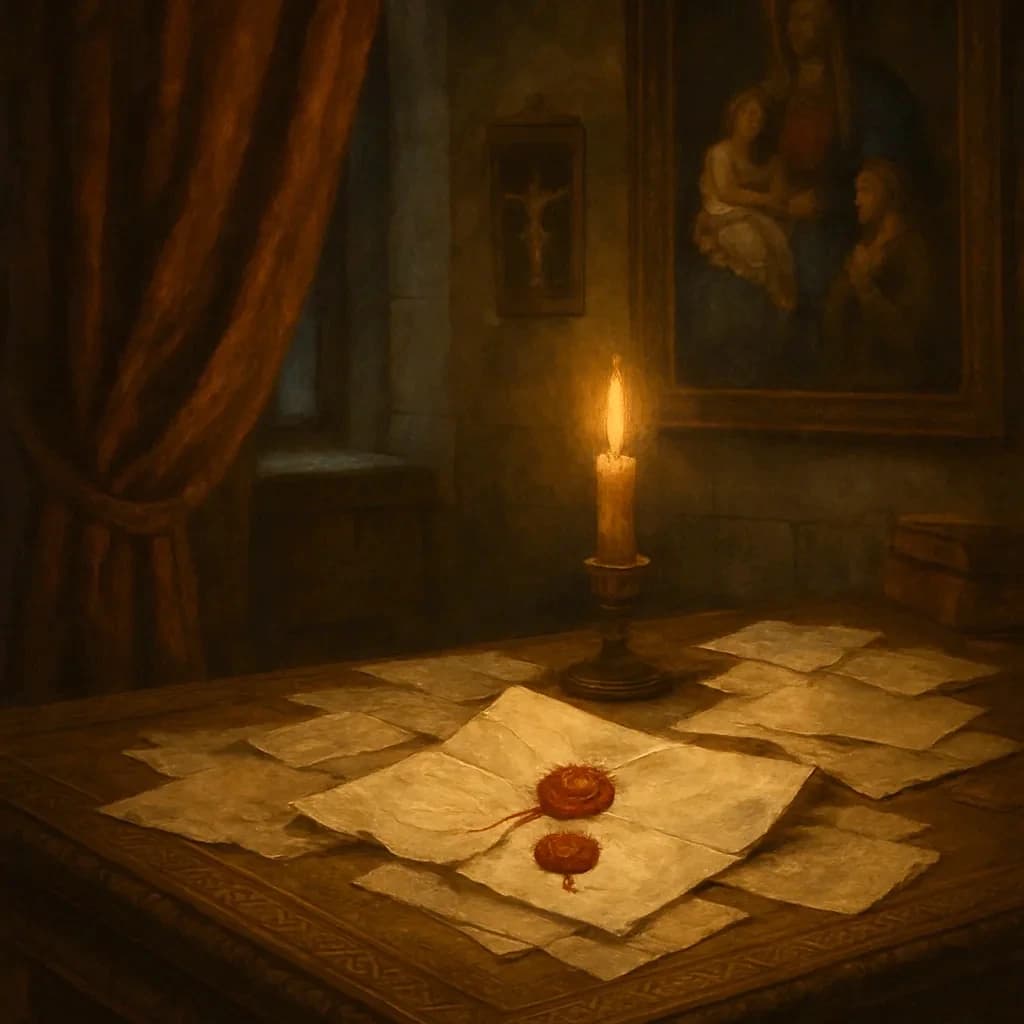
How a Fake Dinner Invitation Toppled the Borgias
A forged invitation to a feast that never happened brought down the most powerful family in Renaissance Italy.
Portugal Bought Malacca With a Ledger, Not Cannons
Armed with a ledger book and not a single soldier, one man conquered more territory than most emperors.
The Poison That Looked Like a Fever
A Parisian apothecary's cure for everything became Europe's favorite way to commit murder.
When Florence Caught God Counterfeiting
A Renaissance banker discovered that the Pope's indulgences were printed using stolen currency plates.
When Prussia Hired Its Own Assassin
King Frederick William I of Prussia paid a Frenchman to kill his own son, and nearly succeeded.
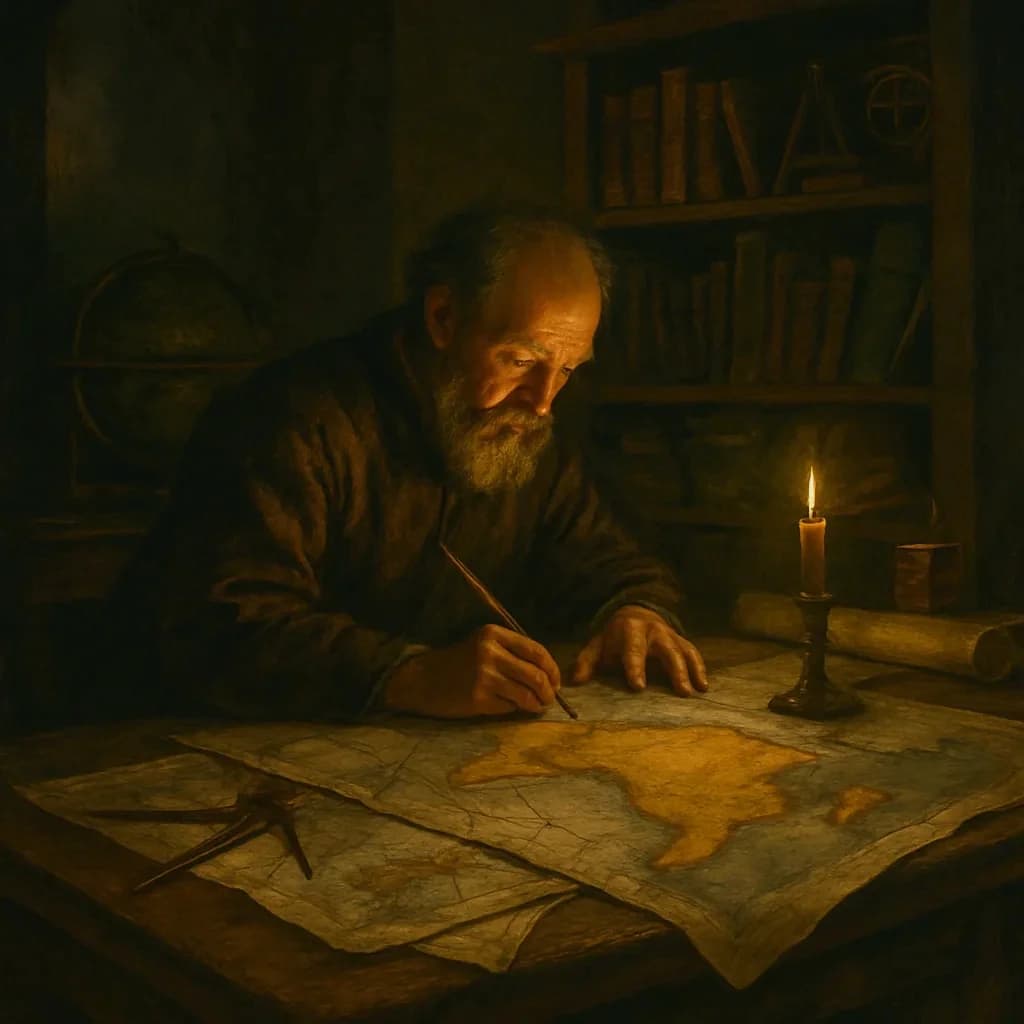
A Misread Word Created a Continent of Parrots
One mapmaker's inability to spell Dutch created a continent that doesn't exist, and Europeans spent three centuries looking for it.
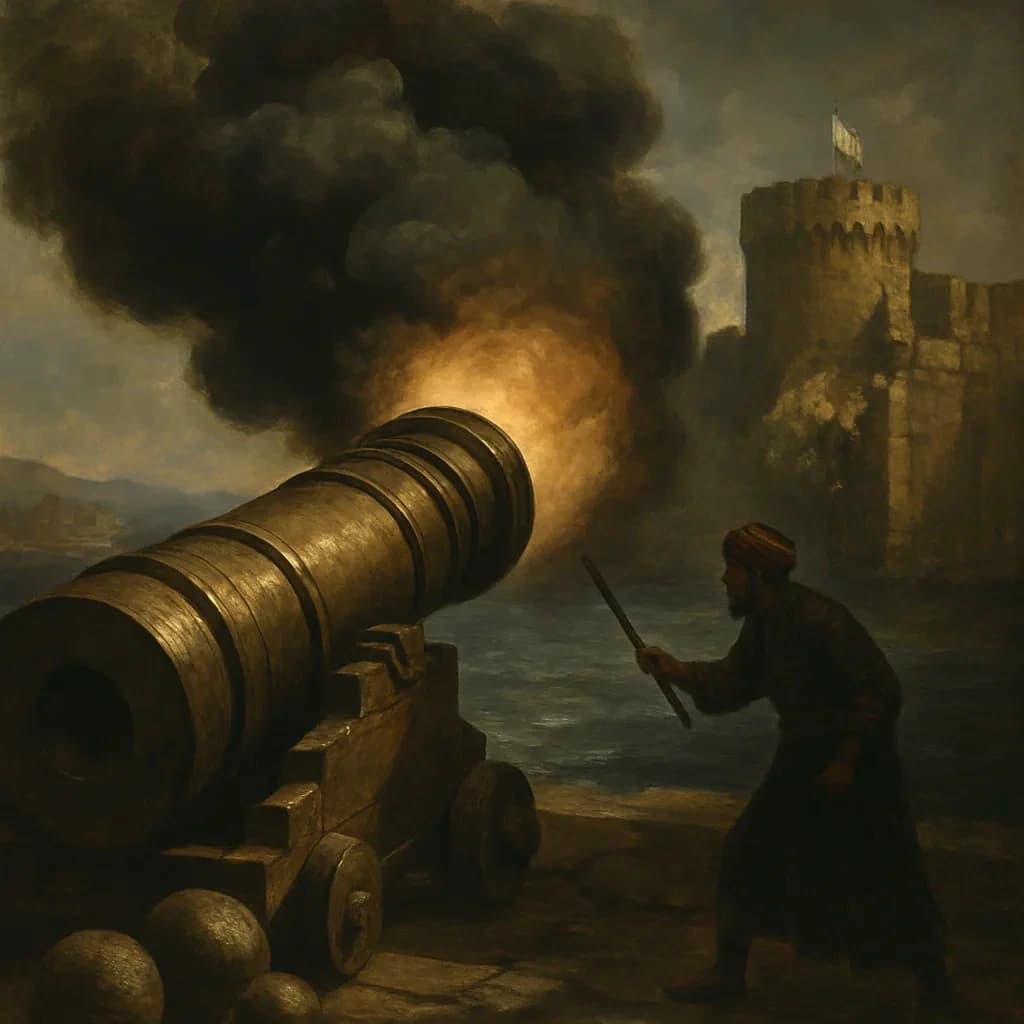
The Deaf Gunner Who Fired After the Surrender
An Ottoman siege cannon finished firing just as the defenders surrendered, but nobody heard the white flag go up over the roar.
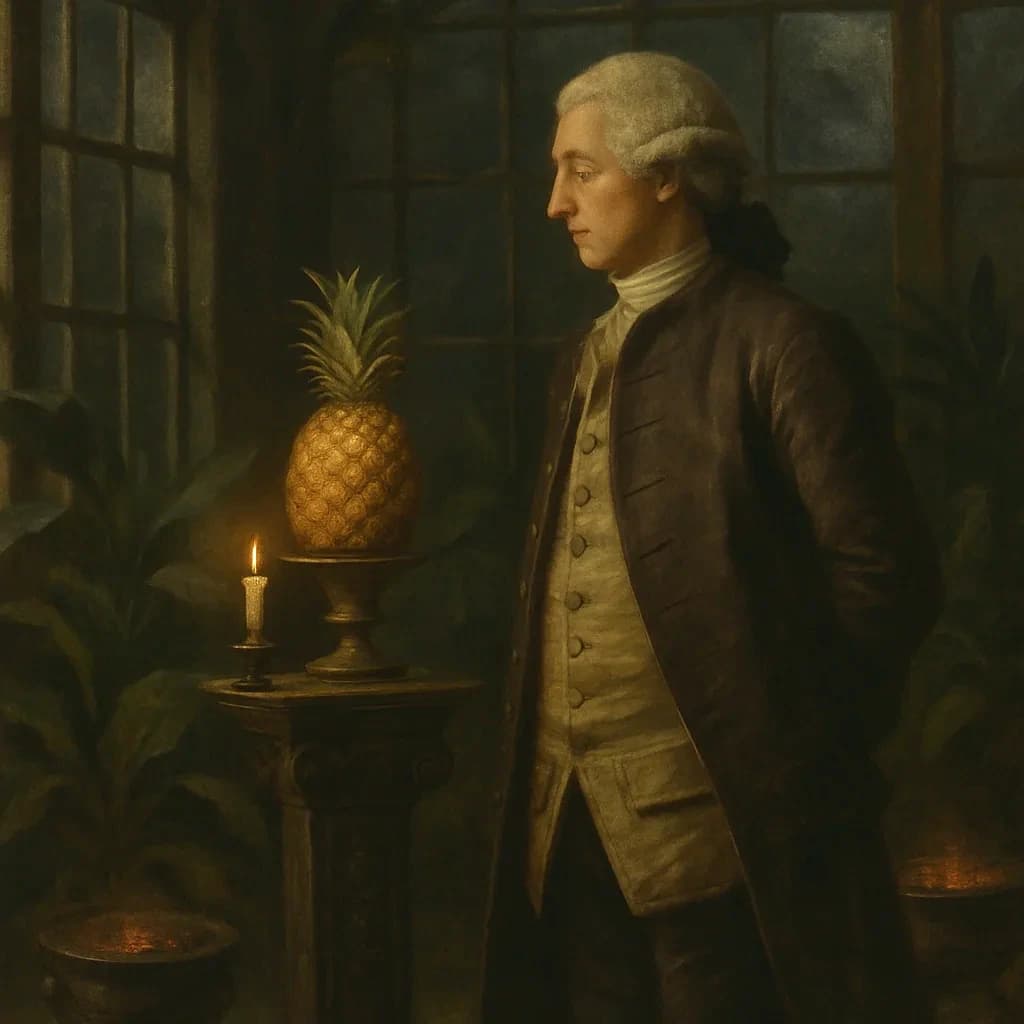
One Pineapple Cost More Than a Palace
A single pineapple sold in 1761 for the equivalent of £5,000 today, and its owner became more famous than most kings.
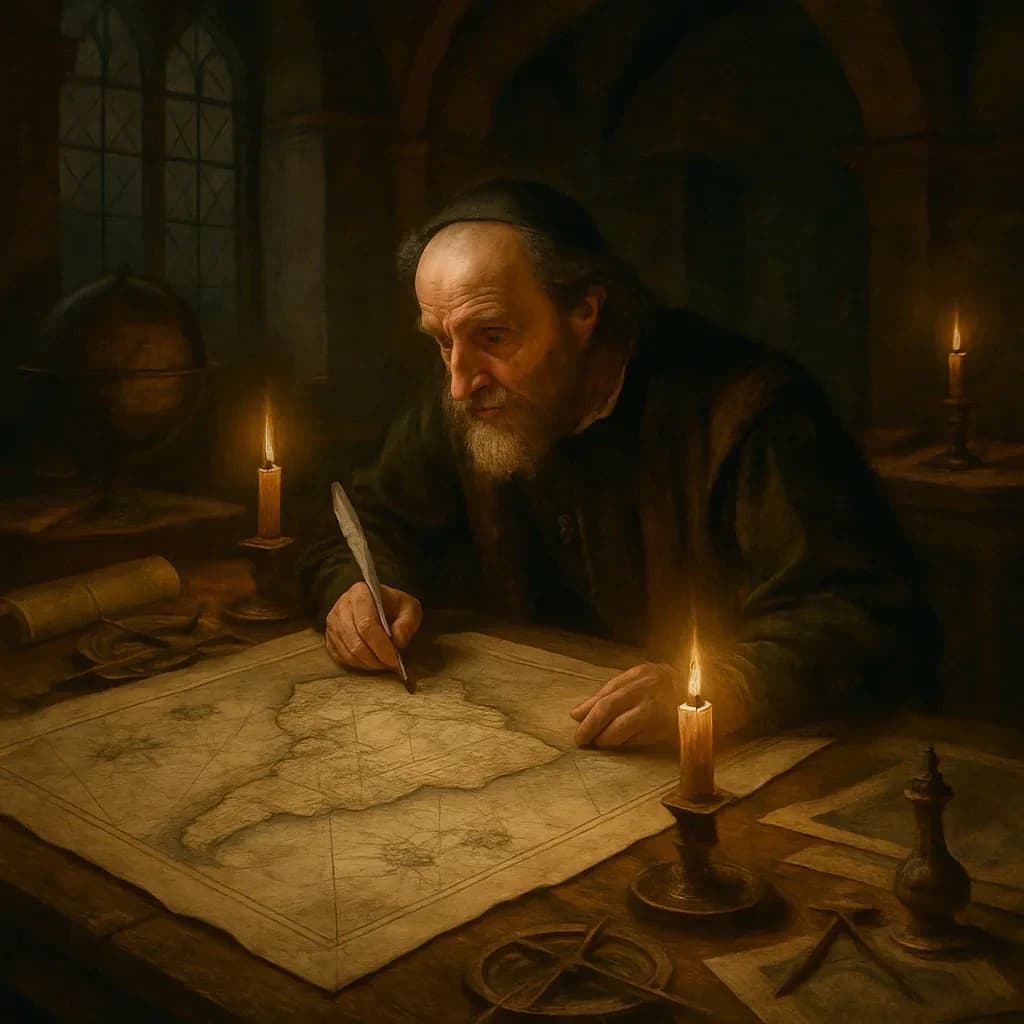
One Slipped Comma and the Golden Lake That Never Existed
A single misplaced comma on a 16th-century map killed more Spanish conquistadors than any native army.
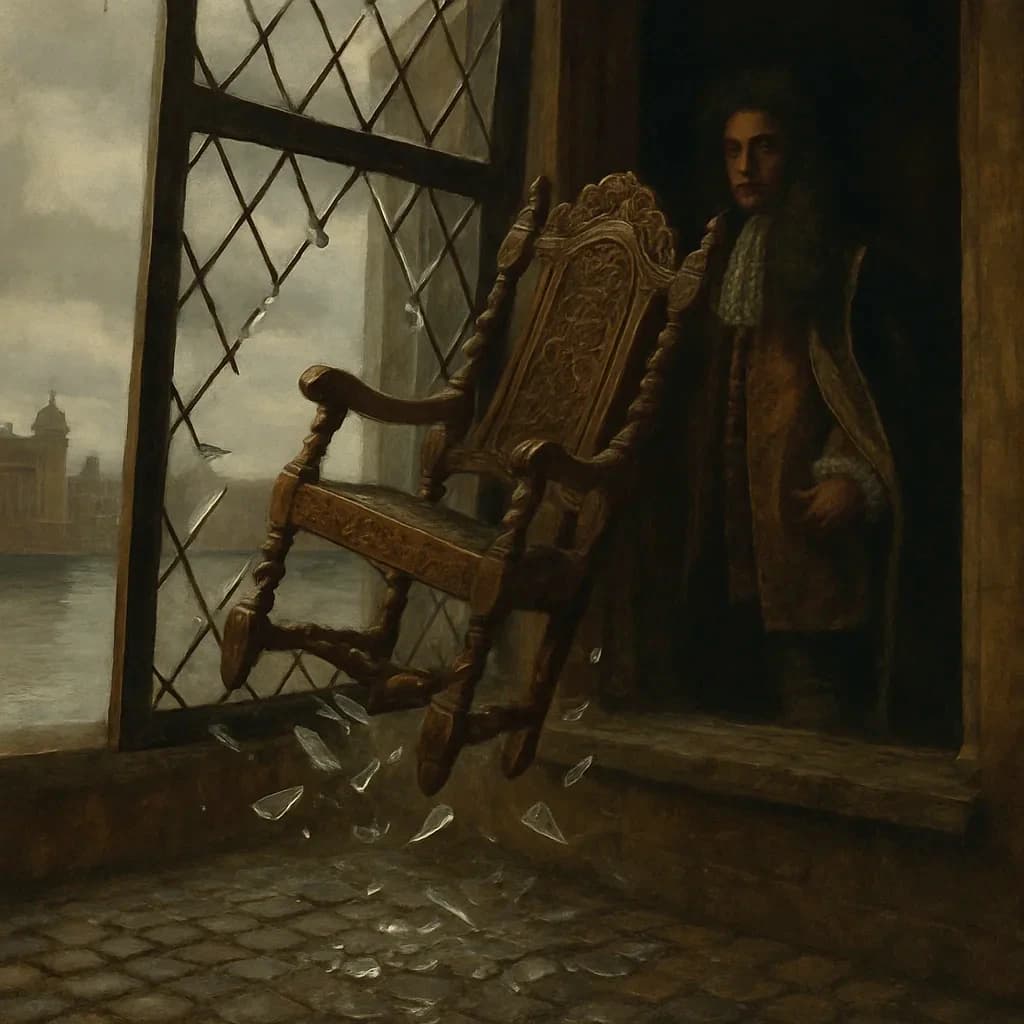
James II Threw England's Royal Seal Into the Thames
A single piece of flying furniture changed the course of English history forever.
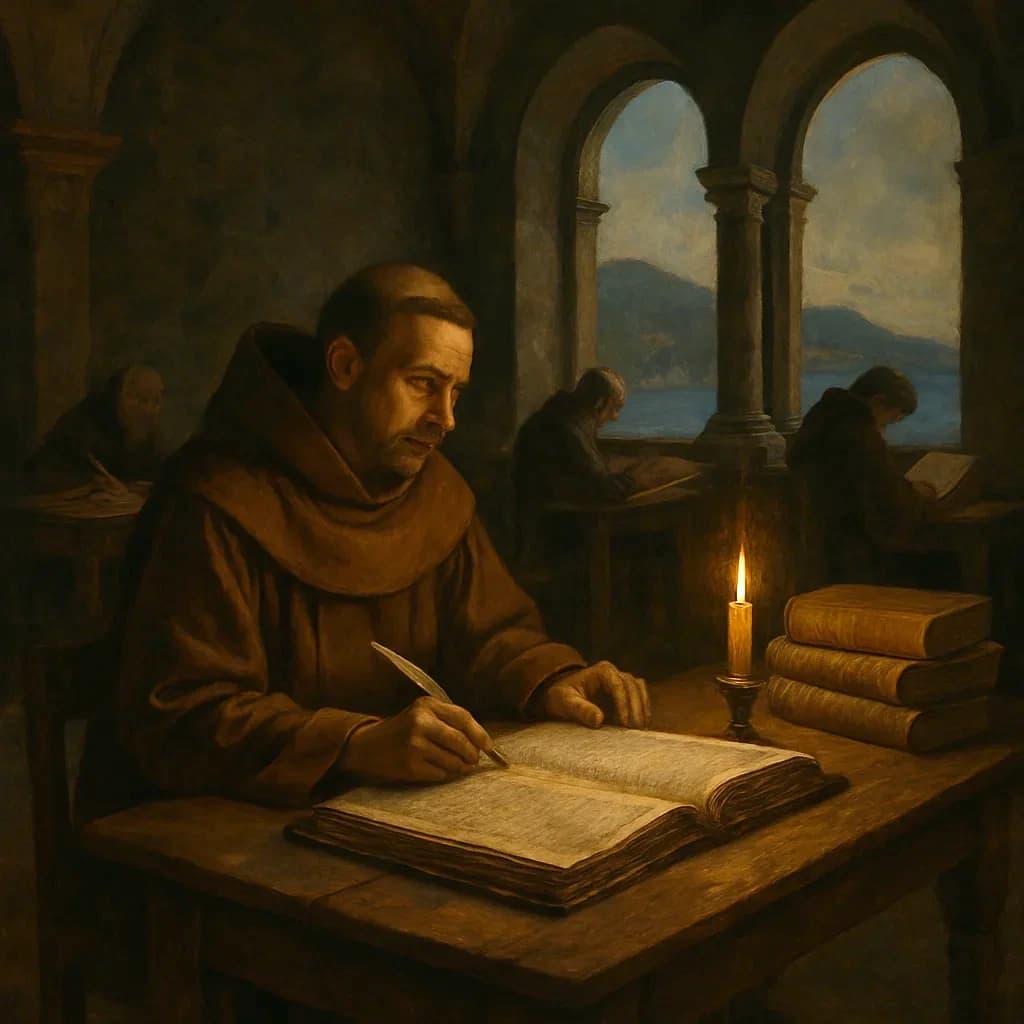
Why Merchants Started Writing Every Payment Twice
Reconciling his books in 1347, a Genoese banker stumbled into what would become double-entry bookkeeping, the foundation of modern capitalism.
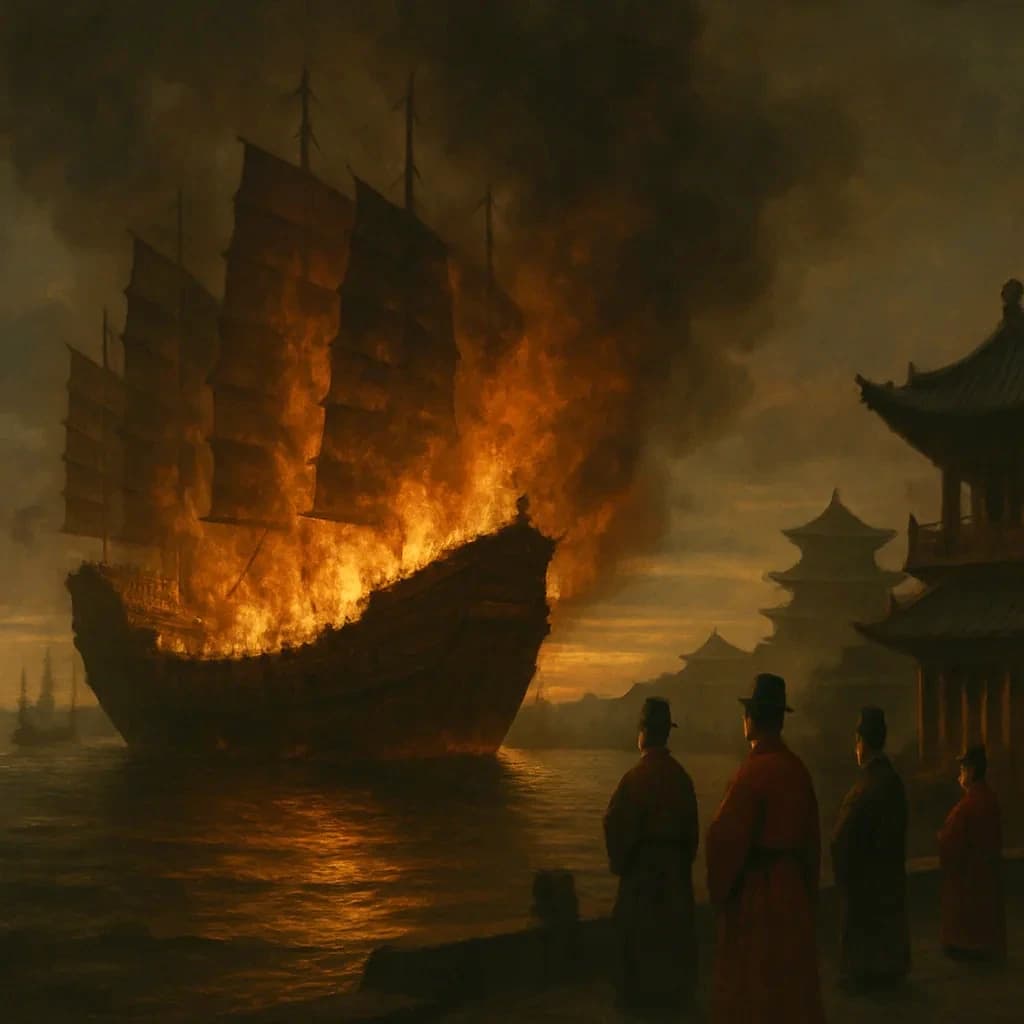
China Owned the Oceans, Then Burned Its Fleet
The greatest fleet in human history burned its own ships in 1433 and locked itself away, leaving the oceans to tiny European kingdoms.
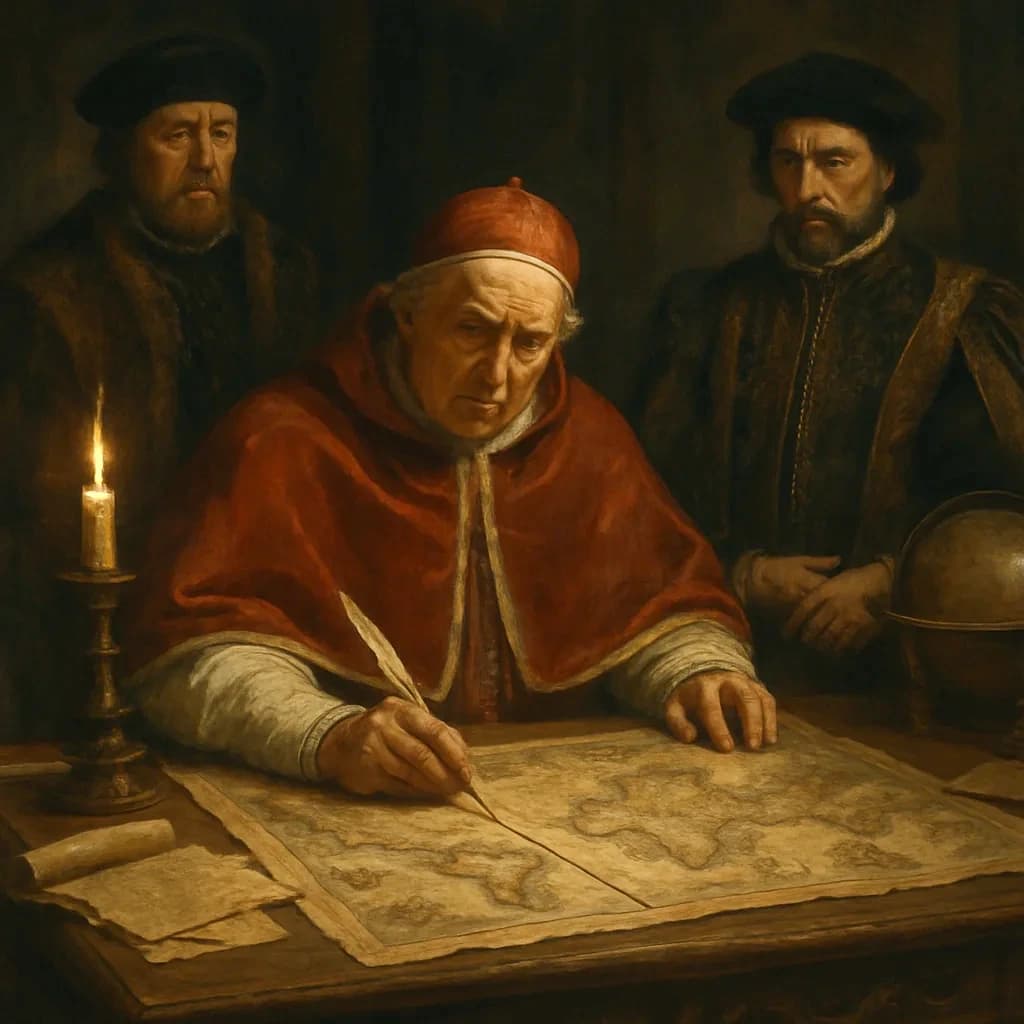
A Pope Drew a Line and Split the Globe
A papal document written in 1493 by a clerk who had never seen the Americas split the entire globe between two nations, based on a line no one could actually draw.
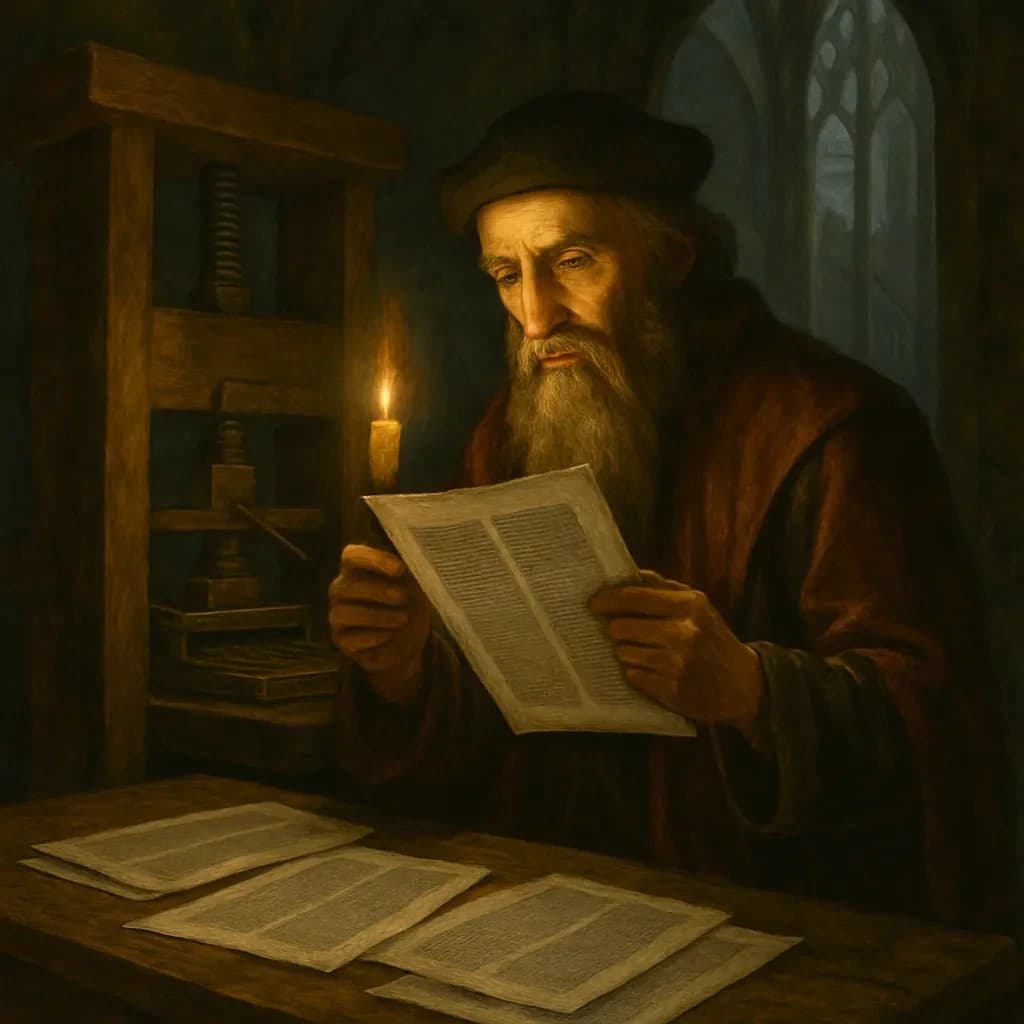
Gutenberg's Bible Hid a Page of Forbidden Math
One page of the world's first printed Bible, finished in 1455, could never be replicated, and the press wasn't the reason.
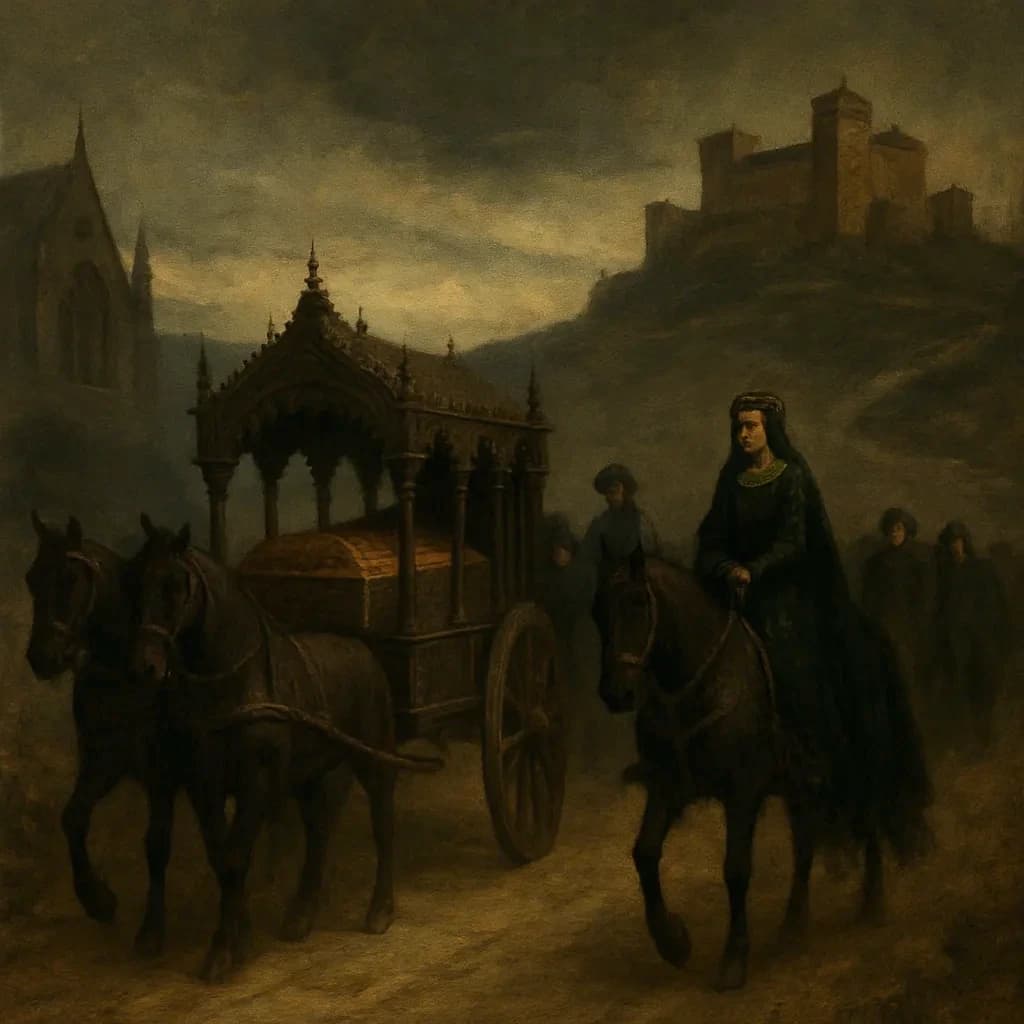
The Queen Who Forgot She Was Dead
Juana of Castile refused to bury her husband for three years, traveling across Spain with his coffin, and her madness accidentally saved an empire.
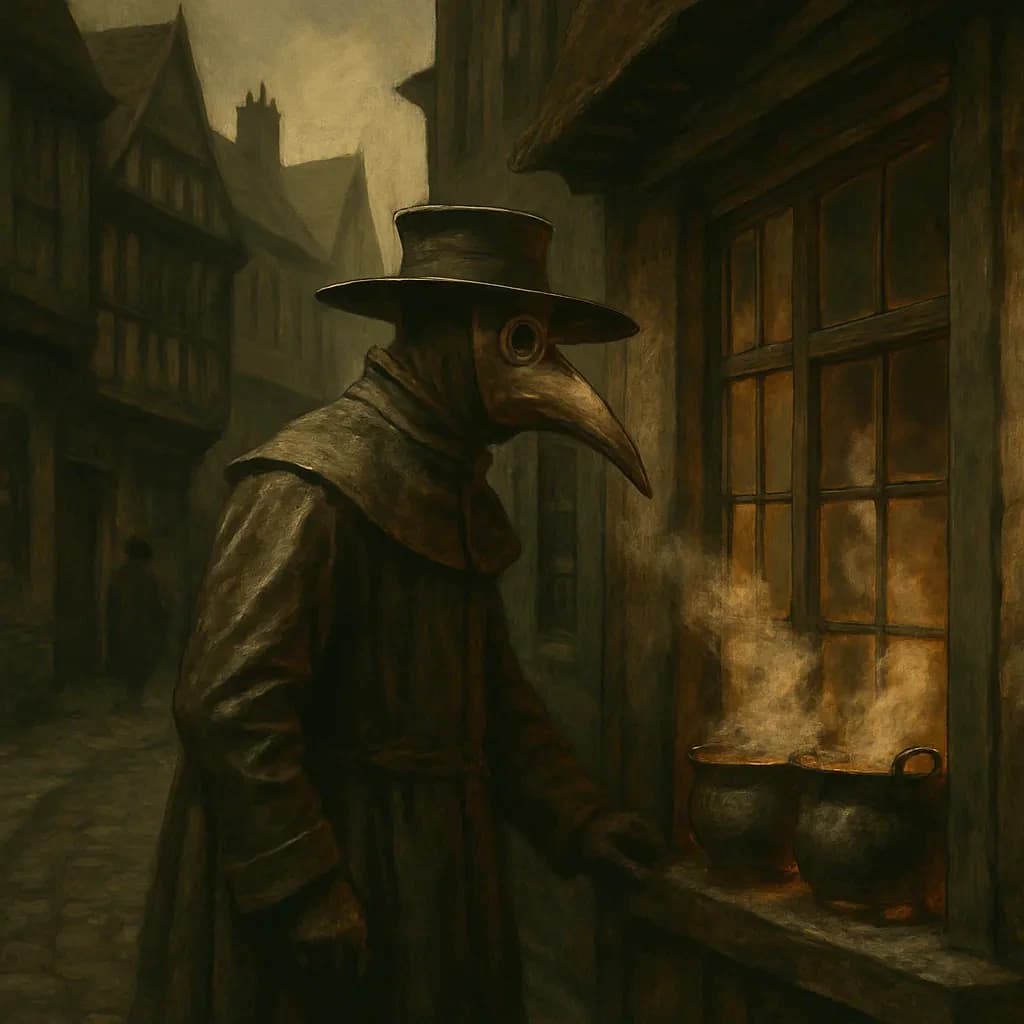
Why a Plague Doctor Studied Chicken Soup
A Dutch physician picked his way through plague-ravaged London in 1665, beaked mask packed with herbs, hunting a clue that turned out to be simmering in ordinary kitchen pots.
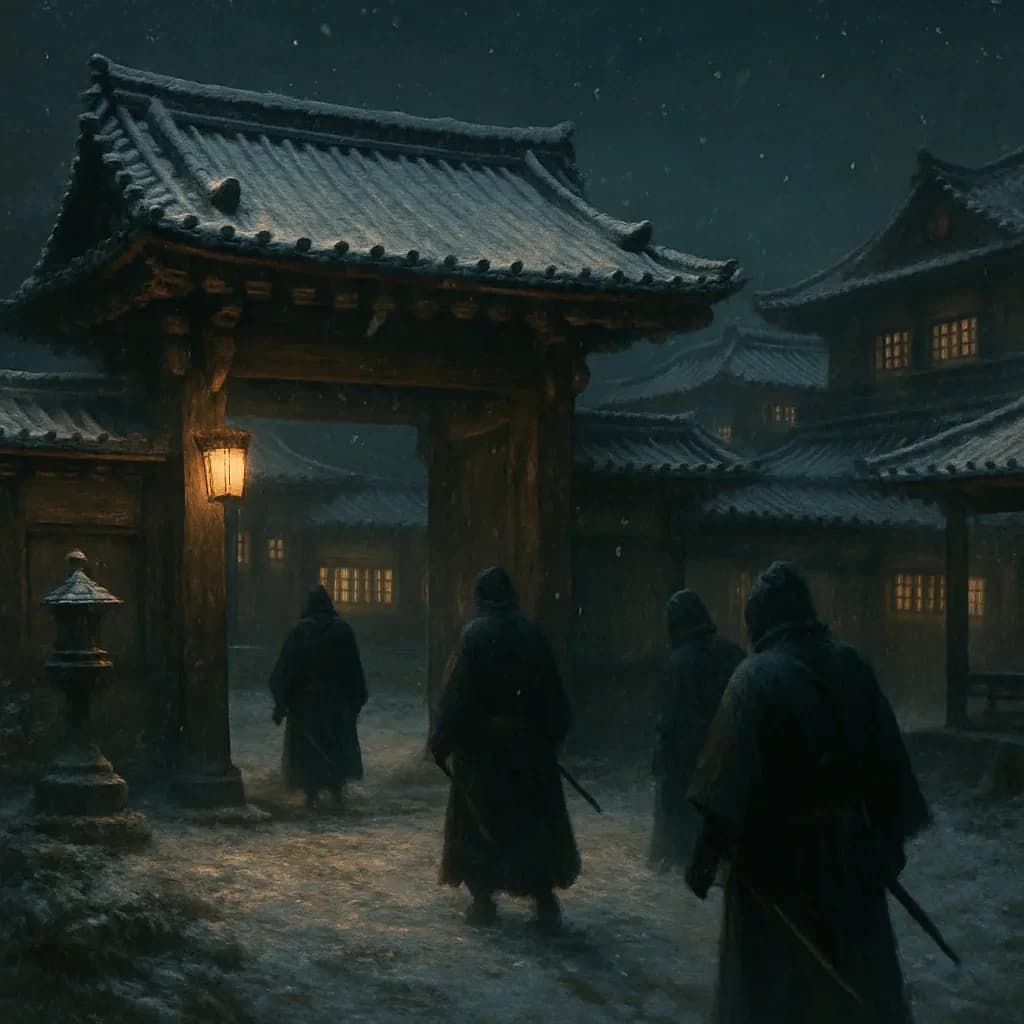
Forty-Seven Samurai and a Waiting Game
A lord's death sentence became Japan's greatest story of honor, but the real ending took thirteen years to write.
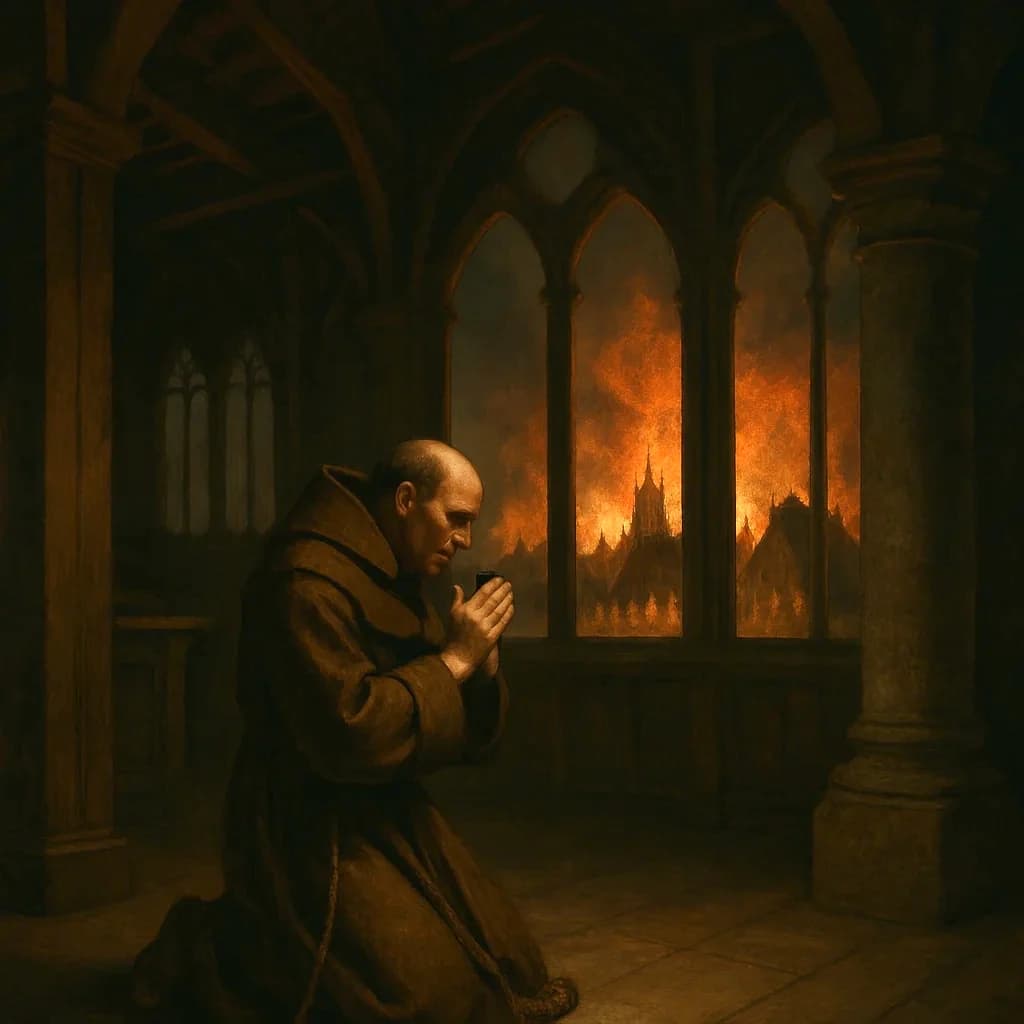
One Monk Stopped the Great Fire of London
A Benedictine monk refused to abandon his monastery as the Great Fire of London roared toward it, and what happened next defied everything authorities thought they knew about urban blazes.
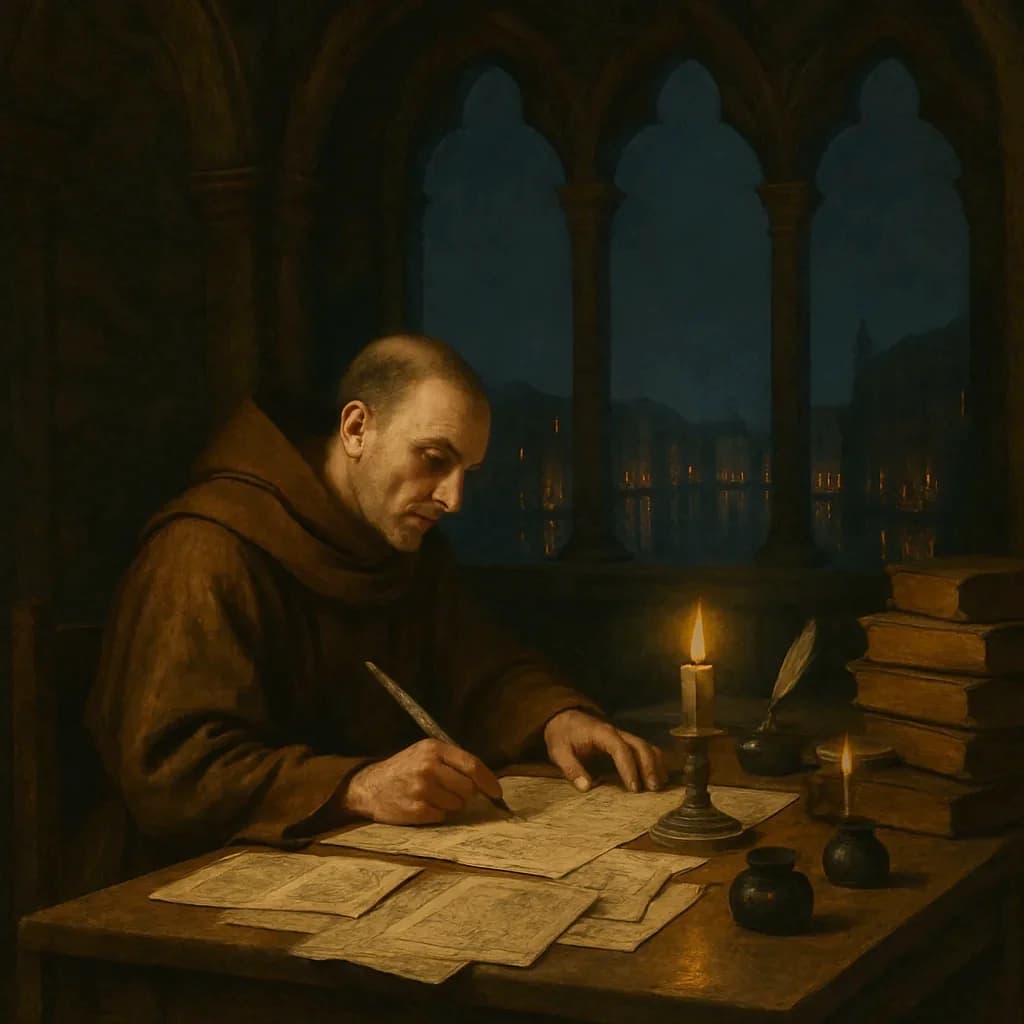
Twenty-Seven Pages That Built the Modern Economy
A Venetian monk invented double-entry bookkeeping in 1494, and (without meaning to) created the modern economy.
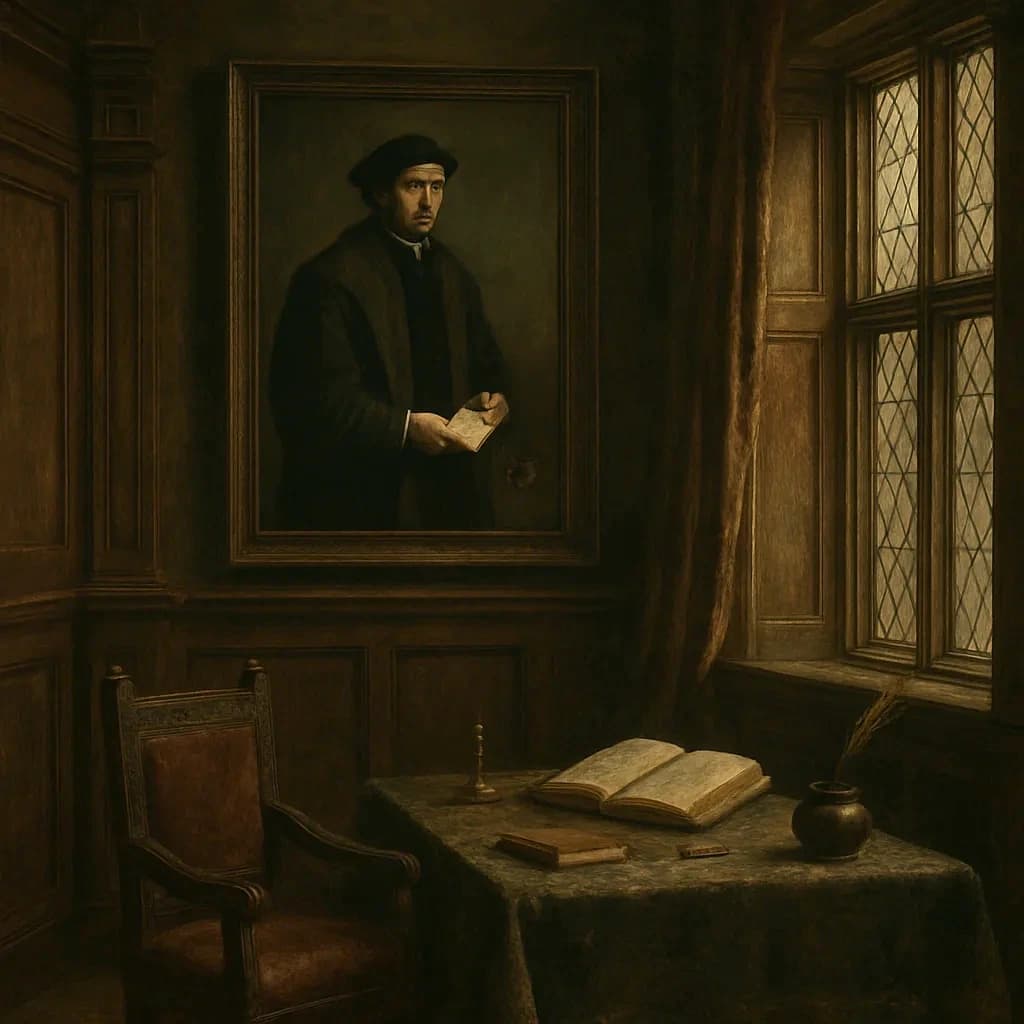
The King's Painter Hid a Curse in Cromwell's Portrait
When Hans Holbein died, he left behind more than masterpieces. He left a coded message that would topple a king.
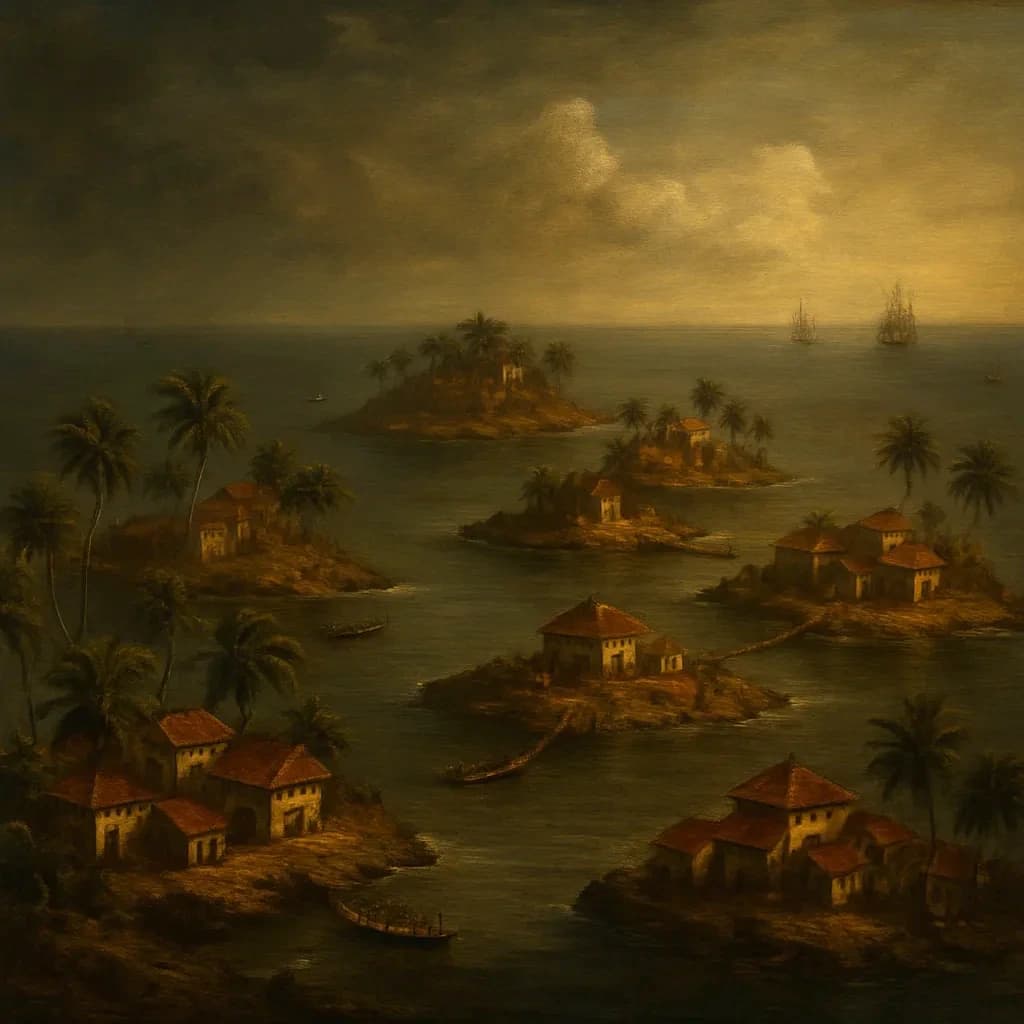
Bombay: The Wedding Gift Nobody Wanted
Seven swampy islands came packaged with an unwanted Portuguese bride, and ended up building Britain's Indian empire.
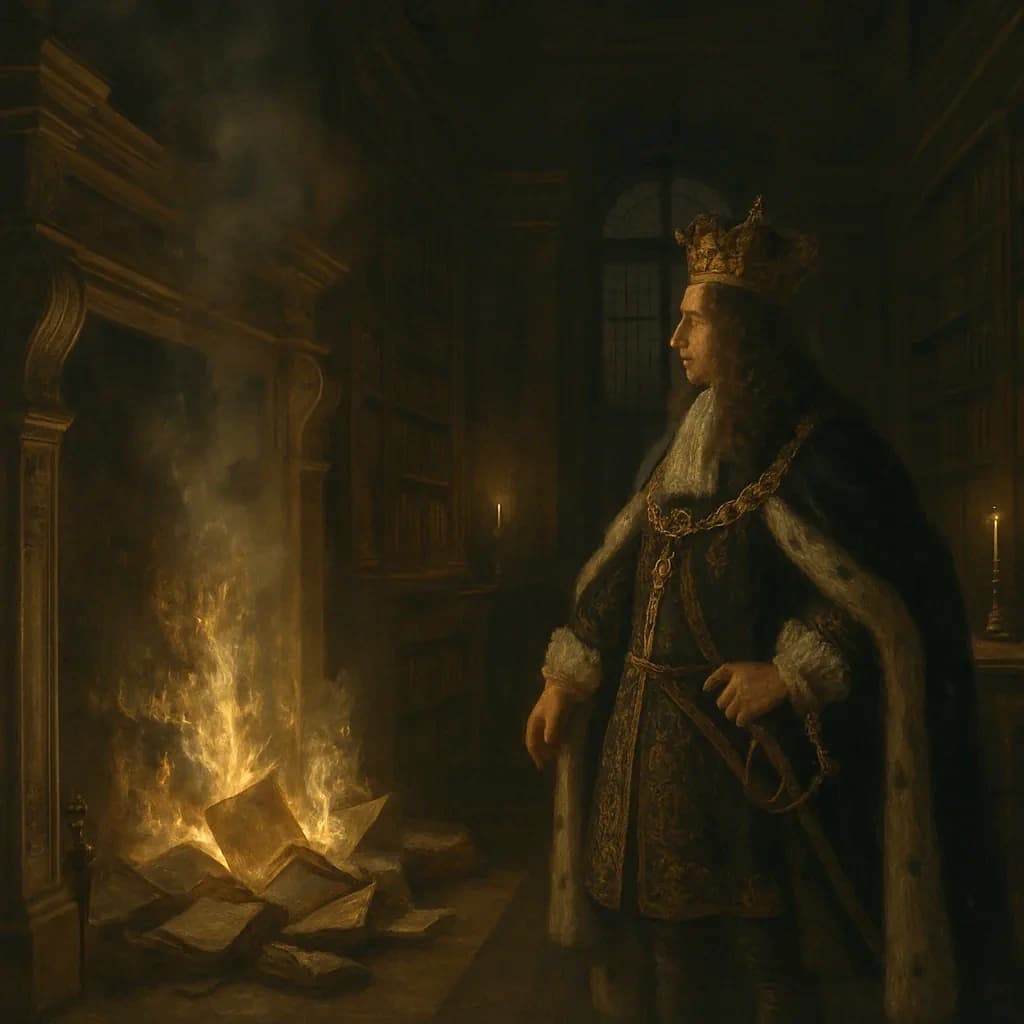
When Stockholm Burned Its Own Books
Sweden's greatest library went up in flames, and the king himself lit the match.
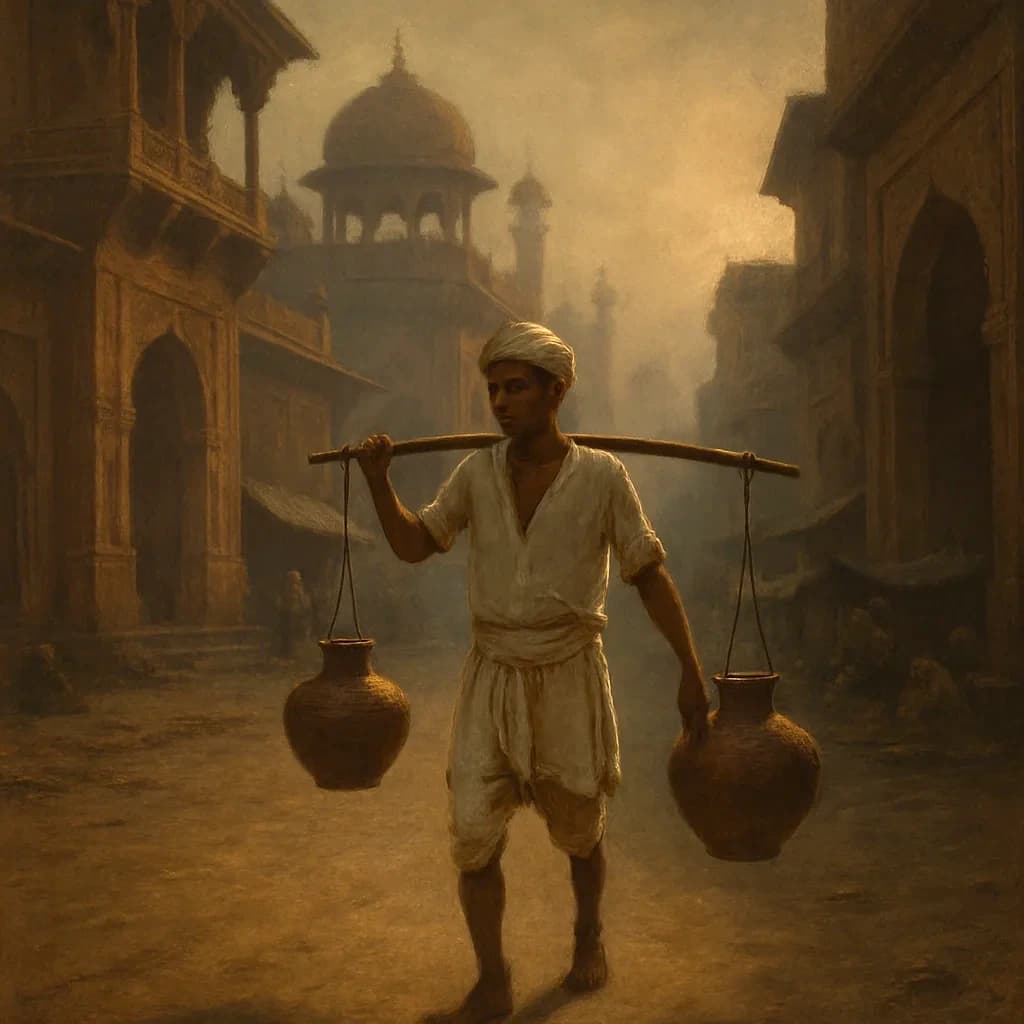
The Delhi Water Seller Who Outpaced Newton
A young man selling water on the streets of Delhi solved a problem that had stumped Europe's greatest minds for centuries.
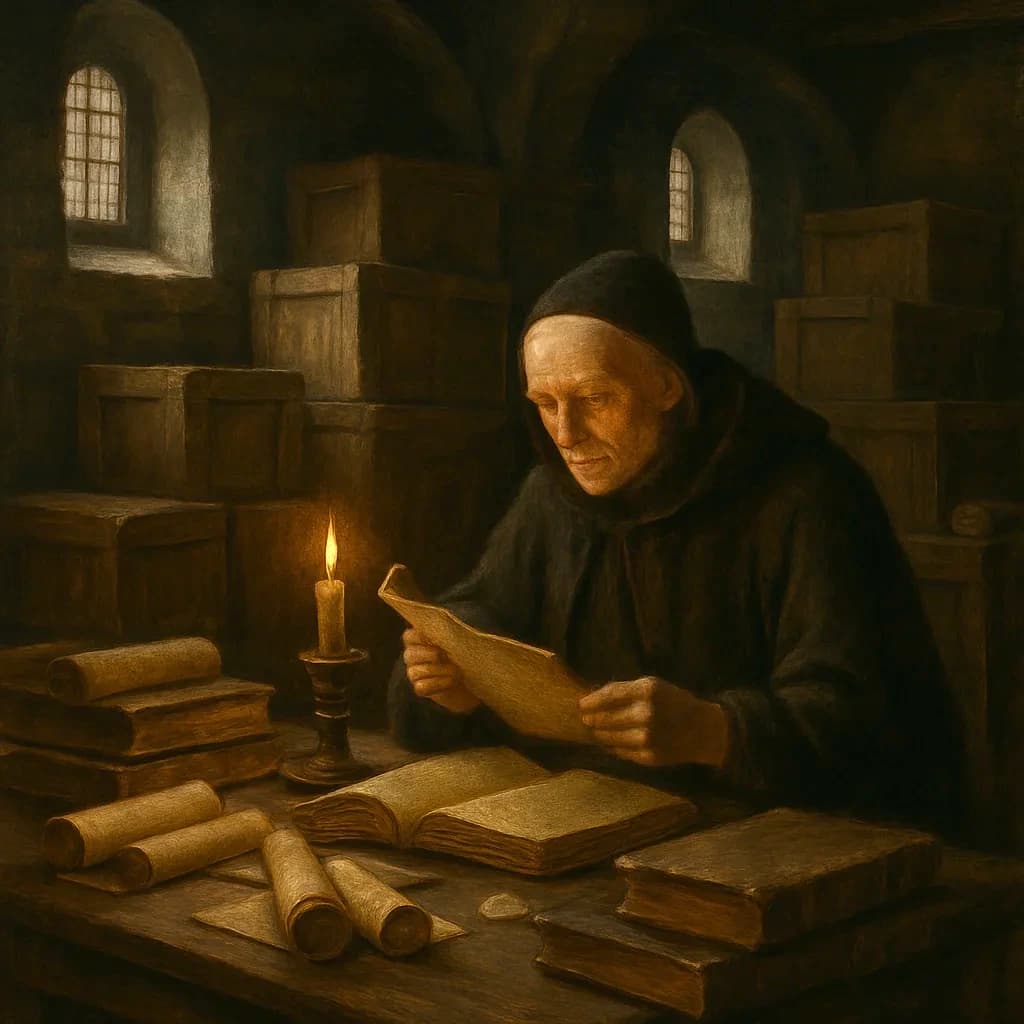
A Merchant Skipped Town and Left Behind Lost Plato
A silk merchant's ledger nearly bankrupted the most powerful banking family in Europe, and their desperate gamble ended up funding the rebirth of human knowledge.
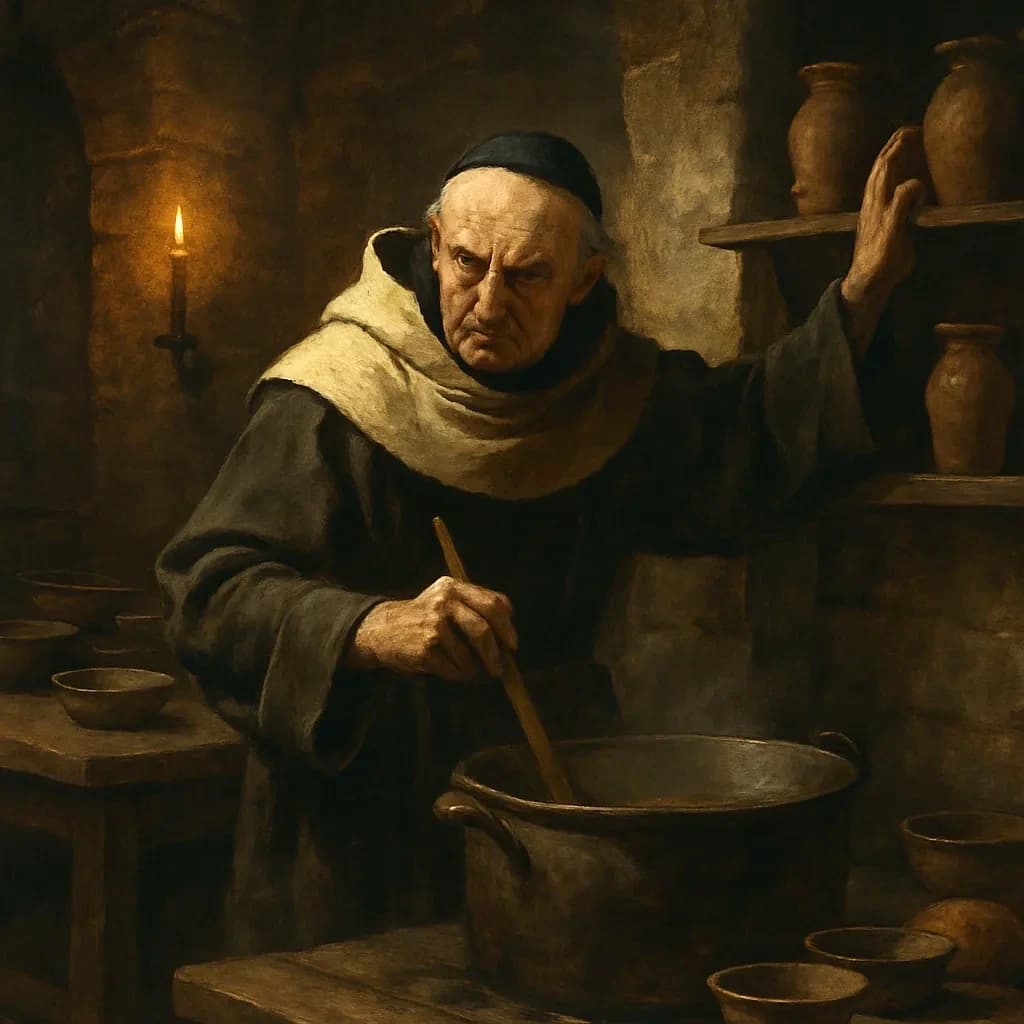
A Spice Shortage Sent Columbus West
A single cooking mistake in a monastery kitchen led to the conquest of the Americas.
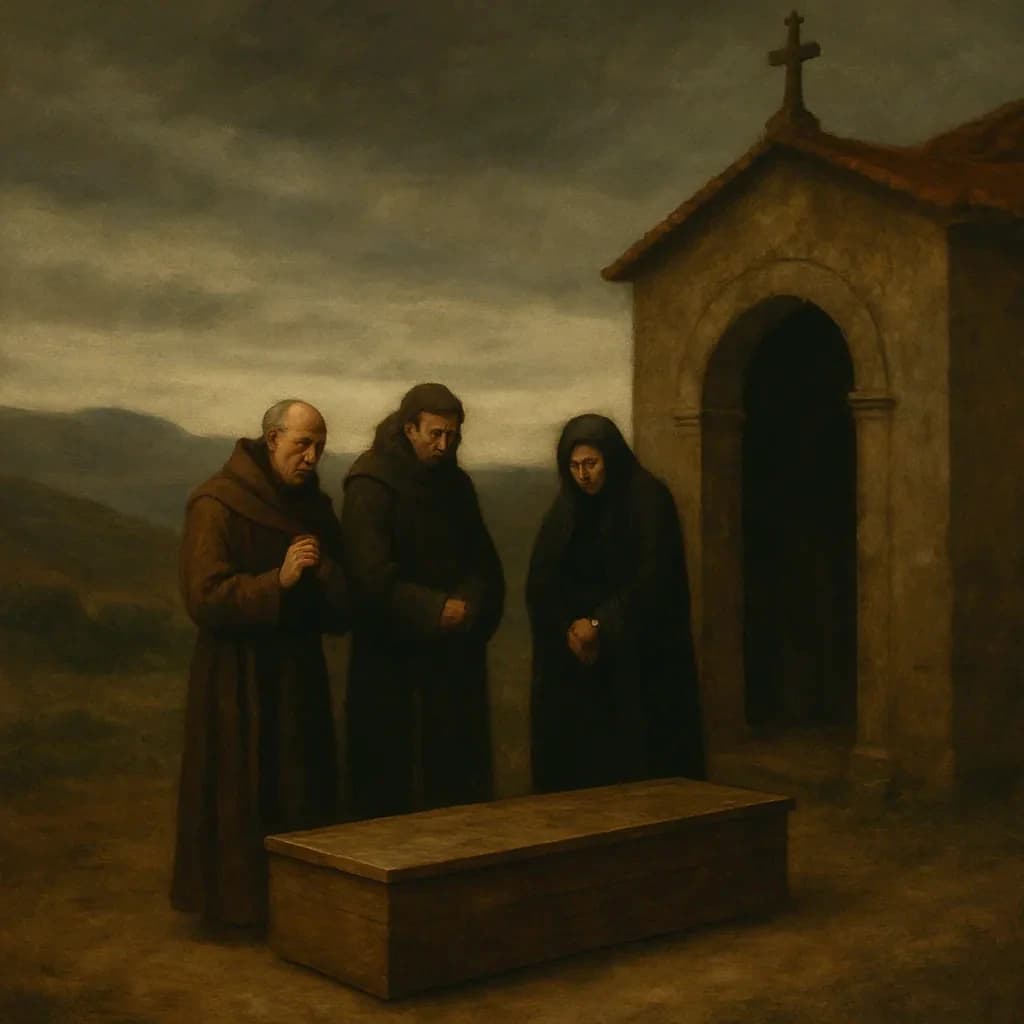
Europe's Most Powerful Emperor Was Buried by Three Strangers
When the most powerful man in Europe died, only three people came to his funeral, and they weren't invited.
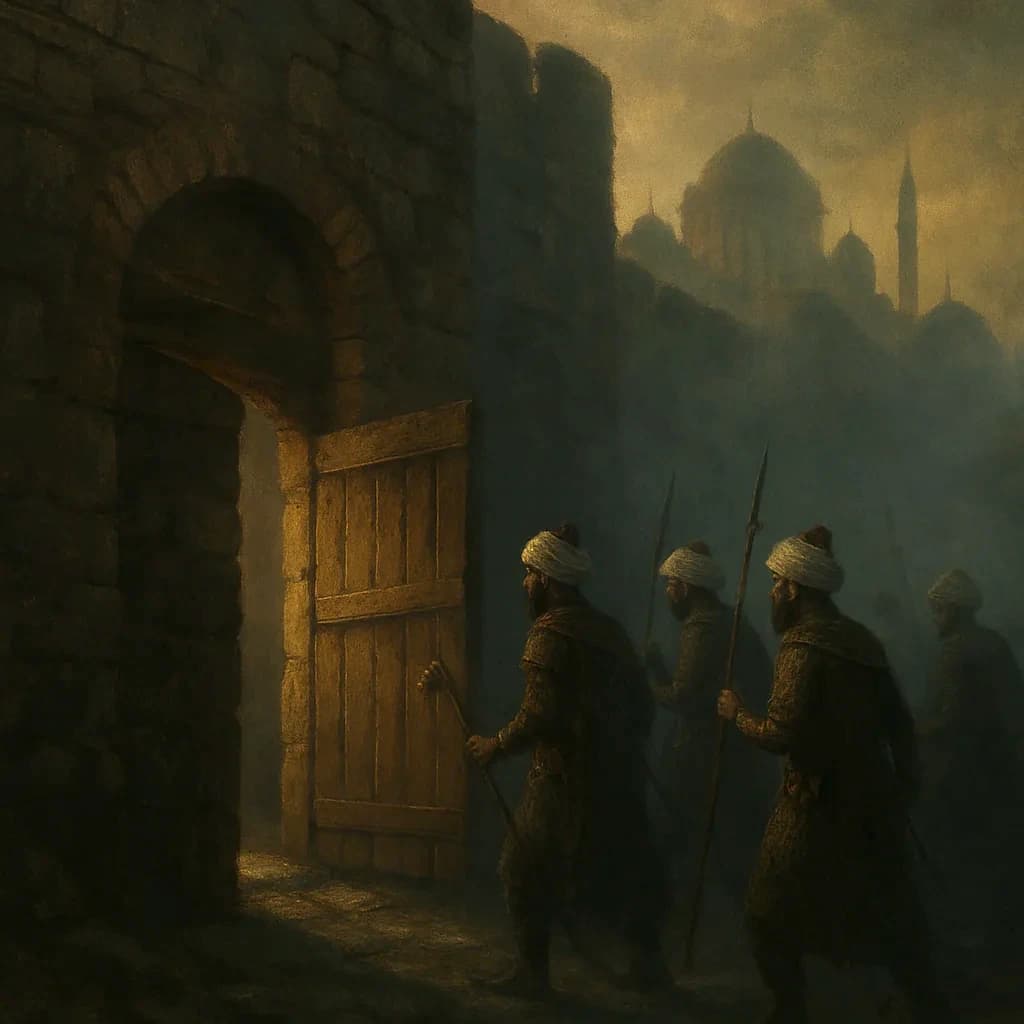
One Unlocked Gate Ended a Thousand-Year Empire
A Genoese trader opened a forgotten gate in 1453 and handed Constantinople to the Turks.
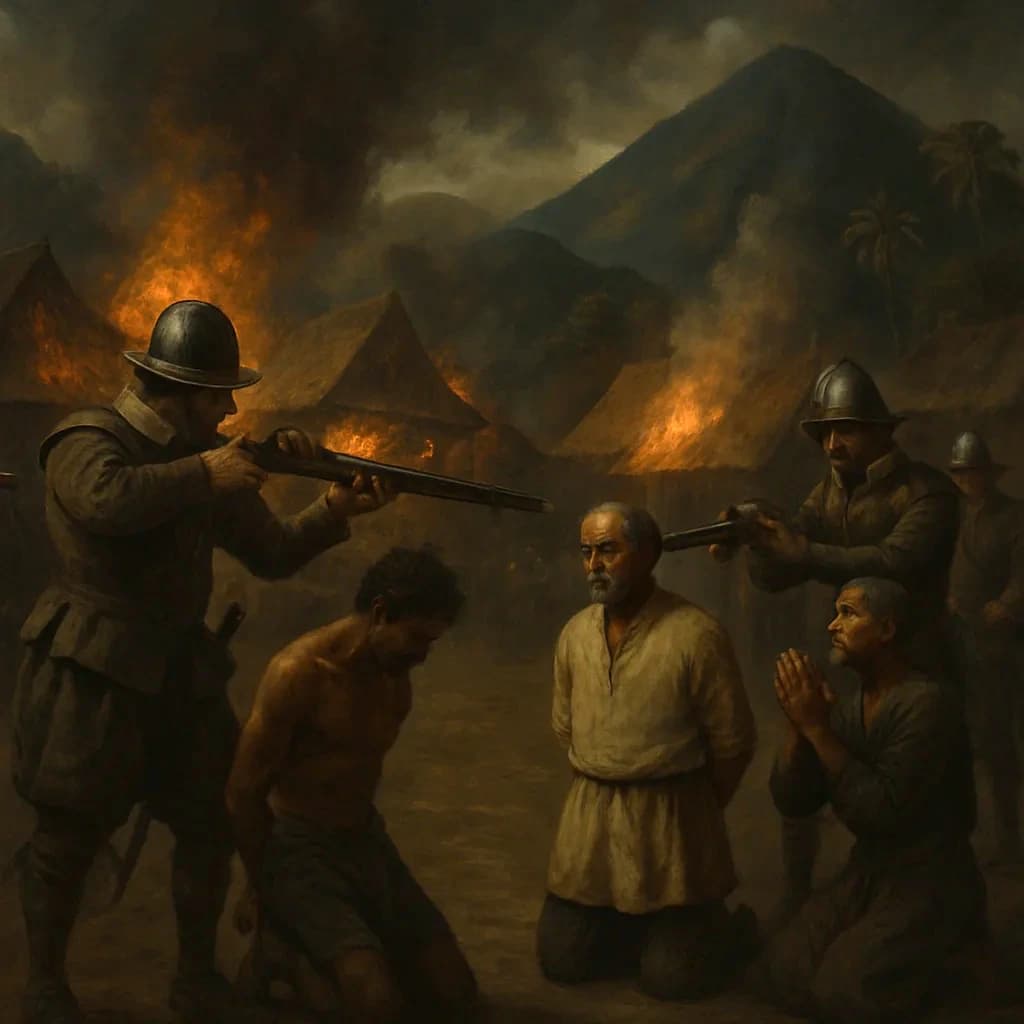
Nutmeg: The Spice Worth a House in London
A seed no bigger than a walnut sold for more than silver, and the Dutch East India Company wiped out an entire people to control it for three centuries.
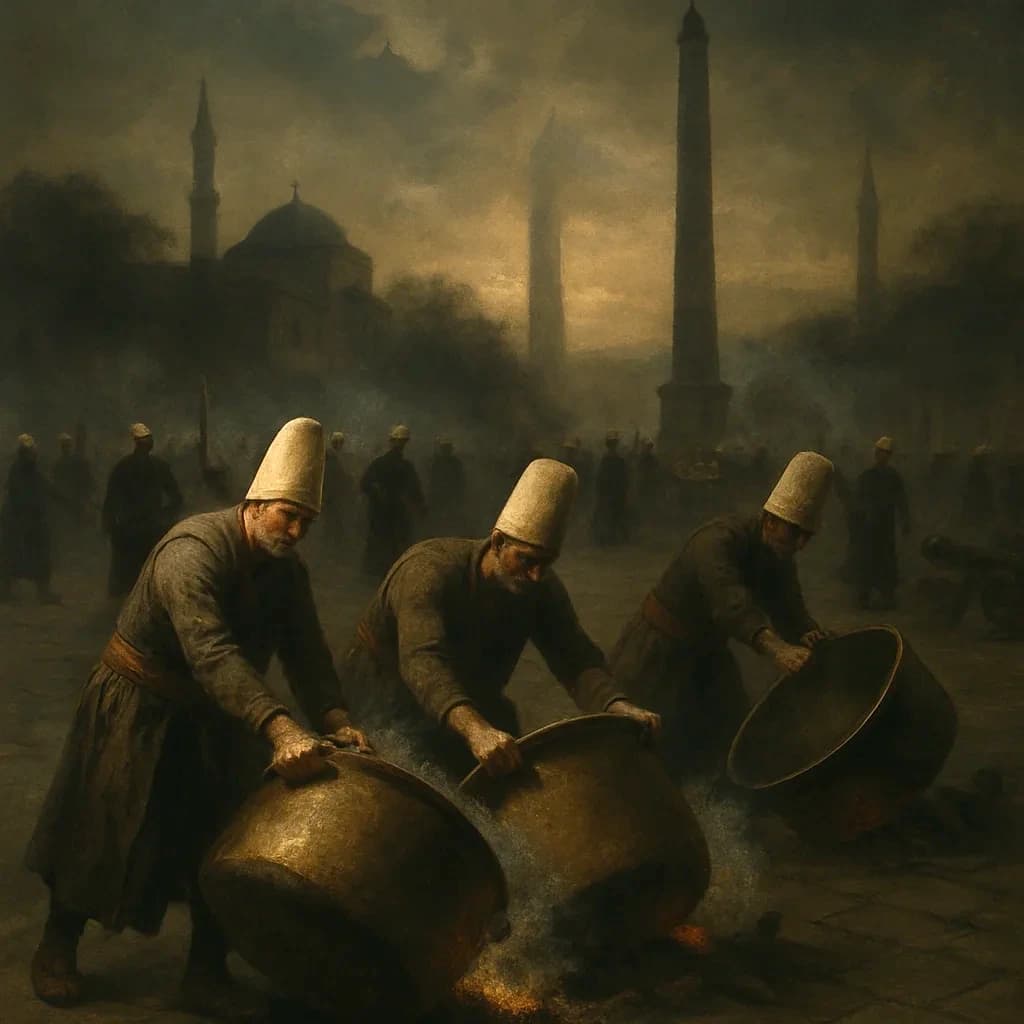
The Auspicious Incident: A Sultan Destroys His Own Army
A bowl of soup in an Istanbul barracks triggered the collapse of the Ottoman Empire's most feared military force.
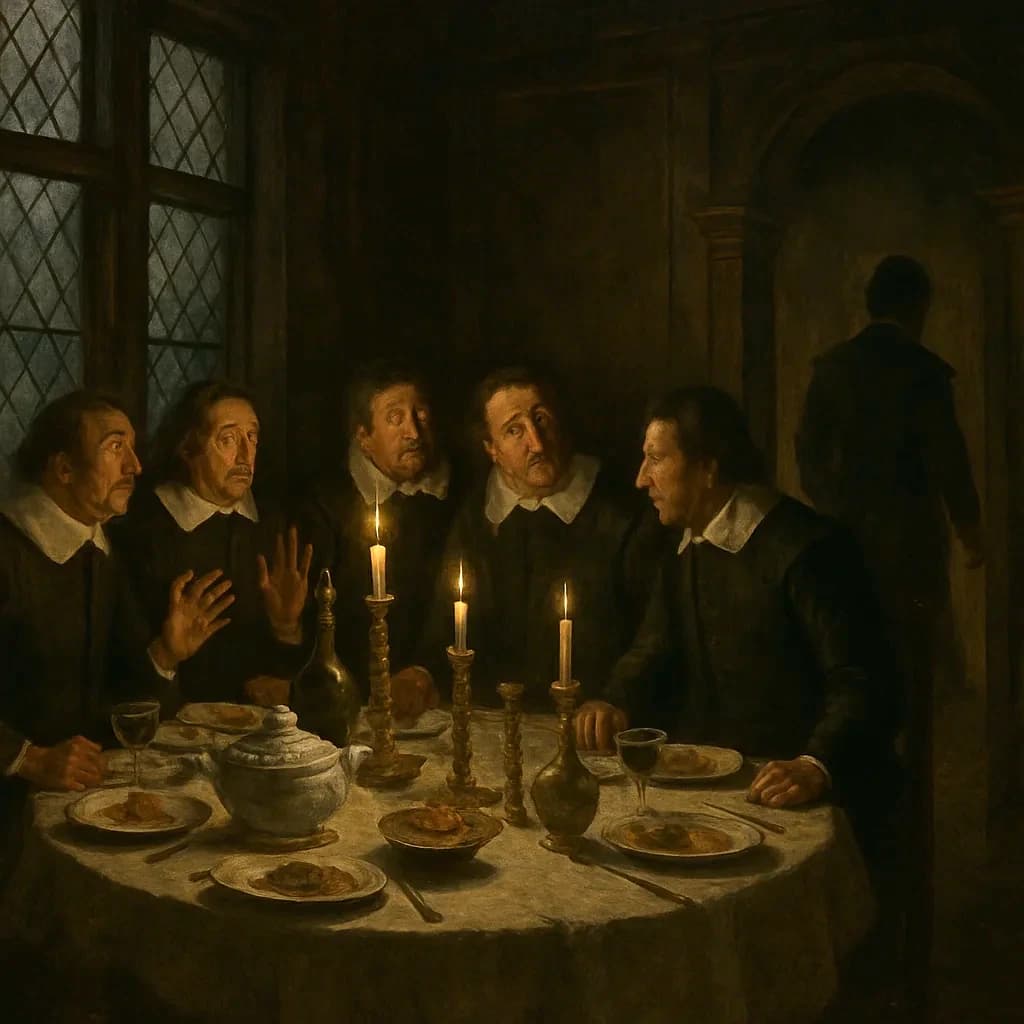
The Amsterdam Dinner Party That Popped the Tulip Bubble
A single merchant's bankruptcy at a dinner party in 1637 triggered the collapse that taught Europe how financial bubbles work.
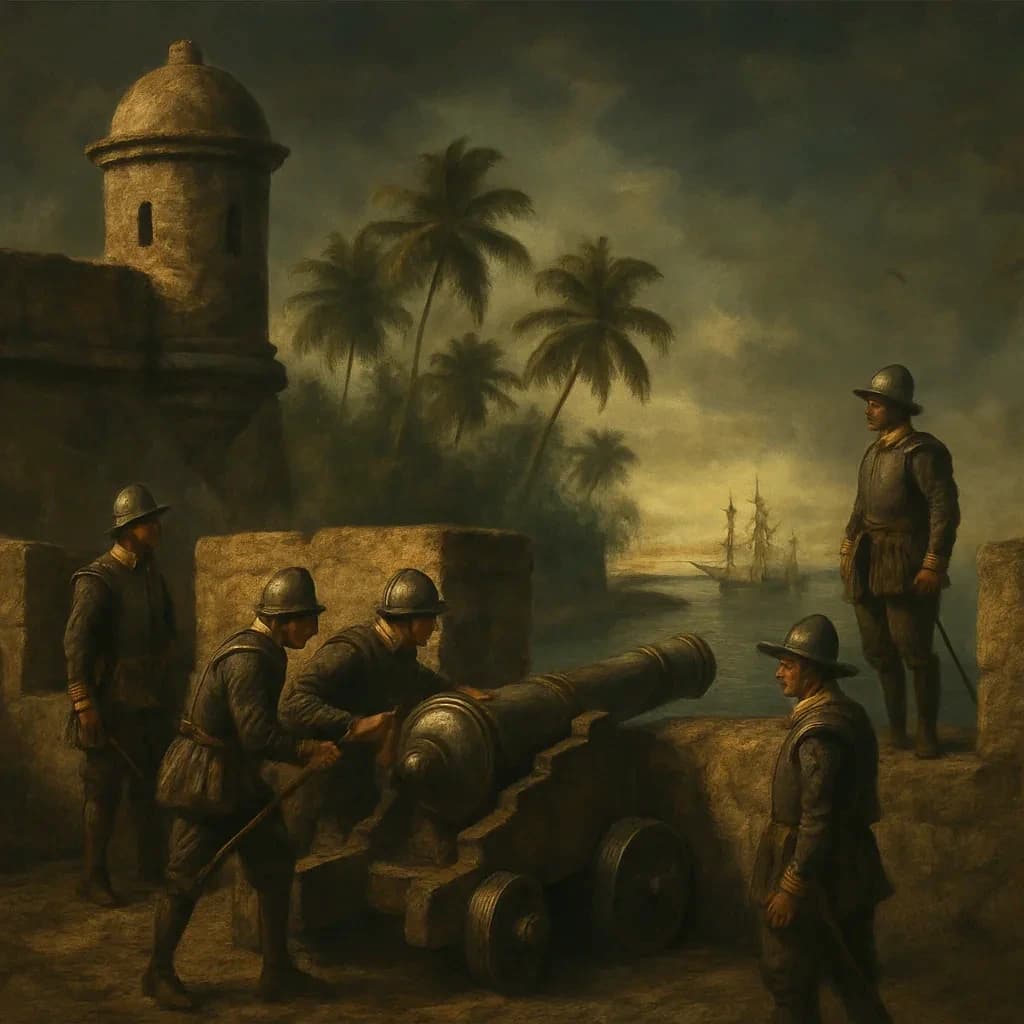
Fifty Years of Siege on an Island Everyone Forgot
A Portuguese garrison held a tiny island against overwhelming odds for half a century, long after their own empire had forgotten they existed.
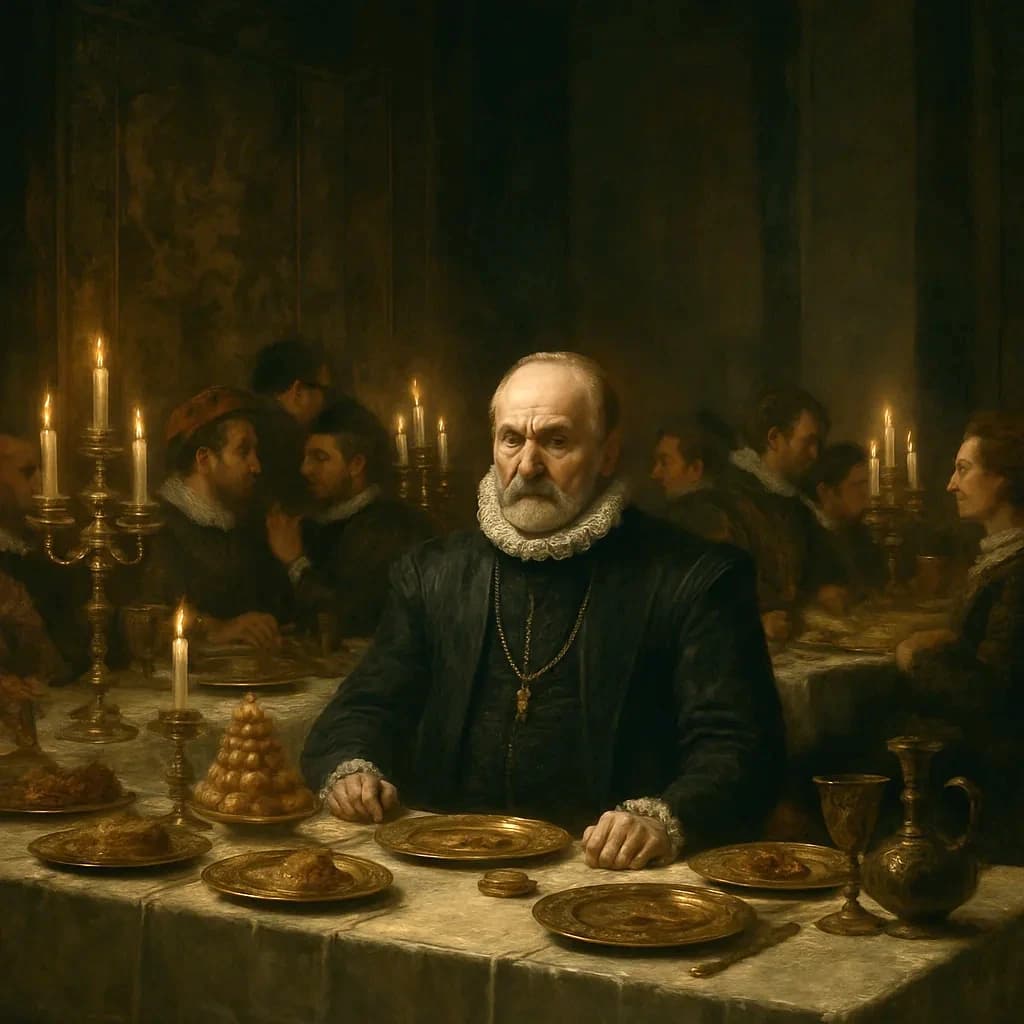
Tycho Brahe Wouldn't Leave the Emperor's Table
A Danish nobleman's bizarre death at a 1601 dinner party changed how we see the universe forever.
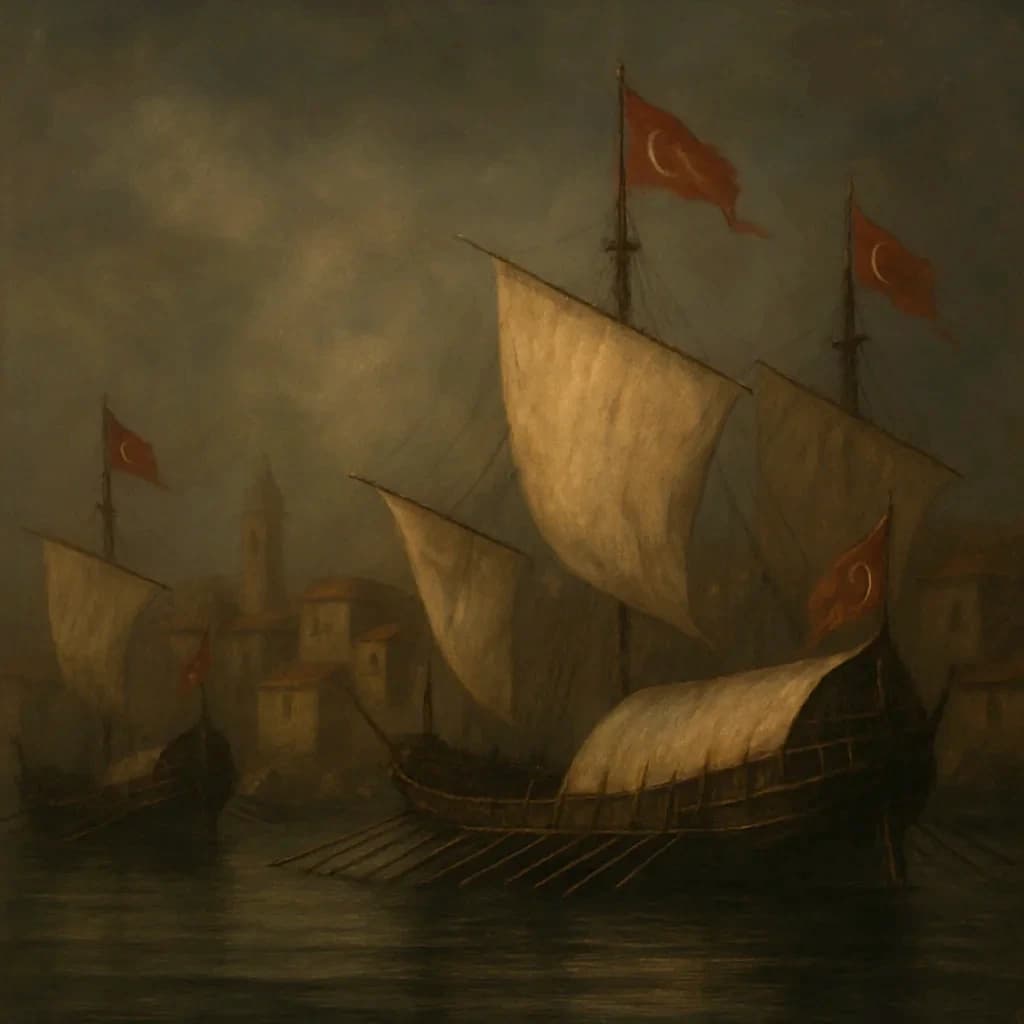
Barbarossa's Fleet of Fake Warships
Outnumbered more than three to one, one Ottoman admiral found an enemy that couldn't tell wood from warfare.
Europe's Mapmakers Erased Morocco for Thirty Years
For thirty years, the most sophisticated cartographers in Europe convinced themselves that an entire kingdom had vanished.
How a Celibate Monk Arranged Europe's Greatest Marriage
A celibate monk became the unwitting matchmaker for the most powerful political marriage in European history.
A Spice Merchant's Kitchen Became Europe's First Laboratory
A Venetian merchant obsessed with keeping his saffron fresh ended up building the intellectual foundation of the modern world.
A King's Autopsy That Scared Europe Straight
A dead syphilitic king's infected body launched the most effective public health campaign in European history.
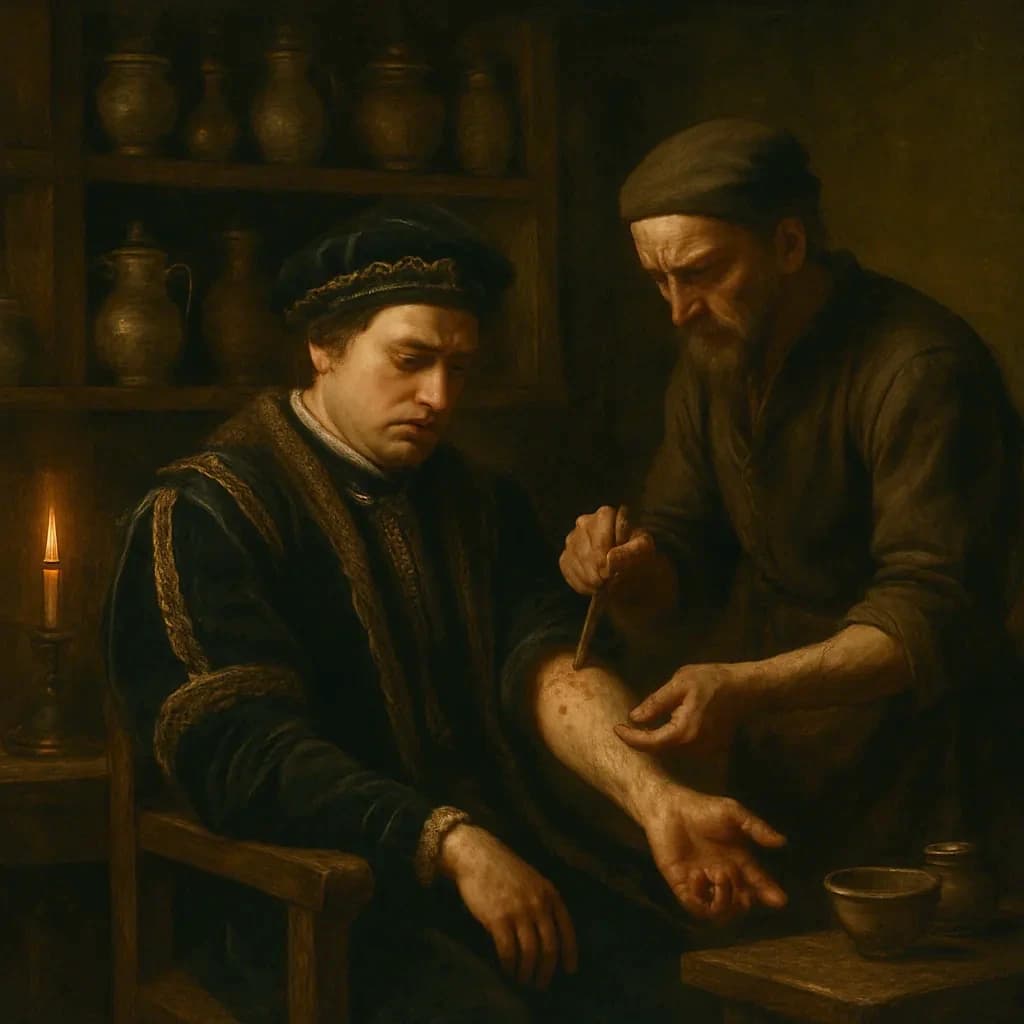
The Only Cure for the French Disease Drove Men Mad
In 1516, mercury was the only cure for the French Disease, and the men who took it slowly went mad.
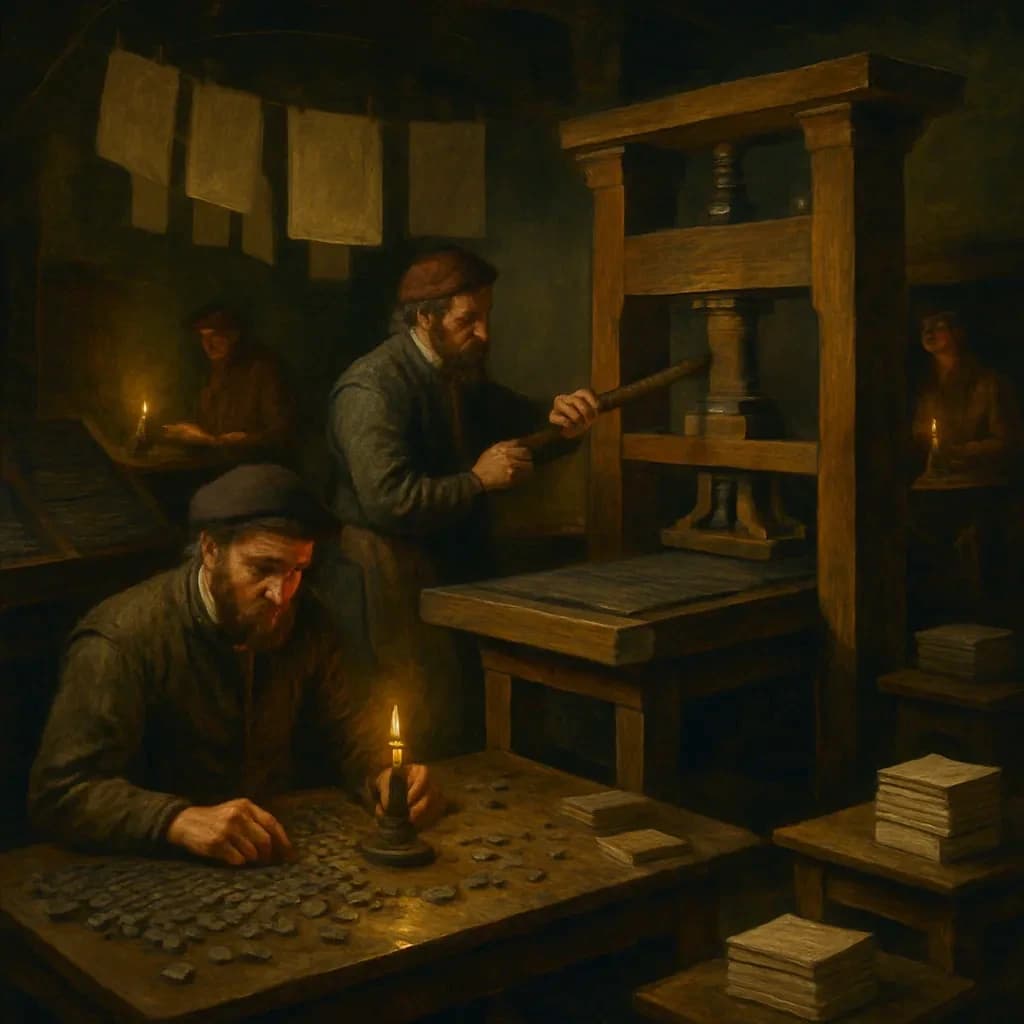
The Printer Who Sold Revolt in Sixteen Pages
A single printing press in 1550s Geneva launched more revolts than any army ever could.
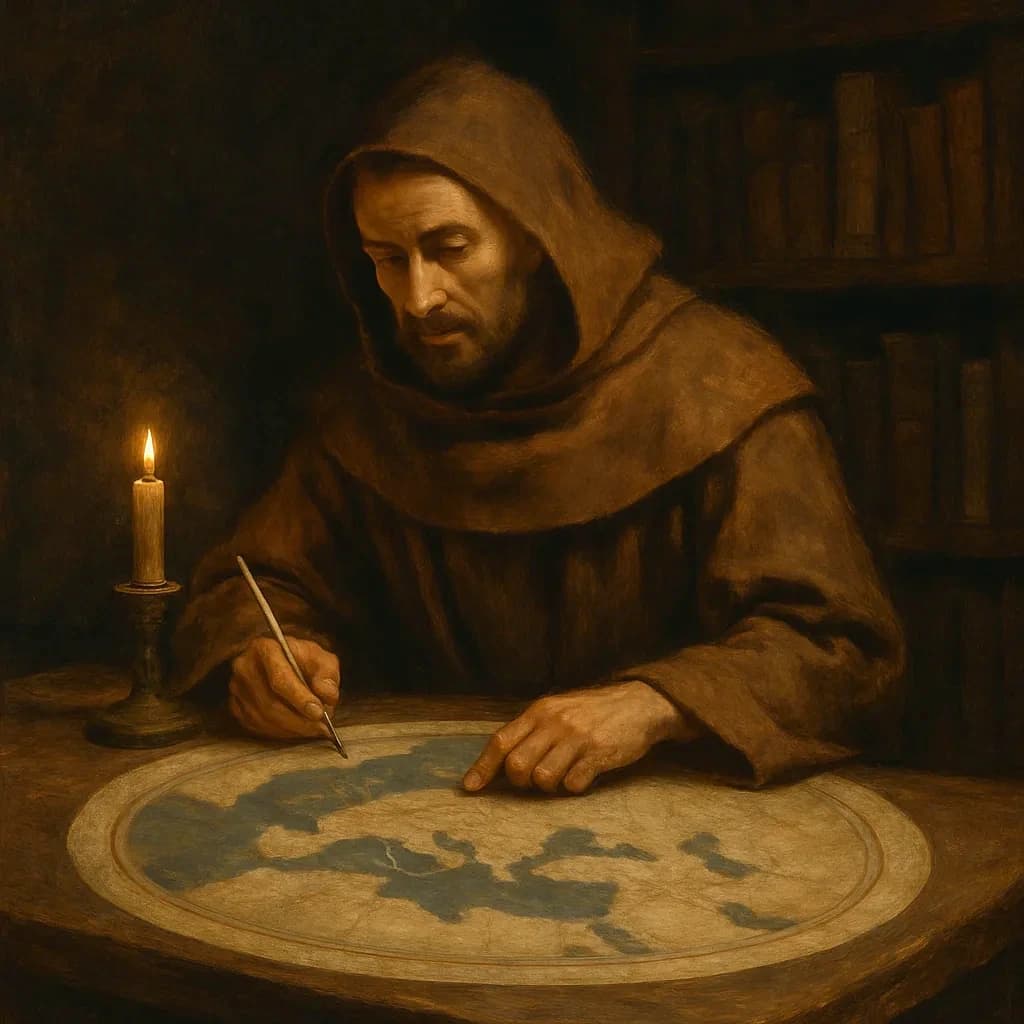
Off by 9,000 Miles: The Map That Sent Columbus West
A Venetian monk's handwritten map convinced Columbus that Asia was only 3,000 miles away, half the actual distance.
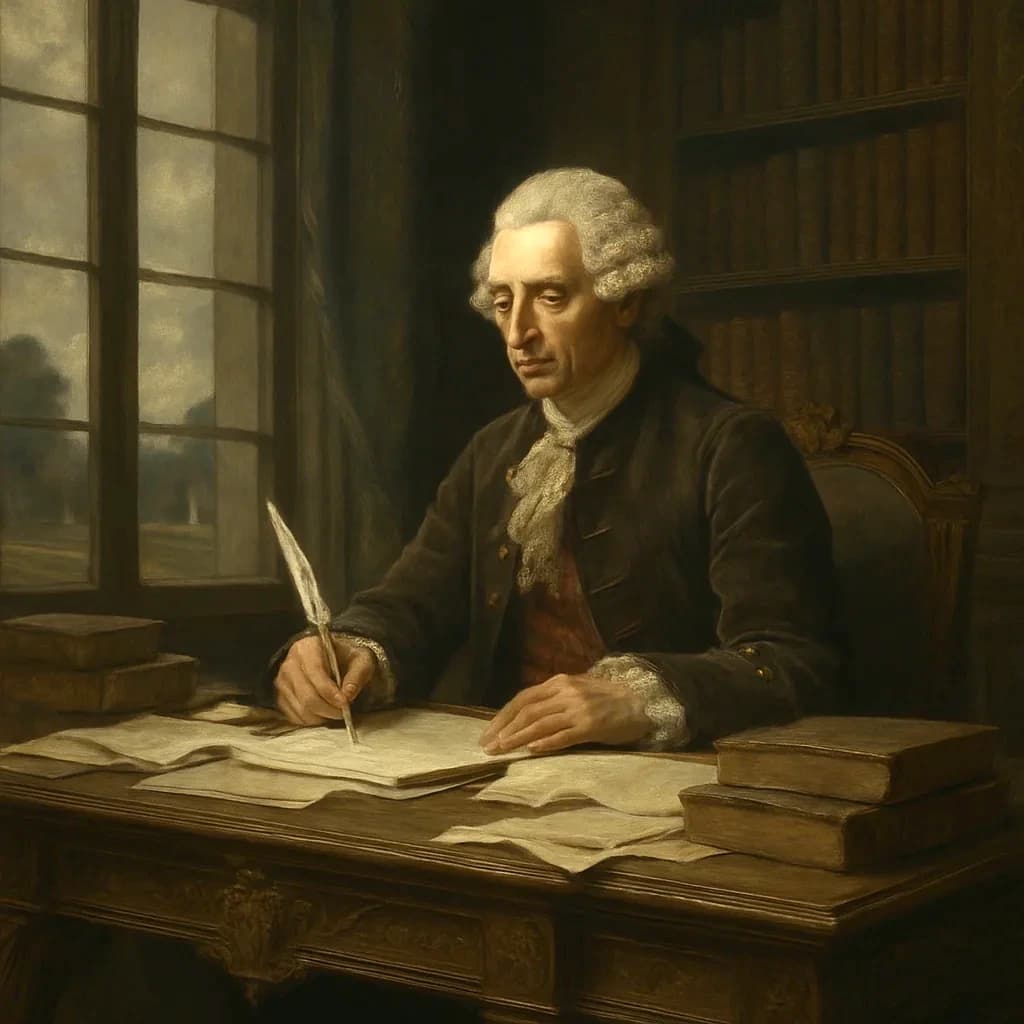
Slavery Lost the Argument on Money, Not Morality
A single sentence buried in Montesquieu's legal theory gave abolitionists the argument that slavery was economically irrational, and doomed an entire economic system.
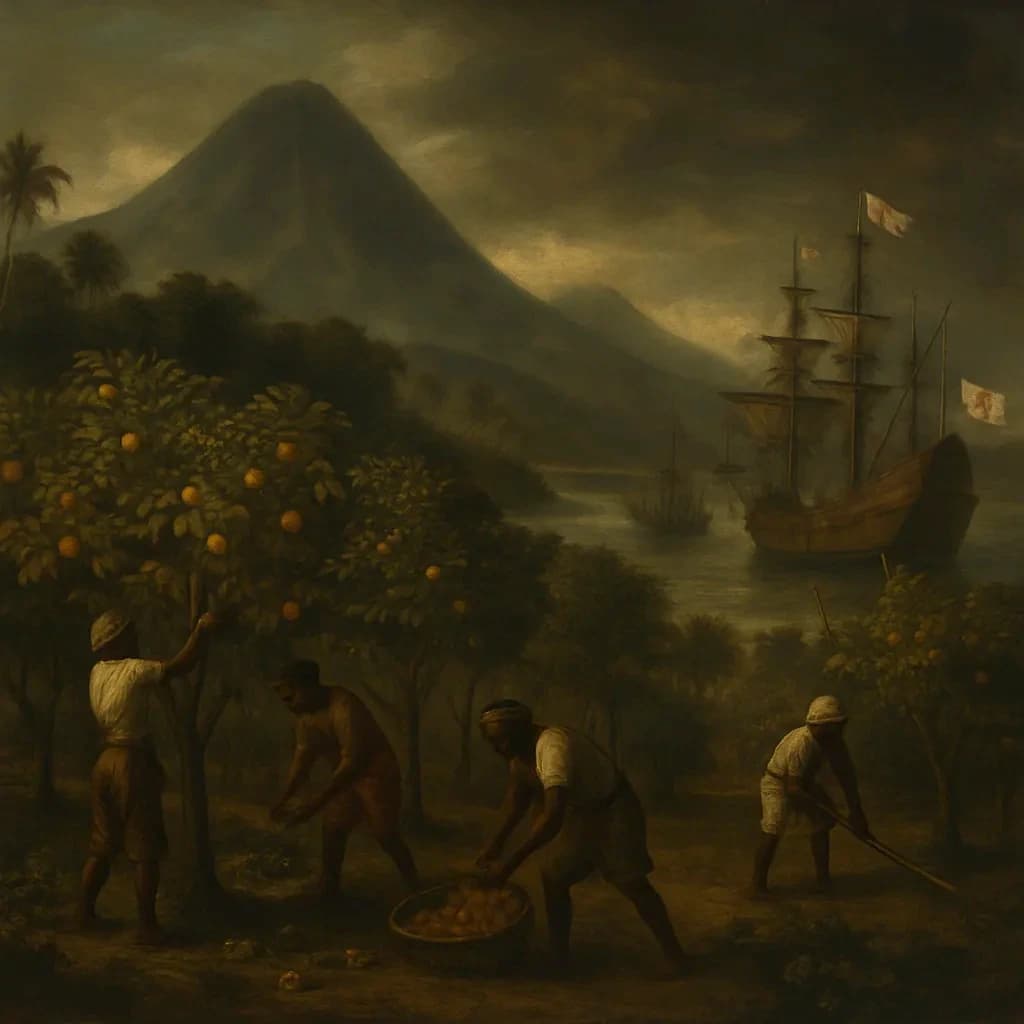
Cheap Nutmeg Broke the Portuguese Empire
A single spice trade monopoly made Portugal richer than Spain, until one stubborn Dutch merchant figured out how to grow nutmeg anywhere.
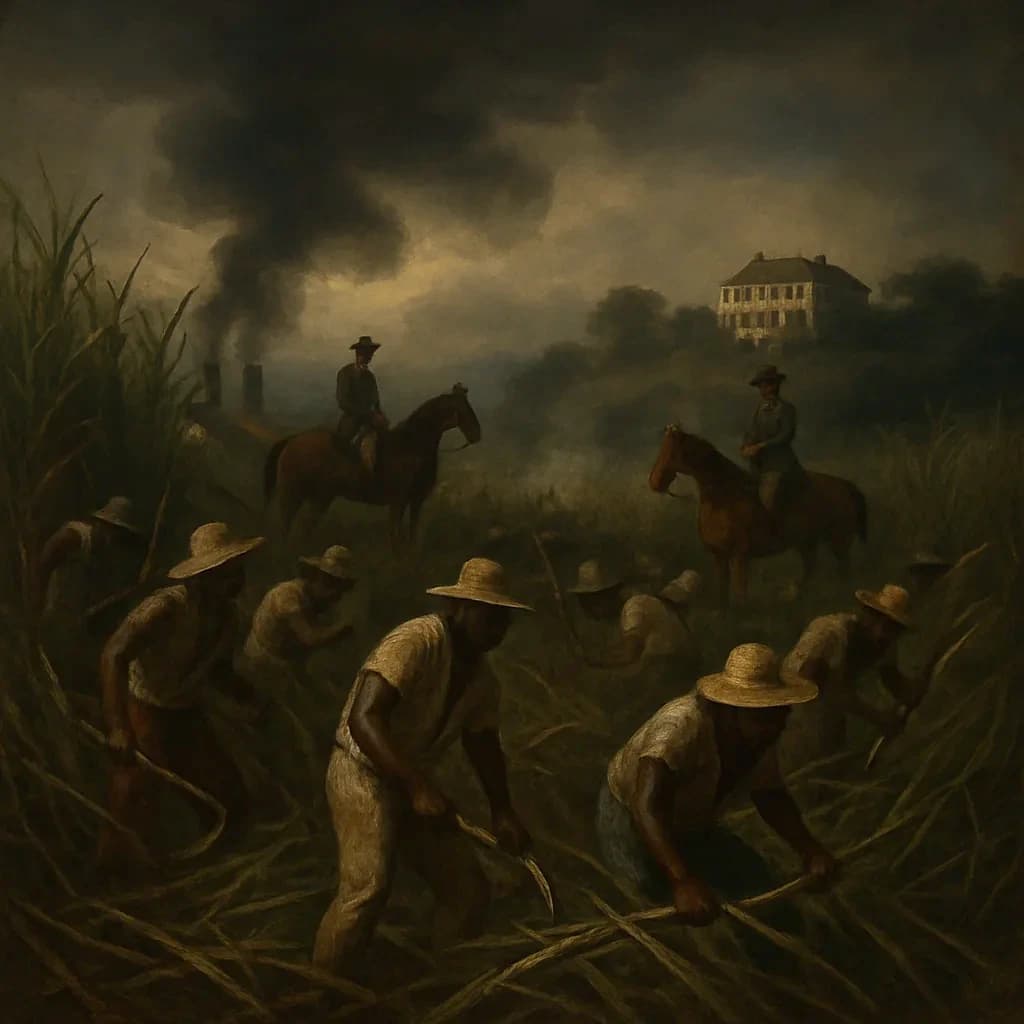
Sugar Killed More Enslaved Africans Than Cotton
One Caribbean crop created more slave ships than cotton ever did, and it wasn't tobacco.
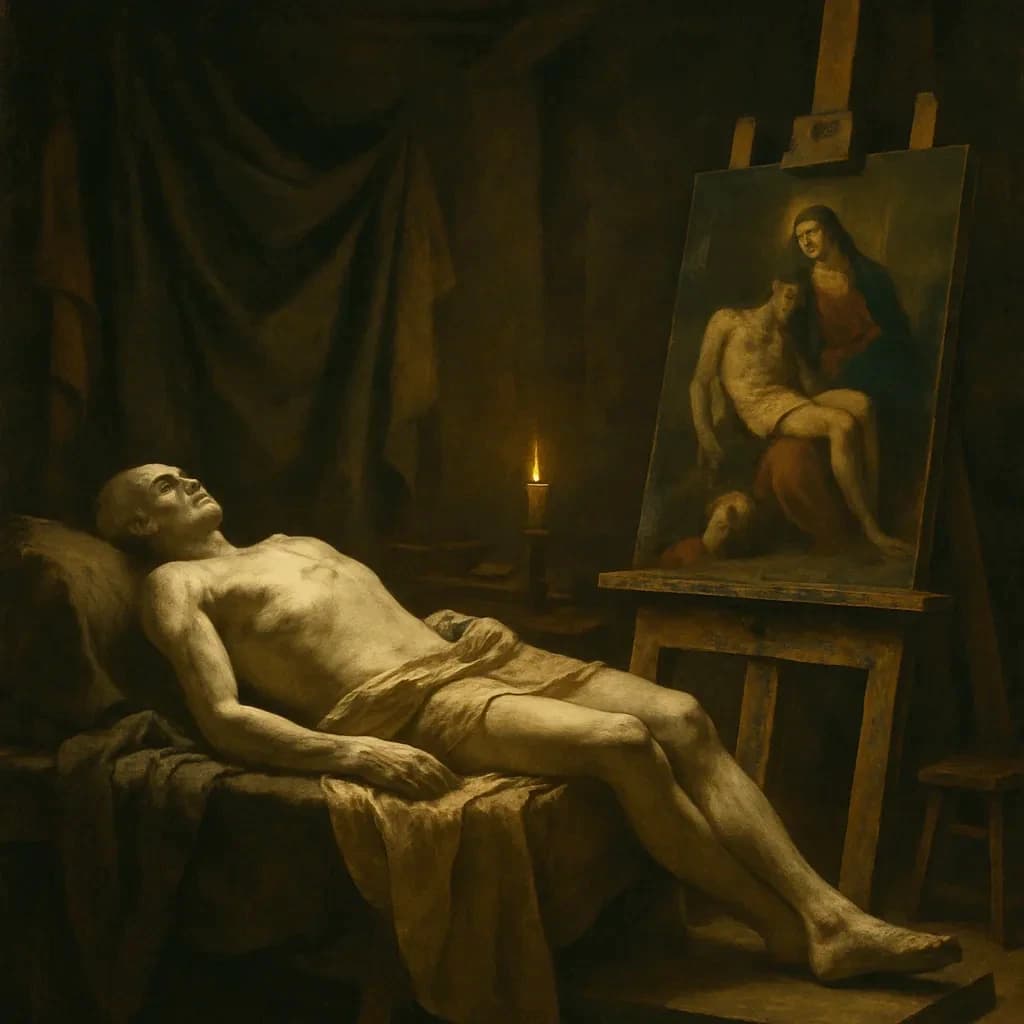
Caravaggio Painted His Saints from Real Corpses
Caravaggio painted his martyred saints from actual corpses out of the Roman morgue, and nobody seemed to mind until they recognized the faces.
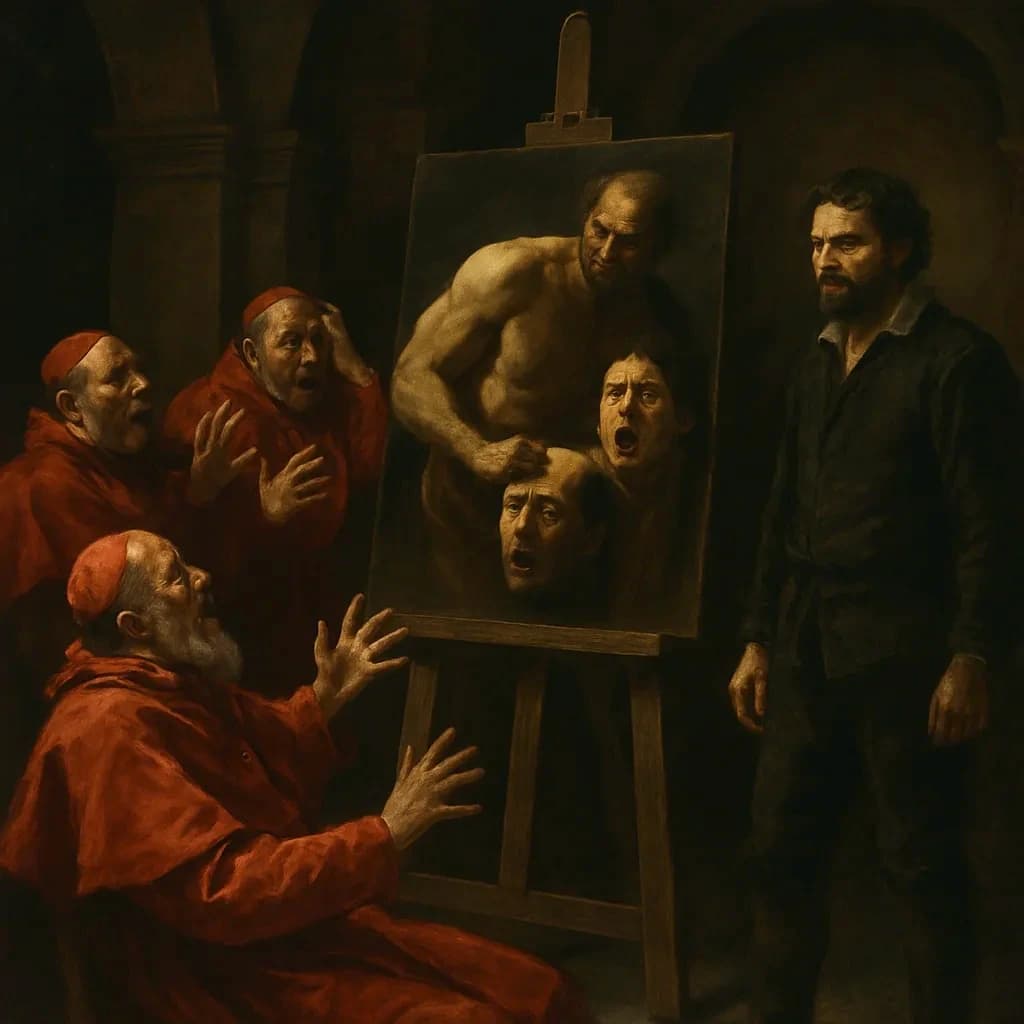
Caravaggio Used a Drowned Corpse to Paint the Virgin Mary
A young artist's masterpiece grew so disturbing that viewers fainted, and the Church banned it for three centuries.
The Golden Paint That Slowly Poisoned the Masters
For three centuries Europe's most beautiful yellow pigment carried a hidden cost: slow poisoning that left painters paranoid, violent, and dead.
The Painting That Vanished for Three Hundred Years
Caravaggio's lost masterpiece wasn't destroyed by war or theft. It disappeared because no one could bear to look at it.
Caravaggio: Painting Saints While Fleeing a Murder Charge
Italy's most revolutionary painter created his masterpieces while running from a murder charge, hiding in churches and painting saints with the faces of prostitutes and criminals.
How One Missing Singer Ended the Church's Castrati
Alessandro Moreschi was the last castrato ever recorded, but the Vatican had been cutting boys for centuries to preserve their angelic voices, until one missing singer brought it all crashing down.
How Spain's Paperwork Invented East and West
A sixteen-year-old girl inherited half of Spain in 1504, and the bureaucratic split that followed invented the modern idea of East versus West.
The Pope Who Split the World in Half
A single papal bull in 1494 sliced the entire planet between two Catholic monarchs, but the Pope forgot about one rather large continent.
The Empire Europe Mapped but Never Found
For three centuries, European maps showed a thriving civilization in the heart of Africa, complete with cities, trade routes, and a powerful king who never lived.
Giovanni de' Medici Bet on Borrowers Who Couldn't Pay
A Florentine banker's desperate gamble with English wool turned into the financial foundation of the Renaissance.
One Buried Clause Let a Company Rule India
A single page of correspondence created the most powerful corporation in human history.
Newton Spent More Time on Prophecy Than Physics
Isaac Newton spent more time trying to decode the Book of Revelation than he did discovering the laws of physics.
Her Fake Illnesses Shaped the Forbidden City
A peasant girl became the most powerful person in Ming China by never leaving her bedroom.
Ptolemy Shrank the World, and Columbus Believed Him
A Greek scholar's copy error in 150 CE convinced Europeans that Asia was close enough to sail to. It wasn't.
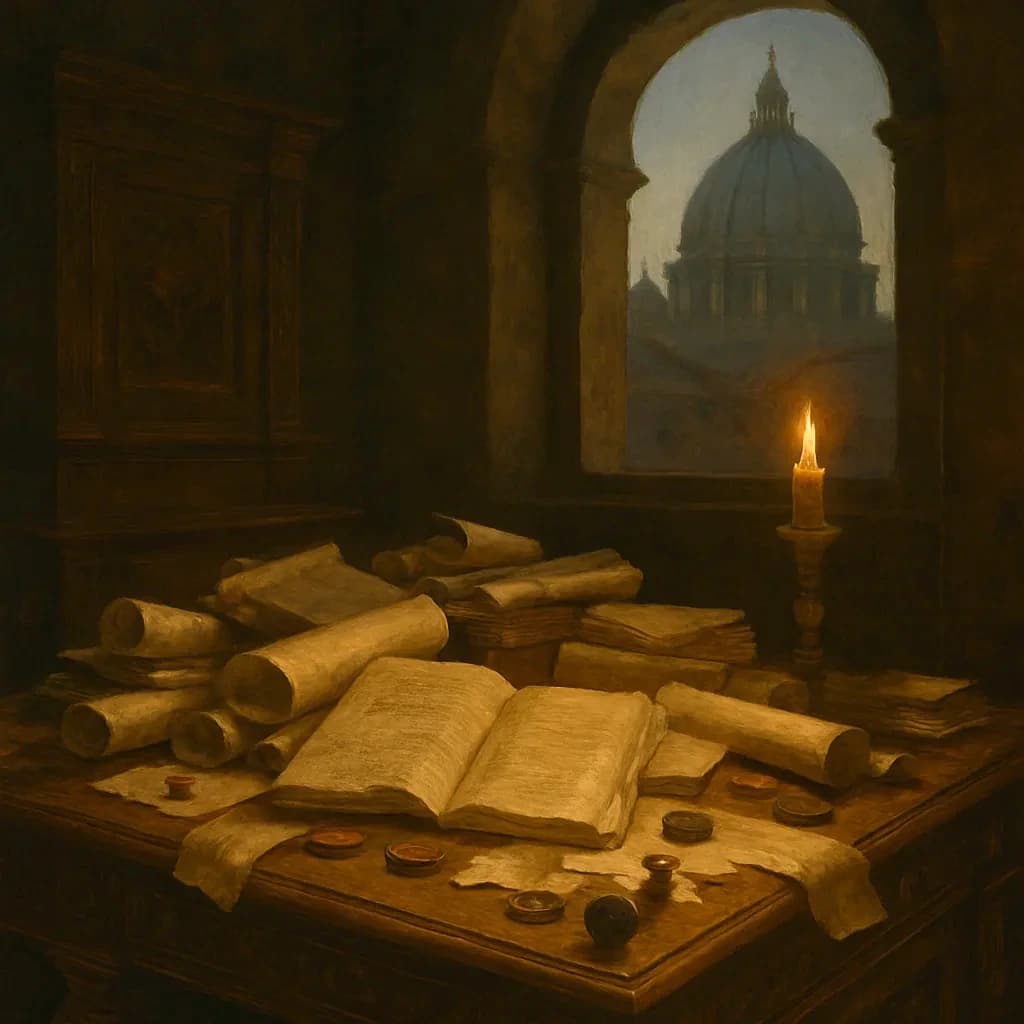
A Renaissance Sex Manual With the Pope's Seal
The most obscene book in Renaissance history carried the Vatican's official seal of approval, and here's how.
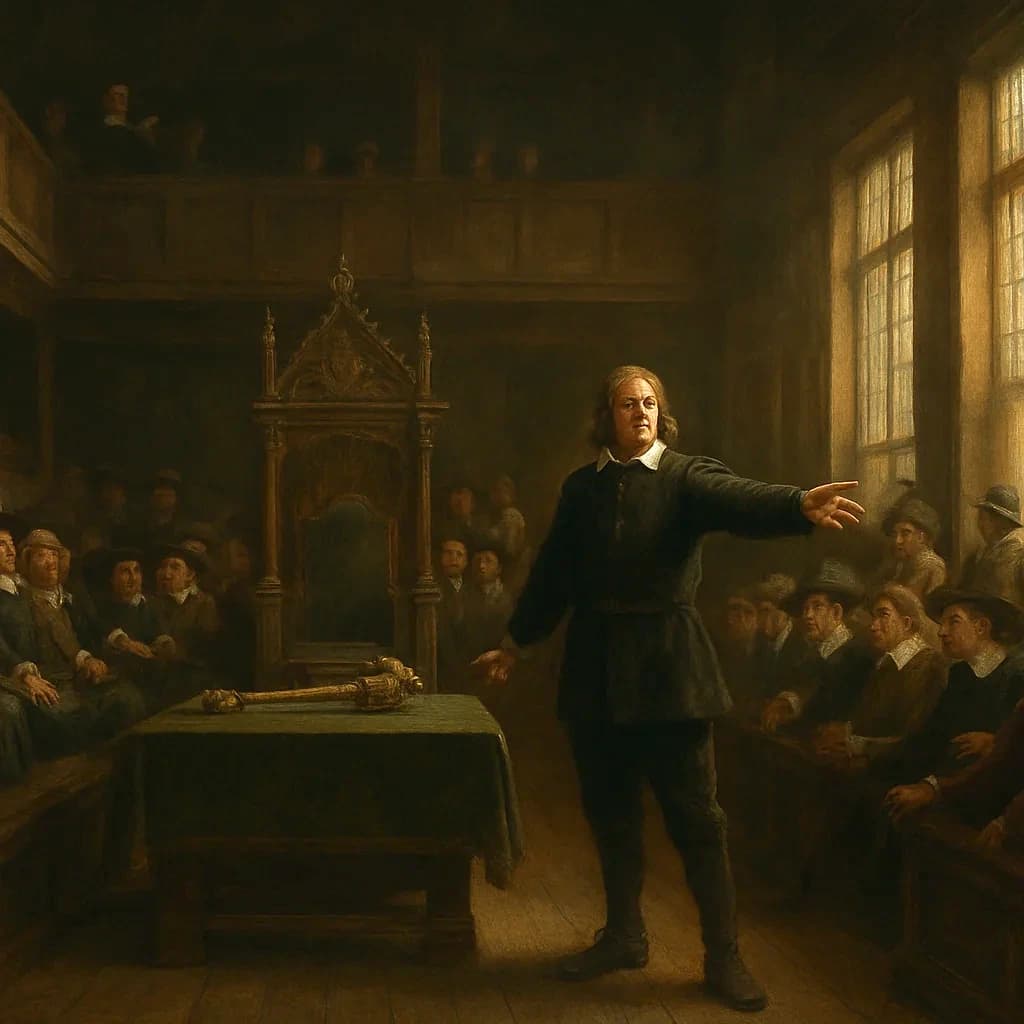
Cromwell Shut Down Parliament for Eleven Years
A handful of soldiers, one furious general, and eleven years without English democracy, yet nobody recorded exactly what Oliver Cromwell said in 1653.
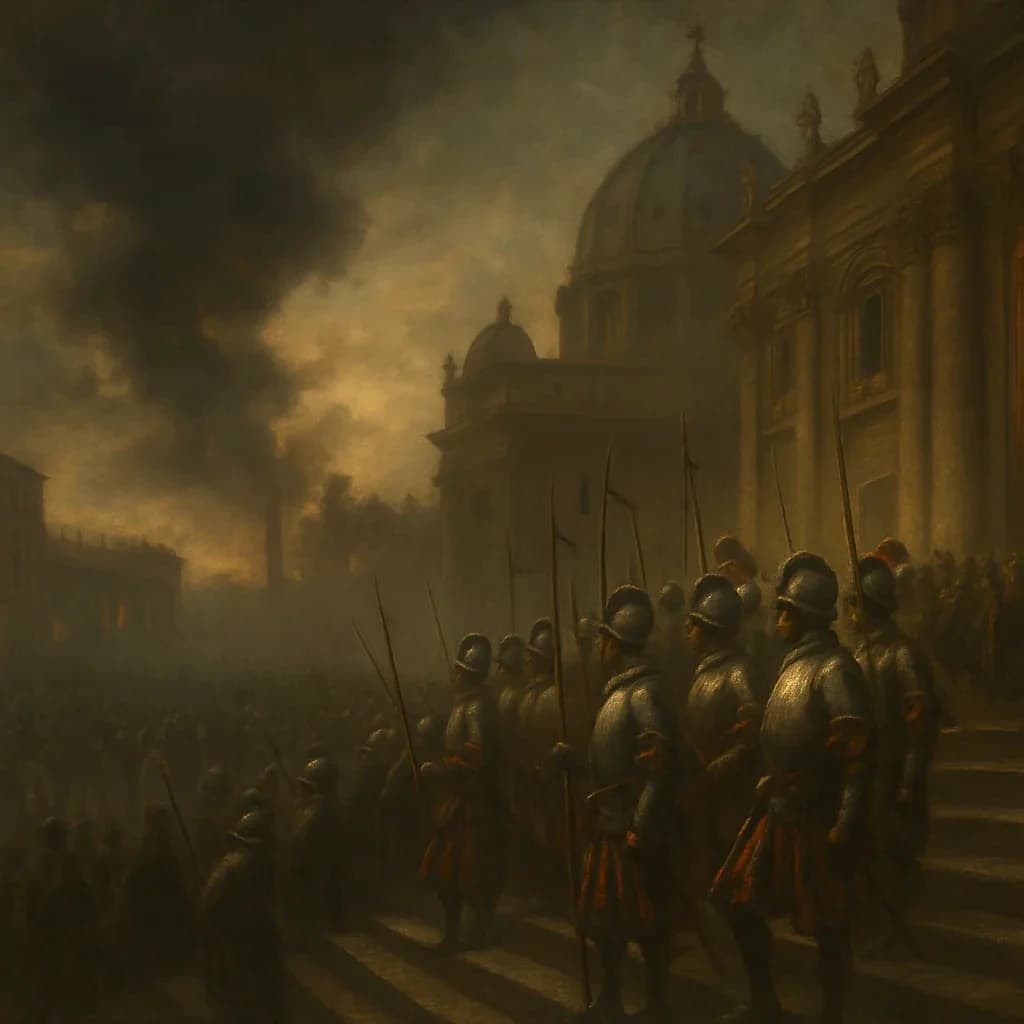
147 Unpaid Mercenaries Held Off 20,000 to Save the Pope
In 1527, 147 Swiss mercenaries held off 20,000 soldiers so the Pope could escape Rome, and most of them had never been paid.
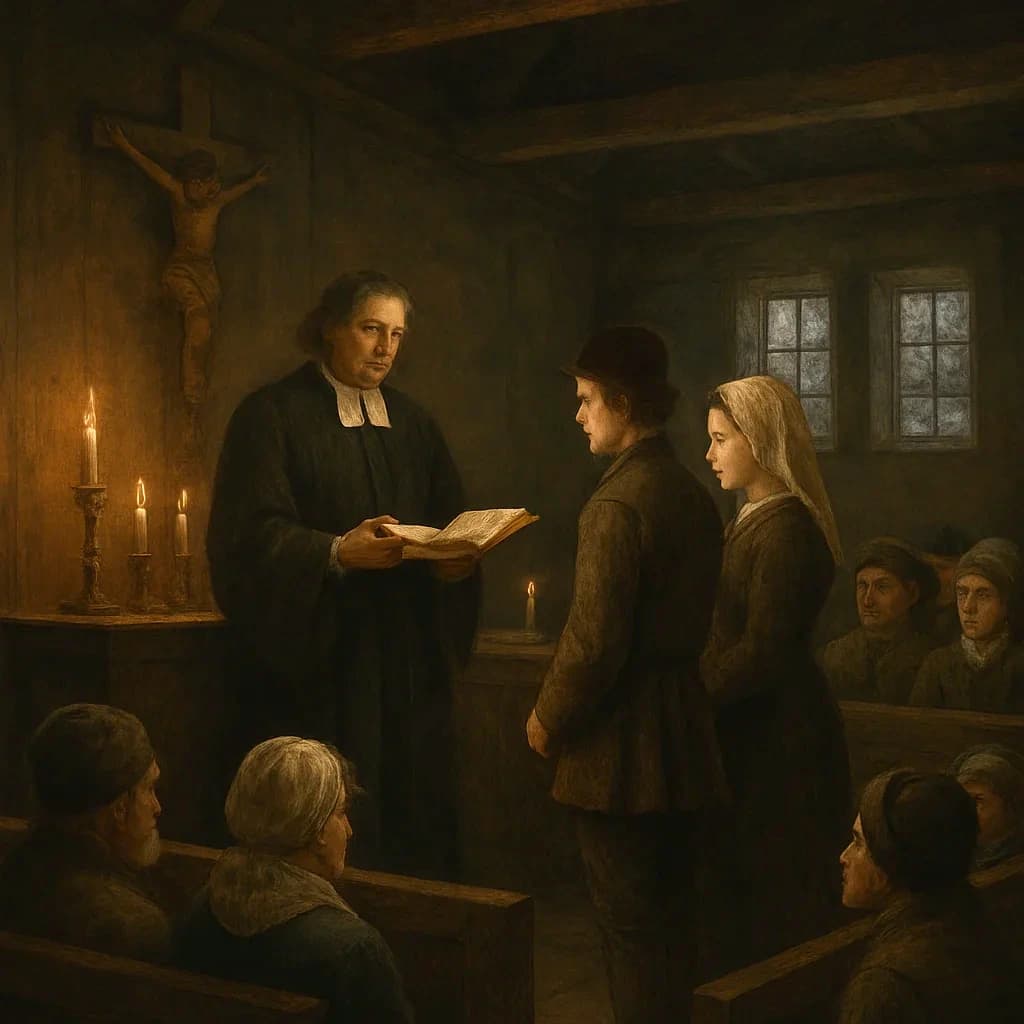
How Sweden Made Reading the Price of Marriage
Trying to stop couples from living together unmarried, the Swedish government accidentally built the most literate society on earth in 1686.
How One Servant Girl Froze France's Calendar for Years
A French servant girl convinced an entire nation to ignore the calendar for eleven days, and nearly caused a revolution.
Sultan Mahmud Invited His Elite Army to Lunch
One soldier's refusal to eat his soup nearly toppled the longest-lasting empire in history.
How a Stubborn Cow Saved London From Two Plagues
A dairy cow blocking a 17th-century London street may have prevented the most devastating plague outbreak in English history.
Her Visions Emptied Spain's Treasury
A cloistered mystic's visions convinced a king to spend his empire's entire treasury on a single, impossible military campaign.
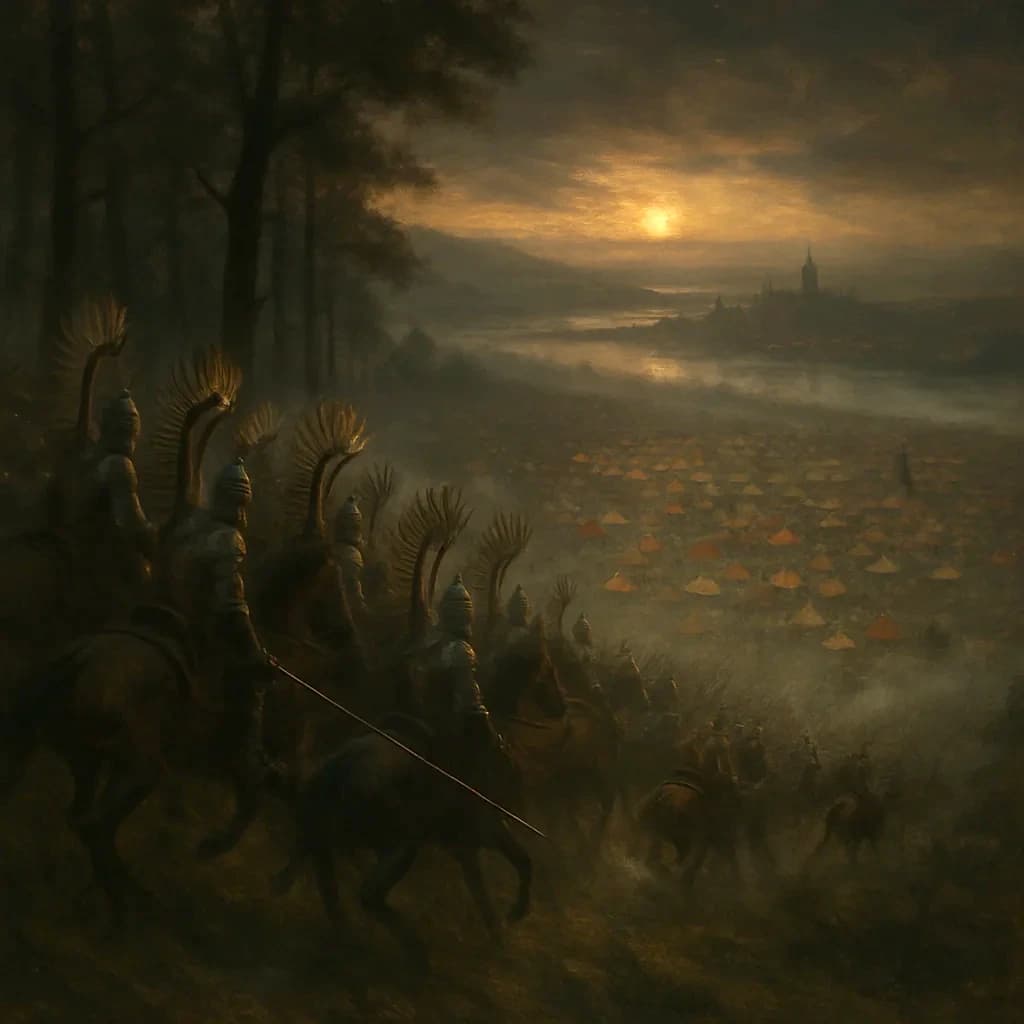
Vienna 1683: How Coffee Reached Europe on a Battlefield
A Polish king's coffee obsession may have saved European Christianity from Ottoman conquest in 1683.
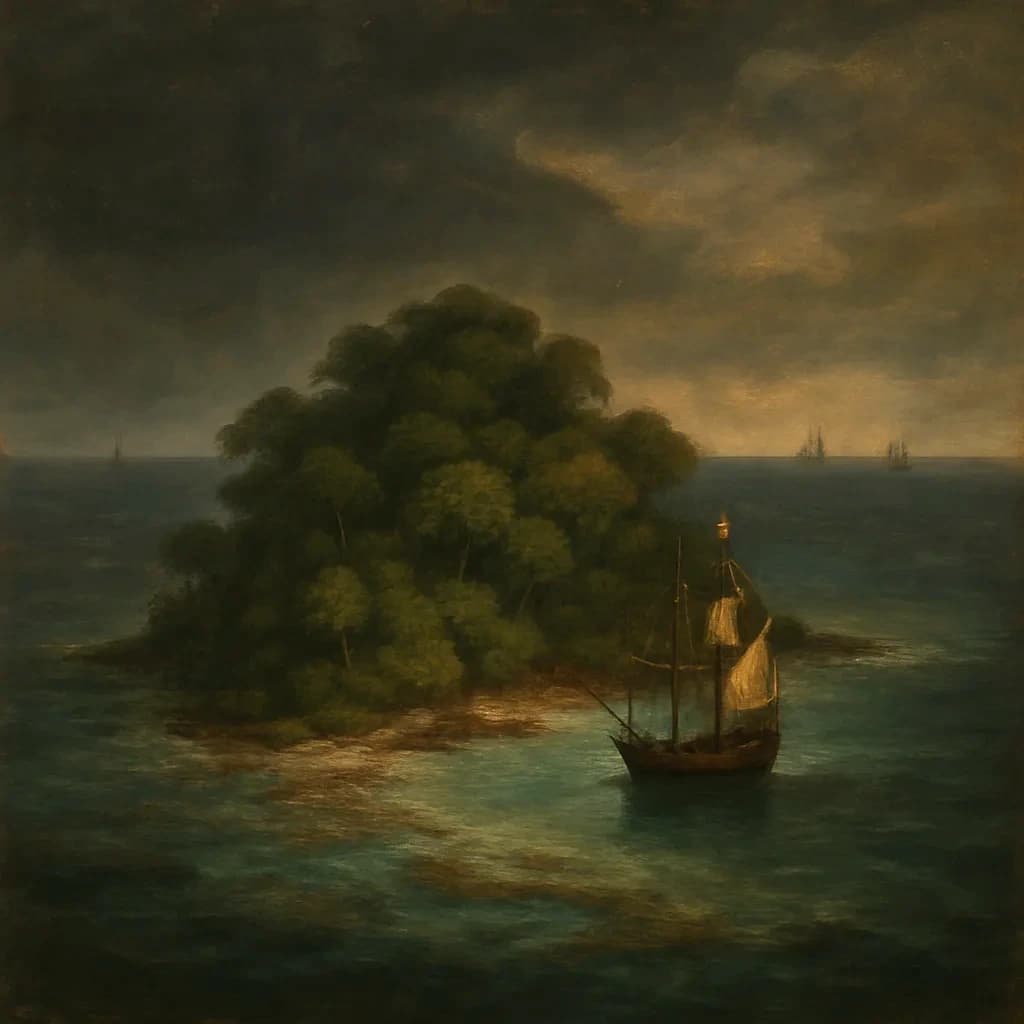
England Traded This Spice Island for Manhattan
For three centuries, European ships searched for Run (the world's most valuable nutmeg island), only to discover it kept vanishing from their maps.
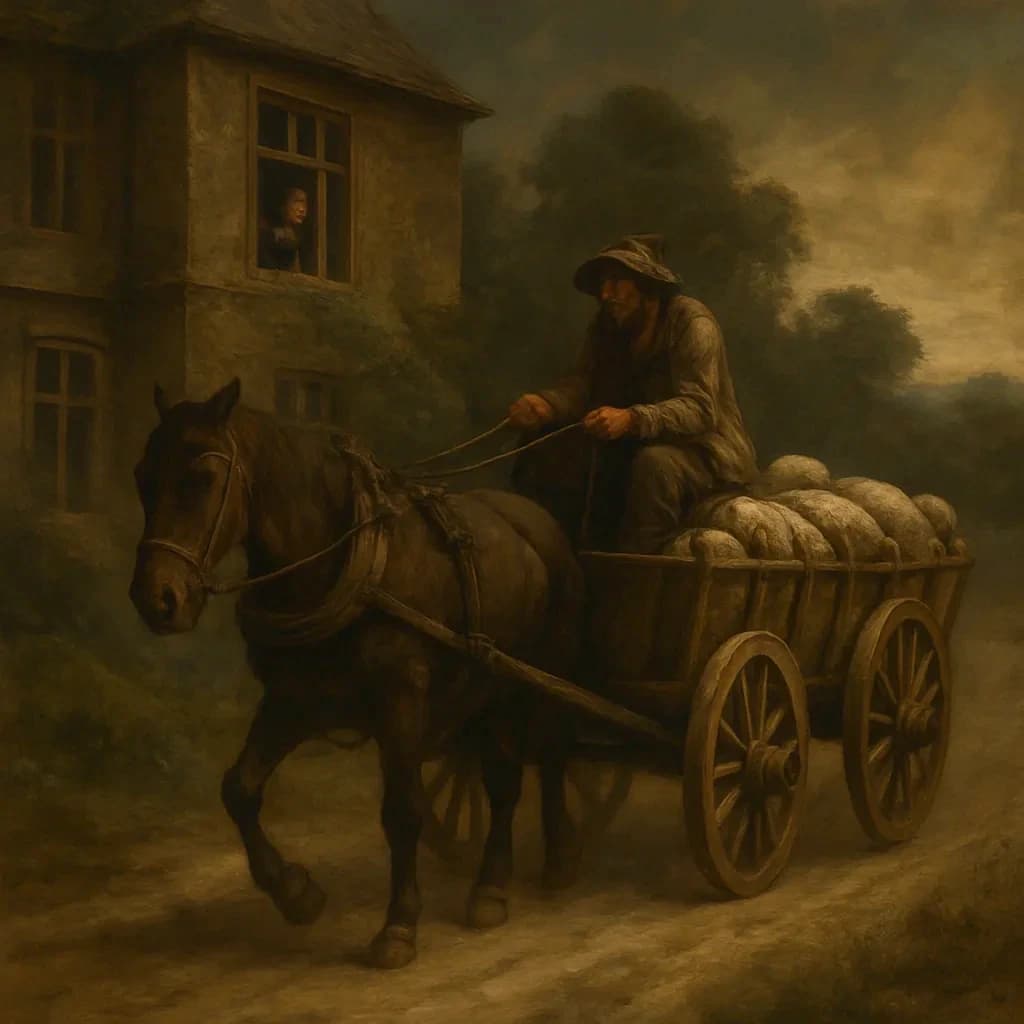
A Drunk Driver's Wrong Turn Saved Newton
A London cart driver's single unauthorized detour in 1665 may have saved Isaac Newton's life, and changed the course of science forever.
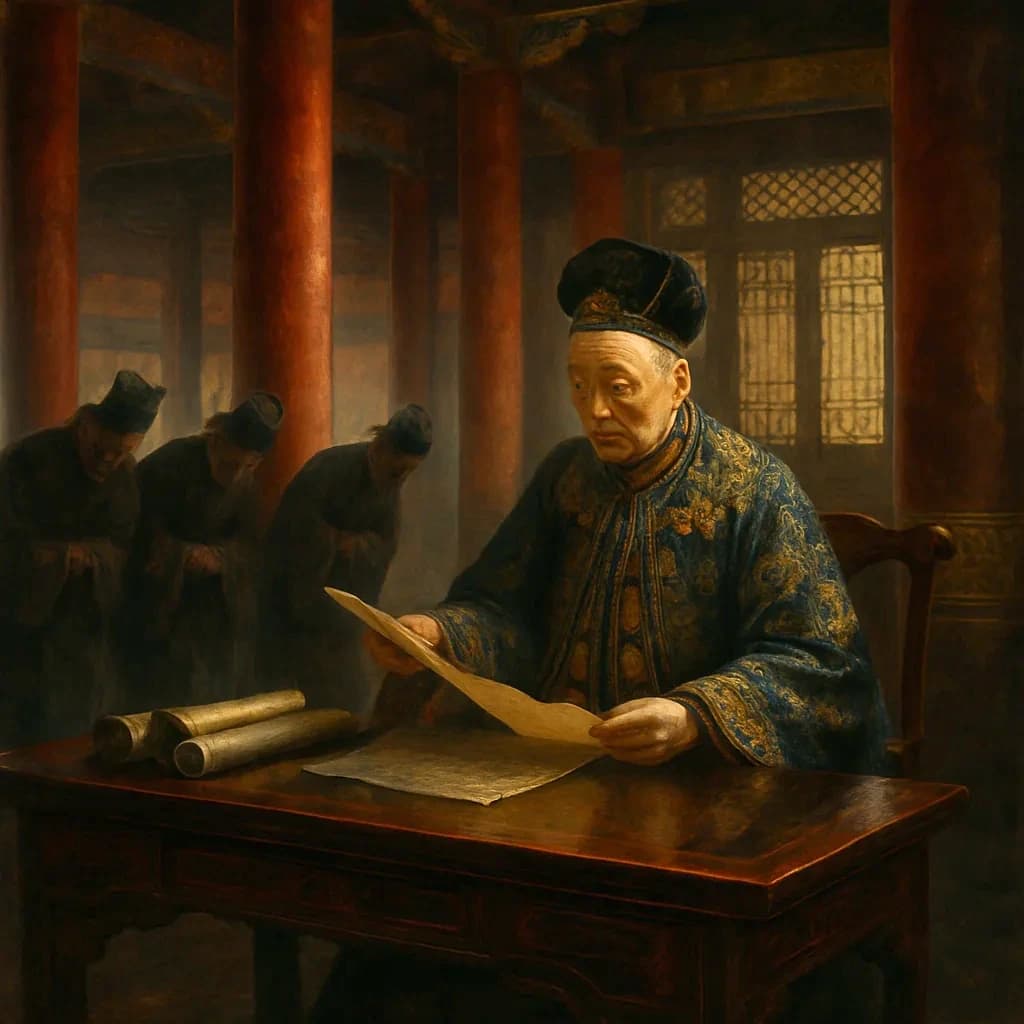
An Empress Ran China Without Officially Existing
For thirty years she ran the most powerful empire on earth, and officially, she didn't exist.
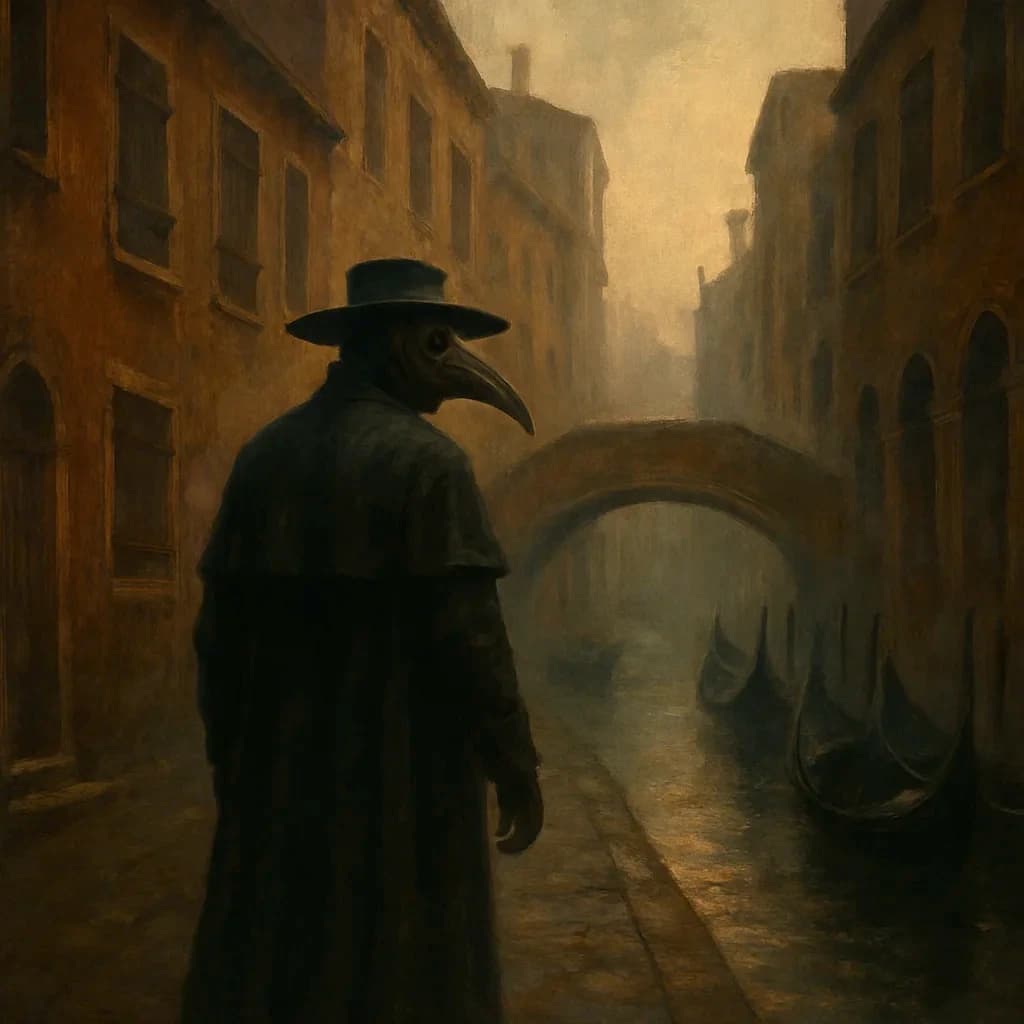
Why One Plague Doctor Stayed in Dying Venice
Venice's population was collapsing around him in 1630, and one masked physician made a choice that saved the city, and destroyed his own life.
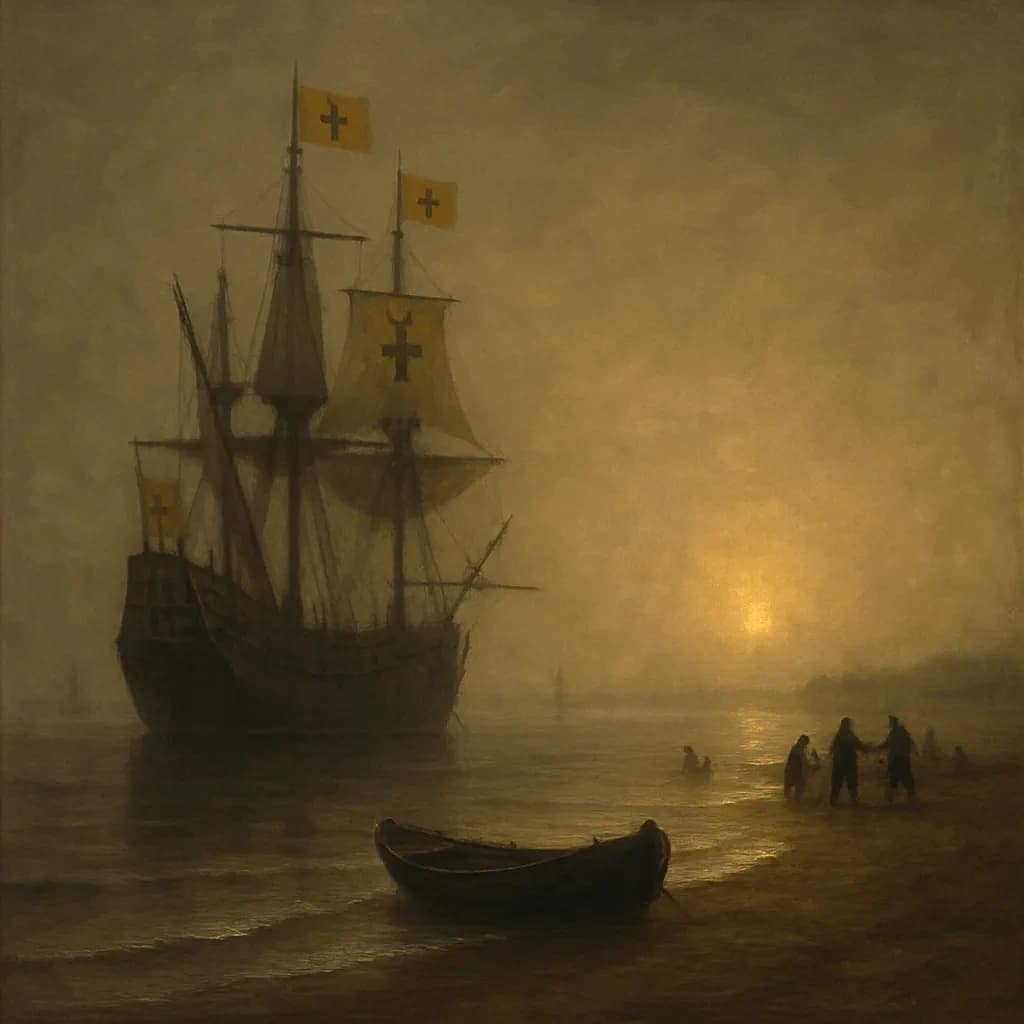
The Plague Ship That Got Rich by Staying Sick
A plague-infected merchant vessel pulled off one of history's most profitable voyages in 1665 by doing exactly what no captain should ever do.
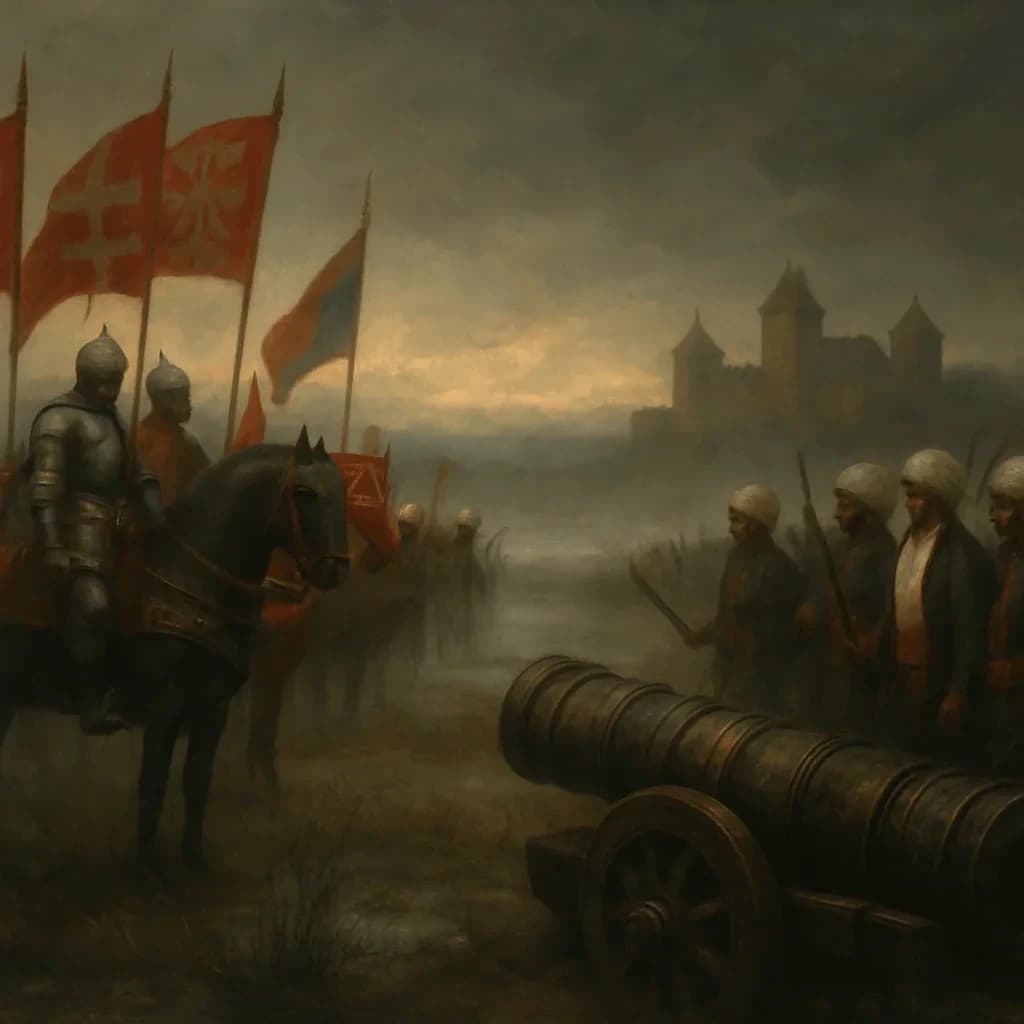
How a Drowned King Redrew Europe
A fifteen-year-old king's battlefield death in 1526 changed the map of Europe forever.
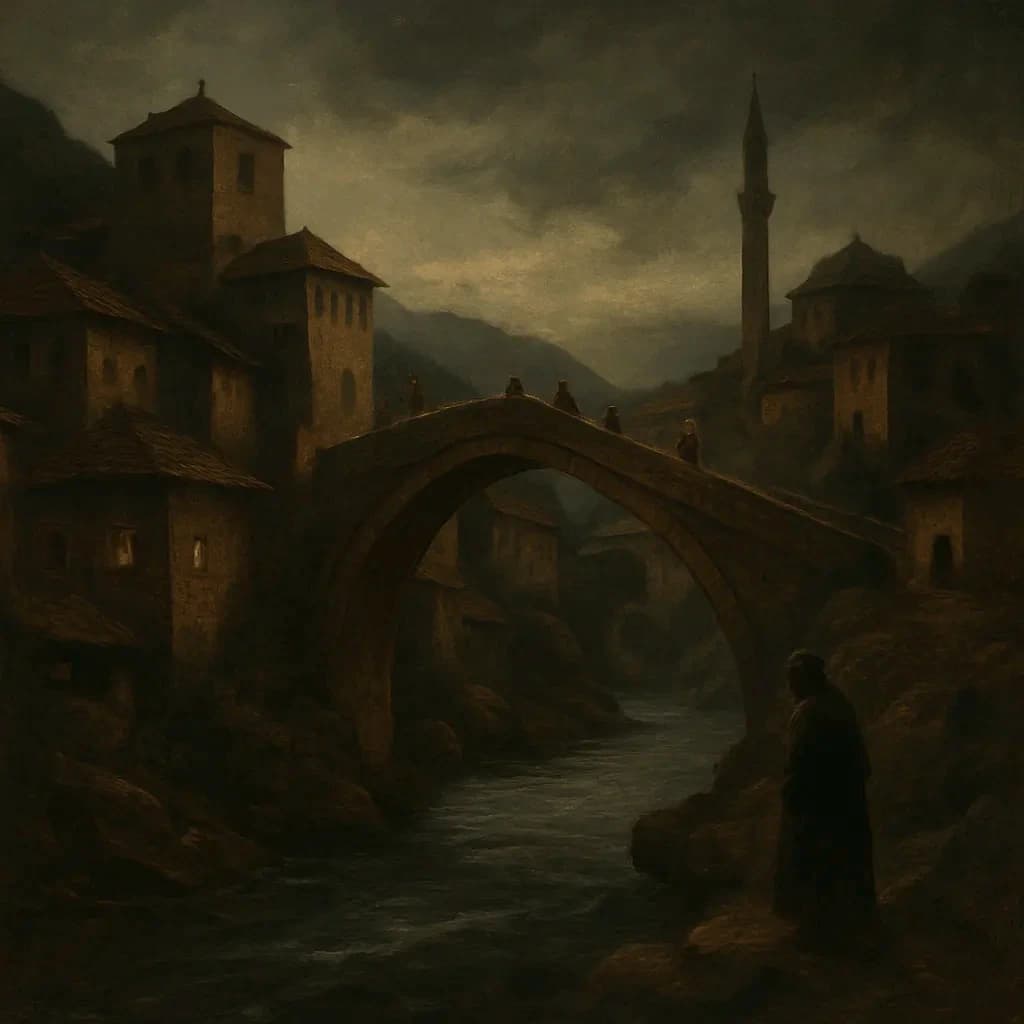
He Dug His Own Grave Before Testing His Bridge
An architect pre-arranged his own funeral before testing whether his bridge would hold, or kill him.
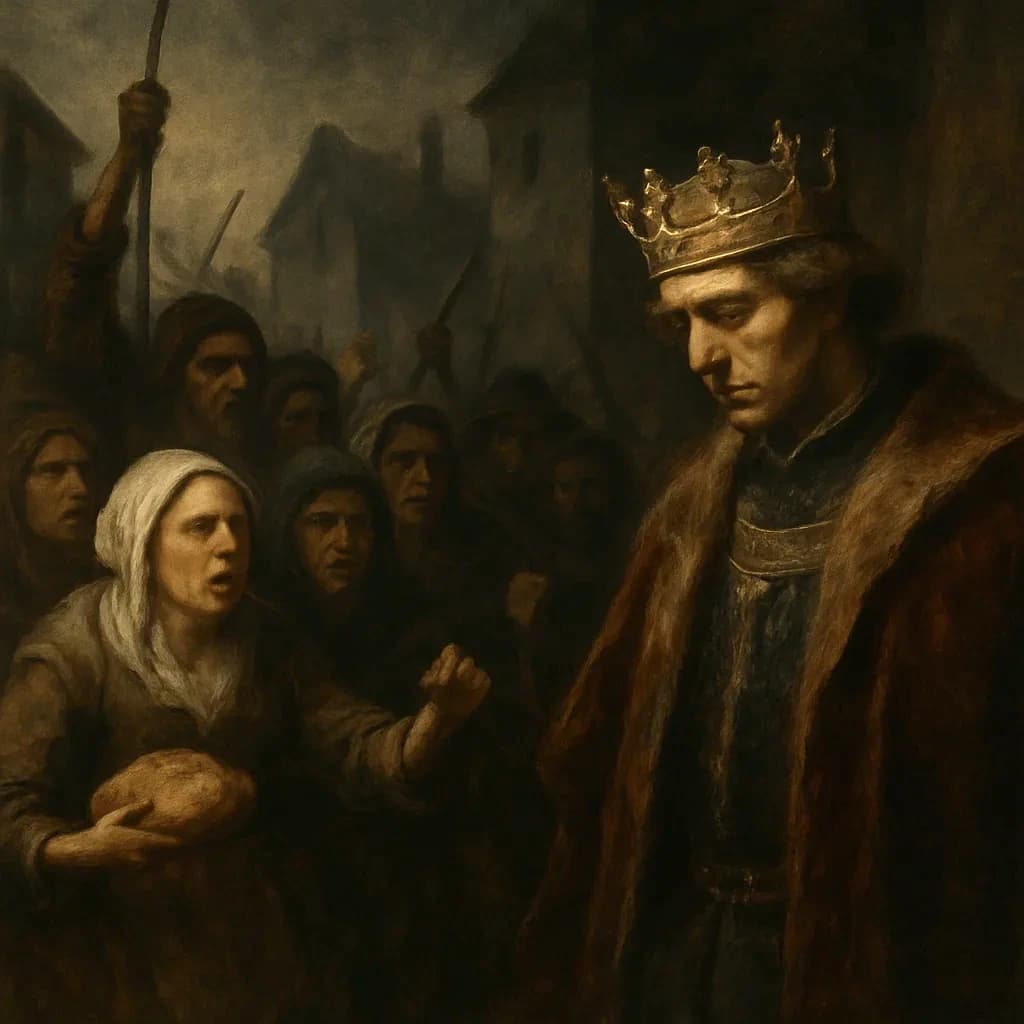
Sweden's Next King Was Fleeing on Skis When They Called Him Back
The future king of Sweden was fleeing the country on skis when his subjects decided they wanted him back after all.
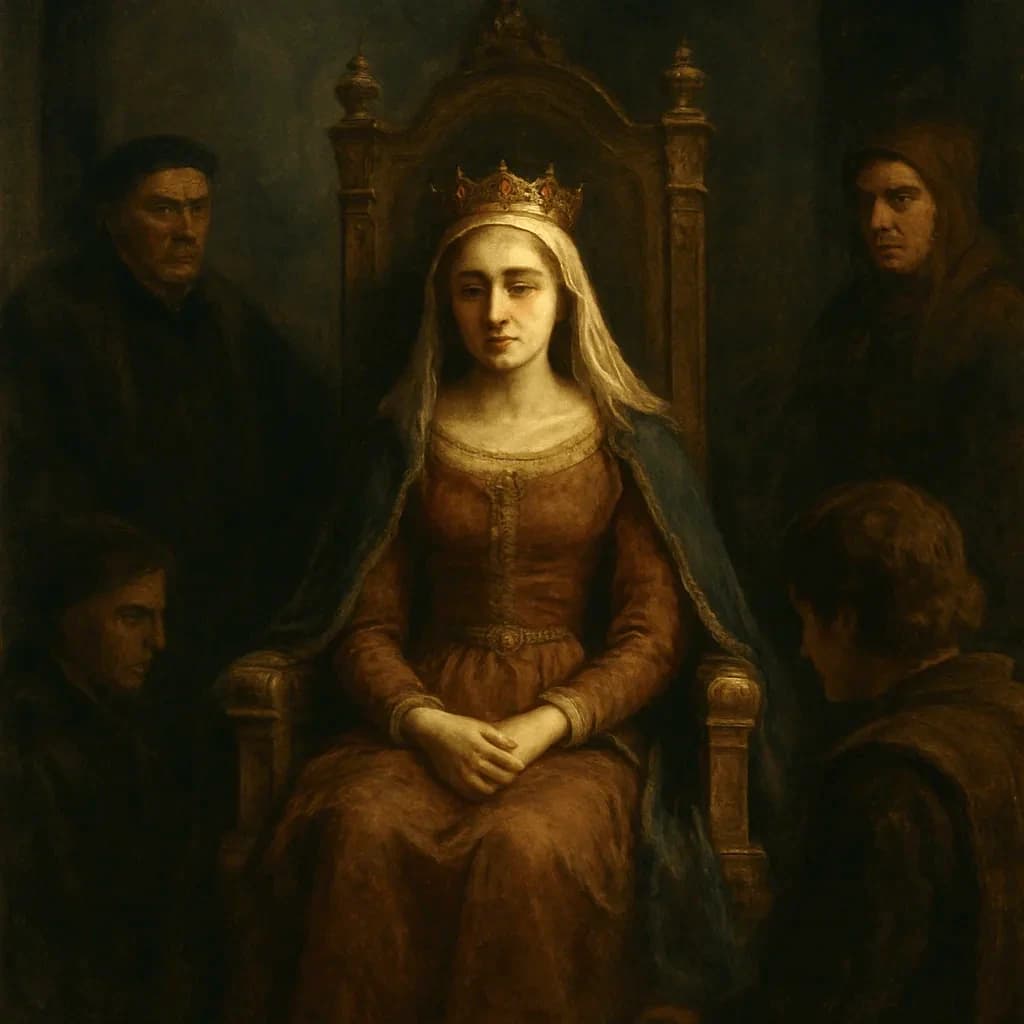
Nine Days on the Throne, Then Nothing
A sixteen-year-old girl who could argue theology in three languages was told she was Queen of England, then executed nine days later for someone else's ambition.
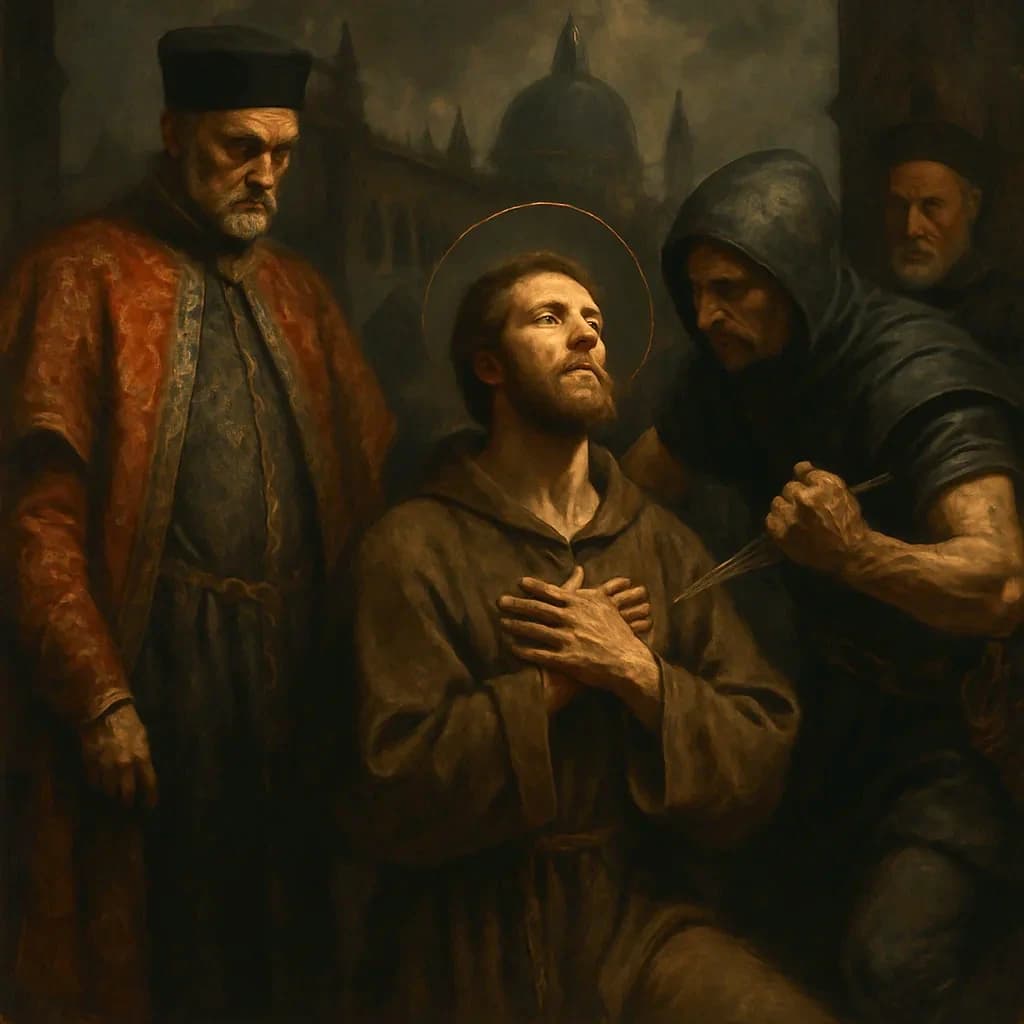
Venice Hires Its Own Assassin, Gets a Saint Instead
Venice once hired a Franciscan friar to spy and kill for them. He became a saint instead.
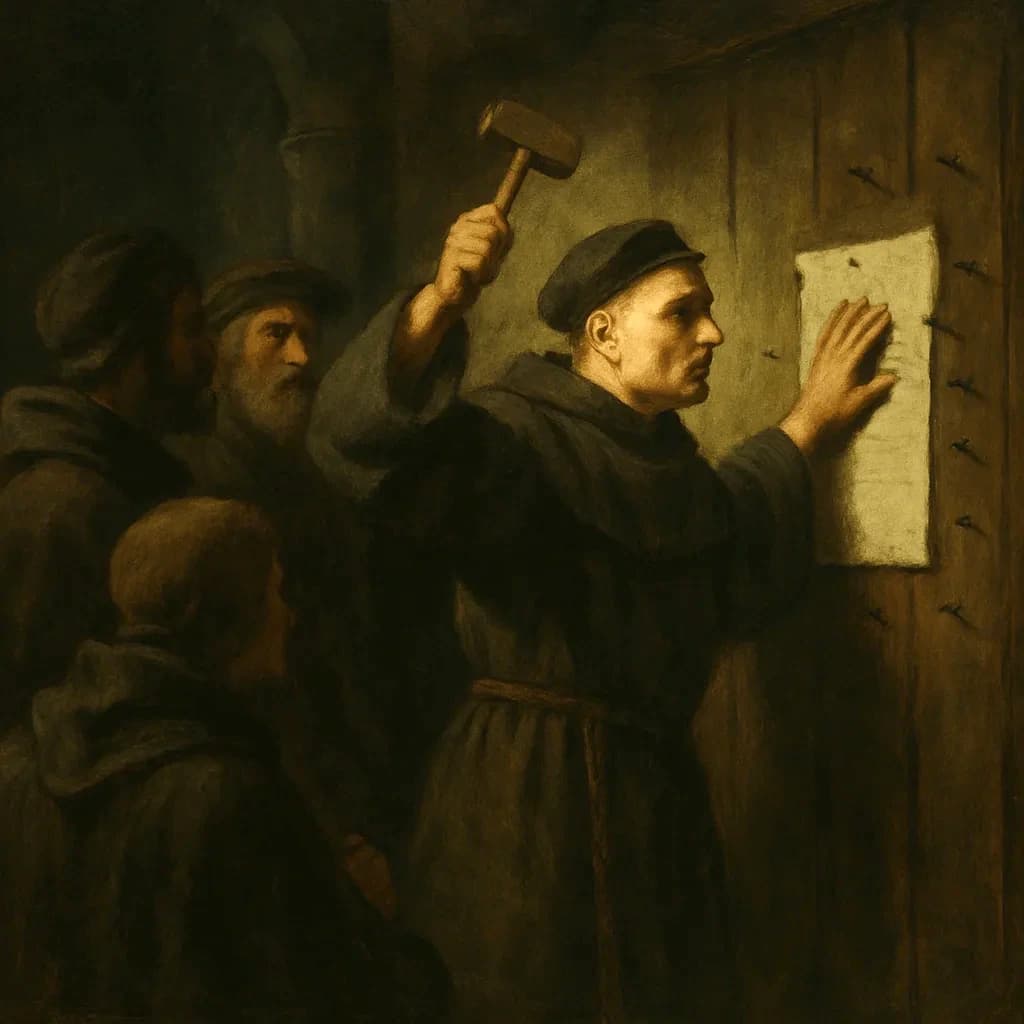
Seventeen Nails in the Door, Wittenberg 1517. Wait, Wrong Door
Martin Luther had a mentor who said everything first, planted every seed of the Reformation, then stepped politely aside when the fire started.
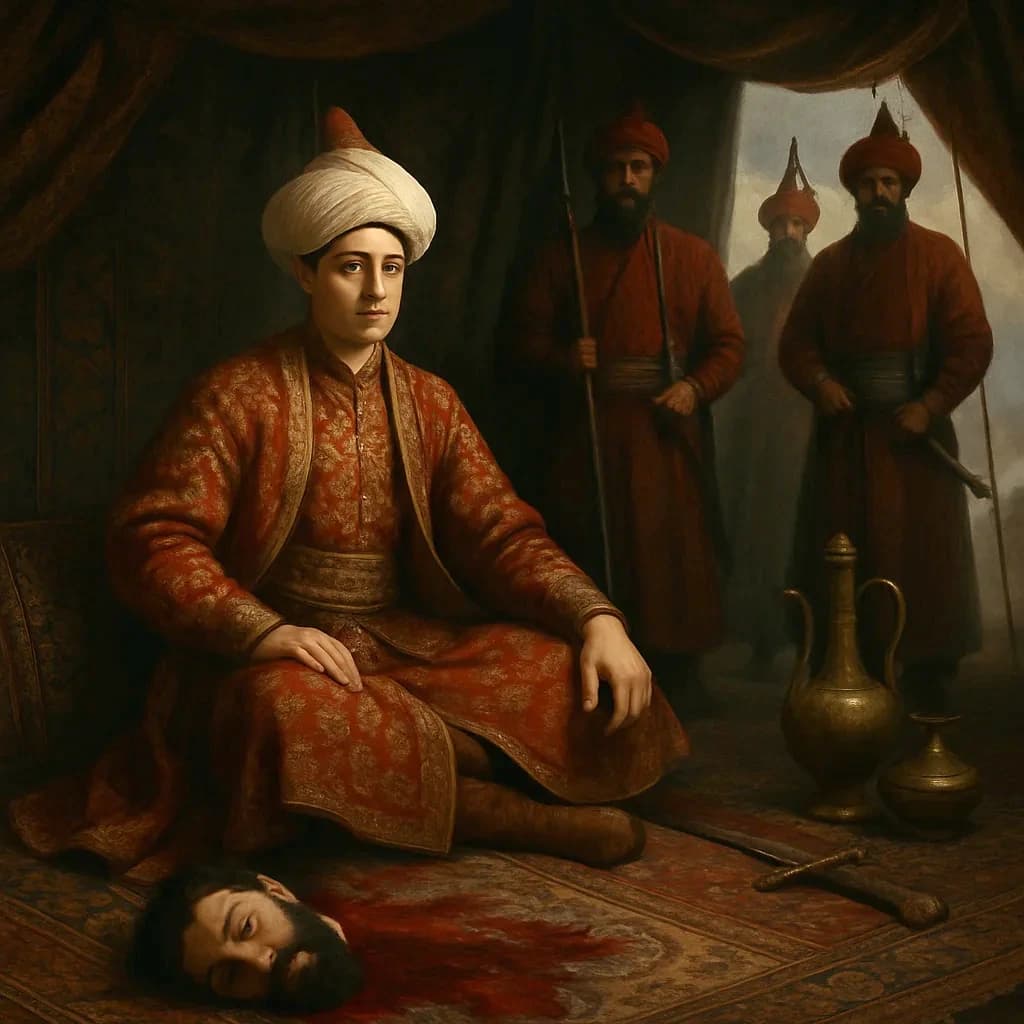
When a God-King Met Ottoman Cannons
A teenage shah who believed himself immortal executed his own generals for cowardice in 1514, then led his divine army straight into Ottoman cannons.
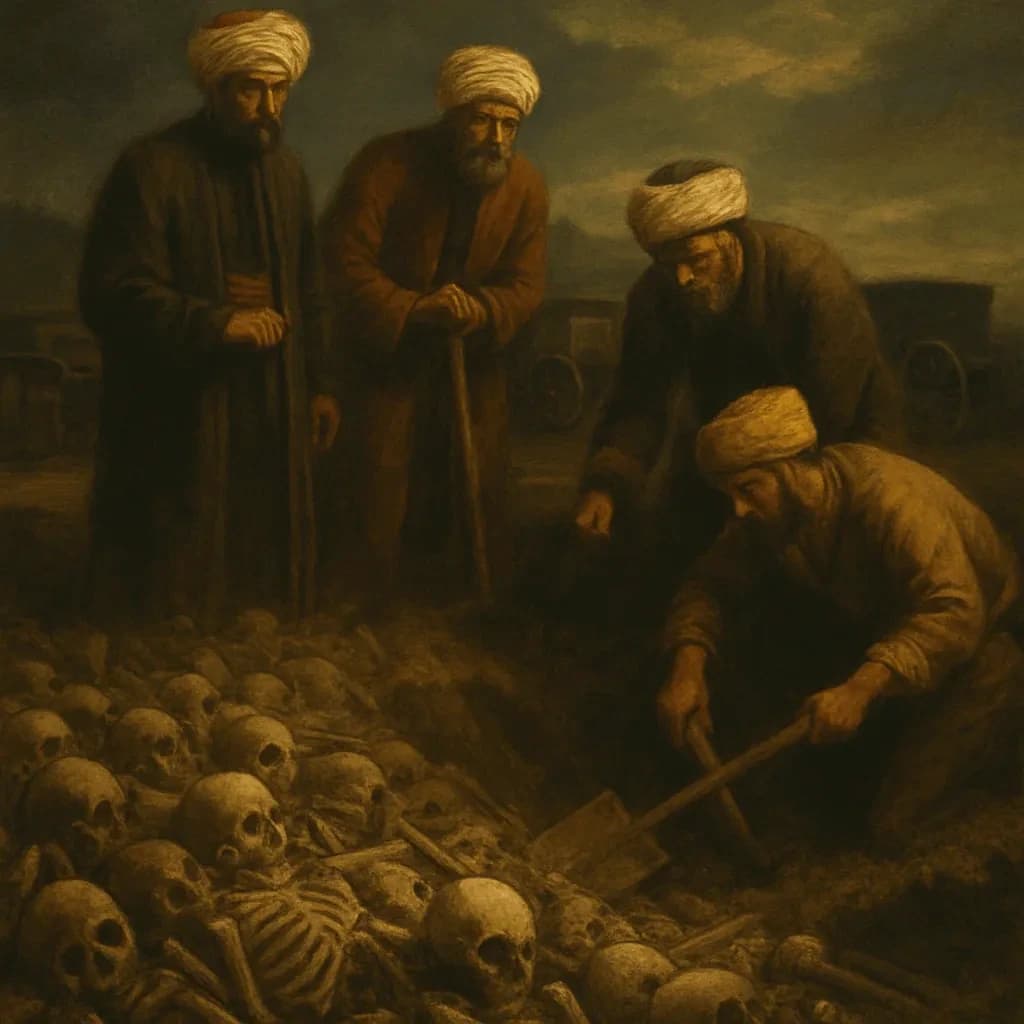
A Secretary's Note That Green-Lit an Ottoman Purge
With his boss burning up in fever, a twenty-six-year-old secretary reached for his pen and rewrote Ottoman succession law in one Tuesday afternoon.
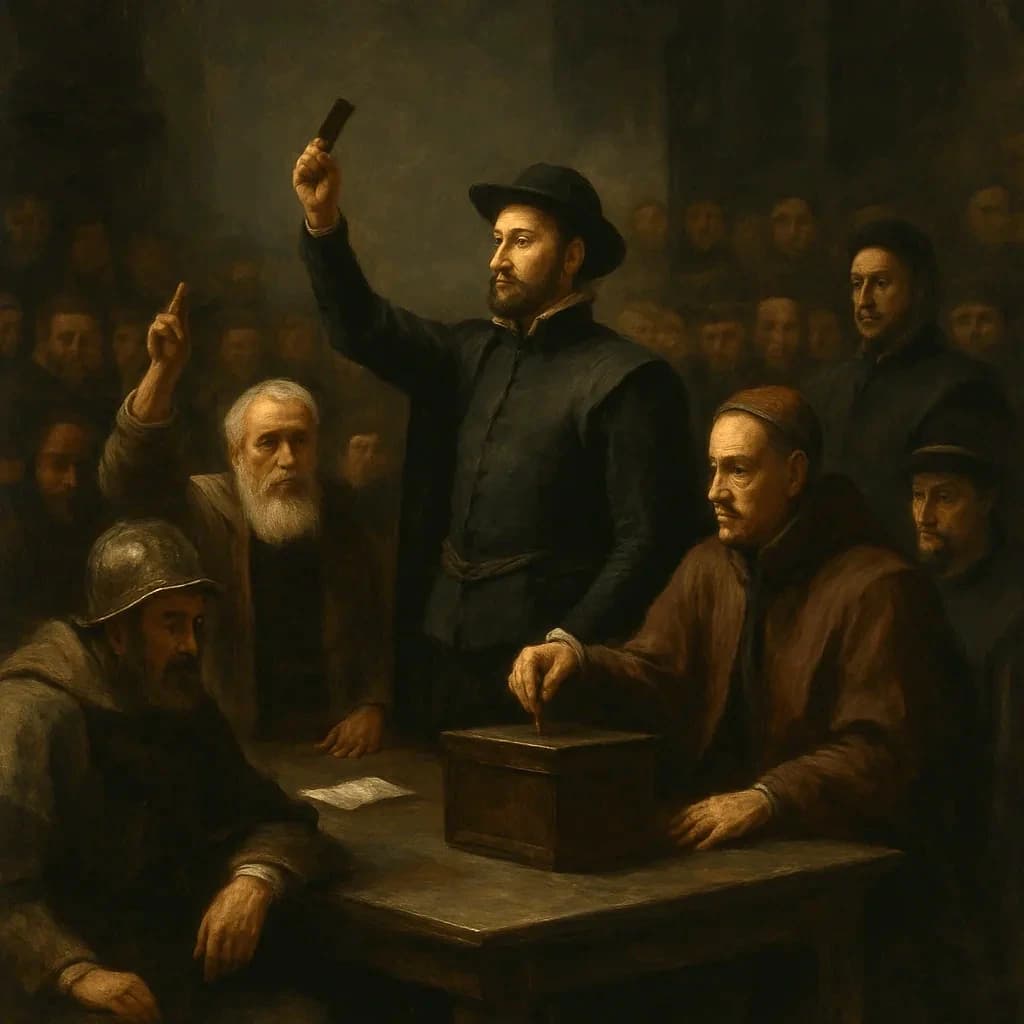
Five Old Men Sold Portugal's Independence for Spanish Gold
Portugal lost its independence not in battle, but in a meeting room where five old men couldn't resist Spanish gold.
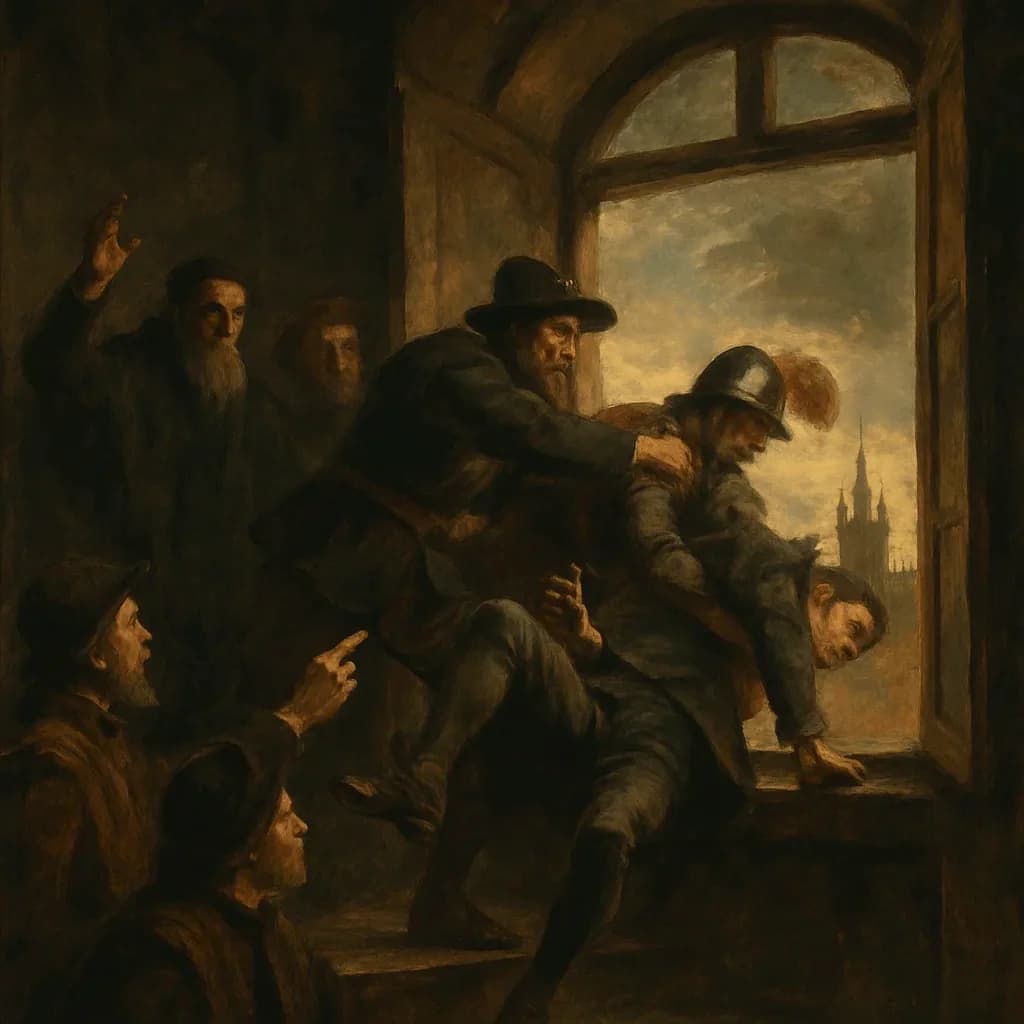
Defenestration in Prague: When a Window Killed Eight Million
Prague nobles threw two governors out a window in 1618, and accidentally killed a quarter of Europe.
Sweden's Warrior King and the Bullet from Behind
The most dangerous man in Europe died with a bullet in his brain and his brother-in-law standing right behind him.
A Poisoned Fish and the Fall of Hungary
A poisoned fish dinner in 1525 took down the wrong man, and an entire kingdom went with him.
A Bedridden Monk Argued Away Spain's Right to Conquer
Lecturing from his sickbed, an orphaned monk nearly toppled the Spanish Empire's legal justification for conquering the world.
How a Misplaced Key Split the Protestant Church
A steward lost his keys, and Christianity split in half.
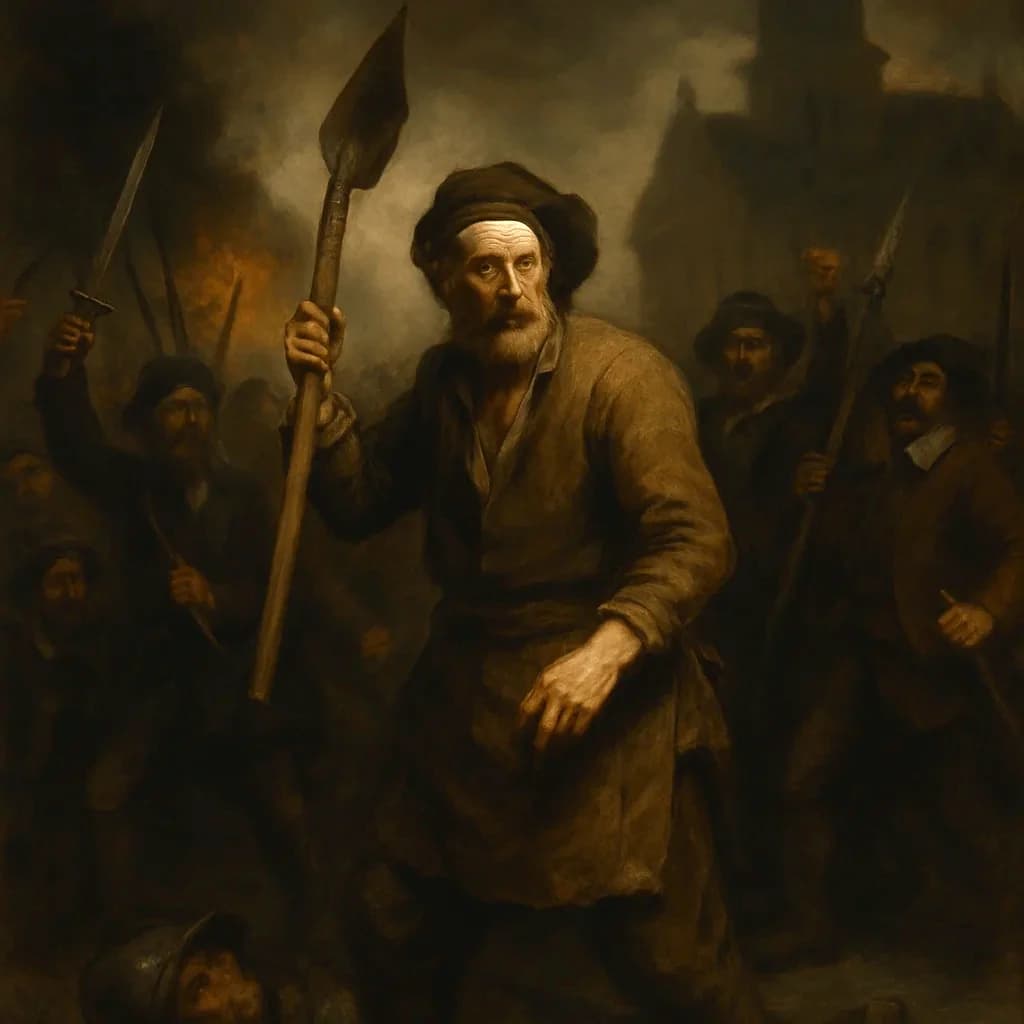
Bored at a Meeting, He Founded the Dutch Republic
A tulip-growing hymn writer, sent to a dull municipal meeting as a stand-in, talked a roomful of officials into inventing modern democracy.
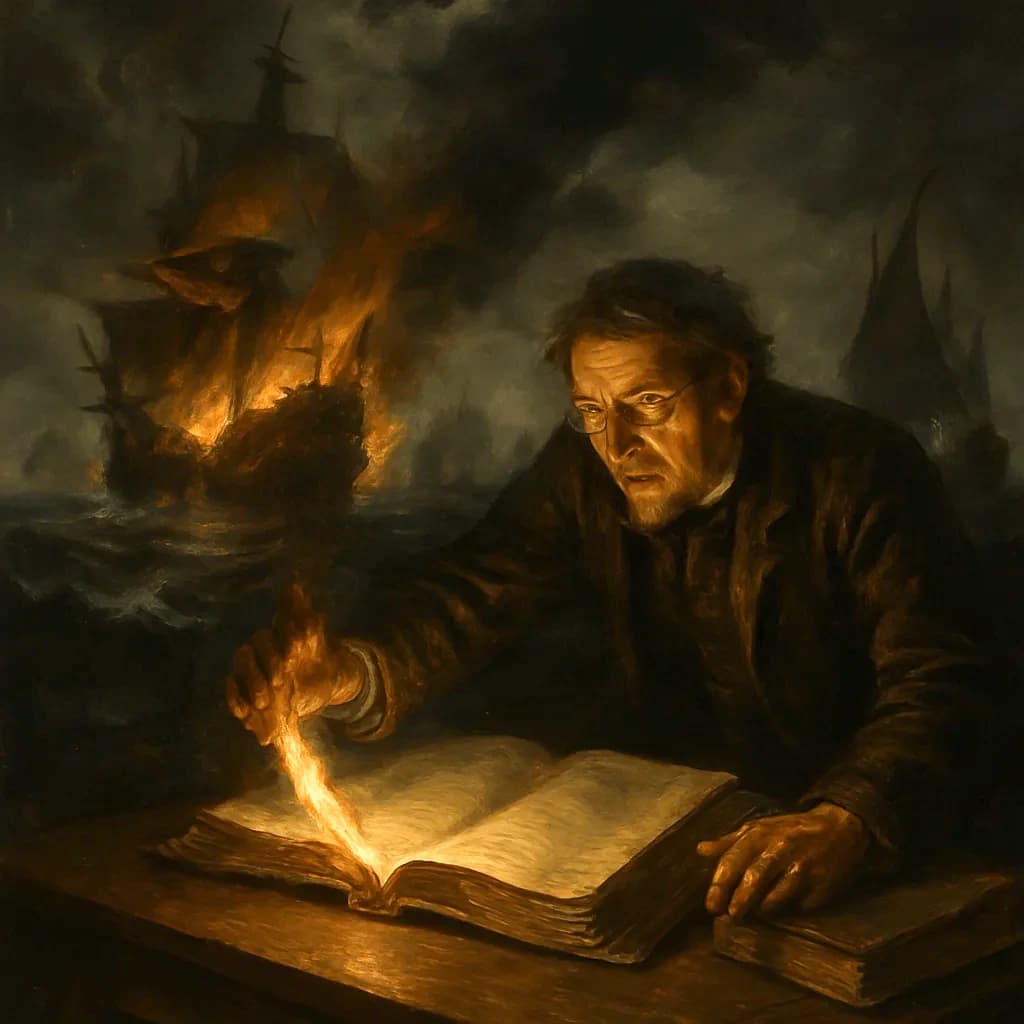
Drake Burned Spain's Barrel Wood, and Doomed the Armada
Drake's 1587 raid on Cádiz barely scratched the Spanish fleet, but it burned something that would doom the Armada a year later.
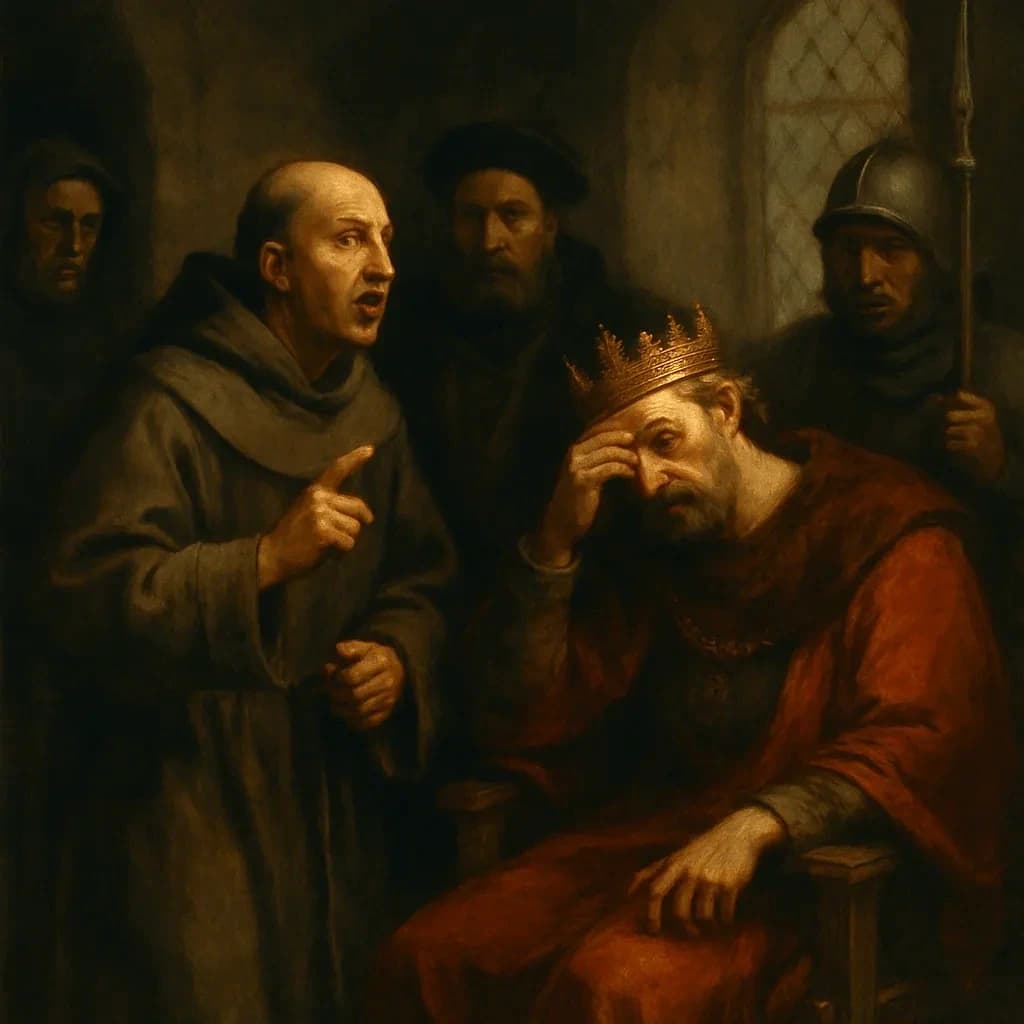
A Monk's Loose Tongue, A Kingdom Lost
A pastry cook's son almost became king of Portugal because some monks couldn't tell the difference between divine revelation and wishful thinking.
Read the full stories in the app.
A new story from forgotten history, every day.
Download on the App Store