
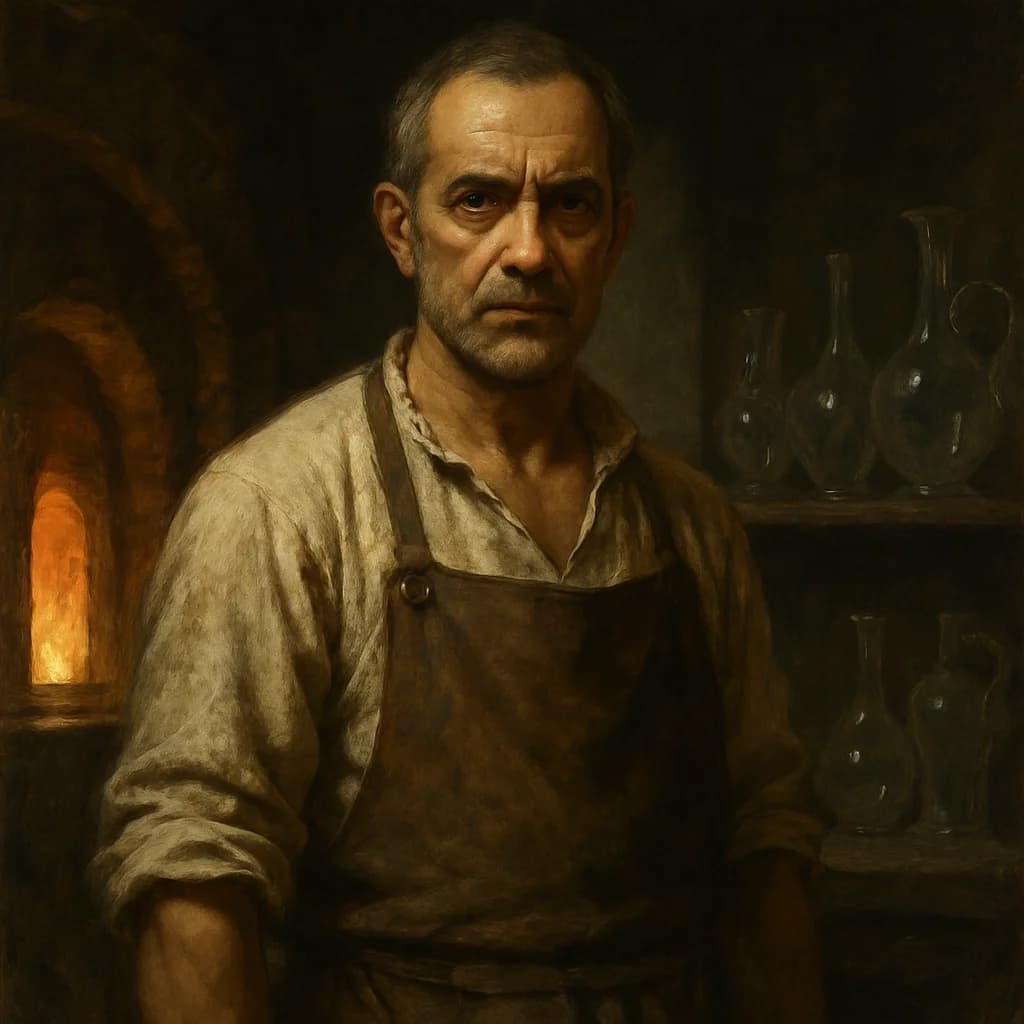
Angelo Barovier
The man who perfected crystal glass in 1450s Venice never intended to create the most closely guarded industrial secret in European history.
Angelo Barovier inherited more than a glassworks on Murano island. He inherited a family obsession with transparency. For generations, the Baroviers had been pushing Venetian glass beyond its cloudy, greenish limits, but Angelo would be the one to crack the code that had eluded glassmakers since antiquity.
Working in the furnaces of Murano around 1450, Angelo developed what became known as "cristallo," glass so pure it rivaled rock crystal. The breakthrough wasn't just technical brilliance; it required reimagining the entire process. He refined the use of Istrian pebbles as a source of pure silica, perfected the decolorizing properties of manganese, and most crucially, developed firing techniques that eliminated the iron impurities that had plagued European glass for centuries. The result was revolutionary: glass that was not just clear, but optically perfect.
What Angelo couldn't have foreseen was how his innovation would transform Venice into a surveillance state. The Venetian government immediately classified his techniques as state secrets, forbidding glassmakers from leaving Murano under penalty of death. Spies were sent to steal the formula. Entire diplomatic missions were built around acquiring Venetian glass technology. Angelo's cristallo became so valuable that it funded Venice's empire for the next three centuries. Every palace window, every lens, every mirror in Europe's courts generated revenue that flowed back to the lagoon.
Angelo died sometime in the 1460s, probably never imagining that his pursuit of perfect transparency would create one of history's most opaque industrial conspiracies. His workshop continued under his sons, but the secret died with the last Murano master in 1797, when Napoleon's armies scattered the glassmakers and broke a monopoly that had lasted longer than most empires.
Angelo Barovier's cristallo glass was so optically superior that it remained the standard for telescope and microscope lenses until the 18th century, making Venice indispensable to the Scientific Revolution.
Why untold: His story is overshadowed by the broader narrative of Venetian trade dominance, obscuring how a single craftsman's innovation shaped centuries of European politics and science.
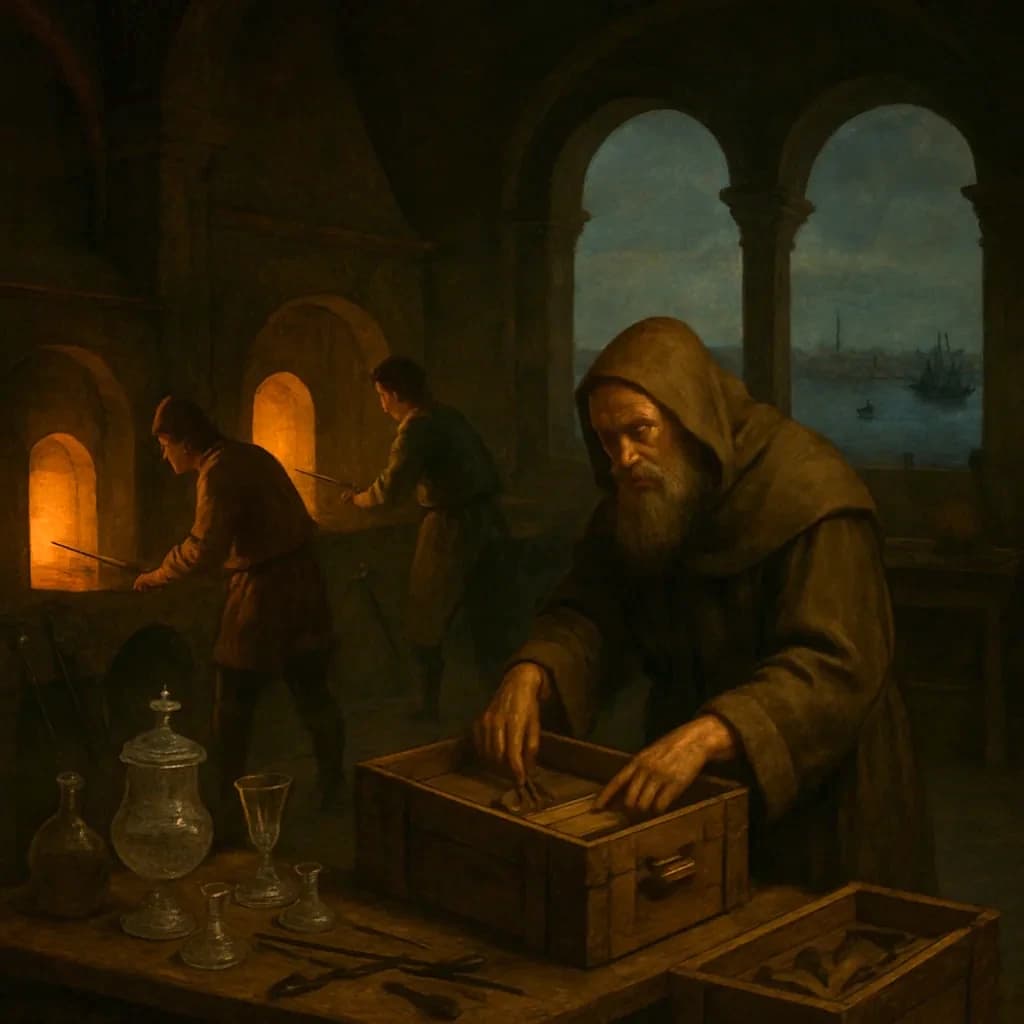
Why Venice Handed Its Glass Secrets to a Rival
A glassmaker fled Venice in 1291 with a secret that would reshape empires. But he wasn't running from enemies.
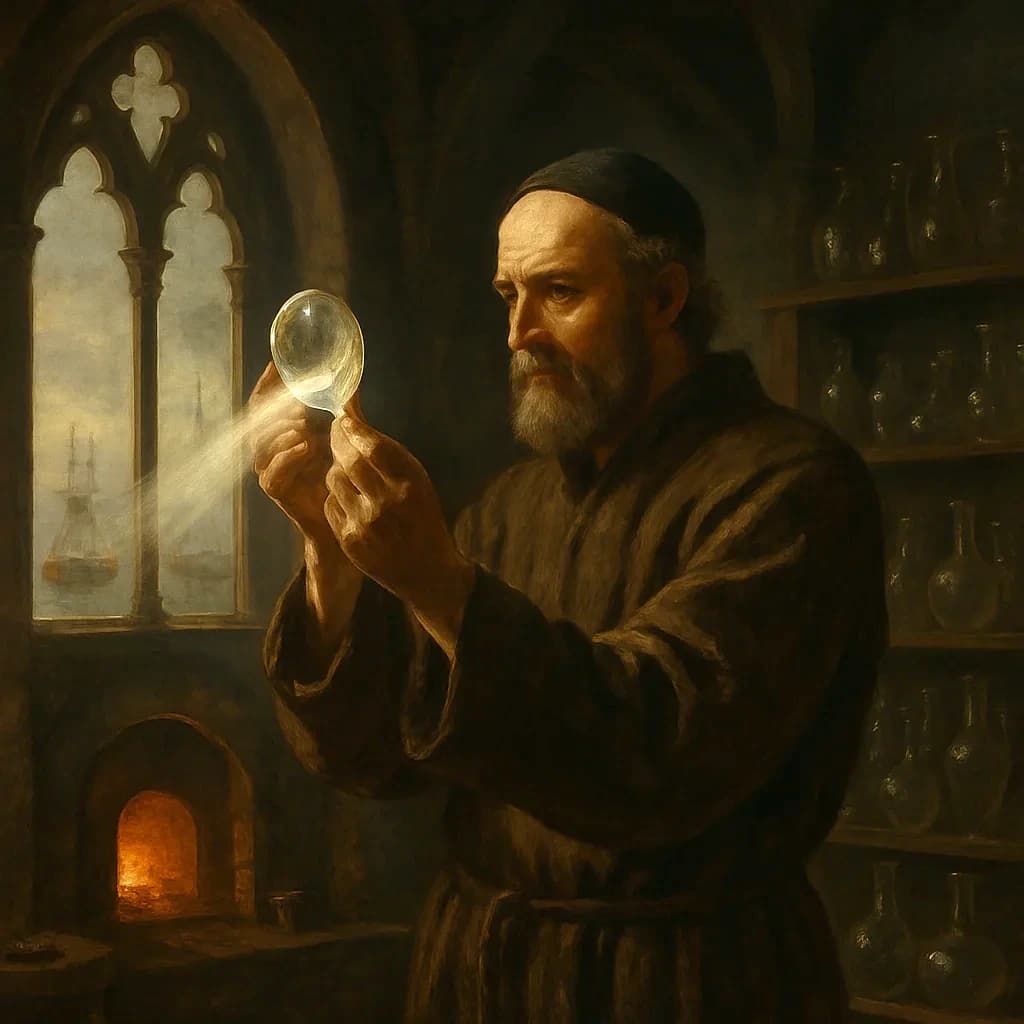
When Glass Became a Weapon of War
A single technological breakthrough in 13th-century Venice gave birth to both Renaissance art and medieval chemical warfare.
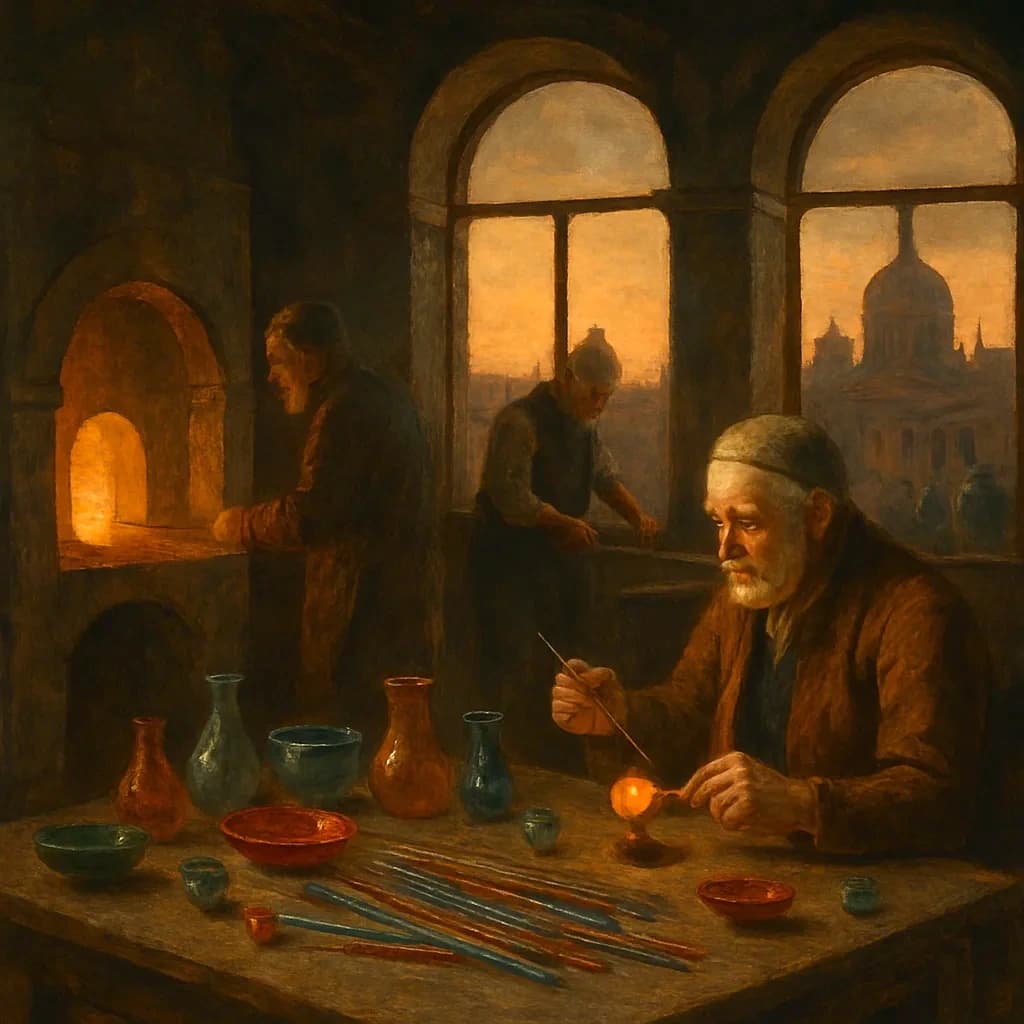
Napoleon Broke the Guild That Hid Venice's Glass Secret
Napoleon set out to shatter an empire in 1797, and without meaning to he also destroyed the secret that had made Venice wealthy for seven centuries.
- Zecchin, Luigi. 'Vetro e Vetrai di Murano.' Venice: Arsenale Editrice, 1987.
- McCray, W. Patrick. 'Glassmaking in Renaissance Venice: The Fragile Craft.' Aldershot: Ashgate, 1999.
- Hess, Catherine. 'Venetian Glass.' Los Angeles: J. Paul Getty Museum, 2002.