
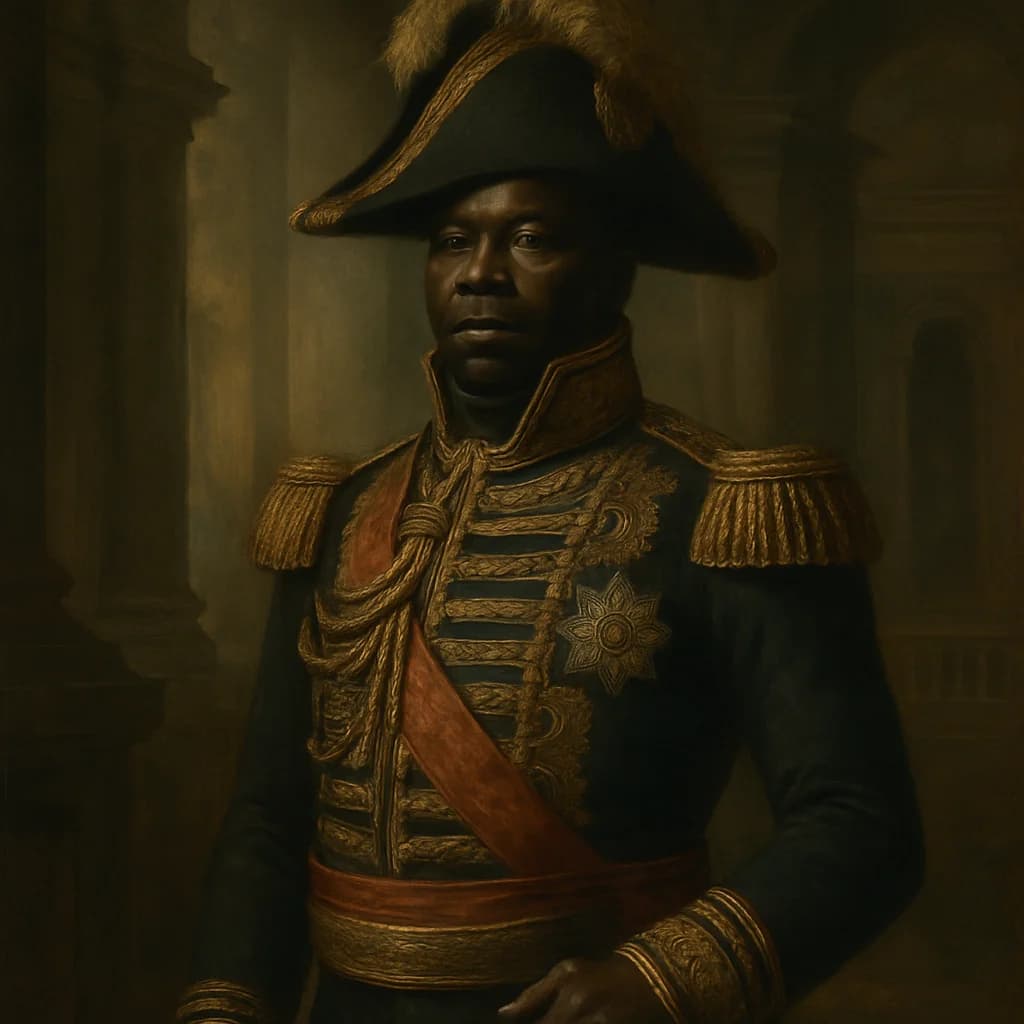
Henri Christophe
The man who built a palace to rival Versailles had once been branded like cattle and sold for the price of a good horse.
Henri Christophe understood better than most that revolution was just the beginning. While the world celebrated Haiti's independence in 1804, Christophe was already thinking twenty years ahead, to the moment when European powers would inevitably try to drag his people back into bondage.
Born into slavery around 1767, possibly in Grenada, Christophe had worked as a mason, a waiter, even a cook in a French colonial inn. When the slave revolt erupted in 1791, he joined the ranks under Toussaint Louverture, rising through sheer tactical brilliance to become one of the rebellion's most effective commanders. But Christophe's real genius wasn't military. It was architectural, both literal and political.
After independence fractured Haiti into competing kingdoms, Christophe declared himself King Henri I of northern Haiti in 1811. Then he did something extraordinary: he built the Citadelle Laferrière, a fortress so massive it could house 5,000 soldiers and withstand any European invasion attempt. The structure required 20,000 workers and took fifteen years to complete. Christophe also constructed Sans-Souci Palace, a baroque masterpiece designed to prove that former slaves could create beauty to rival anything in Europe.
But Christophe's most radical experiment was social engineering. He established schools, imported European tutors, and created a nobility of former slaves with titles like Duke of Marmalade and Count of Lemonade. He was building something unprecedented: a modern state run by and for people the world considered property. When a stroke left him paralyzed in 1820, facing rebellion from exhausted subjects, Christophe chose his final act of defiance. He shot himself through the heart with a silver bullet, ensuring he would never again bow to any master.
Christophe's Citadelle Laferrière fortress was built with walls up to 130 feet high and 30 feet thick, making it one of the most formidable fortifications ever constructed in the Western Hemisphere.
Why untold: His story challenges the narrative that successful post-colonial leadership required European education or gradual reform rather than revolutionary transformation.
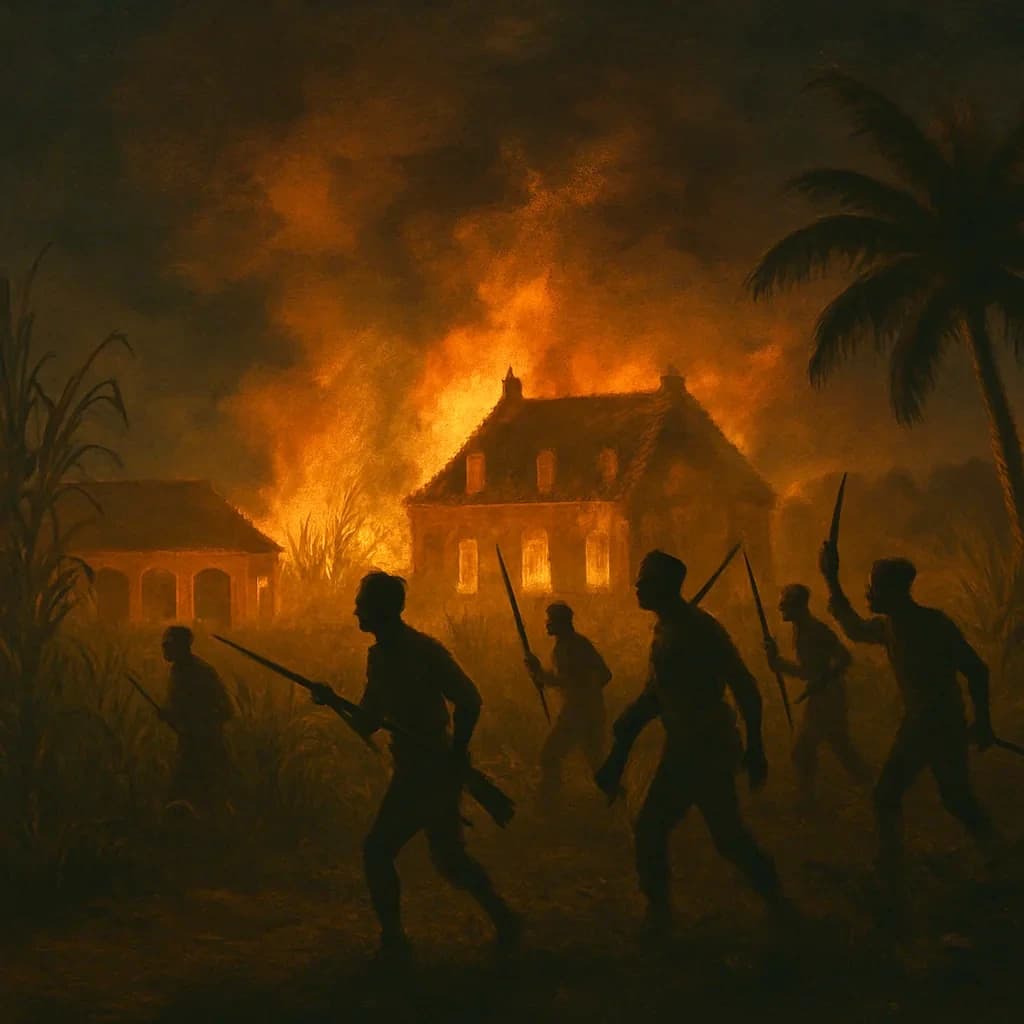
Haiti's Slaves Won a War the World Called Impossible
A slave uprising in Haiti sent shock waves through every plantation from Virginia to Brazil, and changed how the world thought about human bondage forever.
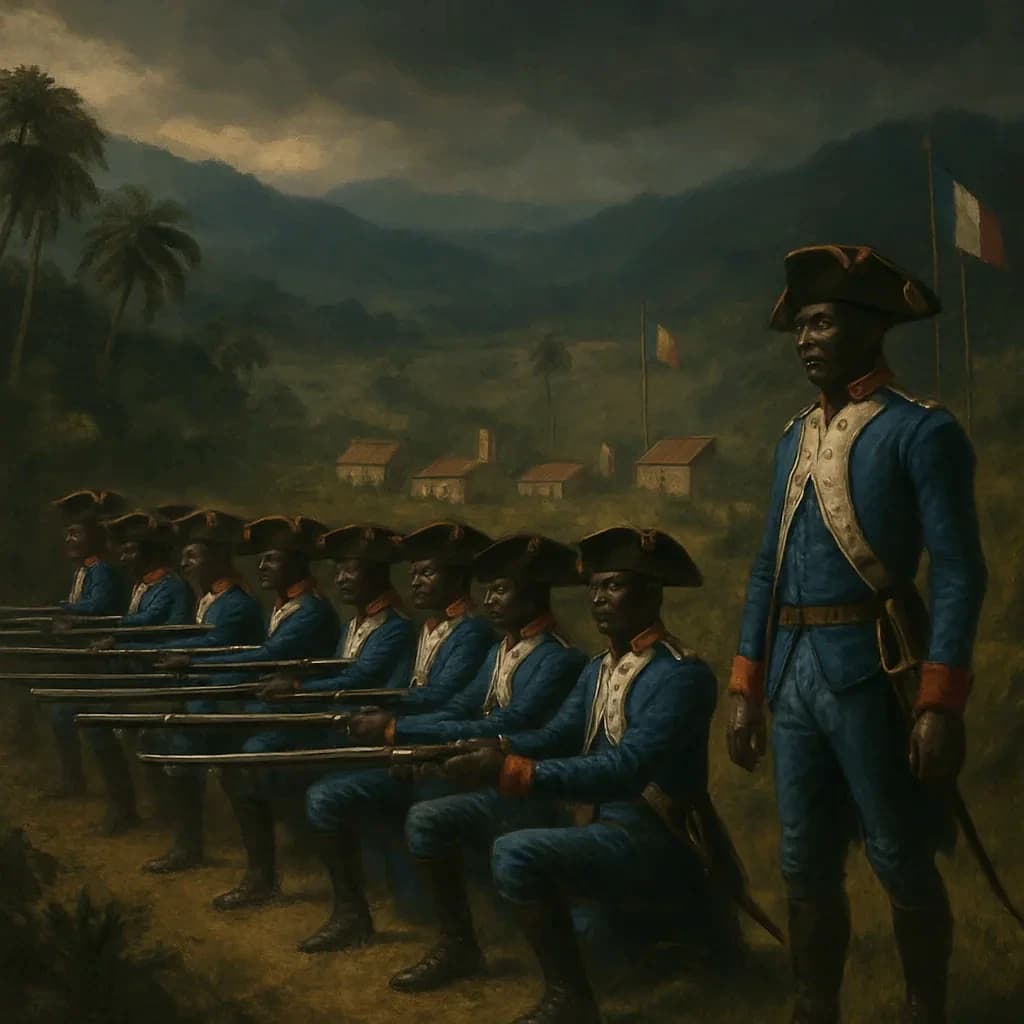
When Slaves Became Generals
A sugar colony's kitchen workers became the most feared military commanders in the Caribbean, and every plantation owner in the Americas couldn't sleep at night.
- Girard, Philippe R. The Slaves Who Defeated Napoleon: Toussaint Louverture and the Haitian War of Independence. University of Alabama Press, 2011.
- Dubois, Laurent. Haiti: The Aftershocks of History. Metropolitan Books, 2012.
- Nicholls, David. From Dessalines to Duvalier: Race, Colour and National Independence in Haiti. Cambridge University Press, 1979.