
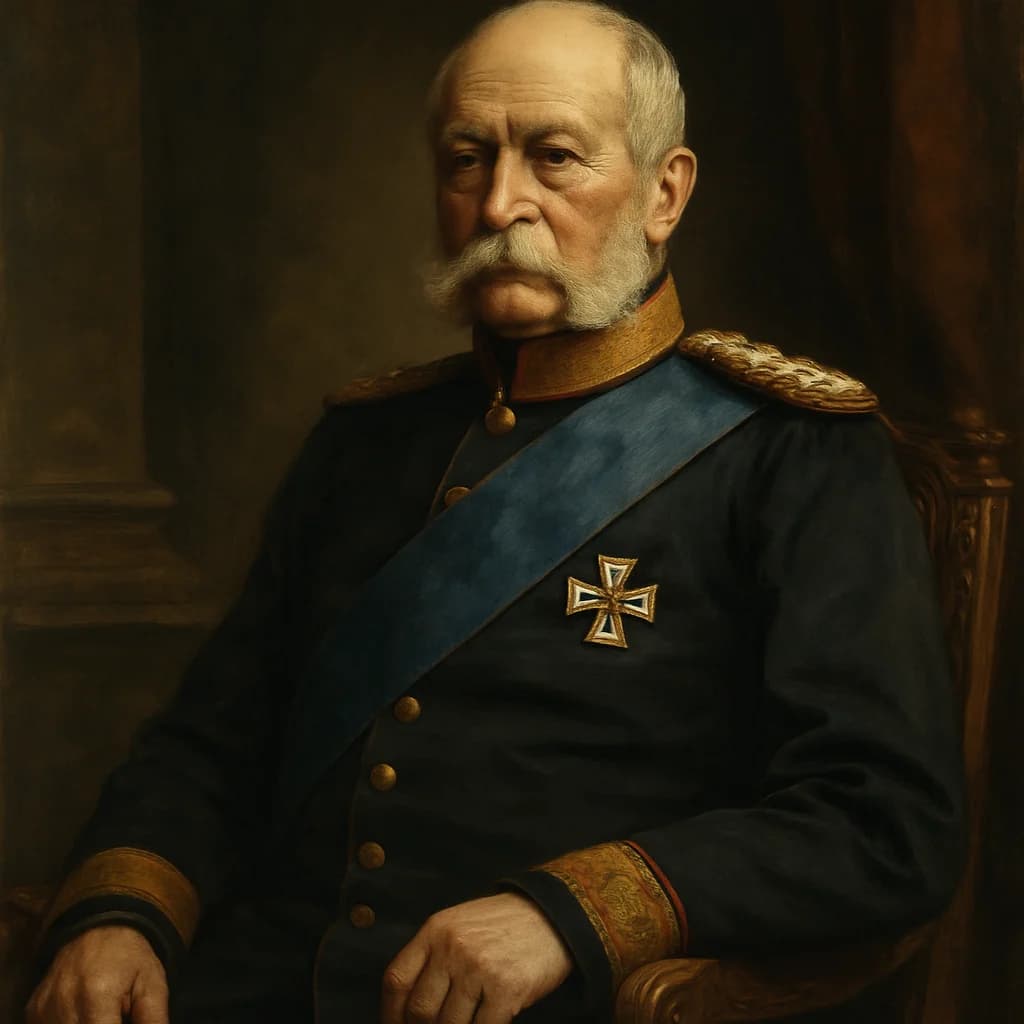
Kaiser Wilhelm I
He became the most powerful man in Europe largely by refusing to want the job.
Wilhelm I was crowned German Emperor on January 18, 1871, in the Hall of Mirrors at Versailles, a location chosen specifically to humiliate the French, whose palace it was, whose army had just surrendered, and whose emperor had fled. Wilhelm reportedly wept. Not from joy. He had wanted to be King of Prussia, a real place with a real history, and he was furious that Bismarck had maneuvered him into accepting a title that felt, to his mind, dangerously abstract. He called the day of his coronation the unhappiest of his life. This was, in its way, a very Wilhelmine response to an extraordinary moment.
Before there was a German Empire, there was a man who had spent decades being consistently underestimated. Wilhelm was born in 1797, the second son of a Prussian king, which meant he was raised for military service rather than political power. He spent his early career as a soldier and a reactionary: so reactionary, in fact, that the 1848 revolutions forced him to flee Berlin disguised as a civilian, crossing into England under a false name while his subjects cheered his departure. They called him the 'Cartridge Prince' for his eagerness to shoot protesters. He was not beloved. He was not subtle. He was not, most people assumed, particularly important.
What they missed was his discipline. Wilhelm returned from exile, outlasted the revolutionary fervor, and became regent in 1858 when his brother's health collapsed. He then did something his contemporaries found baffling: he appointed Otto von Bismarck as Minister-President and actually let him govern. Not because Wilhelm was weak, but because he understood, with unusual clarity, the difference between authority and competence. He argued with Bismarck constantly, threatened to abdicate at least twice, and occasionally had to be physically talked down from overruling him. Then he signed the orders anyway. Three wars in seven years (against Denmark in 1864, Austria in 1866, France in 1870) and Germany existed where nothing had before.
He survived two assassination attempts in 1878 alone, both within three months of each other. The second, by Karl Nobiling, left him so badly wounded that Bismarck governed almost unilaterally for months. Wilhelm was 80 years old. He recovered, returned to his desk, and lived another decade. He died in March 1888, ninety years old, still signing documents. Germany had existed for seventeen years. It would take only another fifty-seven to cease existing again.
Wilhelm I was the last Prussian king to personally lead troops in battle. He was present on horseback at the Battle of Königgrätz in 1866, at the age of sixty-eight, while Bismarck reportedly spent part of the engagement trying to stop him from riding into artillery range.
Why untold: Wilhelm I has been so completely overshadowed by Bismarck's political genius and his grandson Wilhelm II's catastrophic legacy that the man who actually held the pen (and knew exactly what he was signing) has been reduced to a ceremonial prop in other people's stories.
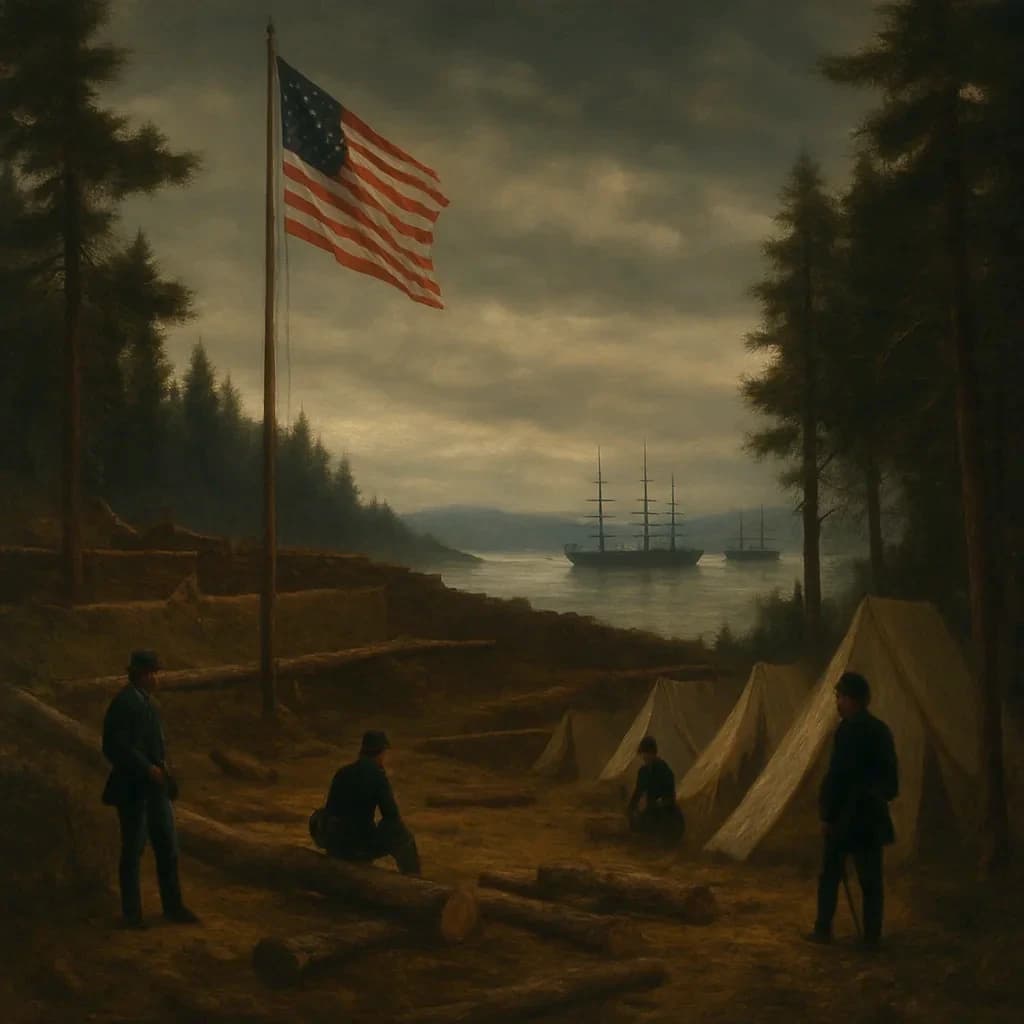
A Dead Pig Almost Started a US-British War
A border line drawn slightly wrong on an 1846 map triggered a war between Britain and the United States that almost nobody remembers nearly happened.
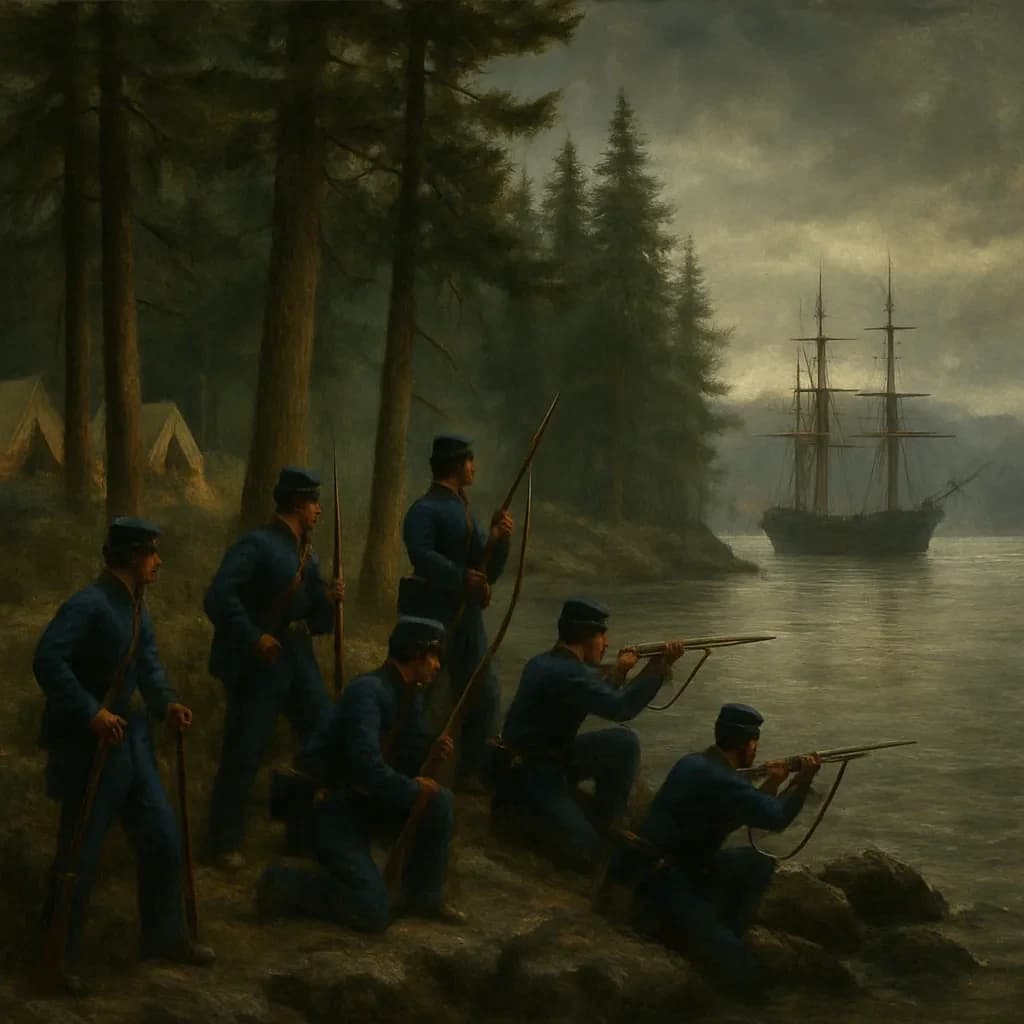
Pig War: The US and Britain's Bacon Standoff
A farmer's bullet kills a pig and nearly drags Britain and America into war: sixty thousand troops squaring off over bacon.
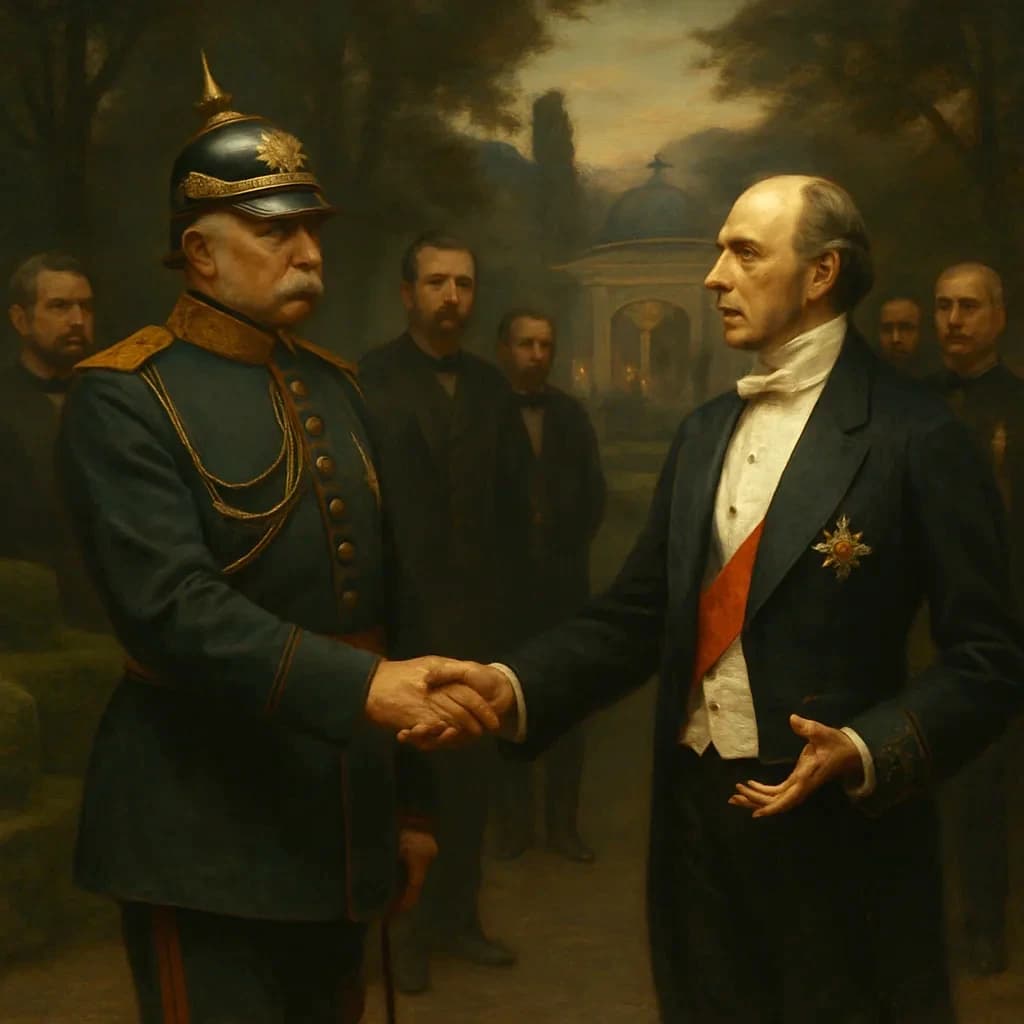
Seven Seconds of Hesitation Decided Whether Germany Would Exist
A French diplomat's hesitation during a single handshake would determine whether Germany existed at all.
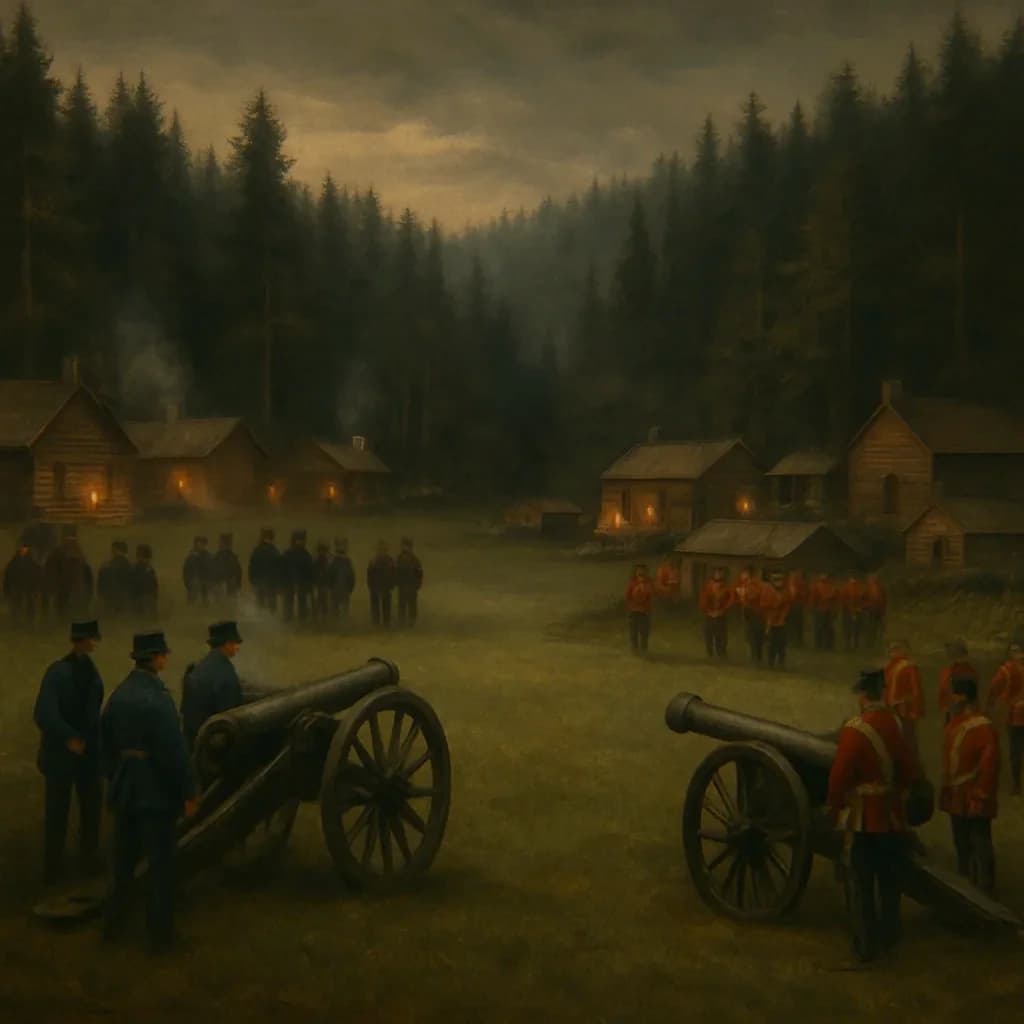
A Pig in a Potato Field Nearly Started a War
In 1859, a pig wandering through a potato field nearly triggered a military confrontation between Britain and America that could have rewritten the Civil War.
- Röhl, John C. G. Wilhelm II: The Kaiser's Personal Monarchy, 1888-1900. Cambridge University Press, 2004.
- Steinberg, Jonathan. Bismarck: A Life. Oxford University Press, 2011.
- Clark, Christopher. Iron Kingdom: The Rise and Downfall of Prussia, 1600-1947. Harvard University Press, 2006.