
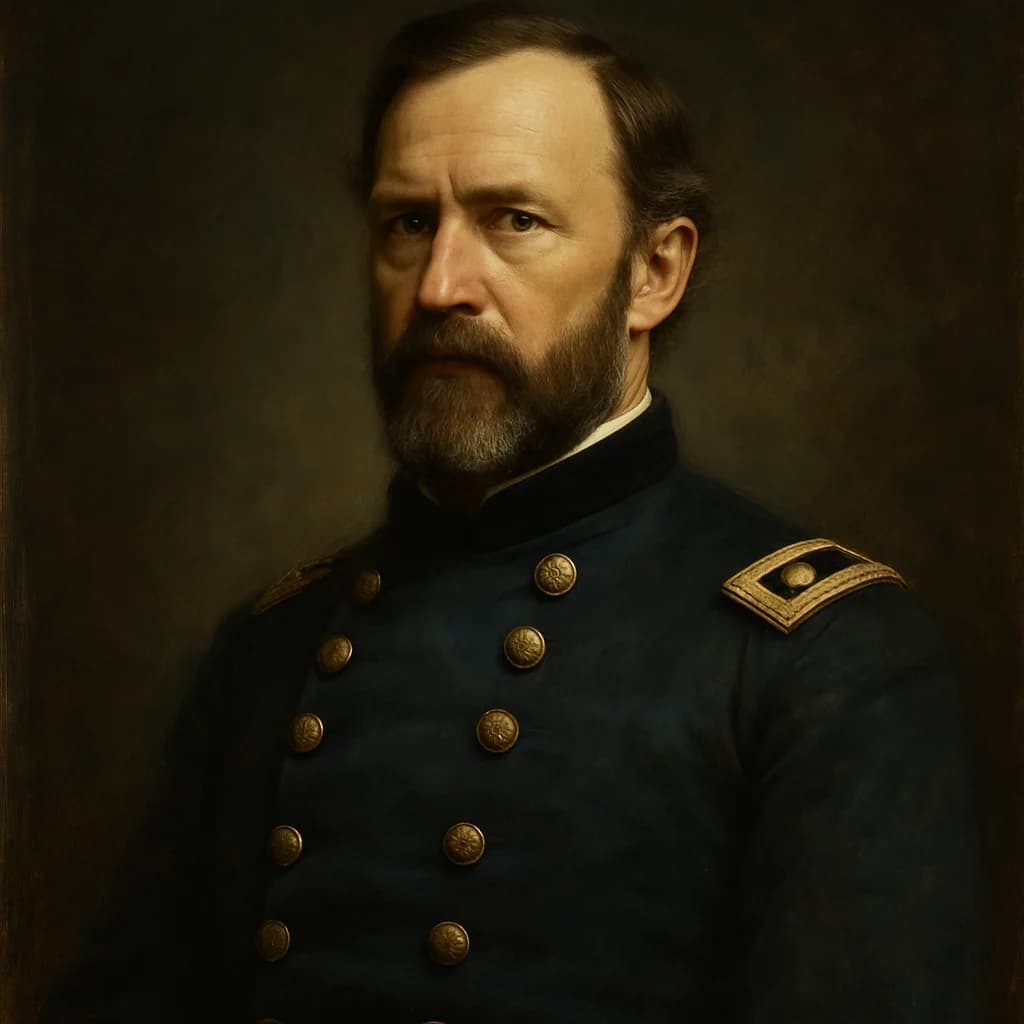
Charles Griffin
He spent the Civil War winning battles, but his most consequential military standoff involved no enemy soldiers, just a dead pig and a very embarrassed British governor.
Charles Griffin arrived on San Juan Island in July 1859 as a captain commanding a company of U.S. Army artillery, dispatched to protect American settlers after Lyman Cutlar shot a Hudson's Bay Company pig that had been rooting through his garden. The British, who also claimed the island under the still-unresolved Oregon Treaty boundary, responded by sending warships. Griffin's orders were to hold his ground. What his superiors in Washington hadn't quite anticipated was that he would do exactly that, coolly, stubbornly, and with a talent for manufactured calm that kept the whole absurd situation from becoming a shooting war.
What gets lost in the pig story is who Griffin became afterward. When the Civil War erupted, he transferred his composure from island diplomacy to Virginia killing fields, and he was ferociously good at it. He rose to command the V Corps of the Army of the Potomac, a position of genuine strategic weight. At the Battle of White Oak Road in March 1865 (just weeks before Appomattox), Griffin's corps broke the Confederate right flank and opened the pursuit that ended the war. Phil Sheridan, not a man generous with credit, considered Griffin one of the most reliable commanders in the Union army. Grant agreed. When Sheridan was briefly relieved at Five Forks, Griffin was handed command on the spot.
He died in 1867, two years after the war, of yellow fever in Galveston while serving as commander of the Department of Texas during Reconstruction. He was forty-one. The timing was brutal: he had survived four years of industrial-scale combat only to be killed by a mosquito in a port city during peacetime. His Reconstruction work, which included pushing back against Texas's systematic disenfranchisement of Black citizens, died with him, replaced by commanders far less inclined to press the point.
History remembers the pig. It forgets the general who held the line at White Oak Road, who understood that Reconstruction required the same nerve as combat, and who ran out of time before he could prove it.
Griffin was so respected by his troops that when he died in Galveston, the officers of his command petitioned Congress to name a military installation in his honor, a petition that went nowhere, leaving him without even a fort to carry his name.
Why untold: Griffin's death at forty-one during Reconstruction, before he could build a postwar reputation, meant his legacy was frozen at the rank of footnote, overshadowed by the generals who lived long enough to write memoirs.
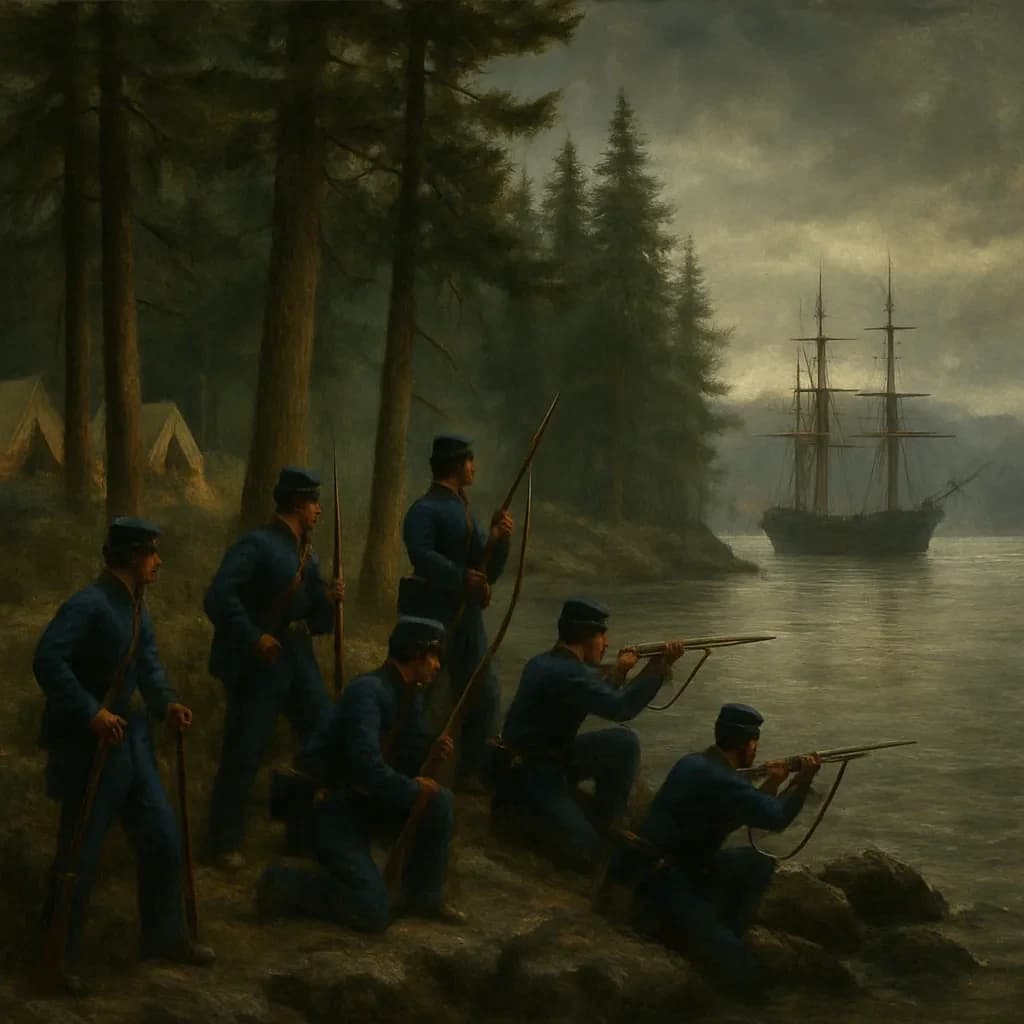
Pig War: The US and Britain's Bacon Standoff
A farmer's bullet kills a pig and nearly drags Britain and America into war: sixty thousand troops squaring off over bacon.
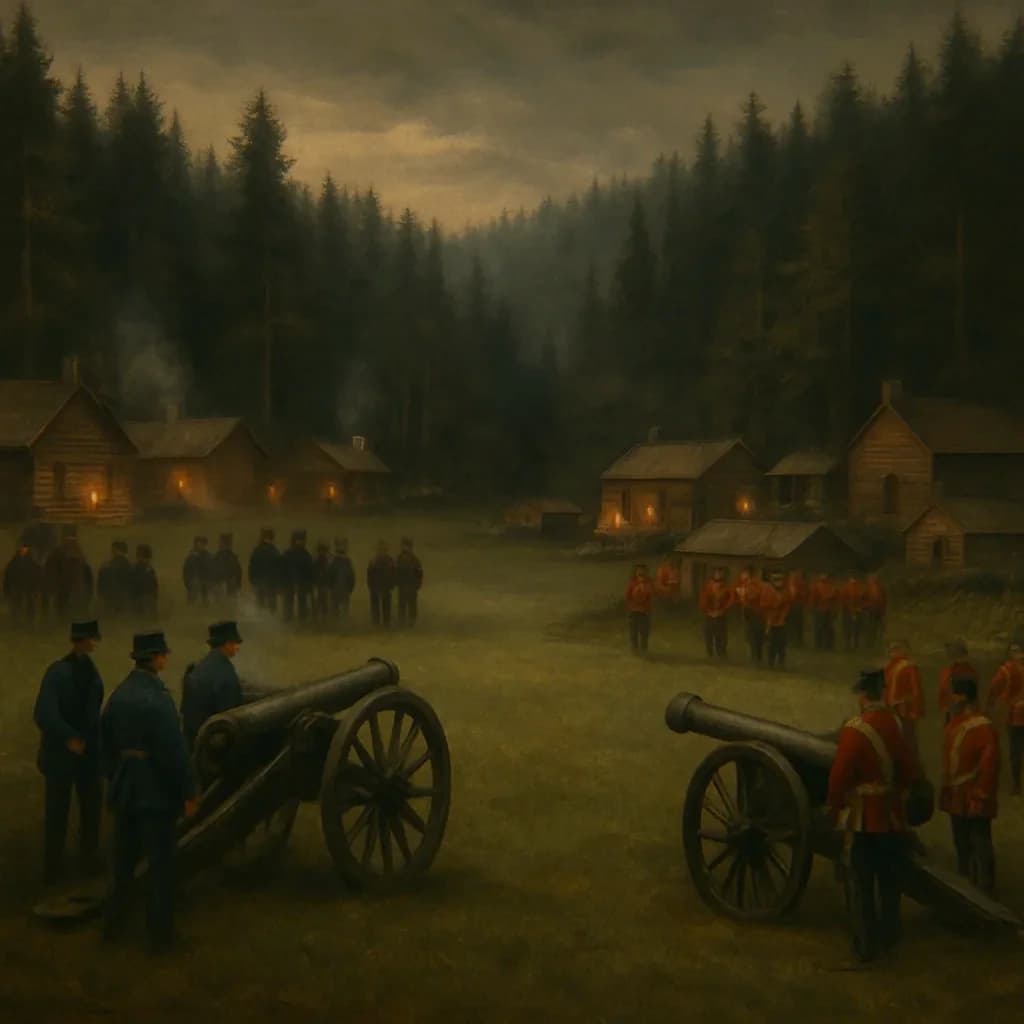
A Pig in a Potato Field Nearly Started a War
In 1859, a pig wandering through a potato field nearly triggered a military confrontation between Britain and America that could have rewritten the Civil War.
- Wert, Jeffry D. 'The Sword of Lincoln: The Army of the Potomac.' Simon & Schuster, 2005.
- Hubbs, G. Ward. 'Guarding Greensboro: A Confederate Company in the Making of a Southern Community.' University of Georgia Press, 2003.
- Vouri, Michael. 'The Pig War: Standoff at Griffin Bay.' Washington State Historical Society, 1999.