
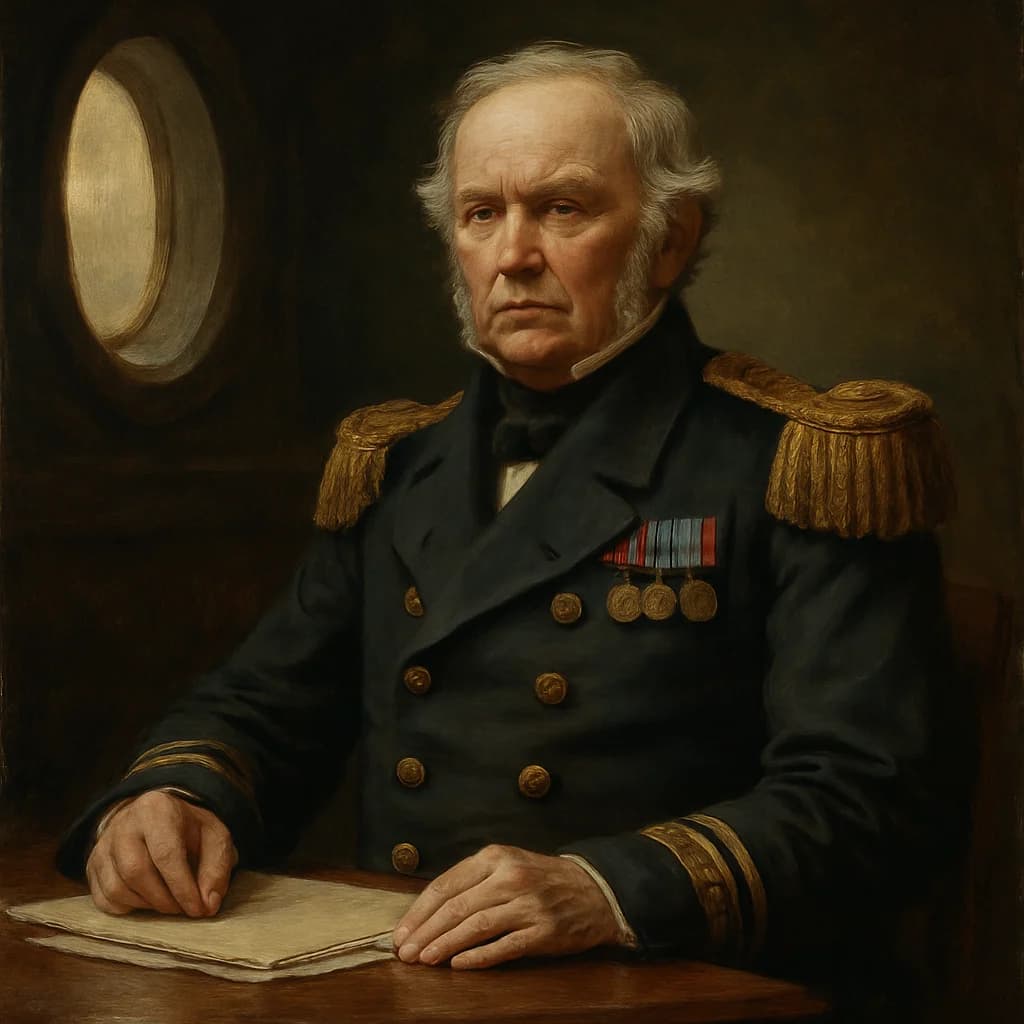
Geoffrey Phipps Hornby
He was handed a war on a silver platter and had the nerve to put it back.
In August 1859, Rear Admiral Robert Baynes received orders from Governor James Douglas to land Royal Marines on San Juan Island and forcibly assert British sovereignty over the disputed waterway between Vancouver Island and the American mainland. A pig had been shot. An American farmer had shot it. The pig was British. Baynes read the orders, thought about them, and declined. Not formally. Not with a resignation. He simply looked at his superior and said he would not "involve two great nations in a war over a squabble about a pig."
This was not the behavior expected of a Victorian naval officer. Baynes was sixty-one years old, a veteran of the First Anglo-Afghan War, a man who had commanded ships in the Mediterranean and on the Pacific Station. He was not squeamish about conflict. He was, by temperament, a careful reader of situations, and what he read on San Juan Island in the summer of 1859 was a tinderbox being handed to junior officers on both sides, none of whom would benefit from being the man who accidentally started the war that halted American westward expansion or handed Britain a catastrophic mess three years before the Alabama Claims would already shred their credibility with the United States.
His counterpart, American Captain George Pickett (yes, that George Pickett, four years before Gettysburg) had landed sixty-six soldiers and planted a flag. Baynes arrived with five warships and roughly two thousand men. The math was not complicated. And yet Baynes held his position offshore, frustrated Douglas, and waited for cooler diplomacy to catch up with the moment. It did. The crisis resolved into a twelve-year joint military occupation so uneventful that the British and American soldiers eventually started playing cricket together.
Baynes retired in 1869, made full Admiral, and died in 1883. He received no particular monument for the war he didn't start. The history books, when they mention him at all, footnote him as the man who refused an order. They mean it as a detail. It wasn't.
The joint military occupation of San Juan Island that followed Baynes's restraint lasted from 1859 to 1872 (longer than the American Civil War) and ended only after Kaiser Wilhelm I of Germany arbitrated the boundary dispute in America's favor.
Why untold: History has a structural bias toward recording what happened rather than what didn't, which means the men who prevented catastrophes by doing nothing leave almost no archival trail.
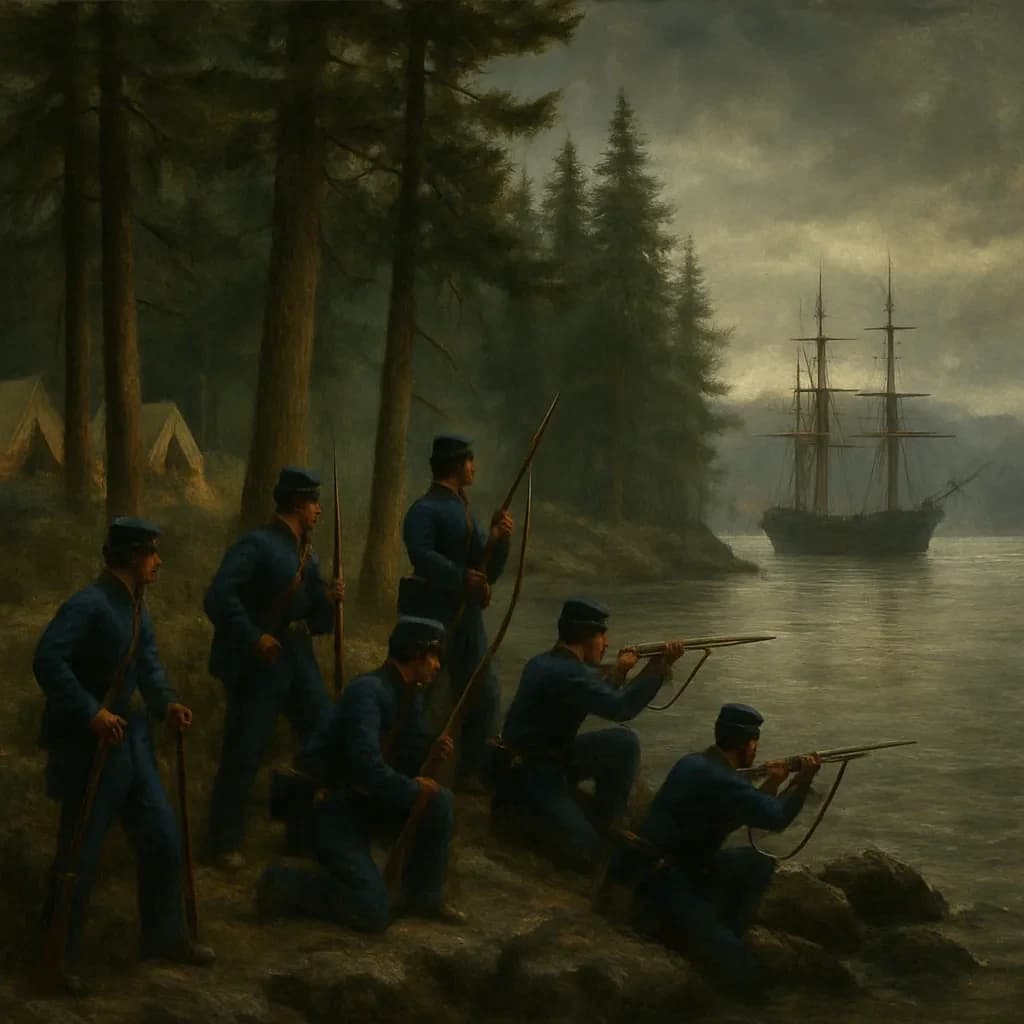
Pig War: The US and Britain's Bacon Standoff
A farmer's bullet kills a pig and nearly drags Britain and America into war: sixty thousand troops squaring off over bacon.
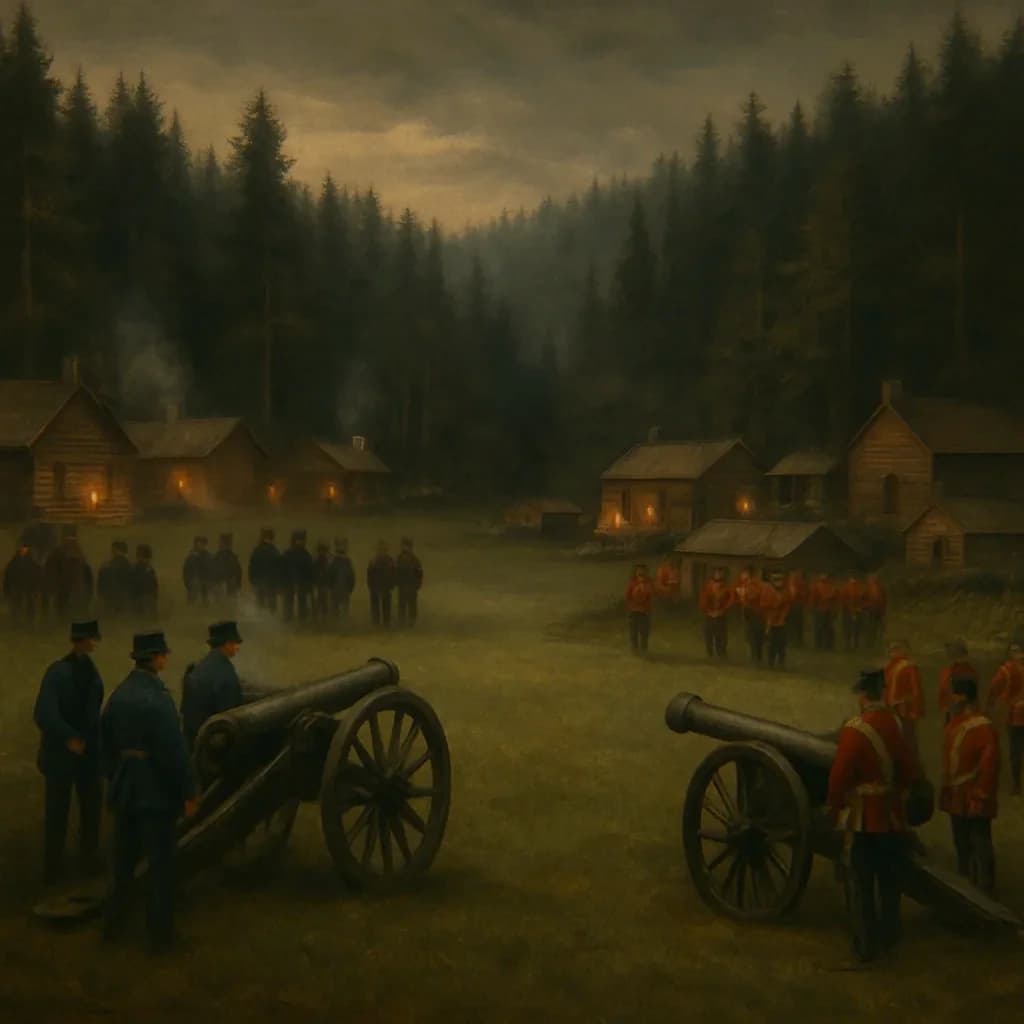
A Pig in a Potato Field Nearly Started a War
In 1859, a pig wandering through a potato field nearly triggered a military confrontation between Britain and America that could have rewritten the Civil War.
- Cosmas, Graham A. 'The Pig War: A Crisis Averted.' Military Affairs 30, no. 3 (1966): 124-130.
- Vouri, Mike. The Pig War: Standoff at Griffin Bay. Seattle: Northwest Interpretive Association, 1999.
- Lamb, W. Kaye. 'Baynes, Robert Lambert.' Dictionary of Canadian Biography, vol. 11. University of Toronto Press, 1982.