
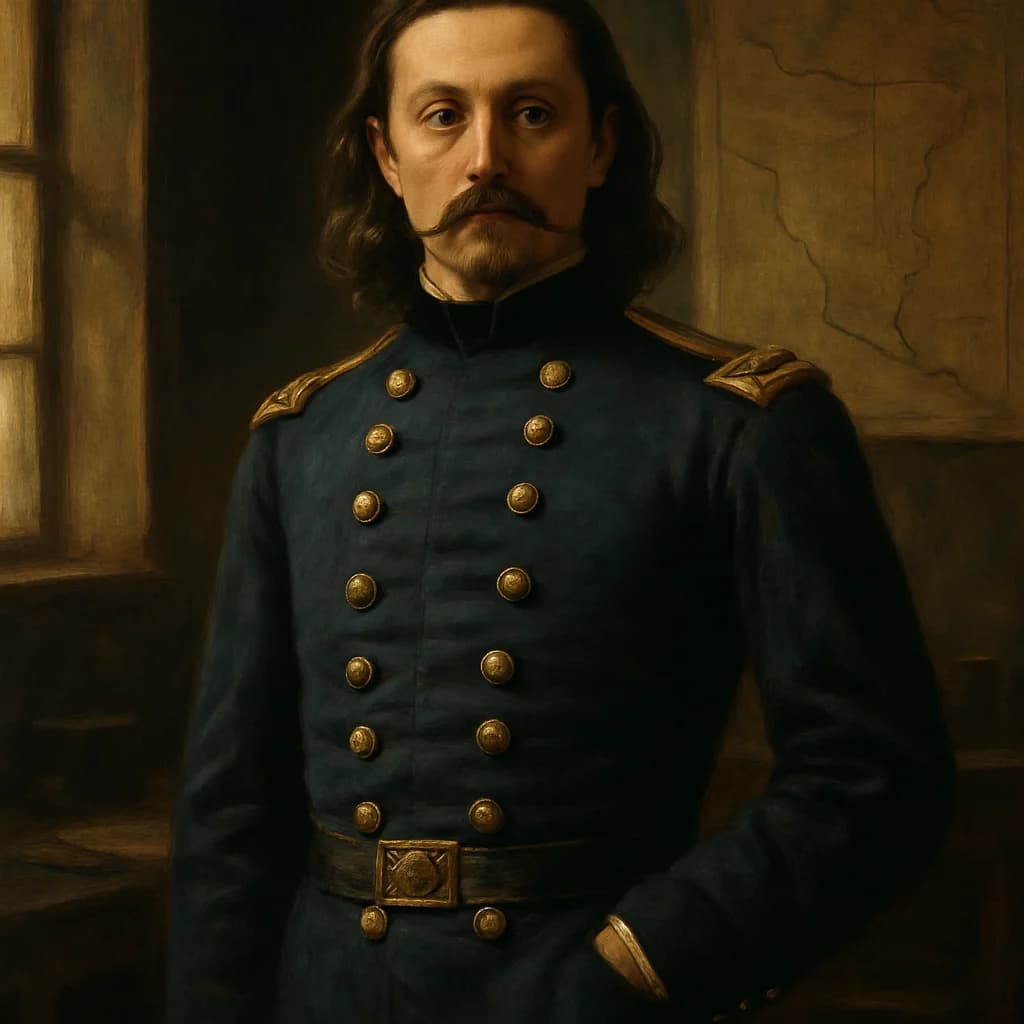
George Pickett
The man history remembers for a catastrophic charge up a hill once stood between two empires squabbling over a dead pig, and somehow made it worse.
George Pickett's name lives in a single afternoon: July 3, 1863, Cemetery Ridge, the high-water mark of the Confederacy. Thirteen thousand men, fifteen minutes, sixty percent casualties. History swallowed him whole inside that charge. Which means almost nobody knows what he was doing in the years just before the war, on a remote island in the Pacific Northwest, accidentally bringing Britain and America to the edge of military confrontation over livestock.
In 1859, Pickett was a captain stationed at Fort Bellingham in Washington Territory, restless, underemployed, and professionally unremarkable. When a Hudson's Bay Company pig rooted through an American settler's potato garden on San Juan Island and was shot dead for its trouble, the diplomatic crisis that followed landed squarely in Pickett's lap. He was ordered to occupy the island with sixty men. The British responded by sailing in three warships. Then five. Then a full naval squadron carrying over two thousand troops. Pickett, outnumbered and outgunned, refused to budge. He issued a proclamation declaring San Juan Island American soil and announced, with the specific confidence of a man who hadn't thought it all the way through, that he would defend it against any force. His commanding officer, General William Harney, had authorized the whole escalation without telling Washington. President Buchanan was furious. London was furious. Winfield Scott had to sail personally from the East Coast to de-escalate a situation one junior officer had almost turned into a war.
The crisis resolved into a joint military occupation that lasted twelve years, a genuinely strange arrangement where American and British soldiers shared the island, held joint Fourth of July celebrations, and apparently got along fine. Pickett left before any of that. He resigned his commission in 1861 and went south to join the Confederacy, which is when history decided he became interesting.
But the San Juan episode reveals something the Gettysburg mythology buries entirely: Pickett as a man perpetually placed at the hinge point of enormous events he was not quite equipped to manage. He didn't start the Pig War and he didn't win Pickett's Charge. What he did, both times, was show up, hold his ground past the point of reason, and let consequences detonate around him.
Pickett graduated last in his West Point class of 1846 (fifty-ninth out of fifty-nine), a distinction previously held by his close friend George McClellan, who had graduated second.
Why untold: The gravitational pull of Pickett's Charge is so total that everything before July 3, 1863 collapses into prelude, leaving his earlier career (including a near-war with Britain) effectively invisible.
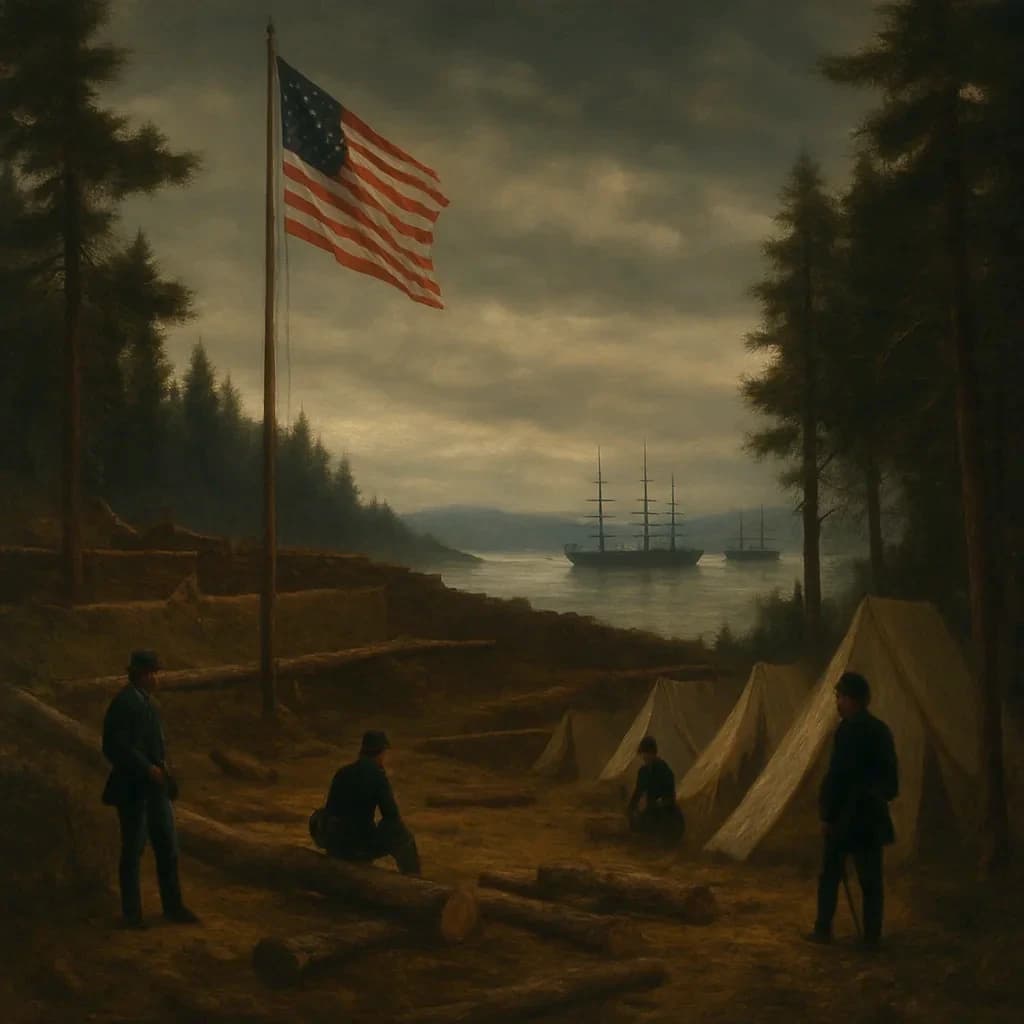
A Dead Pig Almost Started a US-British War
A border line drawn slightly wrong on an 1846 map triggered a war between Britain and the United States that almost nobody remembers nearly happened.
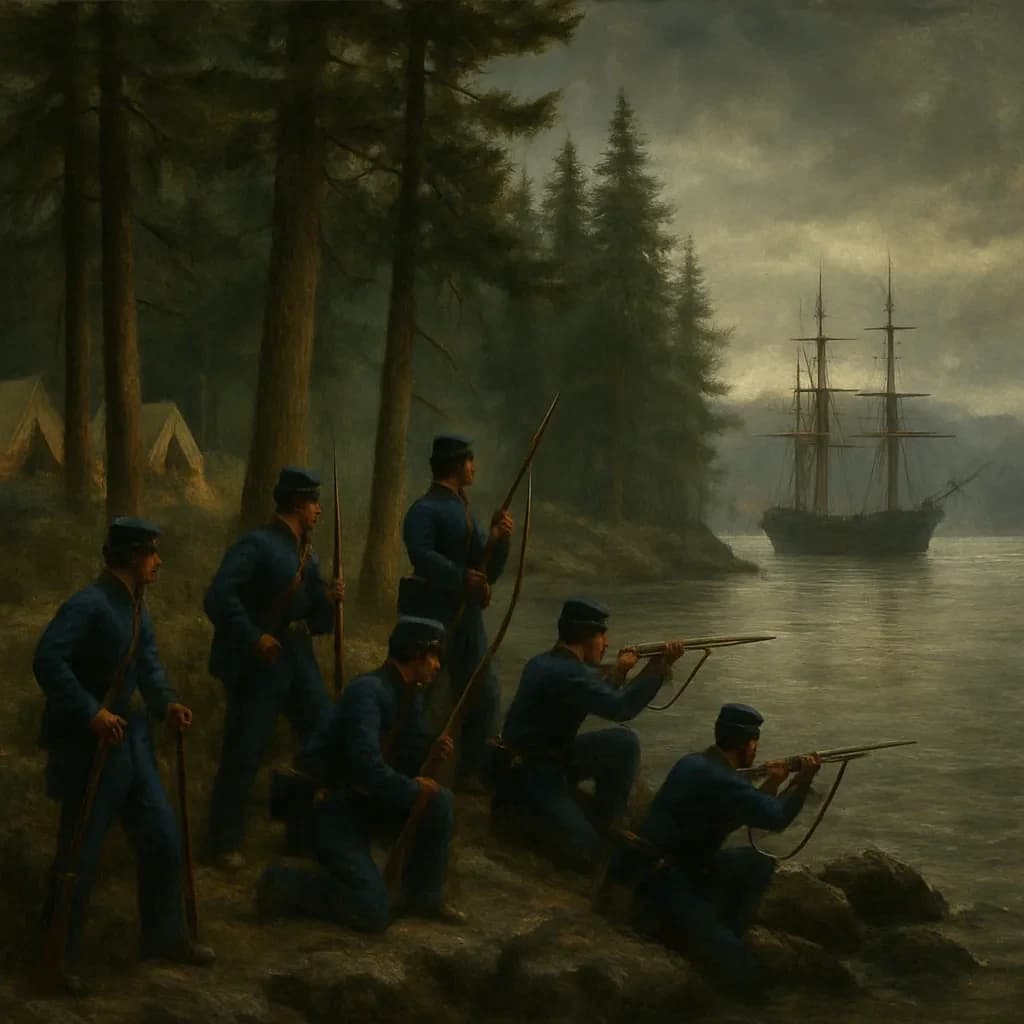
Pig War: The US and Britain's Bacon Standoff
A farmer's bullet kills a pig and nearly drags Britain and America into war: sixty thousand troops squaring off over bacon.
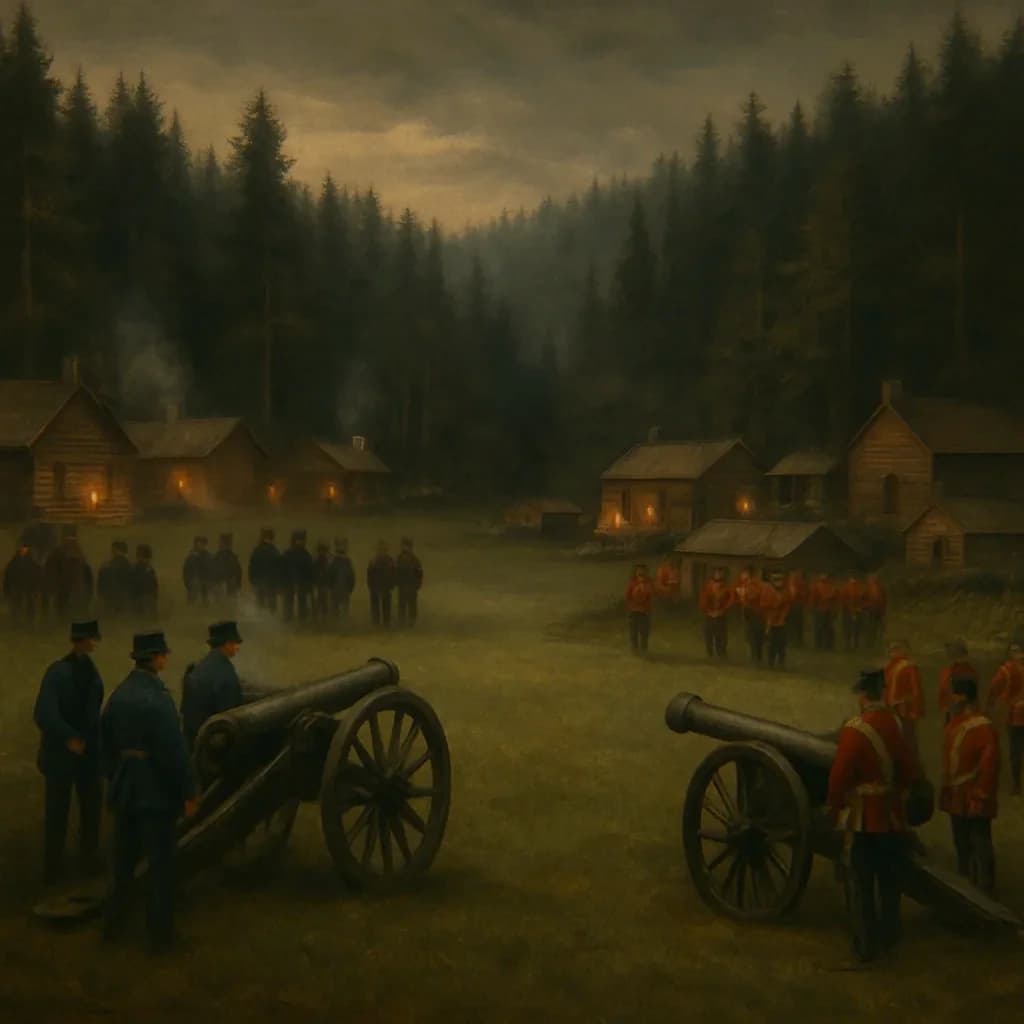
A Pig in a Potato Field Nearly Started a War
In 1859, a pig wandering through a potato field nearly triggered a military confrontation between Britain and America that could have rewritten the Civil War.
- E. Kimbark MacColl, 'The Pig War: The Last Canada-US Border Conflict,' Oregon Historical Quarterly, 1968
- Gary Adkison, 'Pickett: The Man Behind the Charge' (2019)
- Mike Vouri, 'The Pig War: Standoff at Griffin Bay' (2009), Washington State Historical Society