
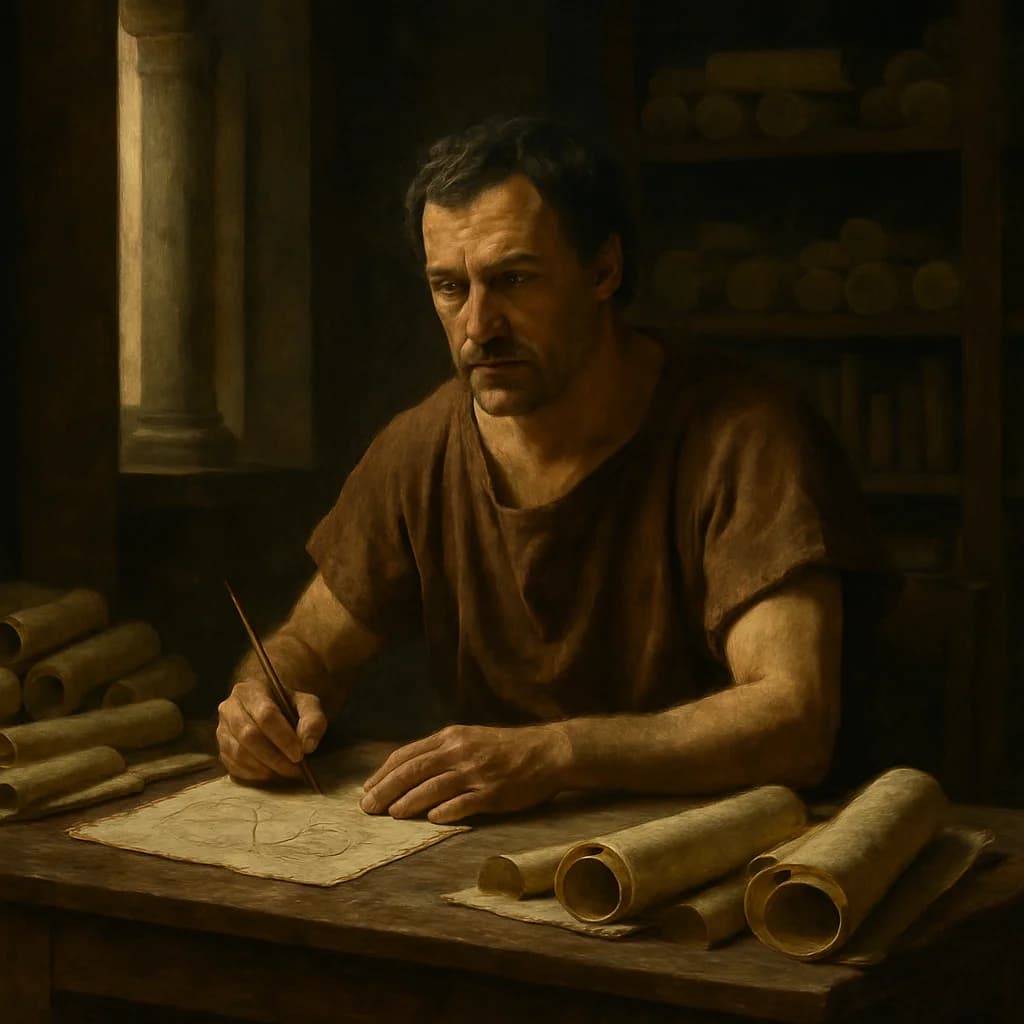
Theon
The father of mathematical commentary spent his final years teaching students who would scatter his work across three continents before the library that housed it disappeared forever.
Theon of Alexandria was the last great mathematician of the ancient world, but his true genius lay not in discovery but in preservation. While the Roman Empire convulsed around him in the 4th century, he quietly revolutionized how mathematics was taught by writing the first comprehensive commentaries on Euclid's Elements, annotations so thorough that they became the standard text for over a millennium.
Born around 335 AD into a world where Christianity was rapidly displacing pagan learning, Theon made a calculated bet on survival. Rather than clash with the new religious order, he focused on making mathematical knowledge accessible. His commentaries didn't just explain Euclid's proofs; they filled in every logical gap, added alternative solutions, and included practical applications. He transformed abstract geometry into something students could actually learn.
But Theon's most consequential decision was educational, not mathematical. He trained his daughter Hypatia in advanced mathematics and astronomy, making her the first woman recorded as teaching these subjects publicly. When she began lecturing in Alexandria around 390 AD, she carried forward not just his knowledge but his teaching methods. Through her, Theon's pedagogical innovations reached students who would later establish schools in Constantinople, Damascus, and Baghdad.
The bitter irony is that Theon died around 405 AD, just as Alexandria's intellectual community was fragmenting. His carefully preserved manuscripts survived the immediate chaos, but within decades, scholars were fleeing to other cities, taking copies of his work with them. The man who spent his life making knowledge permanent became the inadvertent agent of its dispersal, ensuring that when Alexandria's libraries finally emptied, his mathematical legacy had already taken root elsewhere.
Theon's commentary on Euclid's Elements was so influential that for nearly 1,500 years, most people studying geometry were actually reading Theon's version, not Euclid's original text.
Why untold: His role as a mathematical educator is overshadowed by his daughter Hypatia's more dramatic fate and the general narrative of Alexandria's decline.
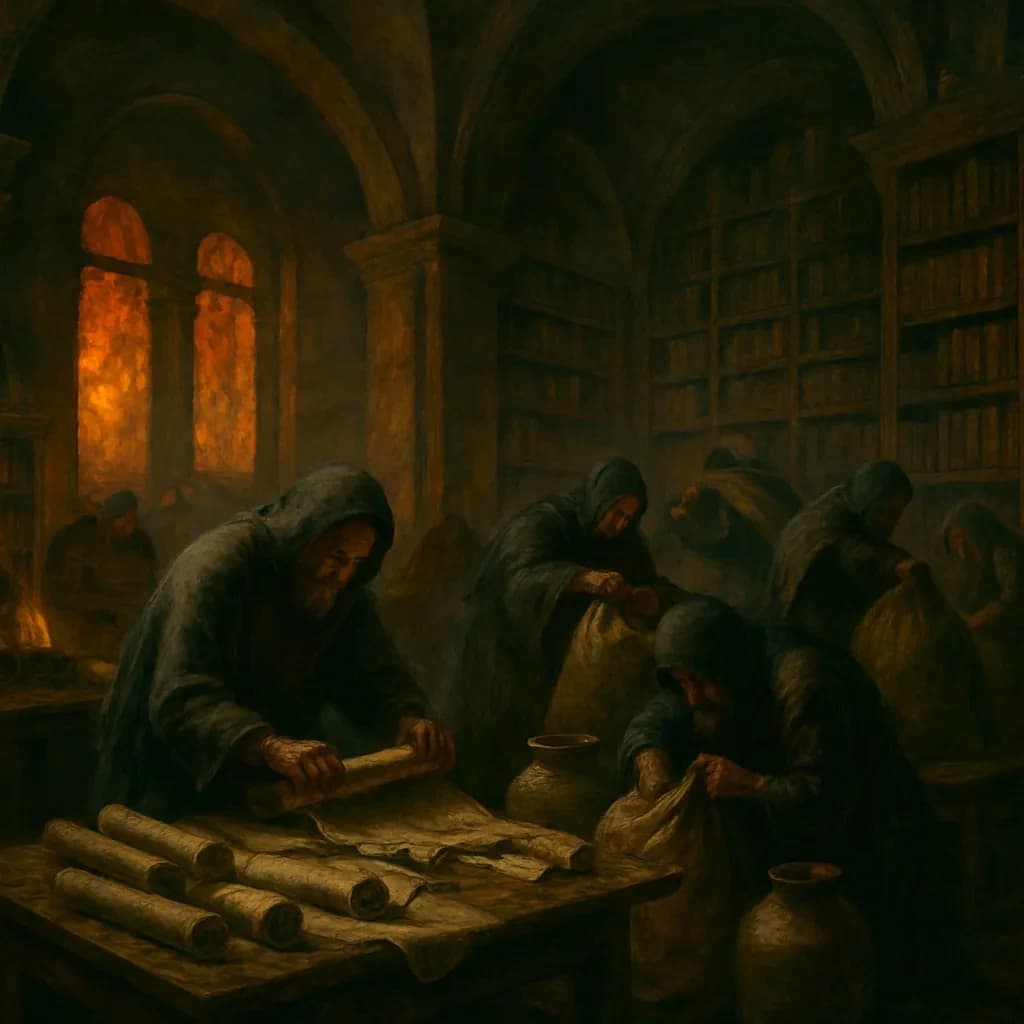
The Librarian Who Faked Alexandria's Destruction
A librarian saved thousands of ancient texts in 391 CE by convincing a mob they had already burned.
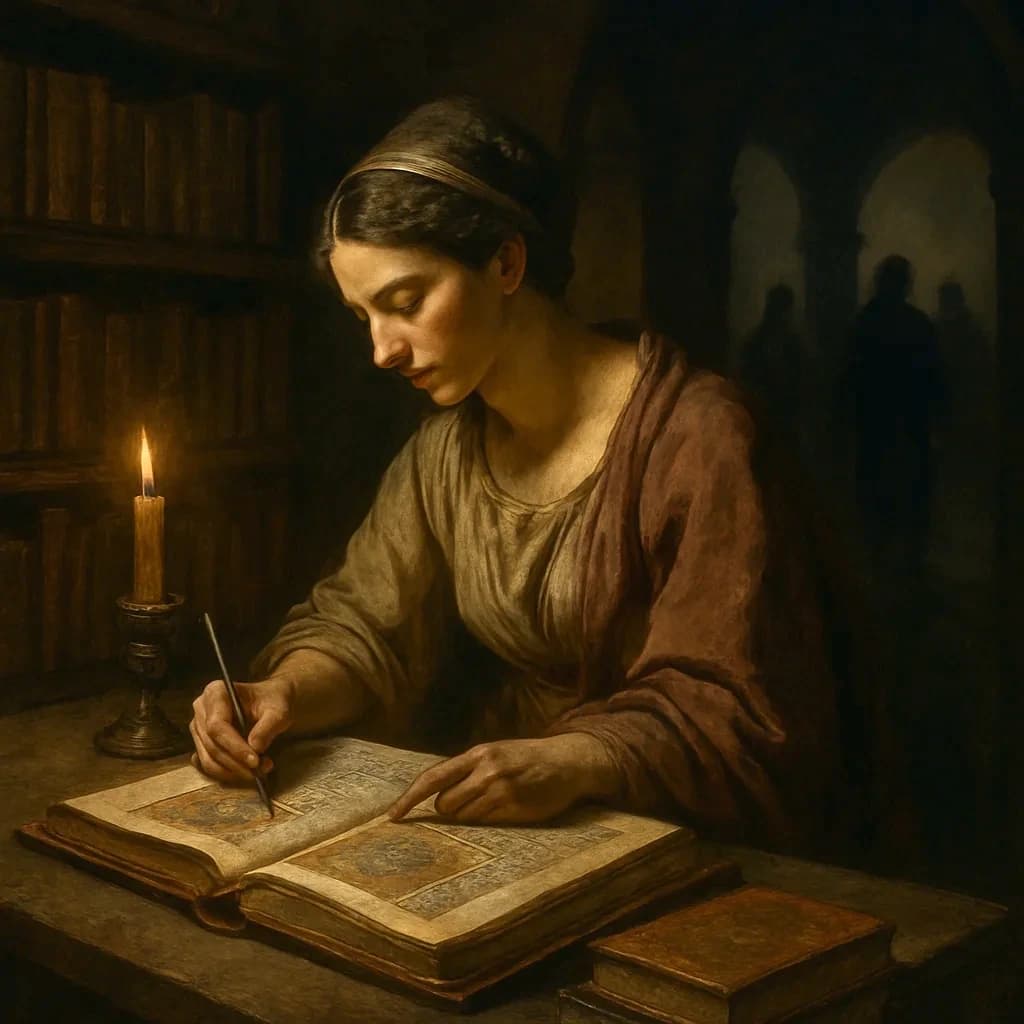
She Hid Greek Math Inside Christian Prayer Books
The last candle flickered in Alexandria's library, and a Roman mathematician kept copying equations no one would understand for another thousand years.
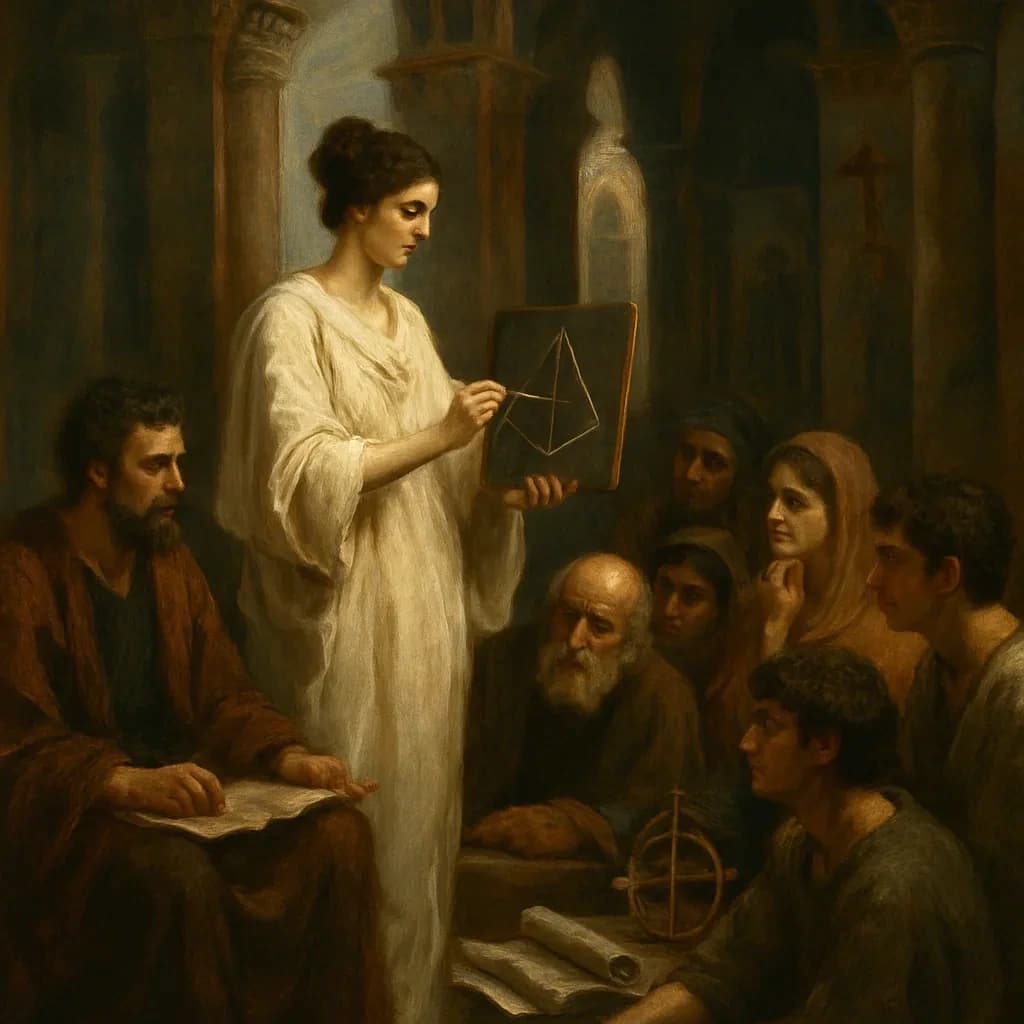
When Alexandria Murdered Its Last Mathematician
A pagan mathematician stood between Christianity and the last great library of the ancient world in 391 AD.
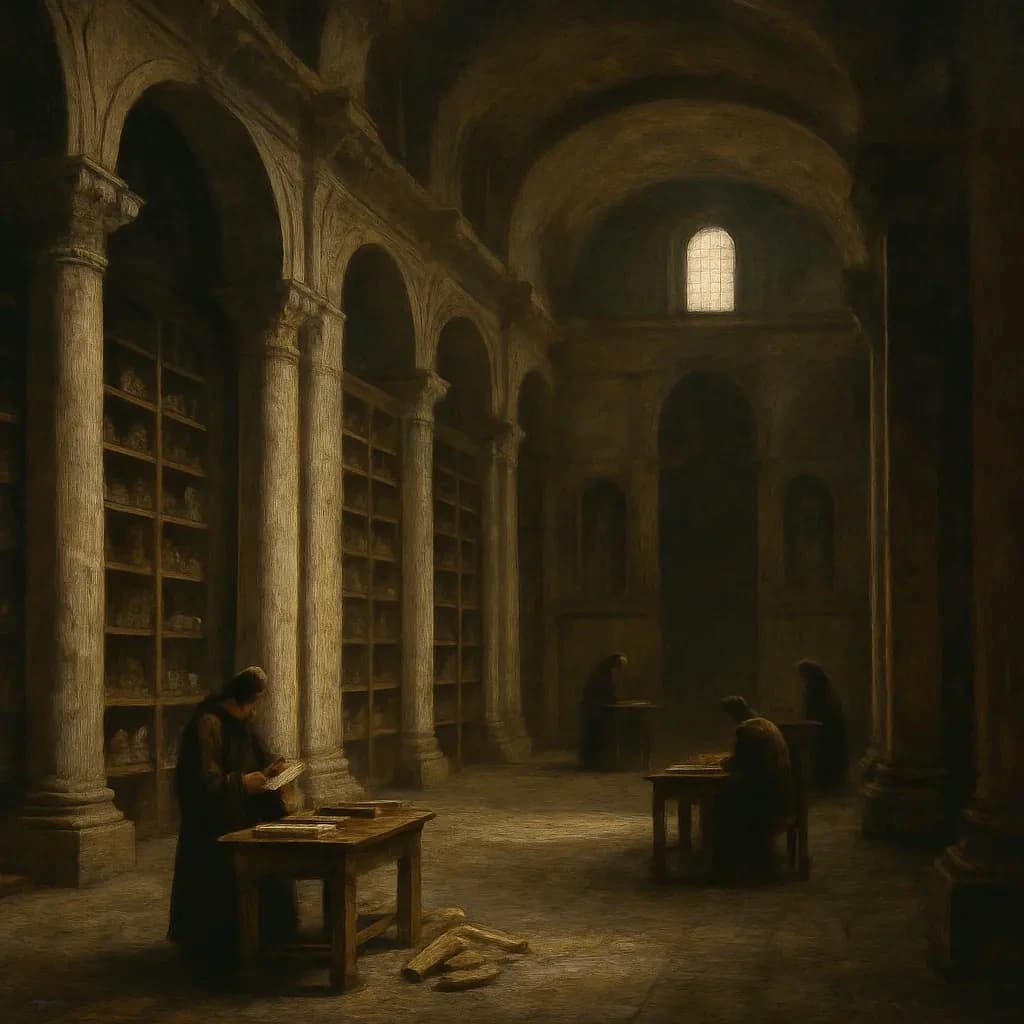
Budget Cuts Killed the Library of Alexandria
Alexandria's Great Library didn't die in one dramatic fire. It slowly bled to death over seven centuries while everyone argued about who killed it.
- Heath, T.L. 'A History of Greek Mathematics, Volume 2' (1921)
- Cameron, Alan 'Hypatia: Life, Death, and Works' in 'Wandering Poets and Other Essays on Late Greek Literature and Philosophy' (2016)
- Cuomo, Serafina 'Ancient Mathematics' (2001)