
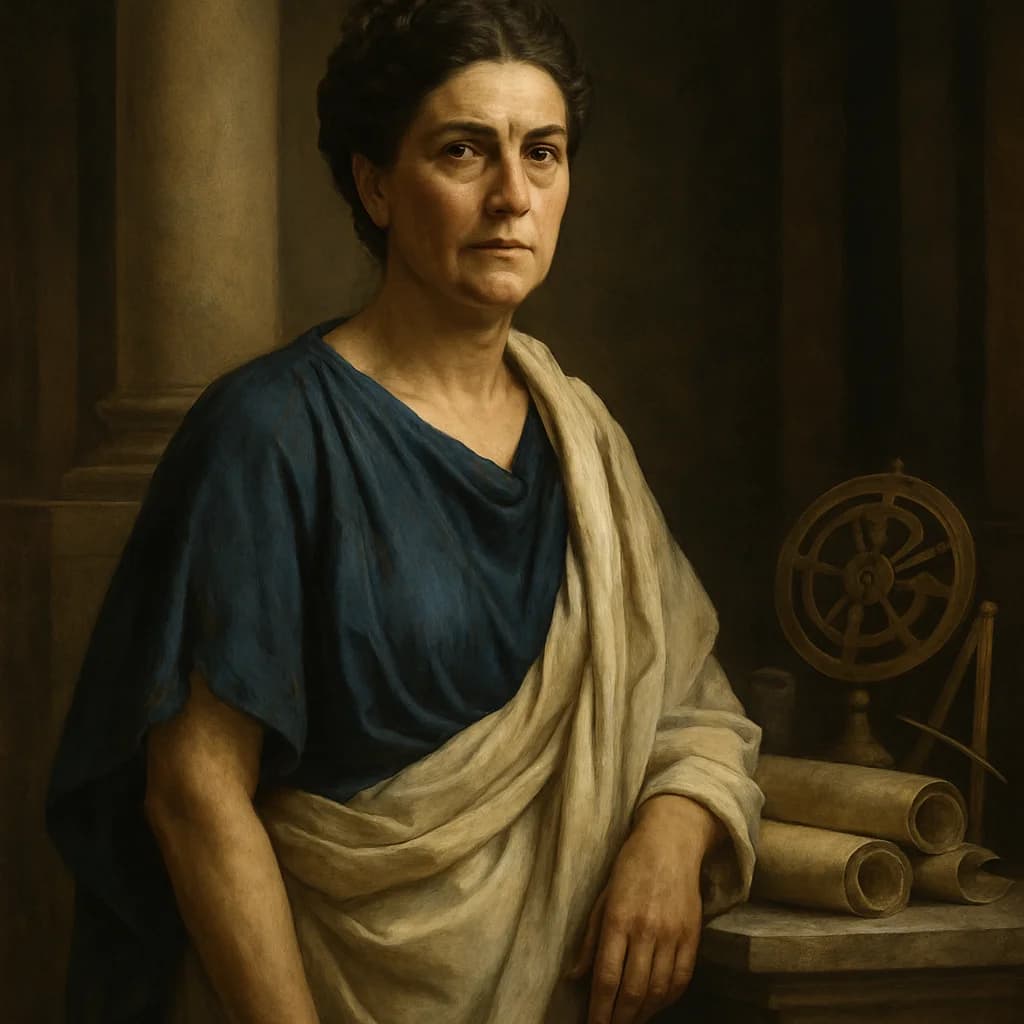
Hypatia
The woman who invented the astrolabe was torn apart by monks wielding oyster shells in the streets of Alexandria.
Hypatia of Alexandria solved mathematical equations while the Roman Empire crumbled around her, but her real genius lay in surviving as a pagan intellectual in an increasingly Christian world, until she didn't. Born around 350 AD to the mathematician Theon, she inherited not just his love of numbers but his position as head of Alexandria's Neoplatonic school, making her one of the most powerful academic figures in the late ancient world.
She didn't just teach mathematics and astronomy; she improved the astrolabe, created a more efficient distillation apparatus, and wrote commentaries on Apollonius and Diophantus that scholars would reference for centuries. But Hypatia's true innovation was political: she became the unofficial advisor to Orestes, the Roman prefect of Alexandria, navigating the deadly intersection of imperial politics, religious warfare, and academic freedom. Students traveled from across the Mediterranean to hear her lectures, and she maintained friendships with Christians despite being a prominent pagan, a remarkable feat in a city where religious riots were as common as morning bread.
Her downfall came through proximity to power, not ideology. In 415 AD, tensions between Orestes and Cyril, Alexandria's patriarch, exploded into open conflict. Hypatia, as Orestes' advisor, became the symbol of pagan influence over Christian governance. A mob of parabalani (Cyril's militant monks) dragged her from her chariot, stripped her naked, and flayed her alive with pottery shards and oyster shells before burning her remains. She was roughly sixty-five years old.
The murder shocked even Alexandria, a city accustomed to violence. But Hypatia's death marked more than the end of one brilliant mind. It signaled the final collapse of Alexandria's ancient intellectual tradition, the last gasp of a world where philosophy and mathematics could transcend religious boundaries.
Hypatia invented an improved astrolabe and a device for distilling water that was so advanced it wasn't surpassed until the Renaissance, yet none of her mathematical writings survive, only references to them by later scholars.
Why untold: Her mathematical and scientific innovations were overshadowed by the sensational story of her martyrdom, reducing a pioneering scholar to a symbol of religious conflict.
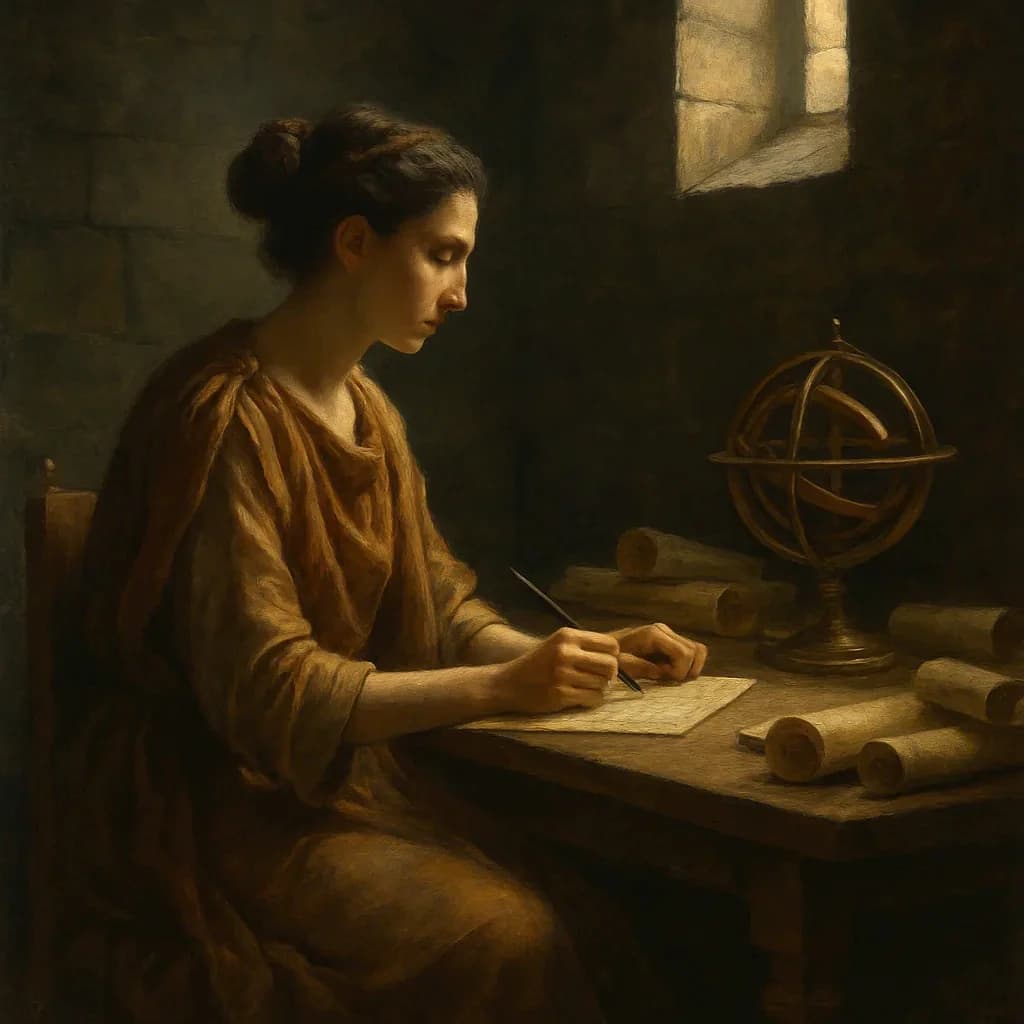
A Bishop's Power Struggle Killed Alexandria's Greatest Teacher
A mob hunting a governor found a philosopher instead, and what happened next erased centuries of accumulated knowledge from the Western world.
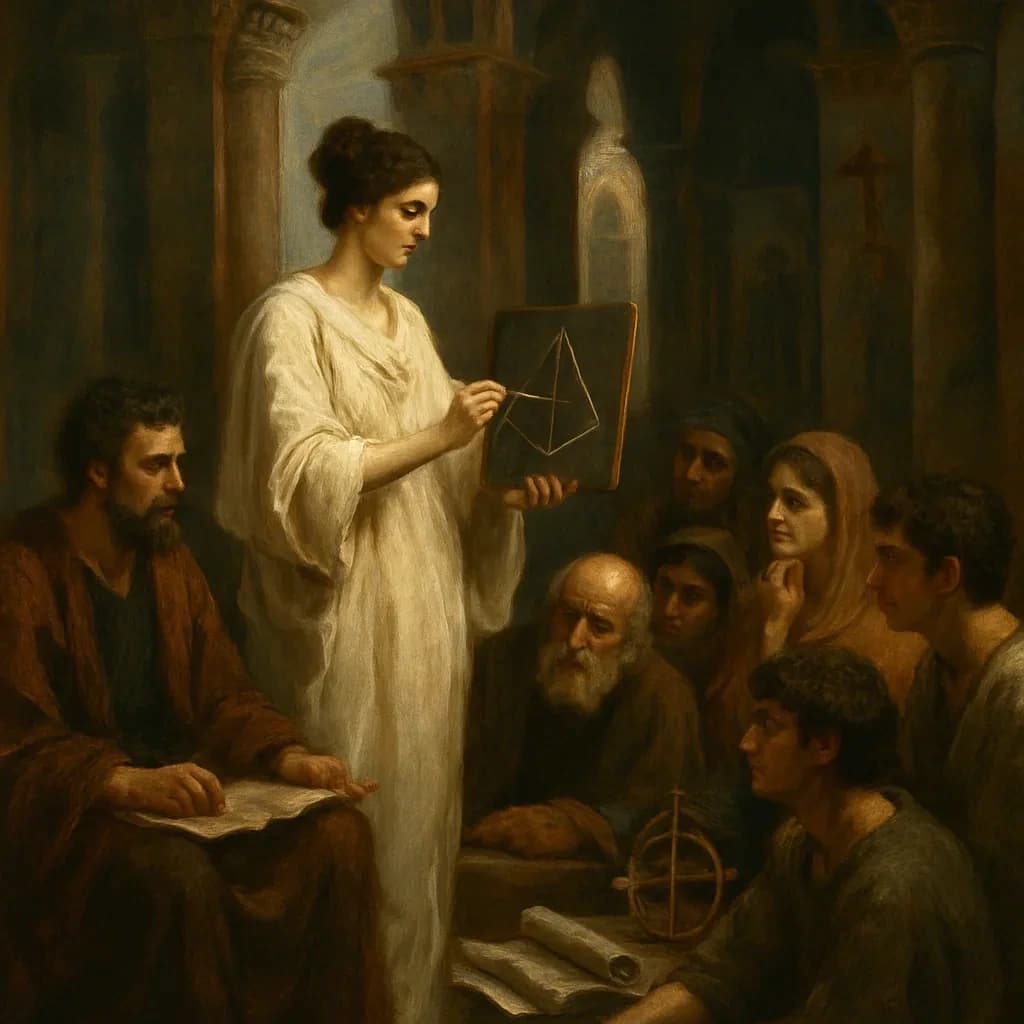
When Alexandria Murdered Its Last Mathematician
A pagan mathematician stood between Christianity and the last great library of the ancient world in 391 AD.
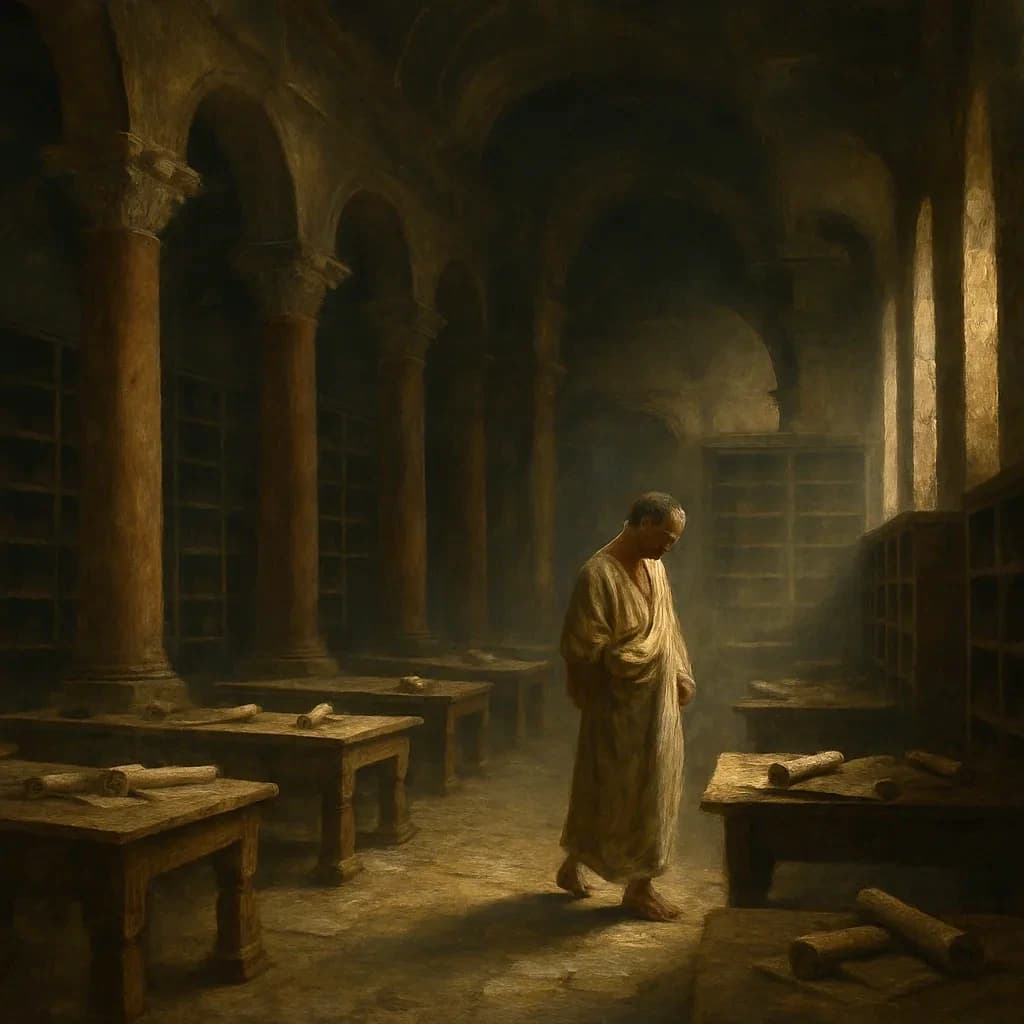
Nobody Burned the Library of Alexandria
The most famous library destruction in history never happened, and the real story is far more depressing.
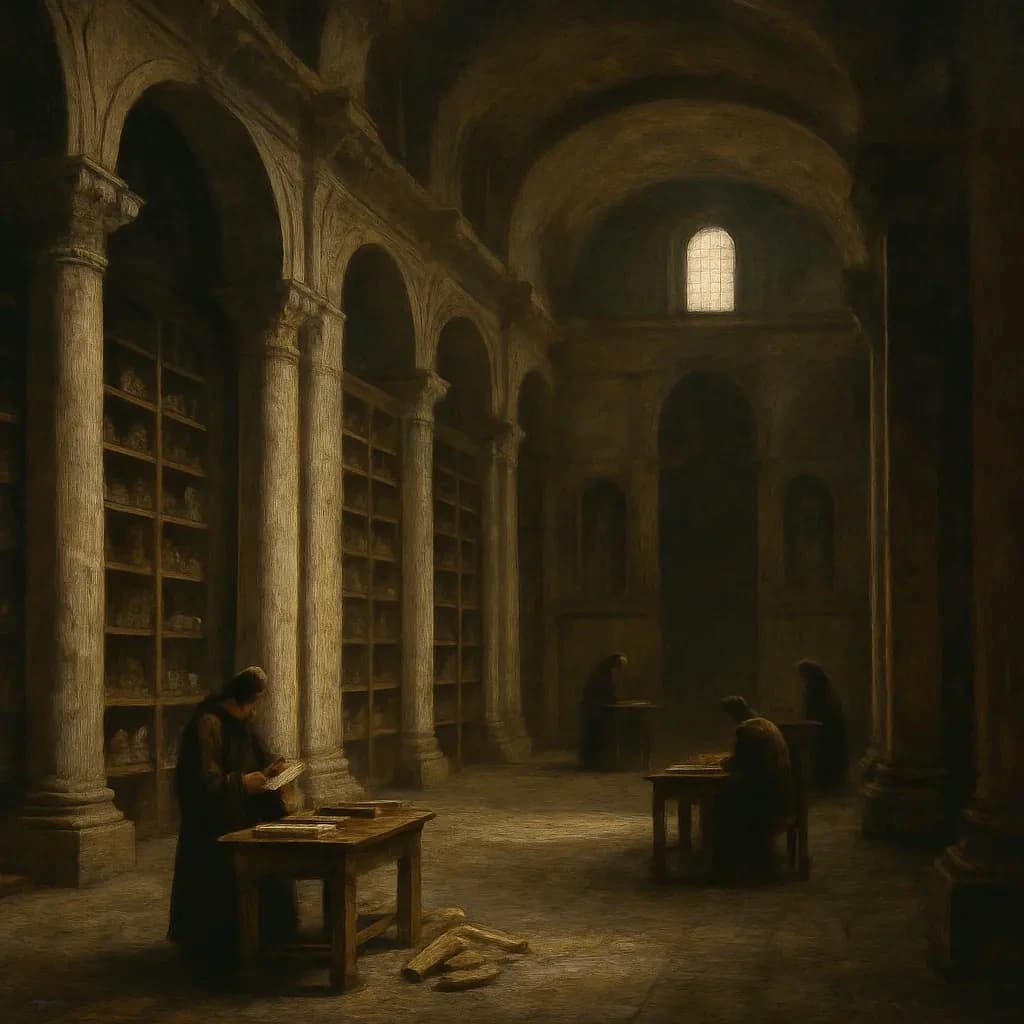
Budget Cuts Killed the Library of Alexandria
Alexandria's Great Library didn't die in one dramatic fire. It slowly bled to death over seven centuries while everyone argued about who killed it.
- Dzielska, Maria. Hypatia of Alexandria. Harvard University Press, 1995.
- Deakin, Michael A.B. Hypatia of Alexandria: Mathematician and Martyr. Prometheus Books, 2007.
- Waithe, Mary Ellen. A History of Women Philosophers, Volume 1. Springer, 1987.