
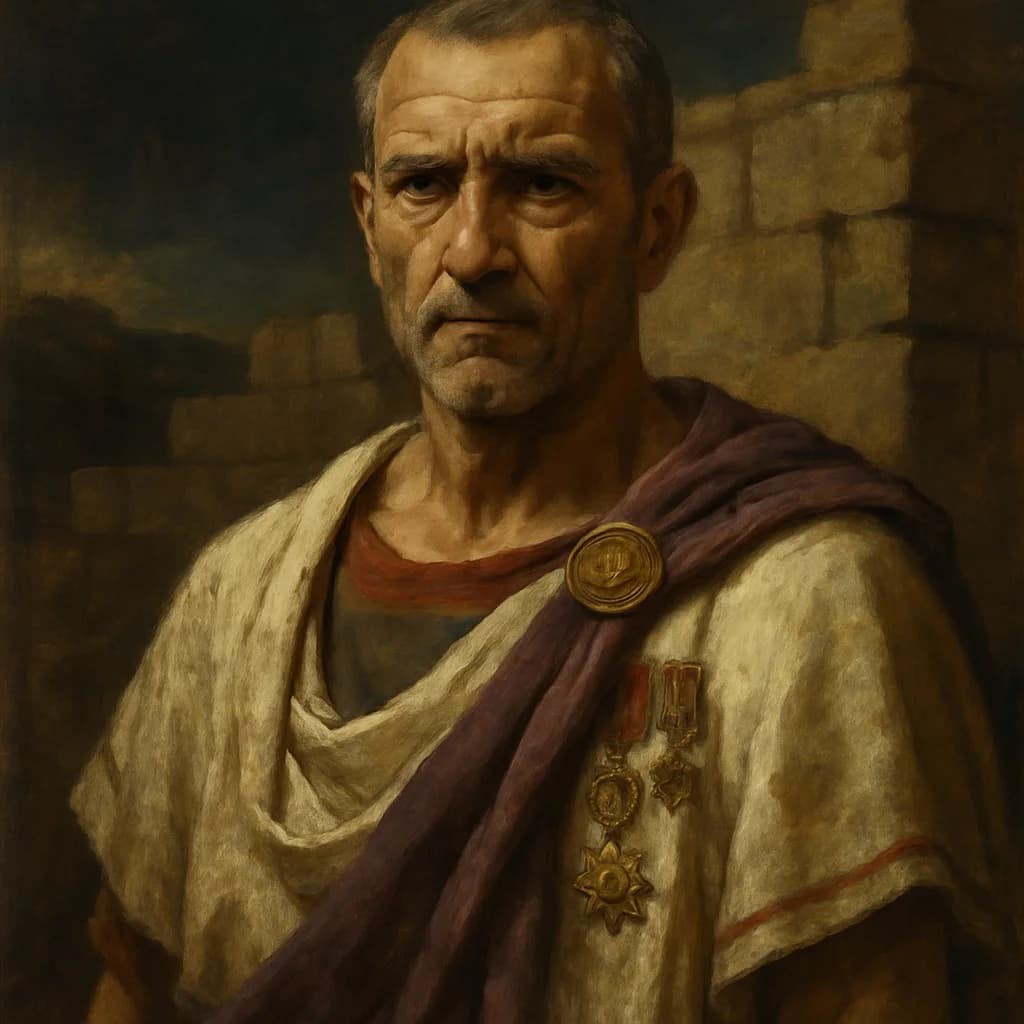
Aurelian
The emperor who saved Rome by abandoning half of it built a wall around the capital because he knew the barbarians would be back.
Lucius Domitius Aurelianus earned his throne the hard way: by murdering his predecessor. In 270 CE, when Emperor Claudius II died of plague, Aurelian eliminated his rival claimants through a combination of political maneuvering and strategic assassinations that would make a mafia don proud. But once he held power, he faced an empire hemorrhaging territory from every border.
Aurelian's genius lay not in expansion but in amputation. When the province of Dacia became indefensible against Gothic raids, he did something no Roman emperor had dared: he evacuated the entire Roman population south of the Danube and officially abandoned the territory. Critics called it cowardice. Aurelian called it arithmetic. He couldn't defend what he couldn't afford to garrison, and he needed every legion for the real crisis brewing in the east.
While Romans raged about 'barbarian disgrace,' Queen Zenobia of Palmyra had conquered Egypt, much of Asia Minor, and proclaimed herself Augusta, empress in her own right. Aurelian's eastern campaigns against her combined brutal efficiency with surprising restraint. After crushing her forces and capturing Palmyra, he spared the city initially, only destroying it when they rebelled again. Zenobia herself he paraded through Rome in golden chains, then granted a villa and pension for life.
But Aurelian's most lasting achievement was admitting Rome's vulnerability. The twelve-mile wall he built around the capital (completed in just five years) stood as both protection and confession. For the first time, an emperor acknowledged that barbarians might actually reach the heart of the empire. The Aurelian Wall would defend Rome for over a thousand years, long after the emperors were gone.
Aurelian ordered the construction of Rome's defensive wall not after a barbarian attack, but as a preventive measure during peacetime, making him perhaps the only Roman emperor to build defenses because he expected to lose future battles.
Why untold: His pragmatic territorial retreats and defensive preparations contradict the narrative of Roman invincibility that dominated imperial propaganda and later historical accounts.
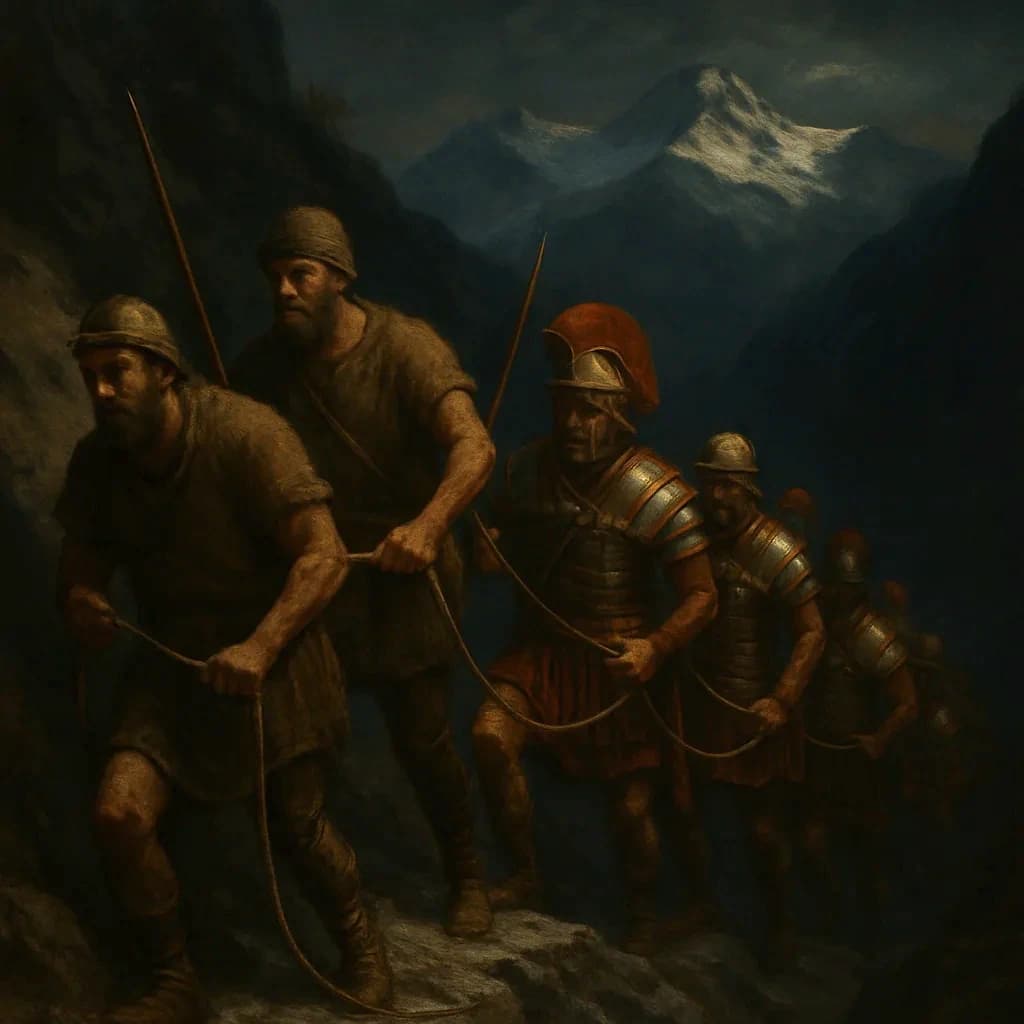
Trapped in the Alps, Aurelian Bet on His Barbarians
With Germanic tribes pouring down the mountainsides around his cornered army, Aurelian's salvation came from the men Rome despised most, a handful of barbarian soldiers in his own ranks.
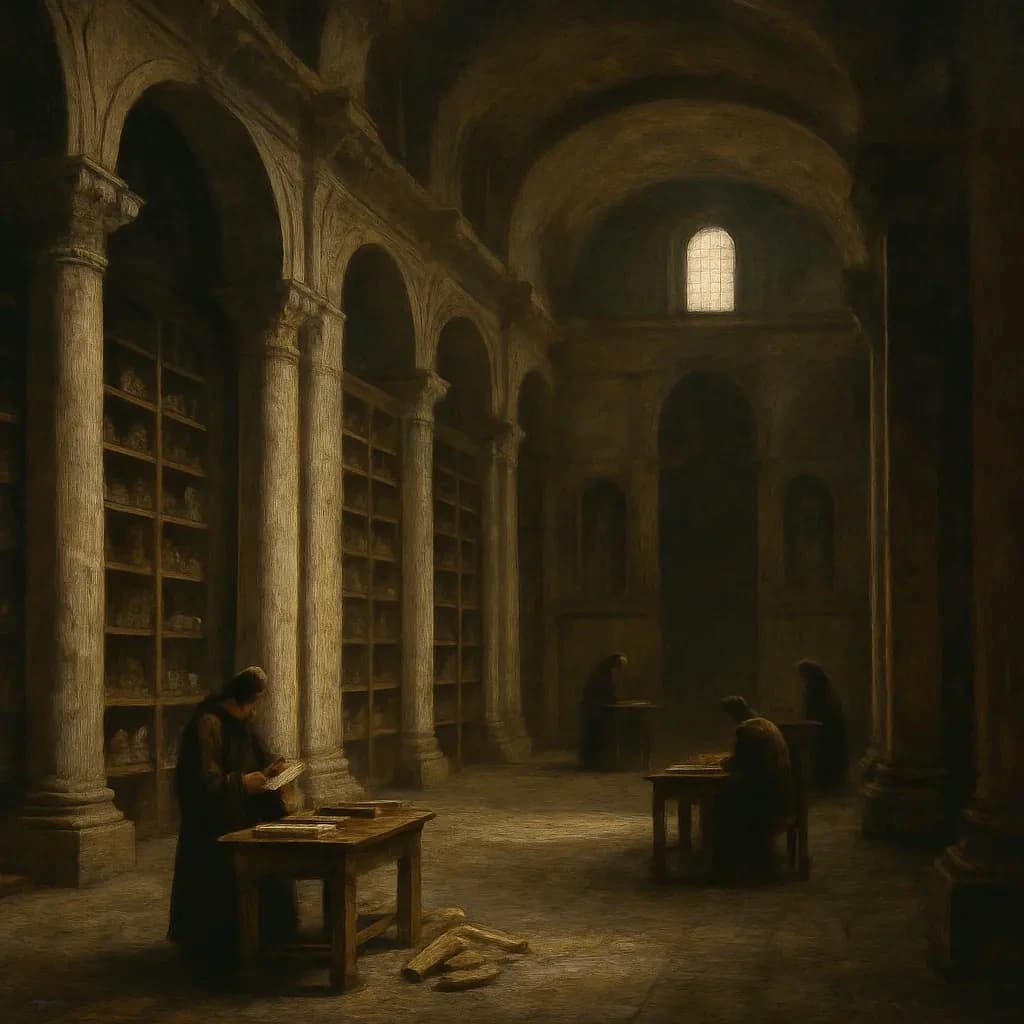
Budget Cuts Killed the Library of Alexandria
Alexandria's Great Library didn't die in one dramatic fire. It slowly bled to death over seven centuries while everyone argued about who killed it.
- Kreucher, Gerald. 'The Emperor Aurelian: Restitutor Orbis.' McFarland, 2003.
- Watson, Alaric. 'Aurelian and the Third Century.' Routledge, 1999.
- Kreucher, Gerald. 'Aurelian's Eastern Campaign and the Rebellion of Zenobia.' Historia: Zeitschrift für Alte Geschichte, 2004.