
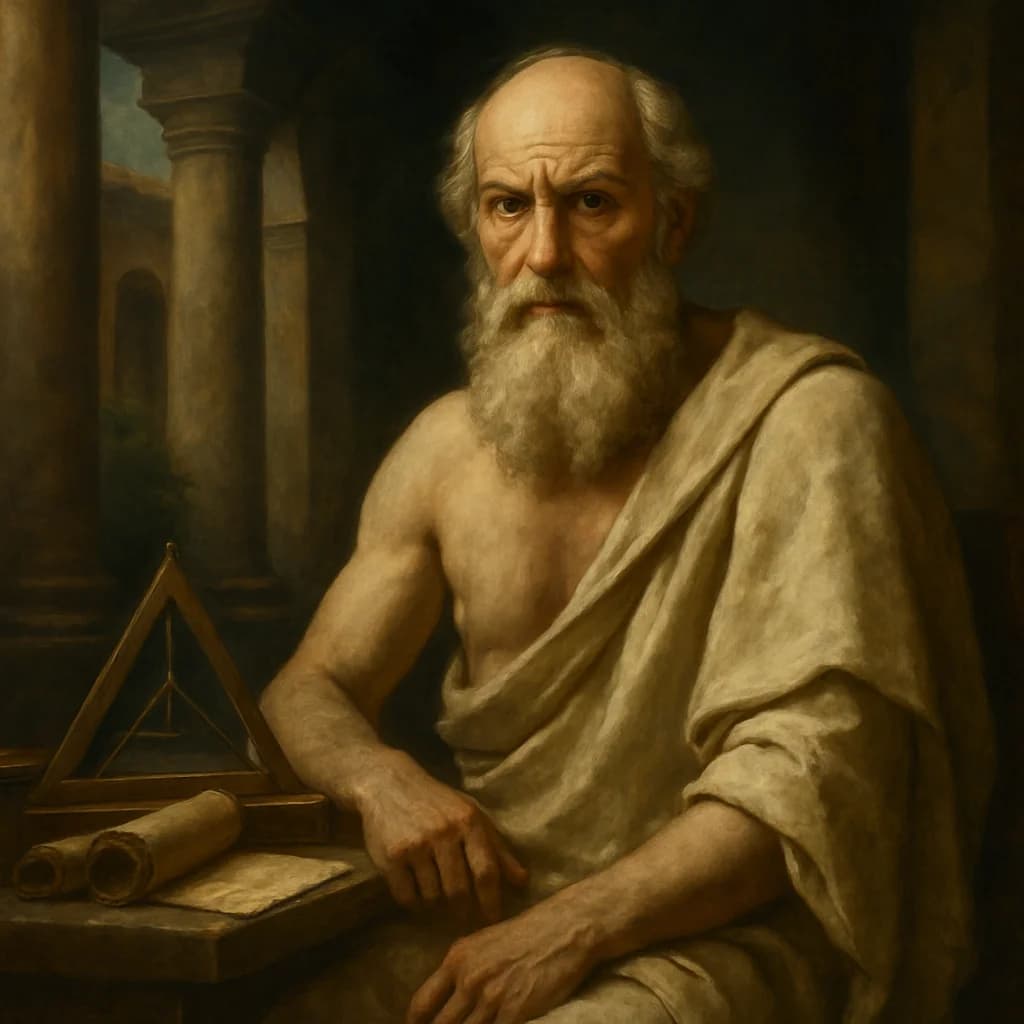
Archimedes
The man who could have given humanity flight, steam power, and calculus fifteen centuries early chose instead to spend his final moments drawing circles in the sand.
Archimedes wasn't just solving mathematical puzzles in his bathtub. He was building the world's first steam engine, designing mechanical computers, and creating weapons so terrifying that Roman soldiers fled at the sight of mirrors glinting from Syracuse's walls. His heat ray may be legend, but his compound pulley system could lift entire ships with one hand, and his screw pumps are still used today. He invented calculus 1,800 years before Newton and Leibniz, calculated pi to remarkable precision, and designed a planetarium that tracked celestial movements with bronze gears.
But here's what makes Archimedes extraordinary: he considered all of this engineering work beneath him. The man who revolutionized warfare viewed his military inventions as party tricks, refusing to write about them because they weren't "pure" mathematics. While his mechanical genius saved Syracuse from Roman siege for three years, he spent those same years obsessing over abstract geometric proofs that wouldn't be fully appreciated until the Renaissance.
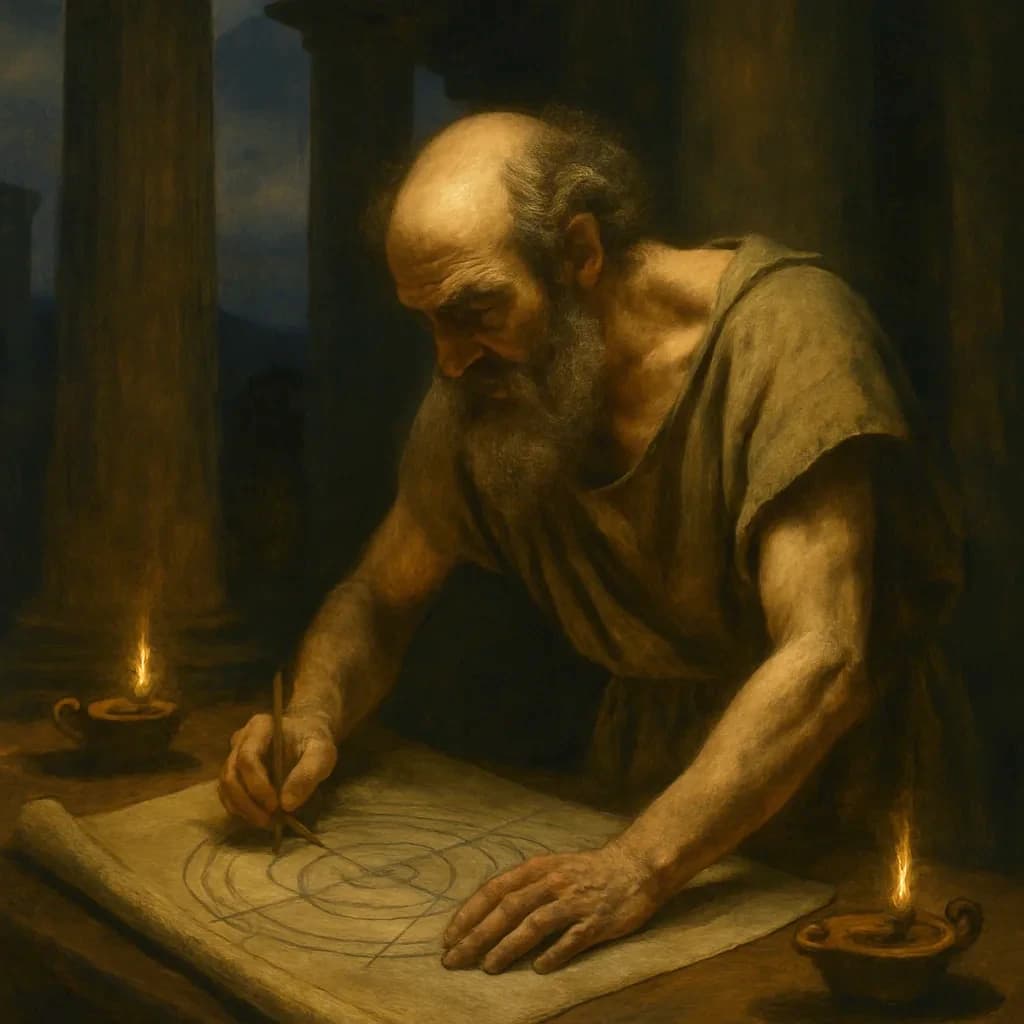
When Roman soldiers finally breached Syracuse's walls in 212 BCE, they found the 75-year-old mathematician in his courtyard, drawing geometric figures in the sand. According to Plutarch, his final words to the Roman soldier were "Don't disturb my circles." The soldier killed him anyway, but not before Archimedes had requested that his tomb be marked with his favorite theorem: the relationship between a cylinder and an inscribed sphere.
Rome's greatest military mind, Marcellus, reportedly wept when he learned of Archimedes' death. He had given strict orders to capture the mathematician alive, recognizing that killing him was like burning down the future itself.
Archimedes designed a mechanical computer called the Antikythera mechanism that could predict eclipses and track planetary movements with bronze gears. It was more sophisticated than any clockwork device built until the 14th century.
Why untold: His engineering work was deliberately excluded from his own writings because he considered applied mathematics intellectually inferior to pure geometry.
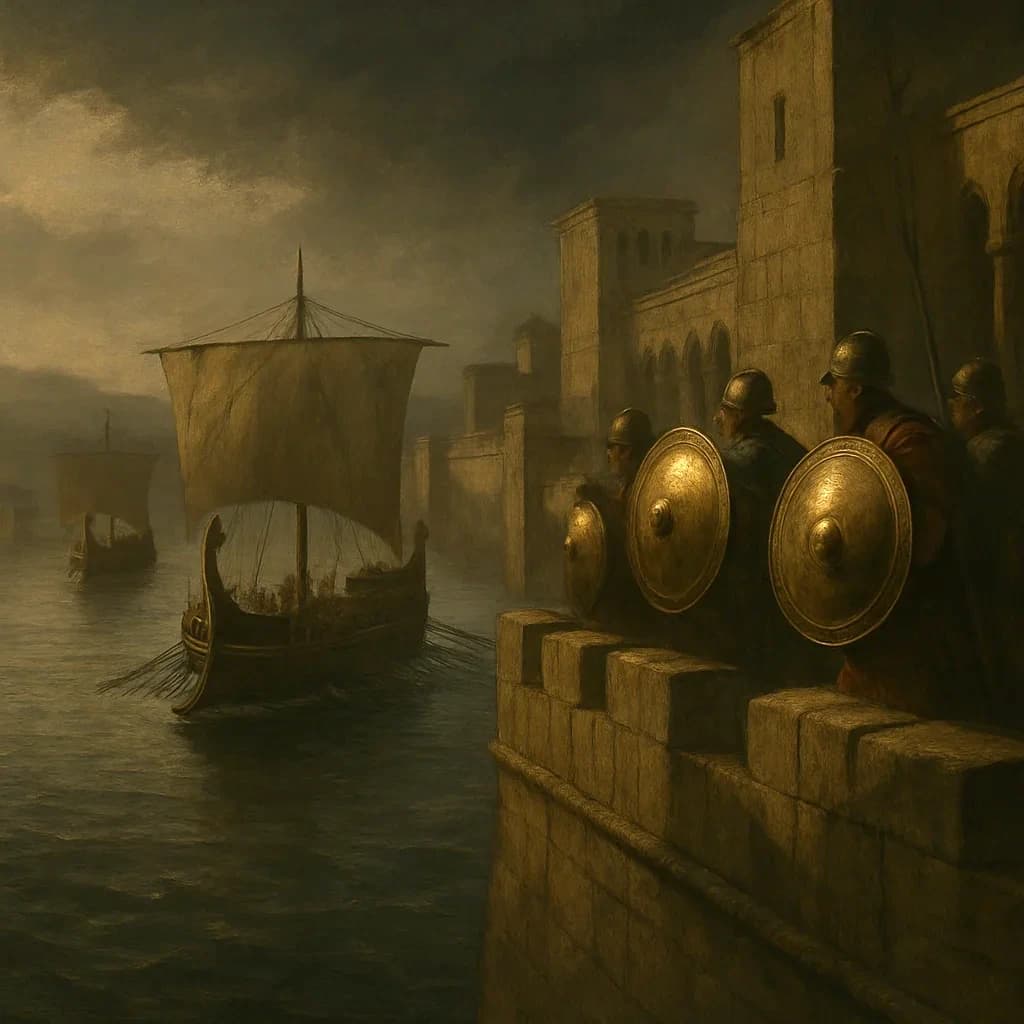
When Glass Became Artillery
A single mirror reflection in 214 AD started a legend that would inspire military engineers for 1,800 years, and the weapons were never quite what anyone thought.

She Hid Greek Math Inside Christian Prayer Books
The last candle flickered in Alexandria's library, and a Roman mathematician kept copying equations no one would understand for another thousand years.
Athens Killed the Sun-Centered Universe in 270 BC
One mathematician's proof that the Earth moved around the sun got him executed, two thousand years before Galileo was even born.
- Plutarch's Lives, Life of Marcellus
- Heath, T.L. The Works of Archimedes (1897)
- Freeth, Tony. The Antikythera Mechanism Research Project