
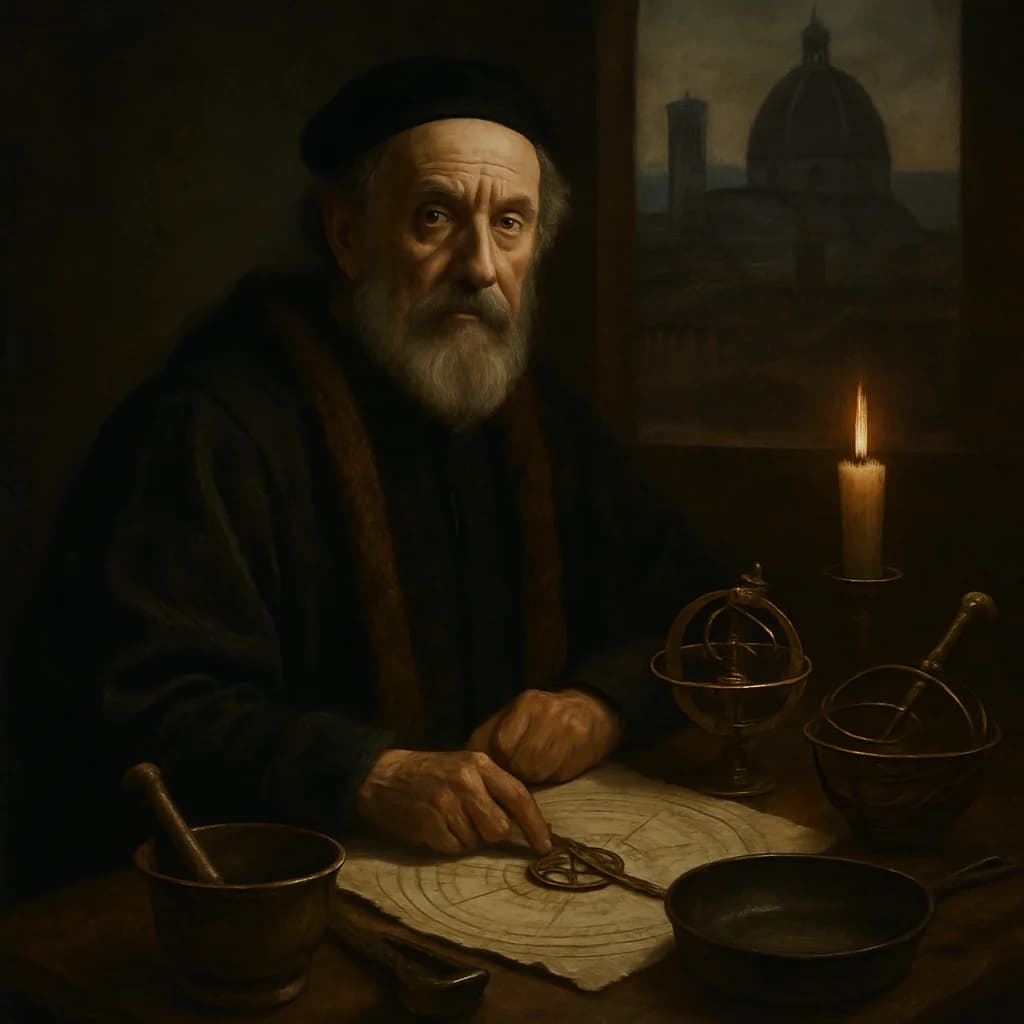
Paolo Toscanelli
The man who convinced Columbus to sail west to Asia was a chicken-obsessed astronomer who spent his evenings mapping stars and his days perfecting poultry recipes.
Paolo dal Pozzo Toscanelli lived two lives that shouldn't have intersected but somehow reshaped the world. By day, he was Florence's most celebrated physician, tending to the Medici family and pioneering new treatments. By night, he climbed to his rooftop observatory, meticulously charting the heavens with instruments he'd designed himself. But his true passion lay somewhere between: in his kitchen, where he conducted elaborate experiments with chicken preparation that would accidentally revolutionize Renaissance dining.
Toscanelli's obsession with poultry began as medical research. He believed that properly prepared chicken broth could cure melancholia and sharpen intellectual faculties. His detailed notes on cooking temperatures, seasoning ratios, and preparation methods became legendary among Florence's elite. When visiting scholars tasted his legendary chicken soup, they found their minds remarkably clear for philosophical discourse. This wasn't superstition. Toscanelli had unknowingly discovered optimal nutrition for cognitive function.
But it was his astronomical calculations that changed history. In 1474, Toscanelli wrote to Christopher Columbus, providing detailed maps and distance estimates for a western route to Asia. His calculations were catastrophically wrong. He underestimated Earth's circumference by nearly 10,000 miles, following ancient Greek errors. Yet his confident mathematical projections, presented with the same precision he applied to his chicken recipes, convinced Columbus that China lay just weeks beyond the Atlantic.
Toscanelli died in 1482, never knowing that his flawed geography would lead to the discovery of the Americas. His final years were spent perfecting a new method for roasting fowl that required precise timing, the same meticulous approach that had made his astronomical miscalculations so convincing to a young Genoese navigator dreaming of eastern spices.
Toscanelli's chicken soup recipe was so prized that Lorenzo de' Medici had it copied and sent to other European courts as a diplomatic gift, spreading Florence's culinary influence alongside its political power.
Why untold: His culinary contributions were overshadowed by the dramatic consequences of his geographical miscalculations, reducing him to a footnote in Columbus's story.
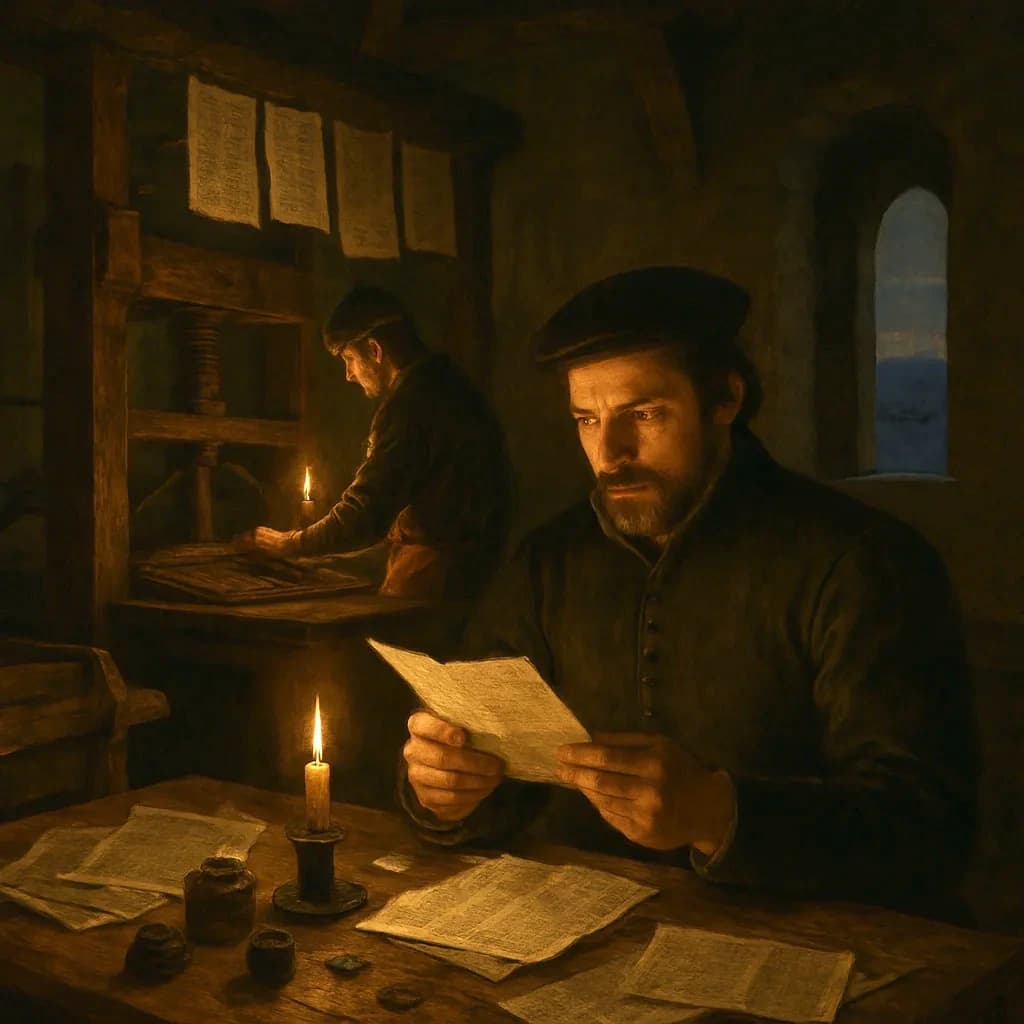
Columbus's Letter Convinced Europe It Had Reached Asia
A single letter, written in haste by a sailor who had never actually measured anything, convinced Europe it had found Asia, and the mistake held for decades.
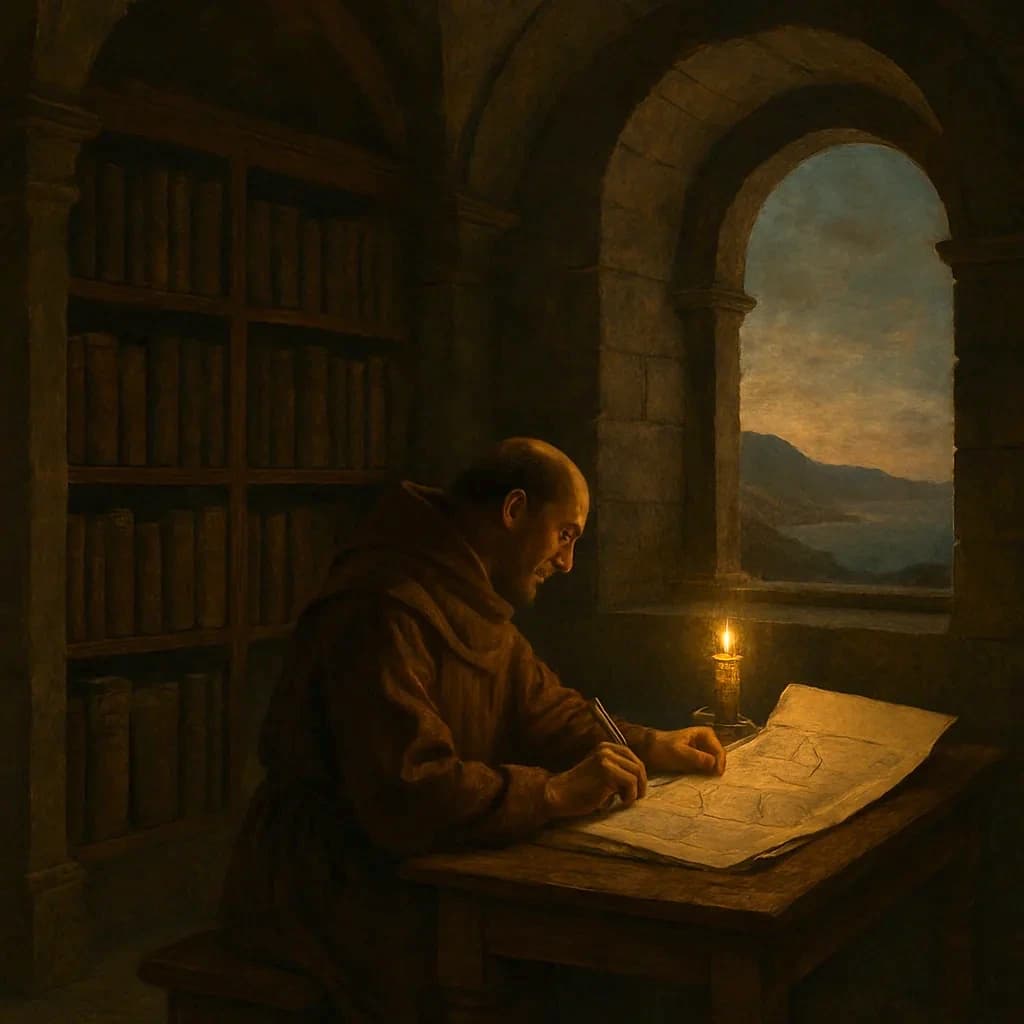
When Aristotle's Ghost Haunted Columbus
A 2,000-year-old mathematical error convinced Columbus that China was just around the corner from Spain.
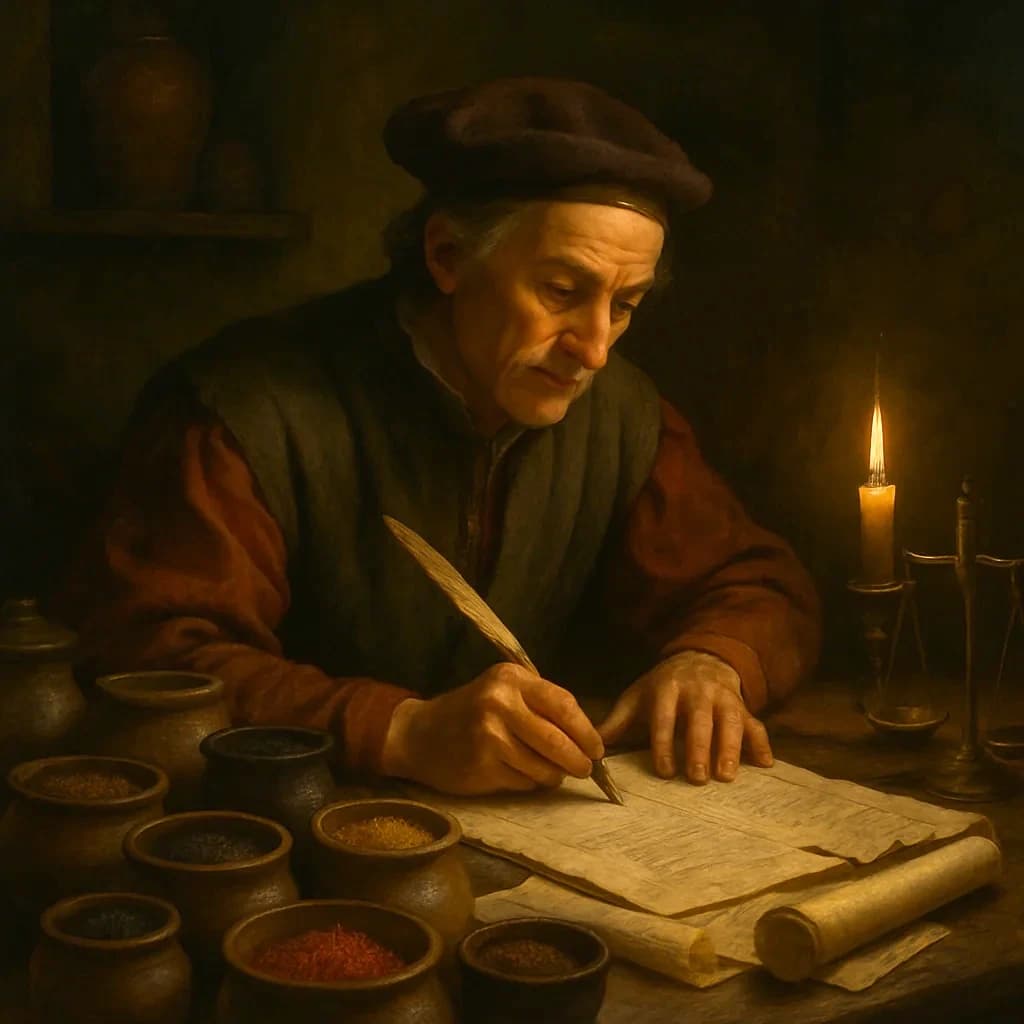
A Spice Merchant's Kitchen Became Europe's First Laboratory
A Venetian merchant obsessed with keeping his saffron fresh ended up building the intellectual foundation of the modern world.
- Sobel, Dava. 'Galileo's Daughter: A Historical Memoir of Science, Faith, and Love.' Walker Books, 1999.
- Ptak, John. 'Paolo Toscanelli and the Geography of Columbus.' Journal of Historical Geography, vol. 18, 1992.
- Menzies, Gavin. '1421: The Year China Discovered the World.' Bantam Books, 2002.