
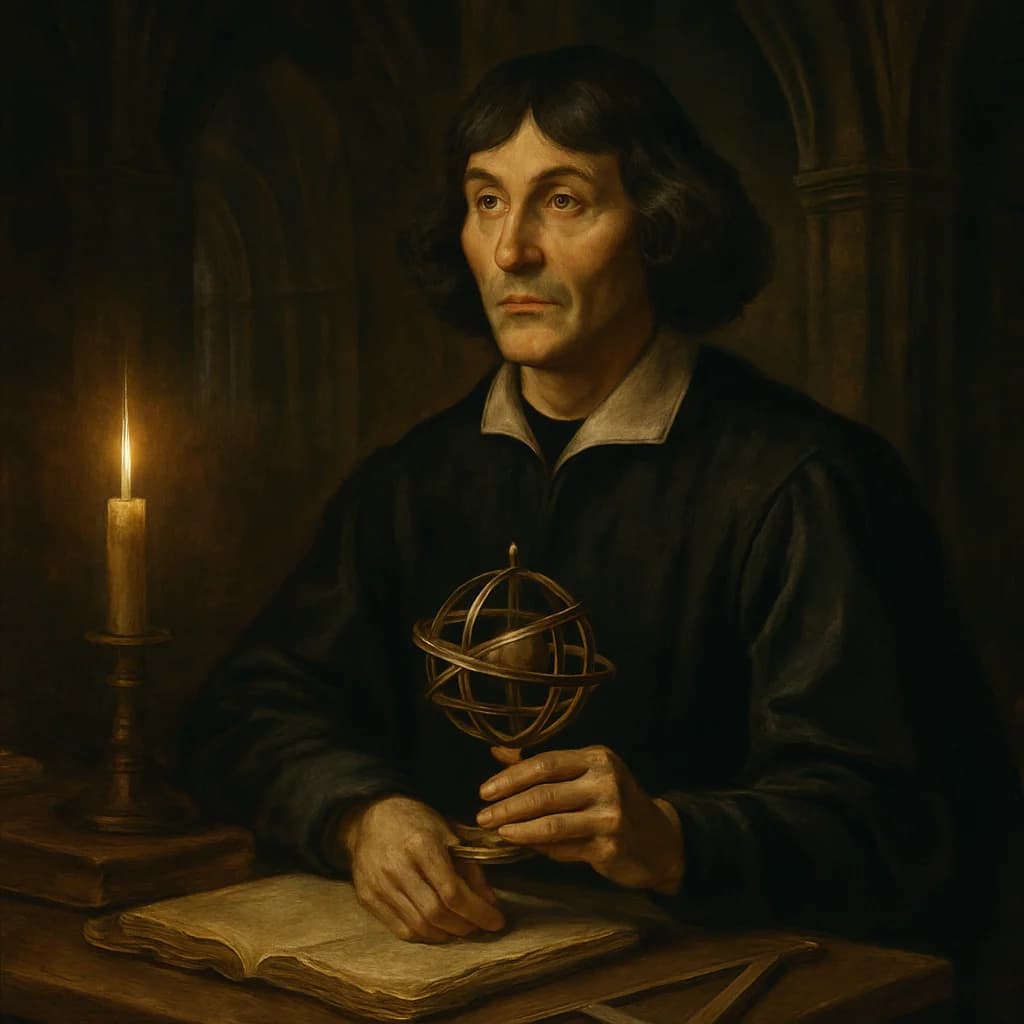
Nicolaus Copernicus
The man who moved the Earth spent his entire life trying not to move anything at all.
Nicolaus Copernicus was a master of quiet revolutionaries, the kind who topple empires while paying their taxes on time. By day, he administered church finances in Frombork, a sleepy cathedral town on the Baltic coast. By night, he scribbled calculations that would eventually dethrone humanity from the center of creation. He never intended to publish them.
The astronomer who became synonymous with bold thinking was actually pathologically cautious. For thirty years, Copernicus kept his heliocentric theory locked in his desk drawer, sharing it only with a handful of trusted friends through hand-copied manuscripts. He had good reason to hesitate, not just fear of religious persecution, but something more prosaic: he was a perfectionist who knew his math wasn't quite right. His model still required epicycles, those awkward mathematical loops that made planetary motion look like cosmic spaghetti.
What finally forced his hand was a young German mathematician named Georg Joachim Rheticus, who showed up at Copernicus's doorstep in 1539 like an overeager graduate student. Rheticus pestered the aging canon for months until Copernicus reluctantly agreed to let him publish a summary of the theory. Even then, Copernicus hedged his bets. The final manuscript of 'De revolutionibus' included a preface (added without his knowledge) suggesting the whole thing might just be a useful mathematical fiction.
Copernicus received the first printed copy on his deathbed in 1543. Whether he understood that he'd just handed humanity a lit fuse is unclear. The real explosion would come later, when Galileo picked up his telescope and Kepler fixed his math. But the reluctant revolutionary had done his part: he'd whispered a dangerous idea into the world, then left others to shout it from the rooftops.
Copernicus was also a practicing physician who treated his fellow church canons, and he once helped design the monetary policy for Poland during a currency crisis.
Why untold: His reputation as a bold revolutionary overshadows the reality that he was an intensely cautious man who almost took his world-changing theory to the grave.
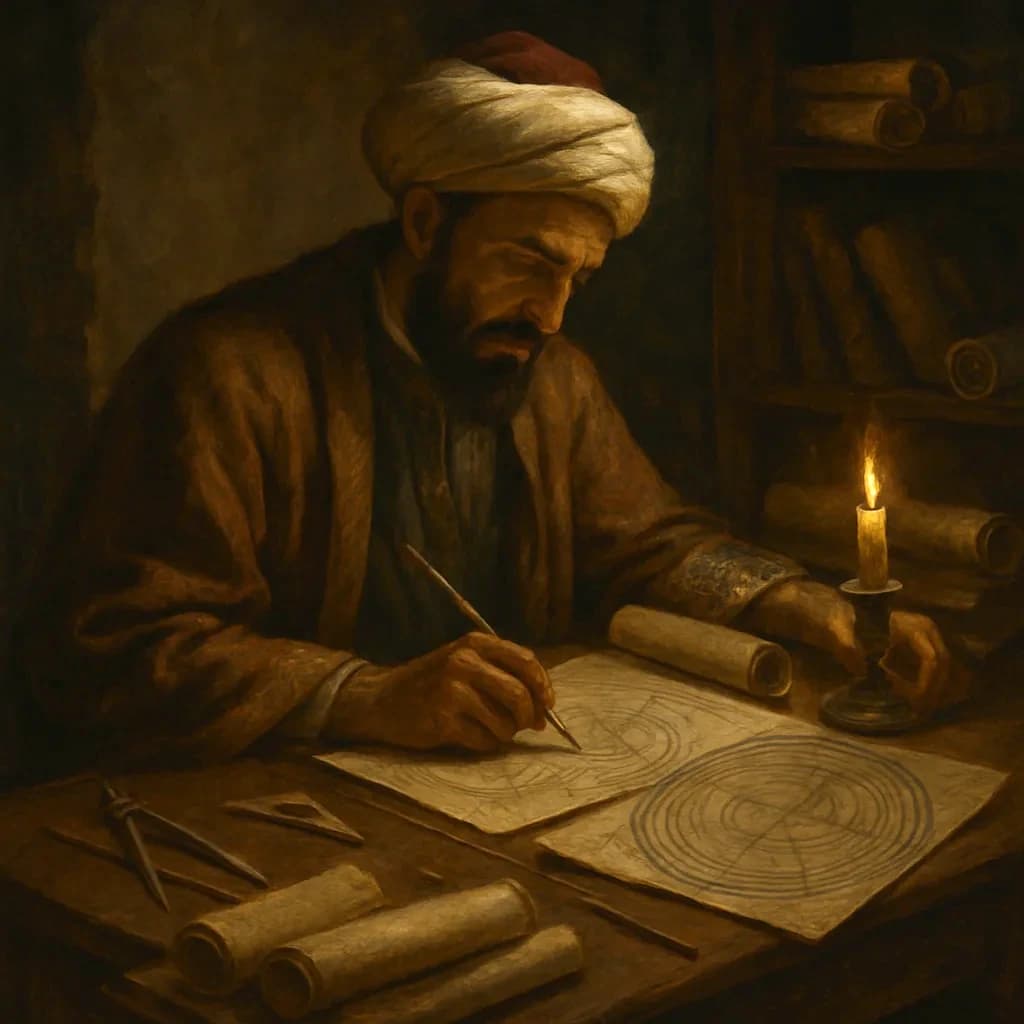
Too Complex to Burn: The Book That Outlived Every Purge
A medieval Islamic scholar's mathematical treatise survived every book burning for eight centuries, because nobody could understand what it was worth destroying.
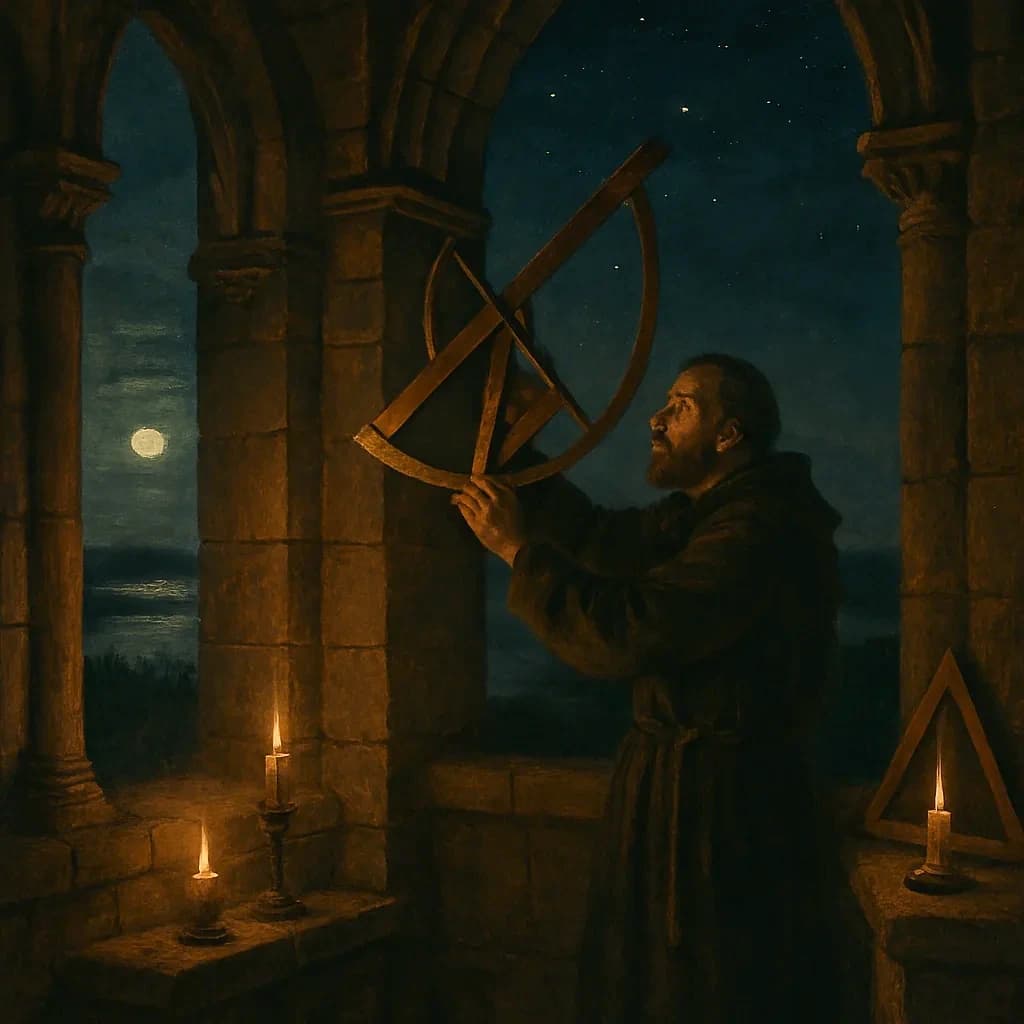
Copernicus Waited Until His Deathbed to Publish
For twenty-six years, a Lutheran pastor in 16th-century Prussia made astronomical observations so precise they would revolutionize how humans understand the universe.
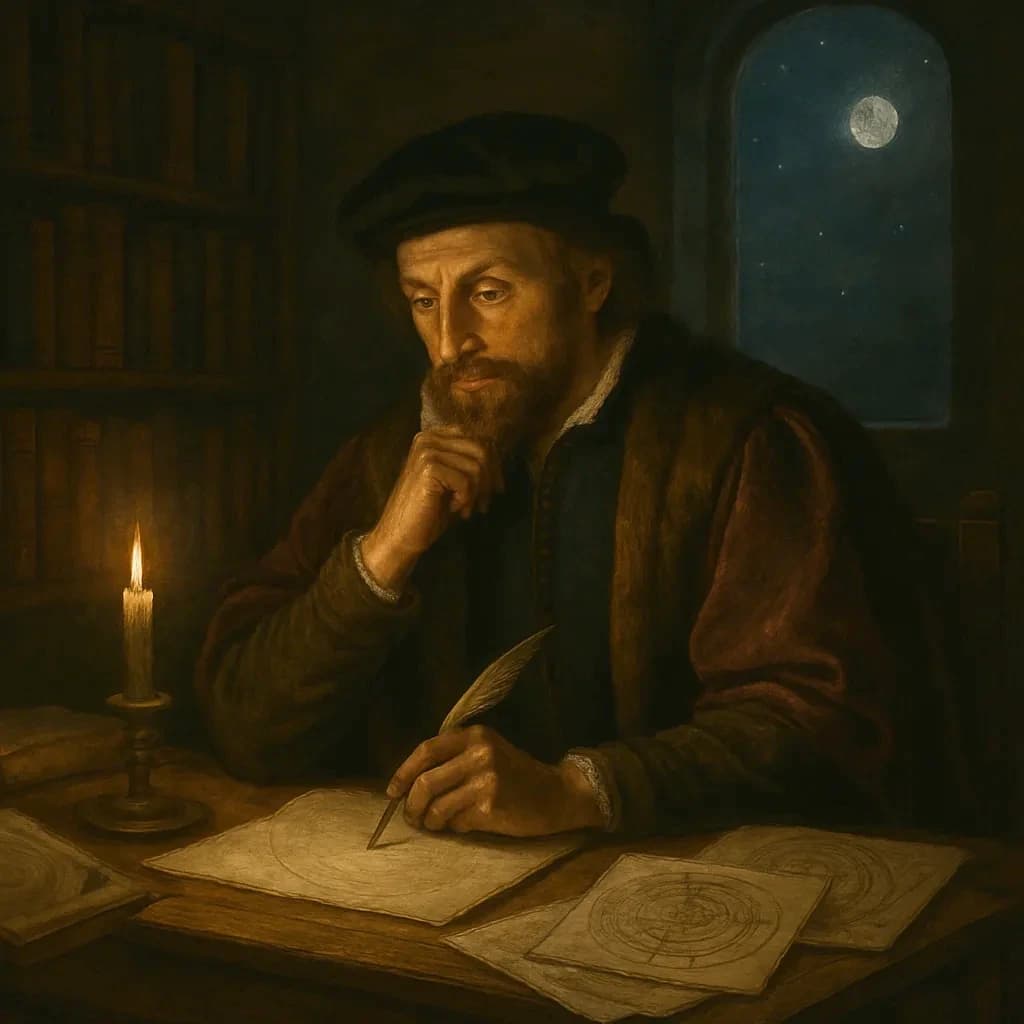
Smuggling Heresy: The Secret Preface Inside Copernicus's Book
A Dutch scholar's hesitation over mailing a manuscript in 1543 nearly kept one of history's most dangerous ideas from reaching print.
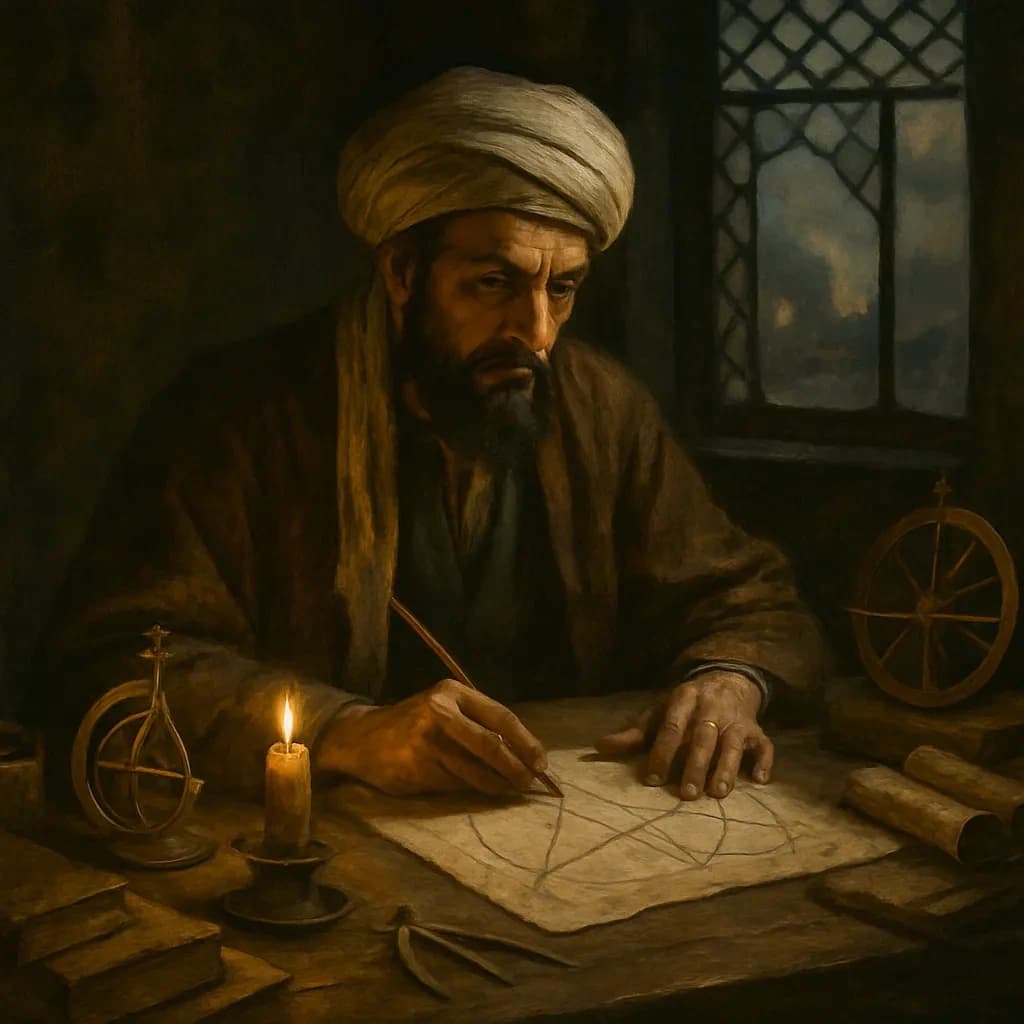
Al-Tusi Buried His Math Before the Mongols Arrived
While Baghdad burned, one scholar wrote formulas that would reshape mathematics forever, if anyone could find his scattered notes.
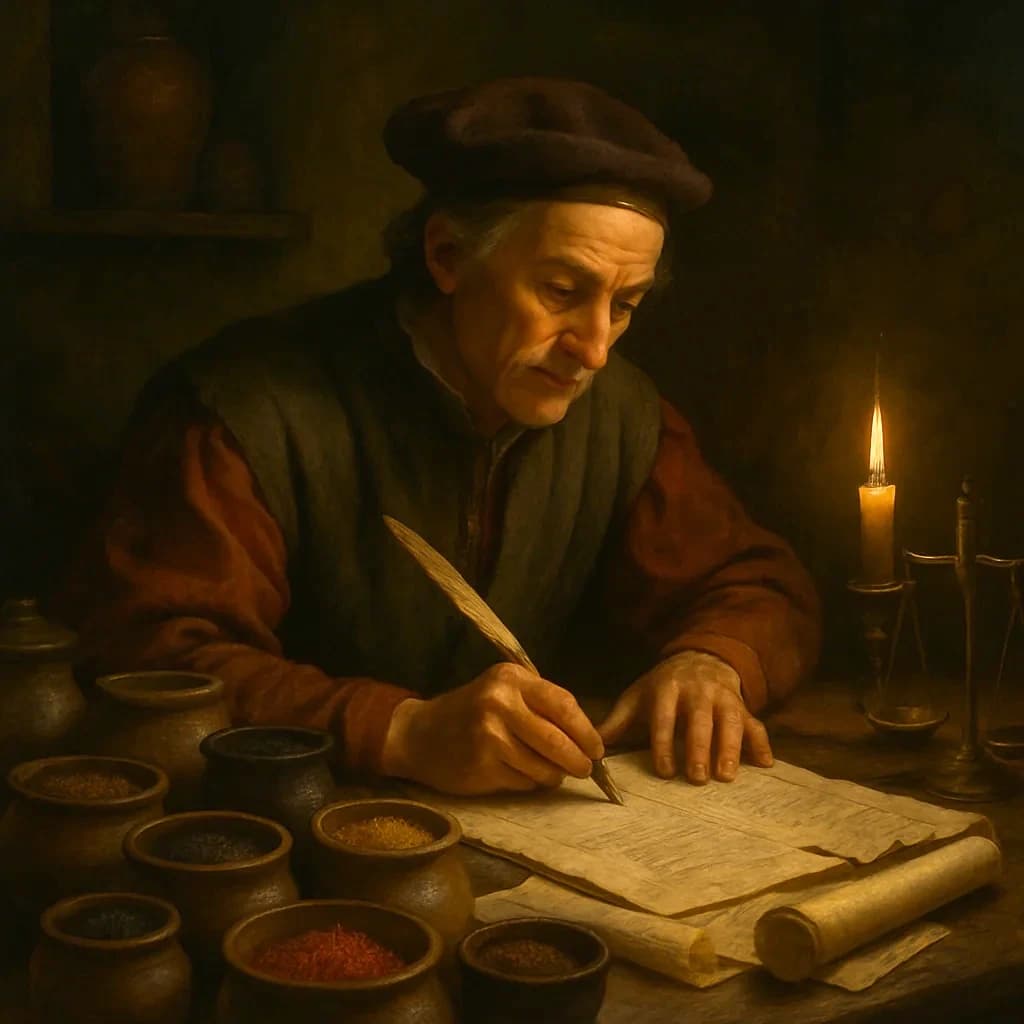
A Spice Merchant's Kitchen Became Europe's First Laboratory
A Venetian merchant obsessed with keeping his saffron fresh ended up building the intellectual foundation of the modern world.
- Gingerich, Owen. The Book Nobody Read: Chasing the Revolutions of Nicolaus Copernicus. Walker Books, 2004.
- Sobel, Dava. A More Perfect Heaven: How Copernicus Revolutionized the Cosmos. Walker Books, 2011.
- Koestler, Arthur. The Sleepwalkers: A History of Man's Changing Vision of the Universe. Penguin Books, 1959.