
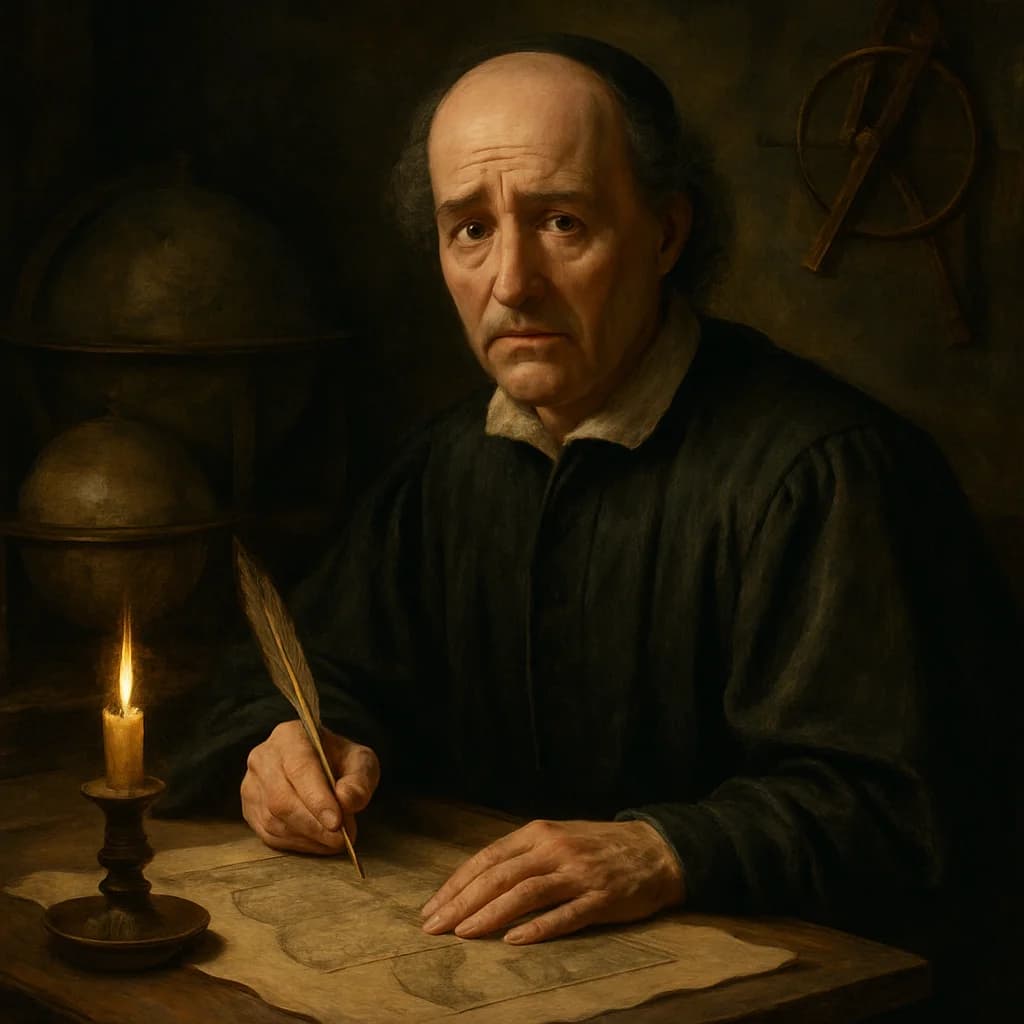
Martin Waldseemüller
The man who named America spent twelve years trying to take it back.
Martin Waldseemüller never intended to change history when he sat down in his Saint-Dié workshop in 1507. A minor German cartographer working for a small scholarly society in the Vosges Mountains, he was simply trying to update Ptolemy's ancient geography with the latest reports from the New World. He had Amerigo Vespucci's letter claiming he'd reached a new continent, not just islands off Asia. So Waldseemüller did what seemed logical: he labeled the southern landmass "America" after its supposed discoverer.
The map became a sensation across Europe. A thousand copies sold immediately, unprecedented for the time. But as more reports trickled back from Spanish and Portuguese expeditions, Waldseemüller realized his mistake. Columbus had reached the Americas first, not Vespucci. Worse, Vespucci's letter might have been a complete fabrication. The name "America" was spreading across Europe based on what appeared to be a lie.
Waldseemüller spent the next twelve years in a quiet agony of scholarly regret. In his 1513 map, he deliberately removed the name "America" and labeled the continent "Terra Incognita" instead. He commissioned new editions trying to correct his error. He wrote letters to other cartographers urging them to abandon the name. But it was too late. The word "America" had taken root in the European imagination, spreading from map to map like a virus he couldn't contain.
He died in 1520, probably believing he'd failed to fix his greatest mistake. The irony is perfect: a humble mapmaker working in obscurity created one of history's most enduring words, then spent his final years helplessly watching it spread across a world that would never know his name.
Only one copy of Waldseemüller's 1507 world map survived to modern times, discovered in 1901 in the library of a German castle and purchased by the Library of Congress for $10 million in 2003.
Why untold: His story was overshadowed by the very success of his naming choice, which made him seem like a footnote to American history rather than its accidental author.
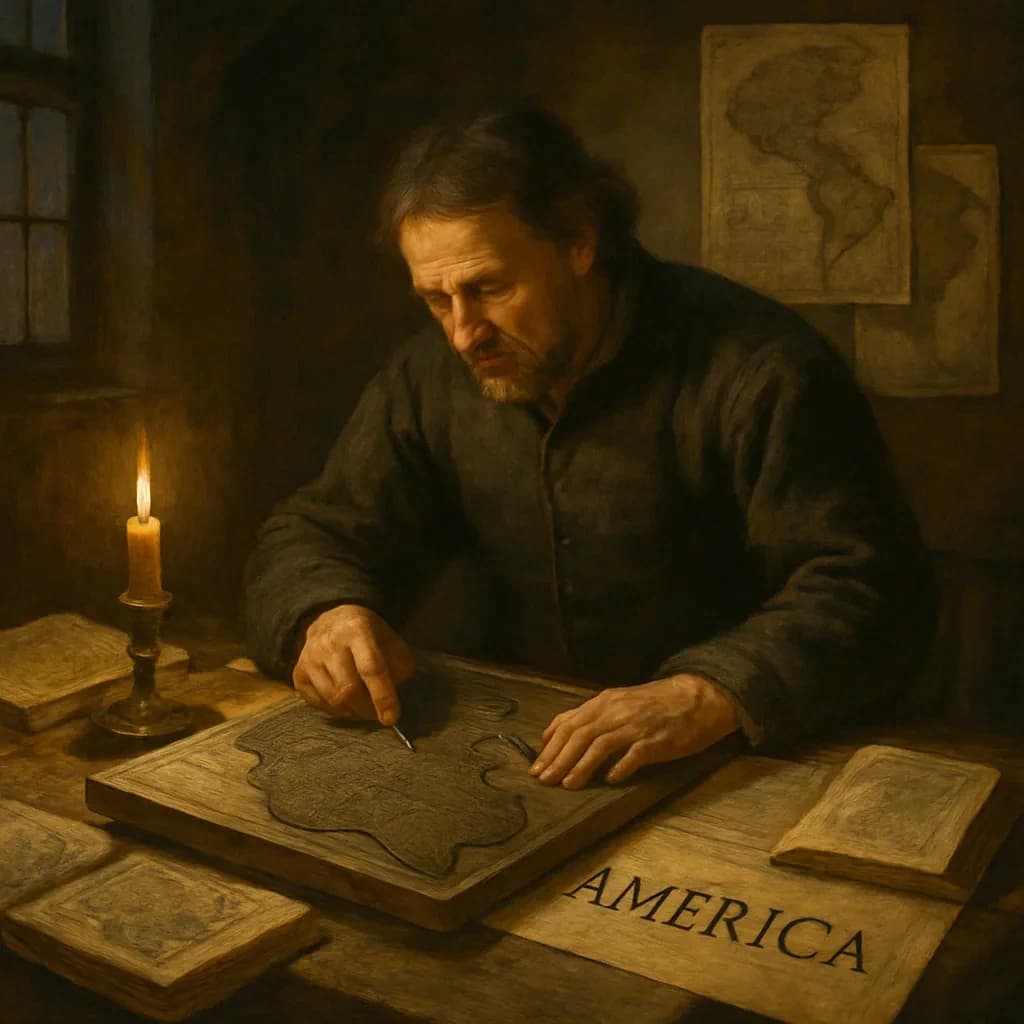
He Named America, Then Tried to Take It Back
A German mapmaker named a continent after the wrong man in 1507, and the man who actually discovered it spent his final years watching someone else's name get carved into the world.
Columbus's Letter Convinced Europe It Had Reached Asia
A single letter, written in haste by a sailor who had never actually measured anything, convinced Europe it had found Asia, and the mistake held for decades.
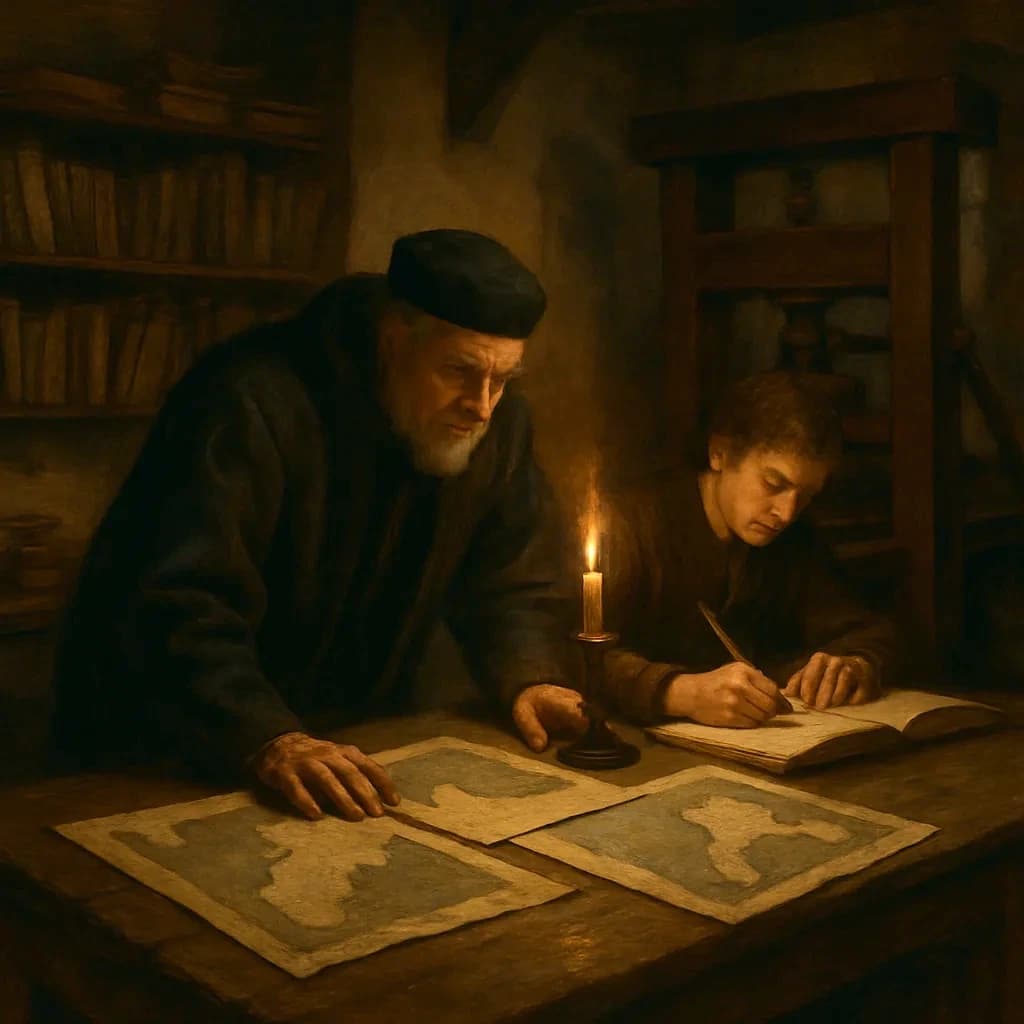
He Named America, Then Tried to Take It Back
A German mapmaker printed one name across a new continent, came to regret it, and spent the rest of his life erasing it, but the name had already escaped him.
Naming America: The Map Made in a Landlocked City
A Flemish artist who never left Europe may have done more to shape the Americas than any conquistador.
The Mapmaker Who Tried to Un-Name America
A German mapmaker in a small Alsatian town gave the New World its name, and spent the rest of his life trying to take it back.
Three Days in a Florentine Bedroom, and the Lie That Named a Continent
A dying woman's deathbed confession in Florence may have been the real reason America got its name, and it had nothing to do with Amerigo Vespucci's voyages.
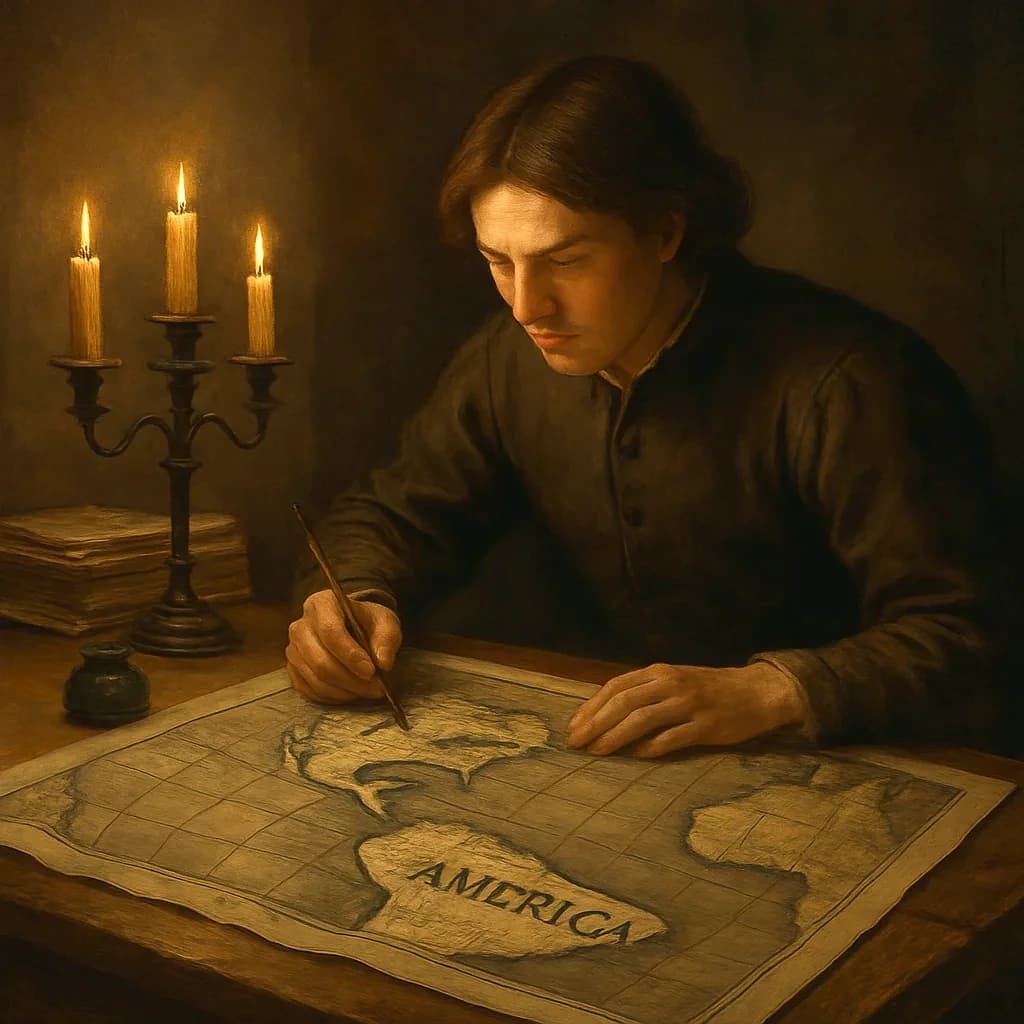
A Jailed Merchant's Letter Accidentally Named the Americas
A jailed Florentine merchant wrote a letter from his cell that accidentally gave the Americas their name. And he had nothing to do with discovering them.
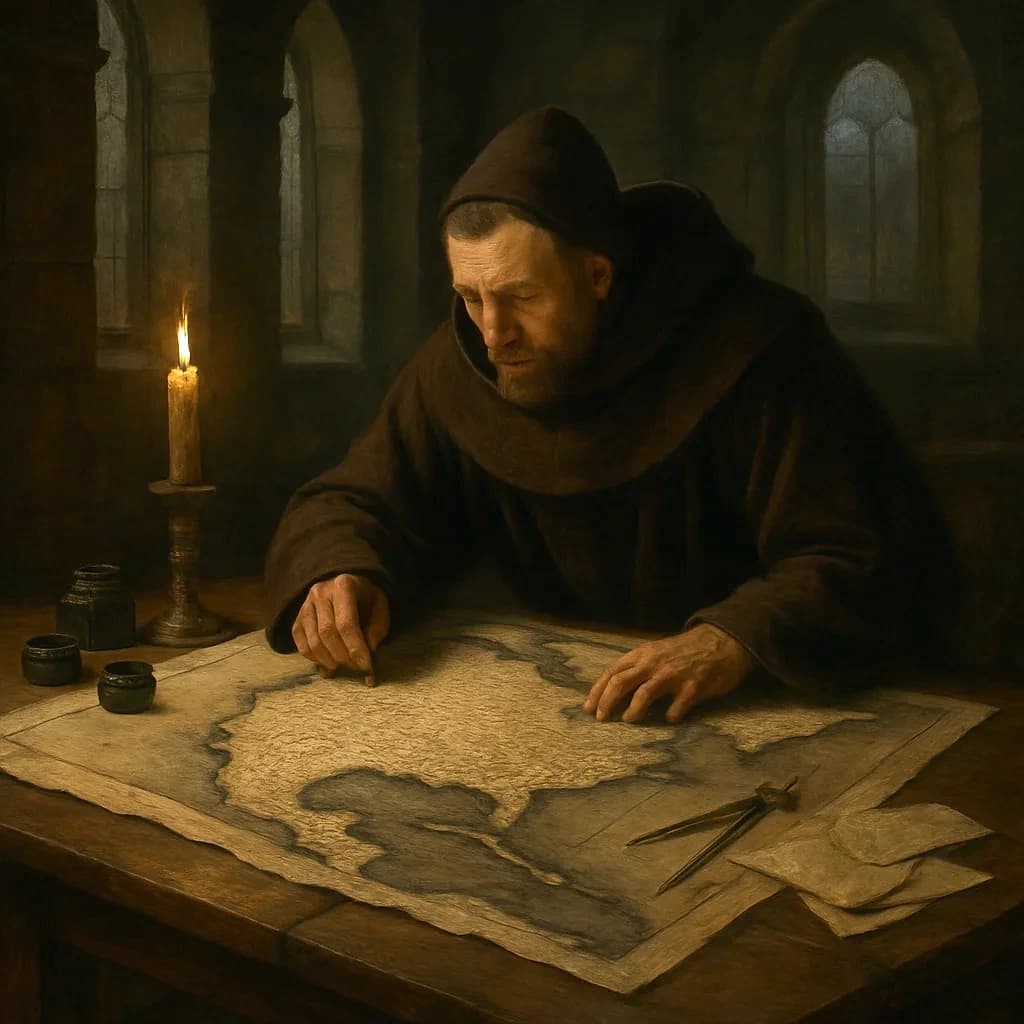
How America Got the Wrong Man's Name
A German mapmaker christened the New World in 1507 after the wrong man, and the one who deserved the credit spent his final years watching someone else's name get written into history.
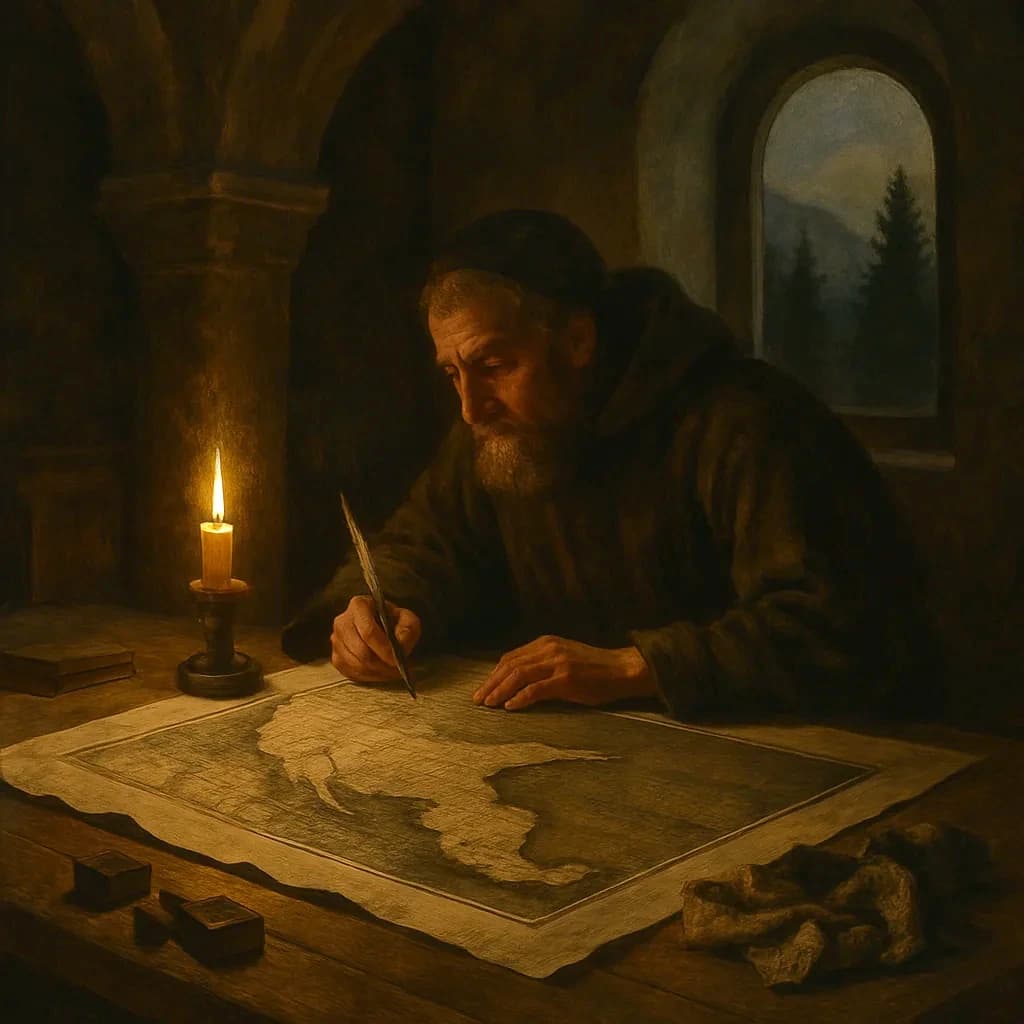
The Mapmaker Who Named America, Then Erased It
The man who named America never crossed the Atlantic. He just happened to own the right printing press at the right moment.
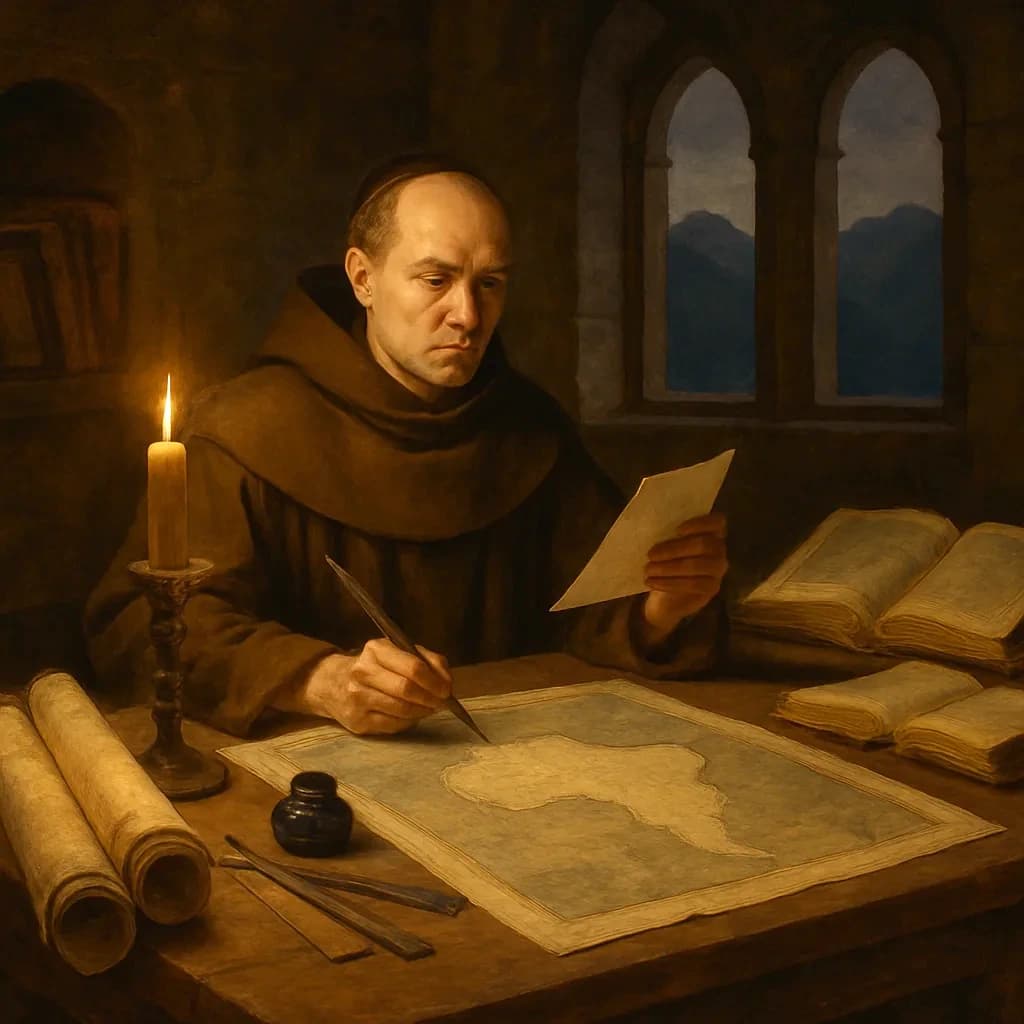
How One Forged Letter Named America
One afternoon in 1507, a German monk decided what to call the new world, and got it completely wrong for reasons no one talks about.
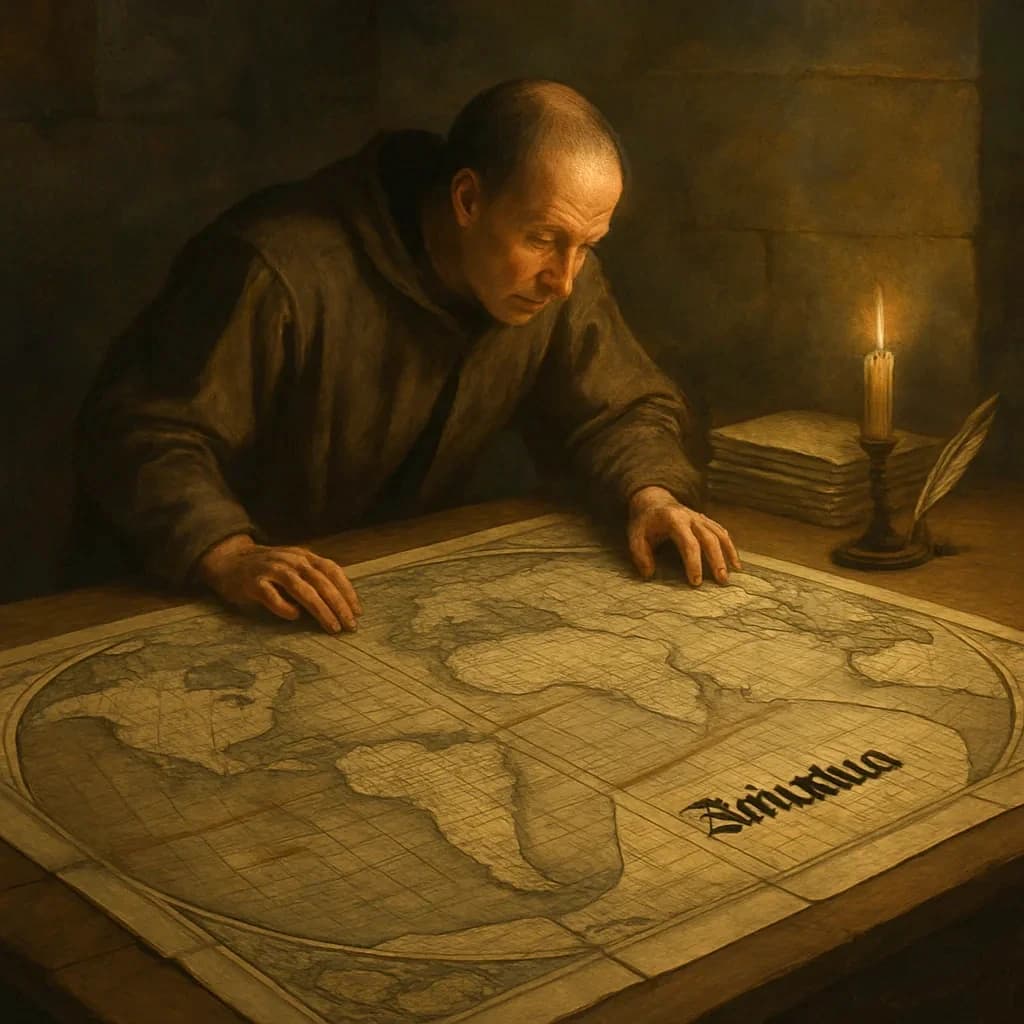
He Named America, Then Tried to Erase It
A German printer published a map that showed the entire New World, and quietly credited the wrong man for discovering it, setting in motion an argument that has never fully ended.
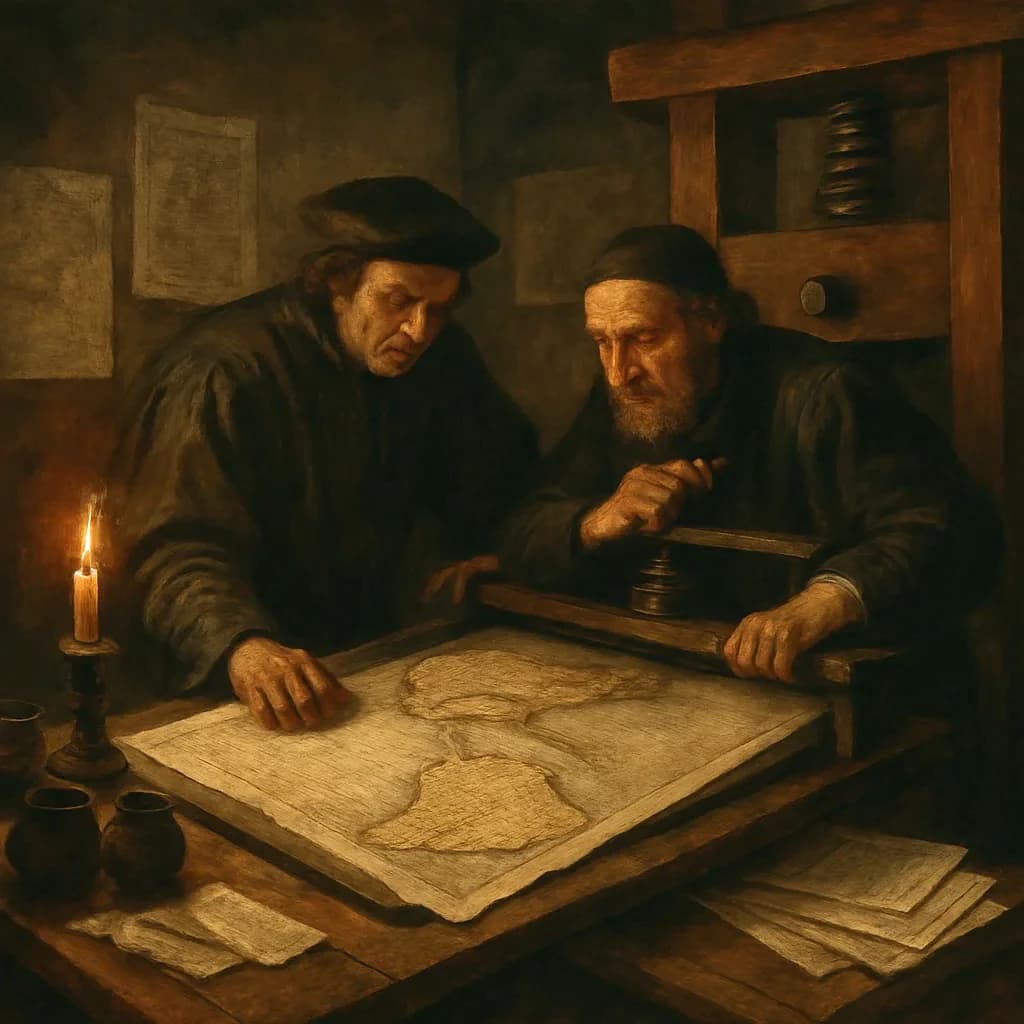
A 1507 Map of a Coast No One Had Sailed
A German mapmaker drew the coast of South America in 1507 with startling accuracy, decades before anyone had sailed it.
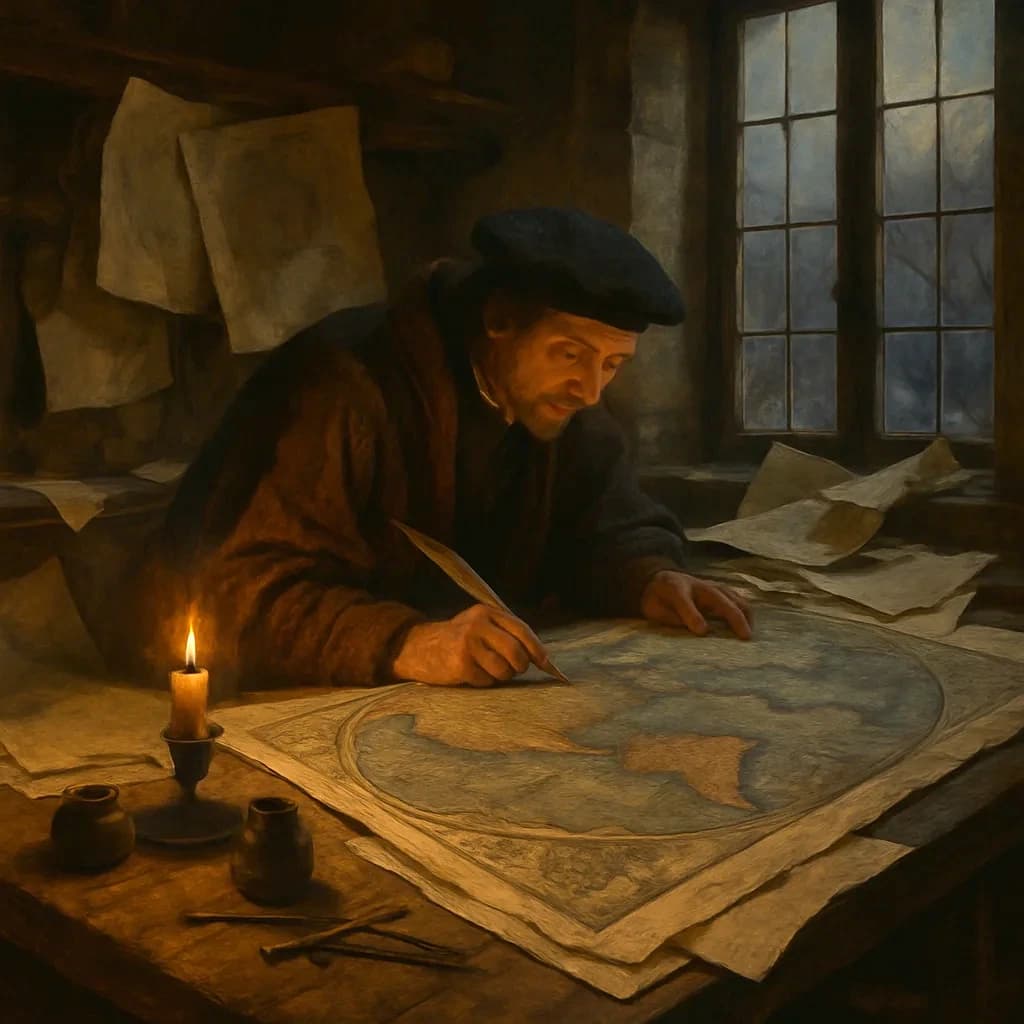
How a Forged Pamphlet Named America
A German mapmaker in 1507 named the entire western hemisphere after a man who didn't discover it. And the reason has nothing to do with credit, jealousy, or politics.
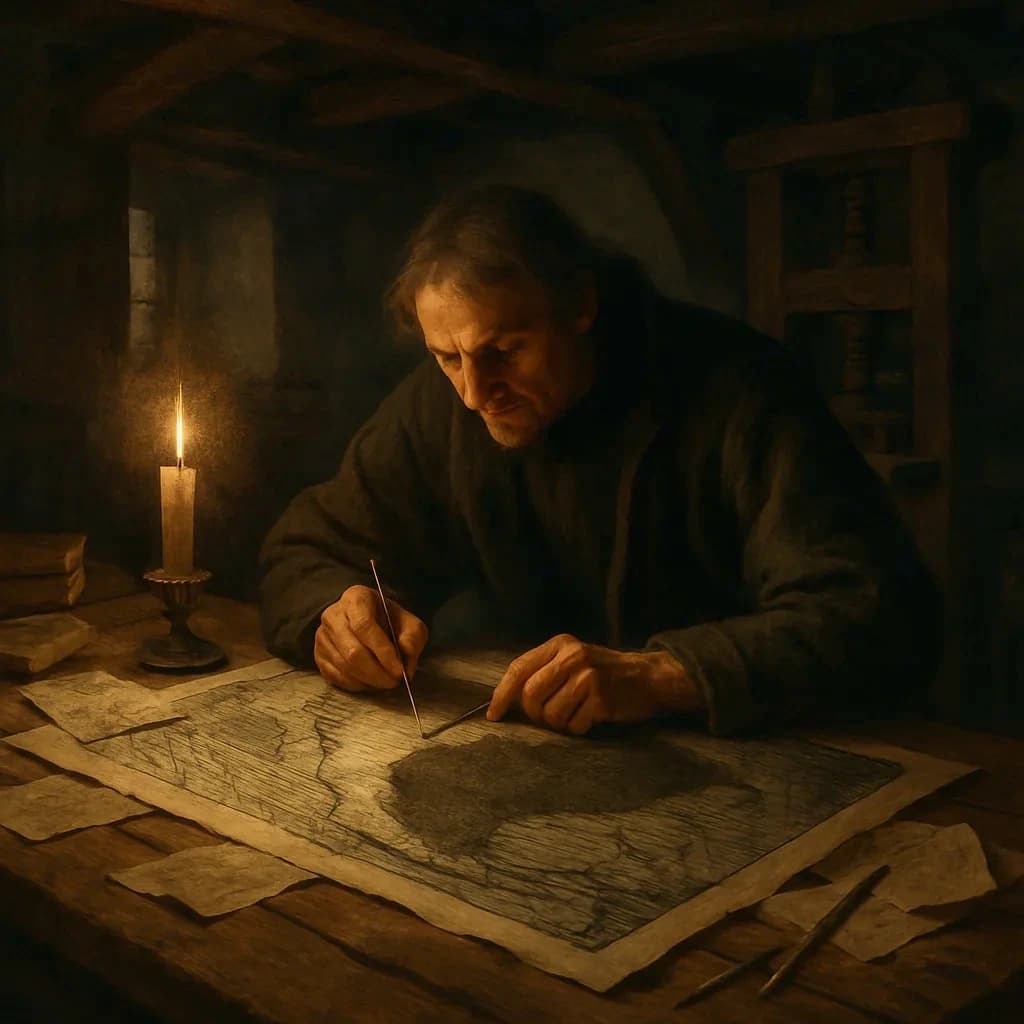
Four Days in a Florentine Jail, and the Map That Named the World
A minor Florentine clerk spent four days in prison for debt, and used the time to write a letter that gave America its name.
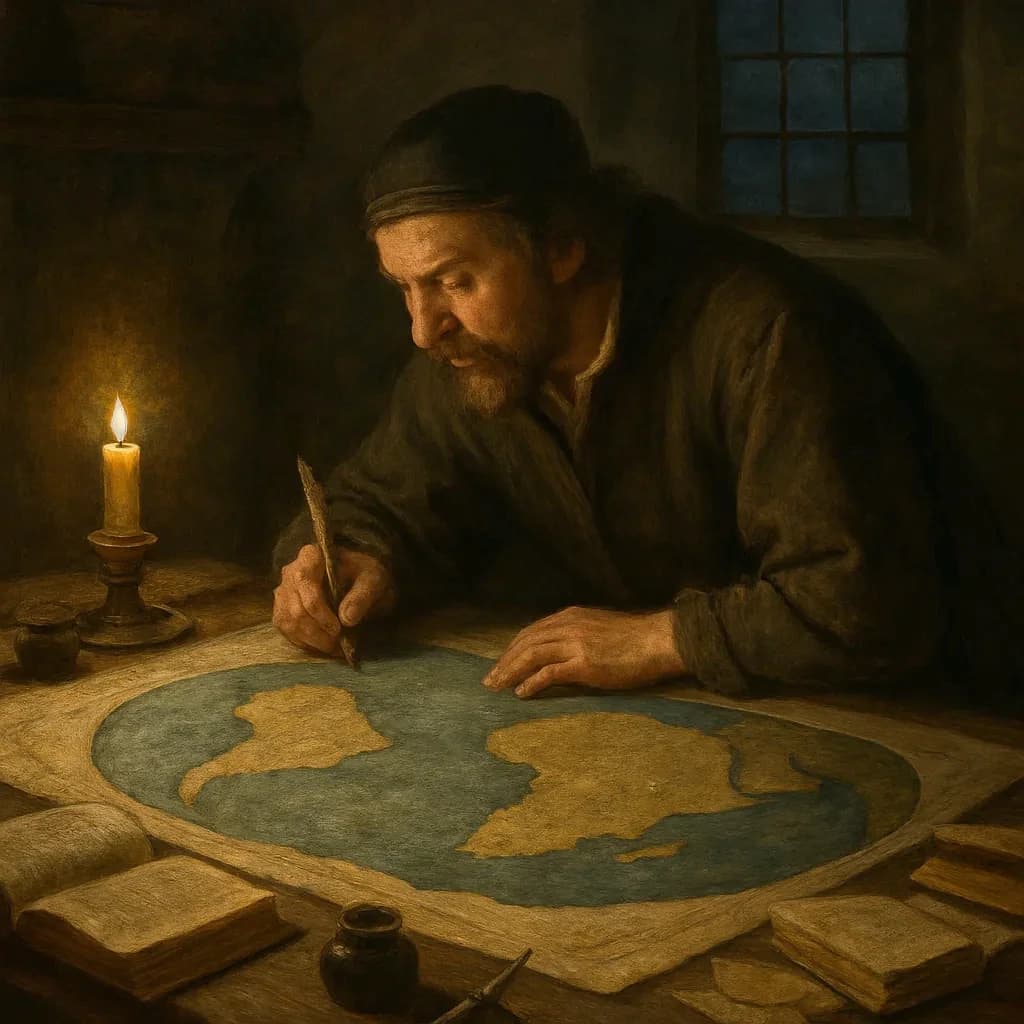
He Named America, Then Spent a Decade Erasing It
A map drawn in 1507 gave the New World a name, but the man who made it spent his final years desperately trying to take it back.
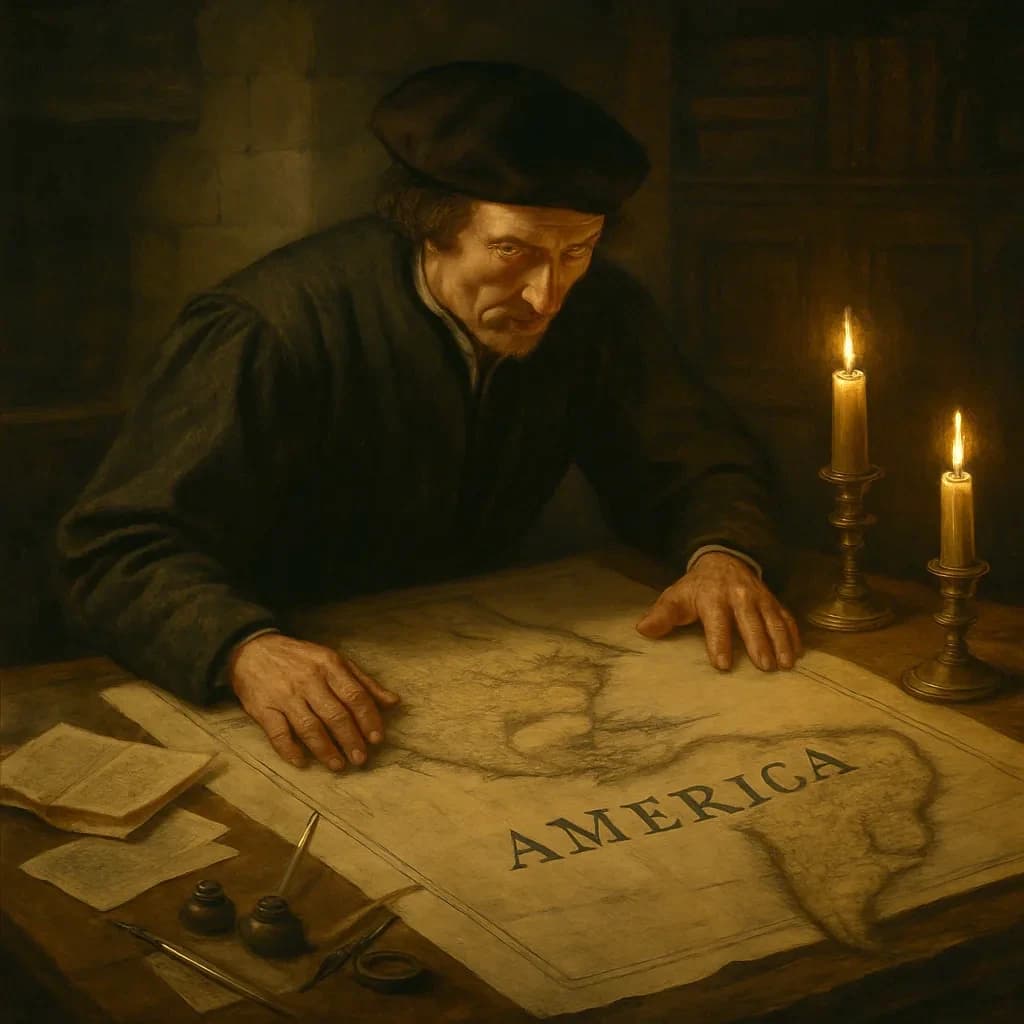
He Named America, Then Tried to Undo It
A German mapmaker named an entire continent in 1507, then spent the rest of his life trying to take it back.
How an Unpaid Haircut Named America
A single unpaid haircut in Seville determined which European power would dominate the Americas for three centuries.
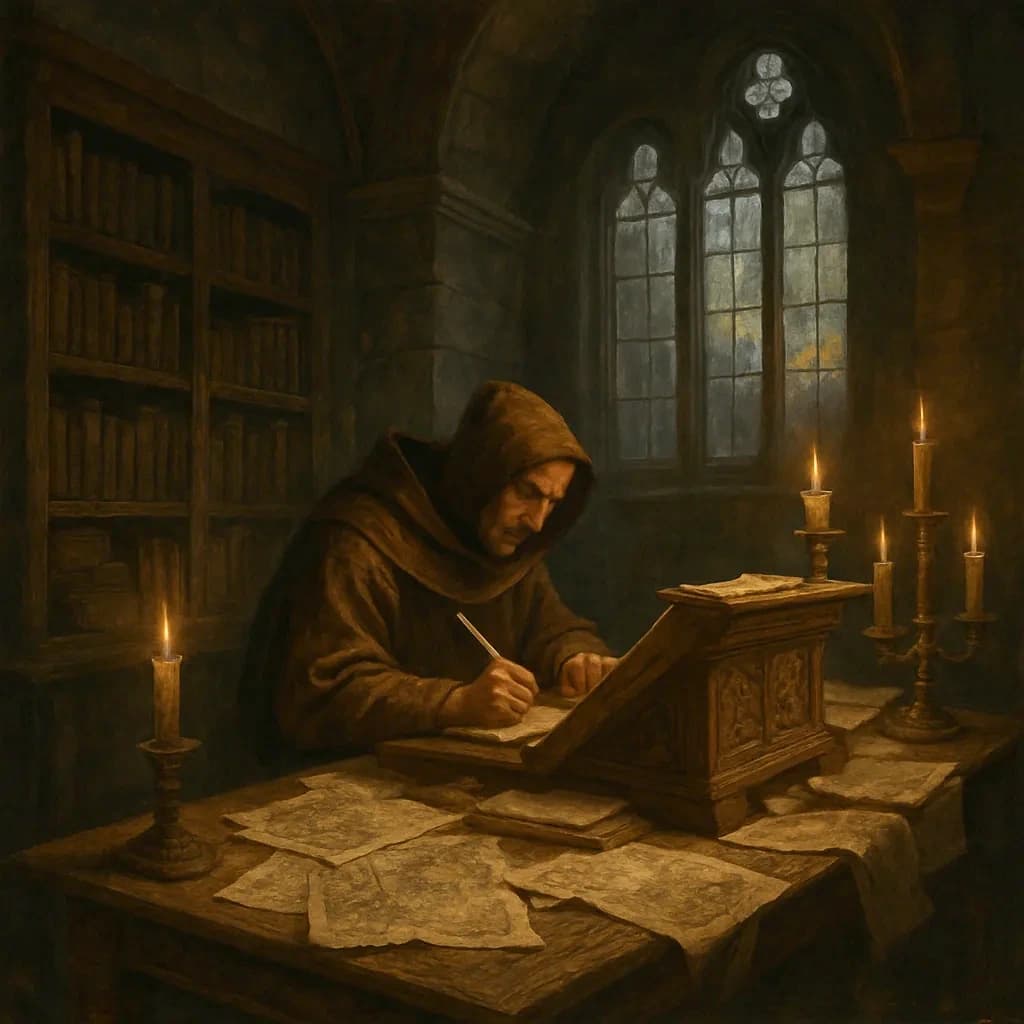
He Named America, Then Tried to Erase It
Martin Waldseemüller made the map that put America on the world in 1507, then spent the rest of his life trying to unmake it.
He Halved the Pacific to Save His Marriage
A teenage apprentice in Nuremberg made a decision in 1519 that would hide the true size of the Pacific Ocean from European navigators for over two centuries.
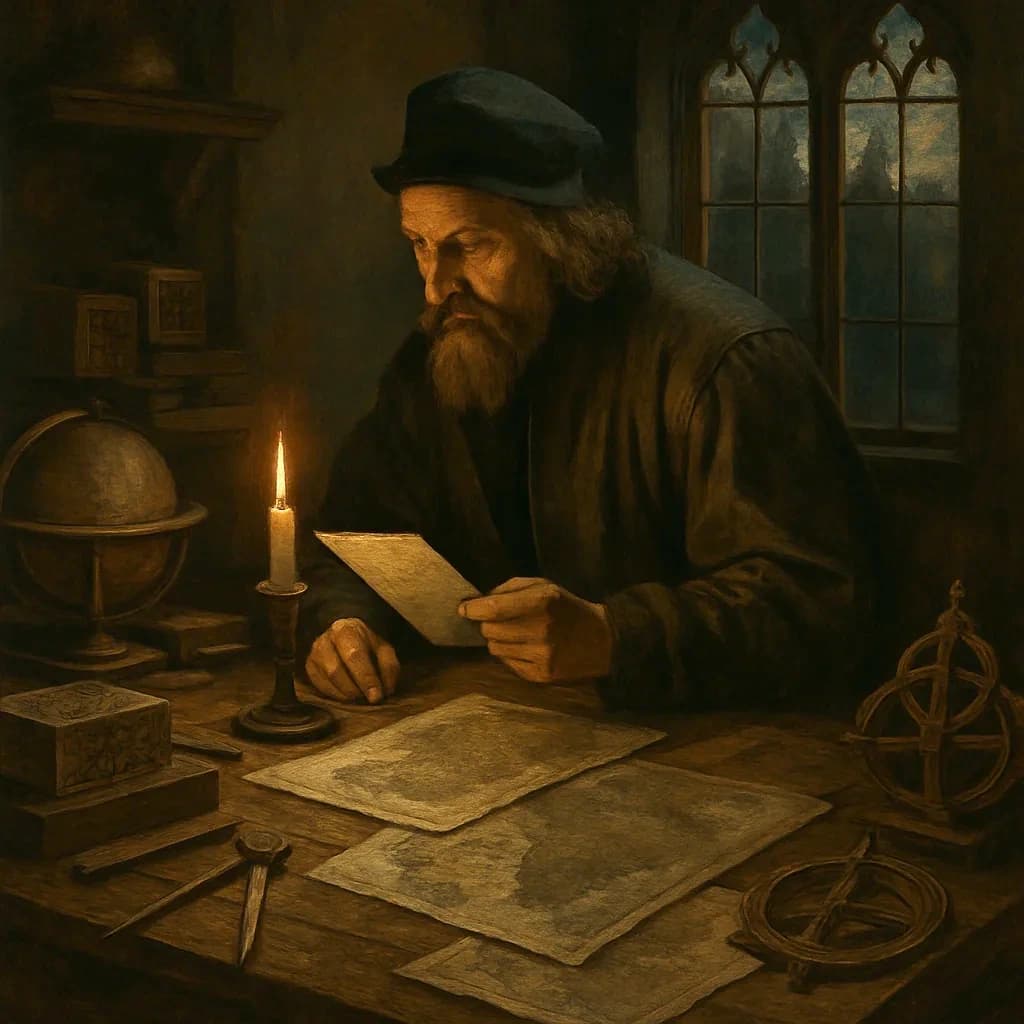
A German Mapmaker Accidentally Named America
In 1507, a German mapmaker put a new continent on his world map based entirely on a letter from a Florentine navigator, and accidentally gave America its name.
- Toby Lester, The Fourth Part of the World: The Race to the Ends of the Earth, and the Epic Story of the Map That Gave America Its Name (2009)
- John W. Hessler, The Naming of America: Martin Waldseemüller's 1507 World Map and the Cosmographiae Introductio (2008)
- Franz Laubenberger, The Naming of America, Geographic Journal 143, no. 3 (1977)