
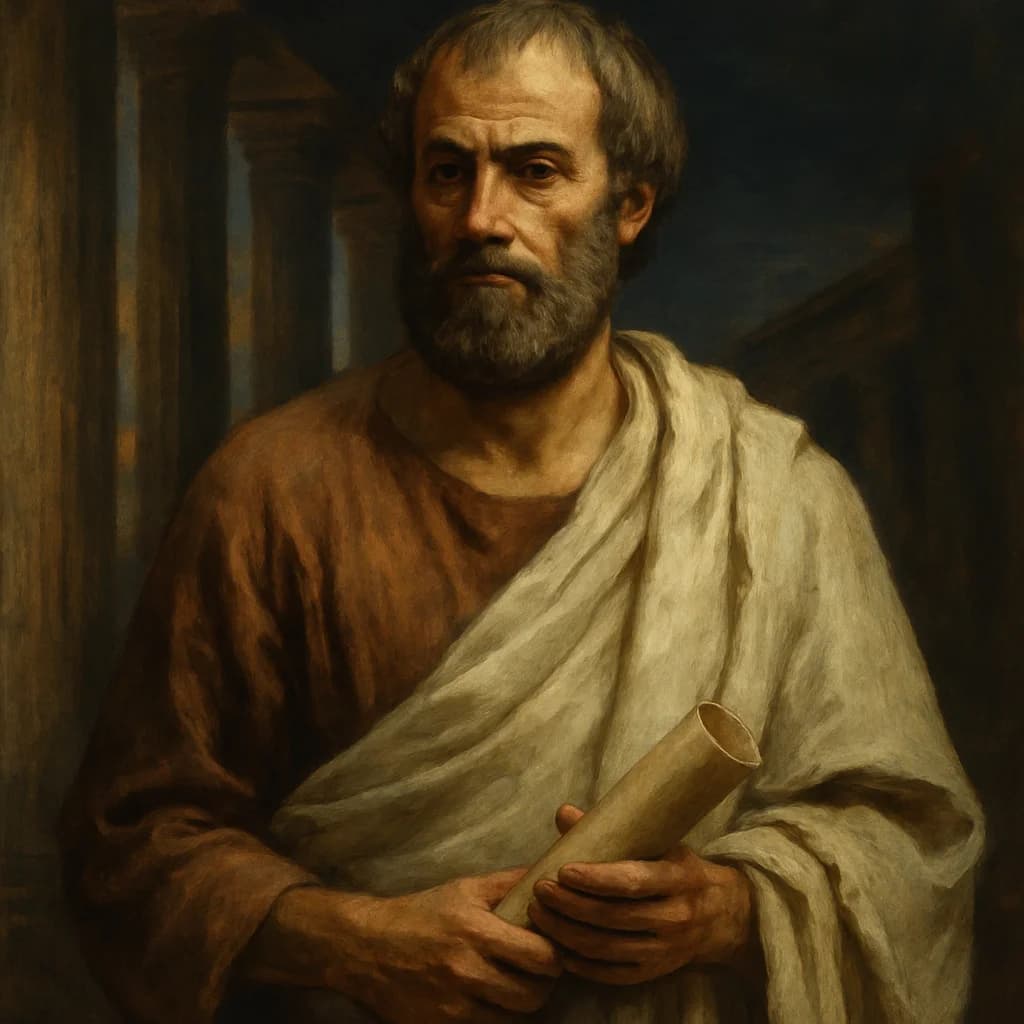
Aristotle
The man who convinced the world the Earth was the center of the universe never actually believed it himself.
Aristotle spent his life building the most comprehensive system of knowledge the world had ever seen, then watched helplessly as later generations turned his careful observations into religious dogma. The irony would have amused him. This was a man who dissected dolphins, collected constitutions like trading cards, and believed that thinking too hard could literally cook your brain.
Born in 384 BCE to the court physician of Macedonia, Aristotle arrived in Athens as a provincial outsider. For twenty years, he studied under Plato, developing a reputation for asking inconvenient questions. When Plato died and the Academy passed him over for leadership, Aristotle left to tutor a Macedonian prince named Alexander. History doesn't record whether he taught the future conqueror that the world was round, which Aristotle knew it was, based on the Earth's curved shadow during lunar eclipses.
Returning to Athens, Aristotle founded his own school, the Lyceum, where he pioneered the radical idea that knowledge should come from observation, not pure reasoning. He catalogued marine life, analyzed political systems, and developed formal logic. His students called him the 'Peripatetic' (the walker) because he taught while strolling through covered walkways. When Alexander died in 323 BCE, anti-Macedonian sentiment forced Aristotle to flee Athens. He died a year later, aged 62.
The tragedy is what happened next. Medieval scholars, working from incomplete Arabic translations of Latin translations of his Greek texts, transformed Aristotle's tentative theories into absolute truths. His careful statement that heavy objects 'tend to fall faster' became an immutable law. His geocentric model, proposed as the best available explanation, became sacred doctrine that cost Galileo his freedom and Giordano Bruno his life.
Aristotle correctly calculated that the Earth was round and even estimated its circumference to within 50% of the actual value, 2,000 years before Columbus worried about falling off the edge.
Why untold: Medieval mistranslations turned his hypotheses into dogma, obscuring his actual scientific method and making him appear more rigid than he was.
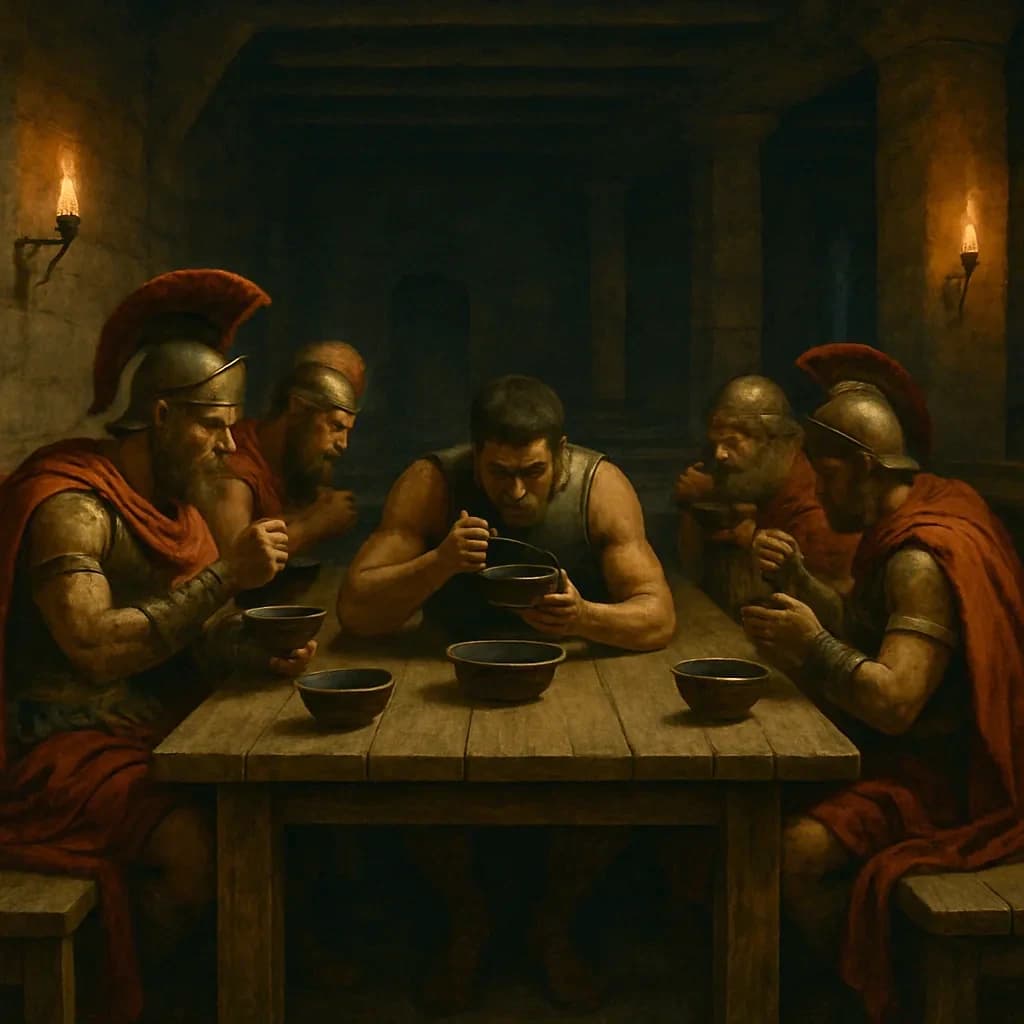
Sparta Ran Out of Spartans
Sparta's army didn't lose a war. It lost a census.
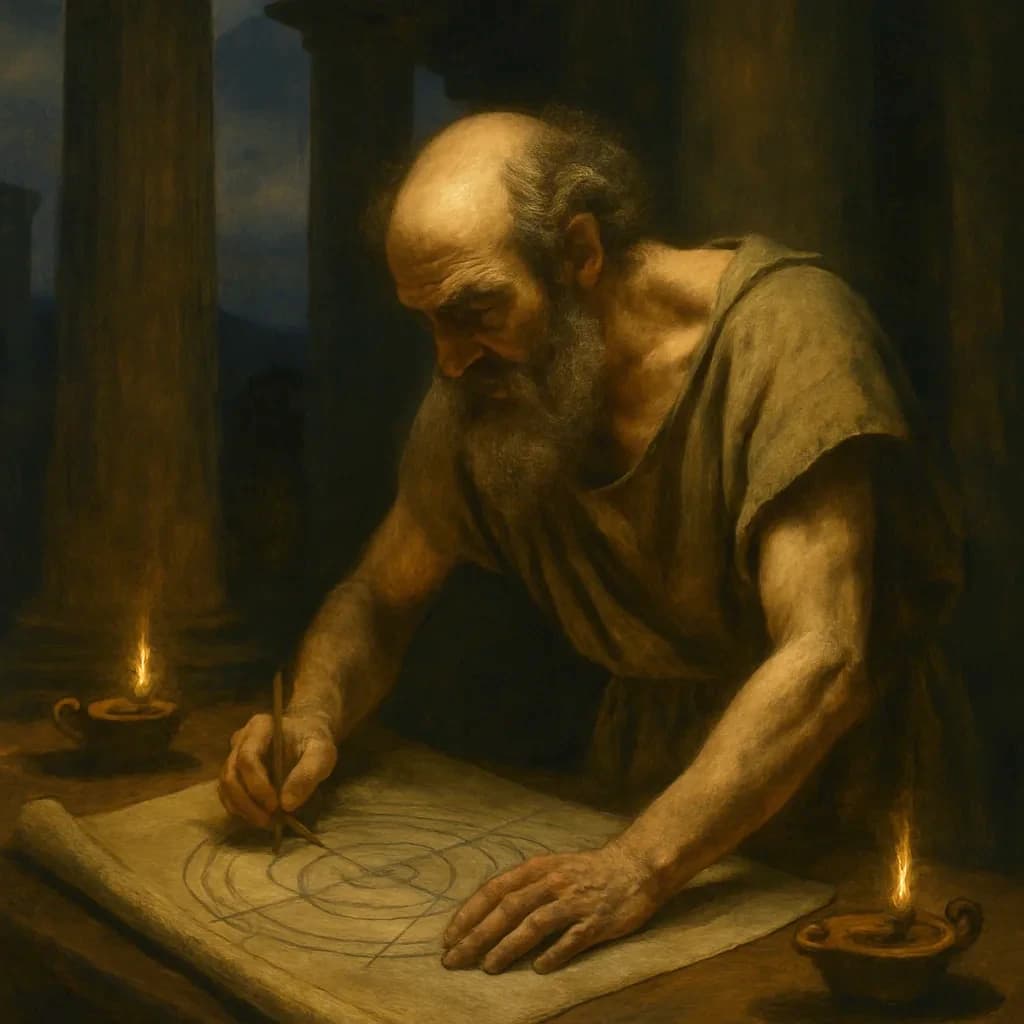
Athens Killed the Sun-Centered Universe in 270 BC
One mathematician's proof that the Earth moved around the sun got him executed, two thousand years before Galileo was even born.

When Aristotle's Ghost Haunted Columbus
A 2,000-year-old mathematical error convinced Columbus that China was just around the corner from Spain.

Zeno's Arrow, Solved in an Opium Haze
A drug-addicted mathematician in 1840s London cracked humanity's oldest puzzle while slowly dying from his addiction.
- Leroi, Armand Marie. The Lagoon: How Aristotle Invented Science. Bloomsbury, 2014.
- Barnes, Jonathan. Aristotle: A Very Short Introduction. Oxford University Press, 2000.
- Falcon, Andrea. Aristotle and the Science of Nature. Cambridge University Press, 2005.