
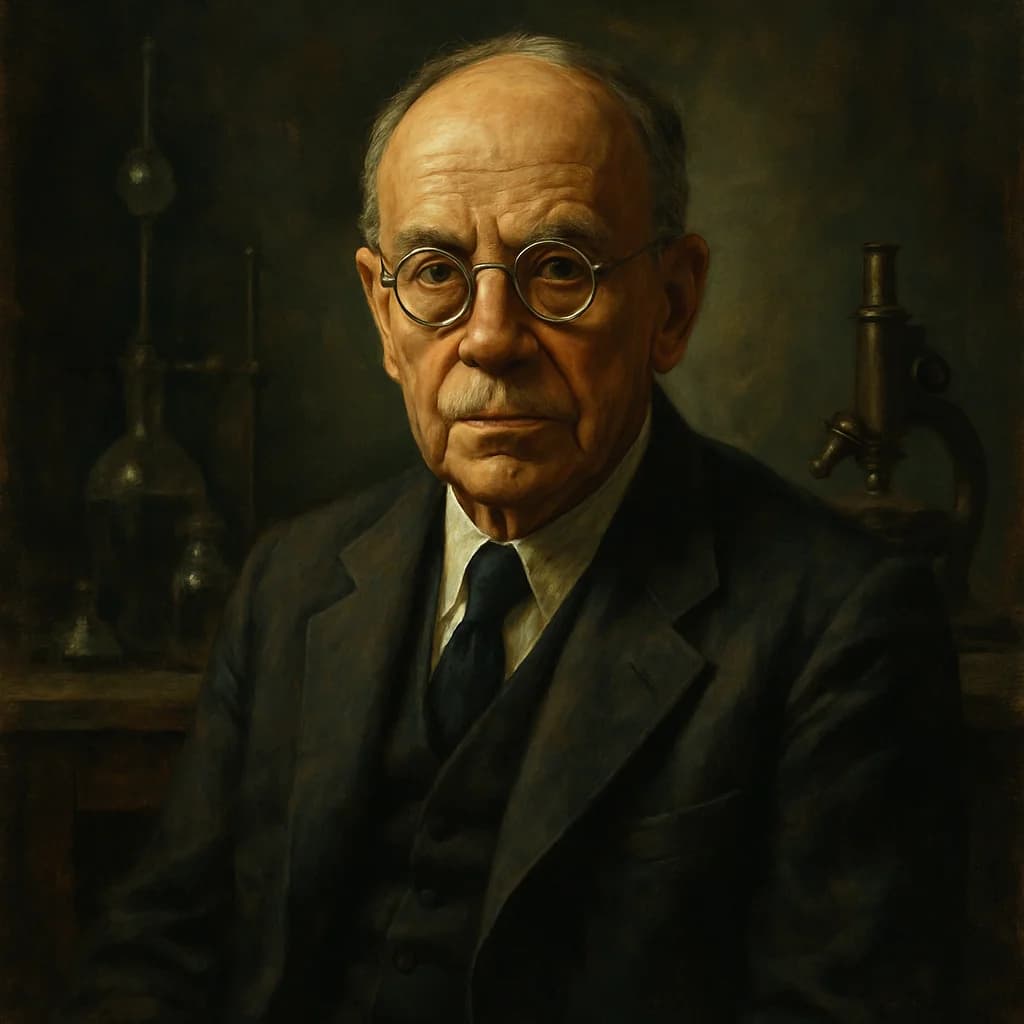
Otto Hahn
The man who accidentally split the atom spent the rest of his life trying to put nuclear physics back in the bottle.
Otto Hahn never intended to change the world. In December 1938, this mild-mannered German chemist was simply trying to understand what happened when uranium absorbed neutrons. His Berlin laboratory had been methodically bombarding uranium for months, expecting to create heavier elements. Instead, Hahn kept finding barium, an element with roughly half the atomic weight of uranium. It made no sense.
Hahn's confusion deepened because his longtime collaborator, Lise Meitner, had fled Nazi Germany just months earlier. For thirty years, the Jewish physicist had been his intellectual partner, the theoretical mind to his experimental hands. Now, reduced to smuggling letters across borders, Hahn had to describe his impossible results to Meitner through coded correspondence. Her reply, sent from Swedish exile, contained the explanation that would haunt him forever: he had split the uranium nucleus.
The discovery of nuclear fission earned Hahn the 1944 Nobel Prize in Chemistry, awarded while he sat in an Allied detention camp, unaware of Hiroshima until a British officer told him the news. Hahn's reaction was immediate and devastating: he threatened suicide, believing his discovery had made him complicit in mass murder. His fellow German scientists had to talk him down through the night.
The irony consumed his later years. Hahn became one of nuclear weapons' most vocal opponents, signing the 1957 Göttingen Manifesto against German nuclear armament and speaking at peace conferences worldwide. He watched helplessly as his accidental discovery spawned an arms race between superpowers, each building bombs that could end civilization. Until his death in 1968, Hahn insisted he was just a chemist who had stumbled into physics, a man whose curiosity about uranium had accidentally unlocked humanity's most dangerous secret.
Hahn discovered nuclear fission while trying to create artificial gold through nuclear transmutation, a modern version of medieval alchemy.
Why untold: His story is overshadowed by the Manhattan Project scientists and his collaborator Lise Meitner's more dramatic narrative as a Jewish refugee.
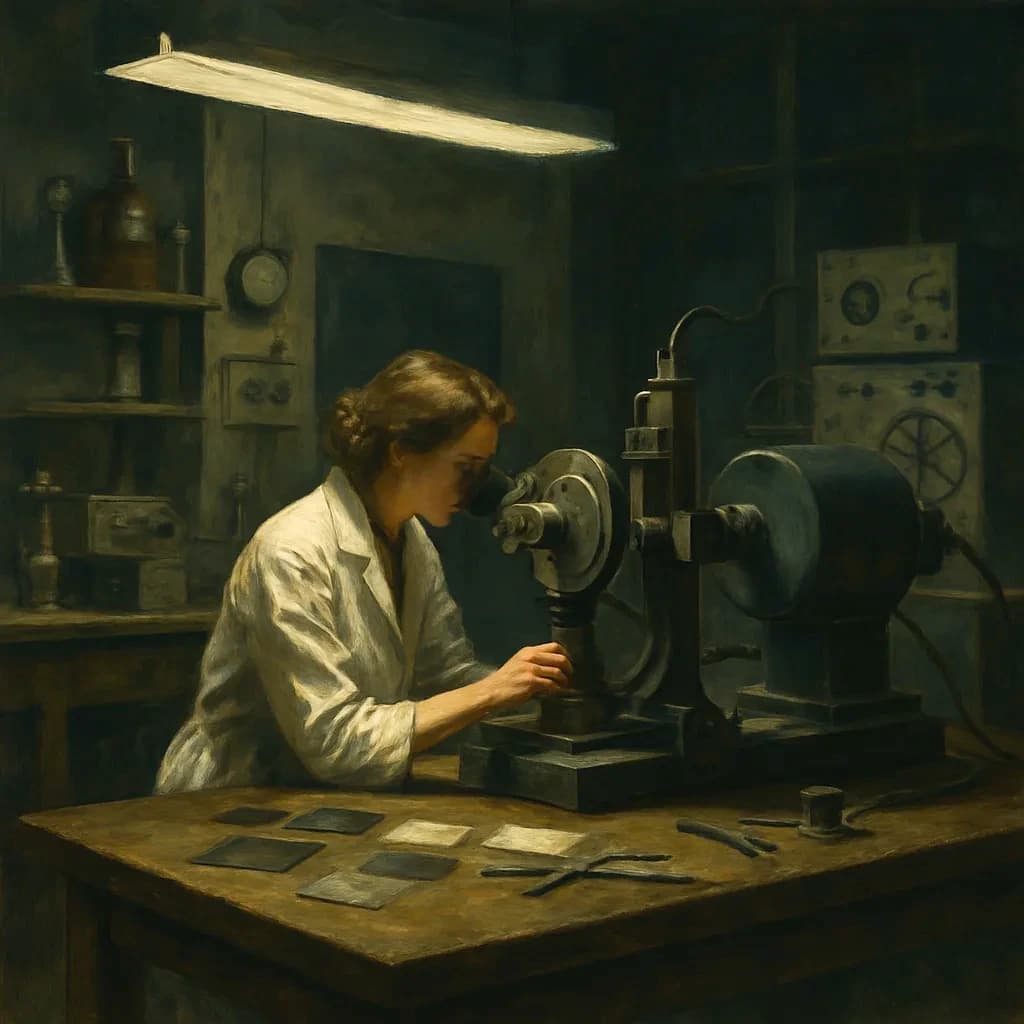
The Laboratory Where Women Had No Names
In Marie Curie's shadow, a generation of brilliant women scientists worked without credit, their discoveries published under male colleagues' names, until one of them broke the silence.
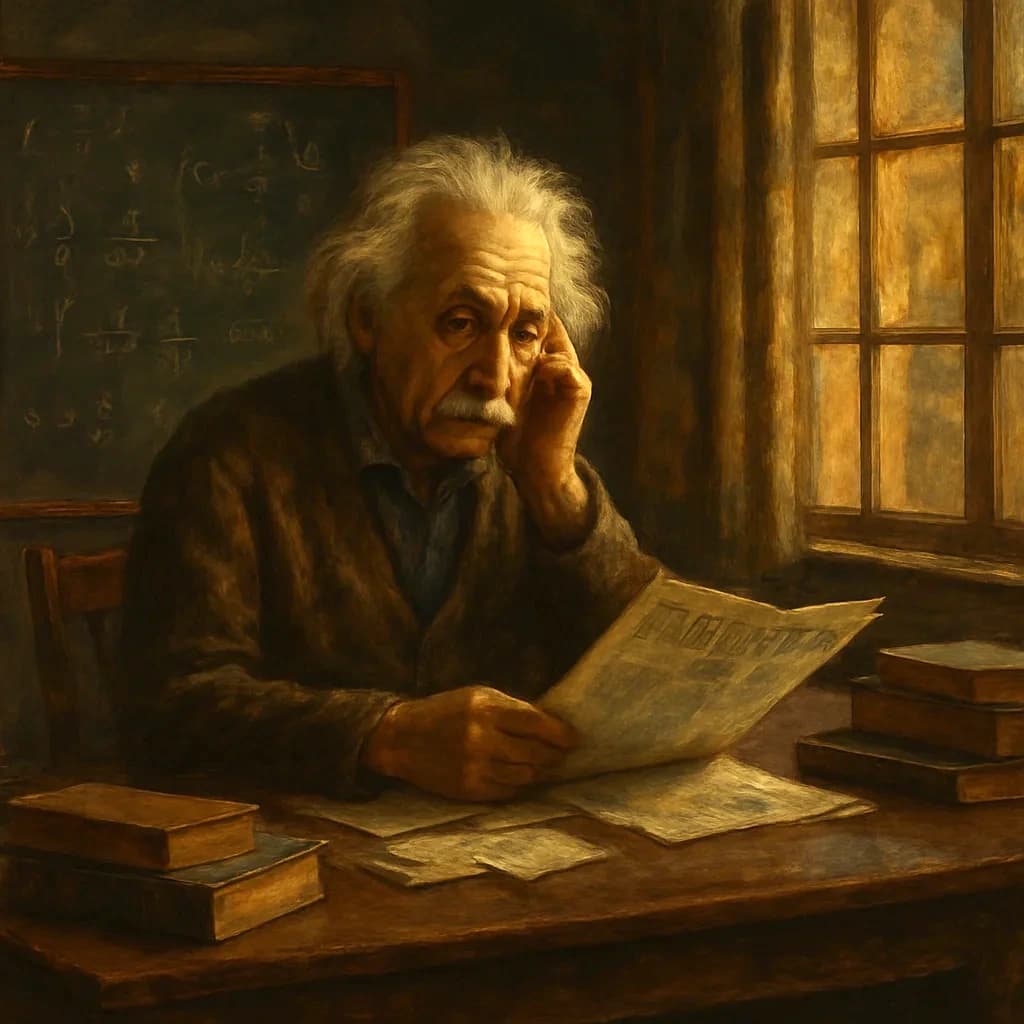
A Twenty-Year Math Proof Helped Build the Atomic Bomb
A brilliant mathematician spent twenty years solving the world's hardest puzzle, then discovered his answer would help build the atomic bomb.
- Sime, Ruth Lewin. Lise Meitner: A Life in Physics. University of California Press, 1996.
- Bernstein, Jeremy. Hitler's Uranium Club: The Secret Recordings at Farm Hall. Copernicus Books, 2001.
- Crawford, Elisabeth. Ruth Lewin Sime, and Mark Walker. A Nobel Tale of Postwar Injustice. Physics Today, 1997.