
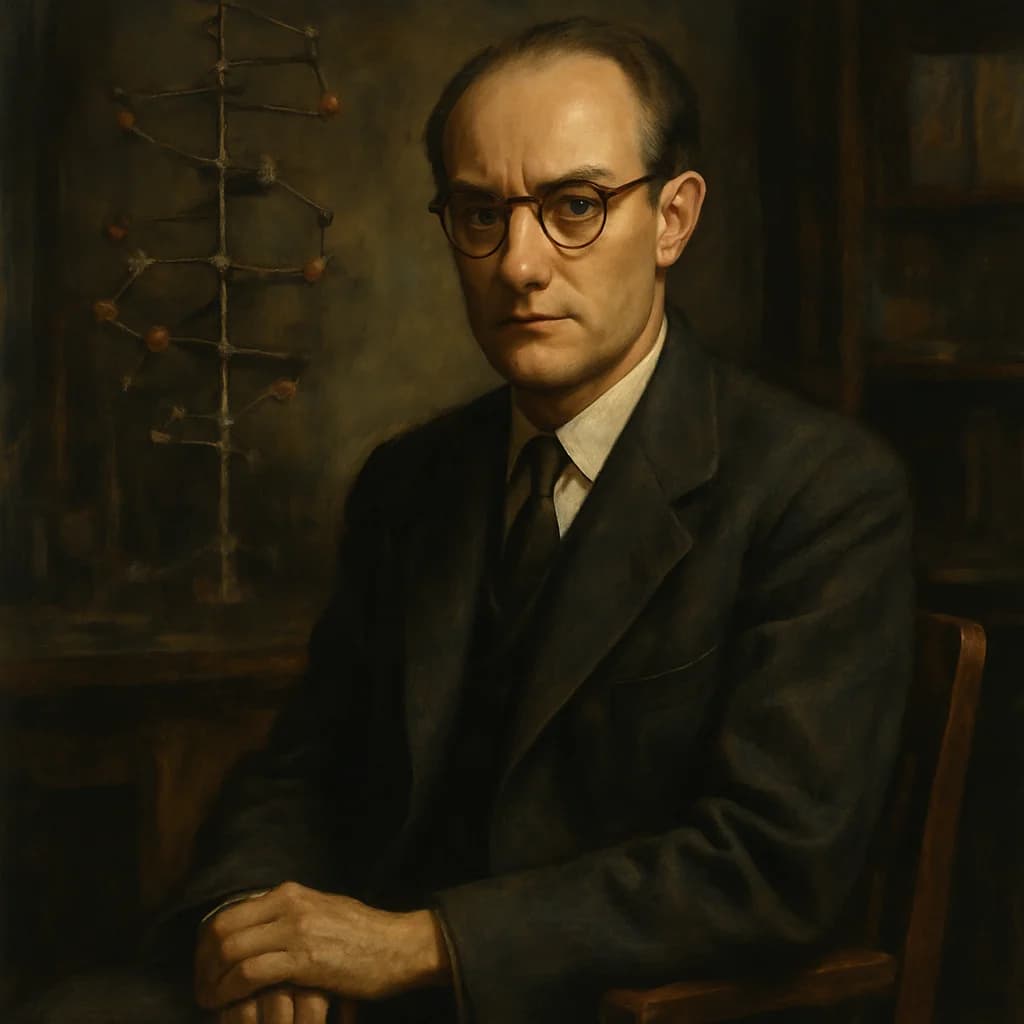
Francis Crick
The man who won the Nobel Prize for DNA's structure spent his final decades hunting for the secret of consciousness in a windowless basement lab.
Francis Crick never intended to steal anyone's thunder. In 1951, he was a 35-year-old graduate student at Cambridge, older than most because the war had derailed his physics career. He'd spent World War II designing magnetic mines for the British Admiralty, work so classified he couldn't discuss it for decades. When he finally returned to science, he was starting over in an entirely new field: biology.
The DNA breakthrough came from a perfect storm of circumstances. Crick's mathematical mind paired with James Watson's biological intuition, but their famous double helix model relied heavily on X-ray crystallography data they hadn't generated themselves. Rosalind Franklin's Photo 51, showing DNA's helical structure, reached them through Maurice Wilkins without Franklin's knowledge or consent. When they published their 1953 Nature paper, Franklin received minimal acknowledgment. She died of ovarian cancer in 1958, four years before the Nobel Committee recognized the work, and Nobel Prizes aren't awarded posthumously.
But here's what most people miss: Crick was haunted by the incompleteness of molecular biology. DNA told you the recipe, not why consciousness emerged from chemistry. In the 1970s, he abandoned his prestigious position to chase an impossible question: how does the brain create the mind? He spent his last thirty years at the Salk Institute, working in cognitive neuroscience, trying to locate consciousness in neural circuits. The man who'd helped crack life's code was obsessed with cracking the code of experience itself.
Crick died in 2004, still searching for what he called the 'neural correlates of consciousness.' His final papers weren't about genes or proteins, but about the claustrum, a thin sheet of brain tissue he believed might be the seat of awareness.
Crick was so committed to finding the biological basis of consciousness that he advocated for the study of psychedelic drugs in controlled scientific settings, arguing they might provide crucial insights into how the brain constructs reality.
Why untold: His later career in neuroscience is overshadowed by the DNA discovery, while his role in sidelining Rosalind Franklin's contributions remains uncomfortable for scientific mythology.
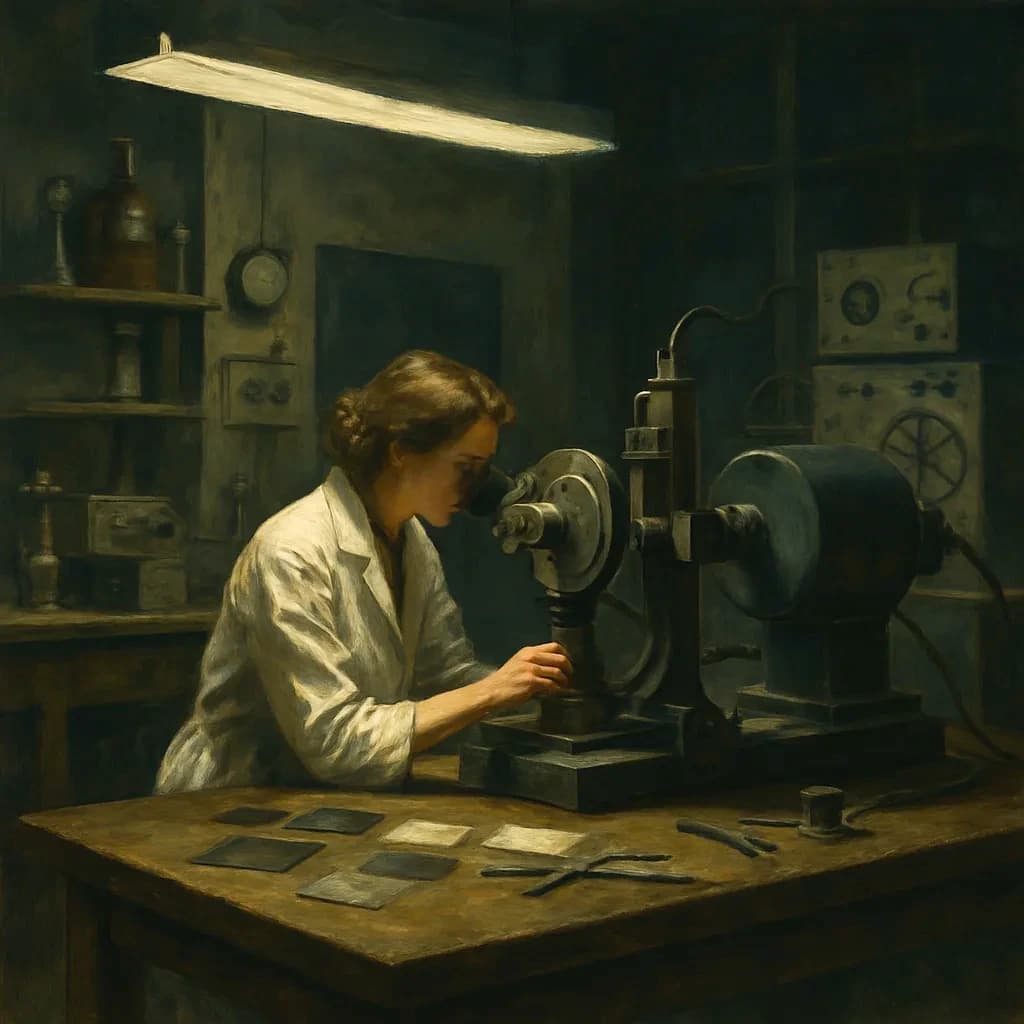
The Laboratory Where Women Had No Names
In Marie Curie's shadow, a generation of brilliant women scientists worked without credit, their discoveries published under male colleagues' names, until one of them broke the silence.
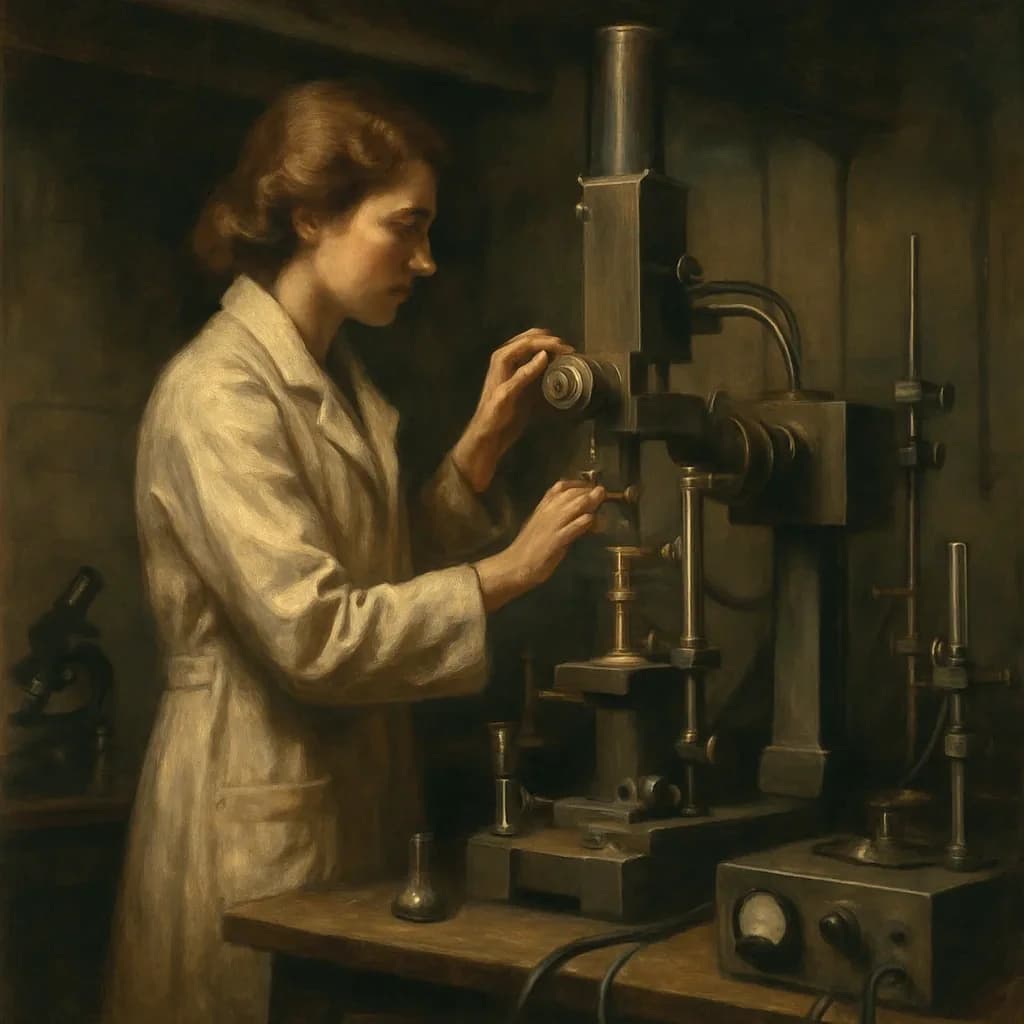
Photo 51 Cracked DNA. She Never Got the Credit.
She discovered the structure of DNA, but a single photograph stolen from her lab gave two men a Nobel Prize.
- Crick, Francis. 'What Mad Pursuit: A Personal View of Scientific Discovery.' Basic Books, 1988.
- Judson, Horace Freeland. 'The Eighth Day of Creation: Makers of the Revolution in Biology.' Cold Spring Harbor Laboratory Press, 1996.
- Koch, Christof. 'The Quest for Consciousness: A Neurobiological Approach.' Roberts & Company, 2004.