
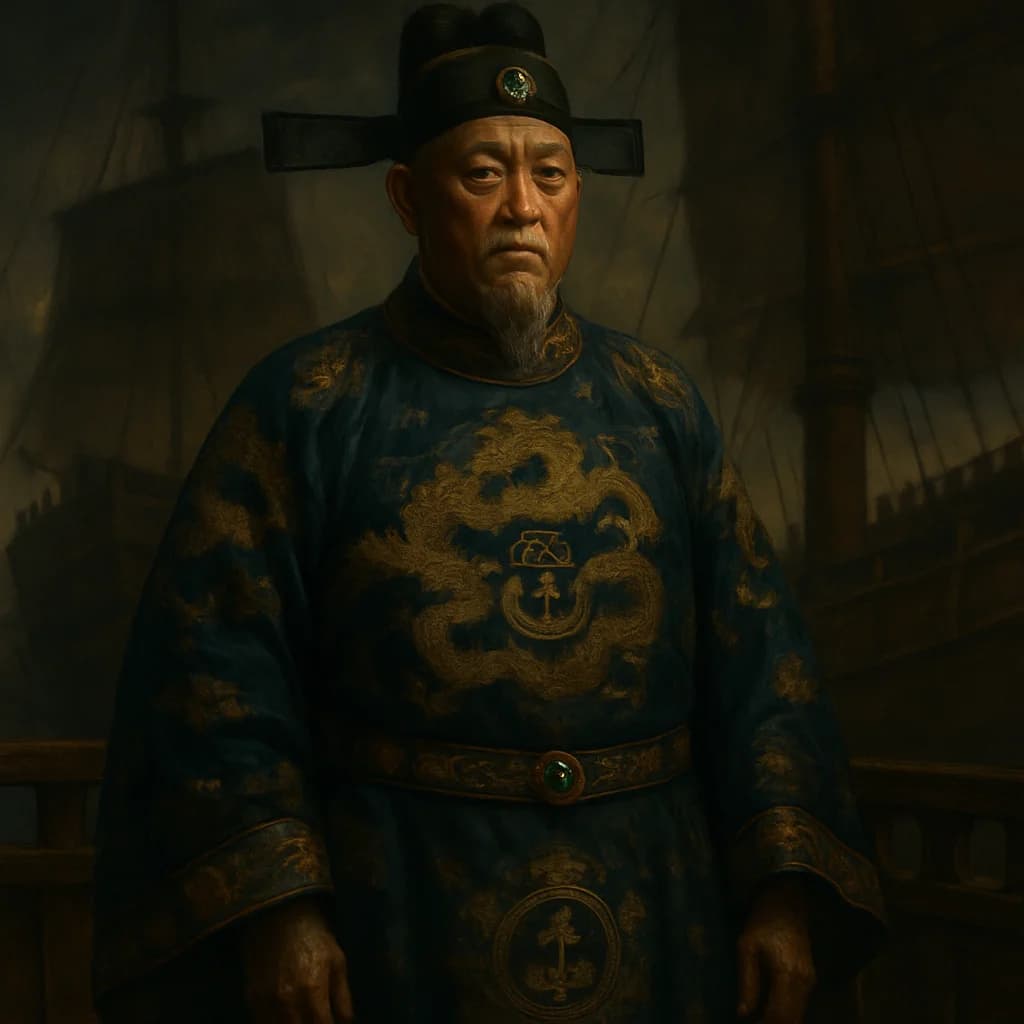
Zheng He
The Muslim eunuch who commanded the largest navy in history died knowing his emperor would erase everything he'd accomplished.
Ma He was born into a Muslim family in Yunnan province, captured as a boy during Ming conquest, castrated, and thrust into imperial service. The young eunuch caught Emperor Yonglo's attention not for his seamanship (he'd likely never seen the ocean) but for his intelligence and loyalty. When the emperor decided to project Chinese power across the seas, he chose this former enemy to lead the grandest naval expeditions in human history.
Between 1405 and 1433, the admiral now called Zheng He commanded fleets that dwarfed anything Europe would assemble for centuries. His treasure ships stretched over 400 feet long, accompanied by hundreds of vessels carrying 30,000 sailors, soldiers, merchants, and diplomats. They reached Southeast Asia, India, the Persian Gulf, Arabia, and the eastern coast of Africa, establishing Chinese presence from Malacca to Mogadishu. These weren't exploration missions but diplomatic juggernauts, distributing Chinese silk and porcelain while collecting tribute from dozens of kingdoms.
Yet Zheng He understood something his emperor refused to see: China was changing. Confucian officials despised these expensive expeditions, viewing foreign trade as beneath the Middle Kingdom's dignity. When Emperor Yonglo died in 1424, his successor immediately began dismantling the fleet. The seventh and final voyage in 1433 became a funeral march for Chinese maritime ambition.
Zheng He spent his final years watching his life's work systematically destroyed. Maps were burned, shipyards abandoned, records scattered. The man who had projected Chinese power from Java to Jeddah died in 1433, knowing that within decades, China would retreat behind its borders and pretend the outside world didn't exist.
Zheng He's treasure ships were so large that Columbus's Santa María could have fit on their decks as a lifeboat.
Why untold: Chinese imperial records were deliberately destroyed by Confucian bureaucrats who viewed the expeditions as wasteful foreign adventures unworthy of the Middle Kingdom.
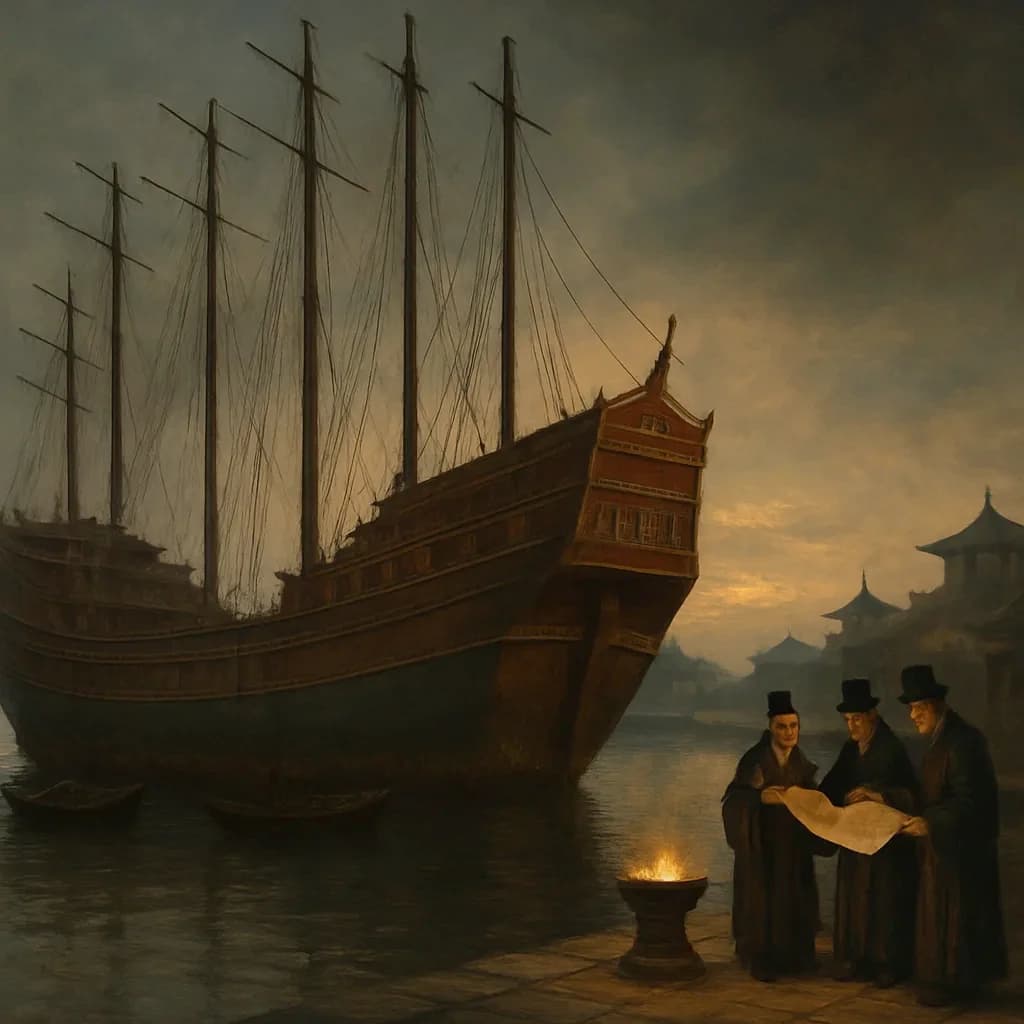
China Burned the Maps to Its Greatest Fleet
A dying emperor's last breath ended the greatest maritime program in human history in 1424, before most of the world even knew it existed.
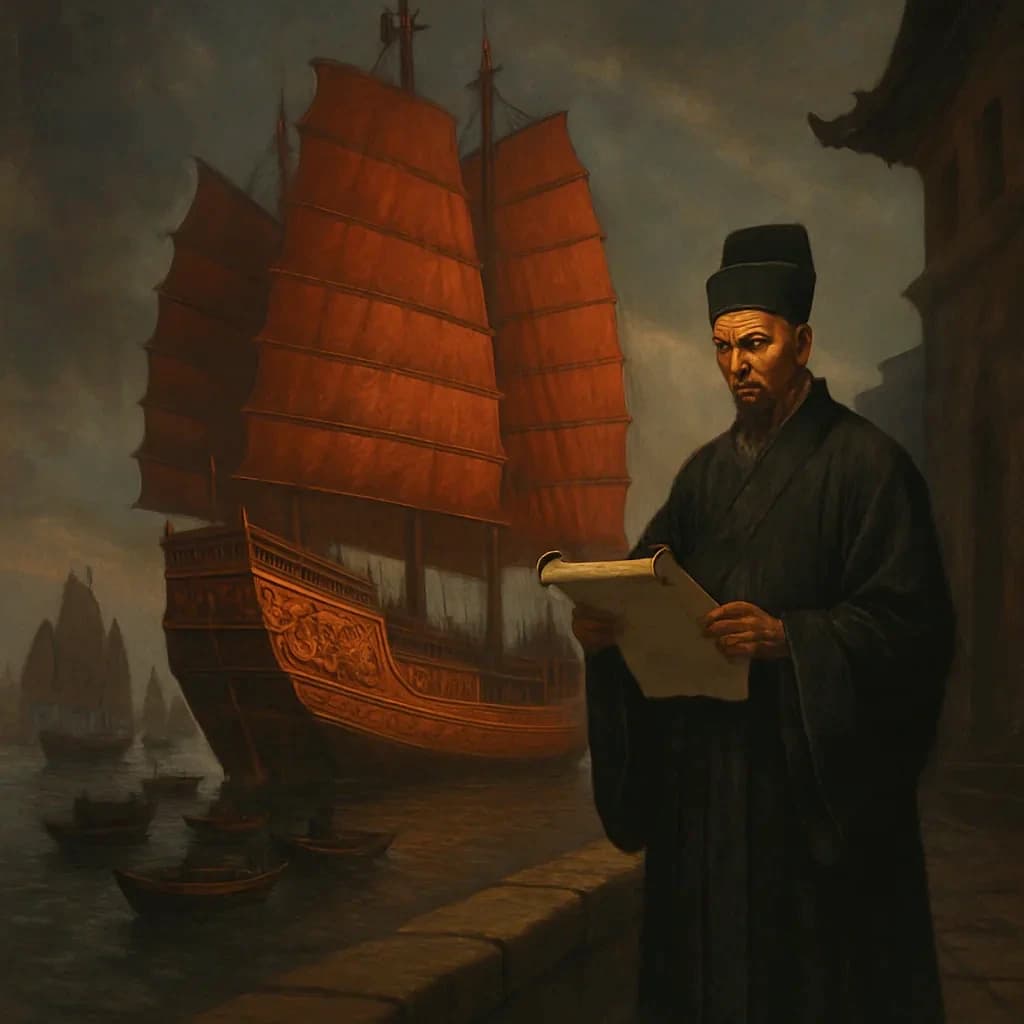
One Official's Protest Made China Scrap the World's Greatest Navy
A single court official's written protest caused China to abandon the greatest naval power the world had ever seen, and he died in prison before he could know he'd won.
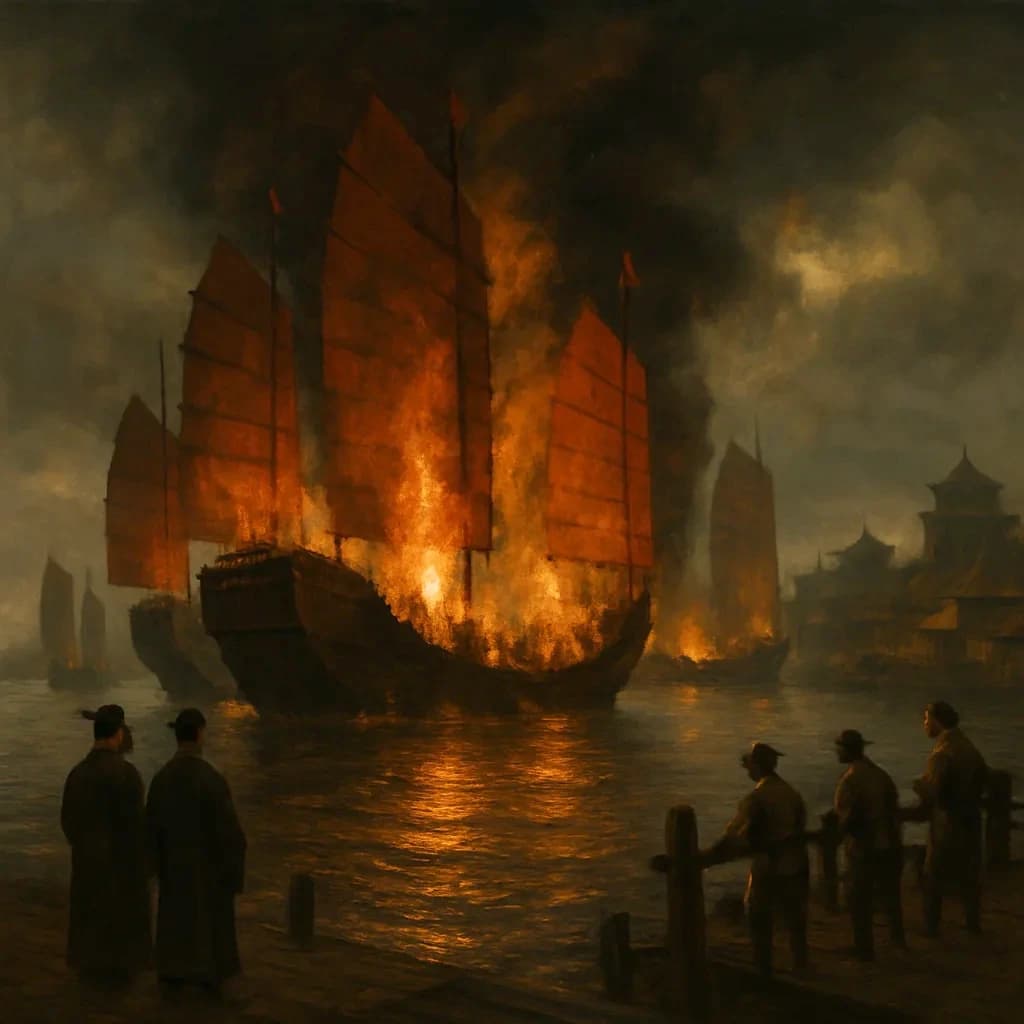
When China's Admiral Burned the World's Greatest Fleet
In 1433, the largest naval force in human history sailed home to China and was ordered to burn itself.
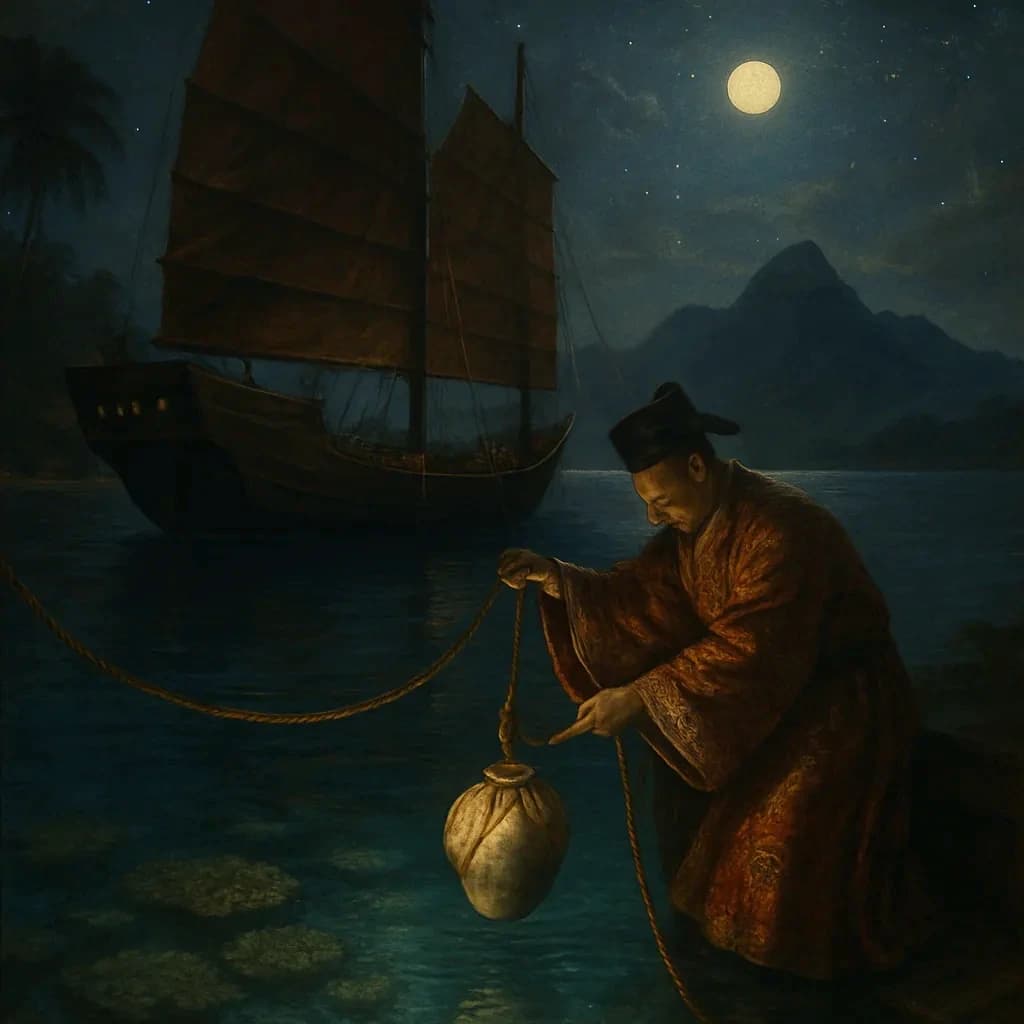
A Ming Admiral's Final Voyage Carried China's Last Secret
A Ming Dynasty admiral's final voyage carried something more valuable than treasure: the last secret of Chinese power.
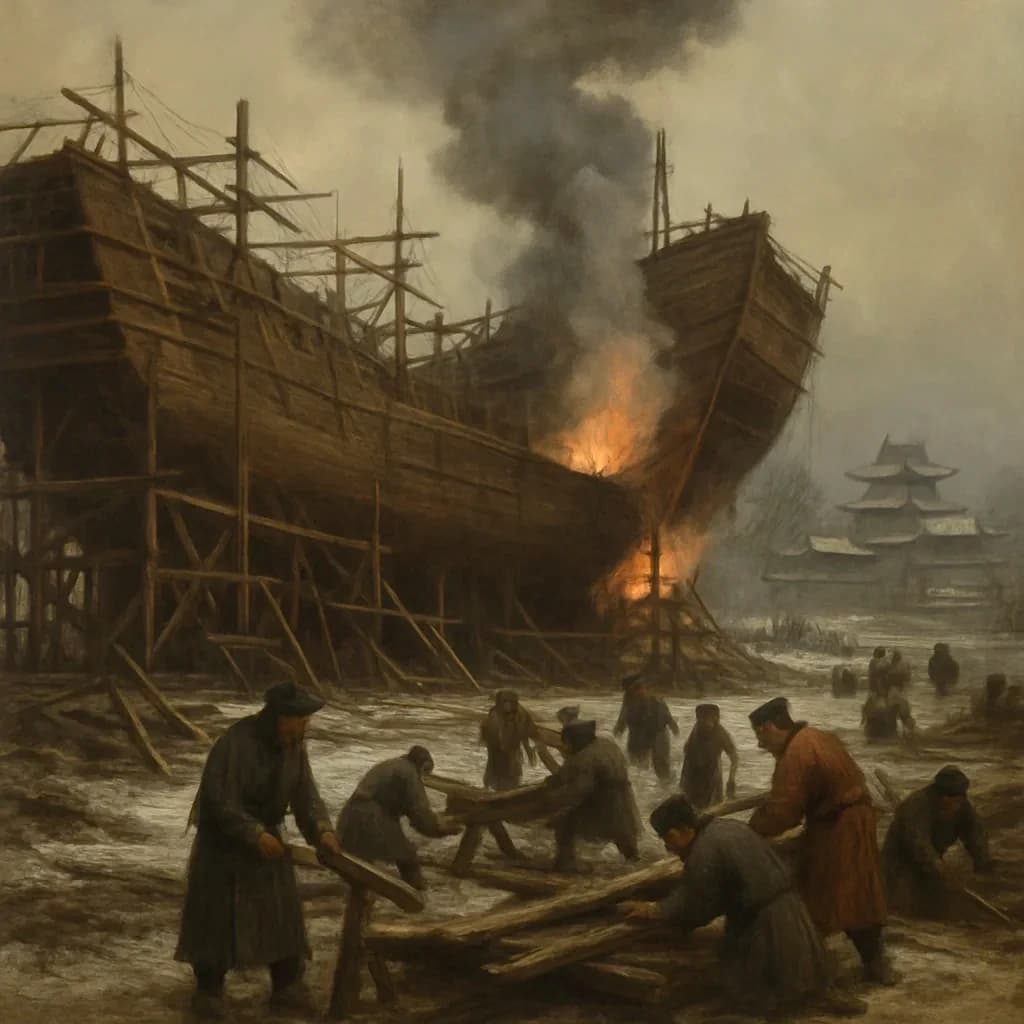
China Built the World's Greatest Fleet, Then Burned It
For twelve years, 30,000 Chinese workers built the largest fleet in human history, then burned every ship before they touched water.
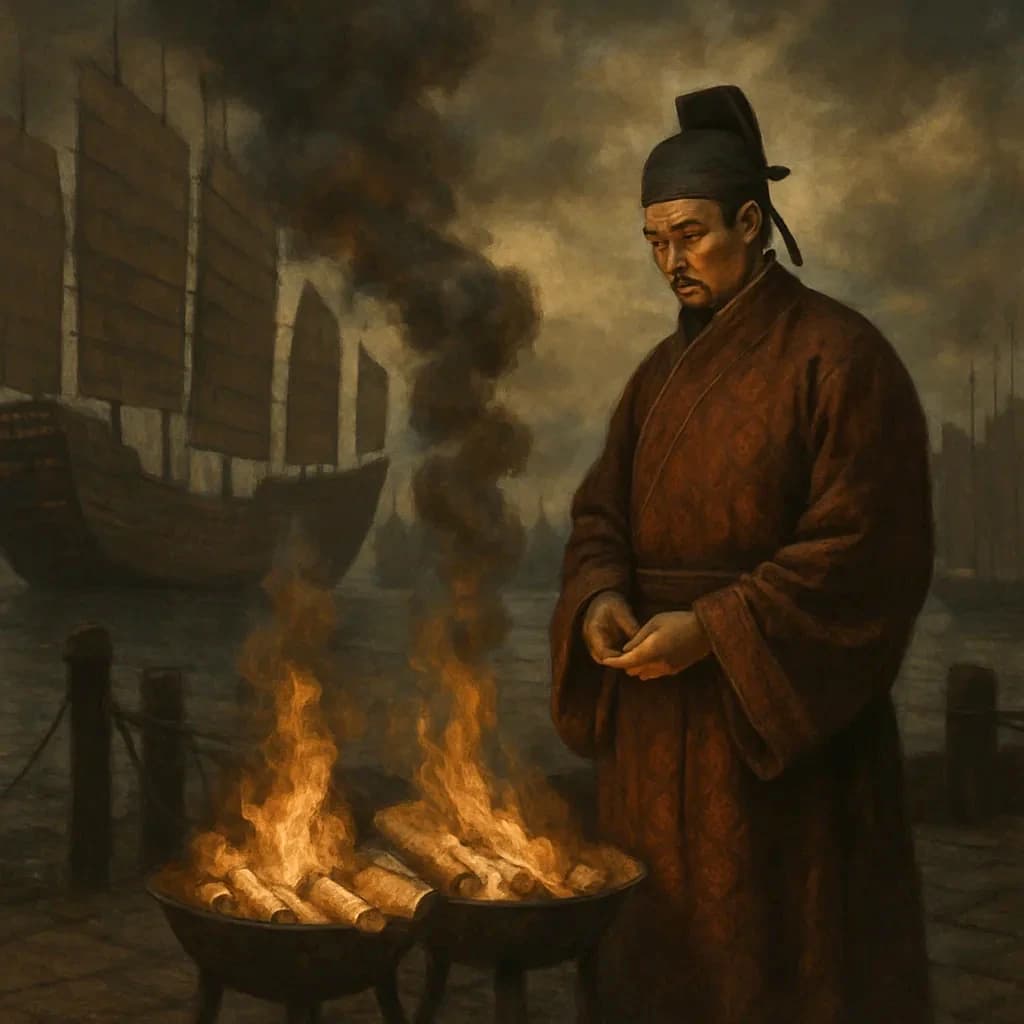
China Recalled the World's Greatest Navy and Burned Its Maps
The most powerful navy in history received orders in 1433 to sail home and destroy every record of where it had been.
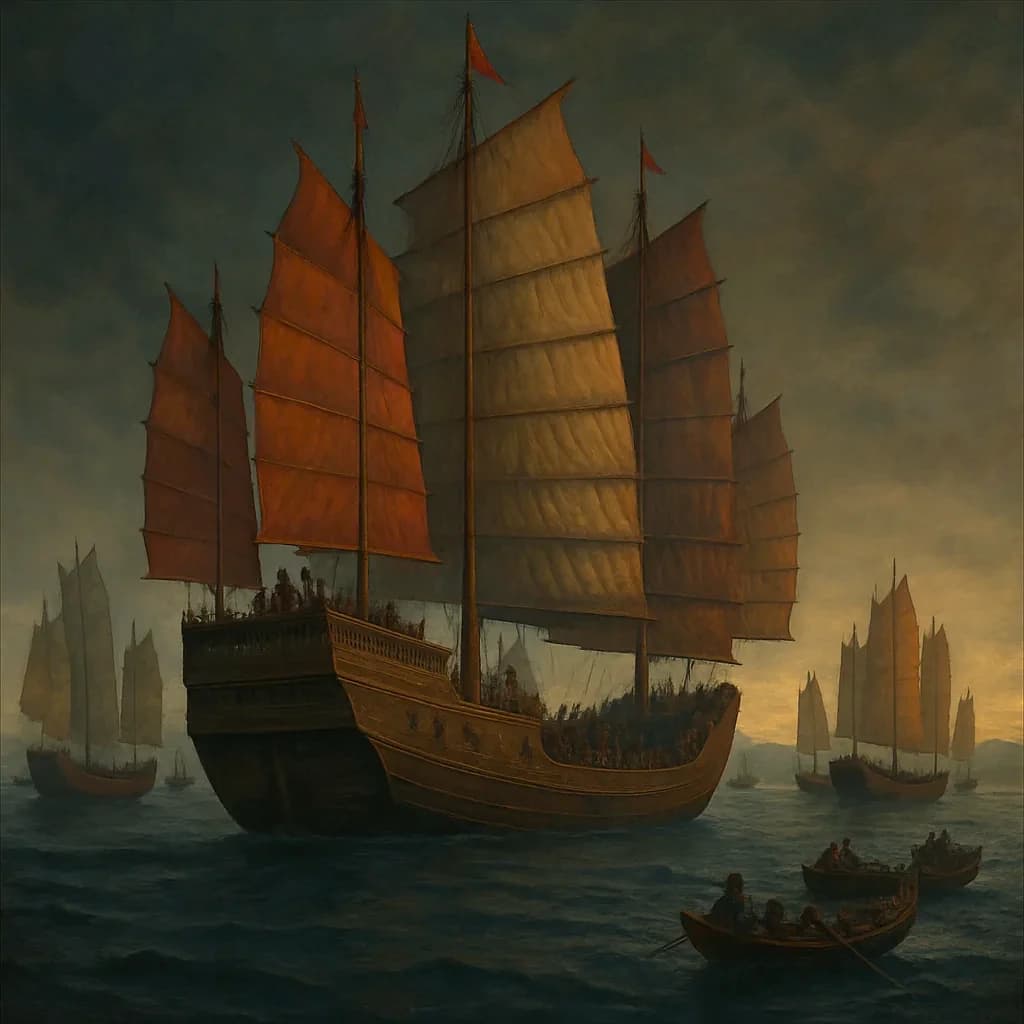
History's Largest Navy Sailed Home to Be Dismantled
In 1424, the largest navy in history sailed home from Africa, and was immediately dismantled by imperial decree.
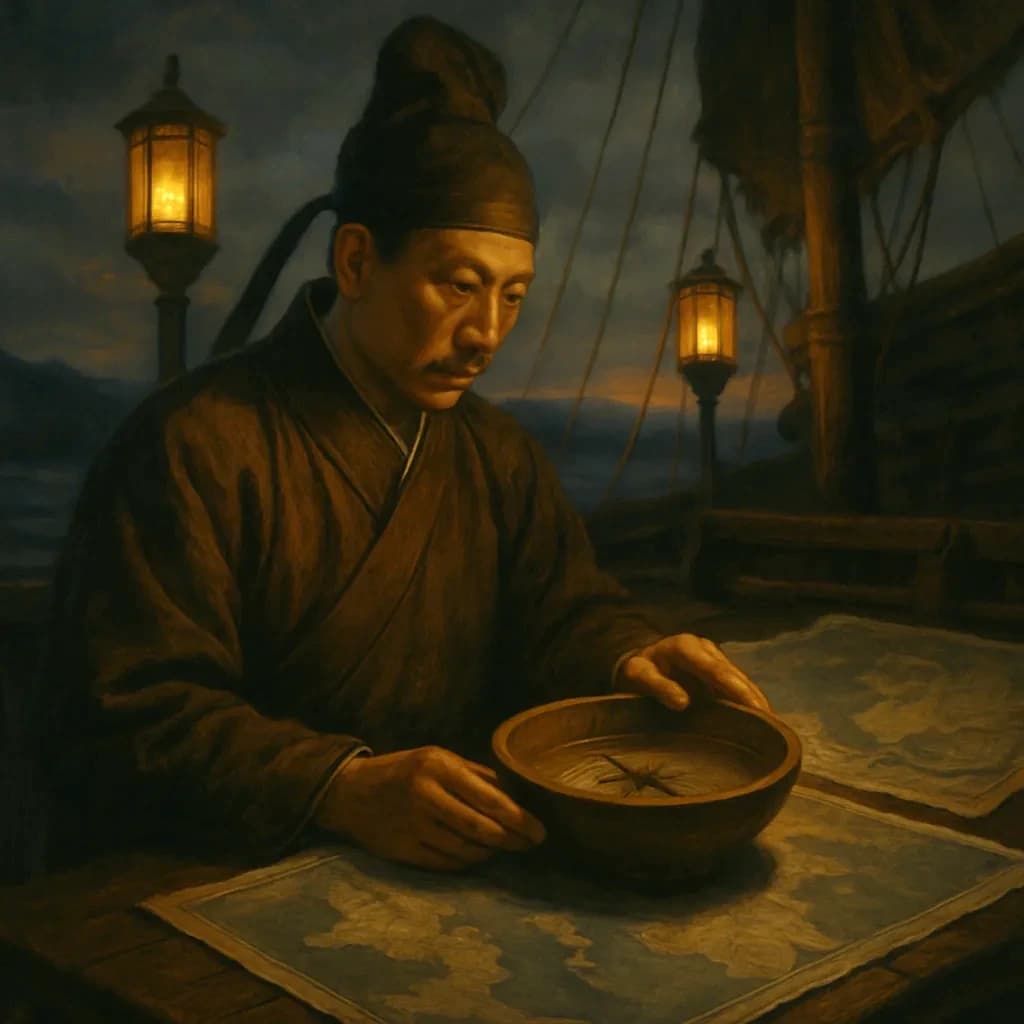
Why Chinese Compasses Pointed South for a Thousand Years
China invented the compass centuries before Europe, but for a thousand years, Chinese navigators insisted it should point south, not north.
- Ptak, Roderich. 'Die maritime Seidenstraße' (C.H. Beck, 2007)
- Snow, Philip. 'The Star Raft: China's Encounter with Africa' (Weidenfeld and Nicolson, 1988)
- Dreyer, Edward L. 'Zheng He: China and the Oceans in the Early Ming Dynasty' (Library of World Biography, 2006)