
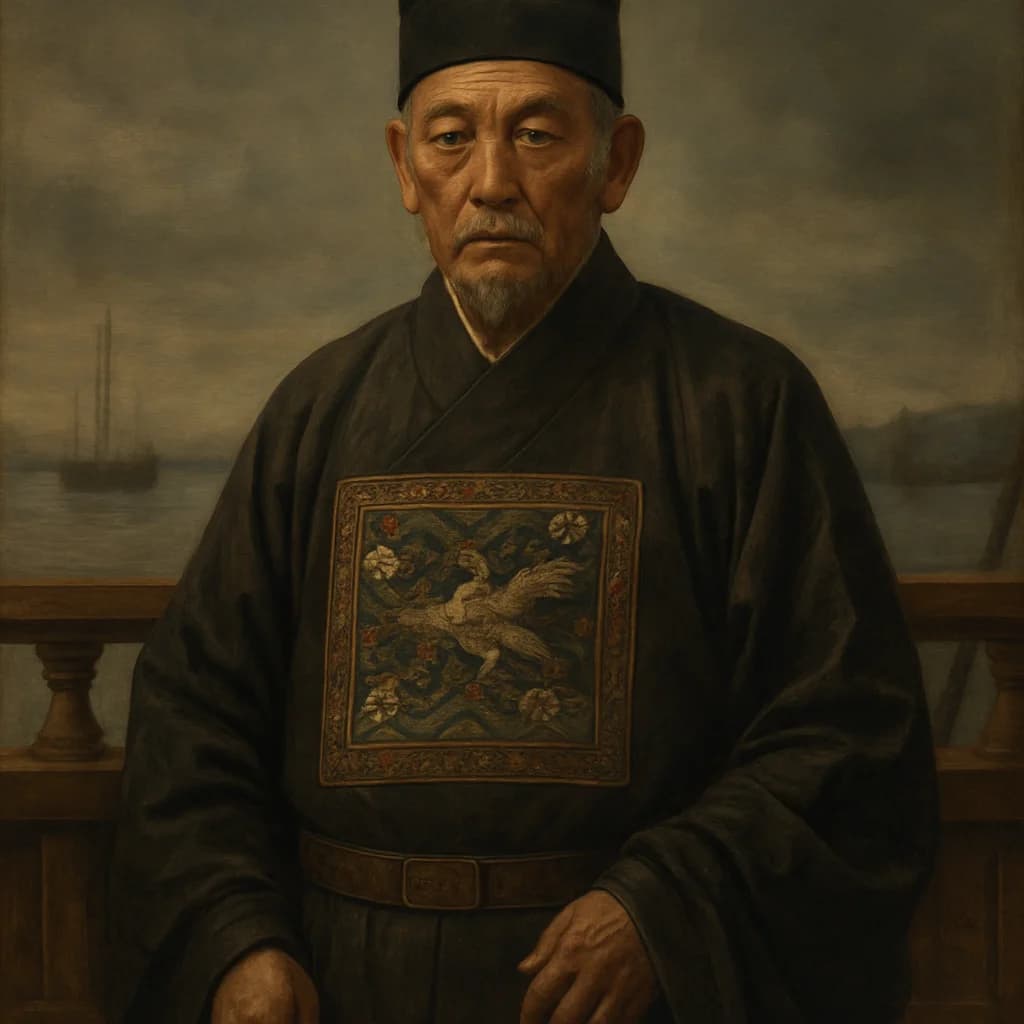
Wang Jinghong
He survived a stroke mid-ocean, thousands of miles from home, and kept sailing anyway.
Wang Jinghong doesn't get the statue. That goes to Zheng He, the towering eunuch admiral whose name became synonymous with China's age of maritime ambition. Wang Jinghong was Zheng He's second-in-command across multiple voyages (the man who actually kept the machinery running), and history has treated him accordingly: as a footnote with a title.
What the footnote omits is this: during the fourth great voyage, sometime around 1413, Wang Jinghong suffered a stroke. Not in a harbor. Not in some comfortable port city where medicine and rest were available. At sea, aboard a treasure ship, somewhere in the vast stretch between the Indian subcontinent and the Persian Gulf. The fleet didn't turn back. Wang Jinghong didn't disembark. He recovered (partially, imperfectly) and continued commanding. When the fleet reached Hormuz, he was still there. When it returned to Nanjing in 1415, he walked off the ship having completed a round trip of roughly 12,000 miles with a body that had partially betrayed him somewhere in the middle of it.
After Zheng He died on the seventh voyage in 1433, Wang Jinghong did something remarkable for a subordinate: he finished the mission. He commanded the fleet home to China himself, delivering the last of the tribute envoys, closing the loop on thirty years of extraordinary state-sponsored exploration. He was likely in his sixties by then. The voyages were already being condemned by Confucian officials at court as wasteful extravagance, the records deliberately suppressed, the ships left to rot. Wang Jinghong's final act as a naval commander was to return a fleet to a government that had already decided the fleet should never have existed.
He retired. He fades from the record after 1433. Whatever he thought about watching the greatest navy in the world get bureaucratically dismantled around him, he kept it to himself, or wrote it somewhere that didn't survive the purge.
A stele erected in Changle, Fujian in 1431 (one of the few surviving primary documents from the voyages) was jointly commissioned by both Zheng He and Wang Jinghong, making it one of the only places Wang Jinghong left his own name on history before the records disappeared.
Why untold: The deliberate destruction of the Ming maritime archives after 1433 erased the operational records of the voyages wholesale, and the surviving accounts centered on Zheng He as the symbolic figurehead, leaving subordinate commanders like Wang Jinghong visible only in fragmentary stele inscriptions and incomplete crew rosters.
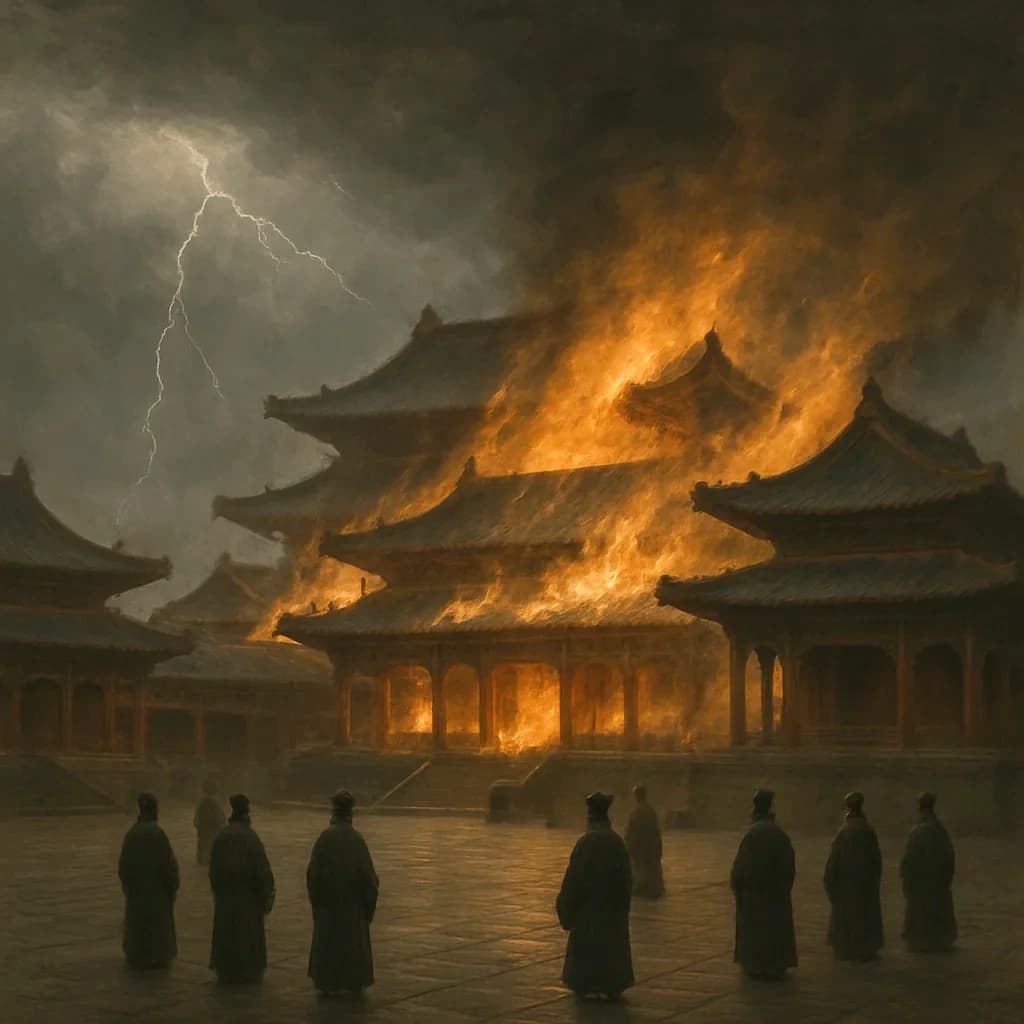
One Palace Fire Ended China's Age of Exploration
A single fire destroyed the largest wooden palace ever built, and the decision about whether to rebuild it quietly ended China's age of exploration.
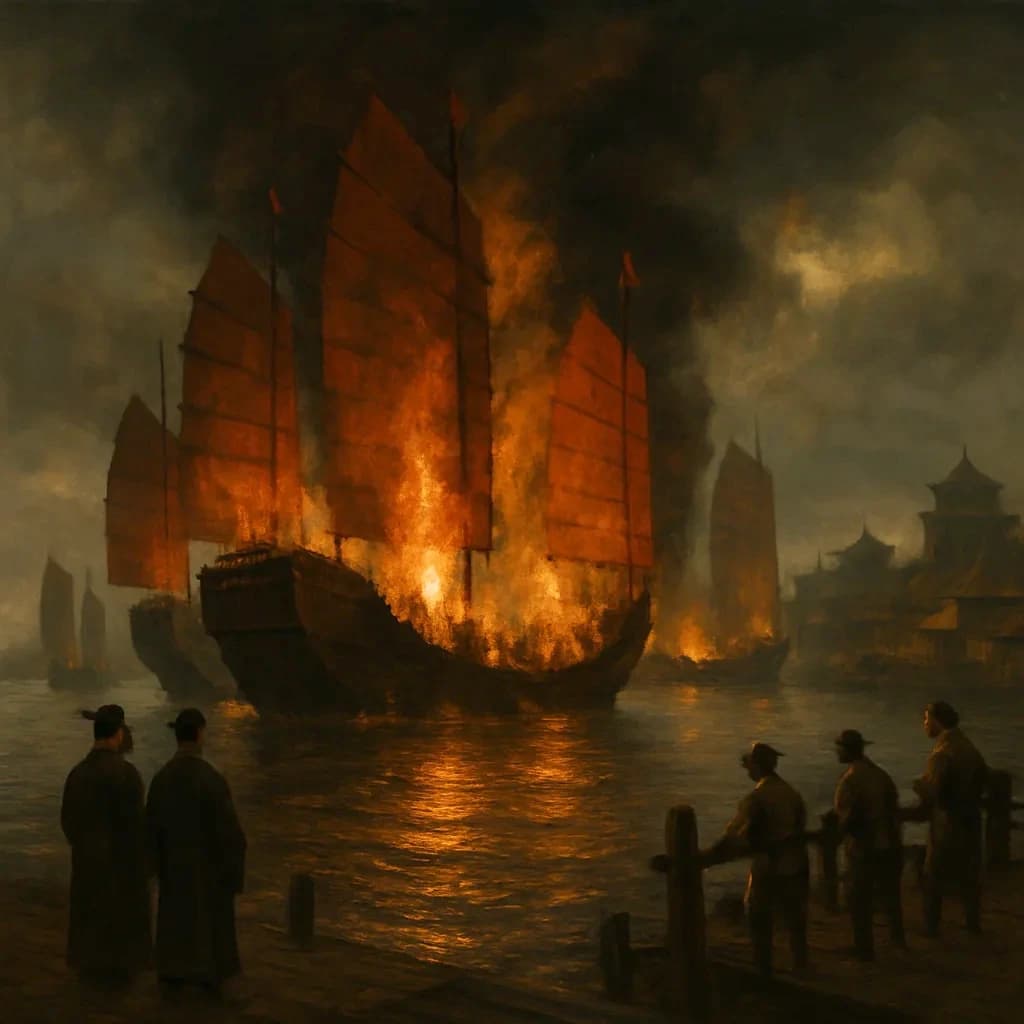
When China's Admiral Burned the World's Greatest Fleet
In 1433, the largest naval force in human history sailed home to China and was ordered to burn itself.
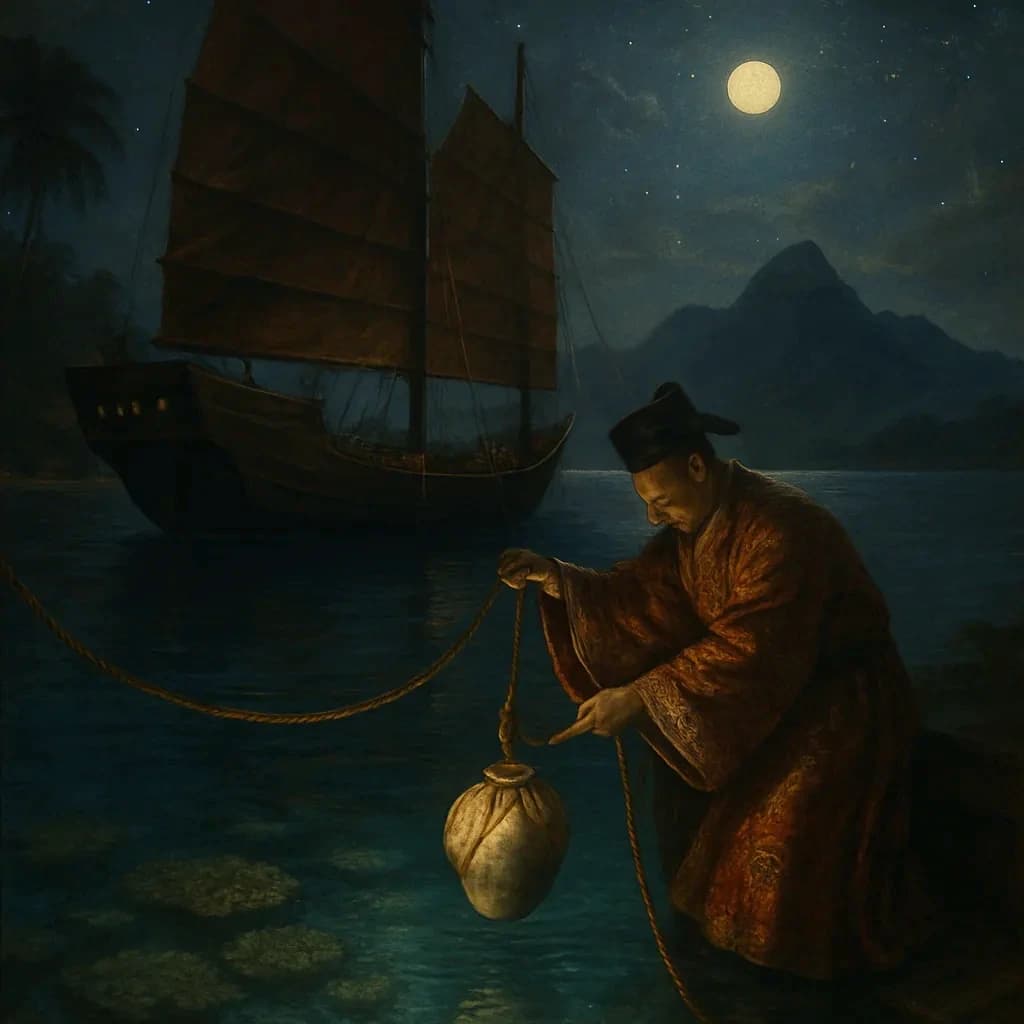
A Ming Admiral's Final Voyage Carried China's Last Secret
A Ming Dynasty admiral's final voyage carried something more valuable than treasure: the last secret of Chinese power.
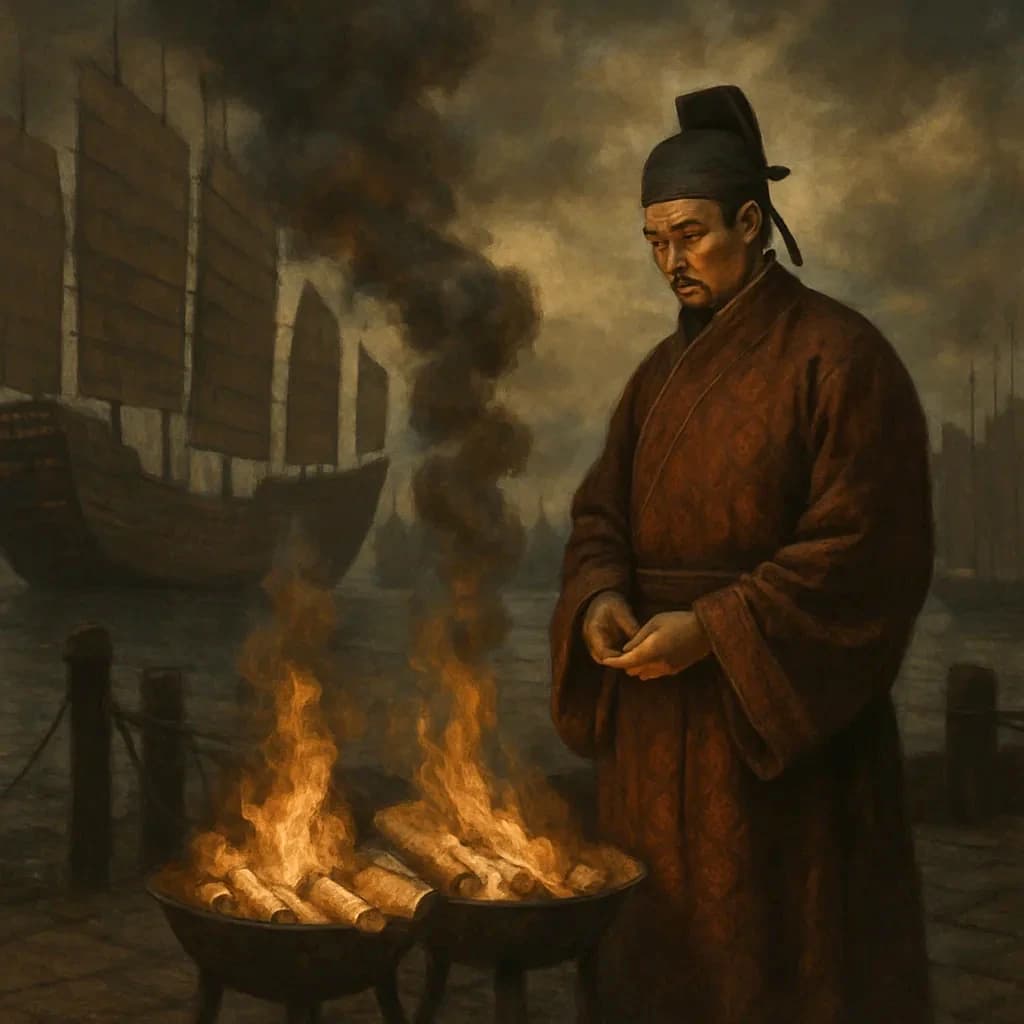
China Recalled the World's Greatest Navy and Burned Its Maps
The most powerful navy in history received orders in 1433 to sail home and destroy every record of where it had been.
- Edward L. Dreyer, Zheng He: China and the Oceans in the Early Ming Dynasty, 1405-1433 (Pearson Longman, 2007)
- Sally K. Church, 'Zheng He: An Investigation into the Plausibility of 450-ft. Treasure Ships,' Monumenta Serica, Vol. 53 (2005), pp. 1-43
- Geoff Wade, trans., Southeast Asia in the Ming Shi-lu: An Open Access Resource (Asia Research Institute, National University of Singapore, 2005)