
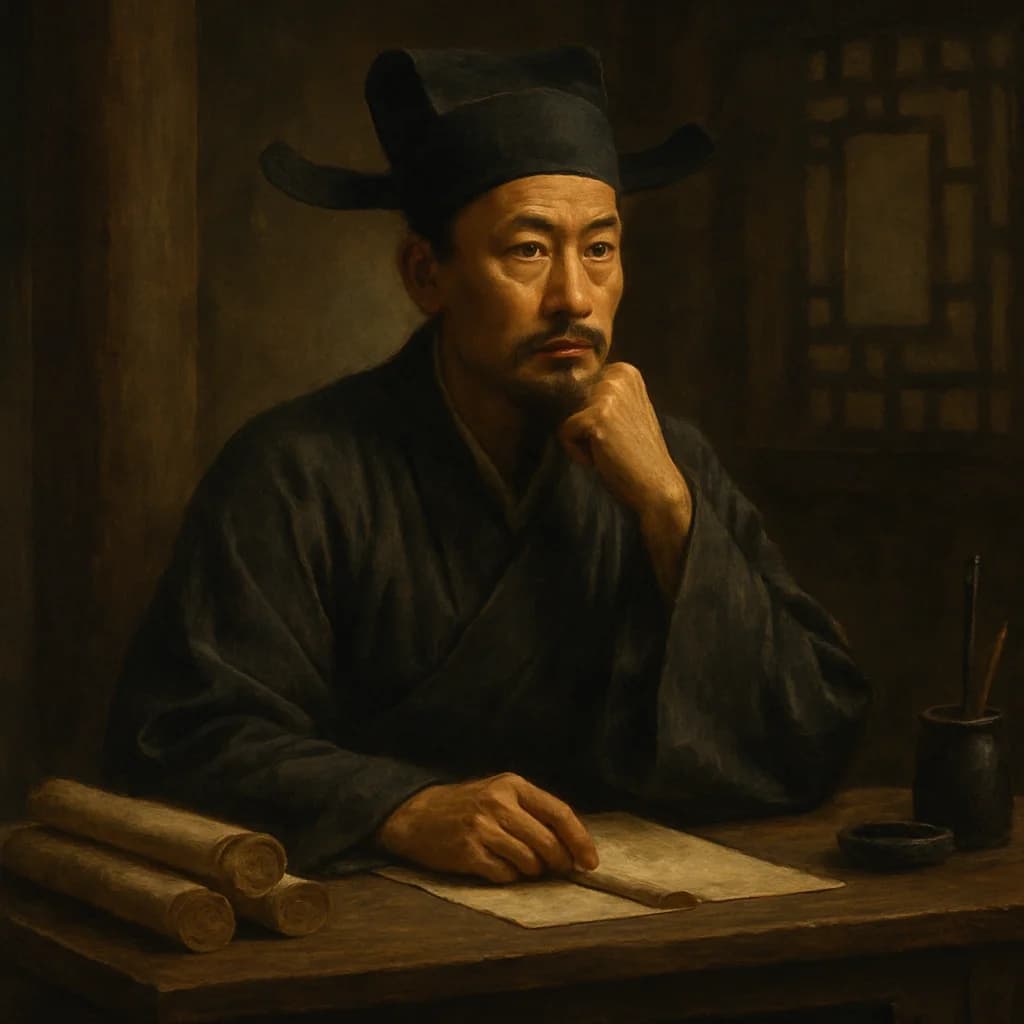
Zeng Gongliang
The man who wrote the world's first military encyclopedia also invented gunpowder recipes so detailed that modern chemists still marvel at their precision.
Zeng Gongliang spent his career as a Song Dynasty bureaucrat, drafting tax codes and managing grain distribution. Then Emperor Renzong handed him the most consequential writing assignment in military history: compile everything China knew about warfare into a single book.
The result was the Wujing Zongyao, completed in 1044, which reads like a fever dream of medieval innovation. Zeng didn't just catalog existing weapons. He provided step-by-step instructions for creating explosive devices that wouldn't appear in European warfare for another two centuries. His recipe for "fire drug" included precise ratios of saltpeter, sulfur, and charcoal that produced the first true gunpowder. He described flame-throwers, smoke grenades, and incendiary arrows with the methodical precision of a cookbook.
What makes Zeng remarkable isn't just his technical knowledge. It's his systematic approach to destruction. He organized mayhem into categories: offensive weapons, defensive fortifications, siege tactics. He included detailed diagrams showing exactly how to construct trebuchets and crossbow mechanisms. His chapter on naval warfare featured ships armed with multiple flame-throwers, turning the open sea into a furnace.
Zeng never led armies or conquered territories. He was a scholar who understood that information could be more powerful than any sword. His encyclopedia became the template for military manuals across Asia, its recipes copied and refined for centuries. When gunpowder finally reached Europe through trade routes, it arrived carrying the ghost of Zeng's precise formulations, a Chinese bureaucrat's methodical notes on how to blow things up.
Zeng's gunpowder recipe was so accurate that when modern explosives experts recreated it in 2006, they found it produced nearly identical results to contemporary military-grade black powder.
Why untold: Military historians focus on generals and battles while overlooking the bureaucrats who systematized the tools of war.
A Korean Scholar's Cookbook Became a Chemical Warfare Blueprint
A Korean scholar's cookbook became the blueprint for chemical warfare across three continents.
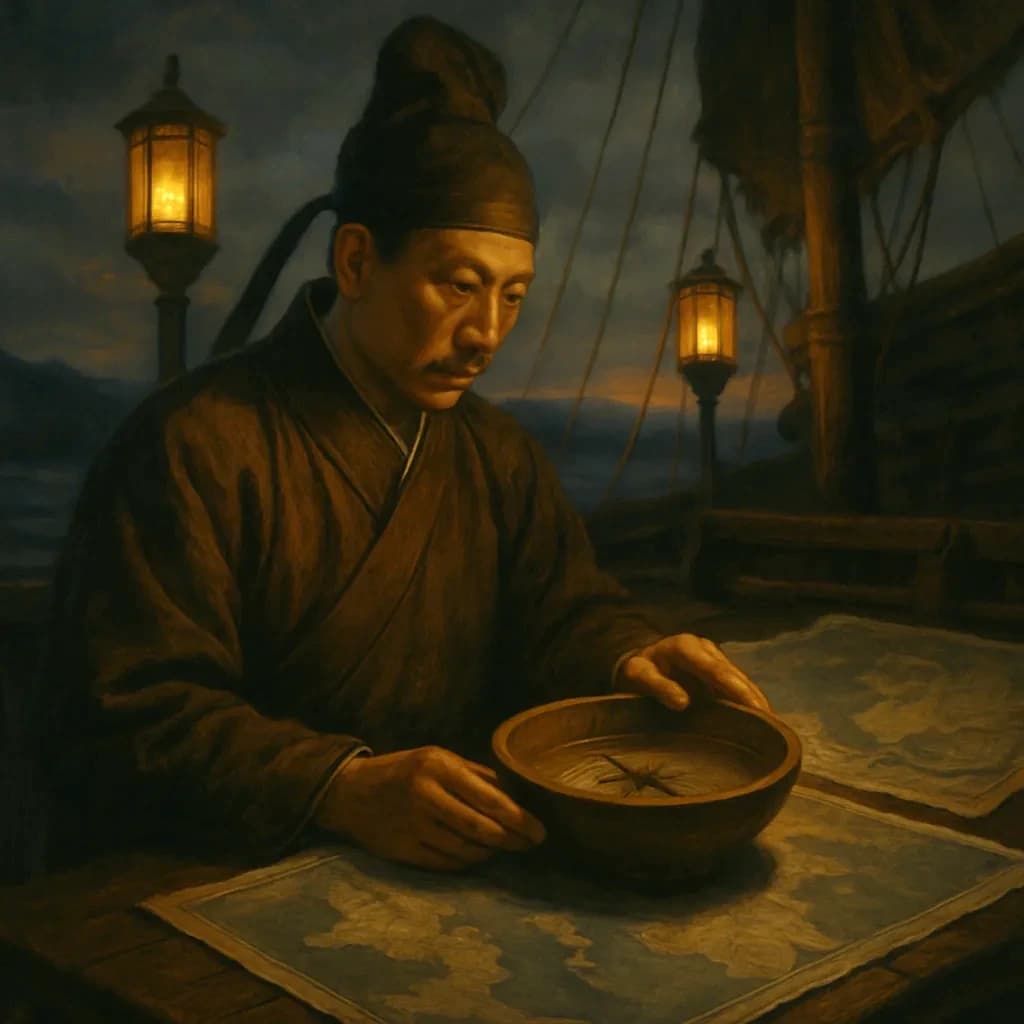
Why Chinese Compasses Pointed South for a Thousand Years
China invented the compass centuries before Europe, but for a thousand years, Chinese navigators insisted it should point south, not north.
- Needham, Joseph. Science and Civilisation in China, Volume 5: Chemistry and Chemical Technology
- Sen, Tansen. The Formation of Chinese Maritime Power During Song Dynasty
- Wang Ling. 'On the Invention and Use of Gunpowder and Firearms in China.' Isis 37, no. 3/4 (1947)