
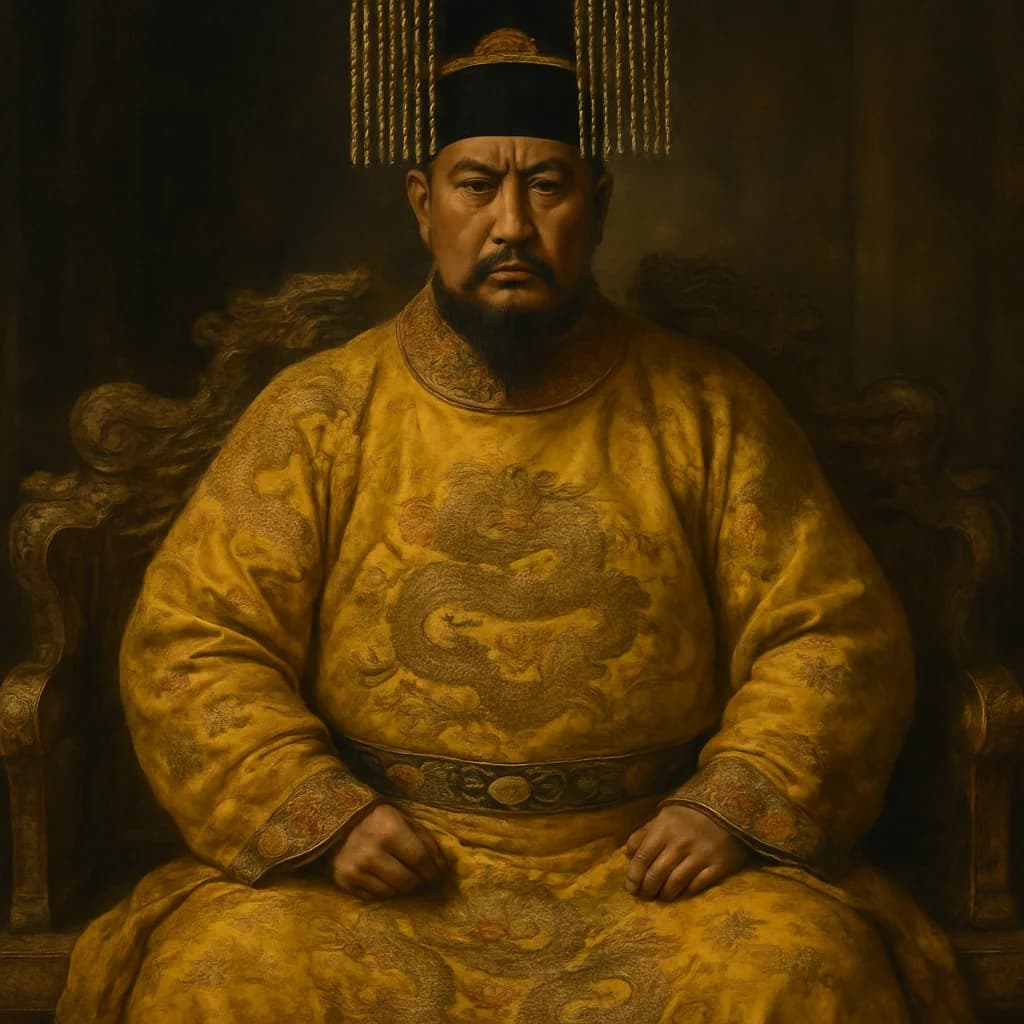
Yongle Emperor
The emperor who built the Forbidden City also built the world's largest navy, then watched his successors burn it all down.
Zhu Di seized the Dragon Throne in 1402 through civil war, but spent the next twenty-two years trying to prove he deserved it. The fourth son of the Ming founder, he'd watched his father's paranoia tear the empire apart, executing tens of thousands of officials on the slightest suspicion. When Zhu Di's nephew tried to strip him of power, he responded with cannon and cavalry, marching on the capital and burning the imperial palace to the ground.
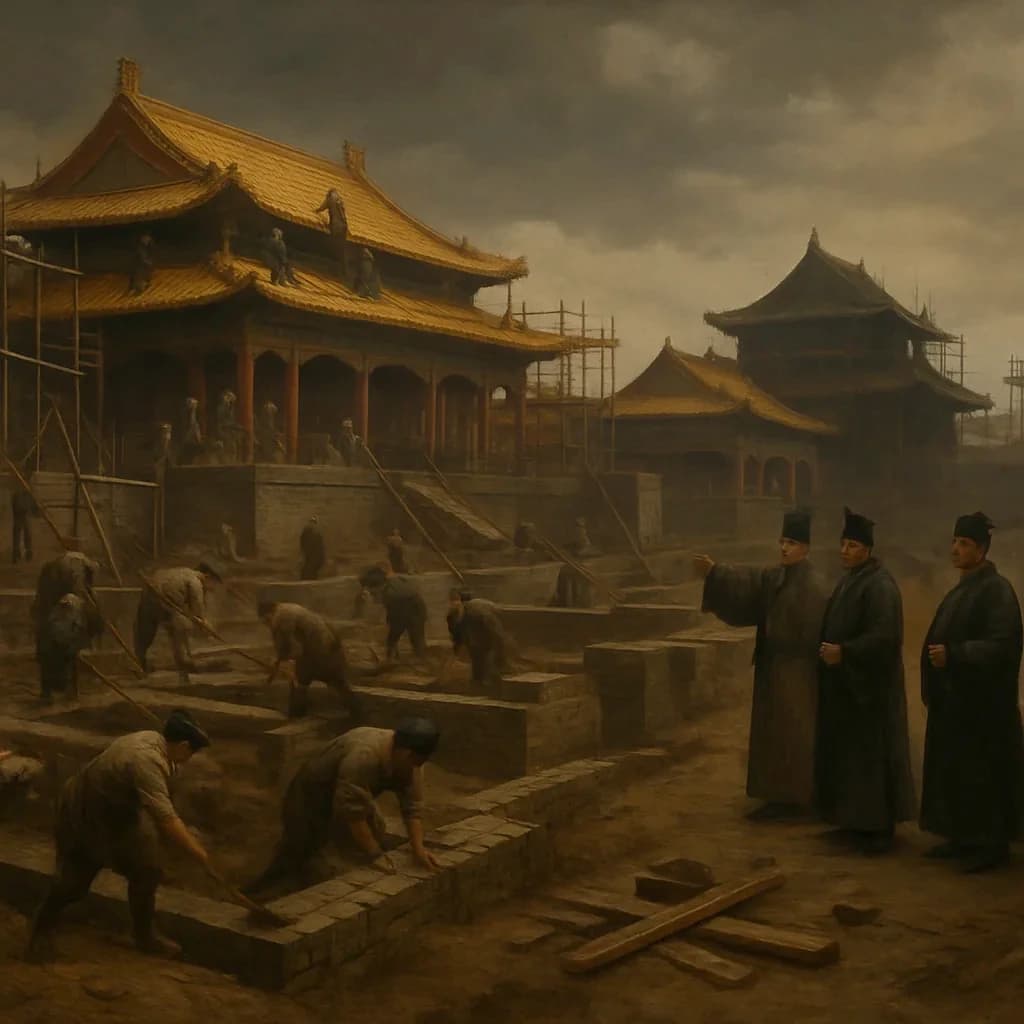
But conquest was easier than legitimacy. Zhu Di (now the Yongle Emperor) threw himself into projects so massive they bordered on madness. He moved the capital from Nanjing to Beijing, building the Forbidden City with a million workers and draining the imperial treasury. He commissioned Zheng He's treasure fleets, sending 27,000 sailors across the Indian Ocean to demand tribute from kingdoms that had never heard of China. He personally led five military campaigns into the Mongolian steppe, chasing nomad armies across endless grasslands.
The irony was perfect. Yongle created the two greatest symbols of Chinese civilization (the Forbidden City and the treasure fleets), but both were born from insecurity, not confidence. He built the palace complex to dwarf his father's achievements and intimidate his subjects. He sent the fleets to make foreign kings kowtow before Chinese power. Every brick laid and every ship launched was another argument for his legitimacy.
When Yongle died on campaign in Mongolia in 1424, his son took one look at the empty treasury and cancelled everything. The treasure fleets were scrapped, their records destroyed. The Forbidden City remained, but became a prison for future emperors who rarely left its walls. Yongle had built monuments to Chinese power that his own dynasty would spend the next two centuries trying to forget.
Yongle personally led military campaigns into his sixties, dying in his tent on the Mongolian frontier while chasing nomad raiders, making him one of the few emperors in Chinese history to die in active combat.
Why untold: His architectural achievements overshadowed his role as a military commander and empire-builder, while later Ming rulers systematically suppressed records of his costly expeditions.
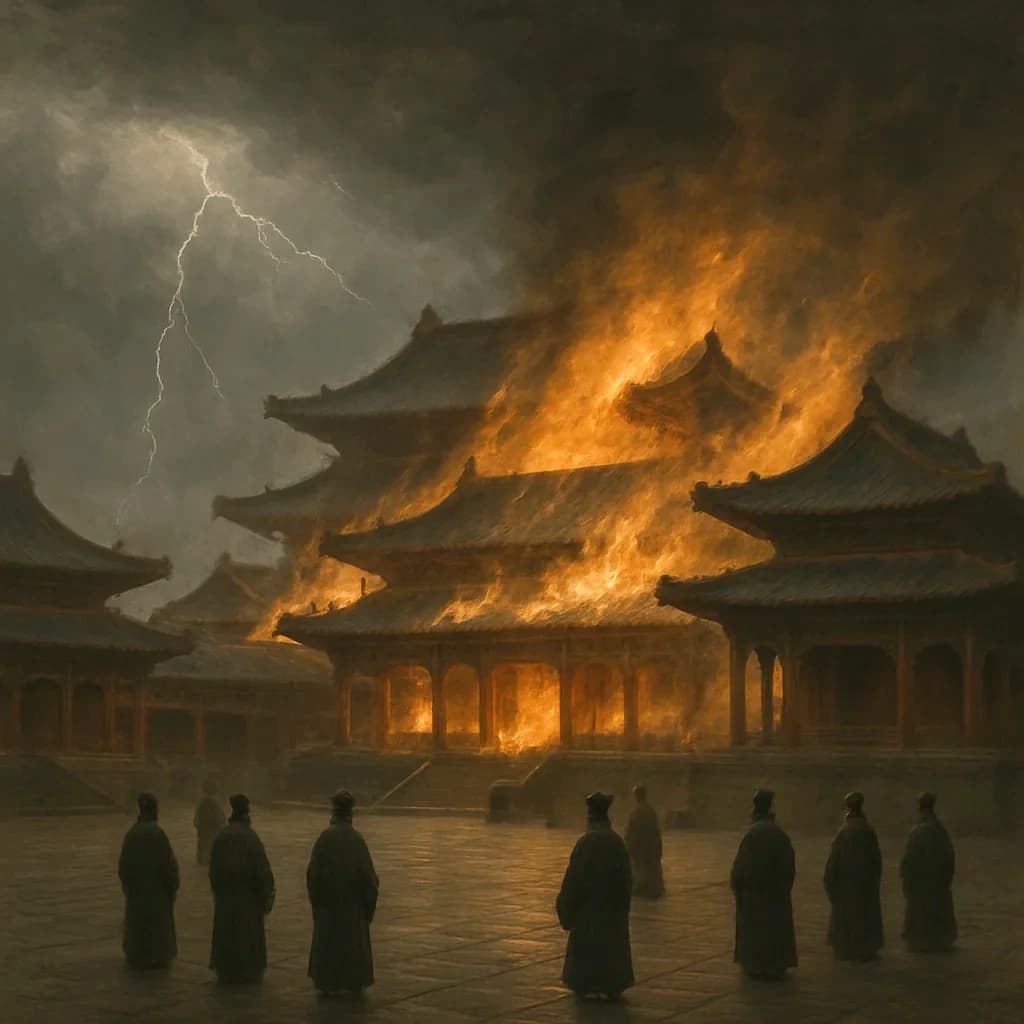
One Palace Fire Ended China's Age of Exploration
A single fire destroyed the largest wooden palace ever built, and the decision about whether to rebuild it quietly ended China's age of exploration.
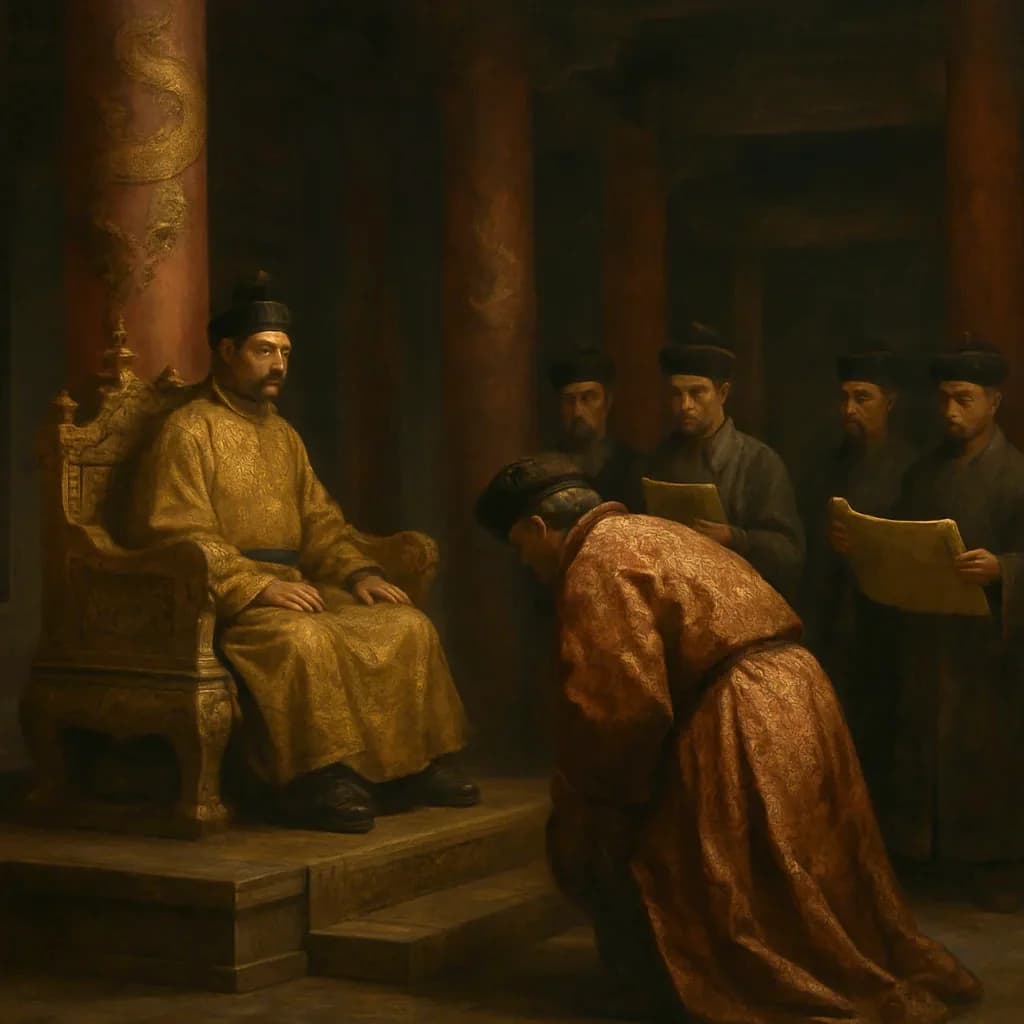
A Translator's Slip Made Venice a Chinese Province
A 15th-century diplomatic blunder nearly made Marco Polo's hometown part of the Ming Empire.
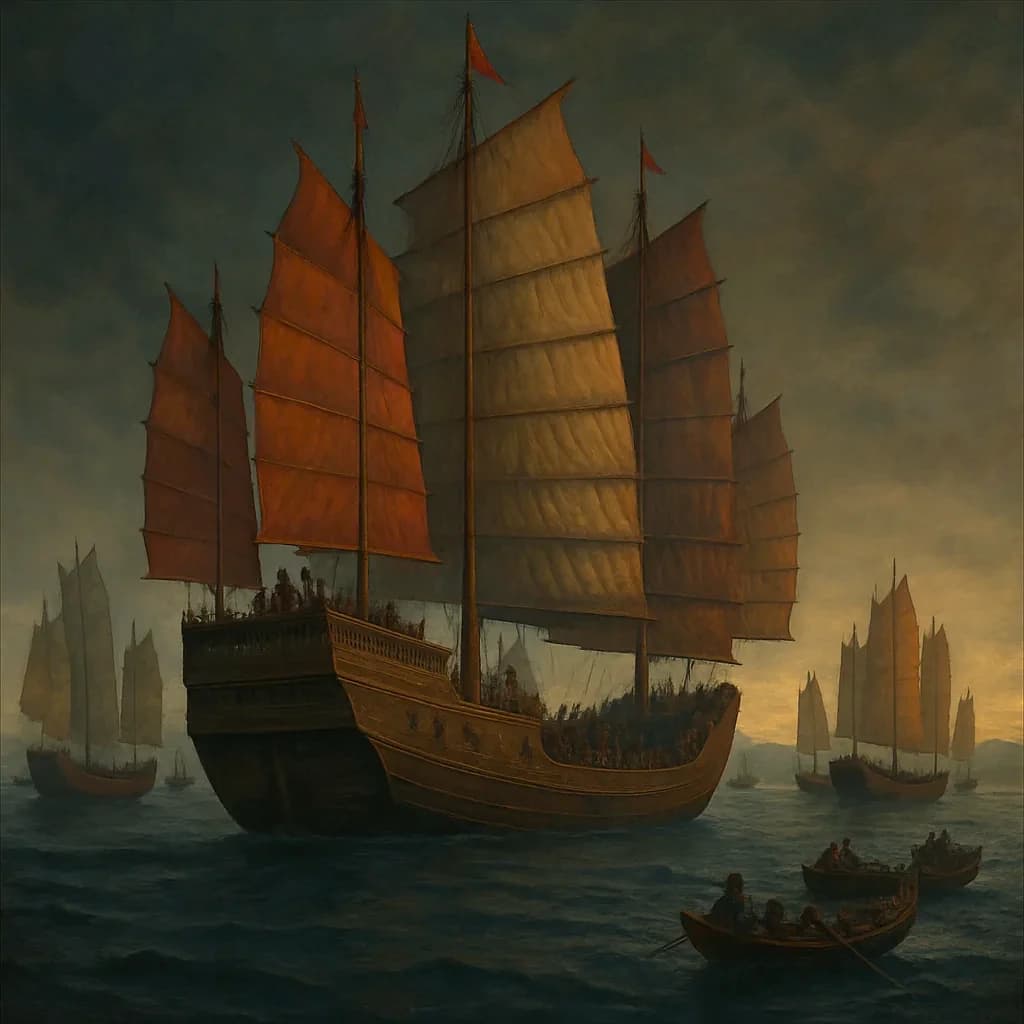
History's Largest Navy Sailed Home to Be Dismantled
In 1424, the largest navy in history sailed home from Africa, and was immediately dismantled by imperial decree.
Her Fake Illnesses Shaped the Forbidden City
A peasant girl became the most powerful person in Ming China by never leaving her bedroom.
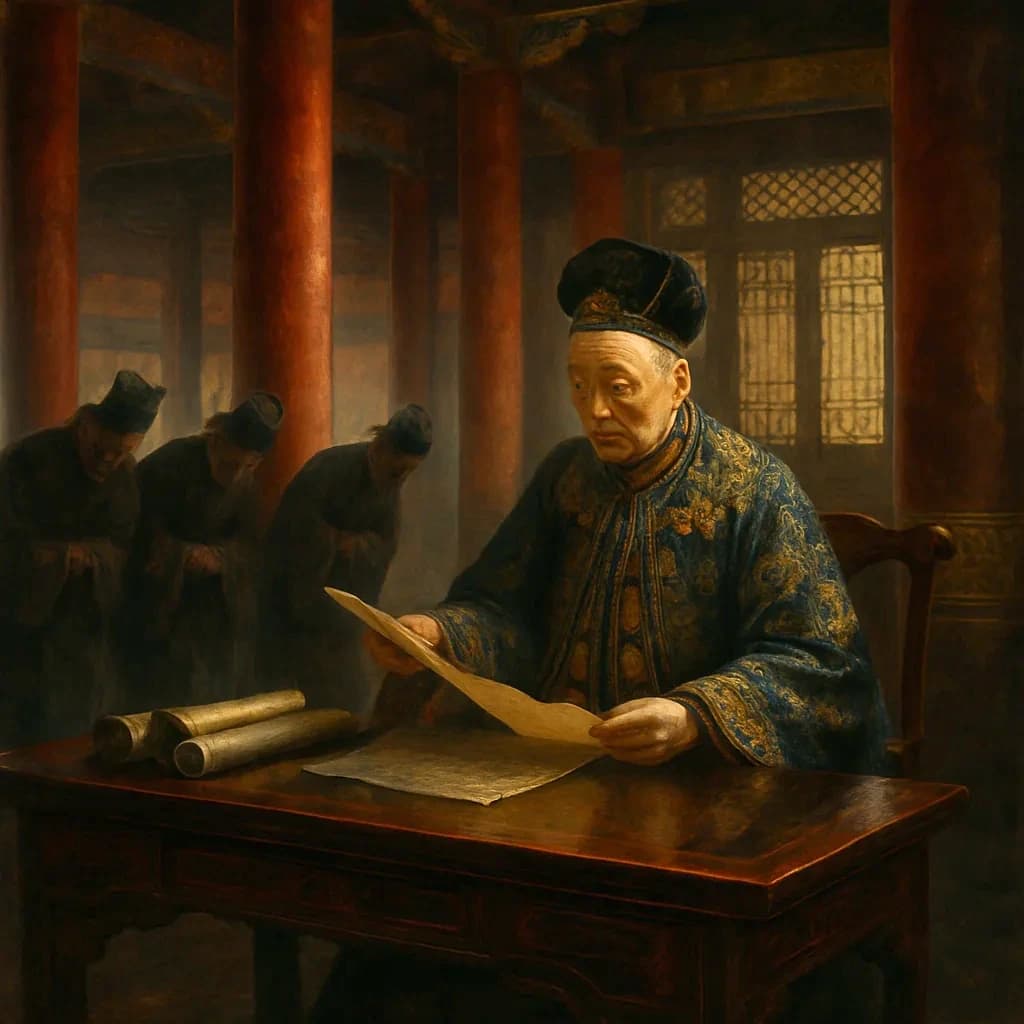
An Empress Ran China Without Officially Existing
For thirty years she ran the most powerful empire on earth, and officially, she didn't exist.
- Sen, Tansen. The Formation of Chinese Maritime Power During Zheng He's Maritime Expeditions. Brill, 2009.
- Dreyer, Edward L. Zheng He: China and the Oceans in the Early Ming Dynasty. Oxford University Press, 2007.
- Tsai, Shih-shan Henry. Perpetual Happiness: The Ming Emperor Yongle. University of Washington Press, 2001.