
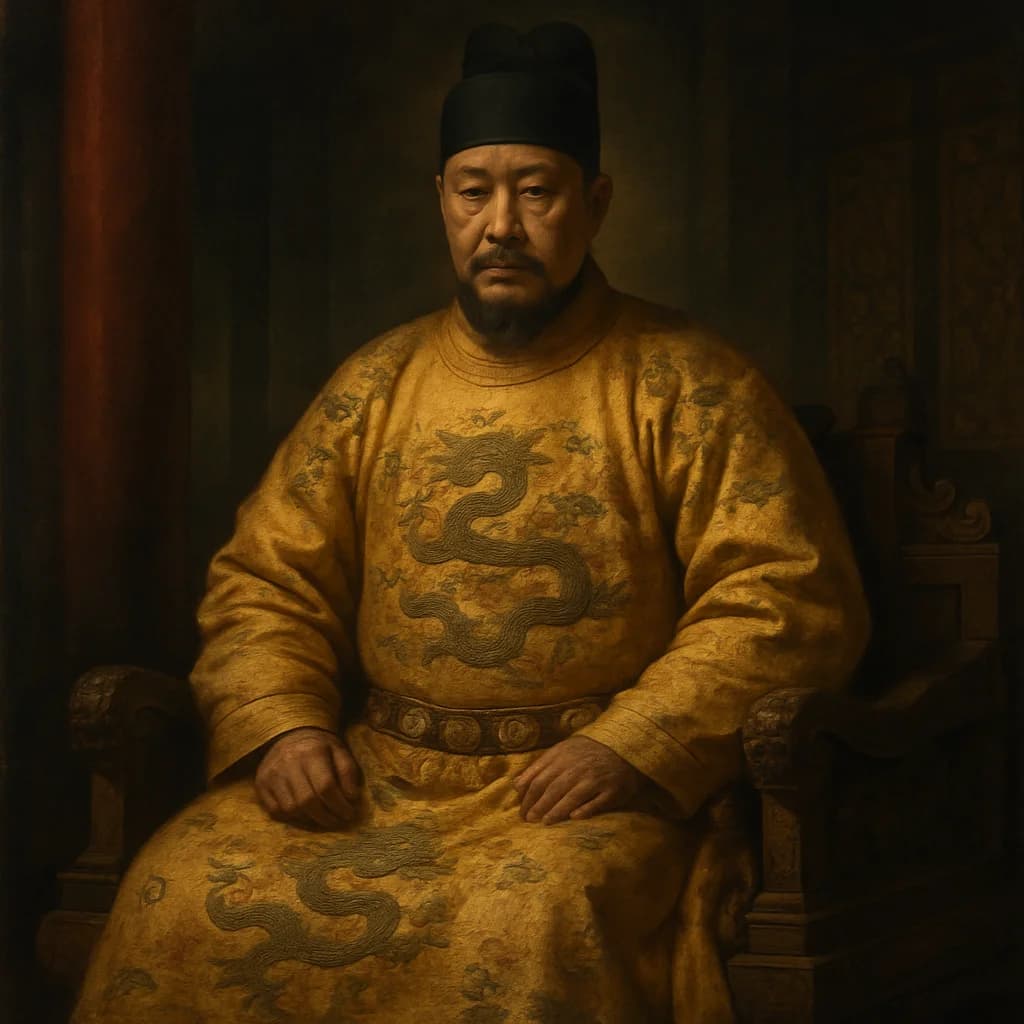
Hongxi Emperor
The emperor who ruled for ten months changed the course of world history by doing absolutely nothing.
Hongxi ascended the Dragon Throne in September 1424 with a simple plan: undo everything his father had built. The Yongle Emperor had spent two decades launching massive naval expeditions across the Indian Ocean, establishing Chinese presence from Southeast Asia to the eastern coast of Africa. These treasure fleets, commanded by the Muslim admiral Zheng He, were technological marvels. Some ships stretched over 400 feet long, dwarfing anything Europeans would build for centuries.
But Hongxi saw only waste. While his father dreamed of global empire, the new emperor fixated on the northern frontier, where Mongol raids threatened the capital. The treasure fleets consumed enormous resources: entire forests stripped for shipbuilding, tens of thousands of sailors and soldiers, craftsmen, translators, and diplomats. To Hongxi, every tael of silver spent on exotic expeditions was silver not spent defending China proper.
Within weeks of taking power, he issued the orders that would echo through centuries. The seventh treasure fleet, already preparing for departure, was cancelled. Ships were recalled from overseas bases. The imperial shipyards at Longjiang, which had employed over 20,000 workers, fell silent. Hongxi redirected the empire's attention inward, toward Confucian ideals of virtuous governance and agricultural prosperity.
He never lived to see the consequences of his decision. In May 1425, ten months into his reign, Hongxi died suddenly, possibly from a heart attack brought on by stress. His son would briefly restart the expeditions, but the momentum was broken. By 1433, the last treasure fleet returned home, and China's age of maritime exploration ended forever. European ships, still decades away from matching Chinese naval technology, would inherit empty seas.
Hongxi's cancellation of the treasure fleets freed up enough resources to relocate the entire imperial capital from Nanjing back to Beijing, a massive undertaking involving hundreds of thousands of people.
Why untold: His brief reign is overshadowed by his father's dramatic expeditions and dismissed as a mere transitional period between more 'important' emperors.
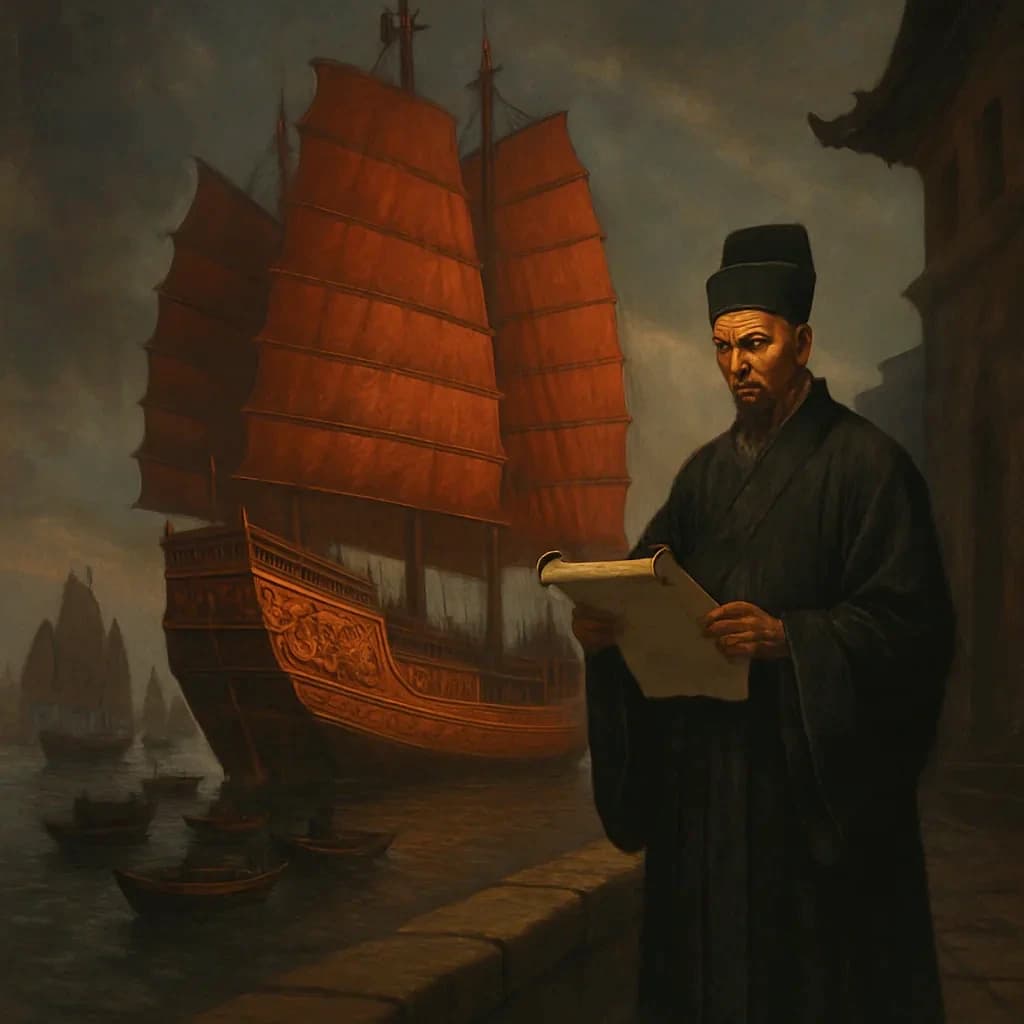
One Official's Protest Made China Scrap the World's Greatest Navy
A single court official's written protest caused China to abandon the greatest naval power the world had ever seen, and he died in prison before he could know he'd won.
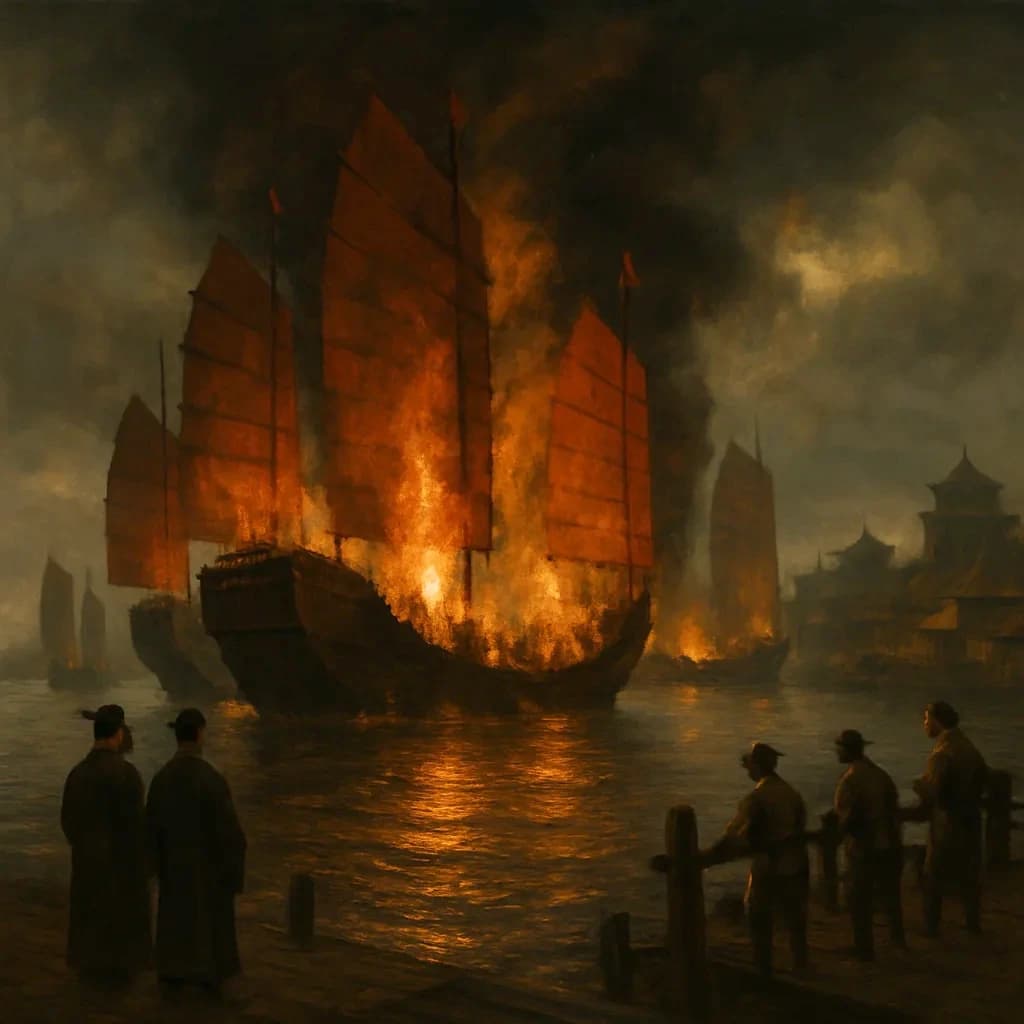
When China's Admiral Burned the World's Greatest Fleet
In 1433, the largest naval force in human history sailed home to China and was ordered to burn itself.
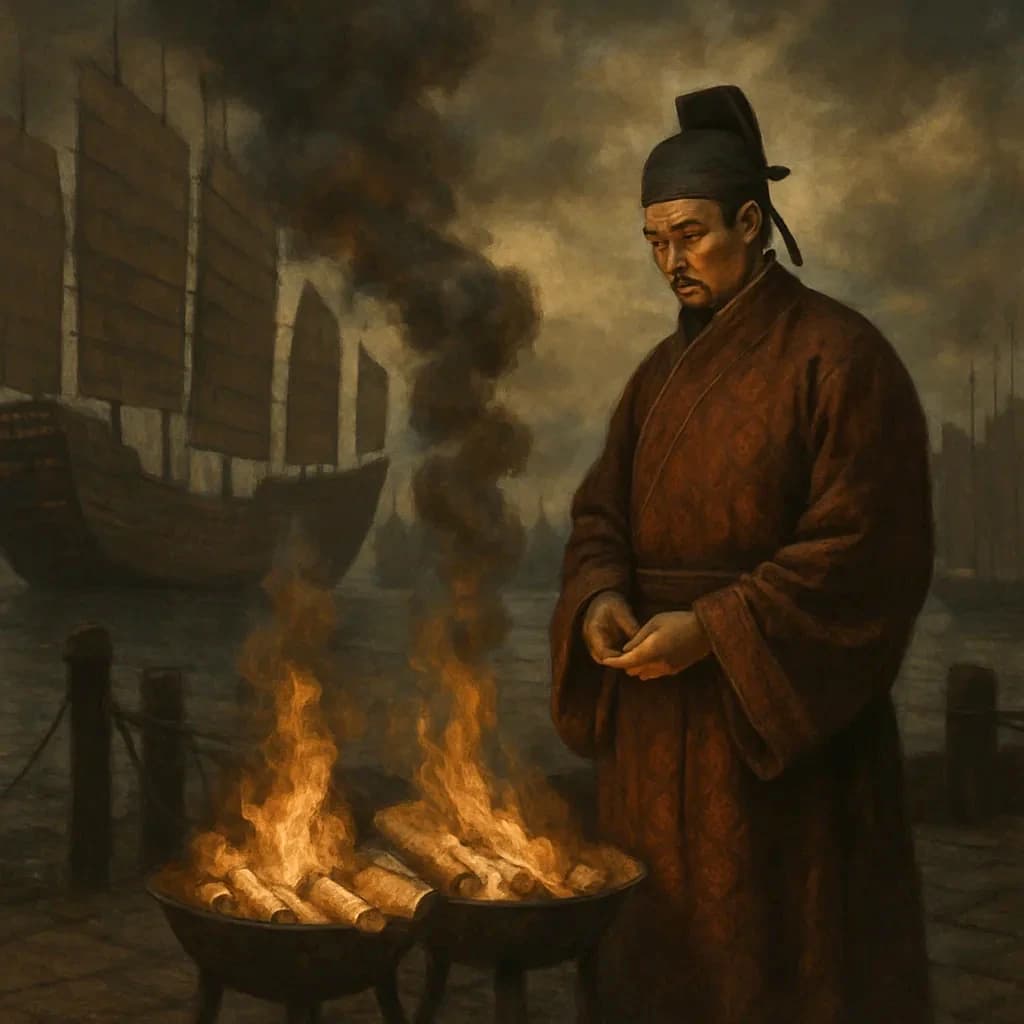
China Recalled the World's Greatest Navy and Burned Its Maps
The most powerful navy in history received orders in 1433 to sail home and destroy every record of where it had been.
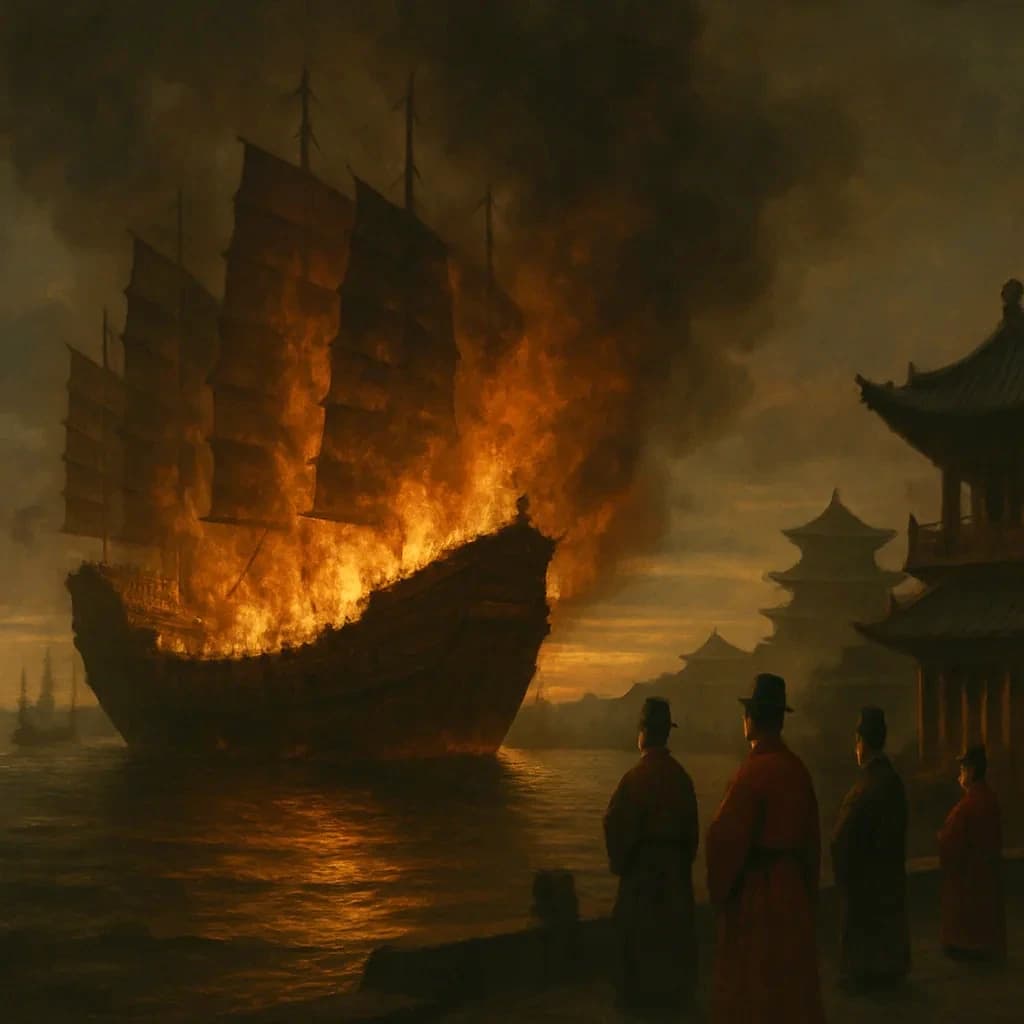
China Owned the Oceans, Then Burned Its Fleet
The greatest fleet in human history burned its own ships in 1433 and locked itself away, leaving the oceans to tiny European kingdoms.
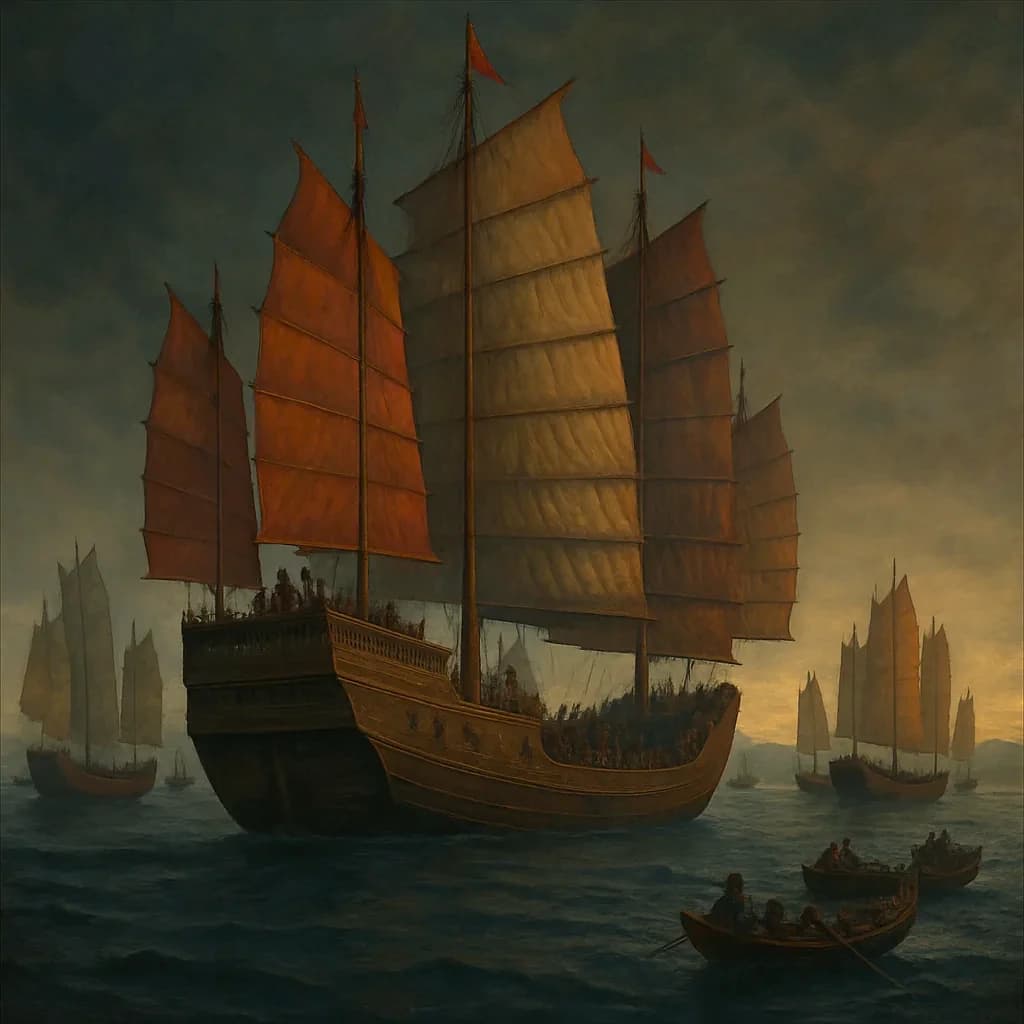
History's Largest Navy Sailed Home to Be Dismantled
In 1424, the largest navy in history sailed home from Africa, and was immediately dismantled by imperial decree.
- Levathes, Louise. When China Ruled the Seas. Oxford University Press, 1994.
- Sen, Tansen. The Formation of Chinese Maritime Power. University of Hawaii Press, 2009.
- Dreyer, Edward L. Zheng He: China and the Oceans in the Early Ming Dynasty. Library of World Biography, 2006.