
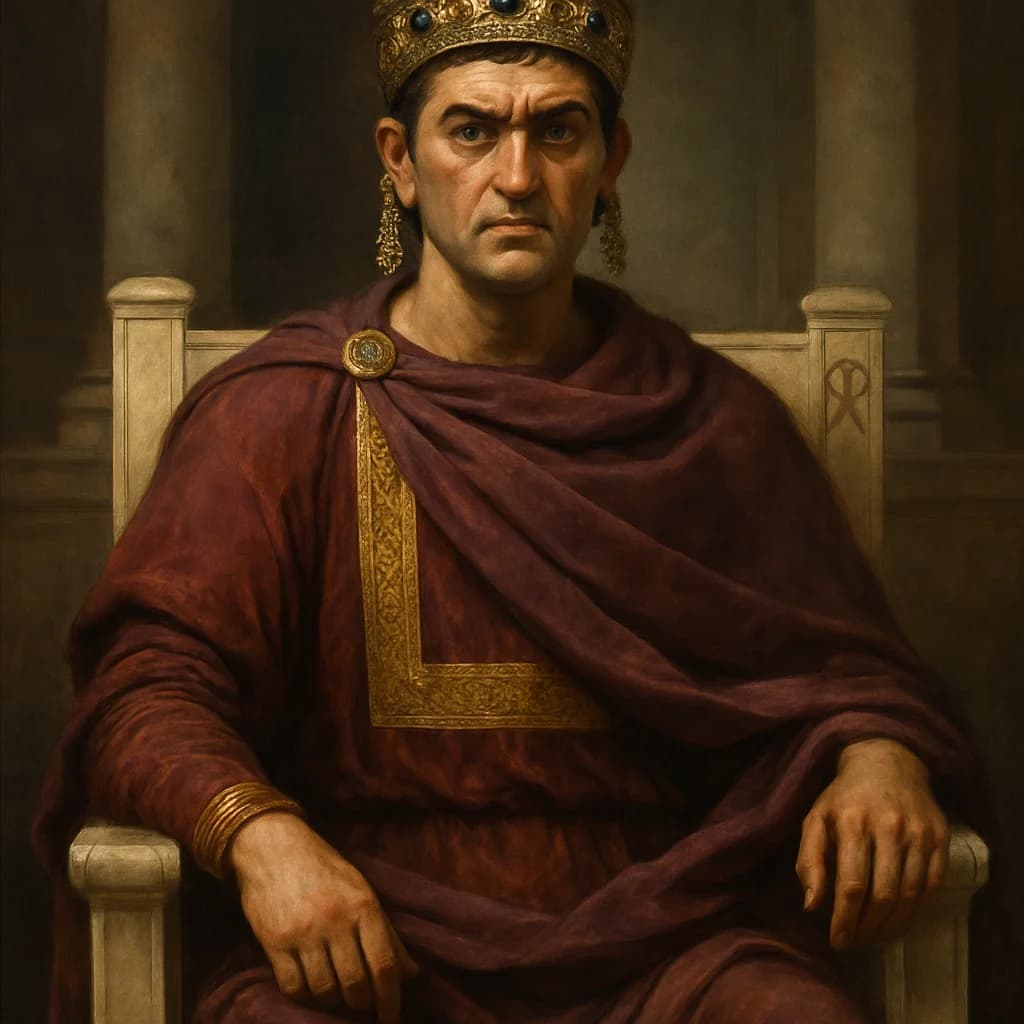
Theodosius I
He didn't conquer the Roman Empire. He inherited half of it, then spent his reign making sure no one could ever rule the whole thing again.
Theodosius I arrived at power not through battlefield glory but through someone else's catastrophe. After the Emperor Valens died at Adrianople in 378 (the worst Roman military defeat in centuries, the day the Goths proved the legions were mortal), a panicking Gratian needed a co-emperor fast. He picked Theodosius, a Spanish general who had been quietly retired to his family estate in Cauca after his father was executed on political charges. Not exactly a triumphant origin story.
What followed was a reign defined less by what Theodosius built than by what he permanently closed off. In 380, he issued the Edict of Thessalonica, declaring Nicene Christianity the only legal religion of the Roman state: not just preferred, not just funded, but mandatory. Every other form of worship, including older Christian sects, became punishable heresy. The edict ran to a few hundred words. Its consequences ran to centuries. The slow suffocation of the Library of Alexandria's intellectual ecosystem, the criminalization of pagan philosophy, the narrowing of what Mediterranean civilization was allowed to think about: all of it traces a direct line back to that document.
He also did something no emperor before him had managed to make permanent: in 391, he banned pagan sacrifice entirely, including the ancient Olympic Games, which had run without interruption for over a thousand years. They would not resume for fifteen centuries. The Serapeum in Alexandria, one of the ancient world's great temples and attached libraries, was destroyed by a Christian mob that same year, with Theodosius's edicts providing the legal cover.
When he died in 395, he split the empire between his two teenage sons, Arcadius and Honorius. He was the last emperor to rule both halves simultaneously. That split was supposed to be administrative. It turned out to be permanent. Theodosius didn't intend to end the unified Roman Empire. He just did.
Theodosius is one of only two Roman emperors ever subjected to public penance by a bishop. In 390, Bishop Ambrose of Milan barred him from the cathedral and forced him to perform months of penance after he ordered the massacre of thousands of civilians in Thessalonica.
Why untold: Theodosius is overshadowed by flashier emperors like Constantine and Justinian, leaving his role as the specific architect of religious coercion and the permanent east-west split (rather than any single dramatic conqueror) largely outside popular historical memory.
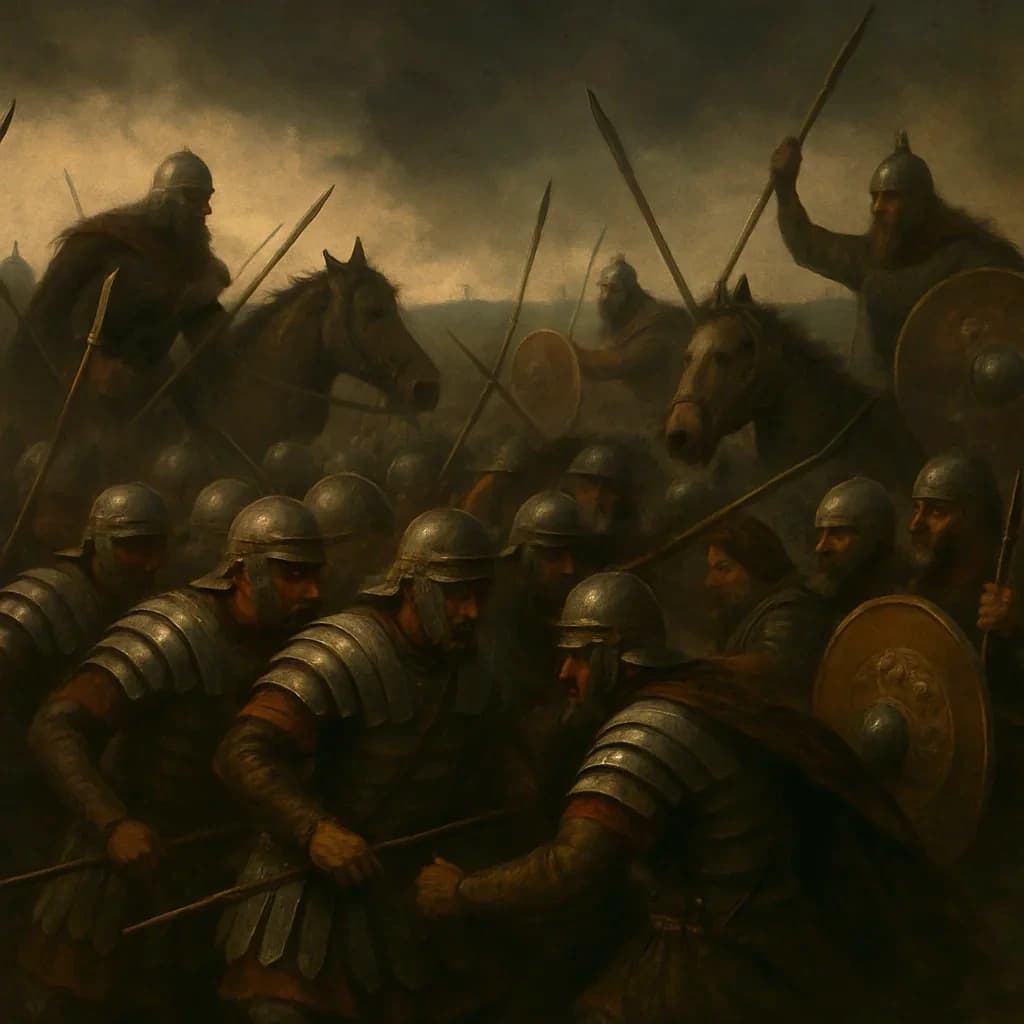
Rome Fell Because Two Generals Couldn't Share the Credit
The Roman Empire didn't fall to a superior enemy. It fell because two generals couldn't agree on who got to be there when it happened.
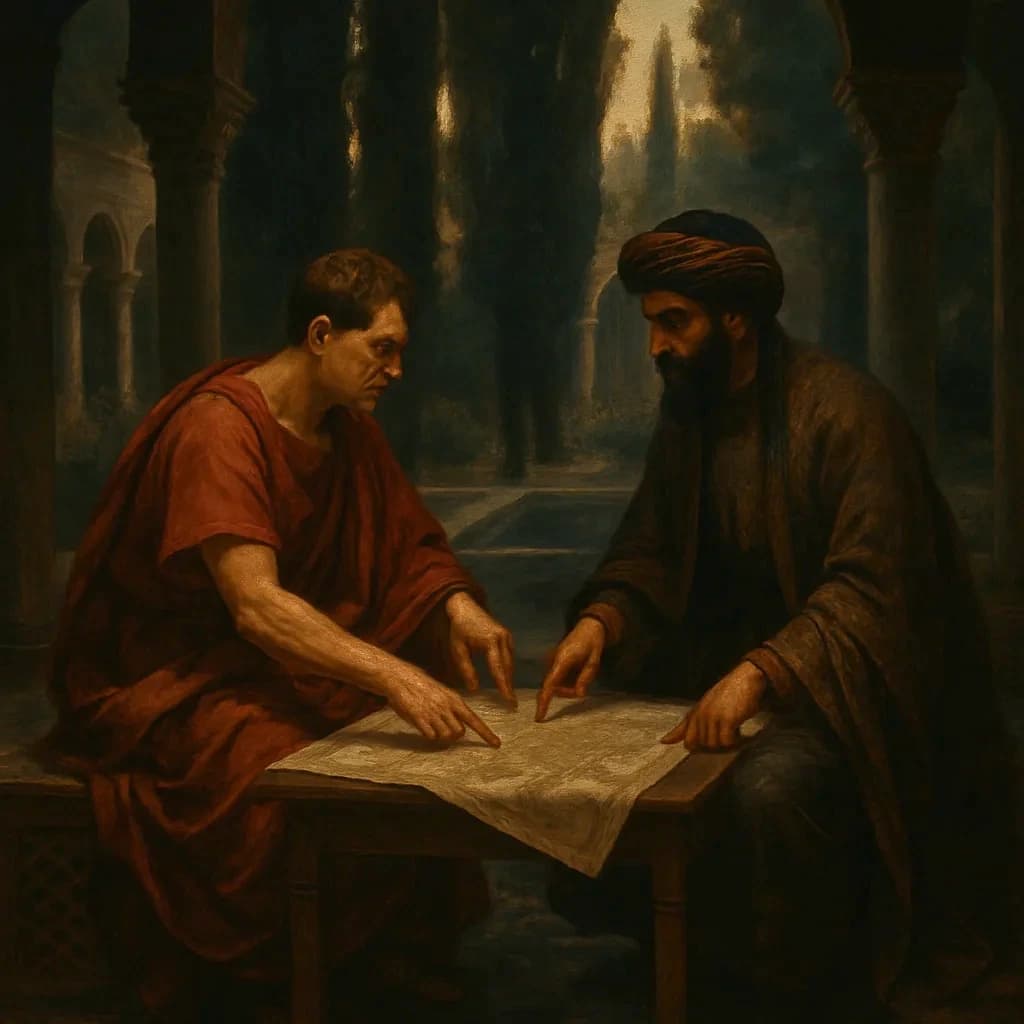
Two Tired Diplomats Drew the World's Longest-Lasting Border
Three minutes of conversation in a Persian garden changed the direction of the next thousand years.
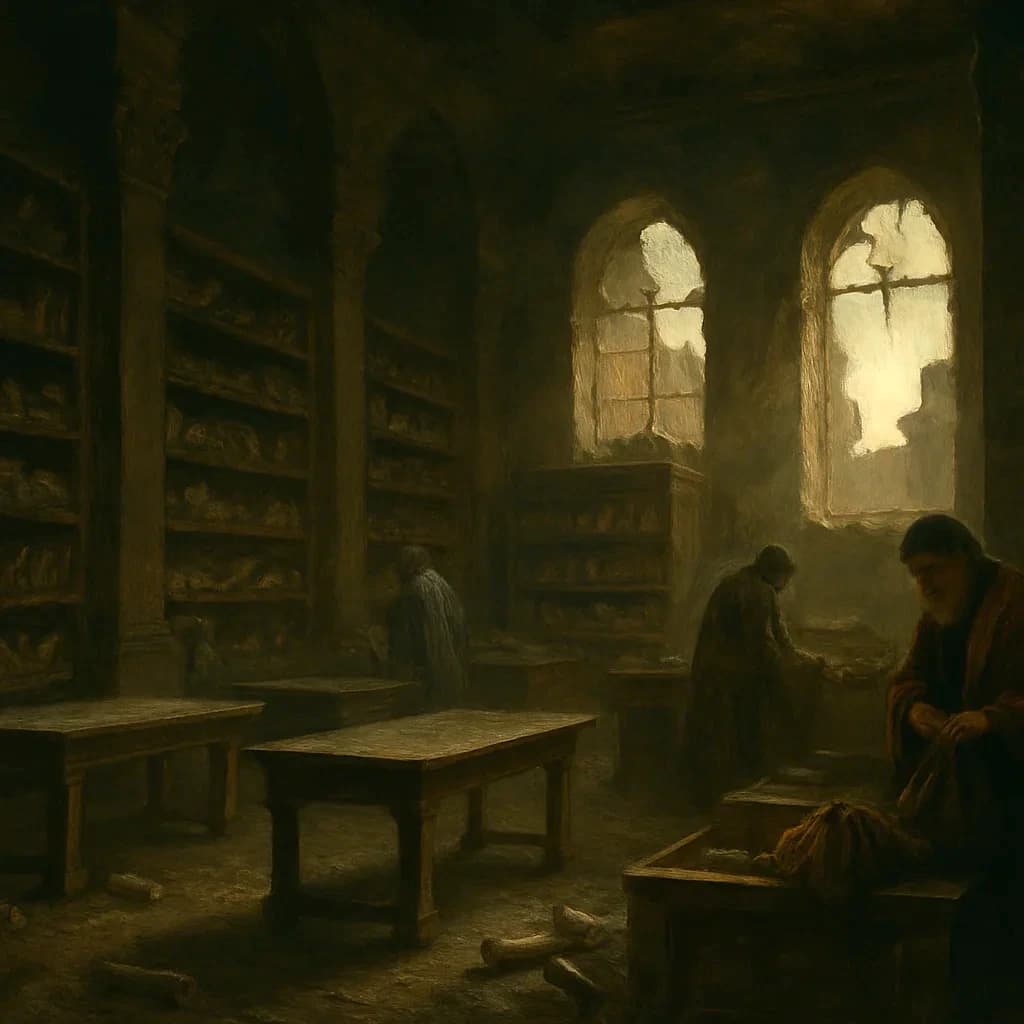
Alexandria's Library Died in Budget Meetings, Not Flames
The Library of Alexandria wasn't destroyed in one dramatic fire. It was slowly strangled over centuries by budget cuts, religious politics, and academic brain drain.
- McLynn, Neil B. Ambrose of Milan: Church and Court in a Christian Capital. University of California Press, 1994.
- Williams, Stephen, and Gerard Friell. Theodosius: The Empire at Bay. Yale University Press, 1994.
- Sozomen. Ecclesiastical History. Book VII. (5th century primary source, available via Nicene and Post-Nicene Fathers series)