

Theophilus of Alexandria
The most destructive librarian in history never burned a single book. He simply made them irrelevant.
Theophilus ruled Alexandria as Patriarch from 385 to 412 CE, during which time he perfected the art of institutional strangulation. While history remembers dramatic book burnings, Theophilus understood that the most effective way to kill knowledge was bureaucracy. He didn't need torches when he had budget committees.
The man was a master of death by a thousand cuts. When the great Library of Alexandria still functioned as a shadow of its former self, Theophilus systematically redirected its funding to Christian building projects. Scholars found their salaries delayed, then reduced, then eliminated entirely. The copying workshops that had kept ancient texts alive for centuries suddenly couldn't afford papyrus. Meanwhile, Theophilus was commissioning magnificent churches with money that had once purchased manuscripts from across the Mediterranean.
His masterstroke came in 391 CE with the Serapeum, the library's last major repository. Rather than ordering a dramatic assault, Theophilus obtained imperial permission to "cleanse" the building of pagan materials. His followers didn't storm in with flames. They arrived with carts and careful inventories. Valuable texts were carted away to be "evaluated" in Christian institutions, where they conveniently disappeared into private collections or were simply left to rot in basements. The building itself was converted into a church, its reading rooms becoming chapels.
Theophilus died peacefully in his bed in 412, having successfully transformed Alexandria from the intellectual capital of the ancient world into just another provincial religious center. He proved that you don't need to burn books to destroy a library. You just need to make people forget why books matter in the first place.
Theophilus was uncle to Cyril of Alexandria, who would later orchestrate the murder of the mathematician Hypatia, completing the family's systematic destruction of Alexandria's intellectual life.
Why untold: His bureaucratic methods of destroying knowledge are overshadowed by more dramatic stories of book burning and mob violence.
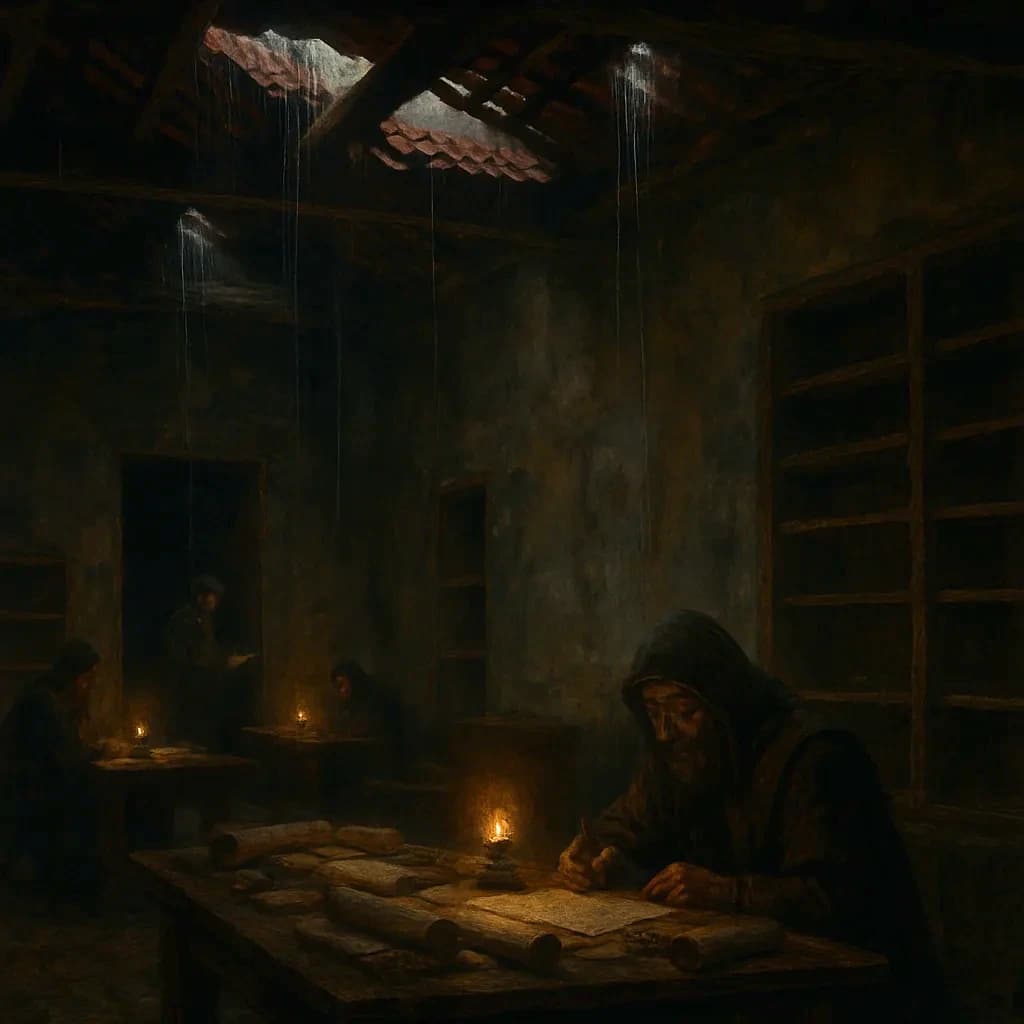
Politicians and Priests Carved Up the World's Greatest Library
Alexandria's famous library didn't burn down in one catastrophic fire. It slowly bled to death over centuries as politicians, priests, and bureaucrats took turns carving out pieces.
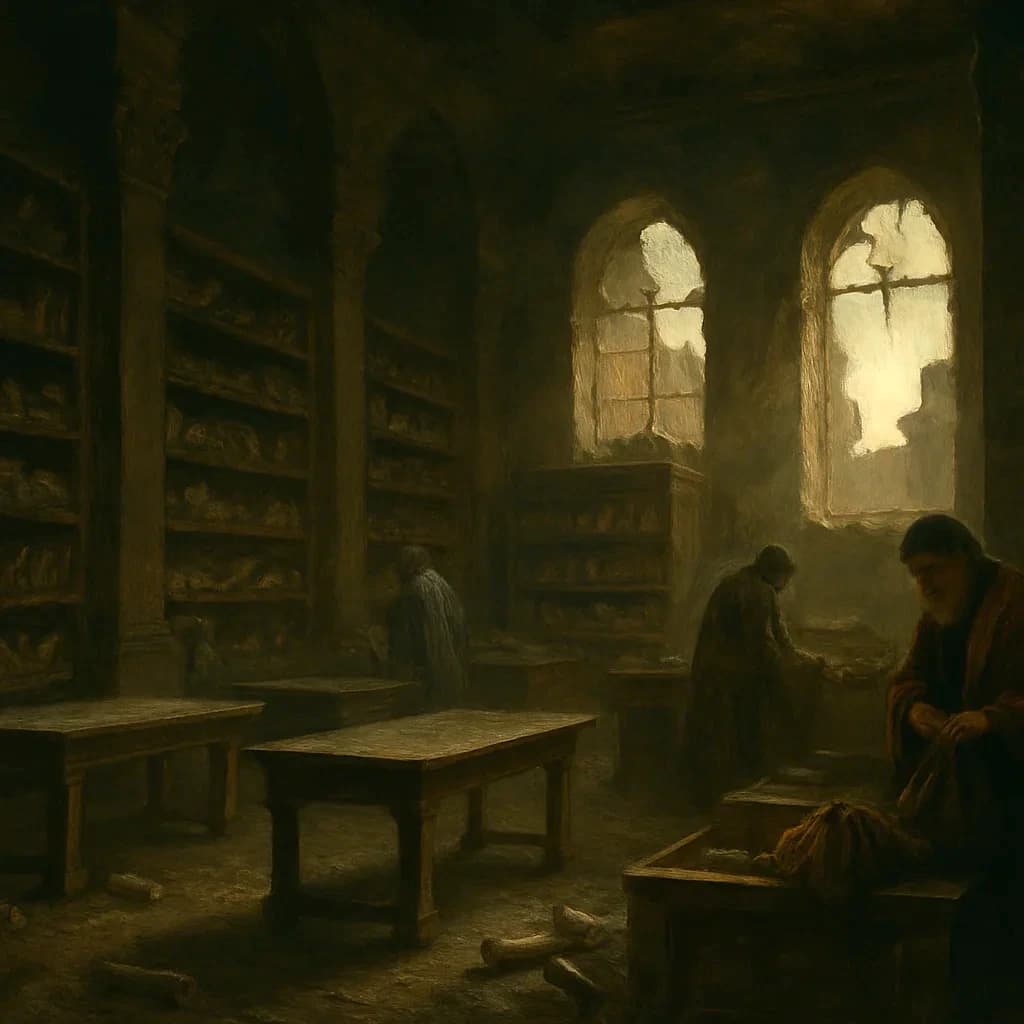
Alexandria's Library Died in Budget Meetings, Not Flames
The Library of Alexandria wasn't destroyed in one dramatic fire. It was slowly strangled over centuries by budget cuts, religious politics, and academic brain drain.
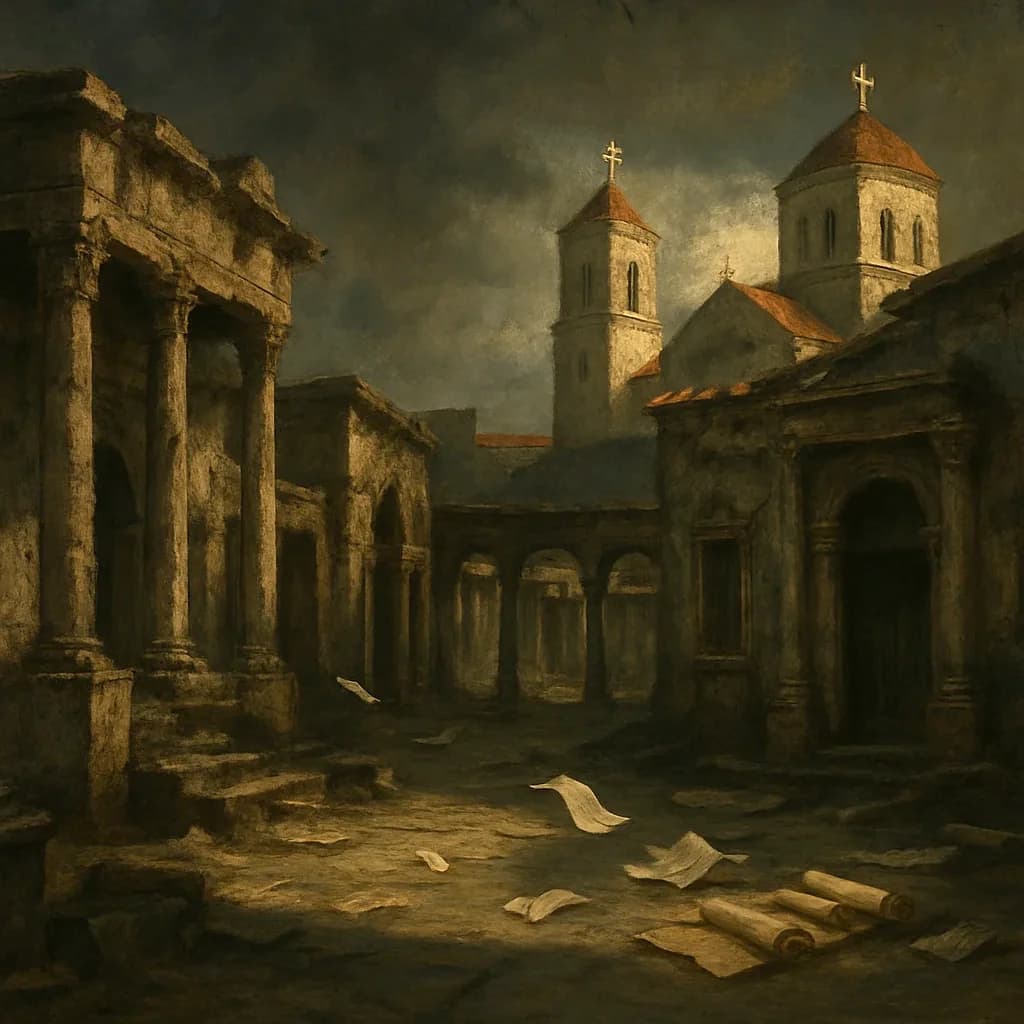
The Library of Alexandria Didn't Burn Down
History's most famous library didn't vanish in one dramatic fire. It slowly devoured its own knowledge over centuries of neglect, rivalry, and deliberate erasure.
- Socrates Scholasticus, Ecclesiastical History, Book V
- Edward Gibbon, The History of the Decline and Fall of the Roman Empire, Volume III
- Christopher Haas, Alexandria in Late Antiquity: Topography and Social Conflict