
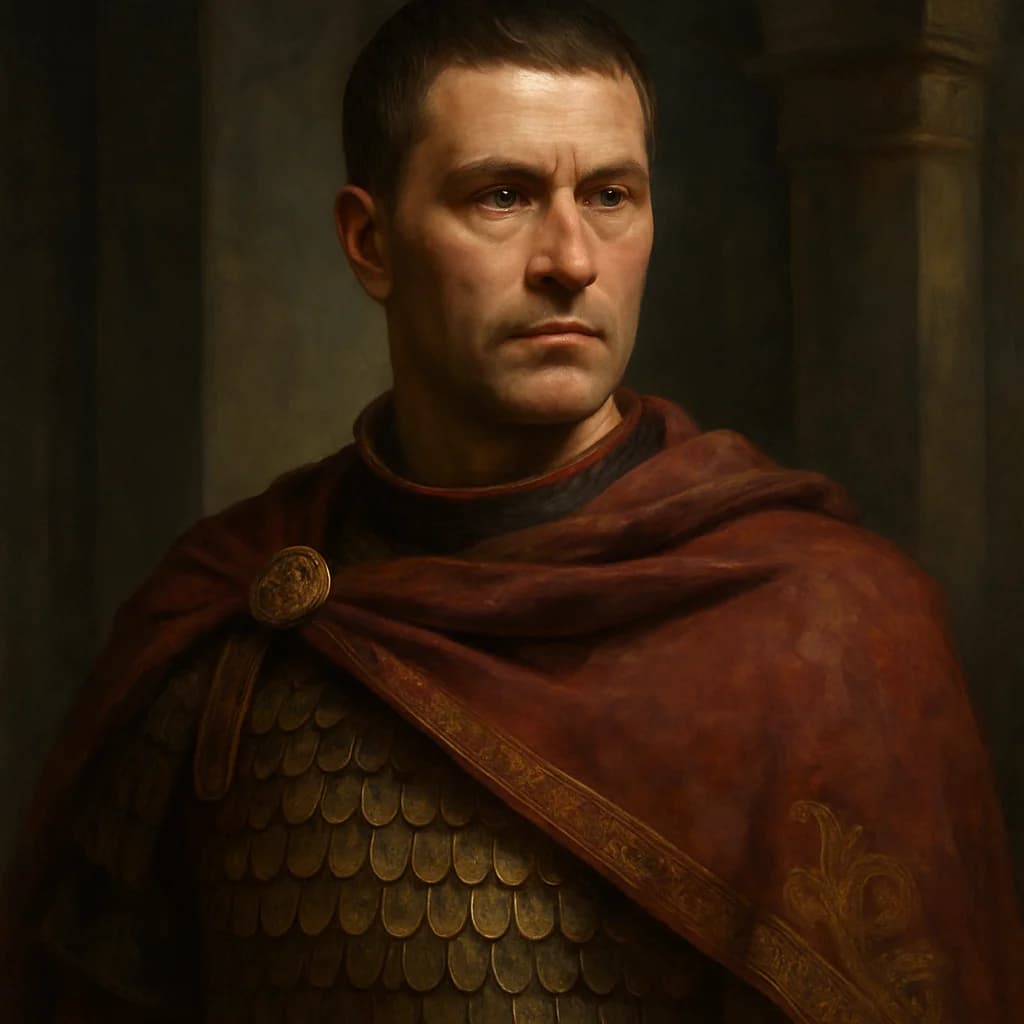
Stilicho
The man who saved Rome twice was executed for treason on the orders of the emperor he had spent twenty years keeping alive.
Stilicho was half-Vandal. This mattered enormously to his enemies and apparently not at all to the man who made him the most powerful general in the Western Roman Empire. Theodosius I elevated Stilicho in the 380s not despite his barbarian blood but, in some ways, because of it: a man who understood the federate system from the inside, who could negotiate with Gothic warlords as something closer to a peer than a conqueror. Theodosius sealed the arrangement the way Romans sealed everything that mattered: he gave Stilicho his niece Serena as a wife, threading him into the dynasty itself.
What followed was nearly two decades of increasingly desperate improvisation. When Theodosius died in 395, he left two incompetent teenage sons (Honorius in the West, Arcadius in the East) and a empire already fracturing along seams that no amount of military genius could fully close. Stilicho claimed guardianship of both boys, a move the Eastern court in Constantinople rejected with cold fury. The empire didn't split because of ideology or geography. It split, in part, because two courts couldn't agree on who owned one general. While that bureaucratic feud calcified into permanent division, Stilicho fought off Alaric's Visigoths at Pollentia in 402, then again at Verona in 403. He did it with an army that was itself largely Gothic: fighting Goths with Goths, a fact that made perfect military sense and terrified Roman aristocrats who preferred their decline to come with purer optics.
The end arrived with almost theatrical irony. In 408, facing a new Gothic invasion and a usurper rising in Gaul, Stilicho's enemies at Honorius's court finally had enough leverage. They whispered treason. Honorius, the emperor Stilicho had personally escorted to safety behind the walls of Ravenna years earlier, signed the order. Stilicho surrendered himself voluntarily (possibly calculating that his innocence would protect him, possibly just exhausted) and was beheaded at Ravenna on August 22, 408. Alaric sacked Rome two years later. The city had not fallen to a foreign enemy in eight hundred years.
After Stilicho's execution, Honorius ordered the massacre of the families of barbarian soldiers serving in the Roman army, an act so catastrophic that tens of thousands of those soldiers immediately defected to Alaric, dramatically accelerating the sack of Rome.
Why untold: Stilicho's half-barbarian identity made him easy for later Roman writers to reframe as a traitor who weakened Rome from within, a narrative that conveniently displaced blame from the incompetent emperors he had spent his career propping up.
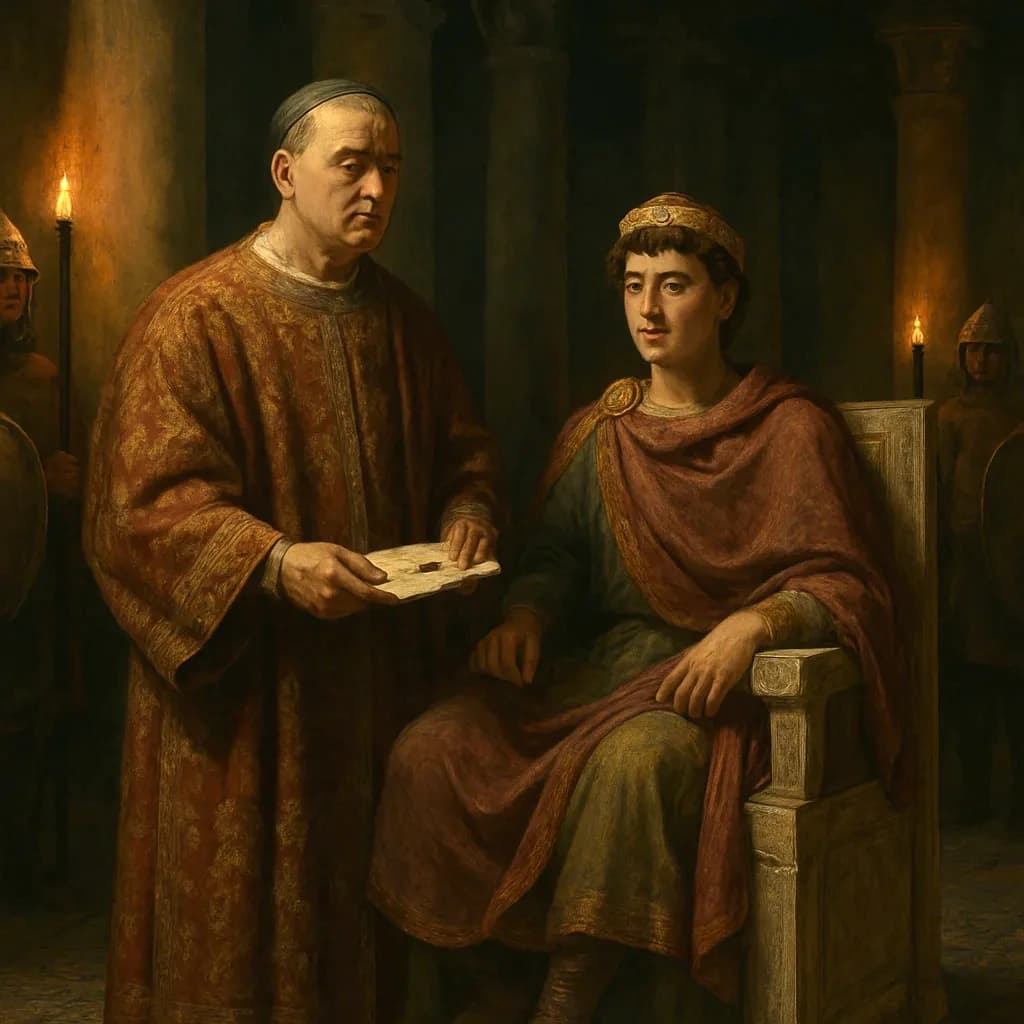
The Afternoon a Eunuch Saved the Roman West
A single castrated palace official blocked a Visigothic army at a mountain pass, and nobody remembered his name for fifteen centuries.
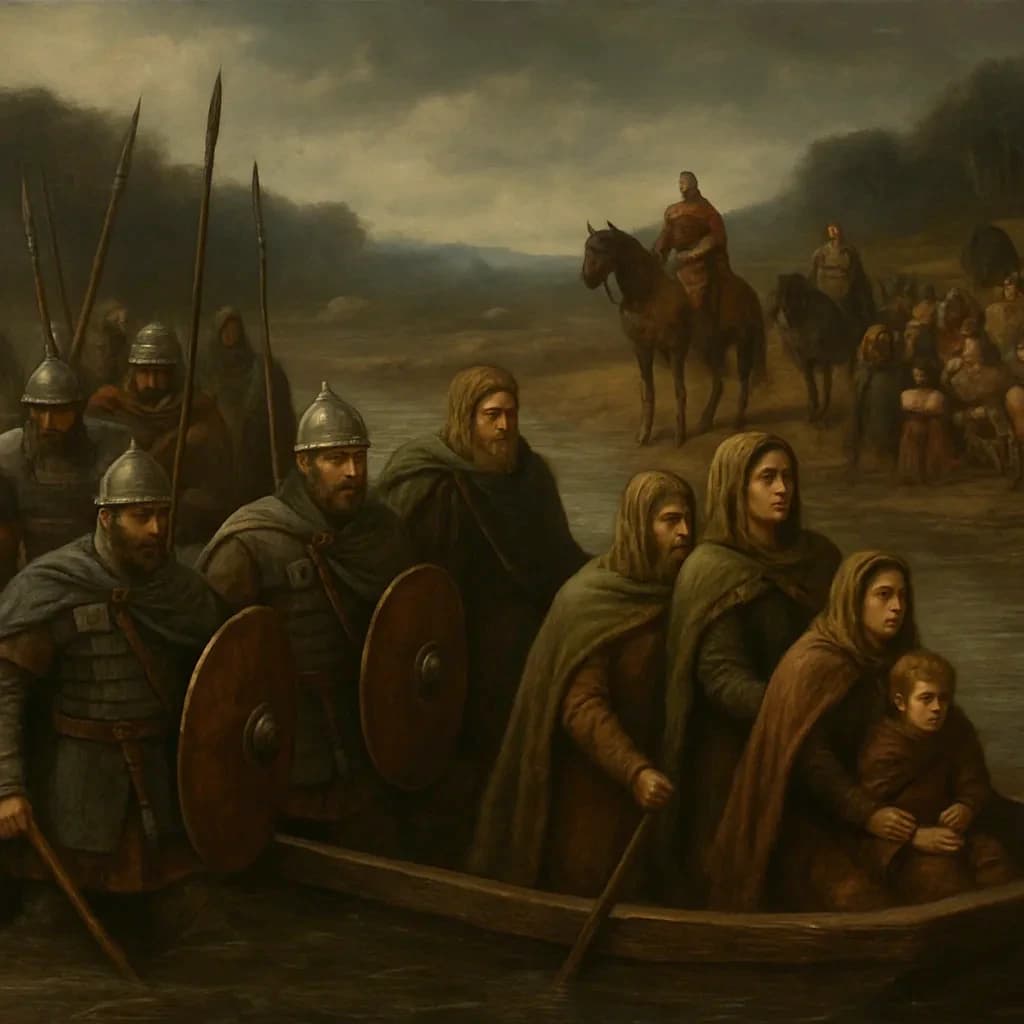
How Rome Trained the Armies That Sacked It
The Roman Empire didn't fall to outsiders. It spent two centuries carefully teaching those outsiders how to fight like Romans, then handed them the keys.
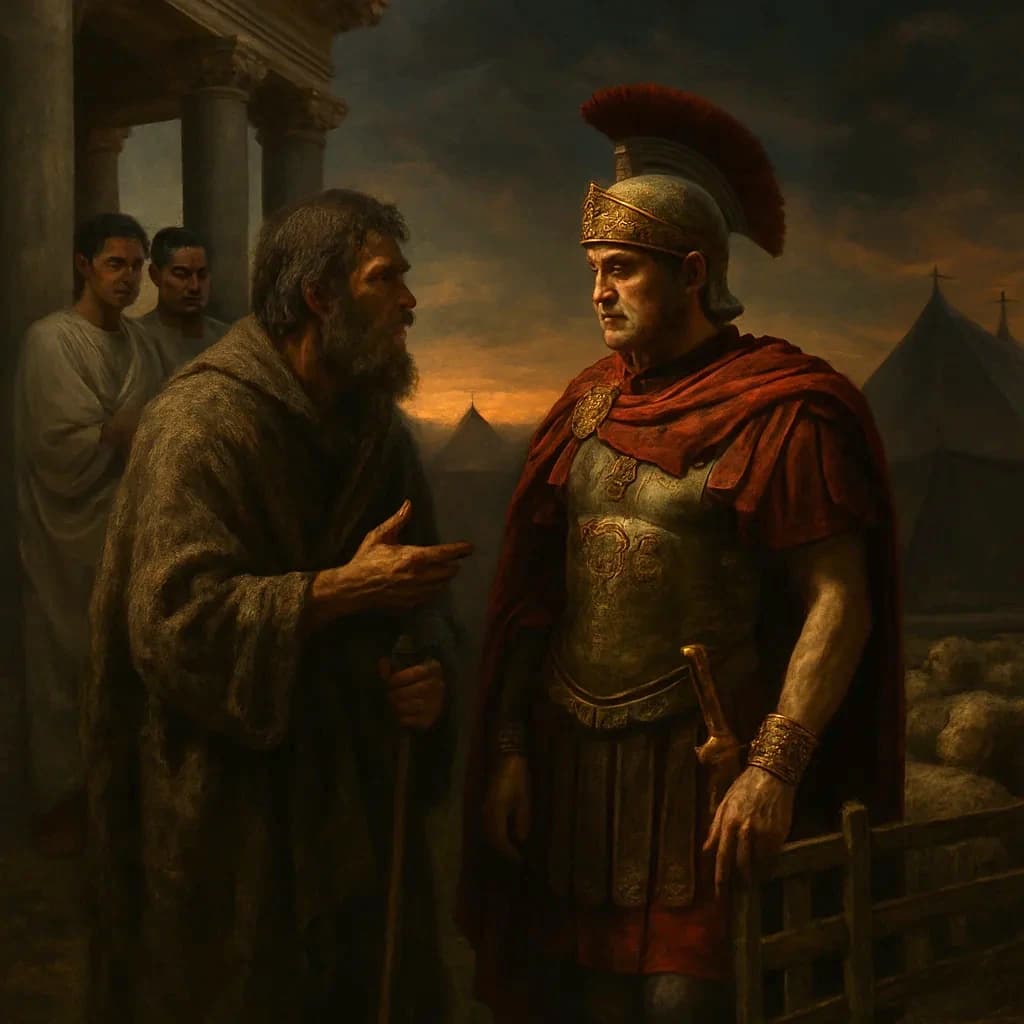
Three Sheep Brought Down Rome's Last General
A shepherd's simple complaint about missing livestock would topple the most powerful man in the Roman Empire.
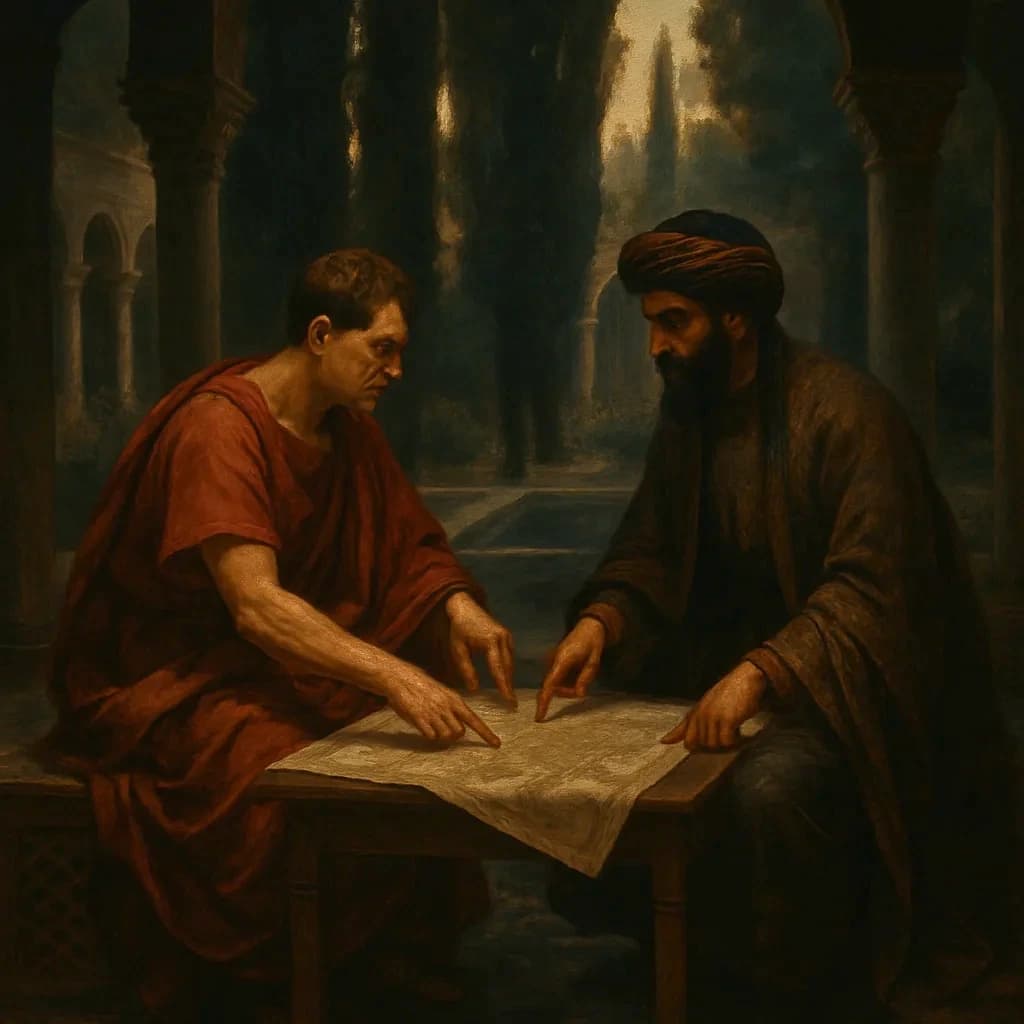
Two Tired Diplomats Drew the World's Longest-Lasting Border
Three minutes of conversation in a Persian garden changed the direction of the next thousand years.
- Guy Halsall, Barbarian Migrations and the Roman West, 376-568 (Cambridge University Press, 2007)
- Ian Hughes, Stilicho: The Vandal Who Saved Rome (Pen & Sword Military, 2010)
- Peter Heather, The Fall of the Roman Empire: A New History of Rome and the Barbarians (Macmillan, 2006)