
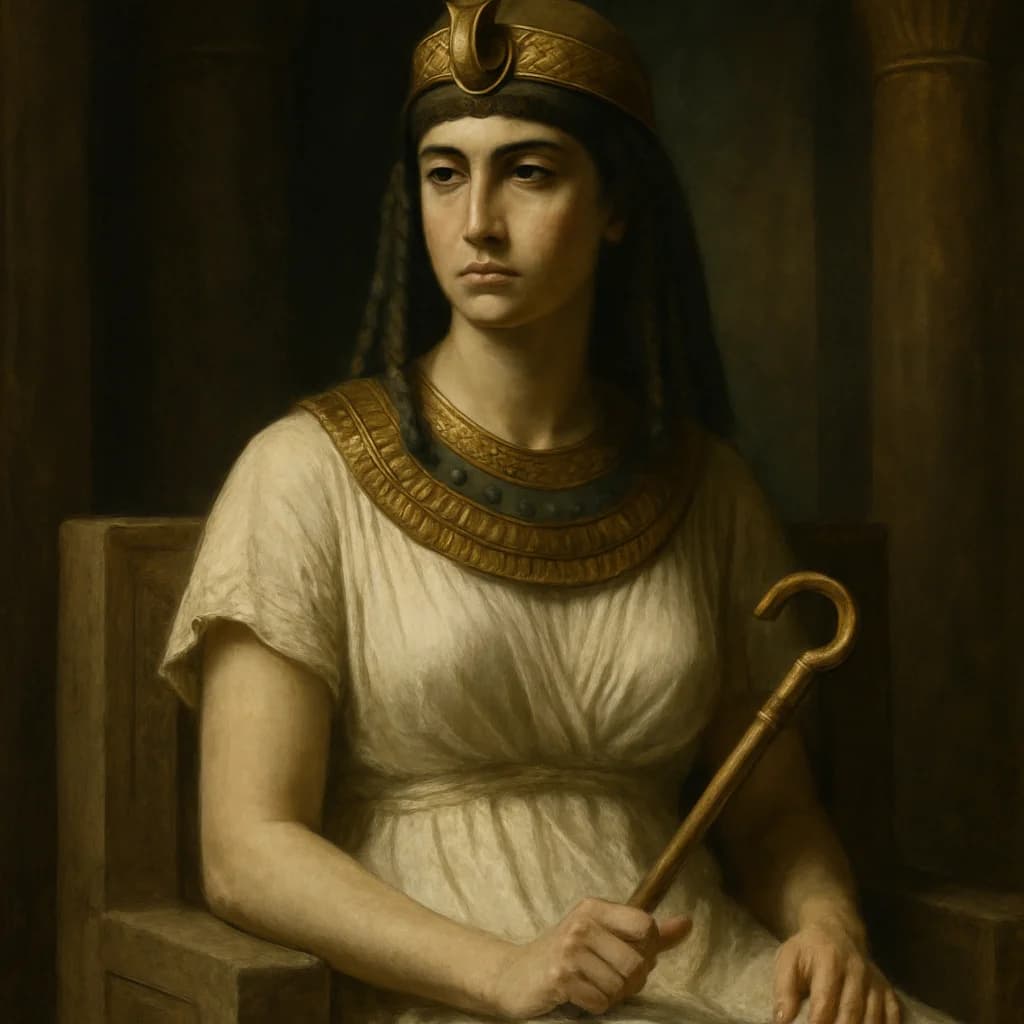
Cleopatra VII
She never needed to seduce anyone. She was already the most dangerous intellectual in the room.
Cleopatra VII spoke nine languages. This is the fact that keeps getting buried under the asp and the eyeliner. She was the first ruler of her Ptolemaic dynasty (a line of Macedonian Greeks that had controlled Egypt for nearly three centuries) to bother learning Egyptian at all. Her predecessors had governed a country whose language they refused to speak. Cleopatra learned it, along with Aramaic, Ethiopian, Hebrew, Arabic, Parthian, and several others, because she understood something they didn't: that power administered through translators is power perpetually at risk of mistranslation.
The Egypt she inherited in 51 BCE was not a prize. It was a liability. Rome had been circling it for decades, and the Ptolemaic treasury was hemorrhaging. Cleopatra's father, Ptolemy XII, had literally purchased his throne back from Rome with borrowed money, leaving the country in debt to Roman creditors. She was eighteen when she took control, co-ruling with her ten-year-old brother, and within three years that brother's advisors had driven her out of Alexandria entirely. What history tends to skip past is that she didn't run. She raised an army from the eastern frontier, recruiting from Syria and the Sinai, and was camped at Pelusium preparing to take Egypt back by force when Julius Caesar arrived in 48 BCE. The famous carpet delivery, the supposed seduction: these stories emerged from Roman sources written by men who could not fathom that she had other options.
What she actually offered Caesar was a political alliance that served them both, and what she brought to the negotiating table was staggering: the Library of Alexandria, the intellectual infrastructure of the ancient world, and a kingdom that produced roughly forty percent of Rome's grain. She wasn't leveraging her appearance. She was leveraging a monopoly on wheat. Caesar's heir Octavian understood this perfectly, which is why, after her death in 30 BCE, he executed her son Caesarion within weeks and immediately restructured Egypt as his personal imperial property (not a province, his personal property) locked to himself and inaccessible to the Roman Senate.
She had been, functionally, too powerful to be allowed to survive in anyone's historical memory as anything other than a cautionary tale about feminine ambition.
Cleopatra VII is chronologically closer to the Moon landing than to the construction of the Great Pyramid of Giza. She lived roughly 2,500 years after it was built, and only 2,050 years before 1969.
Why untold: Roman imperial propaganda, authored largely by Octavian's regime after her defeat, systematically reframed her political and intellectual authority as sexual manipulation, a narrative so rhetorically useful that it survived largely intact for two thousand years.
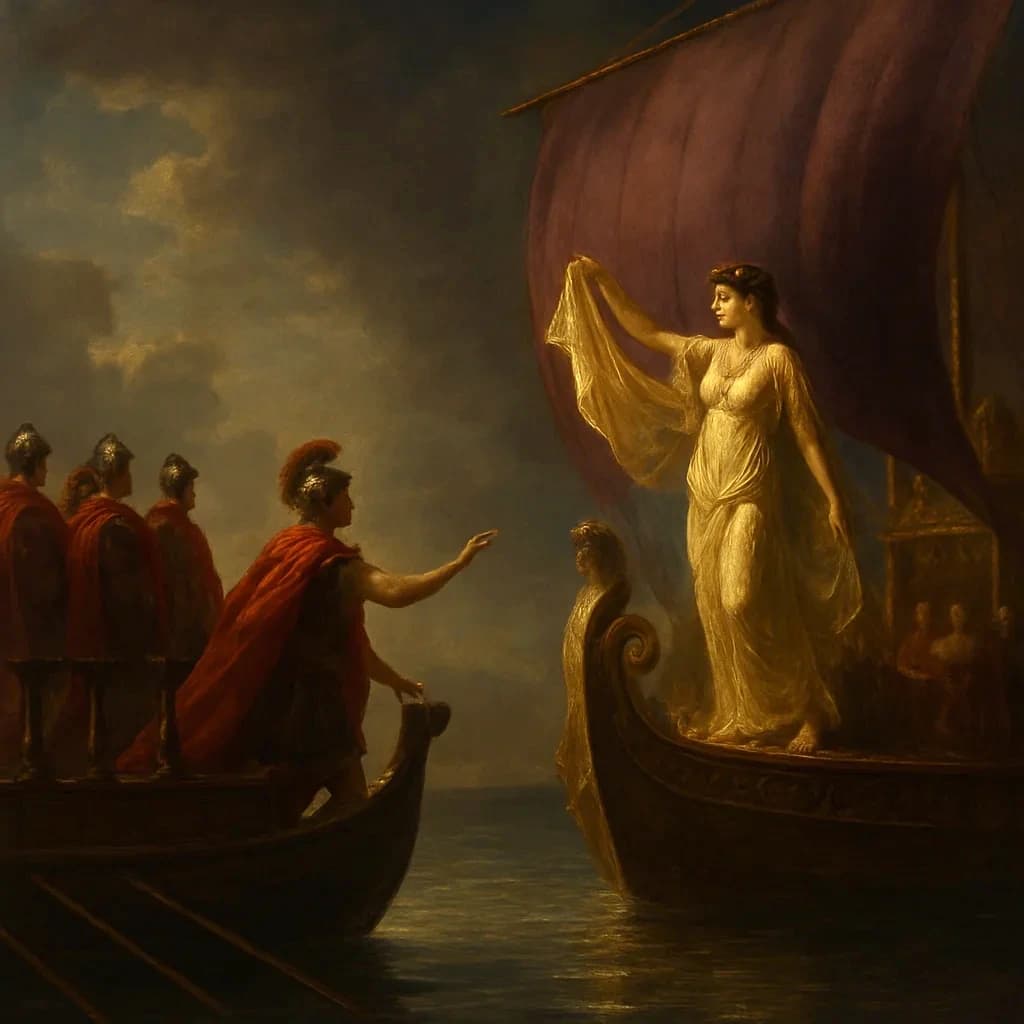
How Cleopatra's Silk Helped Bankrupt Mark Antony
One square of silk, lighter than linen, helped decide who would rule the Roman world.
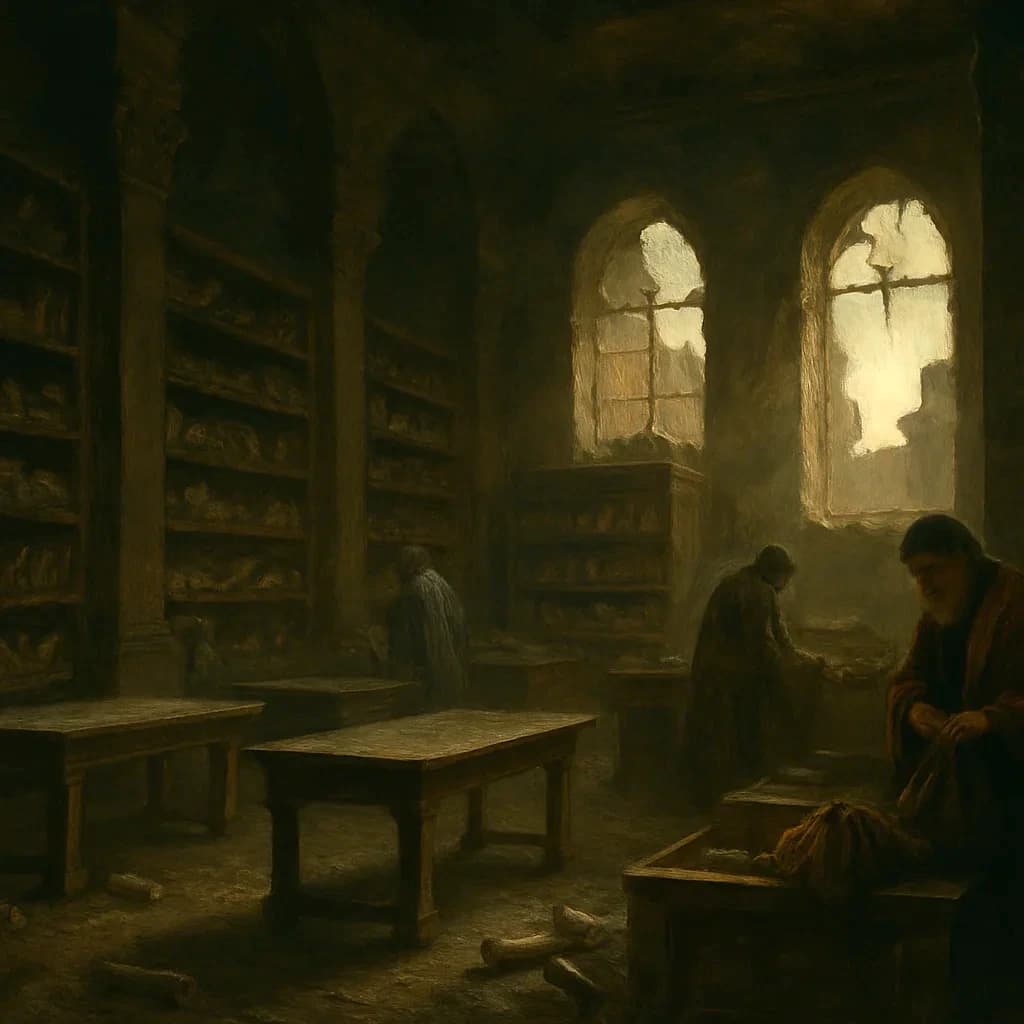
Alexandria's Library Died in Budget Meetings, Not Flames
The Library of Alexandria wasn't destroyed in one dramatic fire. It was slowly strangled over centuries by budget cuts, religious politics, and academic brain drain.
- Stacy Schiff, Cleopatra: A Life (Little, Brown and Company, 2010)
- Duane W. Roller, Cleopatra: A Biography (Oxford University Press, 2010)
- Plutarch, Life of Antony, in Parallel Lives, c. 75 CE (Loeb Classical Library edition, trans. Bernadotte Perrin, 1920)