
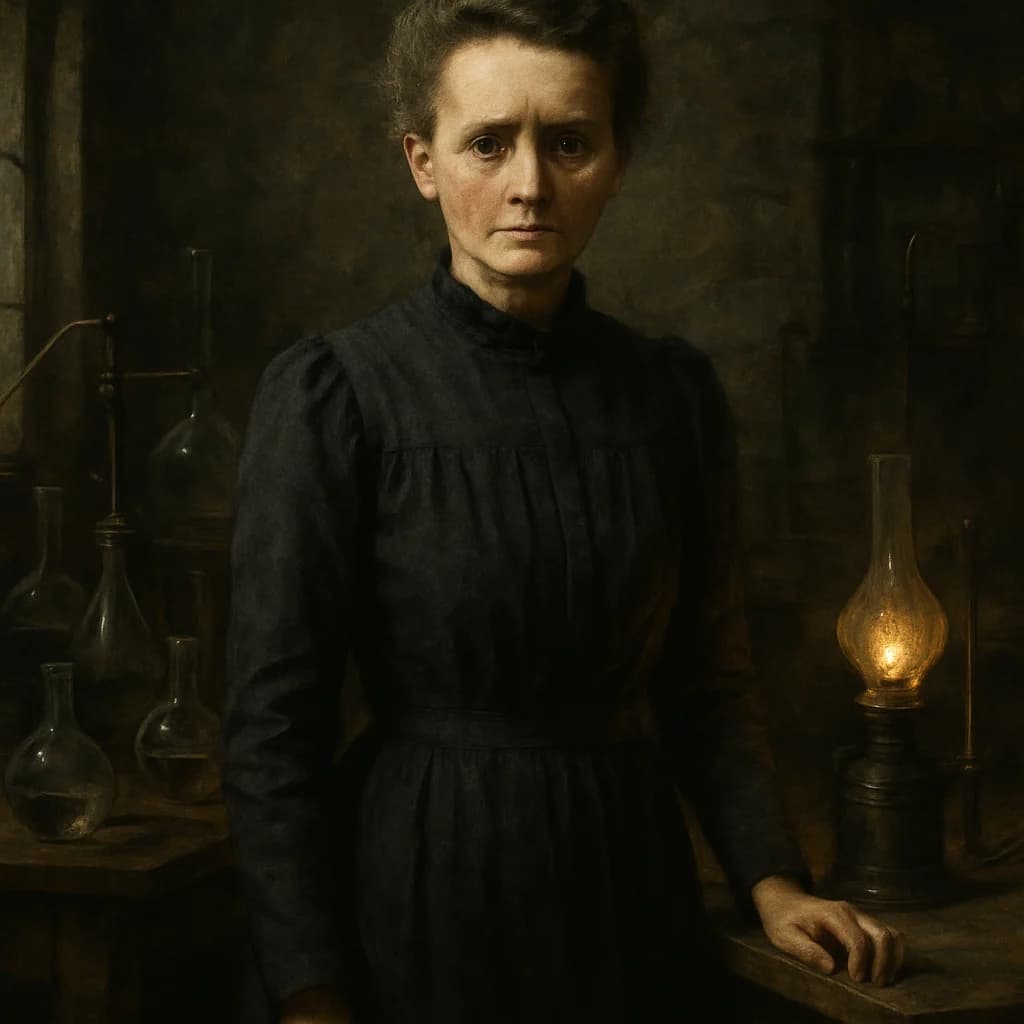
Marie Curie
She won two Nobel Prizes and still couldn't get a library card at the French Academy of Sciences.
By the time Marie Curie became the most decorated scientist in the world, she had already been quietly dismantling the idea that laboratories were men's rooms. But the part that tends to get swallowed by the myth is how deliberately hostile the conditions were, and how strategically she navigated them anyway.
Born Maria Sklodowska in Warsaw in 1867, she grew up under Russian occupation, where educating women was not merely discouraged but illegal. She and her sister Bronya struck a deal that reads like something from a heist film: Marie would work as a governess to fund Bronya's medical degree in Paris, then Bronya would return the favor. Marie held up her end for five years, tutoring the children of a family whose son fell in love with her and whose parents promptly ended the arrangement. She arrived in Paris in 1891 with almost nothing and studied in an unheated attic apartment, sometimes too cold to sleep. She finished first in her physics degree. Then she went back and got a second degree in mathematics.
What history tends to compress is the texture of her working life after fame arrived. The shed on the Rue Lhomond where she and Pierre isolated radium was, by her own description, a cross between a stable and a potato cellar. There was no ventilation. She was unknowingly irradiating herself daily, carrying test tubes of radioactive isotopes in her coat pockets, storing them in her desk drawer. The notebooks she used during that period are still so radioactive that researchers at the Bibliothèque nationale de France must sign a liability waiver and handle them in lead-lined boxes. They will remain dangerous for another fifteen hundred years. She died in 1934 of aplastic anemia, almost certainly caused by decades of radiation exposure, at a time when the connection between radiation and illness was still being worked out, in part from watching what happened to her.
After Pierre was killed by a horse-drawn cart in 1906, the French press that had lionized them both turned on her with astonishing speed. A 1911 affair with physicist Paul Langevin (both of them separated from their spouses) prompted front-page vilification and xenophobic attacks on her Polish origins. The Nobel Committee quietly suggested she not attend the ceremony in Stockholm that December. She went anyway.
Marie Curie personally drove X-ray vehicles (mobile radiography units she designed and deployed herself) to field hospitals during World War I, training over 150 women to operate them and personally performing an estimated 1 million X-ray examinations on wounded soldiers.
Why untold: Her story has been so thoroughly repackaged as an inspirational narrative of female triumph that the specific, grinding, institutional violence of her career (and the literal physical cost of the science itself) tends to disappear in favor of the two gold medals.
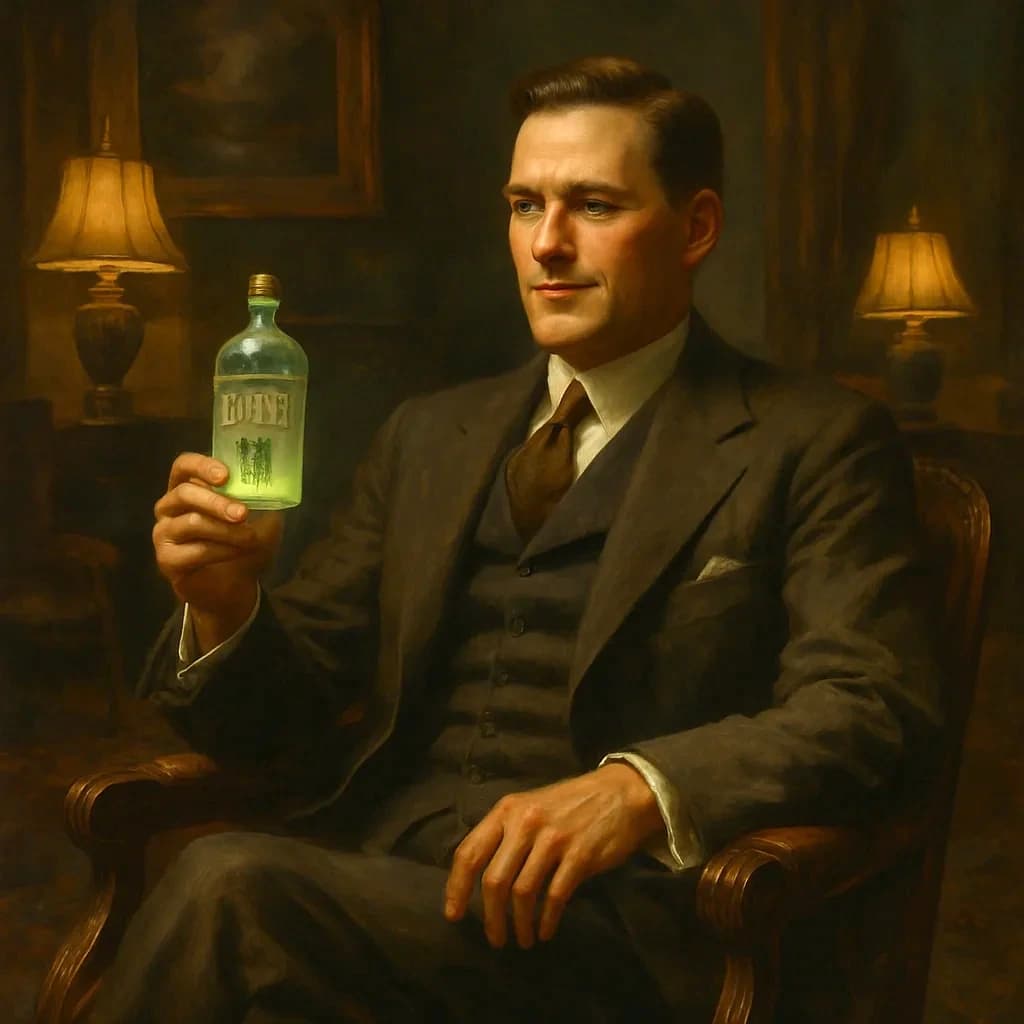
When Doctors Prescribed Radioactive Water
In the 1920s, wealthy Americans lined up to drink radium-laced water that their doctors promised would cure everything from arthritis to impotence.
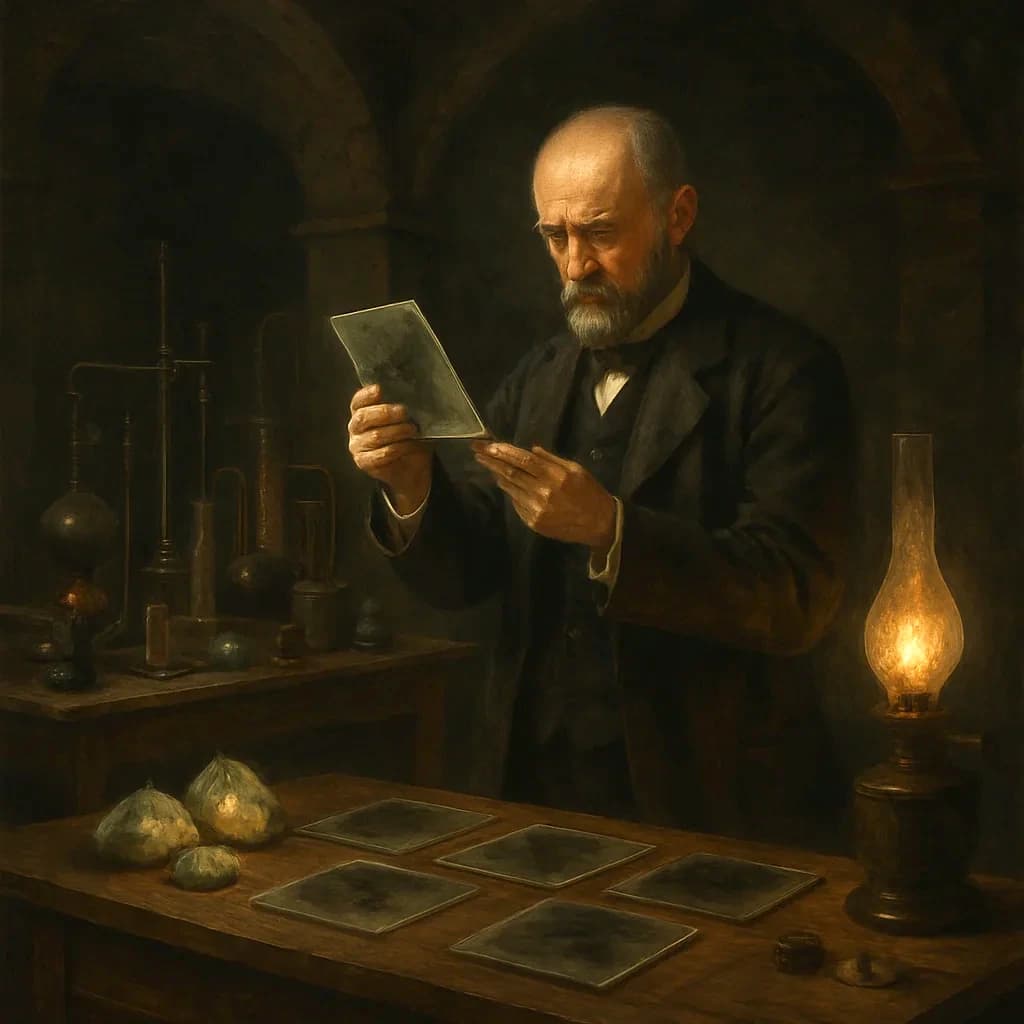
A Paris Lab Accident Produced History's Most Dangerous Discovery
In 1895, a laboratory accident in Paris created the most dangerous discovery in human history, and the scientist had no idea what he'd done.
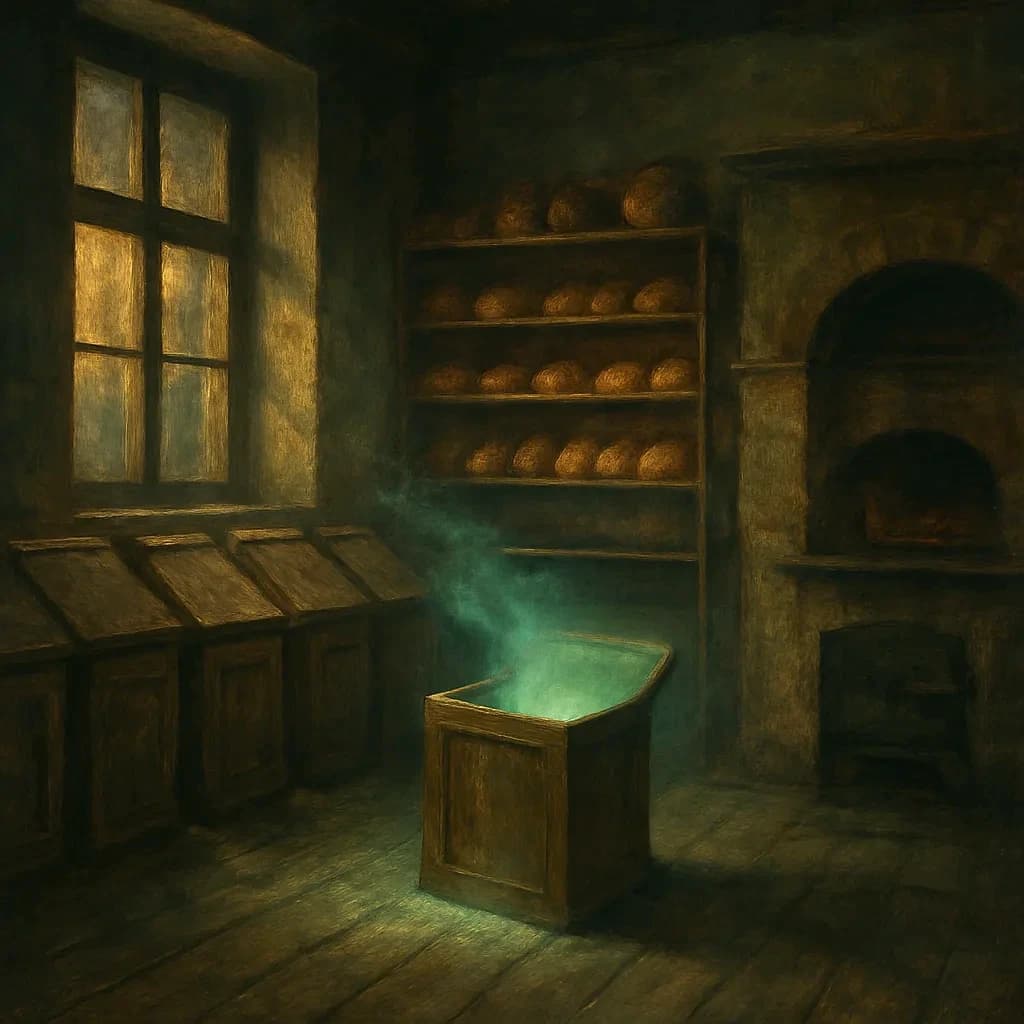
When Prague's Bread Started Glowing
A baker's mysterious dough in 1939 led to the most closely guarded secret of World War II.
- Quinn, Susan. Marie Curie: A Life. Simon & Schuster, 1995.
- Goldsmith, Barbara. Obsessive Genius: The Inner World of Marie Curie. W. W. Norton & Company, 2005.
- Dry, Sarah. Curie. Haus Publishing, 2003.