
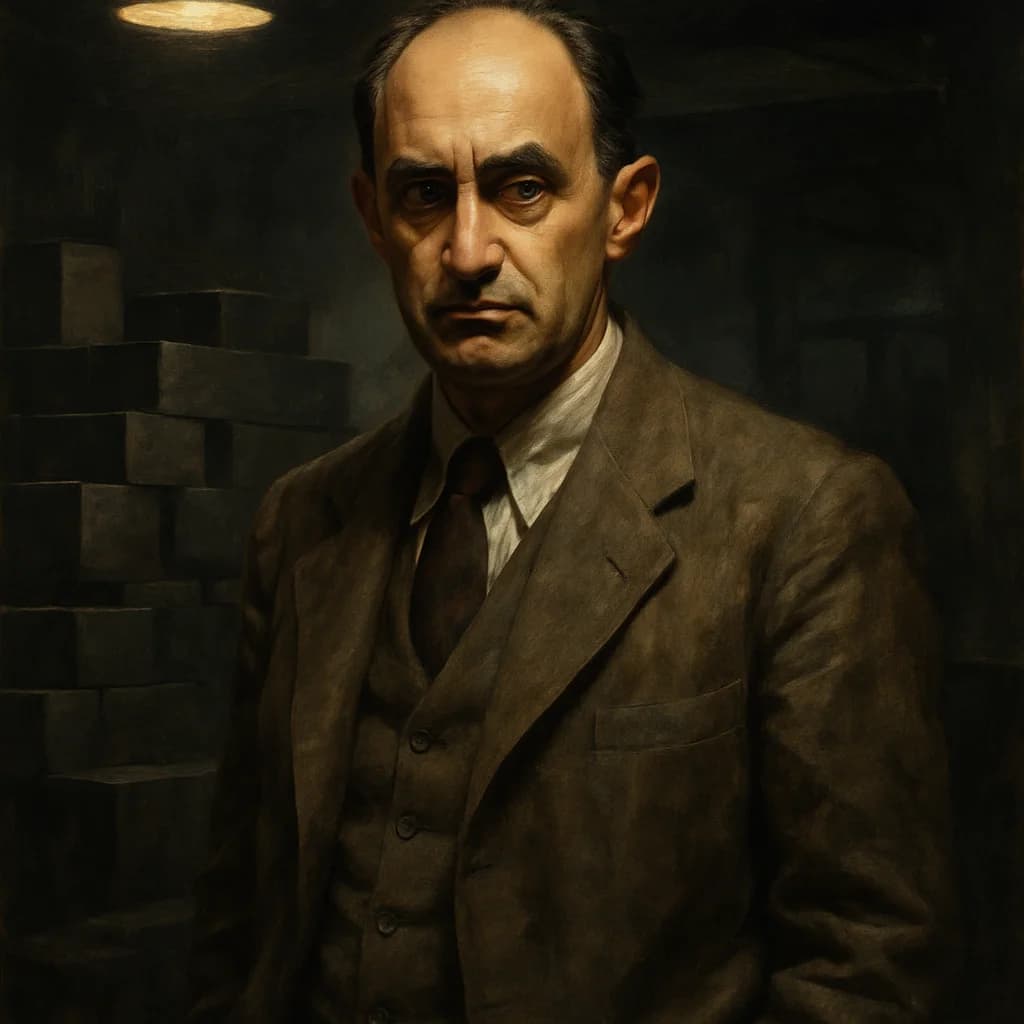
Enrico Fermi
He built the first nuclear reactor under a football stadium and told almost no one, including the people who lived nearby.
Enrico Fermi won the Nobel Prize in 1938 for work that turned out to be wrong. The committee celebrated his supposed creation of new transuranium elements by bombarding uranium with neutrons. He had actually split the atom. He just didn't realize it yet. That gap (between what Fermi did and what Fermi knew he'd done) is the most revealing thing about him. He was the rare physicist who operated fluently in both the theoretical and the experimental, which meant he was always slightly ahead of his own understanding.
When Fermi accepted his Nobel in Stockholm, he didn't go back to Mussolini's Italy. He kept going west. His wife Laura was Jewish, the racial laws were tightening, and Fermi, methodical as ever, had already arranged a position at Columbia University before he stepped onto the stage in Sweden. The escape was disguised as a vacation. They packed as if for a trip. They never returned.
By December 1942, Fermi was working beneath the west stands of Stagg Field at the University of Chicago, directing the construction of Chicago Pile-1: 45,000 graphite blocks, 19,000 pounds of uranium, and a cadmium control rod that one man would yank free on a signal. On the morning of December 2nd, Fermi ate lunch, ran a few calculations on a slide rule, and around 2 p.m. quietly announced that the first self-sustaining nuclear chain reaction was underway. Someone opened a bottle of Chianti. The city of Chicago had no idea what had just happened underneath it.
The detail that tends to get lost: Fermi ran the numbers on worst-case failure scenarios and concluded the reactor was safe enough. He was not reckless. He was precise. But his precision existed inside a project so compartmentalized that the university's administration was never fully briefed, and the surrounding neighborhood of Hyde Park had zero awareness that an experimental nuclear pile was humming beneath a sports venue. Fermi died of stomach cancer in 1954 at 53, almost certainly from decades of radiation exposure. He knew the risks better than anyone alive.
Fermi arrived in the United States with his Nobel Prize money sewn into his clothing (roughly $40,000 in today's value) because he couldn't legally transfer funds out of Italy without drawing attention to his planned defection.
Why untold: The Manhattan Project's strict compartmentalization, combined with Fermi's own reticence and the postwar canonization of the bomb's physics over its human logistics, buried the stranger and more unsettling details of how casually civilization-altering decisions were made.
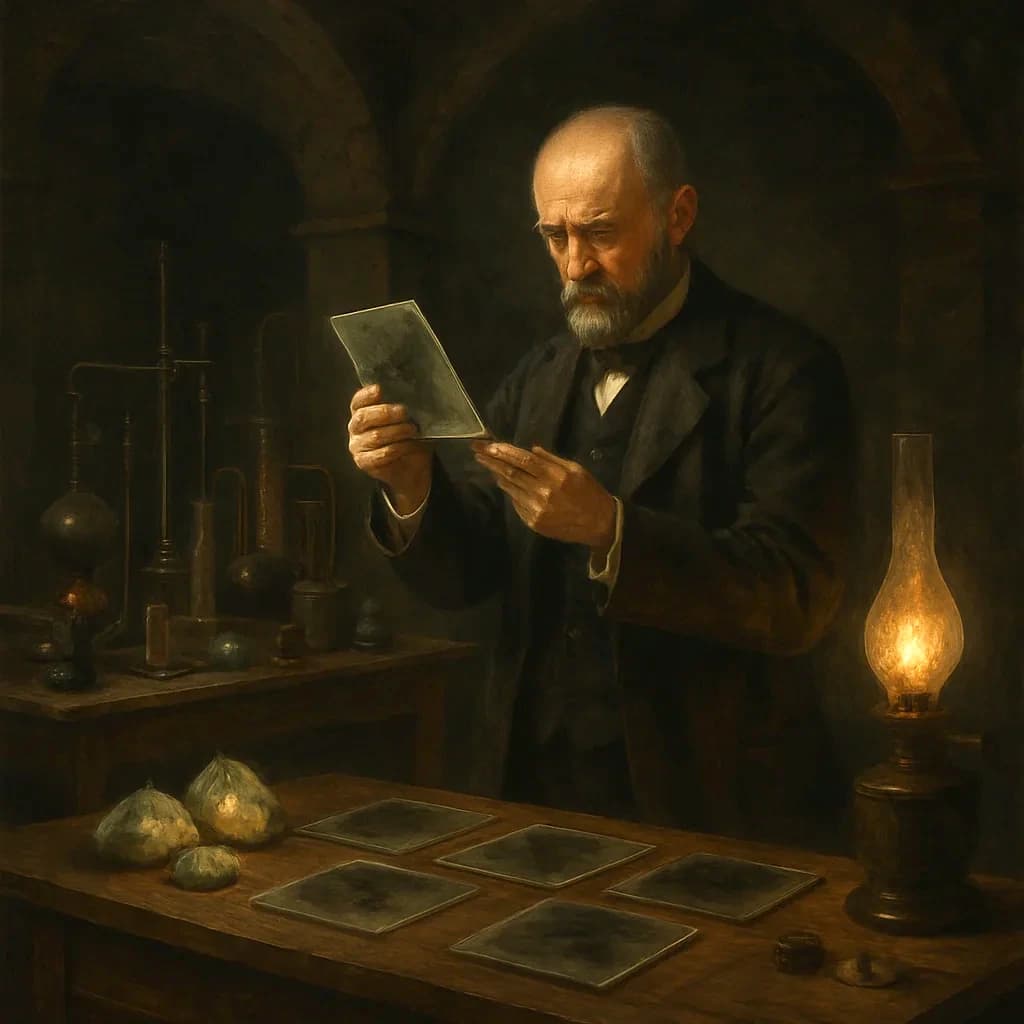
A Paris Lab Accident Produced History's Most Dangerous Discovery
In 1895, a laboratory accident in Paris created the most dangerous discovery in human history, and the scientist had no idea what he'd done.
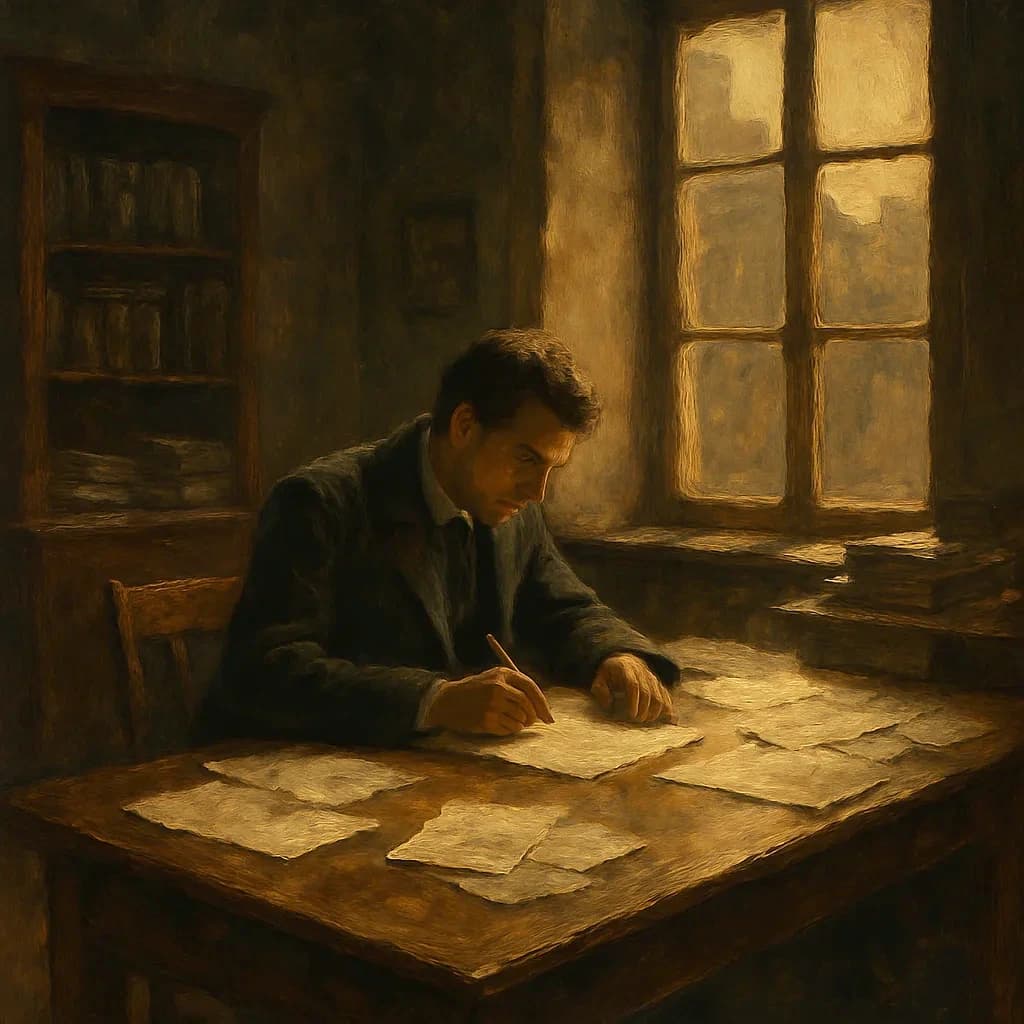
Einstein Called E=mc² His Greatest Mistake
A patent clerk in Bern scribbled one equation at the tail end of an ignored paper, and forty years later it killed 200,000 people in Japan.
- Schwartz, David N. 'The Last Man Who Knew Everything: The Life and Times of Enrico Fermi' (2017)
- Rhodes, Richard. 'The Making of the Atomic Bomb' (1986)
- Fermi, Laura. 'Atoms in the Family: My Life with Enrico Fermi' (1954)