
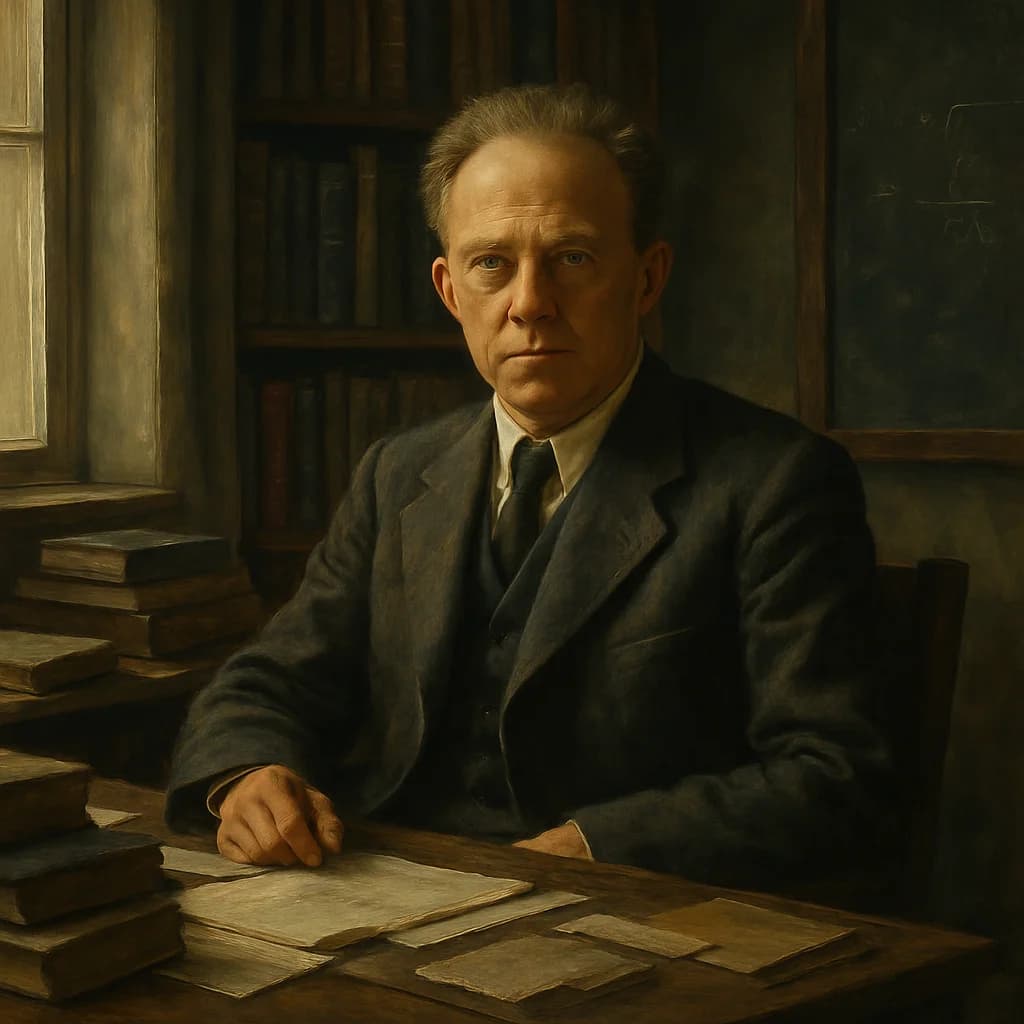
Werner Heisenberg
The man who may have deliberately sabotaged the Nazi atomic bomb never told anyone, including himself.
Werner Heisenberg won the Nobel Prize in 1932 for a theory so abstract that even his doctoral committee nearly failed him over it. That's the version people know. What they don't know is that the most consequential decision of the twentieth century may have been made by a man who was either a secret saboteur, a patriot in denial, or simply bad at math when it mattered most. And the ambiguity was entirely by design.
In 1939, Heisenberg was recruited to lead Germany's nuclear weapons program, the Uranverein. He was thirty-seven, already famous, and one of perhaps five people on earth who understood what splitting the atom could actually mean. What followed over the next six years has been argued over by physicists and historians ever since. Heisenberg's calculations told his Nazi handlers that a bomb was theoretically possible but would require an industrial effort beyond Germany's wartime capacity. Those calculations were wrong, or at least, significantly off. The critical mass he estimated was orders of magnitude too high. The question that has never been answered cleanly is whether he made that error on purpose.
In September 1941, Heisenberg traveled to occupied Copenhagen and met privately with his former mentor Niels Bohr. The meeting lasted less than an hour. Bohr left it shaken and refused to discuss the details for years. Heisenberg claimed he had tried to open a conversation about whether physicists on both sides could quietly agree to stall their respective programs. Bohr's family later said Heisenberg appeared to be fishing for information about Allied progress, possibly to deliver it to Berlin. Both accounts cannot be true. Neither man ever fully clarified what was said, and Bohr died in 1962 with the tension unresolved.
After the war, Heisenberg was interned at Farm Hall in England with nine other German scientists. The British secretly recorded every conversation. When the scientists learned the Americans had dropped a bomb on Hiroshima, the recordings captured Heisenberg working through the correct critical mass calculation (in real time, in one evening), having apparently never arrived at it during the entire war. Whether that was performance, relief, or genuine recalculation remains the most loaded open question in the history of science.
The Farm Hall transcripts, secretly recorded by British intelligence in 1945, were classified and withheld from the public for nearly fifty years, finally released in 1992, long after most of the key witnesses were dead.
Why untold: The postwar narrative of Allied triumph made it inconvenient to seriously examine whether a German physicist might have quietly undermined his own program, because either answer (heroic saboteur or merely incompetent) complicated the clean moral architecture of the story.
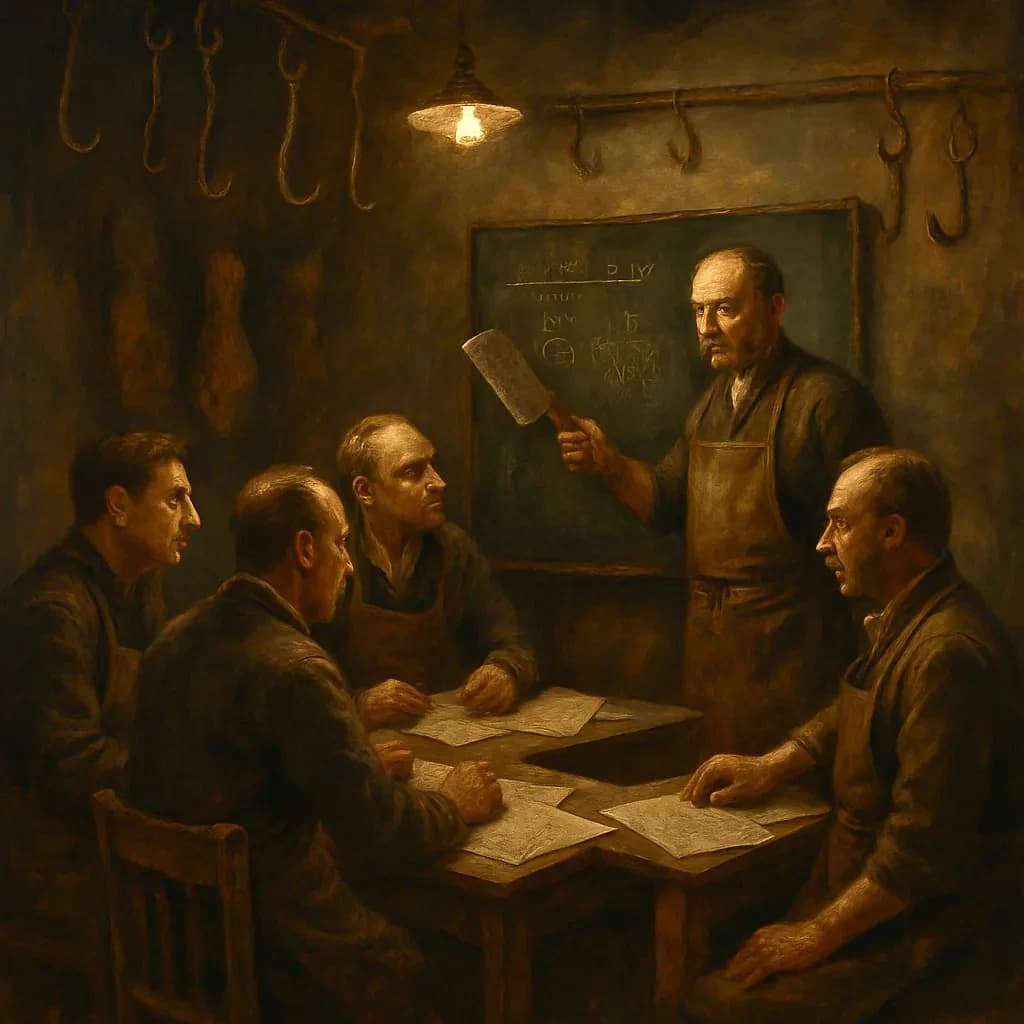
Berlin's Butchers Versus Einstein and "Jewish Math"
A group of German meat sellers convinced themselves in 1932 that Einstein's theory of relativity was a Jewish conspiracy against honest arithmetic.
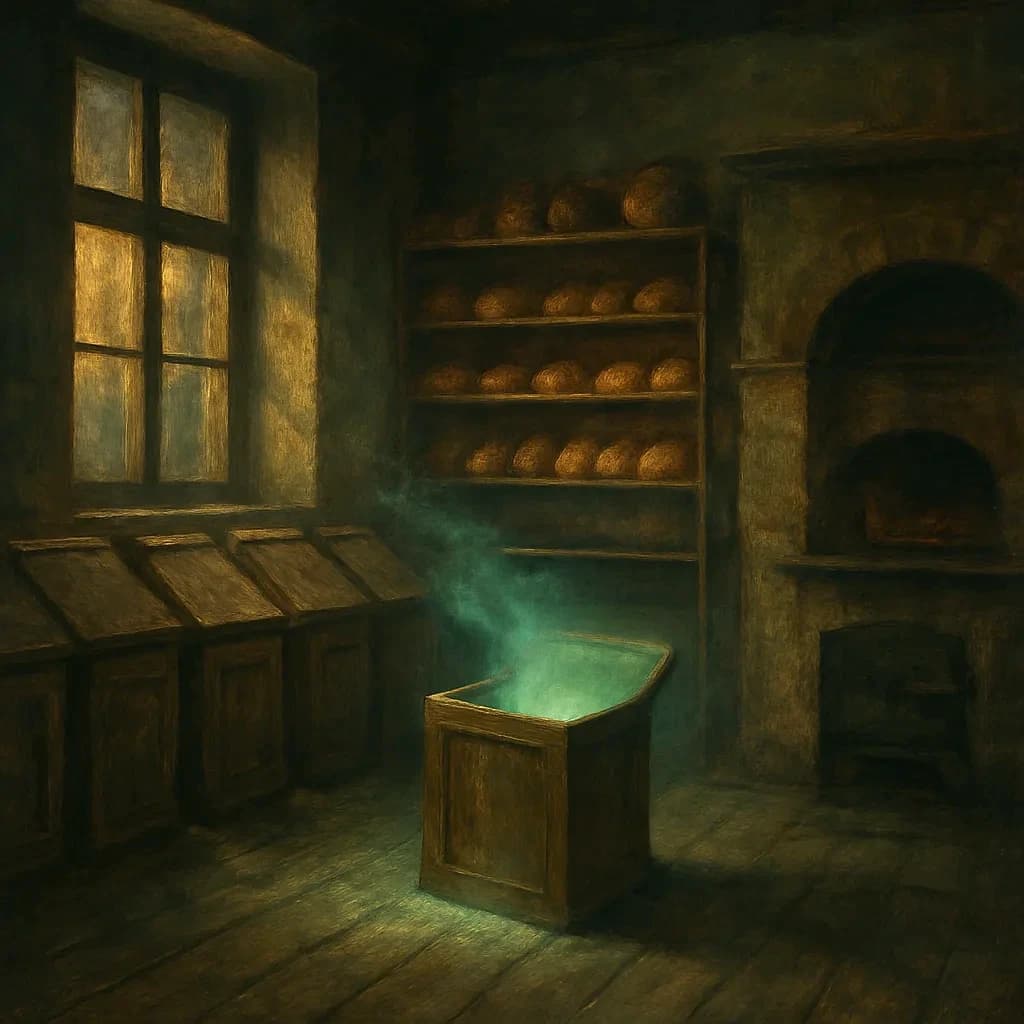
When Prague's Bread Started Glowing
A baker's mysterious dough in 1939 led to the most closely guarded secret of World War II.
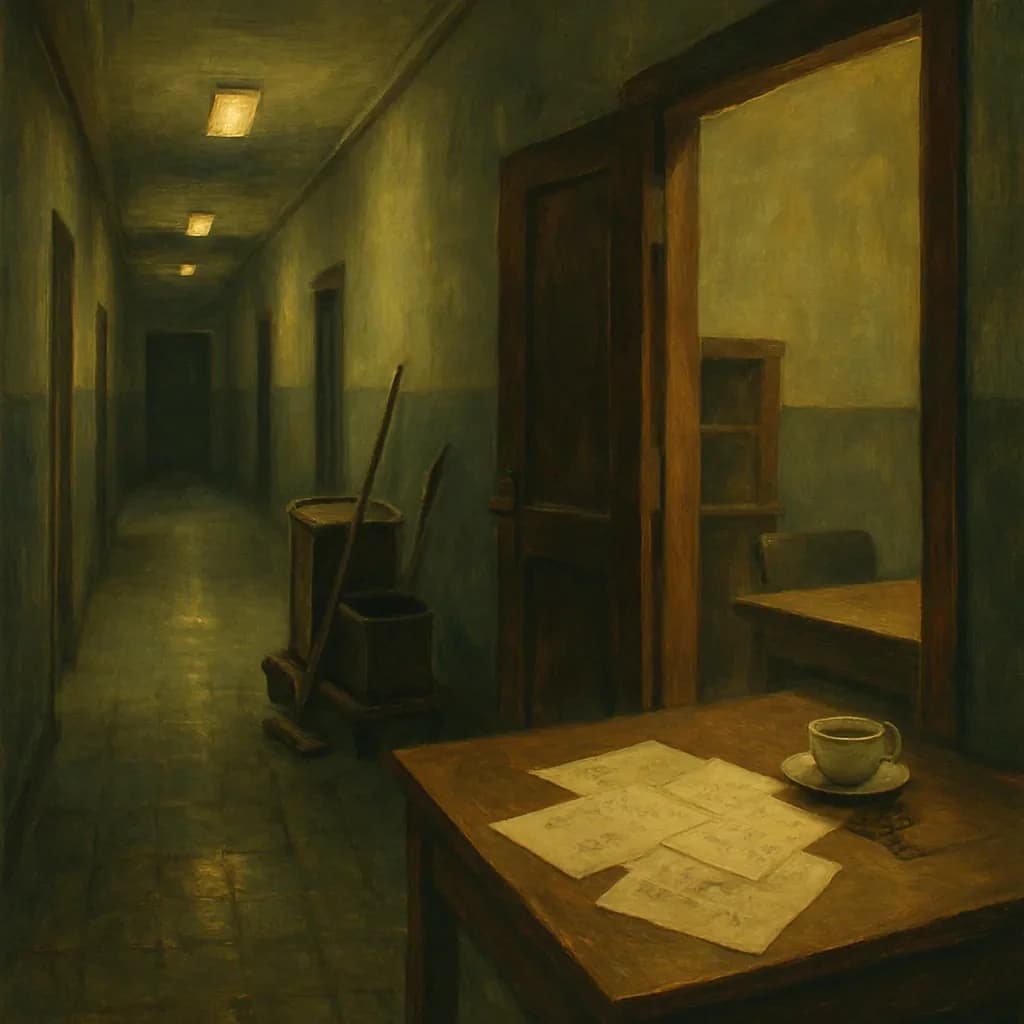
A Janitor's Discovery Haunted Him for the Rest of His Life
On April 7, 1943, a janitor at the Kaiser Wilhelm Institute made a discovery that would haunt him for the rest of his life.
- Cassidy, David C. Uncertainty: The Life and Science of Werner Heisenberg (W.H. Freeman, 1992)
- Powers, Thomas. Heisenberg's War: The Secret History of the German Bomb (Knopf, 1993)
- Bernstein, Jeremy. Hitler's Uranium Club: The Secret Recordings at Farm Hall (Copernicus Books, 2001)