
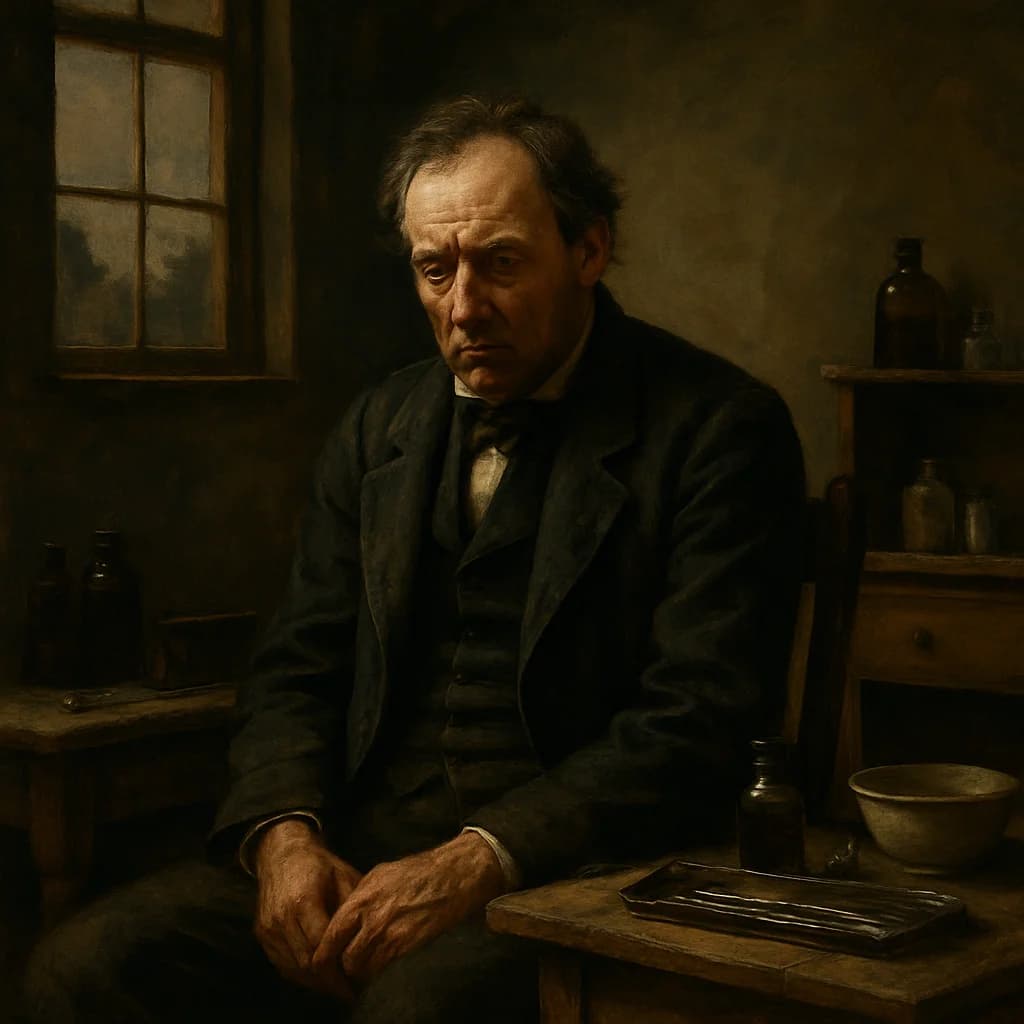
John Warren
The man who conquered pain died insane, forgotten, and convinced that someone had stolen his greatest discovery.
Crawford Long performed the world's first surgery under anesthesia on March 30, 1842, removing a tumor from James Venable's neck while the patient breathed ether and felt nothing. But Long made a fatal mistake: he didn't publish his results for seven years. By then, Boston dentist William Morton had demonstrated ether publicly and claimed the discovery for himself.
What drove Long to delay wasn't modesty. It was scientific caution that bordered on obsession. He spent years performing more ether surgeries, meticulously documenting each case, terrified of ridicule from the medical establishment. Long had witnessed ether's euphoric effects at "ether frolics" (party games where young people inhaled the gas for fun) and understood that serious doctors might dismiss his breakthrough as the fantasy of a country physician playing with party drugs.
The irony cuts deep: Long's careful methodology was exactly what made his discovery credible, yet his refusal to rush to publication cost him immortality. While Morton became famous and fought bitter patent wars over ether, Long continued his quiet practice in rural Georgia, delivering babies and treating farmers. He finally published his results in 1849, but the moment had passed.
Long spent his final years watching others receive credit for his work, growing increasingly bitter and paranoid. He died in 1878 while delivering a baby, collapsing as he administered ether to ease the mother's pain, the same substance that had made him briefly the most important doctor in the world, then left him a footnote in medical history.
Long discovered anesthesia's potential after watching teenagers at "ether frolics" stumble and injure themselves without feeling pain, leading him to wonder if the same principle could work in surgery.
Why untold: His seven-year delay in publishing allowed others to claim credit for his discovery, relegating him to a historical footnote despite being first.
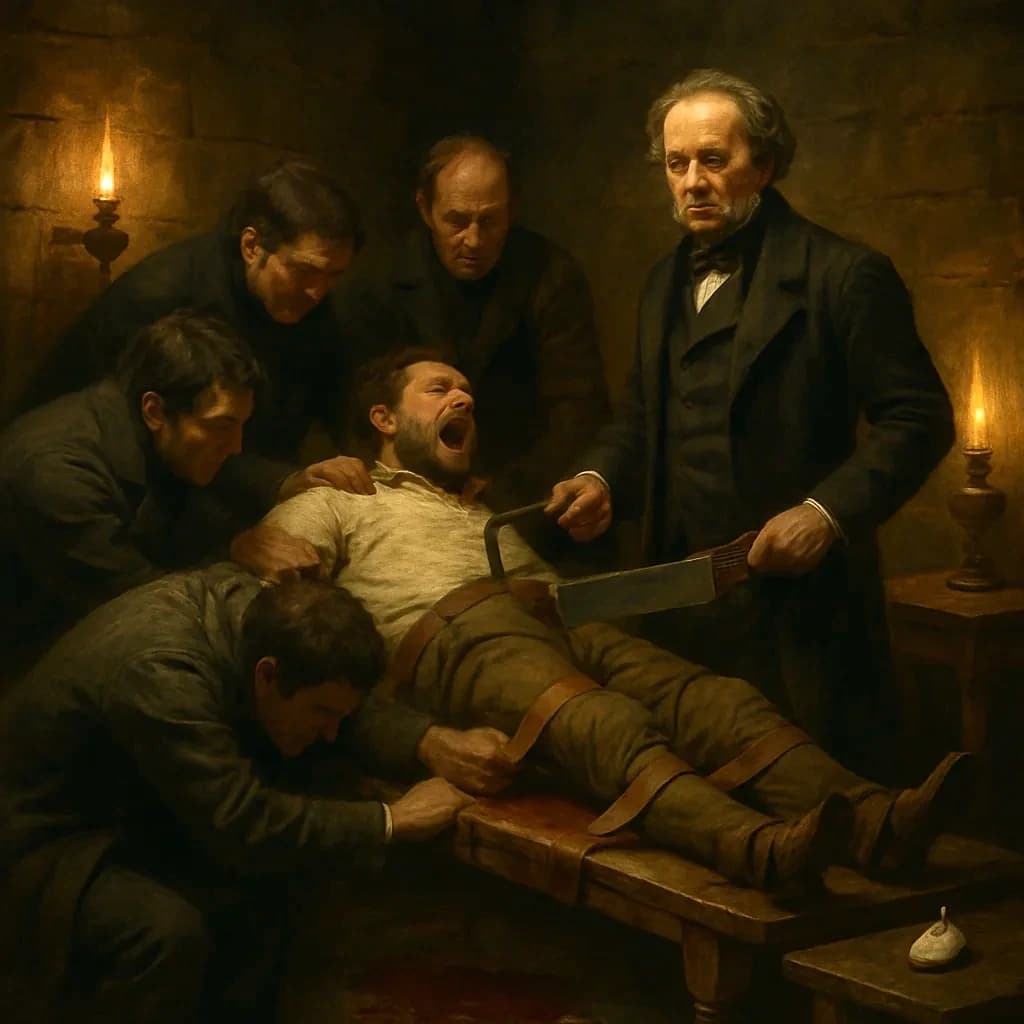
Ninety Seconds to Cut Off a Leg
Before ether, surgeons had thirty seconds to cut through bone while their patients were held down by four strong men.
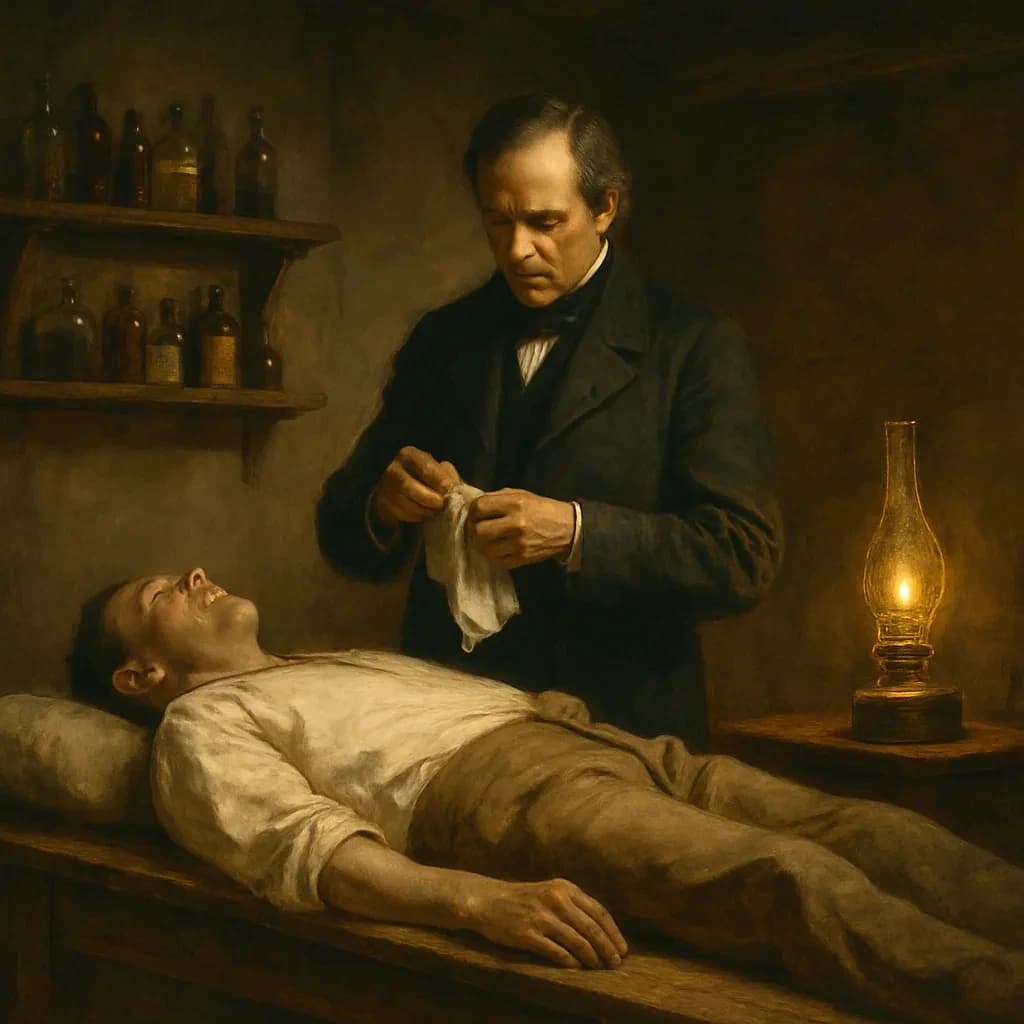
He Performed the First Painless Surgery. Nobody Believed Him.
A Georgia doctor performed the world's first surgery under anesthesia in 1842, but no one believed him, and by the time they did, he'd lost his mind.
- Fenster, Julie M. 'Ether Day: The Strange Tale of America's Greatest Medical Discovery.' New York: HarperCollins, 2001.
- Wolfe, Richard J. 'Tarnished Idol: William Thomas Green Morton and the Introduction of Surgical Anesthesia.' San Anselmo: Norman Publishing, 2001.
- Boland, Frank Kells. 'The First Anesthetic: The Story of Crawford Long.' Athens: University of Georgia Press, 1950.