
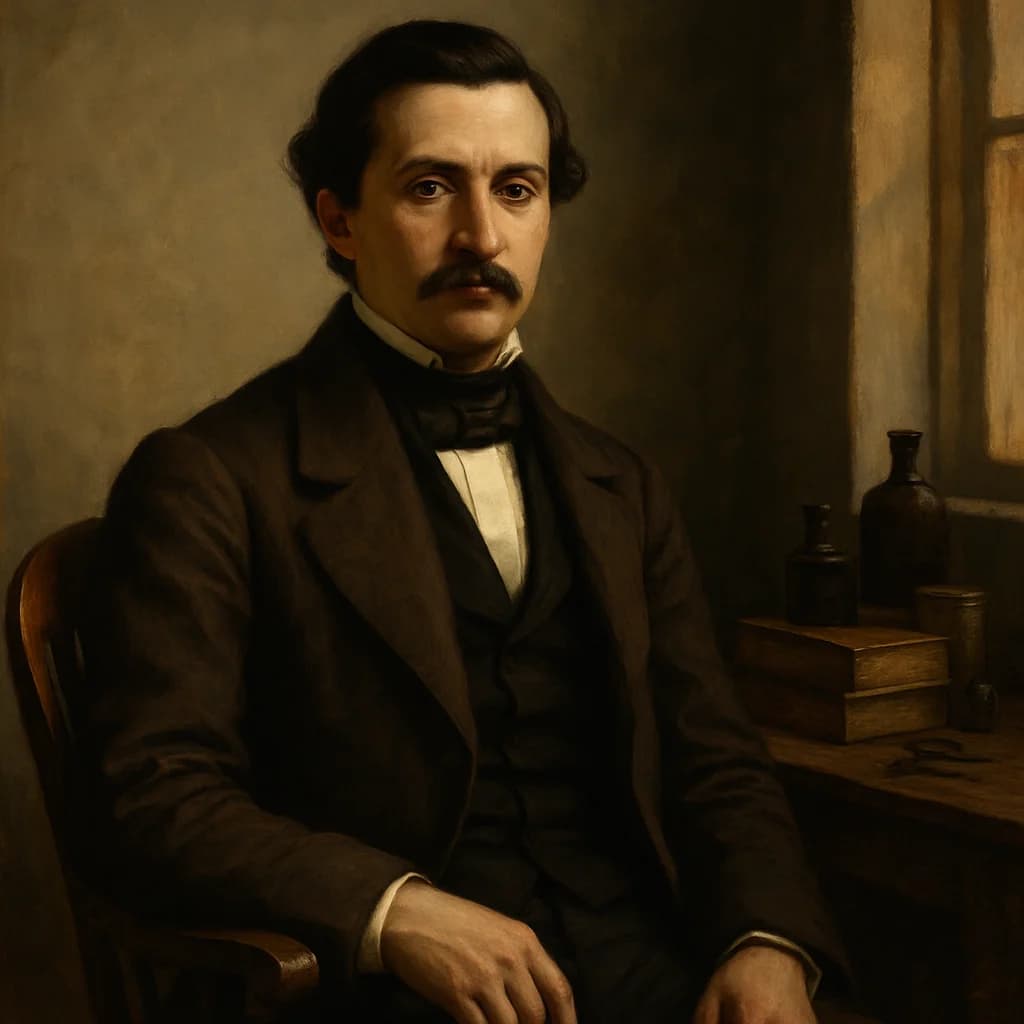
Crawford Long
He performed the world's first surgery under anesthesia in a Georgia farmhouse, told almost nobody, and then watched a Boston dentist get the credit for the next fifty years.
Crawford Long was not a man who chased glory. That was, in almost every measurable way, his central problem.
In March 1842, Long (a 26-year-old physician practicing in Jefferson, Georgia, population roughly 400) removed a small cyst from the neck of a man named James Venable while Venable breathed ether through a cloth. Venable felt nothing. Long charged him twenty-five cents for the ether and two dollars for the surgery, recorded the transaction in his ledger, and then essentially went back to work. He performed seven more ether surgeries over the next two years, including an 1845 amputation that left his patient sleeping peacefully on the table while Long removed the limb. He kept meticulous notes. He told almost no one outside Jefferson.
Why the silence? Long later said he wanted to accumulate more cases before publishing, to be certain. There's also the matter of his circumstances: he was a rural doctor surrounded by neighbors who already viewed his ether experiments with deep suspicion, some accusing him of witchcraft, others threatening to run him out of town. Jefferson was not a place that rewarded the avant-garde. So Long waited. And while he waited, William Morton staged a dramatic public demonstration at Massachusetts General Hospital in October 1846, used ether on a tumor patient, and received a hero's reception. The medical world declared Morton the inventor of anesthesia. Medals were struck. Monuments were planned.
Long finally published his 1842 records in 1849, and spent the rest of his life in a quiet, stubborn effort to set the record straight, not through courtrooms or pamphlets but through correspondence, through colleagues who believed him, through the simple fact of his dated ledgers. He kept practicing medicine in rural Georgia through the Civil War, treating soldiers on both sides, refusing to leave his patients for safer ground. He died in 1878 mid-sentence, having just completed delivering a baby. His last act was handing the newborn to a nurse before he collapsed.
James Venable, Long's first anesthesia patient, agreed to the ether experiment partly because he'd already been inhaling it recreationally at "ether frolics" (popular social gatherings in the rural South where young men huffed ether for fun), which is exactly how Long got the idea in the first place.
Why untold: Long's story was buried by the combination of his own reluctance to publish and the institutional gravity of a dramatic Boston demonstration. Medicine wrote its origin myth around Morton's public spectacle rather than a Georgia ledger entry that arrived seven years too late to the conversation.
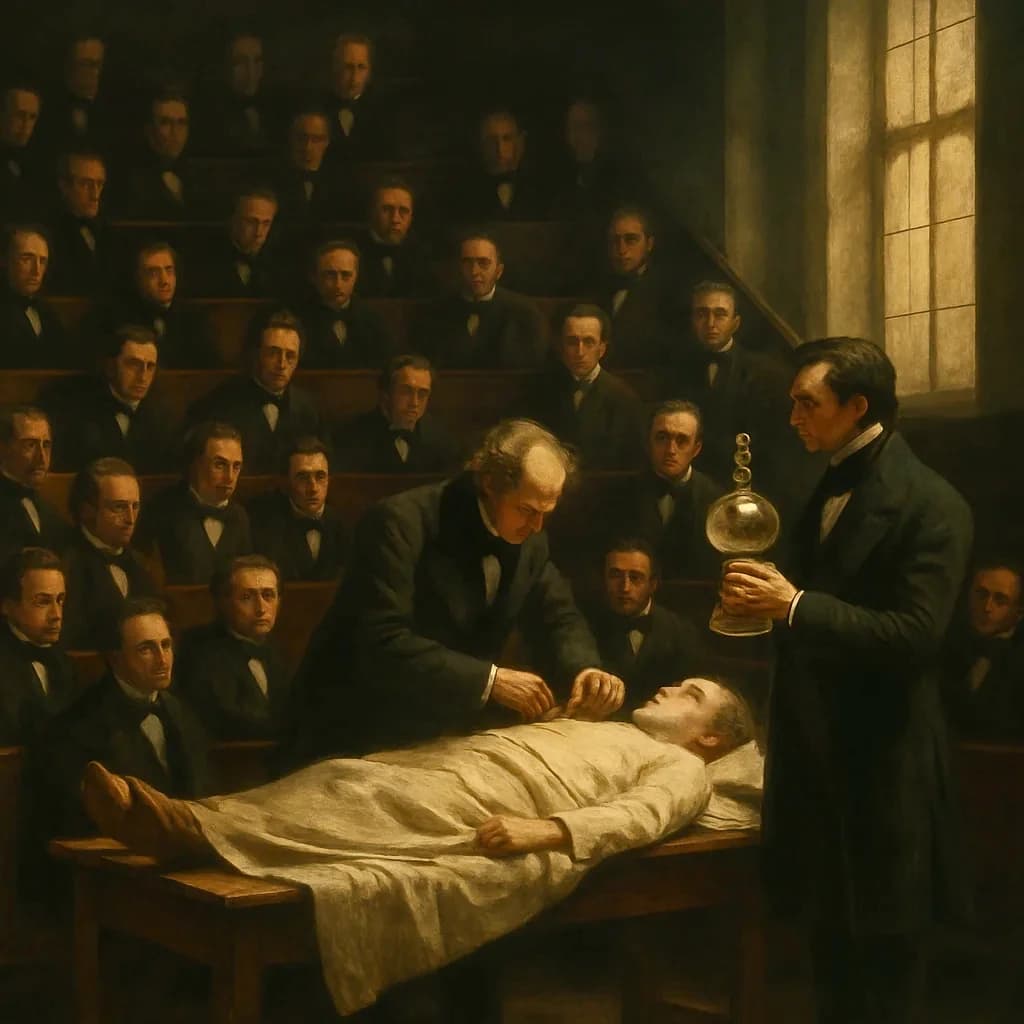
A Boston Dentist's Failed Experiment Invented Painless Surgery
In 1846, a Boston dentist's failed experiment accidentally gave birth to painless surgery, and changed medicine forever.
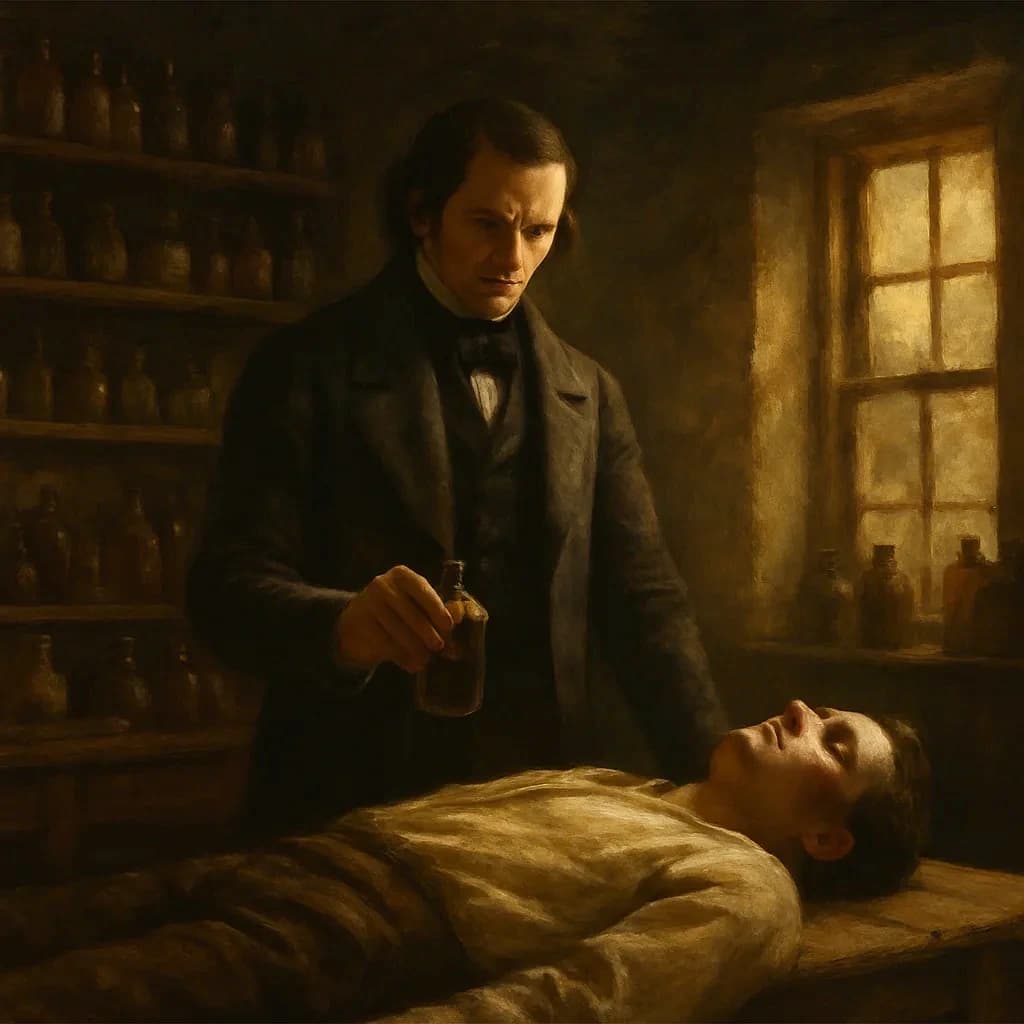
Painless Surgery Was Born in a Georgia Apothecary
A 19th-century doctor in rural Georgia performed the world's first surgery under general anesthesia, and nobody believed him.
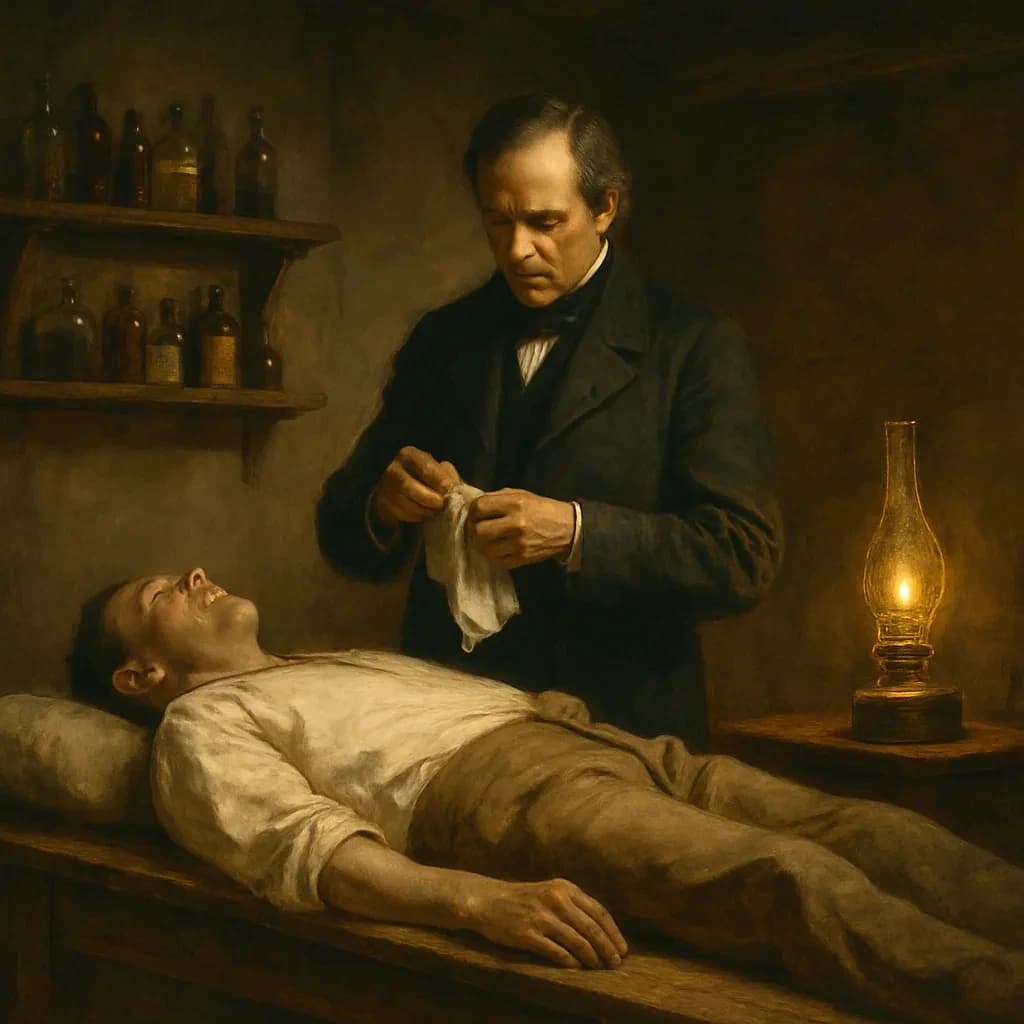
He Performed the First Painless Surgery. Nobody Believed Him.
A Georgia doctor performed the world's first surgery under anesthesia in 1842, but no one believed him, and by the time they did, he'd lost his mind.
- Frances Long Taylor, Crawford W. Long and the Discovery of Ether Anesthesia (Paul B. Hoeber, 1928)
- Julie Fenster, Ether Day: The Strange Tale of America's Greatest Medical Discovery and the Haunted Men Who Made It (HarperCollins, 2001)
- J. Marion Sims, 'Crawford Long and the Discovery of Anesthesia,' Virginia Medical Monthly, 1877