
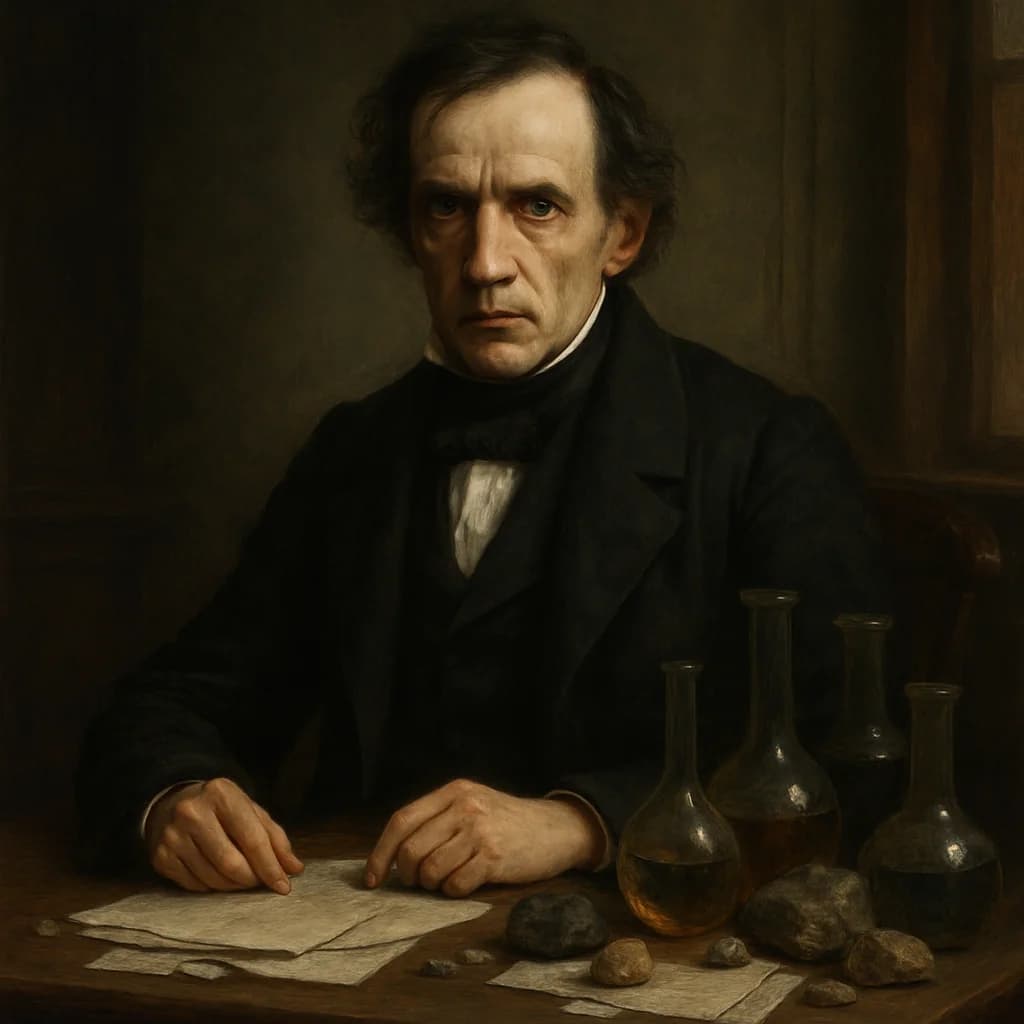
Charles Jackson
He discovered the secret to painless surgery, watched someone else get the credit, and spent the rest of his life losing his mind trying to take it back.
Charles Thomas Jackson was the kind of man who was always almost right. A Boston physician, chemist, and geologist of genuine brilliance, he spent decades making foundational discoveries and then watching other people's names get attached to them. The telegraph. The percussion cap. Ether anesthesia. Jackson had a hand in all three, and history, being the blunt instrument it is, mostly forgot him.
The ether story is where it gets genuinely strange. Jackson had been experimenting with sulfuric ether for years (inhaling it himself, in the unsettling tradition of self-experimentation that characterized so much 19th-century medicine), and he understood its anesthetic properties well before the famous 1846 demonstration at Massachusetts General Hospital. He communicated his ideas to William T.G. Morton, a dentist with ambition and showmanship Jackson lacked. Morton ran with it. On October 16, 1846, Morton staged the public demonstration that made history. Jackson was in the room. He was listed, eventually, as a co-discoverer. It was nowhere near enough for him.
What followed was one of the most prolonged and self-destructive priority disputes in the history of science. Jackson spent years writing letters, filing claims, lobbying governments, and burning relationships in pursuit of recognition he was at least partially owed. He was not entirely wrong. He was also not entirely right. The truth (that multiple people contributed to the discovery, that Morton deserves credit for the practical realization, that Crawford Long down in Georgia had done it even earlier) was too complicated for Jackson to accept, and the obsession corroded everything. He took on Samuel Morse over the telegraph. He feuded with the Army over the percussion cap. Each battle left him more isolated, more convinced the world was conspiring against him.
In 1873, Jackson was visiting the grave of William Morton (his old collaborator, his old enemy) when he suffered a complete mental breakdown on the spot. He spent the final seven years of his life in McLean Asylum in Somerville, Massachusetts, where he died in 1880. The man who understood ether before almost anyone ended his days in an institution, a cautionary figure rather than a celebrated one.
Jackson also played a direct role in Samuel Morse's development of the telegraph (Morse credited a 1832 shipboard conversation with Jackson as the spark for his ideas), and Jackson spent years attempting to claim priority for that invention too.
Why untold: Jackson's legitimate contributions were buried under the spectacle of his priority disputes, which made him easy to dismiss as a crank rather than examine as a scientist with a genuine, if partial, claim.
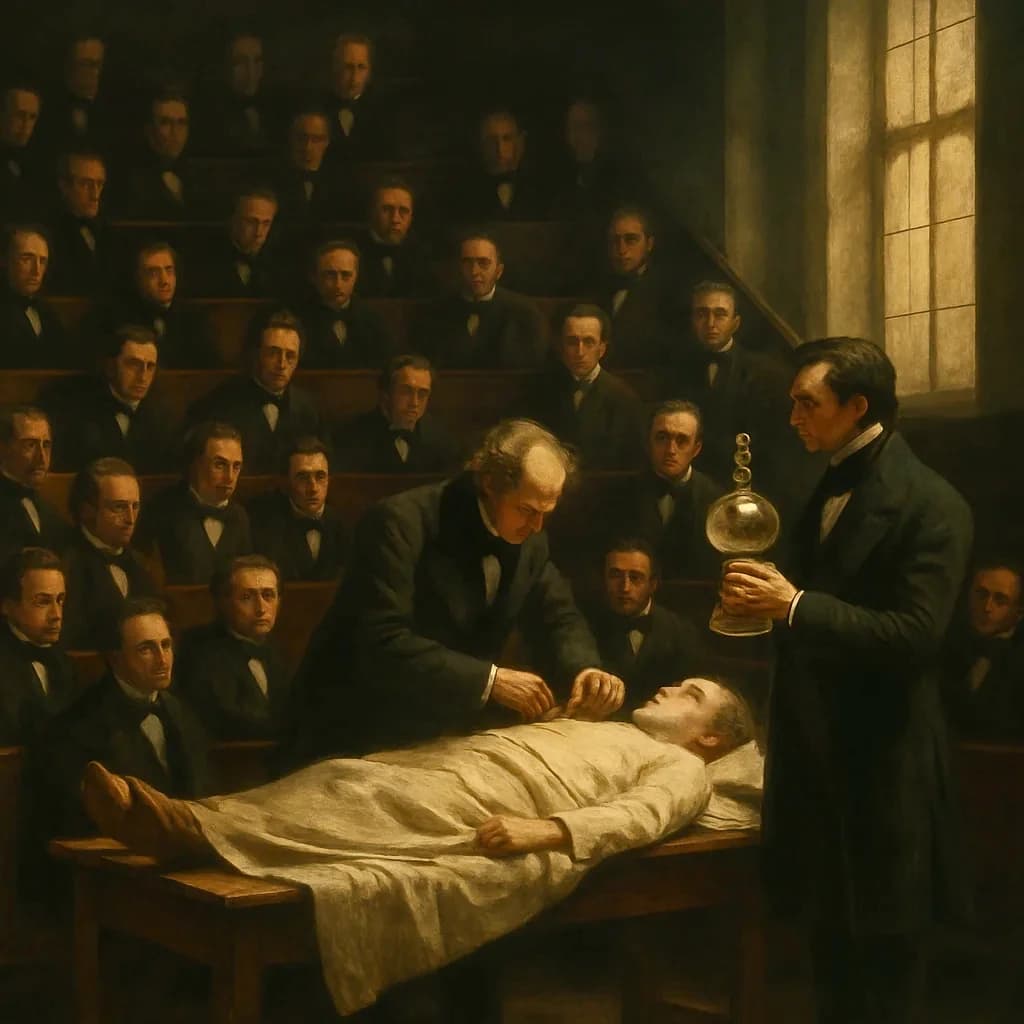
A Boston Dentist's Failed Experiment Invented Painless Surgery
In 1846, a Boston dentist's failed experiment accidentally gave birth to painless surgery, and changed medicine forever.
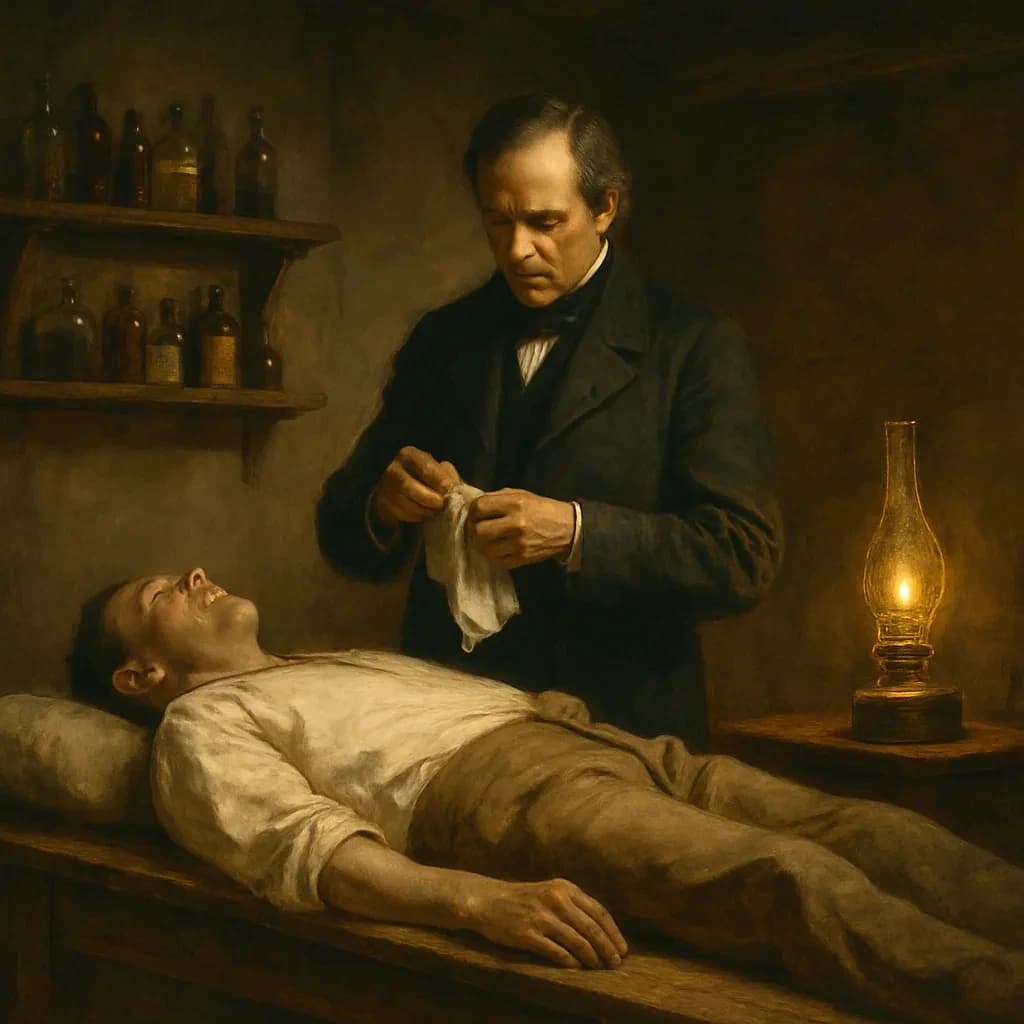
He Performed the First Painless Surgery. Nobody Believed Him.
A Georgia doctor performed the world's first surgery under anesthesia in 1842, but no one believed him, and by the time they did, he'd lost his mind.
- Stephanie Snow, 'Operations Without Pain: The Practice and Science of Anaesthesia in Victorian Britain' (Palgrave Macmillan, 2006)
- Julie M. Fenster, 'Ether Day: The Strange Tale of America's Greatest Medical Discovery and the Haunted Men Who Made It' (HarperCollins, 2001)
- A.J. Wright, 'Charles Thomas Jackson: The Head Behind the Hands,' Anesthesiology, vol. 85, no. 1 (1996)