
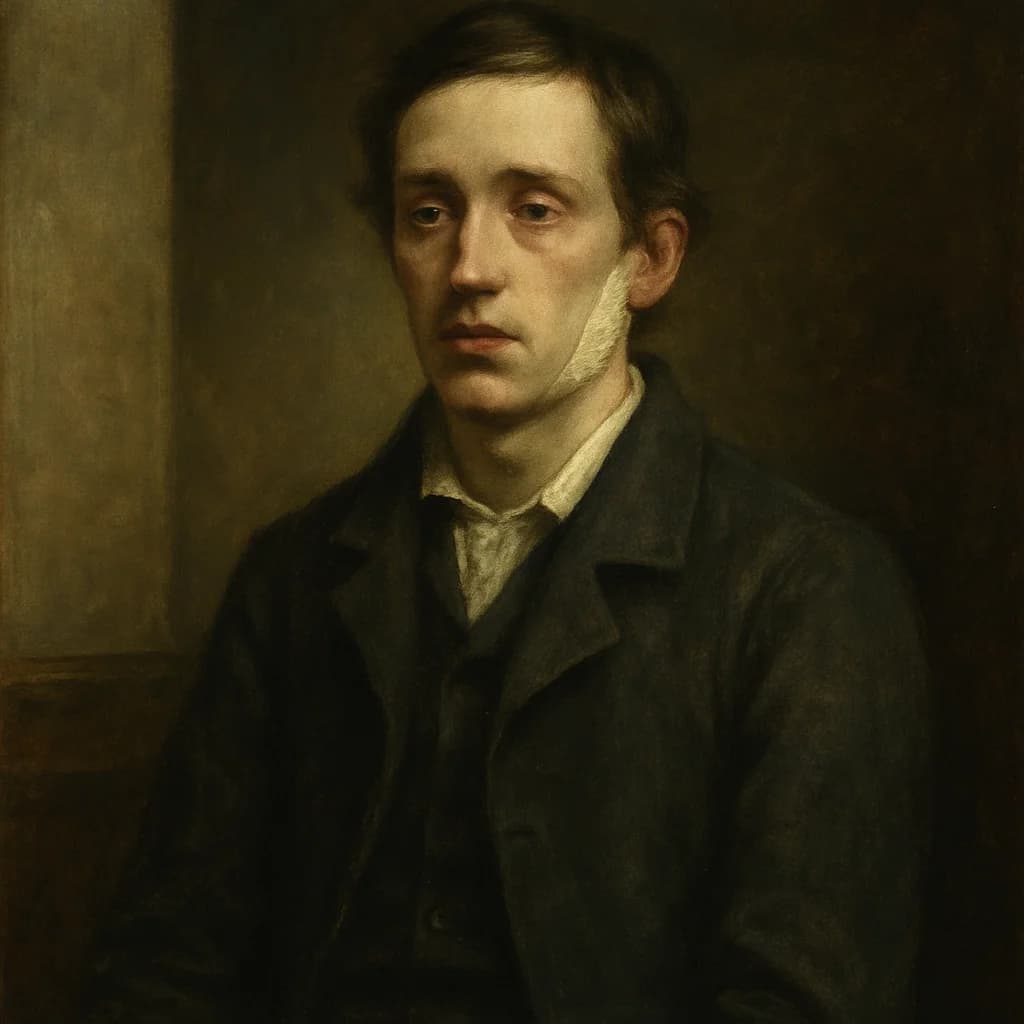
Edward Gilbert Abbott
The most important patient in medical history spent the rest of his life trying to forget it.
On October 16, 1846, Edward Gilbert Abbott lay down on a surgical table at Massachusetts General Hospital and changed the world, though he barely knew it, and the world barely remembered him for it. He was twenty years old, a printer's apprentice from Boston, and he had a vascular tumor on the left side of his jaw that had been quietly ruining his life. He was also, critically, poor enough to agree to be the public demonstration case for a dentist named William T.G. Morton, who wanted to prove that a compound he called "Letheon" (essentially sulfuric ether) could render a man unconscious during surgery. The surgeon, John Collins Warren, had already told the assembled medical students that if this was a hoax, they would have to answer to him personally. Abbott was the proof.
He inhaled. He went under. Warren cut. Abbott felt nothing, made no sound, did not thrash against the hands of the orderlies. When he came to, Warren turned to the crowd and said words that would be reprinted for generations: "Gentlemen, this is no humbug." Abbott, dazed and confused, reportedly said the procedure felt like "his neck had been scratched." The entire demonstration lasted four minutes. The implications lasted forever. Ether anesthesia spread across Europe within months, and surgery was never the same again.
What disappeared from the story was Abbott himself. Morton spent the rest of his life in ferocious legal battles trying to patent Letheon and extract royalties from the government, dying broke and bitter in 1868. Warren became immortal in medical textbooks. Abbott went back to being a printer's apprentice. He showed up for follow-up treatments at the hospital through late 1846, and the records confirm his tumor was successfully managed. Then the paper trail goes cold. He married, had children, lived quietly in Massachusetts, and died in 1855 at the age of twenty-nine, cause uncertain, life largely undocumented. The man whose unconscious body proved anesthesia was possible didn't live to see forty.
There are no portraits of him. No memoirs. The Massachusetts General Hospital has the operating theater (the Ether Dome) preserved as a landmark. Abbott gets a footnote, if he gets anything at all.
Abbott signed a written consent form before the procedure, making him one of the earliest documented cases of surgical informed consent in American medical history, a document that survived him by centuries.
Why untold: Medical history canonized the inventors and the surgeons, leaving the patient (the person who actually bore the risk) as an unnamed prop in someone else's triumph.
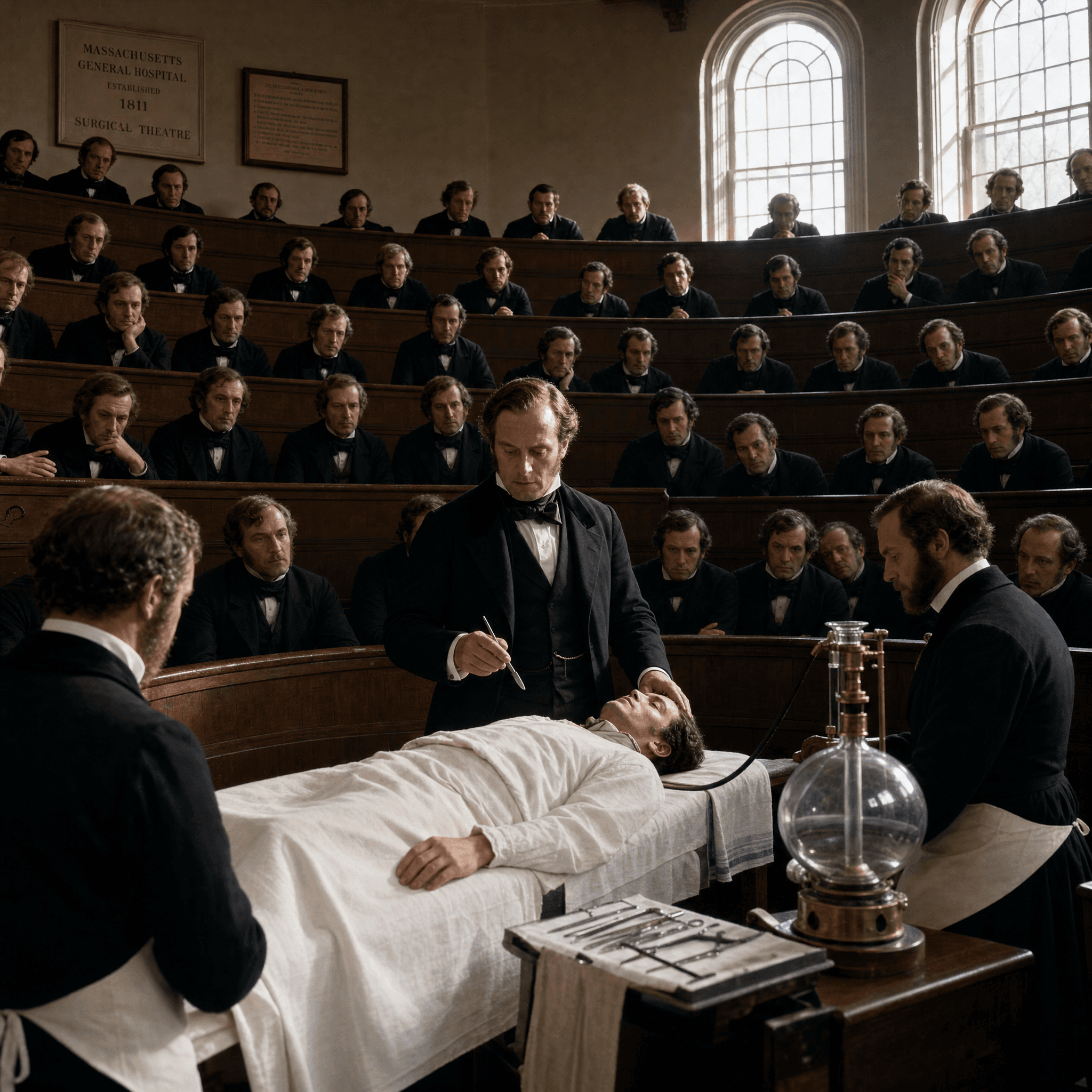
The Surgeon Who Performed While His Patient Watched
In 1846, a patient stayed conscious during his own leg amputation and provided commentary throughout the procedure.
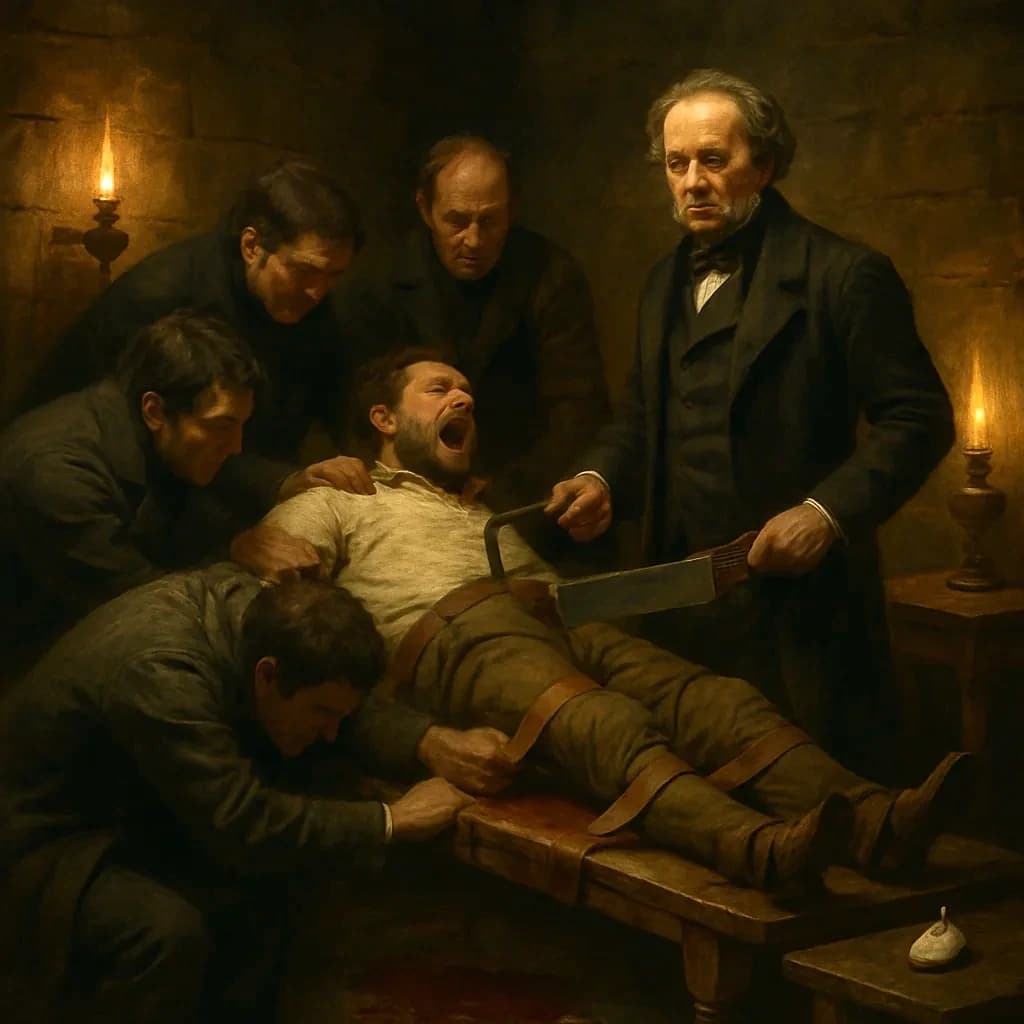
Ninety Seconds to Cut Off a Leg
Before ether, surgeons had thirty seconds to cut through bone while their patients were held down by four strong men.
- Fenster, J.M. Ether Day: The Strange Tale of America's Greatest Medical Discovery and the Haunted Men Who Made It. HarperCollins, 2001.
- Wolfe, Richard J. Tarnished Idol: William Thomas Green Morton and the Introduction of Surgical Anesthesia. Norman Publishing, 2001.
- Massachusetts General Hospital Archives, Ether Dome Records and Patient Registers, 1846.