
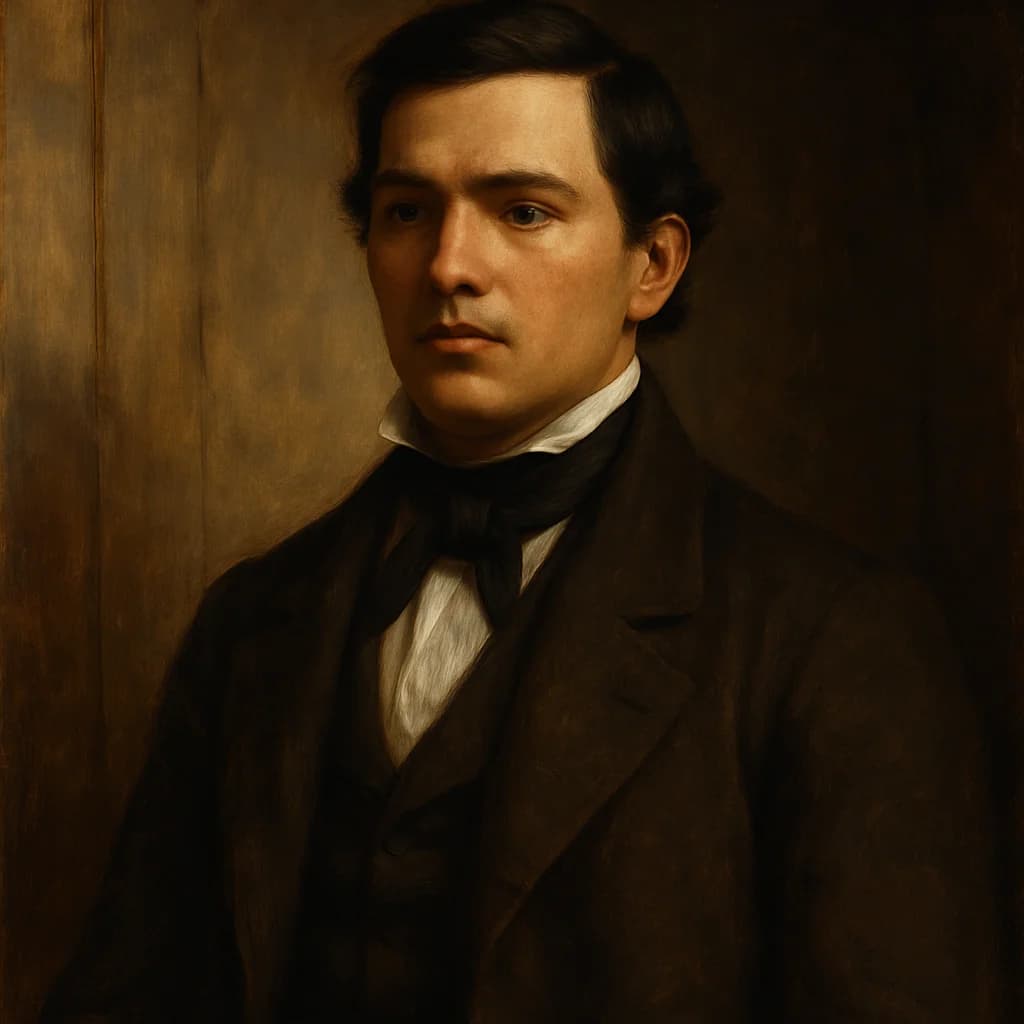
James Venable
He let a man cut into his own neck to prove that ether worked, and history still gave the credit to someone else.
James Venable was a young man with two cysts on the back of his neck and a deep, paralyzing fear of the knife. For years he put off the minor surgery that would have removed them, because in 1842, 'minor surgery' was still a full-sensory experience in agony. His doctor, Crawford Long, had been experimenting with sulfuric ether at parties (the 'ether frolics' fashionable among Georgia college students) and noticed something strange: participants would injure themselves during the reverie and feel nothing until they came down. Long made Venable an offer. On March 30, 1842, in Jefferson, Georgia, Venable inhaled ether from a towel, slipped under, and Long removed one of the cysts. The procedure cost $2.25. Twenty-five cents of that was for the ether.
The problem wasn't the surgery. It worked perfectly. The problem was that Crawford Long told almost no one. He was a country doctor in a small Georgia town, cautious by temperament, and he kept performing ether surgeries quietly for years without publishing a single word about it. He worried about getting the science right. He worried about professional ridicule. He waited. And while he waited, a Boston dentist named William Morton staged a very public demonstration at Massachusetts General Hospital in October 1846 (a performance deliberately designed for an audience) and walked away with the glory.
By the time Long published his findings in 1849, the medical establishment had already canonized Morton and his crowd. Long's rural practice, his lack of institutional backing, his Southern address in a Northern-dominated medical world: none of it helped. What he had was Venable: a living witness who could confirm that four years before Boston, he had gone under a cloth soaked in ether in a Jefferson, Georgia, examination room and felt absolutely nothing while a man removed part of his own body.
Venable lived until 1911. He spent decades as the quiet proof of something the world had decided to remember differently. Long died in 1878, mid-surgery, still practicing. Georgia eventually put his statue in the U.S. Capitol. It took another sixty years.
James Venable paid Crawford Long a total of $2.25 for the world's first surgery under general anesthesia. The itemized receipt, which Long kept, still survives as a historical document.
Why untold: Venable's role collapsed into a footnote because the patient in a priority dispute carries no professional stake in winning it, leaving the record to be written by institutions and rivals rather than witnesses.
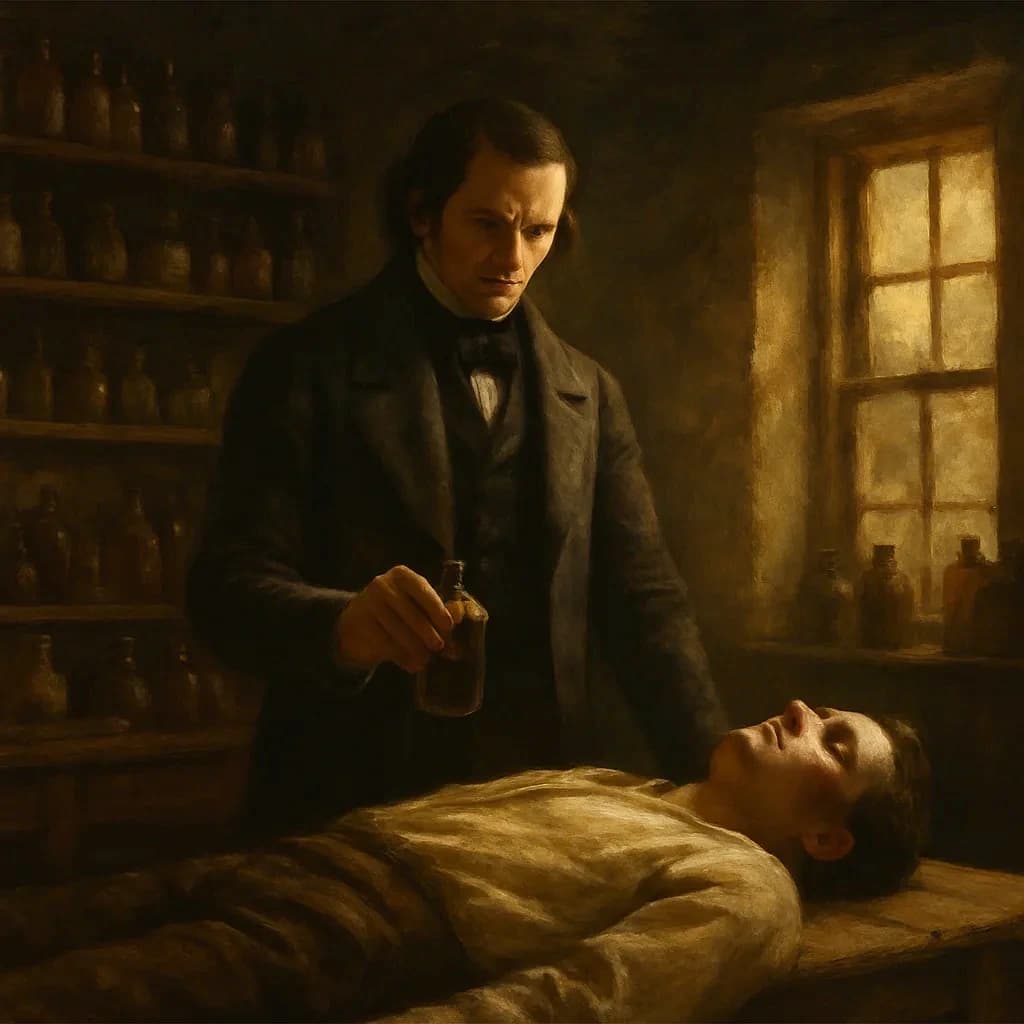
Painless Surgery Was Born in a Georgia Apothecary
A 19th-century doctor in rural Georgia performed the world's first surgery under general anesthesia, and nobody believed him.
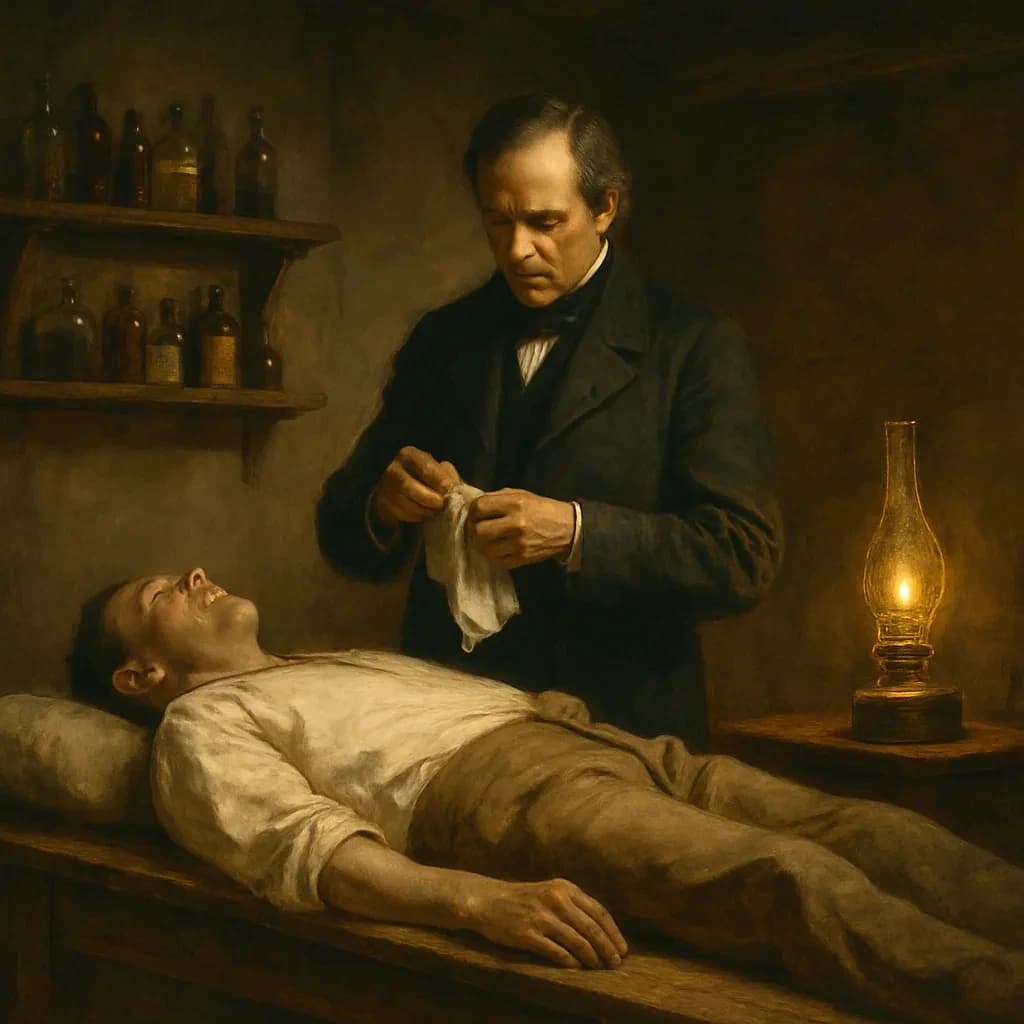
He Performed the First Painless Surgery. Nobody Believed Him.
A Georgia doctor performed the world's first surgery under anesthesia in 1842, but no one believed him, and by the time they did, he'd lost his mind.
- Frances Thigpen Daniell, 'Crawford W. Long: Pioneer Physician,' Georgia Historical Quarterly, 1942
- Taylor, Frances Long, 'Crawford W. Long and the Discovery of Ether Anesthesia,' Paul B. Hoeber, 1928
- Boland, Frank Kells, 'The First Anesthetic: The Story of Crawford Long,' University of Georgia Press, 1950