
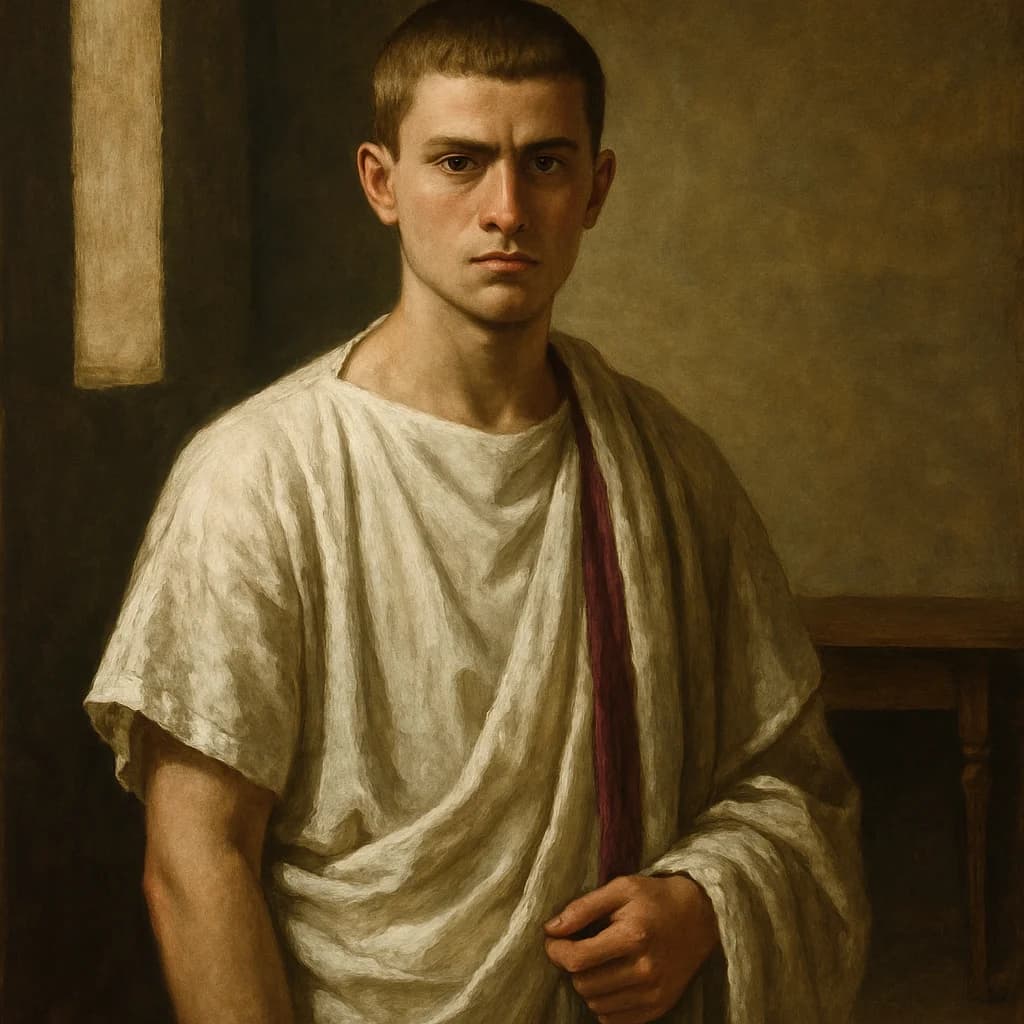
Octavian
He inherited a dead man's name, a civil war, and seventeen years of absolutely everyone underestimating him.
When Julius Caesar was murdered in 44 BCE, his eighteen-year-old great-nephew Octavian was studying in Apollonia, across the Adriatic, essentially a student on a gap year. The news arrived by letter. What happened next was one of the most audacious acts of self-invention in Western history: Octavian sailed back to Rome, calmly announced he was claiming Caesar's full inheritance (name, fortune, loyalties, enemies) and dared anyone to stop him. Mark Antony, Rome's most powerful soldier and Caesar's right hand, laughed. He would not be laughing for long.
What the histories tend to skip over is how physically unimpressive Octavian actually was. Ancient sources describe him as chronically ill, prone to fevers, terrified of thunderstorms to the point of carrying an animal skin as a talisman, and never tall enough to be conventionally commanding. He wore platform shoes. He slept in the same modest bedroom for forty years and ate peasant food: coarse bread, small fishes, cheese. The man who would become Rome's first emperor, who would have his face stamped on coins across three continents, genuinely preferred cucumbers and naps. His doctor reportedly complained he was the worst patient in Rome. He survived anyway, which is perhaps the central fact of his life: everyone expected him to die (of illness, of war, of political miscalculation), and he simply didn't.
The volcanic eruption of Okmok in Alaska in 43 BCE, thousands of miles from any Roman consciousness, collapsed harvests across the Mediterranean, fueled the food shortages and social fury that made Rome so volatile in the years following Caesar's death. Octavian didn't know that. Nobody did. But he navigated that chaos with a cold patience that contemporaries found genuinely unsettling. He made alliances he planned to break. He made enemies he planned to bury. By 31 BCE, at the Battle of Actium, he had done exactly that to all of them.
He then spent the next four decades carefully pretending he hadn't. The word 'emperor' made him visibly uncomfortable. He called himself Princeps, first citizen. He wore plain clothes in public and ate at other people's tables. The most total political transformation Rome ever experienced was packaged, with extraordinary discipline, to look like a restoration. That's not a footnote to his story. That is his story.
Octavian was so superstitious about lightning that he kept a sealskin with him at all times as a protective charm, and would retreat to an underground vault during storms, a habit his contemporaries found both baffling and slightly embarrassing for a man who controlled the known world.
Why untold: The myth of Augustus the statesman is so polished (because he polished it himself) that the anxious, sickly, ruthlessly opportunistic young man who built that myth underneath it has almost completely disappeared.
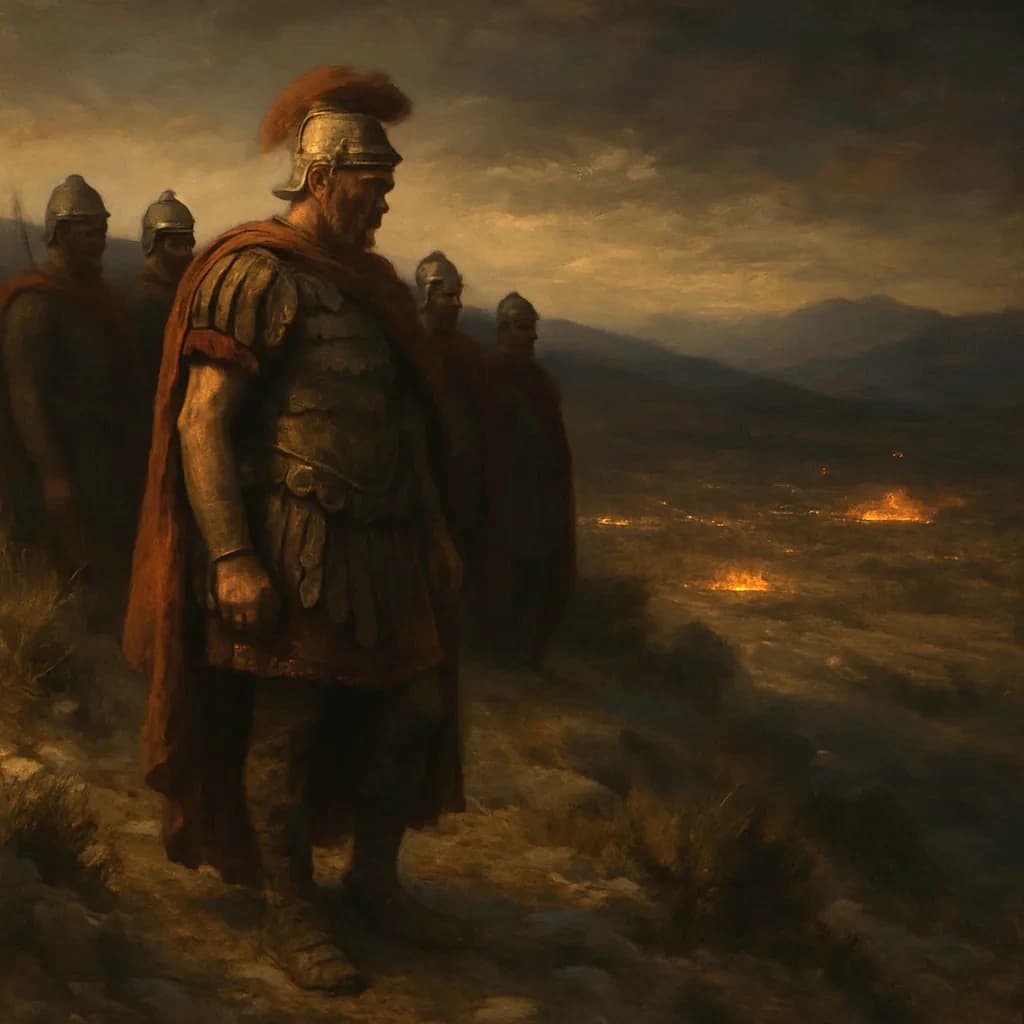
Three Days in a Roman Courtyard, and the End of the Republic
The man who murdered Julius Caesar spent his final hours not fleeing, not fighting, but writing a letter to the enemy who was about to kill him.
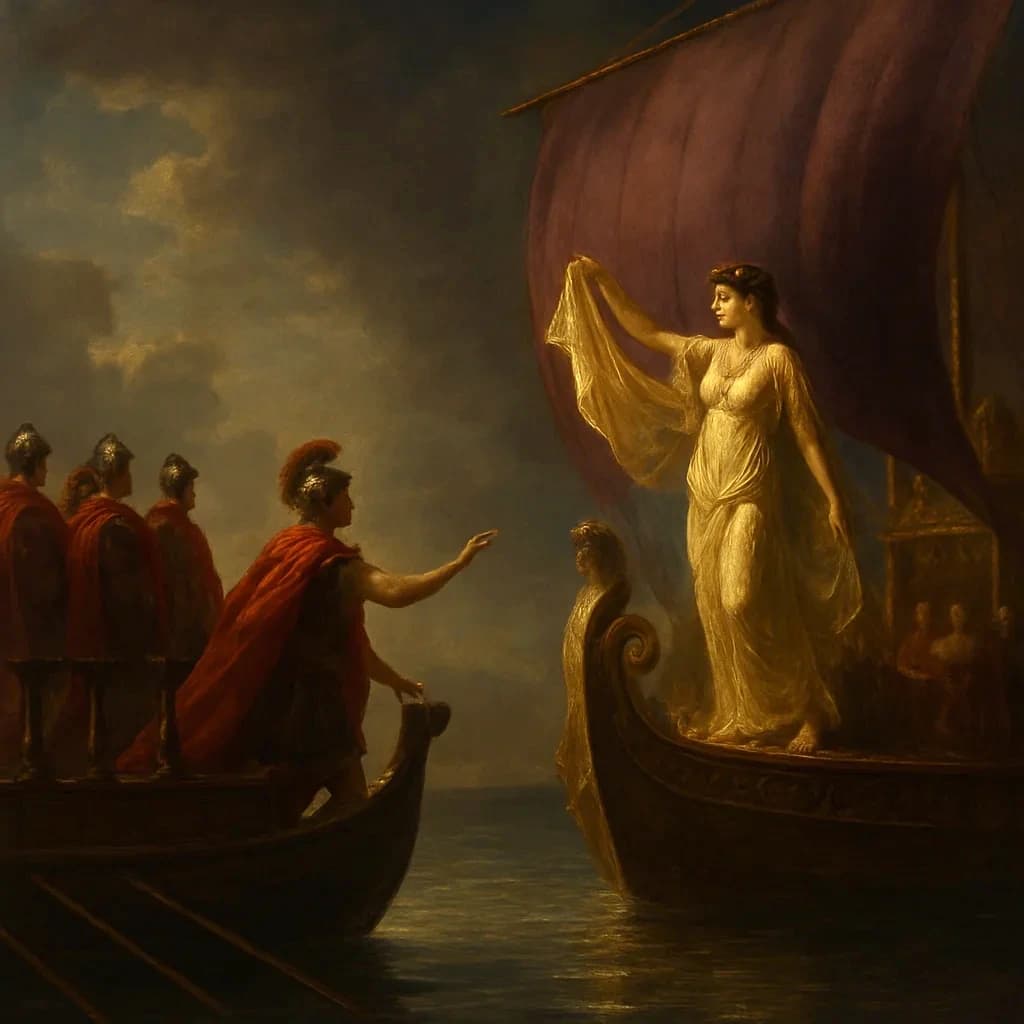
How Cleopatra's Silk Helped Bankrupt Mark Antony
One square of silk, lighter than linen, helped decide who would rule the Roman world.
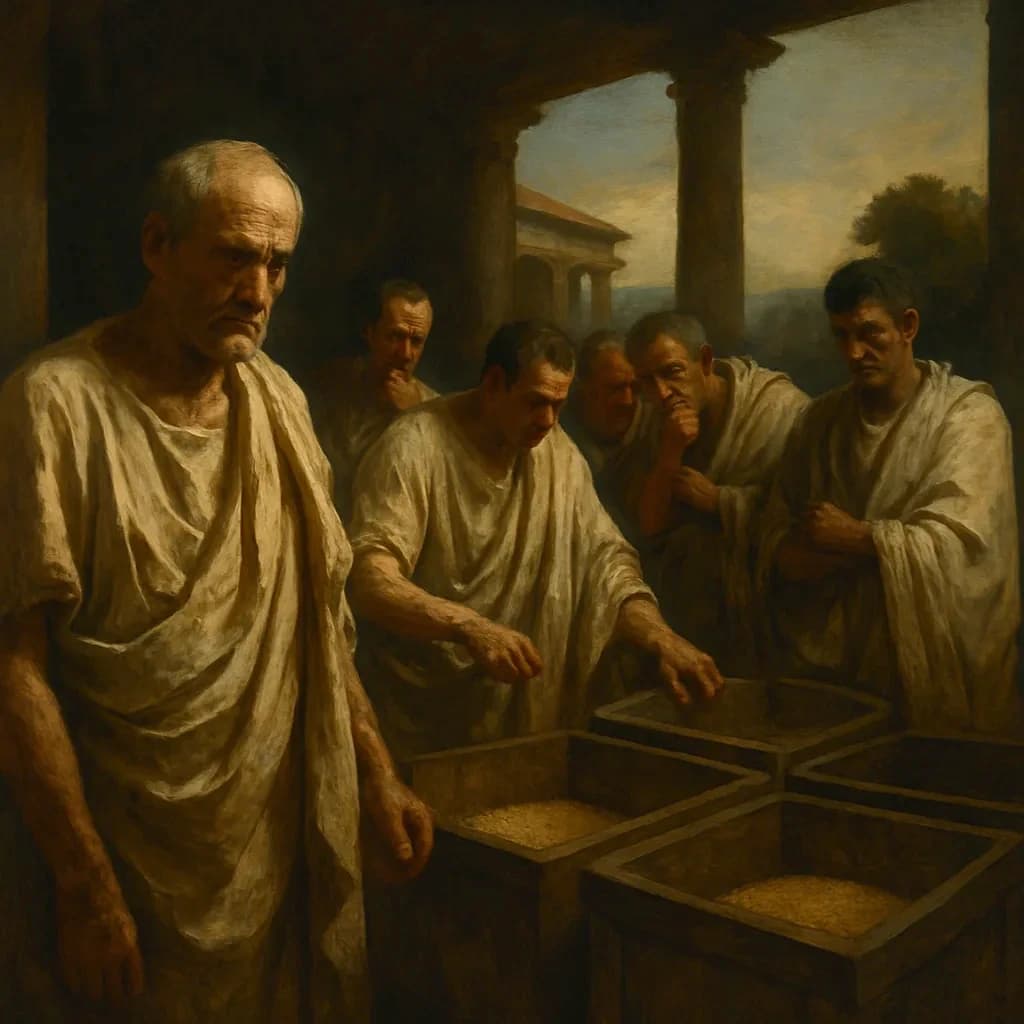
When Antarctica Saved Rome
A volcanic eruption in the middle of nowhere changed the course of European history without anyone knowing why.
- Suetonius, 'The Twelve Caesars: Life of Augustus', trans. Robert Graves (Penguin Classics, 1957)
- Adrian Goldsworthy, 'Augustus: First Emperor of Rome' (Yale University Press, 2014)
- Joseph R. McConnell et al., 'Extreme climate after massive eruption of Alaska's Okmok volcano in 43 BCE and effects on the late Roman Republic', PNAS, 2020