
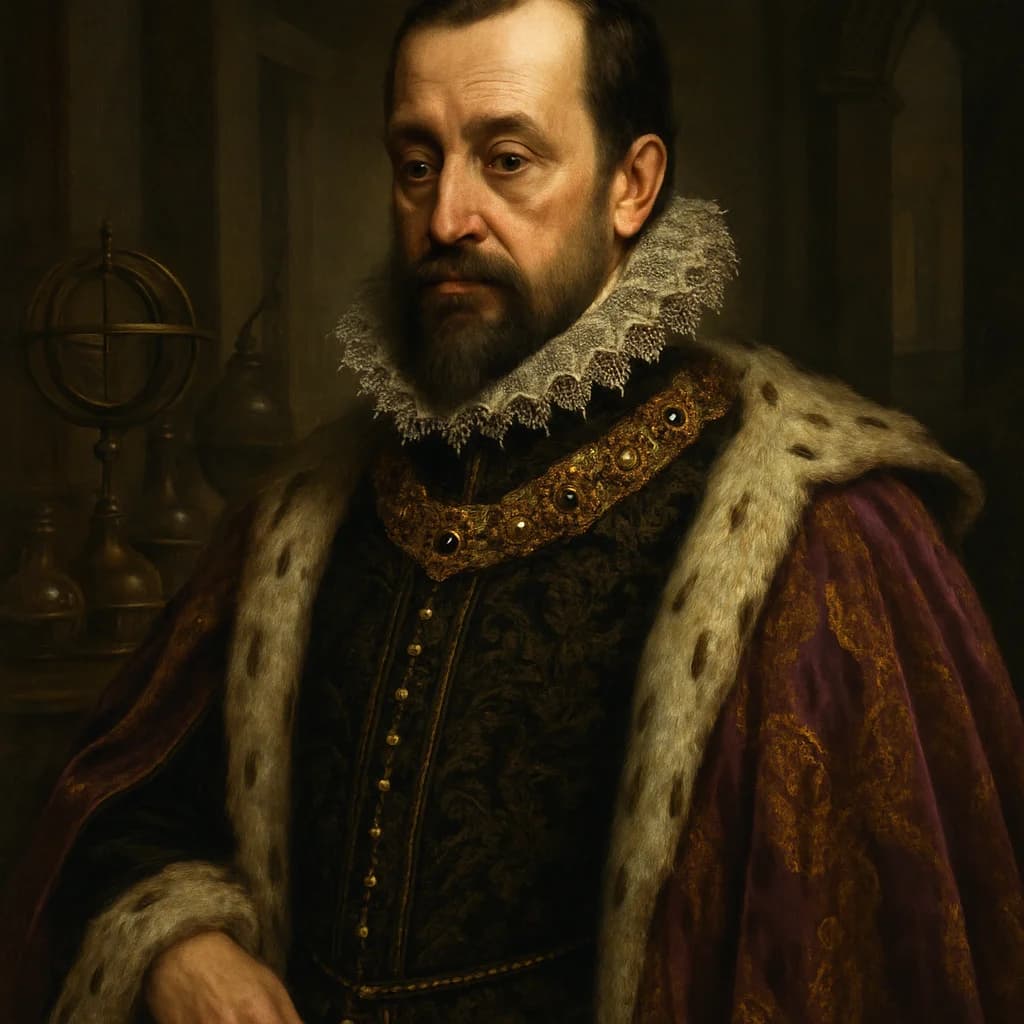
Rudolf II
The Holy Roman Emperor who turned Prague into Europe's occult capital spent his final years convinced that a kitchen maid had unlocked the mathematical secrets of the universe.
Rudolf II inherited the most powerful throne in Europe in 1576, then promptly abandoned Vienna for Prague and proceeded to collect the strangest court in history. While other monarchs built armies, Rudolf assembled alchemists, astronomers, and mystics. His castle became a laboratory where Tycho Brahe mapped the heavens with a prosthetic nose, Johannes Kepler calculated planetary orbits, and dozens of charlatans promised to turn lead into gold.
But Rudolf's true obsession wasn't alchemy. It was patterns. He believed the universe operated according to hidden mathematical harmonies that could be decoded through careful observation. When his court astronomers struggled to explain planetary motion, Rudolf didn't dismiss their failures. He funded them for decades, convinced that persistence would reveal cosmic truth. His investment in Kepler alone cost more than most royal weddings, yet he never complained about the expense.
The emperor's fascination with mathematical mysteries reached its peak around 1619, when a servant girl named Anna washing dishes in his palace supposedly demonstrated a geometric principle that had eluded scholars since ancient Greece. Rudolf, by then mentally fragile and politically powerless, became convinced that divine wisdom revealed itself through the humblest vessels. He spent his final months before his death in 1612 studying kitchen geometry and household mathematics, searching for God's signature in the angle of swept floors and the curves of hanging laundry.
His courtiers thought he'd lost his mind. History suggests he'd found something else entirely: the radical idea that scientific truth could emerge from anywhere, even the servants' quarters.
Rudolf II owned the largest collection of Renaissance art in Europe, including works by Arcimboldo, but stored most of it in secret vaults that weren't opened until the 20th century.
Why untold: Political histories focus on Rudolf's failures as a ruler while overlooking his revolutionary patronage of early modern science.
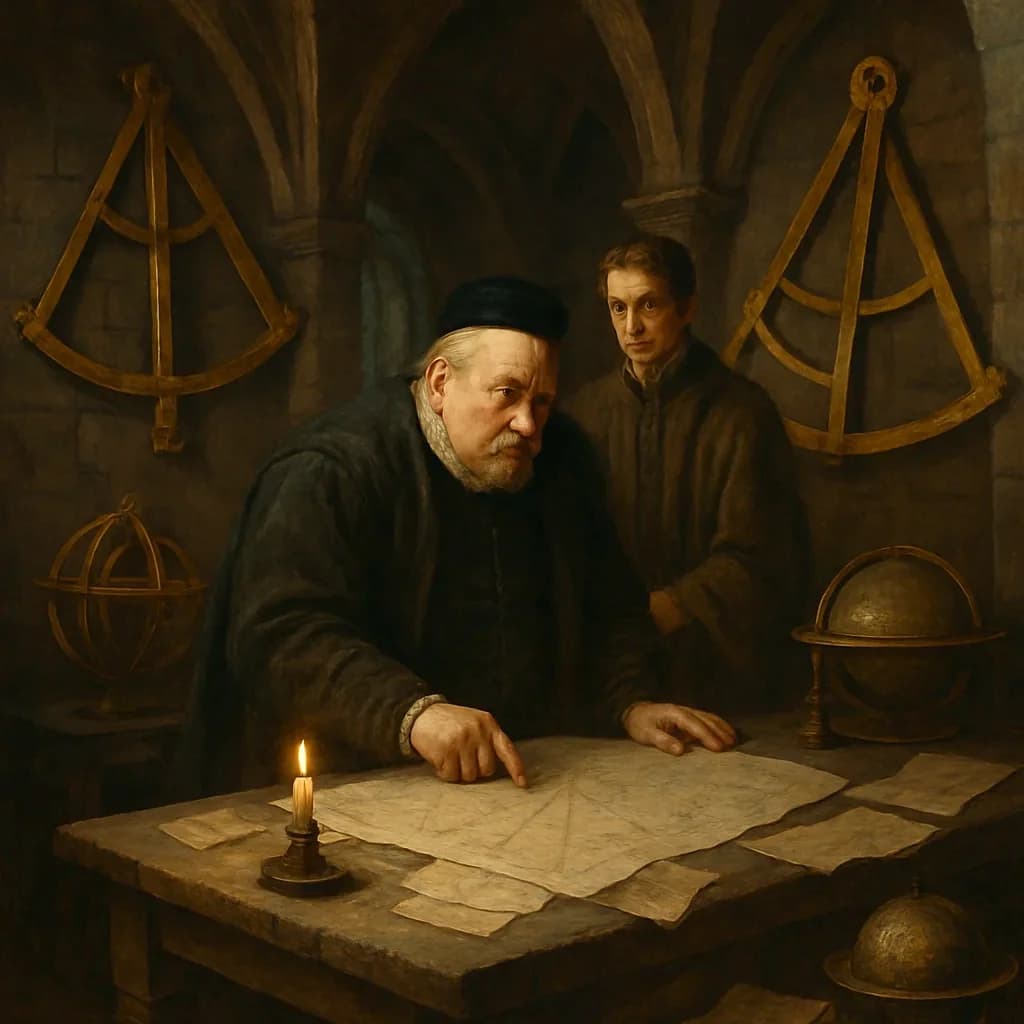
The Man Who Could Have Saved Giordano Bruno Stayed Silent
A broke and desperate Giordano Bruno burned at the stake in 1600, and the man who might have saved him chose, at the last moment, to stay silent.
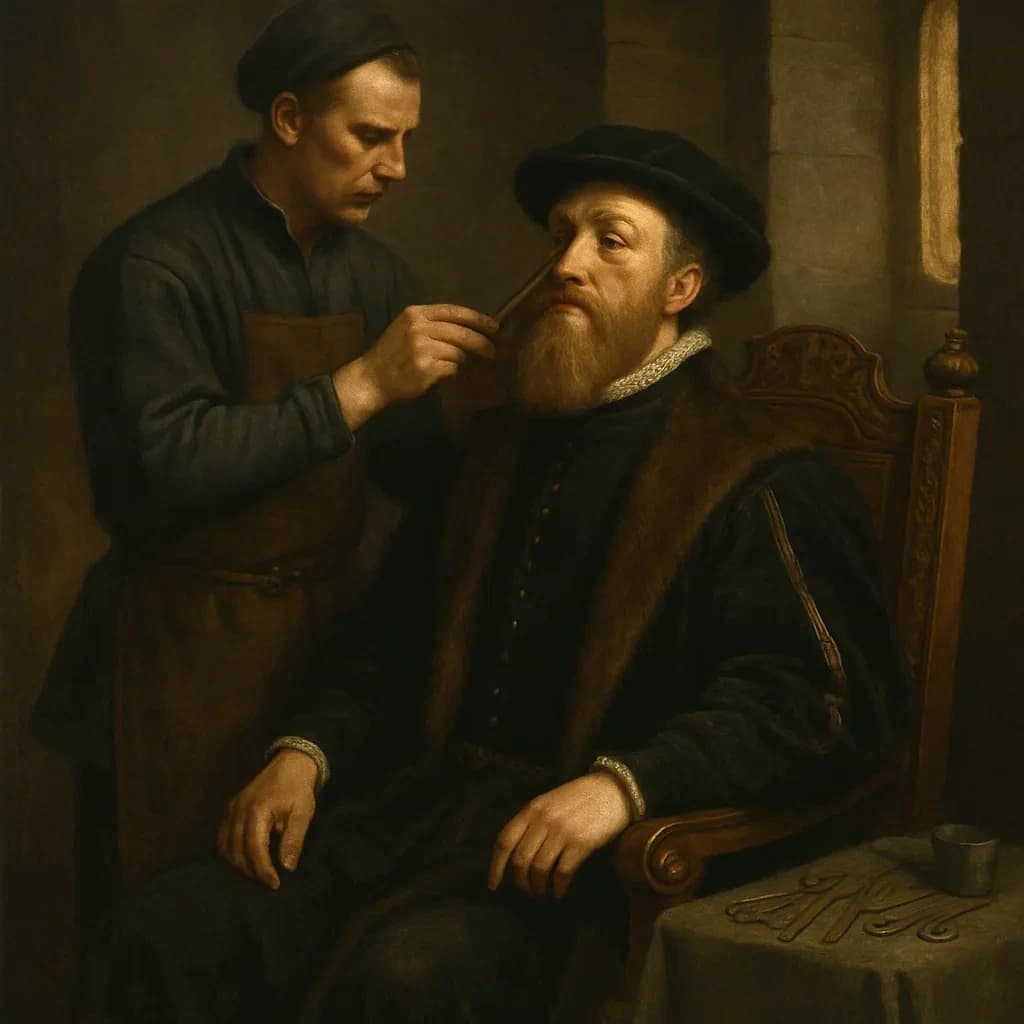
A Barber Heard Six Emperors' Secrets and Said Nothing
For sixty years, one German barber knew the secrets of every Habsburg emperor, and somehow never lost his head.
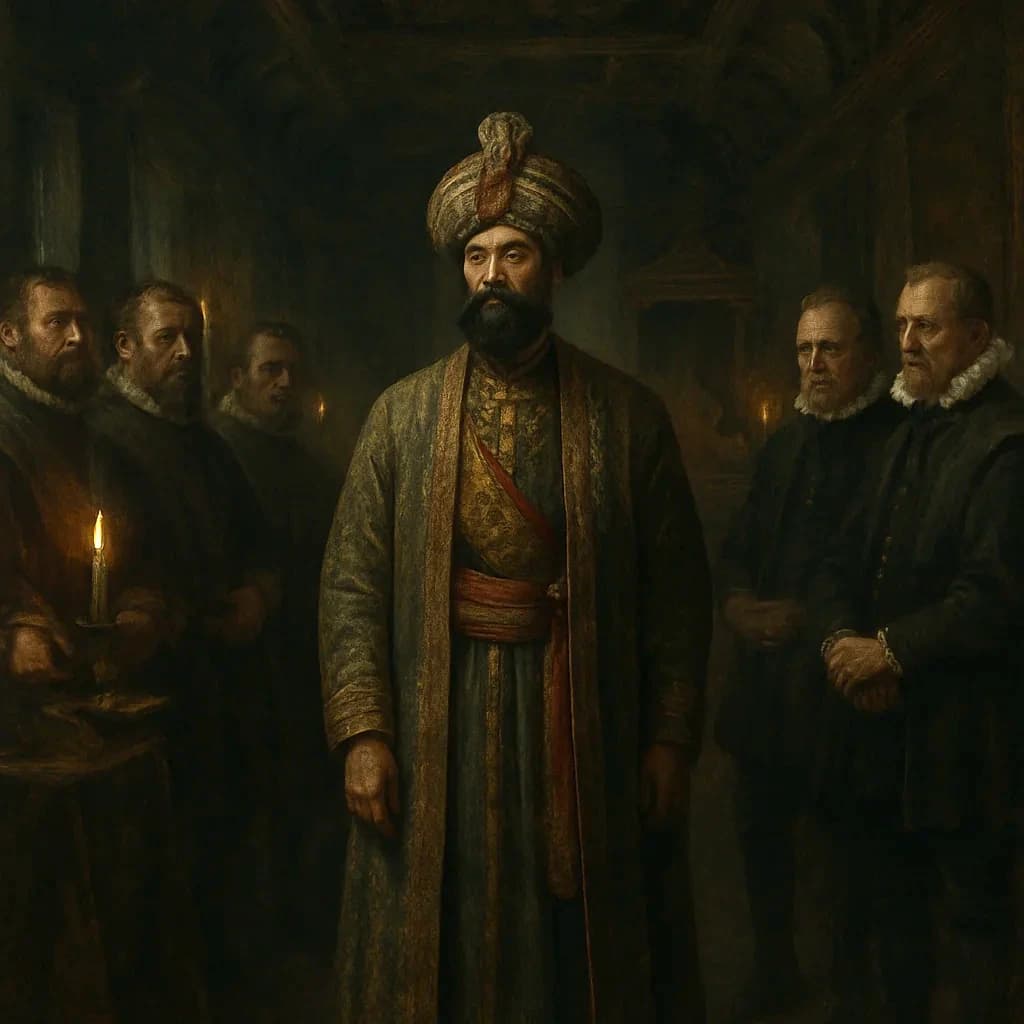
The Persian Envoy Who Refused to Bow
A single refused gesture (one Persian envoy declining to bow before Rudolf II in 1601) reshaped the balance of power between two empires.
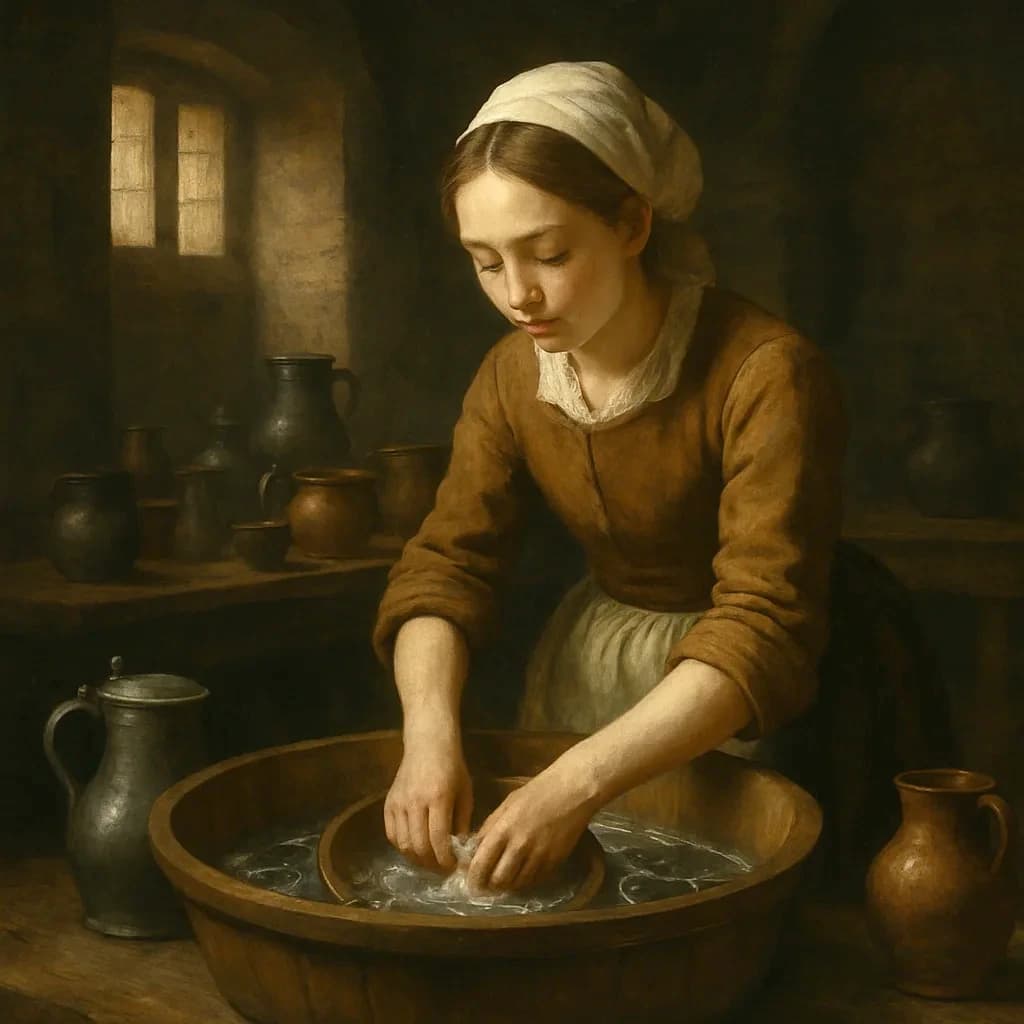
The Dishwater That Solved the Planets' Mystery
A servant girl washing dishes in Prague solved a puzzle in 1619 that had stumped Europe's greatest minds for two centuries.
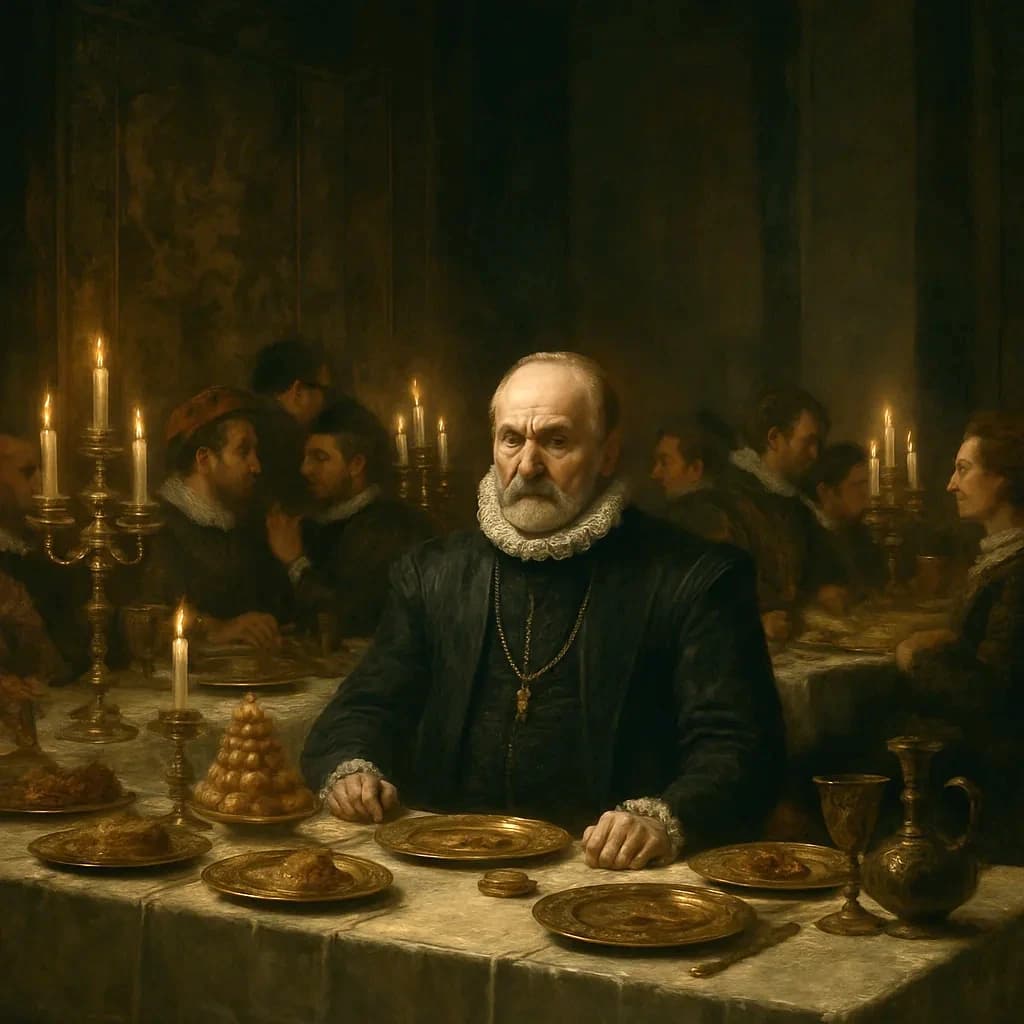
Tycho Brahe Wouldn't Leave the Emperor's Table
A Danish nobleman's bizarre death at a 1601 dinner party changed how we see the universe forever.
- Evans, R.J.W. 'Rudolf II and His World: A Study in Intellectual History, 1576-1612' (1973)
- Marshall, Peter. 'The Magic Circle of Rudolf II: Alchemy and Astrology in Renaissance Prague' (2006)
- Kaufmann, Thomas DaCosta. 'The School of Prague: Painting at the Court of Rudolf II' (1988)