
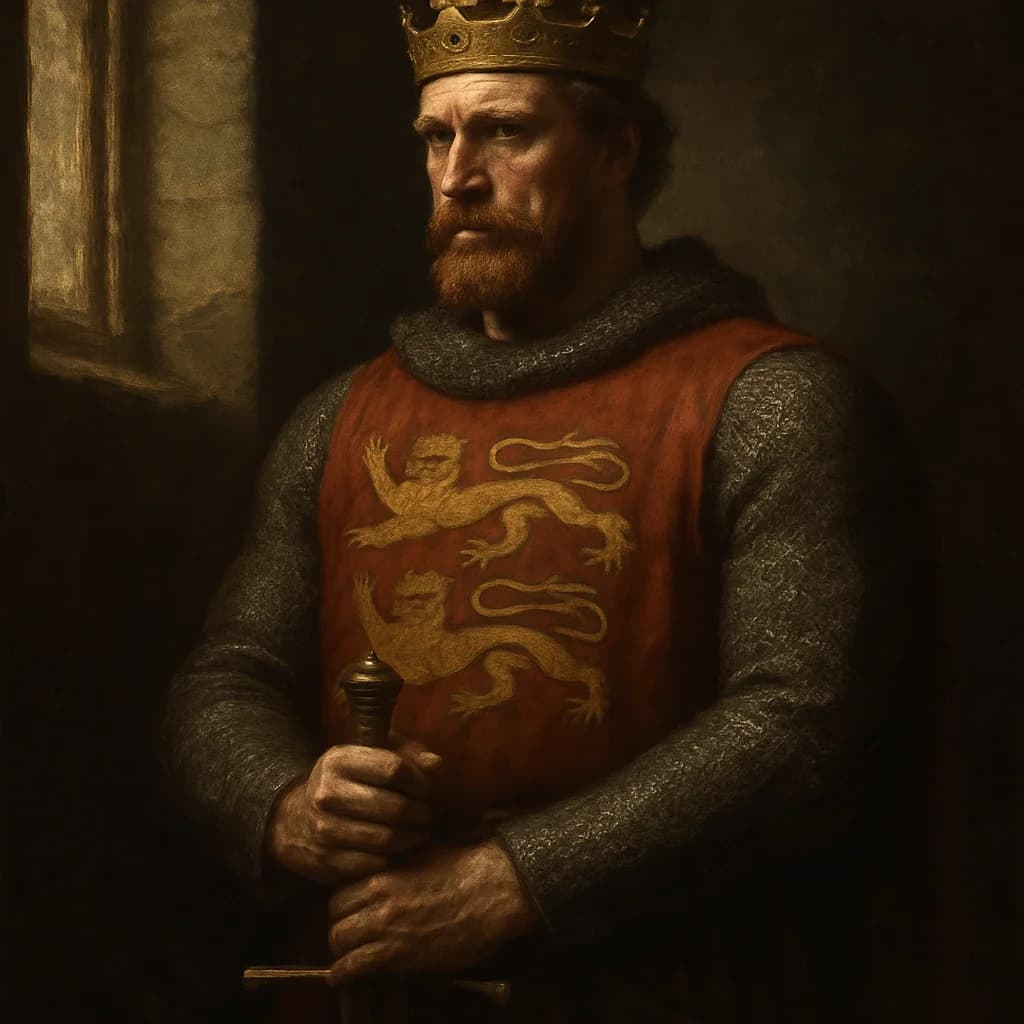
Richard I
He spent roughly six months of his ten-year reign in England, didn't speak English, and is still somehow the ur-myth of English kingship.
Richard I of England was crowned in September 1189 in a ceremony that ended, almost immediately, in a massacre. Jews who had arrived at Westminster to present gifts were set upon by the crowd, and the riots spread to York, where in March 1190, around 150 Jewish residents died in a mass killing inside Clifford's Tower rather than face the mob outside. Richard condemned it. He was already gone, raising money for the Crusade, largely indifferent to a kingdom he viewed primarily as a treasury to be emptied.
His military reputation was, at minimum, earned. At Arsuf in 1191, he held his composite force of Crusaders under withering harassment from Saladin's cavalry long past the breaking point, then released a coordinated charge that shattered the attack. Saladin, one of the more perceptive commanders of the medieval world, never quite recovered the tactical initiative afterward. What gets buried under the romance of it is how systematically brutal the campaign was, including Richard's order to execute approximately 2,700 Muslim prisoners at Acre, a decision that still generates serious historical debate about whether it was cold strategic logic or something worse.
Then came the return. Shipwrecked near Venice in December 1192, Richard attempted to cross the lands of his enemy Duke Leopold of Austria in disguise, was recognized outside Vienna (accounts vary on whether he was betrayed or simply noticed), and was handed to Holy Roman Emperor Henry VI, who held him for over a year. The ransom set was 150,000 marks, roughly three times England's annual tax revenue. England paid it. The silver had to be scraped from church chalices and wool taxes levied on an exhausted population. The financial machinery built to raise that sum (new tax assessments, expanded royal administration, the political leverage handed to barons who coordinated the effort) quietly rewired English governance in ways that outlasted Richard entirely.
He died in 1199 from a crossbow bolt taken during the siege of Châlus-Chabrol, a minor castle in the Limousin held by a lord who reportedly owed him a hoard of buried silver. The wound was botched by a surgeon. He lasted eleven days. He was forty-one.
Richard's heart was buried separately from his body (his entrails went to Charroux, his heart to Rouen, and the rest of him to Fontevraud Abbey), a medieval practice called partition of the body that was both a political honor and an assertion of multiple competing claims to his legacy.
Why untold: Richard's legend was actively constructed by later English nationalism, which needed a crusading warrior king so badly that the inconvenient facts (his absences, his French identity, his indifference to England as a place) were buried under centuries of romance and chronicle-polishing.
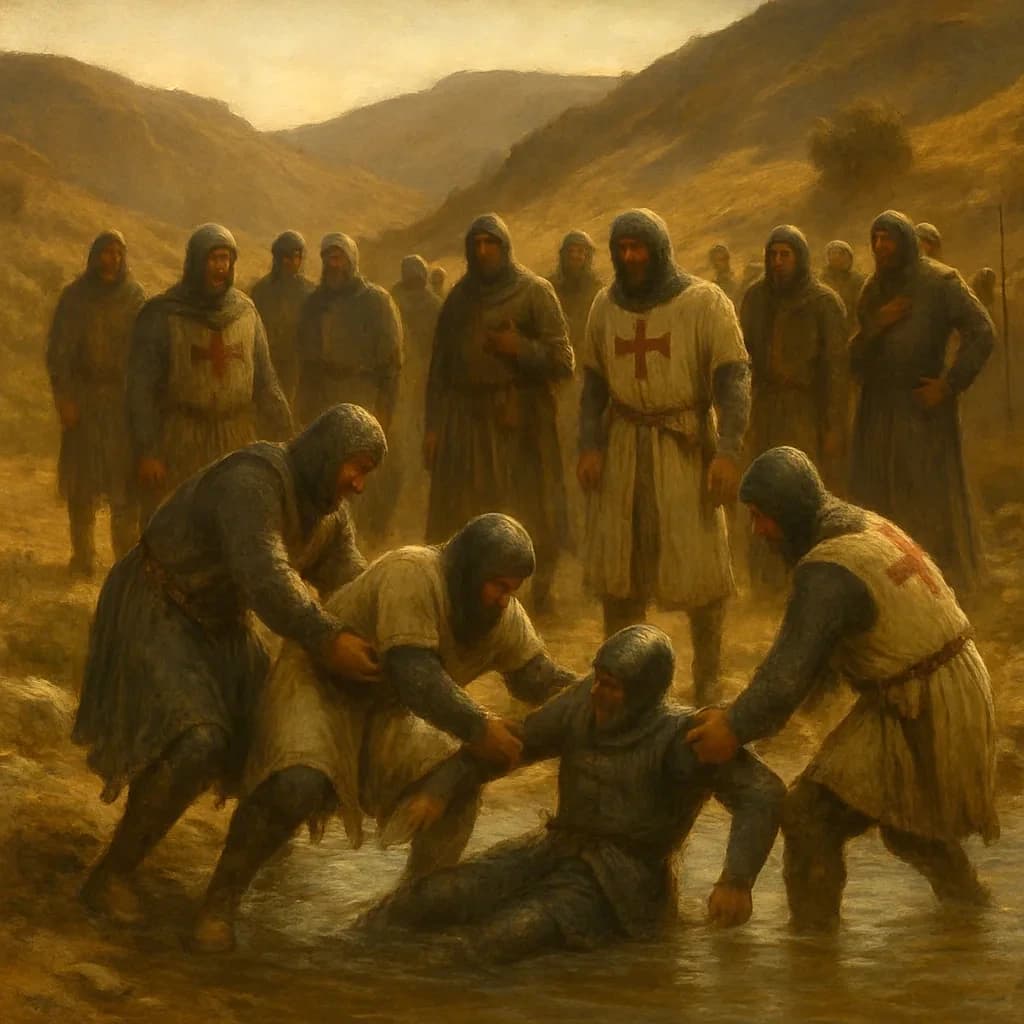
Barbarossa Drowned in a River You Could Wade Across
A single corpse pushed Europe's most powerful rulers toward war in 1191, and it wasn't even the right corpse.
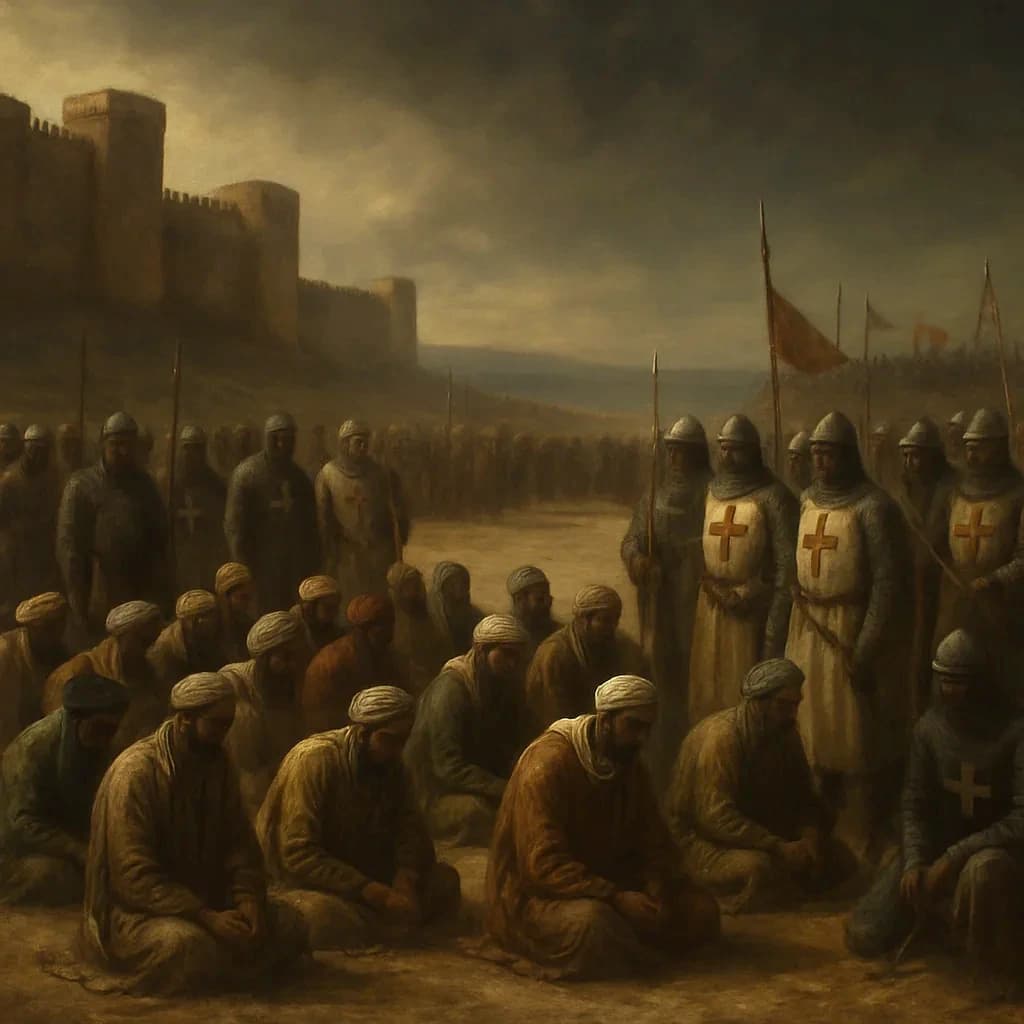
Richard the Lionheart Executed 2,700 Prisoners in One Afternoon
Richard I executed 2,700 Muslim prisoners in broad daylight, and the reason why tells you everything about how crusading warfare actually worked.
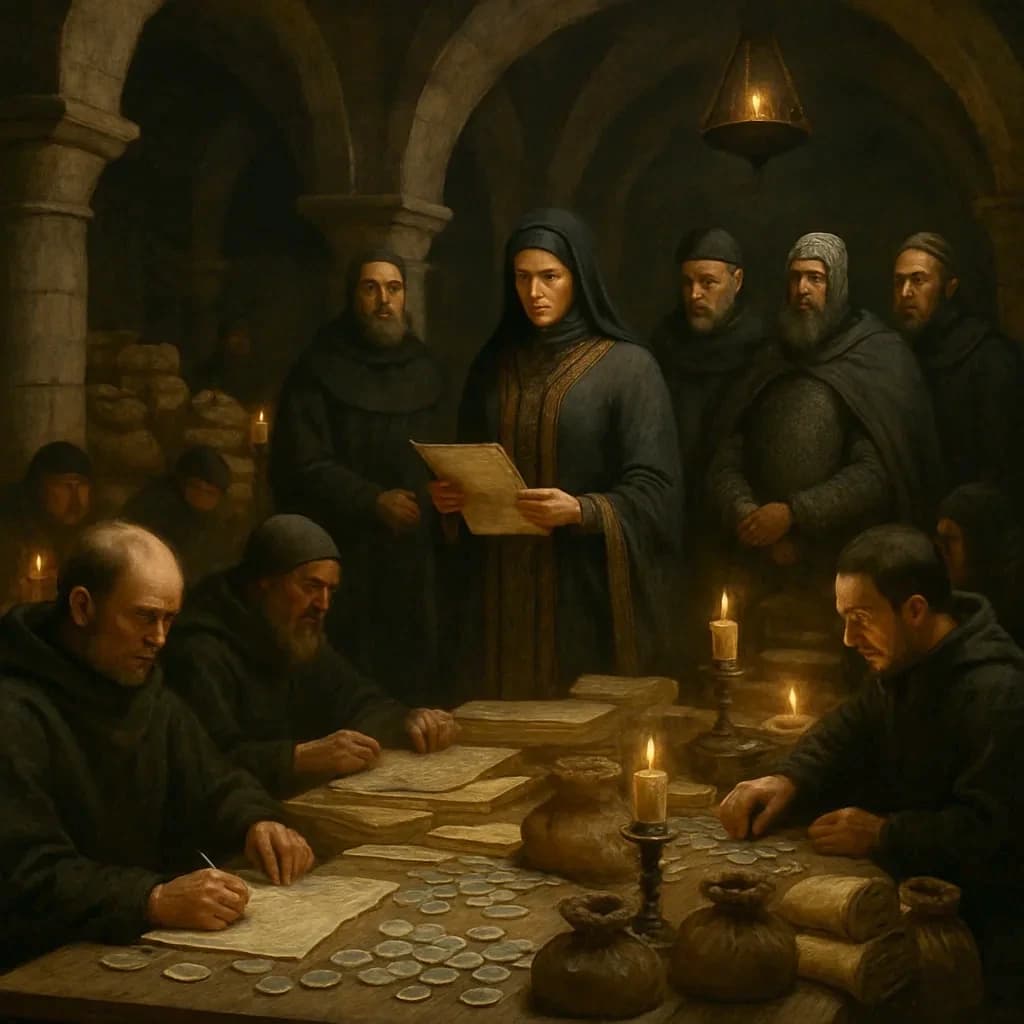
The Ransom That Cost England Three Years of Royal Revenue
Captured in disguise and held by an emperor, Richard I of England carried a price tag of 150,000 marks, and paying it quietly bankrupted a kingdom and taught its merchants that even a king could owe them money.
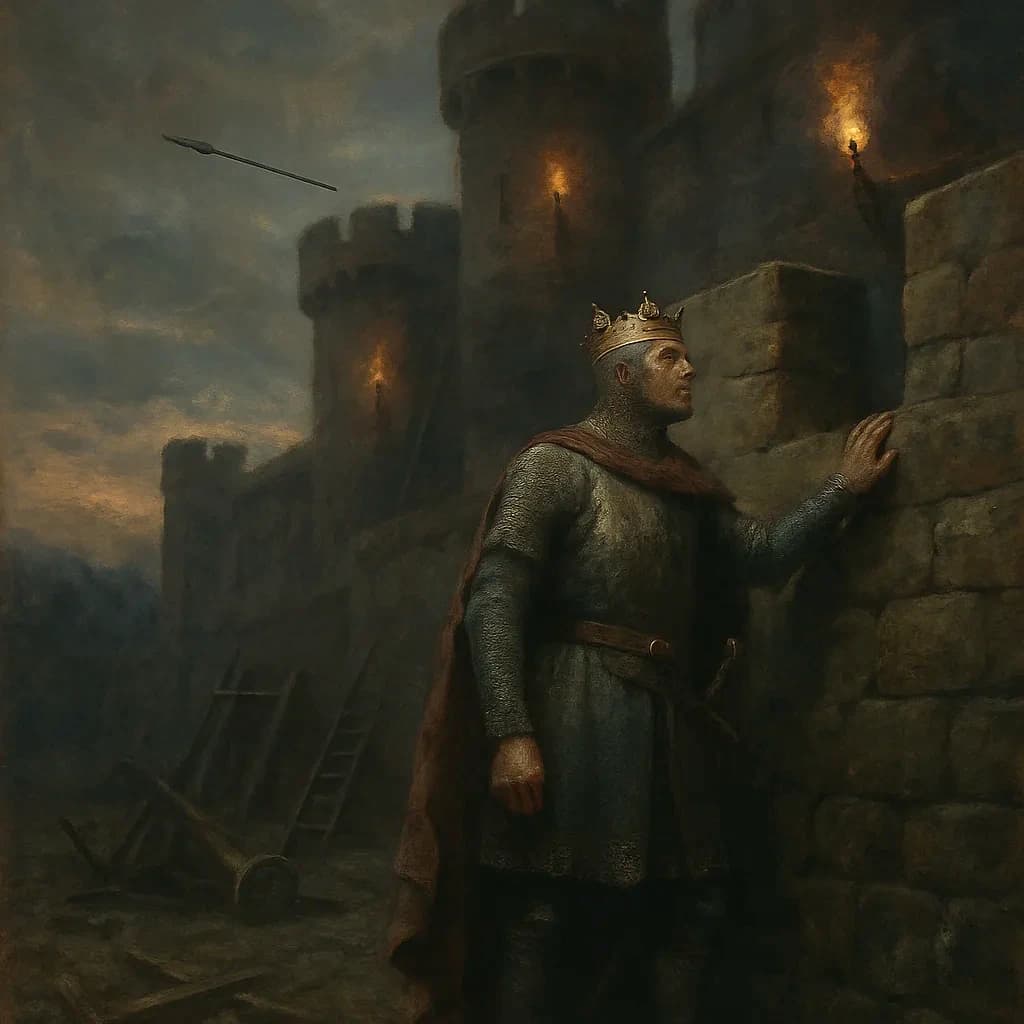
A Frying-Pan Defender Killed Richard the Lionheart
The most feared crusader king in Europe died from a single shot fired by a nobody at a nothing castle.
- John Gillingham, 'Richard I' (Yale English Monarchs Series, 1999)
- Thomas Asbridge, 'The Crusades: The Authoritative History of the War for the Holy Land' (2010)
- Roger of Hoveden, 'Chronica' (12th century, trans. Henry T. Riley, 1853)