
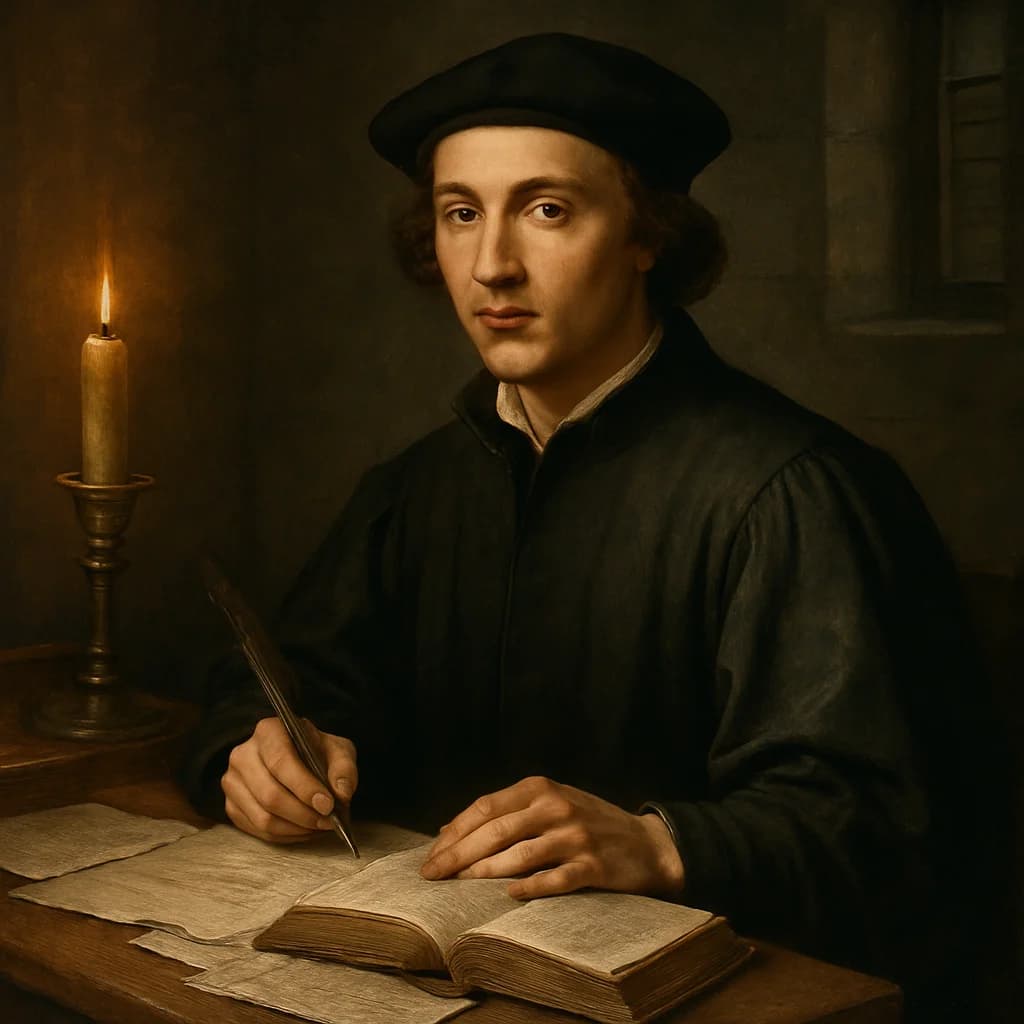
Matthias Ringmann
He named an entire hemisphere after a man who may have lied about discovering it.
Matthias Ringmann was a scholar with ink-stained fingers and an almost reckless faith in the written word. Born in 1482 in Alsace, he arrived at the intellectual crossroads of the German Renaissance, a moment when ancient geography was being ripped apart by new information arriving from every direction, most of it unreliable, some of it fabricated, and all of it thrilling. He was a poet, a humanist, a corrector of Latin texts, and briefly a schoolteacher in a monastery town called Saint-Dié-des-Vosges, which sounds like the last place you'd expect to find someone rewriting the shape of the world.
In 1507, Ringmann co-authored the Cosmographiae Introductio, the slim pamphlet that accompanied Martin Waldseemüller's famous world map. His contribution wasn't cartographic. He couldn't draw a coastline. What he did was argue, in clear and confident Latin, that the new lands in the west deserved a name. He proposed "America," derived from the Latinized first name of Amerigo Vespucci, the Florentine navigator whose letters had described the southern continent in vivid, enticing detail. Ringmann found those letters persuasive. He probably shouldn't have. Modern historians have spent decades debating how much of what Vespucci claimed was exaggerated or outright borrowed from other explorers, including Columbus. Ringmann didn't know any of that. He read a letter, believed it, and wrote a name into history.
What makes Ringmann genuinely strange is how little he cared about the discovery itself. He was interested in the classical problem it solved: Ptolemy had theorized unknown landmasses, and here, apparently, was one. For Ringmann, America was essentially a philological puzzle. He even constructed a feminist etymological argument for the name: just as Europa and Asia were named for women, so too should this new quarter of the world be. He died in 1511, age twenty-eight, likely from plague, having never traveled further than the Rhine Valley. The continent he named had barely been touched by European feet. He named it anyway.
Waldseemüller, who drew the 1507 map, later changed his mind about Vespucci's primacy and removed the name "America" from his subsequent maps, but by then, Ringmann's naming had already spread through European print culture and couldn't be recalled.
Why untold: Because Waldseemüller's name is on the map, Ringmann (who wrote the text that actually argued for and explained the name "America") has been consistently overshadowed by his more visually prominent collaborator.
He Named America, Then Tried to Take It Back
A German mapmaker printed one name across a new continent, came to regret it, and spent the rest of his life erasing it, but the name had already escaped him.
The Mapmaker Who Named America, Then Erased It
The man who named America never crossed the Atlantic. He just happened to own the right printing press at the right moment.
How One Forged Letter Named America
One afternoon in 1507, a German monk decided what to call the new world, and got it completely wrong for reasons no one talks about.
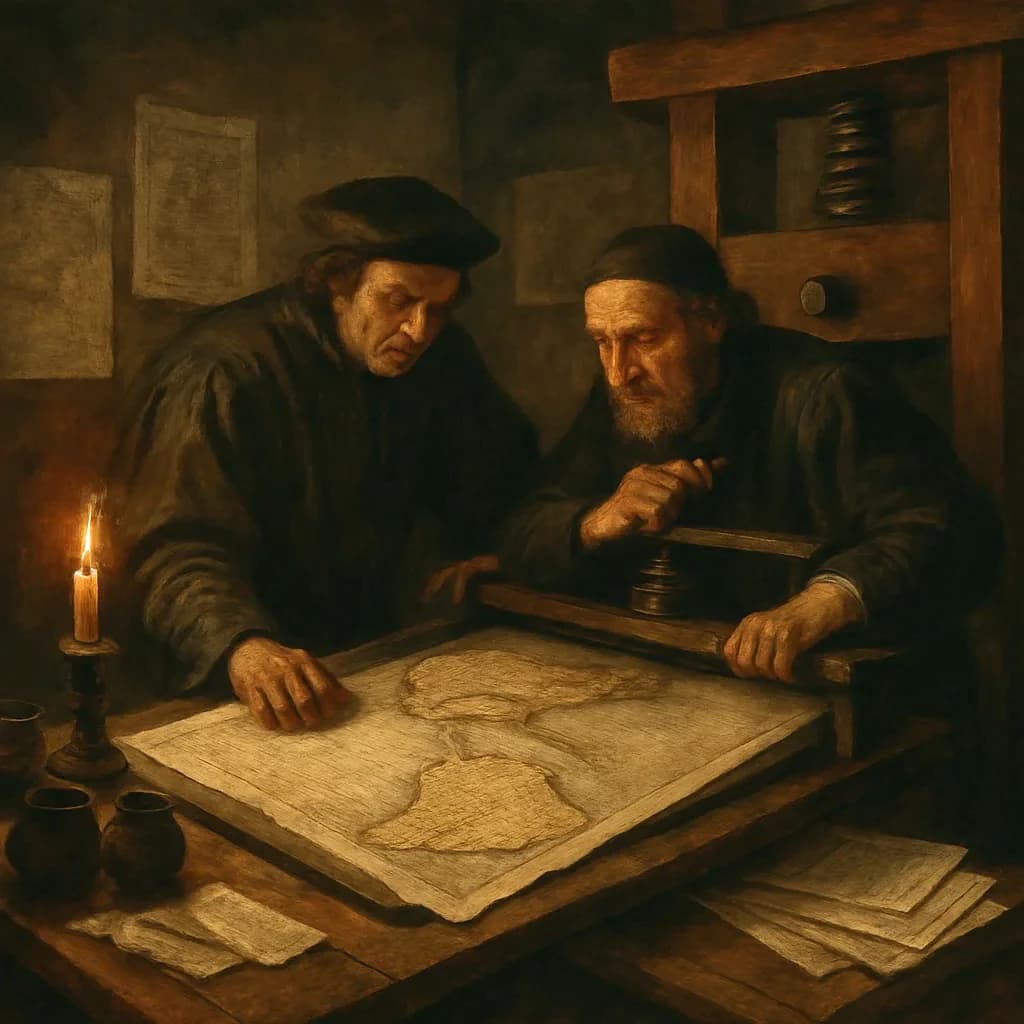
A 1507 Map of a Coast No One Had Sailed
A German mapmaker drew the coast of South America in 1507 with startling accuracy, decades before anyone had sailed it.
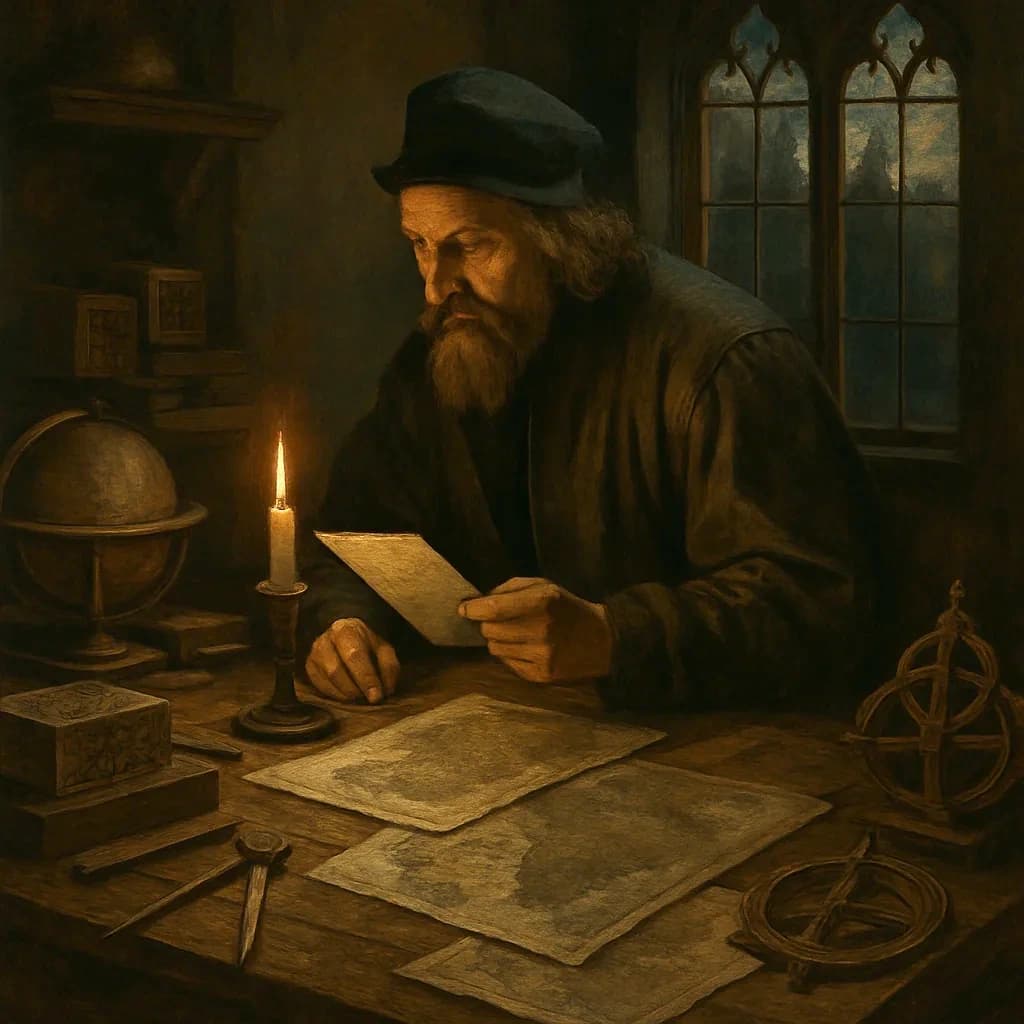
A German Mapmaker Accidentally Named America
In 1507, a German mapmaker put a new continent on his world map based entirely on a letter from a Florentine navigator, and accidentally gave America its name.
- Toby Lester, The Fourth Part of the World: The Race to the Ends of the Earth and the Epic Story of the Map That Gave America Its Name (Free Press, 2009)
- John W. Hessler, The Naming of America: Martin Waldseemüller's 1507 World Map and the Cosmographiae Introductio (Library of Congress, 2008)
- Franz Laubenberger, 'The Naming of America,' Sixteenth Century Journal, Vol. 13, No. 4 (1982), pp. 91-113