

Johann Klein
Johann Klein ran the deadliest maternity ward in Europe and spent thirty years fighting the man who could have saved thousands of women.
Klein inherited the Vienna General Hospital's maternity division in 1823, where one in ten women died of childbed fever. He accepted this as God's will. When bright young Ignaz Semmelweis arrived as his assistant in 1846, Klein saw promise in the Hungarian doctor's dedication, until Semmelweis started asking uncomfortable questions.
The hospital had two maternity wards. Klein's First Clinic, run by medical students, killed twice as many women as the Second Clinic run by midwives. Semmelweis noticed this pattern and worse: the medical students came straight from dissecting corpses to delivering babies. When he suggested they wash their hands with chlorinated lime, death rates plummeted from 18% to less than 2%.
Klein's response was swift and brutal. He blocked Semmelweis from publishing his findings, excluded him from meetings, and eventually drove him from Vienna entirely. Klein genuinely believed that blaming doctors for spreading disease was both scientifically impossible and morally offensive. Miasma (bad air) caused disease, not physicians' hands. The very suggestion insulted the medical profession's honor.
For the next thirteen years, Klein continued running his ward exactly as before. Women kept dying at appalling rates while he published papers defending traditional methods and attacking Semmelweis's theories. Even after germ theory gained acceptance in the 1870s, Klein never acknowledged his error. He died in 1856, three years before Semmelweis suffered his own breakdown and death, having saved countless lives that Klein could never count.
Klein actually improved Vienna's maternity ward mortality from an even worse baseline of nearly 30% when he started. He genuinely believed he was providing excellent care.
Why untold: Medical history focuses on Semmelweis as the pioneering hero rather than examining how institutional authority actively suppressed life-saving knowledge.
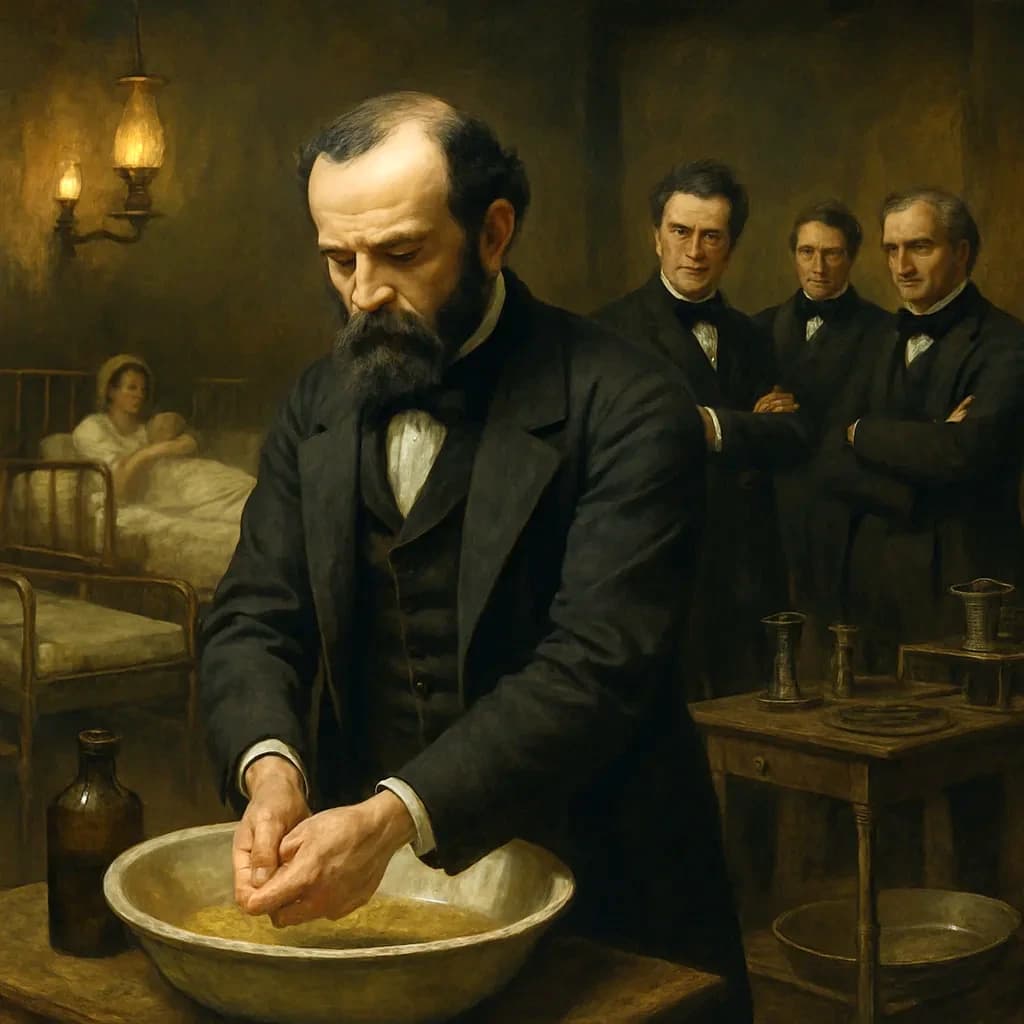
The Surgeon Who Saved Thousands While Denying Dirt Could Kill
A brilliant Victorian surgeon who saved thousands of lives was shunned by his profession for refusing to believe dirt could kill.
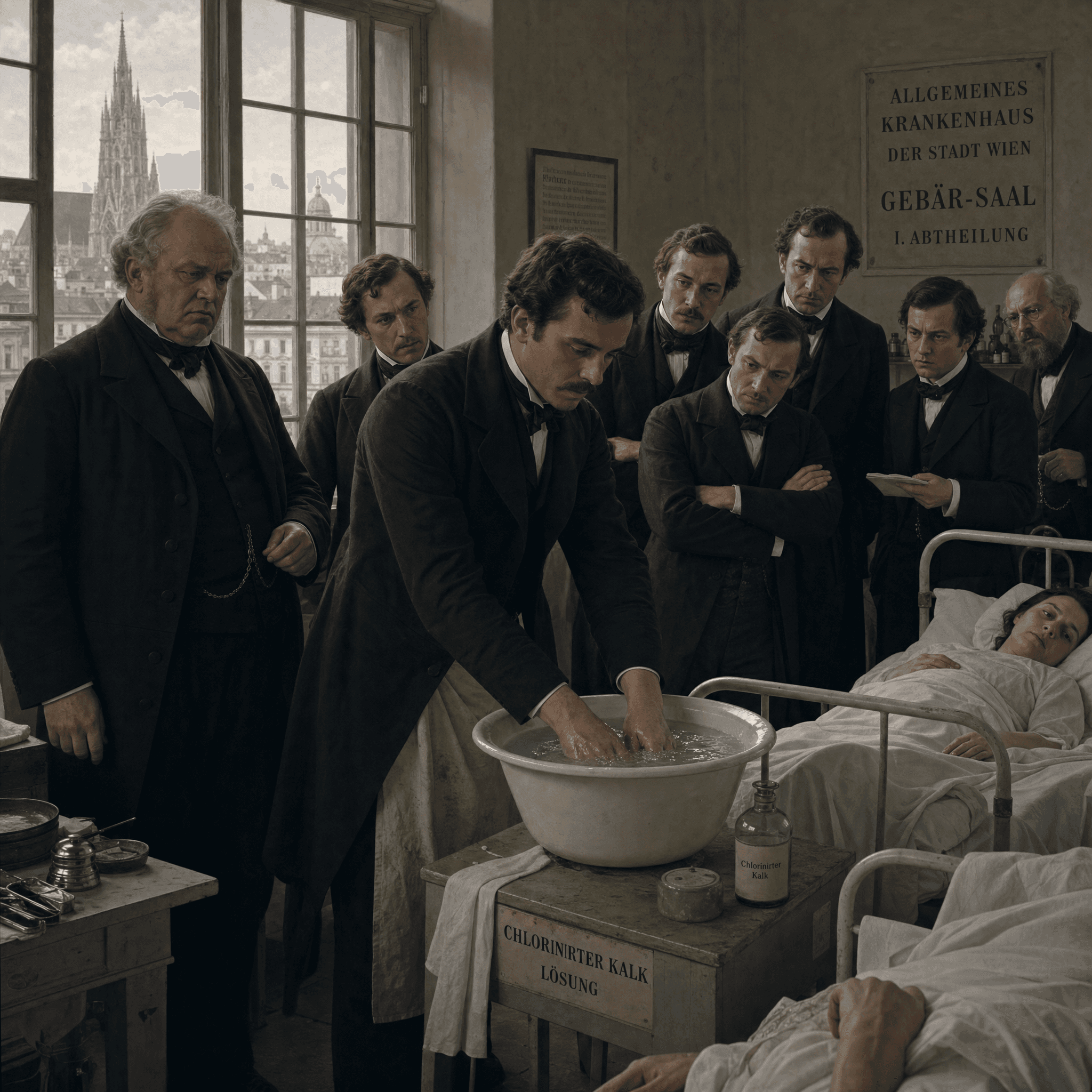
Fired for Suggesting Doctors Wash Their Hands
A Hungarian doctor discovers the deadliest ward in Vienna has the cleanest hands, and gets fired for suggesting doctors wash them.
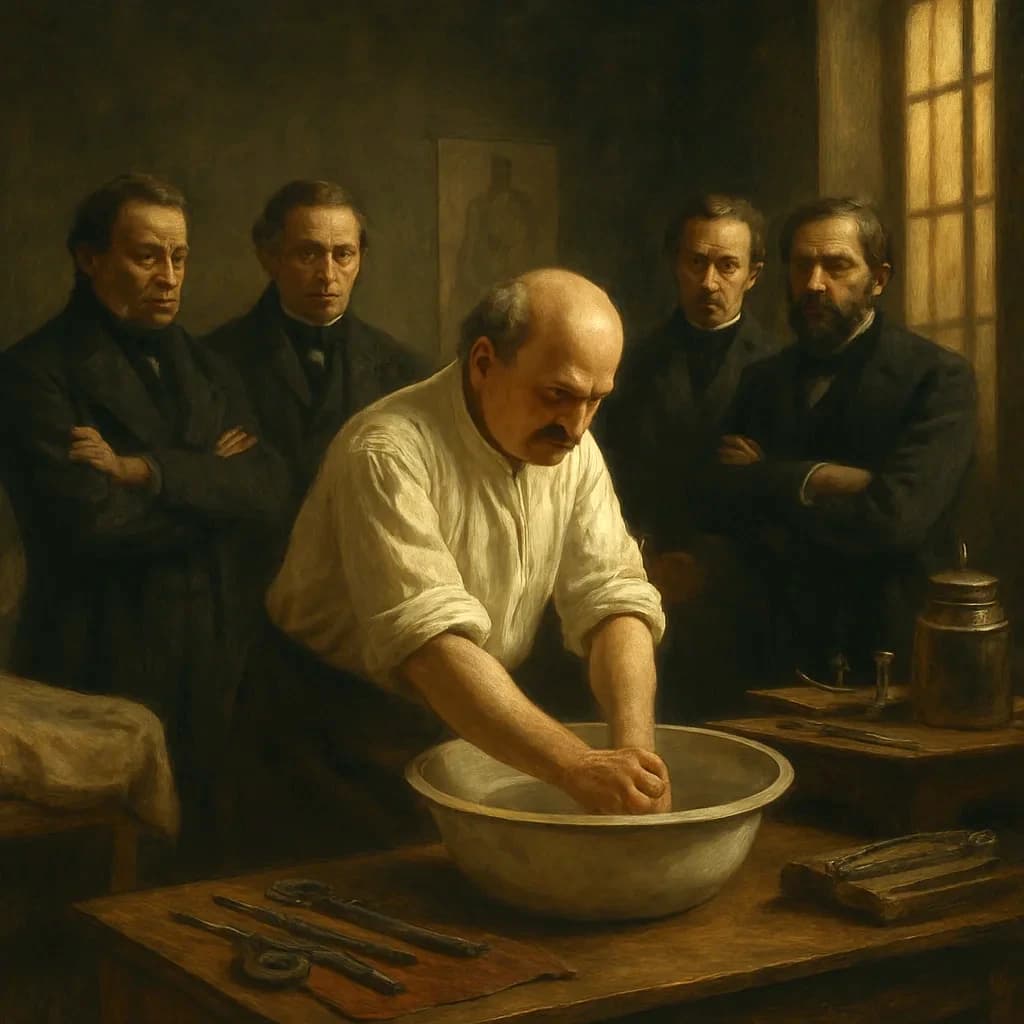
He Proved Clean Hands Prevented Death. Colleagues Destroyed Him.
When a Hungarian doctor proved that washing hands could prevent death, his colleagues destroyed his career and drove him to madness.
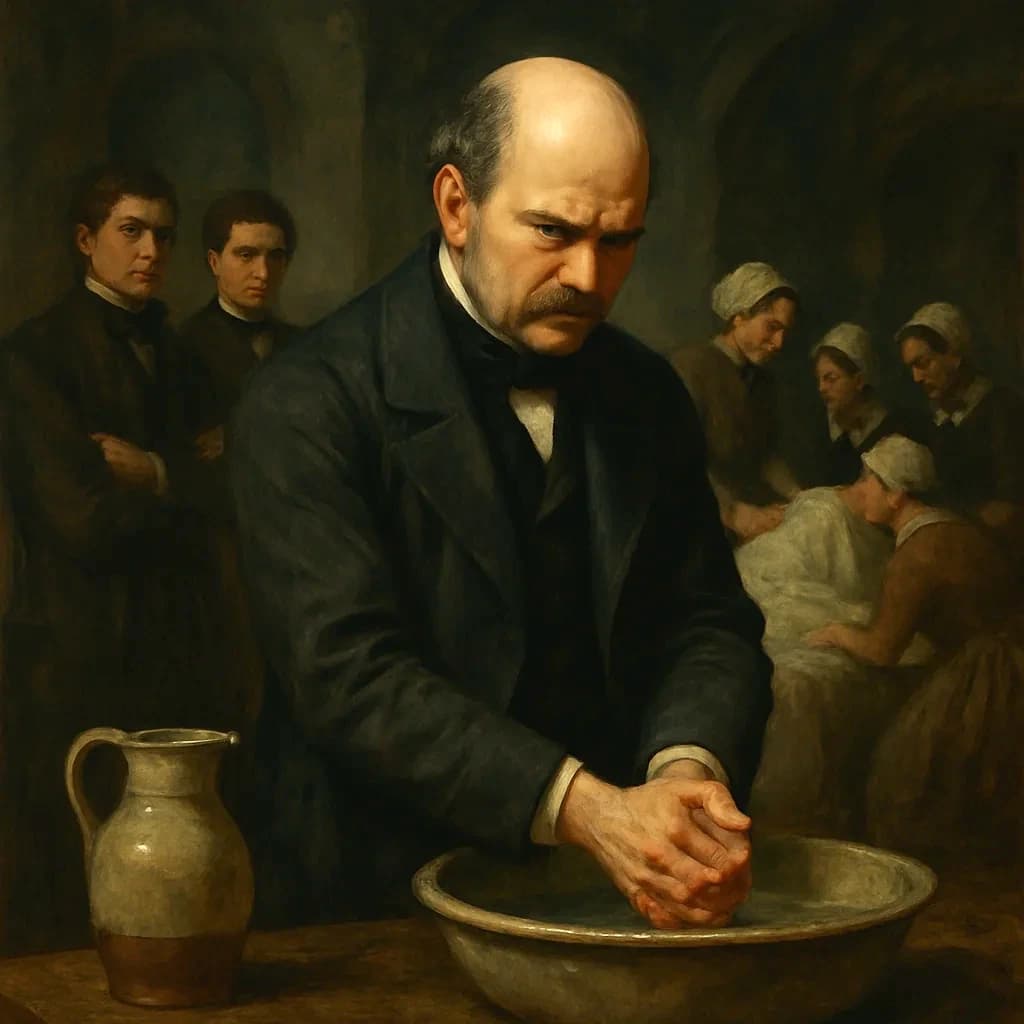
Women Died Twice as Often When Medical Students Delivered Babies
A Hungarian doctor noticed something strange about the maternity ward: women were dying at twice the rate when medical students delivered their babies.
- Nuland, Sherwin B. The Doctors' Plague: Germs, Childbed Fever, and the Strange Story of Ignác Semmelweis. W. W. Norton, 2003.
- Carter, K. Codell. The Rise of Causal Concepts of Disease: Case Histories. Ashgate Publishing, 2003.
- Semmelweis, Ignaz. The Etiology, Concept, and Prophylaxis of Childbed Fever. Translated by K. Codell Carter. University of Wisconsin Press, 1983.