
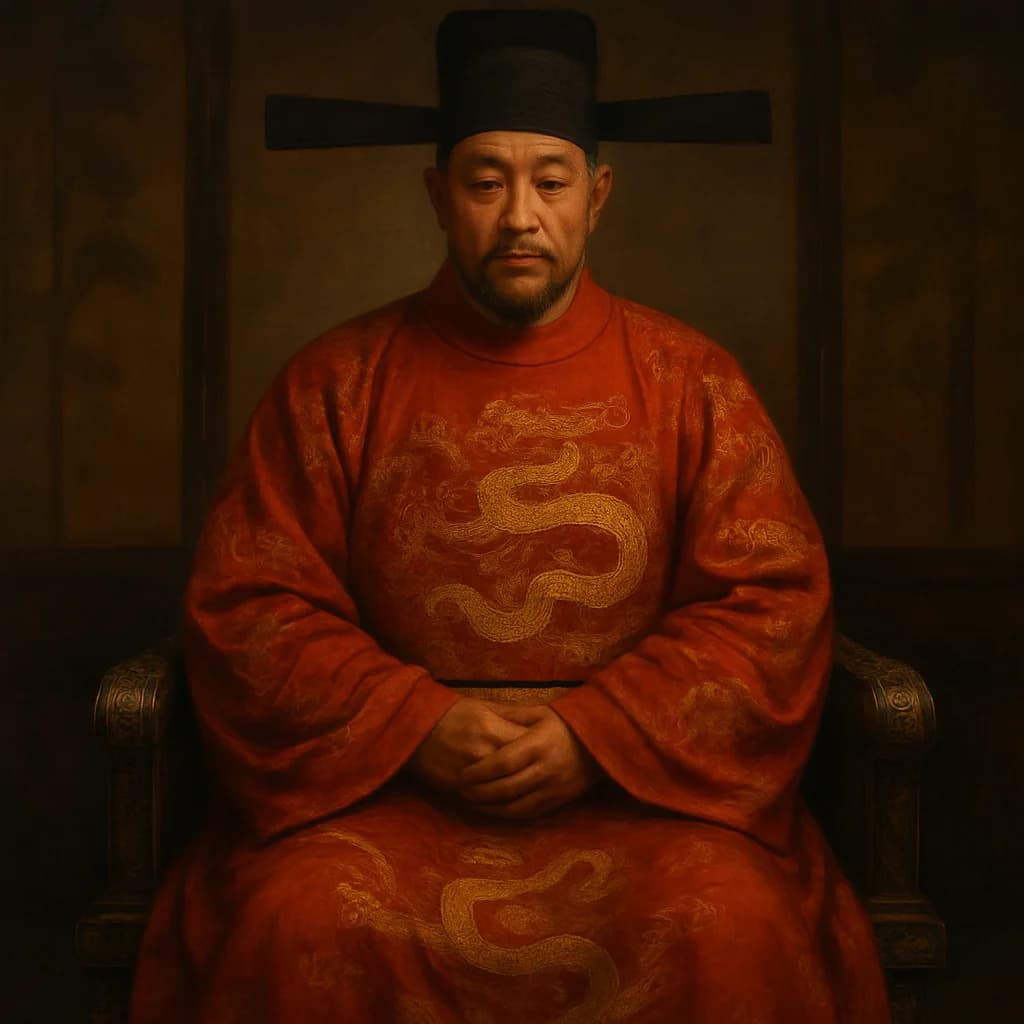
Emperor Renzong
He ruled China for forty-one years, personally approved the invention of movable type, and history forgot his name before the ink was dry.
The longest-reigning emperor of the Song dynasty was not a conqueror. He was not a builder of walls or a burner of cities. Zhao Zhen (Emperor Renzong, enthroned at eleven years old in 1022) was something far stranger for a man of his position: he was genuinely, almost pathologically, reluctant to cause suffering. This was not a pose. When a cook prepared him a dish of crab one evening and he ate it without thinking, he reportedly refused the dish ever again rather than create demand for something that required killing so many creatures. The court eunuchs whispered that the Son of Heaven was soft. They were not entirely wrong, and that softness reshaped the world.
Renzong's reign coincided with one of the most concentrated explosions of intellectual life in Chinese history. He kept Su Shi (Su Dongpo, the poet) employed despite the man's compulsive need to offend bureaucrats. He tolerated Fan Zhongyan's reform movement long past the point when a harder emperor would have had everyone exiled or executed. And sometime around 1040, an artisan named Bi Sheng, working in the ceramic workshops supported by the Song state's extraordinary patronage infrastructure, pressed individual characters into clay, fired them, and created the world's first movable type. Renzong's court noted it. Filed it. Moved on. The emperor did not grasp that one of his commoners had just detonated a slow bomb under every civilization on earth.
The tragedy of Renzong is not that he failed. It's that he succeeded so thoroughly at being humane that nobody knew what to do with him. Chinese historical tradition prizes emperors who unify, conquer, or reform through iron will. Renzong's great innovation was permission: he permitted curiosity, permitted argument, permitted Bi Sheng to tinker in obscurity. He outlasted four chief ministers and three attempted coups, governing an empire of roughly fifty million people while personally agonizing over whether to raise taxes on salt. When he died in 1063, the grief was so widespread that even people in the northern territories controlled by the Jurchen reportedly wept. That is either the most remarkable tribute a ruler ever received, or a profound indictment of everything that came after him.
When Renzong died, the Jurchen Jin emperor to the north (technically an adversary) declared a period of mourning and had a portrait of Renzong enshrined, reportedly saying that such a benevolent ruler had never appeared in his own lands.
Why untold: Renzong's reign was systematically undervalued by later Confucian historians who structured imperial legacy around military achievement and dynastic expansion, categories in which a ruler famous for restraint and tolerance left almost nothing to praise.
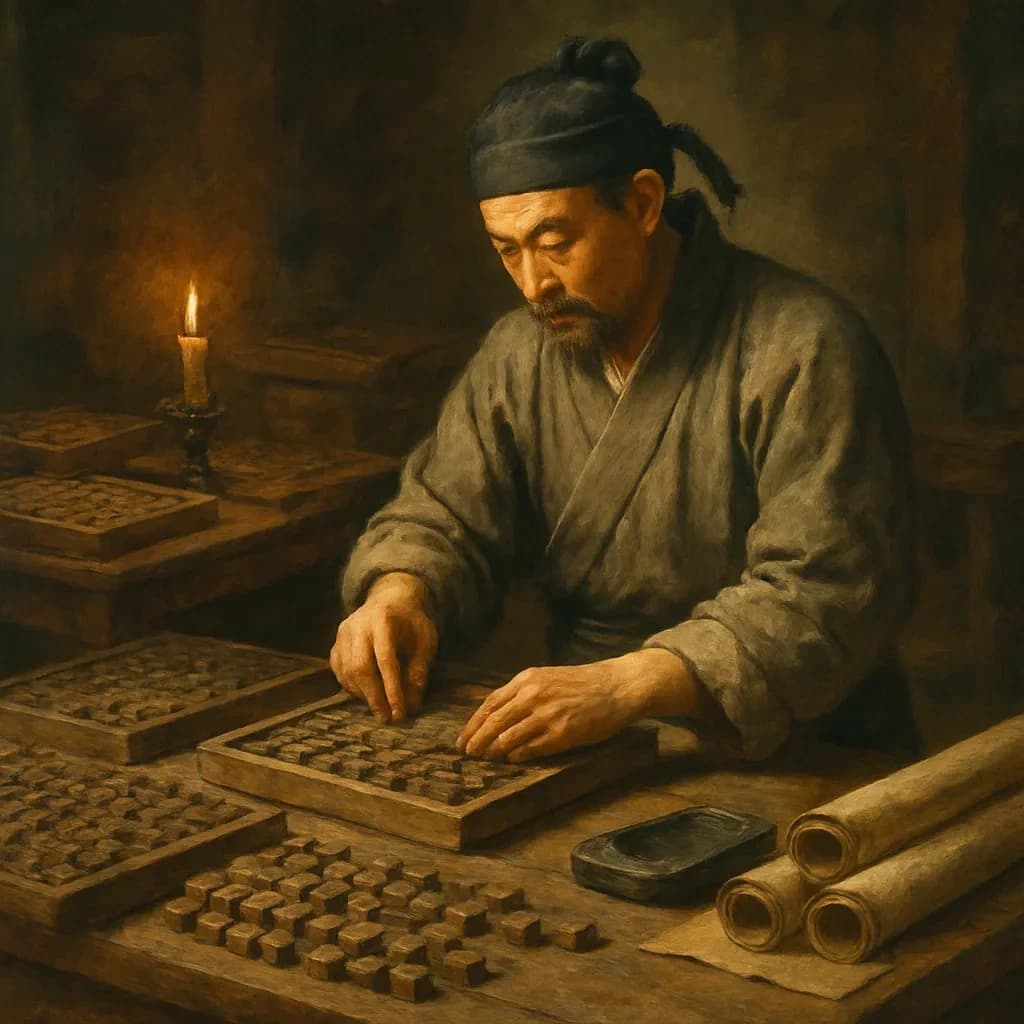
China Invented Printing It Couldn't Use
A Chinese blacksmith named Bi Sheng built something in 1139 that would eventually destroy the very culture that made it possible.
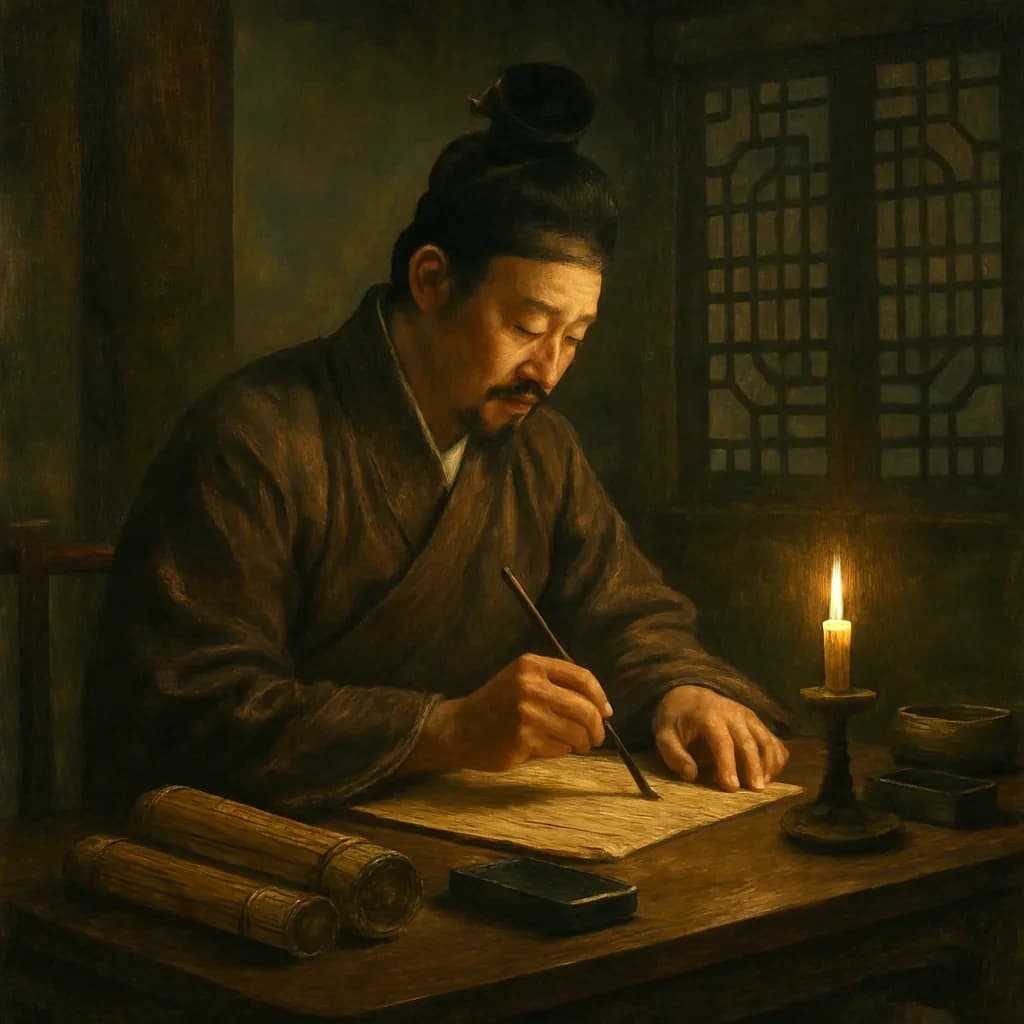
A Korean Scholar's Cookbook Became a Chemical Warfare Blueprint
A Korean scholar's cookbook became the blueprint for chemical warfare across three continents.
- Dieter Kuhn, 'The Age of Confucian Rule: The Song Transformation of China' (Harvard University Press, 2009)
- Peter Bol, 'This Culture of Ours: Intellectual Transitions in T'ang and Sung China' (Stanford University Press, 1992)
- E.G. Pulleyblank and others in 'The Cambridge History of China, Volume 5: The Sung Dynasty and Its Precursors' (Cambridge University Press, 2009)