
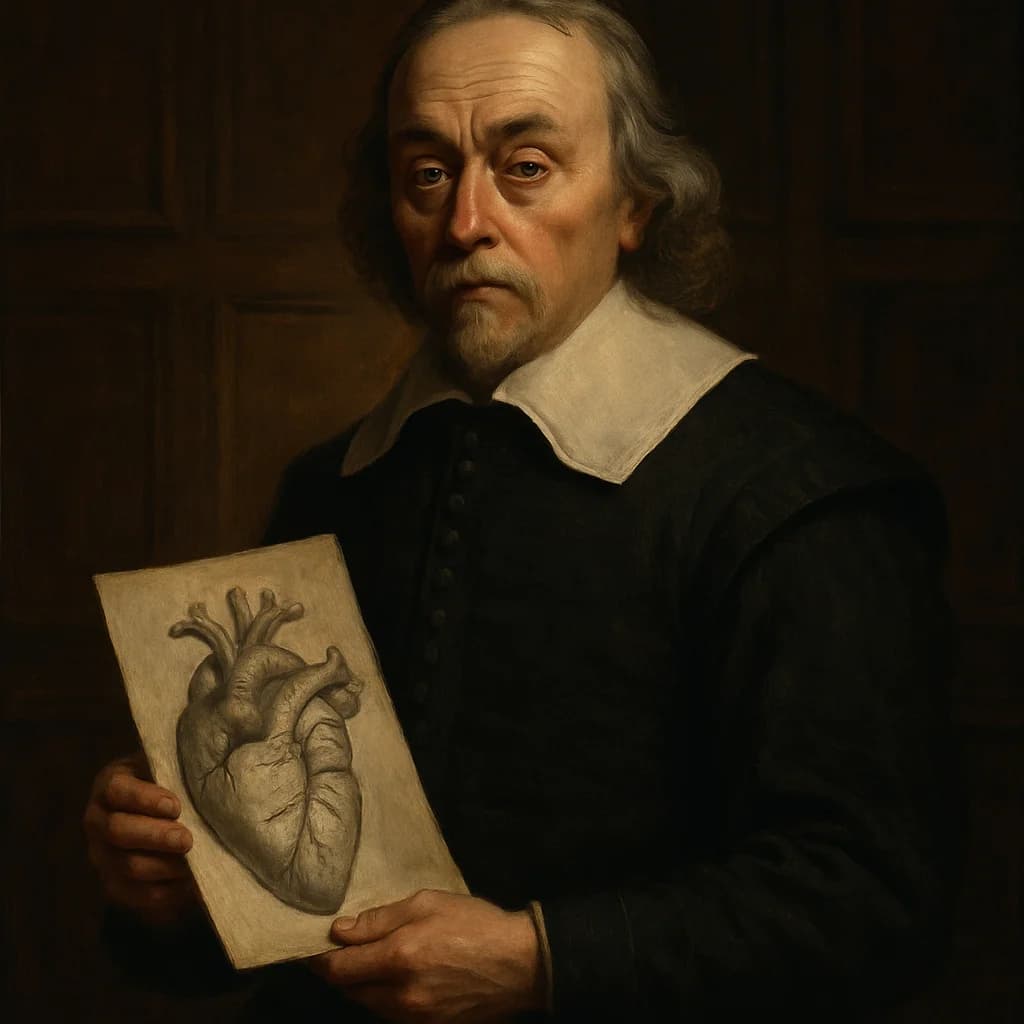
William Harvey
The man who proved the heart was a pump spent seventeen years dissecting executed criminals in his basement before anyone would believe him.
William Harvey had a problem. Every medical authority for the past 1,500 years insisted that blood was manufactured in the liver, consumed by the body like fuel, and occasionally sloshed around the heart. Harvey knew they were wrong, but proving it meant challenging Galen, the Roman physician whose theories had become medical gospel.
So Harvey began collecting bodies. Executed criminals, mostly, delivered fresh from the gallows to his makeshift laboratory beneath the Royal College of Physicians. For seventeen years, he sliced open chest after chest, mapping the precise architecture of veins and arteries. He tied off blood vessels in living animals, watching circulation stop and start like turning a faucet. He calculated that the heart pumped roughly 2,000 gallons of blood daily, far more than the liver could possibly manufacture.
The evidence was overwhelming, but Harvey waited. He knew that publishing would trigger a professional earthquake. When "De Motu Cordis" finally appeared in 1628, the medical establishment erupted. Colleagues called him a fool. Patients fled his practice, terrified that this radical doctor might kill them with his bizarre theories. One physician declared that Harvey had "slain more men with his pen than the sword of war."
But Harvey had calculated correctly. Within a generation, his circulation theory revolutionized medicine, surgery, and our understanding of life itself. The heart wasn't some mystical organ that heated blood like a furnace. It was a mechanical pump, moving the same blood in an endless loop. Harvey had discovered that the human body operated like a machine, centuries before anyone thought to look for gears.
Harvey's circulation theory was so controversial that his medical practice nearly collapsed. Patients were afraid to be treated by a doctor whose ideas seemed dangerously radical.
Why untold: Medical history focuses on Harvey's discovery itself rather than the seventeen years of clandestine dissection and professional isolation that made it possible.
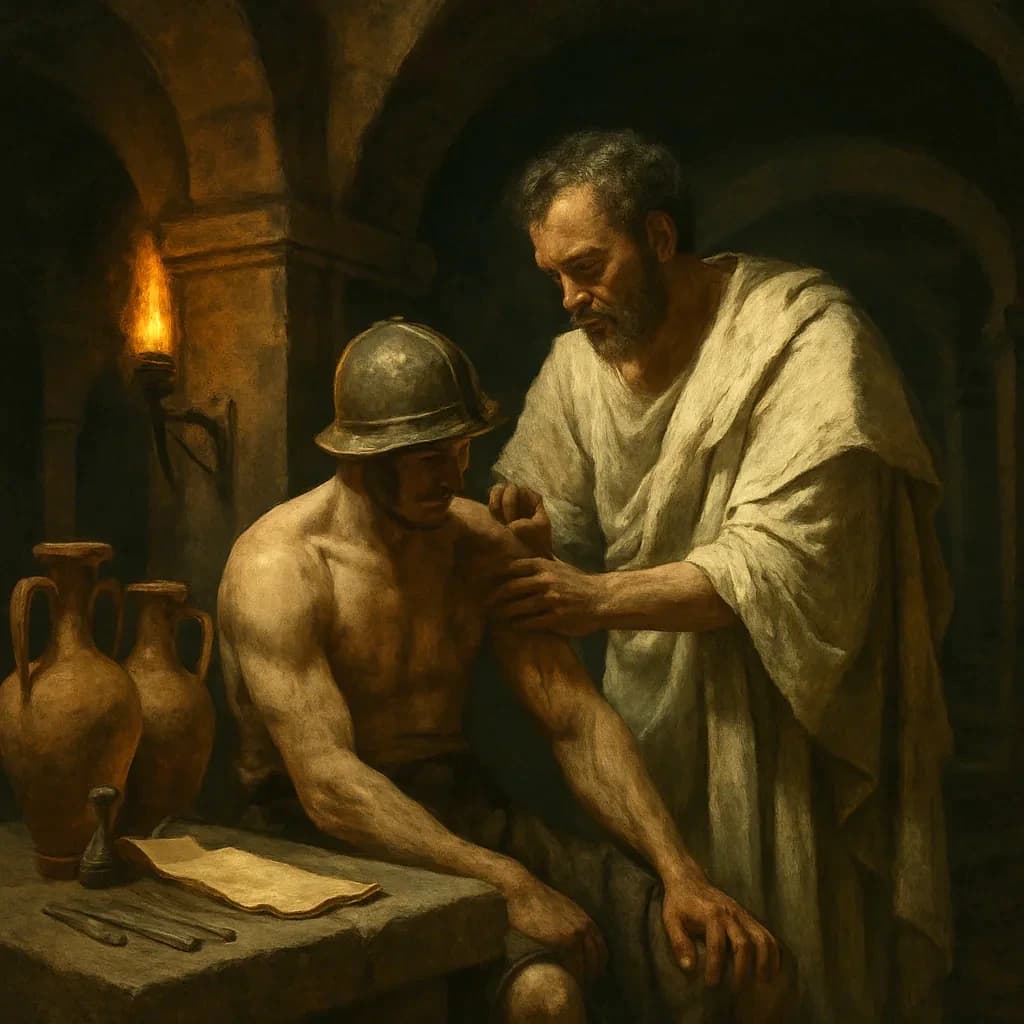
Galen: The Roman Doctor Whose Cures Lasted 1,500 Years
The Roman Empire's most respected physician never performed surgery, never set a bone, and believed that wine could cure everything from broken hearts to broken legs.
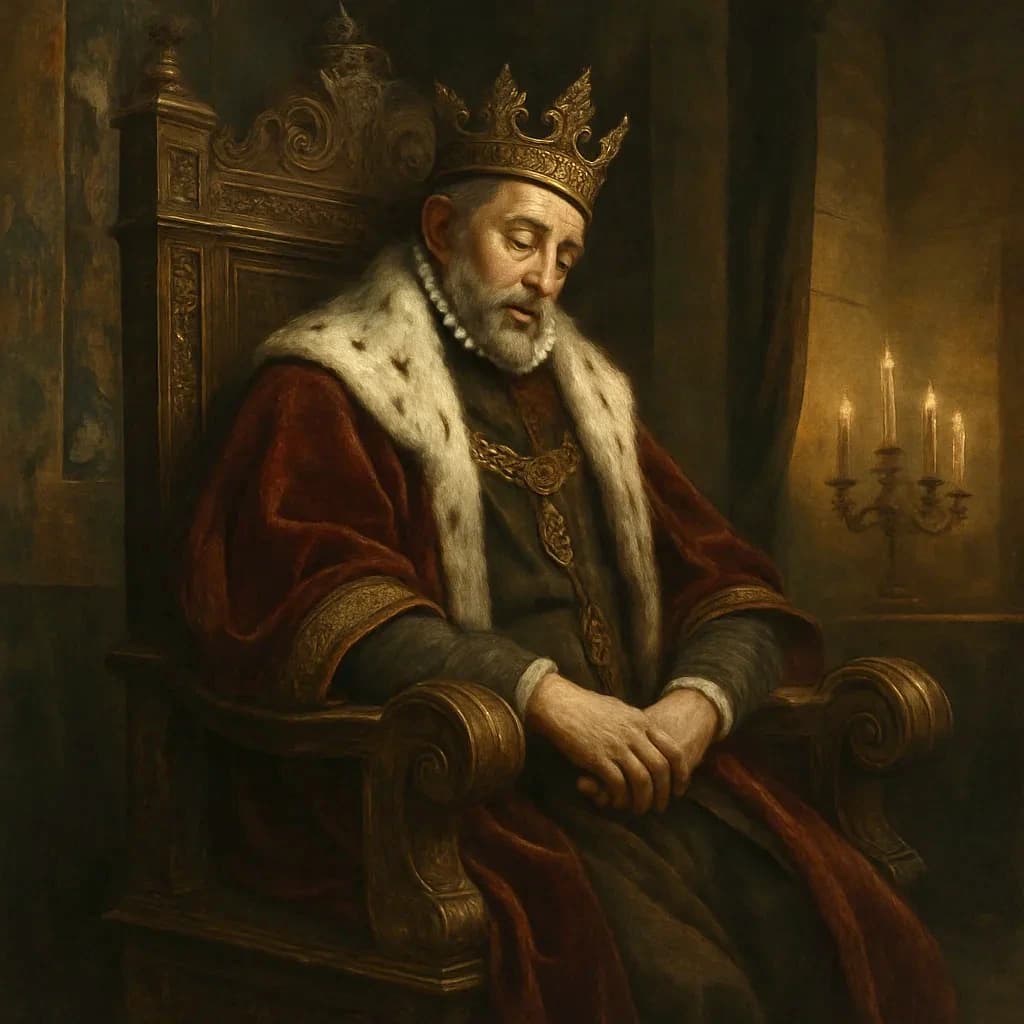
When Kings Went to Sleep Standing Up
For nearly a century, European monarchs believed their royal blood would turn to poison if they ever lay down while sleeping.
- Whitteridge, Gweneth. William Harvey and the Circulation of the Blood. London: Macdonald, 1971.
- Bylebyl, Jerome J. William Harvey and His Age. Baltimore: Johns Hopkins University Press, 1979.
- French, Roger. William Harvey's Natural Philosophy. Cambridge: Cambridge University Press, 1994.