
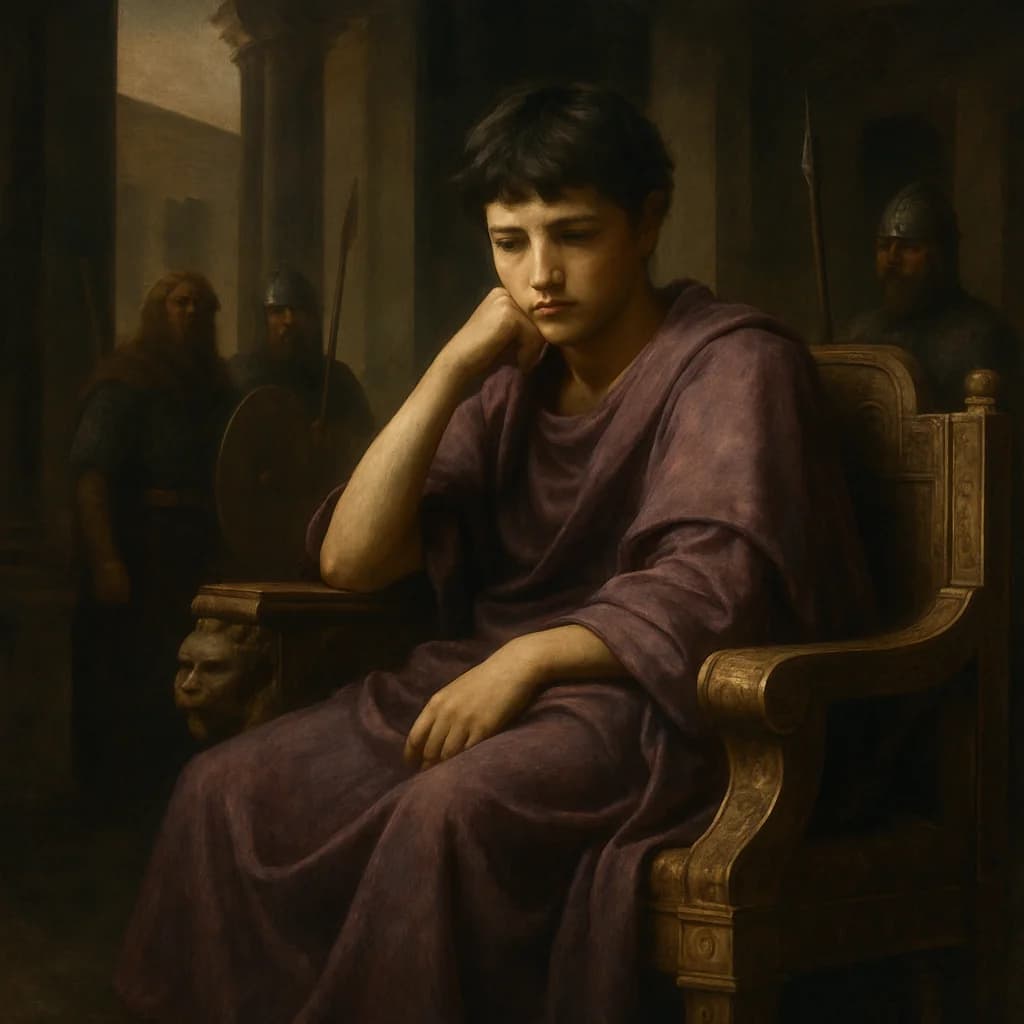
Romulus Augustulus
The last Roman Emperor was sixteen years old, nicknamed "Little Augustus," and his father did all the actual ruling.
Romulus Augustulus never wanted to be emperor. In 475 CE, his father Orestes (a former secretary to Attila the Hun turned Roman general) staged a coup and placed his teenage son on the throne as a puppet. The boy's real name was simply Romulus, but Romans mockingly called him "Augustulus" (Little Augustus), a diminutive that stuck to history's most reluctant ruler.
The irony was exquisite. Here was a child named after Rome's legendary founder, bearing a nickname that echoed Rome's first emperor, presiding over the empire's final act. For ten months, Romulus sat on a throne that commanded nothing. Germanic foederati (barbarian mercenaries who had become the backbone of Roman military power) demanded land grants that Orestes refused. Their leader Odoacer simply marched on Ravenna.
When Odoacer's forces arrived in September 476, there was no dramatic siege, no heroic last stand. Orestes was captured and executed, but his son received unexpected mercy. Odoacer, perhaps moved by the boy's youth or recognizing the absurdity of killing a powerless child, offered terms that read like early retirement: a generous pension, a villa in Campania, and safe passage into obscurity.
Romulus accepted immediately. At sixteen, he became the only Roman Emperor to voluntarily abdicate and live to old age. While scholars debate the exact date the Western Roman Empire "fell," the last emperor was quietly tending gardens in southern Italy, having traded purple robes for a peaceful anonymity that would stretch across decades.
Romulus Augustulus lived for at least forty more years after abdicating, making him one of the longest-lived Roman rulers despite having the shortest meaningful reign.
Why untold: His story is overshadowed by the dramatic narrative of Rome's "fall," when the reality was a teenage puppet's quiet retirement.
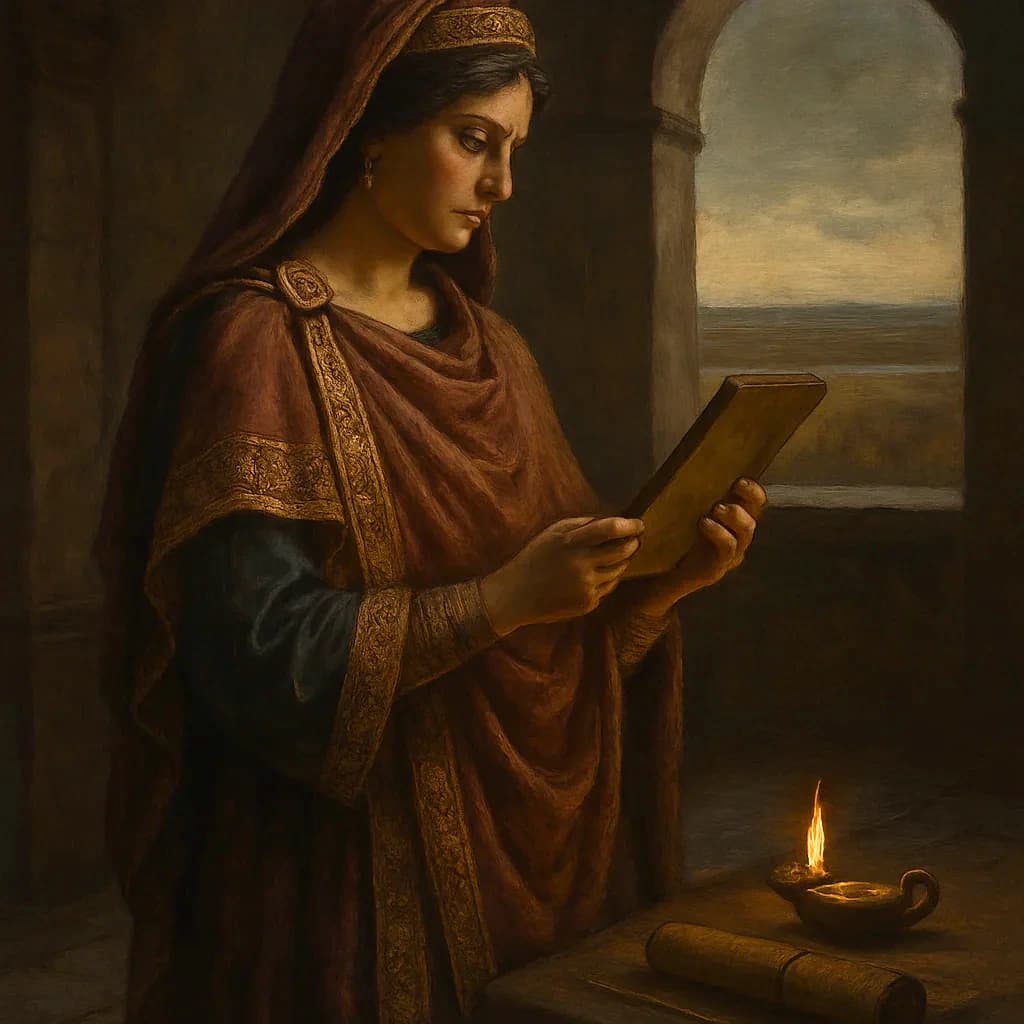
How a Mother Saved Rome's Last Emperor
Rome's last western emperor was deposed without a fight, and the one person who may have seen it coming was a woman nobody bothered to write about.
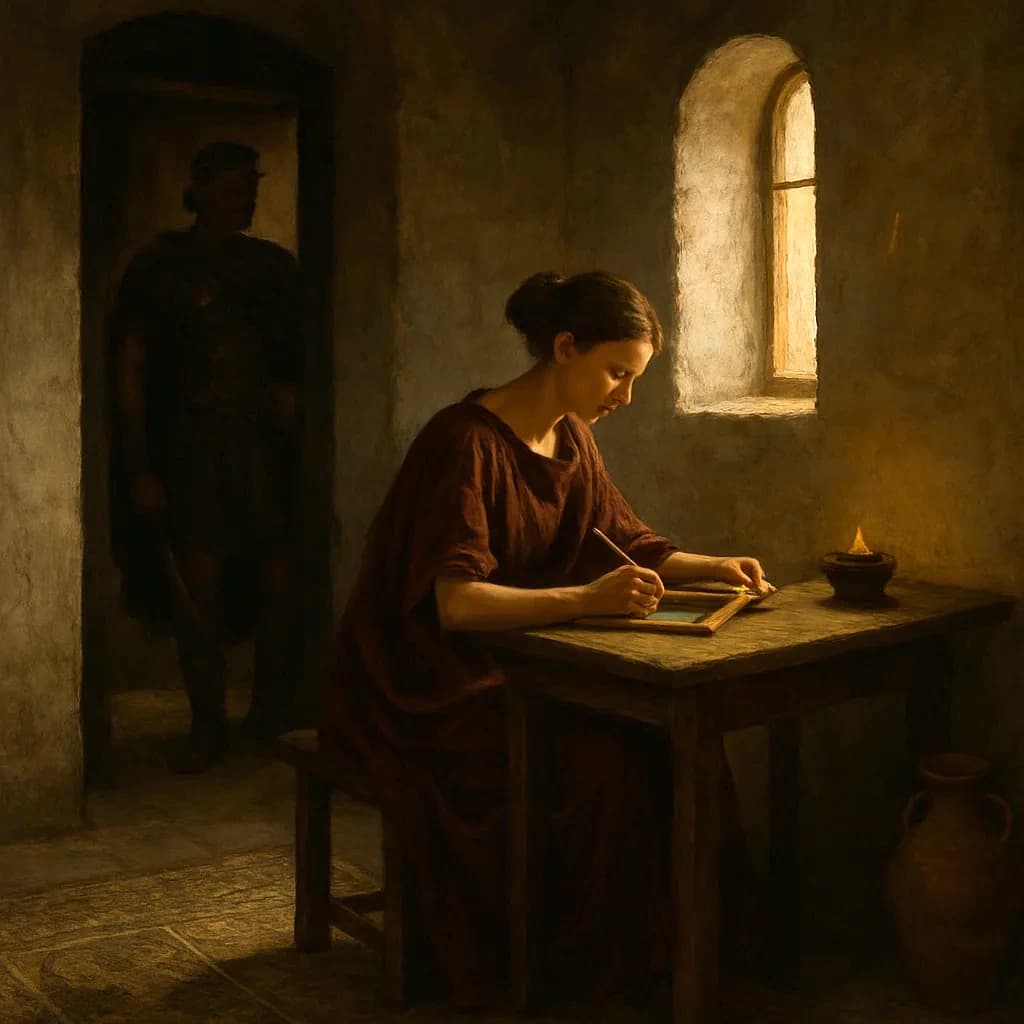
A Teenage Girl Saved Rome's Last Emperor
What no emperor, general, or senator had managed in decades, a teenage girl in a provincial Roman town pulled off: she ended a war.
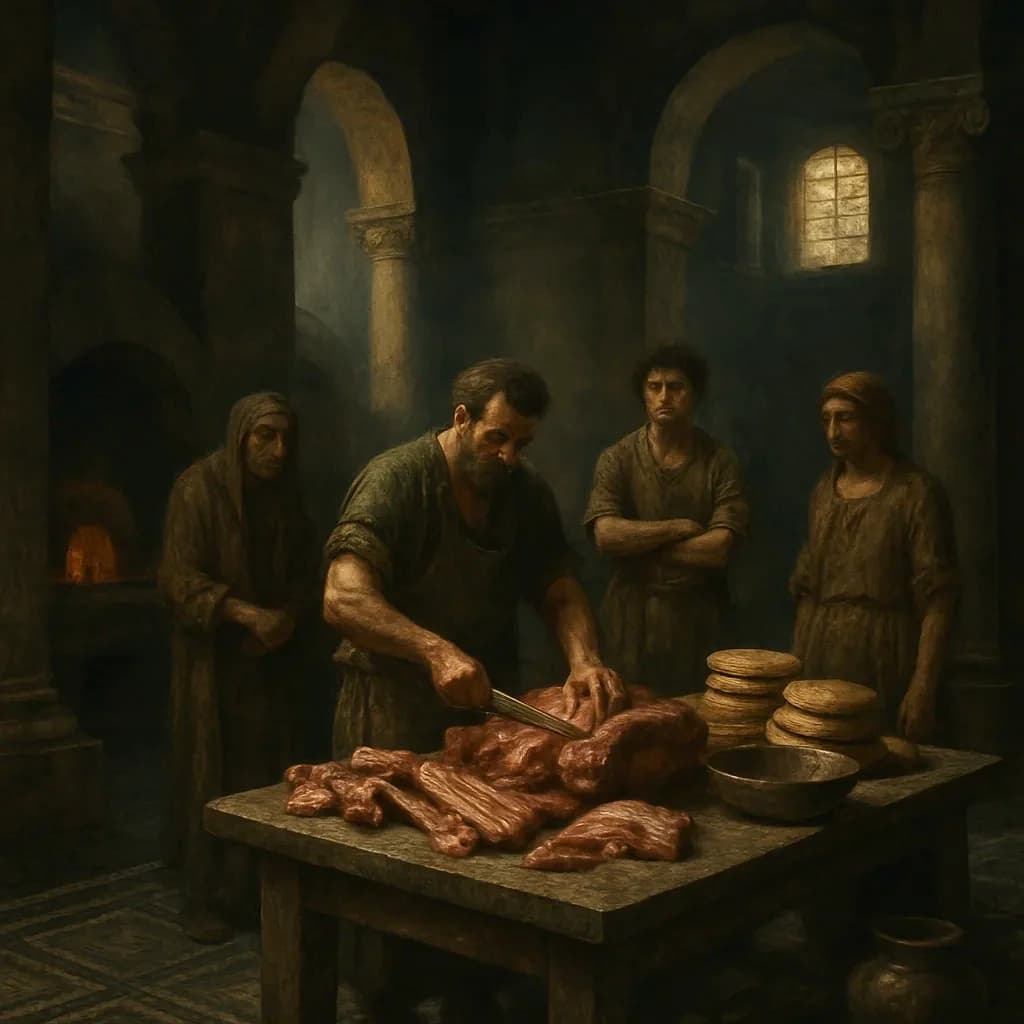
When Rome's Dogs Ate Better Than Rome's Children
In the last years of the Western Empire, emperors spent more on feeding imperial hunting hounds than on grain dole for the city's starving population.
Rome's Last Emperor Watched His Father Drink the Poison
A Roman centurion's desperate gamble with a borrowed chalice changed the course of European history.
The Last Roman Emperor Was Asked to Retire at Dinner
The last Roman Emperor of 476 CE wasn't killed in battle or assassinated. He was politely asked to retire over dinner.
- Jordanes, Getica
- Marcellinus Comes, Chronicle
- J.B. Bury, History of the Later Roman Empire