
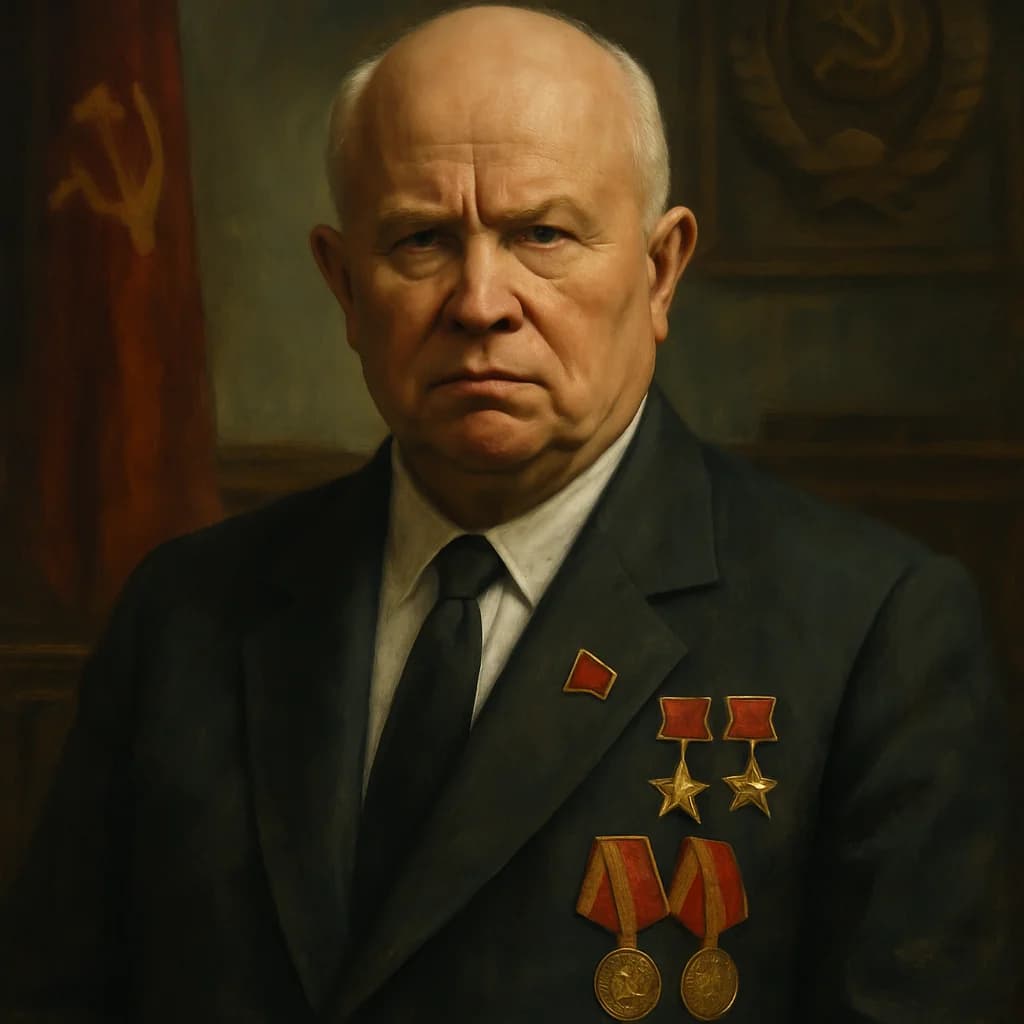
Nikita Khrushchev
The man who saved the world from nuclear war was also the one who brought it to the brink, and it all started with a Ukrainian peasant who taught himself to read at seventeen.
Nikita Khrushchev spent his childhood herding cows and working in coal mines, illiterate until he was nearly an adult. By the time he learned his letters, he was already a father and a factory worker with calloused hands and revolutionary fire in his belly. This late start to literacy would shape everything about him: his earthy directness, his explosive temper, and his complete inability to play by diplomatic rules.
His rise through Stalin's ranks was built on survival instincts honed in Ukrainian peasant villages. While other Politburo members spoke in careful euphemisms, Khrushchev blurted out whatever came to mind. He once interrupted a UN session to bang his shoe on his desk. He told American farmers their corn was inferior. He promised to bury the West, then invited Nixon to sample Russian borscht. This wasn't calculated diplomacy. It was a coal miner's son who never learned to hide his thoughts.
The Cuban Missile Crisis revealed both sides of this peasant-turned-premier. His reckless decision to place nuclear weapons ninety miles from Florida nearly triggered World War III. But when the moment came to pull back from the abyss, he chose pragmatism over pride. While his generals pushed for escalation, Khrushchev quietly removed the missiles, accepting public humiliation to avoid nuclear annihilation. The boy who once couldn't read had learned to read the stakes.
Yet history remembers him mainly as the crude Soviet leader who pounded tables and made threats. The man who dismantled Stalin's worst excesses, who freed millions from the gulags, and who chose peace when nuclear war hung in the balance remains overshadowed by his theatrical outbursts and eventual political downfall.
Khrushchev was the only Soviet leader who actually worked with his hands before joining the Communist Party. He spent years as a coal miner and metal worker, giving him a visceral understanding of industrial life that his predecessors lacked.
Why untold: His peasant origins and lack of formal education made him an embarrassment to Soviet propagandists, who preferred to emphasize the Party's intellectual sophistication rather than its populist roots.
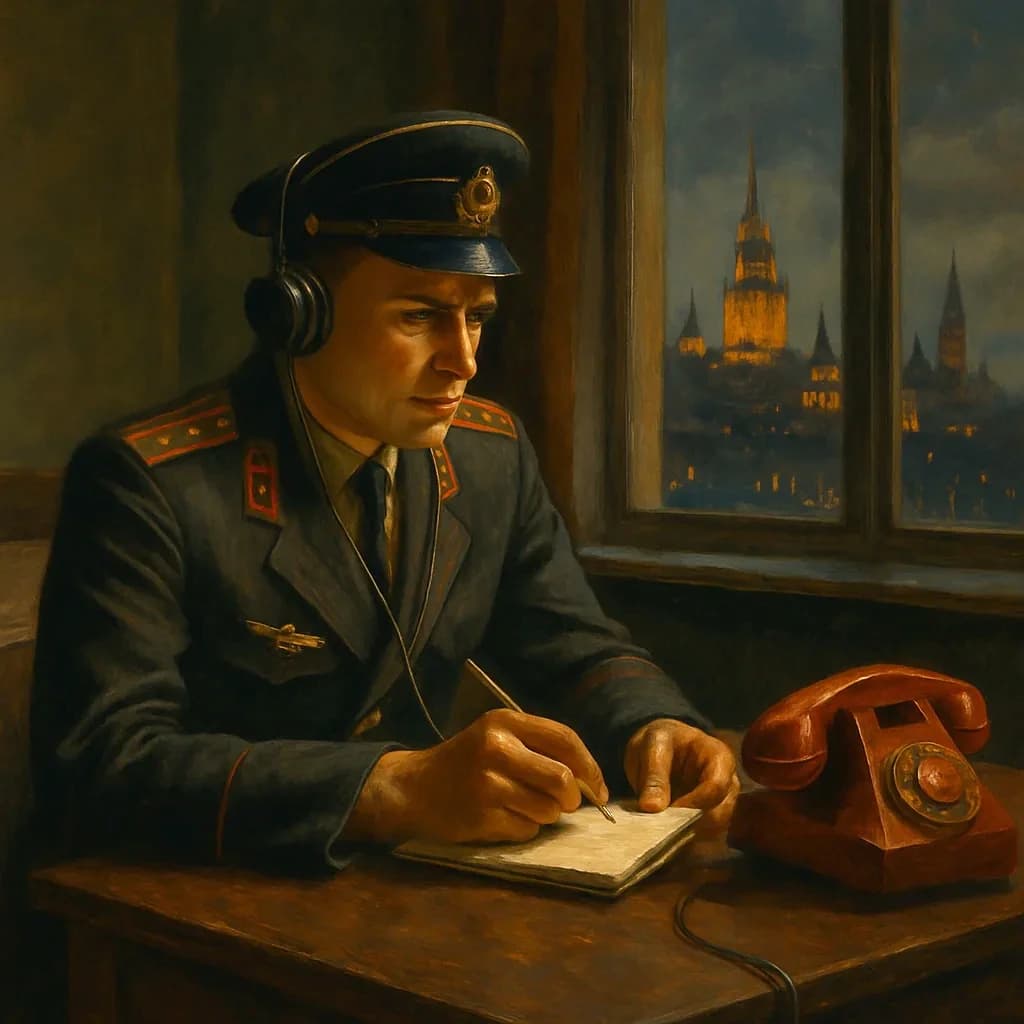
A Translator in a Moscow Hotel Room Stopped Nuclear War
In October 1962, the world came closer to nuclear war than during the Cuban Missile Crisis, but the man who stopped it was in a hotel room in Moscow, translating American radio broadcasts.
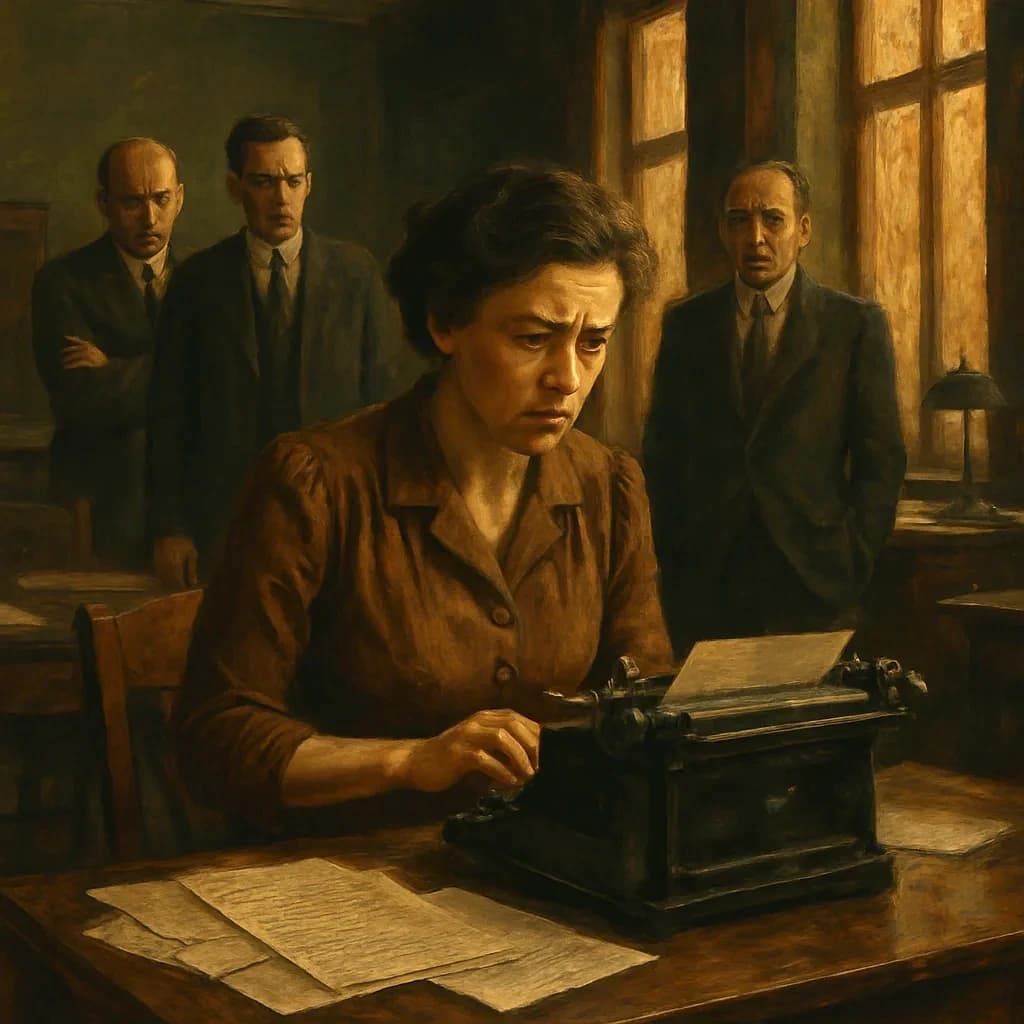
A Soviet Typist's Three Hours Against Nuclear War
A secretary's typing speed may have prevented nuclear war in October 1962.
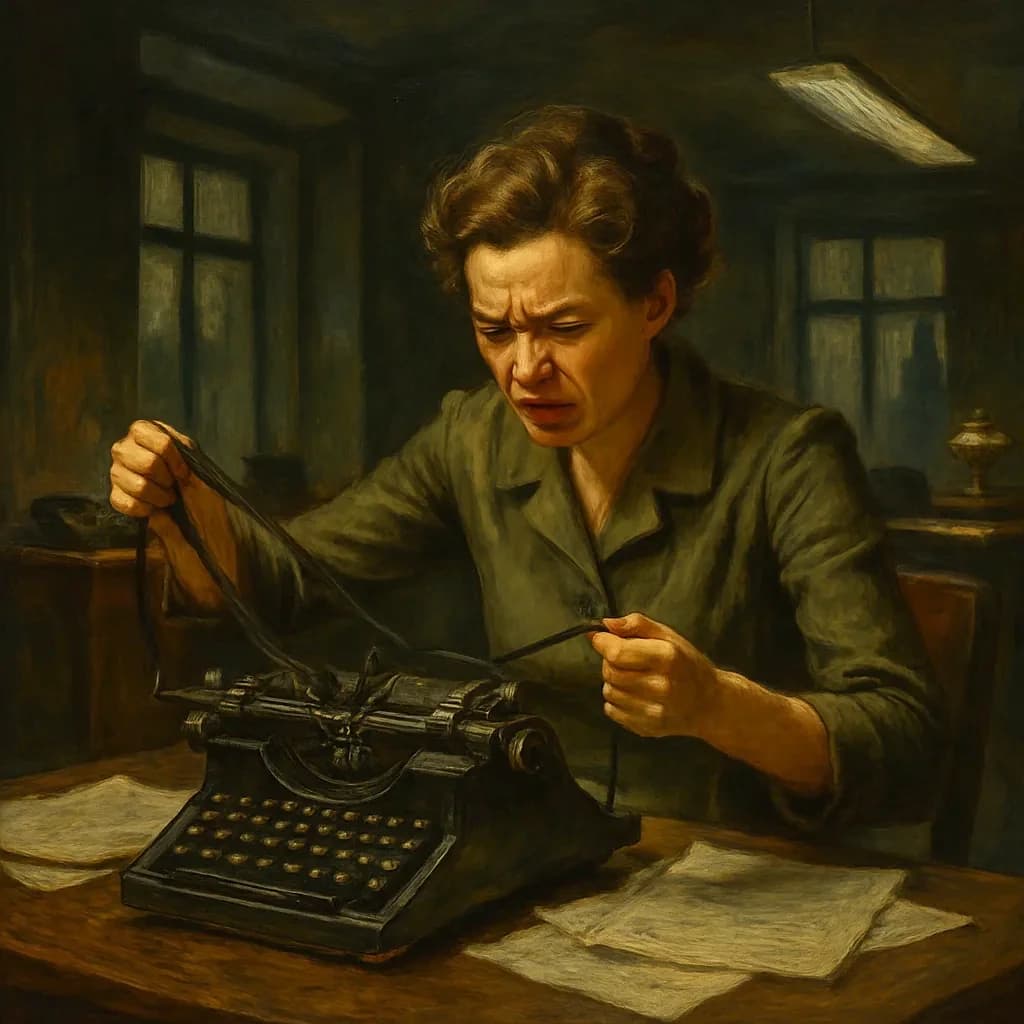
The Typewriter Ribbon That Almost Ended the World
A secretary's broken typewriter in 1962 nearly triggered nuclear war between America and Russia.
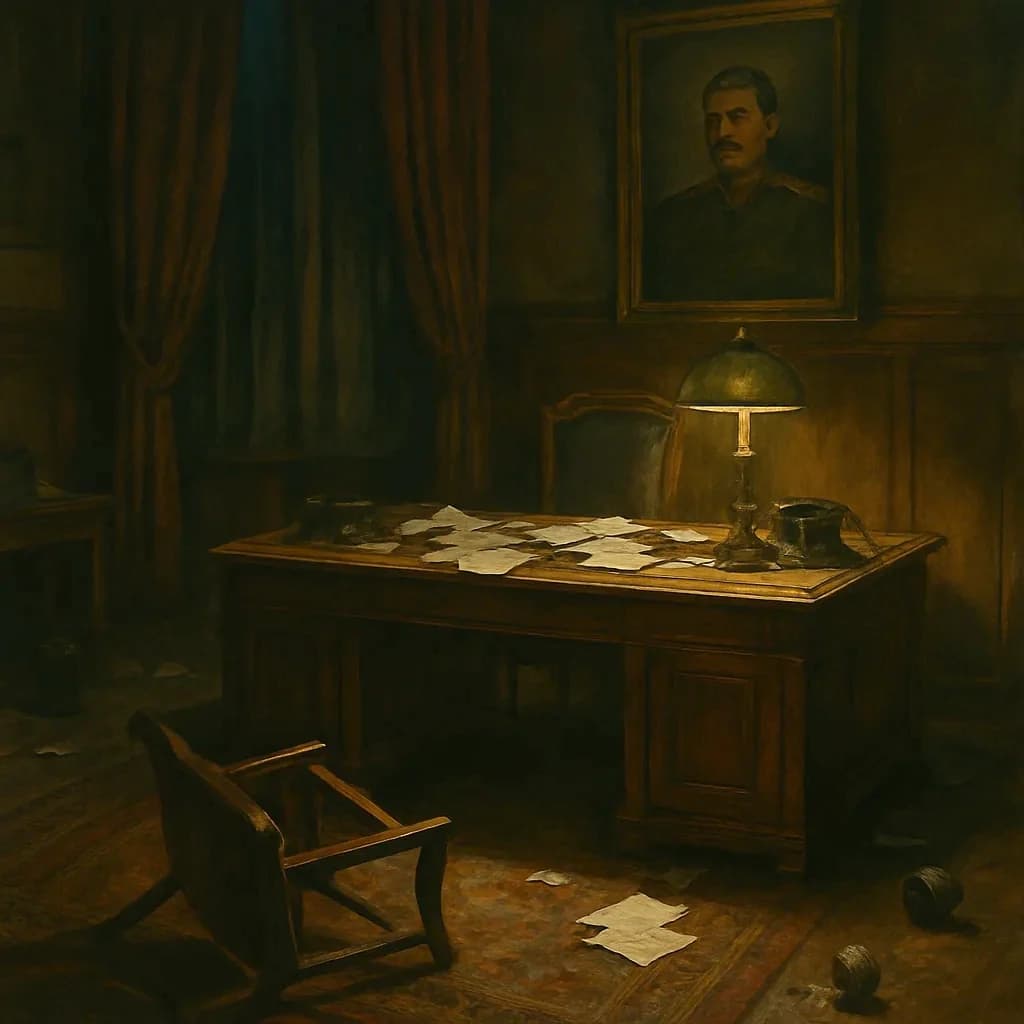
The Night Stalin Couldn't Find His Guards
On March 1, 1953, the most paranoid man in the world lay dying on his office floor while his terrified staff stood outside, afraid to check on him.
- William Taubman, 'Khrushchev: The Man and His Era' (2003)
- Sergei Khrushchev, 'Nikita Khrushchev and the Creation of a Superpower' (2000)
- Aleksandr Fursenko and Timothy Naftali, 'Khrushchev's Cold War' (2006)