
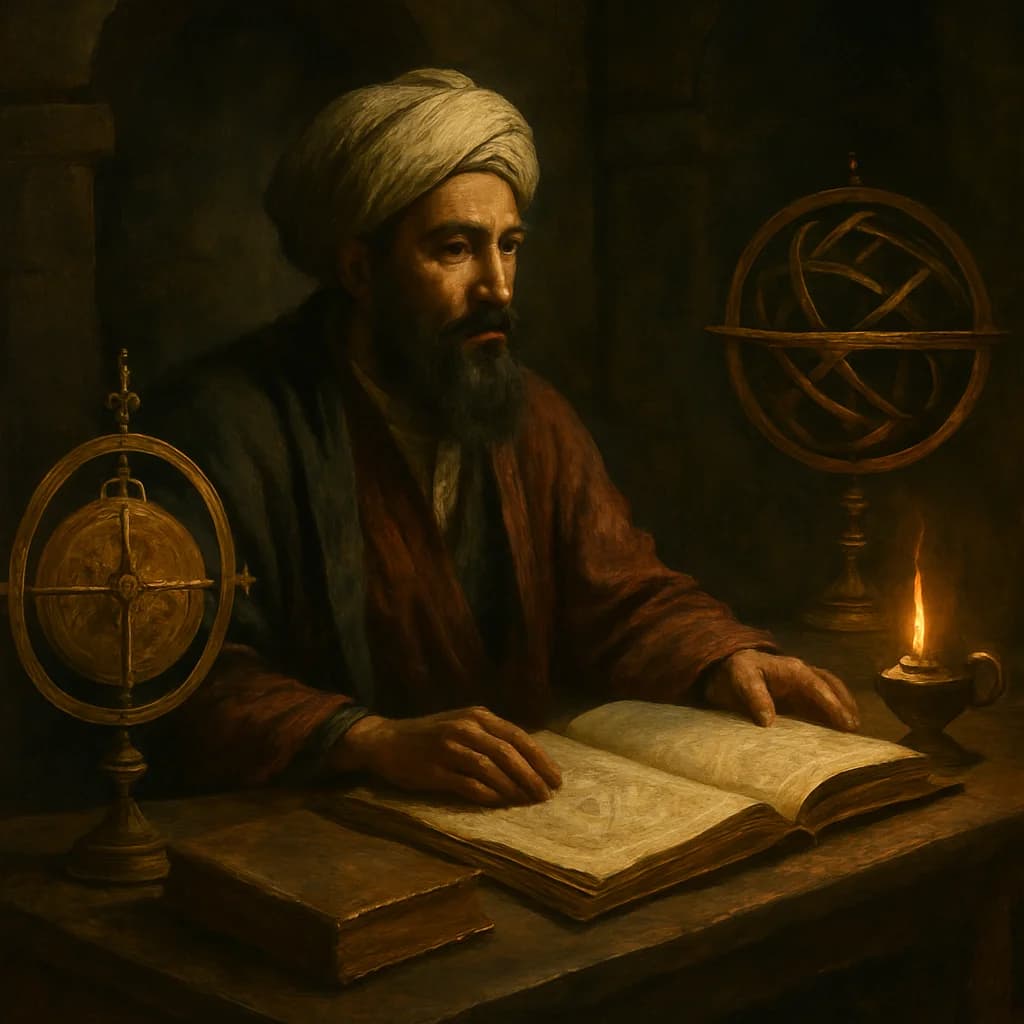
Nasir al-Din al-Tusi
The man who saved mathematics from extinction spent his final years teaching astronomy to the grandson of the warlord who destroyed his world.
When the Mongols sacked Baghdad in 1258, Nasir al-Din al-Tusi faced an impossible choice. The House of Wisdom, where he had spent years perfecting mathematical models that would later influence Copernicus, was about to burn. The Abbasid Caliph lay dead. Islamic civilization's intellectual heart had stopped beating. But Tusi didn't flee with the other scholars who escaped across the Tigris clutching precious manuscripts.
Instead, he did something extraordinary: he joined the enemy. Not as a collaborator, but as a negotiator who understood that knowledge could survive conquest if it proved useful to conquerors. Hulagu Khan, Genghis Khan's grandson, needed administrators for his new empire. Tusi offered himself as court astronomer and mathematician, effectively becoming the Mongol Empire's chief scientist.
The gamble paid off spectacularly. At Hulagu's court in Maragheh, Tusi established what became history's most advanced astronomical observatory. He gathered Muslim, Christian, and Chinese scholars under Mongol protection, creating the first truly international scientific institute. Here, while teaching the grandson of Baghdad's destroyer, Tusi developed the "Tusi couple," a mathematical mechanism that solved problems of planetary motion that had puzzled astronomers for centuries.
Most remarkably, Tusi's work at Maragheh directly influenced European astronomy. His mathematical models appear, almost verbatim, in Copernicus's revolutionary work three centuries later. The irony cuts deep: Islamic mathematical knowledge that survived the destruction of Baghdad through Mongol patronage eventually returned to challenge European understanding of the cosmos. The scholar who watched his civilization burn had lit a fuse that would explode medieval European cosmology.
Tusi's mathematical models for planetary motion appear in Copernicus's "De revolutionibus" with such precision that scholars believe Copernicus either had access to Tusi's work or remarkable parallel thinking occurred across three centuries.
Why untold: His collaboration with the Mongols who destroyed Islamic civilization created an uncomfortable narrative that didn't fit neatly into either Islamic golden age mythology or European Renaissance origin stories.
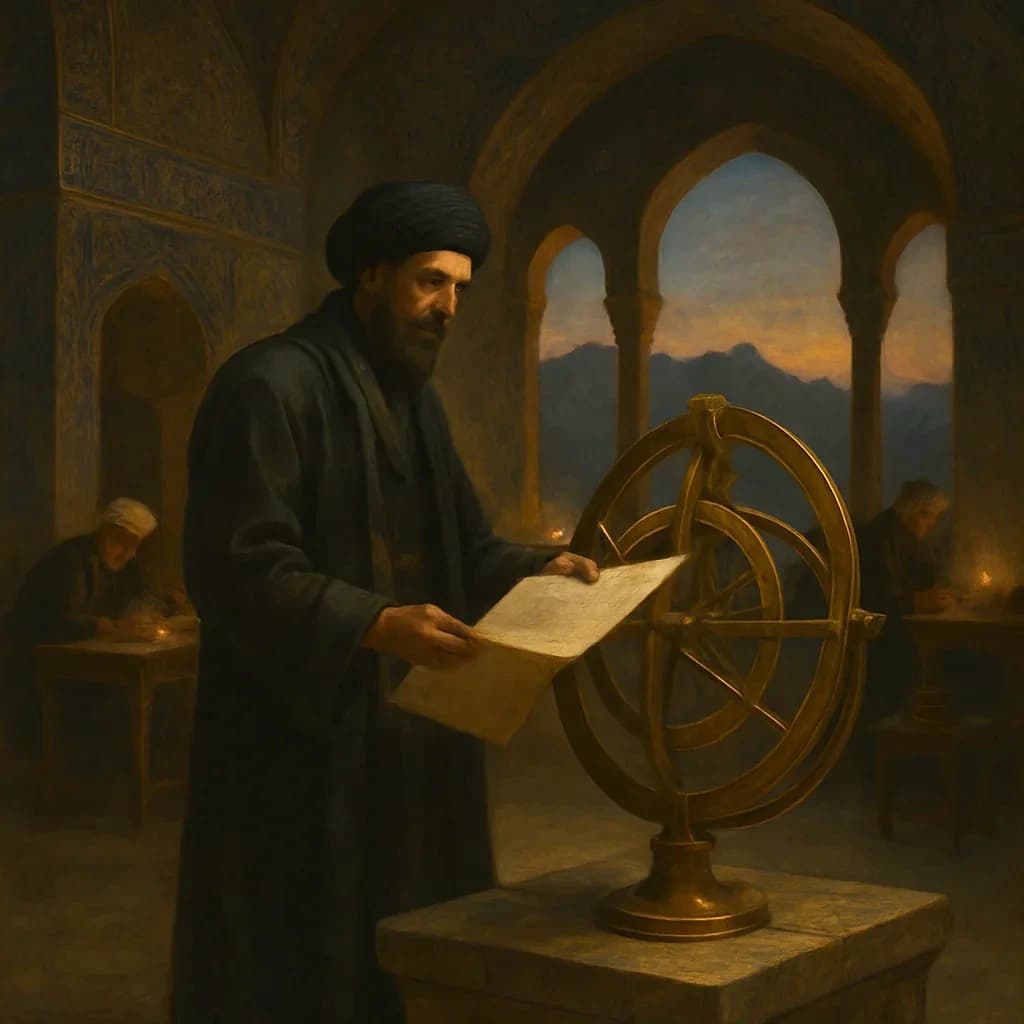
The Scholar Who Saved Baghdad From the Winning Side
The Mongols threw so many books into the Tigris in 1258 that the river reportedly ran black with ink, but the scholar who saved the most wasn't hiding in a library. He was standing in the conqueror's tent.
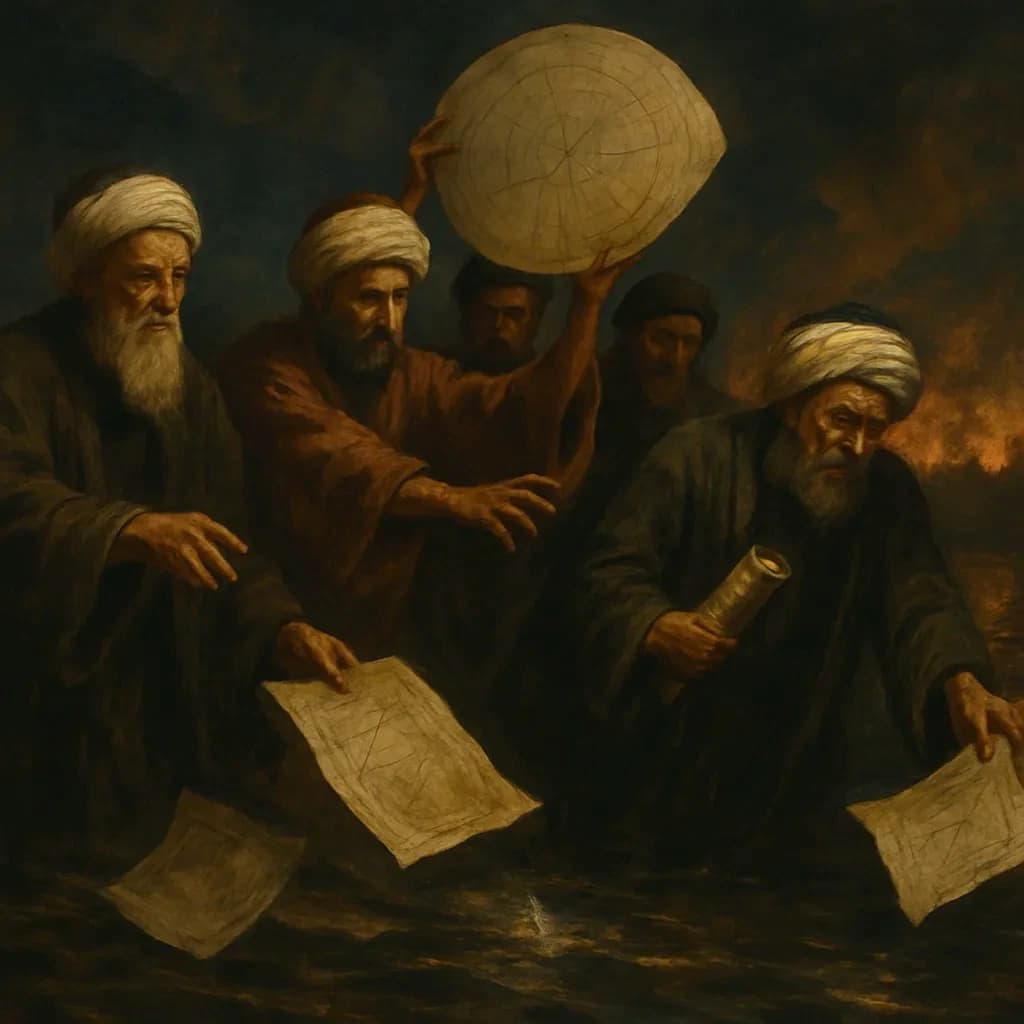
Baghdad's Scholars Drowned Their Own Library
The library that had invented algebra and calculated the Earth's circumference was reduced to ashes in a single week, but not for the reason everyone thinks.

When Baghdad's Librarians Became Refugees
In 1258, the world's greatest scholars fled across the Tigris carrying scrolls instead of gold, racing to save ten centuries of human knowledge from the approaching Mongol army.
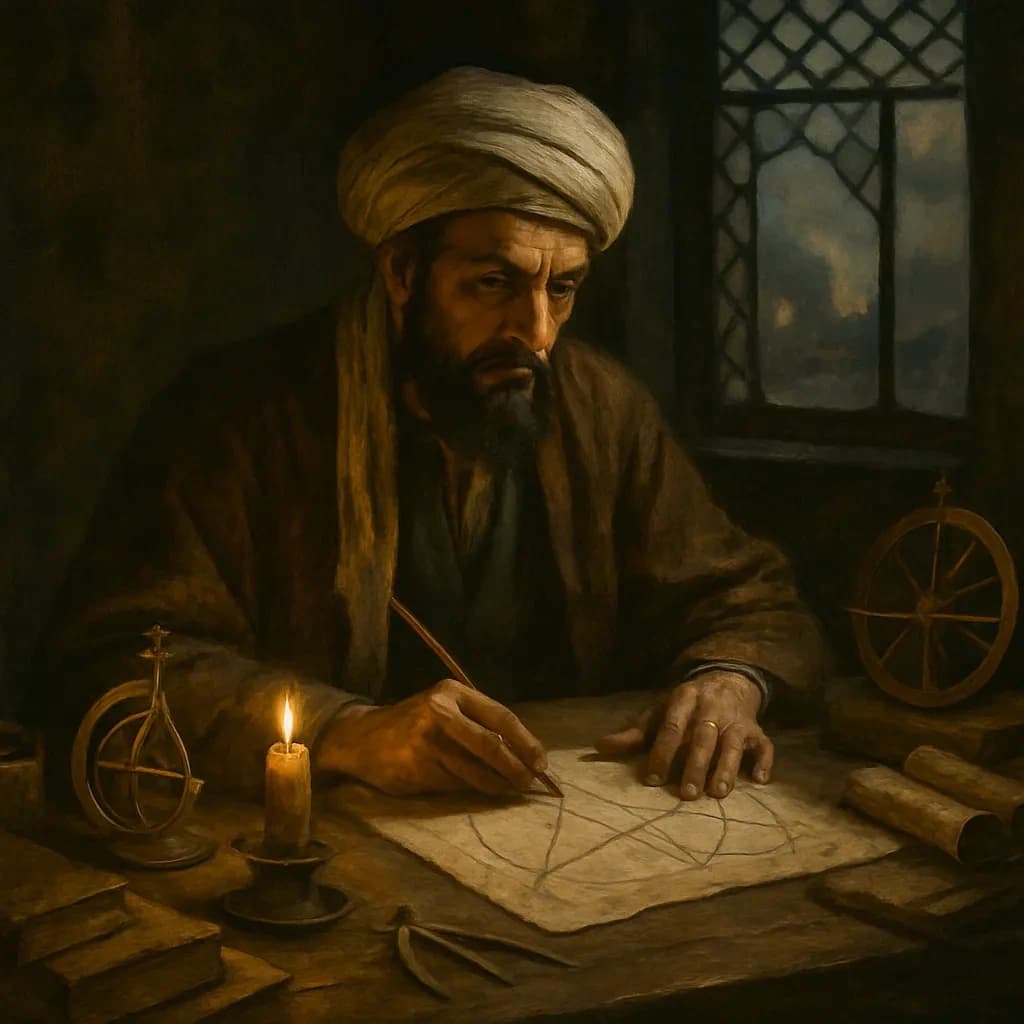
Al-Tusi Buried His Math Before the Mongols Arrived
While Baghdad burned, one scholar wrote formulas that would reshape mathematics forever, if anyone could find his scattered notes.
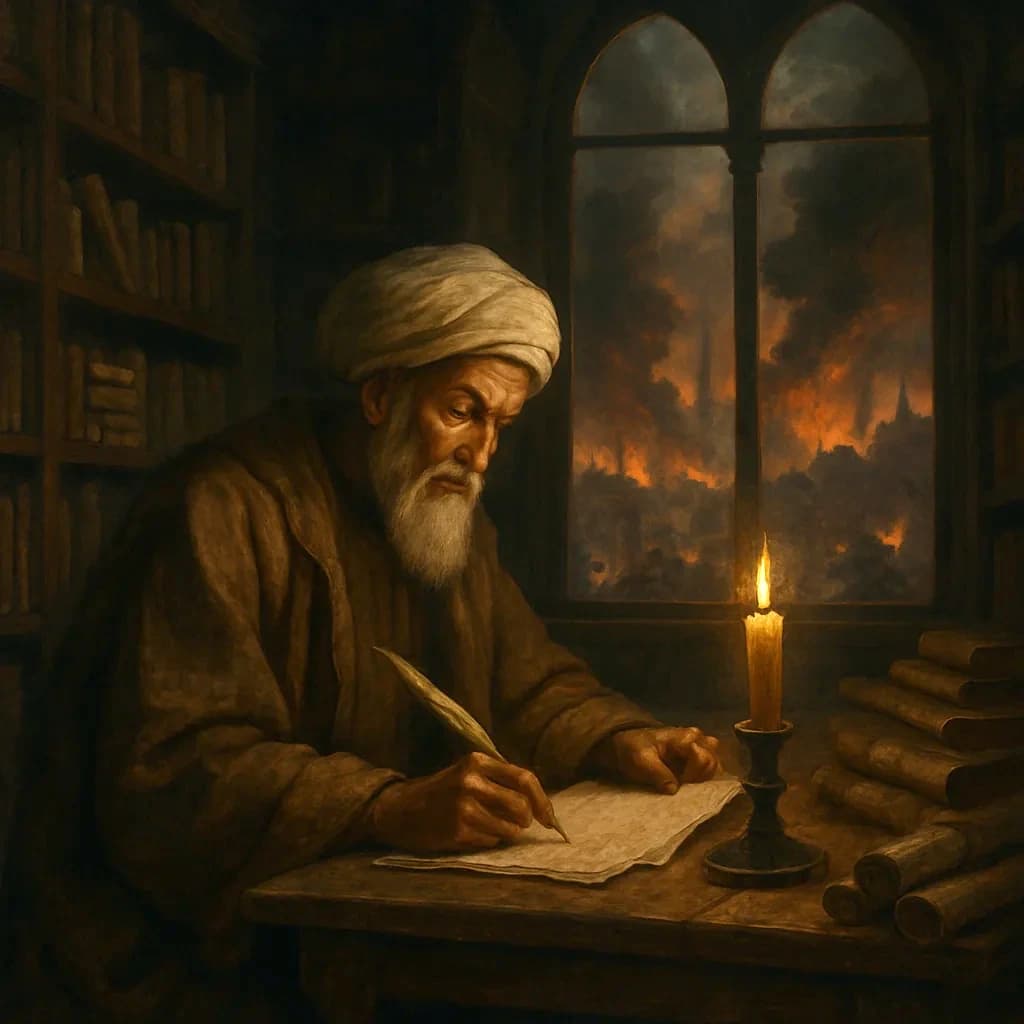
One Man Refused to Abandon Baghdad's Books as the City Burned
While Baghdad burned around him, one man refused to abandon ten centuries of human knowledge.
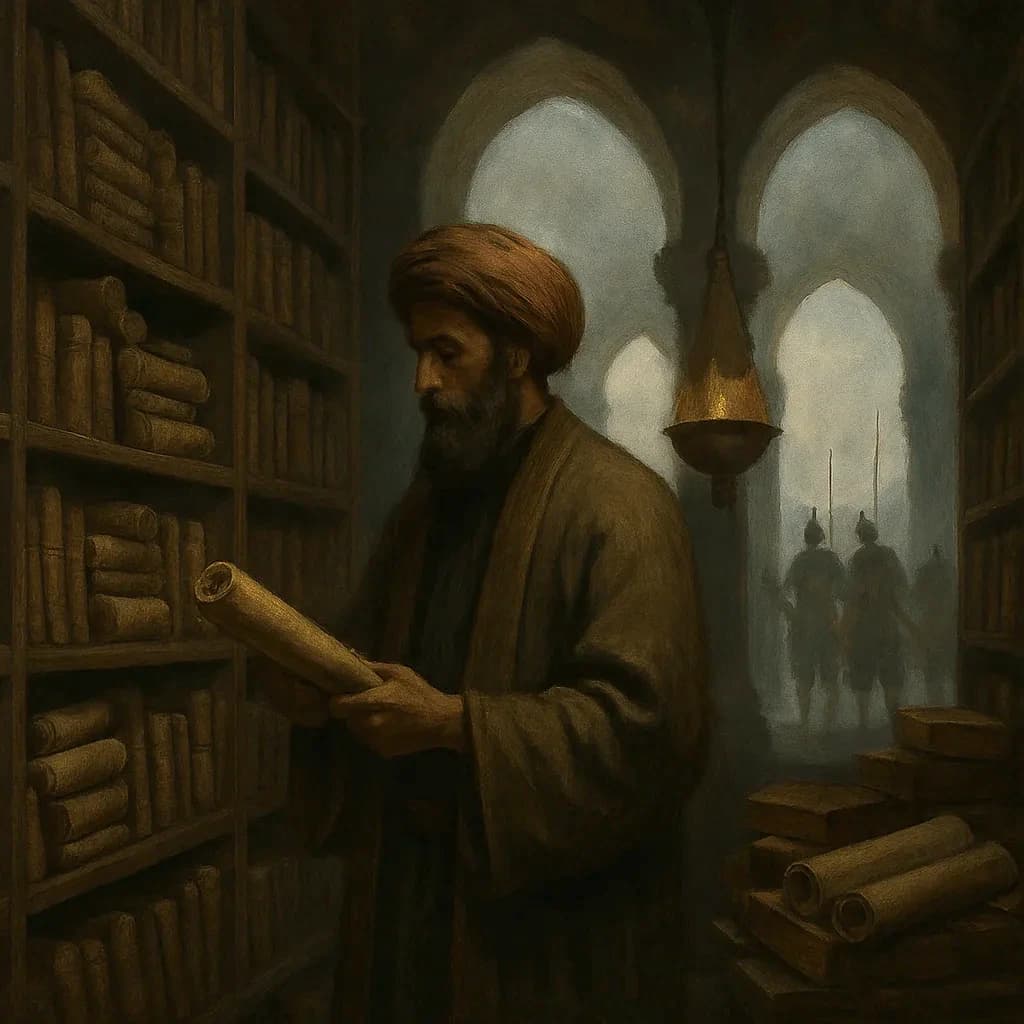
An Offer Too Good to Refuse Saved the World's Greatest Library
In 1258, the world's greatest collection of human knowledge was about to be destroyed, until someone made an offer too good to refuse.
- Saliba, George. Islamic Science and the Making of the European Renaissance. MIT Press, 2007.
- Ragep, F. Jamil. Nasir al-Din al-Tusi's Memoir on Astronomy. Springer-Verlag, 1993.
- Hodgson, Marshall. The Venture of Islam, Volume 2. University of Chicago Press, 1974.