
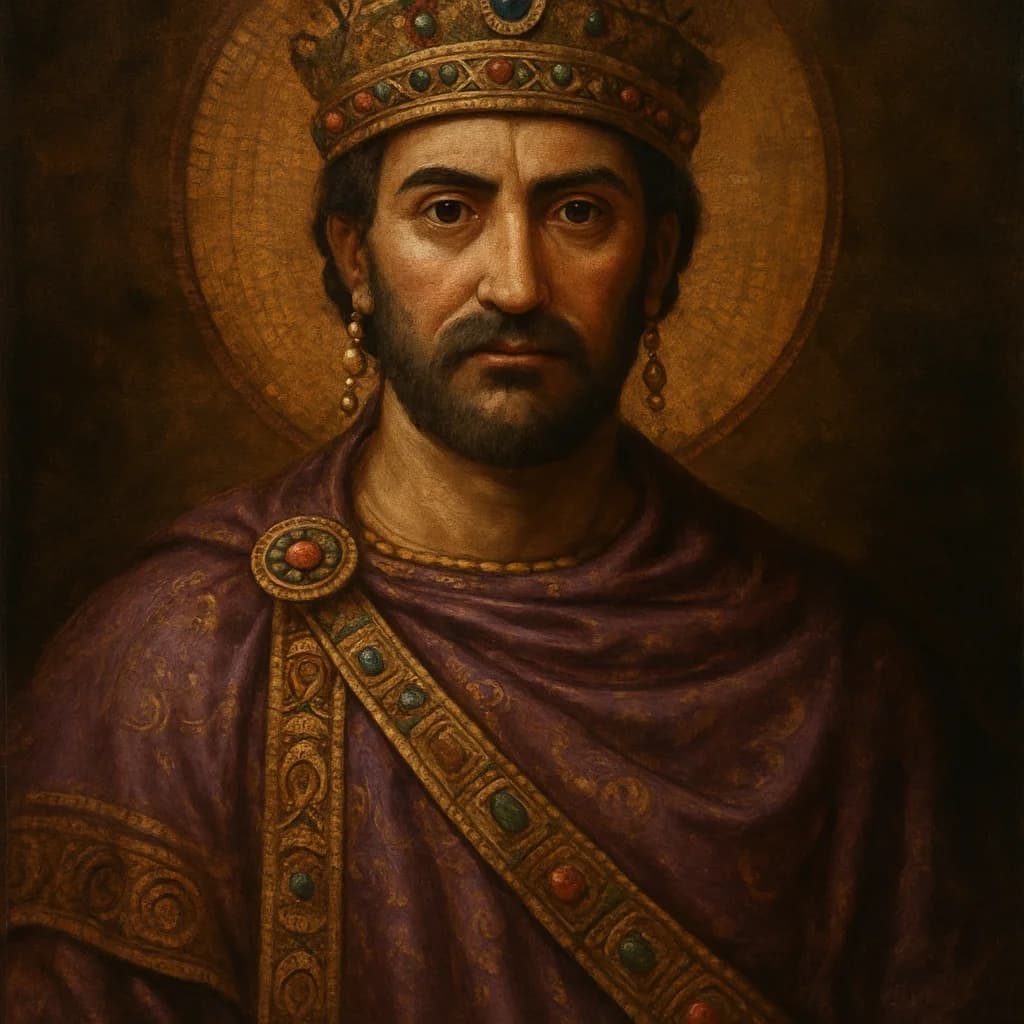
Justinian
He rebuilt Rome's empire from Constantinople, and in doing so, guaranteed it would never actually come back.
Justinian I became emperor of the Eastern Roman Empire in 527 AD, and he spent the next four decades trying to resurrect something that had been dead for half a century. The Western Empire had collapsed in 476. Most rulers had made their peace with that fact. Justinian hadn't. He launched campaigns across the Mediterranean (retaking North Africa from the Vandals in 533, clawing back Italy from the Ostrogoths in a war that dragged on until 554), and for a brief, exhausting moment, it looked like Rome might actually be Rome again.
But here's what the triumph concealed: the reconquest of Italy didn't restore Roman civilization there. It obliterated what was left of it. The Gothic Wars lasted nearly twenty years, and the peninsula that emerged was depopulated, stripped of its senatorial aristocracy, its infrastructure shattered in ways it hadn't been even under 'barbarian' rule. The Ostrogothic king Theoderic, whom Justinian's armies displaced, had kept the aqueducts running, preserved Roman law, and maintained relative peace. Justinian's legions brought famine, plague, and a vacuum that the Lombards rushed into just three years after the war ended. The Rome that Justinian saved on paper ceased to function in practice almost immediately.
What Justinian did accomplish (and this matters enormously) was legal. His Corpus Juris Civilis, compiled between 529 and 534 under the jurist Tribonian, systematized over a thousand years of Roman law into a coherent body of text that would become the foundation of legal systems across Europe, Latin America, and beyond. He did more to shape how modern states are governed through that project than through any military campaign. He just never seemed to realize it. The law was the footnote. The reconquest was the mission.
Then there was the plague. In 541, a pandemic now bearing his name (the Plague of Justinian) swept the empire, killing perhaps a third of the Eastern Mediterranean's population. Justinian himself caught it and survived. His empire, technically, survived too. But the tax base evaporated, the armies thinned, and the territories he had spent so much blood and coin to reclaim began slipping away before he was even in the ground. He died in 565, still emperor, still dreaming of a unified Rome. The Lombards invaded Italy three years later.
Justinian was born a Latin-speaking peasant from Dacia Mediterranea (modern-day Serbia) and was brought to Constantinople as a teenager by his uncle Justin, a military commander who could barely read, and who later became emperor largely through Justinian's behind-the-scenes management.
Why untold: Justinian's military reconquests dominate his historical image, while the Corpus Juris Civilis (the legal architecture that quietly shaped Western civilization for fifteen centuries) gets treated as administrative background noise.
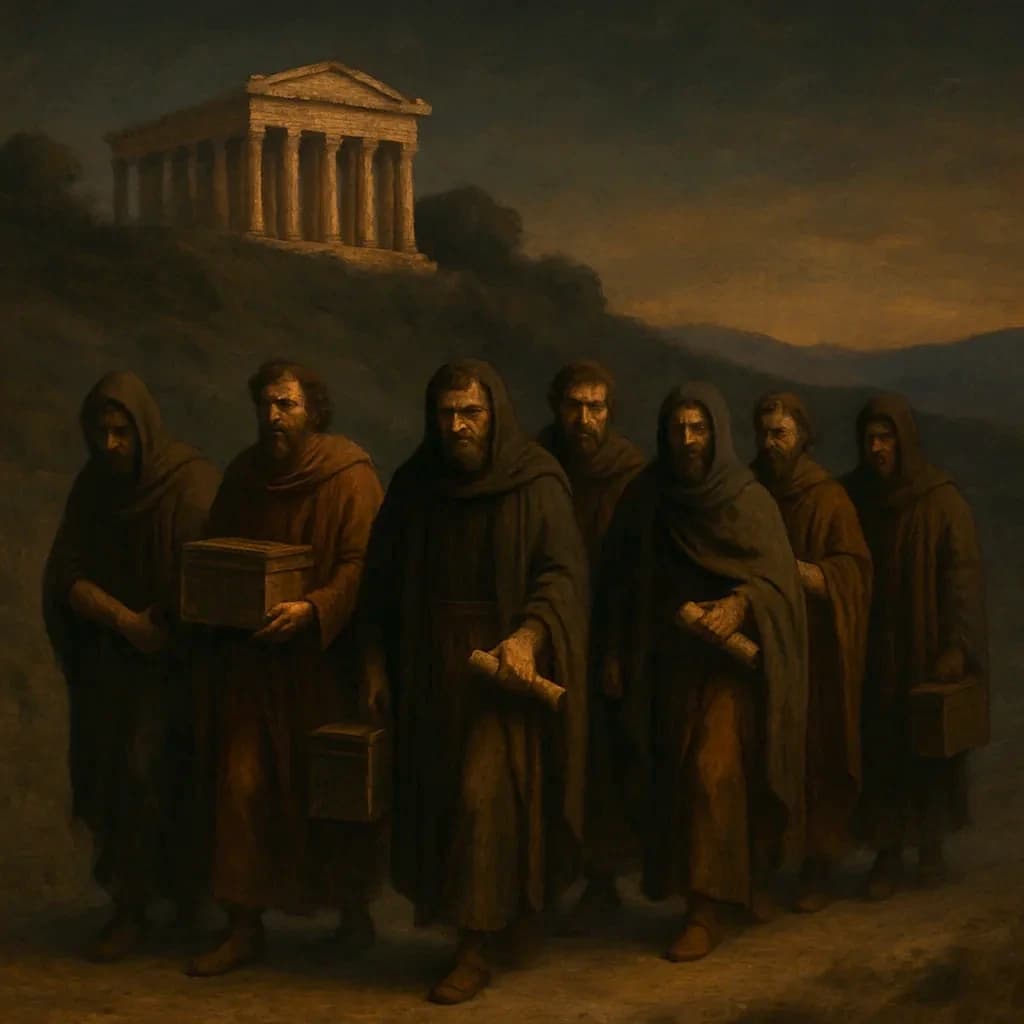
Justinian Banned Philosophy, and Persia Saved It
A single imperial decree in 529 AD shut the last ancient philosophy school and sent its scholars fleeing east, preserving the intellectual inheritance of Greece inside the Persian Empire by sheer chance.
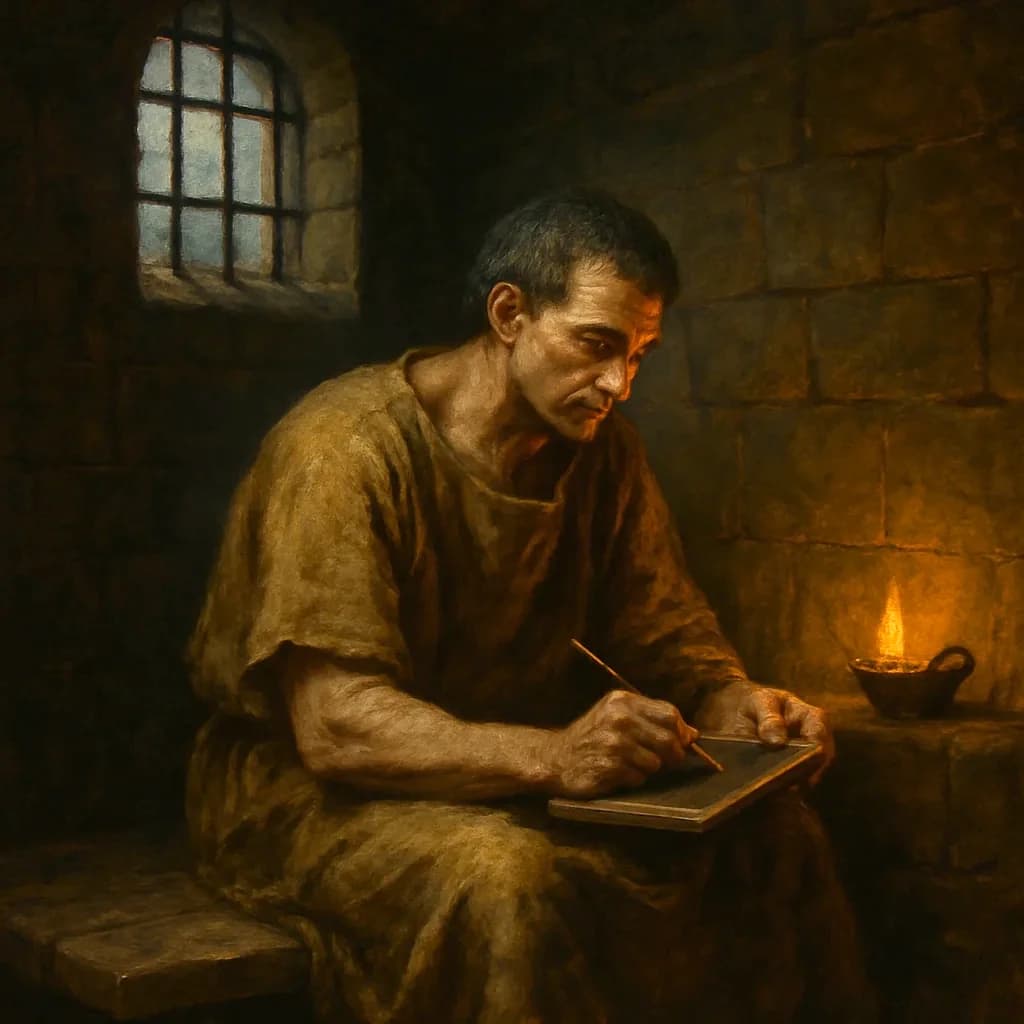
Condemned to Die, He Wrote a Medieval Bestseller
He was the most powerful ruler in the Western world, beloved by Romans and barbarians alike, and then he ordered the execution of the one man who had made his reign possible.
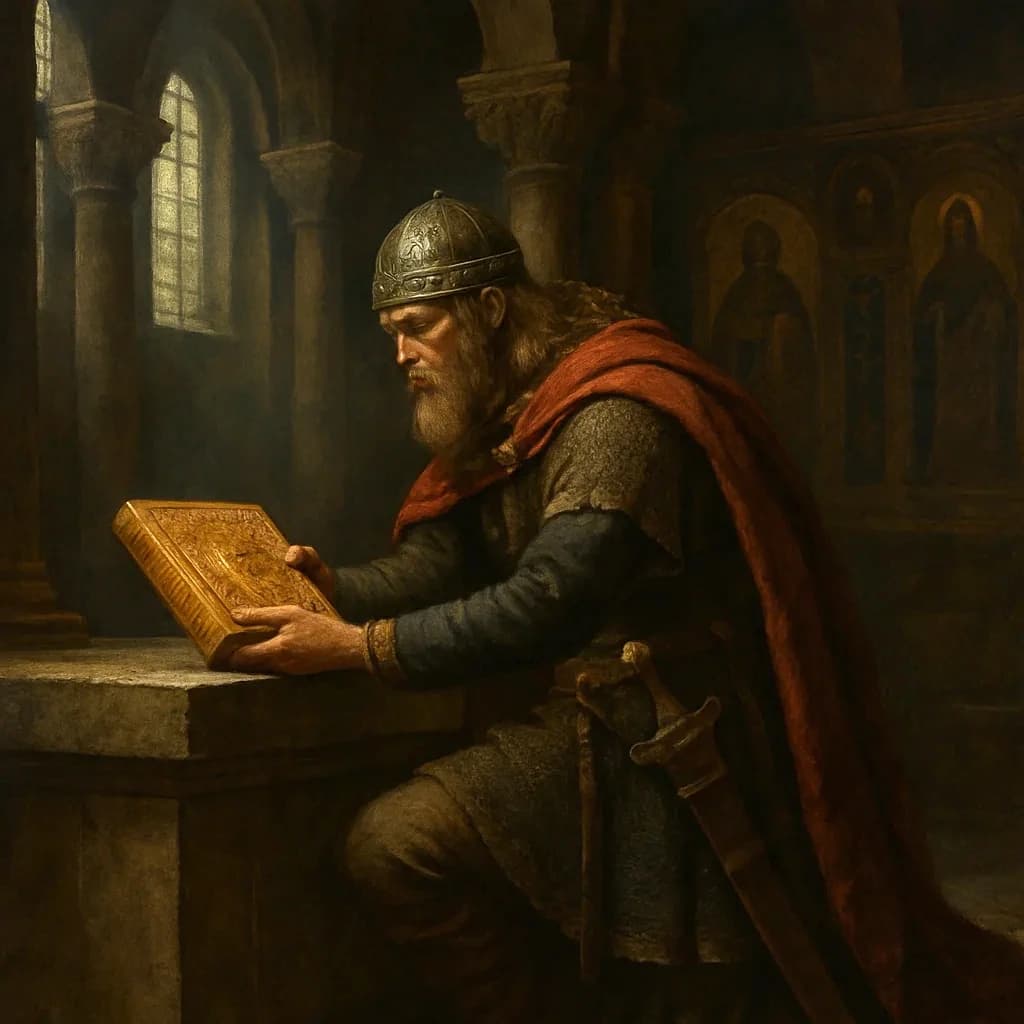
The Vandal King Who Sacked Rome and Saved Its Christmas
A barbarian king who terrorized the Roman Empire ended up preserving the holiday that would define Western civilization.
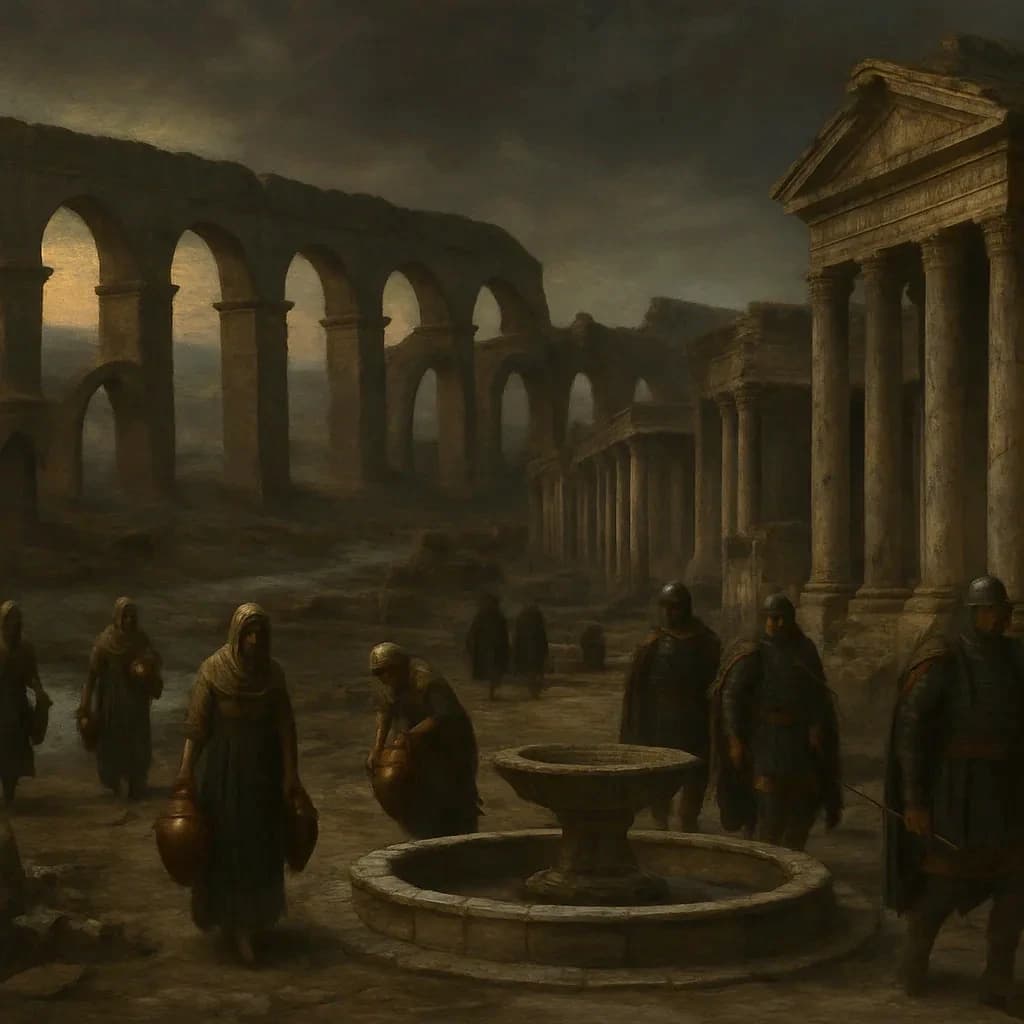
When Rome's Aqueducts Went Silent
The city that ruled the world couldn't figure out how to fix its own plumbing.
- Peter Sarris, 'Empires of Faith: The Fall of Rome to the Rise of Islam' (Oxford University Press, 2011)
- John Moorhead, 'Justinian' (Longman, 1994)
- Procopius, 'The Secret History', trans. G.A. Williamson (Penguin Classics, 1966)