
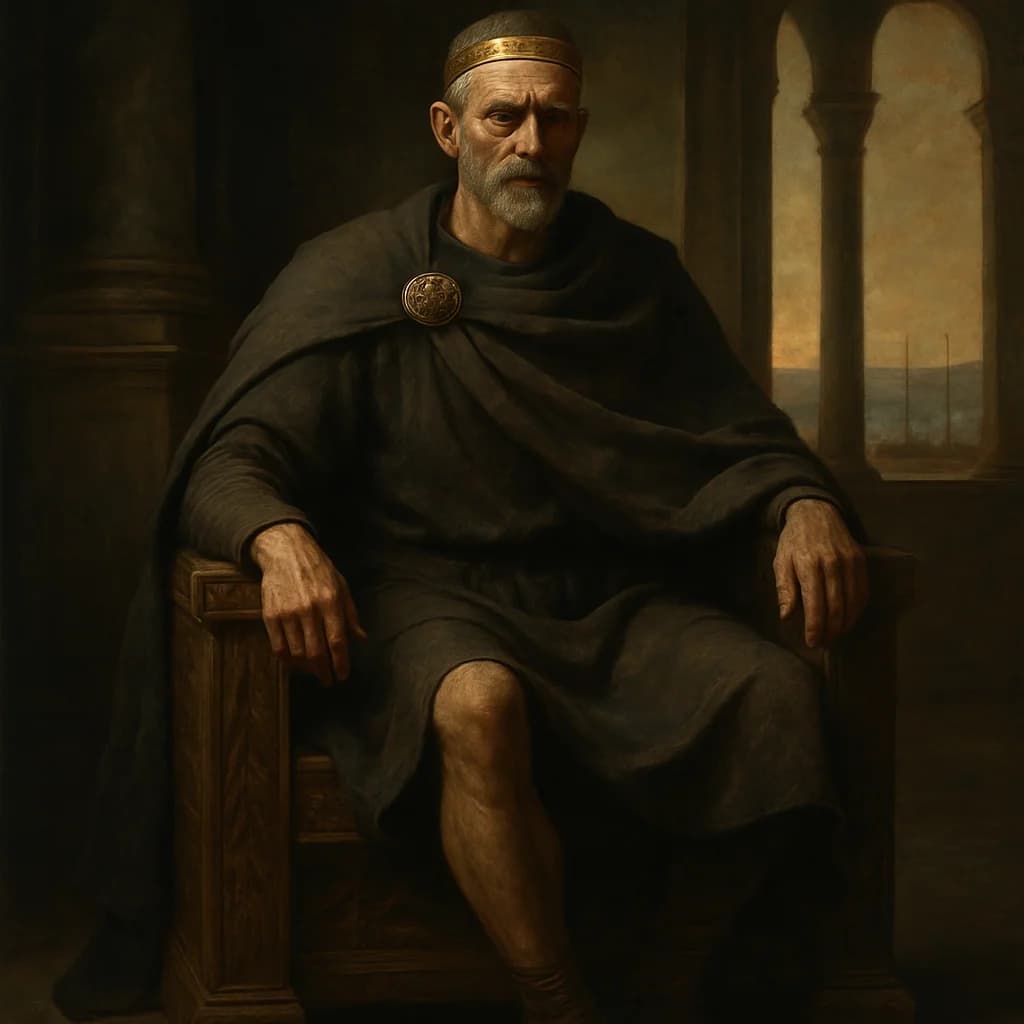
Genseric
He was born illegitimate, walked with a limp, and still managed to make the Roman Empire beg.
Nobody expected Genseric. He was the bastard son of a Visigothic king, physically disabled from a riding accident, and had spent most of his early life in the political shadow of his older, legitimate brother. When that brother died in 428 AD, Genseric inherited the Vandal kingdom almost by accident, a lameness-afflicted outsider inheriting a people who prized martial strength above everything else. Rome wasn't worried. It should have been.
What happened next is one of the most audacious logistical operations in late antiquity. In 429 AD, Genseric moved his entire people (roughly 80,000 Vandals, Alans, women, children, livestock, supplies) across the Strait of Gibraltar and into Roman North Africa. Not a raid. A migration. He had been invited by a desperate Roman governor named Boniface, who wanted muscle in a political dispute and got something far more permanent. Within a decade, Genseric had taken Carthage, the wealthiest city in the western empire, and turned it into the capital of a naval power that Rome could barely comprehend. The man who couldn't sit a horse properly had built a fleet.
That fleet is the part that gets lost in the conventional story. Genseric understood something most of his contemporaries didn't: that the Mediterranean was not a barrier but a highway. He ran what amounted to a state-sponsored piracy operation from Carthage, severing Rome's grain supply and raiding coastlines from Sicily to Greece. When he sacked Rome in 455 AD (the sack that gave us the word 'vandalism,' unfairly) his ships arrived with surgical precision. He had been tipped off about the city's defenses. By whom remains disputed. He stayed for fourteen days and left with the empress, two imperial princesses, and the treasures of the Temple of Jerusalem, which had sat in Rome since Titus brought them over in 71 AD.
Genseric died in 477 AD, at roughly 88 years old, ancient by any standard of the era, ancient by any standard at all for a man who had personally led military campaigns into his seventies. He outlived the Western Roman Empire by one year. That wasn't coincidence. He had spent fifty years making sure the timing would work out exactly that way.
Genseric's capture of the Roman grain supply from North Africa contributed directly to food shortages that accelerated the Western Empire's economic collapse, meaning a limping outsider from the Gothic steppe effectively starved Rome to death over the course of two decades.
Why untold: Genseric's story was filtered almost entirely through Roman sources written by people whose civilization he dismantled, leaving him caricatured as a brute rather than recognized as one of the most strategically sophisticated leaders of late antiquity.
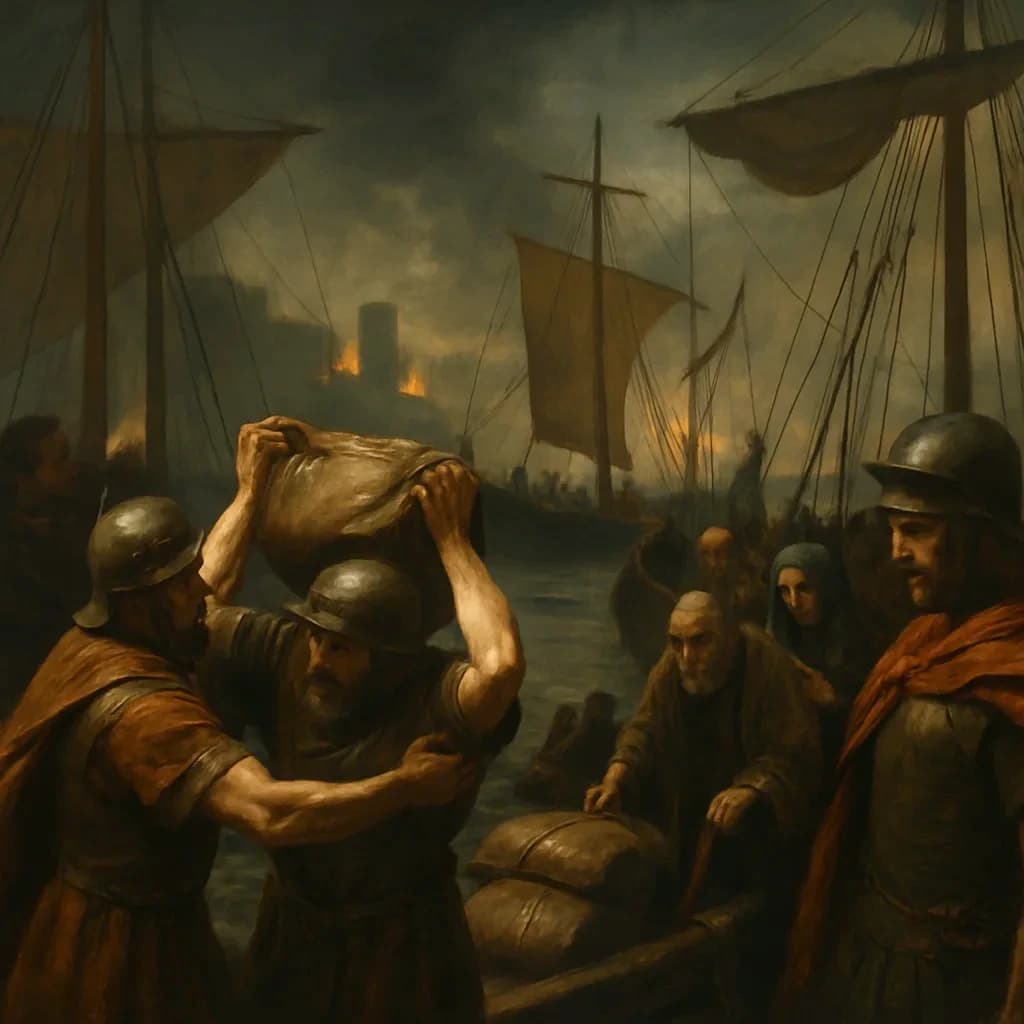
Carthage's Last Mail Carried the Secret of Naval War
As Genseric's Vandals closed on Carthage in 429 AD, the last Roman fleet sailed away carrying more than refugees. It carried a secret that would reshape the entire concept of warfare.

The Vandal King Who Sacked Rome and Saved Its Christmas
A barbarian king who terrorized the Roman Empire ended up preserving the holiday that would define Western civilization.
- Victor of Vita, Historia persecutionis Africanae provinciae (c. 484 AD)
- Merrills, Andrew and Miles, Richard. The Vandals. Wiley-Blackwell, 2010.
- Heather, Peter. The Fall of the Roman Empire: A New History of Rome and the Barbarians. Oxford University Press, 2006.